Category Archives: Amazing Feats

Meet 10 women who are spearheading movement against CAA-NRC in India

In the wake of countrywide protests against CAA-NRC-NPR, India is witnessing a watershed massive movement led by women. From organizing to mobilizing to leading – women are at the forefront, often gaining stronghold over their male counterparts. Never in history we have seen such a political scenario where women leaders are emerging from every nook and corner, every village and metro city of the country.

To mark this International Women’s Day (IWD) on March 8, we have featured 10 women across India who have not only contributed to the changed definition of women empowerment but have also changed the way an Indian Woman is perceived across the globe. Through our feature, we honor and celebrate the courage of some of these inspiring women – those who have led the anti-CAA-NRC movement across India without any fear from state machinery. 

Sadiya Shaikh, Mumbai 

Sadiya, has visited several states to address anti-CAA-NRC rallies. She is a student of B.A at Rizvi college, Mumbai. Working to create awareness about NRC-CAA, she has shared the stage with the country’s foremost youth leaders –  Kanhaiya Kumar, Umar Khalid and many other activists. Recently, Umar Khalid posted that “Sadiya is only 17 years old, but one of the best speakers I have come across during the Anti CAA-NRC movement”.

Disturbed by the Jamia incident, she became a part of these protests to challenge the brutality of state sponspored violence on the students of Jamia in Delhi. “I thought if we choose to be silent now then distorting the constitution and atrocities on students will become a norm,”says Sadiya.

She feels proud discussing that she had studied democracy as a subject but now, she says, “I am practically trying to exercise what I was studying till now”. She had always dreamt to be a part of Young India Challenge, this year she got selected but gave up just to be a part of these protests. This movement has brought a change in her, she reads more about history now and she feels more confident. She is just 17 years old so her father accompanies her on travels to another city or state to address protest gatherings.

Ayesha Renna, Kerala

Ayesha is a 22 years old student from Jamia Millia Islamia. Coming from a small town Kondotty, in Malappuram district of Kerala, she became the poster girl after her photo went viral a day after the 15th December police brutality on Jamia students. In the photo with two other women students and a student journalist, Ayesha can be seen warning the policeman against their brutal behaviour. Ayesha became the icon of Women in Hijab breaking the stereotypes and struggling for her rights. 

Ayesha is associated with a Kerala-based NGO called ‘Yes India’ since 2016 which works for “educational development of students belonging from marginalised sections”. She started her protest for CAA-NRC on the very next day when the bill was passed in Parliament. She was the part of the JMI girls march to the parliament. Being a history student herself, she feels, “For me, history is not linear and it’s not only about recorded events.” She says that history is something which gives hope and energy in the age of political depression which is very similar to Nazi Germany.

Being a woman born and brought up in Kerala, specifically in a Muslim populated district, Ayesha is breaking the stereotypical image framed by the popular culture where a Woman in Hijab is hailed as “oppressed.” She says “My identity was always a subject of liberal saviours, the immediate possibility of a hijabi is limited into the immediate binaries of oppressed.”

Khalida Parveen, Hyderabad 

Khalida Parveen, a 64-year-old social activist from Hyderabad, was detained by the police while protesting. That did not dampen her spirits and since then, Parveen has been actively engaged in educating women about the impact of NRC and CAA by guiding them how to maintain peaceful protests.

“Muslim women have always been targeted for being inside their houses and not standing up for their right, this movement has shown that when necessary they can do every possible thing to safeguard their rights,” says Parveen, who also runs an NGO with the aim to empower the nation by empowering its women.

She has been arrested by the police during protests and has boldly faced it, advocating the weeding out fear psychology of police in society. She is currently working on the ground by reaching out to women in rural areas and slums to educate and aware them about CAA-NRC. Parveen sights every woman as a leader in these protests. “Our responsibility is to keep fighting against these unjust laws, I am not afraid even if I die struggling for the rights of our citizenship” adds Parveen. Her active participation in mobilizing women and appealing them to come out of their houses to protest has inspired many women, who see her as their role model.

Aman Mohammadi, Saharanpur 

Aman Mohammadi, 27-years-old artist from Saharanpur, is pursuing her PhD in Theatre and Performance from JNU. She is a performer who does theatre mainly on socio-political issues. Moving around in the protests she noticed that, women are leading the protests but when it comes to performance, mostly male were seen. To counter this, she became a part of the newly formed ‘Zanana Ensemble: Zanana ka Zamana.’

Anyone who identifies herself as a woman performer was open to join the group. The group has composed some very creative and engaging slogans, one of which is

                              “aya zanana ka zamana, hai zanana ka zamana,
                           khub pakaya ghar mai khana, inquilab ko hai pakana

The group did a musical protest Hawaon mein, yaaron jawaab milega, Fizaon mein, jawaab milega, which went viral on social media and was later covered by The Quint. They performed at several protest sites including Shaheen Bagh,Shahi Eidgah, Azad market, Inderlok and many more.

Aman has been very active and vocal on social media about the empowerment and rights of women. “This movement has brought up a beautiful form of resistance which is helping women to reclaim the space which was already taken by men, through this protest they are reclaiming these spaces” says Aman Mohammadi. Aman was deeply moved by the spirit of resistance among the ladies of mohalla who have come together to establish Shaheen Baghs at different places throughout the nation. She opines that despite the patriarchal set up of our society this movement has been able to break many barriers, the women have come out and led these protests which will always be remembered.

Shiba Minai, Hyderabad
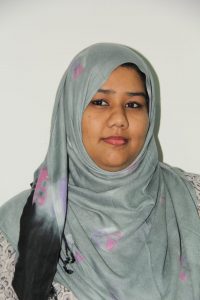
Shiba, originally a 33-years-old journalist from Hyderabad, has now become an activist and protester. She is known for kick-starting the momentum of Hyderabad protests and also called as the Lady Flash protester of Hyderabad. 

Shiba calls herself an Urban Freedom Fighter who is fighting for the rights of the citizens of India and humanity.“Women have always been the backbone and very integral part of this society but were not acknowledged by the people because they were busy thinking that Muslim women are not capable,” says Shiba. She thinks this movement has given a beautiful realization to people with traditional mind-sets about women belonging to the household.   

Shiba is the mother of a 3-year-old but she manages to be an active part of these protests, just like hundreds of other women who balance their daily routine with protest schedules across the city. According to her, now “the protests are as important as having daily meals because there is nothing more patriotic than disagreeing with what is wrong and the voice of dissent is necessary.” She says that by bringing the CAA into force, we have wasted our democracy and now women must fight to save India one more time by setting an example for women throughout the world. Shiba was also detained by the police amid the protests but this didn’t stop her from voicing her dissent. She is very determined that these protests will surely bring victory and people like her will continue to resist even if it takes years.

Swati Narayan, Mumbai

Swati, originally from Mumbai, is a Visiting Fellow at the Institute for Human Development, Ranchi. She is a distinguished activist having previously worked on social issues like Right to Food, Right to Education and Social Justice for more than a decade now. She has been actively working at grassroots level, working closely with different groups and organizations to mobilize and aware people. Swati says to have Muslim women and students at the forefront have been a completely new phenomenon. 

“Through this movement they are countering fascism and patriarchy in the liberal establishment as well as right wing establishment,” she says. She believes anti-CAA movement is a strong inflection point which will empower Muslim women beyond today. She hopes that this sisterhood which has emerged out of organic and pure movement should grow stronger and stronger.

Rehna Sultana, Assam

Rehna is a research scholar from Guwahati University, Assam. She is an academician turned full-time activist owing to the social circumstances at her place. Some people from her village started getting the notice for D-voter and would come to Rehna’s family to help them understand about it. It was around that time she started enquiring about citizenship issues in Assam. Soon, she started helping people with the NRC process. In her village, people used to charge 1000 rupees per head for filling the form for NRC, which didn’t even ensure that the form would be filled correctly. So, she started filling up forms for people free of cost. In the wake of CAA, she is now currently working to help people across Assam through awareness drives. Through her reach-out programmes, she is countering misconception and misinformation about citizenship laws. She informs people about the know-hows of producing documents and dealing with government authorities.Rehna hails from Bengal origin Muslim community in Assam and  has been working for the upliftment of women by raising awareness against child marriage, domestic violence and education. Rehna says women and children have been worst affected as they are unable to produce the needed documents.“Birth certificate and matric certificate are two important documents to prove citizenship. Most of the women get married early and can not complete their formal education to obtain even the class 10 certificate,” she says.Rehna, who has been working tirelessly on the ground for women empowerment, believes education should be  the top most priority for women.

Dr.Shagufta Yasmeen, Ranchi 
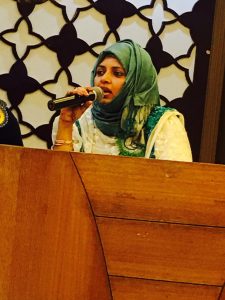
She is an activist who runs a women empowerment group and recently have been very active in NRC-CAA protests. Jamia incident instigated her to join the anti CAA protest. She gradually started learning about the Act and then started the awareness program to inform people about it.

There were many misconceptions about CAA-NRC among the people. Some students and a ladies group came together to initiate the awareness drive. This movement has empowered the women in many dimensions, this has made them more confident. Shaguftais very confident in saying that “Our protest is a peaceful protest; it might take time but definitely it will be fruitful”

After her awareness sessions, people from all communities are coming and joining the protests. She considers women as more responsible and powerful which is the reason behind the success of these Anti CAA-NRC protests. It is the patience of women which has led to the strengthening of this movement and that is why everyday more people are joining the protest. 

Jacinta Kerketta, Ranchi 

Jacinta Kerketta from Ranchi is best known for her poetry which touches various social issues of Adivasi and Dalits. She is also a journalist and social activist. Working on the education of girls she has been travelling across the world, delivering her poetry on varied subjects including independent writing and environmental issues at the International level. Through her poetry she has also registered a protest against CAA-NRC at various public talks. Adivasis in this country have been struggling for dignified life which is yet to be actualized. Jacinta says CAA-NRC is not just Anti-Muslim rather it is also against Adivasis, Dalits and Women.For women to get empowered they need to pave their own way, aligning their own development with that of society. Only then we as society will get emancipation.

Ladeeda Farzana ,Kerela

Ladeeda, a 22 years old student of JamiaMilliaIslamia who hails from Mallapuram District of Kerela emerged as a face of resistance from the Anti CAA-NRC protests. She was seen as the one amongst the four girls protecting a male student from the police lathi-charge. Later, she has been to different states to convince people regarding CAA-NRC protests.

Ladeeda became an icon of resistance and have been very active through the movement. She has been to many universities and protest sites to encourage people to participate in the protests. She was brutally trolled but she didn’t give up. She is a role model for many of the student protestors. “The fight for justice is incomplete, unless we have solidarity from people of all faiths, ideologies and communities,” says Ladeeda. 

source: http://www.twocircles.net / TwoCiricles.net / Home> TCN Positive / by Nazish Hussain and Musheera Ashraf / TwoCircles.net / March 08th, 2020
How a Kerala mill shipped Rs 5-crore worth edible oil to Middle East despite lockdown

Aluva ( Kochi) , KERALA :

The family-owned Mezhukkattil Mill, which manufactures edible coconut oil, stuck in through logistical and procurement issues to meet demand across the globe. 

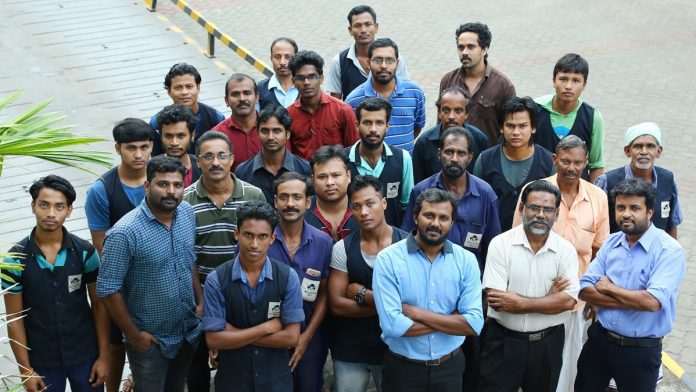
Mezhukkattil Mill executive director Ubais Ali (third from right in the front row) with his employees | By special arrangement

Kochi : 

This is a rare Covid business story from Kerala — one about the grit and determination of a medium-sized edible oil mill in Aluva, near Kochi, to keep its mills running during the lockdown as its workers had no option but to stay put. 

The decision was also fashioned by the demand surge during the early days of the pandemic when imminent lockdowns across the globe led to panic buying.  

For Ubais Ali, executive director of the family-owned Mezhukkattil Mill, which manufactures coconut oil, it did not require theoretical lessons in business management or post-Covid strategies being peddled by major consultancies across the world.

All Ubais did was spot an immediate business opportunity when essential products began flying off the shelves across continents in the middle of March. He was alerted by business associates in the UAE, Saudi Arabia, Oman, Kuwait, Qatar and Bahrain that edible coconut oil, just like any other food item, was selling fast, with a large number of non-traditional users turning to this cooking medium.

But just as he began exploring the opportunity, lockdown was enforced in India on 24 March. 

Ubais had about 50 workers in his factory premises who had no option but to stay put, but he had to contend with logistical issues.  

“When the national lockdown began, we had three containers stuck at the Kochi International Container Terminal. Even the big players in the food processing sector were caught unawares as the clearing and forwarding agents of Kochi decided against taking any risk,” Ubais says.

“I had no option but to keep the mill running at full capacity with three eight-hour shifts as the big brands like Lulu said their malls (in the Middle East) were facing total depletion of stock. I had to take a chance or lose this opportunity forever.”

The logistical troubles

Such was the demand that towards the end of March, during the first phase of the lockdown, Ubais had to augment his supply line of six truckloads of copra, from Tirupur district in Tamil Nadu, with well over a dozen containers from Indonesia and Philippines. 

That posed its own challenges. For one, the executive director had to battle for lorry passes from supply officers at the taluk level and also for inter-state travel permits. 

Then the State Trading Corporation (STC) refused to issue the company with a no-objection certificate (NOC) for the import of raw materials to bridge the gap caused by the shortfall in the indigenous copra supply.

Ubais first attempted to sort this out through the Federation of Indian Exporters Organisation, of which he is a member, but eventually it required the direct intervention of the Director General of Foreign Trade (DGFT).

K.M. Harilal, joint DGFT, Kochi, said: “Though food processing units had an exemption from the lockdown, none were functioning in the first week. Ubais came to us with a peculiar problem, as he was not getting the mandatory clearance from STC for imports. As the company’s normal channel via Chennai was not fruitful I got through to my boss in Delhi who got in touch with the STC chairman and the NOC came through.”

But all the clearances in the world would not have helped in a city known for the sincere hands-down approach of workers during hartals and the lockdown, an occasion that demanded stricter adherence to stay away from work.

The export trouble

As if procuring raw material wasn’t hard enough, exporting the coconut oil provided an equally tough task, mainly due to confusion at the Cochin Port, the region’s main export transit point.  

The Cochin Customs Brokers Association passed a resolution on 31 March that it would not move containers. It also sought clarification from the chief minister regarding anomalies in the notifications issued by the central and state governments. 

The Ministry of Shipping had notified normal operations of ports and customs. It was the ministry’s advisory that all cargo, both general as well as essential, be cleared. The Kerala government, however, brought out an advisory that no one should be attending office except those specially notified. The state’s focus then was on health and avoiding any threat of contracting Covid. 

Although the Cochin Customs Association withdrew its resolution following instructions from the customs commissioner, the overall sentiment among its members was more in line with the state government directive on ensuring personal safety.

As a result, there were no clearing agents ready to move the coconut oil consignments. 

It posed a major hurdle for Ubais as based on demand from clients, his oil mill had lined up over a dozen containers for export by the end of April first week. 

Finally, one agent, George Forwarders, expressed willingness to move the containers provided they did not face hassles from any departments. The mill and the agent both received a shot in the arm — one of the clients, to be precise the personal staff of M.A. Yusuff Ali, the UAE-based Indian billionaire businessman and owner of LuLu Group, promised to monitor all local clearances in Kochi. 

The result: The first lot of three containers were moved in early April.

In all, between 25 March and 30 April, Mezhukkattil Mill imported 20 containers of raw materials for exports. And between 12 containers that came under the head of direct exports and seven containers of deemed exports, this little known company from Aluva managed to export 19 containers of finished products, earning around $ 6,68,000 (over Rs 5 crore) in foreign exchange. 

The lessons for big business

For Mezhukkattil Mill, which was the largest supplier of coconut oil for soap and surfactant giants as also hair and skin oil in the 1990s, with a client list comprising Tata Oil Mills, Hindustan Lever, Wipro, among others, the lockdown has marked its coming of age. The mill had switched to manufacturing edible coconut in the decade between 2005 and 2015.  

The company’s makeover as a manufacturer of only edible oil products is now complete. It now ships its oil for various brands such as Lulu Muscat Hypermarket LLC, Royal Mark Foods and Eastern Condiments in Oman and Panten Mee in Taiwan.

As the country looks to get its act together on the manufacturing front, stories from even small companies like Mezhukkattil could prove inspirational. Surely, instances like this depicting small and medium-sized companies punching way above their weight by pouncing on opportunities in a pandemic-struck market should stir the big players out of the present clime of gloom.

source: http://www.theprint.in / The Print / Home> Economy / by Vinod Mathew / June 02nd, 2020

Feature film on biker Anam Hashim announced

Lucknow, UTTAR PRADESH / Pune, MAHARASHTRA :

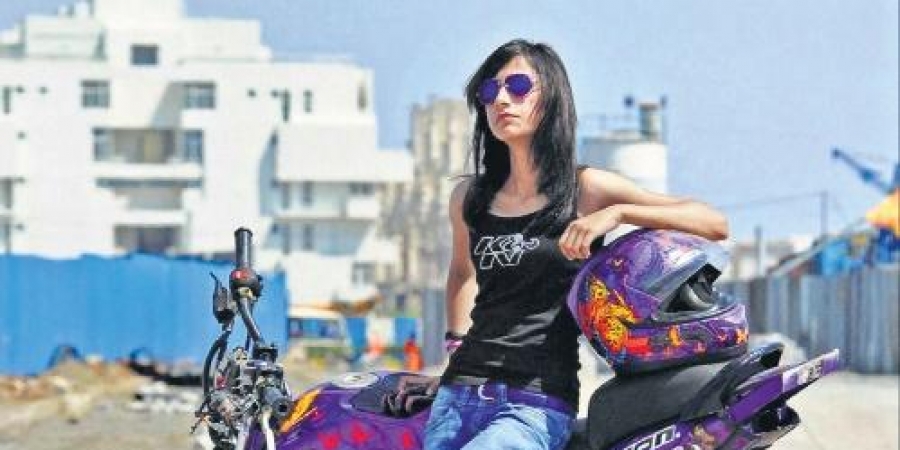
Titled ‘Anam’, Saumitra’s upcoming film is about a 21-year old girl who does stunts as a sport. The film is inspired by the life of Anam Hashim, a female bike stunt performer and rider.

The tagline of the film reads ‘a bike doesn’t know your gender’. The story is conceptualized by Anam and penned by Namneesh Sharma.

Director Saumitra Singh, who had earlier helmed the award-winning short films The Wallet and Painful Pride, is gearing up for his feature debut.

Titled Anam, Saumitra’s upcoming film is about a 21-year old girl who does stunts as a sport. The film is inspired by the life of Anam Hashim, a female bike stunt performer and rider.

The tagline of the film reads ‘a bike doesn’t know your gender’. The story is conceptualized by Anam and penned by Namneesh Sharma. While the cast is yet to be locked, an A-list actor will be a part of it, the makers shared.

“I have been working on this idea for quite some time now. However, I was busy making and promoting my two short films but been working on Anam simultaneously. The script has come out well and I can’t wait to start making it,” Saumitra says.

In 2015, Anam became the youngest woman to ride to Khardung La mountain pass on a TVS scooty for the Himalayan Highs initiative. Her achievement was included in the India Book of Records.Speaking about her journey, Anam shares, “While growing up as a kid, I always was someone who was inclined towards cycles, bikes and cars. Eventually, I discovered my love for bikes and stunts through the internet. 

My journey began by trying to learn how to do wheelies on others bike and it gave me enough confidence to even get my own bike. While I was finishing my 12th, I was very sure of what I wanted to do in life, stunt riding/street bike freestyle.”

source: http://www.newindianexpress.com / The New Indian Express / Home> Entertainment> Hindi / by Express News Service / May 29th, 2020

This couple plans to produce 1 lakh Covid-19 testing kits a day

NEW DELHI :

“It feels good to have a purpose and be able to contribute to the country during these times. We are lucky we have found our purpose even through this hopeless period,” says Afifa.

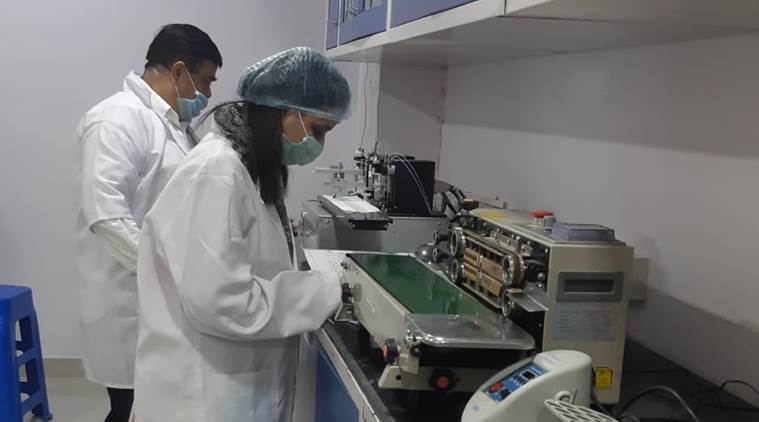
Dr Nadeem Rahman and wife Asifa Rahman in the lab

Dr Nadeem Rahman, a bio-chemist at Nu Life consultants and distributors, and his wife Afifa Rahman, a pharmacist at the same company, have spent the past few weeks working through the nights to fulfill their goal of producing 1 lakh rapid anti-body kits per day, meeting the pressing demand for such kits in India. “It feels good to have a purpose and be able to contribute to the country during these times. We are lucky we have found our purpose even through this hopeless period,” says Afifa, who adds that the couple have lost track of the time they spend in their office and laboratory since the company decided to begin manufacturing these kits.

Nu Life is one of the nine Indian companies which has received validation from NIV Pune and has been cleared by the ICMR to begin manufacturing of rapid antibody test kits, which would take less than 15 minutes to show results. There was a brief glitch in their plans due to some defective kits from China but they are back in action. “We received the approval on Monday, but we began working on producing the kits to be verified ever since the lockdown began,” says Afeefa. Without a moment lost, the team of bio-chemists, pharmacists and bio technicians working at the company began manufacturing the kits on April 14th, a day after they received the ICMR approval. Despite their quick action and fervent commitment, the team’s path towards meeting production goals is full of hurdles.

“If all the parameters are in place, which includes all the staff being able to commute to the workplace per usual, and all the raw materials for testing get delivered in time, then we can easily produce one lakh kits per day, but with current lockdown scenario and global shortage of raw materials, we are realistically producing 60,000 to 75,000 kits per day,” says Dr Nadeem, who is a founding member of the company and has driven the logistics and ideation behind their rapid test kit manufacturing project. According to his wife Afifa, even after the couple goes back to their house in Jasola, they spend time ideating on how to optimize their production. “As you can see, there is no escape from COVID 19 for us now,” remarks Afifa with a short laugh.

Before the company received approval from the government to manufacture kits, the couple would spend hours ferrying their staff to and fro between the laboratory and their homes. “Before they all got passes from the government, we had to make sure they reach home. We even worried for the women’s security, who stayed at the laboratory till late at night, finishing work, but now the UP government has provided passes to all our team members,” says Afifa. The company’s staff commutes from different parts of Uttar Pradesh, taking more than an hour to reach the office, so the team has planned to fix accommodation in the office premises soon, so that production deadlines can be met well in time. “It even limits their potential exposure to the disease which they could in turn pass on to their family members,” says Afifa.

Apart from the challenges of bringing the production staff together, Nadeem Rahman states that their biggest hurdle is the prompt delivery of raw materials. “We are getting access to these materials, but to ensure the best quality, you have to wait for the best products. The demand for antigens especially, has increased worldwide, leading to the shortage of its supply,” explains Nadeem. Antigens are the molecular structure that triggers antibody response in the blood sample deposited in the kit. It is this response which indicates the presence of SAR COV 2 infection in the patient tested for the disease.

Explaining how the testing kit is used, Nadeem states that the kit employs the same lateral testing technology which has been used in pregnancy tests. “Instead of urine though, you just place a drop of blood and if two red strips appear, it suggests that you have enough antibody response to indicate the presence of the virus,” he says. The manufacturing cost per kit is placed at Rs 500 to Rs 600, much less expensive than the Rt PCR test for COVID 19. “As we optimize production, hopefully the cost of the kits will remain close to the manufacturing cost. Either way, it should be accessible and affordable to all if goes straight to the market in the future,” says the scientist.

source: http://www.indianexpress.com / The Indian Express / Home> India / by Chahat Rana / Chandigarh, April 30th, 2020

In Assam, ‘one-man call centre’ for stranded migrants

Guwahati, ASSAM :

How an Assam lawyer became the source of reprieve for thousands of stranded migrants during the lockdown.

Guwahati :

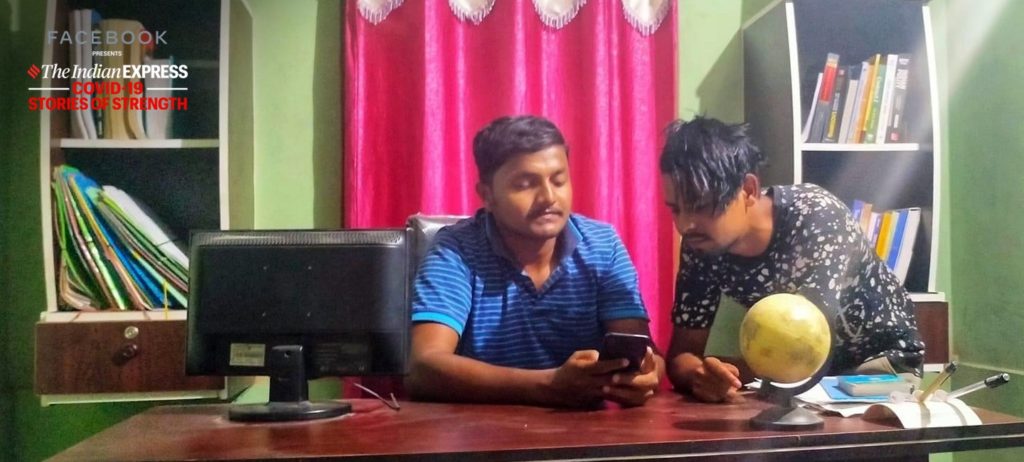
A few days after the lockdown, when the plight of the stranded migrant first started making news, 27-year-old Aatifur Hussain remembered how some people from his village were in Haryana. An advocate from Assam’s Barpeta  district, Hussain decided to give them a call. “They were panicking because they had run out of food,” recalls Hussain, who immediately touched base with a few local NGOs in Haryana. “They got their rations within 24 hours. The problem was solved.”

The next day, however, Hussain received another panic call from Noida. “I called up the local police station where the labourers were stuck, and they, too, received help,” says Hussain. Following that, the lawyer was suddenly receiving calls from all over the country — Kerala, Uttar Pradesh, Tamil Nadu, Maharashtra etc. “Word had somehow spread that I was helping stranded migrant workers from Assam with rations.”

In the beginning, Hussain would meticulously note down details of each and every call in his diary, but now the pages have run out. “There were just too many calls,” says Hussain, “It was almost like I was a call centre.”

Hussain did not mind — two years back, after he passed his LLB exams, he began providing pro-bono services to people caught in legal citizenship battles in Assam. “I had started an NGO called ‘Insaaf’ to aid people who needed help with National Register of Citizens (NRC) hearings or had to face Foreigners’ Tribunals,” says Hussain. The latter referred to the quasi-judicial courts many in Assam have to defend their citizenship in.

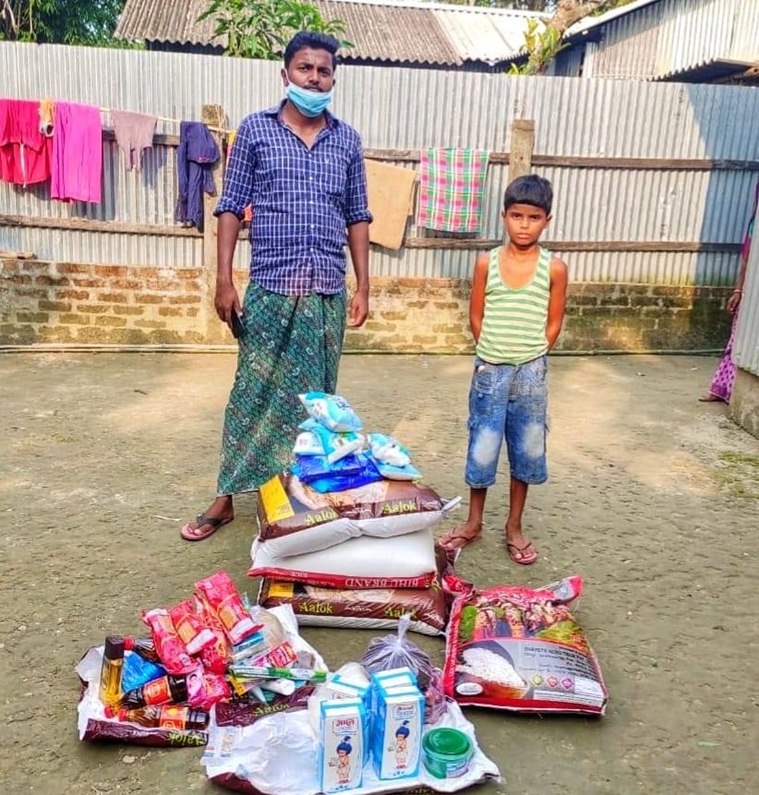
In the first two weeks, Hussain’s ‘call centre’ provided at least 2,000 people with basic rations, but a month later, he has lost count. On his phone, contacts are saved as ‘Kerala’, ‘Noida’, ‘Mhr’ (Maharashtra) — “I don’t even remember their actual names now,” he says.

One of his very first beneficiaries was a man named Habejuddin, who was stuck in Ghaziabad, with about 200 people from Assam. “We got his number on Facebook ,” says Habejuddin, on the phone from Ghaziabad, “Someone had written that this was the man who had helped people in Gurgaon, so we took a chance and dialled his number. I do not know what exactly he did but we got rations the next day.”

Hussain says his job simply involved connecting the stranded to the “right people” — administration, police, NGOs or those who could amplify their distress on Facebook or Twitter. “The first thing I ask anyone who calls is how many people there are, their address, and I trace the police station nearest to them, and then make phone calls,” he says.

In the first two weeks, Hussain’s ‘call centre’ provided at least 2,000 people with basic rations but, a month later, he has lost count.

Over the last few weeks, Rahman’s role has changed too, as people’s requirements have. In mid-April, when the Assam government announced Rs 2,000 for those stranded, Rahman began teaching people how to apply for the aid. “Since many of these people are uneducated, they did not understand anything,” says Hussain, “I would explain to them that they have to give a missed call, click on the link, fill up a form etc.” Suresh Zaman, who is stranded in Maharashtra’s Pune district, said that is how many from their group availed the Rs 2,000 service. “Someone from Assam passed us his number,” says Zaman, who is still Maharashtra, “First, he helped us to get rations; later he was the one who told us about this scheme.”

Now, with the special shramik trains introduced, many are returning home. “They often call me agitated when they don’t have information about the trains. I try to give them as many details as possible,” he says, adding that he also ‘counsels’ people who are feeling low because of the lockdown. “I am used to this because I have helped a lot of people who had depression when they received notices from the Foreigners’ Tribunal,” he says.

Just last month, a man named Abdul, an Assam resident stranded in Arunachal Pradesh, reached out to Hussain, threatening to kill himself, if not brought back. “I was very sad as people told me I will never be able to go home,” says Abdul. On May 3, when the inter-state bus services started in the Northeast, Hussain put Abdul in touch with the authorities, who packed him off on a bus from Arunachal Pradesh.

“He used to call me 10 to 15 times a day,” says Hussain, “I have one sim but maybe it is now time to get two,” he says.

source: http://www.indianexpress.com / The Indian Express / Home> Facebook presents The Indian Express / Covid-19 stories of strength / by Tora Agarwala / May 20th, 2020

Hens lay eggs with green yolks in Kerala; scientists launch study

Othukkungal (Malappuram) , KERALA :

Around nine months ago, Shihabudheen found that an egg laid by one of his hens had a green yolk. Neither he nor his family consumed it since they wondered if it would be safe.

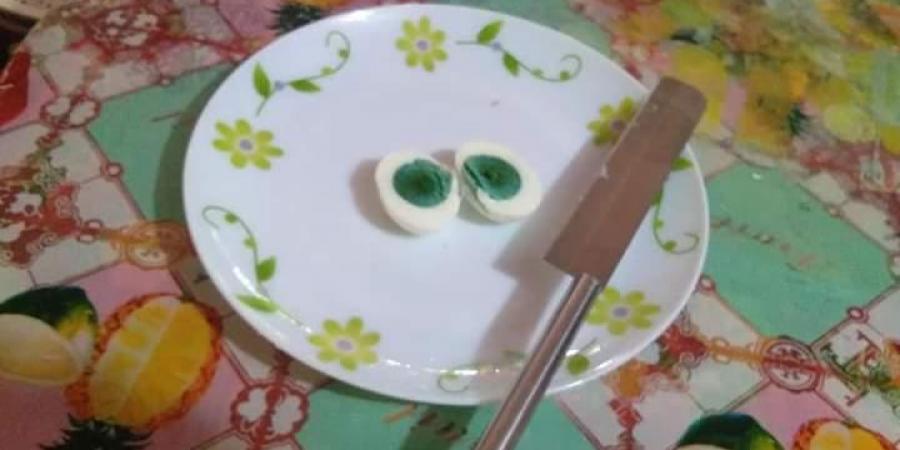
The eggs that are now going viral on social media.

Malappuram :

The curious case of six hens in the small poultry farm of A K Shihabudheen, a native of Othukkungal in Malappuram, laying eggs with green yolks, is now the talk of the town.

After the photos of the eggs with green yolks went viral on social media, people from different parts of the country and even abroad began contacting Shihabudheen to know more about the phenomenon. Recently, scientists from the Kerala Veterinary and Animal Sciences University (KVASU) launched a study on the special hens and the eggs.

Around nine months ago, Shihabudheen found that an egg laid by one of his hens had a green yolk. Neither he nor his family consumed it since they wondered if it would be safe.

Instead, he hatched some of the eggs laid by the hen. Interestingly, the new hens also started laying green eggs. 

“When we found that we could hatch chickens from these eggs, we began consuming the green eggs. The news of this egg phenomenon spread after I shared some pictures on social media a couple of weeks ago,” said Shihabudheen.

He said the eggs with green yolks taste exactly like the normal ones. He now plans to hatch more such hens and eggs for sales. 

“Many have approached me for green eggs. But, now, I’m keeping them for hatching. The eggs will be sold after the scientists of the Mannuthy KVASU complete their study on the phenomenon. The scientists are of the view that some special feed consumed by the hens might be the reason behind them laying eggs with green yolks. However, I did not give any special feed to these hens,” he said.

Harikrishnan S, assistant professor at the university, said they need three more weeks to identify the reason behind the phenomenon. “Some earlier researchers say it is possible to change the colour of the yolk by providing the hens with some special feeds. We are looking into that possibility,” he said.

Harikrishnan and his team will give normal chicken feed developed at the university to the two chickens from Shihabudheen’s farm. 

“We will observe the hens at the university. After three weeks, if the hens lay white eggs, we can confirm that the hens were eating something special at the farm. If the hens lay green eggs even after the three weeks, we will have to do more studies to find out the exact reason behind the phenomenon,” he said.

source: http://www.newindianexpress.com / The New Indian Express / Home> States> Kerala / byExpress News Service / May 21st, 2020

Sania Mirza becomes first Indian to win Fed Cup Heart Award, donates prize money to Covid-19 fight

Hyderabad, TELANGANA :

The 33-year-old made a comeback to Fed Cup after four year and helped India qualify for the Play-offs for the first time in history.

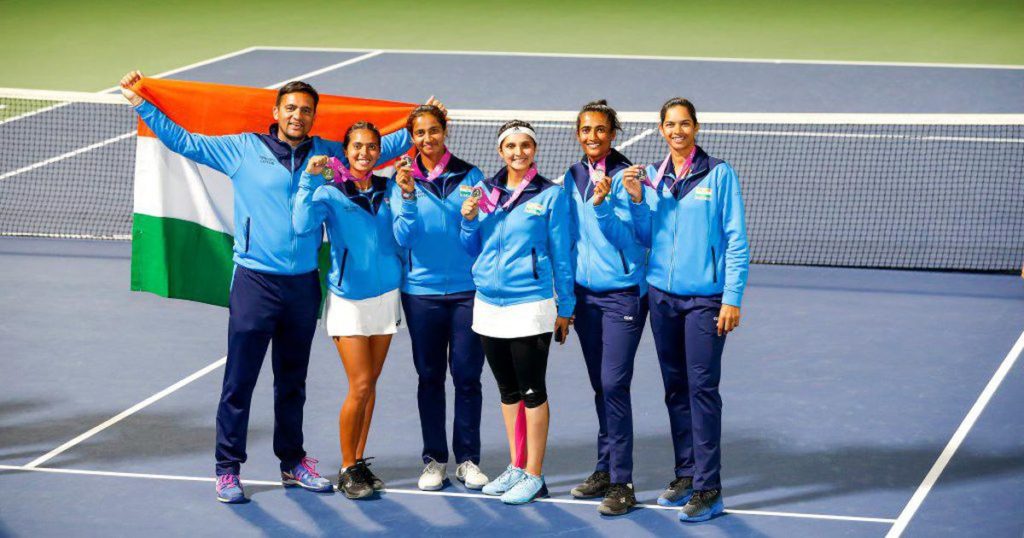
File image of Sania Mirza (third from R) and Indian team at Fed Cup from earlier in 2020 | Via Indian Tennis Daily

Indian tennis star on Monday won the Fed Cup Heart Award from the Asia/Oceania zone for her performance on return from maternity break earlier this year.

The 33-year-old made a comeback to Fed Cup after four years and helped India qualify  for the Play-offs for the first time in history, with 18-month old son Izhaan present in the stands. Mirza helped India remain unbeaten in doubles with a decisive win over Indonesia that secured second place in the group.

She is also the first Indian to win the award.

“It’s an honour to win the Fed Cup Heart Award as the first Indian,” Mirza, who was also India’s first Heart Award nominee, was quoted as saying on Fed Cup’s official website.

“I dedicate this award to the entire country and to all my fans and thank everyone for voting for me. I hope to bring more laurels to the country in the future.”

Along with the award, she also received a cheque for $2,000 to be donated to a charity and she opted to help with relief during the coronavirus crisis.

“I want to donate the money that I get from this award to the Telangana Chief Minister’s Relief Fund as the world is going through very difficult times with the virus,” she added.

Latvia’s Anastasija Sevastova won the Qualifiers award for her win against USA’s Serena Williams with Mexico’s Fernanda Contreras Gomez and Estonian Anett Kontaveit being the other zone winners.

@MirzaSania

I want to donate the funds that I get from this award to the Telangana CM relief Fund as the world is going through very difficult times with the virus .. thank you all

🙏🏽

View image on Twitter

Mirza won the award for Asia/Oceania zone after securing 10,000 plus votes out of the total 16,985 cast for this year’s three regional Group I nominees, reported PTI.

The Fed Cup Heart Award winners were determined via online voting by fans which went on for a week starting from May 1.

Mirza’s vote share of over 60 per cent of the total votes is a testimony to the global popularity of the Indian star at the Fed Cup competition. She made a comeback to Fed Cup earlier in 2020 after four years. After giving birth to her son in October 2018, Mirza returned to the court in January this year and instantly achieved success by clinching the women’s doubles title at Hobart International alongside Nadiia Kichenok.

Former world No 1 in doubles and six-time Grand Slam champion, Mirza beat Indonesia’s 16-year-old Priska Madelyn Nugroho for the award in Asia/Oceania regional category.

(With PTI inputs)

source: http://www.scroll.in / Scroll.in / Home> Indian Tennis / by Scroll Staff / May 11th, 2020

Police Officer slain in Handwara gunfight laid to rest

JAMMU & KASHMIR :

Srinagar (KNS):

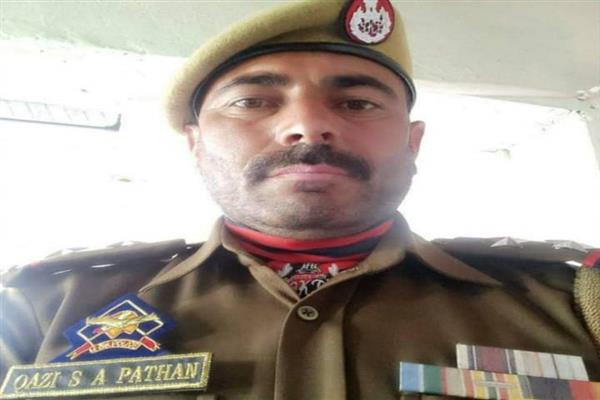
A 42-year-old JKP slain police Sub-Inspecter Qazi Sageer Ahmad Pathan on late Sunday evening was laid to rest in his ancestral graveyard in Tadd village of Karnah north Kashmir’s Kupwara district amid sobs ad tears. 

According to Kashmir News Service (KNS), a pall of gloom desended on Tadd village of Karnah when body of slain police officer reached his ancestral place where hundreds of mourners attended his funeral prayers before he was laid to rest. His  premonition of death left tadd villagers awash with tears. His two minor siblings six-year-old Insha and Eight-year-old Towfeeq watched bewildered, what happned.

 Inconsolable his wife Rasheeda Begum and aged parents wailed and were beating their chests, trying to come to terms with the devastating loss. Slain police officer was appointed as constable in 1999 in Armed wing of Jammu and Kashmir Police, later on he volunteered himself for working with Police Special Operational Group (SOG), an elite counter insurgency force from 2006. 

As per official sources, the slain police officer was honored with various medals which include Sher-e-Kashmir Police Medal for gallantry in 2009, Police medal for gallantry by President of India in 2011, DGP Jammu and Kashmir Commendation Medal and GOC-in-C, Northern Command commendation Disc. 

Notably slain police officer was among five forces personnel who got killed in a night-long gun battle that broke out in Chanjmulla hamlet of Handwara town. Two militants including top Jaish commander Haider, a foriegner, were also killed in exchange of fire. (KNS)

source: http://www.knskashmir.com / Kashmir News Service / by Zubair Ahmad / May 04th, 2020

Muslim man breaks fast to donate blood to a Hindu in Kota

Kota, RAJASTHAN :

Mohammad Khalid rushed to donate blood at the blood bank of Maharao Bhim Singh Hospital in Kota though he was observing the Ramzan fast without knowing receivers blood type.

A 31-year-old man broke his Roza (fast) to donate blood to a hospitalised patient in need of a rare blood type.
A 31-year-old man broke his Roza (fast) to donate blood to a hospitalised patient in need of a rare blood type.(HT File Photo)

A 31-year-old man won several hearts on Thursday after he broke his Roza (fast) to donate blood to a hospitalised patient in need of a rare blood type.

Mohammad Khalid, who works as tyre puncture repairer, rushed to donate blood at the blood bank of Maharao Bhim Singh Hospital in Kota though he was observing the Ramzan fast, after he got a call from a voluntary blood donors group, seeking his rare A negative (A-) blood type, to save the life of one Rajendra Sharma, a 48-year-old road accident victim from Bundi.

“Saving life of a human being is bigger than observing Roza or pursuing religious rituals, so I broke my fast and donated blood for the patient”, said Khalid adding that such gestures would send the message of communal harmony in society. “I did not know the religion of the injured patient when I got a call for blood donation,” said Khalid. “It is a matter of pride that God has made me a giver,” he added.

Said Bhuvnesh Gupta, a social activist and a team member of Jeevandata group that got in touch with Khalid: “Rajendra had a rare A negative (A-) blood group, and our search finally ended with Khalid”, he said.

“Khalid had donated blood on 10 other occasions in the past,” said Gupta.

source: http://www.hindustantimes.com / Hindustan Times / Home> Jaipur / by Aabshar H Quazi / Hindustan Times, Jaipur / May 17th, 2019

AIIMS doctor removes safety gear, risks life to save COVID-19 patient

Wanihama-Dialgam Village (Anantnag District) J & K / NEW DELHI :

Patient still on ventilator while the doctor is under quarantine

Zahid Abdul Majeed, a senior resident doctor at All India Institute of Medical Sciences (AIIMS), put his life at risk to save a COVID-19 patient on the way to the hospital’s trauma centre in an ambulance on May 7.

Dr. Zahid, who works at the critical care division of the hospital, had to remove his PPE (goggles and face-shield) to re-intubate the patient. While the patient continues to be on a ventilator, the doctor is under quarantine after the exposure.

“My father called me today [Sunday] and said even if I were to die from COVID -19, he would not grieve as I saved the life of a patient and may die as a martyr. It felt like a weight had been lifted from my heart. My parents appreciated the spirit with which this intervention was performed,’’ noted Dr. Zahid on Sunday.

Hailing from Kashmir’s Wanihama-Dialgam village in Anantnag district, Dr. Zahid has been working at AIIMS for nearly two years.

“Of course, this is not an example to follow. All healthcare professionals should use PPEs. When the transfer was happening, I realised that the patient’s tube was mal-positioned and that without immediate intervention, the patient would go into a cardiac arrest. In a dim-lit ambulance, working with PPE wasn’t a viable option and I quickly removed the face-shield [they were fogging up] and goggles while keeping my N-95 mask on to perform the procedure. I immediately reported the breach in PPE and was advised to proceed to quarantine,’’ said Dr. Zahid.

Intubation and the steps leading up to it are some of the high-risk moments for COVID-19 spread to healthcare workers and other patients, according to World Health Organization, which has recommended that strict protocols to limit viral exposure must be followed.

“This is the holy month of Ramadan and I reacted to a fellow human being in distress. As a doctor and a human being, I couldn’t have let harm come to my patient. The thinking and orientation at AIIMS are such that I have always seen my teachers and seniors go that extra mile for the patients….it does affect the way you start looking at your duty,’’ said Dr. Zahid.

The doctor said he hasn’t been able to meet his parents in nearly a year now and hopes that the COVID-19 situation improves enough for him to head to his village. “I was worried about what my father would say but his reaction has filled my heart with joy and I feel so much stronger now,’’ said Dr. Zahid, adding that he is looking forward to heading back to the hospital and back to his patients at the earliest.

source: http://www.thehindu.com / The Hindu / Home> News> Cities> Delhi / by Bindu Shajan Perappadan / New Delhi – May 10th, 2020