Category Archives: Amazing Feats

The forgotten Muslim heroes of WWI

FRANCE / EUROPE :

How Muslim soldiers helped save the allies from defeat in the First World War
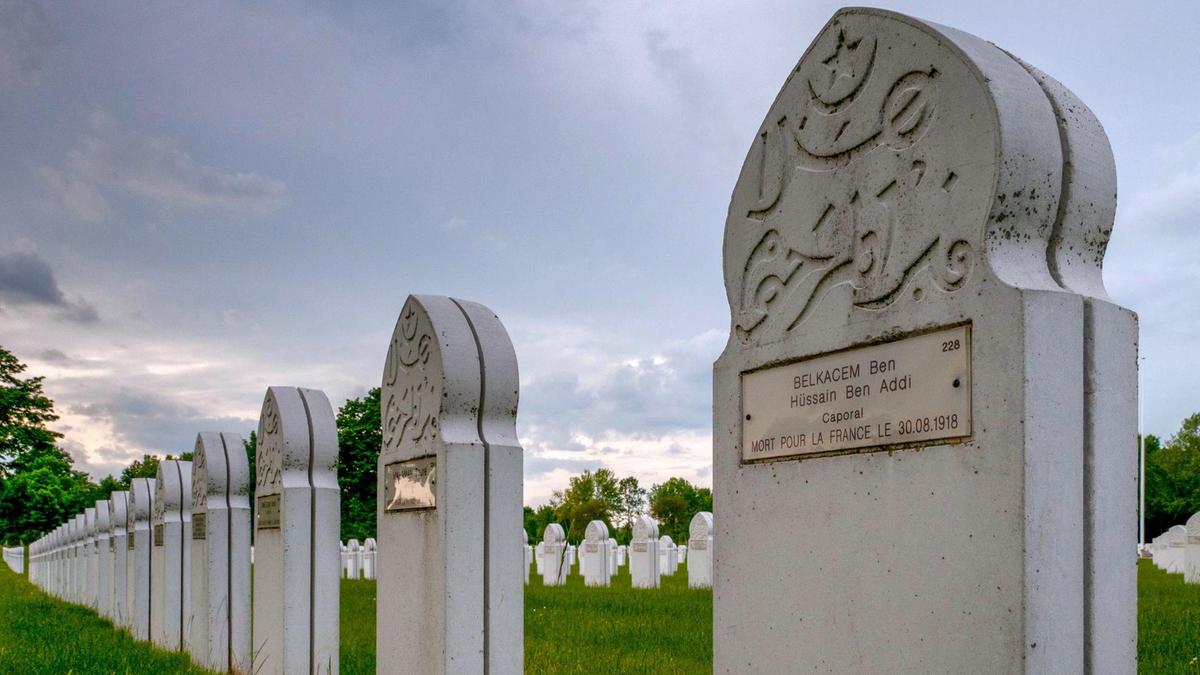
A grave of a Muslim soldier who died during the First World War in the French war cemetery La Ferme de Suippes, Champagne. David Crossland / The National

Engraved with Islamic inscriptions, the headstones of 576 Muslim soldiers stand in ranks facing Mecca at Notre Dame de Lorette, the biggest of France’s many war cemeteries.

Each one is also inscribed with the words “Mort Pour La France” – died for France – like the massed crosses of their Christian comrades in this 62-acre memorial containing the remains of over 40,000 soldiers. Today it is a lonely place of birdsong and rustling trees overlooking the slag heaps of the Artois mining region but it was once one of the bloodiest battlefields of the First World War.

The Muslim graves have lain mostly forgotten for almost a century, save on three occasions in the last decades when their graves were desecrated with anti-Muslim graffiti. The sacrifices made by these soldiers and their 2.5 million fellow Muslims who fought for France, the British empire and Russia has been largely ignored, especially in comparison with the exhaustive accounts of Western troops in poems, diaries and histories.
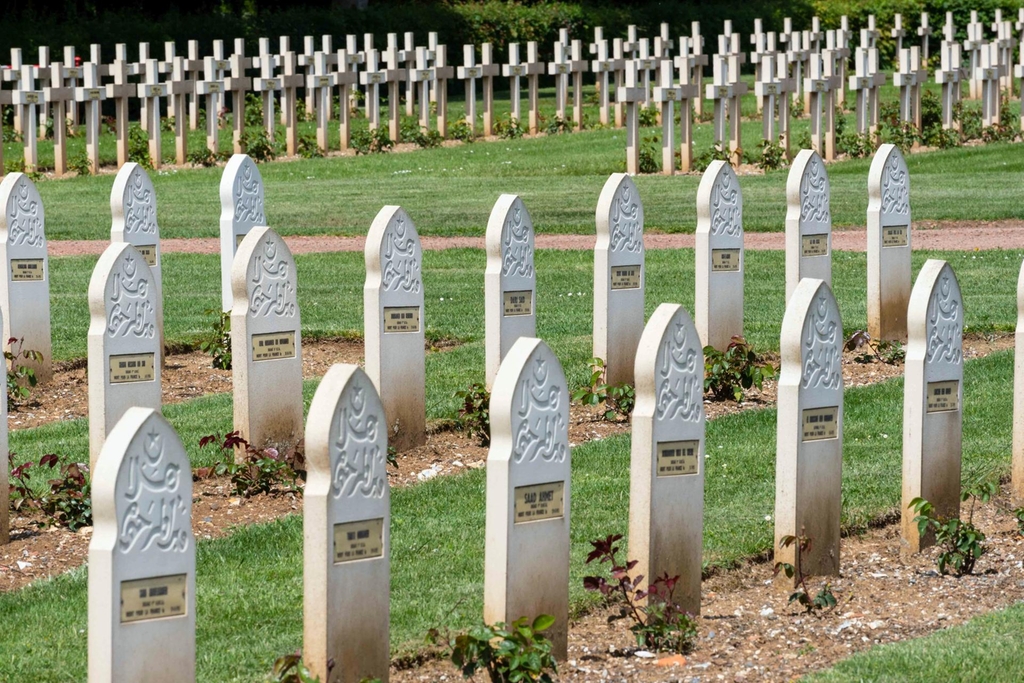
Muslim headstones from the First World War in Notre Dame de Lorette French national cemetery. In the background are Christian headstones. David Crossland / The National

Luc Ferrier, the Belgian founder and chairman of the Forgotten Heroes 14-19 Foundation, is battling to change that.

He is convinced that without Muslim troops and labourers, the Allies would have lost the war. Raising public awareness of their contribution could help counter anti-Islamic sentiment in Europe, and give immigrant communities a stronger sense of belonging, he told The National.

“This project is contradicting the myth that Muslims have not played a positive role in Europe or in modern history,” he said.

“By adding a wealth of authentic documented evidence portraying Muslims positively, we can counter Islamophobia, as well as the divisive ‘clash of civilisations’ narrative which both the far-right and ‘religious’ extremists rely on to further their narrow aims.”

The last four years have seen intense commemoration of the war’s centenary, which will culminate in ceremonies marking the armistice on November 11.

Paradoxically, the remembrance has coincided with a rise in the kind of nationalism that spawned the “war to end all wars.” Right-wing populists across Europe are targeting immigrants but also the European Union, set up in the wake of the Second World War to bring lasting peace to the ravaged continent.

Mr Ferrier, a 55-year-old former executive in the aeronautical industry who is not Muslim, set up the foundation in 2012 after discovering the diaries of his great-grandfather, a soldier in the First World War. “I was impressed by the enormous respect he had for his Muslim brothers in arms from all these continents, while he himself was a very devout Christian,” he said.

When he tried to learn more, he found there was a dearth of literature on Muslim troops. The foundation has encouraged broader research into the topic. He has addressed conferences and secured the support of researchers worldwide who helped unearth and translate historical documents. His book, The Unknown Fallen, contains stories and photos that convey the global Muslim contribution in the war.
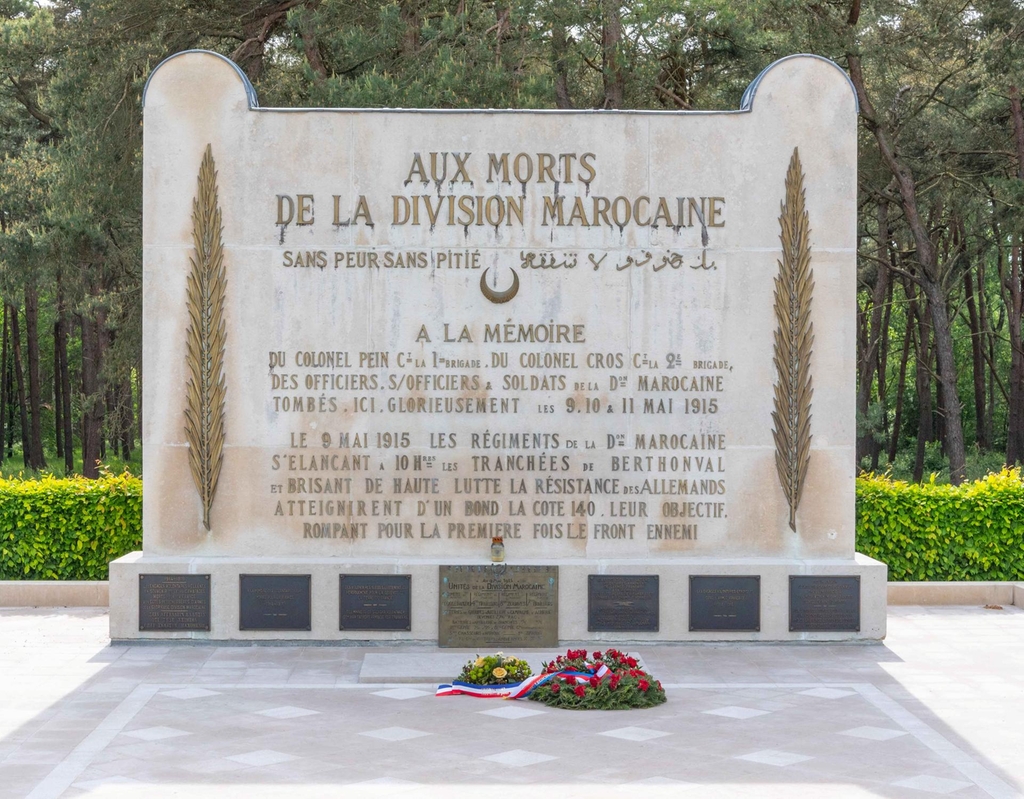
The memorial to the French-Moroccan division at Vimy Ridge, northern France. David Crossland / The National

Researchers have unearthed accounts of comradeship that saw priests, imams and rabbis learn each other’s burial ceremonies and prayers so that they could lay the dead of all faiths to rest on the battlefield. Stories have surfaced of North African Muslims saving the lives of European soldiers using herbal medicines when field medical supplies ran out.

After German troops marched into France in August 1914 and got close enough to Paris to see the Eiffel Tower, the French hastily summoned soldiers from French North Africa — Algeria, Morocco and Tunisia — while the British called troops from across its empire including India.

They cut dashing figures arriving in Marseille in their fezzes, turbans and brightly coloured uniforms, and crowds welcomed them as saviours. They were quickly dispatched to the front.

Troops from the British Indian Army, consisting of Muslims, Sikhs and Hindus with Muslims making up around a third, were in the thick of the fighting almost from the start. Arriving before troops from Canada, Australia and New Zealand, they reinforced exhausted British troops just in time to stop the German army breaking through to ports on the English channel in the First Battle of Ypres in 1914.

They were volunteers, trained and experienced soldiers, but like Western troops they were unprepared for the inferno of shells, machine guns, poison gas and rat-infested trenches they were thrown into.

“Just like a turnip is cut to pieces, so a man is blown to bits by the explosion of a shell,” wrote a Pathan soldier from northern India. “All those who came with me have ceased to exist … In taking a hundred yards of trench it is like the destruction of the world.”

But they didn’t buckle in the face of gas, freezing weather and the best-equipped army in the world, and quickly gained the admiration of European officers and men.

“It was known that Muslims troops attacked fiercely,” said Mr Ferrier. “Western troops had an ambiguous feeling when they showed up; they were happy to have them on their side but it was also a sign that an attack was on the way.”
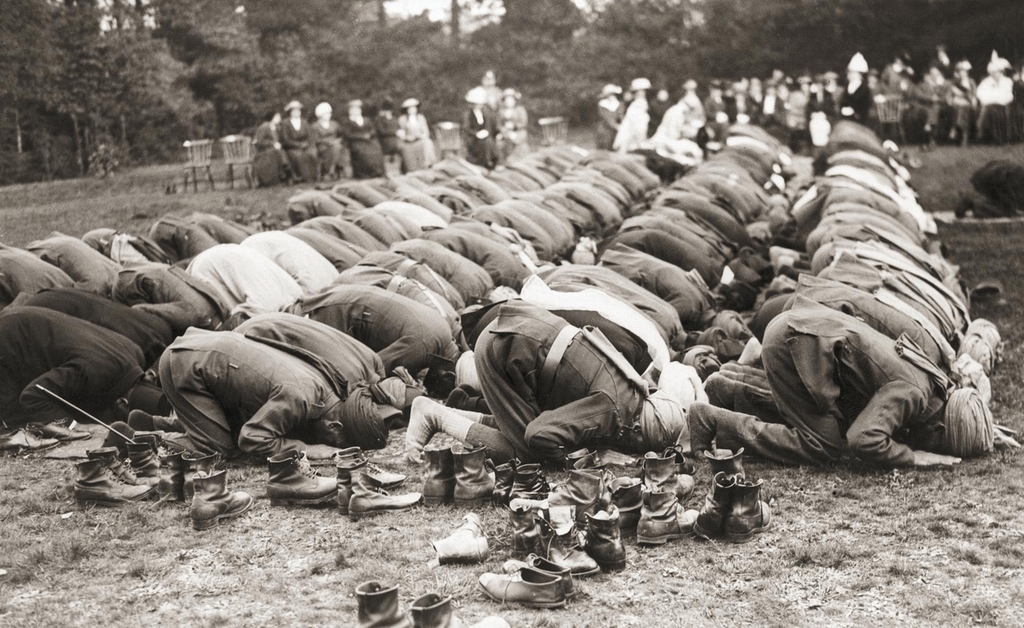
Indian troops serving with the British Army pray outside the Shah Jahan Mosque in Woking, Surrey, during the Muslim festival of Baqrid, or Eid al-Adha, (Festival of Sacrifice), circa 1916. (Photo by FPG/Hulton Archive/Getty Images)

In this merciless war, they saw their comrades gassed and bayoneted to death. Yet the British and French were struck by how humanely Muslim troops treated prisoners of war. Asked why, they referred to Islamic teaching that prisoners must be fed in a dignified manner.

They won medals for their courage, and the British, masters of propaganda, ensured that photos of King George V, Emperor of India, pinning medals on their chests were circulated around India to encourage more men to volunteer.

Recipients included Sepoy Khudadad Khan of the 129th Baluchis, who won Britain’s highest military award, the Victoria Cross, at the Belgian village of Hollebeke near Ypres on October 31, 1914 for preventing a German breakthrough by continuing to fire his machine gun after all his comrades had been killed and he had been wounded.

He was the first South Asian to win the VC, and Indian forces won around a dozen more during more the war. Some 1.5 million men from what is now India, Pakistan, Bangladesh and Myanmar fought on the Western front, in Africa, the Middle East and Gallipoli.

Officers made efforts to provide troops with halal food and there was a high death rate among Indian cooks who advanced dangerously close to German shells to serve the men chapatis and hot curry.

The cold was as bitter an enemy as the Germans and the incessant, freezing rain in the autumn of 1914 brought wistful memories of the monsoon that gave relief from the summer heat back home, so far away. There was no home leave. Going back all the way to India was too expensive, the troops were told.

“They suffered from frostbite and exposure, causing them to lose fingers,” said Mr Ferrier. “The trenches did little to provide shelter or warmth from the extreme low temperatures, especially at night, when even clothes and blankets froze solid.”

His foundation approached Britain’s Anglia Tours, which has experience in running guided visits to First World War sites, to help organise bespoke visits to the battlefields and memorial sites where Muslims fought.

The company started off with a promotional tour last November with about 50 people, including Muslim community representatives, journalists and historians.

“We’ve done a lot of work with Forgotten Heroes to make sure it’s their tour and that we get it exactly right from their point of view and make sure it’s historically accurate,” said Alison Biegel, the company’s operations director.

“As yet we don’t have a lot of people travelling because it’s still very much in its infancy. We would expect it to attract inter-faith groups and school groups as it’s a fascinating area that is of general interest. But it’s taking time. The community are not used to touring in this way so there’s quite a lot of confidence-building.”

Anglia Tours is talking to a mosque in London about a tour in September which may be the next one.

The lack of awareness of the Muslim contribution can’t be blamed solely on Western indifference. “It was more the global lack of interest from the grassroots Muslim community that caused it,” said Mr Ferrier.

In India, which lost over 70,000 troops in the war, that indifference is easily explained. The returning troops got no heroes’ welcome because they had fought for the British cause at a time when India was pushing for greater autonomy. Hopes that the sacrifice of so many Indian soldiers would persuade Britain to give in to demands from nationalists were brutally shattered by the massacre of Amritsar in 1919, when British troops murdered hundreds of people during a protest in Punjab.

“The soldiers and the war were already in the past,” wrote London-based historian Shrabani Basu in her 2015 book For King and Another Country. Nationalists were the new heroes, so the names etched on war memorials and headstones erected by grateful colonial rulers were forgotten.

For Mr Ferrier, the time has come to remember them.

source: http://www.thenational.ae / The National / Home> World> Europe / by David Crosland / June 07th, 2018
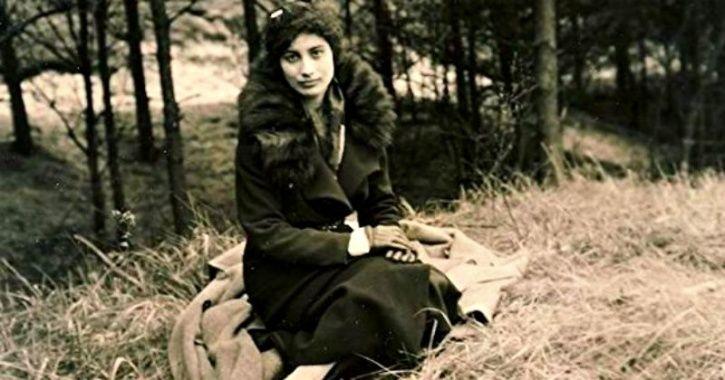
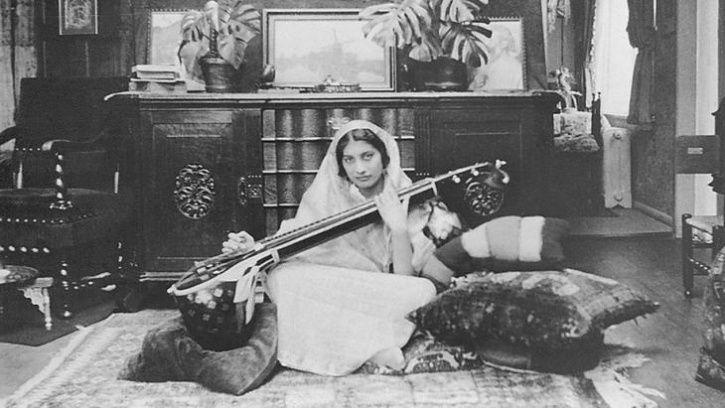
British Currency May Soon Have Picture Of Noor Inayat Khan, A British-Indian Spy During WWII

UNITED KINGDOM :

British Indian World War II spy Noor Inayat Khan may be the next face of British currency. A campaign for the same is gaining momentum wherein people are demanding the spy to be featured on a redesigned 50-pound currency note.

The Bank of England had recently announced plans for a new polymer version of the large denomination note to go into print from 2020 and indicated that it would invite public nominations for potential characters to appear on the new note.

An online petition in favour of the campaign has already garnered over 1,200 signatures by Wednesday, calling for Khan, a descendant of Tipu Sultan and daughter of Indian Sufi saint Hazrat Inayat Khan, to be considered as the first ethnic minority British woman to be honoured on the currency.

“I am absolutely delighted that the story of Noor Inayat Khan has inspired so many people and that she has become an icon. Noor was an extraordinary war heroine,” said Shrabani Basu, the author of Khan’s biography ‘Spy Princess’ and founder-chair of the Noor Inayat Khan Memorial Trust.

NoorInayatKhan01MPOs21oct2018

The trust was set up in 2010 to campaign for a memorial in honour of the war-time spy, who had been recruited by Britain’s Special Operations Executive (SOE) and infiltrated beyond enemy lines before being captured and killed by the Nazis in 1944, aged only 30.

Khan’s memorial bust now has a permanent home at Gordon Square in central London, with the trust also lobbying for a commemorative blue plaque to mark the house nearby where she spent time with her family.

“I am very happy to support the campaign for Noor Inayat Khan on the 50-pound note. It is a way of keeping her memory alive and taking this story to the next generation. It will certainly make a big statement internationally because Noor was someone who believed in breaking down barriers,” Basu said.

The campaign has found the backing of prominent political leaders, historians and academics in the UK, with many taking to social media to voice their support.

“The new 50-pound note could have anyone on it. I’m backing Noor Inayat Khan. She volunteered for SOE, served bravely as an agent in occupied Europe, was eventually captured and murdered. A Muslim, a woman, a hero of WWII. This would celebrate her courage and all SOE,” said Conservative Party MP Tom Tugendhat, who is currently leading the UK Parliament’s Global Britain and India Inquiry.

NoorInayatKhan02MPOs21oct2018

“Just returned from both East Africa and the Western Front and am more than ever aware of the shared service and sacrifice of men and women of many backgrounds. I would love to see Noor Inayat Khan on the new 50-pound note,” said Melvyn Roffe, Principal at George Watson’s College in Edinburgh.

Noor Inayat Khan, born in Moscow to an Indian father and American mother, was raised in Paris and Britain. As a Sufi, she believed in non-violence and also supported the Indian independence struggle.

But she felt compelled to join the British war effort against fascism and went on to become the first female radio operator to be infiltrated into Nazi-occupied France before she was captured, tortured and killed at the Dachau concentration camp in Nazi Germany.

“In this age, when we see a rise in anti-semitism, anti-Muslim hatred and intolerance, it is important that we continue to build bridges and show positive contributions from Britain’s ethnic and religious minorities, not least one of World War II’s almost forgotten heroes, a British Muslim woman,” said social activist Zehra Zaidi in the online petition she started to campaign for Khan as the face of the new banknote.

The 50-pound currency will be the final redesigned note to go into circulation after notes in the denomination of 5 and 10 have already been reissued in polymer. The new 20-pound polymer note will go into circulation from 2020 when the 50-pound is set to go into print to be circulated later.

“The bank will announce a character selection process for the new 50-pound note in due course, which will seek nominations from the public for potential characters to appear on the new note,” the Bank of England said.

With Inputs From PTI

source: http://www.indiatimes.com / India Times / Home> News> India / October 18th, 2018

‘Nur Jahan is the history of India’: Historian Ruby Lal on her new book

INDIA :

In an interview with Indianexpress.com, Lal spoke about the incredible achievements of Nur Jahan. Remnants of imperial orders issued by her, coins minted in her name, paintings that paid ode to her sovereignty and bravery are all evidence of the enormously powerful figure she was.

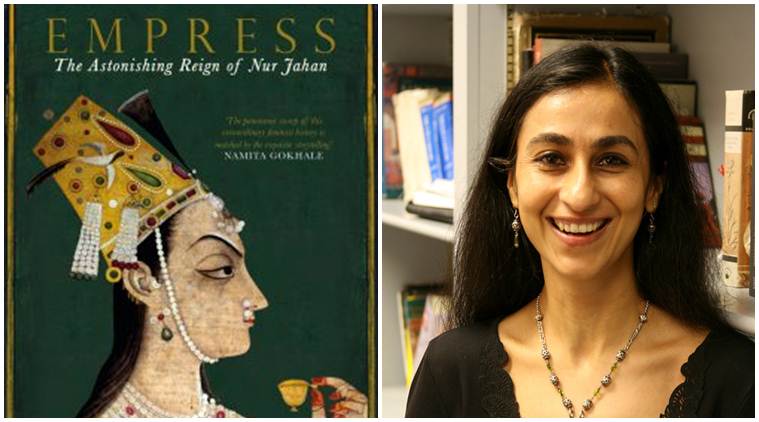
Left- Cover of the book ‘Empress: The astonishing reign of Nur Jahan’ (wwnorton.com) Right- Historian Ruby Lal (personal website of Ruby Lal)

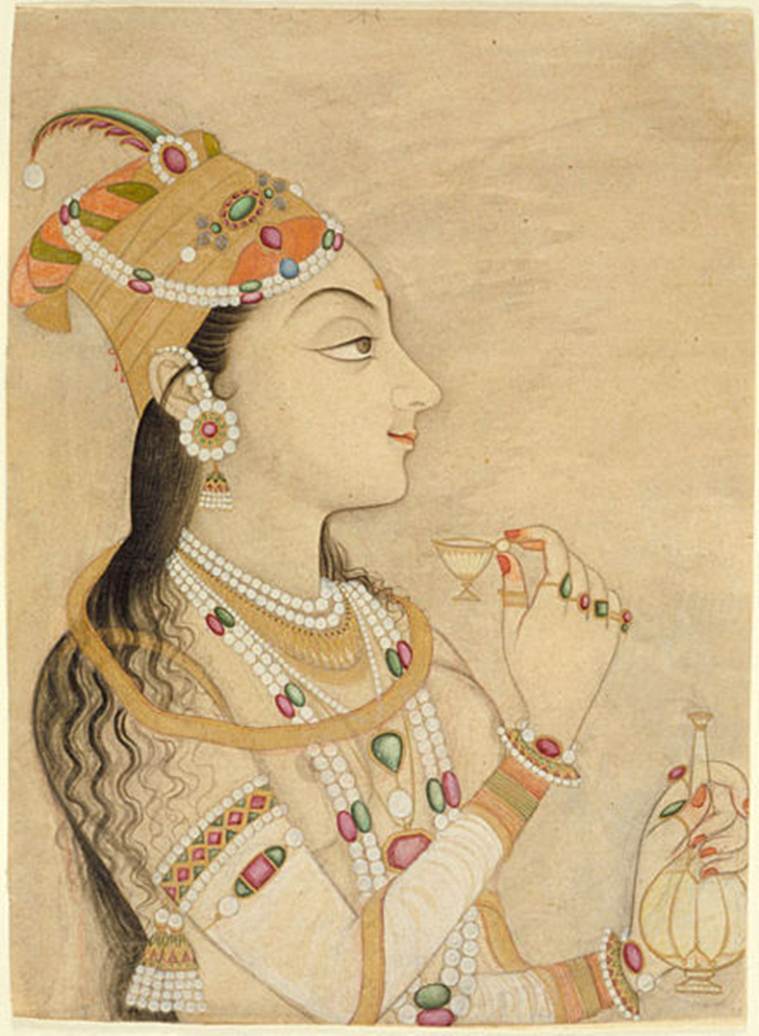
For four centuries, from when she was at the centre of one of the largest empires of the world, Nur Jahan, the twentieth and supposedly the most loved wife of Mughal emperor Jahangir, has been a household name in the Subcontinent. Though she was not officially the ruler of Mughal India, Nur Jahan has been noted by historians to be the real power behind the throne. A politically astute and charismatic figure, she ruled Mughal India as a co-sovereign of Jahangir and is known to have been more decisive and influential than he ever was. Historian Ruby Lal in her latest book, ‘Empress: The astonishing reign of Nur Jahan’, dives deep into the intriguing world of the only woman to have helmed the Mughal empire. Tracing her life in great detail, Lal attempts to rip apart narratives of romance and exoticism that surround the image of Nur Jahan and focus upon what made a Muslim woman living in seventeenth-century India, one of the most authoritarian figures in Indian history.

In an interview with Indianexpress.com, Lal spoke about the incredible achievements of Nur Jahan. “People say she always sat right next to Jehangir in the court and that if some cases or decisions came up and if she agreed with him, she would pat him on the back and he would say yes to that decision,” says Lal who is Professor of South Asian Studies at Emory University in Atlanta. Remnants of imperial orders issued by her, coins minted in her name, paintings that paid ode to her sovereignty and bravery are all evidence of the enormously powerful figure she was. Charting the life history of Nur Jahan, and placing her in the background of the pluralistic cultural space that Mughal India was, Lal puts together an evocative biographical account of the queen.

Here are excerpts from the interview with Lal.

Popular perception of Nur Jahan is somehow constricted to the romantic relationship she shared with Jahangir. Why is that the case?

There is a very long history of the erasure of Nur Jahan’s power that I chart in the book. As she traveled through the length and breadth of the country with Jahangir – issuing imperial orders, hunting a killer tiger near Mathura, discussing the expansion of the empire- she rose to being the co-sovereign. This does not mean that in her own time people did not raise eyebrows. In 1622, her stepson and Jahangir’s son Shah Jahan had risen in revolt. The catalyst for his revolt was the moment when Nur Jahan arranged a match for her daughter from her first marriage, Ladli; she chose the youngest prince, Shahriyar for her. About that time, Shah Jahan went into rebellion against Jahangir. And its is very clear that he felt threatened; he knew about the power of Nur Jahan. In fact, Shah Jahan and Nur Jahan had been closely aligned. The year 1622 is when certain chroniclers begin to write about the chaos that Nur Jahan Begum had raked up between the father and son.

“There is a very long history of the erasure of Nur Jahan’s power that I chart in the book,” says Ruby Lal. (Wikimedia Commons)

So the early criticism appears to begin around this time. The other major moment of critique of Nur’s power was when they were on their way to Kashmir and Mahabat Khan (who went on to capture Jahangir later in 1626) goes on the journey with them to a certain distance and according to one of the chroniclers he says to Jahangir that a man who was governed by a woman is likely to suffer from unforseen results. In 1626, she, completely visible, goes to save Jahangir (sitting upon an elephant on a roaring river), commanding all men including her brother Asaf Khan. She stratergises and eventually saves the emperor. After this, we begin to come across a word called Fitna, in the records.

Fitna is a very loaded term in Islamic history. It is used for the first time during the Shia-Sunni split for civil strife. It was also used against Ayesha, Prophet Muhammad’s favourite wife, when she went on a battle against Ali who was eventually the leader of the Shias. Over time, the word came to be used against women’s visibility, their sexuality and so on. Following 1626, this is one word that is used repeatedly against nur – that is to say that her power produced chaos.

Later, in the Shahjahanama, we find that at one point that the chronicler lists her power as a “problem”: the Shahjahanama reverts to the male inheritance of power and completely undoes her co-sovereignty with Jahangir.

Then there were also visitors to India like Thomas Roe, the ambassador of James I of England who follows Nur and Jahangir through the camps in Gujarat and Malwa. He calls her the Goddess of heathen impiety.

In the 19th century orientalist renditions of the romance of Nur and Jahangir become very important in the histories of the time; later, the colonial renditions highlight and forward such stories. Nur Jahan becomes classic oriental queen. Thus, a long-standing history of the erasure of the power of an astonishing emperess. It is certain that the erasure of Nur’s power travels into modern times and we only hear about her romance with Jahangir, not about her work as co-sovereign of the empire.

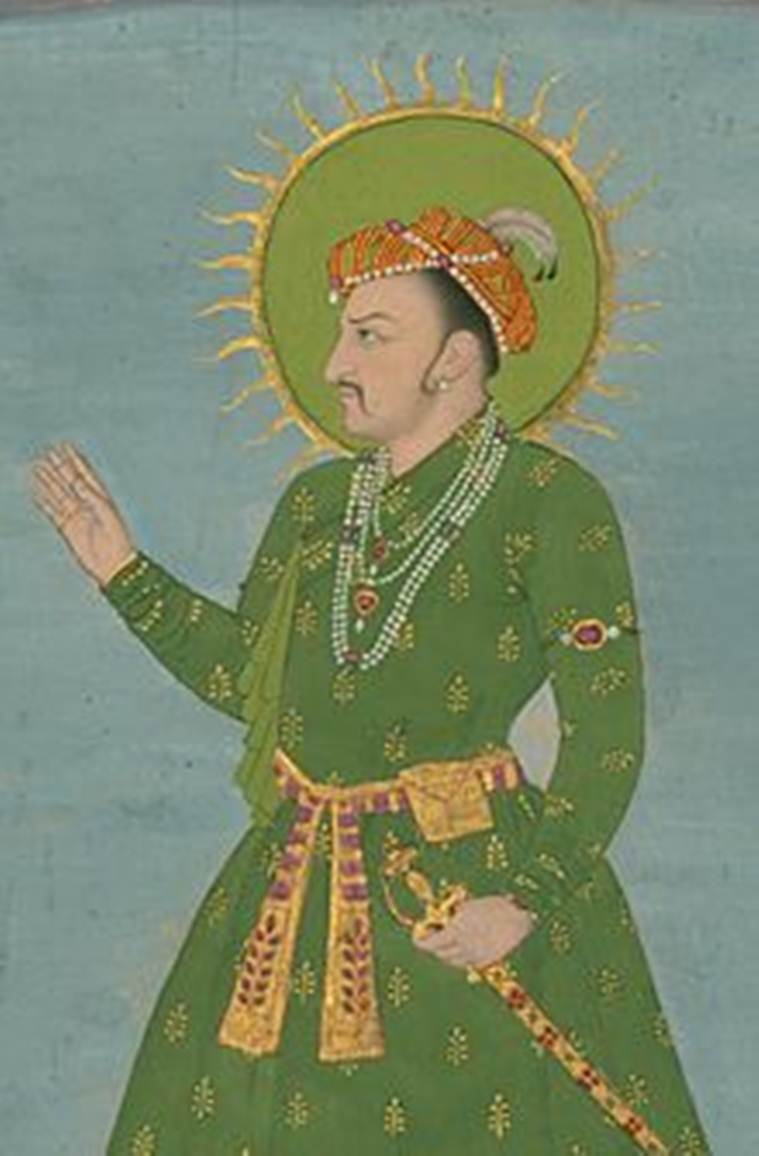
Jahangir is often compared with Akbar and criticised for being an uncompetitive, flamboyant king, who spent much of his time in drinking and merrymaking. But the fact that it was during the reign of Jahangir that a woman became so powerful, what does it say about his attitude towards women?

You are right, this is how Jahangir has come to be imagined. There are a range of scholars who for sometime now have been rethinking Jahangir’s reign, his philosophical and artistic engagements. My book foregrounds the ways in which Jahangir seeks to go differently from how Akbar articulated his sovereignty. If you look at the reigns of Babur and Humayun, there was no stone harem: the kings were nomadic and forever on the move. During Akbar the Great, for the first time in Mughal history, the imperial harem is built in stone in Fatehpur Sikhri. For the first time in the Ain-e-Akbari, women are declared as ‘pardeh-giyan’ which means “the veiled ones.”

“My book foregrounds the ways in which Jahangir seeks to go differently from how Akbar articulated his sovereignty,” says Ruby Lal. (Wikimedia Commons)

But what Jahangir does is that he goes back to the ethics of Babur. He was constantly wandering, he was constantly moving. The ethics of a peripatetic life and movement, which contributed to the co-sovereignty of Nur Jahan. Nur Jahan is the biggest example of Jahangir’s attitude towards women. An 18th-century chronicler that advances the Jahangirnama to the end of Jahangir’s death had suggested that the emperor had once claimed that he had given the sovereignty to Nur Jahan Begum and that he was quite content with his wine and meat. It’s an allegorical statement: and one indicates his admiration of Nur, something that he chronicles in his own memoir

Would Nur Jahan be this powerful had she not been married to Jahangir or had she not been part of the Mughal empire?

I think, Nur Jahan, looking at her whole life history and context, would have expressed her power differently in other circumstances. Her life history shows her dynamism and boldness. Of course, as I have been saying, and detail in the book that the plural landscape of Hindustan was very important- in that that it fostered experimentation and all sorts of ways of being (alongside war other challenges of co-existence of multi-confessional identities). We should also remember that she comes from an important Persian family background, deeply invested in poetry, arts, calligraphy. Then her own initiative must be highlighted: there were other women in the harem – and indeed Nur walks in the tracks of these women’s power – but no one becomes a co-sovereign. That speaks something about her boldness, her endeavours and of course her ambition.

Islamic societies are often noted to be more regressive compared to others in their treatment of women. In your book do you try to subvert this notion?

I Am trying to suggest that Nur Jahan is the history of India. She was a Shia married to a Sunni Muslim who was also half Hindu Rajput. Further, Nur Jahan is the only woman ruler among the great Mughals of India (there are technical signs of being a sovereign and informal signs, both of which I detail in the book). That is the history of India. As far as Islam is concerned, people should know that there were incredible and powerful women in Islamic history all the way through. We have Ayesha, Raziya, we have Nur Jahan Begum, we have any number of powerful women. It is also the multicultural world. In the modern world, we tend to think in terms of fixed identities. People in early modern times were much more open. Jahangir was engaging with Siddichandra, a Jain monk. Nur Jahan used to tease him about the pleasures of the flesh.  What does this tell you? It tells you about an open engagement. It tells you about how experimental Islam is, how mixed Islam is, how vibrant Muslim women are and how Islam is so deeply attached to India.

‘Empress: The astonishing reign of Nur Jahan’ has been published by W.W.Norton in the United States earlier this month and will be published by Penguin Books in India soon.
source: http://www.indianexpress.com / The Indian Express / Home> Research / by Anrija Roychowdhury, New Delhi / July 11th, 2018

Brand dame

NEW DELHI :

ShahnazHussainMPOs15oct2018

Entrepreneur, under-the-radar philanthropist and an over-the-top personality — the relevance of Shahnaz Husain 40 years after her first formulation

Shahnaz Husain’s press kit weighs 12.3 kilos, and contains press clippings from around the world. But then everything about her is over the top, and it’s not just her red hair threaded through with gold ribbons. Of her 58 homes, one is in Delhi’s tony Greater Kailash. There is a Rolls-Royce and a Jaguar parked up front, while inside is a sort of Midas-touch shocker. There are swans, a Ganesha, cushions, high-backed chairs, window valances, all in gold. There is an MF Husain on the wall that the artist did especially for her, large urns in the corners taller than people, horses sprinting across the carpet. Curios clutter, and I imagine a dusting nightmare.

She is not short on staff though. There are at least 15 people I have counted, and I am there just for a couple of hours. They appear, to offer food, tea, more food, juice; and to take instruction each time Shahnaz rings her bell to show me something — her first husband’s photograph, a letter from romance novelist Barbara Cartland’s friend’s son whose eyesight she cured, a picture of a man she picked up off the street because he was lame. They are dismissed soon after, with a wave of Madam’s hand.

She is wearing a blue-and-leopard print cassock-like garment, and holds forth for the next couple of hours. While she knows just what to say to the media, often telling the same stories, there is a certain warmth I feel, even as she holds my hand, her 70+ years, showing only in her hands.

Cosmetic shift

She begins with the first of many stories (these are her forte, not the dates or the details): when on a course with cosmetics entrepreneur Helena Rubinstein, she had a friend whose mother would come and sit outside the class because she was blind and had no one to take care of her at home. “She’d been a sought-after model who had worked for an eye make-up company,” says Shahnaz. She had modelled a new line, complaining to the manufacturers that her eyes would feel blurred after use. “They told her to wash them and put Optrix.” The blurring continued, until she simply could not see any more.

Shahnaz was learning what she calls “chemical beauty” at the time — Arnould Taylor, London; Christine Valmy, New York; Lancome, Paris; Swarzkopf, Germany; Lean of Copenhagen, Denmark. “There was no school I hadn’t been to, until Rubenstein started to say ‘we have nothing to teach you’.” She had funded herself through her writing work. Married at 15 to Nasir Husain, who was director foreign trade in the State Trading Corporation, she was determined to study. She did, for eight years.

Back in India when she was about 24, she set up a small factory in Delhi’s Okhla (that she still has) and “employed a yurvaids . I gave them the chemical formulations and asked them to convert them”. She also recruited chemists to make products for “treatment and cures” — falling hair, acne, pigmentation, dark circles, stretch marks. She asked people who came to her home salon to test them and give her feedback, tweaking each product as she went along. They retailed out of Sahib Singh Chemists in Connaught Place, in little white bottles with green caps and handwritten labels. That is the thing, she says. It has never been about beauty, but always about Ayurveda, in the days before it became a marketing tool.

Thinking beyond business

There is no marketing, in fact. At an address at Harvard Business School in 2015, she spoke about how she created a successful business sans advertising. Two years ago she told the same school in an interview how she entered Selfridges and broke a 40-year record, selling products worth £2,700 (approximately Rs. 2,63,500) in the first two hours, even as she displaced half of the space allocated to Pierre Cardin.

Her way of entering a foreign market is often through the Indian government (as in Selfridges, where Ingrid Bergman bought 12 of her cactus cleansing creams at the Festival of India), and by liaising with the press. She says wherever in the world she goes, ambassadors are happy to organise a press conference. She will talk Ayurveda, distribute samples, and get enormous press coverage. She is clear that the future is Ayurveda, not chemicals.

In fact, even as a young girl travelling the world studying, her father, Nasirullah Beg, a chief justice of the Allahabad High Court, would write to the ambassadors in various countries so his daughter could stay with them through the duration of the course.

But it is not just running a business; she is happy to dole out products made for cancer patients free of cost, especially those with patches of alopecia, and will pick people off the street, offering them jobs, connecting them to medical specialists.

Today, the company invests in R&D, with customers from salons testing them out, though it is not clear whether they know they are part of the research. She also talks in terms of “prescriptions” and “fairness creams”, a throwback to an era where protocols, both medical and social, were not as strict.

The label life

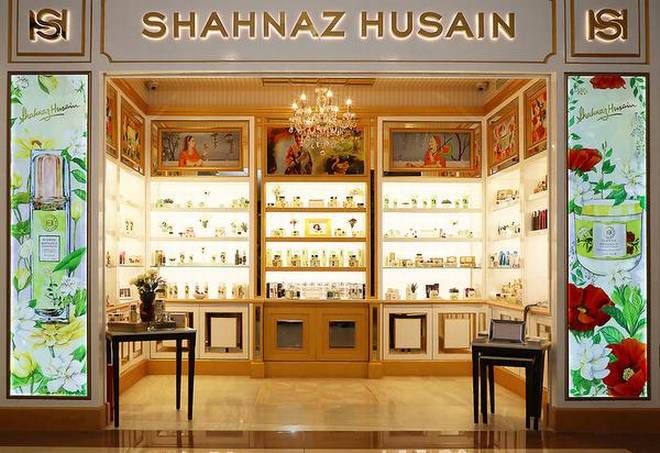
Earlier this year, the Shahnaz Husain brand was relaunched, with a new store at Delhi’s Select Citywalk, with new branding that seems rather mixed, with large pictures of flowers all over the frontage. Her face is still on some of the packaging, not retro-styled, but much like how it would have been done in the ’90s. She is not about to sell out or have anyone invest in the company. The brand is present in 40 countries today, including Iceland and Vietnam.

I dare not ask, ‘What after you?’ For Shahnaz is the brand.

As we conclude, she declares, “I think you have enough for a book now,” in her alto. Then she asks for her matching blue-and-leopard print bag, as we sit in her foyer, surrounded by a garden of plastic flowers, taking photos, with a couple of photographers jumping into the fray, seemingly from nowhere (waiting in the wings for this moment, perhaps). “Now we are best friends,” she declares, after we cut a cake, the done thing when a guest comes to her house for the first time.

She says wherever in the world she goes, ambassadors are happy to organise a press conference. She will talk Ayurveda, distribute samples, and get enormous press coverage. She is clear that the future is Ayurveda, not chemicals.

source: http://www.thehindu.com / The Hindu / Home> Features> Weekend / by Sunalini Mathew / October 13th, 2018

The Bilirubin Bub

Srinagar, JAMMU & KASHMIR :

Faith healing is a scientifically accepted way-out. In Srinagar outskirts lives Abdul Qadir who treats more than 15000 patients a month and is considered a key healer for jaundice, reports Irtiza Rafiq

Abdul Qadir
Abdul Qadir

The plasma screen at Srinagar International airport shows the arrival of the Delhi- Srinagar flight and the lounge gets instantly active. Among the curious mixture of excited and bored arrivals, Ruqaya, a 33-year-old woman with her pale yellow face, sunken cheeks, and a feeble body stands out. Accompanied by her husband Javaid, 37, as she makes her way out of the airport, her anxious relatives waste no time in elaborate greetings. Flying straight from the USA, the couple is literally bundled into the car and their journey started towards Syedpora (Dhara) in city outskirts.

After a drive of around 29 km, the couple gets off, pass a small bridge across a shallow, crooked, clear, stream, walk down some narrow alleys and enter a house. In the time Ruqaya waits with dozens of other women, most of them mothers with children nestled up in their arms in a compound brimful of multifarious people, Javaid proceeds towards a chaotic, almost endless queue at a congested staircase where scores of people are nudging each other to pass their Rs 10 note for the exchange of a stamped paper piece from a 40-year-old man upstanding at the middle of the stairs. There is another man at the foot of the staircase for crowd control.

The scene resembles the representation of a shrine where followers with raised hands propel each other to get a touch of some higher deity or a sacred thing. The chit for which they are struggling for is their ticket to cross the stairway. This stairway crossing is heavenly for most of them because it leads to the Bab, the ‘spiritual healer’.

For the last five decades, the septuagenarian Bab has been treating all kinds of ailments, at his residence, a quiet and picturesque place, almost 2.5 km from Harwan.

The influx of patients can be gauged by the fact that the Reshi abode comprises three houses: one where the family lives, second where the patients wait for their turn and the third where Abdul Qadir Reshi, the Bab examines and treats his patients.

The room of the treatment-building is jammed by people, among yellow faces, crying neonates, ailing individuals, on the left corner, Bab sits on a bed at a slight elevation with his youngest son Abdul Ghani Reshi. In between them is a large copper bowl of water, on their either side various bottled up solutions, some powders, and in the front, lies a knife and a leather belt.

Khadija, 65, a woman from Rajbagh approaches him with her eight-day-old granddaughter having 7.68 mg/dL bilirubin level, Bab takes hold of baby’s clothes, lays her in front of him, squeezes her nipples, sprinkles handful of water from the copper bowl on her and then slowly rubs her forehead, eyelids all the while muttering something under his breath. He then hands the baby over to Khadija and asks her to make sure that her mother doesn’t eat oily or non-vegetable food. Interestingly, Khadija reveals that the mother of the kid is herself a doctor but has a firm belief in the healing powers of Bab. The medico mom didn’t comply to the paediatrician’s suggestion of exchange transfusion (blood change).

The certitude of this kind doesn’t come as a surprise, for Bab has treated thousands of people. Some of them approached him after they keenly heard their treating doctors telling them: “There is nothing more we can do”. But somehow after following Bab’s prescription, some of these people managed to do the unexpected − they lived, fully treated.

For 55 years and counting, sort of miracles have been happening around this solemn looking spiritual healer who credits it all to the Almighty. “I have been bestowed upon by the knowledge and ability by God that I can say by looking at a person what he is suffering from, particularly jaundice patients, one look at them and I can tell if they will make it or not,” Bab said after managing his patients. “It is a vision by God; the verses I read have a healing effect in them so the healing comes from God.”

This peculiar wisdom runs in the Reshi family and has been transferring from generation to generation. The story of this bequeathed enlightenment started when a spiritual healer from Kabul had a dream, so goes the family legend, wherein he was commanded to visit Mulfak, a neighbouring area of Syedpora, which is known to be home of peers. Once there, he spent a night and went touring adjoining areas escorted by a peer from Mulfak. When he saw ancestors of Abdul Qadir Reshi working in paddy fields, he told his escort, according to Bab’s son Abdul Gani Reshi, “Go back I have got what I was looking for. From that day, he resided with my great-grandfather and passed him his saintly knowledge,” said Reshi Jr.

“But we were warned by our spiritual teacher against being greedy,” Gami said. “So we do not take any money except on Sundays when we take Rs 10 from people and that too for Darsgah and charity. On the contrary, we provide tea and refreshments to visitors.”

Every day, up to 600 patients visit the place, and on Sundays, the number crosses 1000 people, all of whom are treated free of cost by Bab who does it as a social service. He and his family make their living out of their orchards and are financially well off.

“Except for gallbladder stones, everything is treated here,” claims Gani, and he then goes to name the ailments they take care of : Sorphtoph (snake bite), Gunstoph (cobra bite), Arkhor, Hounchop (dog bite), Malder (Herpes), Diabetes, Kambal (jaundice), psoriasis. “We deal with everything but a lot of cautiousness must be exhibited on our parts and we should abide by guidelines of our forefathers. Once my uncle made some mistake and as a consequence, he had a brush with death. This is like a sword hanging on our heads we have to be vigilant at every step.”

This guarded approach is quite evident from the way Bab instructs his son while he prepares herbal remedies and writes prescriptions for patients, even whilst himself dealing with a Malder (Herpes Zoster) patient, Fatima, 55, from Shalimar by dragging and flipping the knife over her lesions. He is doing the shoving and thrusting amid the surging crowd. Angry, he finally uses the leather belt and whips it over the unruly assemblage.

Family’s makeshift shop selling the prescriptions is run by his younger son, Ghulam Masood Reshi and grandson Rayees Ahmad Reshi. Even though it’s not mandatory for people to buy their stock from this shop, still they prefer it, because patients are patiently helped to understand how to follow their prescription. Bab’s prescriptions usually comprise of 80 per cent of herbs and 20 per cent of Hamdard products. Rishis say they take great care that herbs are genuine and hire peasants to handpick them.

People waiting outside Abdul Qadir 's abode.
People waiting outside Abdul Qadir ‘s abode.

“These unadulterated herbs when used in treatment do wonders,” Masood Reshi said. “There is a specific herb Wagan which heals the bite of rabies dog, without any need of injections, another herb, Sumbloo and Kawidarh Moul, helps to treat blood cancer, diabetes, cholesterol, and thyroid. Yet another herb, Jogi Patsah, found in dog free area of Ladakh aids in treating kidney and ovarian cysts. For jaundice patients, we use a rare herb called Michre Komal. The market value of these herbs is in thousands but we sell them at Rs 600 at the maximum.”

More diverse than the herbs here are the people who flock around Bub. People from all parts of Kashmir, urban as well as rural, from all socio-economic backgrounds, pin the hope of their healing on Bab, but what is more captivating is that people from different religions have belief in him as well.

Jaswant Singh, 60, brings his son, Gurpal Singh, 24, with some throat allergies and Bab after prescribing the medicines holds his turban and reads verses from Quran. This presents a quite peculiar sight.

= A month later, Bab informed this reporter that a non-resident Kashmiri couple from the USA have also come to him for a treatment. In the USA, she was diagnosed with severe jaundice. Her bilirubin count was 65 mg/dL, a level that has the least chances of recovery as per medical sciences. She and her husband then decided to return home, maybe they were preparing for the worst.

But back home, Ruqaya’s family wanted to try for the last time for which they travelled straightaway from Airport for Bab’s consultation.

After twenty days of Bab’s treatment, Ruqaya recovered and then left for the US along with her husband happily.

(Names of patients mentioned in this story have been changed to protect their identities.)

source: http://www.kashmirlife.net / Kashmir Life / Home / by Irtiza Rafiq / October 03rd, 2018

Victoria’s secret: Karim’s great grandson lives in Bengaluru!

Bengaluru, KARNATAKA :

The family had moved to England at the Queen’s behest, bringing great solace to an increasingly homesick Karim, said Mahmood.

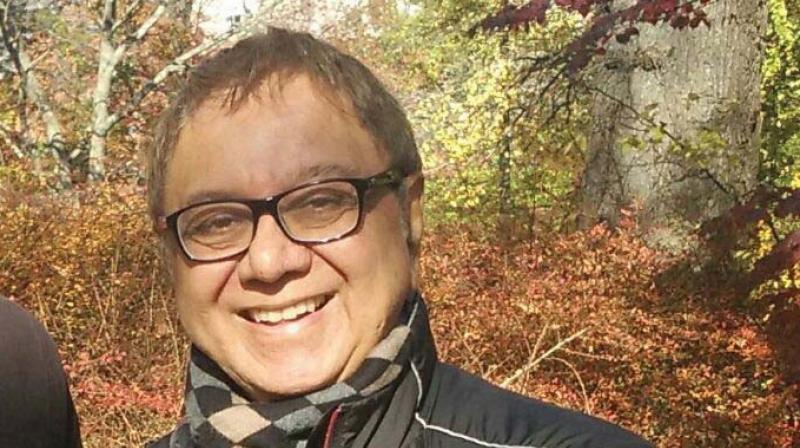
 Javed Mahmood, Abdul Karim’s great grandson
Javed Mahmood, Abdul Karim’s great grandson

It was an April morning in Bengaluru and Javed Mahmood, as was his custom, sat down to flip through the newspapers. The year was 2010, nearly two decades since he had moved to the city to live a quiet retired life. His relatives were scattered between Bengaluru and Karachi, as they had been since Independence. Very little remained of the family’s rich history, much of what they had left was lost in the traumas of Partition and mostly forgotten. That summer morning in 2010, however, everything changed. Mahmood found, to his astonishment, that Indian author Shrabani Basu’s Victoria and Abdul: The True Story of the Queen’s Closest Confidant had uncovered the truth behind his great grandfather Abdul Karim telling a tale of friendship and loyalty. Mahmood talks to Darshana  Ramdev about a family that has been steeped in history since, with his father, Anwar being a founding member of Bata in 1933.

“I rushed at once to the British Council and asked them to help me contact her,” said Mahmood, whose grandfather, Abdul Rashid, was Karim’s adopted son. “We didn’t actually know he was adopted until Karim’s death in 1909 and the inheritance had to be dealt with.” The family had moved to England at the Queen’s behest, bringing great solace to an increasingly homesick Karim. “The Queen made them feel very much at home my grandfather received the same education that Edward VII and the rest of her children had earlier received.” The Queen, who was aware of the couple’s inability to have children, sent her personal physician, Dr. John Reid, to examine (much to his horror) Karim’s wife.

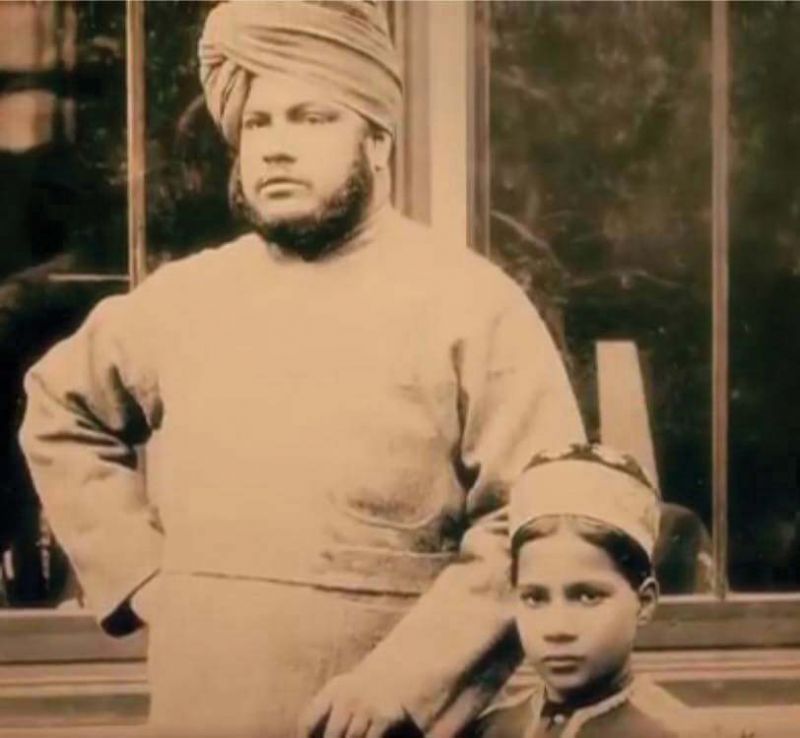
Abdul Karim with his adopted son, Abdul Rashid in England

“Abdul Karim had been greatly maligned by historians the Queen’s family may have wanted to destroy all trace of his presence in the court. Ms Basu had gained access to hidden archives, however. Our family still had a few documents – the diary being one of them, so Shrabani and I hopped on a plane to Karachi at once!” Karim’s descendants there were understandably wary, but Mahmood succeeded in coaxing them to part with the diary. Like most people of the time, Karim maintained meticulous written records into his life, which helped set the record straight on the stream of allegations that had been made against his character. “The diary proved beyond doubt that their relationship was marked by great affection, but had remained platonic always,” said Mahmood.

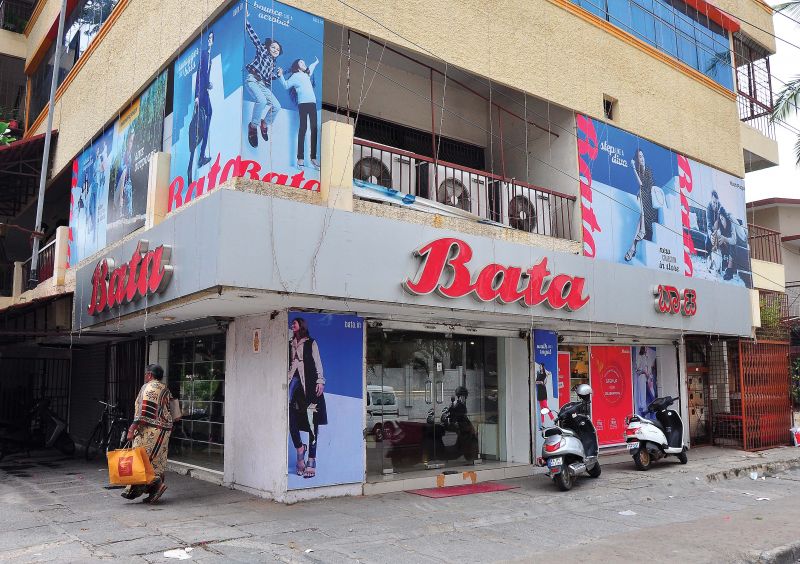
Javed Mahmood’s father, Anwar Mahmood, was one of the founding members of Bata in 1933. He started the Trot Shoe Company in 1963, setting up a second factory in Whitefield in 1970.

It contained valuable insights into Queen Victoria’s much loved Munshi, or teacher, the prepossessing young man who won the affections of a foreboding monarch with a reputation for a heart of stone. He was presented as an orderly to the Queen, which he didn’t like it was not a fitting position for the son of a landed ‘doctor’.  He soon found himself promoted to Munshi, leading the now ailing Empress to a discovery of India. The Queen’s love for her young munshi drew jealousy, hatred and racial prejudice in a society known for its repressive puritanical leanings. Neither cared, however, with the Queen sticking her neck out on numerous instances to defend her young friend. “She was always caring and appreciative of our customs every Eid, she would walk across the grounds to Karim Cottage (on the Osborne House estate) to visit the family.” They were, in turn, invited up to the palace for tea during Christmas “The Queen would even have the windows covered with silk curtains so Karim’s family could keep the purdah. He was also a wonderful cook  he would cook for her on occasion, as an act of love.”

Little was known of his life after the Queen’s death in 1901: Karim and his family were unceremoniously deported, almost at once, by a jealous Edward VII, who been aroused to such fits of rage that he had even attempted to force his mother to abdicate from office, on grounds of insanity. “Soon after the Queen’s death, King Edward arrived at Karim Cottage in Osborne House and ordered Rashid, who was a teenager at the time, to scour the house for any heirlooms or documents that contained the royal insignia. The little they could salvage, including Karim’s diary, returned with him to Agra in 1901, where he died eight years later. “He died at the age of 48 and the family was given his inheritance,” said Mahmood.

These remained with the family for some decades, until talk of Partition began to do the rounds. “We were a fairly prominent family and were advised at the time to shift temporarily to Bhopal, until the trouble blew over,” said Mahmood. This they did, greatly underestimating the scope of the problem and packing only the essentials. When the Partition took place, the family was evacuated to Mumbai, but many of the treasures were lost in transit. “The diary was with my grandfather, who was the custodian of Karim’s things.” The family moved to Karachi, save for Mahmood’s mother, Begum Qamar Jahan and two sisters. The diary went to Pakistan with them. “One of the sisters eventually shifted to Pakistan too,” he explained.

Meanwhile, in 1933, Bata, which was a burgeoning Czech company, found itself in hot water after the nation was declared Communist. The company decided to set up a factory near Calcutta, where leather was widely available. The large Muslim population in the area was another perk, providing the tannery services they so badly needed. “My father, Anwar Mahmood, was one of the founding members of the company,” he said. He joined the company at the age of 16 and worked there for nearly 30 years before he started his own business, the Trot Shoe Company. The first factory was set up in Kolkata in 1963 and the second in Whitefield, in 1970. “The organised shoe industry didn’t exist in South India and the Karnataka government had offered businesses a number of benefits, which led us here,” said Mahmood. Natural rubber, an important raw material and was grown abundantly in Kerala, making it easily accessible.  “My elder brother managed the factory here, I handled the one in Kolkata and my parents shuttled between the two cities. When my younger brother was ready to start work, we established a third branch in Hosur.” Javed Mahmood and his younger brother still call Bengaluru home.

Mahmood tells his story from San Francisco, where calls have been pouring in from across the world since the release of the film, Victoria and Abdul. “The film is doing very well, it’s being shown at local theatres here as well and friends have been getting in touch to tell me how much they enjoyed it,” he smiles.

“My great grandfather’s relationship with the Queen had been presented as scandalous and sleazy he was falsely accused of every imaginable sin. Ms Basu read Karim’s diary cover-to-cover and brought those insights into the second edition of her book.” And that’s how Abdul Karim’s story received its long overdue re-telling, well over a 100 years after his death in 1909. “Queen Victoria was a woman far ahead of her times, rising well above the prejudices that so plagued her society, to defend the young Indian man she called a friend. I think there’s a lesson in it for all of us even today.”

source: http://www.deccanchronicle.com / Deccan Chronicle / Home> Nation – In Other News / by Darshana Ramdev, Deccan Chronicle / October 14th, 2017

Jemadar Abdul Hafiz VC ( Victoria Cross)

Kalanaur (Gurudaspur District),  PUNJAB / (buried in Imphal, MANIPAL) :

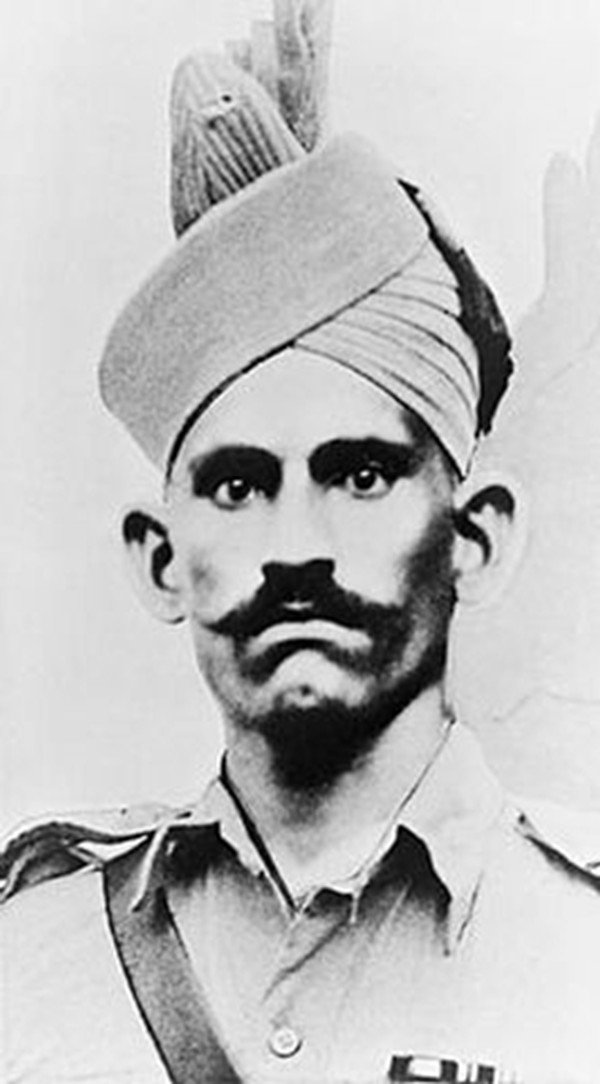
Jemadar Abdul Hafiz VC

Abdul Hafiz was born in Kalanaur Village in Punjab, India. His father name was Nur Muhammad and mother was Hamidan. He was married to Jigri Begum.

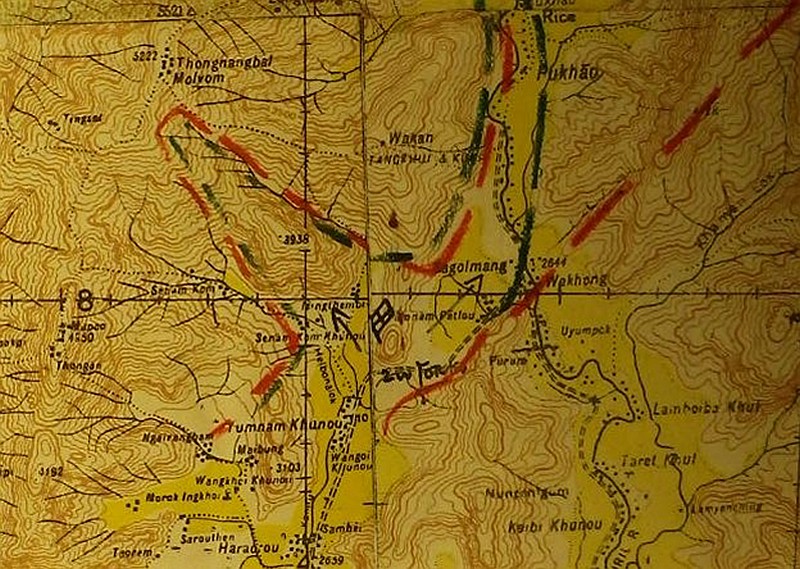
Jemadar Abdul Hafiz of 3/9 Jat won the Victoria Cross- the first Muslim soldier to do so in the Second World War ( Imphal, 1962). He won the VC in a feature named “Runaway Hill” which is located at the corner of the road leading to Isingthembi on the Pangei- Sagolmang Road (see map).

“He served with the 9th Jat Regiment with service number 11460. Jats are an ethnic group who follow a variety of religions. The Jat battalions were structured around two companies of Hindu Jats, one company of Punjabi Muslims and one company of Musulman Rajputs, a mix requiring not only good purely military leadership to ensure the respect of all but sensitivity for different cultures and beliefs”. (CWGC)

The 3rd Battalion, 9th Jat Regiment, was part of the 5th Indian Division during the Imphal campaign and at the time of this action were operating in the Nungshigum area to the north east of Imphal as part of a force advancing up the Litan road which was of strategic importance to both sides as it offered one of the few approaches to the Imphal plain. The attacks in and around Nungshigum Hill, of which Abdul Hafiz’s was one, continued until 13th April 1944 when the hill was finally captured.

Flag in the map showing the RUNAWAY HILL

According to War Diary dated 6th April 1944, 3rd battalion, 9th Jat Regiment,
” D Coys standing patrol the high ground at RK 420790 was driven offduring the night by thr enemy. At approx. 0930 hrs. D Coy counter attacked the enemy from the high ground killing at least 45-50 Japs and capturing a great deal of equipment. Our losses were 4 killed and 12 wounded including Major RITCHIE M.C. wounded. 1 Pl. B Coy supported by 1 tp of “HONEYS” did a sweep at approx 0900 hrs to the village ISINGTHEMBI RK 410800 where enemy had been reported- N.E.S.. 1 Pl. B Coy and the GR Pl at 1630 hrs ordered to NUNSHIGUM RK 4375 to take up a defensive posn”.

“It was by Runaway Hill that the Division’s third Victoria Cross was won. Before dawn on April 6, during this original encircling movement, at a time when we could not be sure when they would appear next, the Japanese attacked one of Colonel Gerty’s standing patrols. By driving the Jats off, they secured a hillock that overlooked the main company position. Jemadar Abdul. Hafiz was ordered to recapture the hill with two sections of his platoon.

After an artillery bombardment by Bastin’s 4th Field Regiment, Abdul Hafiz led his Jats in to the attack. They charged up the hillside that was bare of cover, shouting their war-cry as they neared the top. Then the waiting Japanese opened fire with machine-guns. On the approaching Jats they threw down grenades. Jemadar Abdul Hafiz was wounded at the outset. A bullet struck him in the leg. Yet he dashed forward and seized the enemy machine-gun by the barrel, while another Jat killed the Japanese gunner.

The Jemadar then took up a Bren gun dropped by one of his men who had fallen wounded, and notwithstanding the heavy fire from the enemy positions on this hill and on a feature to the flank, he shot a number of the Japanese soldiers. And so fiercely did he lead his men that the enemy ran away: hence the name Runaway Hill. But Jemadar Abdul Hafiz was mortally wounded in the chest, still grasping his Bren gun. To his men he shouted in his own language, “Reorganize! I will give you covering fire.” But he died,. without having been able to pull the trigger. He was awarded the Victoria Cross, posthumously, and was the first Muslim soldier to win this decoration in the Second World War” ( Ball of Fire – Antony Brett-James 1951) .

Geoffrey Evans and Antony Brett-James in their book “Imphal” give the account of how the feature got its name of Runaway Hill . ” Undaunted, Abdul Hafiz rushed forward as best he could and with supreme bravery seized the barrel of the machine gun while a second Jat Killed the gunner. That done, he saw a bren automatic which had been dropped by one of his wounded men, and picking it up without hesitation, he opened fire on the enemy to such effect that those whom he did not kill ran away as fast as they could. For this reason the hill became known as ‘Runaway Hill’, a name which it retained throughout the battle”.

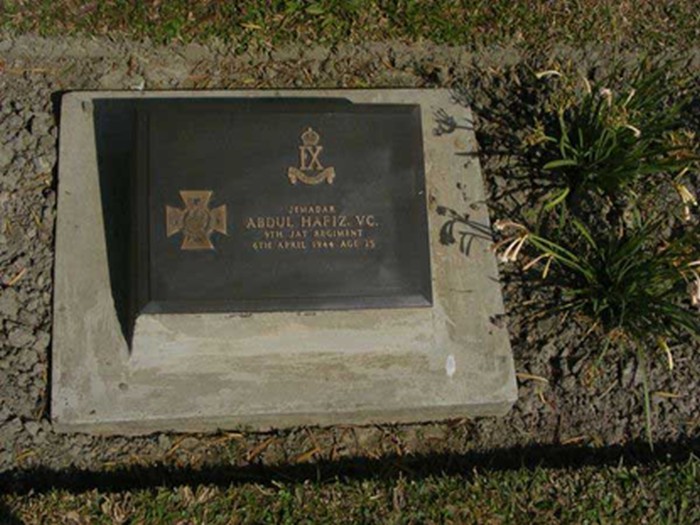
Grave of Jemadar Abdul Hafiz VC

His citation reads as follow:

The KING has been graciously pleased to approve the posthumous award of the VICTORIA CROSS to:–Jemadar Abdul Hafiz (11460), 9th. Jat Regiment, Indian Army.

In Burma, in the early hours of the 6th April, 1944, in the hills 10 miles North of Imphal, the enemy had attacked a standing patrol of 4 men and occupied a prominent feature overlooking a Company position. At first light a patrol was sent out and contacted the enemy, reporting that they thought approximately 40 enemy were in position. It was not known if they had dug in during the hours of darkness.

The Company Commander ordered Jemadar Abdul Hafiz to attack the enemy, with two sections from his platoon, at 0930 hours. An artillery concentration was put down on the feature and Jemadar Abdul Hafiz Khan led the attack. The attack was up a completely bare slope with no cover, and was very steep near the crest. Prior to the attack, Jemadar Abdul Hafiz assembled his sections and told them that they were invincible, and all the enemy on the hill would be killed or put to flight. He so inspired his men that from the start the attack proceeded with great dash.

When a few yards below the crest the enemy opened fire with machine-guns and threw grenades. Jemadar Abdul Hafiz sustained several casualties, but immediatetly ordered an assault, which he personally led, at the same time shouting the Mohammedan battle-cry. The assault went in without hesitation and with great dash up the last few yards of the hill, which was very steep. On reaching the crest Jemadar Abdul Hafiz was wounded in the leg, but seeing a machine-gun firing from a flank, which had already caused several casualties, he immediately went towards it and seizing the barrel pushed it upwards, whilst another man killed the gunner.

Jemadar Abdul Hafiz then took a Bren gun from a wounded man and advanced against the enemy, firing as he advanced, and killing several of the enemy. So fierce was the attack, and all his men so inspired by the determination of Jemadar Abdul Hafiz to kill all enemy in sight at whatever cost, that the enemy, who were still in considerable numbers on the position, ran away down the opposite slope of the hill. Regardless of machine-gun fire which was now being fired at him from another feature a few hundred yards away, he pursued the enemy, firing at them as they retired.

Jemadar Abdul Hafiz was badly wounded in the chest from this machine-gun fire and collapsed holding the Bren gun and attempting to fire at the retreating enemy, and shouting at the same time “Re-organise on the position and I will give covering fire.” He died shortly afterwards.

The inspiring leadership and great bravery displayed by Jemadar Abdul Hafiz in spite of having been twice wounded, once mortally, so encouraged his men that the position was captured, casualties inflicted on the enemy to an extent several times the size of his own party, and enemy arms recovered on the position which included 3 Lewis Machine-guns, 2 grenade dischargers and 2 officers’ swords. The complete disregard for his own safety and his determination to capture and hold the position at all costs was an example to all ranks, which it would be difficult to equal.—( London Gazette. Issue 36627, 25th July 1944 ).

The Victoria Cross and Campaign medals awarded to Jemadar Abdul Hafiz, 3rd Bn, 9th Jat Regiment, Indian Army, have been acquired by the Michael Ashcroft Trust, the holding institution for Lord Ashcroft’s VC Collection.

Abdul Hafiz is today laid buried at Imphal Indian War Cemetery at Hatta Minuthong, Imphal. His Grave number is 3. Q. 2. He was 25 years of age when he died on 6th April 1944

source: http://www.e-pao.net / E-Pao / Home> Manipur> History of Manipur> Historical War Manipur / by Rajeshwor Yumnam / May 18th, 2015

AMP Education Award 2018

Mumbai, MAHARASHTRA :

NatlAwardsAMP06oct2018

Association of Muslim Professionals announced its ‘AMP NATIONAL AWARD FOR EXCELLENCE IN EDUCATION 2018’ on the occasion of ‘Teachers Day’ on September 5th, 2018

The importance of teachers can be understood by the quote of Prophet Muhammad (SAW) where he said that “I have been sent only as a teacher to you“. The Prophet PBUH reached the hearts and minds of people through educational activities.

5th September is celebrated as Teachers’ Day in India. The contributions and successes of Teachers and Educationists are celebrated across India this day. The role of a teacher/educator in the society is both significant and valuable. They have a profound influence on the lives of the students – they build their competence and shape their characters, thereby laying the foundation of a strong and civilized society.

After the successful launch of the Education Excellence Awards last year, this year again AMP is has announced the names of 100+ Influential Educators across the country. AMP aims to felicitate and recognize teachers who are going beyond their duty and inspiring students to reach greater heights. AMP has initiated this prestigious award to highlight the contribution of teachers in Nation Building and helping make a better society through inspirational teaching.

We extend our warm greetings and felicitations to all the teachers, particularly those who have been selected and appreciated by AMP in recognition of their outstanding services in the field of Education and invaluable Contribution to the Society at large. In today’s modern world, it is all the more necessary that our children understand the human values of love, respect and tolerance, which are essential for a peaceful world. It is, therefore, vital that teachers emphasize the importance of these values. Students should be made to think in terms of the welfare of humankind and progress of the nation”.

Chapter Leaders and members of AMP from various cities across the country nominated Teachers, Principals and Sr. Academicians from different Institutions, who have served the Society and the Community with distinction. The team of Senior Professionals and Academicians along with AMP Board evaluated and selected 100+ such Professionals and they are declared the recipients of these Awards.


Sr. No Awardee Name Title Location
1 Mr. Furqan Qamar Secretary General, Association of Indian Universities (AIU) Delhi
2 Dr. Akhtarul Wasey President, Maulana Azad University Jodhpur
3 Prof. Tariq Mansoor Vice Chancellor, Aligarh Muslim University Aligarh
4 Prof. Talat Ahmad Vice Chancellor, Kashmir University Kashmir
5 Dr. Faizan Mustafa Vice Chancellor, NALSAR University of Law Hyderabad
6 Mr. Mohammad Aslam Parvaiz Vice Chancellor, Maulana Azad National Urdu University(MANUU) Hyderabad
7 Maulana Gulam Mohammad Ismail Vastanvi President, Jamia Islamia Ishatul Uloom, Akkalkuwa Akkalkuwa
8 Dr. Shahid Ashraf Pro-Vice Chancellor, Jamia Millia Islamia University Delhi
9 Prof. Abdul Shaban Pro-Vice Chancellor, Tata Institute of Social Sciences (TISS) Mumbai
10 Dr. Amitabh Kundu Former Dean, School of Social Sciences, JNU Delhi
11 Dr. Amir Ullah Khan President, Glocal University Hyderabad
12 Dr. Faruk Kazi Dean- Research, Development and Consultancy at Veermata Jijabai Technological Institute (VJTI) Mumbai
13 Dr. Manmohan Singh Chauhan Director, Central Institute for Research on Goats Mathura (U.P.)
14 Prof. Shahid Ahmed Professor, Jamia Millia Islamia University Delhi
15 Prof. Syed Noman Ahmad Professor, Aligarh Muslim University Aligarh
16 Prof. Apoorvanand Professor, University of Delhi Delhi
17 Dr. Mahrukh Mirza Vice Chancellor, Urdu Arabi – Farsi University Lucknow
18 Prof. Zubair Meenai Professor, Jamia Millia Islamia University Delhi
19 Dr. Gazala Habib Associate Professor, IIT Delhi Delhi
20 Mr. Makibur Rahman HOD, D.I.E.T. Guwahati
21 Prof. Anwar Khan Associate Professor, Public Administration Services Hyderabad
22 Dr. Farrukh Waris Retd. Principal, Burhani College of Arts and Commerce Mumbai
23 Dr. Abdul Azim Akhtar Asst Professor, Shree Guru Gobind Singh Tricentenary University Delhi
24 Prof. Adil Hakeem Khan Director, Nation College of Engineering & Technology Guna (M.P.)
25 Dr. Sayed Aleem Ashraf Jaisi Reader, Arabic Department, MANU Hyderabad
26 Dr. Kalim Khan Director, Rizvi Institute of Management Studies Mumbai
27 Mr. Anwar Khan Retd. Principal, Osmania University Hyderabad
28 Prof. Shaikh Rahmatullah Professor of Tourism, Dr. D Y Patil University Navi Mumbai
29 Dr. Afroz Alam HOD, Maulana Azad National Urdu University (MANUU) Hyderabad
30 Dr. Yasmeen Pervez HOD, Chhatrapati Shivaji Institute of Technology Raipur
31 Dr. Mumtaz Ahmed Khan Founder & Chairman, Al-Ameen Educational Society Bangalore
32 Mr. Abdul Rasheed Director, Al-Rizwan Group of Jr. College and Schools Nanded
33 Mr. Shaikh Masood Mohiuddin Professor, Dr. Zakir Hussain Jr. College of Arts, Commerce and Science Aurangabad
34 Mr. Mohammad Shameem Jawed Assistant Professor, IIM Visakhapatnam Vishakhapatnam
35 Dr. Mohd. Kaleem Khan Associate Professor, IIT Patna Patna
36 Dr. Azizuddin Khan Associate Professor, IIT Bombay Mumbai
37 Mr. Mohammed Lateef Khan Founder Trustee and Chairman, MS Education Academy Hyderabad
38 Dr. Razak Ustaad Associate Professor, SLN Engg College Raichur
39 Mrs. M. Sharmeela Head Mistress, Municipal Muslim Girls Middle School Vaniyambadi
40 Miss. Munawar Sultana .A. HOD, Islamiah Girls Higher Secondary School Vaniyambadi
41 Mr. Zafar Ahmed Khan Retd. Principal, Qidwai Jr. College of Arts, Commerce & Science Nagpur
42 Mr. Inamur Rehim Teacher, M. A. K. Azad Jr. College Nagpur
43 Prof. S. Raisuddin Professor, Jamia Hamdard University Delhi
44 Brig. Syed Ahmad Ali Director, Jahangirabad Institute of Technology Barabanki
45 Dr. Tanveer Jamal Principal, City Compostile PU College Gulbarga
46 Dr. Aslam Sayeed Professor, Al Badar Dental College Gulbarga
47 Mr. Md. Javeed Abdul Rehman Saheb Momin Assistant Teacher, Anjuman Urdu High School Hubli
48 Dr. Shariq Nisar Professor, Rizvi Institute of Management Studies and Research (RIMSR) Mumbai
49 Mrs. Sahana Zamal Teacher, Govt. Primary School Odisha
50 Mr. Kazi Mujiboddin Hamidoddin Research Scholar Ambajogai, Beed
51 Mr. Sayyed Zahid Ali Head In-Charge, TMC School No. 124, Mumbra Mumbra
52 Dr. Bilal Sheth Senior Lecturer, Govt. Dental College Himmatnagar
53 Mr. Hanif Tailor Principal, Pipardiwala English Medium School Surat
54 Mr. Syed Balig Ahmed Director, Ranthambhore Nursing College Sawai Madhopur, Rajsthan
55 Mr. Shaikh Aziz Shaikh Yaseen Assistant Teacher, Mother Ayesha High School and Junior College Malegaon
56 Mr. Shaikh Mehaboob Ali Kittur Ret. Asst. Teacher, St. Mary’s High School Hubli
57 Mr. Akhtar Hussain Principal, Government Senior Secondary School Bissau, Rajasthan
58 Mr. Siddiqui Saleem Shahzad Assistant Teacher, ATT High School and Junior College Malegaon
59 Mr. Mahmood Ali Md Yusuf Khan Assistant Teacher, ATT High School and Junior College Mumbai
60 Mr. Imran Khan Teacher, Varisth Upadhyay Sanskrit School Alwar, Rajasthan
61 Mr. Fayyaz Ahmed Ghulam Mustufa Momin Teacher, Samadiya High School and Jr. College Mumbai
62 Mrs. N. M. Shalika Banu Teacher, Fathima Central Senior Secondary School Chennai
63 Dr. Ateeque Malani Assistant Professor, IIT Bombay Mumbai
64 Mrs. Fatima Rashid HOD, Unviersal Education Mumbai
65 Dr. Mohammed Tahir Ansari Assistant Professor, University Kuala Lumpur Royal College of Medicine Perak Mumbai
66 Dr. Mehrunnisha .M. Sheriff Desai HOD, R. J. Tiberwala College of Commerce Dhandhuka, Ahmedabad
67 Miss. Qudsiya Shahana Vice Principal, Anwar UP Uloom Higher Secondary School Bhopal
68 Mr. Abdul Aziz U Rajput Historain and Freelancer Bijapur, Karnataka
69 Mr. Raja Hussain Assistant Professor, Islamiah Boys Higher Secondary School Vaniyambadi
70 Dr. Shahnaz Nabi Former HOD, Calcutta University Kolkata
71 Mr. Tafseer Ahmad Khan Assistant Block Resources Coordinator, BRC Kunda Kunda, Pratapgarh
72 Mr. Yunus Sahab General Secretary, Taha Group of Institutions Ballari
73 Mr. Siraj M Jamkhandi Headmaster, Secab Malik Sandal Urdu High School Bijapur
74 Mr. Mohammed Azheruddin Principal, Noble High School Bhainsa, Telangana
75 Mr. Mohamed Attaulla Khan Principal, K. K. Public School Bangalore
76 Mrs. Farhat Ali Syed Assistant Professor, Prestige Institute Of Management & Research Indore
77 Mr. Syed Maquasood Ali Principal, Innovative Public Higher Secondary School Dewas
78 Dr. Ahsan Bin Mohammed Al Hamoomi Director, Green Meadows Park School Hyderabad
79 Mrs. Fareeda Banu Md. Javeed Momin Assistant Teacher, Govt. U.H.P. School Hubli
80 Mr. Mohammed Sadiq Founder, Hyderabad Islamic School Hyderabad
81 Mr. Altaf Haider Momin Teacher, Zilha Prishad Urdu School Islampur
82 Dr. Mohd. Abdul Aleem Guest Faculty, Maulana Azad National Urdu University Hyderabad
83 Mr. Shamshoddin Zare Assistant Teacher, Govt School UHPS Jamkhandi, Karnataka
84 Prof. M. A. Mallick Professor, Integral University Lucknow
85 Mr. Mohammed Hamed Hussain Farooqui Director & Principal, Madina Islamic Mission High School Hyderabad
86 Prof. Alquama Shibli Fromer Guest Lecturer, Calcutta University Kolkata
87 Mr. Yusuf Lat Retd. Teacher, M.M.P. High School Surat
88 Mr. Suleman A Patel Retd. Teacher, M.M.P. High School Surat
89 Prof. M.N.Hoda Director, Bhartiya Vidyapeeth’s BVICAM Delhi
90 Mr. Abdul Razik Husain Head Teacher, Amravati Z. P Amravati
91 Mr. Shahid Ali Abidi Head Master, Upper Primary School Lucknow
92 Mr. Sayed Sajidulla Inamdar Assistant Teacher, Govt Urdu School Jamkhandi
93 Mr. Abdulrehmaan T Sindhi Retd. HOD, G. D. Modi College of Arts Palanpur
94 Mrs. Rehana Shaikh President, Iqra school Vijayapur
95 Mr. Mohammad Zuhair Vice Principal, P.R.Pote Patil College of Engineering Amravati
96 Mr. NoorulHuda Shabbir Qureshi Teacher, B. Z. Urdu High School and Jr. College Bhusawal
97 Mr. Syed Shah Ali Al Hussaini Pro Chancellor, KBN University Gulbarga
98 Dr. Bibi Raza Khatoon Asistant Professor, MANNU Hyderabad
99 Mrs. Mehjabeen .K. Kamangar Vice Principal, Anjuman Urdu High School Hubli
100 Dr. Rabiya Khanam Principal, Hameed Pyare College of Education Gulbarga
101 Miss. Syeda Abeedi Mohammadi Principal, Faraan High School Gulbarga
102 Prof. Muzaffar .H. Assadi Special Officer & Professor, Raichur University Raichur
103 Mrs. Ayesha Arif Shaikh Principal, Anglo Urdu Girls High School Pune
104 Mrs. Umme Salma Zia Haider Naqvi Principal, Anjuman I Islam’s Mustafa Fakih Urdu High School and Junior College Thane
105 Mr. Mohammed Rafeeq Rangrez Assistant Teacher, Govt Junior College & High School Yadgir
106 Dr. Mohammedshafi Abdulraheem Phaniband Professor, SDM College of Engineering and Technology Hubli
107 Mrs. Anisa Shaikh Principal, F. D. High School Ahmedabad
108 Mr. Abdulrashid Ahamadsaheb Sanadi Retd. Headmaster, Bharatesh High School Belagavi, Karnataka
109 Mr. M. Hussain Teacher, Kerala Urdu Teachers Association Kerala
110 Dr. Asna Urooj Professor, University of Mysore Mysore


source: http://www.ampindia.org / AMP- Association of Muslim Professionals / Home> AMP Education Awards / September 2018

Revisiting Sheikh Salim Chisti’s tomb

Fatehpur Sikri (Agra District), UTTAR PRADESH :

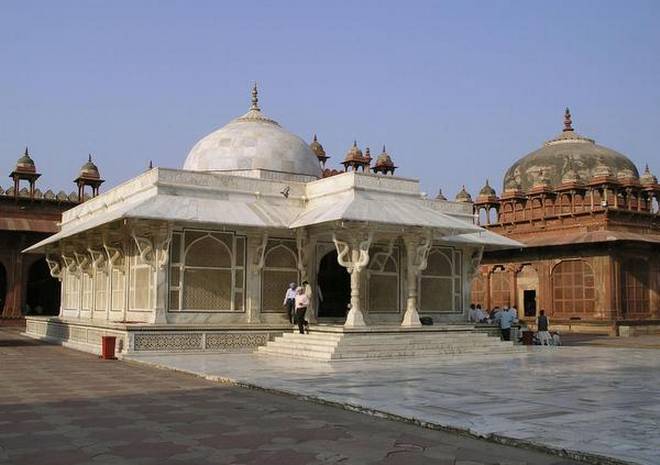
Soothing experience: Sheikh Salim Chisti’s tomb in Fatehpur Sikri | Photo Credit: V_V_Krishnan

Reminiscing a slow but stimulating journey to Akbar’s capital city

When Marion and Sally, two English teachers of St Thomas’ School, Mandir Marg, set out on a trip to Fatehpur Sikri in 1978, they boarded the last train from Delhi. “It sounds ominous, like the last plane from Da Nang, when South Vietnam was overrun by the Viet Minh,” remarked Sally, “Yes,” recalled Marion. “Many struggled to board the plane. Some were left behind but in the melee an enterprising Western reporter was not only able to capture the heart-wrenching scene, but also played the hero by helping a hysterical woman and her kid take his seat on the plane as he jumped down to shoot what later turned out to be award-winning pictures of the airport scramble.”

The last train from Old Delhi station did not cause any such frenzied commotion. Over 40 years ago it was the one that was supposed to leave just before midnight, but the departure was invariably delayed. From Delhi Main station it ran up to Agra Cantt, its destination, and took seven hours to do so, usually even more. The passenger train had a whole lot of policemen travelling in it. As a matter of fact, right from the ticket window they made their presence felt when they pulled suspicious-looking youths out of the queue and slapped and punched them before asking questions like, “Where are you going? Where did you get the money to buy the ticket? Are you drunk? Who else is travelling along with you? Where do you live?” before searching them with their shirts off and pants down,” the two teachers recalled.

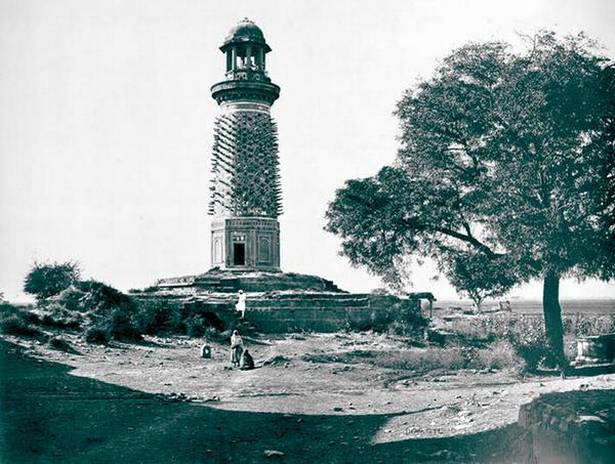
A view of Hiran Minar

When they caught the train they didn’t see those young men again. The train made three false starts, provoking someone to remark that the driver was shaking the compartments to fit in more passengers. Finally it started rolling, with several urchins rushing to catch it. By the time the train reached New Delhi station it was nearly 1 a.m. After that the Passenger stopped at every station big or small and as people got down, many were detained and searched by policemen on the platform. But the two girls reached Agra Cantt station safely. From there they were escorted by friends Sam, Lewis and this scribe by car to Sikri.

The shrine at Fatehpur Sikri is one of the most venerated places. Where wild animals once roamed a gem of a monument now greets the eye,” disclosed Sam. “It was here on a hill that Sheikh Salim Chisti dwelt and thither came Akbar the Great to seek his help for the birth of a son and heir apparent. He came on foot, leaving his camels, elephants and horses behind. The hermit sat with a rosary (tasbi) reciting the 99 names of Allah. The emperor’s prayers were heard and his Rajput queen bore a son, Salim, whom Akbar always called Sheikhu Baba, after the saint. Not only that, he built this magnificent city to commemorate the event and dwelt here with his Nine Jewels, like the Nine Worthies of the ancient world. “I have heard about the Nine Jewels,” said Marion, “but who were the Nine Worthies?” “Hector, Alexander the Great, Julius Caesar, Joshua, David, Judas Maccabaeus, King Arthur, Charlemagne and Godfrey of Bouillon,” replied Sam without batting an eyelid.

Akbar’s legacy

Sam related his tale standing by Sally’s side. She listened, her doe eyes thoughtful. As they approached the trellis of the shrine where people who seek favours tie a thread, she tied one too, making Sam wonder what she had sought. They next went to the Buland Darwaza and saw the town of Sikri spread out before them. Nearby is the water works set up by Akbar and from above the ramparts a man dived 80 feet into the baoli or step-well. They looked aghast. “Just you wait and see,” said Sam as Lewis nodded in approval. Soon a dare-devil emerged and salaam-ed them. They tipped him and he walked away to prepare for another demonstration. “These divers have been continuing the tradition for several centuries. VIPs and common people alike tip them. Perhaps, it will continue so long as there is water in the baoli. But it is a paradox that Akbar, who built a new capital here, had to desert it because of water scarcity.” Sam informed the party. They went down the steps of Buland Darwaza, Sam pointing out the Hiran Minar from where the shikar was shot in Mughal times, though some think that Akbar’s famous elephant was buried there and perhaps that’s why it is also called Elephant Tower.

At Sikri town they had the fabulous 24-layer Mughalia parantha. “Why is this parantha so thick?” enquired Marion. “It could feed one whole family.” “Quite right,” said Sam. “Ask Sally, when we were last here she had to take half the parantha to Delhi where we had it for breakfast the next day and the remainder for lunch.”

“Did Akbar really play with women as chess pieces? “enquired Sally.” Off course he did,” replied Sam. “Don’t talk rubbish. Listening to you one would imagine the great Akbar had nothing else to do but seduce maids of honour”, admonished Lewis. From there the party went to the Taj Mahal and then caught the Taj Express back to Delhi after a memorable day. Marion and Sally are now back in England and Sam works in Bangalore, where Lewis keeps reminding him of the visit whenever he rings up from Kolkata.

source: http://www.thehindu.com / The Hindu / Home> Society> History & Culture – Down Memory Lane / by R.V. Smith / October 01st, 2018

Habil Khorakiwala and the power of calm

Mumbai, MAHARASHTRA :

Wockhardt’s Habil Khorakiwala has looked crisis in the eye, and come out of it stronger

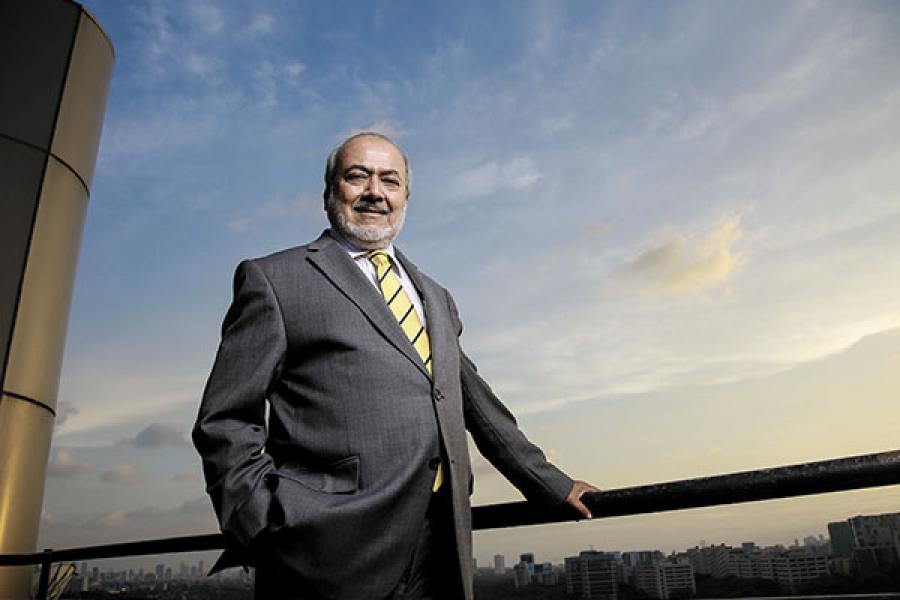
Image: Joshua Navalkar / Habil Khorakiwala, founder chairman, Wockhardt. His tenacity and calm helped the pharmaceutical company tide over recent crises
Image: Joshua Navalkar /
Habil Khorakiwala, founder chairman, Wockhardt. His tenacity and calm helped the pharmaceutical company tide over recent crises

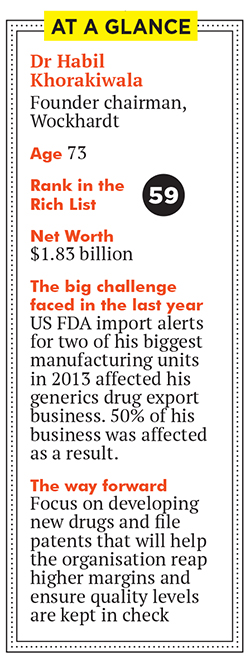
“In your darkest hour you have two options: One, you get overwhelmed by the massive extent of the problem and it paralyses you from any action; the other, you anticipate the worst case scenario and deal with it the best way you can. I choose the latter.” This choice—to fight back and swim against all odds—has brought Dr Habil Khorakiwala, 73, back from the brink. Twice.

The first time was in 2008. Wockhardt was incorporated in 1967 and had done well for itself, growing steadily into one of India’s leading pharmaceutical companies. But, during the heady days of the stock market boom of the mid-noughties, it had bet heavily on foreign exchange and derivatives. The global financial meltdown caught many—including Khorakiwala—unawares: Cross-country derivative deals unravelled and Wockhardt declared a loss of Rs 1,000 crore in FY10. The company experienced near bankruptcy and speculation was rife that it will be sold out.

Enough to rattle the toughest businessman, perhaps. But not Khorakiwala: “I anticipate the worst possible outcome and see if I can live with it. This frees me up to take action.” When he realised that it was indeed a worst-case scenario, he “moved to the next step in figuring out how to reduce the impact, and steps needed for it,” he tells Forbes India.

He had to deal with more than 20 different banks and master the complex world of derivatives. He began by acquiring the knowledge he needed, legal and financial, to deal with the ailment; he read books and consulted experts across the globe, then armed with better understanding, he worked assiduously to resuscitate the company.

He went in for a CDR (Corporate Debt Restructuring) exercise, and made two major divestments: The profitable nutrition business (brands such as Farex and Protinex) to dairy giant Danone for about Rs 1,280 crore, almost 25 times Ebitda; and the veterinary pharmaceuticals business to a French company, Vetoquinol (the price was not disclosed). These funds helped him reduce debt substantially.

Also, at this time, the Wockhardt Hospitals venture that he had built with his own money (it is not connected to the listed pharmaceutical entity) had begun unravelling. Debt had piled up due to borrowings-led scaling up and expansion across India. Khorakiwala decided to swallow another bitter pill: In August 2009, he sold 10 of the most profitable hospitals—from the 17 in the chain at that time—in cities like Delhi and Bengaluru, to Fortis Healthcare. Khorakiwala is phlegmatic about this phase: “It is not a mental or emotional barrier for me to hold on to [companies].”

HabilKhorakiwala03MPOs04oct2018

What worked in his favour was that their pharmaceuticals were doing well. This helped him convince his creditors and Wockhardt’s dealers and distributors to not give up on the company. The family also communicated with employees during the crisis. All of which helped stem attrition at the top as well as keep the core business largely unaffected.

Habil’s son, Dr Murtaza Khorakiwala, 43, who is managing director of the pharmaceutical business sums it up: “What the company was facing was a financial issue, not a business issue, and financial issues are transient.”

There wasn’t much time to enjoy the fruits of these labours, however. In 2013, two of Wockhardt’s drug manufacturing facilities in Aurangabad, Maharashtra were the subject of import alerts from both the US Food and Drug Administration (FDA) and the UK’s Medicines and Healthcare Products Regulatory Agency (UKMHRA). Naturally exports, 80 percent of Wockhardt’s Rs 5,721 crore revenue in FY13 (half of which came from exports to US), took a large hit, falling to Rs 4,830 crore in FY14.

Wockhardt took corrective steps immediately, improving technology and raising quality standards across all its manufacturing facilities in India and abroad (Ireland, UK, USA). The UKMHRA has now eased restrictions on one of the plants, while the US FDA has re-inspected the facilities.

A side-effect of the export crisis was that the Khorakiwalas and the management team paid more attention to building the India business, which has, over the last two years, grown at a compounded annual growth rate (CAGR) of more than 30 percent.

The cumulative effect of both crises and the way the company reacted to them has made it a leaner, healthier enterprise. Murtaza Khorakiwala says that they have focussed more on operational efficiencies to do “more and more with less and less”. Optimisation drives in all plants and offices helped reduce operating costs: Every line item was carefully looked into, staff across all departments rallied to cut any wasteful expenditure they came across. People cost, as a percentage of sales, came down from 15 percent to about 11 percent over the last three years.

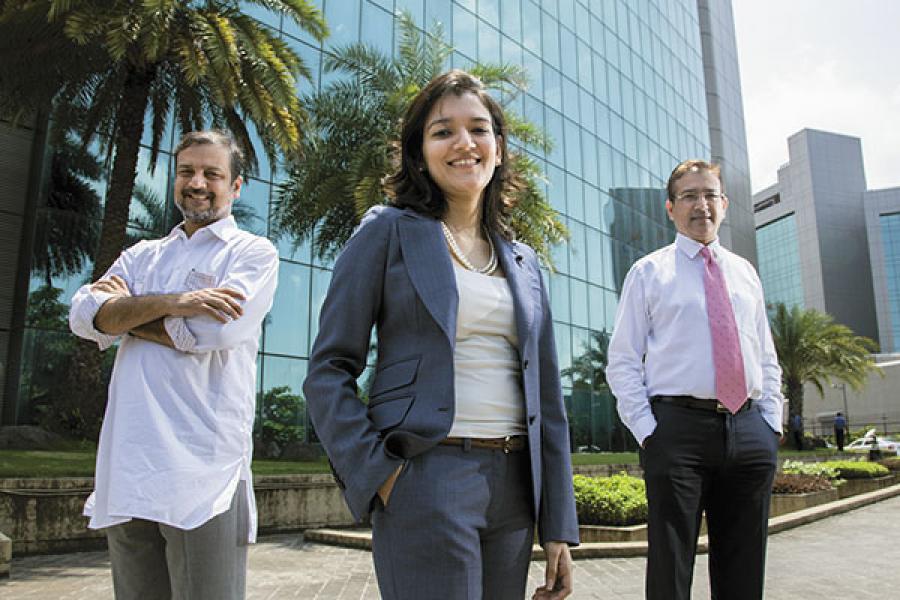
Image: Joshua Navalkar / Wockhardt Foundation head Huzaifa Khorakiwala (left), Zahabiya Khorakiwala (centre) who runs Wockhardt Hospitals and Murtaza Khorakiwala who handles the pharmaceutical business at Wockhardt
Image: Joshua Navalkar /
Wockhardt Foundation head Huzaifa Khorakiwala (left), Zahabiya Khorakiwala (centre) who runs Wockhardt Hospitals and Murtaza Khorakiwala who handles the pharmaceutical business at Wockhardt

One spend hasn’t been cut, however: R&D. Khorakiwala launched Wockhardt’s drug discovery programmes 15 years ago, and budgets have never been cut even during the company’s toughest financial years, because, he says, “I always believe it’s a long-term gain. Never sacrifice any part of the future to save the present.”

No action, he says, is trouble-free; even inaction has a cost. “Running a business will lead to problems. Don’t run away from it. Have discipline and work at it.”

The tenacity and calm in times of crisis are traits that define him. This is also what his colleagues and friends often single out about him. And these qualities have inspired, and rubbed off on, the next generation.

Daughter Zahabiya Khorakiwala (33), who is managing director of Wockhardt Hospitals, says her father remained as cool as a cucumber throughout the troubled years: “He is a fighter and will never resign [himself] to any situation because he firmly believes that every problem has a solution.”

Mentored by her father, Zahabiya has opened two new hospitals (to add to the seven left after the sale to Fortis), and taken revenues from Rs 180 crore in FY10 to Rs 350 crore in FY15. With the most recent launch, a hospital in South Mumbai, she personally looked into every detail, from the dozens of permissions required to run a 300-bed hospital to recruiting the surgeons, doctors and specialists. She follows the principles that her father espouses; with hospitals, he says, financial success is secondary, “Establishing a benchmark in clinical care is more important.”

For the Khorakiwalas, a business family, social responsibility is deeply ingrained. They owned Akbarallys, which was originally India’s first true department store. Habil’s father, Fakhruddin Khorakiwala, had bought Worli Chemical Works (which was later renamed Wockhardt)as part of a backward integration plan for the pharmacy in Akbarallys. A busy man, Fakhruddin Khorakiwala made time to serve as Sheriff of what was then Bombay. Habil Khorakiwala made CSR activities a regular part of his agenda, and in 2008, he merged all those activities into a formal entity, the Wockhardt Foundation. This was partly prompted by his eldest son, Dr Huzaifa Khorakiwala (44).

An MBA from Yale, Huzaifa had worked with Wockhardt’s international operations in the US and later the UK, before returning to India to work alongside his father in India, handling the veterinary pharmaceuticals business which was sold in 2008. Always spiritual, he had read many religious books and developed a desire for care-giving. “My son walked up to me in 2008 and said, ‘I want to focus on the Foundation work, and don’t mind spending more time on it.’ I said, ‘go ahead and do it.’” Huzaifa became CEO and trustee of Wockhardt Foundation.

The foundation raises its funds not just from Wockhardt, but also from other organisations seeking to conduct professionally-run CSR activities. It employs 300 people and runs a number of activities. Its 60 mobile medical vans—fitted with the latest equipment, stocked with necessary medicines and staffed by experienced doctors—provide healthcare in remote villages and areas in ten Indian states; corporations can sponsor these vans in return for branding, and they get regular reports on the operations and number of people it has helped. It has also built 1,000 clean toilets in villages, started 25 toy libraries to encourage children to read and absorb good values (an initiative spearheaded by Huzaifa’s wife Samina), and has started an e-learning project to cover 200 schools in Thane, Aurangabad and Rajasthan. From a Rs 1.8 crore corpus in 2008, the foundation has raised Rs 70 crore as of FY15. Huzaifa plans to ramp up activities over the next three years; he wants to expand to 300 mobile medical vans and build 3,000 toilets.

The senior Khorakiwala has good reason to look back on the last few years with a wry smile. In 2012, he was the biggest gainer in the Forbes India Rich List, adding $1.17 billion to his net worth and moving up 47 places in the rankings. The problems with the US and UK pharma regulators later that year saw Wockhardt’s share prices plummet, as did his position on the Rich List: He lost $1.09 billion and dropped 56 places.

Today, he has triumphed against adversity, and come back stronger. His children have come into their own and are growing the family business, in their own ways. He has created value for both his shareholders and the community.

And there’s the little matter of his personal wealth. Wockhardt share prices have surged, and the 74.39 percent promoter and promoter group stake has resulted in a considerably heavier bank balance: His personal wealth went up by $580 million, placing him at 59 in the 2015 Forbes India Rich List. As he likes to say, “If you do the right thing, it will lead to good business.”

(This story appears in the 29 October, 2015 issue of Forbes India. You can buy our tablet version from Magzter.com . To visit our Archives, click here.)

source: http://www.forbesindia.com / Forbes India / Home> Lists> India Rich List 2015 / by Deepak Ajwani / November 27th, 2015