Category Archives: Amazing Feats

What Indian Muslims Did and are Doing to ‘Set India Free’

NEW DELHI :

(Photo: Arnica Kala / The Quint)

In the morning I woke up to messages of hope and happiness as is usual on India’s (71st) Independence Day. Family groups were full of photographs of our younger children dressed in saffron and green, as they went to their schools to celebrate Independence Day.

We watched the speech of Prime Minister Narendra Modi from the Red Fort, and posted messages and stirring poems on Twitter and Facebook. There was so much happiness and bonhomie, when suddenly I got a link to a tweet from a friend:

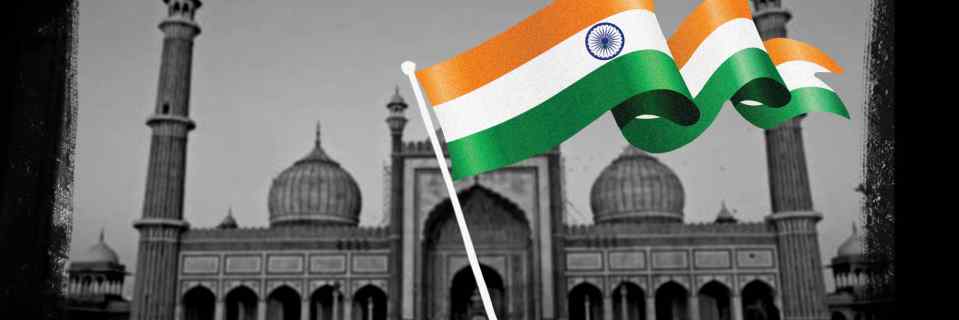
A bunch of people waving the flag in Delhi’s iconic Jama Masjid is hardly anything I should be upset about. In fact, the national flag on the historic Jama Masjid instills pride in me.

Why then, was I upset?

I was upset at the words that were deliberately aimed at hurting and demonising the community that prays in that mosque.

“71 साल बाद जामा मस्जिद दिल्ली की छाती पर चढ़कर हमने कार्यकर्ताओं के साथ राष्ट्रीय ध्वज फहराया, वन्दे मातरम”

“After 71 years, along with karyakartas (workers) I have climbed onto the ‘chest’ of Jama Masjid, and waved the national flag. Vande Mataram.”

Inherent to his speech is the message that the mosque, and by extension Muslims, have never hoisted the tricolour.

By the way, the call Madar e Watan Bharat ki Jai was given by Azimullah Khan in 1857, while fighting in the first war of Indian Independence. Honoring our motherland is not new to us. Perhaps Mr Singh (who tweeted the message) had missed this tweet by Sumer about flag hoisting at the Jama Masjid.

How Jama Masjid Area Celebrates I-Day

Mr Singh and his companions were 71 years too late, as the Indian Flag has been flying proudly in the hearts of every Indian, regardless of their religion. But yes, we fly the flag with love and respect, because we are Indians, not because we want to ‘otherise’ Indians.

Many flag-hoisting ceremonies were held in the Walled City. Flags were hoisted in homes, offices and public areas on 15 August.

As Abu Sufiyan, a resident of Old Delhi says, they came at noon, hoisted the flag, and left. No one objected or opposed them as flags were being hoisted everywhere. But he adds, “the enthusiasm with which Independence Day is celebrated in Old Delhi, where Red Fort is located, would be difficult to find anywhere else. They (Mr Singh and companions) may have climbed onto the steps of Jama Masjid after 71 years, but we have been hoisting the flag every year, in and around Jama Masjid.”

Sheeba Aslam Fehmi who runs the Walled City Café and Lounge at a little distance from the Jama Masjid, posted on her Facebook page  this 15 August:

“We, living in and around Jama Masjid area, are used to several hoisting of the Tricolor on 15th August each year. Not only at the public spots like Azad Hind Hotel, right behind the main Gumbad of the Historic Jama Masjid, we have flags of all sizes on full mast at various establishments including all the schools, hotels, shops etc.

I just spoke to the local MLA Asim Ahmad Khan who has hoisted the Indian Flag at various spots in his constituency where Jama Masjid is located.

The celebrations and merry making is on since the day of full dress rehearsal only. Patriotic songs are played loudly in the narrow alleys of Jama Masjid.

If you want to witness the people’s celebration of the Independence day, come, take a stroll in the Jama Masjid bylanes.”

Ashok Mathur says, “I have been celebrating Independence Day since 11 AM today, and hanging over not one but many roof tops in the Pahari Imli and Matia Mahalarea of my Muslim friends flying kites, with music and fanfare, which started with the whole group singing the national anthem at the beginning… since I was a vegetarian among all others, someone quickly got kaddu ki sabji and chana from his home nearby… it was the tastiest kaddu that I have ever had… this is the spirit with which we live here.”

Role of Jama Masjid in India’s Freedom Struggle

Today, let’s examine the role of Jama Masjid in India’s Freedom Struggle.

As Hilal Ahmed, Assistant Professor, Centre for the Study of Developing Societies says, “The Red Fort and Jama Masjid have always been the symbols of political inspiration for Indian masses, irrespective of religion or caste, during the colonial period. Leaders from different backgrounds and ideologies used the mimbar (pulpit) of the mosque to deliver political messages. From Swami Shradhanand of the Arya Samaj to Gandhi, Nehru and Azad – leaders of all sects delivered speeches here.”

He adds:

It is worth noting that Jinnah never delivered any speech inside the Jama Masjid, though he participated in a procession of the League in 1946. Unfortunately the Hindu right-wing want to convert everything into ‘Hindu and Muslim’. Making Jama Masjid an anti Hindu/India symbol is part of this political campaign.
Hilal Ahmed, Assistant Professor, Centre for the Study of Developing Societies 

1857 Uprising

The Jama Masjid has not only been a place for congregational prayers since the time it was built in 1650, but also a witness to India’s history. Since it had been such a symbol of togetherness and rebellion against British power in 1857, after the uprising, the British occupied the mosque and stopped people from offering prayers within its premises. Its gateways were guarded by British Indian troops to prevent entry.

The Jama Masjid was used as a mess, with horses tied along its corridors, with alcohol being freely consumed by the troops.

In the months of May-September, the sepoys and natives of India rose up against the East India Company, under the banner of Mughal Emperor Bahadur Shah Zafar. Fierce battles were fought in the summer and monsoon months of 1857, in and around the walled city of Shahjahanabad. Jama Masjid, as the centre of Shahjahanabad, was also central to this fight.

The mosque was the focal point for gatherings during the siege of Delhi in the 1857 Uprising.

It was on the walls of Jama Masjid that posters were put up by the forces who were trying to create a communal divide among India’s people. These were immediately taken down upon the then Mughal emperor Bahadur Shah Zafar’s orders. Maulvi Mohammad Baqar countered these posters in his newspaper The Delhi Urdu Akhbar, in which he said that Hindus and Muslims were ahl e watan (compatriots), and had been living together for a thousand years.

It was as a result of this that the British confiscated Jama Masjid and planned its demolition. It was only in 1862, following innumerable petitions by Muslims, that the British government returned the mosque to the original inhabitants.

Secular Nature of Jama Masjid

The nationalist movement and Hindu-Muslim unity took giant steps forward after World War I during the agitation against the Rowlatt Acts, and the Khilafat and the Non-Cooperation Movements. As if to declare before the world the principle of Hindu-Muslim unity in political action, Swami Shradhanand, a staunch Arya Samajist, was asked by Muslims to preach from the pulpit of the Jama Masjid at Delhi, while Dr Saifuddin Kitchlu, a Muslim, was given the keys to the Golden Temple, the Sikh shrine at Amritsar.

The entire country resounded with the cry of ‘Hindu-Muslim ki Jai’.

It was this mosque where, on 4 April 1919, Swami Shraddhanand, dressed in saffron robes, addressed the people gathered there, asking them to unite, saying that the need of the hour was Hindu-Muslim unity, against the common enemy, the British.

He started his speech with a Vedic mantra to which the congregation replied ‘Ameen’. He went on to exhort all Indians to purify their hearts with the ‘water of love’ of the motherland in ‘this national temple’, and become brothers and sisters.

I wish he would come back and again deliver a speech on unity only this time the common enemy is hatred and those who preach hatred.

It was in this mosque that Maulana Abul Kalam Azad delivered his historic speech in October 1947, which reminded them of their sacrifices for India, and exhorted them not to leave their motherland since the Prophet had said, ‘Allah had made the whole world a mosque’, and so the question of pure (Pak) and impure land does not arise.

In fact it was contrary to the ideals of Islam:

“Musalmano’n, my brothers,
Today you want to leave your motherland. Have you thought of the result of this step? … Close the door from which communalism has entered…”

(24 min onwards)

“Where are you going? And why are you going? Behold, the towers of this historic Masjid bend to ask you: lift up your gaze and see. The dome of this Shahjahani mosque asks you where you have lost the pages of your history. The sacred relics of your ancestors ask you, in whose care you are leaving them?”

“The sounds of ‘Allahu Akbar’ echoing from this mosque, ask you, on whose mercy are you leaving them? The walls and doorways of this mosque call out to you, again and again. O! those who are leaving, a time may come when you could lose your identity…

Don’t you remember that it was only yesterday that your caravans had performed ‘Wuzu; (Ablutions) on the banks of Jamuna. And today you are afraid to live here.

Remember that you have nourished Delhi with your blood.”

A simple study of literature written about the Freedom Struggle in the 19th and 20th centuries, will reveal that indeed not only Delhi, but India has been and is being nourished by the blood of Muslims. They are as much Indian as anyone else. 71 years ago, India was divided. I was not born then, but I am living now, and I will fight bigotry and hatred.

This Independence Day, let’s pledge to get freedom from hatred, bigotry and attempts to divide Indians on religious and sectarian lines.

Hindi hain hum watan hai Hindustan hamara.

(Rana Safvi is the founder and moderator of the popular #shair platform on Twitter, which is credited for reviving popular interest in Urdu poetry. She tweets @iamrana. This is an opinion piece and the views expressed are the author’s own. The Quint neither endorses nor is responsible for them.)

source: http://www.thequint.com / The Quint / Home> Big Story> Hot News> Videos / by Rana Safvi / August 15th, 2018
Hanan donates Rs.1.5 lakh she got as support to flood relief fund

KERALA :

Hanan Hamid
Hanan Hamid

19-year-old student donates 1.5 lakh she had received as aid

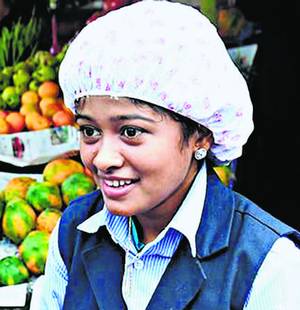
Hanan, the 19-year-old girl from Kerala who was recently both appreciated and trolled on the social media for posting photographs of her life’s challenges, has donated ₹1.5 lakh for flood relief in the State.

Hanan, who received ₹1.5 lakhs from well-wishers after a photograph of her selling fish to support her family and fund her education went viral, said: “The people of the State had turned up to help me when I told my story. These were donations from ordinary people, from ₹50 to ₹1,000 or more that came into my account, making it ₹1.5 lakh. In this time of crisis, I want to give it back to them who had sent their love through money.” .

Hanan transferred the amount to the Chief Minister’s Disaster Relief Fund on Saturday. “We had been trying to transfer the funds for the past two days, but could not do it due to network issues. Today we went to the bank and got it done”.

When asked about how she would restart her small business, Hanan said she would wait till the crisis was over. “Across the State, people have to rebuild their lives after this disaster. I would too.”

source: http://www.thehindu.com / The Hindu / Home> News> National / by Staff Reporter / Kochi – August 18th, 2018

The forgotten  frontier

Imphal, MANIPUR /  Kohima , NAGALAND   :

India’s contribution to the Allied war effort is nowhere more evident than in Britain’s greatest battle, fought in Imphal and Kohima

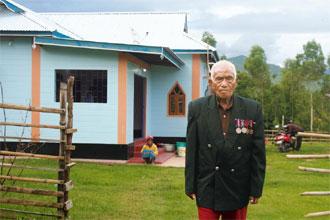
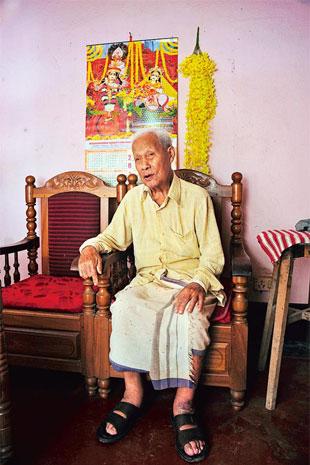
War veteran L. Achung Kom. Photo: Ratan Luwang/Mint

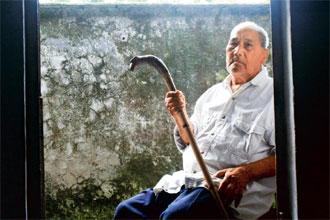
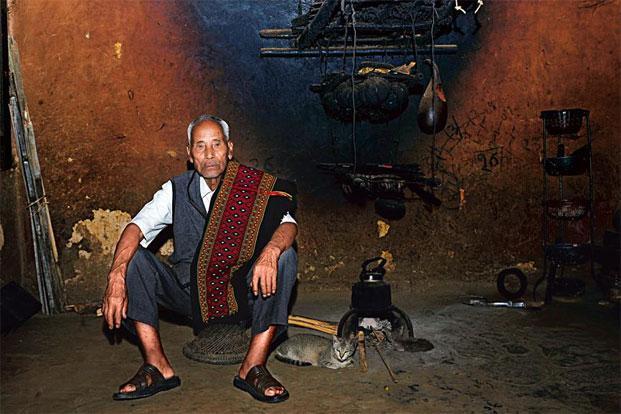
Sitting in a wooden chair on the verandah of his Manipur village home, 91-year-old Nehkhosong Singsit (Nehkhosong Kuki, according to army records) wasn’t expecting visitors when we walked in unannounced through the front gate, past a small lawn, and stood in front of his cheerful, sloping-roofed house.

As his daughter helps her father into a shirt, Singsit’s son, Paogin, a retired bank employee, narrates the fascination his father had for the army uniform; as a 19-year-old, Singsit enrolled in the British-commanded Assam Regiment in 1943.

Other than the need to earn a living, the promise of owning an army uniform was the prime motivation when army recruiters came prospecting to their village at the height of World War II. “Back then, people of our Kuki tribe would wear scanty clothes and my father felt a natural attraction for the army uniform. It stood out for him,” says Paogin.

Singsit would soon be called to action on the battle front when the British-led Allied forces faced a seemingly indomitable enemy in the Imperial Japanese army that was waiting to overrun Allied-held positions in Manipur and beyond.

Nehkhosong Singsit. Photo: Shamik Bag/Mint

As a sepoy, Singsit’s brief was to provide security to the British colonel who led the regiment of primarily Indian soldiers when the Japanese offensive began on 8 March 1944. The Japanese firing was relentless, and one of the bullets found its mark in his dear friend, sepoy Vaiphei. The Japanese began using his body as a shield, firing from behind him—a ploy that Singsit felt was both tactical as well as psychological.

“I saw my friend’s dead body getting ravaged by bullets. The disrespect shown to the dead was shocking,” says Singsit, his voice firm, though his body is now bent over by age. “The other motive of the Japanese was to demoralize us by exhibiting the dead body of someone belonging to our own land.”

In later months, after the Allied forces scored a hard-fought, decisive victory, Singsit would be charmed by Japanese prisoners of war held at Meiktila in Burma (now Myanmar) doing pencil-sketch portraits of his colleagues and him for an extra roti or bidi. War, he found out, can also be about conflicting emotions.

In the early 1940s in Manipur, a princely state yet to merge with an India then under British rule, the issue of land, and sense of belonging, was often defined ethnically by the locals.

Following his honourable discharge from the army in 1949, Singsit preserved the uniform as a treasured memorabilia of the “fierce” three months between March and July 1944, when the Allied forces clashed with the Japanese. But he had to burn the same uniform voluntarily a couple of decades later.

A violent anti-India secessionist movement led by the Mizo National Front (MNF) was brewing in neighbouring Mizoram in the mid-1960s and Mizo underground military recruiters often visited Manipur villages dominated by Kukis, with whom they shared a close bond. “The Indian Army had a strong presence in our area. I was afraid that if they raided my home and found the uniform they might have misunderstood me for a Mizo militant. I felt extremely sad burning the uniform, but the Indian Army personnel didn’t know, nor would they have cared about my role as an Indian soldier in World War II,” says Singsit.

Epic scale

Forty kilometres from Imphal, Singsit’s rural home is a short drive off what some refer to as “The Road of Bones”. Beyond the insistent beauty of the land of cloud-collected hills, meandering rivers and green fields, is the sobering backdrop of the dead. Around and away from the 138km stretch of road from Imphal in Manipur to Kohima in Nagaland is where around 70,000 soldiers and civilians committed their lives to the cause of world domination over those three tragic months. The battles fought in the tough terrain of Manipur and Nagaland and spread over a 600-mile (around 965km) area have since been recognized as among the biggest—and bloodiest—battles fought by Indian forces.

Seventy years on, when diplomats and participants from Britain, Japan, the US, Australia and India gathered in Imphal on 28 June to commemorate the Battle of Imphal/Kohima—declared in 2013 as Britain’s greatest battle by the country’s National Army Museum, over other notable battles like Waterloo and D Day/Normandy—the memory of the dead, and a prayer for peace, hung like a veil over the proceedings.

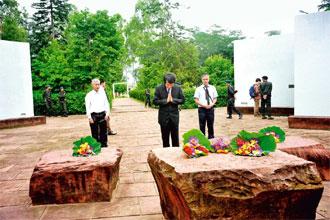
Y. Kawamura at the India Peace Memorial in Red Hill, Manipur. Photo: Ratan Luwang/Mint

Delegate followed delegate in remembering the thousands who lie interred at multiple cemeteries in the region, including those maintained by the Commonwealth War Graves Commission (CWGC) in Imphal and Kohima. In just two cemeteries in the two cities, over 2,500 Indian soldiers are named; many more lie in cemeteries and memorials spread across the region.

Y. Kawamura at the India Peace Memorial in Red Hill, Manipur

While Scott Furssedonn Wood , the British deputy high commissioner in Kolkata, spoke about the “epic” scale of the battle where 200,000 soldiers and airmen from Japan, Britain, India, the US, Australia, New Zealand, Africa and Canada fought in harsh conditions, others, like Kolkata-based US consul-general Helen LaFave, brought up the issue of missing American soldiers and the continuing search for them. Y. Kawamura, charge de’affairs and minister and deputy chief of mission, embassy of Japan, spoke of eternal peace.

At the extreme end of ferocity, Japanese and Allied troops engaged in almost hand-to-hand combat in the Battle of the Tennis Court, fought around the strategically positioned deputy commissioner’s bungalow in Kohima. The Battle of Kohima saw 4,064 British and Indian casualties, according to the CWGC.

In Manipur, casualty-heavy battles were fought at Nungshigum, where three squadrons of the Royal Indian Air Force supported artillery operations to flush out the Japanese; at Kanglatongbi, where a vastly outnumbered Allied unit held out determinedly against the enemy’s design to capture a supply depot; and at Sangshak, where, from 21-26 March 1944, the first battle of World War II was fought on Indian soil. The six-day battle saw the 2nd and 3rd Guerrilla Regiments of the Indian National Army (INA) fighting alongside the Japanese.

The Japanese army was known for its ruthlessness and innovative ways of thwarting the enemy, like mimicking bird calls and creating tools that relentlessly sent out the rat-tat-tat sound of machine-gun fire. “Often (Japanese) soldiers stood out in the open with their guns with total disregard to their own safety,” writes Arambam Angamba Singh, co-convener of the 70th anniversary of the Battle of Imphal event, in the official souvenir.

While a Reuters report on the Battle of Imphal/Kohima topping 2013’s Britain’s Greatest Battles poll describes the country’s forces in the World War II campaign spread over North-East India and Burma as what many consider “The Forgotten Army”, similar opinions have been voiced in India on the collective amnesia regarding the Indian contribution to the Allied war effort.

This is nowhere more apparent than in the list of surviving Manipuri World War II veterans maintained by the state’s Rajya Sainik Board, under the Union ministry of defence. The list reveals 626 Manipuri (mainly Kuki tribesmen) World War II survivor-soldiers right after the war ended in 1945; 17 are living. The Manipur state government led by chief minister Okram Ibobi Singh actively associated with the high-profile, 28 June commemorative event in Imphal, and officials of the co-organizer, Manipur Tourism Forum, expressed hope of benefiting from “war tourism”. But none of the Manipuri World War II veterans have reportedly received any pension or honorarium from the state government, though other states have done so, according to the secretary of the Sainik Board.

Seated across a small wooden table on the balcony of the Sainik Board office in Imphal, the secretary, retired army officer Sarat Singh, maintains a World War II dossier and deals with the daily travails facing the elderly war veterans and, more often, their widows. Many, it is reported, died in penury. On the day we meet, the secretary had shot off yet another letter to the Manipur government requesting the release of the monthly honorarium suggested by the Union government. “The state government is not law-bound to pay and it’s entirely up to them,” he says.

Since many of the Indian Allied forces personnel were recruited specifically to serve on the battle front during World War II, and were discharged after the war ended and they were no longer required, they were denied a pension. When the British too left India, the war veterans, especially in Manipur, remained beyond the pale of public consciousness and the state exchequer.

Yet there were stellar performances in the war theatre. Squadron leader K.K. Majumdar successfully flew the first bombing mission solo in Burma’s Toungoo, becoming the first Indian officer to receive a coveted award in World War II. In Imphal in May 1944, a message from Air Marshal Sir John Baldwin commended: “For the first time in India’s history, squadrons of fighters and dive bombers manned by Indian pilots have operated in strength against the enemy.”  Abdul Hafiz, a Jemadar with the 9th Jat Regiment, posthumously won a Victoria Cross—Britain’s highest gallantry award—for his heroism in the Imphal battle.

Rows of graves of Indian Muslim casualties and lines of inscriptions on pillars with the names of Indian soldiers who were cremated mark the gracefully maintained World War II cemeteries at places like Imphal and Keithelmanbi, stark testimony to the price paid. “I’m hoping still that the government will compensate the World War II veterans for their role,” says Singh.

Nobody’s men

At 95, Khupkolam Vaiphei knows he does not have much time left.

Khupkolam Vaiphei, 95, a former sepoy of the Assam Regiment who fought in the Battle of Imphal/Kohima. He lives in a village in Manipur’s Senapati district. Photo. Shamik Bag/Mint

Hard of hearing, the former sepoy of the Assam Regiment who was on the frontlines during a vicious battle against the Japanese forces in Manipur’s Jessami village, bristles with indignation when recounting the indifference displayed by successive political establishments. “During World War II, Indian public and leaders protested against the use of Indian Army personnel in the British war effort and demanded an assurance from the British that India will be given independence if we assisted in the war. Yet we have not received a single rupee since our discharge. We fought for the British, but did we not play a role for India?” he wonders aloud, his deep baritone resonating across the tin-roofed outer room of his house, atop a small hillock in Senapati district’s Phovaibi village.

Back then, Vaiphei’s emotions too were defined by the codes of Kuki community living. His weary, creased countenance seems to age a hint more when he remembers the night—after three whole days in trenches against non-stop Japanese firing—his closest childhood friend and fellow trooper, Lalneilam, was killed in a sniper attack. “From having our food to answering nature’s call, we did everything inside the trenches, such was the Japanese firepower. Lalneilam, though, went out but never returned.”

After over two gruelling months of fighting back, the Japanese started retreating. Vaiphei was among those who followed the enemy, wanting to push them back to Burma, from where they had come. On one occasion, they came across a bunker with Japanese soldiers inside. Two were captured. They had been holding two young Naga Angami girls hostage to serve them. While the British leader of Vaiphei’s battalion wanted to keep the two Japanese alive as prisoners of war, two Naga soldiers defied orders and killed them with their bayonets. “They couldn’t tolerate the insult and dishonour that their Naga sisters went through,” says Vaiphei.

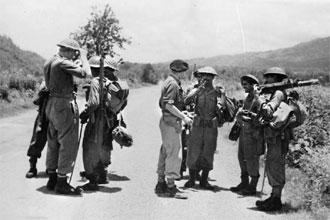
The two arms of the 14th Army during the Battle of Imphal/Kohima. Photo: Wikimedia Commons

This British victory was particularly significant because it was the first time the Japanese army faced defeat, says Hugo Slim , author and leading scholar at the Oxford Institute for Ethics, Law and Armed Conflict, University of Oxford, UK. He is the grandson of the much-feted Lieutenant General William Slim of the British 14th Army, which led the Allied counter-attack. “The Japanese were a brilliant army and considered invincible,” Slim adds on the sidelines of the Imphal commemoration, co-organized by the 2nd WW Imphal Campaign Foundation, which hosts excavation and trekking tours across Manipur’s known World War II battlegrounds. “This battle stopped the Japanese advance across Asia. The two empires clashed and soon afterwards the empires disappeared. It was a very long and complicated battle against an enemy that wouldn’t surrender and had to be fought till death,” Slim says.

Yet the Japanese campaign against British India, known as the U-go Operation and often viewed as a critical misadventure by the infamous commanding officer, Lieutenant General Renya Mutaguchi , had its share of Indian supporters. The small Manipur town of Moirang is one area where the Netaji  Subhas Chandra Bose -led Azad Hind Fauj, or the Indian National Army (INA), backed by the Japanese army, set up a “liberated zone” within British-occupied India, hoisting the INA flag during the thick of the Japanese campaign on 14 April 1944.

As in many other conflict zones in Manipur and Nagaland, a little digging has turned up wartime effects like mortars, rifles, helmets and bullets in Moirang. The INA Museum here is a treasure trove for war enthusiasts. Some glass cases display Japanese and British grenades and bullets side by side, neutralized in the academic air of the museum.

L. Ibomcha. Ratan Luwang/Mint

Ninety-six-year-old L. lbomcha, a former deputy speaker of the Manipur assembly, was a supporter of the INA and, by extension, its collaborators, the Japanese army. Age has slurred his speech but it has not impaired his memory. As we gather in the drawing room of Ibomcha’s Moirang home, he says: “For three months Moirang was a peaceful and happy town under INA and Japanese occupation. I mobilized people and collected money and rations for the soldiers. Moirang got a taste of freedom three years before the rest of India,” he narrates.

A little away from Moirang, in the hilly village of Kom Keirap, L. Achung Kom, a villager who looks younger than the mid-90s he says his age is, waited expectantly for Japanese representatives at the Imphal event to grace his home. He looks a little dejected when we alight from our car.

As someone who had assisted the Japanese in 1944, he had, earlier in the day, greeted Kawamura in Japanese when the latter visited Red Hill, the site of a bloody face-off about 20km from Imphal. With both sides launching a vigorous air campaign, 1944 was the first time that Kom saw an aircraft flying over paddy fields.

“This year’s commemoration brought the memories back to the Manipuri psyche and the changes it made to Manipuri society. It catapulted Manipur from a 19th century civilization to a 20th century state,” Manipur governor V.K. Duggal  says.

Kom aided the Japanese campaign, ferrying goods and procuring rations and local liquor for the military men. Till some years back, his kitchen still had half a mortar, used to grind food—it was taken away by local authorities. While he remembers the Japanese fondly as people who would keep their gaze down when local women passed by, he is not as enthusiastic recollecting a role he had to play. Digging graves, says Kom, was hard work. “Besides, I didn’t like the presence of the dead,” he adds.

In the battle-scarred plains and hill tracts of Manipur, the dead are buried deep but the mine of memories is just a scratch away.

source: http://www.livemint.com / Live Mint / Home> Leisure / by Shamik Bag / July 05th, 2014

Deccan papers throw light on Aurangzeb rule

Hyderabad, TELANGANA :

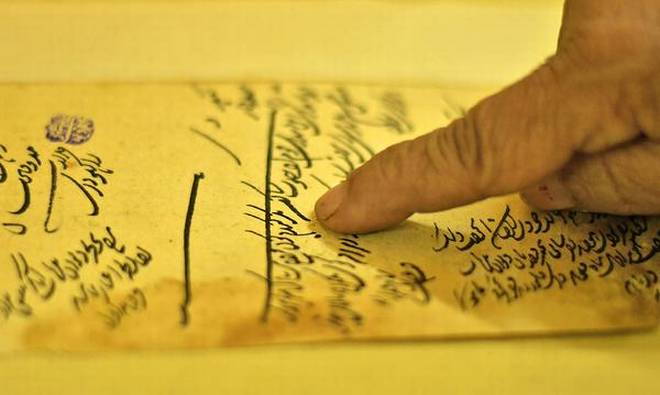
The king’s notes: The Yaddasht-i-Ahkam-i-Muqaddas with Aurangzeb’s imperial instructions. | Photo Credit: G. Ramakrishna

1.5 lakh indelible ink documents preserved in Hyderabad

Think Mughals and you think of Delhi and Agra. But few know that it is Hyderabad that houses the largest collection of written communications of their reign.

The Telangana Archives and Research Institute holds a whopping 1.55 lakh documents — all on handmade paper — including 5,000 from the period of Shah Jahan (1628-1658) and another 1.5 lakh of Aurangzeb (1658-1707). No other archive in the country, not even the National Archives in New Delhi, boasts of such a collection: it gives a graphic picture of the mansabdari system, military administration and revenue machinery of the Mughals in the Deccan. Written in Persian in Shikasta script, cursive style, the documents are linked and arranged in chronological order — date, month and regnal year-wise.

Slew of orders

The documents include Farman (order of the emperor), Nishan (order of a member of the royal family), Yaddasht-i-Ahkam-i-Muqaddas (memorandum containing imperial orders), Parwana (orders issued by higher authorities), Siyaha-Huzur (proceedings of the provincial court), Roznamcha-i-Waqai (daily news report), Qabzul Wasil (bill payments) and Arz-o-Chihra (documents on personnel and horses).

Aurangzeb spent 13 years as the subedar of Deccan during the reign of Shah Jahan and had vast experience in political and other matters. Even after he ascended the throne on July 25, 1658, he continued to focus on the Deccan to check the activities of his rebellious son Mohammed Akbar and on conquering Bijapur and Golconda, which he did in 1687.

According to State Archives director Zareena Parveen, the accountant-general of the erstwhile Hyderabad State, Syed Muhibuddin, went to Aurangabad (the headquarters of the Mughals) for an inspection in 1916 when he discovered a large number of old documents lying in the vaults of Fort Ark.

He took keen interest in preserving them and reported the matter to Daftar-i-Diwani, the administrative wing of Hyderabad State, headed by the superintendent Syed Khurshid Ali. Steps were taken to shift them to Daftar-i-Diwani, which eventually became State Archives. The paper, made by Chinese professionals, has withstood the vagaries of time. The papers remain intact even after water seeped into the archives a few years ago. “In fact they became brighter as it washed away the acidic material that covered the indelible ink used by the Mughals,” said Ms. Parveen.

An expert in Persian herself, Ms. Parveen arranged the documents chronologically, deciphering the contents, and put them in non-acidic dockets.

The documents reveal Aurangzeb’s administrative skills. The Yaddasht-i-Ahkam-i-Muqaddas shows reports on recommendations of pay hikes for staff sent to the emperor, who also had spies to report on negligence, and actions against the government.

source: http://www.thehindu.com / The Hindu / Home> News> Cities> Hyderabad> Sunday Special / by M. Rajeev / Hyderabad – August 11th, 2018

How this simple, God-loving Indian Muslim left behind such an enduring legacy

NEW DELHI / Rameswaram , TAMIL NADU :

Illustration by Arindam Mukherjee/ ThePrint.in

All communities loved and trusted him, but he rose to be the Muslim most loved by India’s Hindu majority in our entire history, possibly since Mughal Emperor Akbar. 

On his third death anniversary, it’s a reckless way to assess the life of one of India’s most loved public figures, but let’s list some of what former president APJ Abdul Kalam wasn’t.

He wasn’t really a scientist in the classical sense of the term. He didn’t have many peer-reviewed publications. He wasn’t the father of the Indian nuclear bomb. It had been put together collectively by two generations of Department of Atomic Energy (DAE) scientists.

He didn’t quite have the gift of oratory and mostly repeated his platitudes. In a Raisina Hill mansion peopled before him by great men of letters, he wasn’t much of a writer either. He never got married, was not a family man. Nor was he a politician or public figure by upbringing or training. Most of his life was spent in the secretive world of weapon-designing. And, much as he loved to recite Sanskrit shlokas and play the rudra veena, he was a simple, God-loving Muslim.

Then think about what he ended up becoming.

He came to be hailed among our greatest scientists ever, in the class of C.V. Raman and Jagadish Chandra Bose, way above his mentors’ generation of Homi Bhabha and Vikram Sarabhai or his peers in DAE, ISRO and DRDO. He is immortalised in our collective memory as the man who gave us our nuclear deterrent. He became our most popular public speaker across generations, geographies and demographics in India, and never spoke at a hall less than bursting at the flanks with standees.

The books he wrote, India 2020, for example, were in the nature of pontifical DIYs but became the biggest non-fiction sellers in our history and shall remain so for a long time. He became the leader most loved by our children after Chacha Nehru, a benevolent Nana Kalam. His stature grew so phenomenally that he became our most political president, and in an entirely wise and non-partisan manner.

All communities loved and trusted him, but he rose to be the Muslim most loved by India’s Hindu majority in our entire history, possibly since Mughal Emperor Akbar. Way more than Maulana Azad or any other. The perfect detox to Jinnah.

And finally, a fact that even I, with my thick skin, was too scared to put in the list of what he wasn’t: He never had a real doctorate, a PhD. His doctorates were all honoris causa but “Dr” fitted him brilliantly, and not even his worst critics dared to highlight this.

So what did he have that lifted him to such love and respect?

He acquired moral authority that few Indians have had since Independence. It came from his humility, to begin with. You never heard him claim credit for any ISRO-DRDO achievements, never a boast, never heard him complain about anybody or anything. Surely, for somebody who worked all his life in a secretive tech establishment behind an iron curtain of bureaucracy, he had had his share of complaints. He never played to the gallery or used these as excuses for failure.

In April 2001, I wrote the first of my two National Interests deeply critical of him and the failures of DRDO under him (‘Kalam’s Banana Republic’), and the next time I ran into him, literally, jogging from the opposite direction in south Delhi’s Siri Fort Sports Complex, where he walked in the evenings (he lived in a DRDO guesthouse in the Asian Games Village next door), he noticed I was avoiding eye contact in fright. He stopped, with a big smile, and said he wanted to tell me how much he enjoyed that article and how he agreed with it entirely.

“I hope the authorities read it also. There are very serious challenges and shortcomings in DRDO. We need to do something,” he said, as I searched his face for sarcasm. But as anybody who got to know Kalam over time, he never spoke between the lines.

His nomination as president was a Vajpayee-Advani masterstroke. Theirs was India’s first BJP-led government and they were conscious of the need to look-feel inclusive. Someone already a national hero with a Muslim name was going to be an asset. But the way Kalam grew with the job surprised them as well.

His was a most reassuring presence during the stand-off with Pakistan (Operation Parakram) when, for at least a year, we remained a hair-trigger away from war. His was just the healing touch India needed after the Gujarat riots. He intervened with great circumspection and maturity, not sounding partisan in the least, and yet letting his mind be known. His was the most effective intervention of all and delivered in such a sophisticated manner that even the Hindus only ended up respecting him more.

The legacy of Kalam is more profound than just this, though. How profound was underlined by former prime minister Manmohan Singh in Karan Thapar’s fine interview with him for the India Today Group.

He reminded us that without Kalam’s intervention, there would have been no nuclear deal with the US. As the monsoon session of Parliament began in 2008, and Prakash Karat announced that he was withdrawing support to the UPA and would also vote with the BJP to bring down the government on the nuclear deal, the numbers were stacked against Manmohan Singh. He won his riskiest political battle with the defection of Mulayam Singh Yadav.

Originally, and particularly given his Muslim vote bank, Mulayam was strongly opposed to the nuclear deal. The Congress reached out to Mulayam for a backroom give-and-take. But Mulayam needed a fig leaf. This was provided by Kalam as he came out strongly in endorsement of the agreement. From that moment on, Mulayam and Amar Singh only parroted: If Dr Kalam says it’s fine, it must be so. In fact, if you go back to the parliamentary debate on that confidence motion, see the passion with which Asaduddin Owaisi defends the nuclear deal, turning his politics inside out. Kalam, the patriot, provided the cover there too.

Surprisingly, this still remains a relatively less remembered intervention and has not been noted prominently in countless obituaries and tributes written on him. But the fact is, until then, not just the “secular” parties but even the nuclear-scientific establishment had grave suspicions about the deal that would separate military from the civil and bring both out of the closet. Kalam settled these.

He could do it only because he always put the nation first. Just a year earlier, the Congress had humiliated him by denying him a second term that he had agreed to accept if there was unanimity. The Congress vetoed it. This was a perfect moment for Kalam to get even and also return the favour to the BJP, which had rewarded him with Bharat Ratna and the presidency.

So here are some other things Kalam wasn’t. He wasn’t petty, cynical, selfish, vengeful, unprincipled, egoistic. That’s why a billion-plus remember him as their most loved leader in decades.

Postscript: My favourite Kalam story is among my earliest. In 1994, India was hit by the so-called ISRO spy scandal. It was alleged — and widely believed — that two eminent ISRO scientists had been caught by Pakistani intelligence in a honey trap using two Maldives women, and had passed strategic rocket secrets to them. Investigating the story for India Today, I found the entire plot fishy and fictional. The story the magazine published demolished the Kerala Police and Intelligence Bureau case, the scientists were freed with full vindication and honour, cases withdrawn and ultimately the Supreme Court ordered cash compensation to those framed.

One of the scientists, Nambinarayanan, acknowledged as much in his recent autobiographical account. But early on, it was very stressful to go against the folklore that had already been built. And even in those pre-internet days we who busted the myth were subjected to enormous abuse.

Subsequently, at an Army Day (January 15) reception, Kalam, then head of DRDO, caught me for a couple of minutes’ chat. He poked me gently in my chest, to the left, and said, what you have done is like applying balm to the wounds on our hearts. I asked him what that was about. The ISRO story, he said. Those scientists are wonderful people and totally innocent, this false case would have destroyed my ISRO (where he had originally worked), he said. You can read that story on India Today’s website.

Blindness beaten, now bureaucracy

Bagalpur, BIHAR / New Town, WEST BENGAL :

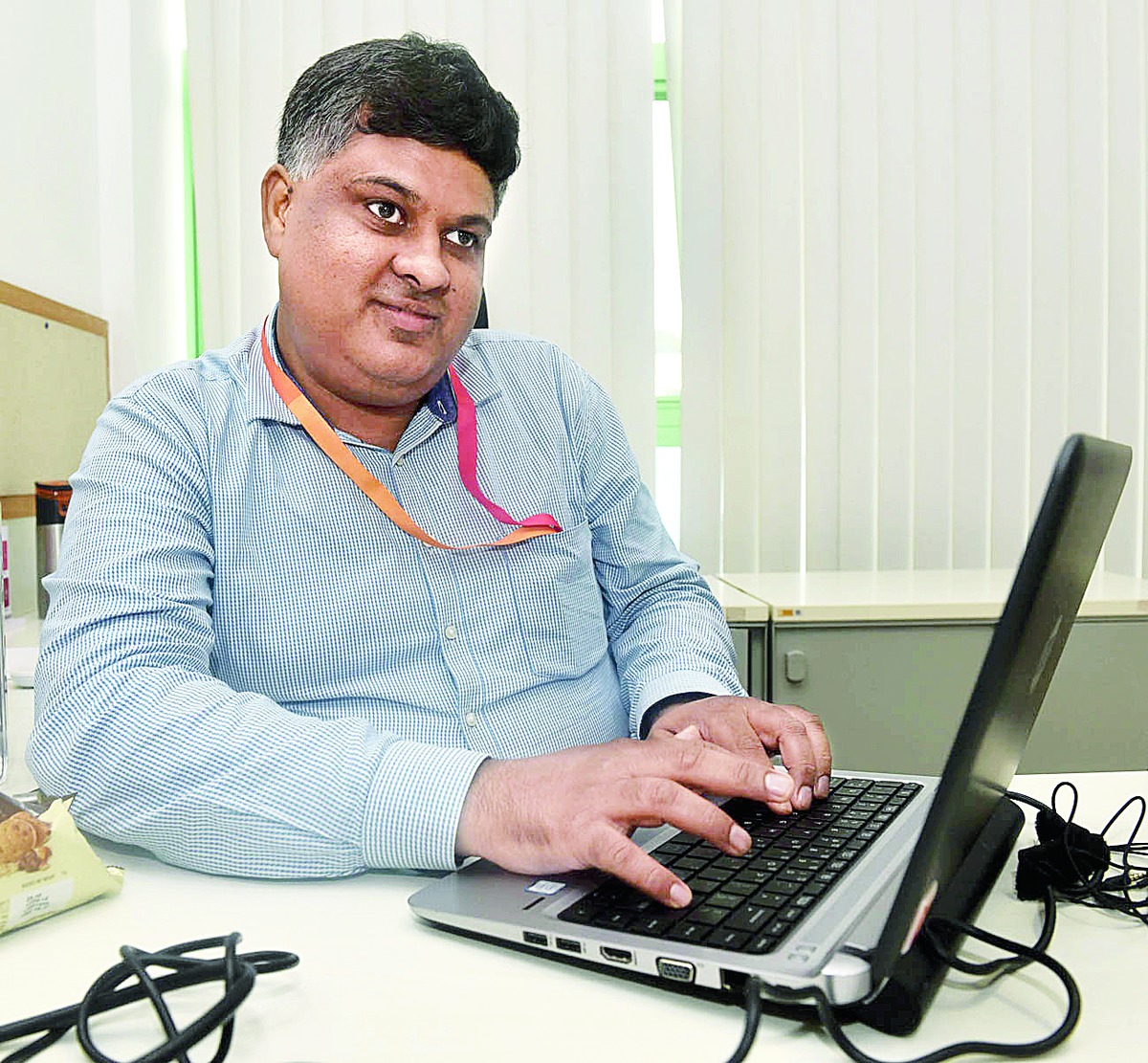
MAN ON A MISSION: Mohammed Asif Iqbal in his Sector V office. Picture by Sanjoy Chattopadhyaya

New Town:

A 41-year-old man who didn’t let blindness come in the way of his achieving academic and career goals has now set his mind on fighting bureaucracy to make reserved parking for people with disabilities the norm in public places.

Mohammed Asif Iqbal, an associate director of PricewaterhouseCoopers (PwC) in Calcutta, has been meeting whoever he thinks can be of help as part of a campaign he started two years ago and won’t give up on.

Asif had visited Mamata Banerjee’s residence in Kalighat in August last year, although he didn’t get to meet her. He left a letter addressed to the chief minister with a police officer in her security detail and is still waiting for a response.

A few months before that, Asif had met the Trinamul MP and Harvard professor Sugata Bose to give voice to what he feels is the right of every person with disability.

In a letter to the chief minister after Asif met him, Bose said the young man “makes a compelling case for dedicated handicapped parking in public places, as is the norm in most advanced cities and towns”.

Metro has a copy each of Asif’s letter to Mamata and the one in which Bose appears to back his initiative.

“Ramps are built to make a building or compound disabled-friendly. But dedicated parking slots sound like a foreign concept to most people. There are VIP parking slots everywhere, though,” Asif said.

The trigger for his mission was a visit to the headquarters of the Calcutta Municipal Corporation in April 2016. “I was to meet someone there and my driver was unable to find a place to park the vehicle anywhere nearby. I was forced to walk more than a kilometre through New Market to reach the civic headquarters. I realised that day what a big problem this is, more so for someone with a disability,” he recounted.

Asif was born in Bhagalpur, Bihar, with impaired vision that kept deteriorating as he grew. He lost his sight completely before he was 16. “I was then living with my uncle in the US, where people with blindness and other disabilities don’t usually face the problems that they would encounter in India,” he said.

It was after Asif returned to India after completing school in Oregano – he was in the US for around a decade – that he realised how disabled-friendly public amenities there make life easier for such people.

“There are clear guidelines that have to be followed without exception. A minimum number of parking slots – it varies according to the size of the parking area – are reserved for persons with disabilities. Obstructions are removed and the access ways are well lit. Clear signage, along with Braille equivalents, line public areas,” Asif said.

Back home, he feels disturbed that little thought is given to how people with disabilities go about their lives. “Stations like Howrah and Sealdah that are used by lakhs of people every day don’t have accessible parking for anyone with a disability,” he said. “Imagine a person with crutches having to get off a car and walk 200 steps before he reaches a ramp or a lift,” Asif said.

While the architecture of some of the older buildings is a challenge, what pains Asif is that “there is hardly any discussion on the topic in Calcutta, which prides itself on being a city with a heart”.

Prejudices and roadblocks are not new to Asif, though. After failing to clear an annual school examination in Bhagalpur, he remembers some teachers saying he did not have a future.

On his return from the US, he again studied in India and became the first blind commerce graduate from St Xavier’s College. He was denied admission to some MBA coaching institutes because the courses were purportedly “not designed for people like me”. Asif did not give up and earned an MBA degree from Symbiosis, Pune.

A PIL he filed in 2000 was instrumental in creating reservation for people with disabilities in the IIMs.

If anything frustrates him, it is how his mission has unfolded so far. “I believe the chief minister has yet to see my letter. It must have been buried under a heap of files. The moment she sees it, I think I will get an audience with her,” Asif said.

He is not unfamiliar with how government projects are implemented in India and the time it takes to get something done. As an employee of PwC India, he is involved in digital accessibility initiatives with the Centre and state governments. He has assisted in making the Aadhaar project inclusive and the process of filing online income tax returns more disabled-friendly.

Asif has already prepared a concept note for the parking project that he hopes will work out in Bengal someday. According to him, such a project requires multiple stakeholders like the municipal corporation, the police and the ministry of social welfare.

Quest and South City malls have a few slots reserved for wheelchair users in their parking lots, but Asif envisions something more comprehensive.

Rights activist Sayomdeb Mukherjee, who uses a wheelchair, said apathy was the root of the problem. “Our roads, footpaths, buildings – the entire ecosystem lacks an effort to bring people with disabilities into the mainstream. Barrier-free architecture is a distant dream and parking lots are just an extension of the challenge,” he said.

Sayomdeb said he was in talks with the police to introduce stickers to identify cars belonging to people with disabilities so that they get parking in public places like the airport, railway stations, government offices and malls.

For Asif, the use of technology makes up for the things that blindness has denied him. Sitting in his glass cabin at the Sector V office of PwC, Asif works on a laptop with voice-recognition software and replies to messages on his iPhone using an artificial intelligence app.

It’s often hard to tell, especially for someone who doesn’t know, that Asif cannot see. But he sees the future for people with disabilities, and he will play a role in it for sure.

source: http://www.telegraphindia.com / The Telegraph,Calcutta,India / Home> Calcutta / by Debraj Mitra / August 05th, 2018

Dr. Nowhera Shaik Received Award by UAE Minister for Business Leadership Icon

ANDHRA PRADESH :

 Bangalore :

Dr. Shaik received business leadership icon award and was honored by Indian Business Professionals Council, Dubai – the award was given by His Excellency Dr. Thani Ahmed A l Zeyoudi, Minister of Climate Change & Environment and other Senior dignitaries from Indian Consulate.

For every hundred reasons, the world presented for women to sit behind without a dream, there came a thousand reasons as to why they must chase it. Dr. Nowhera Shaik, left no stones unturned whenever she got an opportunity to contribute her bit to the progress of civilization. However, what is commendable is that it was she who created these opportunities that acted as the stepping ladder to the top-shelf of empowerment, humanity and the ever-changing corporate world. Over time, she expanded her horizons and built herself a forte in several different paths of life. She is a businesswoman to look up to, founder and CEO of Heera Group, The National President of the All India Mahila Empowerment Party, an entrepreneur and most importantly a selfless philanthropist, who wakes up every day with the vision of progressing in the world of civilisation & learning to make a difference in the life of another individual.

Some of the awards and achievements of Dr. Nowhera Shaik:

1. Extraordinaire – Powerful Women Achiever by NexBrands – Brand Vision Summit 2017-2018
2. Stardust Achievers Award 2017
3. Gulfood Award – Best New Comer Brand 2016
4. Woman of Integrity and Purpose Award 2016
5. Fastest Growing Indian Company Excellence Award 2013

She also won the honorary award for ‘Best Transfer for Heera Gold Charted from UAE.’ Further, she grabbed the Antony Gold Bullion Company Limited U.K. award and the Tajir Gold Dust and Bar Ghana Limited award.

She was the proud receiver of several awards that were an evident reflection of her expertise in the world of business and her undying passion to help the people in need. With the kind of integration of knowledge and hard work, she put across, the growth of the firm was obvious.

Her selfless service to the society and her urge to ascend the ladders of corporate success and empowerment has led her to carve a path for several young women along with serving her own purpose.

About Dr. Nowhera Shaik

Ms. Shaik was born to Shaik Nanne Saheb and Shaik Bilkis in 1973. Ms. Shaikh has followed her father’s footstep from a very early age by supporting him in his business activities even during her school days. Mr. Shaikh Kolkar Madaar Saheb, grandfather of Ms. Shaikh was a successful businessman who started S.N.S. Transports in 1920 and found success in the wholesale business of vegetables, fruits, and textile products across the entire country. The high spiritual and religious cultural and business background was inherited by Ms. Nowhera Shaikh. In 1998, Ms. Shaik Nowhera started an Islamic School for girls at Tirupati Town in the name of ‘Madrasa Niswan’ (under a society registered with the Registration of Societies Act, AP, India, No: 386), with around 150 Students. Most of the students were very poor and could not even afford to buy books and uniform. She gave such poor children free education with lodging and boarding facilities.

An inspiration to many and the reason for several newfound smiles, Dr. Nowhera Shaik believes she’s only beginning her journey and that there is a long way to go before she sees the peak of it.

source: http://www.businesswireindia.com / Business Wire India / Home> New Detail / June 28th, 2018

1000 War Rockets of Tipu Sultan Discovered in Karnataka Highlight A Legacy That Needs to Be Invoked

KARNATAKA :

Tipu Sultan remembered by Presidents of India

TipuSultanMPOs31jul2018

 Over 1000 war rockets of Tipu era have just been found in a fort in Karanataka. Tipu Sultan was the first warrior in history to have used rockets in his warfare against the British.

Recall Tipu Jayanthi celebrated by the Karnataka Government under Siddaramaiah and the violent opposition it evoked from the BJP and Hindutva forces who overlooked Tipu Sultan’s fierce fight against British rule and only focused on his Islamic identity. An Union Minister publicly refused to participate in the Tipu Jayanti celebrations.

The fanatical opposition to Tipu Sultan by BJP and its top leadership has been so intense that it did not even accept the speech of President of India Ramnath Kovind who while addressing the Karnataka Assembly appreciated Tipu Sultan, among others, and flagged his pioneering role in employing the first ever rocket in the history of warfare against the British.

In their blind opposition to Tipu Sultan just because he was a Muslim, the BJP leaders of Karnataka did not hesitate even to diminish the dignity of the President of India by refusing to acknowledge his speech and dismissing it as as a draft prepared by the then Karnataka Government. Even Prime Minister Narendra Modi while campaigning for BJP candidates in the Karnataka elections sarcastically said that the Congress Government was celebrating the Jayanti of “Sultans”.

Let us be mindful of the fact that a sketch of Tipu Sultan finds a prominent and place in the calligraphed copy of the Constitution where the sketch of Lord Ram, Akbar and other outstanding figures of Indian mythology and history occupy a hallowed place.

It is not that President Kovind is the first President of our Republic who invoked Tipu Sultan’s glorious legacy. Earlier President K. R. Narayanan in his speech delivered at the banquet hosted by the President of the French Republic, Jacques Chirac, on April 17, 2000 in Paris referred to the correspondence exchanged between Tipu Sultan and Napoleon Bonaparte for the purpose of forming a grand alliance to defeat the British and throw them out of India.

In an appendix of the publication, The Sword of Tipu Sultan, authored by Bhagwan Gidwani, there is a text of letter written by Napoleon to Tipu Sultan bringing out the strategic affinity and understanding between India and France in the late 18th century.

Napoleon wrote in the letter to Tipu Sultan : “You have already been informed of my arrival on the borders of the Red Sea, with an innumerable and invincible Army, full of the desire of delivering you from the iron yoke of England.”

Before the letter could reach Tipu Sultan, the British intelligence succeeded in intercepting it. Then President Narayanan in his aforementioned banquet speech rsaid: “…Napoleon’s demarche perhaps underlined the strategic affinity that links India and France and the responsibility we hold in creating a more equal and democratic inter-national order in the multipolar world.”

It is all the more significant to note that the concept of ” creating a more equal and democratic inter-national order in the multipolar world ” was taken up by Narayanan by invoking Tipu Sultan along with Napoleon who is a national hero for the French. I recall that the leadership of France deeply appreciated this speech and thanked the then Indian President for contextualizing the strategic dialogue started between the two countries in the 21st Century by referring to the strategic understanding forged in the 17th Century.

Abdul Kalam in his writings published before he became President of India had outlined Tipu Sultans stellar contributions as the first warrior in history of warfare for having used rockets against the British who were completely on the defensive. The account given by President Kalam of the rockets used by Tipu Sultan in his war against Britishers makes a fascinating read and the younger generation should be educated about it. He also refers to the Royal Artillery Museum, London that has exhibited the rockets used by Tipu Sultan with the claim the he became the first warrior to do so.

It is rather fascinating to note that the French Revolution and its ideals deeply impacted Tipu Sultan and he celebrated the Revolution with great fervour. Possibly he was the first monarch in India who remained wedded to the enduring ideals of the Revolution- liberty, equality and fraternity- and planted a tree in Srirangapatnam to commemorate it. He enlisted himself as a member of the Jacobin Club which constituted one of the prominent political formations of the Revolution proclaiming egalitarianism and affirming a social order informed by liberty, equality and fraternity.

His strategic vision encompassed in its scope a modern navy which he founded in 1796 and set up two dockyards where ships could be used and equipped with necessary facilities for conducting warfare. It greatly supplemented his military capability based on his land based armoury and armed forces.

His critical understanding that a strong economy could sustain a strong military paved the way for him to take manifold measures to augment and expand trade and commerce and set up a chain of industries. His farsightedness in understanding the danger posed by the advancing British forces in the 18th century stood him out as an unparalleled leader with a firm grasp over military and strategic affairs. British historians have recorded his accomplishments with admiration. And recorded the fact that the conditions of the peasants of Mysore were far better than their status in the British provinces of that era.

Historians have recorded that Tipu Sultan liberally gave grants to numerous Hindu shrines and respected the faith of others. Such a legacy rooted in respecting all religions makes Tipu Sultan relevant for our contemporary period which is witnessing majoritarian tendencies.

He relentlessly fought against British occupation and aggression and eventually attained martyrdom. His heroism and bravery to fight against colonial subjugation constitutes an important portion of Indian history. It is important to celebrate that legacy and enrich it.

Jawaharlal Nehru in his Discovery Of India wrote “Haider Ali and Tipu Sultan .. inflicted a severe defeat on the British and came near to breaking the power of the East India Company.” Such a glorious phase of Tipu Sultan who almost broke the power of the East India Company and who remained wedded to ideals of French revolution inspires India of twenty first century. We need to immortalize it by affirming its enduring value which is far above party politics and ideological rivalry.

As the twenty first century India faces threat from Hindutva forces engaged in lynching people and polarizing them in the name of cow protection, love jihad and religion we need to reinvigorate the legacy based on liberty, equality and fraternity which remained at the heart of the French Revolution, guided Tipu Sultan and inspired our freedom fighters and the framers of our Constitution to shape the destiny of India based on progressive values.

(S.N.Sahu served as Officer on Special Duty to late President of India K.R.Narayanan and also as Director in Prime Minister’s Office under Manmohan Singh).

source: http://www.thecitizen.in / The Citizen / Home / by S.N. Sahu / July 30th, 2018

Indian Prodigy Sara shines in Dubai

Malegaon, MAHARASHTRA / Dubai,  U.A.E :

SaraAnsariMPOs31jul2018

Where there is will there is a way, Sara Ansari proved the cliché with her exceptional qualities and abilities. Indian born Sara, who is a resident of Dubai now, has not only makes her parents proud over her success, India and Dubai too delighted over her achievements.

Born in Malegaon a small town in Maharashtra and brought up in Dubai Sara has secured 98% marks in CBSE 10th Examination which was held in March 2018 and result of which was declared on May 29th. Interestingly she got 100% in Mathematics as well as in Science.

She aims to pursue her career in Astro Physics which deals with space research. She believes that by pursuing this career she can participate in promotion of science education and eliminate the poverty and hunger from the world.

Sara is not only excellent academically but also proved her talent in many extracurricular activities.

She has been awarded by the prestigious Diana Award in recognition of her outstanding contribution to society. The Diana Award is bestowed upon inspiring courageous, Compassionate young people, positively transforming the lives of others in Diana, “Princess of Wales” memory and legacy.

She is a confident speaker and an outstanding Debater too.This Year at the occasion of Independence Day, she has been awarded by “The Best Speaker “ Award by the Consulate General of India in Dubai in recognition of her performance in Inter School Debate Competition.

She is a prefect of Model United Nation Club in her school. She has visited United Nation New York, U.S.A. in July 2014 as a part of her Global Young leader conference. and attended several MUN Conferences in Dubai and Globally and achieved the Best Delegate Awards. Model United Nation also known as MUN is an extra-curricular activity in which students typically role-play delegates to the United Nations and simulate UN Committees. This activity takes place at MUN Conferences which is usually organized by High school or Collage MUN Club. Her paintings too won her many awards and accolades.

“We are so proud of her that there is no word to explain” says her father Iqbal Ansari, adding that her achievements have been a direct result of self-discipline and dedication to performing the required research and practice necessary for success in such endeavors.

The student of The Millennium School, Dubai has also won the prestigious Sharjah Award for Educational Excellence for the academic year 2015-2016. This award is instituted by Ruler of Sharjah H.H. Dr. Shaikh Sultan Bin Mohammad Al Qasimi for recognizing outstanding achievers in academics and co-curricular activities, with special emphasis on social responsibilities.

The award was presented to her by Crown Prince and Deputy Ruler of Sharjah, HH Sheikh Sultan bin Mohammed bin Sultan Al Qasimi in a glittering ceremony held at University City hall, Sharjah on Thursday, 21st April 2016.

“It is a glorious moment for our country, family & school that Sara Ansari was awarded the prestigious Sharjah Award for educational excellence for the ‘Most Distinguished Student’, for the academic year 2015-2016”, says her father.

Sara was also the winner of prestigious Sheikh Hamdan Award for Distinguished Performance 2015, the award recognises the students from Gulf Countries who excel not only in Academics but social, religious, cultural, sports activities. The award was presented to her during 2015 by Deputy Ruler of Dubai HH Shaikh Hamdan Bin Rashid Al Maktoum.

Sara and her partner design a Drone under theme “Drone to Rescue” which would help mountaineers for rescue, the project won first award for deigns during Makers Day 2016 which was organised by GMS. The project was chosen top 10 finalist out of 700 projects presented by different UAE schools at GEMS Wellington School Dubai. The project was selected by Arab Innovation Centre for Educational Excellence for AICE accelerator Programme, as a part of this programme they got funding and mentoring from industry experts to expand the project scope and evaluate the commercial and technical feasibility.

Social Activities: Sara’s passion is Art & craft, she knows several Art & Craft techniques like Decoupage, paper quelling, embroidery, par cord. She has taught the skills to less fortunate people in Sri Lanka, India, UAE. She was recognised for her efforts and appreciated by community members and international NGO’s. Kindly visit her website www.facebook.com/sarastalent to know more about her activities.

Sara’s talent is drawing & painting, she has won many certificates and award from different bodies and international organisations. She has a special skill of Pyrography, the art or technique of decorating wood or leather by burning a design on the surface with a heated metallic point.

She is also very good swimmer and also interest in ice skating, roller skating and participated in marathons.

source: http://www.theindianawaaz.com / The Indian Awaaz / by The Correspondent , The Indian Awaaz / June 04th, 2018

Indian 400M National Record |MUHAMMED ANAS |45.24S

Nilamel, KERALA :

Prague :

Indian Athletes:

Muhammad Anas created a new Indian 400M National record 45.24s in VELKÁ CENA NOVÉHO MĚSTA NAD METUJÍ at NOVÉ MĚSTO NAD METUJÍ .

Anas broke his own national record of 45.31s created in commonwealth games gold coast 2018.

source: http://www.youtube.com / Indian Athletes / Published : July 21st, 2018