Category Archives: Amazing Feats

Paying Tribute to Pathbreaking, and Forgotten, Muslim Women from the 20th Century

Muslim women who were at the forefront of the nationalist and feminist discourse in the country, during and after the independence movement, were eventually overlooked or excluded from the mainstream narrative.
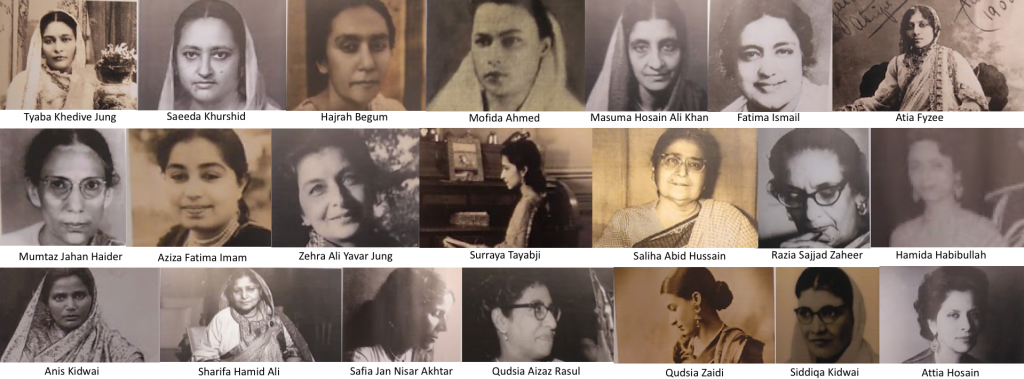
MWF exhibition featured 21 Muslim women who contributed to nation-building during and after the independence struggle. Credit: Khushboo Kumar

New Delhi:

Most Indians today may not be aware that the national flag was designed by a Muslim woman, Surayya Tayabji, an active member of the Indian National Congress. Jawaharlal Nehru assigned this task to Tayabji, and it was her idea to replace the symbol of the charkha used and popularised by Mahatma Gandhi with that of Ashoka Chakra at the centre of the flag. Tayabji felt that the charkha, a symbol of the Congress party, might appear partisan.

Narratives like this – often forgotten or lost in public memory – were the central theme of a colloquium that was organised by the Muslim Women’s Forum (MWF), an organisation engaged in the advocacy of Muslim women’s rights. Titled ‘Pathbreakers: The Twentieth Century Muslim Women of India’, the colloquium held in partnership with UN Women showcased the achievements of 21 Muslim women in various spheres of public life during and after the independence struggle.

Other women who featured in the exhibition included Saeeda Khurshid, Hamida Habibullah, Aziza Fatima Imam, Qudsia Zaidi, Mofida Ahmed, Zehra Ali Yavar Jung, Razia Sajjad Zaheer, Tyaba Khedive Jung, Atiya Fyzee, Sharifa Hamid Ali, Fathema Ismail, Masuma Hosain Ali Khan, Anis Kidwai, Hajrah Begum, Qudsia Aizaz Rasul, Mumtaz Jahan Haider, Siddiqa Kidwai, Attia Hosain, Saliha Abid Hussain and Safia Jan Nisar Akhtar.

The speakers participating in the discussion talked about the need to reclaim the lost narratives of Muslim women and take control of their representation.

Speaking on the occasion, Seema Mustafa, an Indian print and television journalist, pointed out that these women would not fit even the current stereotypical representation of hijab-clad, oppressed and orthodox Muslim women, who need a messiah to rescue them. Mustafa, in her keynote address, said that these women had broken barriers and challenged patriarchal order in their time; they followed Islam in its liberal spirit, refusing to be shackled by societal norms. Most of them abandoned the purdah system, she said.
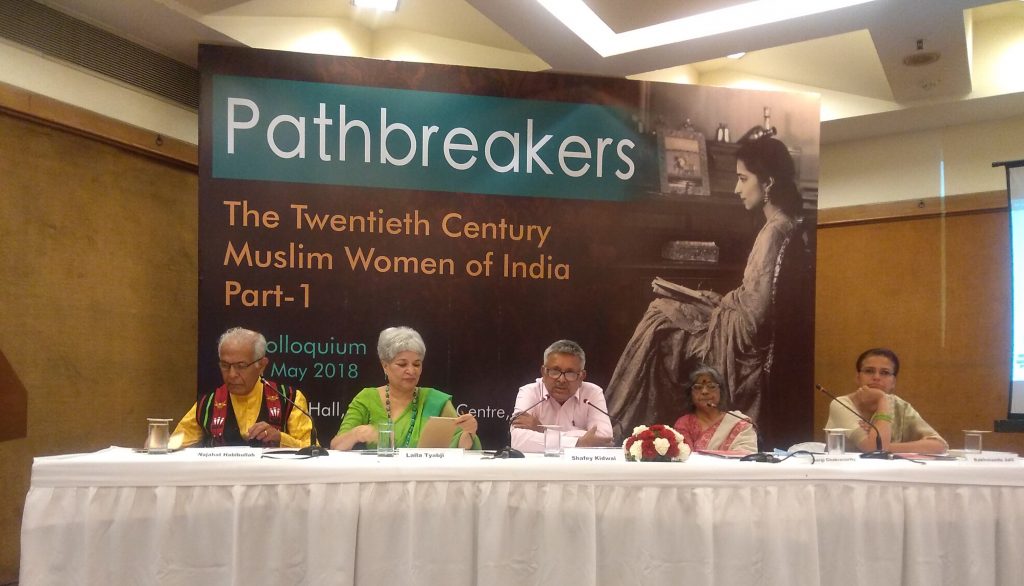
Speakers panel for the session ‘Recognising and Nurturing Pathbreakers’ at Muslim Women’s Forum colloquium. Credit: Khushboo Kumari

Stereotypes in modern India

The speakers insisted that the reality was and still is that Muslim women, just like women belonging to any other socio-cultural group in India, do not constitute a monolithic, homogenous entity. They come from diverse backgrounds and subscribe to varying ideologies. Muslim women have been and still are writers, teachers, artists, scientists, lawyers, educators, political workers, legislators in parliament and in assemblies. The speakers said clubbing them under the generic rubric of backwardness was a misrepresentation.

As the regular use of terms like triple talaqhalala and purdah has come to demonstrate subjugation of Muslim women, Islam has acquired the status of the most oppressive religion for women, the speakers said. Muslim women have become an object of pity.

Commenting on Islam and feminism, Farida Khan, former dean of education at Jamia Millia Islamia and former member of the National Commission for Minorities, pointed out that gender oppression is common to all religions. “Why should Islam have the burden of taking on feminism?” asked Khan. She further explained that Islam should be perceived and understood in the social and historical context of the day. Every religion has to and does evolve with time.

Referring to the exhibition, Khan said, “It makes me sad to think that you need to have an exhibition and you need to project these women in a country where they should be well known, where they should be part of the mainstream, where everybody should know their names and know the work they have done.”

Gargi Chakravartty, former associate professor of history in Maitreyi College and author, said, “Muslim women’s political and social contributions in the pre-independence period during the major Gandhian movements or in the field of spreading education, or in the sphere of literary activities, cannot be erased from history.” She shared many anecdotes that came up in her own research about largely unknown Muslim women who have extensively worked among the poor throughout the 20th century and still continue to do so.

An eminent speaker at the colloquium, Rakshanda Jalil, recently wrote a book A Rebel and Her Cause on the life of Rashid Jahan. Jalil spoke of the inspiring life of Jahan, who was a doctor, writer, political activist and member of the Communist Party of India.

Farah Naqvi, member of the Post-Sachar Evaluation Committee (Kundu Committee) 2013-2014, summed up the purpose of the colloquium and the exhibition. “This colloquium is a response. There is a nostalgia about it. But it is not just about the nostalgic nawabi Muslim. It has a political purpose, the colloquium, which is that you cannot allow any one strand of history to be obliterated from this country. Any strand. It could be Muslim women today. It could be someone else tomorrow,” Naqvi said.

Questioning if Muslim women needed to be forced into a separate constituency, Naqvi said it was indeed a tragedy that these women’s contributions were not a part of mainstream knowledge – and that reflected failure on the part of Indian historiography.

Naqvi also pointed out that the undercurrent of the entire exhibition was nation-building because they were “also responding to a moment when Muslims are repeatedly being told that they are ‘anti-national’”. She further explained that against such a background, the Muslim community in general should not take the bait of proving that they are ‘good’ nationalists. Instead they should take pride in the achievements they have made in their respective spheres of work – especially for those who stayed on in India after the Partition.

Wajahat Habibullah, India’s first chief information commissioner and the son of Hamida Habibullah, one of the 21 women featured in the exhibition, talked about Partition and how it divided his family. He said, “It is necessary to remember and nurture the memories of all those Muslim women who then very consciously, despite family pressure and contradictions within the family, opted clearly to be a part of India”.

Contribution to literature, politics and education

The exhibition showed how extensively Muslim women have contributed in the spheres of politics, literature, education and social work.

Many like Saeeda Khurshid, founder of the Muslim Women’s Forum, actively campaigned for the Congress party. Hamida Habibullah was the the president of the Mahila Congress. Few like Aziza Fatima Imam, Fathom Ismail, Anis Kidwai, Siddiqa Kidwai and Qudsia Aizaz Rasul were members of the parliament and legislative assemblies for years.

Rasul was also the only Muslim woman member of the constituent assembly.

Sharifa Hamid Ali founded the All India Women’s Conference (AIWC), with the likes of Sarojini Naidu, Rani Rajwade and Kamaladevi Chattopadhyay, and was involved in its work alongside others like Masuma Hosain Ali Khan and Hajrah Begum – who also founded the National Federation of Indian Women.

These women actively worked with the poor and marginalised sections of society, trying to improve their access to health and education.

Zehra Ali Yavar Jung, who was awarded the Padma Bhushan in 1973, worked to improve the condition of women detainees in Hyderabad’s prisons and presided over a women’s workshop that trained and provided employment to destitute women. Fathom Ismail helped in opening rehabilitation clinics for children suffering from polio. Anis Kidwai worked tirelessly in refugee camps after Partition.
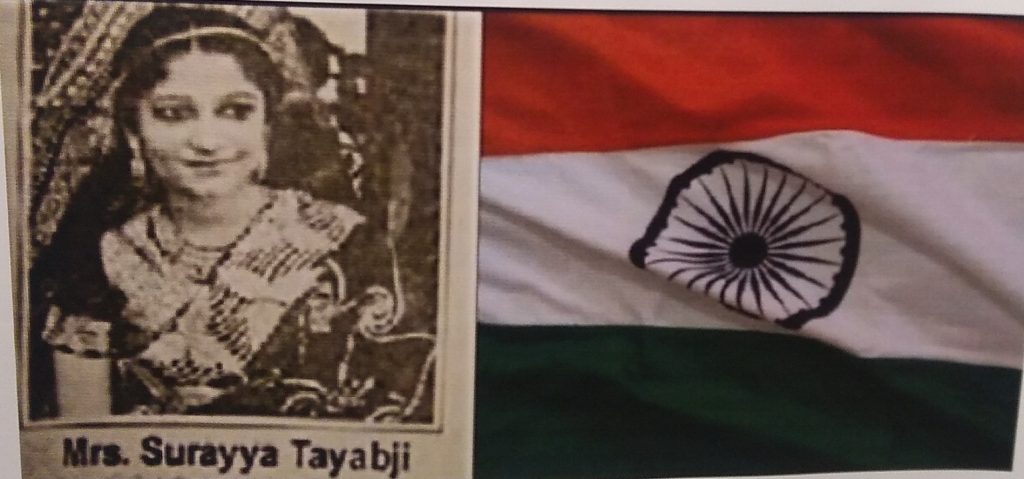
Surayya Tayabji and the Indian national flag displayed at the MWF exhibition. Credit: Khushboo Kumari/The Wire

Mumtaz Jahan Haider, who was appointed the principal of the Aligarh Women’s College in 1937, worked for women’s education her entire life.

Sharifa propagated legal reforms for Muslim women, including raising the age of marriage and drafting a model marriage contract ‘nikahnama‘.

In the field of literature and arts, these women won multiple awards. Razia Sajjad Zaheer, the recipient of the Nehru Award and Uttar Pradesh State Sahitya Academy Award, wrote novels like Sar-e-ShamKante and Suman. Anis Kidwai recieved the Sahitya Kala Parishad Award.

Attia Hossain used to write for PioneerStatesman and Atlantic monthly and wrote several novels, most notably Sunlight on a Broken Column and a short story collection Phoenix Fled. Aliya Fyzee wrote Indian Music (1914), The Music of India (1925) and Sangeet of India (1942) with her husband.

Qudsia Zaidi wrote and translated books for children, with Chacha Chakkan ke Draamae among the most loved ones. She also founded Hindustani Theatre in 1954, the first urban professional theatre company in independent India.

Khushboo Kumari has a BTech in information technology and is pursuing an MBA in marketing from MICA, Ahmedabad. She is an intern at The Wire.

source: http://www.thewire.in / The Wire / Home> History> Religion> Women / by Khushboo Kumari / May 30th, 2018
How the Indian Army has Inspired Muslim Youth

Inspiring Stories of Sohail Islam and Ahmed

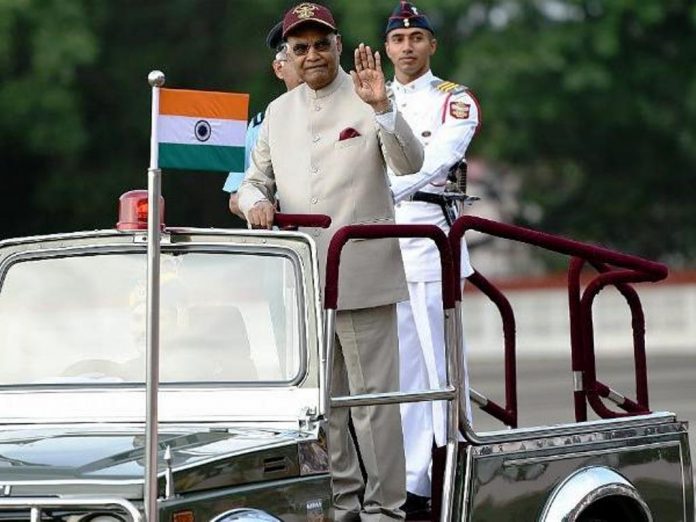
The President of India Shri Ram Nath Kovind took the salute at the 134th passing out parade at the National Defence Academy (NDA), Khadakvasla on May 30. The passing out parade, a sombre occasion always, was especially more poignant this time. The man who put it together for the Supreme Commander’s inspection, the Subedar Major Drill of the NDA, Subedar Major Rajeev Kumar Rai, had only a few days earlier been felled by a heart attack, testifying to the pressures of performing in front of the highest constitutional authority in the land. A veteran who served in the Siachen, Kashmir and the North East, Rai was the head drill ‘ustad’ of the Academy, credited with instilling discipline into cadets. In tribute to him, cadets had resolved to put up such a show as had never been witnessed before on the Khetarpal parade ground, named after Lieutenant Arun Khetarpal one of the alumni and posthumous Param Vir Chakra awardee.
PresidentKOVINDMPOs07jun2018

With the Subedar Major departed, the onus to deliver the message of reassurance that the future of the armed forces and the defence of the country, was in safe hands fell on the Academy Cadet Captain (ACC). It is no secret that the Academy Adjutant, who supervises the parade usually has his attention on the horse he is riding than on the parade because controlling the horse is as important as the parade. This responsibility fell on ACC Mohammad Sohail Islam a strapping Muslim youth from Assam.

Academy Cadet Captain Sohail Islam was selected for the honour from among 344 cadets who passed out of the course. Captain Sohail Islam was clearly a cut above the rest as he was an all-rounder excelling in academics, physically tough, mentally robust and importantly spiritually upright.

To achieve this position is not an easy task. Consider the hundreds of thousands of youth appearing for the Union Public Service Commission’s (UPSC) NDA entrance exam of which only 6000 clear the exam and qualify at the services selection boards. And finally, only 300 make it. It needs immense hard work.

Now to the parade, as President Kovind alighted from the horse-drawn carriage, he was received by the Commandant. At the far end of the parade ground, 854 cadets wearing white patrols were lined up in their squadrons on either side of the Nishan Toli, bearers of the President’s Colours, conferred on the Academy by President Neelam Sanjeeva Reddy. Standing tall, right in front was their sword-bearing leader, ACC Mohammad Sohail Islam. As he sprung to attention on the arrival of President Kovind at the Quarter Deck, the commentary paused and the chatter of the parents and siblings of the cadets stopped. And a hush fell over the ten thousand odd spectators.

After his reverberating word of command for a general salute, sword in hand, Sohail Islam marched up to the dais to report the Academy present on parade for inspection by the Supreme Commander of the Armed Forces. Thereafter, Islam mounted the ceremonial jeep alongside the Supreme Commander for the circuit of the parade ground as the Rashtrapati inspected the smartly turned out cadets. Islam then led the parade in its march past, doing an electric ‘eyes right’ while lowering his sword in salute as he strode past the Quarter Deck, as the podium is called, styled as it is after a ship’s deck in deference to the jointness between the three services that the Academy lays the foundations of. The President was escorted by the Commandant to present the most coveted awards, to the three deserving passing out cadets. Among the three was Sohail Islam, winner of the President’s Silver Medal awarded for standing second in the overall order of merit.

As President Kovind proceeded with his very pleasant duty of inspiring the young lads, the next cadet he had to pin a medal on was Ali Ahmed Chaudhury, a Squadron Cadet Captain, winner of the President’s Bronze Medal. The President received Ali’s salute, shook Ali by the hand and pinned the medal on his white patrol tunic.

As squadron cadet captain, Ali had led his squadron march past, belting out the command of ‘eyes right’ at the Quarter Deck. A squadron cadet captain is among the top-drawer appointments, leader of over a hundred cadets of all six courses assigned to the squadron. He is responsible for steering the squadron’s showing in the competitions for the overall championship banner for the best squadron, an annual life-and-death battle at the Academy. That the contest is so fierce is because the squadron is where the cadets learn that they must be ready to die for their outfit; squadron today, a platoon, flight or a ship tomorrow. He has to be a role model in preparation for the traditional, and historically validated, the manner of leading Indian soldiers in battle; where leading means just that: from up front and ahead. Obviously, Ali measured up and how.

Son of a retired army Subedar from Karimganj in Assam, his twin brother is due to receive the president’s commission from the Indian Military Academy, Dehradun, this term. Ali is a Georgian, as the graduates of Rashtriya Military Schools, earlier named after King George, are called.

The one who pipped both Sohail and Ali to the top post was Battalion Cadet Captain Akshat Raj, on whom the President pinned the Gold Medal.Sohail, like Ali, is the son of an ex-serviceman, a Havaldar from West Bengal; while Akshat is a school teacher’s son. All three are from humble backgrounds, society’s bedrock that continues to offer India’s best stock for its most onerous duty. The three typify the quintessential warriors – Karmyogis of yore – trained as the nation’s warriors from a tender age.

Both Sohail and Ali exemplify the words of President Kovind in his speech ‘The parade comprises cadets from all parts of India and from a variety of communities. Its harmony speaks for our essential unity as much as our pluralism as a society.’ He had just had lined up before him Akshat, Sohail and Ali. This is what the line up suggested to him.

Sohail and Ali were right up there inspiring the Rashtrapati and rest of nation to reflect on India’s essence. That’s where Muslim youth need to be, all the time. Sohail and Ali tell that us that it is within reach, doable and, is indeed, a glass ceiling already breached. Just like the remarkable performance of Muslim youth taking the civil services exam and topping the exam, the avenue of an armed forces’ officership – ‘a calling’ for a ‘rare breed’ according to President Kovind – is open for Muslim youth to aspire and achieve. Thanks to Sohail and Ali, the President’s Gold Medal – not having a Muslim inscribed on it since the mid-seventies – is now ours to grasp next.

The author was a Squadron Cadet Captain at the National Defence Academy in the mid-80s.

source: http://www.sabrangindia.com / Sabrang / Home / by Ali Ahmed / June 06th, 2018

Mohammad Kaif Mulla of Belagavi is the state topper in SSLC after revaluation

Belagavi, KARNATAKA :

He scored a  perfect 625 out of 625

MohammedKaifMPOs03jun2018

Belagavi :

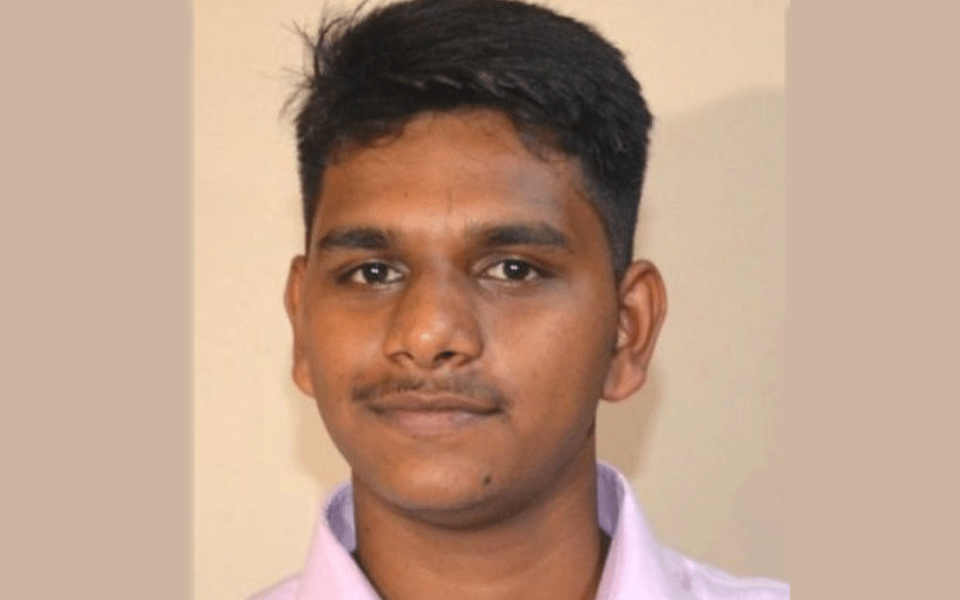
Mohammad Kaif Mulla, student of St. Xavier’s High School has topped the state in the SSLC examination with 625 marks out of 625.

Kaif Mulla had secured 624 marks when the SSLC results were announced. While he had scored cent percent in all the subjects, he got 99 in Science. But Kaif was confident that he did not make any mistake in the subject and should get full marks, and applied for revaluation.

His confidence was proved true when he scored a perfect 100 out of 100 in Science after revaluation. With 625 out of 625 marks Kaif Mulla is the topper in the state. He is also the first from Belagavi District to top the state in SSLC examination.

Kaif’s father Harun Rashid Mulla teaches Kannada in a government high school, while his mother teaches Urdu in a government primary school. This topper wants to be a doctor and then pursue his dream to become an IAS officer.

source: http://www.english.varthabharati.in / Vartha Bharati / Home> Karnataka / May 30th, 2018

No challenge is too big for them

Bengaluru, KARNATAKA :

The CBSE class 10 results brought cheer to several students in the city, but for a section, the results were a testimony to not just their hard work but also how they managed to overcome many odds.

FirdoseMPOs30may2018

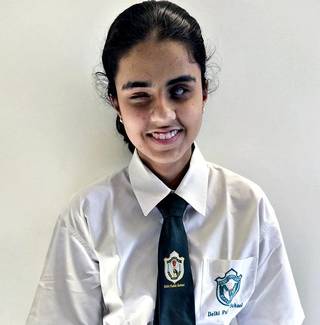
Firdose Fathima, a visually challenged student from Delhi Public School (DPS), Bangalore South, scored 79.8%. “I worked hard and I am happy with my results. I used to study only as much as I could grasp for that day. Owing to my visual impairment, I used a laptop that had a software which would read notes aloud to me, and my mother helped me with diagrams,” she said. She plans to take up psychology in college, and then specialise in child psychology.

JunaidMPOs30may2018

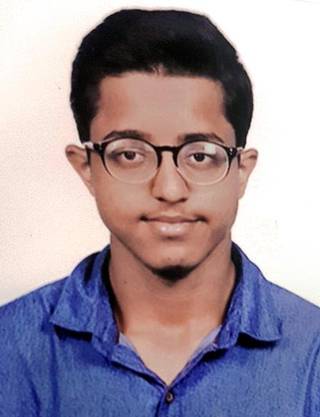
Another student of the same school, Mohammed Junaid, bagged 76.9%. He was diagnosed with a neuromuscular problem which reduced his writing speed. “But the issue did not matter. I studied and said the answers out loud while someone (a scribe) wrote for me. I can write, but just that three hours would fall short for my speed. I feel good about my results, but I actually expected more. I worked hard for a month. Hindi and English were easy and these are my favourite subjects as well. On the other hand, I found maths a little tough,” Junaid said

Aditya S. Gaikwad of DPS, Bangalore North, scored 84%. He was diagnosed with a learning and attention disability and was exempted from writing mathematics and Hindi papers. Alternatively, he wrote papers in computer science and fine arts and did well in them. “My teachers helped me with one-on-one sessions and my parents supported me to work better. I wish to study Commerce. I found a balance between studies and physical activity. I gave importance to exercise as well, as it kept me going,” he said.

source: http://www.thehindu.com / The Hindu / Home> News> Cities> Bengaluru / by Staff Reporter / Bengaluru – May 30th, 2018

Gujarat : Auto driver’s daughter aces SSC exams with 99.31 percentile

Ahmedabad, GUJARAT :

Autodriver02MPOs30may2018

Ahmedabad :

As the results for class X board exams for students of Gujarat Secondary and Higher Secondary Education Board (GSHSEB) were announced on Monday, for many students from underprivileged backgrounds, the journey wasn’t a cake walk and yet they managed to excel in their exams.

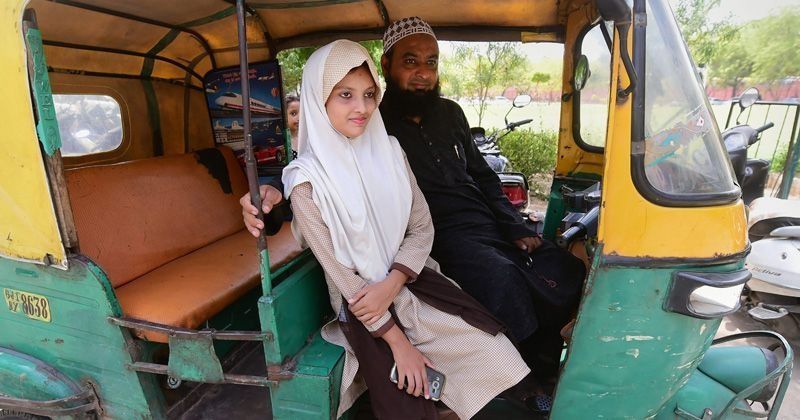
One such case was that of 16-year-old Aafreen Shaikh, the daughter of an auto-rickshaw driver, who scored 99.31 percentile in her class X exams.

 
A student of FD High School, Aafreen plans to pursue medicine, as she aspires to become a doctor. “I am indeed delighted with the results I’ve got and plan to take up admission in the science stream. I wish to become a doctor as nobody in my family has pursued this career and I am always inspired by the way doctors help the people heal their wounds,” said Aafreen who studies at FD High School in Juhapura area of Ahmedabad. She scored 87.13 % in her board exams.

 
For Shaikh Mohammad Hamza, Aafreen’s father, meeting the expenses of his daughter’s education is a struggle due to limited earnings. “I nurture a family of four and will do all that I can to educate my daughter and fulfill her dream of becoming a doctor. We’ve never differentiated between a girl or a male child and I will be the most proud if my daughters study and become independent. I am trying to arrange for financial assistance so that Aafreen can pursue a career of her choice,” said Hamza.

source: http://www.timesofindia.indiatimes.com / The Times of India / Home> News> City News> Ahmedabad News> School & Colleges / by Niyati Parikh / TNN / May 28th, 2018

Thottara Puncha rice brand to hit market by June

Ernakulam (Kochi) , KERALA :

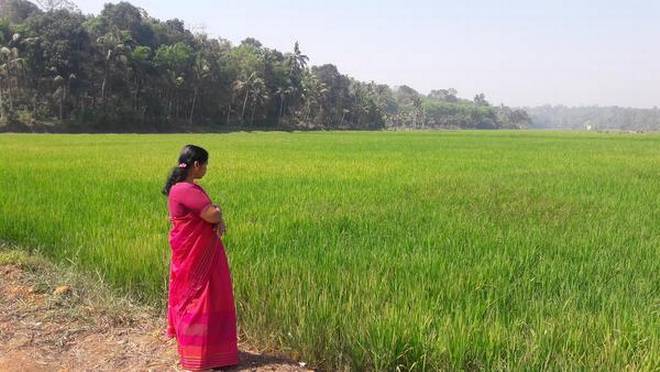
The Thottara Puncha before harvest. | Photo Credit: Special Arrangement

Government’s farming success story sees revival of 652 acres of paddy land

A rice bowl that had been lying almost fallow for over a decade has now been revived fully to produce some 1,500 metric tonnes of paddy in a joint effort by the Ernakulam district administration, Agriculture Department, paddy field collectives, and local bodies.

The rejuvenated Thottara Puncha, where 652 acres of paddy land were brought under cultivation last year, will now be a brand, with the rice produced here hitting the market in that name in the first week of June. The effort to breathe life back into the Puncha, trapped amid some nine hills, was spearheaded by District Collector K. Mohammed Y. Safirulla.

The plan is to market some 20 tonnes of rice initially, followed by another batch of 20 tonnes. Keecheri Service Cooperative Bank has completed collection of paddy, threshing, packing, and branding, said a release issued here.

Mr. Safirulla sought the support of Amballoor and Edakkattuvayal panchayats to cultivate some 350 acres of the 990 acres of the Puncha in Ernakulam district (the remaining 1,082 acres are in Kottayam) in 2016-17, and the results were stunning. “Preparation of fields itself was a challenge, but paddy field collectives worked in tandem to make it happen. This time around, we were able to bring under cultivation the maximum cultivable area — around 700 acres over nine paddy land collectives barring areas acquired for various projects, canals, farm roads, and irrigation channels,” said C.K. Prakash, general coordinator of the project.

Several departments, including irrigation, Land Development Corporation, and the State Electricity Board, supported the initiative. The canals were cleaned, and pumping facility was added to the sluices at Olippuram and Pulimukham (as a chunk of the Puncha being in low-lying areas will get heavily inundated during the monsoon).

“It posed some challenges, as not every area could be cultivated in October, which delayed harvesting too. We have now set up 12 high-power submersible pumps along the Puncha for de-watering, which will help us harvest the entire field by March next. This is going to drastically reduce the harvesting cost as well. And, the idea is to incorporate Kudumbasree in threshing paddy at our own mill and brand it,” said Mr. Prakash.

A Thottara Puncha Development Council will soon be formed, and a mill will be set up at a cost of ₹40 lakh. Terming it his pet project, Mr. Safirulla said all agencies and stakeholders had chipped in with verve to script the success story.

source: http://www.thehindu.com / The Hindu / Home> News> Cities> Kochi / by Special Correspondent / May 25th, 2018

Tributes paid to Vakkom Khader

Vakkom Village (Thiruvananthapuram District) , KERALA :

On September 10, 1943, a young man named Abdul Khader was martyred in the fight for India’s independence.

Also known as Vakkom Khader, he was a member of Subash Chandra Bose’s Indian National Army (INA) and was sentenced to death for “conspiring to wage war against the British King.”

Commemorating Khader on the occasion of the 73rd anniversary of his martyrdom, Chief Minister Pinarayi Vijayan said it was important for the younger generations to know about the struggles of Khader and his fellow freedom fighters, so that they appreciate the freedom and rights they enjoy.

This is especially important today, given that questionable interpretations of patriotism and nationalism have arisen of late, he said.

The Chief Minister inaugurated the memorial meeting organised on Saturday by the INA Hero Vakkom Khader National Foundation.

source: http://www.thehindu.com / The Hindu / Home> National> Kerala / by Staff Reporter / Thiruvananthapuram – September 11th, 2016

Free Heart Surgeries for Children at AMU Medical College

Aligarh, UTTAR PRADESH :

The collaboration with the Healing Little Hearts charity was initiated by AMU Vice Chancellor Tariq Mansoor, Tabassum Shahab (Pro Vice-Chancellor) and Shamshul Zoha, an AMU alumnus.

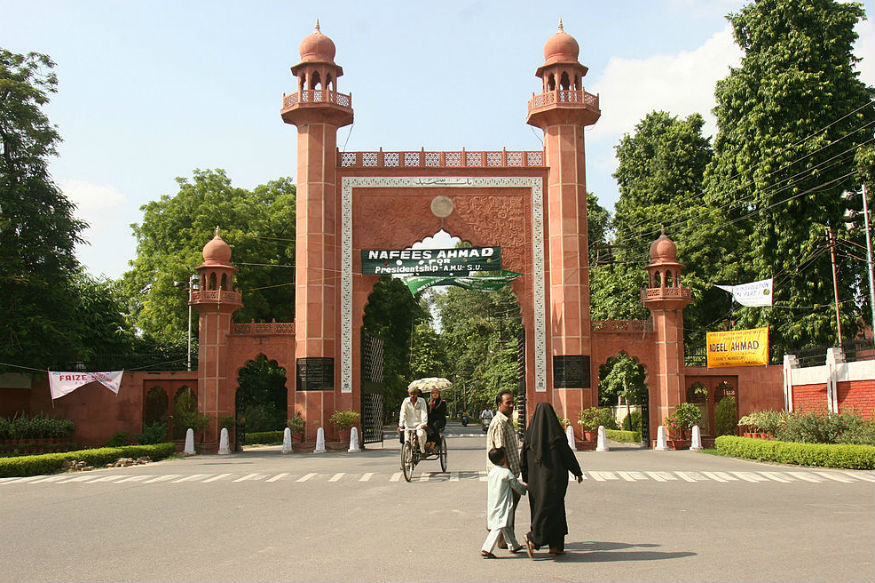
File photo of Aligarh Muslim University campus.

Aligarh:

Free heart surgeries will be available for children with congenital defects at the Aligarh Muslim University’s (AMU) Jawahar Lal Nehru Medical College (JNMC) after the varsity signed a deal with a British charity.

The collaboration with the Healing Little Hearts (HLH) charity was initiated by AMU Vice Chancellor Tariq Mansoor, Tabassum Shahab (Pro Vice-Chancellor) and Shamshul Zoha, an AMU alumnus.

Javaid Akhter (Registrar), Mohammad Hanif Beg (Chairperson, Department of Cardiothoracic Surgery) and Azam Haseem signed the Memorandum of Understanding (MoU) with HLH’s Sanjiv Nichani (Consultant Paediatric Interventionist) and Zoha.

“Since independent researches show yearly births of over 100,000 babies with congenital heart defects in India, it is high time to take necessary steps for helping these children with heart ailments,” said professor Beg.

Many children requiring corrective heart surgeries do not get treated due to financial constraints and even the affordable treatment available is sub-standard with poor expertise.

JNMC provides affordable treatment with state-of-art facilities to patients from underprivileged sections, he added.​

source: http://www.news18.com / News18 / Home> India / by IANS / May 24th, 2018

Double Amputee Swimmer Masudur Rahman Baidya Passes Away

Kolkata, WEST BENGAL :

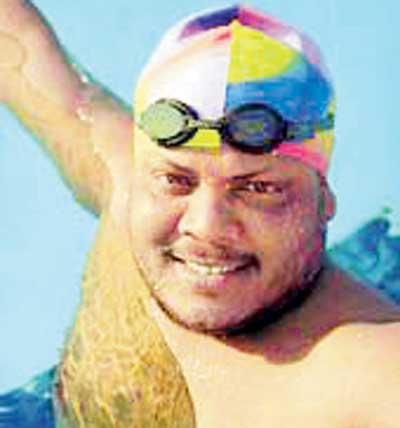
India swimmer Masudur Rahman Baidya, the only man with amputated legs to cross the English Channel in 1997, died on Sunday morning after a heart attack, according to family sources

Masudur Rahman Baidya

Kolkata:

India swimmer Masudur Rahman Baidya, the only man with amputated legs to cross the English Channel in 1997, died on Sunday morning after a heart attack, according to family sources.

The 46-year-old was not keeping well for a couple of days. His family in Topsia rushed him to a nearby hospital.

“He had a major heart attack and doctors put him in ventilator. Doctors tried their best but he passed away within one hour,” said his sister Monira Rahman.

Masudur is survived by his mother, wife, and two daughters.

source: http://www.mid-day.com / mid-day.com / Home> Sports News> Other Sports News / pTI / April 27th, 2015

The heartening story of Irfan and Anjum Bagban, the first Muslim couple to clear CA exams after marriage

Karnad (Satara District) / Pune,  MAHARASHTRA :

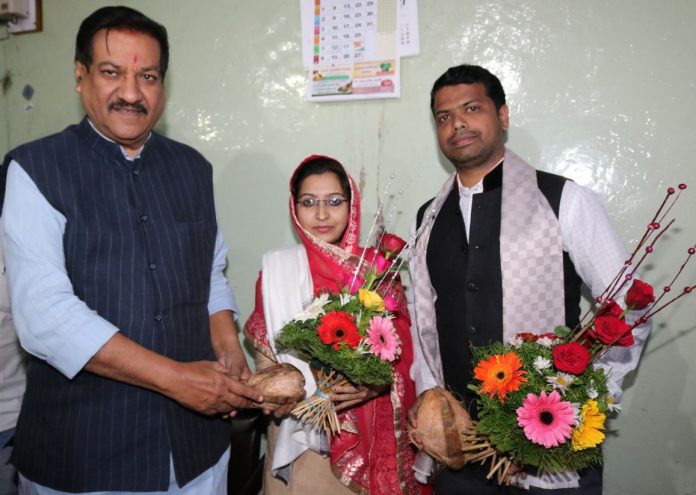
Ex-Chief Minister of Maharashtra Prithvi Raj Chavan visiting the couple's home and facilitating them.
Ex-Chief Minister of Maharashtra Prithvi Raj Chavan visiting the couple’s home and facilitating them.

It is no secret that even today, many Muslim girls do not get an opportunity to pursue their dreams due to family responsibilities and unfavourable conditions. And this situation rarely changes after marriage, with many career-oriented women hardly getting an opportunity to build their careers due to the household responsibilities.

Which is why the story of Irfan and Anjum, a couple from Karad, a city in Satara district of Maharashtra, is so encouraging. The two studied for and cracked the CA (Chartered Accountant) examination after getting married and emerged as the first Muslim CA couple of Maharashtra.

Irfan Shabbir Bagban tied the knot with Anjum in 2011 when he was doing his Bachelor ofEngineering (mechanical ). Anjum was also a commerce graduate and a career-oriented woman. She wanted to appear for the CA examinations and her husband extended his full cooperation and started giving her company to make his wife’s dream a reality. During Anjum’s preparations, Irfan also developed an interest in Accountancy and decided to make a career in this field.

They shifted to Pune for articleship at the SNJ & Company. After three years of continuous effort, Irfan managed to crack the CA exam in May 2017 and Anjum cleared it in November 2017.

Speaking with TwoCircles.net, Anjum said, “My in-laws supported me a lot. I know well that after marriage life changes suddenly but women should never give up and keep trying to achieve their goal.”

“We belong to the Bagban community which is popularly known for doing business. My father wanted me to become a CA because there was no Muslim CA in the entire Satara District. Alhamdulillah after hard work and with the help of family members, we achieved this feat,” said Irfan.

Irfan Bagban and Anjum Bagban

Confirming the claim of first post-marriage CA couple of India, Irfan said, “Sarvesh Joshi, our central council member, congratulated us by saying this has happened for the first time in the 63 years history of the institute.”

The couple is currently settled in Pune. Irfan is doing independent practice and Anjum is working as an Audit and Account Assistant in the Head office of Bharatiya Vidyapeeth, Pune.

Nadeem Sheikh, an activist of the Bagban Biradari education movement, congratulated the couple for their achievement. “I must appreciate Irfan for motivating his wife to appear for such an important exam. Anjum has also done a fantastic job and set up an inspiring example for all married women.”

source: http://www.twocirlces.net / TwoCirlces.net / Home> Indian Muslims> Lead Story> Women / by Imran Inamdar, TwoCircles.net / May 18th, 2018