Valanchery Munnakkal (Malappuram District), KERALA /Aligarh, UTTAR PRADESH :
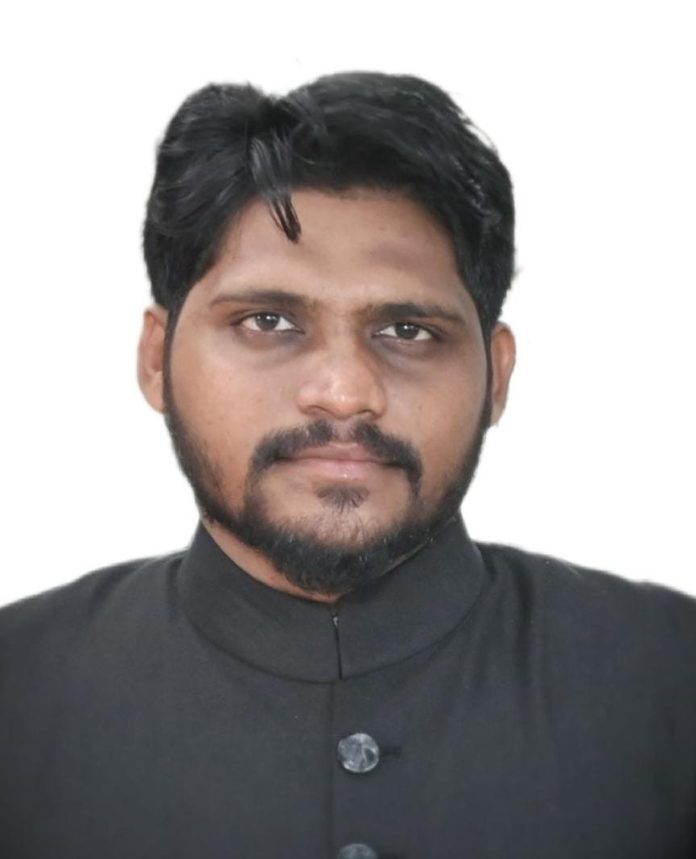
Dr Munawar Hanih, an ICSSR post-doctoral researcher under the mentorship of Professor T.N. Satheesan, Dean, Faculty of Arts, Aligarh Muslim University, has been selected for the 2023 Mahakavi Moinkutty Vaidyar Mappila Kala Akademi Literary Award
Aligarh:
Dr Munawar Hanih, an ICSSR post-doctoral researcher under the mentorship of Professor T.N. Satheesan, Dean, Faculty of Arts, Aligarh Muslim University, has been selected for the 2023 Mahakavi Moinkutty Vaidyar Mappila Kala Akademi Literary Award, instituted by the Mahakavi Moinkutty Vaidyar Smarakam under the Department of Culture, Government of Kerala.
He is being honoured for his scholarly work Malayala Sufi Kavitha, a significant contribution to the study of Mappila literature and arts.
The award will be presented at a ceremony in September 2025.
Dr Hanih holds an MA and PhD in Malayalam from AMU’s Department of Modern Indian Languages and has served as Assistant Professor of Malayalam at Sir Syed College, Taliparamba, Kerala.
source: http://www.radiancenews.com / Radiance News / Home> Pride of the Nation> Awards / by Radiance News Bureau / August 14th, 2025
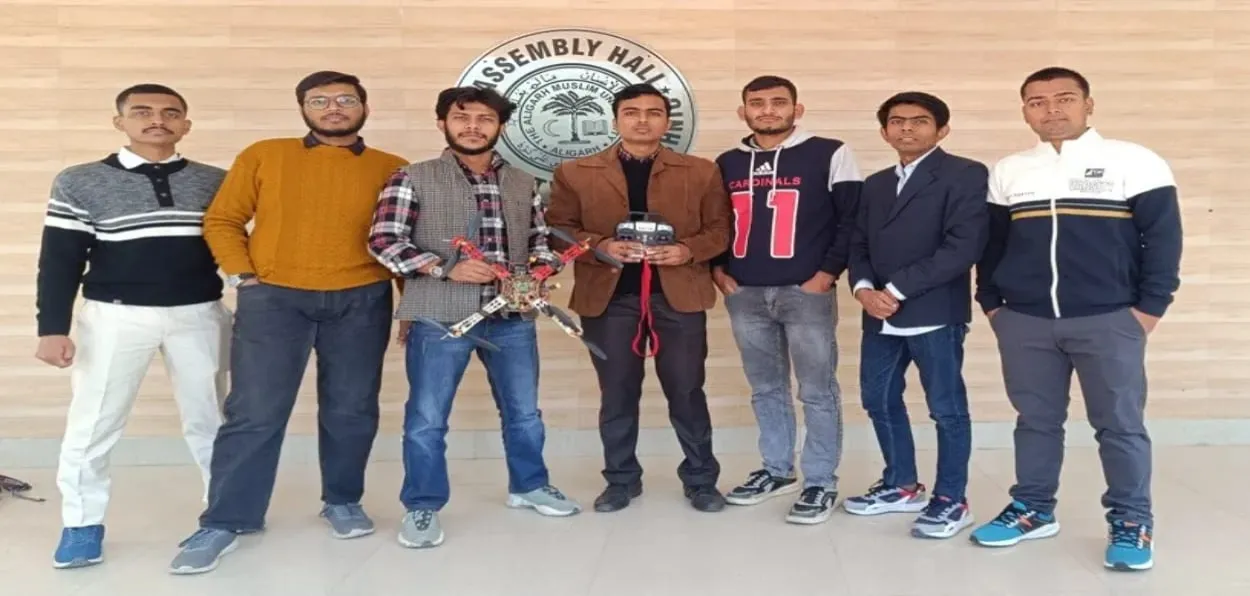
Students of AMU with their delivery drone prototype
Aligarh :
Showcasing creativity and technological ingenuity, a team of final-year students from the University Polytechnic, Faculty of Engineering and Technology, Aligarh Muslim University (AMU), has developed a Delivery Drone Prototype, a promising step towards autonomous aerial delivery systems.
Guided by former Principal of University Polytechnic, Prof. Arshad Umar and Dr. Tanveer Hasan, Associate Professor at the Polytechnic, the student team comprising Saubaan Ahmad Siddiqui, Ehtesham Ahmad, Shabab Khan, Ankit Tomar, Anas Khan, Muzaffar Hussain, and Omaan Ahmad Ansari successfully carried out six autonomous delivery missions within the university campus over a span of two months.
Equipped with real-time video streaming, autonomous navigation, gesture-controlled backup, and a custom dashboard to track flight data and delivery paths, the drone highlights the university’s commitment to hands-on, interdisciplinary learning.
This initiative is part of AMU’s larger vision to promote student-led innovation and applied research in emerging technologies. The project has received wide appreciation in academic circles for its relevance to real-world logistics, emergency response, and smart campus solutions.
Although this is a prototype for academic use, the team plans to enhance the system with AI-based object detection and an expanded operational range, reflecting the university’s emphasis on innovation-driven education and future-ready skills.
source: http://www.awazthevoice.in / Awaz, The Voice / Home> Stories / by Aasha Khosa, ATV / July 28th, 2025
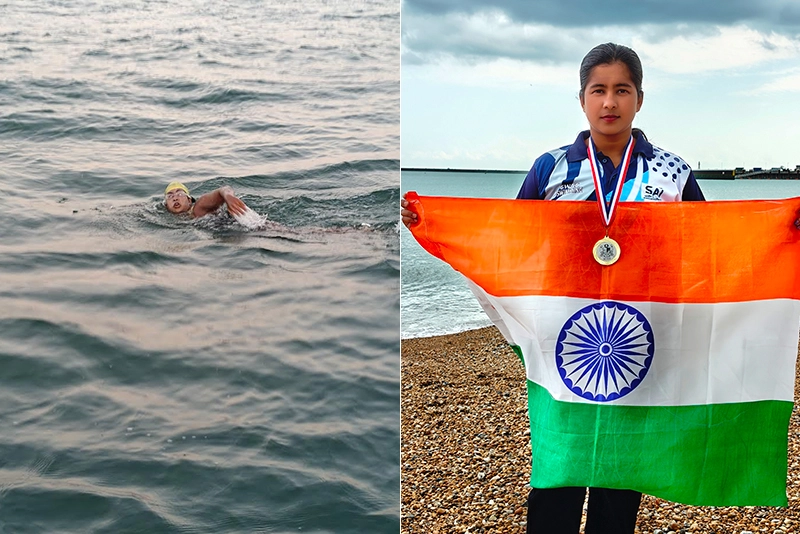
In a momentous first for Aligarh Muslim University (AMU), Afrin Jabeen, a B.P.Ed. student, has scripted history by becoming the first-ever AMU student to successfully swim across the English Channel.
Aligarh Muslim University:
In a momentous first for Aligarh Muslim University (AMU), Afrin Jabeen, a B.P.Ed. student, has scripted history by becoming the first-ever AMU student to successfully swim across the English Channel.
Afrin braved the frigid waters at 11°C and fierce currents on July 29, 2025 to complete the solo one-way swim from Dover (UK) to Cap Gris-Nez (France) at a stretch of 34 kilometers in 13 hours and 13 minutes, beginning at 3:45 AM London time.
This remarkable feat places her in the elite ranks of international endurance swimmers and brings immense pride to AMU, her home state West Bengal, and India at large.
Who is Afrin Jabee?
Rising from a modest background in Paschim Medinipur, Afrin’s journey is a stirring testament to perseverance, discipline, and unyielding ambition. Even before this feat, she had already distinguished herself as a formidable open-water swimmer.
She represented Vidyasagar University three times at the All-India Inter-University Aquatic Championships, competed twice for West Bengal at the national level, and conquered demanding long-distance swims spanning 13 kms, 21 kms, and 24 kms.
Her most remarkable pre-AMU achievement was securing 2nd position among girls in the world’s longest swimming event—an 81 kms marathon in the Ganges.
“Historic Milestone”
As a student of AMU, Afrin’s triumph is not only personal but also a historic milestone for the university.
Flanked by her proud brother, Adil Mohmmad (a PhD student in the Department of Chemistry at AMU) and her sister-in-law, Rizwana Yasmeen (a Gold Medalist in Nanotechnologty at AMU), Afreen, holding the Indian flag, expressed with thrill, “I am happy to have brought joy to my nation, University and family, who always support me in pursuing my dreams.”
AMU Vice Chancellor Prof. Naima Khatoon hailed her achievement as a moment of “collective celebration and pride.”
She said that Afrin’s extraordinary spirit will inspire generations of AMU students. “She has initiated a journey that will be taken up by many more talented students at AMU”, she said.
“Remarkable Achievement”
Prof Ikram Husain, Dean, Faculty of Social Sciences and the Chairperson, Department of Physical Education congratulated Afrin Jabee for her remarkable achievement and expressed hope that her education at AMU will ensure many more such laurels in her life.
Prof Vibha Sharma, Member Incharge, Public Relations Office, said that Afrin and her brother are still in the UK and they will be back to Aligarh soon. She congratulated them on phone and conveyed the best wishes on behalf of the university fraternity.
In Afrin, AMU has found a new icon, a daughter of Aligarh who swam into history, carrying the university’s name across nations and into global acclaim and offers great promises for future in sports.
source: http://www.ummid.com / Ummid.com / Home> Education & Career / by ummid.com news network / August 02nd, 2025
Man from Kozhikode left state at young age, visited last in 2007.
Kozhikode:
Kerala-born entrepreneur Shaikh Rafik Mohammed, 42, has been appointed Major General of Kyrgyzstan, in a first for an Indian in the Central Asian country.
Mr Mohammed assumed the prestigious post in the presence of defence minister Ali Mirza at an official ceremony held in Kyrgyzstan. He holds Kyrgyzstan nationality, conferred by former President Kurmanbek Saliyevich Bakiyev, whom he had met in his late-20s while working in Iran.
Mr Mohammed, who heads Gammon Middle East in Saudi Arabia, used to be an adviser to Kyrgistan President and the latest appointment is in recognition of his contributions to the country, sources in Dubai said.
Rafik, known as Rafi here is the son of Late Abdul Hameed and Fathima of Eravannur, 12 km from Kozhikode. He had studied up to Class VII at local AMPL School, Eravannur. According to his sister Rukhiya K.M, Rafik left for Mumbai at the age of 20 and then to Gulf. “We are all elated by his elevation to the prestitgious post. He called us on Saturday and we spoke a lot. Mr Mohammed’s last visit to Kozhikode was in 2007,” Ms Rukhiya told this newspaper. Mr Mohammed, who has an Iranian wife, has made it big from a humble background. His father was a fisherman and struggled to make two ends meet.
Mr Mohammed’s neighbour and distant relative, Mr Azis Master U.P., says he maintains a warm relation with his birthplace. “It was Rafik who gave ’25 lakh for the construction of a madrasa recently. Similarly he will reach out to anyone in time of need,” Mr Azis master said.
Sources said that Mr Mohammad keeps cordial relations with major political leaders of Kerala. He holds Kyrgyzstan nationality conferred by its former President Kurmanbek Saliyevich Bakiyev whom he casually met in his 20s while working in Iran. Later, he became the adviser to Mr Bakiyev.
Dubai reports said Mr Mohammed, after selling the successful project to the Iranian government, went to Kyrgyzstan and presented a similar project to Mr Kurmanbek, then a governor who was preparing to contest presidential elections.
After Kurmanbek won the election, he appointed young Rafik as his chief adviser – a milestone in his career.
He developed wide network of friends in the Central Asian country, which has witnessed a rapid flow of foreign investment and reversal of socialist mode of development to a capitalist mode of production, reports said.
source: http://www.deccanchronicle.com / Deccan Chronicle / Home> Nation / by Amiya Meethal / January 02nd, 2017
About 28 years ago, I learnt one of the most fascinating tales of what military rivalry between India and Pakistan has meant for some families.
At a dinner party in New Delhi, an elegant gentleman walked up to me and asked if I was serving in the Indian Army. My haircut perhaps gave this away, as I answered in the affirmative (I was then an instructor at the Indian Military Academy, Dehradun). When I enquired if he had any military connections, he replied ‘yes’; his two elder brothers had both been officers. To this, my natural response was, “What were their regiments?” He then said with a sad smile, “Let me tell you a story.”
And this was the story he narrated to me:
Several years earlier, he had run into the Pakistani military attaché, Brigadier Beg, in India at a circuit house (Dak Bungalow) while driving on the Delhi-Ahmedabad highway. Apparently the attaché had upset him earlier in the day with his lack of road manners, and when informed of the same, to make up, the Pakistani Brigadier invited him for a drink. During the course of their conversation, and on learning that his guest (the gentleman who was narrating the incident to me) was an Indian Muslim, the Pakistani Brigadier said to him that it was only in the 1965 war that he learnt that Muslim officers were also serving in the Indian Army.
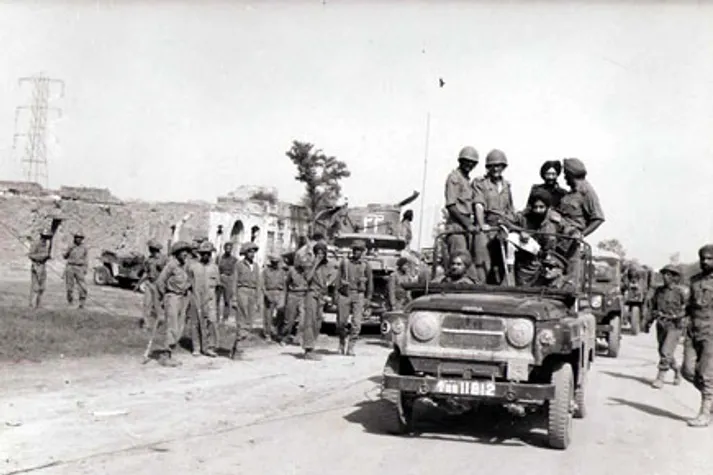
(The Indian Army’s armoured (tank) units had made substantial gains in fierce battles in the Sialkot sector of Pakistan’s Punjab. Many well known armoured regiments were part of India’s 1st Armoured Division’s thrust lines, such as Poona and Hodson’s Horse, 2nd Lancers, 3rd, 16 and 18 Cavalry. Many thought it was only a matter of time that Sialkot would fall to Indian troops, as Pakistan’s Armoured Division, despite its apparently superior tank units, was in retreat. Pakistan’s commanders desperately needed a tactical break to regain some of the momentum of battle.)
It was at this stage of the war—around 8 September 1965—that the Pakistani Brigadier, then a young Lieutenant, was summoned by his Brigadier Commander. He was asked plan and undertake a commando raid that would take him into Indian frontline positions around Sialkot. His task was to eliminate one or more Indian tank commander(s). This would leave that Indian unit briefly without a commander and give Pakistan that brief window of opportunity to break through India’s formidable frontline.
So this Pakistani officer (then a Lieutenant, now a Brigadier) set about preparing for the raid, to sneak in amongst Indian tanks, during darkness, and kill an Indian tank commander who was giving Pakistani troops a rough battle. So, on 8/9 September before dawn, Lieutenant Beg sneaked into his target area as Indian tanks were preparing for another day’s battle around Sialkot. (In those days, in the absence of night vision devices, tank battles were largely fought during day light). He soon identified a Squadron Commander’s tank, and climbed atop it unnoticed in the loud roar of tank engines as they were warming up for battle.
Peering inside the open cupola, he saw a Major in his radio headset who was poring over his maps, planning for another day’s battle. With no time to lose, Lieutenant Beg shot the Indian Major through the head. But before leaving the wounded Indian officer, Lieutenant Beg decided to take along some proof of having accomplished his mission. He quickly unbuttoned the shoulder flaps of the Indian Major, and pulled out the cloth epaulets of his ranks from his shoulders. On this was also embroidered ‘16 CAV’, the title of his regiment. And in the breast pocket of the Major, he also found a holy pendant that some Muslims carry on them as a good luck charm. His job done, this young Lieutenant with his raid party then quickly crossed back over into the territory that Pakistani troops were still holding onto, before dawn broke.
Lieutenant Beg then immediately went to see his Brigade Commander, who had sent him on the raid. He met him in the early hours of the morning, where he proudly reported that he had accomplished his mission. His Brigade Commander asked him if he had any proof of it. The young Lieutenant pulled out the epaulettes of the rank badges of the Indian Army Major he had shot, and handed it over to his Brigade commander. Then he suddenly saw the Brigadier become tense. Lieutenant Beg said to the Brigadier that he had possibly killed an Indian Muslim officer, as he handed over the holy pendant he had recovered from the dead Major’s pocket. As an afterthought, he added that he was quite surprised that India’s army also had Muslim officers who were fighting with such commitment and valour against Pakistan.
At that point his Brigade Commander’s hands began to shake and he couldn’t control his emotions any more. His voice became heavy and his eyes filled with tears as he slumped into a chair. Lieutenant Beg asked the Brigadier, with due respect, what the problem was. In a voice choked with emotion, he replied: “Young man, I have just realised from the evidence you have provided that I had tasked you to kill my younger brother.” The Commander kept shaking his head and then went on to add, “I hadn’t the foggiest idea that it was the 16 Cavalry that was directly pitted against us, because Major MAR Sheikh, whom you have just killed, was my younger brother and one of its squadron commanders. And he was their only Muslim officer.” Lieutenant Beg could say little else, as he saluted and took his commander’s leave.
And when Lieutenant Beg finished telling this story to the man who had related it to me, this gentleman told the Pakistani officer, “Brigadier, it may surprise you to know that the two brothers you have spoken about were both older to me… I am the youngest of the three brothers.”
And as the Brigadier stared at him in disbelief, the narrator of this tale requested Brigadier Beg to visit his family home—which was only a few hour’s drive from where they were—to meet his aged mother, who had always wanted to meet someone who had fought against her son! When the Pakistani Brigadier met the old begum the next day (who didn’t know that her son had died of wounds inflicted by the Brigadier), she seemed pleased that the enemy thought well of him!
Records show that Major Sheikh died of wounds in his head sustained in battle near Sialkot on 10 September 1965. He was posthumously awarded the gallantry award of a Vir Chakra. His brother, the Brigadier, rose on to become a General in Pakistan.
source: http://www.openthemagazine.com / Open / Home> Web Exclusive / by Maroof Raza / August 27th, 2015
How a series of breakfast conversations grew into an exhibition and a book.
On some mornings, Diba Siddiqi would sit down at the breakfast table in her parents’ home in Bengaluru, and record her father’s voice.
He would hold forth on everything under the sun – science, history, justice, conflict, photography, politics, poetry, philosophy, the evolution of language and silence. The musings continued well after the meal was over and an Olympus digital voice recorder Diba Siddiqi had placed nearby would capture her father’s thoughts.
The sheer range of topics wasn’t surprising. Obaid Siddiqi was one of India’s most eminent scientists whose pioneering work in the field of molecular biology and neurogenetics are well known.
Siddiqi was keen to have an account of her father’s stories in his own voice so that she could revisit them later. She had tried taking notes, but found the process distracting. She started using the digital recorder so that she could give him his full attention.
But the recordings, which started in 2007, ended in 2013 when the senior Siddiqi was killed in an accident while taking a stroll near his home. He was 81.
Immersed in history
Months later, Diba Siddiqi finally revisited the “breakfast monologues” as she called them.
She immersed herself in the stories her father had shared of growing up in eastern Uttar Pradesh in pre-Partition India and the sadness at how the Siddiqis lost track of family members who moved to Pakistan.
It wasn’t long before Siddiqi began to dig through old family photographs, many of them developed in darkrooms by her father and his siblings.
It didn’t stop at that. Diba Siddiqi’s mother, Asiya, is a distinguished historian, who has spent a large part of her life studying Mumbai’s past. Siddiqi began to delve into her mother’s life too.
The result is Rooh: The Enduring Spirit, an exhibition of old family photographs interspersed with new images Diba Siddiqi has taken of places that played an important part in her parents’ lives. A book of the same name is set to be released shortly.
Dominating figure
It’s obvious that Obaid Siddiqi was an overarching presence for his daughter. “My father was this colossal figure in my life,” said Siddiqi. “No language is adequate to express his continuing presence in my life. I still find myself quietly and unconsciously carrying on conversations with him.”
Born in Basti, Uttar Pradesh, in 1932, Obaid Siddiqi completed an MSc from Aligarh University before obtaining a doctorate from the University of Glasgow in Scotland. His family lived in Benares in two spells between 1932 and 1948 before finally settling down in Aligarh.
Preventive detention
The includes an account of the two years Obaid Siddiqi spent in jail from 1949 under preventive measures at a time when 30,000 communists were detained across country. Recalling his period of detention in the company of 13 Communist leaders, he said:
“So you see jail authorities, they used the criminals, who were called pukkas, to beat us up. They were prisoners who had served ten years, fifteen years, had life imprisonment… They acted like small unofficial wardens to control other prisoners. They were dressed to look like police. They beat up our friend Syed Ali badly, giving him galis, saying, ‘Pakistan se saala Pakistani Communist banta hai!’
However, Obaid Siddiqi could also recognise the benevolent side of the police officer who had beaten up the comrades, realising that human nature can never be categorised as entirely good or bad.
His parents and six siblings managed to send him letters during his imprisonment. His sisters arranged to smuggle letters in and out of jail while delivering home-cooked food to him once a week.
In 2014, Siddiqi visited Benares, where her father spent some time as a child. Waking at the crack of dawn every day, she walked around the ancient city, photographing the people and its streets.
Mumbai chronicler
Siddiqi also took many pictures in Mumbai, a city whose past her mother has written about extensively. One of Asiya Siddiqi’s celebrated works recreates the lives of people who went bankrupt in the 19th century. Roaming the bylanes of Mohammad Ali road and Dongri, in Mumbai, Siddiqui imagined that the ghosts of these people “and their descendants surely dwell in the neighbourhood I roamed in… The descendants of tailors, carpenters, blacksmiths, milk vendors, courtesans, dancing girls and prostitutes may continue to live and work here.”
Though the project is intensely personal, she believes it has broad appeal. She said she hoped viewers would let her work touch their mind and spirit and perhaps remind them of their own histories. “It is an expression of life that I have been a part of,” she said. “It has been about finding a voice in the images and bringing it together in one space.”
Rooh: The Enduring Spirit can be viewed at Bangalore’s 1 Shanthi Road gallery until February 11.
source: http://www.scroll.in / Scroll.in / Home> Photo Feature / by Zinnia Ray Chaudhuri / February 09th, 2016
Obaid Siddiqi, one of the most outstanding scientists of modern India, died in a freak accident in Bangalore on July 26. While he was out on a walk on July 21, a moped being driven by a young person of the neighbourhood rammed into him, and caused severe brain damage from which he could not recover.
He leaves behind his wife, Asiya Siddiqi, who is herself a very distinguished historian, and four gifted children: Yumna, whose area is English literature, Kaleem, who is a scientist, Diba, a promising photographer, and Imran, also a scientist whose work on seed-cloning has the potential to revolutionize agriculture in developing countries and questions the rush to Bt for raising yields.
But I want to talk not about the family that Obaid and Asiya raised but about the family of siblings and their spouses that surrounded Obaid, the larger family, as it were, to which he belonged. It was such a remarkable family, it so captured within itself all that is salutary in the development of modern India, that its individual members are worth recalling.
There were two sons, including Obaid, and five daughters, born to his parents. The youngest daughter, Imrana, married to the well-known social activist, Anubrata (Dunu) Roy, was a paediatrician at the All India Institute of Medical Sciences who turned to academic work in the social sciences and became one of the founders of the Centre for Social Medicine and Community Health at the Jawaharlal Nehru University. This centre, of which Binayak Sen was once a faculty member, remains to this day an unparalleled institution in India.
She was for decades our neighbour on the JNU campus. She was not just a close friend but one who epitomized what friendship should be, and it is through her that I came to know the remarkable Siddiqi family. Being a doctor in residence, in the early years of JNU when the campus had meagre medical facilities, she was the informal physician for every household, cheerfully available day and night; and she saw my family, especially my two children, through numerous medical emergencies. Because of her unbounded generosity, we called her “the Florence Nightingale of the JNU campus”; but that was unfair to her, since she was also a highly skilled medical practitioner, unlike Florence, and combined her expertise with a radical social philosophy.
One of her older sisters, Maimoona, was married to Ali Ashraf, a founder of the communist party in Bihar, and the first to translate the Communist Manifesto into Urdu. (Maulana Azad had earlier translated and published only some extracts in his newspaper.) Maimoona was herself a communist activist, and, together with her husband, worked at the party headquarters in Bombay bringing out its Urdu newspaper, and lived in the famous party commune set up by its general secretary, P.C. Joshi. In later years, she taught Urdu first at the Patna College and subsequently at the Aligarh Muslim University.
Ali Ashraf’s friend, Ziaul Hasan, also a very early member of the communist party in Bihar, married another of the Siddiqi sisters, Tahira, and also lived for long at the Bombay party commune while working for the party’s Urdu newspaper. B.T. Ranadive, then in ‘disgrace’ following the collapse of his 1948 line, was at the same commune and comrades were somewhat circumspect about socializing with him; but the Hasans struck up a deep friendship with him. Ziaul Hasan was then sent to Srinagar to work with Sheikh Abdullah, when the latter sought the help of the communists for carrying out land reforms in the state. Jammu and Kashmir, as is well-known, was the first state in India, even before Kerala and West Bengal, to implement radical land redistribution. He and his family lived with Imrana on the JNU campus for some years when he was working as a journalist on the staff of the Patriot newspaper, and my discussions with him on several evenings, when he would be reminiscing about the commune or berating me for my sectarian understanding, are a treasured memory.
Yet another of the sisters, Sayera, a highly distinguished economist who taught at the Aligarh Muslim University, was the first person, after the nationalist writers of the colonial period, to make an estimate, and a meticulous one at that, of the magnitude of “the drain of surplus” from India to Britain. A life-long communist, she married a fellow student against whom she had once taken disciplinary action as the All India Students Federation leader on the AMU campus. This fellow student, belonging to the AISF, was Irfan Habib, the famous historian and pre-eminent Marxist intellectual of the country.
The last sister, Shaista, was attached to the medical college at AMU and built from scratch its department of obstetrics and gynaecology. The other brother, Aslam, also belonged to the AMU faculty, to the department of engineering. He was asked to set up the university’s computer centre; he did so and served as its director for some time.
Obaid Siddiqi belonged to this family. All the traits that characterized the family, the generosity, the brilliance, the gentleness, the self-effacing commitment to work, the contempt for careerism, and the disdain for fame and status, were concentrated, as it were, in him. And he also shared the family’s social commitment and passion for effecting a revolutionary transformation in the country. Irfan Saheb once remarked to me that Obaid Siddiqi must have been the only Fellow of the Royal Society in its entire history who had spent time in jail for communist activities. That was during the “BTR period”, following the party’s Calcutta congress, when Obaid was an activist of the AISF at the AMU.
His passions included Urdu poetry (he was chancellor of the Urdu University at Hyderabad), Persian, and above all, music. He learned to play the sarod from Annapoorna Devi, and played it beautifully. He was meticulous about doing riyaz everyday, and later took lessons from the Dagar brothers who became his good friends.
I met Obaid Siddiqi occasionally on the JNU campus when he stayed overnight at Imrana’s place, having come for some meeting from Mumbai where he was then located at the Tata Institute of Fundamental Research. But I got to know him better when he came to deliver the Krishna Bharadwaj Memorial Lecture at the Centre for Economic Studies and Planning of JNU. The topic was “Do animals think?” and Obaid Siddiqi gave, in very simple language to a packed and overflowing audience, an account of his internationally acclaimed research into the neurology of the Drosophila fly. His answer to the provocative question of the title of the lecture was that while “thinking” was too ambitious a term to describe what animals did, several very elementary forms of it, suggesting a more developed consciousness beyond mere instinct, appeared to characterize them. The discussion that followed the lecture carried over into dinner and long afterwards into the night.
I met him a little more frequently when we both served on the research council of the National Institute of Science, Technology and Development Studies of the CSIR. But I got a chance for closer interaction at the convocation of the Kalyani University in 2003. By then he had moved to Bangalore where the TIFR was setting up an off-shoot for research on biology; he had been asked to head it and had already gathered around him a brilliant group of young researchers. Kalyani University was conferring an honorary doctorate on him, and on Sunil Gangopadhyay and Ganesh Pyne; and I had been asked to deliver the convocation address. We were lodged together at the same guest house for the event.
His acceptance speech was brief but extraordinarily illuminating. It was based on research work done at the Indian Statistical Institute, Calcutta, and highlighted the fact that the Indian population, barring small numbers inhabiting remote regions, was remarkably racially mixed, and hence far less diverse than commonly supposed. His interest in the area had possibly been stimulated by his radicalism, which approved a scientific finding that undermined any racial segregation of the population; but he referred only to the scientific finding itself.
Obaid Siddiqi was a compelling speaker, without flourishes, but with a solid command over facts and a meticulousness of reasoning that did not allow one’s attention to stray. His using the brief Kalyani speech to present what he thought was interesting rather than his own research is indicative of an attitude that values scientific advance over personal achievement, and sees knowledge as interconnected. He shared this perception of interconnectedness of knowledge with his friend, another great scientist from the subcontinent, Abdus Salam; it lifted him above the normal run of scientists into an outstanding intellectual. His death is a huge loss to the country.
_________________
The author is Professor Emeritus, Centre for Economic Studies, Jawaharlal Nehru University, New Delhi / Prabhat Patnaik The Author Is Professor Emeritus, Centre For Economic Studies, Jawaharlal Nehru University, New Delhi
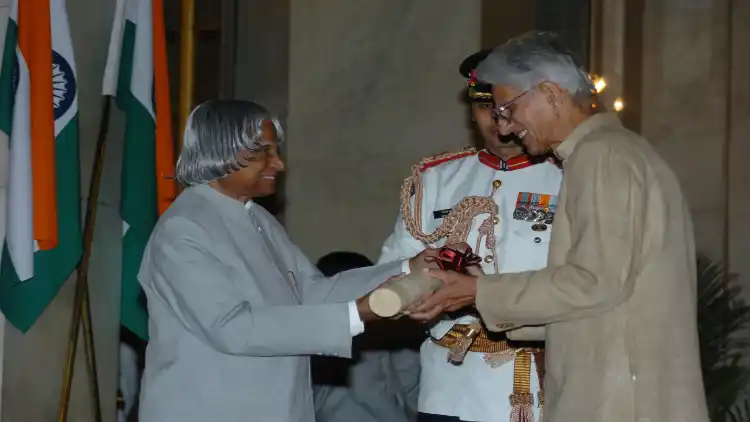
Obaid Siddiqui receiving Padma Vibhushan from the President
Genes and DNA are the words we hear frequently on our Televisions and other media. Genetic mapping has revolutionised the way humans understand organisms in general and themselves in particular. The past few decades have witnessed developments in biotechnology and genetics leading us to understand and treat diseases hitherto thought curable. Very few among us know that one of the important men who laid the foundation of this revolution was an Indian, Obaid Siddiqui.
Born on this day in 1932 in Basti, Uttar Pradesh, Obaid Siddiqui completed his Masters in Botany from Aligarh Muslim University (AMU) in 1953. Initially, he joined AMU as an agricultural scientist, after his Masters, and later moved to Indian Agriculture Research Institute (IARI), New Delhi. At IARI Siddiqui had prepared a testbed for wheat crossbreeds. But a devastating hail storm destroyed the crop and ruined his year-long labour. A frustrated Siddiqui, who had a keen interest in genetics, an emerging field at the time, wrote a letter to Professor Guido Pontecorvo at Glasgow asking him for a research opportunity with him. Pontecorvo accepted him and Siddiqui started his PhD at Glasgow on microbial systems – a paradigm shift from Botany.
During his PhD, Obaid made some path-breaking observations, which revolutionised the field of Genetics. Two very important observations made by him were:
His studies were the first reports of fine mapping of a gene.
He pointed out the concentration of mutational sites in a small part of genes.
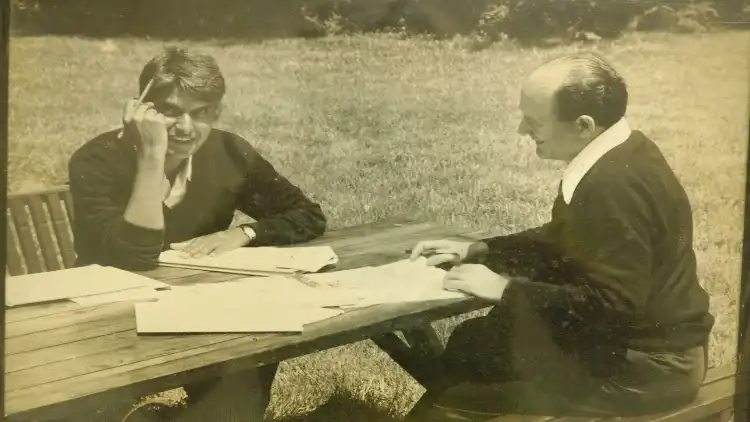
Obaid Siddiqui with Semour Benzer
So, when he submitted his PhD thesis in 1961 Siddiqui had already revolutionised the sciences in general and genetics in particular. Considering the fact that he shifted from Botany to a different field makes his achievement even more stellar.
The same year Siddiqui moved to Pennsylvania to work with Alan Garen as a postdoctoral fellow. Here, he discovered the suppressors of “nonsense” mutations. In simpler words, he discovered why a few mutations in a gene would not express themselves and remain suppressed. The discovery was a logical result of his earlier pioneering work in mapping of genes. Another important impact of this discovery was the finding of “nonsense” codons, the stop signal of genes. Har Gobind Khorana, Robert Holley, and Marshall Nirenberg received the 1968 Nobel prize for identifying “nonsense” codons and they personally acknowledged the role of Siddiqui in their research.
Siddiqui did not pursue his study of Codons further which got others a Nobel Prize because his heart was not in the USA. Siddiqui wanted to return to India to serve his motherland. This selfless patriot left the lucrative opportunities and told Alan Garen, in 1962, that he wanted to return to India.
Garen asked renowned physicist Leo Szilard to write to Homi Bhabha asking him to arrange a position for Siddiqui in India. Ignoring the opposition from fellow scientists in India, Bhabha showed confidence in Siddiqui and gave him the responsibility of establishing a molecular biology unit at Tata Institute of Fundamental Research (TIFR).
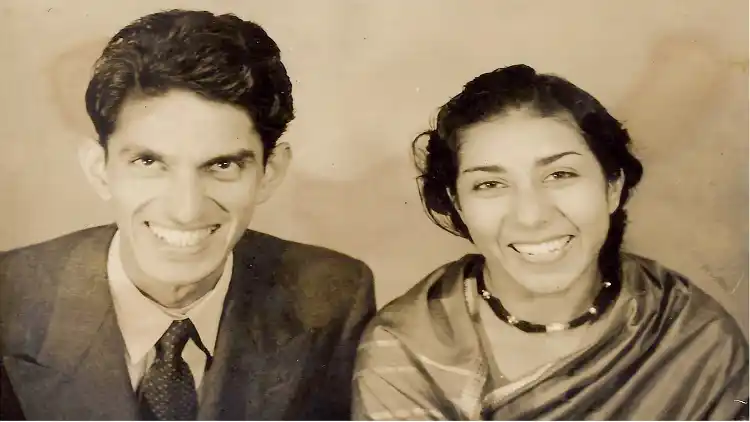
Obaid ASiddiqui with Wife Asiya Siddiqui
At TIFR, Siddiqui nurtured a younger crop of scientists and also brought Indians working in foreign labs back to India. With one of his students, P. Vijay Sarathy, Siddiqui showed that recombinant bacteria inherit DNA of bi-parental origin thus laying the foundation of principles of lateral gene transfer. In layman’s language his findings are the basis of the now well-known principle that genes pass from one generation to another.
With his other students like Kavita Arora and Veronica Rodrigues, Siddiqui showed that taste and smell of Drosophila have a genetic basis and thus opened a new field of chemosensory neurogenetics. These findings led others to research the role of genes on sensory perceptions, learning and memory.
Siddiqui was not a man who would compartmentalize his intellect to one branch of science. He contributed to fields as diverse as plants, Drosophila, bacteria, and genetics. He did not stop at research. He was an institution builder and established the National Centre for Biological Sciences in 1992 in Bangalore. Siddiqui was known for nurturing young minds by giving them the freedom to question.
Moreover, Siddiqui was a man who believed that sciences cannot operate in isolation of society. Scientists have a social responsibility and Siddiqui understood this. He stood for Human Rights, campaigned against communalisation and took part in social movements. Not only a music lover of Hindustani Music, Siddiqui was an established Sarod artist.
Obaid Siddiqui was awarded the second-highest civilian award, Padma Vibhusahan, by the Government of India. He was the true son of the soil who left lucrative offers in a foreign land to establish a research culture in India. His students are now serving the nation, which includes the present Principal Scientific Advisor of India, Professor Vijay Raghavan.
source: http://www.awazthevoice.in / Awaz, The Voice / Home> Stories / by Saquib Salim / July 26th, 2021
E. Abu Bakar (born in 1952) is a significant figure in the socio-political landscape of India, particularly known for his role as a leader in the banned Popular Front of India (PFI). He is also a founder member of All India Muslim Personal Law Board,
Born and raised in Kerala, Abu Bakar became actively involved in social and political activism early in his life, driven by a deep sense of commitment to the rights and empowerment of marginalized communities, especially Muslims.
Abu Bakar’s leadership in PFI has been marked by his efforts to address issues related to social justice, communal harmony, and the upliftment of the downtrodden. Under his guidance, PFI has focused on various initiatives aimed at improving the socio-economic conditions of underprivileged communities. These initiatives include educational programs, legal aid, and awareness campaigns about constitutional rights and social justice.
A charismatic and articulate leader, E. Abu Bakar has been vocal about the challenges faced by Muslims in India, advocating for their rights in a democratic framework. He has been actively involved in organizing campaigns and movements that highlight issues of discrimination, police brutality, and state excesses. His approach often emphasizes the need for community unity and strategic action to address these challenges.
However, Abu Bakar’s leadership has also been contentious. PFI has faced criticism and legal scrutiny over its activities, with allegations of involvement in extremist activities and incitement of violence. Despite these controversies, Abu Bakar has maintained that PFI is committed to lawful activism and peaceful advocacy for the rights of marginalized groups.
Throughout his career, E. Abu Bakar has remained a polarizing figure, admired by many for his unwavering commitment to social justice, while also facing criticism from those who view his methods as provocative.
He has been in custody for two years following his arrest on September 22, 2022, under UAPA from his residence in Kozhikode.
At the time of his arrest, Abubacker, had no prior criminal record. He has been bedridden since January 2020 due to severe health conditions. He underwent extensive treatment for cancer, including chemotherapy and surgery, which involved the surgical removal of 80% of his abdominal and intestinal area. This has left his digestive system severely compromised. He also suffers from Parkinson’s disease, diabetes, vision loss, and hypertension, further deteriorating his overall health.
source: http://www.the100indianmuslims.com / The100 Indian Muslims / Home / 2024
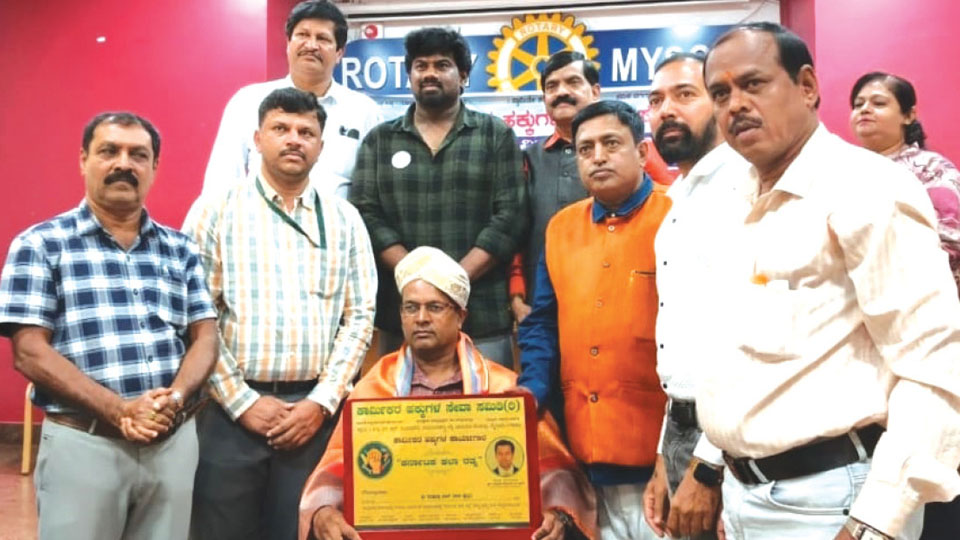
Radiulla Khan, Organising Secretary of Mysuru District Kannada Sahitya Parishat, being presented with ‘Karnataka Kala Ratna’ State Award during the workshop on ‘Labour Rights’ organised by Karmikara Hakkugala Seva Samiti at Rotary Hall on JLB Road in city recently.
The award was presented to Radiulla Khan in recognition for his works in multilingual films especially in Kannada language as a junior artiste.
M.S. Naveen, Chief Legal Aid Guardian, District Legal Services Authority (DLSA), V. Vinay Kumar from Employees State Insurance Corporation, industrialists and social workers M. Lalita Rao, Shubh Krupesh, V. Ramamurthy and Prashanth P. Aask, Actor-director Mahesh K.H. Belur, journalist Kasthurichandru and others were present.
source: http://www.starofmysore.com / Star of Mysore / Home> Photo News (headline edited) / July 26th, 2025