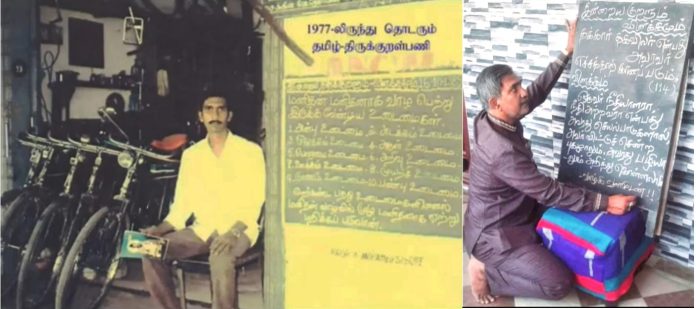
THEN AND NOW: Dr M G Anwar Batcha started writing a Thirukkural couplet with its meaning everyday since 1977 on a black board kept at a cycle shop at Coimbatore Gandhi Park. Post retirement, he continues his mission of popularising and promoting Thirukkural among the public.
So goes the inspiring quote of Missile Man of India Dr APJ Abdul Kalam – “Every small step taken with determination leads to great achievements.” Taking a cue from this, a former Tamil teacher Dr M G Anwar Batcha, known as Kural Yogi in the literary circle, celebrated 50 years of his literary journey penning books, writing a couplet with its meaning everyday on a board kept at a cycle shop at Gandhi Park in the heart of Coimbatore city since 1977.
It’s always fascinating to rewind the golden days of teaching, speaking at literary meetings and what not. As a faculty with 25-year service at Chokkampudur SBOA Matriculation Higher Secondary School in Coimbatore city, Thirukkural Batcha, a resident of Kuniyamuthur, took a trip down the memory lane to share his experience about Thirukkural, which is close to his heart.
It may be noted that a special story was featured on him in 2010 in The New Indian Express when S Kamalakannan was a senior photographer and during a routine round across the city found him writing a couplet on a black board. Worth mentioning that he makes it a point to sensitise people through his books and speeches at a plethora of events both inland and abroad. Words cannot express the amount of happiness he has in doing this literary service for over 50 years or so.
In all smiles, he said, “Life is indeed a journey filled with ups and downs, and how we navigate these fluctuations defines our resilience and character.” And that’s what Saint Thiruvalluvar had said in his 1330 couplets. Elaborating on it further, he remarked, “This ancient Tamil text is a profound testament to the intellectual and cultural achievements of Tamil civilization. Beyond its philosophical depth, the Thirukkural holds immense historical significance as a cornerstone of Tamil literature and a universal guide for human conduct. Shedding more light on it, he said Thirukkural’s focus on equality is evident in its rejection of caste discrimination, a radical stance in an era when hierarchical structures were prevalent.
Crossing a 50-year milestone, Anwar Batcha no doubt is creating a silent revolution. All credit goes to his mentors Pulavar Rasiannan and Pulavar Arumugam, while studying at City Municipal High School at Variety Hall Road, who groomed him and brought the best out of him to be what he is now. In a step further, they motivated him to enhance his skills in Tamil.
To his credit, Anwar Batcha has awards including Tamil Nadu Government honour, Kural Neri Chelvar, Thirukkural Thoothar, Thirukkural Vendar and Thirukkural Thondar. And he penned a book on Thirukkural with English translation besides a book titled Valluvar Manimozhigal and Valluvaridam Kettathum Kidaithathum. Batcha is quite proficient in Urdu, Hindi, Malayalam and Telugu.
Retired, but not tired to actively involve in literary organisations like Thirukkural Aaivu Kazhagam, Ulaga Kalai Tamil Mandram, Coimbatore World Thirukkural Centre and organiser of Kovai Islamiya Tamil Sangam, Anwar Batcha did his doctorate on ‘Samuga Nokkil Thirukkuralum, Thirukkuranum’. US-based writer of inspirational maxims William Arthur Ward rightly categorised teachers thus: The mediocre teacher tells. The good teacher explains. The superior teacher demonstrates. The great teacher inspires. True to his words, Dr Anwar Batcha has inspired scores of his students who have made their ‘guru’ proud.
[The author is former Indian Express and Deccan Chronicle chief]
source: http://www.radiancenews.com / Radiance News / Home> Latest News / by M Rafi Ahmed / by Radiance News Bureau / August 16th, 2025
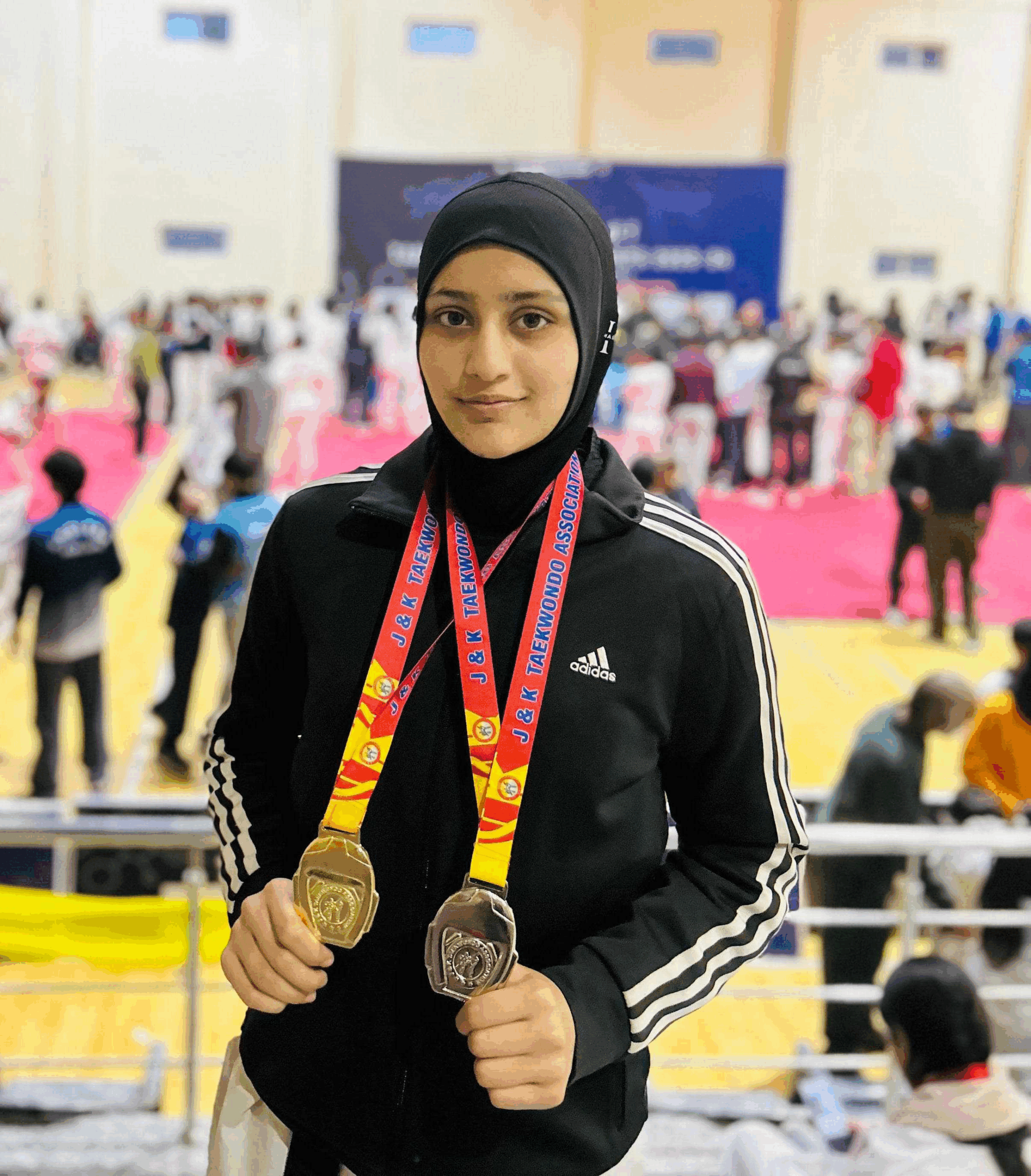
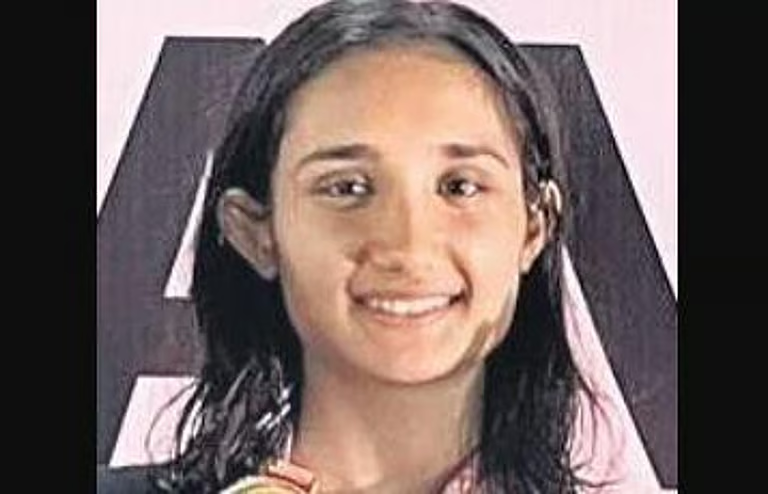
Misbah Fatima, a prominent Taekwondo athlete from district Doda and daughter of Mr. Liaqat Ali Shah, has made her community proud by securing 85% marks in her 11th class examinations.
A resident of Doda, Misbah is not only excelling in academics but also has an impressive track record in Taekwondo.
She is a National and State Taekwondo Medalist and has participated in various esteemed championships, including the Khelo India Women’s Taekwondo League.
The community and her well-wishers extend their heartfelt congratulations to Misbah Fatima for her outstanding academic performance. Her dedication and perseverance in both her studies and sports are truly inspiring. We wish her continued success in all her future endeavors.
source: http://www.brighterkashmir.com / Brighter Kashmir / Home / by Abid Pampori / July 17th, 2024
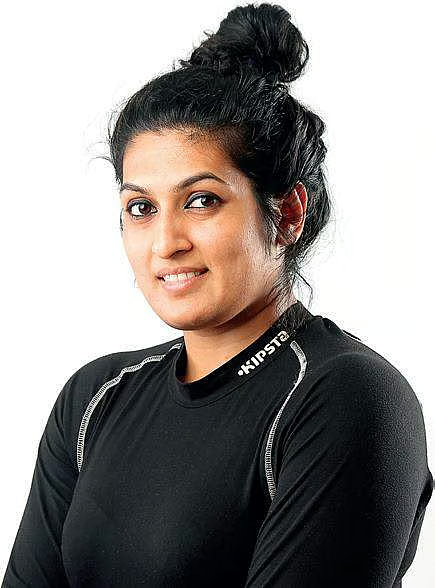
Mixed martial arts were never on the horizon for the 23-year-old from Anna Nagar in Chennai. Even sport wasn’t really part of the picture.
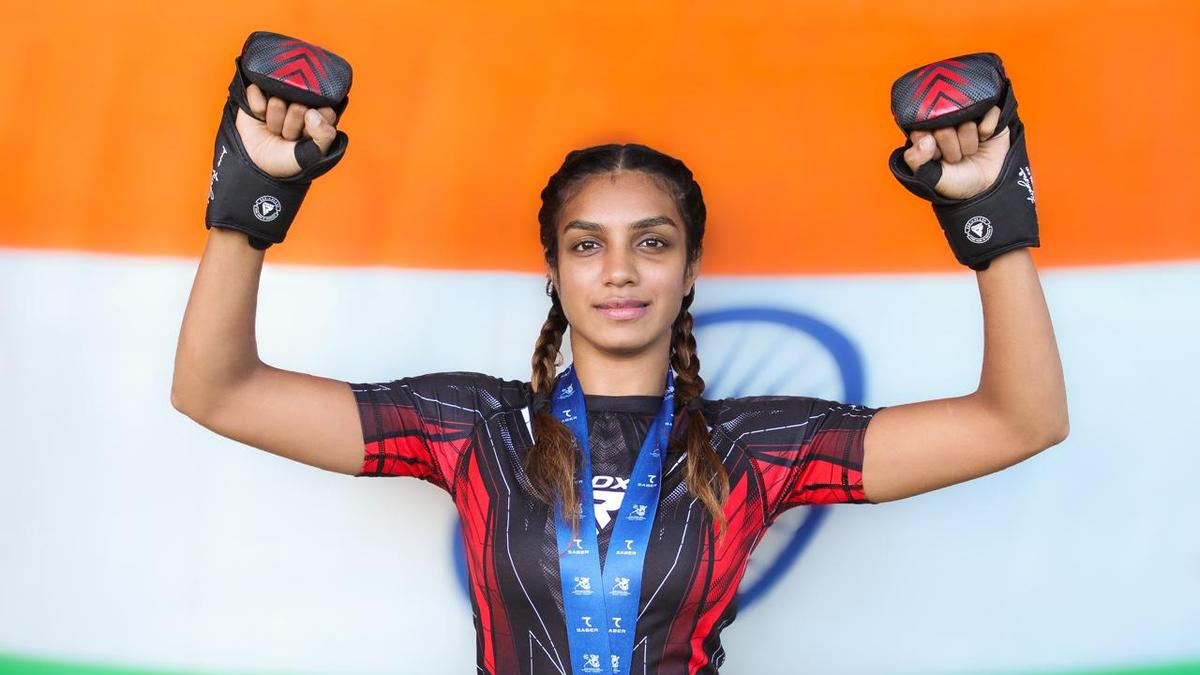
Afshan Fathima defied odds, reaching the final of IMMAF World Championships despite challenges and stereotypes. | Photo Credit: Special Arrangement
Afshan Fathima walked away from her very first bout of the 2024 IMMAF World Championships in Uzbekistan last week not only with a win but also with a prodigious, rapidly darkening contusion under her eye. Although the injury was caused by an accidental headbutt rather than a punch from her opponent, many thought it meant the end of her campaign in the women’s strawweight division (52.2kg) at her debut World Championship.
“Everyone who saw me thought I wasn’t going to be declared medically fit to take part in the next bout. But I did make it. And then after I won that bout, everyone thought my injury was not going to let me compete in the next bout. After every bout I fought, the other fighters thought I wasn’t going to be able to make the next round because of how big the swelling had got. But I kept doing this. There was no way I was going to quit,” she says.
By the time Afshan’s campaign at the IMMAF World Championships ended, she had gone further than any other Indian – reaching the final –at the premier global amateur competition in mixed martial arts. Amongst her wins, was a guillotine choke submission of Ireland’s Lisa Murtagh who trains at the prestigious SB Gym– with the same team as former UFC champion Connor McGregor – and picked up a decision win over reigning World champion Matilda Bachurina of Kazakhstan in the semifinals.
Afshan however couldn’t return from the competition with the gold medal she had hoped for. She ended up losing the final by a narrow points decision to Isabel Calvo of Spain. “Unfortunately, the day of my final coincided with the start of my period. It was pretty bad. I was puking and had really bad cramps. I wasn’t anything close to 100 percent,” she says. Afshan says she returned from the tournament with mixed emotions. “It stings of course to go so far and fall short in the final but at the same time, I’m a little happy that I at least came this far,” she says.
Few might not have predicted Afshan would get anywhere near where she’s gotten. “Even I wouldn’t,” she says.
Mixed martial arts were never on the horizon for the 23-year-old from Anna Nagar in Chennai. Even sport wasn’t really part of the picture. “There’s no one in my family who has chosen sports as a career,” says Afshan, the eldest of three sisters. That was the case for her as well. It wasn’t as if she wasn’t interested in sport. Some of her earliest memories are of watching WWE pro wrestling matches with her father and uncle. At school, she says she was one of the few children to actually make the most of the games period.
“Most of the other kids would be chatting with each other or catching up on their studies. I was the only one who would pester the games teacher to start a basketball match or something. I was also someone who used to roughhouse with my friends. They’d all tell me I was really strong or that I hit really hard. But I didn’t know what I was going to do with that. While I really wanted to play something, my family only really wanted me to study. My grandmother was a teacher and my aunt was a lecturer. I was also fairly good in studies so I had no option but to focus on my books. Perhaps if I was a bit dull, they might have been more open to the idea of putting me in sports,” she says.
It was only after her school when she began studying for a degree in Electrical Engineering at Hindustan Institute of Technology that Afshan says she finally got the chance to pursue her passion.
“I always wanted to do some sort of fitness activity. So, in my third year of college I joined a crossfit gym. The gym where I trained also had a sign for mixed martial arts classes although they didn’t have any instructors. That was the first time I had heard about mixed martial arts. Although they didn’t have classes at the gym. I did a Google search and found out about Combat Kinetics Chennai and coach Ajit Sigamani,” she says.
At that time, Afshan says she told her parents she was just staying back to play basketball in her college since she knew the alternative would be something they would never agree with.
“I’m from an extremely orthodox Muslim family. Back when I was in school and in college I would wear the burkha. I couldn’t even think of leaving the house if I wasn’t wearing the burkha. While my parents were supportive of my education, they would have drawn the line at my getting into a sport like martial arts. So I used to wear the burkha when I left home. Then, when I went into the gym, I would change into my gear and back into the burkha when I was heading back home. It almost felt like I was living two lives. I tried to balance those two lives as much as possible. I knew I would have to tell my family eventually but I was hoping I could ease them into it,” she says.
It was at the Combat Kinetics Gym though where she felt she truly belonged. “Because I had been somewhat sporty in the past, I didn’t really struggle getting physically in shape. I enjoyed doing all the push ups and pull ups. I absolutely loved actual combat training. A lot of our training in MMA is mixed gender and I sometimes would think just how scandalised my family would be if they walked in on one of our grappling sessions. But, I genuinely didn’t think too much about it when I started. I just got on with it. It wasn’t as though I’d stopped becoming religious or stopped praying but I think it’s what’s inside your heart that counts a lot more than what you are wearing on the outside,” she says.
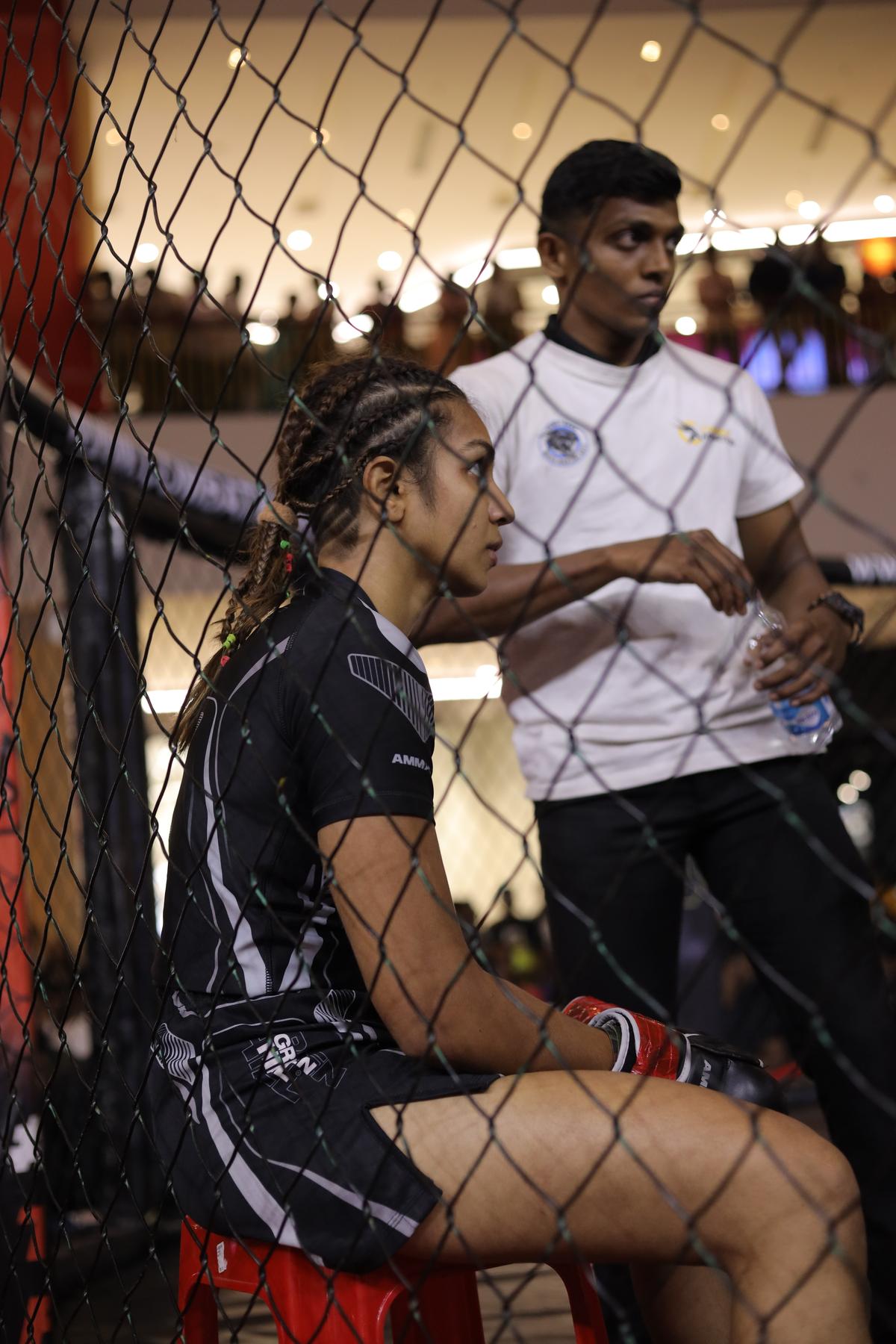
Afshan says she knew she was someone who was meant to be a fighter when she stepped into the fighting cage for her first sparring session. “In contrast to a lot of the other individuals who were starting out, I was also someone who wasn’t scared of sparring. A lot of beginners are scared of being hit. They close their eyes and turn their head. When they get hit on the face for the first time, they decide, this isn’t what they want to do with their life. But fighting just came naturally to me,” she says.
Over time, Afshan’s parents have come to terms with her choices. | Photo Credit: Special Arrangement
Her biggest fight though would come outside the cage when her parents eventually found out that she was training in mixed martial arts. “My dad freaked out. There was a lot of screaming and shouting. They took away my phone and I wasn’t allowed to leave the house for a week. But I kept insisting that I would go and eventually my parents gave in,” she says.
Over time, Afshan’s parents have come to terms with her choices. “I don’t think my father and mother were personally against my taking up MMA. I think they were more concerned about what the society I came from would think about what I did. I think they first thought it was a weird sort of fad that I had picked up. Initially, as a compromise my father would drive me to the classes and bring me back right after. Later though, I learned how to drive a motorcycle and began to go myself. That gave him the confidence that I was really serious about what I was doing,” she says.
Within a few months of training, Afshan says she was sure combat sports was what she wanted to do with her life. “I can say I was a quick learner. As part of our training, we usually compete in boxing, judo and wrestling competitions. Within a few months of training, my coach entered my name in a district level competition in boxing. Although I was nervous since I hadn’t competed before, I ended up winning. Another few months later, I competed at my first national amateur championships in Lucknow that once again I ended up winning,” she says.
While the gold medal she won in Lucknow earned her some level of respect at home, Afshan knew it will always be hard for her parents to completely come to terms with her career. That was her key to becoming as independent as possible. “My parents have already gone far beyond their comfort zone to even accept that I can be an MMA fighter. Sometimes when they see me in shorts, they will grumble and say they gave me too much freedom. I like to live life on my own terms. I’ve never asked my parents for any money to fund my training or competition. My dad used to be in business but he had to shut that down after he made a lot of losses. I also have two younger sisters, who my parents are responsible for. At first, I used to beg my coach to charge me a nominal fee. I promised I’d pay him back when I started earning. After graduation, I worked in sales for Jaguar India but I realised I wasn’t getting the time to train like I wanted. I then started working as a coach in my MMA gym itself. MMA isn’t a sport where as an athlete you get easily sponsored by the government or private organisations. So, if I have to compete in competitions, I have to raise my own funds,” she says.
Afshan says she had to save up for a year in order to pay for her fight camp, nutrition, travel and competition fees for her first IMMAF World Championships this year.
It’s not been an easy journey and Afshan has to keep herself motivated even when it’s not the easiest to. Within her family, Afshan says she is a bit of a polarising figure. “Just because I’m a fighter doesn’t mean everyone’s opinion has changed. My family is still very conservative. A lot of people wonder why I’m still not married. Both my younger sisters wear the hijab and most of my cousins still wear the burkha. My relatives tell them not to hang around with me because I’m seen as a bit of a bad influence. My mother loves me but she will still come up to me and say that I should retire as a fighter and get married. But she doesn’t understand that I’ve only just started,” she says.
Afshan though doesn’t have any regrets. She’s already looking to her next target – turning professional. “The amateur system is mostly a way to get some sort of experience. I think I’m a fairly well-rounded fighter. The next level for a fighter is to turn professional. My coach and I are still weighing our options. We have some offers but I’m still to decide whether I want to compete for one more World Championship and win a gold or take the jump into professional fighting,” she says.
The professional ranks will be yet another giant step for Afshan to climb. She’s looking forward to it. “There’s this quote I always try to live by. It’s that the mountains you carry are the ones you have to climb. There’s no point taking pressure because of everything that I had to get through to get to where I am. When I look back, I think to myself ‘Wow, I’ve broken so many stereotypes not just for women but for Muslim women in particular. Every once in a while, some woman will come up to me and say she lives through me or that she wants her child to become like me. That gives me a lot of motivation. I’ve faced some hard obstacles. I can deal with next to anything,” she says.
source: http://www.sportstar.thehindu.com / Sportstar / Home> More Sports / by Jonathan Selvaraj / November 21st, 2024
Liyana is the holder of 15 Kerala state aquatic championship records and five CBSE national records.
Kochi :
Liyana Fathima Umer Nizar, 17, who made history winning gold in all the five events she competed at the Kerala Games Aquatic Championships, was felicitated by Global Public School chairman P Jacob on Wednesday.
The GPS International Thiruvaniyoor student, currently pursuing her A levels (Grade 12), was adjudged the fastest woman of aquatic championships held at Dr Ambedkar International Aquatic Complex, Thiruvananthapuram from May 6 to 8. She had contested in the 100-metre freestyle, 50-metre freestyle, 50-metre butterfly, 100-metre butterfly and 200-metre butterfly events.
Liyana is the holder of 15 Kerala state aquatic championship records and five CBSE national records.
In 2016, her gold medal in 50-m freestyle at the state meet in Bengaluru finally ended the medal drought for Kerala. The 17-year-old started swimming when she was in Grade 1. Ever since Liyana began training under the watchful eyes of her school coach Santhosh Kumar in 2012, she has been creating waves at the state and national-level.
source: http://www.newindianexpress.com / The New Indian Express / Home> Kochi / by Express News Service / May 12th, 2022
When she joined the Indian Combat Academy (ICSA) on Bannerghatta Road to learn Jujitsu and self-defence, little did Nabila Birjis (29), know that this would be a turning point in her life.
Bengaluru :
When she joined the Indian Combat Academy (ICSA) on Bannerghatta Road to learn Jujitsu and self-defence, little did Nabila Birjis (29), know that this would be a turning point in her life. On April 2, she turned out to be the only girl selected from Karnataka to compete in the South Asia Open Jujitsu Championship 2019, in Chennai.
Born and brought up in Mysuru, she moved to Bengaluru seven years ago to work for an architecture firm. At the age of 25, after undergoing rigorous training under coach Jitesh Banjan, she started competing seriously. So far, she has won six golds at the national-level JAI Jiu Jitsu events under 68kg and 70 kg categories; two silver medals at South Asian Championships; and gold at Body power Expo Open Weight.
She is also the only Indian woman to have secured two silver medals at South Asia Open Jujitsu Championship 2019. “I always wanted to achieve something in sports. My mother Noor Fathima Khan, HOD and professor at Maharanis Science College, Mysuru wanted me to complete my graduation before pursuing sports. I started my sporting career only at 25.”
It was not easy for Birjis in the field. She has quit her job, moved cities, so she could be able to devote more time for training. “I remember when I travelled for three hours just to be able to train for an hour. After struggling for years, I now seem to have struck some sort of balance between being an architect and an athlete,” she added.
Jujitsu is a team sport, and the biggest challenge she finds is to keep up with the energy levels of younger athletes. To stay fighting fit, she follows a strict sports diet. For Birjis, losing teaches more than winning. “My loss at the South Asia Championship has taught me how to move forward. My teammates have always encouraged me to do better. I will learn from my previous experiences,” she added.
source: http://www.newindianexpress.com / The New Indian Express / Home> Bengaluru / by K Rathna / August 20th, 2019
Overcoming a childhood marked by hardship and societal rejection, 20-year-old Bibi Fatima has emerged as a formidable kickboxer, winning multiple accolades at the national and international levels.
Mysuru:
Overcoming a childhood marked by hardship and societal rejection, 20-year-old Bibi Fatima has emerged as a formidable kickboxer, winning multiple accolades at the national and international levels.
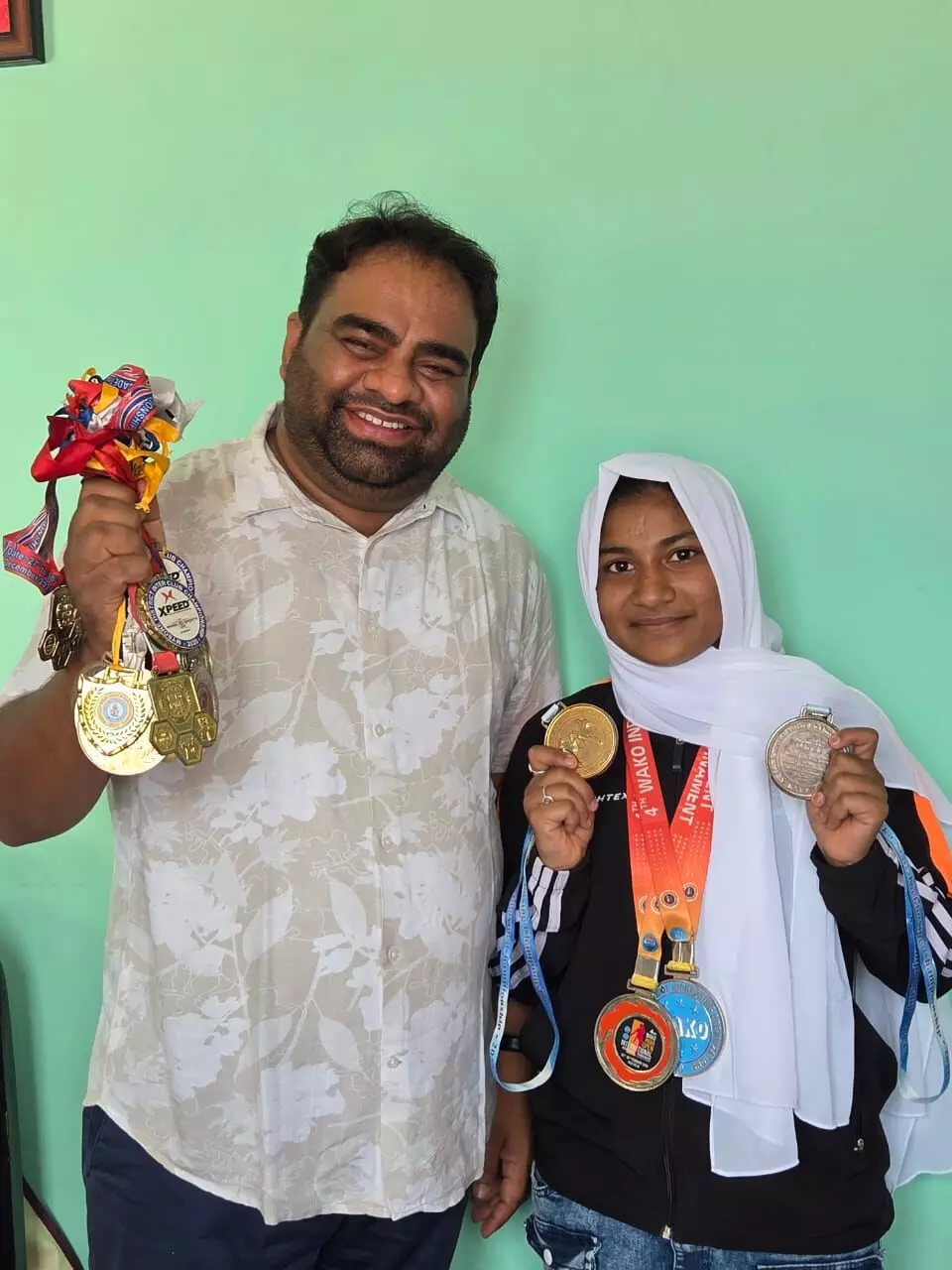
Fatima, who has been training in kickboxing for 12 years, has secured 29 gold medals in district, state, and national championships. Despite a hand injury, she recently won two silver medals in an international tournament held in New Delhi.
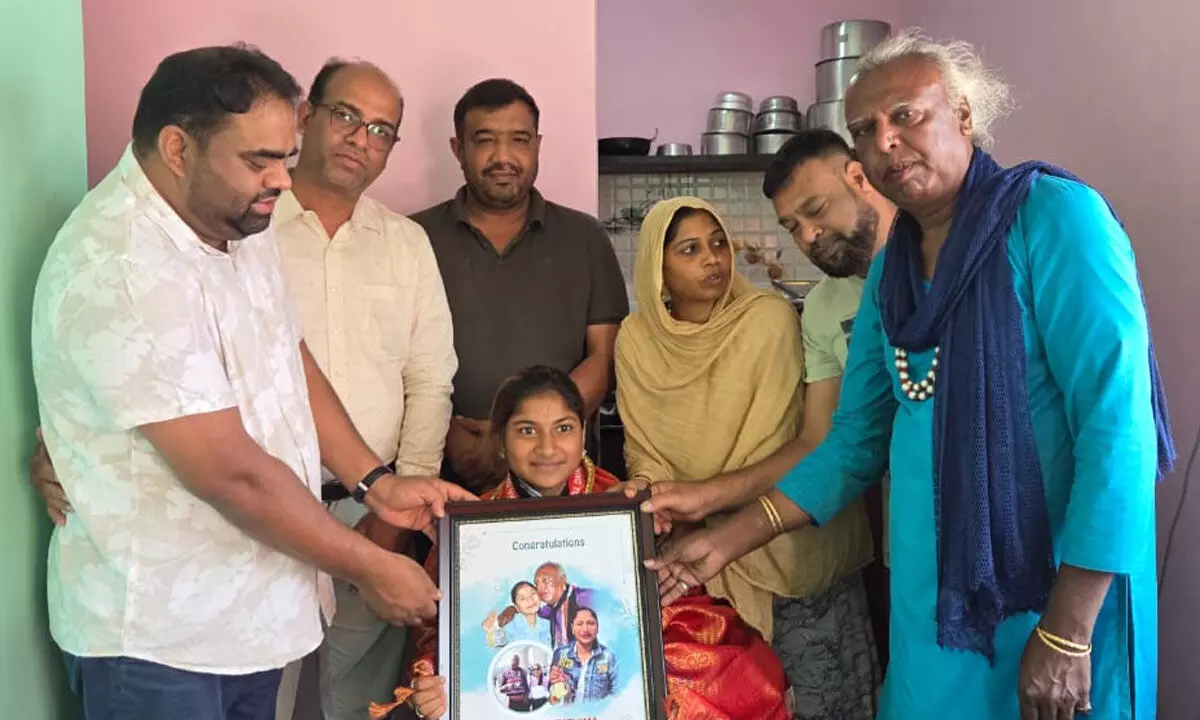
Fatima’s journey is a testament to perseverance. Her father abandoned the family two decades ago due to the absence of a male heir. Left destitute, Fatima’s mother attempted to end her life, but the family was taken in by Akram Pasha, a transgender beggar in Mysuru. Pasha adopted Fatima and supported her education and training, earning a living through alms to sustain the family.
Currently pursuing her secondary education, Fatima dreams of representing India in the Olympics. However, financial constraints hinder her aspirations. She hopes to open a kickboxing training centre to support herself and provide for Pasha, who continues to pay rent for both their accommodations.
Recognising her achievements, members of the M. Friends Charitable Trust from Mangaluru, led by Rashid Vitla, visited her home to extend financial assistance and encouragement. Social organisations and sports enthusiasts have been urged to come forward and support Fatima in achieving her dreams.
source: http://www.thehansindia.com / Hans India / Home> News> State> Karnataka> Bengaluru / by Rasheed Vitla / Hans News Service / March 12th, 2025
Bhoothpur Town (Mahbubnagar District), TELANGANA :
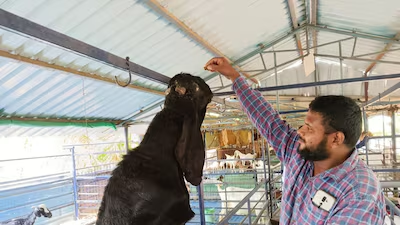
Anwar, a native of Bhoothpur town in the Mahbubnagar district, opened a private goat breeding farm in his native town in 2018, with the intention to rear goats of different breeds.
A private goat breeding farm in Telangana has been rearing goats of different breeds with utmost care. Anwar, a native of Bhoothpur in the Mahbubnagar district, opened a private goat breeding farm in his native town in 2018, with the intention to rear goats of different breeds.
They include African Boer, a breed developed in India after being imported from South Africa, Mewati of Haryana, Hyderabadi and other domestic and foreign breeds of goats.
The farm has been developing new breeds by mating a male goat of one breed with a female goat of another breed.
In a first of its kind in the state, the farm has implemented a cage system, where the goats are kept in cages according to their breed. The cage system is built on a plastic floor with holes three to four feet height from the ground for the disposal of waste from the goats. The cage system is built in a way that helps keep the cages clean and the goats safe from diseases, Bhoothpur animal husbandry development officer Madhusudan said.
In order to develop a new breed, one male goat has to mate with female goats of three generations. The process takes almost two-and-a-half years depending upon the preparedness of the female goat to mate with the male.
“We bought goats and sheep from different places and performed some experiments in which we succeeded. We are not selling them as we aim to supply the best breeds to the farmers. It is a costly procedure but we are doing it for the farmers,” Anwar told News18.
The farm has been mating breed couples such as Mewati – Sojat, Mewati – Hyderabadi, Domestic breed – African Boer and so on.
Anwar told News18 that he has spent Rs 25 lakh on the farm so far. Currently, the farm has 160 goats, but Anwar aims to rear as many as 10,000 goats on his farm.
source: http://www.news18.com / News18.com / Home> English edition / by Mohd Rafi Ahmed Ahmed / April 01st, 2024
Abdul Jabbar Siddiqi, a key leader of Karunya Society, addressing the event titled Community Connect Mission & Vision in Bidar
Bidar:
In a remarkable example of ethical finance and grassroots development, small and medium traders in Bidar have demonstrated exemplary financial discipline by repaying their loans promptly and in full. This achievement, driven by the Karunya Society’s interest-free microfinance programme, was celebrated at a recent city event titled Community Connect Mission & Vision.
Abdul Jabbar Siddiqi, a key leader of Karunya Society, revealed a striking figure – 98% of loans issued to small traders have been repaid on time. To him, the statistic is more than a financial milestone; it reflects the honesty, sincerity, and perseverance of the beneficiaries.
“These traders were once trapped in debt cycles with exploitative moneylenders,” Siddiqi said. “Today, they are finally enjoying the full rewards of their hard work.”
Karunya Society operates 47 branches nationwide, disbursing nearly ₹1.25 crore in loans each day and supporting around 1.25 lakh families.
Branch head Mujtaba Khan detailed the local outcomes: over the past seven years, around 3,500 families in the district have benefitted from ₹60 crore in business loans and ₹2.4 crore in emergency hand loans. Beneficiaries – such as Panchsheela Garments, Pramila Tailor, Ravi Kani Footwear, Shiv Kumar Udaygir, and Faheem Qureshi – shared heartfelt testimonies of how the programme transformed their livelihoods.
Karnataka Minister for Municipal Administration and Hajj, Rahim Khan, praised the effort, admitting he had doubts when the society launched seven years ago.
“Many banks were struggling back then, and I wondered whether this interest-free model could survive,” he said. “But its growth and impact are nothing short of a miracle.” He commended the society’s volunteers for their selfless service, noting none take personal profit.
Former Managing Director of Bidar District Credit and Cooperative Bank, S. Kudre, underlined the programme’s significance, pointing out that many interest-based microfinance institutions are now in crisis. “An interest-free society with 3,500 active members thriving like this shows the model works – and India needs it now more than ever,” he said.
Dr. Abdul Qadeer, Chairman of Shaheen Group of Institutions, urged affluent community members to deposit surplus funds into Karunya Society to enable more interest-free lending. Similarly, Jamaat-e-Islami Hind’s city president, Mohammed Muazzam, proposed opening of a new branch in Bidar’s New Town to widen the reach.
Karunya Society’s model is proving to be more than a financial service – it is a movement built on trust, compassion, and shared prosperity. By empowering small traders to escape debt traps and build sustainable businesses, it offers a credible, humane alternative to conventional interest-based finance.
source: http://www.radiancenews.com / Radiance News / Home> Latest News / by Mohamed Atherulla Shariff / August 13th, 2025
For most people, social activities is defined as work carried out by people with the aim of alleviating the living conditions of those people in a community suffering from social deprivation. They strive for helping the poor and deprived people to live a better life. By this definition, it also implies that social work is for the living.
But what about people who are dead?
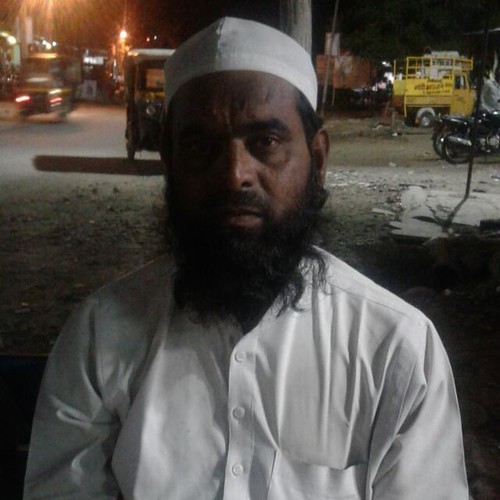
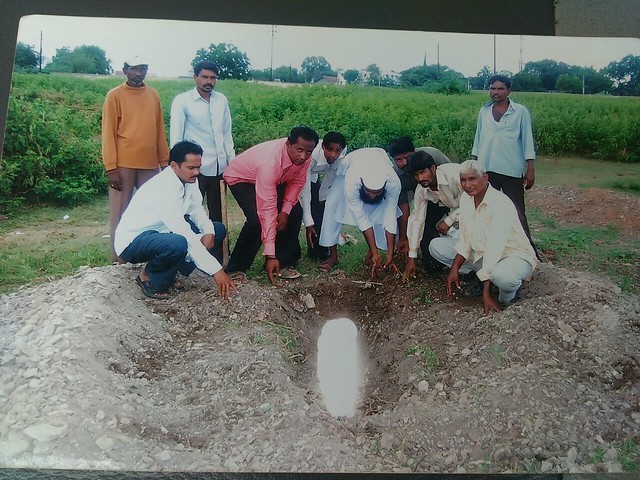
This question, and the answer to it, is what makes Jahangir Shaikh, a 47-year-old resident of Solapur, an exception. His social activity starts after he finds an unclaimed dead body. Once he discovers an unclaimed body, he assumes its guardianship and lays the body to its final abode.
“Initially I started to give gusl (bath) to unclaimed Muslim bodies on the request of Police. Later, I started doing it for people of other religions too”, Jahangir shares his journey of the past ten years; about a cause rarely undertaken by people.
Jahangir, a devout Muslim, first received a phone call in 2007 from a Muslim policeman who knew he can give gusl to unclaimed dead body. Jahangir had rushed to the spot and completed funeral right of a fellow Muslim.
“That was the first instance after which devotion for performing last right of unclaimed body arose inside me and thereafter I made it a duty to attend such bodies”, he recalls.
Jahangir’s strange choice of social work iniitally caught people by surprise, but he never doubted his commitment. “People disliked my work and they would treat me as an inferior individual but that did not stop me from carrying out the work that I supposed as my duty. I would pray to the almighty to strengthen me so that people’s objections do not hold me back,” Jahangir says, when talking about the initial days.
His family also strongly objected to this kind of work but he managed to convince them to allow him to continue doing it.
“I told them that I don’t do it for earning money; burying these bodies gives me pleasure as I became a guardian for them. They felt awkward initially, but gradually they got accustomed “, Jahangir explains how he convinced his family.
Till today Jahangir has performed last rites of as many as 1,600 people, out of which 1,400 were non Muslims. As he is used to of giving gusl, he is also called by people for giving gusl to their relatives. In return, they give him hadiya (gift).
But one might wonder; what is his main profession and source of living? For that, he cooks food in social functions. However, he is always on his toes when he gets to know about any unclaimed dead body either at a hospital or the police station.
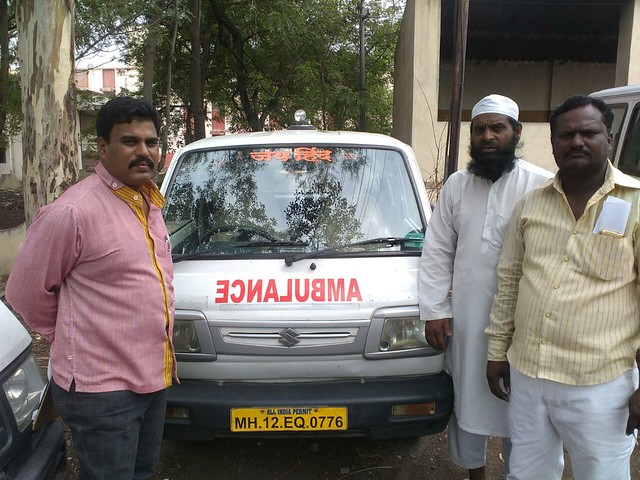
Jahangir’s dedication to what he called his ‘duty’, and his sincerity towards this soon made him famous in Solapur. He started receiving phone calls from police stations and hospitals for burying unclaimed bodies. His amazing sense of kindness towards the unattended also moved many people; a few years ago, a young Muslim businessman Salman Shaikh took notice of his noble service and donated a second-hand Ambulance to help him carry out the work more efficiently.
“I was impressed with his dedication towards the work. The charred and blood-soaked bodies that a normal man don’t even look at, he would offer them a bath and bury them”, a bewildered Salman explains why he donated ambulance to him.
However, a couple of years after he got the ambulance, it met with an accident while carrying a body of little girl. This damaged the vehicle substantially and Jahangir too was injured in the accident. However, this did not break his determination and he bought two ambulances on loan and again started his service to the community. He got support from his son, who took a loan to buy an ambulance for Jahangir.
With some likeminded friends, he also formed the Baitul maal Shifa Committee through which he raises fund by collecting zakat (compulsory charity) or sadqa (voluntary charity) from people. However, he does not use this fund for performing last rites. Instead, he and friends pay money from their pockets for funerals and use the fund raised for poor patients admitted in hospitals.
“We use collected fund to help patients in buying medicines and other medical expenses”, Jahangir says with cheerful face.
When asked if police or hospitals pay him for carrying and burying bodies, he says, “They give Rs 300 but we give this money to the boys who help in carrying bodies to ambulance and dig holes for burial.”
For other expenses related to performing last rites: kafan (white cloths) and attar (perfume), Jahangir and his friends spend money from their own pocket.
His dedication has led to many people offering him voluntary service whenever needed. Currently, his Shifa committee has some active members: Gulam Shaikh, Zainuddin Nadaf, Sameer Shaikh, Daula Kumthe, Babulal Phaniband, Rashid Chaudhari and Shakila Shaikh are always ready to join hands with Jahangir.
Irfan S.M, a social activist and an educational personality from Solapur has nothing more than praises for Jahangir for his distinguished work.
“He is into this task of voluntary work and selfless service to humanity, it is really remarkable. Thousands of people are engaged in different social and religious activities but this is unique. There should be one Jahangir in every city”, Irfan says.
Imran Inamdar contributed to this story
source: http://www.twocircles.net / TwoCircles.net / Home> Indian Muslim> Youth / by A Mirsab, TwoCircles.net / October 07th, 2016
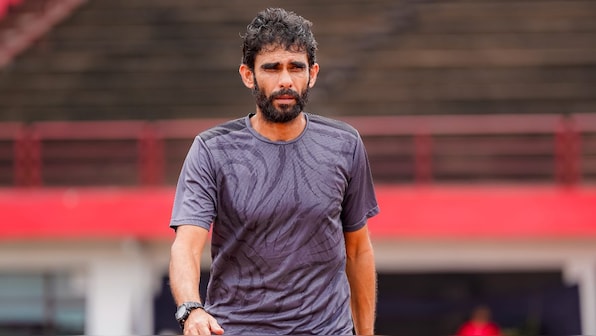
After confirming his appointment a few days back, AIFF has announced that Khalid Jamil has signed a full-time two-year contract to be the Indian football team coach.
The AIFF has announced that Khalid Jamil will be a full-time coach for the Indian men’s football team. Image: AIFF
Former midfielder Khalid Jamil has signed a full-time two-year contract to be the new Indian men’s football team coach, the All India Football Federation (AIFF) confirmed on Wednesday. Jamil, who was Jamshedpur FC’s coach in the Indian Super League (ISL), was picked as the top candidate by the AIFF Executive Committee on 1 August , but both parties were yet to agree on terms.
“I am both deeply proud and immensely privileged to have been entrusted with the responsibility of leading our national team,” Jamil said in an AIFF media release on Wednesday. “Over the years, I’ve had the opportunity to train Indian players, and I’ve grown to understand their strengths and weaknesses intimately.
“These insights will be fundamental to everything we do as we prepare for the CAFA Nations Cup and the upcoming crucial Asian Cup Qualifiers against Singapore.”
Jamil to start tenure with CAFA Nations Cup
Jamil was picked by the AIFF ahead of India coach Stephen Constantine and Slovakian tactician Stefan Tarkovic. He will be the first Indian to coach the men’s national team after Savio Medeira in 2012.
The first training camp for the Indian football team under Jamil will start on 15 August at the Dravid-Padukone Centre for Sports Excellence in Bengaluru. The list of probables is expected to be announced soon.
Jamil’s first assignment as India coach will be the CAFA Nations Cup, where India are set to face hosts Tajikistan (August 29), IR Iran (September 1) and Afghanistan (September 4) in Group B.
In the October FIFA Window, India are scheduled to play AFC Asian Cup 2027 qualifiers against Singapore (October 9 and 14).
Jamil’s coaching and playing career
While he doesn’t have the experience of coaching a national team, the 48-year-old has had an extensive management career at the club level, coaching Jamshedpur FC, NorthEast United FC, Aizawl FC, East Bengal FC, Mohun Bagan AC and Mumbai FC. With Aizawl FC, he won a historic I-League title in 2016-17.
He also helped Jamshedpur reach the Kalinga Super Cup 2025 final and the semi-finals of the ISL play-offs 2024-25.
As a player, he played 15 times for India, after making his debut in the 1997 SAFF Championship in Nepal, which the Blue Tigers won.
In his club career, Jamil won the National Football League, two Federation Cups and two IFA Shields with Mahindra United.
He also played for Air India and Mumbai FC. In the Santosh Trophy, Jamil represented Maharashtra, with whom he won the title in 1999.
source: http://www.firstpost.com / FirstPost. / Home / by FP Sports Desk / August 13th, 2025