The historical accounts of Malappuram were written by outside people
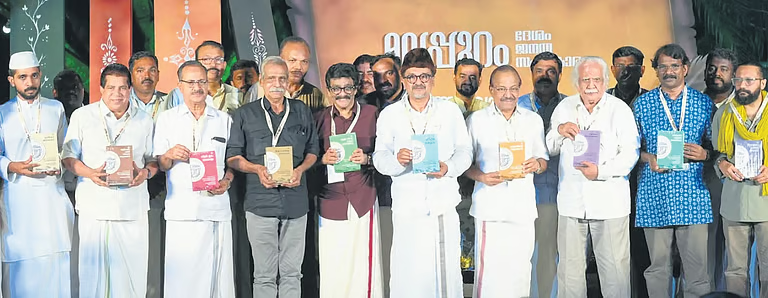
Release of the book on Malappuram Photo / Express
Kozhikode :
Why does Malappuram continue to appear as a trouble spot and the hub of religious fundamentalism in popular imagination and in some political utterances? A book on the history of the geographical area, which is part of the multi-volume project on different aspects of the district, asserts that the notion that Malappuram is a ‘fanatic zone’ was the creation of colonialists, which continues to linger in popular discourses even after the country became independent.
“People of this area fought against the British invasion and boycotted their language as a token of protest. Naturally, the colonialists had an antagonism towards the people.
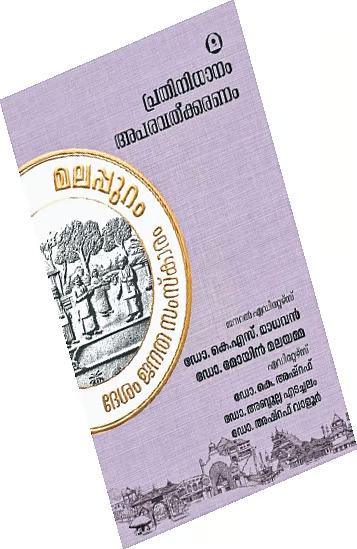
But the tragedy is that there are people who still nurture the colonial mindset,” said Minister for Industries and IUML national general secretary P K Kunhalikutty, while launching the 10-volume book ‘Malappuram: Geography, People, Culture’ in Malappuram on October 4.
“The areas under the present Malappuram came under British rule in 1792. Since then, there were resistances against the British and the colonialists brought a number of black laws like the Mappila Outrages Act to contain the agitations.
There were a number of British reports like that of T L Strange, which depicted Malappuram as an unmanageable spot,” said Moyin Hudavi Malayamma, one of the general editors of the volume.
“The historical accounts of Malappuram were written by outside people. The people of Malappuram seldom got a chance to express what they actually are. Our project, in a way, is people writing their own history,” he added.
“Colonial records were the only available materials for those who studied the history of Malappuram. Naturally, those who wrote about Malappuram later were heavily influenced by these records.
The Hindutva narrative on Malappuram was built on this notion. Curiously, the Left is also parroting the narrative,” said Ashraf Valoor, one of the editors of the volume.
“Ours is an academic response to stereotyping. This is an alternative to the colonial and Hindutva narratives on Malappuram,” Valoor said. “It is true that early writers like EMS Namboodirippad viewed the 1921 agitation from the correct perspective. But later we see that the Left also internalised the colonial notion and that is why anti-Malappuram remarks are coming from some CPM leaders at regular intervals,” he added.
Valoor believes that the fact that the IUML is on the other side of the political spectrum also compelled the CPM to take an antagonistic stand towards the people of Malappuram. “Political enmity of some CPM leaders sometimes crosses the border and descends to communal level,” he said.
The volume contains academic articles on the process of ‘otherisation’ of Malappuram, the hate campaign during the formation of the district, the stories on the ‘aggression’ by Tipu Sultan and the communal amity in Malappuram. The project was envisaged by the Malappuram district committee of the Muslim Youth League and financially supported by the Saudi unit of Kerala Muslim Cultural Centre (KMCC), a feeder organisation of the IUML.
source: http://www.newindianexpress.com / The New Indian Express / Home> Kerala / by MP Prashanth / October 17th, 2026
Kuttippuram (Tirur Taluk , Malappuram District), KERALA :
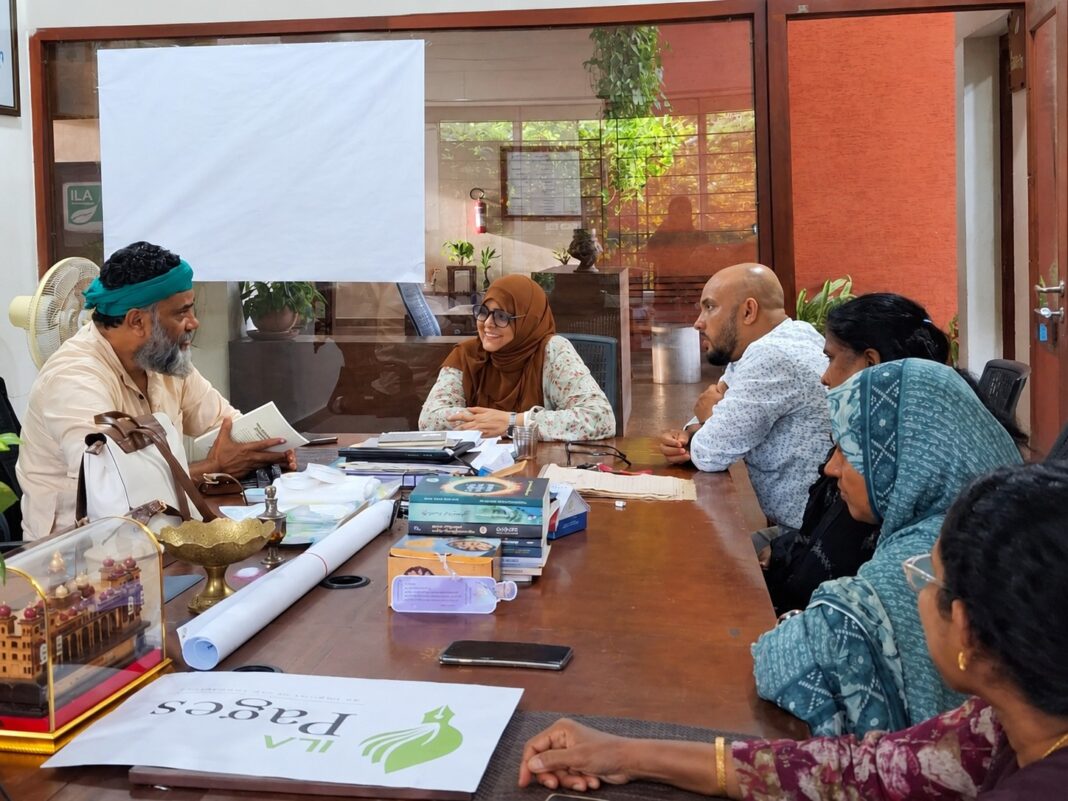
Author Sajida A Zubair with volunteers and members of the Ila Foundation during a discussion at its centre in Kerala.
“We human beings have started living in compartments. Muslims go to the masjid, Hindus go to the temple, Christians visit the church, and Sikhs go to the gurudwara. But where are the spaces for human beings, for all of us to visit simply as human beings?” –Ila Foundation’s Mohammed Najeeb.
Kuttipuram (Kerala) :
Travelling to Kuttipuram in Kerala was not merely a journey I had planned. It was a journey that carried with it a deep sense of emotion and transition. When I boarded the flight to Thiruvananthapuram earlier this month, I was setting out to leave my youngest daughter to follow her own choice of college and take the next step towards her higher education. As a parent, it was a moment filled with conflicting emotions: Pride in watching her move towards her dreams, and a quiet ache in letting her take those steps away from home.
After completing all the formalities and spending some cherished time with friends during the Onam holidays, I set out once again, this time by train. It was my first train journey in 22 years. A small journey in distance, perhaps, but one that felt significant in ways I had not anticipated. I finally reached Kuttipuram, carrying with me a sense of gratitude and anticipation, to meet Mohammed Najeeb Kuttipuram and thank him personally for the remarkable work he has been doing.
Though I went straight to their home from Tirur railway station, I met him only the following morning. I was told that Najeebka is a man who is deeply disciplined when it comes to time. There was no exception to that rule.
That morning, I was not simply meeting Najeebka. I was about to be introduced to a dream he had nurtured with conviction and purpose- the Ila Foundation.
The first question I asked him was perhaps the most natural one: “Why Ila?”
Najeebka, as he is fondly called by those around him, paused for a moment before answering.
“Life is a lesson,” he said. “We spend this journey going to school, finding a job, getting married, raising children, and then focusing on their education and building a house. We spend much of our lives fulfilling these responsibilities. But what’s next? What comes after all these responsibilities are fulfilled? That thought gave me the push to do something beyond these responsibilities.”
Here are excerpts from my conversations with the founder and volunteers of the Ila Foundation, recorded during my visit.
Sajida A Zubair (SAZ): What is Ila?
Najeebka: Ila which means leaf, comes from the fable of the ‘Ant & Leaf.’ Ila is a breathing space We human beings celebrate the first breath of life, and we mourn the last. In between those two moments, we breathe every single day, every single moment, yet we rarely pause to think about those breaths. We take them for granted. Ila is a space that allows us to pause- to breathe, to reflect and simply be. We human beings have started living in compartments. Muslims go to the masjid, Hindus go to the temple, Christians visit the church, and Sikhs go to the gurudwara. But where are the spaces for human beings, for all of us simply as human beings? Ila is that space. It belongs to everyone. That is why Ila has no doors. It is open to everyone. There are no compartments at Ila Foundation that differentiate among human beings.
SAZ: How is Ila’s palliative care initiative different from other such center?
Najeebka: I felt that there was very little change or evolution in the way palliative care was being provided in many centres. Many of them remained where they were when they first began. The focus was largely on medicines, injections, catheter changes and other forms of medical support. But Ila was conceived as something beyond medical care. We wanted to provide emotional support as well, to create a space where people could feel heard, cared for and valued.
SAZ: What makes Ila different from other organisations? What does it mean to be a volunteer at Ila?
Every volunteer who comes here is first made to understand one thing: before anything else, we are human beings. Learning how to be a human being is the first lesson we give to anyone who comes here to contribute. Our volunteers come from different religions, castes, races and creeds. But the understanding that we are human beings first is what brings us together and makes us a family. That is also why Ila does not have the usual hierarchy. We don’t have board members, a president or a secretary. We simply have volunteers. We come together because we believe in the same purpose.
We need to realise that the health we have is one of the greatest blessings we receive in life. The moment we truly understand that, we should feel the responsibility to reach out to those who are struggling with their health. At Ila, we try to see ourselves simply as human beings, and to see the people we care for in the same way.
Ila foundation is not just to care for those who are suffering, but to make all of us a little more human in the process.
SAZ: What is Ila doing to prepare the next generation with this same idea?
Najeebka: One of our important initiatives is the CEEP- Capital Exploration and Enhancement Programme, which begins with children from the eighth standard onwards.
We want to encourage these children to ask themselves some fundamental questions: Who am I? What am I capable of? What do I want to achieve in my life? We train them to discover their strengths, develop a sense of purpose and build a mission for their lives. More importantly, we help them understand how to face and overcome the challenges that life will inevitably bring.
We give special attention to the training of female students as well. So far, 24 training sessions have been conducted. These children will, in another ten years, become part of different sections of society- some may enter politics, some may become professionals, teachers or take up other roles. Wherever they go, Ila hopes they will carry with them the values they have learned here and contribute to a positive and compassionate transformation of society. Our dream is not simply to train children for successful careers. It is to nurture human beings who can make a meaningful difference wherever life takes them.
SAZ: How would you describe your association with the idea behind Ila?
Sulfikhar, Volunteer, Ila Foundation: Najeebka is my childhood friend and an elder brother for me. I have known him for many years. He is a traveller, and during his journeys across North India, particularly through villages, he spent a great deal of time doing social work and reaching out to people in need.
For more than 25 years, these travels became a part of his life. It was through these experiences, and the people he encountered along the way, that the idea of the Ila Foundation gradually took shape.
But Ila is much more than a charity or a place that simply provides assistance. It offers care and compassion to people dealing with health challenges, but its purpose extends beyond those who are unwell.
Ila is also a space for those who are healthy. It’s a place where they can look within themselves and work towards cleansing their inner selves. We all carry our own diseases of the soul- ego, jealousy, anger and many other negative emotions. Ila encourages people to recognise these within themselves and try to overcome them.
That, for me, is what makes Ila different. It is not only about caring for a person’s physical suffering; it is also about helping people become better human beings.
SAZ: What kind of care and support does Ila Foundation provide?
Fasina, who coordinates the palliative care volunteers: Ila provides support to people with a range of health needs. The Drug Bank provides medicines, particularly for psychiatric patients. Those requiring rehabilitation support are registered, and the medicines they need are provided to them. We also have a dialysis unit with 10 machines, operating in two shifts. At present, 34 patients are receiving dialysis care through Ila.
Our palliative care programme extends beyond the walls of the Foundation. We have four home-care units that visit patients at their homes every 15 days. The visits include checking their vital signs, wound dressing and attending to other medical needs.
But medical care is only one part of what we do. Just as important is the time we spend with them, sitting beside them, listening to them and offering emotional and moral support. Sometimes, simply knowing that someone is there for you can make a great difference to a person who is suffering.
During my visit to the Ila Foundation, I had the opportunity to accompany one of its home-care units. We set out at 9 in the morning, travelling from one home to another and meeting families who, despite the immense difficulties they face, continue to hold on to hope and remain remarkably positive about life.
What struck me most was the way many of them spoke about Ila, not merely as a source of medical care, but as an institution that had brought a sense of confidence, dignity and hope back into their lives.
One such story is that of Shabiri Girish, 45, who lives with his wife and two school-going children. A construction worker by profession, his life changed dramatically when he fell from the fourth floor of a building and suffered a serious head injury.
For nearly three years, his family explored every available avenue of treatment, hoping that he would one day regain the ability to walk. But despite their efforts, he eventually lost movement in his legs.
It was then that Shabiri Girish registered for palliative care with the Ila Foundation.
When Ila’s care began, it offered him something that went beyond medical assistance. The emotional and moral support he received gradually helped him regain confidence and look at life with renewed hope. In time, Ila provided him with an electric wheelchair and helped him set up a small shop beside his home.
Today, Shabiri Girish has regained a measure of independence that once seemed almost impossible. His journey is not simply a story of overcoming physical limitations; it is also a story of dignity, resilience and the power of being supported when life seems to have taken everything away.
He and his family now speak of Ila with deep gratitude. More than recipients of its care, they hope to remain connected with the Foundation and contribute as volunteers, sharing their own journey to inspire others who may be going through similar struggles.
I was also given the opportunity to spend some time with a group of specially abled beneficiaries of Ila. We sang, played games and shared moments of laughter. They welcomed me into their circle with such warmth and innocence that, for those few hours, there seemed to be no sense of difference-only the simple joy of being together.
One of the children smiled and told me, “We love coming here every week. We wait eagerly for Tuesdays for these sessions.”
The excitement in those words said more about what Ila means to them than any explanation could. For these children, Tuesday is not just another day of the week. It is a day they look forward to- a day of friendship, play, laughter and belonging.
And that’s when I knew Ila Foundation is indeed a space to breathe freely and perhaps that is the most powerful aspect of Ila’s work-the transformation of those who once needed support into people who themselves want to become a source of strength for others.
If you are in Kerala, Ila Foundation deserves to be on your itinerary.
source: http://www.indiatomorrow.net / India Tomorrow / Home>Health / by Sajida A Zubair /edited in headlines / September 14th, 2026
That Sunday afternoon still lingers in Mohammed Shamil’s mind: the loud cries for help and the rush to save lives. Without hesitation, he dived into a murky village pond and brought three girls back to life from the brink.
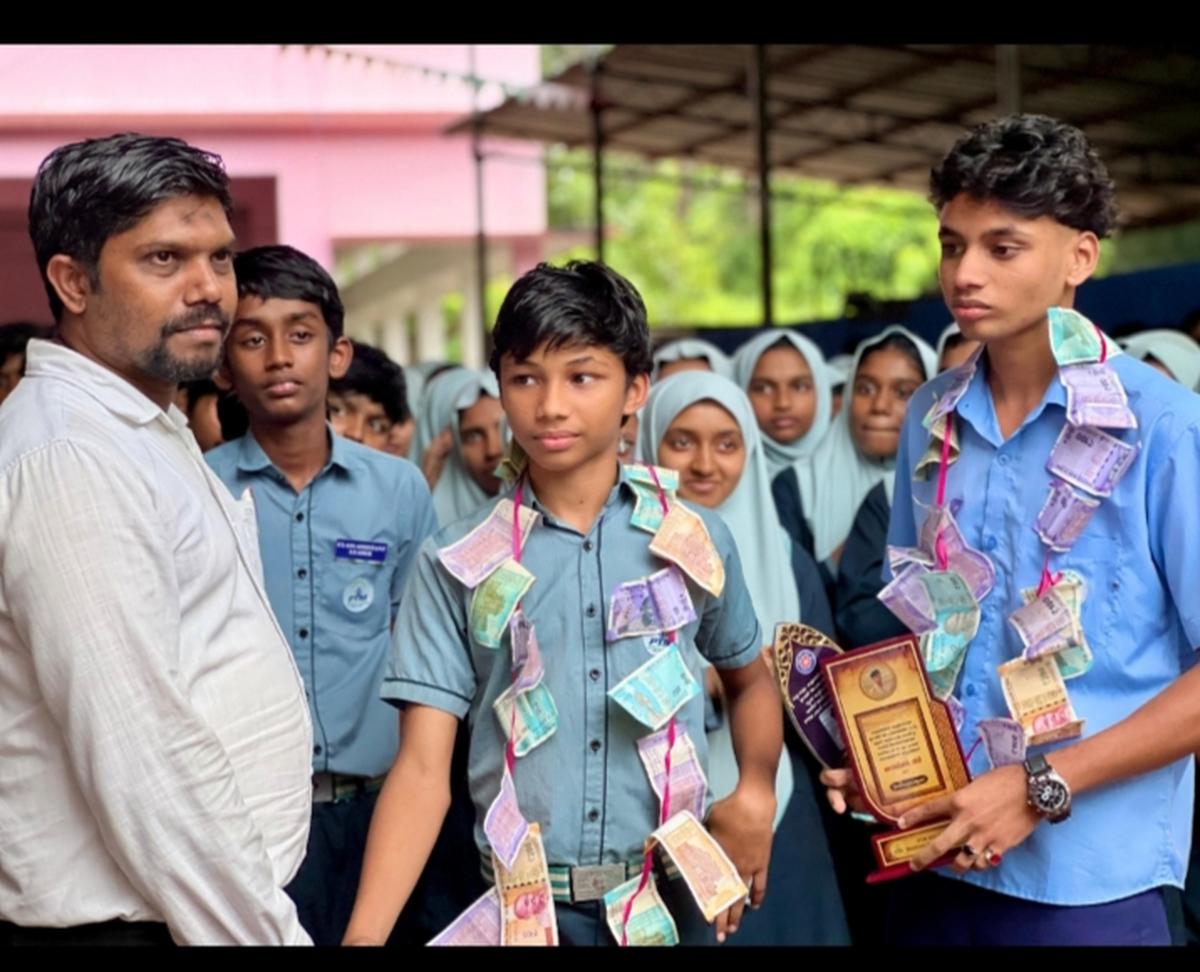
One of them needed CPR, and he gave her the breath of life with the little knowledge he learned from school. Now, Shamil is hailed as a hero and showered with felicitations, trophies and mementoes – more than three dozen in less than two weeks.
Schools and clubs invite him to share his story, inspiring others to act in moments of crisis. For the Class 12 boy, it is about saving lives and not seeking praise.
Mohammed Shamil (right) and his younger brother Mohammed Shehin being felicitated with currency garlands at their school. | Photo Credit: SAKEER HUSSAIN
On July 13, around 2 p.m., Shamil’s peaceful afternoon at his Puthanveedu home at Mankada near Manjeri was disrupted. His mother Shahida had just received a distressing alert from ASHA worker Hafsath Palliyalthodi that three girls were drowning in a nearby pond.
Shahida’s frantic cry propelled Shamil into action. He sprinted 200 meters to the pond and plunged into the muddy waters, where two girls were desperately struggling to stay afloat while the third had already slipped underwater.
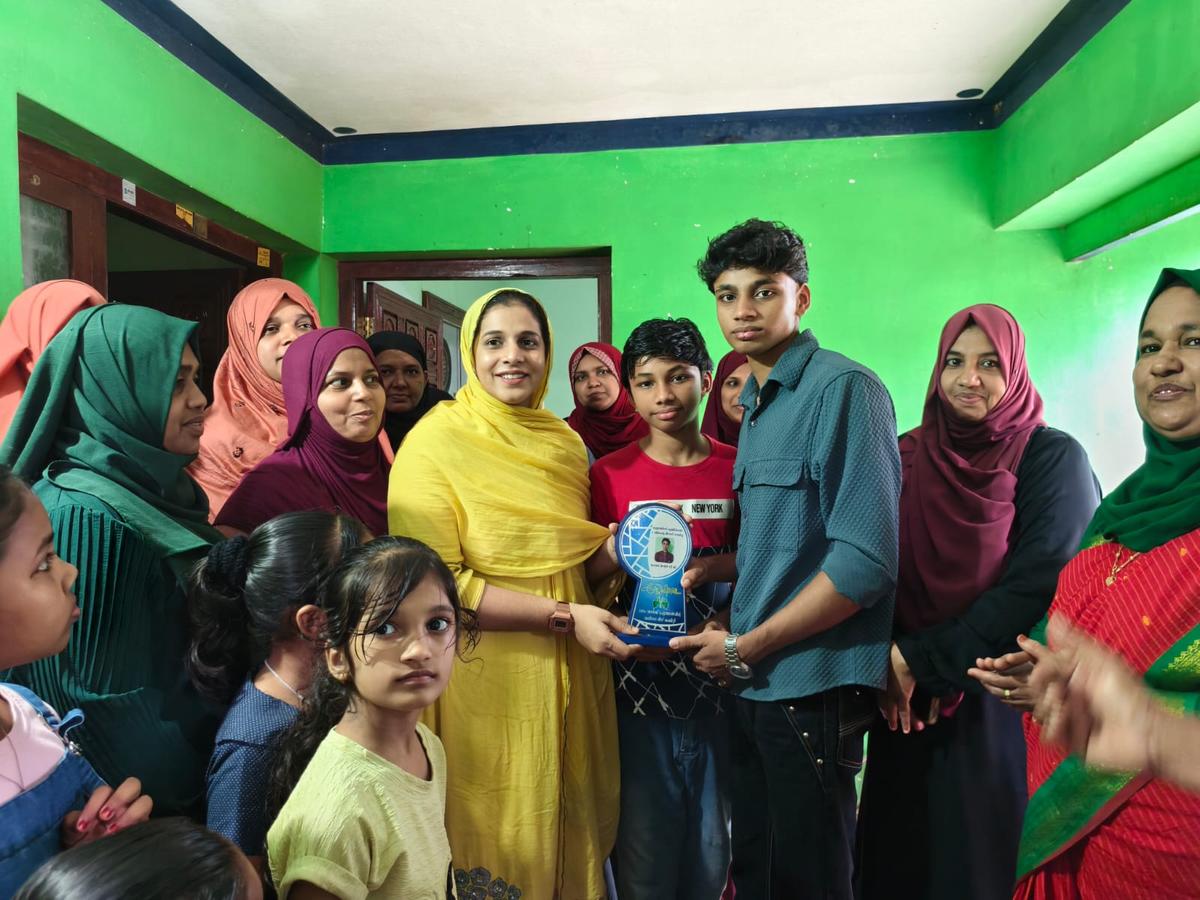
Muslim Youth League national secretary Najma Thabsheera felicitating Mohammed Shamil. | Photo Credit: SAKEER HUSSAIN
With careful precision, Shamil rescued the two girls. He was mindful of not putting himself in danger. “When one girl raised her hand, I did not grab it,” he said. “Instead, I caught her dress from behind and pulled her to safety.”
Just as Shamil thought it was over, the rescued girls broke down in tears, revealing that one more person was still submerged underwater. “That moment sent shivers down my spine,” Shamil recalled. “Initially, I was unsure what to do, but I took a few deep breaths and dived multiple times in a desperate attempt to rescue the last one.”
Fire and Rescue Services officers felicitating Mohammed Shamil. | Photo Credit: SAKEER HUSSAIN
The pond was over two meters deep, with murky water, making it difficult to locate the missing girl. As more people arrived, Shamil dove in three times before finally pulling out the 12-year-old girl with the help of his younger brother, Mohammed Shehin, who is a class 8 student.
She was not breathing, and her face was pale. Shamil used his school biology knowledge to do chest compressions. When she showed signs of life, he gave her mouth-to-mouth resuscitation. Within minutes, she started breathing again. The girl was then rushed to the hospital.
Shamil’s parents, Shahina and Ashraf, beamed with pride as they looked at the table filled with trophies and mementoes. The recognition came from all corners – the Fire and Rescue Services, local clubs, the MLA, the district, block, and grama panchayats.
Shamil, once just a student, has become a symbol of hope and bravery for the people of Mankada. “I just did what needed to be done,” he humbly said.
source: htttp://www.thehindu.com / The Hindu / Home> News> India> Kerala / by Abdul Latheef Naha / July 25th, 2025
Valanchery Munnakkal (Malappuram District), KERALA /Aligarh, UTTAR PRADESH :
Dr Munawar Hanih, an ICSSR post-doctoral researcher under the mentorship of Professor T.N. Satheesan, Dean, Faculty of Arts, Aligarh Muslim University, has been selected for the 2023 Mahakavi Moinkutty Vaidyar Mappila Kala Akademi Literary Award
Aligarh:
Dr Munawar Hanih, an ICSSR post-doctoral researcher under the mentorship of Professor T.N. Satheesan, Dean, Faculty of Arts, Aligarh Muslim University, has been selected for the 2023 Mahakavi Moinkutty Vaidyar Mappila Kala Akademi Literary Award, instituted by the Mahakavi Moinkutty Vaidyar Smarakam under the Department of Culture, Government of Kerala.
He is being honoured for his scholarly work Malayala Sufi Kavitha, a significant contribution to the study of Mappila literature and arts.
The award will be presented at a ceremony in September 2025.
Dr Hanih holds an MA and PhD in Malayalam from AMU’s Department of Modern Indian Languages and has served as Assistant Professor of Malayalam at Sir Syed College, Taliparamba, Kerala.
source: http://www.radiancenews.com / Radiance News / Home> Pride of the Nation> Awards / by Radiance News Bureau / August 14th, 2025
She calls upon council and the people for concerted efforts to take district forward
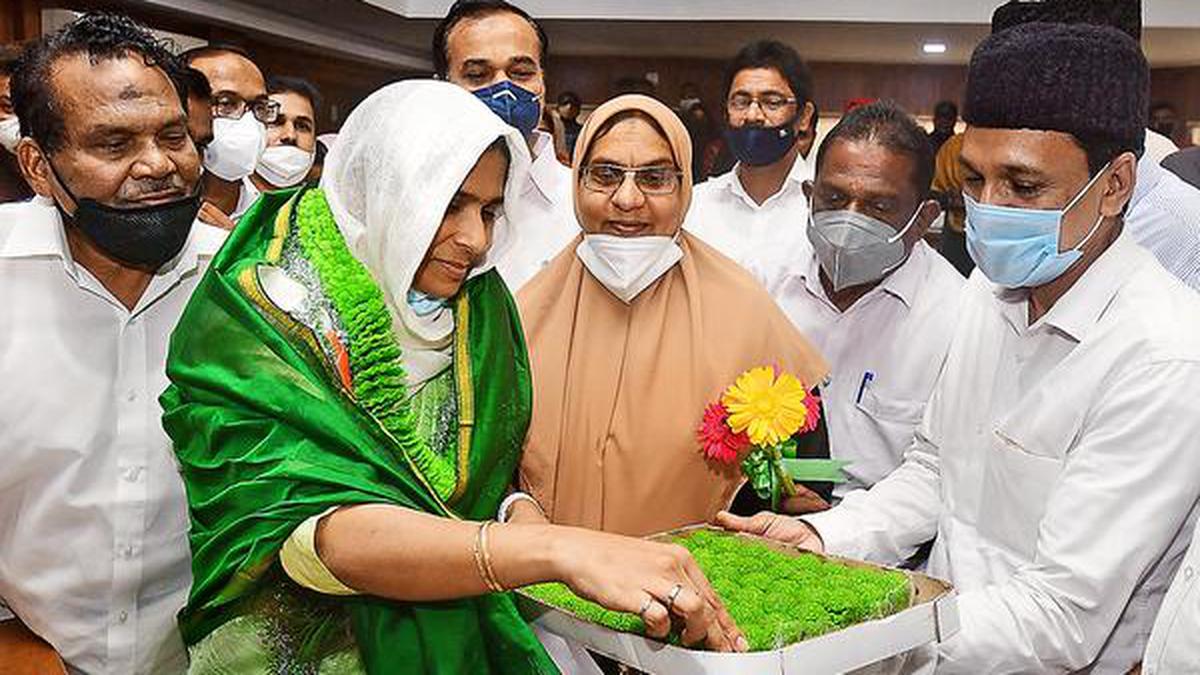
IUML Malappuram district president Sayed Sadikali Shihab Thangal offering sweets to newly elected District Panchayat President M.K. Rafeeka in Malappuram on Wednesday.
Indian Union Muslim League (IUML)’s M.K. Rafeeka was elected president of the Malappuram District Panchayat here on Wednesday. IUML’s Ismail Moothedam was elected vice president.
Ms. Rafeeka became President by winning 26 of the 32 votes. She defeated Left Democratic Front (LDF)’s Arifa Nasar, who got five votes. One vote was declared invalid.
Congress’s N.A. Kareem proposed Ms. Rafeeka for the president’s post, and P. Manaf backed her. Ms. Rafeeka represents Anakkayam division of the District Panchayat.
Ismail Moothedam was elected Vice President by winning 27 votes against LDF’s A.K. Subair. K.T. Ajmal proposed Mr. Moothedam’s name and P.K.C. Abdurahman seconded it. Mr. Moothedam represents Chokad division of the District Panchayat.
District Collector K. Gopalakrishnan administered the oath of office to Ms. Rafeeka.
IUML district president Sayed Sadikali Shihab Thangal; Sayed Basheerali Shihab Thangal; IUML district general secretary U.A. Latheef; P. Ubaidullah, MLA; former District Panchayat presidents K.P. Mariyumma, Arimbra Mohammed, Suhara Mampad and A.P. Unnikrishnan; senior IUML leaders Umer Arakkal, Salim Kuruvambalam, Kurukkoli Moideen, Noushad Mannisseri, and Congress leaders V.A. Kareem and K. Mohandas addressed a meeting that followed the oath taking ceremony. A commerce postgraduate, Ms. Rafeeka said that she would look upon the responsible position with due respect.
She called upon the entire council and the people for concerted efforts to take the district forward in comprehensive development.
Former president of Pulamanthol grama panchayat, Ms. Rafeeka was elected from Anakkayam division with 11,449 votes majority. She was instrumental in winning many accolades for Pulamanthol grama panchayat between 2010 and 2015. In 2011, the panchayat won the State Swaraj Trophy, the Central Vayo Sreshta Samman, and Gaurav Grama Sabha award. In 2013, she won a Central award for panchayat empowerment. In 2014, Pulamanthol won Rajiv Gandhi Best Grama Panchayat award.
source: http://www.thehindu.com / The Hindu / Home> News> India> Kerala / by Staff Reporter / December 30th, 2020
In 2000, Rabiya was diagnosed with cancer, which she later overcame, after which she returned to social work.
In 2022, she was honoured with the Padma Shri for social work. (File Photo)
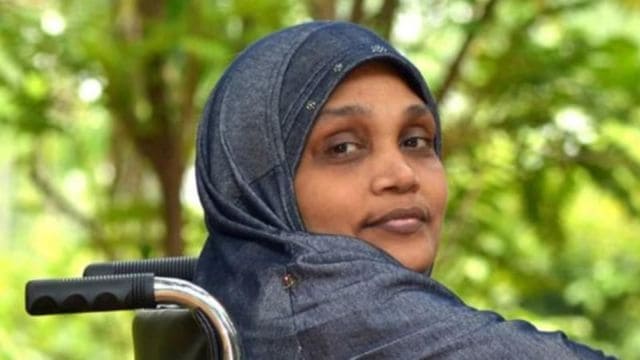
K V Rabiya, known for her prominent role in Kerala’s adult literacy programme, died at her home in Malappuram on Sunday. She was 59.
A native of Vellikakkad in Malappuram district, Rabiya fought against heavy odds and personal tragedies, right from childhood, to work relentlessly for the betterment of the differently abled and inspired thousands of women to enter the world of letters.
In 2022, she was honoured with Padma Shri for social work.
While still a school student, Rabiya contracted polio at the age of 12, which would eventually leave her paraplegic. Despite this, she completed her schooling and joined a college. However, she could not complete the degree course.
Rabiya then turned to books, reading everything from science to literature. Wheelchair-bound by then, Rabiya also started taking tuition classes for local children at a nominal fee.
It was by chance that Rabiya became a part of Kerala’s literacy movement, which began in the late 1980s. A college degree was a must for a literacy instructor. However, an instructor, who could not continue with the programme, sought Rabiya’s help. This marked the birth of a social worker and the beginning of her legacy.
She started teaching literacy classes in June 1990, and local elderly women and housewives were her students. She worked to convince women from orthodox families about the importance of education, and told them inspiring stories of world leaders and social reformers to get them interested in her classes.
When her number of students started swelling, Rabiya became a full-time literacy instructor. Later, she also established a library for women and became instrumental in the development of her locality, which did not have basic facilities such as roads and electricity, telephone, and water connections.
She eventually launched a voluntary organisation named Chalanam (movement), which also spearheaded literary programmes.
Her intervention was not limited to literacy alone. She started six schools for children with special needs and trained and empowered more than 250 women through a small-scale manufacturing unit. She was also at the forefront of the movement to create awareness against dowry and superstition. In later years, she was also actively involved in the e-literacy programme, Akshaya, in Malappuram.
In 2000, Rabiya was diagnosed with cancer, which she later overcame, after which she returned to social work.
In her autobiography, Swapnangalkku Chirakukalundu (Dreams Have Wings), Rabiya told the story of her inspiring life and how she chased her dreams. She also authored four other books, including the memoir, Mouna Nombarangal (Silent Pains). A documentary was also made on her life, titled Rabiya Moves.
She received several honours, including the Kannagi Devi Stree Shakti Puraskar, instituted by the Child Welfare Department of the Union government, in 2000. She also won the Youth Volunteer against Poverty award, jointly instituted by the Union Youth Affairs Ministry and the United Nations Development Programme.
source: http://www.indianexpress.com / The Indian Express / Home> India / by Shaju Philip, Thiruvananthapuram / May 05th, 2025
Kerala Muslim Jamat president Kanthapuram A.P. Aboobacker Musliar (right) releasing the autobiography of Madin Academy chairman Syed Ibrahim Khaleel Bukhari (middle) by giving a copy to Yemeni scholar Habib Umar bin Hafiz at Markaz, Karanthoor, on Monday. | Photo Credit: SPECIAL ARRANGEMENT
Sunni spiritual leader and Madin Academy chairman Syed Ibrahim Khaleel Bukhari has published his autobiography, The life so far.
Releasing the book, Kerala Muslim Jamat president Kanthapuram A.P. Aboobacker Musliar said on Monday that the life story of Mr. Bukhari embodied a significant lesson on how an individual could transform crises into opportunities and turn despair into hope.
According to Mr. Kanthapuram, the experiences Mr. Bukhari gained through his extensive travels and intense trials would ultimately benefit society at large.
Renowned Islamic scholar Habib Umar bin Hafiz from Yemen received the first copy of the book.
Mr. Kanthapuram said that the story of Mr. Bukhari’s growth from Kadalundi coastal village to a respected Muslim leader was, in many ways, a reflection of the history and development of the Sunni movement he led.
“His [Mr. Bukhari’s] growth has been distinct from other Muslim leaders of Kerala. There are many things that set him apart from the rest,” said Mr. Kanthapuram, attributing his swift rise to prominence within the community to his ability to innovate and implement projects that benefitted marginalised groups.
Umar Mahmood Hussain Samrai from Baghdad, Sheikh Rahmatullah Tirmidhi from Tashkent, Sheikh Bilal Halakh from California, Sheikh Rilwan Ibrahim from Russia, Habib Jindal bin Noufal from Indonesia, Markaz director C. Mohammed Faizy, Haj Committee chairman Husain Saqafi Chullikkode, and Markaz Knowledge City managing director Abdul Hakeem Azhari were present.
source: http://www.thehindu.com / The Hindu / Home> News> India> Kerala / by The Hindu Bureau, Malappuram / February 18th, 2025
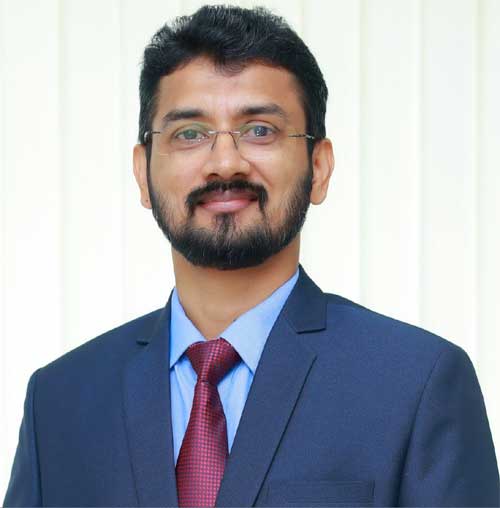
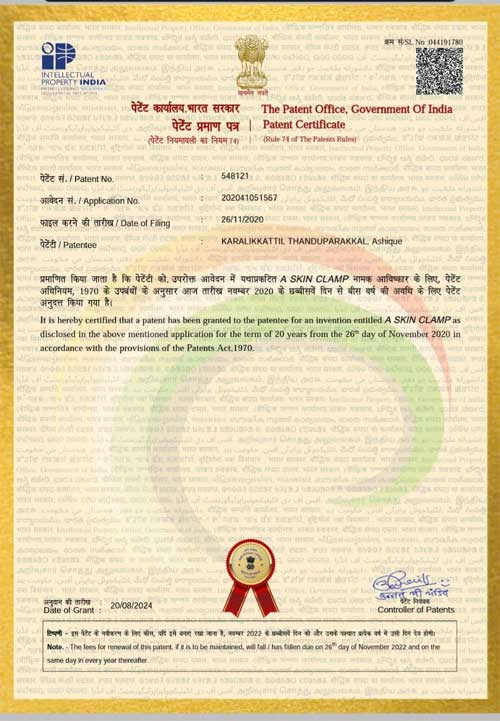
Father Muller Medical College is celebrating a landmark achievement as Dr Ashique K T, an esteemed alumnus of the Department of Dermatology, Venereology, and Leprosy, has been awarded a patent for his innovative medical device, the Dr Ashique’s Skin Clamp.
The patent, issued by the Controller General of Patents, Designs, and Trade Marks of the Government of India (Patent No. 548121, dated November 26, 2020), acknowledges the groundbreaking work of Dr Ashique, who is currently the medical director and senior consultant dermatologist in Perinthalmanna, Kerala. His invention holds far-reaching implications across multiple medical disciplines, including dermatology, dermatosurgery, dental and maxillofacial surgery, hair transplantation, ENT, emergency medicine, general surgery, and gynecology.
The Dr Ashique’s Skin Clamp is a sterilizable, metallic surgical tool designed for use in a wide range of medical procedures. Its versatility and effectiveness have already caught the attention of professionals across various medical fields. The device offers a practical solution to complex surgical challenges and is set to make a significant impact on clinical practices once commercial production begins.
Dr Ashique’s journey toward this patent was marked by close collaboration with his former professors and mentors from the Father Muller Medical College Dermatology Department. Throughout the development and research phases, he regularly sought their advice, leveraging their expertise to refine his innovative design. This spirit of partnership and academic support has been instrumental in transforming his idea into a patented reality.
In a statement, Fr Richard Aloysius Coelho, director of Father Muller Charitable Institutions (FMCI), expressed pride in Dr Ashique’s achievement. “It is a moment of great pride for our institution to witness one of our own making such a meaningful contribution to the medical field. His innovation is a testament to the excellence fostered within the walls of Father Muller Medical College,” said Fr Coelho. The administrative heads of both the medical college and hospital also joined in congratulating Dr Ashique on this remarkable accomplishment.
The Department of Dermatology, Venereology, and Leprosy at Father Muller Medical College continues to shine as a center of excellence, cultivating bright minds who contribute groundbreaking solutions to the medical world. Dr Ashique K T’s patent is just the latest example of how the institution empowers its students to innovate, achieve, and redefine the future of healthcare.
With plans to publish detailed research on the skin clamp’s many uses and the upcoming commercial production, Dr Ashique’s contribution to modern medicine is just beginning to unfold. The medical world is watching eagerly as this revolutionary device prepares to hit the global market.
source: http://www.daijiworld.com / Daijiworld / Home> Top Stories / by Media Release / September 26th, 2024
In a thumbing victory, IUML continues its consistent legacy of electoral successes right from 1952 Loksabha Elections.
The party retained it’s bastions of Malapuram and Ponnani with a record breaking victory margin along with a blitzkrieg victory in Ramanathapuram, decimating the BJP and AIADMK
Kerala registered a record winning the 3 of 3 seats it contested. Party worker’s enthusiastic campaigns and IUML’s strategic electoral support to INDIA Allaince partners also ensured in restricting the authoritarian ruling party to retaining power.
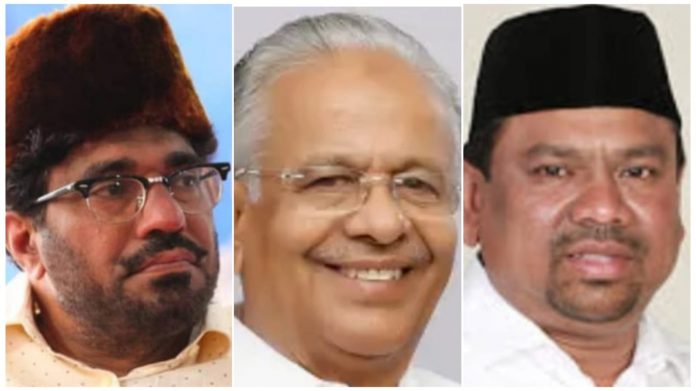
While E.T. MOHAMMED BASHEER won from Malapuram and DR. M.P ABDUSSAMAD SAMADANI Ponnani from Kerala, NAVASKANI K got elected from Ramanathapuram in Tamil Nadu.
IUML backed, Congress led UDF also secured 18 seats out of 20 in Kerala, while DMK-IUML- Congress Allaince swept TamilNadu Loksabha securing all 39 seats of the state.
Congratulations on the stellar electoral performance with record vote margins. May the elected parliamentarians stand steadfast in the fight against minority infringements and protection of human rights.
source: http://www.muslimmirror.com / Muslim Mirror / Home> Election 2024> Indian Muslims> Politics / by Muslim Mirror Staff / June 05th, 2024
Kalpakancheri (Malappuram District), KERALA / Dubai, U.A.E:
Indian recalls journey from being a fundraiser to rebuild a mosque to emerging a tycoon.
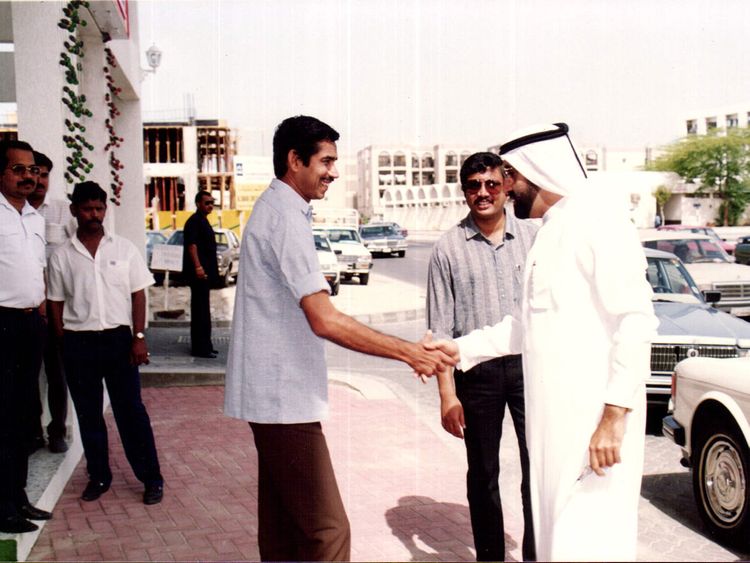
A young Azad Moopen at the inauguration of one of his clinics / Image Credit: Supplied
HIGHLIGHTS
Dr Azad Moopen came to the UAE in February 1987 to raise money for the renovation of a mosque in his hometown, Kalpakancheri in Malappuram district, Kerala.
Dr Moopen leased a two-bedroom apartment in Bur Dubai to start a clinic
In 2008, Dr Moopen invited a private equity firm to invest in the company and they valued Aster DM Healthcare at $100 million.
In 2010 and 2011, Dr Moopen was awarded the Pravasi Bharatiya Samman and Padma Shri, respectively, by the Government of India.
Aster DM is listed at NSE and BSE
Dubai:
Azad Moopen came to Dubai 34 years ago to raise money for the renovation of a mosque in his hometown, Kalpakancheri, in the Malappuram district, Kerala. He needed Rs1 million then, or Dh250,000 as per the currency exchange rate in 1987. The plan was just to collect the funds and return home. He had no intention to settle in the UAE.
Destiny, however, had other plans for Moopen – a gold medallist in general medicine and a lecturer at the Calicut Medical College at the time. Looking back, Moopen said it was this noble intention that perhaps set the background for something big to happen in his life.
Fast forward to today, he is now a household name in the UAE. Just about everybody in the region knows him well as the multi-billion dollar businessman and developer of health-care facilities in the UAE and Asia-Pacific region. He is the chairman and managing director of Aster DM Healthcare, a conglomerate in the Middle East and India that Moopen founded in December 1987, just ten months after arriving in the UAE to raise funds for a mosque.
According to a report published in September 2018, he owned and managed 21 hospitals, 113 clinics and 216 pharmacies. The health-care company serves 50,000 patients a day in nine countries. In 2018, Aster treated 17 million patients across all its facilities. Of this these, 15 million patients were from the Gulf Cooperation Council (GCC) countries, while two million were from India.
In 2017, Forbes ranked him sixth on the ‘Top 100 Indian Leaders in UAE’ list and his total wealth was estimated at approximately $5.9 billion (Dh21.7 billion).
How it all started
“When I finished collecting money for the mosque reconstruction, my job was over in the UAE. It was time to return home, but when I went home, I was not happy. There was something pulling me back to this country as there was magic here,” said Moopen. “In June (1987), I came back on a visit to the UAE. I stayed with a friend in Ajman who was a doctor as well. There were plenty of opportunities for a doctor like me and I was raring to tap into some of them.”
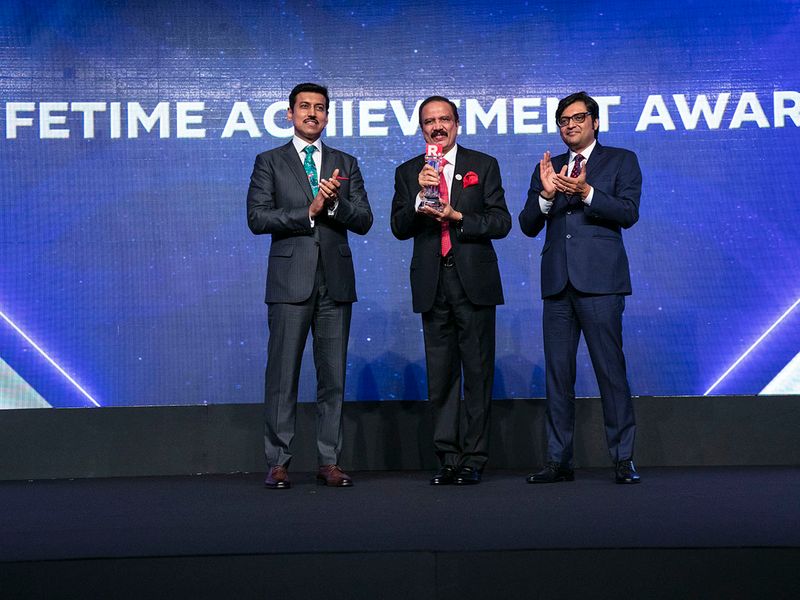
Azad Moopen receives a Lifetime Achievement Award / Image Credit: Supplied
Moopen’s friend was setting up a clinic in Ajman and he invited him to join there as a physician. Back in the day, there were no post-graduate doctors practising in Ajman and Moopen, who was a Bachelor of Medicine and Surgery (MBBS) and a Doctor of Medicine, with a a Diploma in treating Tuberculosis and Chest Diseases (DTCD), was already highly qualified. In fact, his varied degrees made him quite a sought-after doctor in Ajman.
“But my friend bowled me a googlie, as we say in cricketing terms! He turned around one day and told me to start a clinic in Dubai. To be honest, I thought he did not like me and that’s why he was pushing me away to Dubai. But I took his advice and today, I believe he is my guardian angel. That moment, when I heeded his advise and came to Dubai, it was the turning point in my life. I know now he was a friend, he was a God-sent and he is ‘the person’ in my life.”
No matter how successful you become in life, you never forget the people who helped you along the way. And this, to me, has been the biggest reason for my success.
– Azad Moopen
In December 1987, Moopen leased a two-bedroom apartment in Bur Dubai close to the Port Rashid area. “Port Rashid was one of the main areas in Dubai where there were many ongoing activities. A lot of people worked here and I wanted to serve them.”
He said the consultation charges were between Dh10 and 15. Some people got reimbursement from their companies while others paid the bills from their pocket.
“The challenge, however, was collecting money from some blue collared workers who could not afford to pay even this amount. So every Tuesday we started offering free consultations for half a day. We also kept sample medicines which we gave to these workers.”
Within a year, the clinic started receiving 100 patients a day. There were just two doctors – Moopen and a gynaecologist.
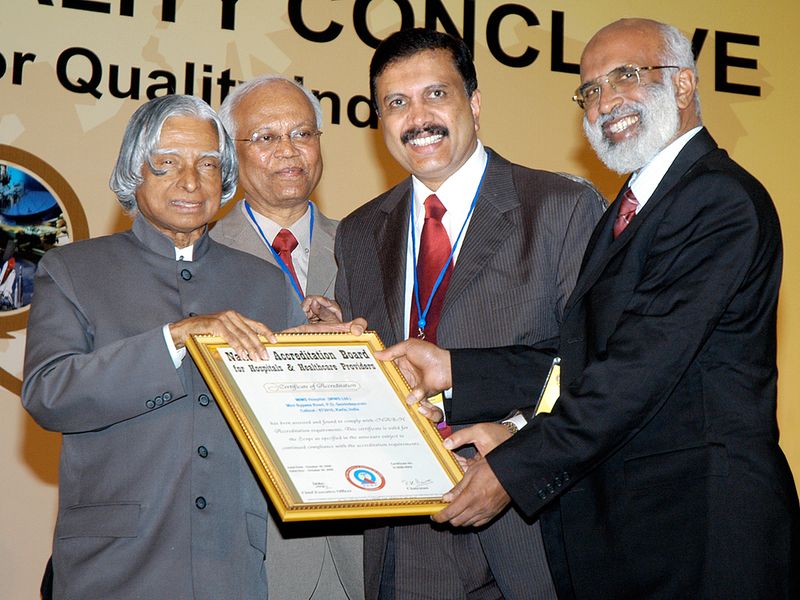
Dr. Azad Moopen receiving an award from late Indian President APJ Kalam / Image Credit: Supplied
“I myself worked from 8 in the morning until mid-night. But it was becoming very congested and we needed to move to a bigger place,” he said. “I found a three-bedroom apartment in Al Rafa and we moved there. We hired two more doctors – both paediatricians. We were able to see more patients as a result.”
By that time in 1988, Moopen was getting a hang of running a health-care facility. “One of the things we discovered early on was that people came to us for consultation, but were picking up medicines from another pharmacy. So, we thought why not make this in-house? And that is how Al Rafa Pharmacy was born.”
Moopen said that in 2008, he had his real brush with success. “Until then, I was just doing my job of opening clinics, hospitals and pharmacies. I was not really counting or sitting down to see and evaluate the success of my business. In 2008, as part of our expansion plans, we invited a private equity firm to invest with us. They valued our company at $100 million and that reality hit me. We had grown and how! It was an emotional moment for me, reading the valuation report and made me think of how hard the company staff and me had worked to bring it that far,” he said.
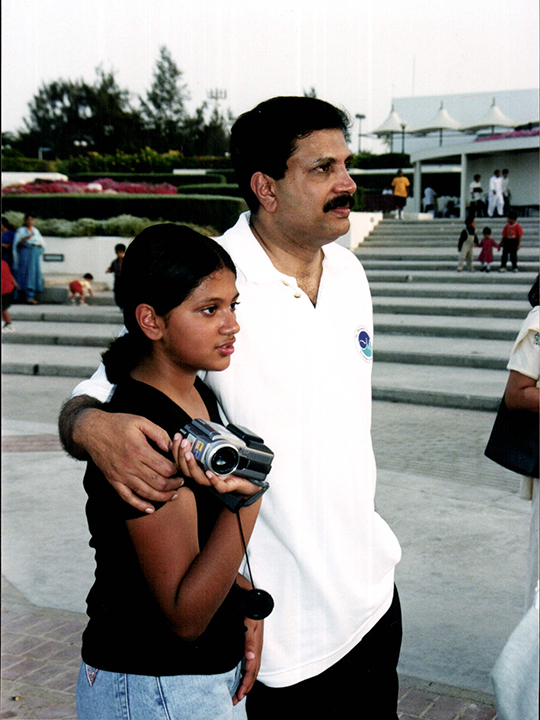
Dr. Azad Moopen with his youngest daughter Zeba Moopen who is now a practicing doctor / Image Credit: Supplied
In 2012, a second private equity firm came on board and they valued Aster DM Healthcare at $400 million. “This means we had grown four times in four years. It was massive.”
Today, Aster DM is listed at the National Stock Exchange of India (NSE) and the company’s total revenue in 2019 was fixed at a massive $1.4 billion.
Reason behind this phenomenal success
“Without batting an eyelid I will say that it is my staff, my people, my doctors who have made this company successful. I am blessed and lucky to have these people working for me for decades. Our doctor turnover at the consultant level is as low as five per cent. This means our doctors practically never leave us. And, because of this, our patients never leave us.
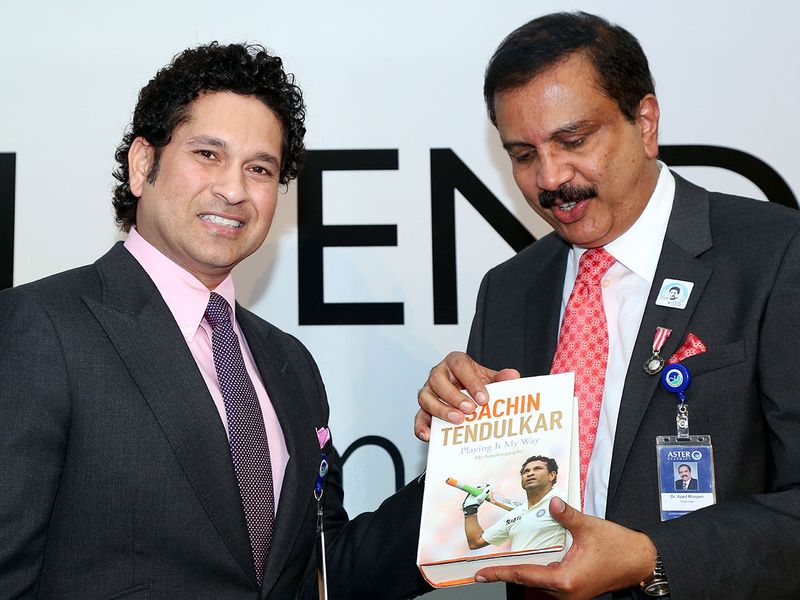
Azad Moopen with cricketer Sachin Tendulkar during the latter’s book launch. / Image Credit: Supplied
“No matter how successful you become in life, you never forget the people who helped you along the way. And this, to me, has been the biggest reason for my success. To give you an example, the other day, one of my CEOs brought me a staff member’s performance report. He wanted me to fire him as he was not performing well. When I saw the report I realised he was an old friend’s son. This friend, I remember, had loaned me Dh500 when I had come to the UAE for the first time.”
“As the memories flooded me, I simply refused to sign the sack letter. Instead, I called this young boy and his father and told them about the report. From my part, I have given this boy a second chance. I pray he will make use of the opportunity given to him.”
Challenges
Dr. Moopen during one of his philanthropic activities / Image Credit: Supplied
“There are always challenges in business. If you want your career graph to have a smooth ride, then you must not pick business as your profession. Success in business lies in finding your challenges and meeting them head-on,” said Moopen.
“For example, the UAE’s mandatory insurance has proved to be beneficial for the consumer, but for health-care providers like us, it is a challenge. People would come to us because of our credibility. Now, it has to do with the kind of insurance coverage they have.”
Philanthropy the way to life
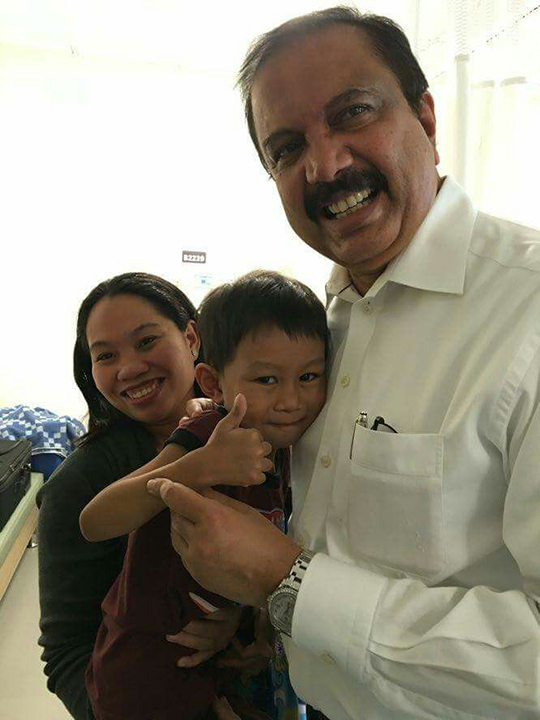
Moopen has pledged to give 20 per cent of his wealth to charity. An off-shoot of this has been the ‘Aster Volunteers’ programme to help patients with free consultations, treatment and surgeries. More than 900,000 lives have been touched by the programme.
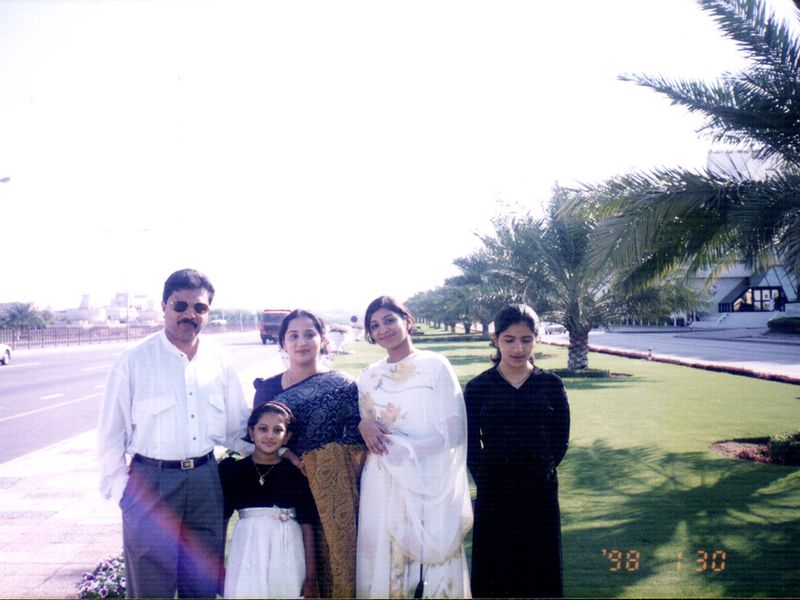
Dr. Moopen with his family in an earlier picture / Image Credit: Supplied
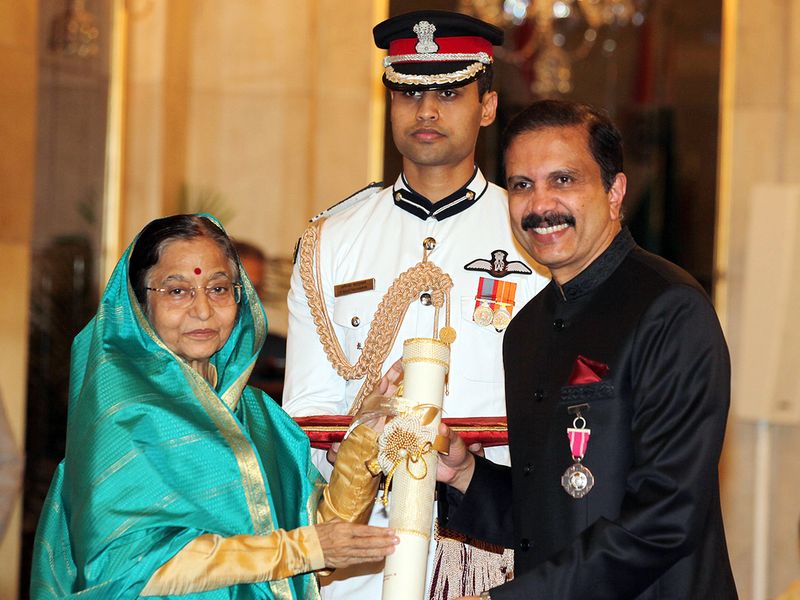
In 2010 and 2011, Moopen was awarded the Pravasi Bharatiya Samman and Padma Shri, respectively, by the Government of India.
Dr. Azad Moopen awarded the coveted Padma Shri in 2011 / Image Credit: Supplied
“By God’s grace, I have everything in life. Name, fame, wealth, a great family. It is my duty and responsibility now to help others. When I started out, I was in the right place at the right time with the right people. I want others to be in my shoes. I am nearing retirement and my only dream now is to hand over my business to my team of professionals who, I believe, will do a better job than me.”