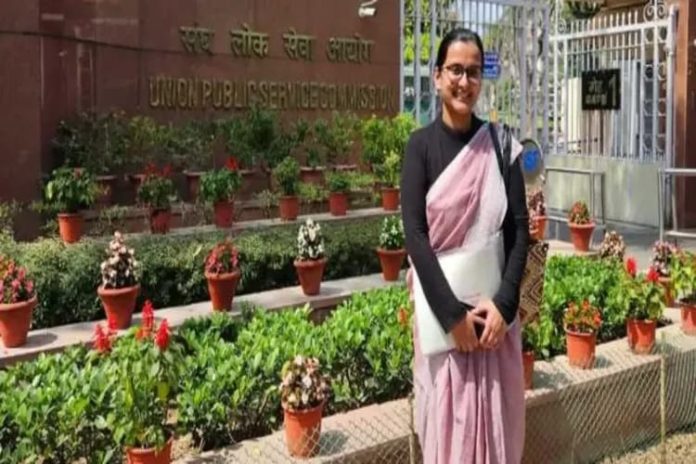
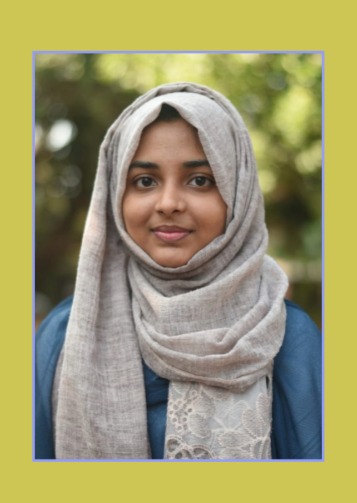
The name of Abeer Asad, daughter of Maulana Muhammad Asad Al-Qasimi Al-Azmi, has featured in the supplementary list of candidates for the 2023 exam released by the Union Public Service Commission (UPSC). Abeer cleared the challenging exam independently, relying on her self-study and determination, making her accomplishment a story of hard work, resilience, and vision, reports the Times of India.
Abeer’s journey to the Civil Services highlights her dedication to serving the nation. Her success came without formal coaching, showcasing the impact of her year-long self-directed study, combined with an unwavering commitment to her goal. From her school days, Abeer was a diligent student, achieving 92.8% in her 10th exams and 97.5% in her 12th, and later graduating with distinction in Economics from Hansraj College, Delhi.
Abeer’s preferred career path includes joining the Indian Administrative Service (IAS) as her top choice, followed by the Indian Revenue Service (IRS) and the Indian Railway Management Service (IRMS). Her position in the supplementary list ranks her at 35th, where she is joined by another successful Muslim candidate, Muhammad Nayab Anjam.
Abeer’s family stands as her pillar of strength. Her brother, Muhammad Basil, is a software engineer, while her mother a homemaker. Their lineage traces back to the well-regarded town of Kirthi Jafar in Mayo district, and they are proud of Abeer’s achievement, which she credits to her parents’ encouragement.
In her message to aspiring youth, especially young Muslim women, Abeer encouraged them to believe in their potential and to pursue their ambitions with passion and focus. “If girls are given freedom, encouragement, and equal opportunities, there’s no limit to what they can achieve,” she stated, urging young Muslims to prioritise their education over distractions.
Her father shared his pride in Abeer’s success and emphasised the importance of education within the Muslim community. “Only education can change the fate of a nation,” he remarked, calling on Muslim families to support their children in following their dreams.
source: http://www.radiancenews.com / Radiance News / Home> Latest News> Markers of Excellence / by Radiance News Bureau / November 01st, 2024
AMU Faculty Wins Best Paper Award at International Conference in Oman
Aligarh:
Dr. Lamay Bin Sabir, Assistant Professor, Department of Business Administration, Aligarh Muslim University (AMU), has been awarded the Best Paper Award at the International Conference on Intelligent Systems and Artificial Intelligence Applications (ISAA 2026) held at the University of Nizwa, Oman.
His award-winning paper, titled “Bridging Algorithmic Transparency and Managerial Trust: The Role of Explainable AI in Decision-Making – A Systematic Literature Review,” examines the challenges posed by limited transparency in AI-driven decision-making. The study highlights that AI systems are often perceived as “black boxes,” which affects managerial trust and decision effectiveness.
Dean, Faculty of Management Studies and Research, Prof. M. Naved Khan along with Chairperson, Department of Business Administration, Prof. Salma Ahmed congratulated Dr. Lamay on his achievement.
source: http://www.radiancenews.com / Radiance News / Home> Awards> Latest News> Science & Technology / by Radiance News Bureau / April 08th, 2026
29 passengers including 27 pilgrims were rescued from a bus at flooded Kolyak village, in Bhavnagar. Photo Credit: PTI via Vartha Bharati
Bhavnagar, Gujarat:
In a remarkable display of community spirit and collaboration, 29 pilgrims from Tamil Nadu were rescued from a stranded bus on a flooded causeway here after an overnight operation that lasted over eight hours. The pilgrims were on their way to Somnath after visiting the Nishkalank Mahadev temple when their bus became trapped due to rising water levels, reports the Vartha Bharati.
The successful rescue operation was a coordinated effort between local Muslims and the National Disaster Response Force (NDRF). Rescuers first reached the bus using a mini-truck, breaking the rear window to assist the 27 pilgrims onboard. However, the mini-truck also became stranded during the rescue. In response, a larger truck was arranged, enabling the safe transfer of all 29 individuals, including the rescuers, to safety.
Despite the significant involvement of local Muslims in this rescue effort, mainstream media coverage has largely overlooked their contributions. Mohammed Zubair, co-founder of Alt News and a prominent fact-checker, highlighted this disparity on social media, noting that while mainstream outlets focus on negative narratives, positive stories of unity and assistance often remain unreported.
The collective effort of the community and NDRF underscores the importance of solidarity in times of crisis, showcasing the power of cooperation in overcoming challenges faced by those in need.
source: http://www.radiancenews.com / Radiance News / Home> Focus> Social Service / by Radiance News Bureau / September 28th, 2024
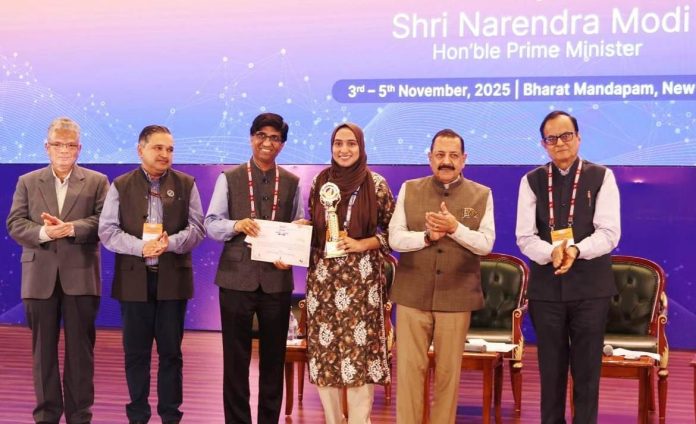
Adiba, a research scholar from the Department of Physics, AMU, receiving the Best Poster Award at the Emerging Science, Technology and Innovation Conclave (ESTIC) 2025
Aligarh:
Adiba, a research scholar from the Department of Physics, Aligarh Muslim University (AMU), has brought laurels to the University by winning the Best Poster Award at the Emerging Science, Technology and Innovation Conclave (ESTIC) 2025, organised by the Department of Science & Technology (DST), Government of India. The prestigious event was held at Bharat Mandapam, New Delhi.
The conclave, inaugurated by Prime Minister Narendra Modi, was supported by thirteen ministries and departments of the Government of India, showcasing the nation’s growing emphasis on innovation and scientific advancement.
Adiba received the award from Dr. Jitendra Singh, Union Minister of State (Independent Charge) for Science & Technology, and Prof. Abhay Karandikar, Secretary, DST, in the presence of Prof. Ajay Kumar Sood, Principal Scientific Adviser to the Government of India, along with several eminent scientists and leaders of India’s science and technology ecosystem.
Out of over 1,000 entries received from across the country, 100 were shortlisted for presentation at the conclave. From these, only five participants were selected for the top honours.
Adiba’s award-winning poster, titled “Bipolar Resistive Switching in Forming-Free, Flexible, and Transparent ReRAM Devices”, showcased her pioneering research on resistive switching mechanisms for neuromorphic and in-memory computing applications – a key area in next-generation electronic devices.
Expressing her gratitude, Adiba said, “It’s an honour to be recognised for my research on such a prestigious platform graced by leading scientists. I am deeply thankful to my supervisor, Prof. Tufail Ahmad, for his constant guidance and support.”
The achievement marks another proud moment for AMU, underscoring the university’s strong contribution to cutting-edge scientific research and innovation.
source: http://www.radiancenews.com / Radiance News / Home> Pride of the Nation> Awards>Latest News / by Radiance News Bureau / November 11th, 2025
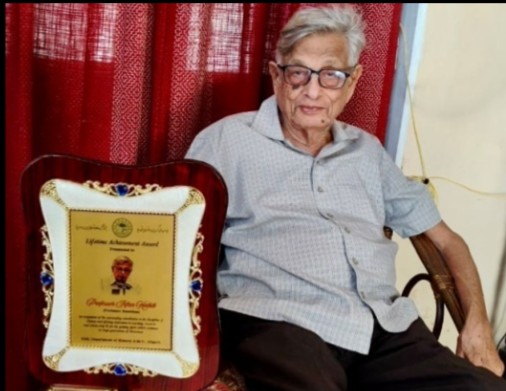
The Centre of Advanced Study, Department of History at Aligarh Muslim University (AMU), conferred a Lifetime Achievement Award on renowned historian and Emeritus Professor Irfan Habib, recognising his exemplary scholarship, mentorship, and decades of dedicated service to the discipline of history and the University.
The award was presented during a special farewell ceremony organised to honour retired faculty members and non-teaching staff whose formal farewells had been pending for years. The initiative, led by Professor Hassan Imam, Chairman and Coordinator of the Department, marked a significant moment of acknowledgment and collective appreciation.
Across various sessions, the Department paid tribute to several retired professors, including Prof Tariq Ahmed, Prof Roohi Abida Ahmed, Prof Gulfishan Khan, Prof Mohammad Afzal Khan, and Prof Ali Athar, along with 25 non-teaching staff members.
On October 11, 2025, a dedicated ceremony celebrated distinguished historians such as Prof S.P. Verma, Prof Pushpa Prasad, Prof Shireen Moosvi, Prof S. Jabir Raza, Prof S.L.H. Moini, Prof Ishtiaq Ahmad Zilli, Prof K.A.S.M. Ishrat Alam, among others, acknowledging their remarkable academic contributions and institutional service.
Dr Lubna Irfan conducted the programme, while Dr Sana Aziz delivered the vote of thanks, appreciating the collaborative efforts that made the series of farewell events a success.
source: http://www.radiancenews.com / Radiance News / Home> Pride of the Nation> Awards> Latest News / by Radiance News Bureau / October 16th, 2025
Syeda Reha Khadri has been awarded a gold medal for scoring 8.65 CGPA in MSc Chemistry. She is a student of Dr. G Shankar Government Women’s First Grade College and Post Graduate Study Centre, Udupi. Reha scored high ranks in the post-graduate exams conducted by Mangalore University for the academic year 2022-23.
“I put in my efforts, and Allah gave me the result,” Reha expressed gratefully, emphasizing the importance of dedication, focus, hard work, and prayer.
She conveyed a powerful message to the upcoming generation: “Whatever you do, put in a lot of dedication and effort. It’s not just about the result but about being satisfied with the amount of effort you put into any activity. Be righteous, truthful, and honest and grab every opportunity, despite any hindrances, and excel in it.”
Reha Khadri shared her study routine and the factors contributing to her success. “I always made sure to keep up with my classes and prepare my notes,” she explained. “I would wake up early in the morning to prepare, be attentive in class, and understand every topic thoroughly before attending. Reading a lot of books and the support from my college in providing resources were key. My teachers and parents have always been supportive and ready to help.”
Reha credited the eco-friendly and supportive environment of her college for fostering her academic growth and encouraging her participation in various competitions. Her motivation stemmed from a desire to excel and create good opportunities for her future, especially in her Ph.D. studies at MIT Manipal, where she is focusing on renewable energy under the guidance of Dr. Murti Dharma Pura.
source: http://www.radiancenews.com / Radiance News / Home> Education> Focus> Markers of Excellence / by Mohammed Atherulla Shariff / June 15th, 2024
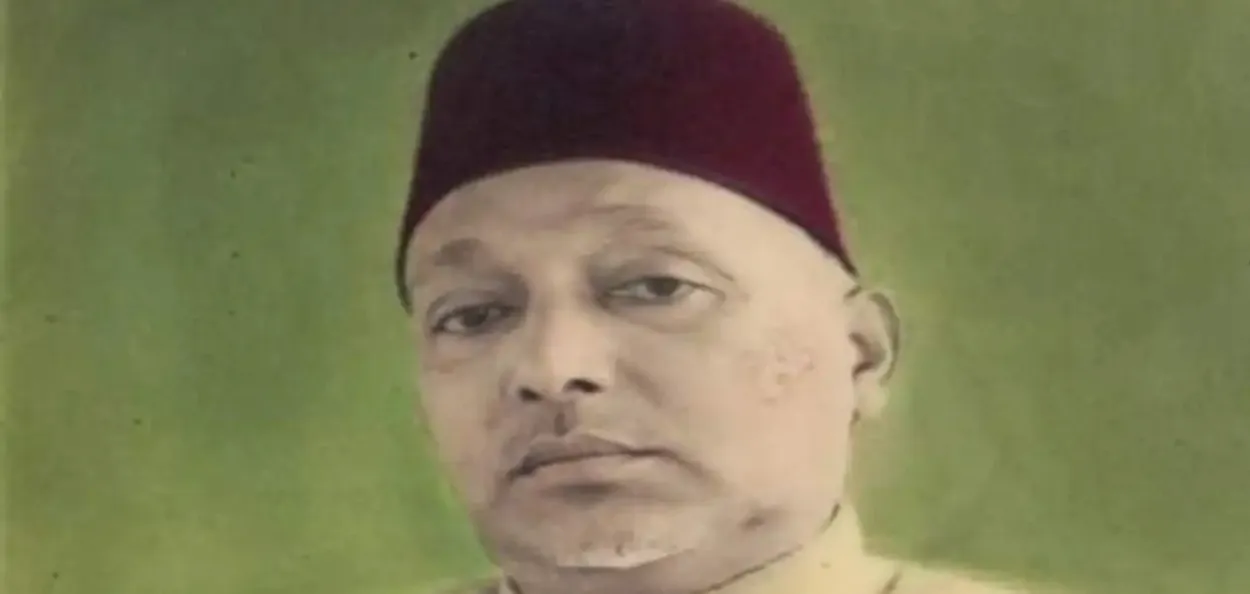
Sir Syed Muhammad Saadullah is one among the Indian Muslim leaders who made an immense contribution to shaping Independent India and yet remained unsung. He was the only Muslim among the members of the Drafting Committee for the Constitution of India, led by Dr. Babasahib Bhimrao Ambedkar.
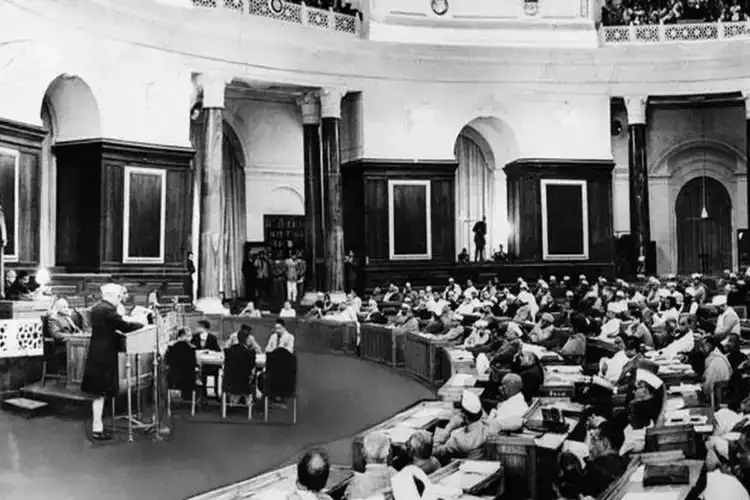
Before shedding light on Saadullah’s role in the Constitution Drafting Committee, let us know about the Assembly that drafted the Constitution of India.
On December 9, 1946, the Constituent Assembly was formed. Its meeting was boycotted by the Muslim League. Soon after, on December 11, Dr. Rajendra Prasad was elected as its chairman. It had 389 members which were reduced to 299 after the partition.
On January 22. 1947 it adopted the Objectives Resolution unanimously. In the same year, the national flag was adopted on July 22, and Independence was achieved on August 15, 1947, with the partition of the country.
On 29 August 1947, a drafting committee was appointed with Dr. BR Ambedkar as its chairman. Other members of the committee were KM Munshi, Muhammad Saadullah, Aladi Krishna Swami Iyer, Gopala Swami Iyengar, N Madhav Rao, DP Khetan, and TT Krishnamachari.
On 22nd November 1949, the ‘Constitution of India’ was passed in the assembly and the last session of the Constituent Assembly was held on 24th January 1950. On 26th January 1950, the ‘Constitution of India’ came into effect after 2 years, 11 months, and 18 days.
The Constituent Assembly in session
Who was Sir Syed Muhammad Saadullah?
Sir Syed Muhammad Saadullah was a member of the draft committee but even before that, he was a well-known leader of India. He was the Prime Minister of Assam in British India. He was also Chairman of Guwahati Municipality and Minister of Education and Agriculture of Assam from 1924 to 1934. Saadullah was a highly educated jurist.
Syed Muhammad Saadullah was born on 21 May 1885 in Guwahati into a traditional Assamese Muslim family and died in 1955. He was educated at Cotton College, Guwahati, and Presidency College, Calcutta. After receiving higher education, he started practicing law in Guwahati and soon made his mark as a lawyer. He also practiced in the Calcutta High Court for some time. He became the Chairman of the Guwahati Municipality and was nominated as a member of the Legislative Council in Shillong.
Assam became a Chief Commissioner Province in April 1912. Saadullah participated enthusiastically in the Council’s deliberations and spoke freely on matters of interest to the people of Assam.
He soon became an important figure in the province of Assam. He established his identity as a lawyer after just a decade of struggle. In later days, he also practiced in the Calcutta High Court. Among his neighbours and contemporaries, were Fazlul Haque, Nawab Attaur Rahman, and Barrister. Khuda Bakhsh and Nawabzada AFM Abdul Ali.
He was also important in British India. He was knighted in the 1928 Birthday Honors and made a Knight Commander of the Order of the Indian Empire in the 1946 Birthday Honours.
In his political life, Syed Muhammad Saadullah was closely associated with the All-India Muslim League. He attended the 10th session of the League in Calcutta in December 1917 and served as a member of the committee that negotiated the Lucknow Pact between the Muslim League and the Congress.
In 1946, he participated in the demand for Pakistan and supported the inclusion of Assam in Pakistan. However, when Assam seceded from Pakistan at the time of partition, he remained in Assam. Similarly, as the Prime Minister of Assam, he contributed to the building of a modern Assam.
He was an able parliamentarian, an eloquent orator, an experienced administrator, and a moderate and liberal leader in ideology. Saadullah is regarded as one of the architects of modern Assam. As the head of the Assam government, he planned well and developed development plans. He took a special interest in the promotion of industries. He is said to have supported and encouraged the migration of peasants from Bengal to develop agriculture in Assam and to introduce jute cultivation. His critics accuse him of deliberately settling Bengali Muslims in Assam.
Muhammad Saadullah is also known for his generosity, honesty, and competence. He also worked for the tribal people of the North Eastern region and inducted a tribal leader JJM Nicholas Roy in his first cabinet. He was considered the best person because of his experience, ability, and honesty.
source: http://www.awazthevoice.in / Awaz, The Voice / Home> Success Stories / by Ghaus Siwan, New Delhi / January 25th, 2023
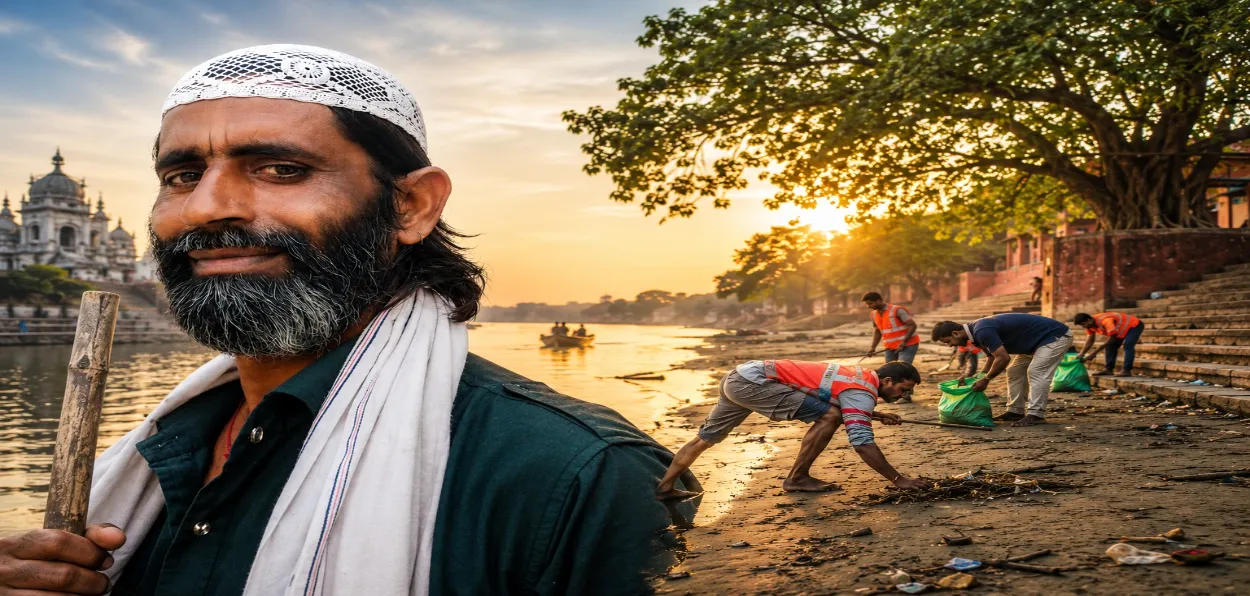
AI-generated image of Lal Mohammad Badshah and his volunteers
Every Sunday morning, a group of volunteers gathers on the banks of the Ganga in Bithoor, near Kanpur in Uttar Pradesh. Armed with bags and baskets, they pick up garbage, plastic waste, discarded offerings, and other debris from the river and its ghats.
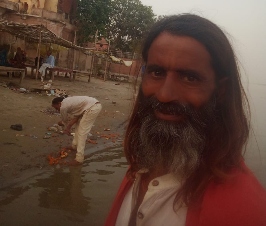
Leading this weekly mission is Lal Mohammad Badshah, a man whose life has become synonymous with the protection of the sacred river. For the past 35 years, he has dedicated himself to keeping the Ganga clean. A Muslim by faith, Badshah gave up a well-paying government job, chose to remain unmarried, and devoted his life to serving the river he reveres as Mother Ganga. A few years ago, he even stopped wearing footwear as a mark of respect for the river.
Known locally as the “Guardian of the Ganga,” Lal Mohammad Badshah has broken religious stereotypes and emerged as a symbol of environmental conservation and communal harmony.
Bithoor occupies a special place in Hindu tradition. According to Sanatan beliefs, it is the birthplace of Luv and Kush, the sons of Lord Ram. It is also believed that Maharshi Valmiki composed the Ramayana here. The shrine of Mata Sita Ki Rasoi (Mother Sita’s Kitchen) continues to attract thousands of pilgrims and tourists from across the country.
The Ganga flows past 52 ghats in Bithoor, drawing a steady stream of devotees who come to take a holy dip in its waters. It is this sacred landscape that has become the centre of Lal Mohammad Badshah’s devotion and life’s work.
Sharing his journey with Awaz-The Voice, Badshah said, “I had a secure and well-paying job at a government fertiliser plant. Life was comfortable. But my attachment and reverence for Maa Ganga grew so strong that I decided to leave everything behind and dedicate my life to her service.”
After resigning from his job, he committed himself fully to the cleanliness and protection of the river.
To carry forward his mission, Badshah formed the Ganga Suraksha Dal (Ganga Protection Squad), a group of eight to ten local volunteers. Every Sunday, members of the squad gather at the ghats and undertake extensive cleanliness drives.
As news of their efforts spread, people from neighbouring districts, including Unnao, began joining the campaign. What started as a small initiative has gradually evolved into a community movement.
The group’s work extends beyond cleaning the river and its banks. Members also keep a vigil against poachers and work to protect fish and other aquatic life in the Ganga.
Despite the growing support, Lal Mohammad Badshah has never accepted donations for his mission.
A practising Muslim who is often seen wearing a skullcap, Badshah earns his livelihood by operating a small tourist boat on the Ganga. After leaving his government job, he turned to ferrying pilgrims and visitors along the river.
His boat, furnished with mattresses and cushions, offers tourists a comfortable ride while introducing them to the spiritual and historical significance of Bithoor. The modest income from these rides sustains both his personal needs and his environmental campaign.
Visitors are often surprised to hear him greet people with “Ganga Maiya Ki Jai” (Hail Mother Ganga).
When asked how fellow Muslims reacted to his devotion to the river, Badshah replied, “Faith and devotion are matters of personal conviction. I have a spiritual connection with the Ganga.”
He recalls that in the beginning, some people from his community mocked him and questioned his actions. However, as they witnessed his sincerity, selflessness, and dedication, attitudes began to change.
“Today,” he says, “people respect the work we are doing. Service to humanity and nature is above all divisions.”
Over the years, Badshah’s story has gained widespread attention on social media, where thousands of people have praised his commitment and spirit of service.
Among the many tributes, social media user F.S. Parmar described him as a “King of Kings.” Manoj Kumar wrote that while water cleanses the body, truth purifies the mind, knowledge refines the intellect, and righteousness elevates the soul.
Ashish Sharma commented that true strength lies in devotion and service, while Rajendra Chauhan described Badshah as a “Badshah” (King) not only in name but also in character.
Another user, Rajat, offered a heartfelt prayer: “May Allah grant you a long life, and may Mother Ganga always keep you safe in her embrace.”
Pankaj Thapliyal observed that the Ganga is not merely a religious symbol but a life-giving river for all humanity. Sunita Kumari compared Lal Mohammad Badshah to historical figures such as Raskhan and Rahim—Muslim poets who became celebrated devotees of Lord Krishna.
Today, the historic Rani Lakshmi Bai Ghat in Bithoor has become the Badshah’s permanent base. He spends most of his day there, overseeing cleanliness efforts, meeting visitors, and sharing his message of environmental stewardship and communal harmony.
For many who visit Bithoor, Lal Mohammad Badshah is no longer just a boatman or a volunteer. He has become a living example of how devotion, service, and love for nature can transcend religious boundaries and bring communities together.
source: http://www.awazthevoice.in / Awaz, The Voice / Home> Stories / by Malick Asghar Hashmi, New Delhi / June 10th, 2026
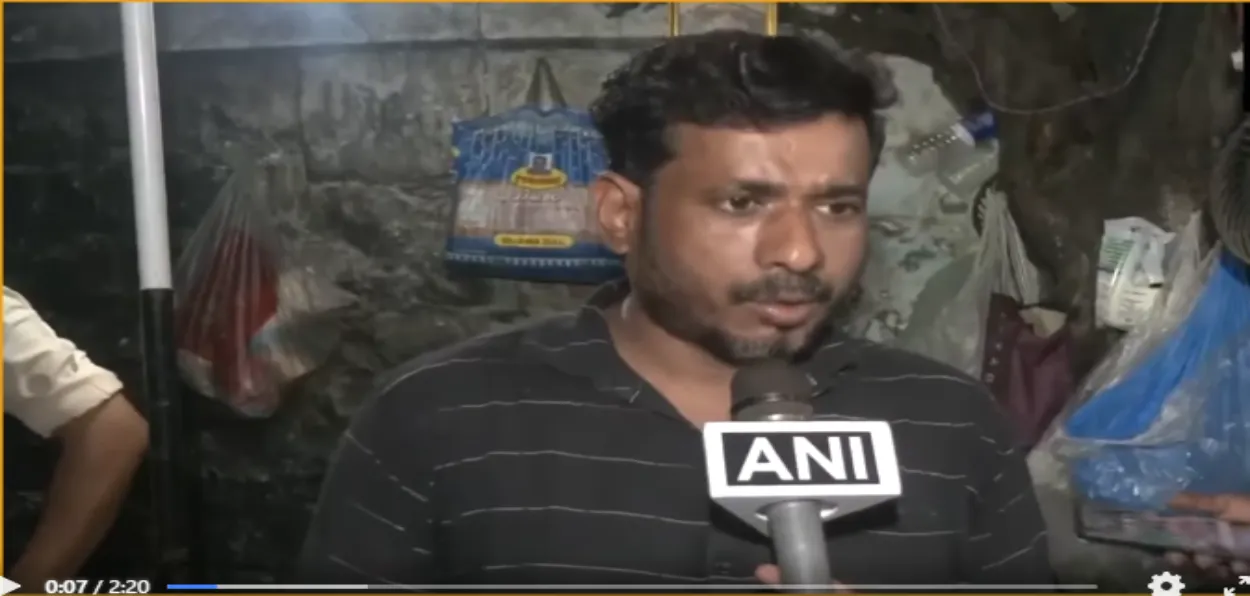
Mohammad Toufiq (Picture grabbed from ANI’s video posted on X)
When Pakistani terrorists targeted Nariman House, Cama Hospital, Taj Hotel, Oberoi Hotel, Chhatrapati Shivaji Terminus, and Leopold Cafe on 11 November, 20 16 years ago, killing 166 people, Mohammad Taufiq Sheikh was one of the lucky persons to have narrowly missed the terrorists’ bullet.
Now famous as Chotu Chaiwala, as he continues to sell tea in front of St. George Hospital, he gets into a pensive mood at the mention of Tahawwur Rana, one of the key planners of the attack who has been extradited to India from the US to face trial.
Toufiq saved many lives as he was present at the Railway station on that fateful day.
Recently, on knowing that Tahawvur Rana was brought to India after 16 years, he said, “He should not be given any relief; instead, hang him.”
Taufiq Mohammad, an eyewitness to the 26/11 attack, looked upset. He said, “The government should not him any facility as he is the main culprit of 26/11. He is not a hero; he is a beast. In the attack, someone’s mother, sister, brother, or father was killed. He should not be shown mercy and should be lodged in a separate cell, the government should take strict action against him. The government should hang this terrorist within 15 days.”
Taufiq said, “The government should make a separate law to take action against terrorists. Pakistan still gives shelter to terrorists as a result the common people also suffer. Punish Rana so severely that the rest of the terrorists start trembling with fear.”
A terrorist has no caste or religion. He should only be called a terrorist, Taufiq says.
“Rana and I have the same religion. Rana, in the name of religion, helped those people who fired bullets at innocent people. Islam does not teach to kill anyone. Islam gives the message of peace and love. Shedding blood in the name of religion is not the teaching of religion. We are proud to be Indian Muslims. Every terrorist should get severe punishment.”
Pakistani terrorists were killing people mercilessly. The entire station was silent. People were saving their lives. No one was there to help them. Talking about that time, Taufiq says, “Seeing the guns with them, I first thought they were commandos. But they were killing people mercilessly. They were not humans, they were monsters. One of them (Kasab) was coming towards me. He abused me. I thought I would be killed too.”
He further says, “The glass of doors and windows were broken due to the firing. The entire station was filled with blood. People were struggling to save their lives. Many people were injured. I wanted to save the injured people. I put the injured people on a cart and took them to St. George Hospital and Byculla Railway Hospital. In this way, many people’s lives were saved.”
This incident was terrifying, but Taufiq handled the situation with courage. Keeping humanity at the top, he saved people’s lives without looking at caste or religion. For this, he was given 27 rewards and some financial help.
Taufiq says, “On the night of 26/11, I went to the railway station to collect money for tea. There were more than 4000 people there. There was a rush to buy tickets, so the ticket master asked me to collect the money after a while. I stood outside the station. I still remember, that day a cricket match between India and England was going on. After a while, suddenly I heard a loud firecracker-like sound from inside the station.”Toufiq continues to sell chai at the same place.
source: http://www.awazthevoice.in / Awaz, The Voice / Home> Success-Story / by Fazal Pathan, Mumbai / April 16th, 2025
Chokapara-Naoda Village (Bilashipara subdivision, Dhubri District), ASSAM :
Moinul Haque at his brick kiln
Moinul Haque of village Bilashipara in Dhubri district of western Assam once lived in appalling poverty and even had to go hungry on many days. Having worked his way to a better life, this man in his late forties is now providing livelihood to 300 families but also ensuring they get basic amenities of life.
Owner of a brick kiln that he set up to address acute poverty in village Takimari, Ranigunj, a Muslim village of Assam
Not only he pays wages to his workers, but he also provides them with the basic facilities of education and health, and he also ensures drinking water, healthcare, and education for the children of brick kiln workers.
In a conversation with Awaz -The Voice, the soft-spoken Moinul Haque alias Baltuk said that as a child he had to work hard to survive.
Brick Kiln owned by Moinul Haque
He was born in Chokapara-Naoda, a backward village in the Lakshiganj area of the Bilashipara subdivision. His father, Sabed Ali, a fish trader, and his mother, Manuwara Bibi, a domestic help, had many dreams for their children yet no means to fulfill them.
Moinul’s parents enrolled him in a nearby government primary school even as the sustenance of a family comprising two sons and four daughters was getting difficult for Sabed Ali.
As luck would have it, Sabed Ali’s health started falling.
“It was difficult for us to support a family of eight and take care of my father. As a result, sometimes we had to go to sleep hungry. One day, I finally dropped out of school due to poverty. I was eight years old.
“I was thinking about how I could support my family. I started baking papad at the street corners and selling them. After making some money, I started selling betel nuts (Tamol) along with papad on a table perched on the roadside,” he said.
Within 3-4 years, he expanded his small shop into a grocery store.
Moinul was just beginning to flourish in his trade when his father, Sabed Ali became paralyzed. Now he got worried about the fate of his family.
However, Moinul kept his focus on business and started trading fish.
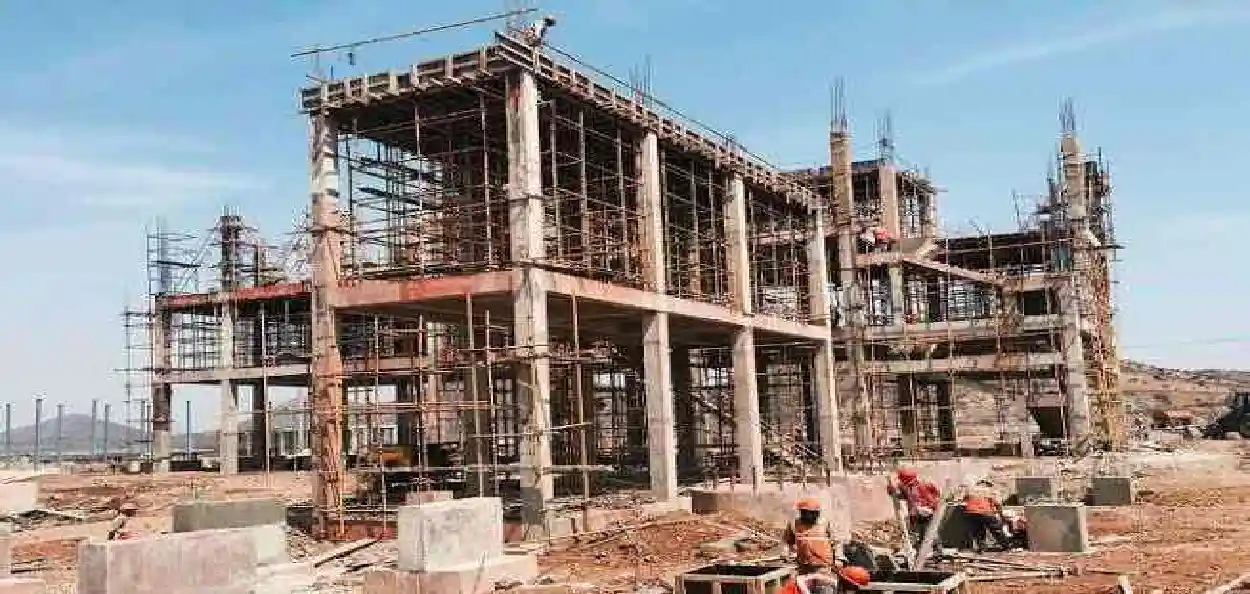
An under-construction building in which Moinul Haque is involved in
He bought fish from Hatipota, Tilapara, Shalkocha, and other areas riding an old bicycle in the wee hours of the day. He sold it in Bilashipara and Beltali markets.
He did well and after some time, he expanded trading to sand, stone chips, and timber.
At the age of 20, Moinul got married.
He managed to marry all his sisters within five years. He also worked as an associate of various construction contractors. However, his hunger for success did not end there.
Alongside his business, he also volunteered to get associated with various social activities. He realized that the people of western Assam, especially the Muslims, were backward in many facets of life.
He set up a brick kiln at His enterprise has provided livelihood to about 300 families in the area. Most of these families are economically backward Muslims.
He also provided these families with basic facilities like healthcare, hygienic drinking water, and education.
source: http://www.awazthevoice.in / Awaz, The Voice / Home> Stories / by Malati Sarmar, Bilashipara / March 21st, 2023