Category Archives: Amazing Feats

Syed Ahmad Khan’s book on Delhi and its ruins would ‘numb’ other writers, said Mirza Ghalib

DELHI :

Asar-us-Sanadid was published in 1847. Yet, Syed Ahmad Khan distresses over the ‘recent’ increase in Delhi’s population.
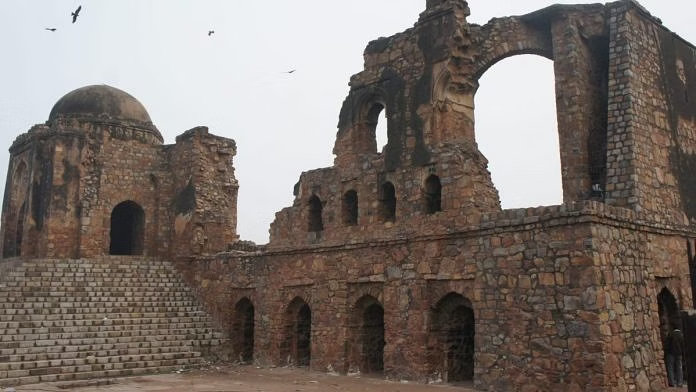
Ruins of Feroz Shah Kotla in Delhi | Commons

Delhi is introduced, interpreted, and celebrated all the time through walks, performances, talks and articles. But not many realise that the person who began telling the stories of Delhi was a young man in his 20s named Syed Ahmad Khan. Two centuries after he was born, his work Asar-us-Sanadid can now enjoy a wider readership because of its translation into English by Rana Safvi in 2018.

Syed Ahmad Khan was not the first writer to describe Delhi, but when he compiled his notes on the ‘remains of the great’ (asar-us-sanadid) into a book, he chose to write not in Farsi but in the accessible Urdu — making him a pioneer. Another first was that it appeared as a book rather than as a manuscript because his brother had just installed a new Urdu printing press in Delhi. Khan’s qualifications to write were not that of a narrow specialist. In those happy days, when education was not one fixed menu, he had studied science, mathematics, Farsi and Urdu. In his 20s, living in his family home in Shahjahanabad (present-day Old Delhi), Khan was a junior official in the East India Company, helping his brother publish an Urdu newspaper, and translating Farsi manuscripts.

Asar-us-Sanadid was published in 1847, and had a quality of eagerness explained by Khan learning the subject as he went along. Khan went to great lengths to transcribe inscriptions (‘He is climbing up with such enthusiasm/That people think he has some work in the sky’ was an affectionate comment about his swinging round the Qutub Minar in an improvised basket-and-poles contraption to read the inscriptions on the higher storeys). The artists’ drawings for the book were based on his own sketches.

There are very few extant copies of the original edition. The better-known second edition, published in 1854, bears the blue pencil marks of the Collector A.A. Roberts, who did a hatchet-job, reducing it by a half, adhering to chronology, giving British scientists a role in the Jantar Mantar project, removing all the poets and artists, and making it an altogether dull book.

Sights, sounds and silences

To Khan, historic architecture was not just patrons, materials, form and function. It was part of a continuous culture, nourished by new infusions. Political history, the overlapping cities and forts, the increasingly sophisticated elements in architecture – these became four-dimensional by reading mosques, dargahs and mazhars as sacred spaces, calm with the presence of mystics and scholars long departed. They were to be experienced in silence, reading the inscriptions, not listening to the patter of a guide. He delineates the complementarity of a vibrant urban culture —music, poetry, dance — and animated bazaars, the tranquil atmosphere of the countryside, fields and hills dotted with ruins. “The charm of the Delhi scene,” as historian Percival Spear would describe it a century later.

In a sentence that sounds startlingly contemporary, Syed Ahmad Khan is distressed by the “recent” increase in the city’s population, making it — and also the bracing hills of Mehrauli — unpleasantly congested. But he insists that “in spite of all these factors, the climate of Delhi is still a thousand times better than that of other cities.” The magnificent Mughal fort (remember that he was writing well before 1857) is described in the second chapter; Shahjahanabad in the third; the artists, poets and musicians in the fourth (the section captioned, charmingly, ‘The nightingale-like sweetly-singing people of Shahjahanabad on the outskirts of Paradise’).

Shining light on Delhi for other historians 

It was a challenging task. Delhi’s landscape was not easy to read in the complete absence of any older accounts or images. There was overlap, modification (particularly in the Qutub Minar area), vandalism (of poet Abdul Rahim Khan-I-Khana’s tomb by the ruler of Awadh). As a teenager, Syed Ahmad Khan was interested in astronomy, so his distress over the neglect of Jantar Mantar is understandable. He would have liked to spend more time studying it: “I will need a separate book to describe the workmanship, use and effectiveness of these instruments.”

Mirza Ghalib, in the ‘Foreword’, describes his friend’s book as one that would “numb the hands of other writers.” Khan’s meticulous account of buildings, even those in ruins, became the template for later books in English. “He who undertakes to write the archaeology of Delhi must constantly seek for light in the pages of Syed Ahmed Khan’s interesting work on that subject,” wrote Carr Stephen in The Archaeology and Monumental Remains of Delhi (1876).

More than 20 years lapsed between Asar-us-Sanadid’s second edition and Stephen’s book. A world separated the two publications. Khan, posted in Bijnor (in present-day Uttar Pradesh), was not caught in the trauma of 1857 (the Great Revolt). Some of the poets he had listed in Asar-us-Sanadid — like Ghalib — sought relief by writing laments to their ravaged city. His own reaction was different. With a sense of grief at seeing an efficient machine derailed, Khan would write Asbab-e-Baghawat-e-Hind (The Causes of the Indian Rebellion) to understand what had gone wrong. His bond with Delhi was severed. He went on to become a distinguished public figure in north India, remembered today for the institution he founded, the Aligarh Muslim University.

Hopefully, reading Asar-us-Sanadid now will return the young Syed Ahmad Khan to us. The past is in many ways a foreign country, and to walk with a guide through towns of the past is an invigorating exercise.

This article is the first of an eight-part series on Reading A City with Saha Sutra on www.sahapedia.org, an open online resource on the arts, cultures and heritage of India. Read the series here.

Dr Narayani Gupta writes on urban history, particularly that of Delhi. Views are personal.

source: http://www.theprint.in / The Print / Home> Opinion> Sahapedia / by Narayani Gupta / December 01st, 2019
Mirza Ismail, the ‘serial Diwan’ who made industrial Bangalore beautiful, painted Jaipur

Bengaluru, KARNATAKA :

Mirza Ismail, who was born to Persian parents, wrought a civic revolution in four Indian cities during the 1940s.

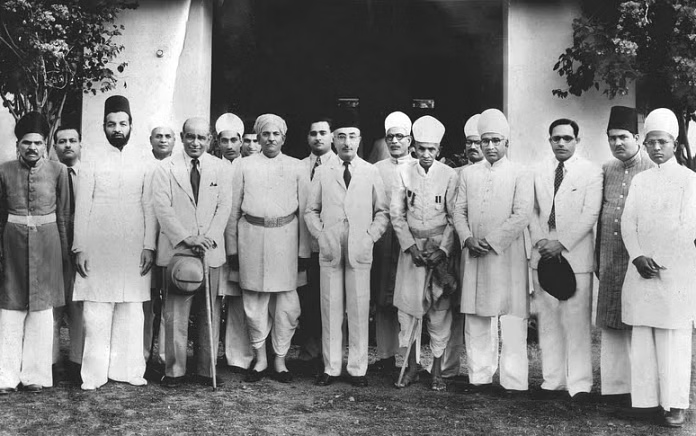
Prime Minister Sir Mirza Ismail (centre) of Hyderabad state, 1948 | Commons


Between 1926 and 1948, Mysore, Bangalore, Hyderabad and Jaipur enjoyed the attention of ‘serial Diwan’ Mirza Ismail. Born in 1883 to Persian parents, Ismail grew up in Bangalore, where he would return in his final years, passing away in 1959.

From the age of 43, Mirza Ismail was appointed as diwan successively by the Maharaja of Mysore (1926–41), the Nizam of Hyderabad (1942–46) and the Maharaja of Jaipur (1946–47). These rulers, like the Mughal badshahs, respected and honoured their engineers and townscapists. Mirza Ismail was to them what Ali Mardan Khan, the brilliant Persian engineer who laid out the plans for the Lahore and Delhi canals, had been to Shah Jahan.

In Jaipur, the ruler commemorated him by naming a road after him, just like architect Edwin Lutyens’ engineers Hugh Keeling and Alexander Rouse had two major roads in New Delhi to their names (later changed to Tolstoy Marg and Deen Dayal Upadhyay Marg, respectively), even though Edwin Lutyens and architect Herbert Baker themselves were apportioned obscure lanes.

There were some princes, in whose states aesthetic values meshed with their eagerness to adopt innovations to improve urban and rural areas. But Mirza Ismail never felt it was enough. In My Public Life: Recollections and Reflections (published in 1954), he wrote: “Administrations in India, with hardly any exception, have taken little or no interest in the improvement of their cities and towns; the villages, of course, need hardly be mentioned. Look at the great open spaces in crowded London – or in Paris. How many cities in India can boast of such parks? The municipalities are apt to spend their income, not on sanitation and the necessary amenities of life, but on educational institutions which it is the duty of the States’ Governments to provide. Public parks and private gardens may not be the most important amenities, but they are necessary to a full and happy life. The beautification of our towns and cities must be a continuous process… Unfortunately, just as nature abhors a vacuum, so do our municipalities abhor open spaces. They are not satisfied until all are built upon…It is to my mind obligatory for the administration to provide for the recreation and enjoyment of the people, especially the poorer classes, and enable them to enjoy themselves without expense. I have tried to do this wherever I could — in Mysore, Jaipur and Hyderabad.”

Making Bangalore beautiful

If M. Visvesvaraya, as Diwan of Mysore (1912–19), made Bangalore (now Bengaluru) an industrial city, then Mirza Ismail made it a beautiful one, with the Lalbagh and the streets lit by chandelier lamp posts. An interesting story about him goes that he did not simply glance around to check if things were in good condition – he would lift the corner of a carpet to see if the floor had been swept. Mysore still proudly flaunts the label of ‘The Garden City of India’.

His brief spell in Jaipur wrought a civic revolution. An article in the New York Times in 1942 remarked that Jaipur had been a picture of neglect, but after two years of Mirza Ismail’s sojourn, it was “more thoroughly transformed and improved than New York after Robert Moses got through with it.’ (Robert Moses, a contemporary of Mirza Ismail, was himself compared to Baron Haussmann, who transformed Paris in the 1860s). “Reconstruction, new parks, new buildings, restorations and improvements of all kinds are now going on at an amazing pace for India. The city swarms with workers as busy as bees,” Ismail wrote in his book.

He continued, “Money is meant to be spent reproductively, not to be hoarded. If I had not constructed the new offices and new bungalows and made many other improvements in Jaipur, it would probably not have been chosen under the new dispensation as the capital of Rajasthan.”

The illustrious photographer Cecil Beaton, after visiting Jaipur, spoke highly of Ismail in his praise for the city: “Nowhere else in the world have I seen such brilliant and robust colours used to produce an effect so refined and subtle. Sir Mirza is the arch-enemy of corrugated iron sheets, brass bands (Indian) and of almost everything else that is crude and vulgar. The money he spends is put into circulation and is used as a means of getting rid of unhygienic conditions and sources of disease. Already the metamorphoses he has achieved in a short time are incredible, but his plans are as countless as his inspirations.”

But Mirza Ismail was too astute a person not to see the writing on the wall. “Governments in the East,” he reflected, “do not enjoy the confidence and respect of the public they serve. Our countries so easily become the paradise of the professional politician.”

This article is the sixth of an eight-part series on ‘Reading A City’ with Saha Sutra on www.sahapedia.org, an open online resource on the arts, cultures and heritage of India. 

Dr Narayani Gupta writes on urban history, particularly that of Delhi. Views are personal.

Read the series here.

source: http://www.theprint.in / The Print / Home> Opinion> Sahapedia / by Narayani Gupta / January 05th, 2024

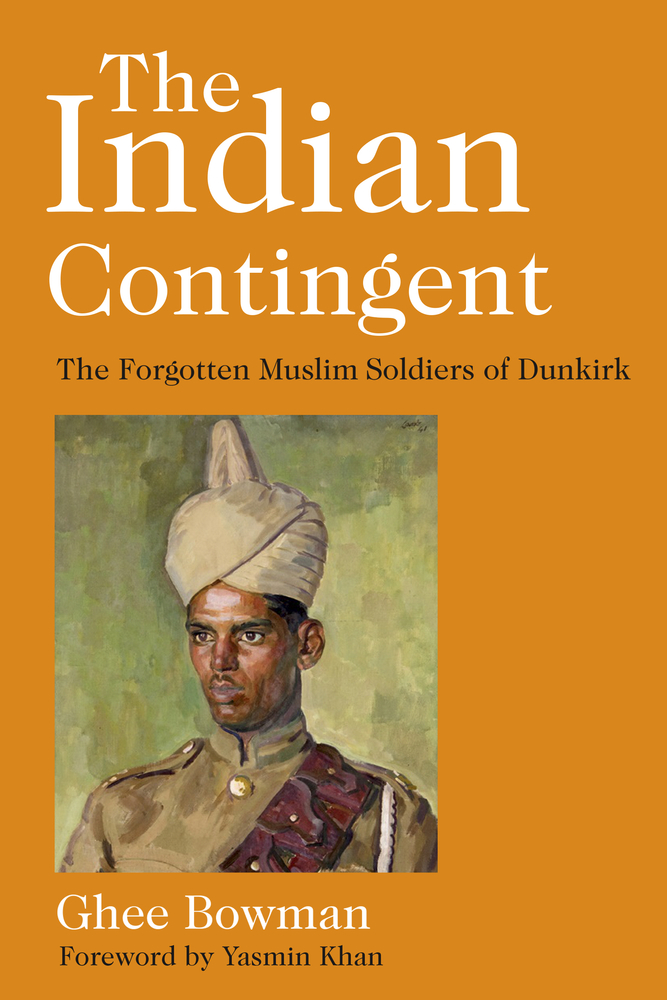
The Indian Contingent: The Forgotten Muslim Soldiers of Dunkirk

INDIA :

May 28, 1940: Major Akbar Khan of the Royal Indian Army Service Corps marches at the head of 299 soldiers along the beach at Dunkirk—the only Indians in the BEF in France and the only ones at Dunkirk.

These men of the Indian Army, carrying their disabled imam, find their way to the East Mole and embark for England in the dead of night. On reaching Dover, they borrowed brass trays and started playing Punjabi folk music, upon which even “many British spectators joined in the dance.”

Where had they come from and why were they in France?

And what happened to them after that?

Ghee Bowman reveals in full, for the first time, the story of these soldiers, from their arrival in France on December 26, 1939 to their return at war’s end to an India on the verge of partition.

It is one of the war’s hidden stories that casts fresh light on Britain and its empire.

source: http;//www.goodreads.com / GoodReads / by Ghee Bowman / 1st published May 21st, 2020

Men of the Horse

Mysuru (Mysore), KARNATAKA :

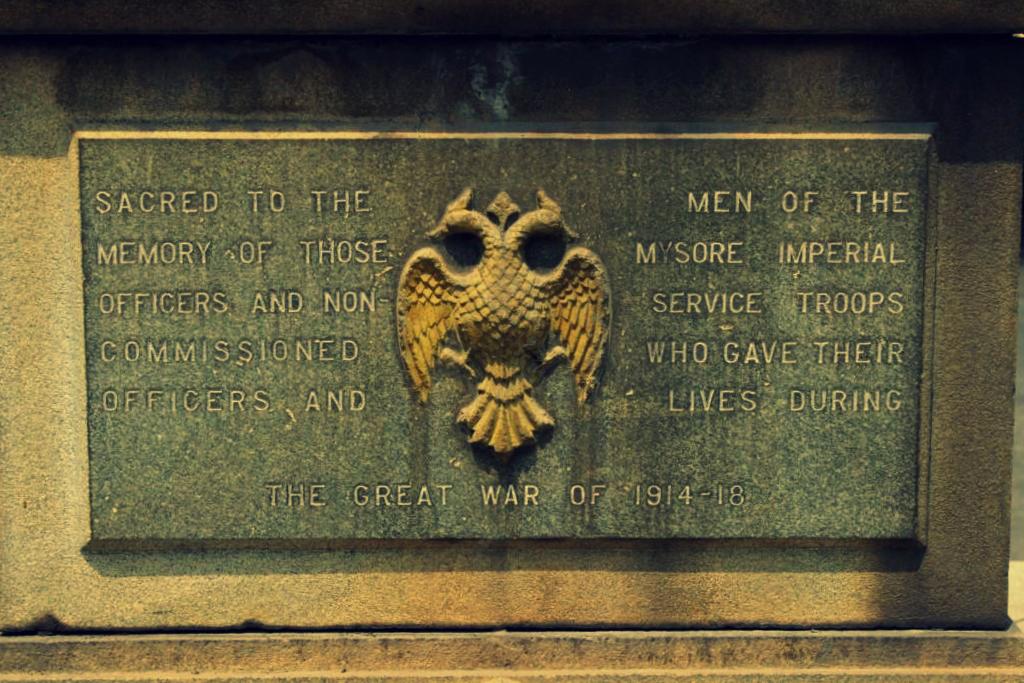
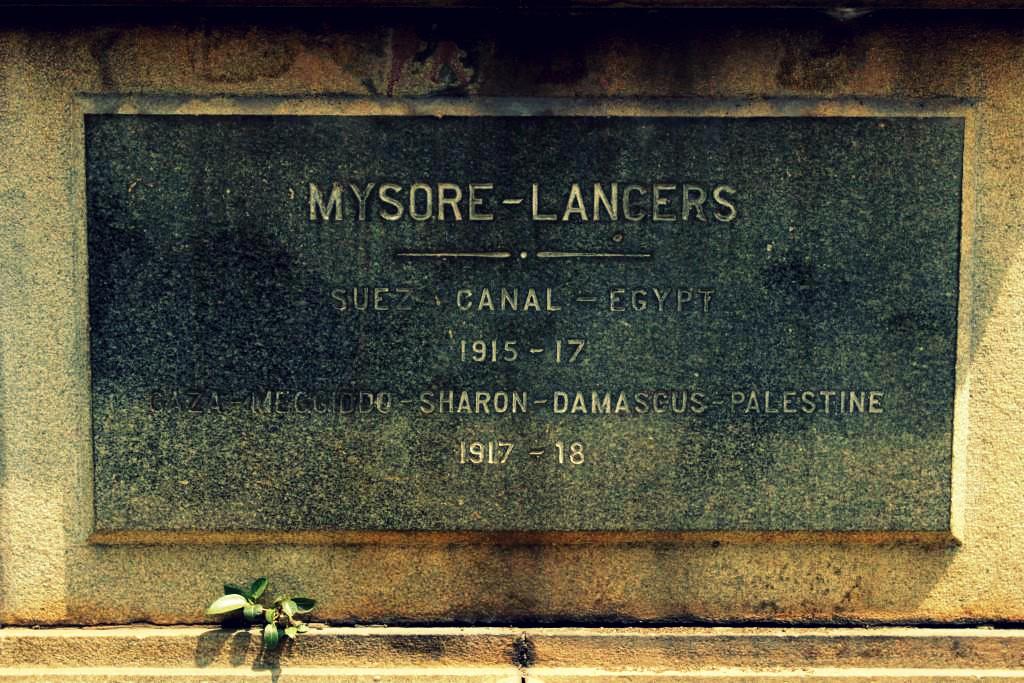
There are many miles that separate Bengaluru from Haifa. But our city’s connection to this distant Mediterranean port town goes beyond geography to that of the spirit. It is where Mysorean cavalrymen earned honours and distinguished themselves during World War I. The town also became a final resting place for many who never returned home.

These men on horseback were the inheritors of an older legacy.  Both Hyder Ali and his son Tipu Sultan, the 18th century rulers of Mysore, were known for their famous cavalry, the `Savar’ that had fought on home territory in the Anglo-Mysore Wars almost 150 years ago.

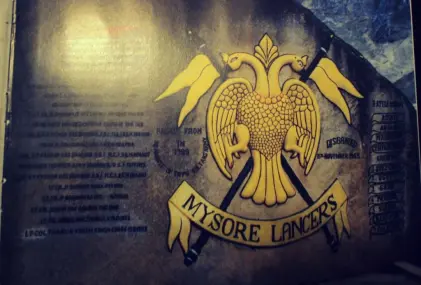
The Mysore Lancers (says a commemorative souvenir) were raised from what remained of this cavalry following the 4th Anglo-Mysore War in 1799.

The regimental insignia and Mysore’s royal emblem, the two headed Ganda Berunda eagle

Bengaluru’s equestrian legacies also extended beyond the military; the Bangalore Turf Club is a heritage institution and the Race Course that was initially located near Domlur was as old as the Cantonment, Horse riding in Cubbon Park was `de rigeur‘ till the early 1900’s, many large houses had private stables and British Commissioner Sir Mark Cubbon even built a new home beyond Cubbon Park  to accommodate his beloved horses!

Military forces in India’s princely states were maintained purely as a formality for a very long time following 1857.

But Viceroy Lord Dufferin’s landmark speech in Patalia (1888) signalled a change.

The Mysore (Mysuru) Maharaja Chamarajendra Wodeyar X was one of the first to raise a military force (including an Infantry and Transport Corps) capable of fighting alongside Imperial troops anywhere in the world. Major Mellis arrived here in 1890 to rearrange the two existing Silledar regiments into the Mysore Horse based in Mysore, and the Bangalore based Mysore Imperial Service Lancers (Mysore Lancers).

The Investiture Ceremony: “On the arrival of the Viceroy at the Imperial Service Lines, he was received by Dewan Krishna Murthi and conducted to a position near the saluting flag. After the horses of the entire regiment had lain down on the word of command so as to form covers for their riders in action, the regiment formed mass and the men dismounted and left their horses entirely alone with the rein passed through the girths. Rockets, carbine discharges and other noises were then made to test the training of the horses and except one or two horses which broke away, the remainder kept perfectly steady and unconcerned. After galloping past and advancing in review order, the Lancers cheered His Excellency. The Viceroy remarked that the display he had seen proved the excellence of the training of the horses and the special attention paid to the matter by Colonel Desaraj Urs… The manoeuvres subsequent to special show in connection with the horses reflected great credit, said His Excellency, on the regiment.” –M Shama Rao, Modern Mysore

The Mysorean, with his “superior physique” was also “specially noted for his endurance and hard work in distant countries and under the most trying conditions of climate and fatigue.”* And so, as part of the 15th Imperial Service Cavalry Brigade (this included the Patiala, Jodhpur and Hyderabad Horse) the men left Bangalore on 13th October, 1914 under the field command of Lt.Col. Chamaraj Urs Bahadur.

They were accompanied by Special Officers Major MH Henderson and Lt. K Evans-Gordon and Colonel J. Desraj Urs (Commander-in Chief of the Mysore State Forces and brother-in-law to Maharaja Sir Nalwadi Krishnaraja Wodeyar IV).

The men in the distinctive black head collar rope, black and white lance pennant, crossed lance badges on the chain mail epaulettes and the royal Ganda Bherunda insignia of Mysore disembarked to defend the Sweet Water Canal and undertake reconnaissance duties to the east of the Suez Canal. 

Many of us in the city can proudly trace family who in 1914, were a part of the largest volunteer army in the world!

Fans of a sun tanned Peter O’ Toole in the film `Lawrence of Arabia’ will know that our Mysorean men and the legendary TE Lawrence were both part of a WWI force commanded by Field Marshall Sir Edmund Allenby. But off screen conditions were very tough. Water sources were scarce. Thousands of cavalry horses and Transport Corps animals perished at various stages-en route, during combat and post-war.The emaciated and weak were left by the road to be picked up and (hopefully) rehabilitated by the Remount and Veterinary Corps.Most were not so lucky.

Much has been written about the Battle of Haifa where Mysorean cavalrymen braved German and Austrian guns as they charged alongside the Jodhpur Lancers to route an artillery battery located on a hill above the town.

Mysore’s two headed eagle also altered history at Gaza, Jordan Valley, Sharon, Megiddo, Damascus and Palestine. Their roles in these decisive battles saw the officers, including Captain B. P. Krishne Urs, 29 year old Mir Turab Ali and Risaldar Subbaraja Urs, and their loyal horses receive a hero’s welcome in 1920.

Sirdar Bahadur Lt.Col. Chamaraj Urs succeeded the distinguished Col.J Desraj Urs to the post of Commandant-in-Chief in 1919.

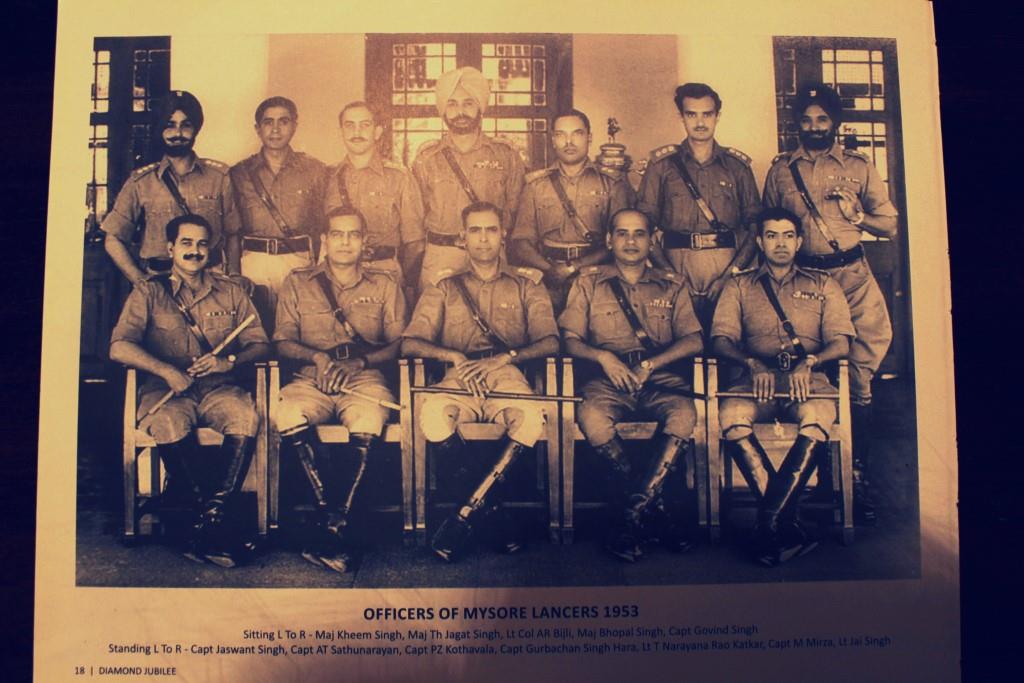
The horsemen were then reconstituted into the New Horsed Cavalry Regiment, raised in Jaipur on January 1st, 1953 under the special dispensation of Prime Minister Jawaharlal Nehru.It was named the 61st Cavalry a year later. It is the only horse cavalry regiment in the world and is equally well-known for its indomitable equestrian sportsmen.

My grand aunt, Mrs. Syeda Mirza tells me that her husband, my grand uncle the late Major Mohammad Mirza, a Bengalurean 61st cavalryman, dashing polo player and nephew of Sir Mirza Ismail, Diwan of Mysore (1926-1941) commanded the elite President’s Bodyguard for Dr.Rajendra Prasad and Dr. S Radhakrishnan in the 1960’s. He was also in the Ganganagar Sector with the 61st Cavalry during the 1971 War.

Standing second from right: Major Mohammad Mirza. Photo Source: Sixty First Cavalry Diamond Jubilee Souvenir, courtesy: Mrs. Syeda Mirza

“I was returning to Jaipur with the children after visiting my parents in Hyderabad” she says “and hired a porter to help with the luggage. He deposited me near the army vehicle that had come to receive us, and refused to take any payment. He said he could not take money from someone whose husband was fighting for the country.” She adds, “those were very tough times for wives and families.With no mobile phones or connectivity like it is today, we had no way to stay in regular touch with our loved ones.We just had to manage as best as we could on our own.”

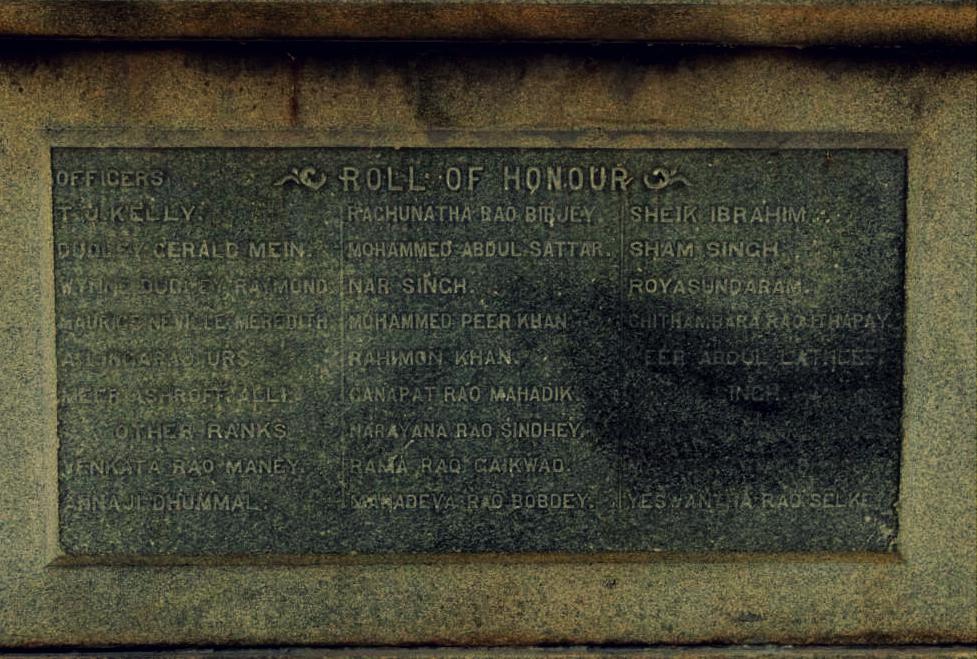
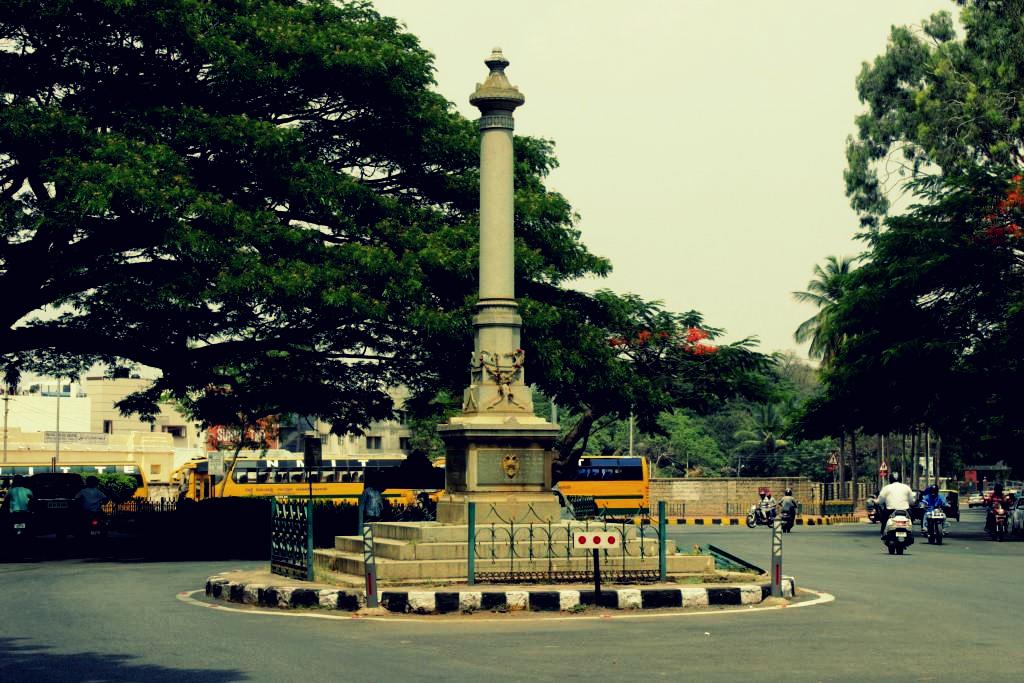
While a tribute to Indian cavalrymen is visibly embedded at Teen Murti Circle, New Delhi, a smaller Memorial Column on Col. Desraj Urs Road in Bengaluru’s Munireddy Palya stands overshadowed by the massive TV Tower nearby. The long forgotten structure lists all the brave men including officers Captain A.Lingaraj Urs (son-in-law to the Field Commander) and a Meer Ashroff Ali who lost their lives upholding the honour of Mysore state. Most city folks ride by without a second glance these days.

……………………………………………………………………………………………

On the Roll of Honour:

A Lingaraj Urs and Meer Ashroff Alli, Venkata Rao Maney, Annaji Dhummal, Rachunatha Rao Birjey, Mohammed Abdul Sattar, Nar Singh, Mohammed Peer Khan, Rahimon Khan, Ganapaty Rao Sindhey, Rama Rao Gaikwad, Manadeva Rao Bobdey, Sheik Ibrahim, Sham Singh, Roya Sundaram, Chithambara Rao Ithapay and Meer Abdul Latheef.

……………………………………………………………………………………………

This story was originally published in the Bangalore Mirror on April 11th 2016.Read it here.

* M Shama Rao, Modern Mysore, Page 104-106

source: http://www.aturquoisecloud.wordpress.com / A Turquoise Cloud / by Aliyeh Rizvi

Galaxy of stars descend at launch of Kirmani’s autobiography ‘Stumped: Life Behind And Beyond The Twenty-Two Yards’

Bengaluru, KARNATAKA :

Syed Kirmani, an ODI World Cup winner with India in 1983, speaks during the launch of his autobiography, in Bengaluru. | Photo Credit: PTI

The cricket universe was represented by Kapil Dev, Rahul Dravid, V.V.S. Laxman, Anil Kumble, Brijesh Patel, E.A.S. Prasanna, B.S. Chandrasekhar and many of Kirmani’s State teammates.

A galaxy of stars descended at the M. Chinnaswamy Stadium on Sunday for the launch of ‘Stumped: Life Behind And Beyond The Twenty-Two Yards’ by Syed Kirmani, the autobiography of one of India’s finest wicketkeepers.

The cricket universe was represented by Kapil Dev, Rahul Dravid, V.V.S. Laxman, Anil Kumble, Brijesh Patel, E.A.S. Prasanna, B.S. Chandrasekhar and many of Kirmani’s State teammates.

Infosys co-founder N.R. Narayana Murthy and Karnataka Deputy Chief Minister D. K. Shivakumar were also in attendance.

Deputy Chief Minister D. K. Shivakumar during the launch of  ‘Stumped, Life Behind And Beyond The Twenty-Two Yards ‘ with Krimani (right). | Photo Credit: The Hindu

Former cricketer Sunil Gavaskar, badminton stalwart Prakash Padukone and actor Jackie Shroff sent their well wishes through video messages. The book is co-authored by Debashish Sengupta and Dakshesh Pathak.

Kirmani’s famous partnership with Kapil Dev against Zimbabwe in the 1983 World Cup, where the duo rescued India from a precarious 17 for five, was a favourite memory among speakers on the stage.

Kapil spoke about the first time he met Kirmani, who incidentally celebrated his 75th birthday on Sunday.

Kirmani’s famous partnership with Kapil Dev (right) against Zimbabwe in the 1983 World Cup, where the duo rescued India from a precarious 17 for five, was a favourite memory among speakers on the stage.  | Photo Credit: PTI

“I was in an under-19 camp when Syed Kirmani, Bishan Singh Bedi and others returned to India after being bloodied and bruised on a tour to the West Indies. I worked up the courage to approach Kirmani. The first autograph I ever received in my life was from the great ‘Kiri bhai’ and G.R. Viswanath,” Kapil said.

“I remember what Kirmani wrote when signing the autograph. He wrote ‘Hope to see tons of runs and tons of wickets from you’. That was most kind of him. I also spent a few hours with him, where he taught me so much about the sport and beyond,” Kapil said.

source: http://www.sportstar.thehindu.com / The Hindu / Home> Cricket / by Ashwin Achal / December 29th, 2024

World’s youngest Head Master(HM) Babar Ali feted

WEST BENGAL / Mysuru, KARNATAKA :

(From left) Lokaraj Urs (Founder, Madilu Seva Trust NGO), Veeresh, President, Suvarna Karnataka Chemists and Distributors Association, S. Manjunath, President, Mysore District Chemists and Distributors Association, C.K. Muralidharan, Ashok Kumar, Joint Secretary, Mysore District Chemists and Distributors Association and Nigin.

World’s youngest Head Master (HM) Babar Ali, who was in city recently, was felicitated by the office-bearers of Mysore District Chemists and Distributors Association.

source: http://www.starofmysore.com / Star of Mysore / Home> Photo News / December 31st, 2024

Thumbay Group’s GMU, ‘Staque’ team up to transform healthcare with AI, advanced tech

KARNATAKA / AJMAN, DUBAI, U.A.E:

Ajman (UAE): 

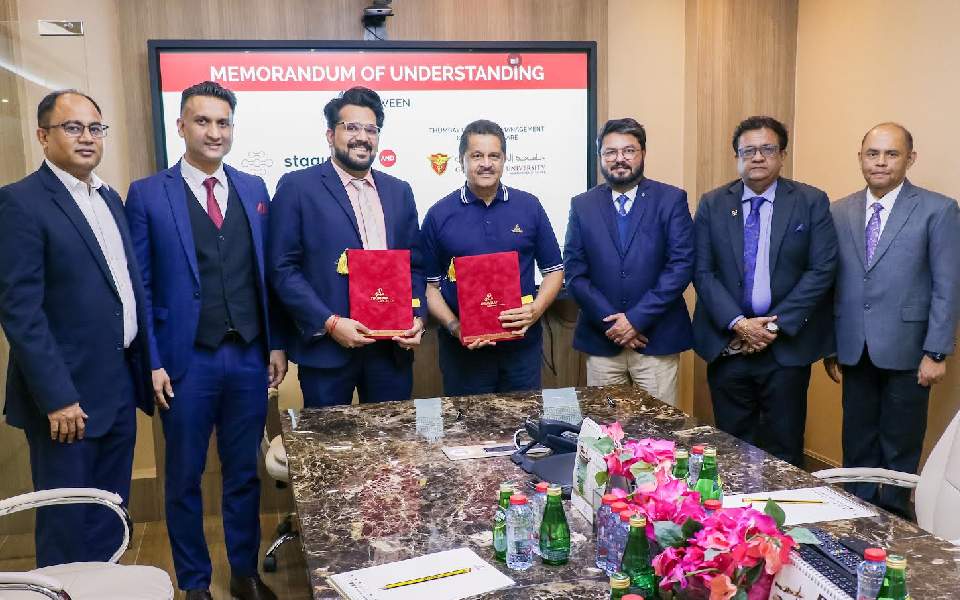
Staque, a global leader in artificial intelligence, quantum computing, and advanced technology solutions, have signed a landmark Memorandum of Understanding (MoU) with Thumbay Group’s Gulf Medical University (GMU) and its Thumbay College of Management and Artificial Intelligence in Healthcare (TCMAIH). This strategic partnership aims to revolutionize the integration of artificial intelligence and quantum computing into healthcare education, training, and research, with far-reaching implications for the region’s healthcare and technology sectors.

Founded by Dr. Thumbay Moideen in 1997, Thumbay Group is a diversified international business conglomerate with operations across different verticals including Education, Healthcare, Medical Research, Diagnostics, Retail Pharmacy, Health Communications, Retail Opticals, Wellness, Nutrition Stores, Hospitality, Real Estate, Publishing, Technology, Media, Events, Medical Tourism, Trading and Marketing & Distribution. Headquartered in Dubai, the group presently employs around 3000 people.

The MoU establishes a collaborative framework to harness the transformative potential of AI in healthcare, focusing on both academic innovation and practical applications. This collaboration aligns with the UAE’s vision for technological leadership and aims to position GMU and Staque at the forefront of global healthcare advancements.

Driving AI Innovation Through Strategic Partnership

The agreement outlines several groundbreaking initiatives, including:

● Thumbay-Staque Lab in Artificial Intelligence: This state-of-the-art lab, to be established at GMU’s campus, will serve as a hub for cutting-edge research and practical applications of AI in healthcare, focusing on areas such as diagnostics, personalized medicine, and healthcare operations.

● Internship and Employment Pathways: Staque will facilitate internships, short placements, and employment opportunities for TCMAIH students, fostering UAE Nationals’ empowerment and integrating local talent into the global healthcare technology landscape.

● Collaborative AI Programs: Together, Staque and GMU will develop fellowship, short-term, and long-term programs in healthcare AI, leveraging a revenue-sharing model to promote sustainability and scalability.

● Joint High-performance Computing Research Initiatives: The partnership will support joint research projects through the Thumbay International Research Grant, targeting high-impact areas in AI, quantum computing and healthcare.

● Global Collaboration and Expertise Sharing: Faculty and staff exchanges will enhance knowledge transfer, while industry partnerships will drive regional and international expansions of TCMAIH’s and Staque’s initiatives.

Dr. Thumbay Moideen, Founder President of Thumbay Group UAE, commenting on the partnership said, “Our partnership with Staque is a natural extension of our commitment to advancing healthcare education and practice. By integrating AI into our curriculum and research initiatives, we are empowering our students and faculty to become leaders in a rapidly evolving healthcare ecosystem.”

Dr. Muhammad Khan, CEO of Staque, expressed his enthusiasm for the partnership, stating, “This collaboration marks a pivotal moment in merging AI and healthcare education. By establishing the Thumbay-Staque Lab, we are taking significant steps toward a future where AI drives meaningful improvements in patient outcomes, operational efficiencies, and healthcare innovation.”

Transforming Healthcare Through AI

Staque’s extensive expertise in AI, quantum computing, and robotics complements GMU’s reputation for academic excellence. This partnership aims to tackle critical challenges and unlock opportunities across healthcare and education, including:

● AI-Powered Diagnostics: Tools for early disease detection and personalized treatment planning, using advanced algorithms and quantum computing to process vast datasets with unparalleled speed and accuracy.

● Adaptive Learning Systems: AI-driven systems to create personalized educational experiences for healthcare professionals, addressing skill gaps and enhancing training efficiency.

● Healthcare Operations Optimization: Autonomous intelligence solutions to streamline administrative workflows, reduce inefficiencies, and enhance the overall patient experience.

“Medical research and practices are ripe for innovation. Accuracy, accessibility and affordability issues have a critical impact on global health care. The adoption of AI and quantum computing are essential to address these issues” said Dr. Raees Tonse, Staque Board Member who catalyzed the partnership.

The Thumbay-Staque partnership also explores regional and international opportunities for expanding AI and quantum computing programs, enabling students and professionals to access world-class resources and tools. These initiatives will not only strengthen the UAE’s position as a global innovation hub but also set new benchmarks for integrating emerging technologies into healthcare systems.

About the Partners

Thumbay Group and Gulf Medical University

Thumbay Group, a leading private conglomerate in the UAE, operates Gulf Medical University (GMU), a premier institution recognized for its excellence in medical education, research, and healthcare delivery. The Thumbay College of Management and Artificial Intelligence in Healthcare (TCMAIH) is dedicated to marrying technology and medical education, ensuring students and health care professionals are equipped to thrive in a technology-driven healthcare landscape.

Staque Solutions

Staque Solutions bridges the gap between cutting-edge computer science and real-world business needs. With expertise spanning AI, blockchain, quantum computing, and software engineering, Staque empowers organizations to thrive in an era of rapid technological advancement through its autonomous intelligence and high-performance computing solutions. Founded in Calgary, Canada, Staque has grown into a global organization with presence in North America, the GCC, and Asia.

source: http://www.english.varthabharati.in / Vartha Bharati / Home> Gulf / by Vartha Bharati / December 26th, 2024

Prez confers Pradhan Mantri Rashtriya Bal Puraskar on 17 children for excellence in various fields

NEW DELHI :

pix: @rashtrapatibhvn/X

New Delhi :

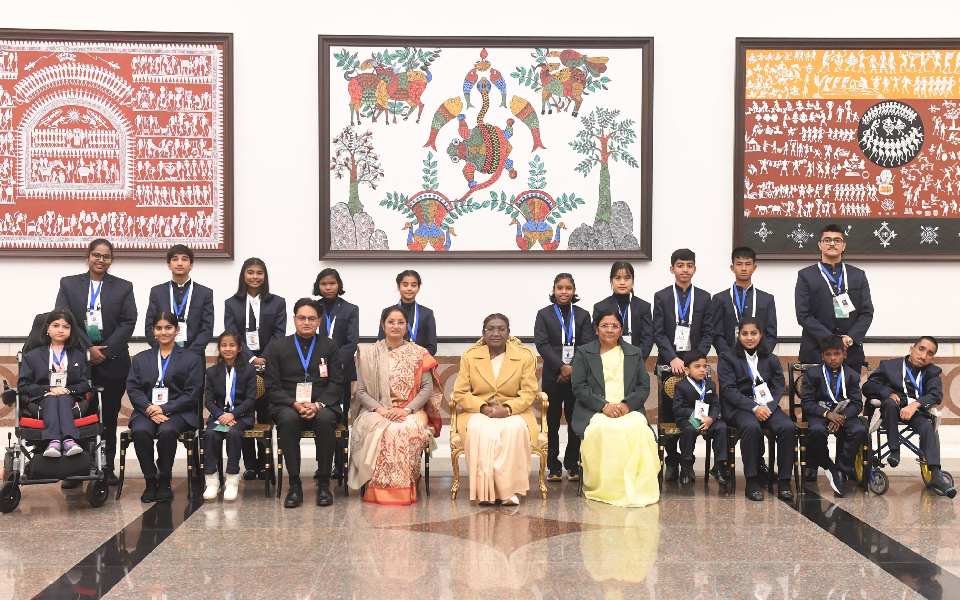
President Droupadi Murmu on Thursday presented the Pradhan Mantri Rashtriya Bal Puraskar to 17 children, recognizing their exceptional courage and outstanding achievements across diverse fields, including art, culture, sports and innovation.

The President underlined the importance of nurturing and celebrating young talents.

“Providing opportunities and recognizing children’s talents has always been a part of our tradition. This tradition should be further strengthened to ensure that every child realizes their full potential,” she said.

The award celebrates extraordinary accomplishments in seven categories: art and culture, bravery, innovation, science and technology, social service, sports and environment.

The honourees — seven boys and ten girls selected from 14 states and Union territories — were presented with a medal, certificate and citation booklet.

Among them was Keya Hatkar, a 14-year-old author and disability advocate, recognized for her excellence in art and culture.

Despite living with spinal muscular atrophy, she founded initiatives like “IM POSSIBLE” and “SMA-ART,” promoting inclusivity and disability awareness.

President Murmu highlighted the importance of honouring such talents, saying, “The tradition of recognising and nurturing children’s potential has always been part of our culture. Their contributions will lead India to the pinnacle of progress.”

She further emphasised the Ministry of Women and Child Development’s role in sharing these stories of inspiration with the wider public.

The President also paid homage to the unparalleled sacrifices of Guru Gobind Singh’s sons, commemorated as ‘Veer Bal Diwas’ on December 26, saying, “Their sacrifices for faith and self-respect continue to inspire countless generations. On this day, the nation bows in reverence to their bravery and spirit.”

Among the other awardees was Ayaan Sajad, a 12-year-old Sufi singer from Kashmir, honoured for his soulful contributions to Kashmiri music, while 17-year-old Vyas Om Jignesh, who has cerebral palsy, was lauded for his dedication to Sanskrit literature, having memorised over 5,000 shlokas and performed in over 500 shows.

In bravery, Saurav Kumar (9) was recognised for saving three girls from drowning, and 17-year-old Ioanna Thapa was honoured for rescuing 36 residents from a fire.

“Examples of courage and patriotism in children strengthen the nation’s confidence in its future. Such acts are truly commendable,” President Murmu remarked as she presented the award to the two children.

In the innovation category, 15-year-old Sindhoora Raja was awarded for creating self-stabilizing devices for Parkinson’s patients, and cybersecurity entrepreneur Risheek Kumar (17) was honoured for launching Kashmir’s first cybersecurity firm.

“Contributions to science, technology, and innovation by children like these show their unparalleled potential to transform lives,” the President observed.

Hembati Nag, a judo player from a Naxal-affected area was awarded in the sports category. She overcame numerous challenges to win a silver medal at the Khelo India National Games.

Mentioning Nag’s story, President Murmu said, “Hembati’s resilience amidst adversity is an example of unmatched courage and determination.”

Chess prodigy Anish Sarkar, the youngest FIDE-ranked player at just three years old, was also honoured.

The President envisioned a bright future for the awardees, adding, “In 2047, when we celebrate the centenary of our independence, these award winners will be enlightened citizens of the country. Such talented boys and girls will become the builders of a developed India, shaping its destiny through their talent and efforts.”

“May every child of this nation have a bright and prosperous future, for in their success lies the future of India,” she said.

source: http://www.english.varthabharati.in / Vartha Bharati / Home> India / by Vartha Bharati / December 26th, 2024

Bihar: Meet Habiba Bukhari, Daughter Of An Imam And A Judicial Officer From Munger

Munger, BIHAR :

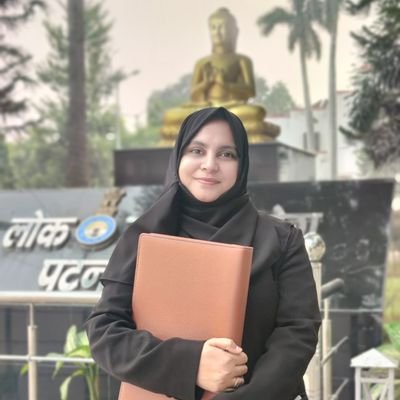
Habiba Bukhari

Patna:

Habiba Bukhari from Munger received on November 28, 2023, one of the most joyous pieces of news in her life: she had been selected for the Bihar Judicial Service. She secured 30th rank in the general category. This remarkable achievement of hers not only marks a significant personal victory but also reflects the strength of her determination and resilience in the face of numerous challenges.

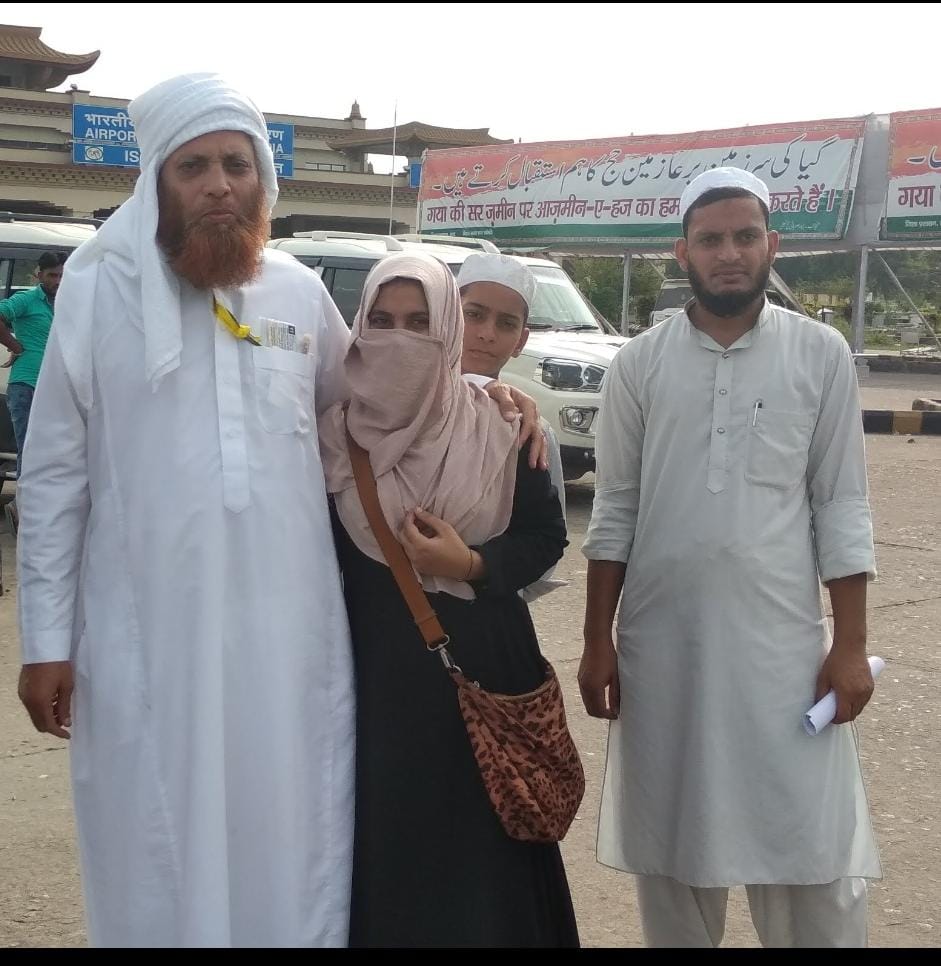
Habiba comes from a modest background. Her father, Ahmad Bukhari, is an imam (prayer leader) at the Gulzar Pokhar mosque in Munger, which is located about 200 kilometers east of Bihar’s capital of Patna. Her mother is a homemaker. Despite the simplicity of their lives, the family’s support for Habiba has been unwavering.

Ahmad shared a heartfelt moment with TwoCircles.net. Recalling the night of November 28 when his daughter first called him with the good news, he said, “I got a video call from Habiba who was crying. I asked her to calm down and tell me why she was crying. After controlling her emotions, she informed me that she had been selected for the Bihar Judicial Service. Such was her joy!”

A bright student from an early age, Habiba completed her BA LLB and LLM degrees from Aligarh Muslim University (AMU). She also completed her schooling from there, though she began her academic journey at a Hindi-medium government school in Munger. During her high school years, she studied Urdu, Arabic, Political Science and English. Today, she is pursuing a Ph.D. from AMU.

Habiba with her father during Haj

When asked about her future plans, Habiba said she hopes to complete her Ph.D. while serving as a judicial officer. “If I am allowed, I would love to continue my Ph.D. and work as a judicial officer,” she said.

A hafiza (who memories Qur’an) of five chapters of the holy book and a woman who wears a headscarf, Habiba’s choice of career in the judiciary was driven by a strong sense of personal values. “For me, a safe workplace is the most important thing. I believe the judiciary offers the safest environment to work in. It provides both financial security and stability,” she explains. While acknowledging the alternative of litigation, she notes the additional struggles it entails, especially for someone without a strong background.

Her journey into law was inspired by the influence of her batchmates at AMU who were preparing for their BA LLB after high school. Habiba focused largely on self-study to prepare for the judicial services exam and complemented her efforts with coaching sessions offered by the varsity.

Habiba has a word of advice for future aspirants: “This is an age of cut-throat competition. One needs to work very hard. The seats are limited, but do not lose heart and keep trying.” She is set to begin her training for the judicial service in late February 2024.

Apart from her professional ambitions, Habiba has a deep love for reading, particularly novels. She recalls an intriguing moment from her interview for the judicial service, where, along with law-related questions, she was asked about temples and mosques that do not allow women entry.

Throughout her academic journey, Habiba has been deeply grateful for the support of her family. “I received both financial and emotional support from my family throughout my studies and preparation. It made everything much easier for me,” she shared. Habiba’s younger sister, Arisha Bukhari, is pursuing a BA and her brothers are also in higher studies.

Habiba also reflected on the societal challenges her family faced due to her higher education. “In our society, girls are often married off early that affects their opportunities for higher education. But my family never stopped me from pursuing my studies,” she said. She quoted the word ‘Iqra’ from the Qur’an to emphasize the importance of education in Islam.

Habiba with her family

She added, “Our society should not discriminate between boys and girls, especially when it comes to education. Girls should also be educated while following Islam.”

Her father, Ahmad, strongly supports the cause of girls’ education. “Parents want their children to be successful, and if they work hard, they will succeed. It is wrong to marry off girls after giving them only basic education. If they want to study more, they must be allowed to do so.”

He fondly recalls Habiba’s childhood. “She was always curious. Even as a child, she would read from torn newspaper pieces. After she passed her twelfth grade, we were considering her marriage. But my sister in Patna persuaded us to let Habiba continue her studies. We could see her potential. Though an Imam’s salary isn’t much, we managed to support her education,” he said.

Habiba is one of only ten Muslim candidates who passed the Bihar Judicial Service exam this year, out of 153 total candidates. Among other successful candidates from her community are Farha Nishat, cousin of activist Sharjeel Imam, who was also selected for the same post. Other Muslim women who succeeded in this year’s exam include Tazeen Binte Waheed, who secured the 20th rank, and Saniya Akhtar, who secured 48th place in the general category. In the reserved categories, Sarah Imam secured 6th rank under the Economically Weaker Section (EWS), while Zeba Manzoor topped the Extremely Backward Classes (EBC) category.

Habiba’s story is a testament to the power of perseverance, family support and the transformative power of education. Her journey inspires all, especially young women, to pursue their dreams — no matter the obstacles.

source: http://www.twocircles.net / TwoCircles.net / Home> India News> Indian Muslim / by Sami Ahmad, TwoCircles.net / December 19th, 2024

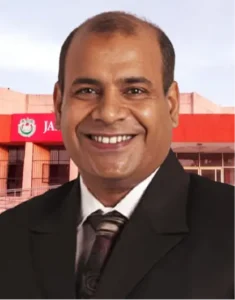
From Cleveland to Jamia: Prof Dr M Mahfuzul Haque’s remarkable journey

NEW DELHI :

Dr Mohammad Mahfuzul Haque

Jamia Millia Islamia Professor Dr Mohammad Mahfuzul Haque has made the university proud.

The Indian Council of Medical Research (ICMR) has granted Dr. Mohammad Mahfuzul Haque, a professor in the Department of Biotechnology, a prestigious research grant of approximately Rs 65 lakhs.

This highly competitive grant underscores Prof. Haque’s outstanding contributions to the field of molecular enzymology and will support groundbreaking research in the area of cardiovascular diseases and lung cancer.

The ICMR grant, recognised as one of the highest honours for medical research in India, will enable Prof. Haque and his team to gain more insight into the molecular mechanisms underlying iNOS involvement in lung cancer pathogenesis, potentially identifying therapeutic targets and developing novel treatment strategies for combating lung cancer. The project is intended to address significant challenges in lung cancer and aims to produce outcomes that may significantly influence healthcare practices in India and globally.

Prof. Mazhar Asif, the Vice Chancellor and Prof. Md. Mahtab Alam Rizvi, the Registrar of JMI congratulated Dr. Haque and remarked: “This is a moment of pride for our institution. Prof. Mohammad Mahfuzul Haque’s recognition by ICMR reflects our commitment to fostering excellence in research and innovation. We look forward to the transformative impact of this work.”

Commenting on the achievement, Prof. Mohammad Mahfuzul Haque said: “I am deeply honored to receive this grant from ICMR. It represents a significant opportunity to advance our research and contribute to improving health outcomes for millions. I am grateful to my team, my institution JMI, and ICMR for their support and encouragement.”

The grant will provide funding for three years, facilitating advanced experimentation, collaboration with leading experts, and the development of innovative approaches. This initiative aligns with ICMR’s mission to promote cutting-edge research and address pressing healthcare challenges facing India.

Dr. Haque is a renowned molecular enzymologist and his research focuses on the biochemistry, structure and function of Nitric Oxide synthase and other flavoproteins, which play a significant role in cardiovascular diseases, pulmonary hypertension and cancer.

Dr. Haque joined the Department of Biotechnology, JMI in 2017 and from 2017 to 2020, he served as Head of the Department of Biotechnology.

Prior to his appointment at JMI, Prof. Haque served as a faculty member in Molecular Medicine at the esteemed Cleveland Clinic in Cleveland, Ohio, USA.

He has won accolades and awards in the United States and got many funds from various funding agencies of the Government of India.

source: http://www.okhlatimes.com / The Okhla Times / Home> JMI/EDU / by The Okhla Times (edited) / November 21st, 2024