Category Archives: Amazing Feats

Merging passion with powerful storytelling

Mysuru, KARNATAKA :

Mysuru-based Director Islahuddin believes in movie-making beyond the ordinary

The Kannada film industry, popularly known as Sandalwood, has recently witnessed a surge in films across diverse genres, breaking away from the conventional commercial ‘masala’ formula. Films like Achar & Co, Daredevil Mustafa, Hostel Hudugaru Bekagiddare, Tagaru Palya and Orchestra Mysuru have been warmly embraced by audiences, proving that the industry is in safe hands with the new generation of filmmakers stepping up to the challenge.

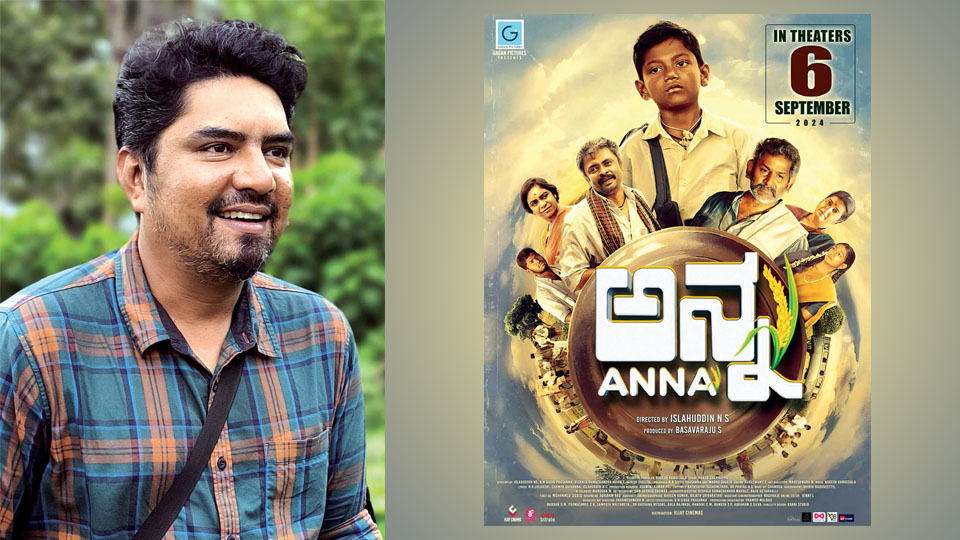
Joining this fresh wave of talent is N.S. Islahuddin from Mysuru, the director of the Kannada film Anna. Despite hardships, Islahuddin successfully directed a few films, including Nodi Swamy Ivanu Irode Heege, starring Rishi.

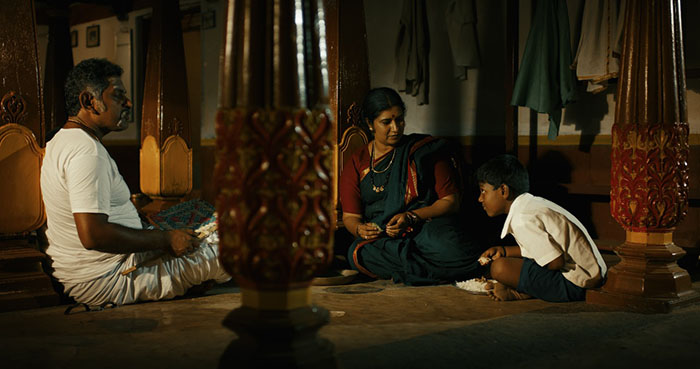
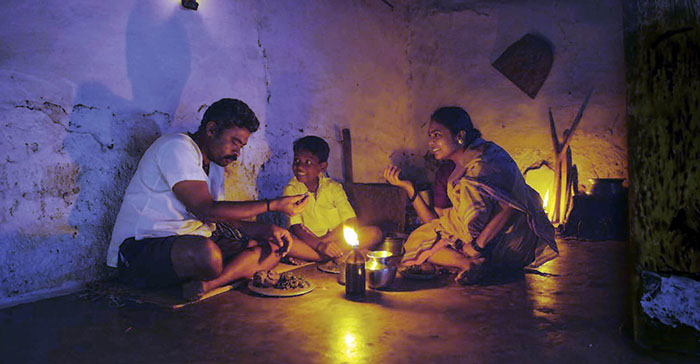
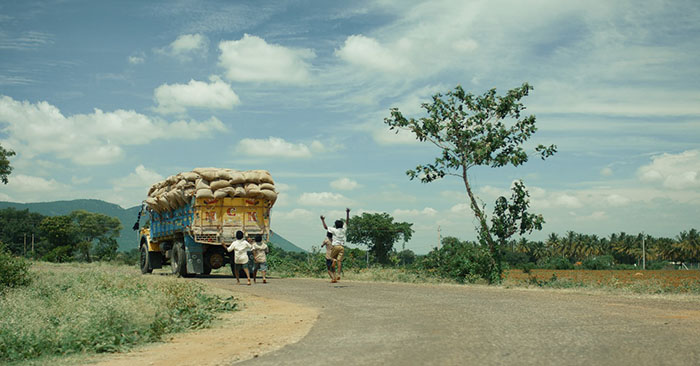
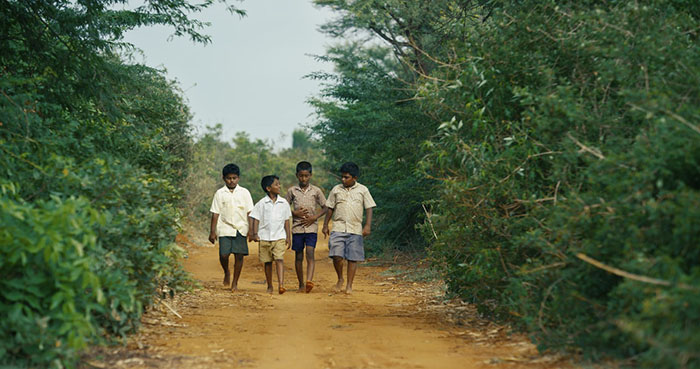
Known for inspiring many aspiring actors and technicians, Islahuddin is now back with his latest venture Anna, which tells the story of eight-year-old Mahadeva. Set in the 1980s, the film portrays the struggles of a poor family that cannot afford even rice (Anna in Kannada).
Islahuddin also pioneered Kannada’s first-ever crowd-funded film, Jaagadoreyuthade (Spaces for Rent), an adaptation of Maxim Gorky’s play The Lower Depths.

Star of Mysore caught up with the talented moviemaker Islahuddin during his recent visit to Mysuru for a brief chat.    Excerpts…

Star of Mysore (SOM): How do you feel about ‘Anna,’ a non-commercial movie, being accepted by all sections of the audience?

Islahuddin: I am elated. Being embraced by all sections of society feels like a blessing. Our movie doesn’t take sides — except for the side of the hungry. ‘Anna’ is merely a metaphor. While rice, as a staple food for billions, holds deep significance, our story is set in the 1980s when rice was a luxury beyond the reach of the common man. Today, ‘Anna’ could symbolise any unfulfilled desire of the underprivileged.

SOM: What inspired you to choose a subject like ‘Anna?’

Islahuddin: The story found me. It is based on a Kannada Sahitya Akademi award-winning short story by Hanur Chennappa, who had previously served as Assistant Director, Department of Kannada and Culture in Mysuru. The team was already in place, and I joined towards the end. I am deeply grateful to the entire ‘Anna’ team for making this an unforgettable experience.
SOM: For a film like ‘Anna,’ it’s often difficult to secure producers and theatres for release. How did you manage both?

Islahuddin: ‘Anna’ symbolises desire. It highlights the gap between ragi and rice and the divide between the haves and have-nots. Basavaraju, our film’s producer,  who faced hardships in his youth, was approached by our music director and executive producer Nagesh Kandegala and he instantly agreed to produce the film. The film has turned out exceptionally well and the overwhelming response during screenings gave us the confidence that we have a winner. Even though Basavaraju is a first-time producer, we chose to take this leap of faith on our own.

SOM: With four gold medals in journalism and mass communication, a master’s from the University of Sunderland and having cleared the National Eligibility Test (NET) from the University Grants Commission (UGC), you could have easily settled as a Professor in a reputed university. Why did you choose theatre and films?

Islahuddin: I’ve always liked theatre and cinema and so did my friends. I’ve always valued my friendships and most of my friends are here in my city Mysuru.  We are a close-knit group here in Mysuru, bonded by our shared passion for the arts. Our journey began in theatre, but we quickly set our sights on filmmaking.

I took the next step by pursuing my master’s in filmmaking in the UK, then returned to Mysuru to reconnect with my friends. Our primary goal has always been to build a thriving ecosystem for filmmakers right here in our city.
SOM: What are your upcoming projects?

Islahuddin: I’ve been in talks with a few actors, who also happen to be good friends, about directing some scripts I’ve written. Additionally, there are exciting offers from producers interested in bringing my stories to life with me as the director. There’s also an international project in the works, but I’ll reveal more when the time is right. Only time will tell. — VNS
Excelled academically

A graduate in Business Management from  D. Banumaiah College, Islahuddin went on to pursue a Post Graduate degree in Mass Communication and Journalism at Manasagangothri, where he excelled academically, bagging four gold medals, including the prestigious Star of Mysore Silver Jubilee Endowment Gold Medal in 2006.

His passion for filmmaking led him to secure a scholarship at the University of Sunderland, where he earned a Master’s in Media Production in 2008. Upon returning to Mysuru, Islahuddin embarked on a challenging 15-year journey to fulfil his dream of directing films.

source: http://www.starofmysore.com / Star of Mysore / Home> Feature Articles / September 12th, 2024
Lest We Forget Kargil War Hero Vir Chakra Captain Haneefuddin!

NEW DELHI :

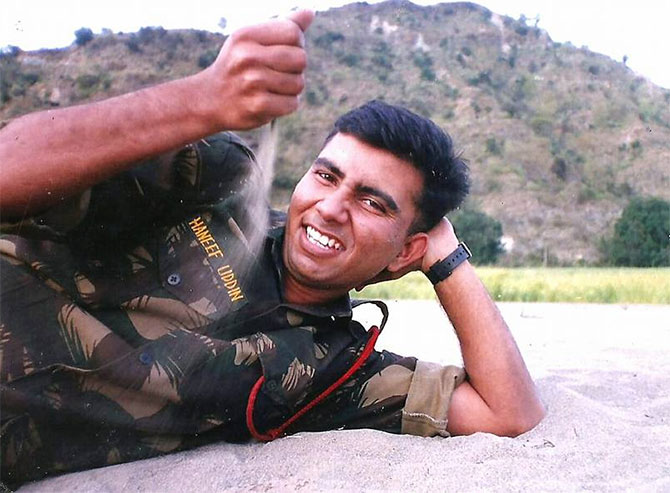
Pakistan’s misadventure in Kargil will be remembered not only for the convincing win of the brave Indian army but also for some of the heroes who sacrificed their lives for our dear motherland. Prominent among those heroes was a 25-year young Captain Haneefuddin of 11 Rajputana Rifles who led from the front and made the ultimate sacrifice. Martyr Vir Chakra Captain Haneefuddin had to be from the Dilwalon ki Dilli! Truly, he had a large heart for he volunteered to command an operation to capture a post which would give a vantage position to observe the enemy’s movements.

It was quite early days of Kargil war when there was hardly any information available about the enemy troops. A company of 11 Rajputana Rifles was deployed in Operation Thunderbolt on June 6th, 1999 led by Captain Haneefuddin. It was at an altitude of 18,000 feet in the Turtuk region. The Mission: To capture a position in the region which would facilitate the Indian army to monitor the movements of the enemy troops better. The capture of this position would give the troops a strategic advantage in those early stages of the war. Captain Haneef volunteered for this Operation Thunderbolt as it was his ingrained in his nature to lead from the front. He set off for the vital operation with one junior commissioned officer and three other ranks. They made significant strides on the nights of 4th and 5th June 1999. They captured nearby positions. They captured the adjacent position and set out their advance on 6th June 1999 to capture the position they desired. They were undaunted by an altitude of 18,500 feet and extremely cold temperatures. They were however spotted by the enemy and fired upon. A firefight followed, against an enemy equipped with heavy artillery.

Captain Haneefuddin was concerned about the safety of his team more than himself. He took up a position and fearlessly showered bullets on the enemy. In the exchange of bullets, he was severely injured. But he kept engaging the cunning enemy, until his boys were safe from the enemy fire. Unfortunately, he ran out of ammunition and he was shot from all directions. He succumbed to his injuries, just 200 meters from the position they valiantly set out to capture. He displayed extraordinary valor in the face of the enemy and cared more about his team’s safety than his own. Captain Haneefuddin attained martyrdom at the young age of 25. It was exactly two years after he was commissioned in the army. But his body could not be retrieved due to heavy firing till a brave Colonel Bhatia and his illustrious team set out to retrieve the body. It was on 18th  July, 43 days after Haneef’s martyrdom, Captain S K Dhiman, Major Sanjay Vishwas Rao, Lieutenant Ashish Bhalla, Havaldar Surinder and Rifleman Dharam Vir volunteered for the task.

Col. Bhatia and his team carefully negotiated the deadly precipices. The team managed to locate the brave heroes Haneef and Parvesh. They extricated the frozen bodies. Dragging them behind the boulders, the team carried the fallen heroes on their backs. They walk quietly through the night, reaching Zangpal by early morning. A helicopter carried the bodies away as the brave Colonel Bhatia watched the body bags with moist eyes for one last time.

Vir Chakra Captain Haneefuddin’s mother Hema Aziz had paid tribute to her martyr son thus:  “As a soldier, Capt Haneef served his country with pride and dedication. “There cannot be a greater statement on his valor than his death which came while fighting the enemy.” Later, a subsector in the battle zone was named as Subsector Captain Haneefuddin.

It is interesting to note that Captain Haneefuddin had gone to fight for 11 Rajputana Rifles whose war cry is ‘Raja Ram Chandra ki Jai’. Twenty years later, in February 2020, in Captain Haneefuddin’s hometown – Delhi, a similar war cry —  Jai Sri Ram was used by the rioters who looted, raped, killed innocents, destroyed 11 mosques and burnt down the copies of the Holy Quran, according to the just released report of the Delhi Minorities Commission. Those who carried out this pogram do not have guts to go to the borders and fight the enemies Pakistan and China. Instead, they choose our own citizens!

Where have the Dilwallas disappeared from Dilli?  Lest we forget Kargil War Hero Vir Chakra Captain Haneefuddin and other heroes!

source: http://www.beyondheadlines.in / Beyond Headlines / Home> Lead / by Dr Ahmed Mohiuddin Siddiqui / July 27th, 2024

AMP celebrates Excellence in Education: 8th national awards honor outstanding teachers from across India

INDIA :

On Teachers’ Day, AMP held the felicitation ceremony for the 8th AMP National Awards for Excellence in Education 2024. The event took place at an impressive function in Ravindra Bhawan, Raj Bhavan Road, Bhopal, Madhya Pradesh. It was attended by award winners, invited guests, AMP members, volunteers, and the academic community. Some awardees who could not travel to Bhopal participated virtually, and many others joined through social media platforms.

The Chief Guest for the event was Shri Digvijay Singh, Former Chief Minister of Madhya Pradesh and Member of Rajya Sabha. He praised the role of teachers and commended AMP’s initiative of uniting Muslim professionals to give back to society. Shri Singh emphasized the importance of prioritizing education and healthcare for the progress of the country. He also highlighted the need for Muslims to pursue professional education to foster community advancement.

In his keynote address, Prof. Furqan Qamar, Former Vice Chancellor of the University of Rajasthan and Central University of Himachal Pradesh, underscored the necessity of increasing participation in higher education. He stressed the importance of public investment in education to make it accessible to marginalized groups, such as rural communities, women, and landless laborers, who often lack opportunities for higher education.

Maulana Syed Mushtaq Ali Nadvi, Shahar Qazi of Bhopal and the Presiding Speaker at the event, quoted Allama Iqbal, saying, “The soil of Hindustan is very fertile and amenable to good works from its citizens.” He emphasized the special status of teachers in Islam, reminding the audience that according to a Hadith of Prophet Muhammad (PBUH), a good teacher can attain a rank close to that of the Prophets.

The winners of the AMP National Awards were selected by a jury of 14 distinguished educationists and academicians from thousands of nominations submitted across India. These awards were presented in seven categories:

  • Primary and Secondary Teachers
  • College and University Teachers
  • Principals/Head of Institutions
  • Islamic Education (Arabic/Fiqh/Islamic Studies)
  • Educational Institutions
  • Lifetime Awards
  • Late Ibrahim Quereshi Memorial Award

The Late Ibrahim Quereshi Memorial Award was bestowed upon Prof. Furqan Qamar in recognition of his exceptional service in the field of education.

The Lifetime Achievement Awards were given to the following esteemed educators:

  1. Hazrat Maulana Sayyed Muhammad Aqil, Shaykhul Hadith, Mazahir Uloom, Saharanpur, Uttar Pradesh
  2. Jamaluddin Ahmad Khan, Ex-Lecturer, Halim Muslim Inter College, Kanpur, Uttar Pradesh
  3. Sharifa A. Azeez, Correspondent, Crescent Matriculation Higher Secondary School, Chennai, Tamil Nadu
  4. Sheila Lawrence, Former Headmistress, Lucknow Christian College, Lucknow, Uttar Pradesh

On this occasion 78 teachers were honored with Special Jury Awards in the categories of Primary & Secondary Education, Higher Education, and Heads of Institutions. Furthermore, 50 “My Favourite Teacher” Awards were presented to teachers who were voted by students and parents from across the country.

One of the Guests of Honour, Dr. Usha Khare, National Teacher Awardee (Govt. of India) and State Teacher Awardee (Govt. of M.P.), recounted her efforts to promote education for girls in impoverished neighborhoods. Dr. Khare, who recently retired as the Principal of Jahangirabad Girls Government School in Bhopal, shared her inspiring story of how she encouraged parents to send their daughters to school. She also mentioned her act of philanthropy, where she donated her entire prize money of Rs. 25 lakhs, won on the television show Kaun Banega Crorepati, to the school. Upon her retirement, she left assets worth Rs. 1.5 crores for the institution.

Other notable Guests of Honour included Mr. Arif Masood, MLA – Bhopal Central; Mr. Atif Arif Aqueel, MLA – Bhopal North; and Mr. Wazir Ansari, IPS (Retired), Former DGP of Chhattisgarh. Each guest lauded AMP’s tremendous achievements in the fields of education and employment over the past 17 years. They also praised the event’s organizing team and the jury for their thorough selection process and the professional execution of the felicitation program.

Farooq Siddiqui, Head of AMP’s National Coordination Team, hosted the event, reflecting on AMP’s humble beginnings and its expansion to over 200 cities across India. He also noted AMP’s growing global presence, with volunteers in many countries around the world.

The guests were welcomed by Kaleem Akhtar, Zonal Head for Central India, AMP NGO Connect. Sajid Qureshi, Acting President of the Late Ibrahim Qureshi Memorial Study Circle in Bhopal, expressed his gratitude to AMP for the opportunity to support such a prestigious event. Rafat Iqbal Farooqi, State Head of AMP Madhya Pradesh, extended a vote of thanks to the guests, awardees, and the entire AMP Madhya Pradesh State and Bhopal Chapter teams for their hard work in making the event a resounding success.

The event was a testament to the immense contributions made by teachers and educators, who continue to shape the future of the country through their dedication to education and their students.

Click hare for more details and the list awardees.

source: http://www.muslimmirror.com / Muslim Mirror / Home> Education> Positive Story / by Muslim Mirror Network / September 07th, 2024

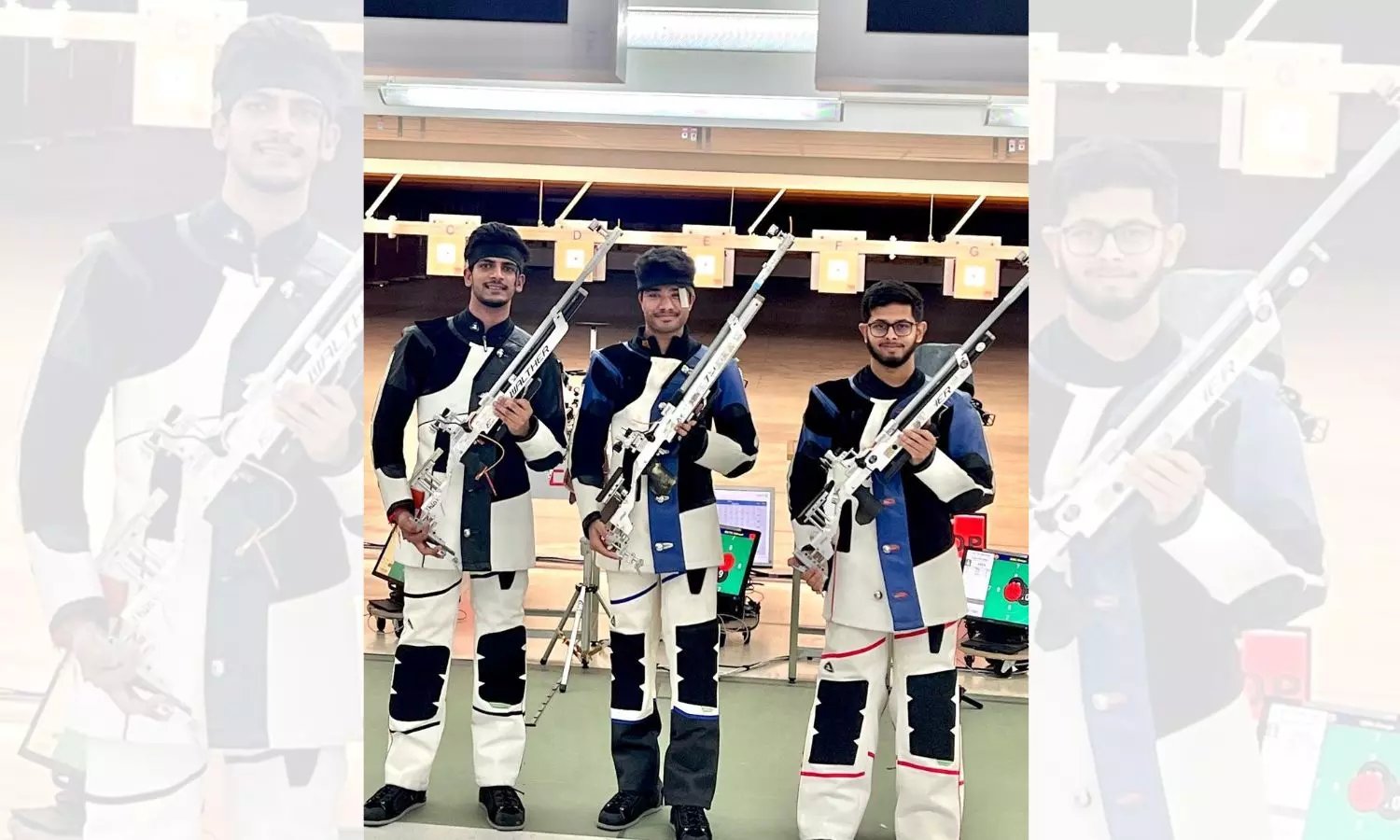
WORLD RECORD- SHOOTING: ’02nd World Deaf Shooting Championship 2024′ : Dhanush Srikanth breaks 02 world records, Shourya Saini claims Silver and Mohammed Murtaza Vania claims Silver as India sweeps men’s air rifle event in Hanover, Germany

INDIA :

World Deaf Shooting Championship: Dhanush breaks world records as India sweeps men’s air rifle event (Photo: X) / (L to R) Shourya Saini, Dhanush Srikanth (Centre) and Mohammed Murtaza Vania

New Delhi :

India dominated the men’s 10m air rifle event on day two of the second World Deaf Shooting Championship in Hanover, Germany, with Dhanush Srikanth, Shourya Saini, and Mohammed Murtaza Vania making a clean sweep of the medals.

Dhanush set two world records in a single day, first by scoring 632.7 in the qualification round, followed by a stunning 251.7 in the final.

His performance left Shourya, who secured the silver with a score of 249.9, trailing by a significant margin.

Mohammed Murtaza Vania claimed the bronze with a score of 226.2.

In addition to their success in the men’s event, India also shone bright in the women’s category with Mahit Sandhu and Natasha Joshi winning silver and bronze respectively, adding to the country’s medals tally.

The Indian contingent had already secured four medals on the first day of the competition, including one gold, two silver and a bronze.

( Source : PTI )

source http://www.deccanchronicle.com / Deccan Chronicle / Home> Sports / by PTI (headline edited) /September 02nd, 2024

City Muslim girl Sarah Rizvi takes Urdu route to IAS

Mumbai, MAHARASHTRA :

Mumbai:

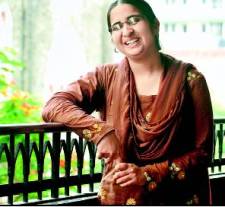
Sarah Rizvi has done her bit to issue a blow to the stereotype of the Muslim woman, moderately educated and socially subjugated, ensconced in hijab. She has cleared the IAS exam, ranking 86th among 734 successful candidates. More remarkably perhaps, she has achieved the feat with Urdu literature as one of her optional subjects.
 

“Urdu is my mothertongue. I learnt Urdu and Persian from my late grandfather, Khalid Hussain Khan, who was a lawyer in Uttar Pradesh. I have read Urdu poems and novels since childhood. My Urdu writing speed was bad but I wrote a page a day and that improved my pace of writing,’’ Sarah said. Mohammed Iqbal was, for her, the most difficult poet to understand. “But his shayeri is fabulous,’’ she said of the Kashmiri poet who wrote Sare Jahan se achchha, Hindustan hamara.
 

After finishing BCom from MMK College in 2003, Sarah attended a lecture on competitive exams by K M Arif, educationist and chairman of Alliance Foundation. That inspired her to go for the IAS. “I tried twice but could not clear even the preliminary stage. This was my third attempt and, masha Allah, I passed,’’ the 25-year-old said, adding that her success was the outcome of 10-12 hours of study a day.
 

While doing her BCom, Sarah also completed her foundation course in chartered accountancy. “I wanted to become a CA but Dr Arif suggested I study for the IAS exam instead. I was clueless about the exam procedure and the requisite study material but my family supported me,’’ she said. Sarah was also awarded a scholarship by MESCO, an NGO.
 

Sarah is now posted as section officer in the Haryana Accountant-General’s office.
 

Sarah’s father, Afzal Ahmed, a science graduate, and mother Nigar, an arts graduate from Aligarh Muslim University, run a small garments business.

Her elder brother, Wasif, a civil engineer, is working for a company in Dubai and Sarah’s twin sister, Sameera, a graduate in computer applications, from National College, is married and lives in Bahrain. “I feel more Mulims, especially women, should go for the competitive exams. Many women don’t even know what these exams are about but awareness is spreading,’’ Sarah said.
 

“This subject gives us an inside knowledge of government administration. And the topics are similar to the business administration course matter I read in college,” Sarah said, explaining why she chose public administration over accountancy as one of the optionals.
 

Sarah did her schooling from Canossa Convent School and St. Louis Convent High School in Andheri. She later joined CWC College for Commerce and Economics and eventually graduated from MMK College with 75.7 per cent marks.

(Courtesy Times of India)

source: http://www.ummid.com / Ummid.com / Home / by Mateen Hafeez, TNN (headline edited)

Girl Student Tops, The list of Muslim UPSC Candidates

INDIA :

31 Muslims figure in the list of 791 recommended candidates.

New Delhi: 

A girl student topped the list of the successful Muslim UPSC candidates when the results were announced yesterday. Of the total 791 candidates recommended by the commission in its list for various government posts, 31 are Muslims and the girl student topping them in the list is among the top 100 Union Public Service Commission (UPSC) successful candidates.

According to the press release issued by Union Public Service Commission (UPSC), Sufiyah Faruqui ranking 20 in the list of 791 candidates is among the list of 100 toppers for which the results were announced by the Union Public Service Commission (UPSC) yesterday. Sufiyah is on top in the list of 31 Muslim candidates who figure in the list released by the commission that includes three other Muslim girls besides her.

While Sarfaraz Ahmad ranking 26, Shaid Iqbal ranking 51,Tamboli Ayyaz ranking 75 and Sadre Alam ranking 90 are other Muslims who are in the top 100 list, Koya Praveen ranking 120, Ayesha Rania ranking 139 and Sabiha Rizvi ranking 303 are the other three Muslim girls who stand in the list of 791 successful candidates.

The results were announced yesterday based on the written part of Civil Services (Main) Examination, 2008 held by the Union Public Service Commission (UPSC) in October-November, 2008 and the interviews for Personality Test held in March-April, 2009.

A total of 791 candidates have been recommended by the commission for appointment including 364 General (including 13 Physically Challenged candidates), 236 Other Backward Classes (including 07 Physically Challenged candidates), 130 Scheduled Castes and 61 Scheduled Tribes candidates.

Owing to the poor representation of Muslims in the Union Public Service sector, the Muslim Institutions like Aligarh Muslim University (AMU), Jamia Hamdard, Delhi and Jamia Millia Islamia, Delhi are running special coaching classes for UPSC students since past three years.

“The result shows that Muslim representation for this year’s UPSC exams stands at 3.92%, a better progress compared to 3.6% in 2006 and 3.1% in 2007”, Omair Anas of Center for West Asian Studies, Jawaharlal Nehru University said to ummid.com adding, “However the achievement is still not at par and the institutions engaged in coaching the Muslim students for UPSC exams should pay special attention to contribute substantially in administrative services.”

The recommended candidates would be eligible for various coveted government posts including Indian Administrative Service (IAS), Indian Foreign Service (IFS), Indian Police Service (IPS) and Central Services-Group ‘A’ and Group ‘B’.

Appointment to the various services will be made according to the number of vacancies available with due consideration to the provisions contained in Rules 2 and 19 of the Rules of the Examination and subject to the final decision of the Supreme Court / High Court / C.A.Ts. on the S.L.Ps. / R.As/ W.Ps. O.As. pending therein.

The number of vacancies reported by the Government for the Indian Administrative Service is 120 (60 General, 33 Other Backward Classes, 17 Scheduled Castes and 10  Scheduled Tribes); for the Indian Foreign Service is 26 (13 General, 08 Other Backward Classes, 04 Scheduled Castes and 01 Scheduled Tribe); for the Indian Police Service is 130 (65 General, 36 Other Backward Classes, 20 Scheduled Castes and 09 Scheduled Tribes); for the Central Services Group ‘A’ is 546  (282 General, 146 Other Backward Classes, 81 Scheduled Castes and 37 Scheduled Tribes) and for Central Services Group ‘B’ is 59 ( 34 General, 13 Other Backward Classes, 08 Scheduled Castes and 04 Scheduled Tribes). This includes 20 vacancies for Physically Challenged candidates.

List of the 31 Muslim Candidates with their Ranks:

20: 002666: SUFIYAH FARUQUI

26: 010669: SARFARAZ AHMAD

51: 192126: SHAID IQBAL

75: 079564: TAMBOLI AYYAJ FAKIRBHAI

90: 001339: SADRE ALAM

120 003004 KOYA PRAVEEN

128: 024509: MASOOM ALI SARWAR

134: 003602: IMTIAZ ISMAIL PARRAY

139: 131443: AYESHA RANI A

169: 056251: ZIAUL HAQUE

244: 114573: ASHIQUZZAMAN

257: 043392: BASIR AHMED

303: 004357: SABIHA RIZVI

304: 010883: ANEES AHMAD ANSARI

353:008606 PATTAN IMTIYAZ KHAN

382: 010383: MASHHOOD UR REHMAN FAROOQUI

393: 104282: SHAHNAWAZ UL RAHMAN

398: 039145:0020: CHAN BASHA M

460: 102384: KAZI SUHAIL ANEESAHMED

472: 147935: T K SHIBU

499: 102579: TARIQ MABOOD

502: 051643: GEELANI BASHA K S M

523: 290928: R GULZAR BEGUM

540: 056907: MOHD SHAHID ALAM

546: 108290: MOHD FAIZAN NAYYAR

582: 303331: MAHFOOZUR REHMAN

595: 004523: MD SADIQUE ALAM

603: 002722: MD SALIK PARWAIZ

606: 018478: MD FAIZUL HAQUE

619: 079717: MOHAMMED YUSUF QURESHI

664: 055051: ABDUL HAKEEM M

source: http://www.ummid.com / Ummid.com / Home / by Staff Reporter / May 05th, 2009

When Lata Mangeshkar, Mohammad Rafi enabled liberation of Dadra, Nagar Haveli

Mumbai, MAHARASHTRA :

Uprising’ says it all started when music director and freedom fighter Sudhir Phadke decided to seek Mangeshkar’s assistance to raise funds for an armed revolt.

In this Thursday, October 26, 2017, singer Lata Mangeshkar attends a function at Dadar in Mumbai. PTI Photo

New Delhi :

Legendary singers Lata Mangeshkar and Mohammad Rafi played an instrumental role in the liberation of Dadra and Nagar Haveli, says a new book as it narrates in detail the little-known 1954 concert by the two icons to raise funds for the movement.

Dadra and Nagar Haveli, now a Union Territory, were occupied by the Portuguese in 1783 and 1785, respectively. They continued to be ruled by the Portuguese till an armed revolution liberated them, and the Tricolour was unfurled at Silvassa on August 2, 1954.

The two enclaves were formally recognised as an integral part of India in 1961 along with Goa and Daman and Diu but unlike Goa’s liberation, there was no direct intervention by the Indian armed forces here.

Recounting what led to the singers’ participation in the liberation of the territory, ‘Uprising’, written by Neelesh Kulkarni, says it all started when music director and freedom fighter Sudhir Phadke decided to seek Mangeshkar’s assistance to raise funds for an armed revolt.

According to the book, Mangeshkar, who first seemed reluctant, agreed after Phadke and his friends mentioned that the liberation of Dadra and Nagar Haveli was only a ‘prelude to the freedom of Goa’.

Mangeshkar had an emotional connection with Goa and the Portuguese were harassing devotees coming to the temple of her family’s presiding deity, Lord Mangesh, at Mangeshi village in north Goa.

“Her eyes suddenly welled up… The family derived their surname from the village’s name. The Portuguese had been regularly harassing devotees who came to the temple, and the frustration of not being able to do anything about that brought her over to their side in an instant. ‘You will allow me to serve my Lord Mangesh,’ she said tearfully. ‘I wish I could come and fight by your side, but since I cannot, I will help you raise resources. You tell me the date and I will be there, ’” reads the book, quoting Mangeshkar.

The jubilation at securing her presence doubled when Mangeshkar suggested they should invite Mohammed Rafi to sing with her.

And Rafi, who met Phadke and team at the then newly-inaugurated Mehboob Studios in Bandra, said ‘yes’ readily.

The meeting, which was supposed to last for 10 minutes, went on for an hour as Rafi asked question after question about how the group was planning to execute their plans, says the book.

“He was so impressed that he held up a hand when Nana Kajrekar, a freedom fighter, told him he would arrange his railway tickets to and from Pune. ‘This country is also mine,’ Rafi said, ‘and if all of you are preparing to put your lives on the line for it, the least I can do is buy my tickets.’”

Unfortunately, the concert didn’t go as planned for Mangeshkar met with a road accident in April, 1954, the day she was supposed to perform. The singer tried to reach despite the accident, but it was cancelled by then.

“Lata and Rafi finally arrived at the venue at 11.30 pm and saw it was dark and deserted… She stayed with the Phadkes that night, and before leaving promised that she would cancel whatever she was doing to perform on whichever date they scheduled the concert next,” reads the book.

The concert was finally held on May 2 at the same venue. The programme was a hit, and though the venue was not as jam-packed as the first time, the revenue, according to the author, was still substantial.

“From the proceeds of the concert, the freedom fighters planned the whole project and were able to buy five rifles and three pistols from the black market in Hyderabad. And using these weapons, 29 of them attacked more than 300 fully armed Portuguese and threw them out of the Dadra and Nagar Haveli,” said Kulkarni during the recent launch of the book at India International Centre (IIC).

‘Uprising: The Liberation of Dadra and Nagar Haveli’, published by Westland Books, uses interviews with descendants of the participants, and a handful of participants themselves, newspapers, archival records, letters and diary entries, to put together the pieces of this little-known history.

source: http://www.tribuneindia.com / The Tribune / Home> India / by PTI / September 02nd, 2024

Remembering Maulana who hoisted Tricolour in front of 300 British cops

Ludhiana, PUNJAB:

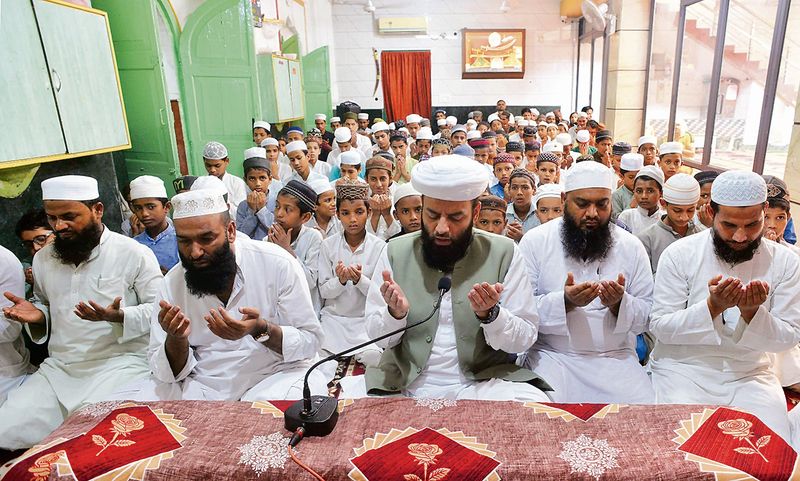
Prayers being offered at Jama Masjid in memory of Maulana Habib-ur-Rehman Ludhianvi. Tribune photo: Himanshu Mahajan

Ludhiana :

A prayer was organised at the local Jama Masjid in remembrance of Maulana Habib-ur-Rehman Ludhianvi, the man who stood up and raised his voice against the Divide and Rule policy of the British. Today, was his 68th death anniversary.

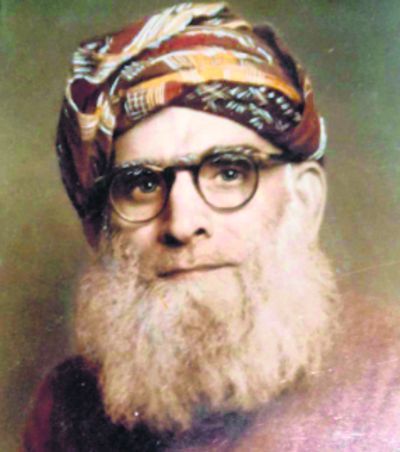
Maulana Habib-ur-Rehman Ludhianvi

Ludhianvi was one of the founders of Majlis-e-Ahrar-e-Islam and was the direct descendant of Shah Abdul Qadir Ludhianvi, who fought against the British colonial rule during the Indian Rebellion of 1857. In British records, he has been described as a fiery speaker who exercised considerable influence on people in the region.

In 1929, to oppose the idea of partition, Pandit Jawaharlal Nehru hoisted the Tricolour on the banks of Ravi for the first time and at the same time, Ludhianvi hoisted the same flag at Jama Masjid in Ludhiana in the presence of over 300 British policemen and was arrested.

“When the entire nation was suffering under the Divide and Rule policy of the British, it was he who stood up and raised his voice,” said Mohammad Usman Rehmani Ludhianvi, the Shahi Imam of Punjab, remembering his great grandfather.

Voices calling out “Hindu paani lelo, Muslim paani lelo” were common at the railway stations as there were separate pitchers of water for the Hindus and the Muslims. But in 1929, Maulana Habib-ur-Rehman Ludhianvi raised his voice against this and protested at Ghaas Mandi Chowk, Ludhiana and, with the help of his volunteers, broke earthen pots.

As a result, the British government was forced to install one common pitcher at all railway stations across the country giving the message “sabka paani ek hai”. In this activity, nearly 50 volunteers were arrested and sent to jail, he shared.

“My great grandfather decided to stay back in this part of Punjab although many of their relatives migrated to Pakistan. He was deeply pained by the Partition and later in order to help women to get back to their respective families, he had set up a ‘Phir Basau’ committee. Thousands of women returned to their parents under this exchange programme,” he said. Maulana, though not a poet, was well-versed in poetry and used to host poetic evening once a month, he shared.

Subhash Chandra Bose took refuge for three days at his home while on his way to Japan. Similarly, Bhagat Singh’s mother, brother and sister also stayed at his place during the freedom struggle.

Habib-ur-Rehman had to spend 14 years in prison in various places including Shimla, Mianwali, Multan, Ludhiana and Dharamsala.

He was confined in cold places during winters and hot ones in summer. He contracted a serious infection in jail due to which he died on September 2, 1956.

source: http://www.tribuneindia.com / The Tribune / Home> Ludhiana / by Manav Mander / Tribune News Service / September 03rd, 2024

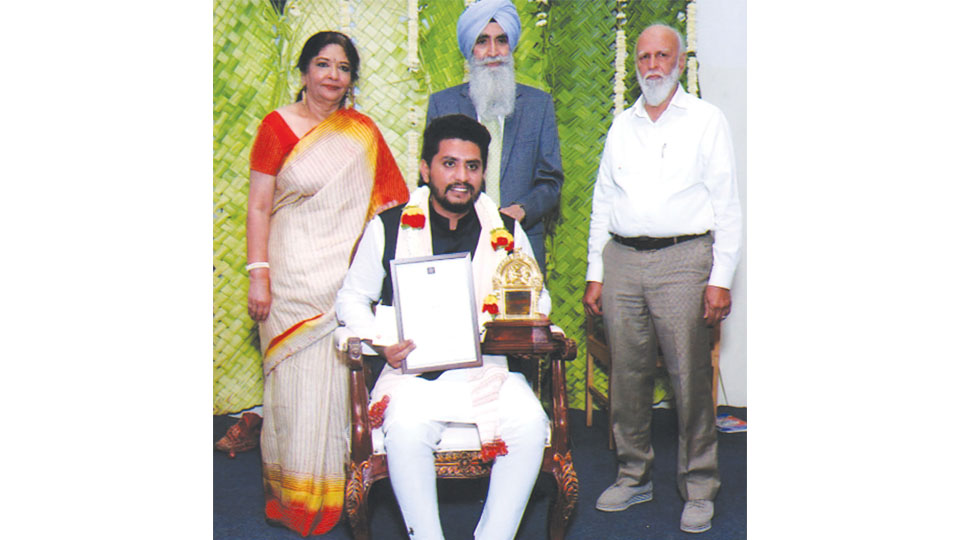
Wins Viswakarma Award

Mysuru, KARNATAKA :

City-based Rose Wood Inlay artiste Luqman Khan was presented with the Kamaladevi Chattopadhyay Viswakarma Award during an event organised by the Crafts Council of Karnataka at Karnataka Chitrakala Parishath in Bengaluru recently.

Crafts Council of Karnataka Chairperson Mangala Narasimhan, former Additional Chief Secretary Chiranjeev Singh and Crafts Council of Karnataka Treasurer Mir Shafi Farooq were present on the occasion.

source: http://www.starofmysore.com / Star of Mysore / Home> Gallery>Photo News / August 31st, 2024

The birth of a bank

Chennai, TAMIL NADU:

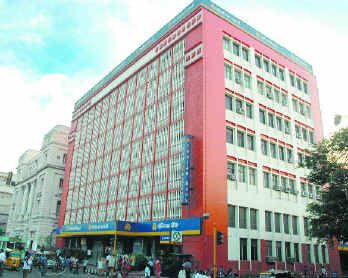
A view of the Indian Bank headquarters on Rajaji Salai / Photo : R. RAGU

The Indian Bank recently launched its commemoration of its 100th year of business. But this month’s centenary is that of the collapse of Arbuthnot & Co., out of whose ruins there arose the Indian Bank.

The story of Arbuthnot’s and the bank that it ran has been narrated in this column before. Late last year, as the centenary year began, one part of it – the legal proceedings that followed – were narrated in detail in “the first full-length book on this spectacular financial catastrophe”, The Fall of Arbuthnot & Co., by Dr. Rangaswamy Srinivasan (EastWest Books). Today, I recall some of the key dates involved in the death of one bank and the birth of a new one.

It was on October 20, 1906, that P. Macfadyen, Arbuthnot’s correspondent and associate in Britain, committed suicide. On October 22, Arbuthnot’s petitioned the court to be declared insolvent and The Hindu reported that “a regular panic had taken hold of (the disappointed Creditors) and a rush was made to the High Court… “

V. Krishnaswami Aiyer, a young vakil at the time, taking his cue from a letter that had appeared in The Hindu, got together eight other like-minded persons and on November 2, 1906, they sent out a circular inviting the public’s views on the possibility of starting “a Native Bank in Madras”. Encouraged by the response they got, they called a public meeting on December 2 that was attended by 28 of the leading citizens of Madras. Out of these and subsequent deliberations emerged The Indian Bank Limited, registered on March 5, 1907 and opening its doors in Parry’s building on August 15th that year.

That Indian Bank was the second Indian bank to be established in Madras.

The first, the Madras Central Urban Cooperative Bank, was established on September 16, 1905. Other Indian banks, however, had been founded in the Madras Presidency before these two. They included the Tanjore Permanent Fund, now the Thanjavur Bank, started in 1901; the South Indian Bank, started in Tirunelveli in 1903; and the predecessor of the present City Union Bank, Kumbakonam, in 1904. Also predating the Indian Bank were the Canara Banking Corporation, Udipi, now the Corporation Bank, and the Canara Hindu Permanent Fund, now the Canara Bank, both started in 1906.

The eight who signed the circular Krishnaswami Aiyer drafted were :

H. Mohamed Abdul Azeez Badshah Saheb, Senior Partner of the firm with the same name and Hony. Consul for Turkey; Muraleedoss; T. Seetharama Chetty, Senior Partner of Moses & Co.; M.A. Kuddus Badshah Saheb; M. Jamal Mohideen and Co.; V. Bashyam Iyengar, High Court vakil and a former Judge of the Court; and P.R. Sundara Iyer, High Court vakil.

When the Bank was floated, its first Directors included four of these signatories – Seetharama Chetty, Azeez Badshah, Muraleedoss (Ramdoss) and Krishnaswami Aiyer.

Their fellow Directors were Lodd Govindoss, C.P. Ramaswami Aiyar, a High Court vakil at the time; Dewan Bahadur M. Adinarayanan Iyer, retired Deputy Settlement Commissioner; and two Nattukottai Chettiars, Rm.M.St. Chidambaram Chettiar and Dewan Bahadur S.Rm.M. Ramaswamy Chettiar, representing the community which substantially funded the Bank.

Ramaswamy Chettiar was the elder brother of Annamalai Chettiar who was to receive the title Rajah and who was to play a major role in the bank in his later years.

Of the 74 Directors of Bank up to nationalisation in 1969, thirty were Nattukottai Chettiars.

source: http://www.thehindu.com / The Hindu – The Metro Plus Chennai, Online edition / October 09th, 2006