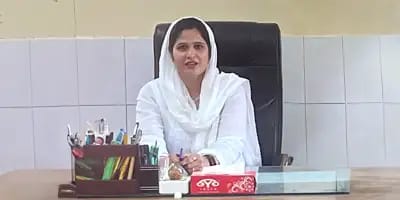
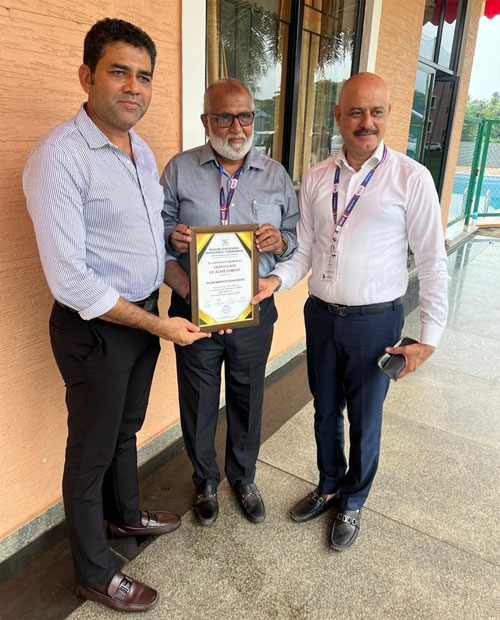
Nusrat Jahan, the headmistress of Jamia Middle School at Jamia Millia Islamia (JMI), has been honored with the Best District Principal Award for the academic session 2023-24 by the Academic Council of the Science Olympiad Foundation (SOF).
This prestigious award recognizes her exemplary leadership, commitment to academic excellence, and innovative initiatives that have significantly enhanced scientific and mathematical aptitude among her students.
Under Jahan’s leadership, Jamia Middle School saw remarkable achievements, with 72 students earning Gold medals in the Olympiad during the 2023-2024 academic year.
The Science Olympiad Foundation, known for its dedication to promoting STEM education globally, acknowledged Jahan’s transformative initiatives and their positive impact on both students and faculty.
The award comes after a rigorous selection process, considering 79,400 schools from over 1,400 cities across 70 countries that participated in this year’s Olympiad examination. Jahan attributed this success to the collaborative efforts of the school’s dedicated teaching staff and the hard work of the students.
Prof Mohammad Shakeel, the officiating vice-chancellor of JMI, congratulated Jahan on her outstanding achievement and praised her relentless dedication to student success and school improvement. Jahan’s deep knowledge, leadership skills, and pleasant personality have been pivotal in driving the school’s achievements and earning this distinguished award.
source: http://www.radiancenews.com / Radiance News / Home> Pride of the Nation / by Radiance News Bureau (headline edited) / June 08th, 2024
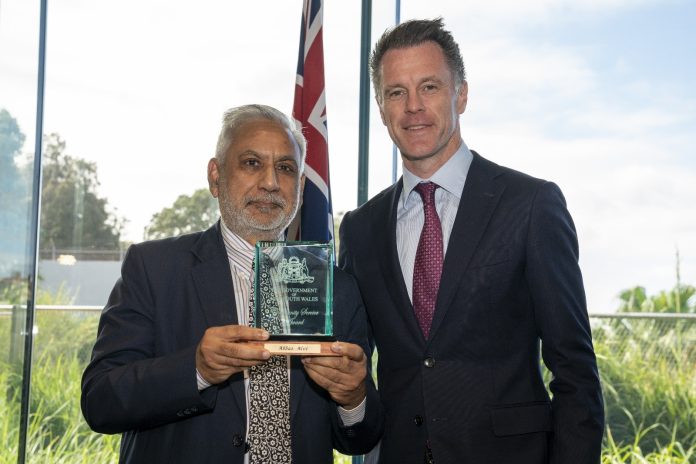
In a ceremony hosted by Australian Premier Chris Minns at the Art Gallery of NSW, Mr. Abbas Raza Alvi, President of the Indian Crescent Society of Australia, was awarded the NSW Government Community Service Award. The event, held on May 20th, marked the beginning of National Volunteer Week, celebrating the remarkable contributions of volunteers across New South Wales.
More than 300 guests representing various volunteer organizations attended the event, highlighting the vital role volunteers play in strengthening communities. The NSW Government Community Service Award recognizes individuals who have significantly enhanced the quality of life for community members, going above and beyond their regular duties.
Among the six distinguished recipients nominated by their State Members of Parliament, Mr. Alvi stood out for his exceptional dedication and selflessness. Nominated by Stephen Bali MP, Member for Blacktown, Mr. Alvi’s unwavering commitment to service has inspired and enriched countless lives.
As President of the Indian Crescent Society of Australia, Mr. Alvi champions multiculturalism, diversity, and inclusion, striving to foster harmony among diverse communities. His involvement in various associations, businesses, and cultural bodies demonstrates his broad impact and leadership in promoting social cohesion.
Mr. Alvi’s volunteer work extends across multiple sectors, from founding the Australia India Chamber of Commerce NSW to serving on advisory committees in councils. His passion for promoting peace and social responsibility serves as a beacon of civic engagement for others to emulate.
Through his recognition and award, Mr. Abbas Raza Alvi exemplifies the values of compassion and community service, inspiring individuals to actively contribute to the betterment of society.
source: http://www.radiancenews.com / Radiance News / Home>Muslim World> Australia / by Radiance News Bureau / May 27th, 2024
Hockey legend Ashok Kumar was accorded the Major Dhyan Chand Lifetime Achievement Award for his contribution to the sport.
Delhi:
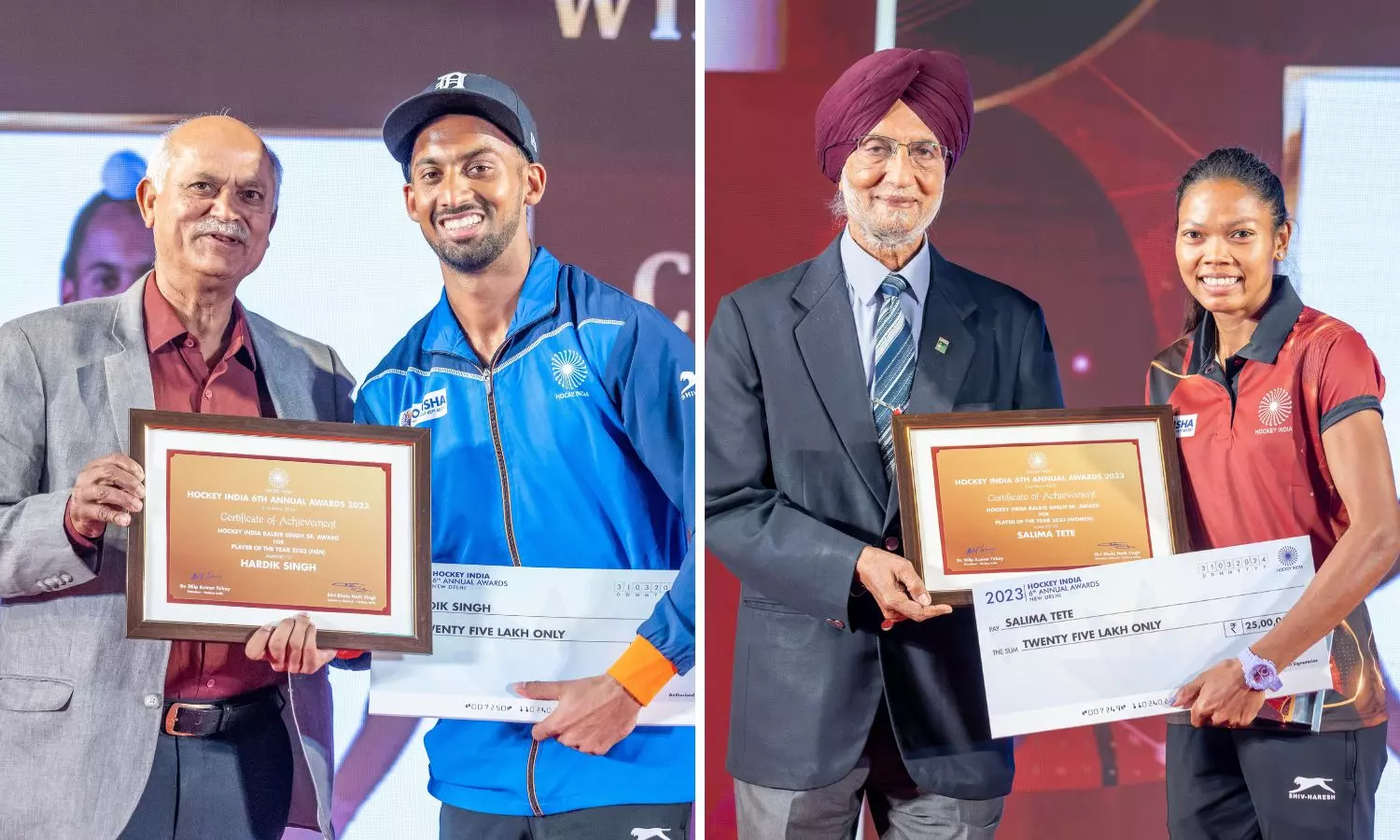
Hardik Singh and Salima Tete were named men’s and women’s players of the year at the 6th Hockey India Annual Awards in New Delhi on Sunday.
This year, the total award prize pool was INR 7.56 crores.
Surprisingly, the 2016 Junior World Cup gold medal-winning Indian men’s team was felicitated, with each player earning a cash prize of INR 5 Lakh along with a trophy.
The 2023 Junior Asia Cup gold medal-winning Indian men’s and women’s teams were also honoured, with each player earning a cash prize of INR 2 Lakh and all the members of the support staff earning a cash prize of INR 1 Lakh each.
Other gold medal-winning teams of men’s Hockey 5s Asia Cup, women’s Hockey 5s Asia Cup, men’s Asian Champions Trophy, and women’s Asian Champions Trophy were also felicitated along with the men’s team that won gold at the Asian Games and women’s team that won bronze.
Meanwhile, Hockey Haryana won the Best Member Unit of the Year Award 2023, earning a prize of INR 2.5 Lakh.
The award ceremony saw PR Sreejesh winning the prestigious Hockey India Baljit Singh Award for Goalkeeper of the Year, earning a cash prize of INR 5 Lakh along with a trophy.
For his consistent performances throughout the year, Harmanpreet Singh won the Hockey India Pargat Singh Award for Defender of the Year, earning himself a cash prize of INR 5 Lakh along with a trophy.
Hockey India Ajit Pal Singh Award for Midfielder of the Year was won by Hardik Singh, while Abhishek won the prestigious Hockey India Dhanraj Pillay Award for Forward of the Year, both earning themselves INR 5 Lakh and a trophy each.
The next generation was also honoured with youngster Deepika Soreng winning the Hockey India Asunta Lakra Award for Upcoming Player of the Year (Women – Under 21) earning a cash prize of INR 10 Lakh and a trophy.
Araijeet Singh Hundal was named the Hockey India Jugraj Singh Award for Upcoming Player of the Year (Men – Under 21), winning a cash prize of INR 10 Lakh and a trophy.
Hardik Singh, and Salima Tete, won the Hockey India Balbir Singh Sr. Award for Player of The Year Awards for men and women respectively, each earning a cash prize of INR 25 Lakh along with a trophy.
“It is a matter of great pride for me to win the prestigious award. This is truly reflective of the hard work and the commitment that our team displayed over the past year. I am thankful to everyone for their support and I will continue to work even harder in the coming year to justify the honour,” said Hardik Singh after winning the award.
Meanwhile, Salima Tete, on her win, said, “I wish to thank my teammates, coaches, and the support staff for showcasing their faith in me. It is a matter of great pride for me every time I get to wear the Indian jersey and step out on the field to represent the nation. This award will further motivate me to continue to do even better each day so I can continue to make the country proud.”
The ceremony closed with Hockey India celebrating the achievements of Ashok Kumar, honouring the Indian legend with the prestigious Hockey India Major Dhyan Chand Lifetime Achievement Award with a cash prize of INR 30 Lakh and a trophy.
Award winners at 6th Hockey India Annual Awards
Rs 5 Lakh each: PR Sreejesh (Goalkeeper of the Year), Harmanpreet Singh (Defender of the Year), Hardik Singh (Midfielder of the Year), Abhishek (Forward of the Year)
Rs 10 lakh each: Deepika Soreng (Women Under-21 Player of the Year), Araijeet Singh Hundal (Men Under-21 Player of the Year) Rs. 25 lakh each:
Salima Tete (Player of The Year Women), Hardik Singh ( Player of The Year Men) Rs 30 lakh: Ashok Kumar (Major Dhyan Chand Lifetime Achievement Award).
source: http://www.thebridge.in / The Bridge / Home> Hockey / by The Bridge Bureau / April 02nd, 2024
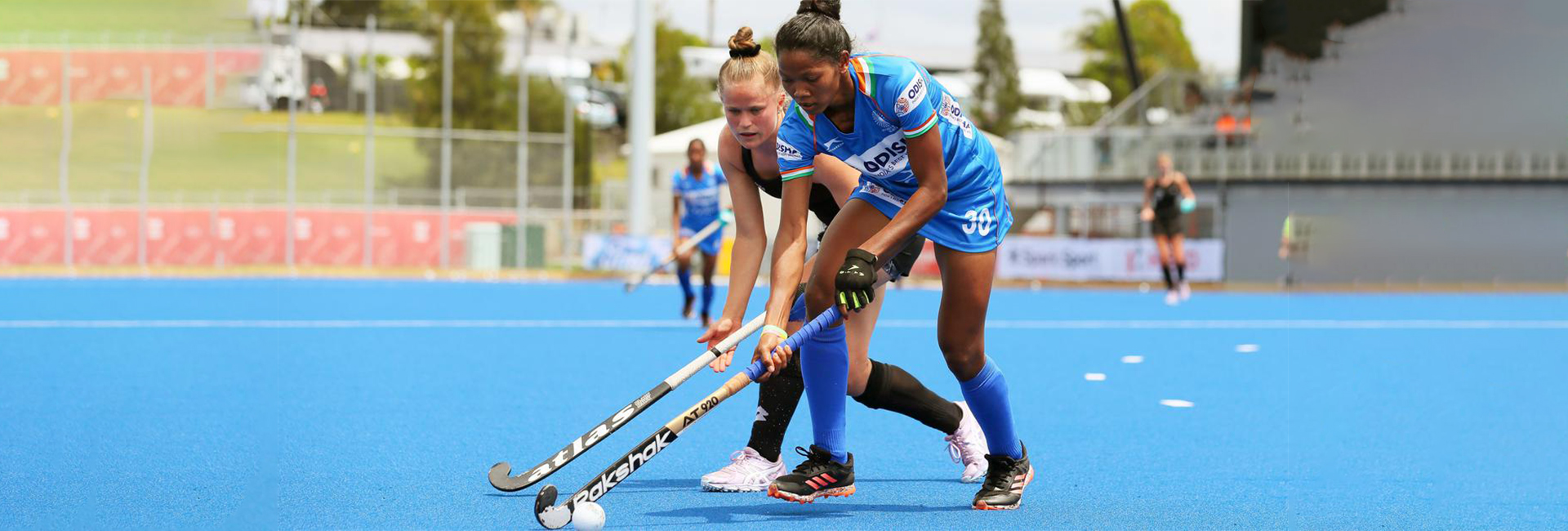
The girl who started playing hockey with bamboo sticks in the village grounds, travelled over 20-kilometres on her bicycle for matches, and won goats and chickens in village tournaments, has come a long way. Today, Salima Tete is an international hockey player, who was recently appointed by the Asian Hockey Federation (AHF) as its Athletes Ambassador from India.
The player has begun her two-year term along with three other players from Asia.
“I am honoured to be selected as one of the AHF ambassadors. As athletes from Asia, we face a lot of challenges in our careers. This position will allow me to bring our voices to the front,” Salima said during the AGM of AHF in Korea. “I hope to make a positive impact on the lives of athletes from the Asia region with this position,” she added.
Salima Tete
Over the last several years, Salima has been an integral part of the Indian hockey team. She was named the ‘Rising Player of the Tournament’ at the Women’s Asia Cup tournament held in Muscat last year.
From rural Jharkhand to international hockey turfs
The journey of the twenty-one-year-old hockey player from a nondescript village of Simdega district in Jharkhand is nothing short of an inspiration.
Born to Sulakshan and Subani Tete, Salima and her five siblings grew up in extreme poverty amidst abundant love. It wasn’t just her family – the village was poverty-ridden, not a single home could afford a television set.
Her farmer father ferried the aspirant hockey player for matches as far as 20 kilometres from their village on his bicycle. The awards at these local tournaments were chicken and goats – the only items that the local organisers could arrange to give away as prizes. It was on occasions like these that the Tete family would devour a non-vegetarian meal. On other days the meals were as simple as could be.
Since there was no television or internet in their village, no one in the locality could watch Salima play her first major match. It was much later that her family started watching her play at national and international stadiums. By then, the midfielder was scaling her own mountains, and had made India proud on several occasions.
Salima Tete with PM Modi
In 2020, when Salima got the opportunity to play at the Tokyo Olympics, her village came into spotlight and better training facilities got introduced for the youth there. Her younger sister, Mahima, who had also been exposed to the sport thanks to her sister, began playing it too. Like Salima, Mahima is a national hockey player as well.
“Before the Tokyo Olympics, no one knew about our village and after I came back, the focus on our native place increased a lot. We have people visiting us from different places. People recognising the village I come from is really heart-warming,” Salima said in an interview. “Even my family feel very good when people come to visit. The whole atmosphere has changed and it makes me very happy,” she added.
The following year, in 2021 when Salima led the Indian women’s junior hockey team to a fourth-place finish at the Women’s Junior World Cup in Potchefstroom, South Africa she climbed the popularity charts further.
Surging ahead as an ambassador
After her appointment as AHF Athletes Ambassador, Salima remarked, “I sincerely thank the Asian Hockey Federation for showcasing their faith in me and also express my gratitude to Hockey India for their constant support in all my endeavours.”
Salima Tete during the AHF AGM
In her two-year term (2023-25), Salima will be in a leadership role, facilitating the growth and international representation of athletes from Asia. She will also be working to promote awareness about athletes’ welfare and rights.
“Playing for India has really changed my life a lot, it has given me everything I could have asked for. I just want to keep performing for the country and winning more matches,” Salima had said in an interview. India is all praise for athletes like her for bringing laurels to the country.
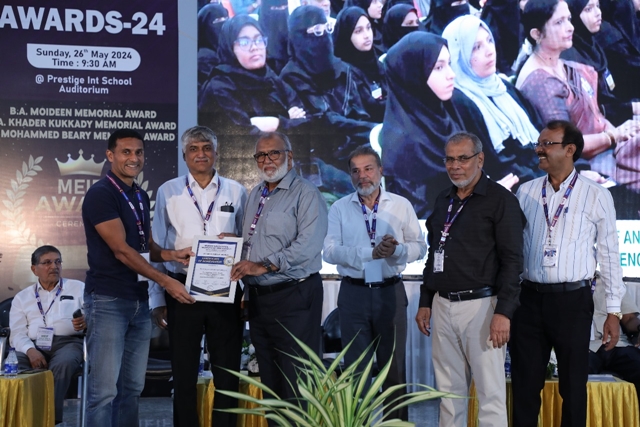
Melkar Women’s PU College, Marnabail, has been awarded with ‘Excellence Award’ by Muslim Educational Institutions Federation (MEIF) for achieving cent percent results in 2nd PUC in science, commerce and arts for the academic year 2024.
S M Rashid Hanji, chairman of Mangaluru Education Enhancement Trust (MEET) received the award on behalf of the management committee of the college during the recent MEIF annual conference held in Mangaluru.
Mohammed Farhaad, pro chancellor of Yenepoya University; Nisar Ahmed, chancellor of Presidency University; Syed Mohammad Beary, chairman of Bearys Group of Institution; Musabba Beary, chairman of MEIF; Iqbal Ahmed, Umar Teekay and others were present.
source: http://www.daijiworld.com / Daiji World / Home> Karnataka / by Daijiworld Media Network – Bantwal (VP) / June 03rd, 2024
Karate player Zabir Ansari has won a gold medal in the tenth international championship named Mayor Cup 2024 organized at Kakarvitta Meshinagar Jhapa, Nepal. The two-day championship held on May 31 had India, Pakistan, Sri Lanka, Bangladesh, Bhutan, Afghanistan and Nepal as participating countries.
Zabir Ansari’s victory is being celebrated at Patna University, where he is enrolled for a post-graduate degree in the Urdu department.
Earlier, Zabir had won medals in international Karate events in Sri Lanka, Thailand, China, Turkey, and Egypt.
Zabir won the gold medal by defeating Nepal and Bhutan in the 75 kg category.
pix: x.com
Interestingly, Zabir was short of money for participating in this international meet when a Pasmanda leader Dr Faiyaz Ahmad Fyzie ran a social media campaign asking Indians to help this promising Karate player. He posted this on social media after Zabir’s vioctory on X:
Giving the credit for his success to his coach Rahul Kumar, Jabir told Awaz-the Voice on the phone from Nepal that ‘Rahul Sir’ made him practice hard for 6 to 8 hours every day.
Rahul said that he was hopeful that just like Zabir’s gold medal in the All India University competition where 188 universities were participating he would win the gold this time.
Zabir played his first match in 2015 where he won a silver medal.
Zabir Ansari’s achievement is all the more impressive given his background. He hails from a remote and naxal-affected area of Bihar.
His father Imtiaz Ansari is a teacher in a school in his native Tumbapahar village of Jhajha block of Jamui district.
Zabir is the eldest of four siblings. Mother Fahima Khatoon has received the Rashtra Veermata Jijabai Samman-2018.
Zabir has represented the country five times. In 2017, he won a silver medal for the country in the South Asian Karate Competition held in Sri Lanka. He represented India in China, Thailand in 2018, and Turkey in 2019. He was included among the potential Karate players of India in the Asian Games held in Indonesia in 2018 and participated in the training camp.
Zabir has won the gold medal six times in a row in the state-level Karate Championship, while he won the silver and bronze medals in 2017 and 2019. Last year, Jabir Ansari won the bronze medal by securing third place in the All India Inter-University Karate Championship. Jabir Ansari also secured fourth place in the Khelo India University Game 2022.
Zabir has received the State government’s Sports Award in 2018, 2021 and 2022.
Zabir said that as a child he always dreamed of doing action. Also, he would sneak out and watch action movies of actors like Akshay Kumar. After watching a film, he always felt a strong urge to learn action. However, only after came to Patna for admission in the 12th class did he join a Karate class. In 2015, he played a match at the national level for the first time.
Initially, his family wanted him to focus on studies. However, sensing his inclination for Karate, his parents gave him a go-ahead.
Shahab Zafar Azmi, Chairman of the Urdu Department of Patna University, says that Zabir Ansari’s success is the success of the Urdu Department and Patna University. “I congratulate our promising student, may he get more success.”
Zabir also says that the college gave him confidence as a sportsperson.
“I will always be grateful for the honour of being a student of Patna University and above all for the guidance and support I received.”
Bihar Governor Rajendra Vishwanath Arlekar has honoured Jabir for encouraging him.
source: http://www.awazthevoice.in / Awaz, The Voice / Home> Story / by Seraj Anwar, Patna / June 03rd, 2024
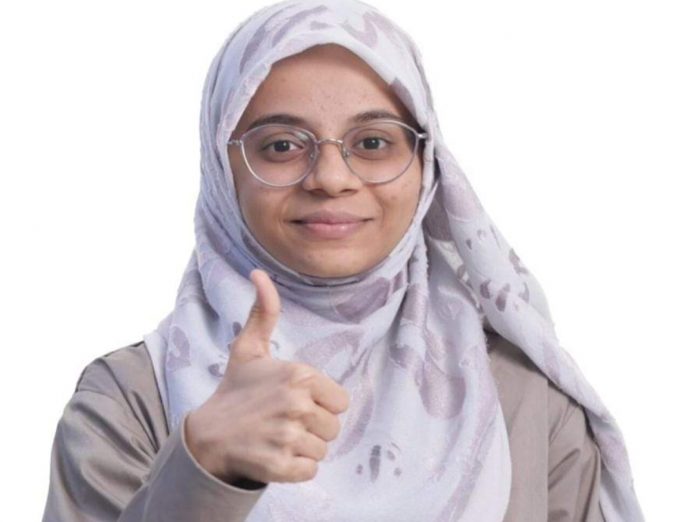
Amina Arif Kadiwala, an Urdu medium student, has achieved an extraordinary feat by securing the first position in the All India NEET UG 2024 examination. Hailing from Madni High School in Jogeshwari, Mumbai, Amina outshone approximately 25 lakh students across India to claim the top spot. Her success is particularly remarkable given the competitive nature of the exam and the high level of preparation required.
Amina’s journey to the pinnacle of NEET UG 2024 is a testament to her dedication, hard work, and perseverance. As an SSC student from an Urdu medium background, she faced numerous challenges but remained steadfast in her pursuit of excellence. Her achievement has not only brought pride to her family and school but also serves as an inspiration to countless other students from similar backgrounds.
Madni High School, known for its commitment to providing quality education, played a significant role in nurturing Amina’s talent. The school’s supportive environment and dedicated teachers provided her with the guidance and resources needed to excel in her studies. Amina’s accomplishment underscores the importance of providing equal educational opportunities to students from all linguistic and socio-economic backgrounds.
Aspiring to study MBBS, Kadiwala has studied till class 10 in Urdu and then took admission into SVKM’s Mithibai College. She completed her schooling at Madni High School, Jogeshwari.
She revealed that initially, it was a challenge for her as she was weak in English, but slowly she learned the language and aced the exam
Amina’s success story has garnered widespread acclaim and admiration. Her exceptional performance in the NEET UG 2024 has opened doors to some of the best medical colleges in the country, paving the way for a promising career in medicine. As she embarks on this new journey, Amina is determined to continue working hard and making a positive impact in the field of healthcare.
In an era where the importance of education cannot be overstated, Amina Arif Kadiwala’s achievement stands as a beacon of hope and motivation for aspiring students across India, demonstrating that with determination and hard work, any obstacle can be overcome.
source: http://www.muslimmirror.com / Muslim Mirror / Home> Indian Muslim> Positive Story / by Muslim Mirror Staff / June 05th, 2024
Hamid Iqbal Siddiqui And his wife Zahida with students during a quiz programme
Hamid Iqbal Siddiqui, founder and chairman of Quiz Time, Mumbai, has organized more than 275 general knowledge quiz shows to promote the Urdu language across the megacity of Mumbai.
Committed to the promotion of the Urdu language and education in Mumbai, Siddiqui has been holding general knowledge quiz competitions in modern style for more than three decades.
He is so popular among students who are learning Urdu that as soon as he reaches a school, children gheroa him. They run towards him chanting “Uncle Hamid Iqbal aa gaye…”
Iqbal Siddiqui received the title of “Superstar of Urdu Students” long ago. besides, The Times of India publication has also honoured him with the title of “City Angel.”
Hamid Iqbal Siddiqui delivering a motivational lecture
Siddiqui told Awaz-the Voice that apart from their syllabi, today’s children must have a good knowledge of arts, science, sports, technology, politics, civilization and culture, film, medicine, history, mathematics, current affairs (current affairs), etc.
“It plays an important role in a child’s success in life. If we look at our education and job entry examinations, it cannot be denied that questions in general knowledge are asked in almost every examination and this percentage is quite high. If attention is paid to this aspect from the early stage of children, the preparation process for any competitive exam can be started from the primary school.”
Hamid Iqbal Siddiqui said that it was during 1992-93 that he and some of his close friends decided to do something for the youth. “I was given the responsibility of teaching General Knowledge. I used to conduct Islamic quiz competitions in madrasas during my student days. I also used to make Islamic quiz programs on the streets by putting up a stage in a street, However, those programs were also quite popular among the students. Therefore, I did not face any particular difficulty in organizing the General Knowledge Quiz competitions.”
Siddiqui says that even before the advent of quiz shows on television, he had been conducting general knowledge quiz competitions with music, and full pomp and show. At the end of the program, children are awarded prizes, and Siddiqui also presented gifts to their parents and their teachers.
“We presented a gift to each participant in the general knowledge competition. We value his hard work more than winning and losing,” Siddiqui said.
Hamid Iqbal the presentation of prizes to all participants made him quite popular. He says once he distributes prizes worth rs one lakh.
Hamid Iqbal Siddiqui with teachers of urdu school
Quizmaster Hamid Iqbal says that it has been wrongly projected that there are no employment opportunities for those studying the Urdu language.
“Those who follow the outdated way of thinking and feel inferior are the ones. They are harming Urdu. Even today, Urdu is the source of livelihood for millions of people in our country. Urdu culture is still very attractive.”
He said that when Urdu is connected with modern technology, higher education, fashion, and entertainment many new opportunities of jobs will flow.
Hamid Iqbal has been working on sustaining and improving the quality of Urdu schools for years. “When the era of e-learning came, he introduced it in Urdu schools. We are continuing with that project without charging the school fees,” he said.
While visiting a school, he always carried chocolates and small gifts for the students. He asks the students questions during his lecture and gives away chocolates and gifts to those who reply or even attempt to reply correctly.
He however regrets the fact that there is no significant change in their condition. “In these schools, no special attention is paid to general knowledge.”
He narrates an incident. During his visit, he asked students the name of the President of the country and the reply was Narendra Modi. They didn’t know who the chief minister of the State was. “I realized that despite conducting General Knowledge Quiz competitions for 26-27 years, there is still a lot of work to be done. That’s why I am paying special attention and giving lectures in Urdu schools to change the mindset and trigger their minds to seek information and knowledge.”
In 1999, Quiztime Mumbai organized the first Inter-School General Knowledge Quiz Competition. The success of this large-scale program encouraged them to continue the trend in 2024 with the 23rd Annual General Knowledge Quiz Competition ‘Dhamal’. 2024′ was successfully organized in February. Fifty schools participated in this competition. A team of three students from each school participated.
A special feature of Dhamal 2024 was that not four but six teams were selected for the competition and they were awarded with trophies and prizes.
Siddiqui’s wife Zahida is the backbone of his operation. Zahida is a teacher in a government school and she spends a part of her salary on Urdu General Knowledge Quiz competitions.
Hamid Iqbal Siddiqui with award winners
“She is also my like-minded friend and a friend of Urdu. Ever since she joined us, the quality of our quiz competitions has improved even more. Acknowledging his wife’s talent,” Hamid Iqbal says that Zahida is the best organizer.
Born in 1958 in Mumbai, Hamid Iqbal Siddiqui is the grandson of Allama Seemab Akbarabadi. His family has been serving the Urdu language for more than a hundred years. He has been working as an assistant editor of the 93-year magazine Shayar published in Mumbai.
This literary magazine has been banned for some time now. However, he writes a column for the Urdu newspaper Daily Inquilab. Interestingly, Hamid Iqbal Siddiqui is a trained designer; he is also fond of poetry.
Siddiqui continues to participate in national and international Mushairas. Hamid Iqbal says there have been occasions when he had to choose between attending a Mushaira and children’s quiz competition, he settled in favour of children.
Siddiqui commands an interesting personality, has a charming voice, and speaks polished Urdu. When he picks the mike, the audience is smitten by his way of speaking. He does not let his words burden the environment. The children who participate in Hamid Iqbal’s programs remember him forever. He is very happy. “when I go out, many people coFlecme and greet me. Students who are under study meet me as well as those who are now holding high positions when they mention me.”
Siddiqui has no children and he keeps showering his love, compassion, and sincerity on children.
A few years ago, he wanted to expand his work. he decided to find scribes in the Urdu educational institutions.
Apart from this, he organizes the program ‘Urdu ki Mohabbat Mein‘ every year under the banner of Quiz Time Mumbai. he awards a person who has worked selflessly for the promotion of the language. The award is called ‘Mohab Urdu Honour‘ He has seven books on General Knowledge to his credit so far.
Hamid Iqbal Siddiqui says that Urdu is a complete, modern, and living language. Like all the living languages of the world, science, history, geography, and other modern sciences should be taught in Urdu. However, he says, a lot of hard work, effort, and struggle is needed to improve the quality of the education at these schools.
source: http://www.awazthevoice.in / Awaz, The Voice / Home> Stories / by Shah Taj Khan, Pune / May 31st, 2024
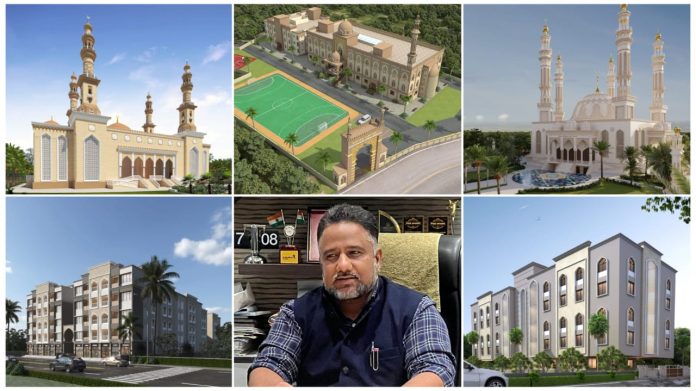
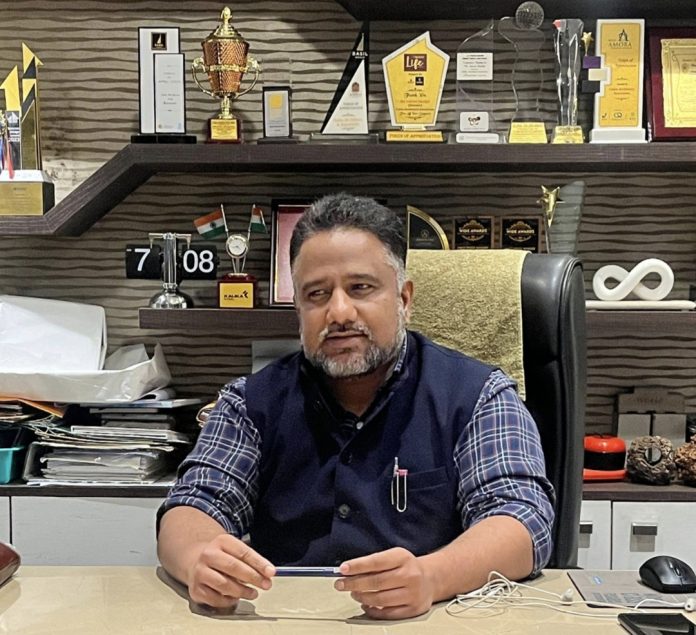
Architect Imran Abbas Shaikh and some of the mosques he designed.
Architect Imran Abbas Shaikh, a visionary based in Pune, Maharashtra, exemplifies the transformative power of architecture. With a passion for blending modern design with cultural heritage, Imran has developed a diverse portfolio ranging from innovative urban projects to iconic cultural landmarks. Renowned for his distinctive approach, he has redefined architectural design, particularly in the creation of mosques. His designs for these sacred spaces often include facilities like hospitals, museums, libraries, and community kitchens, showcasing his dedication to empowering the community. Through his work, Imran Abbas Shaikh has set a new standard for integrating functionality with tradition, earning widespread acclaim for his contributions to architecture.
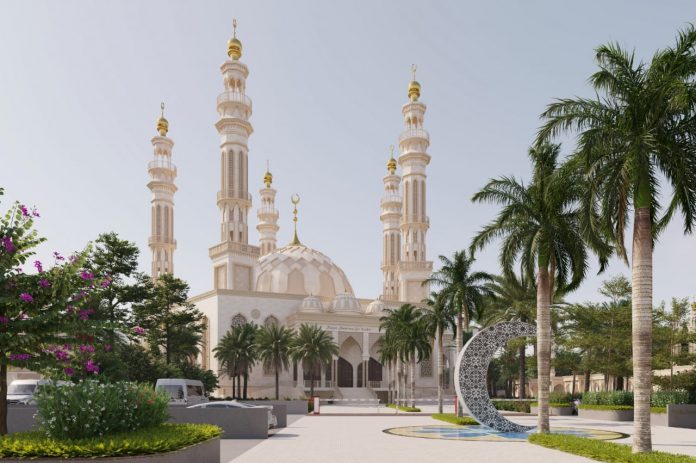
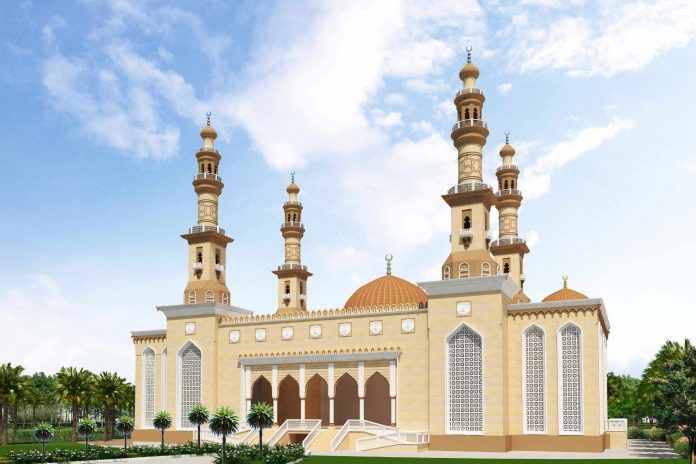
Muhammad Bin Abdullah Mosque’ in Dhannipur, Ayodhya district, Uttar Pradesh.
The Early Years
Mr. Mohammad Imran Abbas Shaikh, hailing from Pune, Maharashtra, has traversed an extraordinary journey from his roots to emerge as one of the most prominent architects of our time.
His architectural firm, Cubix Architects, situated in his hometown, reflects his deep-rooted connection to the place that nurtured his talents. Growing up, Imran was distinguished by his unique approach and a penchant for creative thinking, qualities that would later define his illustrious career as a visionary architect. However, it was the unwavering support and belief of his father that truly ignited Imran’s passion. His father instilled in him the notion that architecture was not merely about envisioning structures, but about crafting an unwavering future that could bring about positive change. This paternal guidance became the driving force behind Mr. Mohammad Imran Abbas Shaikh’s relentless pursuit of architectural excellence.
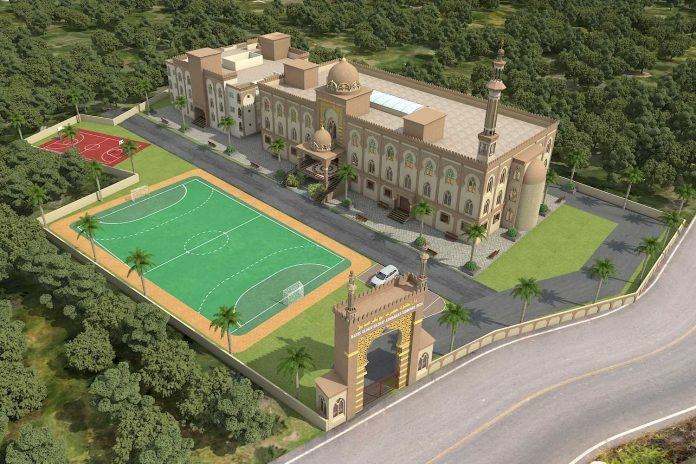
Islamic School and Institutional Campus, Phaltan, Maharashtra.
Educational Background
Imran Shaikh’s educational journey was marked by a pursuit of excellence from the outset. Beginning with his early schooling split between SSPM and Children’s Academy in Shivaji Nagar, Pune, he demonstrated a thirst for knowledge and innovation. His high school years at Poona College laid the groundwork for his academic prowess, setting the stage for his subsequent achievements.
Imran’s passion for architecture led him to Bharati Vidyapeeth, where he honed his skills and emerged as a consistent topper throughout his degree. Even after completing his formal education, Imran’s dedication to his field remained unwavering. He continues to share his expertise and insights by delivering lectures and guiding Ph.D. aspirants, leaving an indelible mark as an inspirational figure for aspiring architects and youngsters alike. His contributions as a guest lecturer have not only enriched the minds of his students but have also sparked a newfound enthusiasm for architecture among many.
Islamic Spiritual Centre of Maulana Sajjad Nomani – Neral, Maharashtra
Inspiration Behind Choosing Architecture as Career
Imran Shaikh always had a keen interest in travelling, exploring, and various forms of art. After high school, he decided to pursue architecture as a career, a field that had always intrigued him. Imran often spoke about how his father was his biggest motivator, playing a significant role in his journey to becoming a successful architect. During Imran’s college years, his father would proudly share his accomplishments with everyone. Imran’s fondness for art and his unique, abstract perspective on things have been evident throughout his career. Each of his projects bears a distinctive touch, showcasing his artistic vision and innovative approach.
“Modern technologies have made the youth increasingly dependent, resulting in a lack of motivation and original ideas. To foster change, it is essential to reduce dependency on readymade materials and encourage wholehearted engagement in learning, exploration, and hands-on activities. As long as a person is away from mental pollution, they can do wonders”
How Does Imran Shaikh See Architecture
Imran Shaikh states that architecture is a profession that has existed since the dawn of mankind, tracing its origins back to Adam (AS). Since the beginning, people have sought shelter, making architecture an integral part of human existence. This concept is not limited to humans; some of the best architectural forms can be seen in birds and animals. According to him, architecture starts with a dot, which evolves into a line, then a triangle, and gradually forms complex shapes and designs. The journey beginning with a simple dot encapsulates the essence of architecture.
His favourite works
The ‘Muhammad Bin Abdullah Mosque’ in Dhannipur, Ayodhya district, Uttar Pradesh, is under construction and spans 4,500 square metres.
Dar e Arqam
This mosque will include various facilities such as a hospital, community kitchen, library, and research centre.
Remarkably, it will be the first mosque in India to feature five minarets, symbolising the five pillars of Islam: profession of faith (shahada), prayer (namaz), almsgiving (zakat), fasting (roza), and pilgrimage (hajj). The mosque will be pentagon-shaped, further reflecting the significance of the five pillars. Additionally, it will boast a water and light show and house the world’s largest Quran, measuring 21 feet in height and 36 feet in width.
Architect Imran Abbas Shaikh
Some of architect Imran’s finest works include:
1-KAUSAR BAUGH MASJID – PUNE, MAHARASHTRA
2-ISLAMIC SPIRITUAL CENTRE OF MAULANA SAJJAD NOMANI – NERAL, MAHARASHTRA
3-ISLAMIC SCHOOL AND INSTITUTIONAL CAMPUS – PHALTAN, MAHARASHTRA
4-ISLAMIC SCHOOL AND INSTITUTIONAL CAMPUS – NEPAL
5-MASJID MUHAMMAD BIN ABDULLAH INDO ISLAMIC CULTURAL – BABRI MASJID, UP AYODHYA
5-ISLAMIC SCHOOL AND INSTITUTIONAL CAMPUS – BANGLADESH
Building a Better Society
Apart from his architectural achievements, Imran Shaikh is actively involved in education through his nonprofit ‘Human Embrace Foundation’, based in Pune. This foundation is dedicated to educating children from financially disadvantaged backgrounds, ensuring they have access to quality education and opportunities. Imran’s commitment to this cause has made a significant impact, inspiring many young people. His dedication and success serve as a powerful role model for youth, encouraging them to strive for excellence and make a positive difference in their communities. Through both his architectural work and his educational initiatives, Imran Shaikh exemplifies the values of innovation, compassion, and community empowerment.
source: http://www.muslimmirror.com / Muslim Mirror / Home> Indian Muslim> Positive Story / by Fiza Memon / May 25th, 2024
Bengaluru, KARNATAKA / New York, U.S.A / Mumbai, MAHARASHTRA :
Rummana Hussain’s conceptual artistic imprint on the state of India is relevant now more than ever. Dealing in the currency of feminist expression, postcolonial thought and perennial ideas, Rummana’s India is both doubly colourful and doubly dark.
In an inaugural show in its new West Village location, New York’s Institute of Arab and Islamic Art presents The Tomb of Begum Hazrat Mahal an exhibition encapsulating Rummana Hussain’s artistic ruminations about the space our bodies occupy in present and past through one of India’s most prominent Muslim woman.
Bangalore-born Rummana Hussain (1952-1999) was a pioneer in conceptual and performance-based political art in India during the 1980s and 1990s.
She was part of the Sahmat collective, a platform for liberal, secular engagés multidisciplinary artists including Safdar Hashmi, Bharti Kher, and Manjeet Bawa among others.
In this recreation of The Tomb of Begum Hazrat Mahal (1997), the respectful visitor enters a one-room shrine.
“In seeing The Tomb of Begum Hazrat Mahal today, I remembered Hussain’s bold feminist reclamation of her Muslim body through the reincarnated aura of Begum Hazrat Mahal to question monolithic identity, national narratives, and systemic marginalisation”
Various objects signify a site of lamentation, pride, and remembrance.
On the floor, occupying a central location, 12 votive-like papaya halves sit atop a mattress of uncooked rice, evoking both an altar to womanhood and fertility, and a symbolic funerary pyre.
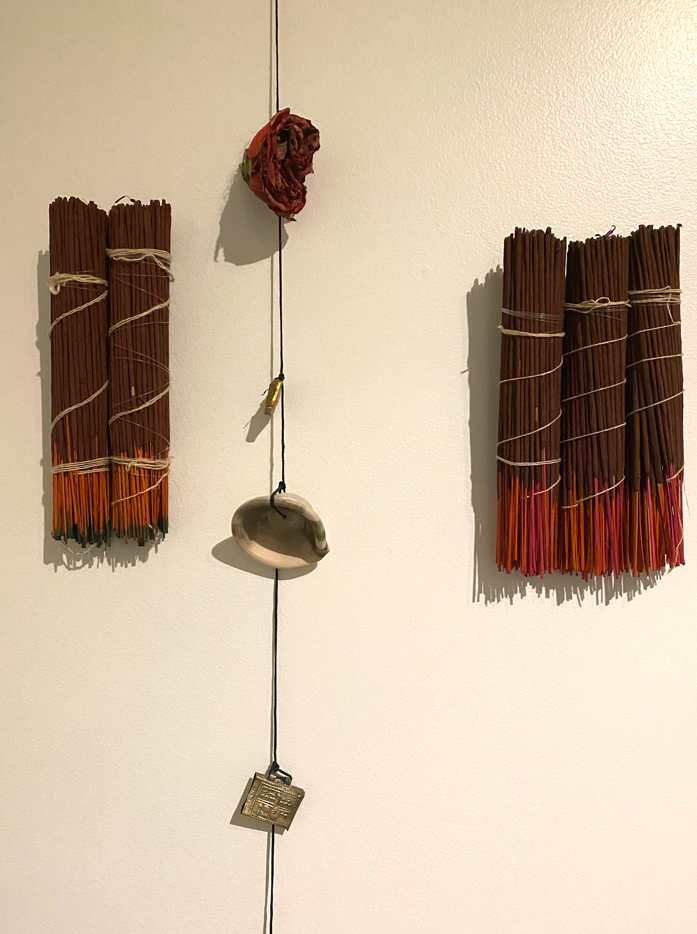
In front of them stands an installation of offerings comprising amulets, dried roses, shells, and incense sticks, tied in a rope.
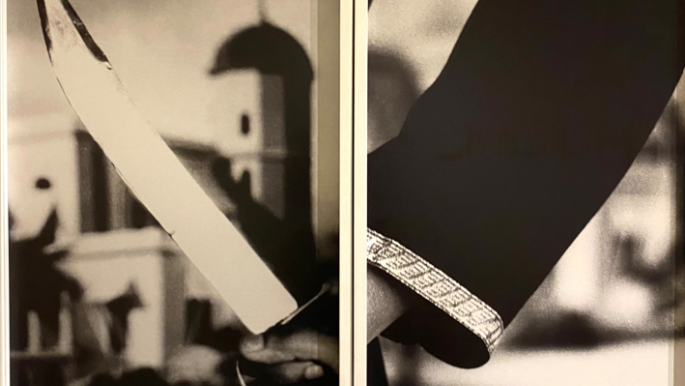
Against the three other walls is a calligraphic sculpture from rusty metal that reminds of a sacred spell and the embodiment of time, and an image frieze of detailed black and white triumphant photographs showing a woman’s arms, wrists, and hands.
In one of these frames, a woman raises her fist up as if calling others to join in. In another, she holds an ominous knife. Images of flames are interjected between the simulacra of archives.
The room is devoted to a woman, an invisible physical body which radiates from each of the static objects. Begum Hazrat Mahal (1820-1879), née Muhammadi Khanum, was born into a poor family.
She was sold and entered the royal harem of art-loving Wajid Ali Shah, the last king of Awadh, a kingdom that occupied the area of the present-day northern Indian state of Uttar Pradesh. Trained as a harem attendant, she would eventually rise to become the king’s concubine – one of his favourites. Beyond her charms, Begum Hazrat Mahal owes her entrance on the historical stage foremost to her political prowess and courage.
The British-owned East India Company operated in Awadh since the early 19th century. The Company increased its grip in 1856, when it directly seized control of Awadh, citing poor governance and the need to uphold the rule of law to justify their annexation (an excuse known as the “Doctrine of Lapse”).
A Chief Commissioner was rapidly appointed. This caused the king to leave Lucknow and seek refuge in Calcutta. The Queen Mother of Awadh petitioned Queen Victoria in person for her son’s rights, in vain. Wives, including Begum Hazrat Mahal were left behind in occupied Lucknow.
After this brutal annexation, discontent grew in several parts of India against the British and the interference of the Company, culminating in a mutiny and revolt in May 1857. Rebels looked to Awadh’s Crown Prince as a successor to his absent father when they captured Lucknow.
But Birjis Qadr, the son of Begum Hazrat Mahal and Wajid Ali Shah, was still a child then, too young to assume power. In his stead, Begum Hazrat Mahal took over Awadh’s revolutionary affairs, actively leading the armed revolt during her regency, towards the reinstatement of Indian rule over Awadh in July 1857.
She continued resisting British rule well after the retaking of Awadh by the occupying troops in 1858, as she refused various offers of collaboration. She died in exile in Kathmandu, Nepal, as an unwavering freedom fighter. Today, a humble stele near Kathmandu’s Jama Masjid marks her tomb.
Rummana Hussain, Living on the Margins, 1995, performance at the National Centre for Performing Arts, Mumbai
When Rummana Hussain first showed The Tomb of Begum Hazrat Mahal to the public in 1997, it was during a period marked by the tragic aftermath of inter-communal violence.
During the 1980s, radical Hindu nationalists campaigned to build a temple on the site believed to be the birthplace of Rama, where a mosque had been erected since the 16th century.
They took to the streets of Ayodhya, Uttar Pradesh, en masse in 1992. Security lost control of the crowd which eventually stormed into the site, demolishing the mosque.
This ignited weeks of violent clashes between Hindu and Muslim communities, causing the deaths of thousands. A later investigation on the destruction of Babri Masjid in Ayodhya pointed out the responsibility of leaders and supporters of the right-wing Bharatiya Janata Party (BJP), the political party of India’s incumbent Prime Minister, Narendra Modi.
Babri Masjid launched a turning point in Hussain’s artistic journey towards a more intimate, politically-conscious form of expression. In Dissected Projection (1993), she explored the multilayered meaning of ruins and dislocation through an allegorical work that exposes a fracture, a shattered piece of terracotta.
In her show Multiples and Fragments (1994), Hussain engaged with historical and domestic oppression in an installation of pigmented pieces of fabric on a clothesline, to denounce the colonial extraction of indigo in India and unpaid housework traditionally performed by women and girls. Labour is always physical and violence first hurts the most vulnerable.
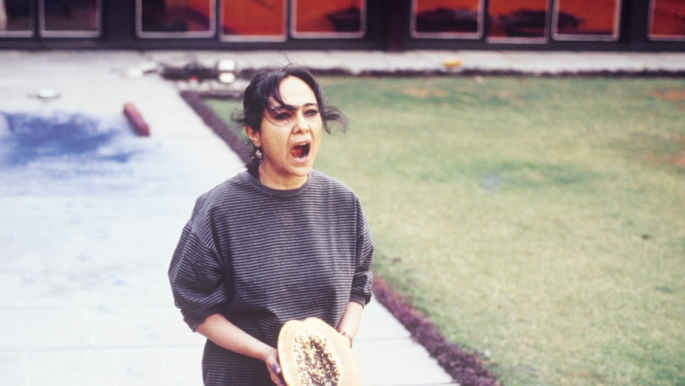
In her 1995 performance Living on the Margins, Hussain screamed while holding papaya halves, shapes that represent a universal vessel and the female anatomy.
Her works have been exhibited in the India Pavilion of the Venice Biennale in 2019, and in multiple institutions across India, Canada, Australia, Mexico, the United Kingdom and the United States during her lifetime and posthumously.
In seeing The Tomb of Begum Hazrat Mahal today, I remembered Hussain’s bold feminist reclamation of her Muslim body through the reincarnated aura of Begum Hazrat Mahal to question monolithic identity, national narratives, and systemic marginalisation. She wanted to say, we can turn the hate in love, we can turn the oppressed, the victims, into heroes they will one day celebrate. We can tell our own stories. They matter.
Outside, scores of brunch-goers live, love, laugh. If it’s dissonance we are meant to acknowledge, I acknowledge it. I closed my eyes in the silent white cube of the Institute of Arab and Islamic Art and saw images of the relentless violence and bullying Muslim women continue to face in Narendra Modi’s India.
In this reconstituted tomb, it’s hard to feel alone. Around me swarmed many other ghosts, of ordinary Muslim women – from Afghanistan to Iran and beyond – crushed and slain in their contemporary defence of freedom and justice against oppressors. Many have been killed in their fight.
A shrine calls for a quiet prayer, I realised.
Farah Abdessamad is a New York City-based essayist/critic, from France and Tunisia.