Students of Telangana Minorities Residential Educational Institutions Society (TGMREIS) have excelled in the TGLAWCET-2024 exam.
Telangana Law Common Entrance Test-2024 (TGLAWCET-2024) was conducted for admission into LLB course in the Colleges of Law in Telangana.
The test was conducted by Convenor, TGLAWCET/TGPGLCET-2024 Osmania University on behalf of the Telangana State Council of Higher Education.
According to TGMREIS Secretary Aisha Masarath Khanam, out of 57 TGMREIS students who appeared in the exam, 40 have qualified. They include 28 girls and 12 boys.
Amatul Waheed of Telangana Minority Residential Junior College (TGMRJC) Secunderabad Girls has secured state ninth rank. She has made TGMREIS proud, said Ayesha Khanam.
Out of 38 students from TGMRJC Secunderabad Girls, 28 have qualified. Seven students from TGMRJC Balapur Boys have qualified. A total of 13 students from this Junior College had written the exam. Out of six students of TGMRJC Barkas Boys who appeared in the exam, five have qualified.
Shahnawaz Qasim, Secretary to Chief Minister, Tafseer Iqbal, Special Secretary, Minorities Welfare Department and Aisha Khanam have congratulated students and teachers on their achievement.
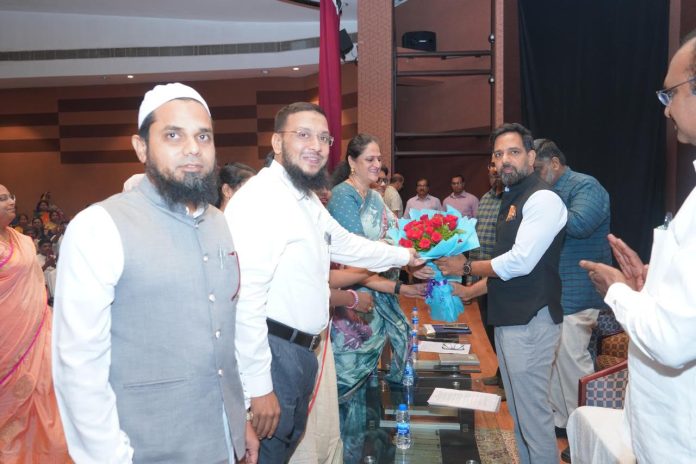
Meanwhile, Mohammed Faheemuddin Qureshi, Vice-Chairman and President, TGMREIS has conducted a meeting with all the Principals of TGMR Schools and Junior Colleges and district minority welfare officers.
The meeting reviewed admission status for the academic year 2024-2025 and results of SSC and Intermediate Board Examinations, 2024. Instructions were given to the Principals to take necessary action for reopening of Schools and also emphasized the retention of newly admitted students.
Faheemuddin Qureshi congratulated the Principals for achieving good results in public examinations and felicitated 10 Principals for achievement of 100% results in SSC, IPE Board Examination results, 2024.
Faheemuddin Qureshi said that the Government of Telangana is fully committed to provide facilities to minorities specially TGMR Schools. He asked the Principals to inculcate discipline among the students and ensure that TGMR Schools should be top in all respects. He instructed the Principals to provide good hygienic food to the students. He informed the Principals that he will be visiting the schools shortly and take the feedback from the stakeholders and give the reward to the good institutions and will not tolerate any adverse remarks noticed.
Shahnawaz Qasim, Faheemuddin Qureshi, and Aisha Khanam congratulated the students, teachers and principals on their achievement.
source: http://www.radiancenews.com / Radiance News / Home> Education / by Radiance News Bureau / June 15th, 2024
Mohammad Shahbaz was felicitated by DRM (Divisional Railway Manager), Samastipur on Wednesday for his effort that averted a possible train collision. DRM Samastipur announced the name of Shahbaz would be recommended for the National Child Award.
Twelve-year-old Shahbaz raised a red piece of cloth (Gamchha) on June 1 near Tajpur road to caution the loco pilot of the Howrah-Kathgodam Bagh Express as the track was cracked which could have caused an accident. The train was carrying around 1500 passengers, and was running at a modest speed. The loco pilot stopped the train after watching the red piece of cloth. The loco pilot came down from the engine and asked Shahbaz the reason for raising the red Gamchha. Shahbaz took him to the spot of the cracked track. It was a vertical crack. Then the track was repaired in half an hour and the operation of trains was restarted.
DRM Vinay Srivastava awarded Shahbaz, a class 7 student, with a school bag and autobiographies of great personalities like Mahatma Gandhi, BR Ambedkar and Stephen Hawkins. Mr. Srivastava said that Shahbaz exhibited exemplary alertness and performed the duty of a citizen.
Srivastava said he wished that the story of Shahbaz be a message for all the children and youth. He said every citizen carries some responsibility. He said the story of Shahbaz should inspires the children of the country.
According to Mohammad Shahbaz, he was returning after taking breakfast to his father Mohammad Salim, who runs a small shop. Shahbaz said that when he saw the vertical crack, he raised his red Gamchha. “We were going home. I saw that there was a crack in the track. I raised my Gamchha and ‘driver uncle’ stopped the train.”
source: http://www.radiancenews.com / Radiance News / Home> Focus / by Sami Ahmad / by Radiance News Bureau / June 06th, 2024
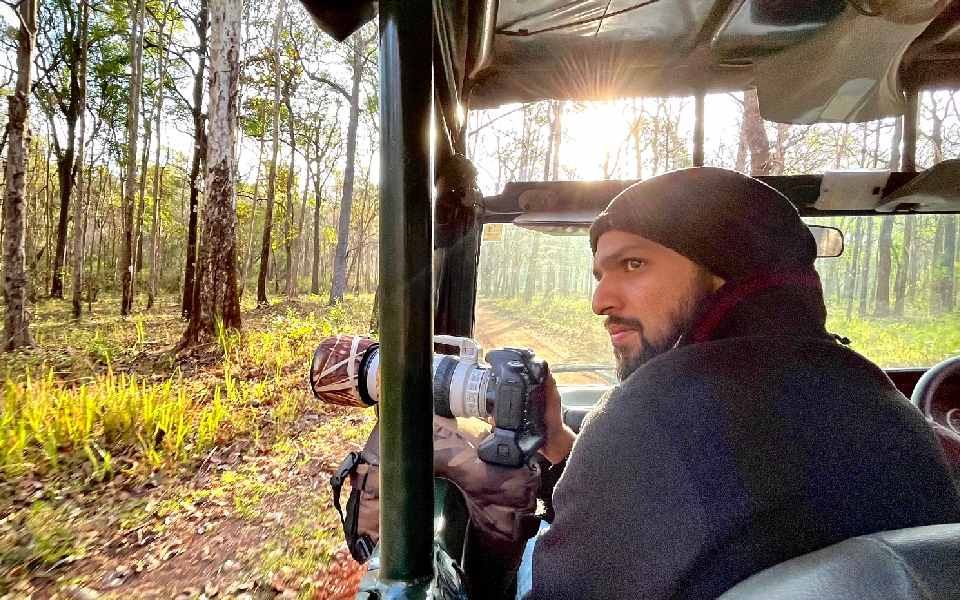
Haarish during one of his jungle visits with his camera
Udupi:
Haarish Mohammed, a wildlife photographer from Udupi, now residing in Saudi Arabia, has won the international photography competition organized by 35 Awards in the Black and White category. This contest saw a remarkable participation of 465,000 photographs submitted by 111,253 photographers from 174 countries.
Reflecting on his journey, Haarish shared, “I’ve been fascinated with nature and forests since childhood. During my college years, trekking through the Western Ghats became a regular activity. In 2011, I moved to Saudi Arabia for a job, realizing that my connection to the forest could only be maintained through a career in the Forest Department, becoming a naturalist, or pursuing wildlife photography. I dedicated 1.5 years to learning the theory of photography before purchasing my first camera in 2013.
“The period from 2013 to 2017 was all about learning, and in 2017, I met a group of talented photographers in Saudi Arabia called Photomates, which I joined. With their support, I honed my skills. However, my job in Saudi Arabia limited my opportunities to explore the forests of Karnataka. After the first wave of COVID-19 in 2020, I decided to resign and return to India to start my own business. Since then, I’ve had many of my works featured and published on various platforms. I visited national parks like Nagarhole, Kabini, and Bhadra, photographing beautiful animals such as tigers, leopards, elephants, and many colorful birds.”
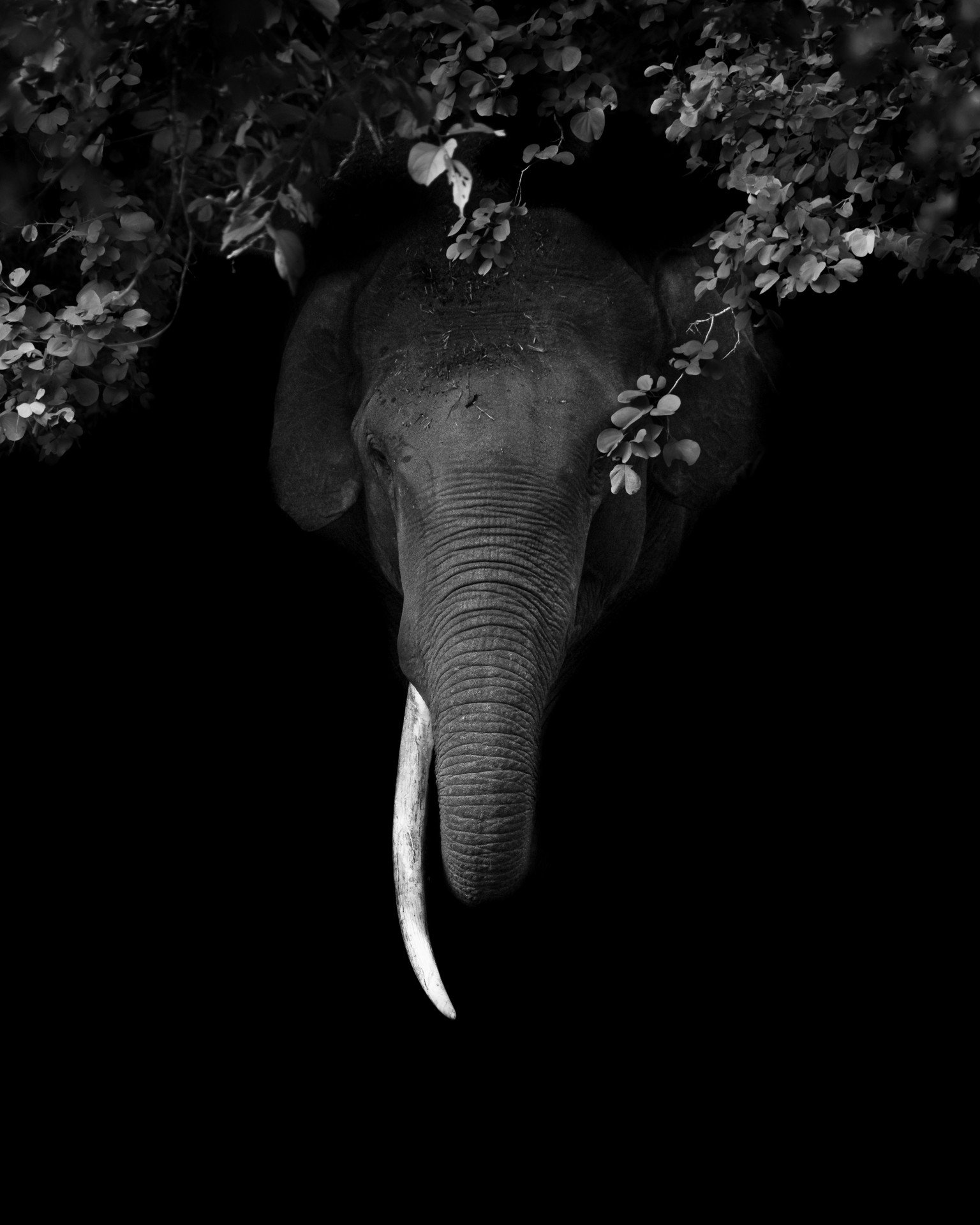
Haarish elaborated on the story behind his winning image: “It was taken during an evening safari in the lush forests of Kabini, Karnataka. We were waiting for a herd of elephants to cross our path to reach a water body. To our surprise, a single tusker emerged from the dark forest.”
Haarish’s photo that bagged first place in international photography competition organized by 35 Awards
Haarish’s achievements include being featured in BBC Earth, the international online magazine PawsTrails, and Nature In Focus.
He secured third place in the 2020, 2021, and 2023 photography competitions held by Pilikula Biological Park in Mangalore. His work was also accepted for the International Wildlife Photo Exhibition held by Alvas Virasat in 2023.
Additionally, he won a certificate of merit in the National Level Photography Contest conducted by the Karnataka Forest Department in 2023. His most recent accolade is the first place in the 2023 international photography competition conducted by 35 Awards in the Black and White category.
“Wildlife photography is like a window into the world of animals. It helps us understand and appreciate them better by capturing their beauty and diversity. Moreover, wildlife photography raises awareness about the importance of protecting wildlife and their habitats. By showcasing the wonders of nature, it encourages us to take care of it. When we see how amazing animals are, we’re more likely to want to save them,” Haarish added.
Abdul Khadar Nadakattin from Dharwad in Karnataka has 24 innovations under his belt.
The niche but problem-solving machines and innovations help farmers with everyday solutions and have also increased their yield up to 25 per cent.
Splashing water on a deep sleeper to wake them up is a clichéd scenario used in many comedy films and on social media. But Abdul Khadar Nadakattin earnestly practised this comedy routine on himself during his school days to wake up early.
A native of the Annigeri village of Dharwad district in Karnataka, Abdul struggled to push himself out of bed in the mornings. “A splash of water on my face was the only solution to wake me up. But I could not expect my parents to do this to me every day,” he tells The Better India.
A then 14-year-old Abdul devised an innovative Wa(h!)ter Alarm. Its functioning was simple — one end of a string was tied to the key of his alarm clock in a manner that when it rang, the thread would unwind itself and the other end was tied to a water bottle. Once the alarm key unwound, the bottle would tilt, and the water would fall on Abdul’s face.
“It helped me wake up and complete my school,” he recalls, laughing. Though he managed to pursue education until Class 10, he did not pursue higher studies.
Abdul at his tamarind plantation
But his water alarm talks led to him speaking of the more serious water issues his village faced. “My father owned 60-acre ancestral land and the water scarcity deterred us from earning good profits from farming. My father admitted that our family’s financial condition was poor and asked me to contribute to the farm. So, I gave up my dream to pursue graduation in agriculture,” the 70-year-old says.
Being deprived of an education did not deter him from thinking out of the box. Little did he know then that the water alarm was the first of many of his innovations .
This farmer has come up with unique ideas to solve everyday farmer problems. To date, Abdul has had 24 innovations under his belt, which benefit thousands of farmers in India. It was for this reason that he won the Padma Shri award in 2022.
Helping Farmers, One Innovation At A Time
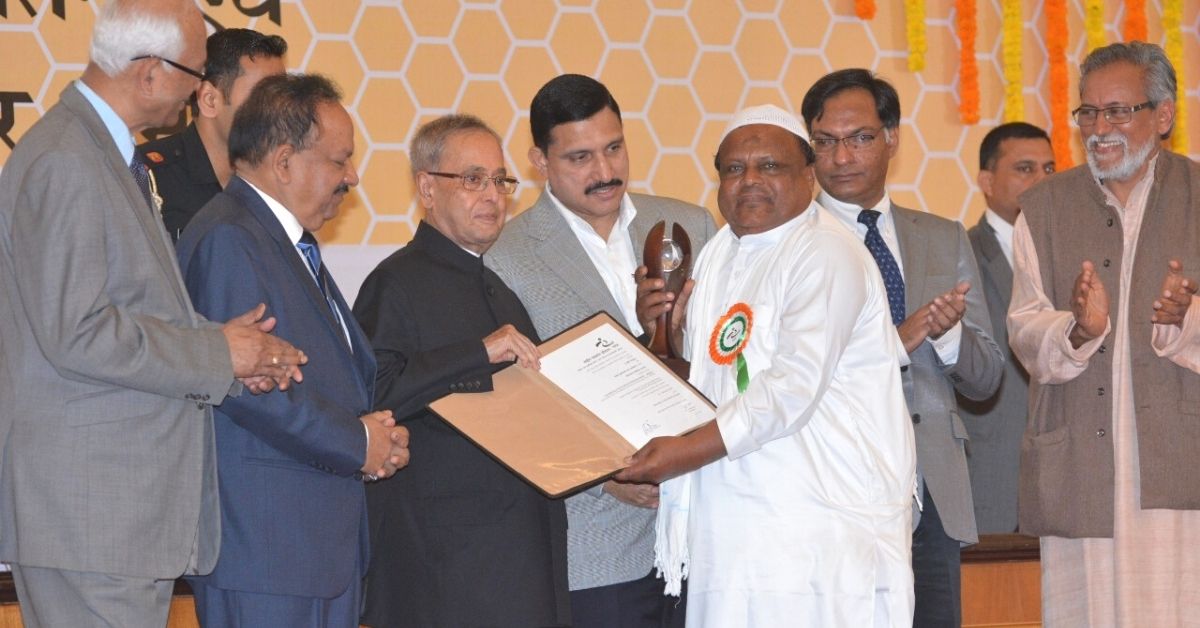
“Thomas Alva Edison is the source of my inspiration,” says the scientist who went barefoot to receive the President’s Lifetime Achievement Award in 2015 at the hands of the then President of India, Pranab Mukherjee. “I always thought of unique ways to solve a problem. That is how I conceived the water alarm. In 1974, I received the ancestral land from my father to continue farming. But interacting with fellow farmers and practising the occupation myself, I learned about the issues of finding labour and other difficulties faced in agriculture.”
Soon after taking over the reins, he built a tiller machine capable of deep ploughing which needed operating by a bullock. “In 1975, I established Vishwashanthi Agricultural Research and Industrial Research Centre to sell the product. But financial constraints did not allow me to market it well, and it failed to take off,” he says.
Later, he also built a plough blade that did not require sharpening and lasted for a long duration compared to others in the market. “The blade did not lose its sharpness, which ensured its long life. It could be attached to a tractor as well,” Abdul adds.
Following this, he built a seed-cum-fertiliser drill that enabled sowing seeds of different sizes with equal spacing. “The equipment is used in sowing a wide variety of seeds from jowar to groundnut. The device also facilitated the dispersal of fertilisers, soil and other organic matter,” he says.
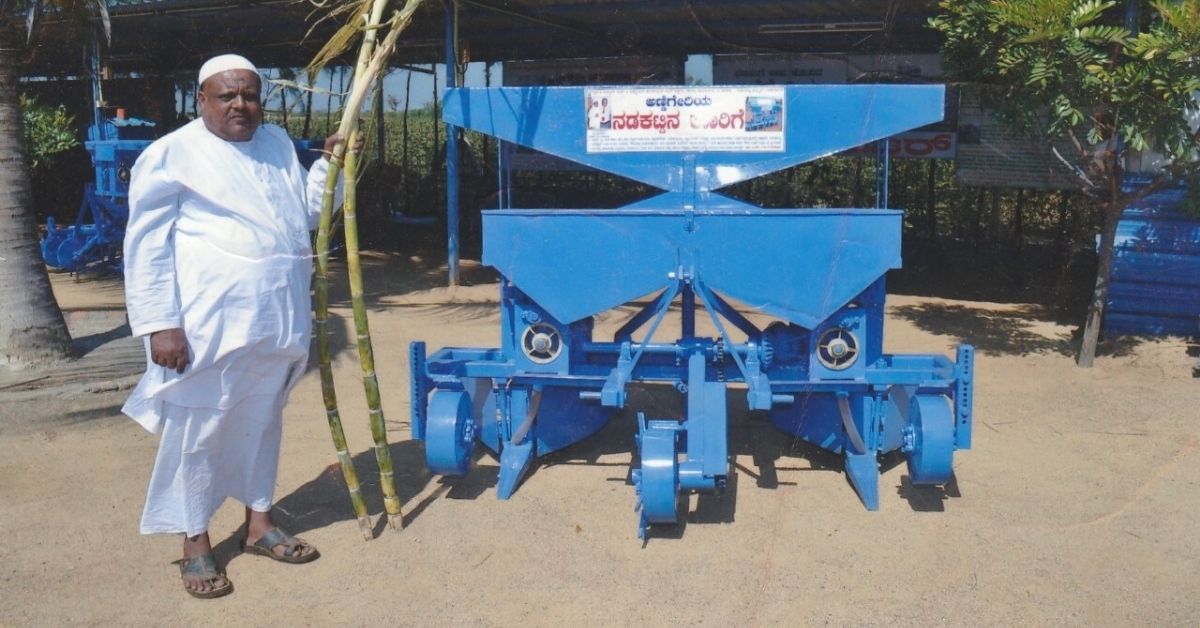
To meet the demands of farmers in Maharashtra, Abdul constructed an automated sugarcane sowing machine. Slowly, his innovations became popular and saw an increase in demand.
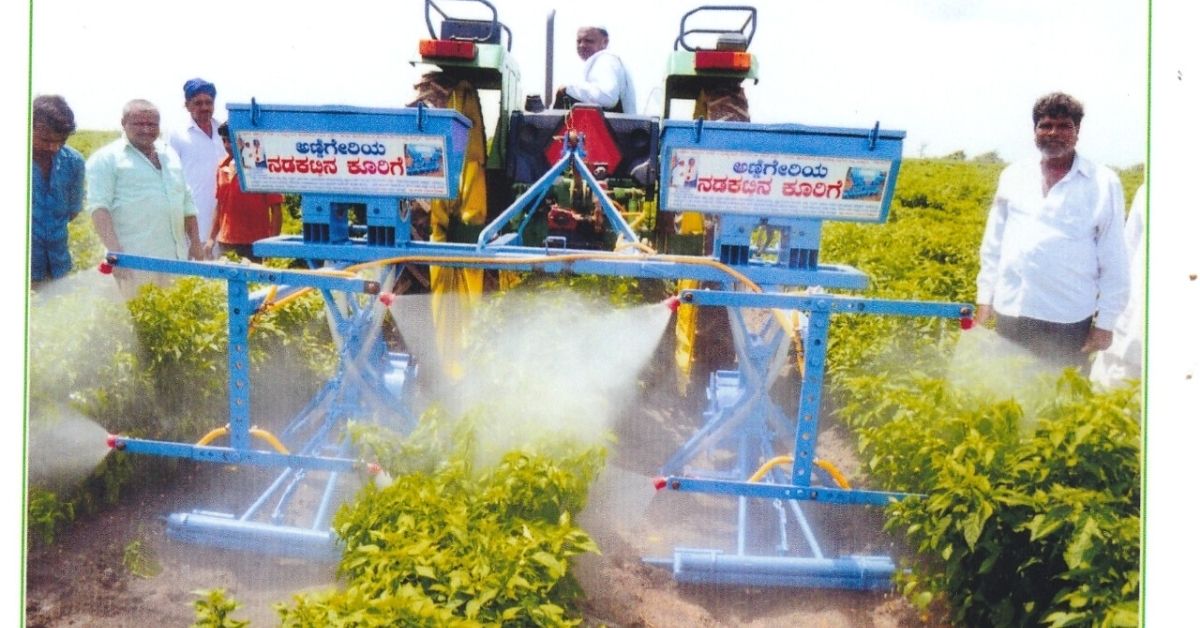
Abdul’s 5-in-1 tiller machine
Apart from his innovative pursuit of helping farmers, Abdul also worked to improve the agricultural yield on his farm.
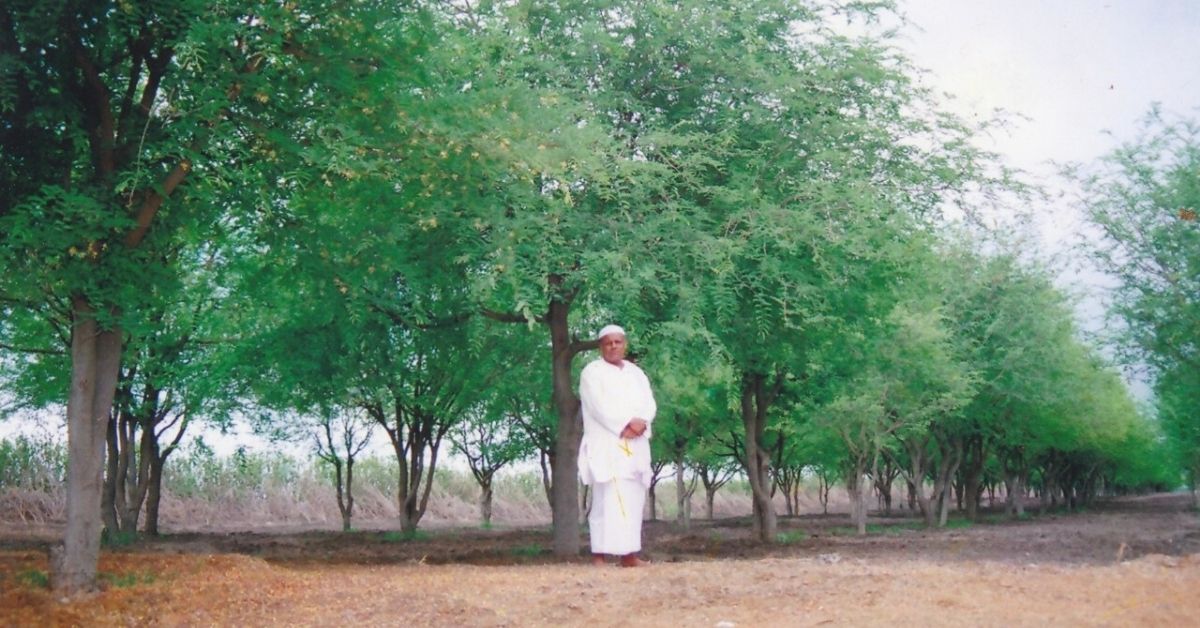
As his father and grandfather suffered losses with erratic rains and limited groundwater reserves, Abdul decided to find an alternative. “In the early 1980s, I planted mango saplings, placed between ber and sapota (chikoo) trees. I planted chillies as an intercrop. But the lack of water killed the plantations. So I switched to growing tamarind as I learned that it required less water and maintenance,” he says.
He sourced 600 saplings and planted them across 6 acres of land by keeping a gap of 20 feet each.
In 1985, the region faced severe droughts, but Abdul managed to source water from a distance of 3 km. “I dug 11 bore wells, but only two yielded water. So I sourced water from a long distance and stored it by creating six farm ponds. They also helped to harvest rainwater during the monsoons. I used the water for flood irrigation of my plantation of 600 saplings,” he says.
“The plants grew well, and feeling confident with its success, I planted more than 1,100 trees in a 10-acre area, making a total of 1,800 saplings,” he says.
But there was another unexpected chapped Abdul faced. “I did not know how to make use of so much tamarind produce. My wife and daughter made pickles and jams to sell in the markets across the state including, neighbouring Hyderabad,” he says.
So, Abdul decided to harvest tamarind and make pickles out of them. “But the process of separating seeds from the tamarind was tedious, and labour shortage made it more difficult. The seeds had to be separated manually and were a time-consuming process,” he explains, building up the crescendo before revealing his next innovation.
After spending nearly Rs 3 lakh and over six months, Abdul conceived a machine that did the job. “The instrument involved a system where the tamarind slid on the tapered peg. This pushed the seeds out from the tamarind pod,” he says, adding that to make tamarind pickles convenient he built yet another device.
“The pickle making required tamarind to be sliced into smaller chunks which again was labour intensive. So, I designed another machine to make the slicing effective and efficient,” Abdul adds.
Over the years, Abdul produced more machines and sold them. His popularity with these niche but problem-solving innovations earned him the name ‘hunase huccha’, meaning ‘tamarind crazy’.
“It was the most difficult innovation of my life as the seeds often got stuck in the tamarind making the separation difficult. I researched and experimented for years to achieve the desired result,” he says.
An Innovation Revolution
Abdul receiving lifetime achievement award at the hands of then President Pranab Mukherji
Abdul has sold thousands of his various innovations to date, he claims with pride.
Shrikanth Jain, one of the farmers who purchased Nadakattin seed-cum-fertilizer drill a few years ago, says, “I used it to sow wheat pulses and other woodgrains. The machine does the job of sowing, dispersing fertiliser, covering the soil, spraying pesticides and saving fuel. It also helps to prevent excess sowing of seeds. Using the device has helped me increase my yield by 20 per cent.”
However, these innovations and his passion for helping the farming fraternity came at a heavy financial loss to Abdul who says, “I struggled with debts all my life and mortgaged part of my agricultural land to invest in research for innovations. I never sell equipment for profits and offer them at make-to-cost, which is about 25 per cent cheaper than the ones in the market. It is a seva (service) for the farmers, and I do not wish to burden them financially.”
Today, Abdul has received funding for his research from the National Innovation Foundation, University of Agricultural Sciences, Dharwad and Karnataka government. He adds, “I received Rs 16 lakh to develop the ploughing machine from the Karnataka government and have also invested other prize money received.”
Elaborating on his innovative process, he says that some innovations happen in months while others take a year or more. “Investing time and money can become very demanding.” But Abdul is relentless and wants to continue his dream of helping farmers. “I believe that the economy of this country runs on farmers. But our community is facing hardships at various levels. I aim to benefit them and ease their difficulty. Innovations can only bring the next revolution in agriculture,” he says.
source: http://www.thebetterindia.com / The Better India / Home> Stories> Innovation> Karnataka / by Himanshu Nitnaware (headline edited) / Edited by Yoshita Rao / February 05th, 2022
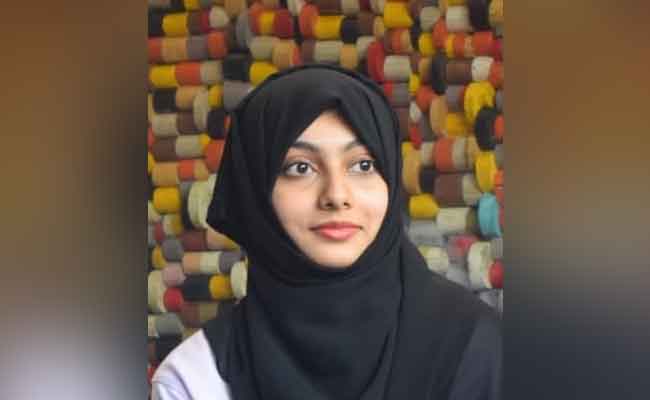
Aysha Merchant, a student of Indian Design School, has secured the 3rd rank in the Interior Design course at Mangalore University. This achievement highlights her hard work, creativity, and commitment to excellence in the field of interior design.
Aysha’s journey in interior design began with a passion for creating aesthetically pleasing and functional spaces.
‘Throughout her course, she consistently demonstrated an exceptional eye for detail and a deep understanding of design principles. Her projects, which often blended innovation with practicality, earned her high praise from both peers and faculty members,’ a press release from the institution stated.
‘During her time at Indian Design School, Aysha participated in numerous design competitions and workshops, further honing her skills and expanding her knowledge. Her ability to think outside the box and her keen sense of style set her apart, making her a standout student in her class,’ the release added.
The 3rd rank at Mangalore University opens up numerous opportunities for her future in the interior design industry.
Aysha expressed her gratitude to her family, friends, and mentors who supported her throughout her academic journey. She said, “This achievement wouldn’t have been possible without the unwavering support of my loved ones and the guidance of my professors. I’m excited to embark on the next chapter of my career and to continue exploring the limitless possibilities in interior design .”
‘As she moves forward, Aysha aims to contribute to the field of interior design by combining her academic knowledge with practical experience. She is enthusiastic about creating unique, sustainable, and innovative designs that can transform spaces and enhance the quality of life for individuals and communities,’ it added.
Aysha Merchant’s accomplishment is a proud moment for Indian Design School and Mangalore University. It shows the quality of education and training provided by the institution and serves as an inspiration to other students pursuing their dreams in the creative arts.
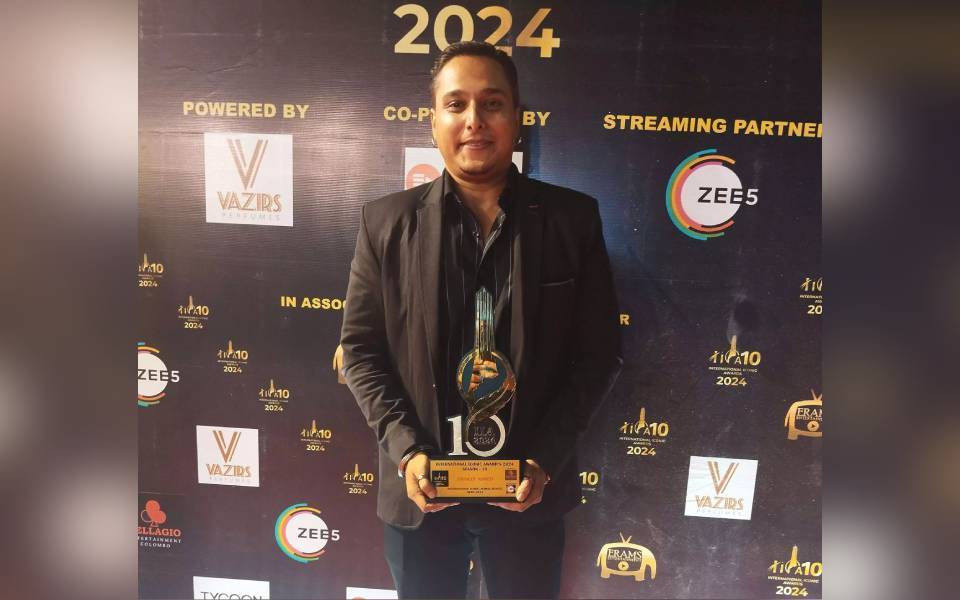
Tauseef Ahmed from Mangalore , a renowned figure in animal rescue, has been awarded the prestigious ‘International Iconic Animal Rescue Hero 2024’ in Mumbai Film City. He was recognized in the social service category for his significant contributions to rescuing animals from the streets of Mangalore over the past 15 years.
Known as Mister Rescuer on Instagram, Tauseef Ahmed has rescued more than 8,000 street animals to date. His dedication extends beyond cats and dogs to include reptiles and birds. Despite facing threats from the cattle mafia, Ahmed’s commitment to animal rescue has continued. His efforts earned him the ‘Best Street Care and Rescue Award’ from India for Animals (IFA) in Hyderabad in 2018.
Originally from Kudremukh in Chikkamagaluru district, Tauseef Ahmed relocated to Mangalore at a young age. His passion for animals led him to join the Animal Care Trust (ACT) in 2010, where he discovered his life’s purpose. He quickly became one of the leading rescuers within the trust. During the devastating floods in Kodagu in 2018, Ahmed’s team played a key role in rescuing hundreds of animals abandoned by their owners, some even untied from their sheds.
In 2019, Ahmed delivered a TEDx talk titled ‘Our Planet, Theirs Too’ at Nitte Deemed to be University, emphasizing the importance of conserving and protecting not only exotic wildlife but also common animals.
Despite holding an MBA degree and owning a real-estate firm, Ahmed remains dedicated to his mission.
He trained in first aid and basic veterinary treatment under Dr. Lakshmi to enhance his rescue efforts during emergencies.
His first book, ‘Straying Around,’ is based on his experiences in animal rescue.
source: http://www.english.varthabharati.in / Vartha Bharati / Home> Karavali / by Vartha Bharati / June 08th, 2024
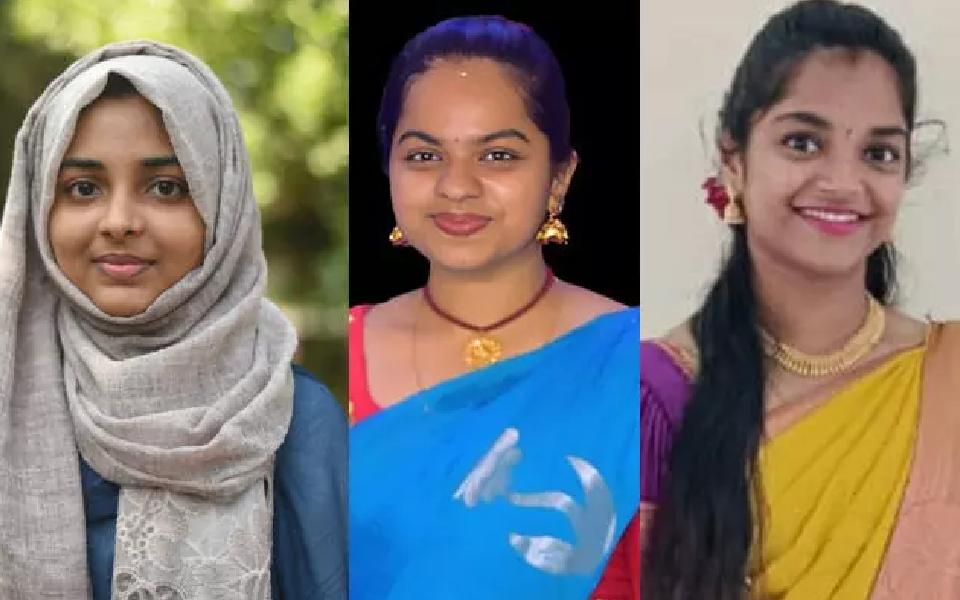
Three students of Dr. G Shankar Government Women’s First Grade College and Post Graduate Study Centre scored high ranks in the post-graduate exams conducted by Mangalore University for the academic year 2022-23.
Sayyed Reha Qadri, one of the students, has been awarded a gold medal for scoring 8.65 CGPA in MSc Chemistry.
M Preethi Acharya and Nidhi N Pai have scored second and fifth ranks, respectively, in M. Com., a press release from the college stated.
source: http://www.english.varthabharati.in / Vartha Bharati / Home> Karavali / by Vartha Bharati / June 08th, 2024
“It was while commuting to college that I began exploring ideas for safe travel for women after personally facing security issues. I researched extensively to find a way for women to commute without harassment and inconveniences,” said Zainab Khatoon, one of the founders of Dovely — India’s only bike taxi service for women, driven by women.
Zainab, along with her friend Masarrat and her siblings Obaidullah Khan and Uzma Khatoon, deliberated extensively and came up with the idea of running taxi bikes for women, where both the passengers and the service providers are women. Together they founded an app (Dovely) to cater to women and girls who want to travel safely in the city.
“‘DOVE’ is a bird, which represents peace and harmony, and ‘LY’ stands for ladies,” shared another founder, Uzma.
They launched the app on June 15, 2022, initially with very few users. However, they now have around 80-100 riders registered, with 20-25 working as full-fledged riders.
Zainab, who heads the company, personally interviews every candidate to ensure they have a valid license and can navigate Hyderabad’s busy streets. Their riding skills are also tested by a team of experts.
“All of the women who are registered with us share the same concern for women’s safety. Besides, they see this as an opportunity to earn income,” explained Zainab.
Most registered bikers are young women aged 18-50. Some are single mothers, seeking to support their families, while others are students — earning pocket money. Their passengers include working women, students and middle-aged women visiting relatives or doctors.
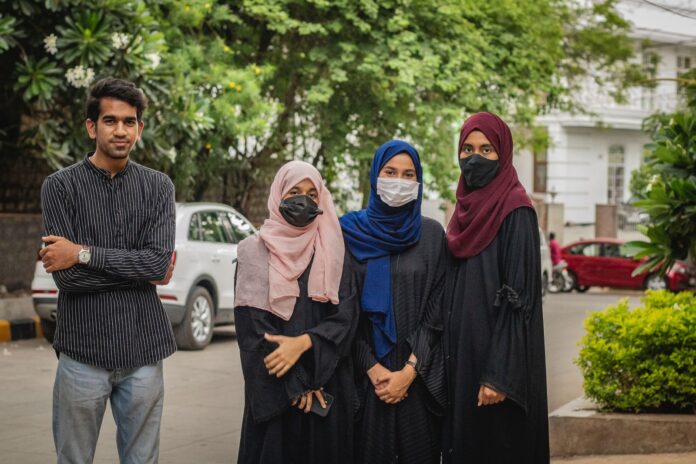
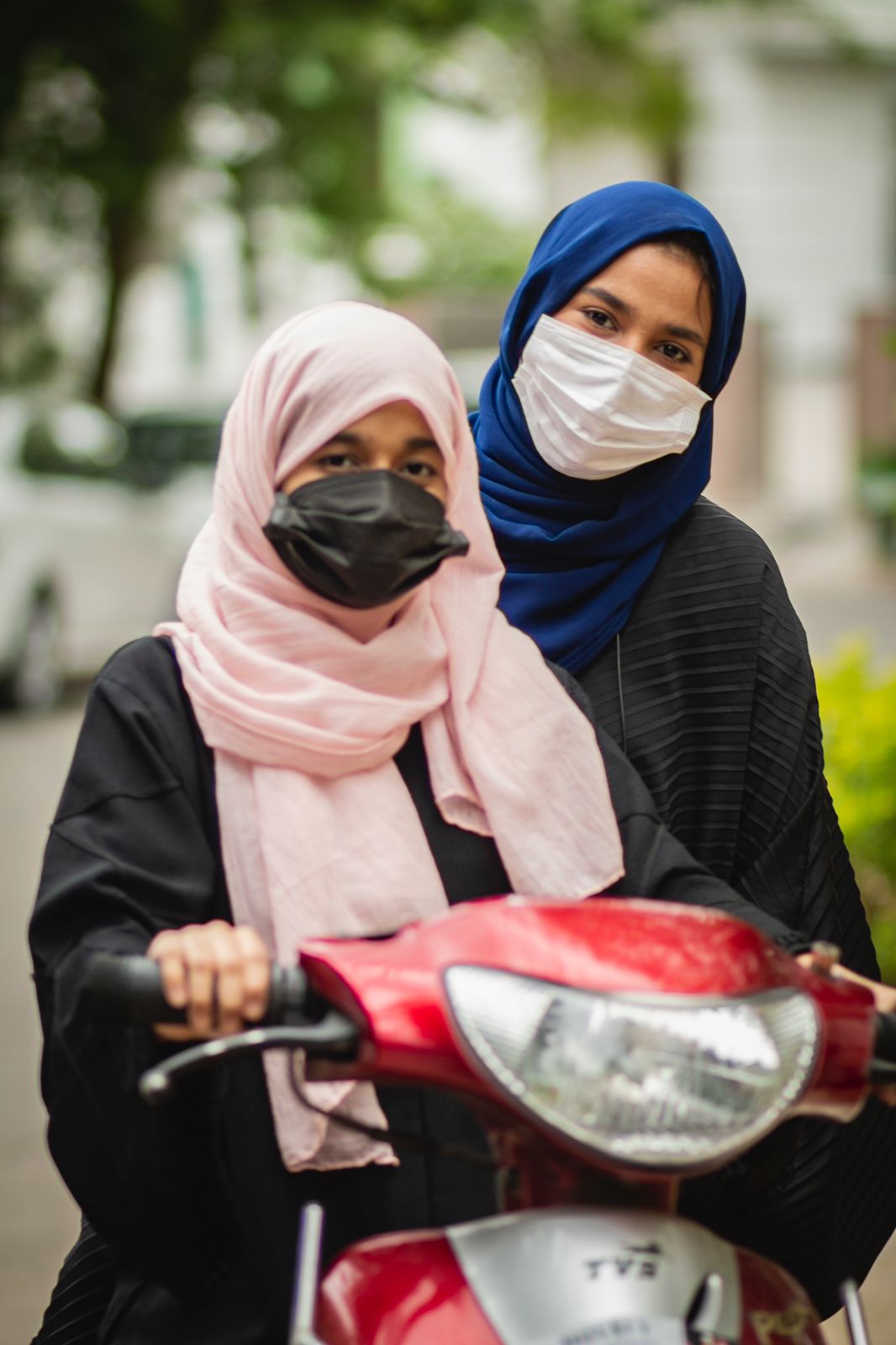
The initial stages were challenging, as many Hyderabad residents were unaccustomed to seeing women bikers, especially those wearing burqa (veil). Some questioned the young bikers why they needed to earn money by becoming drivers when there were other job opportunities. They perhaps overlooked the fact that many girls are passionate about riding.
“Once a woman passenger books a ride with Dovely, she often becomes a regular customer and subscribes to the app,” claimed Zainab.
“Many aunties give us lots of duas (blessings) after we drop them safely at their destination,” she said.
Uzma Khatoon, Zainab’s sister and co-founder of the firm, shared, “I am humbled to be part of many women’s stories and want to help them fulfill their passion through Dovely.”
One young woman, Tasneem (name changed), shared that she tried working with other delivery platforms but quit on the first day because she had to deal mainly with men. She said she feels safe and comfortable working with Dovely.
The founders claimed they get compliments for contributing to a safe commuting experience for ladies. “This feedback from our passengers and partners keeps us going. The feeling that we are empowering women in our own way and ensuring that at least 100 women travel safely every day makes us happy,” said Zainab.
A member of the Dovely team monitors rides, tracking the live location from pick-up to drop-off. However, some women are also unhappy due to the limited number of drivers and busy schedules. The Dovely team hopes to resolve this issue as they recruit more women drivers.
Currently, it provides services through WhatsApp and plans to launch the app on the Play Store after achieving the target of over 200 rides. The app is still being developed, and the four founders are funding their venture — taking baby steps for now.
Dovely operates at ‘zero’ commission, unlike other service providers — who charge drivers. The team feels they have a long way to go.
Currently, services run until 8:30 pm, but they may extend the time if more safety measures are in place for women commuting at night. In the future, they plan to expand to auto-rickshaws and cabs, all managed by women. They also aim to handle transport and logistics led by women.
The Dovely team is driven by the passion to empower women.
source: http://www.twocircles.net / TwoCircles.net / Home> Indian Muslim / by Nikhat Fatima, TwoCircles.net / June 03rd, 2024
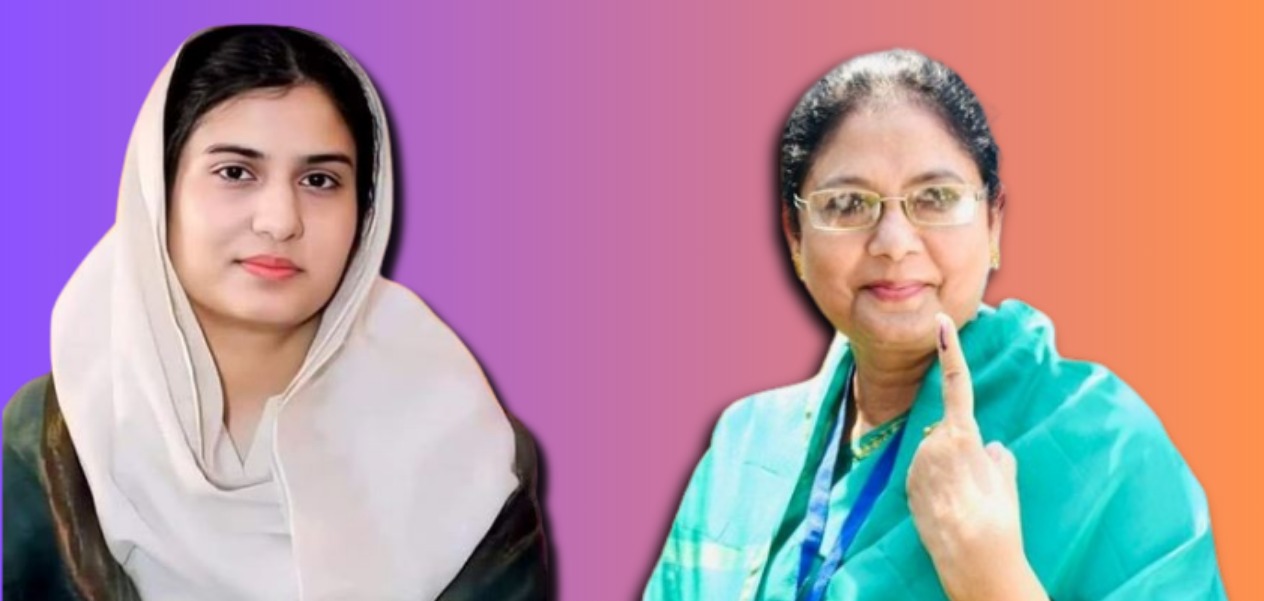
Sajda Ahmed of the Trinamool Congress (TMC) and Iqra Munawwar Hasan Chaudhary of the Samajwadi Party are among the 24 Muslim members who have been elected to the 18th Lok Sabha in the just concluded election.
The entry of 24 Muslims in the Lok Sabha is seen as a positive move towards the participation of India’s second-largest religious community in Parliamentary democracy.
While the 27-year-old year Iqra is a law graduate who won from the Kairana constituency in Western Uttar Pradesh on the ticket of the Samajwadi party Sajda Ahmed is a veteran leader who has won for Lok Sabha election a third time.
Sajda Ahmed has been re-elected from the Uluberia constituency where she secured 694,945 votes and defeated her nearest rival of the BJP Arun Uday Pal Chaudhary.
Iqra, a debutant defeated her nearest rival BJP’s Pradeep Kumar by 69,116 votes in a closely contested election.
Iqra, an alumnus of the Lady Sri Ram College of New Delhi – she also graduated in law from the UK – hails from a political family of Shamli.
The number of Muslims elected to Lok Sabha doesn’t look as low as was feared by the Community. Muslims have been complaining about their diminishing presence in India’s political spectrum.
However, this time political parties had fielded only 78 candidates from the Muslim community as against 115 in the 2019 election.
The most well-known Muslim who successfully contested elections is cricketer Yusuf Pathan. He not only won his maiden political battle as the candidate of the Trinamool Congress (TMC) from the Baharampur constituency of West Bengal, he also turned out to be a giant killer as he defeated Congress veteran Adhir Ranjan Chaudhary.
Muslim leaders like the two former Chief Ministers of Jammu and Kashmir – Mehbooba Mufti and Omar Abdullah – were defeated in their respective constituencies. Omar was defeated by an independent candidate Abdul Rashid Sheikh who is known by his nickname of Engineer Rashid, whose campaign was run in absentia by his two sons.
Engineer Rashid, whose real name is Abdul Rashid Sheikh won the Baramulla seat by securing 4.7 lakh votes against his main rival Omar Abdullah, former Chief Minister and vice-president of the National Conference. He too is a giant killer in this election.
Interestingly, Engineer Rashid’s campaign was carried on by his two sons as he has been in Delhi’s Tihar Jail for five years facing trial for his alleged involvement in supporting terrorists in Kashmir.
In Jammu and Kashmir’s Anantnag-Rajouri seat, National Conference’s Mian Altaf Ahmed defeated Mehbooba Mufti by 2,81,794 votes, and in the Srinagar constituency, NC candidate Aga Syed Ruhullah Mehndi got 3,56,866 votes against PDP’s Wahid Para.
From Ladakh, Independent candidate Mohammad Hanifa won by a margin of 27,862 votes.
In Uttar Pradesh, Samajwadi Party’s Maulana Mohibullah fought the election for the first time and he won on the ticket of the Samajwadi Party from the Rampur seat by securing 4,81,503 votes.
Ziaur Rahman of the Samajwadi Party from Uttar Pradesh has been elected from the Sambhal constituency.
Afzal Ansari has won from the Ghazipur on the ticket of the Samajwadi party. He is the brother of the gangster Mukhtar Ansari who died while serving a sentence for murder in the jail.
Imran Masood of Congress won against his BJP rival Raghav Lakhanpal from Saharanpur.
From Hyderabad (Telangana) Asaduddin Owaisi of the All India Majlis-e-Ittehadul Muslimeen(AIMIM) won against BJP’s K. Madhavi Latha. He has won the Lok Sabha election for the fifth time.
In the 16th Lok Sabha, there were only 22 Muslim Members while the highest number of Muslims elected to the lower house – 49 – was in 1980 and most of them were from Congress. In the last General election 115 Muslim contested while only 22 won.
As against this, in the 2024 elections, only 78 Muslim candidates were fielded and 24 of them won.
West Bengal has elected the highest number of Muslim MPs in the just concluded elections. They are: Khalilur Rahaman, Jangipur, Yusuf Pathan, Baharampur, Abu Taher Khan, Murshidabad, S K Nurul, (Basirhat), Sajda Ahmed, (Uluberia), Isha Khan Choudhary, (Maldaha Dakshin).
Bihar: Muhammad Javed Kishanganj and Tariq Anwar Katihar (Congress)
Assam: Raqib Hussain Dhubri
Kerala: Shafi Parambil (Vadakara), ET Muhammad Basheer (Malappuram) and Dr. MP Abdul Samad Samdani (Ponnani)
Lakshdeep: Muhammad Hamdullah Saeed
Tamil Nadu: Nivas Kinis Ramanathapuram
source: http://www.awazthevoice.in / Awaz, The Voice / Home> Story / posted by Aasha Kosa / June 05th, 2024
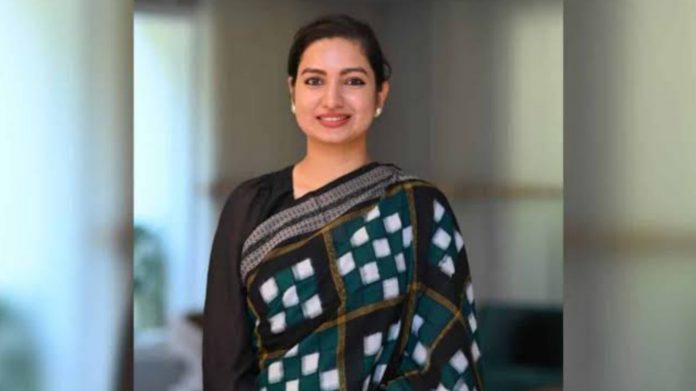
Following her victory from the Cuttack seat, Congress candidate Sofia Firdous has become the first Muslim woman MLA in the history of Odisha since Independence.
Sofia Firdous won the Barabati-Cuttack seat with a margin of 8001 after a neck-to-neck contest with BJP’s Purna Chandra Mahapatra. Firdous replaced her father and sitting MLA Mohammed Moquim from the seat.
In the Lok Sabha elections across the country, at least 15 Muslim candidates successfully secured seats in the lower house. The list includes TMC nominee and former India cricketer Yusuf Pathan who secured a comfortable victory over Adhir Ranjan Chowdhury in the Congress veteran’s Baharampur bastion. ( With Agencies Inputs )
source: http://www.muslimmirror.com / Muslim Mirror / Home> Indian Muslim> Politics> Women / by Muslim Mirror Staff / June 06th, 2024