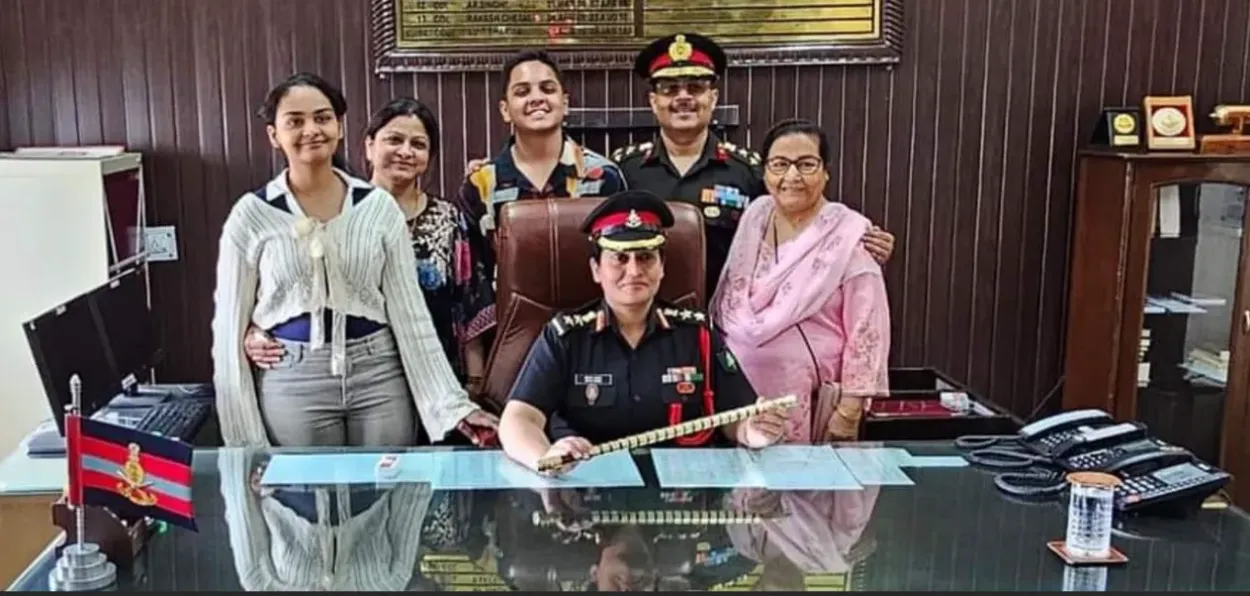
Col Ishrat with her family in her office (Facebook)
Ashfaq Kayamkhani/Nua (Jhunjhunu) Rajasthan :
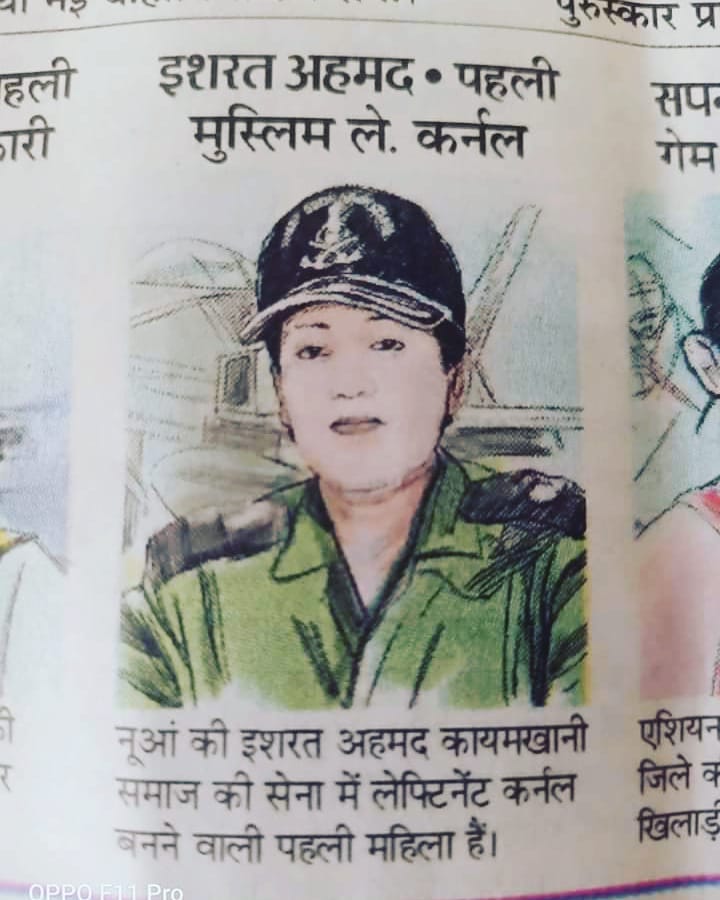
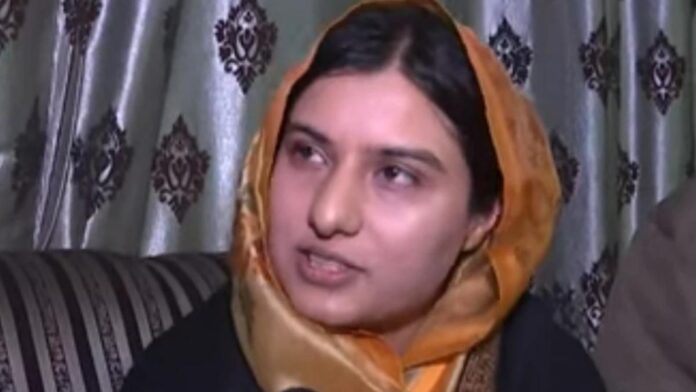
Colonel Ishrat Ahmed has become the first Muslim woman to hold such position in the Indian Army.
She took over the command of the Ordnance Army unit in Meerut on Thursday.
Col Ishrat belongs to the Kayamkhani Muslim community that prides itself in higher educational levels and military, administration and Police Services being their first choice of careers.
Col Ishrat hails from a prominent family of Nua village in Jhunjhunu district of Rajasthan. Though the Indian Army doesn’t highlight the religion of officers, her community posted the news of her appointment on social media and took pride in a woman from the community reach such a top position.
An old news clipping on Col Ishrat (Facebook)
Colonel Ishrat is the daughter of Colonel Zaki Ahmed and, sister of Brigadier Saqib Hussain. IGP Liaquat Ali Khan also comes from her family.
Col Ishrat’s family boasts of many civil servants in the State administration who have reached top positions.
Expressing happiness over this achievement of Colonel Ishrat, Kamkhayani Bidri said, “The community also feels proud of such a family.” The community expressed hope that this family would prove helpful in the advancement of their children as well.
source: http;//www.awazthevoice.in / Awaz, The Voice / Home> Story / by Ashfaq Kayamkhani, Nua / April 19th, 2024
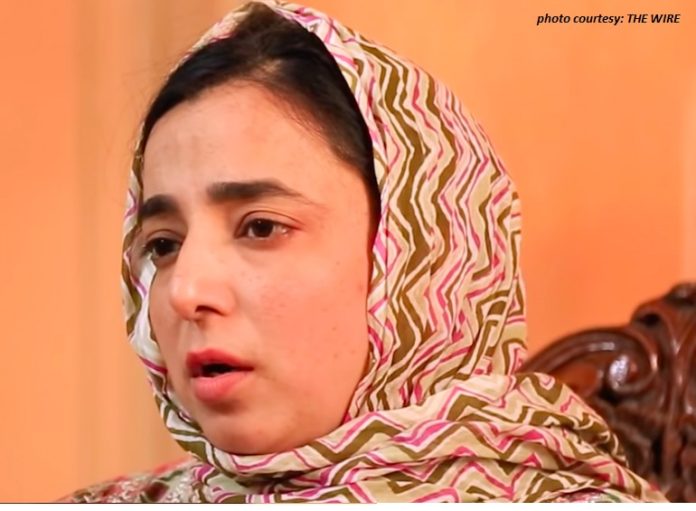
A local court has recently amended its ruling to allow former Delhi Congress councillor Ishrat Jahan to practice law outside the National Capital Region (NCR). Jahan, who is a defendant in the 2020 Delhi riots case, was granted regular bail on March 14, 2022, with the condition that she does not leave the jurisdiction of the National Capital Territory (NCT) of Delhi.
Now, as Jahan is a practicing advocate registered with the Bar Council of Delhi, she requested the aforementioned permission. She stated that since being granted bail, she has consistently adhered to the court’s orders without any violations. “Considering the applicant’s (Jahan) good conduct, it is requested that the bail order be modified to grant the relief sought by the applicant,” noted Additional Sessions Judge Sameer Bajpai of Karkardooma Court.
The prosecution objected to Jahan’s application, contending that the court had already granted her reasonable freedom and, considering her past behavior during the alleged offenses, she should not be given further leniency. However, Judge Bajpai observed that since the bail was granted, the investigating agency or the prosecution had not presented any information to the court indicating that Jahan had violated any bail conditions.
source: http://www.radiancenews.com / Radiance News / Home> Latest News / by Radiance News Bureau / April 16th, 2024
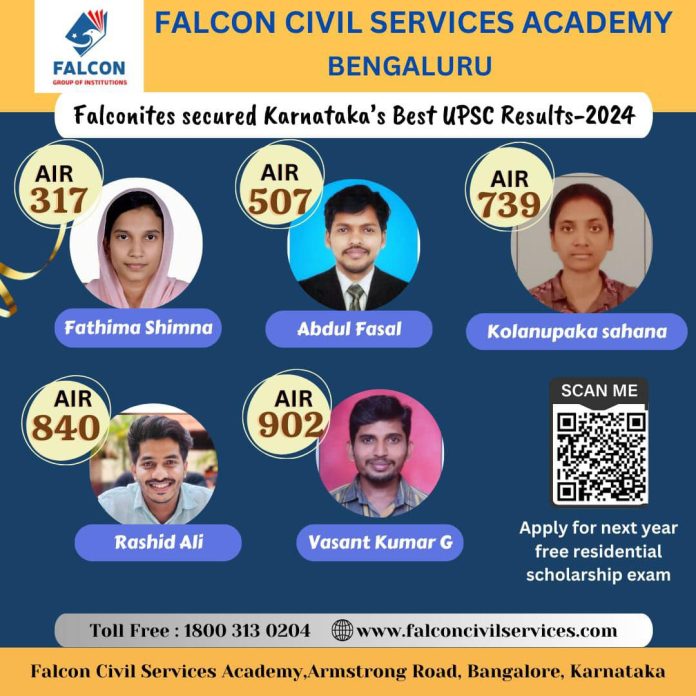
In its fifth year of service five students at Falcon Civil Services Academy here have cleared the Civil Services Exam 2023.
Fathima Shimna, who secured the 317th rank, hails from Malappuram in Kerala. Daughter of a village officer, she had a B.Tech degree. Abdul Fasal, who was placed 507th in the ranking, comes from a madrassa background in Kerala.
Third among the Academy’s successful candidates is Kalanupaka Sahana. She is daughter of a teacher from Karimnagar in Telangana. She has secured 739th rank. Rashid Ali, 840th ranker, also hails from Malappuram in Kerala. Both of his parents are reported to be teachers.
Vasant Kumar, who got 902nd rank, is son of a farmer from Nelamangala in the outskirts of Bengaluru.
According to the Academy director Abdus Subhan, the Academy has been providing coaching for civil services for the last five years.
Of the 38 who appeared for the Preliminary for CSE, nine were called for personality interview. Subhan said the Academy has been providing lodge and boarding facilities for the candidates.
From the humble beginning of PU College a few years ago, the offshoot of Shaheen Group of Institutions, Bidar, the Falcon Group in Bengaluru has made its presence felt in different fields of learning.
source: http://www.radiancenews.com / Radiance News / Home> Latest News / by Radiance News Bureau / April 17th, 2024
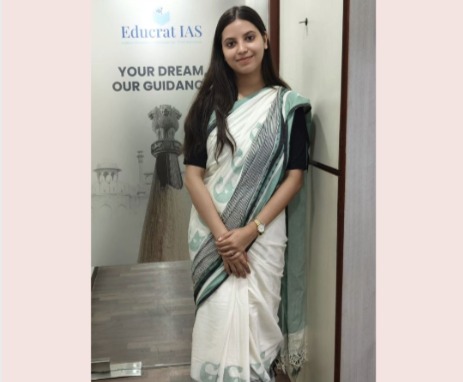
Saima Seraj Ahmed, originally from a village in Uttar Pradesh, now residing in Kolkata, achieved the 165th All India Rank in the UPSC exam 2023, fulfilling her passion for societal service despite facing challenges and setbacks over the last three attempts.
In a conversation with Radiance after her success in UPSC, Saima shared her emotions, expressing that she couldn’t believe at her achievement. She described a sense of relief that her hard work had finally paid off, acknowledging her parents’ joy and crediting her faith for the outcome.
Saima emphasized the necessity of relentless effort in the UPSC journey, reflecting on her approach to success, underscoring the importance of patience and perseverance after initial setbacks.
Saima highlighted a growing awareness among minorities about the significance of education and women’s participation in societal progress regarding the educational empowerment of Muslim women, fueled by the unwavering support of her family.
Stressing the value of resilience and continuous effort, based on her experiences, Saima noted that the fear of failure and the challenge of regaining motivation post-setbacks are significant hurdles for Civil Services aspirants.
Looking ahead, Saima reiterated her lifelong commitment to societal betterment, emphasizing her passion for understanding and positively impacting communities irrespective of her role or position.
Saima’s dedication to societal causes remained her driving force, despite contemplating giving up after her third unsuccessful attempt, emphasizing that her goal extends beyond the UPSC to meaningful societal engagement and contribution.
Ultimately, Saima aspires to leverage her position in public service to serve society comprehensively and diligently.
source: http://www.radiancenews.com / Radiance News / Home>Latest News> Report / by Radiance News Bureau / April 17th, 2024
Kairana (Shamli District) , UTTAR PRADESH / NEW DELHI :
New Delhi:
“I don’t comment on numbers, but it’s for sure that I got blessings of people who want me to represent them in Parliament,” said Iqra Hasan who seemed confident of her victory after her fate was sealed in electronic voting machines (EVMs) following first phase of the ongoing general elections that was held on April 19.
What led her to believe that she is poised to win? “There was no political wave unlike 2014 and 2019. Electorates were largely maintaining silence about which party or candidate they would vote for. Attempts to polarise voters on communal lines did not work,” she listed out.
Talking to TwoCircles.net, she claimed people this time voted on local problems. “I don’t see any major obstacles in this election as it is clear from engaging with people that there is no prevailing national narrative, unlike the narrative being pushed by the BJP,” she added.
The thirty-year-old belongs to a well-known political family of Kairana. Along with her grandfather Chaudhary Akhtar Hassan, father Chaudhary Munawwar Hasan and mother Tabassum Hassan, Iqra has a political legacy since they were all elected members of Parliament.
The Hasans and the Singhs (Hukam Singh and his daughter Mriganka Singh of the Bharatiya Janata Party or BJP) have over a century-old political rivalry. They were once a single Gujjar family connected to the Kalshyan Khap. This was more than a century ago.
But the Hasans chose to secede and convert to Islam, which led to a slew of disputes. This family’s descendants, Chaudhary Munawwar Hasan of the Samajwadi Party (SP) and Hukam Singh fought elections against each other in the 1990s.
In a similar vein, after their dads’ deaths, their offspring Mriganka and Nahid carried on the rivalry.
Thirty-year-old Iqra, Nahid’s sister, got back from London. She fought against BJP’s Pradeep Chaudhary — who had defeated her mother Tabassum Hasan in the 2019 general elections.
Though her family’s century-old feud with the Singhs has taken a short hiatus, she is still a competitor even though she has a new opponent.
The Hasans and Singhs have dominated the Kairana Assembly segment since the 1970s, with the exceptions of Rajeshwar Bansal in 1989 and Bashir Ahmed in 1977. Notably, starting in 1996, late Hukum Singh won the seat four times in a row.
In 2014, he moved to represent the constituency in the Lok Sabha. Since then, Nahid has won the Kairana Assembly seat twice, defeating Mriganka in 2017 and BJP candidate Anil Kumar in the 2014 by polls.
Iqra completed her primary education at New Delhi’s Queen Mary School and graduated from Delhi University’s Lady Shri Ram College in arts. She later went to London’s School of Oriental and African Studies (SOAS) to get her master’s degree in international politics and law.
Having been brought up outside Kairana for studies because the constituency lacks higher education institutes for women is one of the major issues around which Iqra contested elections.
In addition to other issues, one of the main components of her election campaign was providing resources for the women in the constituency to pursue higher education.
Iqra is one of the most talked-about candidates in this election because of her poise, positive outlook and grounded manner. She is also among this year’s youngest Muslim female candidates.
“Iqra might be a Muslim by faith, but she is a Gujjar first. She belongs to our community and is like a daughter to us. All 36 biradari (communities) supported her wholeheartedly. And therefore, only she will win and go to Lok Sabha. There are no longer any ifs and buts,” said an elderly man amid applause from the crowd that had gathered at a square in the constituency after the polling was over.
Others said she travelled from England to take over the Assembly election campaigning of Nahid who faced “unfair” imprisonment. Although Iqra is a new contender in this race, her experience with politics is not. While her brother Nahid was imprisoned by the UP government, she ran an effective campaign for him in the state Assembly elections of 2022 and secured a seat on his behalf.
“She has been a prominent character in this race, having devoted more than two years to her campaign. She is obviously in the lead in the race,” he said.
The Uttar Pradesh Police accused Nahid and his mother Tabassum Hasan of being Gangster Act suspects in February 2021. He was conspicuously absent from campaign events and meetings, even after being freed on bond.
The town with the largest concentration of Muslims — nearly 80%, many hold to the prophecy of the man quoted first.
Fifty-four-year-old Jitendra Singh, a former member of Zila Panchayat and a resident of Kandhla village, said, “She is young, dedicated and smart. We think highly of her.”
source: http://www.twocircles.net / TwoCircles.net / Home> Elections Update> Indian Muslim> Lead Story> April 20th, 2024
Atif Waqar, who cleared Civil services examination
“Abbu always told me to keep trying as long as I can, and never give up. My parents supported and asked me to focus on my studies and not worry about other things. My Abbu and Ammi are my inspiration.”
Atif Waqar, one of the 50 Muslim candidates who cracked the Combined Civil Services examination held by the UPSC on his sixth attempt, said.
The focus on Muslim candidates is because of a perception that the community lags in social empowerment and needs to catch up with others.
This is the highest number of Muslims to clear this coveted examination in recent years.
Of these, 31 successful candidates have received their coaching at the Residential Coaching Academy (RCA) of the Jamia Millia Islamia, New Delhi. This is an 8 percent increase in the success rate of RCA.
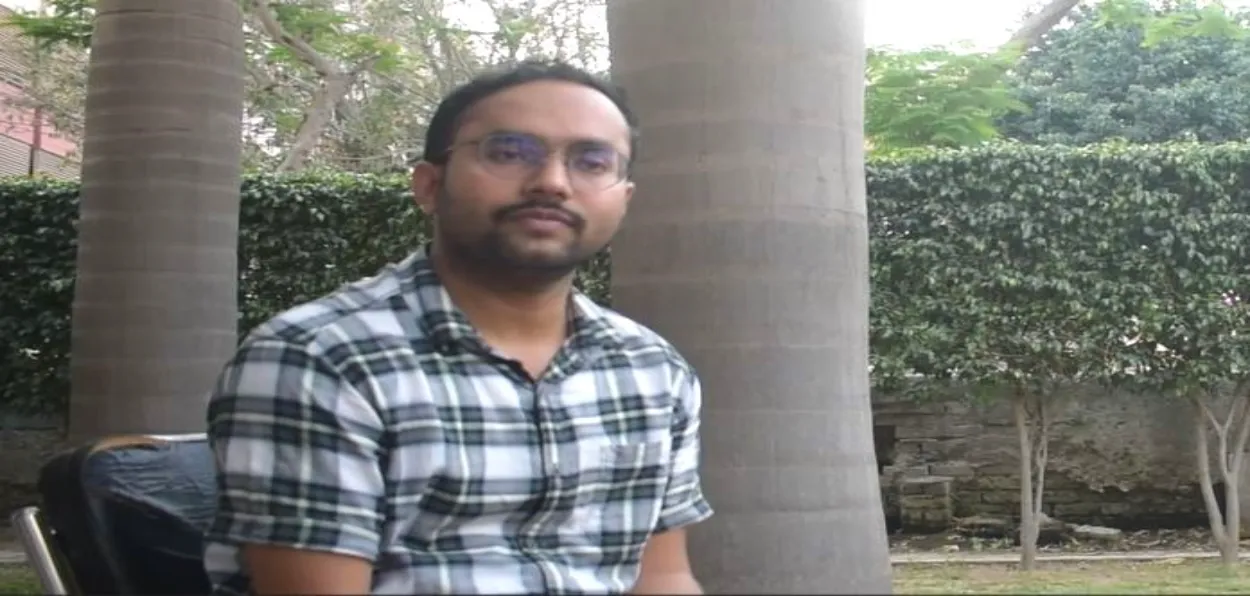
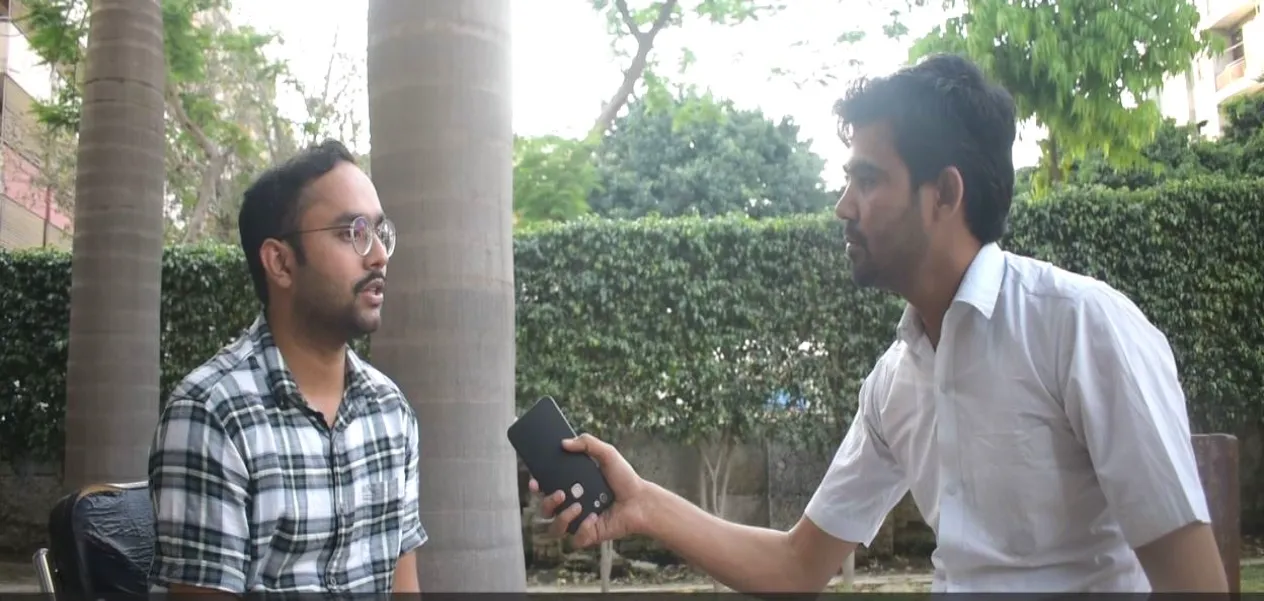
Atif Waqar speaking with Mohammad Akram
Atif Waqar also received his coaching from the RCA and secured 819th rank. He hails from Jamshedpur, Jharkhand, where his parents are government teachers.
Atif Waqar is currently posted as the Block Developmental Officer (BDO) in the Nawada district of Bihar.
Speaking to Awaz-the Voice, Atif Waqar said that residential coaching at Jamia Millia played an important role in his success.
“One gets ample motivation at the RCA. The coaching made us interested in clearing UPSC from the beginning. However, when I realized that I was not able to clear the examination, I started taking the State PCS exam and I got selected for Bihar Public Service Commission.”
I asked him why so many aspirants from Bihar, UP, and Jharkhand appear for the civil services examination of the UPSC.
Waqar said that there is a lack of industries in these two states and therefore fewer job opportunities for the youth. As they grow in this environment, they start working on securing government jobs of which the top job is of the civil servant.
“The same happened to me. When I saw my friends joining RCA I was motivated to do the same.”, he told Awaz-the Voice.
About his preparation for the examinations, Waqar said one has to work hard for it. “One always has to keep bookish knowledge in mind. It is necessary to read the same thing again and again, and also one has to take breaks in between, drink tea, play cricket, volleyball, carom, to keep mind light.’
Waqar says that he lived in Jamia Milia Islamia’s hostel for 3 years in the RCA coaching. I did not get disheartened even after failing repeatedly. For me, Jamia is a big factor in my success.
source: http://www.awazthevoice.in / Awaz, The Voice / Home> Story / by Mohammad Akra, New Delhi / April 18th, 2024
Zufshan Haq of Patna, who secured 34th rank in UPSC’s combined civil service examination for the year 2023, is the epitome of never say-die spirit. She was a trainee Indian Revenue Service (IRS) officer when she took the UPSC examination and secured a higher rank to be eligible to get into the Indian Administrative Services (IAS).
Zufshan spoke with Awaz-The-Voice about his journey. She was born and raised in Gangtok, Sikkim, where her father Mahfouzul Haq was the principal of a government school.
“I was also born in Sikkim; went to a school there and completed my 10th and 12th exams from CBSC Board and was the State topper.”
“I stayed in Sikkim till my graduation in B. Tech.” She topped the B Tech examinations and later joined M Tech at IIT Patna where she bagged a gold medal.
“Meanwhile, I got a scholarship that allowed me to accomplish research in Germany and I spent almost a month in Germany.”
Soon on return from Germany, she said she plunged into preparing for civil services. “This was my fourth attempt. Last time, my rank was 193 and I was selected for the Indian Revenue Service. Right now I am undergoing training as an IRS officer.”
Zufshan Haq says it is not just the rank but the journey to reach there that gives one a lot of joy. “Those who have seen me closely also felt that after working hard for so many days, I finally achieved the target and now I am very excited that tomorrow I will get an opportunity to become an IAS officer. I will be able to make an effective change.”
Zufshan says it’s not fair to give credit for her success to one person including her. “It is not right to give credit to one person because whenever there is such success, everyone plays an important role somewhere. Be it family members, parents, sisters, or school teachers and then teachers of higher educational institutions and friends who encourage civil services at some level or the other. That is, in this kind of success, there is someone on every side who helps you in one way or another.” Zufshan said she was grateful to all those people who helped her in this journey.
Zufshan Haq says that she also got a lot of help from Hajj Bhawan. Firstly it provided him with accommodation. She said that the environment of Haj Bhavan is quite good and the teachers teaching there are also quite good. The teachers who used to teach at Haj Bhawan Coaching helped me a lot in preparing for the UPSC Mains exam. “Undoubtedly, Hajj Bhawan also played a very important role in my success. I had a lot of facilities in Haj Bhawan and I completed my UPSC Mains preparation while staying there. “
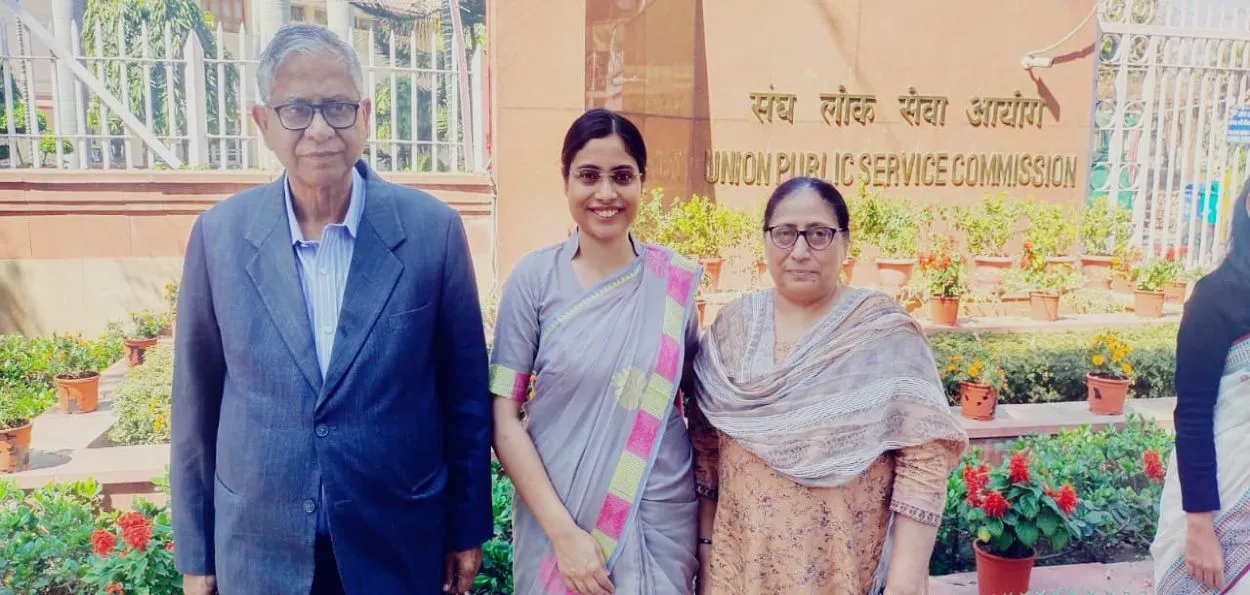
Zufshan Haq with her proud parents posing for a picture outside the UPSC office in New Delhi
Zufshan Haq says her only advice to all the students is to work hard and in the right direction then success will surely come. She said that after spending some time in this equation, one finds out what she wants to study. “Keep an eye on the syllabus and plan your studies meticulously. A competitive exam is like any other exam. She said that clearing UPSC is a difficult phase but not so difficult that success cannot be achieved. If you stick with it continuously for one or two years then you will crack this exam.”
She said not only the candidate but even his family members should be ready to support her. “Family’s support and encouragement also play an important role.”
Zufshan Haq started her preparation in 2019. “From my school days, I aimed to prepare for civil services. But after doing M.Tech I started preparing for it regularly. In 2020 also I took the UPSC exam but failed. Next year, I was selected in the Mains and appeared for the interview. In 2022 I finally achieved this goal my rank was 193 in the UPSC exam and got selected for IRS. Then I took 4th attempt and got rank 34 in the UPSC exam in 2023 and finally got selected for IAS.”
How many hours should one study for UPSC?
Zufshan Haq says it is difficult to set a time limit.”You can say if I study for 10 hours I will surely clear my UPSC exams. Every student has different strategies, maybe What I understand in an hour, and someone else can understand in 15 minutes. So saying I studied for 10 hours while she studied for seven hours doesn’t matter. You have to make your target like I have to complete four chapters of this subject so if you think you can complete it in two days then see if the target set is achievable. Or not, if once a plan is made, in any case, it has to be completed in two days, then four days is not the same thing.”
She feels any student who is honest in her studies will understand her strengths and weaknesses. “you understand that you build your routine accordingly. So every student should look at this exam at her own pace and work hard accordingly.”
Zufshan Haq’s message to all those preparing for civil services is that they should first check the UPSC syllabus. All that information is available on the UPSC website. Only after this does one get clarity on her strategy to study.
“Most students start their preparation without seeing the syllabus which I think is not good. Also one needs to see the previous years’ question papers and figure out the pattern of questions asked. Also, don’t run after so many sources thinking that if I read 10 different books on the same topic I will be successful. The time is very less, it is more important for you to revise. If you read the same thing four times then you will be able to write it in the main exams.”
Zufshan’s family moved back to Patna after his father’s retirement. I have a sister who is a dentist; she lives in Dhanbad with her doctor husband. She has another sister who is studying and Zufshan is the youngest of the siblings. “The environment at home was oriented towards education and learning and it must have affected us. That’s why we worked hard and managed to reach here,” says.
source: http://www.awazthevoice.in / Awaz, The Voice / Home> Story / by Mehful Alam, Patna / April 21st, 2024
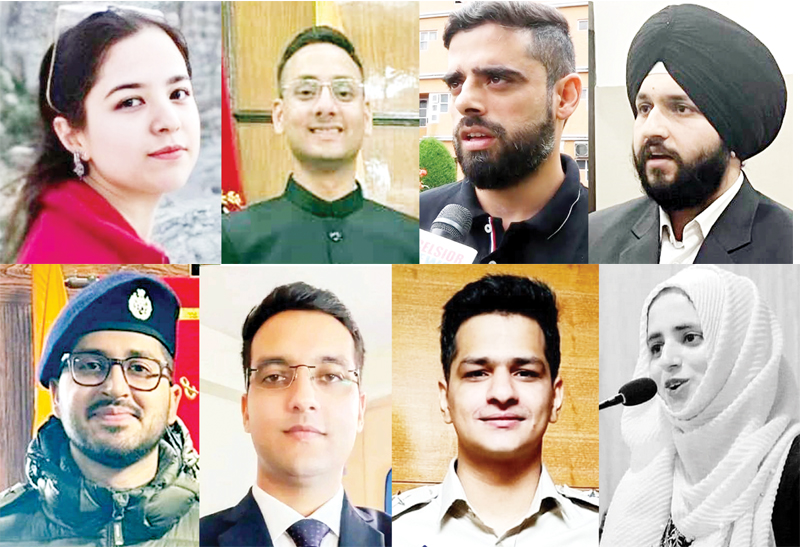
Against 16 candidates who cracked the prestigious Union Public Service Commission (UPSC) Examination-2022, a total of 11 candidates from Jammu and Kashmir have been declared qualified for the UPSC-2023, the result of which was declared today.
As per a statement issued by the Commission, a total of 1016 candidates qualified in the most coveted examination of the country, with Aditya Srivastava from Uttar Pradesh topping the examination followed by Animesh Pradhan from Odisha securing the second spot and Donuru Ananya Reddy from Telangana declared as the third topper.
Srivastava has done his graduation (Bachelor of Technology) in electrical engineering from IIT Kanpur. He has qualified for the examination with electrical engineering as the optional subject. Animesh Pradhan is BTech in Computer Science from the National Institute of Technology (NIT) Rourkela, and Donuru Ananya Reddy possesses Bachelor of Arts (Hons) Geography from Miranda House, Delhi University.
Anmol qualified for the UPSC Civil Service Examination in her third attempt with Law as an optional subject. Daughter of retired J&K Bank Manager Rajiv Rathore and incumbent Principal Jyoti Rathore, Anmol received her early education at New Era Public High School Kishtwar and further schooling at GD Goenka School in Jammu. After successfully passing the CLAT examination in 2016, Rathore pursued her BA LLB degree at Gujarat National Law University (GNLU) in Gandhi Nagar, Gujarat, completing it in 2021. Elated over the impressive result in the UPSC examination, Anmol said, “I had never imagined that my name would figure in the top 10. But then there is a term called ‘hard work’ that always pays you back.”She credited her success to Almighty, her parents, peers, and digital platforms, which she used rigorously to achieve the feat. “With the blessings of Almighty, my parents never let me down. They created a support-system for my entire preparation. Without them, it wouldn’t have been possible,” said Anmol. She said she did her studies from her home, except some mock tests and Mains test series, she attended in Delhi. “Otherwise, I have prepared on my own using the material available online,” she said.
Regarding her message to aspiring civil servants from Jammu and Kashmir, she said, “I’d say the youth of this region have huge potential provided their energy is channelled in the right direction.” “Our youth can achieve anything, but they need to remain focused and committed in their mission by staying away from social evils like drugs that have become a concern for the entire society nowadays,” said Anmol. Her father, Rajiv Rathore, said he is elated to see her daughter’s name among the top 10 candidates of the country. “I don’t think there is any other way a daughter or a son can make her/his parents proud with. My daughter has been constantly making me, her mother, the entire family, and our region proud,” he said.
Son of Dr Chander Shekhar Gupta and Bandana Gupta, Arjun Gupta, a resident of Ramkote Tehsil in Kathua District, is among the other candidates who have made their region proud with an impressive All India Rank (AIR) 32 in the UPSC examination. He had formerly topped the Indian Economic Services (IES) examination in the year 2022.
Resident of Srinagar District, Manan Bhat, a former UPSC qualifier with All India Rank 231, has secured All Indian Rank (AIR) 88 this year. Currently allotted the Telangana cadre of the IPS, Manan is also the qualifier of the Jammu and Kashmir Combined Competitive Examination.
Resident of Jammu District Harnit Singh Sudan is another candidate from Jammu and Kashmir with AIR 177, Mohammad Haris Mir with AIR 345, Mohammad Farhan Seh with AIR 369, Aparajita Aryan from Jammu District with AIR 381, Dr Ghulam Maya Din from Gambhir Mughlan, Rajouri with AIR 388, Suvan Sharma from Maheshpura, Bakshi Nagar, with AIR 412, Seerat Baji with AIR 516, and Dinash Kumar with AIR 1003.
Resident of Dooru area of Anantnag District, Mohammad Farhan Seh, an engineering graduate, is a JKPS officer, who is currently serving as a DySP in the CID wing of the Jammu and Kashmir Police, and Seerat Baji, daughter of Baji Mushtaq of Kotranka, Rajouri, is also an under-training JKPS officer, Suvan Sharma is son of Dr T.R Raina, Former HoD Blood Bank GMC Jammu & Nirmal Sharma, Retired IAS Officer. He is under-training JKPS officer as DySP. Earlier, he qualified the exam of Assitant Registrar.
Lieutenant Governor of Manoj Sinha has congratulated Anmol Rathore and all other successful candidates from Jammu and Kashmir for qualifying in the prestigious examination conducted by the UPSC. He took to the micro blogging site X, formerly Twitter, to write, “Heartiest congratulations to Anmol Rathore (AIR 7) and all aspirants from J&K who have cleared UPSC CSE-2023. Your remarkable achievements will inspire youth of J&K. Best wishes to all the successful candidates.
The Commission has kept provisional the candidature of 355 other Candidates.
source: http://www.dailyexcelcior.com / Daily Excelcior / Home> Todays Story / by Daily Excelcior / April 17th, 2024
Ishita Kishore has topped the Union Public Service Commission examinations, results of which were announced on Tuesday.
Interestingly, all the top four ranks in the examination have been bagged by women.
AS per UPSC, this time, a total of 933 candidates have been recommended for appointment, of which 183 are chosen as IAS officers.
Of the 933, 345 are from general category, 99 from Economic Weaker Sections, 263 from OBC, 154 from Scheduled Caste and 72 from Scheduled Tribe category.
Ishita Kishore topped the exam followed by Garima Lohia who secured second rank, Uma Harathi (third), Smriti Mishra (fourth), Mayur Hazarika (fifth), Gahna Navya James (sixth), Waseem Ahmed Bhatt (seventh), Aniruddh Yadav (eighth), Kanika Goyal (ninth) and Rahul Shrivastava (tenth).
Waseem Ahmad Bhat, hailing from the picturesque region of Anantnag in South Kashmir, has made his mark by securing the 7th rank in the UPSC CSE 2022.
In an exclusive interview with Aaj Tak, Waseem expressed his elation at achieving such a significant rank in the All India Rankings (AIR) of the UPSC. He mentioned that while he had attempted the examination before, he had not secured such a high rank.
How many marks the candidates have secured in the exams will be announced after 15 days.
The commission has also prepared a reserve list of 178 candidates. For appointment for IAS posts, 180 candidates have been shortlisted.
It had conducted interviews in three phases for 2,589 candidates.
The third and final phase of the interview was conducted on May 18.
The commission had announced vacancies for 1,011 posts in civil services. ( With IANS inputs )
source: http://www.muslimmirror.com / Muslim Mirror / Home> Education> India>Indian Muslim / by Muslim Mirror / May 23rd, 2023
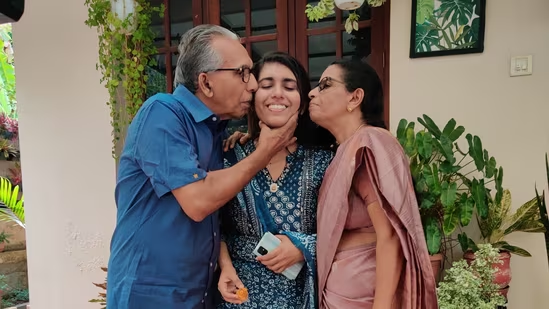
A graduate of the Indian Institute of Science Education and Research (IISER) Thiruvananthapuram with a BS-MS dual degree, Fabi is not only elated but also excited about the results and her dream of becoming a civil servant.(Handout)
Kerala native Fabi Rasheed secured AIR 71 in her first attempt in the UPSC CSE 2023 results announced on Tuesday, April 16, 2024.
A graduate from the Indian Institute of Science Education and Research (IISER) Thiruvananthapuram with a BS-MS dual degree, Fabi is not only elated but also excited about the results and the fulfilment of her dream of becoming a civil servant.
In a telephonic conversation with HT Digital, Fabi Rasheed talks about her strategies, mental health during her preparation duration, inspiration and more.
Congratulations on your success in securing AIR 71 in UPSC CSE 2023. How do you feel about this feat?
I am very excited and happy, I feel blessed at the same time. It is a mix of emotions. Initially, it was a surprise and took some time to settle in. My parents have seen me go through an emotional roller coaster for a year and they are extremely happy about the results.
Could you take us through your preparation strategy for the examination?
For prelims, the main thing was to have a factual understanding so that we can eliminate the options. Whenever I read, I try to make questions on my own. So that in whatever way it was asked I would be able to understand the nuances of the question.
For the Mains exam preparation, I mainly focussed on writing. I am a person who studies by writing. Even for prelims preparation, I studied by writing. So that gave me an edge for mains as completing a paper was not an issue and it is I believe the way I had written and studied. After the Mains examination, I was feeling very happy about myself. After every exam, I felt satisfied as I had done well. I had made notes for a few questions for the Mains exam, and I was lucky enough to get the same questions in the exam.
For the Personal Interview test, I had very little time to prepare as my test date was on January 9, 2024, and I had also appeared for the Indian Forest Services Examination (Mains) which ended in December. That was a very close call. I referred to my notes and newspaper.
What would your preference be with respect to the posts?
My first preference would be my home state, Kerala cadre. My first choice would be IAS, then IRS-customs and then IRS-IT.
Did you go through any mental breakdowns during your preparation duration?
I used to have constant panic attacks. I started preparation in June 2022 and by September I had panic attacks as I used to take very little breaks. I wanted to finish the syllabus very fast and I pushed myself to the brink. I had to lose at least one and a half months due to the constant panic attacks.
My sleep schedule was also ruined but then I understood that I cannot continue like this. Then I made it a point to sleep for at least 6 hours no matter what. I ensured that I tried to study at least 10 hours a day.
I had a tear film instability in my eye due to constantly looking at the laptop and reading. This condition was also a reason for the panic attacks. My family stood by me through these tough times.
Could you tell us about your educational background? Did you take coaching for your CSE preparation? What was your optional subject?
I completed my schooling from Thiruvananthapuram and graduated from IISER Thiruvananthapuram with a BS-MS dual degree in Biology. I took coaching from Fortune IAS Academy for my preparation to crack CSE and for my optional I took sociology as my subject.
Can you share with us some striking questions from your Personal Interview Test?
I was asked questions about India’s defence expenditure, India’s rural and urban health divide and what will I do about it.
The Chairman had asked me Why India is lagging in AI front and whether AI was a game changer. He asked me who is the most intelligent scientist in the world and also asked me the IQ of Einstein. Later I was asked to compare it with the IQ of ChatGPT.
Did you follow any routine?
I used to sleep by around 10:30 pm and tried to control the weight that I gained due to stress eating during my prelims and mains preparation. I wanted to maintain a healthy BMI for the medical tests.
Tell us about your support system who helped you get through the exam. Did you draw inspiration from anyone to help you motivate in the preparation journey?
My father who is an Ayurveda specialist and my mother a former state director of Insurance Medical Services supported me throughout the journey.
A relative of mine reminded me during my preparation that ‘Once you become a civil servant the only task that you have in hand is to help the maximum number of people in the maximum time that you have’
I believe that civil services is a very fulfilling profession and I have drawn inspiration from a lot of civil servants. I believe that If I am also given the right training I will also be able to follow their path and make a difference however small it may be. One such person I draw inspiration from is Guruprasad Mohapatra who was involved in the COVID crisis and helped people during that crisis time even when he was sick.
source: http://www.hindustantimes.com / Hindustan Times / Home> Latest News / by Tisha Jacob, New Delhi / April 17th, 2024