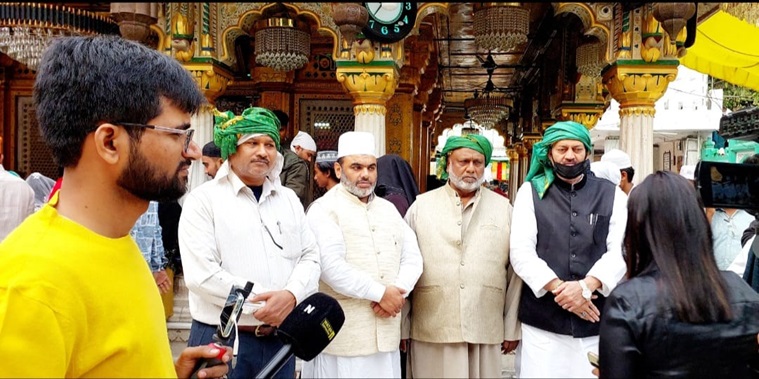
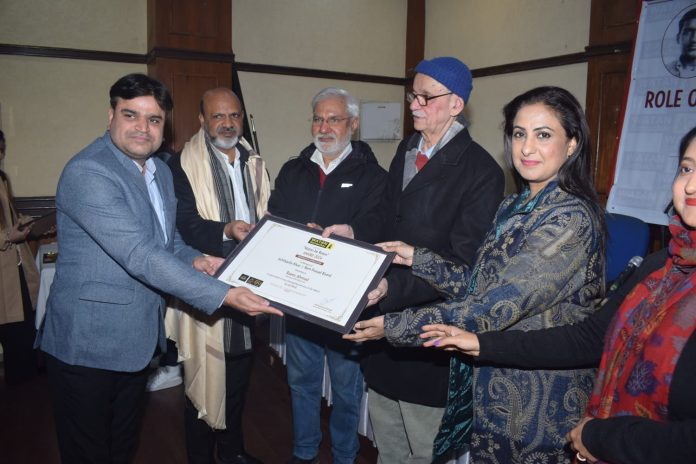
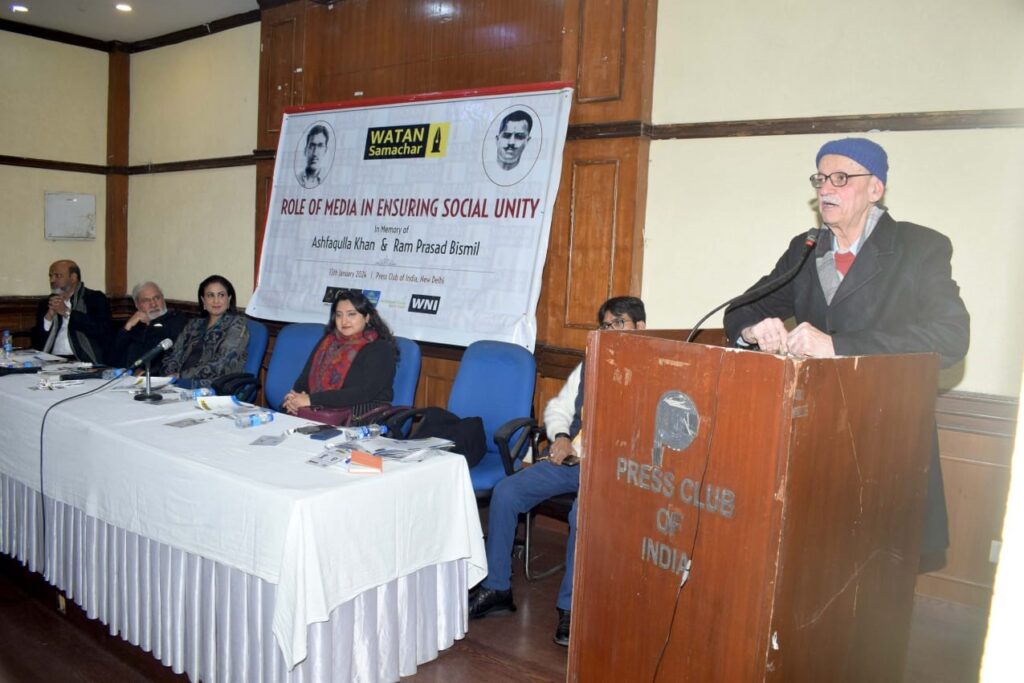
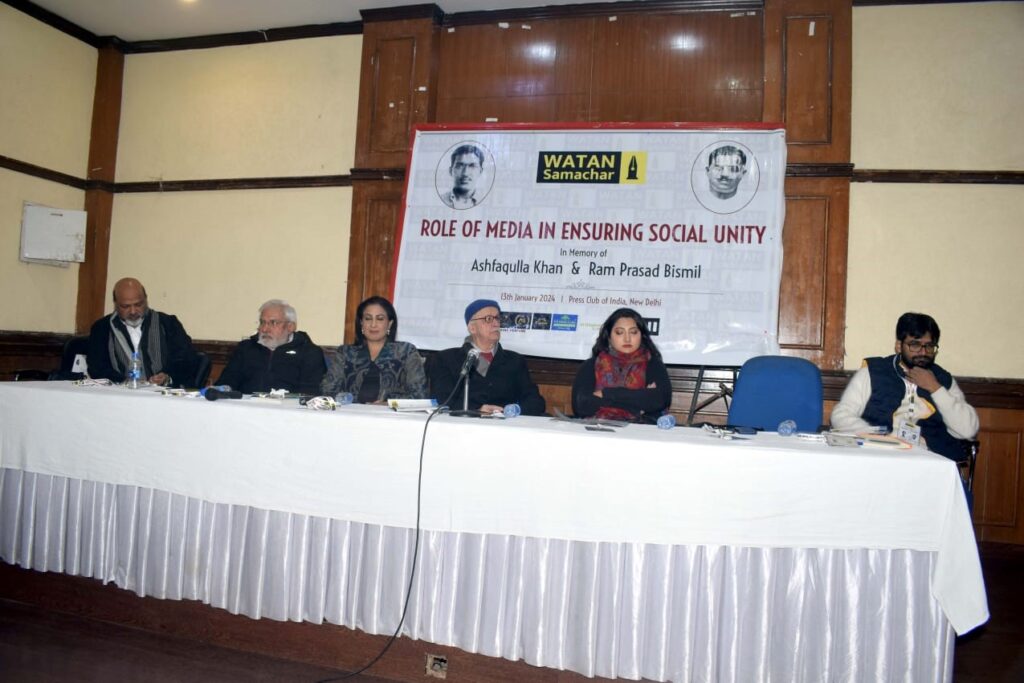
WNI Media Group organized a conference on Role of Media in Ensuring Social Unity in the memory of great freedom fighters Shaheed Ashfaqullah Khan and Ram Prasad Bismil at the Press Club of India here. A large number of dignitaries as well as renowned journalists, social workers and lawyers participated in the conference.
Senior journalists Rahul Dev, Qamar Agha, TV9 Bharatvarsh anchor Sumera Khan, India Today journalist Milan Sharma jointly honored Delhi Minority Commission Advisory Committee former member and Advocate Raees Ahmed with the ‘Watan Ke Ratan’ Award for 2024 for his social and legal services.
Qamar Agha said Ashfaq and Bismil wanted a non-partisan and democratic country. Journalist Rahul Dev said given the current situation that the disease will have to be talked about only then treatment will be possible.
Milan Sharma said hatred spread in the society will be cured through joint efforts. While, Sumera Khan termed the efforts of the Forum as a commendable step.
Advocate Raees Ahmed said that it is important to maintain our mutual brotherhood and unity strongly. We should try to remove misunderstandings and dispute, for which we need to take the help of mutual dialogue, only then society will be free from hatred.
Senior journalist Mohammad Ahmed convened the program.
Professor Farhat Basir, Dr. Zubaidur Rahman alias Babban Mian, Jamal Ahmed Alig, Firoz Ghazi, Neha Garg, Muhammad Akbar, Syed Muhammad Mujahid Hussain, Muhammad Ramish, Asad Sabri, Advocate Anwar Hussain Saifi, Mirza Anwarulhaq Baig, Hunaiza Khan, Jyoti Yadav, Dr. Syed Muhammad Asdar Ali, Shahid Ansari, Vipul, Muhammad Ali, Arshita, Asrar Ahmed, Iqrar Ahmed, Bhavana Yadav, Vakil Aslam (Supreme Court), Haji Zahoor Ataichi Wale, Nisar Ahmed, Nawab Akhtar, Shahnawaz Badar Qasmi, Dawood Bhai Shaikh, Shadab Ahmed Patrika, Aqeel Salmani, Archana Gaod and others were also honored with the Watan Ke Ratna Award- 2024.
Aslam Ahmed Advocate of Supreme Court on record extended vote of thanks.
source: http://www.radiancenews.com / Radiance News / Home> Pride of the Nation> Awards / by Radiance News Bureau / by Shakilur Rahman / January 15th, 2024
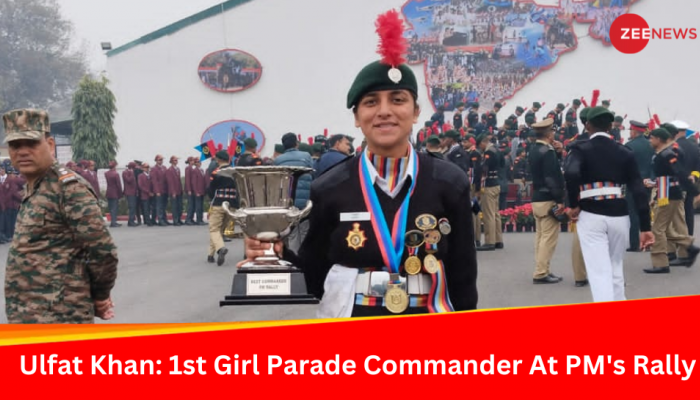
At the Republic Day Camp, Ulfat’s outstanding performance earned her the prestigious title of Best Commander along with the DG Commendation Medal Certificate, highlighting her exemplary leadership qualities.
New Delhi:
Ulfat Khan, a Senior Cadet Captain from Uri District, has created history by becoming the first girl cadet to be command the Parade at the Prime Minister’s Rally (PM Rally) during the Republic Day Celebrations in New Delhi.
This remarkable feat not only brings glory to the JK&L Directorate and the 1 J&K Naval Unit but also showcases the Govt College for Women Gandhinagar Jammu, where Ulfat is pursuing her BA Eng (Hons) despite all odds.
Ulfat’s Challenging Journey
Ulfat was selected from among 2,274 NCC cadets from 28 States and Union Territories and from 17 Directorates across the Nation. Her journey from a remote village on the Line of Control to a national leader is a reflection of her unwavering determination and resilience. She faced many challenges, including geographical barriers, but she never gave up on her pursuit of excellence.
Ulfat was born in Uri, Baramulla District in 2002. She completed her schooling in various Kendriya Vidyalayas across Delhi, Jharkhand and Odisha before joining GCW Gandhinagar for her higher education. She participated in various NCC camps, such as NSC, SNIC, RDC, Mini Sailing, and CATC, where she sharpened her skills and leadership abilities.
Ulfat’s Achievements At Republic Day Camp
At the Republic Day Camp, Ulfat’s outstanding performance earned her the prestigious title of Best Commander along with the DG Commendation Medal Certificate, highlighting her exemplary leadership qualities and dedication to service.
Lieutenant Commander Ankur Kumar, Commanding Officer of 1J&K Naval Unit NCC, praised Ulfat’s dedication and perseverance, saying that she is a role model for cadets across the Nation. He said that her selection as Platoon Commander is a testament to her hard work and commitment. Sub Lieutenant Dr. Neelima, Ulfat’s ANO at GCW Gandhinagar, emphasized that Ulfat’s journey from humble beginnings to national recognition is a reflection of her strength and resilience.
She said that her struggles and triumphs inspire us all. Principal Prof. Minu Mahajan expressed her pride, stating that Ulfat’s achievement is a reflection of the values of discipline and determination instilled in our students. She said that she has brought immense honour to our institution.
Group Commander, Srinagar Group, remarked that Ulfat Khan’s journey from a remote area to becoming the first girl cadet selected as Parade Commander at the PM Rally is truly inspiring. He said that her resilience and determination in overcoming challenges are commendable, setting a new standard for excellence within the NCC.
Maj Gen R.K. Sachdeva, ADG JK&L Directorate, expressed that Ulfat Khan’s remarkable achievement is a reflection of her exceptional leadership and dedication to the NCC. He said that her selection as Parade Commander is a proud moment for the entire Directorate, and she is a shining example for cadets nationwide.
He said that Ulfat Khan’s journey exemplifies the spirit of Nari Shakti and serves as a beacon of inspiration for aspiring cadets across the nation. He said that her historic accomplishment at the Republic Day Camp 2024 reaffirms the power of dedication, perseverance, and the limitless potential of women in the defence forces.
source: http://www.zeenews.india.com / Zee News / Home> News> India / by Syed Khalid Hussain Hussain / edited by Shivam Kumar Mishra / source : Bureau / January 31st, 2024
Chhowsia, Islampur (Uttar Dinajpur District), WEST BENGAL :
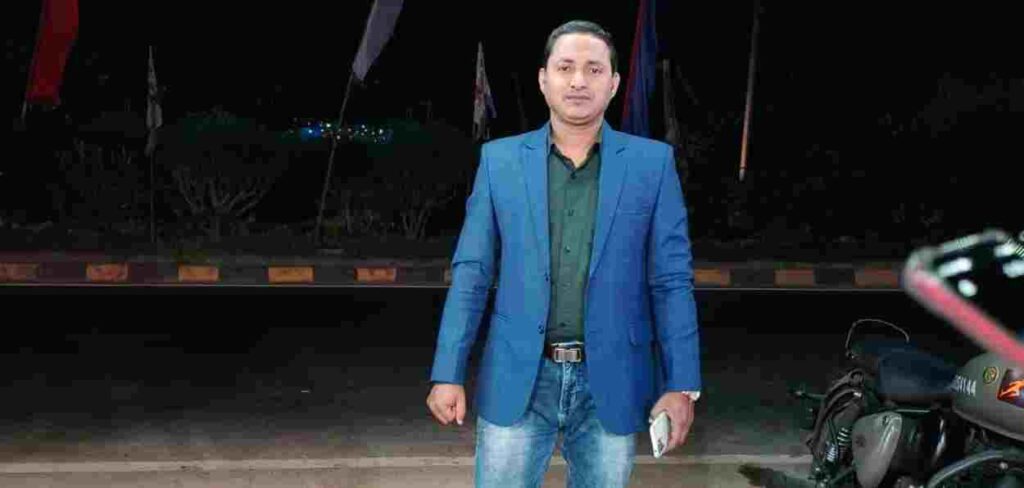
Mohammad Masroor Alam during a campaign
Mohammad Masroor Alam’s life took him through a different route in Gujarat in 2001 when he was enrolled for a computer course and the horrific Bhuj Earthquake shook the state on 26 January at 08:46 in the morning killing 20,023 people, injuring about 167,000 while bringing about 340,000 buildings down to rubble.
As a young man, he was shaken by the massive devastation. Stirred by the voluminous urgent need for assisting hands, he rose out of compassion and got involved with a team of people to help the people ravaged by the wreckage. The victims were people from all communities – Hindus, Muslims, Christians, etc. living in makeshift tents.
They all received food, utensils, clothes, blankets, and many other provisions through the efforts of Masroor Alam and all the others in the busy team.
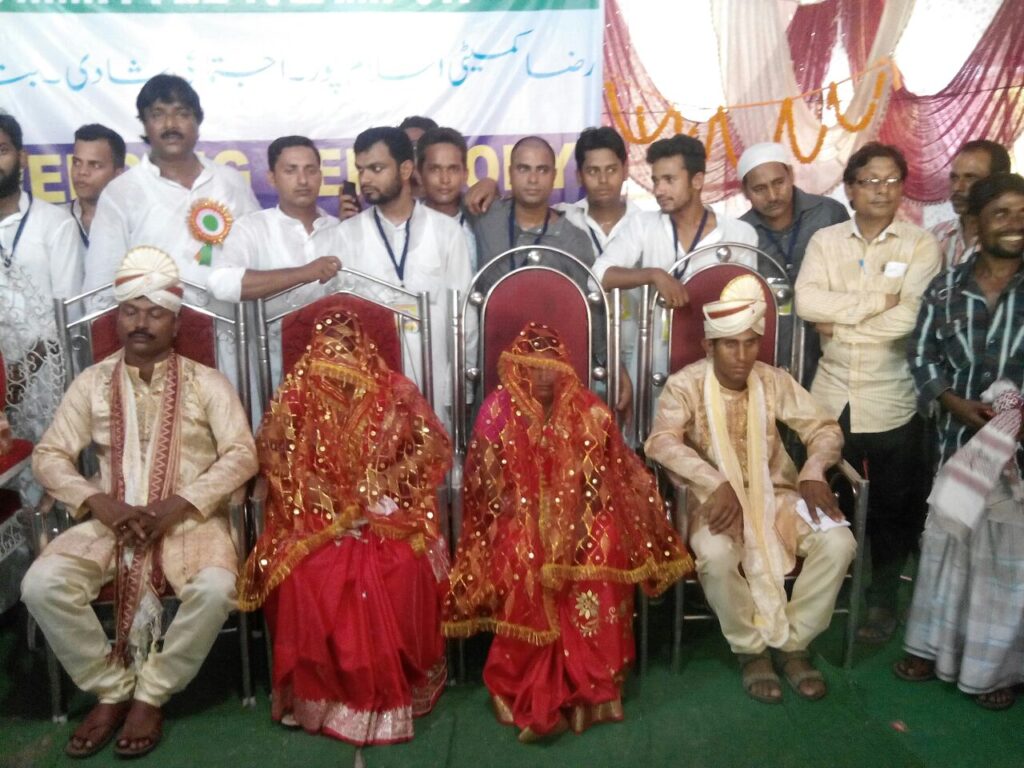
A group wedding organised by Masroor Alam’s group
In a turbulent world of survival of the fittest where each looks for their own, it’s hard to find people like Masroor Alam.
The 34-year-old social activist is the son of Md Rakimuddin and Najrun Nisha of Chhowsia, in the Uttar Dinajpur district in Islampur, West Bengal. He has five brothers and one sister and his parent’s deep values on humanity instilled an indelible root of compassion in him.
He held degrees of M.A. and LLB at the time of being in Gujarat to study computers at the time of the earthquake.
Md Masroor Alam shared, “It felt good not only to give and relieve them from their sufferings but also add a blanket of warmth to our hearts, and we also felt better and happier when we did good deeds for them.”
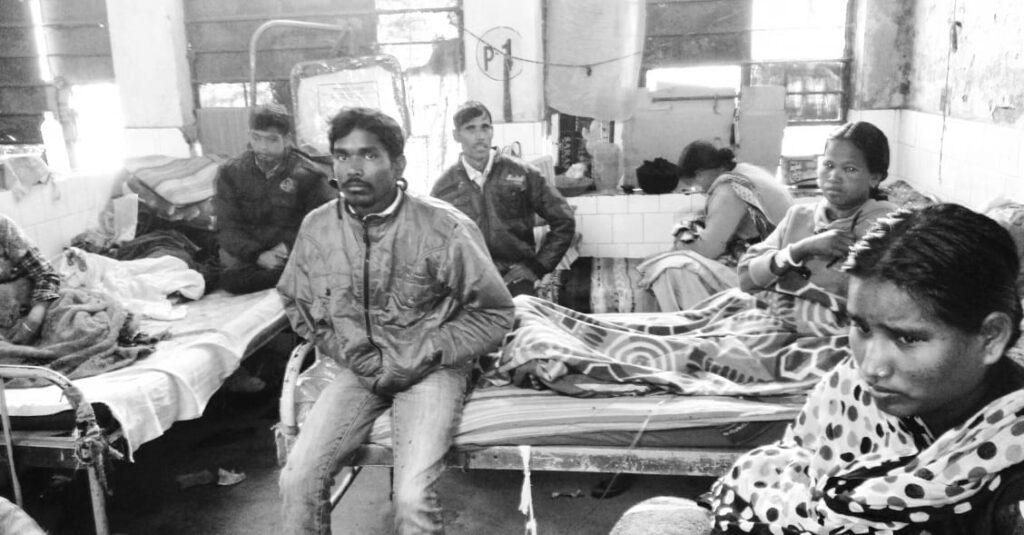
Victims of cylinder blast
The urge to start a proper Non-Government Organization to help the needy started churning in his heart. He said, “I saw people using NGOs for their benefits, just to meet their own needs without really helping the deprived people, I saw it as a sort of corruption in one way. I wanted to help the people desperately crying for help because I noticed they were overlooked many times. I also believe we must help all people equally, not looking at religion, caste, or race.”
In 2007, Md Masroor Alam became the President of the All India Raza Committee. They held a massive Blood Donation Camp in 2007 during April with a total of 152 blood donation camps and the work involved was stupendous.
During the time of the floods that engulfed the Kishanganj district, he and the team reached out to 26 villages serving them cooked hot khichdi (rice and lentils porridge) as well as giving them lentils, rice salt, wheat flour, sugar, tea leaves and other commodities.
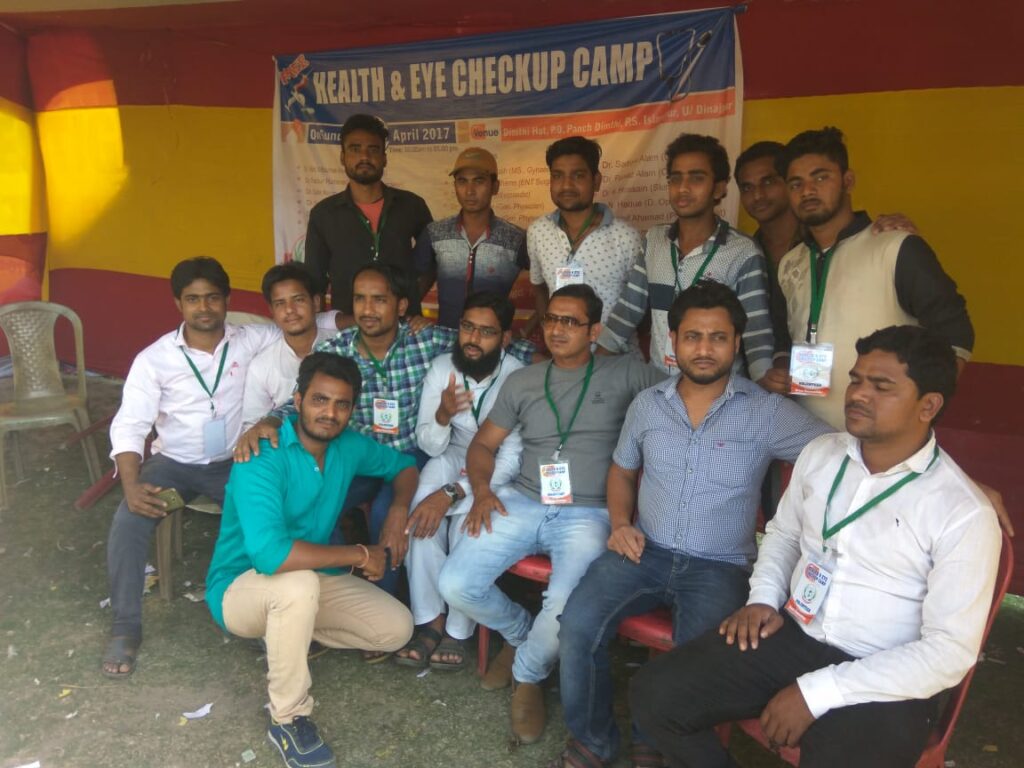
Md Masroor Alam with members of his group at a health camp
It was a tenuous hard labour pushing through swarming waterlogged regions which threatened to sweep away anyone at a moment. The grateful victims called them messengers of good tidings. In another instance, during a gas cylinder blast in the Islampur area, where 37 families were burnt and two men were struggling to live, Masroor Alam and the crew gave them all the help and provided their requirements during that difficult time.
One particular defining time for Md Masroor Alam was working with politicians and understanding how much help they too give during times of disaster. At that time, they helped people to get their ration cards and gifted warm blankets and food to members of some caste communities.
Sometimes, a village would suddenly catch on fire either due to dry twigs or some sudden accident and the group would rush to those areas to help with food, plates, utensils, glasses, and even pressure cookers as some families had their entire homes burnt to ashes.
Masroor Alam (In white Kurta-Pajyama) with a volunteer
The time of COVID-19 pandemic heightened food insecurity in India, leading to a hunger crisis affecting extensive rural regions and certain urban areas with job losses and reduced incomes. Activists monitoring coronavirus-related fatalities have reported that over 300 individuals have lost their lives due to starvation, exhaustion, and accidents apart from dying from the pandemic.
During this time, Md Masroor Alam and the team visited the people in the village and advised them to stay indoors, taught them about masking and sanitation, and gave food to over 8000 families, mostly labourers and truck drivers.
Another help they rendered in 2014 was organising and funding ten poor Muslim girls’ mass weddings and in 2015, they assisted six girls, which was a big financial relief for their parents.
Masroor Alam expressed that ever since he was a child, he was deeply concerned about the suffering of others and always wanted to do something significant to make a difference.
While he was studying computers in Gujarat, after the Bhuj Earthquake, his life was steered in a new direction and he started to get more deeply involved in helping all people of all communities during times of distress giving dal, rice, atta, tea leaves, sugar and many such food commodities during famines and earthquakes as well.
Feeding those in need
The beautiful aspect of Md Masroor Alam’s life and help is his along with the team’s outreach to all people of all communities without ever thinking of the differences of religion or caste. This is the language of humanity.
All India Raza Committee runs an old people’s home where the very poor beggars, sick, and old people can live in dignity. Most of them are rescued from the grips of begging out on pavements, streets, and near garbage dumps.
He says that Islampur is still an impoverished region, underdeveloped and there are many poor people there. During the winter, it is very cold and the NGO started to give warm clothes and blankets to the poor families.
Masroor Alam (in the center) holding a meeting with his volunteers
As the president of All India Raza Committee which is a Sunni Muslim Islamist group based in Maharashtra, India formed in 1978 by Alhaj Mohammed Saeed Noori. Md Masroor has reached out to help people in all parts of India such as Gujarat, Maharashtra, Karnataka, West Bengal, and many other states.
Inspired by the Holy Quran which says in Surah 17:70, “Because everyone is created by God Almighty, the Maker of all, humans must treat one another with full honour, respect, and loving-kindness.” In another ayat, it is written, “Help one another in acts of piety and righteousness.”
Md Masroor Alam is inspired by this one line, “Be certain that you do not die without having done something wonderful for humanity.”— Maya Angelou. This is the philosophy by which he lives and those waves resound loudly wherever he goes sending out a good message.
Rita Farhat Mukand is an independent writer in West Bengal
source: http://www.awazthevoice.in / Awaz, The Voice / Home> Stories / by Rita Farhat Mukund / February 01st, 2024
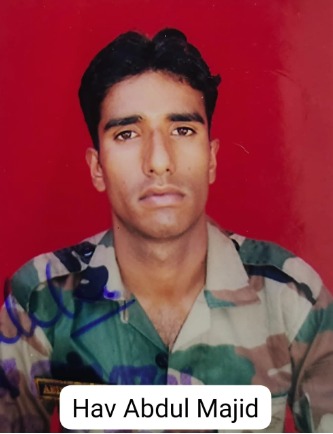
Havildar Majid Hussain, a local hero hailing from Poonch, exemplified the true spirit of a commando through his unwavering commitment to defending his homeland.
The Army said on Friday. “In the challenging terrain of Poonch and Rajauri, he stood as a formidable force against terror, displaying unparalleled courage and determination in the highest traditions of the Indian Army. His supreme sacrifice in the pursuit of peace resonates deeply with the hearts of the people in Poonch and Rajouri,” PRO Defence said in a statement issued here.
The GOC 25 Infantry Division, representing GOC-in-C, NC and GOC 16 Corps, expressed profound gratitude to Havildar Majid Hussain’s family. “In a heartfelt tribute to a local son who went above and beyond in the line of duty, the family of the Braveheart was visited by his seniors and colleagues bestowing the spirit of care for their fallen brother,” the statement said.
The awarding of the Kirti Chakra is a symbol of conspicuous bravery of Havildar Majid Hussain’s selfless sacrifice, the Army said, adding, “Poonch, Rajauri, and the entire population of UT of J&K, stand indebted to this courageous commando. His actions go beyond a single moment in time; they serve as a perpetual source of inspiration for future generations.”
The PRO Defence added, “As the Hero of Poonch, Havildar Majid Hussain’s legacy lives on, becoming an enduring beacon of selflessness and dedication. His story will continue to resonate in the hearts of those from his hometown and across the nation.
The gallantry award bestowed upon him is not just a medal; it is a symbol of honour, bravery, and a reminder of the sacrifices made in the relentless pursuit of peace and security.”
source: http://www.risingkashmir.com / Rising Kashmir / Home / by RK News / January 27th, 2024
UPSC aspirants preparing at Shibli Residential Coaching Academy, Azamgarh.
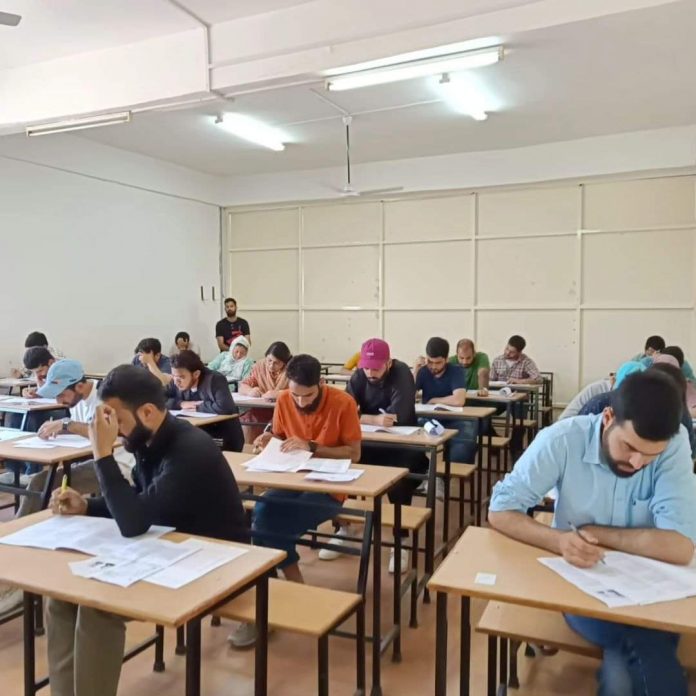
Nestled in the historic city of Azamgarh, Uttar Pradesh, Shibli Residential Coaching Academy stands as a beacon of hope for UPSC aspirants across the nation.
Established with a vision to empower and guide students towards a bright future in civil services, the academy offers a holistic approach to UPSC preparation, combining academic excellence with personalized mentorship and a conducive residential environment.
Setting the Stage:
As dawn breaks over the serene campus of Shibli Residential Coaching Academy, aspiring civil servants begin their day with a sense of purpose and determination. The tranquil surroundings provide the perfect backdrop for intense study sessions and thoughtful contemplation, setting the stage for a transformative journey ahead.
Academic Excellence:
Led by a team of seasoned educators and subject matter experts, the academy’s curriculum is meticulously crafted to cover the vast syllabus of the UPSC examination. From comprehensive study materials to interactive classroom sessions and regular mock tests, every aspect of the learning experience is designed to instill confidence and competence in aspirants.
Personalized Mentorship:
At Shibli Residential Coaching Academy, every student is more than just a name on a roster – they are individuals with unique strengths, weaknesses, and aspirations. That’s why the academy takes pride in its personalized mentorship program, where experienced faculty members offer one-on-one guidance, constructive feedback, and strategic advice tailored to each student’s needs.
Beyond the Classroom:
Recognizing that success in the UPSC examination requires more than just academic prowess, Shibli Residential Coaching Academy places a strong emphasis on holistic development. From personality development workshops and communication skills training to extracurricular activities and community engagement initiatives, students are encouraged to cultivate a well-rounded skill set that extends beyond the confines of the classroom.
A Supportive Community:
More than just an educational institution, Shibli Residential Coaching Academy is a close-knit community of like-minded individuals bound by a shared goal – to crack the UPSC examination and serve the nation with distinction. Whether it’s late-night study sessions in the library, spirited debates in the common room, or impromptu brainstorming sessions over chai, the camaraderie among students fosters a supportive and collaborative learning environment.
As the sun sets on another productive day at Shibli Residential Coaching Academy, UPSC aspirants retire to their dormitories with a sense of accomplishment and purpose. With unwavering dedication, personalized mentorship, and a supportive community by their side, they are well-equipped to embark on the challenging yet rewarding journey towards realizing their dreams of serving the nation through the civil services.
source: http://www.muslimmirror.com / Muslim Mirror / Home> Positive Story / by Muslim Mirror Network / February 01st, 2024
A week after the incident, Wakeel Hasan, the Delhi-based head of the rat-hole miners, got a call to head to Silkyara with his men.
Gabbar Singh Negi and Wakeel Hassan. ( Sourav Roy)
They are a part of a tribe that always sees light at the end of the tunnel — literally and figuratively. Optimism and a belief in new beginnings define their work profile. Whether it is laying a narrow sewer line or a virtual cul-de-sac, they see a “passage to a possibility” — as Gabbar Singh Negi, a foreman among the 41 miners trapped in the Silkyara tunnel, would describe the 16-day ordeal of life in death-like situation.
Here’s a quick recall of what happened on the morning of November 12 at Silkyara in Uttarakhand’s Uttarkashi, nearly 425 km from Delhi: The under-construction Silkyara Bend-Barkot tunnel suddenly caved in. Trapped inside were low-wage construction workers in a 4.5km space underground.
The tunnel is part of PM Narendra Modi’s ambitious Rs 12,000 crore Char Dham project, which aims to link four Hindu pilgrimage sites. The region is prone to landslides, earthquakes and floods.
Insured for Rs 5 lakh for the hazardous work of tunnelling through hard rocks, the trapped miners led by Negi knew little about what lay ahead that morning. “Life overground for us is already tough, we earn hardly enough for our families; most of us are barely literate,” said a rescued miner.
A week after the incident, Wakeel Hasan, the Delhi-based head of the rat-hole miners, got a call to head to Silkyara with his men. “Our expertise is laying and cleaning sewer lines through small tunnels. I didn’t know how I and my men would do this task of rescuing so many people,” says Wakeel.
On the 14th day, when American Auger machines, used in vertical drilling and blasting, went bust due to overheating a few metres before reaching the trapped miners, Wakeel got his head around the situation: his time to chip in had arrived.
Rat-hole mining is a dangerous and controversial method used extensively in Meghalaya to extract thin layers of coal. An environment court in 2014 banned the hazardous practice.
Back in the netherworld of darkness and despair, Negi was trying to keep the fading hopes alive. “We were sad. I told my fellow miners we must accept our fate,” Negi recalls. “For the whole fortnight, I tried to joke around, and told them about miracles in the lives of people. And despite their sullenness, I tried to gather them together for a prayer. After all, that was all I could do, they could do,” says Negi.
Outside the mine, faith was all that prevailed. Even as engineers, geologists, relief teams and tunnel experts went over their plans again and again, the elders living in the sparsely populated hamlet advised them, citing mythological beliefs, to set up a temple at the entrance of the tunnel. Finally, everyone took refuge in the local deity Baba Baukhnag.
Wakeel, who has refused to accept the relief amount announced by the Uttarakahnd CM, said, “The pressure to rescue the workers strengthened our resolve. We had to be glued to our work, and stay focused.”
They worked round the clock in two teams of three each, with one person digging manually, the other collecting debris, and the third pushing it out of the pipe.
“As soon as we removed the last chunk of debris, the trapped miners were overjoyed. They hugged us like family members meeting each other after long,” says Nasir Hussain, one of the six rat-hole miners.
“None of the rescuers could have done this alone, and this is the message I want to convey: we should live and work in harmony,” said Wakeel after the last of the trapped miners was brought out.
The bigger question is as rescued miners say quietly: why did it take so long? And the question that rat-hole miners ask: when and who will come to their rescue and recognise their value?
source: http://www.newindianexpress.com / The New Indian Express / Home> The Sunday Standard / by Narendra Sethi / December 03rd, 2023
Empathising with the 41 trapped workers in Silkyara tunnel, a man has travelled to Uttarkashi from Kerala to help the rescuers. However, since he does not have the skills required in the operation, he is providing all kinds of help to those deployed at the spot.
Uttarkashi (Uttarakhand):
A 41-year-old man from Kerala has arrived in Uttarkashi to help the rescuers engaged in evacuating the 41 workers who are trapped in Silkyara tunnel for the last 15 days. He would return home only after the trapped workers are rescued.
Pained by the trauma suffered by the trapped workers, Sameer Karimba, a resident of Kerala’s Palakkad has rushed to the site. However, since he does not possess the requisite technical knowledge and skills required to undertake the operation, he is helping in arranging bonfires for the security personnel deployed at the spot.
Karimba is a rescuer, who travels to different states to help the victims of disasters and accidents. He said that Mumbai-resident Harsha Koteja helps him financially for this work. It was Koteja who informed him about the 41 labourers trapped in the Silkyara tunnel. After which, he reached Uttarkashi on November 21.
Sameer said that he wanted to go inside the tunnel and help in the rescue work. But is unable to do so due to lack of technical knowledge. At present he is trying to run errands for the rescuers and security personnel deployed here. “Until the workers trapped in the tunnel are evacuated, I will stay here and do all kinds of service,” he said
Karimba has appealed people to pray for the safety of the trapped workers. He has sent a message in this regard to his acquaintances through social media. He has himself offered prayers in the mosque while asking his Hindu friends to offer puja in temples for the workers.
source: http://www.etvbharat.com / ETV Bharat / Home> / ETV Bharat English Desk / November 26th, 2023
41 workers have successfully come out of the tunnel after 17 days of effort. Team Wajid Khan, Munna Qureshi & NDMA’s Ata Hussain’s sacrifices have become immortal forever and the whole country is saluting them.
41 workers came out, Team Wajid Khan, Munna Qureshi & NDMA’s Ata Hussain sacrifices immortal
41 workers have successfully come out of the tunnel after 17 days of effort. Team Wajid Khan, Munna Qureshi & NDMA’s Ata Hussain’s sacrifices have become immortal forever and the whole country is saluting them.
With this, the sacrifices of all those people who risked their lives to bring those workers out and worked day and night for 17 consecutive days. People are saluting Wajid Khan Munna Qureshi’s team.
Pasmanda Muslim Samaj Utthan Samiti Sangh (Registered) performed special prayers at Sultan ji’s bargah
Special prayers were offered for the health and long life of the laborers trapped in Uttarkashi Tunnel.
Leaders and activists of Pasmanda Muslim Samaj Utthan Samiti Sangh (registered), a nationalist organization, organized special prayers and prayers for the health and longevity of the labourers stranded during the construction of the National Highway Uttarkashi tunnel at Bargah Sharif of renowned Sufi saint and spiritual crown prince Sultan ul-Mashaikh Hazrat Khwaja Syed Muhammad Nizamuddin Auliya (Khwaja Mehboob Elahi).
After the prayer, good news started coming from the tunnel that the workers were going to leave soon.
In fact, in the capital Delhi, Chadar and Aqidat flowers were presented under the leadership of Alhaj Muhammad Irfan Ahmed, Chief Patron of the institution.
President of the outfit Ehsan Abbasi and other office-bearers offered special prayers.
Dargah Sharif’s Sajjada Nashin Peer Syed Muhammad Hammad Ahmed Nizami, Sarfaraz Ali, Azad Noorani, Muhammad Dilshad Qureshi, Muhammad Saghir Idrissi, Haji Nisar Ahmed Qureshi, Rajesh Kumar and other prominent office bearers of Pasmanda Muslim Samaj Utthan Samiti Sangh (registered) were present on the occasion.
Meanwhile, in an exclusive conversation with newspaper and electronic media representatives after Dua, Irfan Ahmed said that the rescue operation to evacuate about 41 workers trapped in Silkia Tunnel of Uttarkashi continues for the 17th day.
Special prayers for how our workers come out safe and healthy. Irfan Ahmed further said that Alhamdulillah all agencies are working hard and a path is being made over the mountain and also inside the tunnel to evacuate them.
The existing workers trapped there have still not given up and a massive rescue operation is going on by the government and administration to take them out safely, especially the Prime Minister of India Narendra Modi, Uttarakhand Chief Minister Pushkar Singh Dhami, Minister of State (Retd) General VK Singh are keeping a close watch and taking updates from the officials one by one. However, we hope that the workers will be back soon.
source: http://www.watansamachar.com / Watan Samachar / Home> Newsflash / by Irfan Ahmed, New Delhi Correspondent / by Watan Samachar / November 28th, 2023
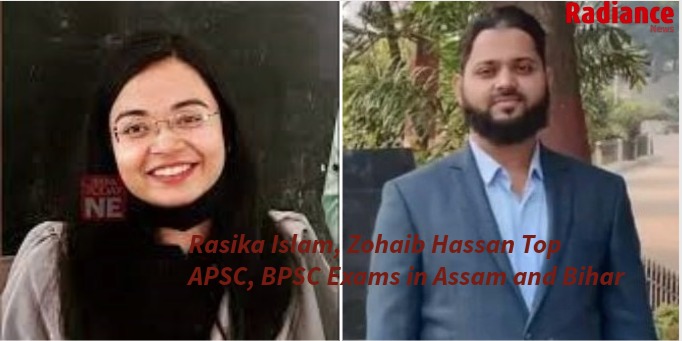
Rasika Islam of Assam’s Dhubri district topped Assam Public Service Commission (APSC) and Zohaib Hassan from Bihar’s Purnia district in Bihar topped BPSC examination for the recruitment of assistant professor in engineering colleges.
Khursheed Khan of Dibrugarh, a Central government employee, who joined as Inspector of Income Tax in 1996 and was promoted to IT Officer in 2005, said, “We are thrilled at the achievement of Rashika Islam. It has been amazing journey from Inspector of Taxes to ACS No.1 within a span of 3 years. A living example of women empowerment, she has brought laurels to her community and entire Dhubri district. Dhubri has the lowest literacy rate in Assam – 60 percent; it is also the district with highest percentage of Muslims – 75 percent. Assam’s literacy rate is around 75% while Muslims’ literacy rate is less than 65 percent.
On the performance of Muslims in APSC, he said, “Overall performance of Muslims in the APSC has been very dismal. In the current list out of 86 candidates selected for ACS cadre, 8 are Muslims, 6 male and 2 female. Out of 65 candidates selected for APS cadre, 4 are Muslims, 3 male and 1 female. Muslims account for more than 1/3 of the state’s population. However, their share in the government job is dismal.”
Hailing from Guaripur of Dhubri district, Rasika is the toper of Assam Civil Services (ACS) 2022, result of which was declared by APSC on April 17. She cleared APSC 2018 exam in her first attempt and was selected as Inspector of Taxes and posted in Dhubri. She has worked for three years as Inspector of Taxes. Her husband Roushin UL Alom is also an ACS and working as election officer in Dhubri district. Her father Shahidul Islam is voluntarily retired colonel of Indian Army.
Rasika scored 89 percent in ICSE-Class X exam, did her XII from Narengi Army School and graduated from Cotton College in 2016.
On the performance of Muslims in BPSC, Dr Maskoor Usmani, former President of AMU-SU, said, “Almost 7 percent of Muslim candidates have qualified for the 67th BPSC examination in 2017. According to reports, among 101 Muslim candidates who have qualified, 50 imparted coaching from Bihar Haj Bhawan, which has set a paradigm for change. I am sure in coming times more Muslims will qualify such examinations and will serve the state and country. Muslims constitute 17% of Bihar’s population and I believe this is a positive step towards achieving affirmative action. More needs to be done to get the results of 20 percent.”
source: http://www.radiancenews.com / Radiance News / Home> Latest News / Radiance News Bureau / January 19th, 2024
In the upcoming budget, my fervent advocacy is for bold and decisive measures to empower women entrepreneurs in India. I demand not just incremental but transformative steps.
You have been recognized as one of the “Prominent Muslims who shaped the modern world”, and are to be among the “100 Inspiring & Impactful Women of UP”, and listed at “50 Global inspiring Women leaders and Top Women CEO of the year 2023. How do you feel?
It’s truly an honor to be recognized in such prestigious lists. Being acknowledged as one of the ‘Prominent Muslims who shaped the modern world,’ making it to the ‘100 Inspiring & Impactful Women of UP,’ and being listed among ‘50 Global inspiring Women leaders and Top Women CEO of the year’ is humbling.
These recognitions come from esteemed organizations like World Trade Center, RBTC, International organisations like Prodigy, various Trade organisations. They have acknowledged my contributions to the Growth and Development towards Trade and Development, Towards Women Empowerment and declared me CEO of the year 2023. I’m grateful for the support and recognition.
What according to you should be done for women empowerment in India?
Fostering women empowerment in India requires a multi-faceted approach. We need to focus on education, skill development, and providing equal opportunities in all sectors. Encouraging entrepreneurship among women, creating a supportive work environment, and ensuring gender equality are essential. Additionally, awareness campaigns to challenge stereotypes and cultural norms, along with legal reforms to protect women’s rights, can play a crucial role
For any successful entrepreneur what according to you should be the social responsibility?
For any successful entrepreneur, social responsibility is paramount. Beyond financial success, entrepreneurs should actively contribute to the community and address social issues. This can involve initiatives such as supporting education, healthcare, and environmental sustainability. By giving back, entrepreneurs can make a positive impact on society and contribute to its well-being.
How do you like to share the feelings of your parents after your achievements?
When my father came to know about my achievements, he shared his views to me and all by saying, “On the day of having performed another Umrah in Makkah (20th January 2024), my daughter Khair Ull Nissa has been chosen and honoured on the calendar of 2024 as “MUSLIMS WHO SHAPED THE MODERN WORLD. Allah blesses her with blessings and honour her with more respect and be able to perform the duties of Good Muslim. She has made me a proud father and I am humbled.”
I believe my father’s words are a source of great motivation for me. They’re a testament to the support and encouragement I’ve received from my family throughout my journey.
Tell us about your educational, professional journey and family background?
Currently, I am on an international assignment which focuses on USD 500 Billion of Revenue and setting a benchmark for Trade and Investment between two countries.
I had the privilege of being a Board Member of the World Trade Center Association in New York and served as the Executive Director for Asia Pacific and India. In this role, I played a key part in driving monumental growth, catalyzing strategic partnerships, and achieving a 3x growth in global distribution reach. My expertise encompasses spearheading revenue generation, navigating markets in North and South America, Europe, Asia, the Middle East, and Africa, Overseeing the development of 500+ million square meters to achieving notable sales and lease milestones, fuelling global expansion. My strengths lie in optimism, decisiveness, effective communication, collaboration, mentoring, and adaptability.
Throughout my career, I’ve received recognitions such as the Economic Times ICONIC Women in Realty for 2021 and 2022, as well as the Top 50 Global Inspirational Women Award in 2023.
I’ve also been actively involved as a Founding Member of various organizations like NAREDCO MAHI and the Real Estate Women’s Wing of NAREDCO.
I hold an MBA in Marketing & International Business from Leeds University in the UK, which has provided me with a solid foundation in business strategy and global market dynamics.
As a CEO of the year, what would you like to demand in the coming budget for the women entrepreneurs in India?
As the honored CEO of the year, I stand at the forefront, a voice for change and progress. In the upcoming budget, my fervent advocacy is for bold and decisive measures to empower women entrepreneurs in India. I demand not just incremental but transformative steps – increased funding opportunities that go beyond token gestures, robust tax incentives that truly level the playing field, and strategic initiatives focused on enhancing the skill sets and networking capabilities of women entrepreneurs.
We are at a pivotal moment where unleashing the untapped potential of women-led businesses is not just a matter of equality but a strategic imperative for the nation’s economic development. The call is not for mere lip service but for the creation of an environment that not only supports but propels the growth of women entrepreneurs. It’s time for our budgetary allocations to reflect a commitment to inclusivity and to recognize the immense contributions that women entrepreneurs can make to our nation’s prosperity.
This is not just about gender equality; it’s about recognizing and harnessing the power of innovation, leadership, and economic contribution that women bring to the entrepreneurial landscape. As the CEO of the year, I urge policymakers to seize this opportunity, break through conventional barriers, and usher in a new era of empowerment for women entrepreneurs in India. The time for action is now, and together, we can build a future where every aspiring woman entrepreneur has the resources and support needed to thrive and lead.
source: http://www.radiancenews.com / Radiance News / Home> Entrepreneurship / by Mohd Naushad Khan / Radiance News Bureau / January 27th, 2024
)