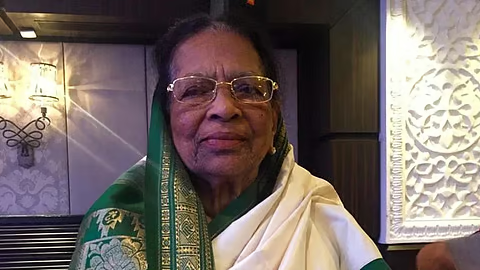
Justice Beevi was the first Muslim woman to be appointed to the higher judiciary in the country and the first woman to be elevated to the Supreme Court of an Asian country.
The first woman to be a judge of the Supreme Court of India, Justice M Fathima Beevi, was on Thursday posthumously awarded the Padma Bhushan.
Justice Beevi received India’s third-highest civilian award in the field of Public Affairs.
The former Supreme Court judge passed away aged 96 in November last year. Justice Beevi was the first Muslim woman to be appointed to the higher judiciary in the country.
She was born in Kerala in 1927 and her father encouraged her to study law. In 1950, she topped the Bar Council exam becoming the first woman to receive a Bar Council gold medal.
She started her career as an advocate in Kerala and worked her way up to become a district and sessions judge in 1974. In 1980, she joined the Income Tax Appellate Tribunal and was appointed as a High Court judge in 1983.
She made history in 1989 by becoming the first woman appointed to the Supreme Court.
As a Supreme Court judge, she became the first Muslim woman in the higher judiciary and the first woman to become a Supreme Court judge in Asia.
After retiring in 1993, she had served as a member of the National Human Rights Commission and then as Governor of Tamil Nadu.
She had resigned from the post of Governor of Tamil Nadu after rejecting the mercy petitions filed by four condemned prisoners in the Rajiv Gandhi assassination case.
Tejrasar Village (Bikaner),RAJASTHAN / Mumbai, MAHARASHTRA:
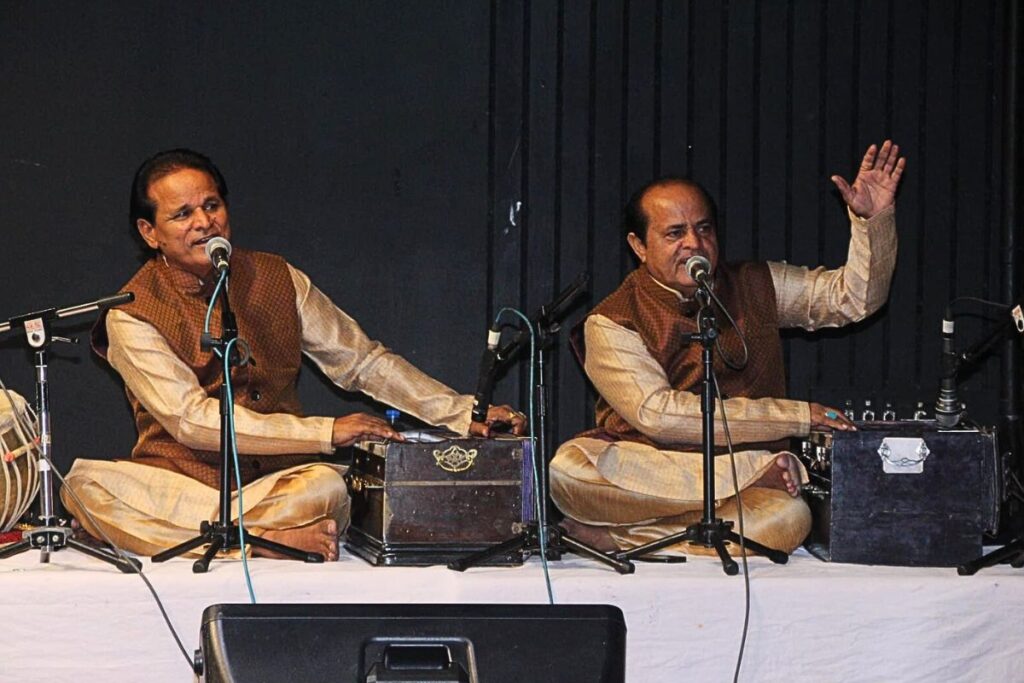
The land of Bikaner is very rich in art and culture and it has given uncountable diamonds of talent not only to the country but to the world. Bollywood musicians Ali and Ghani have been awarded the Padma Shri by the Government of India, the country’s fourth highest honor.
Maand singers Bandhu Ali Mohammed and Ghani Mohammad from Rajasthan were awarded the Padma Shri.
Ali Mohammad and Ghani Mohammad Padmshree: The Padma Awards for the year 2024 were announced on the eve of Republic Day. President Droupadi Murmu announced the Padma awards to 132 personalities, including five Padma Vibhushan, 17 Padma Bhushan, and 110 Padma Shri awardees. The shortlist for this year’s Padma awards includes impersonator Jankilal and Dhrupad singer Laxman Bhatt Tailang from Rajasthan.
Maand singers Bandhu Ali Mohammad and Gani Mohammad from Rajasthan and road safety activist Maya Tandon have also been given the Padma Shri award.
Ali Mohammad and Ghani Mohammad brothers, who live in Bikaner, will jointly receive this award.
Ali-Ghani was completely dedicated to music
The land of Bikaner is very rich in art and culture and it has given uncountable diamonds of talent not only to the country but to the world. In every field, the personalities of Bikaner have proved their mettle. Be it music, art, literature, painting, Bikaner has been rich in every field. Bikaner has established its own place in music and Bollywood. Pakeezah composer Ghulam Muhammad, lyricists Bharat Vyas, Rafiq Sagar, Raja Hassan and Ali-Ghani have all dedicated their all to music.
Inherited music
But here is the talk of Bollywood musicians Ali and Ghani, who have been awarded the Padma Shri by the Government of India, the fourth highest honor of the country. Born in Tejrasar village of Bikaner, brothers Ali and Ghani inherited music. His father Sirajuddin himself was a great knowledge of music, due to the death of Ali-Ghani’s wife in childhood, the responsibility of upbringing was on his father. While father Sirajuddin trained him to become a great person, he also inherited the legacy of music.
Struggle in Mumbai
As the mousiki became mastery, the desire to come out of a completely backward village Tejrasar and build a house in a big place also started shaking in the heart. At the age of youth, both brothers turned to Kolkata and from there traveled to the city of dreams, Mumbai. Ali and Ghani, who lived a difficult life in the village since childhood, did not find it strange to struggle in Mumbai and the struggle gradually brought success, the eyes of Bollywood musicians and directors fell on them.
During the struggle, the two brothers started singing together
Ali-Ghani had to starve several times during the conflict. In a metro city like Mumbai, many kilometers had to be traveled on foot. But he remembered the difficult life in the village. Therefore, the struggle of Mumbai seemed to him a game. During this time, the two brothers started singing together and made the basis of their singing Mand raga, which is considered to be the most popular raga of western Rajasthan. The most important raga in the Bikaner region is Mand and not only Rajasthani folk music has been sung on it, but the king of ghazal singing like Mehdi Hassan also made Mand the basis of his ghazals. Inspired by them, Ali and Ghani also decorated their Gulukari with the beauty of the mand.
Mastery in classical music
Ali-Ghani, who received his basic training in music from his father, the late Sirajuddin Khan, has a great influence in classical music. Both brothers received classical music education from Ustad Munawar Ali Khan and Ustad Bade Ghulam Ali Khan. Both are known in the country and abroad as film composers and singers.
Lata and Asha Bhosle get blessings
Associated with All India Radio since 1981, the brothers have directed music in many films, including Hindi, Rajasthani and Punjabi films. Apart from this, many albums of Naat, Bhajan and Rajasthani folk songs have also been released. Ali and Gani have also decorated the ghazals of big singers like Pankaj Udas, Sadhana Sargam, Chandan Das, Alka Yagnik, Anuradha Paudwal and Hans Raj Hans with their music. These big Gulukars have also sung under the direction of Ali-Ghani. Even the nightingale of Lata Mangeshkar and Asha Bhosle have been blessing Ali-Ghani.
Said – talent got value
Ali and Ghani, who came out of Tejrasar and shined as stars in the glare of Mumbai, have been honored with many awards. Sixty-year-old Ali and sixty-two-year-old Ghani have not moved away politely even after receiving the Padma Shri. On receiving the Padma Shri award, he thanks Allah and says that there is still more to go.
He credits Prime Minister Narendra Modi, Bikaner MP and Union Law Minister Arjun Ram Meghwal for this honor. It is said that the BJP government appreciated our talent and awarded the Padma Shri, also very humbly thanking NDTV, Ali and Ghani say that this channel first informed us and showed us all over the country.
source: http://www.rajasthan.ndtv.in / NDTV Hindi / Home> Sacrifice> Pride of Rajasthan / by Dr Nasir Zaidi / edited by Sachin Samar (and Translated in English) / January 26th, 2024
SRINAGAR, JAN 27 (UNI):- Ghulam Nabi Dar, a 72-year-old master craftsman from Srinagar nominated with the Padma Shri for his contribution to wood carving, in Srinagar on Saturday. (With URDU Story) UNI PHOTO-13U
Srinagar :
In Srinagar, where the echo of chisels against wood harmonizes with the whispers of history, Ghulam Nabi Dar, a venerable 72-year-old maestro, has carved his way into the distinguished realm of the Padma Shri.
His unwavering dedication to the delicate dance between chisel and wood spans over six decades, a testament to the enduring love affair with his craft.
Through the rhythmic strokes of his skilled hands, Ghulam Nabi Dar has woven a narrative in wood, earning him a constellation of accolades that now converge in the dazzling brilliance of the Padma Shri.
The announcement of this national honor on the eve of the country’s 75th Republic Day crowns a lifetime of commitment, marking not just a personal triumph but a harmonious resonance with the nation’s celebratory spirit.
On January 27, the air in Dana Mazar Safakadal resonated with the symphony of celebration as the Department of Handicrafts and Handloom Kashmir orchestrated a commendation ceremony at the residence of the venerable Ghulam Nabi Dar.
The purpose was to pay homage to his latest jewel in the crown – the Padma Shri, a resplendent recognition for his unparalleled contributions to the art of wood carving, with a particular mastery in working wonders on walnut.
Ghulam Nabi’s craftsmanship, a beacon of artistic brilliance, has been a steady force in the cultural landscape. The ceremony not only celebrated his recent honor but also showcased his illustrious journey, embellished with previous accolades such as the State Award in 1984 and the National Award in 1995. His artistic footprint extends far beyond the borders, painting a global canvas of appreciation in countries like Iraq, Germany, and Thailand, establishing him as a luminary on the international stage.
The coveted Padma Shri bestowed upon Ghulam Nabi Dar is hailed by many as more than a personal accolade; it’s a potential catalyst for the renaissance of a craft deeply rooted in the history of Kashmir.
A testament to the resilience of traditions that have endured the test of time, Dar reflects on his arduous journey with a spirit undeterred by adversity.
Born into hardship, Dar’s initiation into wood carving came at a tender age, a refuge from financial turmoil. Despite facing initial rejection from craftsmen unwilling to impart their trade, Dar’s perseverance guided him to Nooruddin Tikoo, a mentor who, despite a paralyzed hand, imparted his knowledge through intricate designs on paper.
Recounting his struggles, Dar narrates being expelled from school at the age of 10 due to his father’s financial losses. His journey led him to a wood carving unit in Sarai Safakadal, sparking an enduring passion for the art form. Determined, he faced rejection from numerous craftspeople but pressed on, thankful for the divine intervention that eventually led him to Tikoo.
As Dar’s artistic journey unfolded, he transcended traditional designs, crafting his own unique pieces inspired by nature. Recognition followed, with a state award in 1984 and an opportunity to showcase his skills in Baghdad during the early 1990s. The pinnacle of his craftsmanship arrived with the National Award in 1995-96.
Amidst the applause, Dar’s happiness resonates through his family. Acknowledging the transformative power of awards, he stresses the importance of government encouragement for artisans, fearing the loss of interest without such support.
Expressing gratitude for the Padma Shri, Dar underscores the critical role of government support in preserving traditional arts. He calls for the establishment of a comprehensive institution or workshop to train and incentivize young artisans, safeguarding the future of wood carving.
With his son following in his footsteps, Dar looks to the horizon with hope, emphasizing the imperative of sustained interest and support from both the government and the public for the seamless continuity of his cherished craft.
source: http://www.morningkashmir.com / Morning Kashmir / Home> Kashmir Latest / by Syed Snober / January 28th, 2024
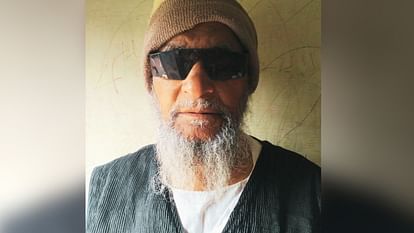
Two people in Mirzapur have received the Padma Shri award. The first prize went to folk singer Urmila Srivastava and the second prize went to Khalil Ahmed. He has made a special contribution in the field of handmade durries.
Khaleel Ahmed / Photo: Amar Ujala
Thursday was a special day for Mirzapur district from the point of view of art, music and handicrafts. Along with Urmila Srivastava in folk singing, Khalil Ahmed was also selected for the Padma Shri award for his special contribution in the field of Handmade Durry, especially Panja Dari.
75-year-old Khalil, who hails from Imambara area, has not only been associated with the art form for three generations but has enriched it. Khalil was awarded the National Award in 2000 by the then President APJ Abdul Kalam. In 2007, he was awarded the most prestigious award of the Ministry of Textiles, Shilp Guru. His entire family is associated with the carpet business.
His three sons Rustam Sohrab, Iftikhar Ahmed, Jalil Ahmed are also associated with this art. Khaleel Ahmed expressed happiness on receiving the Padma Shri award. He said that this is the result of years of hard work and dedication. He said that this award will empower the new generation to join this genre. Explain that the carpet of Mirzapur has got a GI tag.
GI expert Dr. Rajinikanth said that Mirzapur’s handmade carpet is very special. Khaleel Ahmed has been associated with this task for years and gave it a new height. He wished him all the best for the award.
source: http://www.amarujala.com / Amar Ujala / Home> Hindi News> Uttar Pradesh> Mirzapur News / by Amar Ujala, News Desk (translated from the Hindi edition) / by Pragati Chand / January 26th, 2024
Naseem Bano: Naseem Bano was awarded the state award in the year 1985.She was also felicitated by the then President R Venkataraman in 1988 for his work, he said.
pix: proiqra.com
Naseem Bano: Uttar Pradesh’s chikankari artisan Naseem Bano has been honored with the Padma Award by the government. “I got a call from Delhi last night informing me that I have been awarded the Padma Shri award. Me and my entire family are very happy with this achievement. We thank the government and our God for this award.”
Naseem Bano, a resident of Thakurganj area in the state capital, started chikankari at a very young age. She is known for popularising fine chickan embroidery in the Awadh region of the state. Bano said that she learned the art of chikankari from her father Hajan Mirza.
What did Bano say? “Whatever I am today is because of the support of my family and the education I gave to me through my father. She has tried to keep the tradition of fine chikankari alive and has also made it her goal to spread this tradition to young artisans. “I have trained more than 5,000 chikankari artisans in the art. I hope they will protect this tradition and carry it forward.”
Bano was awarded the state award in the year 1985. She was also felicitated by the then President R Venkataraman in 1988 for her work, he said. Bano said she has been invited to showcase her art in different cities of the country and in nine countries including the US, Germany, Canada and Oman.
source: http://www.zeenews.india.com / Zee News / Home> Zee Salaam / by Taushif Alam / pix edited – source: proiqra.com / June 26th, 2024
Madrasapalli (Jambuni, Bolpur) Birbhum District, WEST BENGAL:
Kolkata :
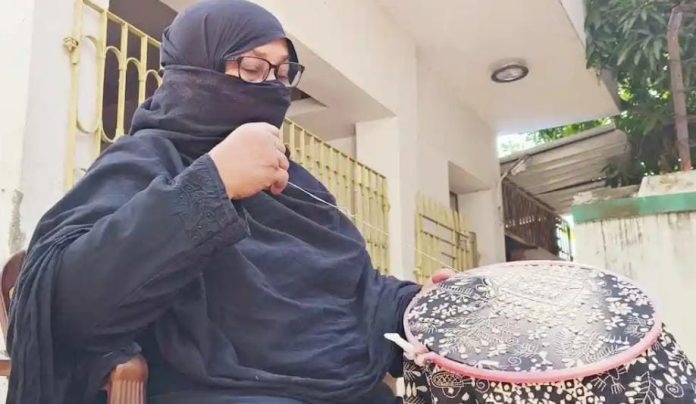
Takdira Begum of Bengal is to be honored with the Padma Shri this year. Seven people, in various fields, from West Bengal figure in the list of Padma awardees for 2024. Out of the seven, three have been conferred the Padma Bhushan and the remaining four the Padma Shri.
Takdira, a resident of Madrasapalli in Jambuni, Bolpur, has been doing kantha stitch for nearly 30 years. She learned sewing while studying at school. Sewing is now her livelihood and hobby. In Takdira’s words, “I can’t sit still. Love to work. I am overwhelmed with what the Center is rewarding me.”
Her family comprises her husband and three daughters. All the family members are involved in Kantha stitch industry. The women of the area are inspired by her artistic embroidery. Takdira taught this work to other women in addition to her own art practice. In 1996, she received the National Award for Promotion and Development of Kantha stitch industry. In 2009, she received Shilpaguru Sammanna. Now she will receive this honor from President Draupadi Murmu.
Takdira said, “The Central Ministry of Cottage Industries called to inform me that my name is in the list of Padma Shri recipients. I am very happy to hear.”
Takdira also said, “I will tell all those who are backward in the society, to be self-reliant.”
source: http://www.radiancenews.com / Radiance News / Home> Awards> Latest News / by Radiance News Bureau (headline edited) / January 26th, 2024
Anjuman-I-Islam President Dr. Zahir Kazi, a Padma Shri awardee, is recognized for his 40-year commitment to education, especially among minorities, and his contributions to de-radicalization initiatives. Learn more about his impactful work and achievements.
Dr Zahir Kazi, President of the city-based educational organisation Anjuman-I-Islam, is among the recipients of Padma Shri awards, announced on the eve of the Republic Day.
Kazi is among eleven people who got three Padma awards – Padma Vibhushan, Padma Bhushan and Padma Shri – from Maharashtra. He has been conferred the fourth-highest civilian awards in the Literature and Education category in recognition of his work in promoting education, especially among minorities.
Dr Zahir Kazi And Education Field: A 40 Year-Old Bond
Kazi has been involved in the field of education for the last 40 years, including 13 years as the head of 150-year-old Anjuman-I-Islam, which runs around 97 schools, colleges, hostels, orphanages and other educational organisations across the state, catering to over one lakh students, majority of them Muslims.
He has been credited with setting an Integrated Technical Campus offering diploma, degree and post-graduation programmes in in Engineering, Architecture and Pharmacy and Polytechnic spread across 10.5 acres of land at New Panvel as well as a law college.
Insights Into The Personal Life Of Dr. Zahir Kazi
Born in Ponda, Goa, Kazi is celebrating his 70th birthday on Friday (January 26). He got his MBBS from Goa Medical College and MD (Radiology) from the city’s Nair Hospital. A practising Radiologist, Kazi is the Director of Prime Diagnostic Centre at Nagpada and also provides consultancy at various hospitals.
He has previously served as a member of the University of Mumbai (MU) senate as a management representative. He has also been invited by the Prime Minister Narendra Modi on two occasions to discuss on issues and policies of the union Minority of Education and during the visit of the King of Jordan.
source: http://www.freepressjournal.in / The Free Press Journal / Home> Education / by Musab Qazi (Headline edited) / January 26th, 2024
The Union government on Thursday announced 5 Padma Vibhushan, 17 Padma Bhushan and 110 Padma Shri recipients.
Former BJP chief and Vice-President M Venkaiah Naidu, Sulabh International founder Bindeshwar Pathak (posthumous), Telugu actor-turned-Congress politician Chiranjeevi, yesteryear Bollywood actress Vyjayantimala Bali and Bharat Natyam exponent Padma Subrahmanyam have been selected for the Padma Vibhushan this year.
Padma Bhushan awardees include M Fathima Beevi (posthumous), who was the first woman Supreme Court Judge, former Bollywood actor Mithun Chakraborty, singer Usha Uthup, industrialist Sitaram Jindal, Foxconn CEO Young Liu, former BJP Union Ministers Ram Naik, Satyabrata Mookherjee (posthumous) and C P Thakur, veteran BJP leader from Kerala Olanchery Rajagopal, Tamil actor-turned-politician Vijaykanth of the DMDK (posthumous), and Mumbai Samachar publisher Hormusji N Cama.
“We are Indians first and we are all Indians and will remain Indians. We shall fight for the honour and glory of India and we shall die for it. (Applause). We shall stand united. There will be no divisions among Indians. United we stand; divided we fall. Therefore we do not want a reservation. It means division. I ask the members of the majority community who are present here today: Will you allow us to stand on our legs? Will you allow us to be a part and parcel of the nation? Will you allow us to be an equal partner with you? Will you allow us to march shoulder to shoulder with you? Will you allow us to share your sorrows grief and joy? If you do, then for god’s sake keep your hands off reservation for the Muslim community.” Tajamul Hussain of Patna told this to the members of the Constituent Assembly in 1949.
The speech was a befitting reply to the erstwhile rulers of India, the British crown, and the Muslim League. When the Constituent Assembly was formed, in 1946, to frame a constitution of India, the whole exercise was criticised by the colonial rulers and Muslim League alike.
The case made against the assembly was that it was not a representative body of all Indians. To some extent, the allegation was true. The elections were not held under the Universal Adult Franchise; members were not directly elected. Moreover, seats for Muslims, Sikhs, Parsis, Anglo-Indians, Europeans, and Princely States were fixed. Muslims would vote among Muslim candidates, Hindus among Hindu candidates, and so on.
Tajamul Hussain
To make matters worse for the nationalists, the British-backed Muslim League won 73 out of 78 seats reserved for Muslims even when Congress secured 205 of the total 296 seats. Jinnah-led League boycotted the assembly and thus claimed that the Constituent Assembly was a Hindu body where only 4 Muslims (all Congress members) were present. The British Prime Minister Winston Churchill also called the assembly a ‘Hindu body’.
The British government tried to paint the Indian Constituent Assembly as anti-Muslim. It said, “Should a constitution come to be framed by a Constituent Assembly in which a large section of the Indian population had not been represented, the British Government could not, of course, contemplate…..forcing such a constitution upon any unwilling parts of the country.”
Sir Stafford Cripps also expressed a similar opinion when the Muslim League boycotted the assembly. The argument was far from the truth. It was a boycott only by the Muslim League and not by the Muslim community.
In July 1947 after the Partition was finalised at least 27 Muslim members, originally elected on the Muslim League tickets, joined the assembly. They decided not to go to Pakistan and Indian leaders welcomed them.
Naziruddin Ahmad, a former Muslim League member, while joining the assembly declared, “There was no need for any doubt whatsoever regarding the fact that we have come here as loyal and law-abiding citizens of India.” Interestingly one such Muslim League member was later included in a seven-member drafting committee chaired by Dr. Bhim Rao Ambedkar.
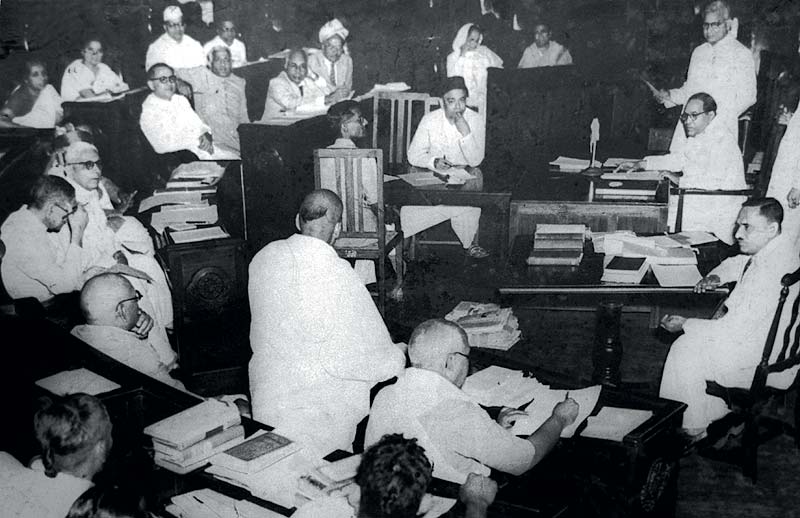
Constituent Assembly in session
Several Muslim members like Maulana Abul Kalam Azad, Mohammed Sadulla, Hasrat Mohani, B. H. Zaidi, B. Pocker Sahib Bahadur, etc. played significant parts in the deliberations of the Constituent Assembly. They were members of several committees, moved amendments, brought resolutions, and debated matters of importance. These members made their presence, and in turn of Muslims, felt in the assembly.
Muslim members raised their voices for the integration of the country. The shock of partition was great and they wanted to give a message that Muslims are as much citizens of India as other community members are.
Hasrat Mohani told the assembly, “Why do you call the Muslims a minority? They can be termed as a minority only when they function as a communal body. So long as Muslims were in the Muslim League, they were in a minority. But if they elect to form a political party without any restriction leaving it open to any community, then you should remember that whenever political parties are formed, the Muslims would fight by forming coalitions. Therefore, I say that Muslims would not like to be called a minority. To say that Muslims are in the minority is to insult them. I cannot tolerate this even for a moment.”
B. H. Zaidi, who represented Rampur, also argued against any special treatment for Muslims. He felt that it would further alienate Muslims from the mainstream. In the assembly, he said, “There has been no occasion in the history of India when the Hindus have persecuted a minority” and affirmative action should be based on economic disparity. He said, “There is one minority in this country which has always been, and which is existing in every country, and will go on existing, and that is the minority of the good and the just, of the people who are humane and liberal-minded, and who work for the regeneration of mankind and the progress of humanity. There is that minority today in this country, and to that minority Sardar Patel and the Prime Minister of India, and you sir, who adorn the Chair, belong, and the Members of this House.”
In the Constituent Assembly Muslims contested the ideas of minority, reservations, and exceptionalism on different occasions. There is no denying that a few Muslims under the leadership of Mohammad Ali Jinnah partitioned India, but it is also a fact that several Muslims played their roles in making India a democratic republic.
source: http://www.awazthevoice.in / Awaz, The Voice / Home> Stories / by Saquib Salim / January 25th, 2024
In total, the President approved 80 gallantry awards, including six Kirti Chakra and 16 Shaurya Chakra on the eve of the 75th Republic Day.
Havildar Abdul Majid has been awarded Kirti Chakra posthumously (HT File)
Four Jammu and Kashmir Police personnel have secured Shaurya Chkara, according to a list approved by President Droupadi Murmu on Thursday.
In total, the President approved 80 gallantry awards, including six Kirti Chakra and 16 Shaurya Chakra on the eve of the 75th Republic Day. Out of the six Kirti Chakra, three were conferred posthumously, and of the 16 Shaurya Chakra, two posthumously.
The Kirti Chakra is India’s second highest peacetime gallantry award after Ashok Chakra. Shaurya Chakra is the country’s third-highest peacetime gallantry award.
Jammu and Kashmir Police personnel Mohan Lal, Amit Raina, Faroz Ahmad Dar and Varun Singh have also been awarded the Shaurya Chakra.
“A proud moment for @JmuKmrPolice! DySP Mohan Lal, ASI Amit Raina, SI Faroz Ahmad Dar, Constable Varun Singh, received Shaurya Chakras from the Hon’ble President of India. I salute the awardees for valiantly performing their duties & fearlessly combating terrorism & other crimes,” lieutenant governor Manoj Sinha said in a post X, formerly Twitter.
Havildar Abdul Majid of the Parachute Regiment’s ninth battalion (special forces), who was killed during an encounter in November last year, has been conferred Kirti Chakra posthumously.
Majid, who hails from Poonch, was among the five soldiers, that included two captains, who lost their lives during the encounter in jungles of Kalakote in Rajouri district on November 22 and 23.
72 gallantry medals to J&K Police, highest among state forces
In total, Jammu and Kashmir Police have secured 72 gallantry medals on the Republic Day.
The officers were awarded for their meritorious work and leading anti-militancy operations and maintaining law-and-order situation under tough circumstance.
According to details available, the list includes Mohammad Rafee Rather, Dy SP; Shammi Kumar, Dy SP; Zakir Hussain, selection grade constable; Ishfaq Ahmad, inspector; Muzaffer Ahmad Bhat, head constable; Sajad Ahmad Malik, Dy SP; Sukh Dev, sub-inspector; Manzoor Hussain Peer, HC; Javaid Ahmad Chopan, HC; Azad Ahmad Bhat, selection grade constable; Farooq Ahmad Bhat, follower; Qazi Shamas-Ul-Muzaffar Amin, Dy SP; Mohinder Singh, ASI; Naseer Ahmad, SgCT; Mohammad Altaf Baghat, SgCT; Tanushree,SP; Muzaffar Ahmad, HC; Mohmad Hussain Sofi, CT; Mukesh Kumar, CT; Rohit Kumar, Dy SP; Mohammad Ashrif, Dy SP; Amit Raina, ASI; Nazir Ahmad, HC; Sudhanshu Verma, IPS SP; Mudasir Bashir Sheergojreey, HC; Mohan Lal, Dy SP; Tariq Ahmad Laloo, ASI; Javid Ahmad Lone, SI; Elyas Ahmad Khatana, SgCT; Yogesh Singh, SgCT; Mohammad Saleem Dar, CT; Aqib Bashir Dar, CT; Irfan Majeed Naik, CT; Faizan Ali, Dy SP; Aftab Ahmad, SgCT;Mudasir Ahmad Malik, CT; Sajad Ahmad Bhat, CT; Rakesh Kumar Singh, probationary sub inspector; Irfan Ahmad Bhat, CT; Aftab Ahmad, SgCT; 1st BAR Dilawar Hassan Magray, SgCT; Shabir Ahmad, SgCT; Mansoor Ahmad Sheikh, CT; Yasir Rashid Bhat, inspector; Mushtaq Ahmad Wani, CT; Abdul Rahman Khan; Farooq Ahmad Awan; Mumtaz Ali, inspector, Farooq Ahmad Awan, HC; Mohammad Ayaz, HC; Aijaz Ahmad Sheikh, CT; Sumit Kumar Sharma, Dy SP; Amit Raina, ASI; Farooq Ahmad Awan, HC; Aijaz Ahmad Khan, HC; Waseem Sulaman Yatoo, SgCT; Omer Hussain Wada, HC; Ghulam Nabi Bhat, CT; Mohmad Maqsood Lone, HC; Azad Ahmad Bhat, SgCT; Zafar Mahdi, Dy SP; Mohd Ashraf Sheikh, SgCT; Mohammad Yousif, SSP; Parmeet Singh, ASI; Ishtaq Ahmed Bhat, CT; Nissar Ahmad Darzi, Dy SP; Azim Iqbal, inspector; Danish Allahi Rather, SgCT; Afaq Ali Dewani, HC; Rajan Kumar, HC; Sajad Ahmad Talee, CT and Mohd Shafi, CT.
Kashmir inspector general of police VK Birdi congratulated the officers.
“IGP Kashmir Shri V K Birdi #congratulates the officers & jawans of J&K Police who have been #awarded with 72 #Gallantry Medals this #RepublicDay eve. Matter of #pride for J&K Police,” police wrote on its official handle on X.
source: http://www.hindustantimes.com / Hindustan Times / Home> News> Cities> Chandigarh / by HTC, Srinagar / January 26th, 2024