The season three of the business reality show ‘Shark Tank India’ will see a self-made entrepreneur Adil Qadri, who has introduced the Sharks to a desi way of using attars.
Despite failing school in fourth grade due to asthma, Adil’s business has processed a whopping 10 lakh orders, averaging 3,000 per day.
From a software repairer to an SEO expert, he’s now the face of a brand that’s putting Bilimora on the map. Indeed, Adil proceeded to establish a business, defying the odds posed by his asthma.
His brand ‘ADILQADRI’ introduces a new way of using attars, emphasising long-lasting effects and premium packaging. However, Rs 6 crore debt sparks conflict among the Sharks.
Talking about his experience on ‘Shark Tank India’, Adil Qadri (Founder and CEO) said: “Appearing on Shark Tank India with our brand ADILQADRI was a whirlwind, a roller coaster of emotions and opportunities. The intense pitch sharpened my ability to face sharks’ questions and honed my strategic thinking.”
“Their feedback provided invaluable insights for refining my business model. The experience underscored the importance of composure in high-stakes situations, molding me into a resilient and articulate entrepreneur,” he added.
‘Shark Tank India 3’ will soon air on Sony LIV.
–IANS / sp/prw
source: http://www.bhaskarlive.in / Bhaskar Live / Home> Entertainment / by IANS / January 18th, 2024
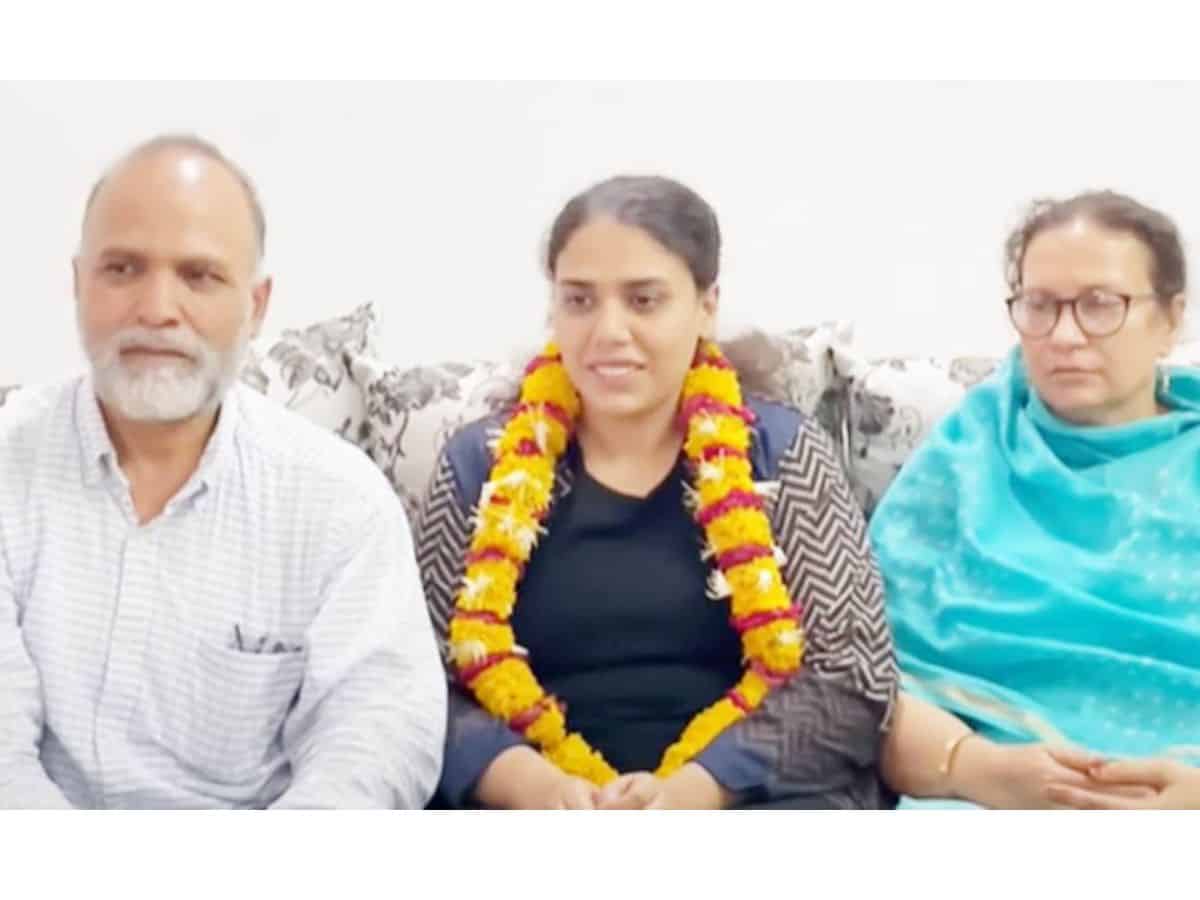
Ayesha Fatima will be the first Muslim woman police officer of IPS cadre for Telangana state.
Hyderabad:
The Centre has allocated additional 10 IPS officers to Telangana state. This development came following an appeal made by chief minister Revanth Reddy to Union Home Minister Amit Shah during their maiden meeting in New Delhi earlier this month.
Ayesha Fatima is among the new IPS officials for Telangana. Ayesha is the 2022-batch Muslim woman from Madhya Pradesh who secured 184th rank in the UPSC examination.
Ayesha pursued her education at Vindhyachal School in Dewas, which falls in the Malwa region of the state, until 11th grade. She completed 12th grade at Model Public School. Her father, Naziruddin Sheikh, is a government teacher, and her mother serves as a school director.
Ayesha, the second daughter in her family, excelled in competitive exams like JEE, becoming an electrical engineer after graduating from SGSITS college, Indore in 2015.
Despite her engineering accomplishments, Ayesha felt the urge to contribute to society and embarked on her UPSC journey in 2019. After facing initial setbacks, she finally achieved long-awaited success.
Ayesha Fatima will be the first Muslim woman police official of IPS cadre for the state.
Notably, Telangana CM told Amit Shah only 76 IPS officers were allotted to Telangana during the bifurcation of Andhra Pradesh. The CM had requested the Home Minister to sanction 29 additional IPS posts to the state in view of creation of new districts and for supervision of various departments.
source: http://www.siasat.com / The Siasat Daily / Home> News> Telangana / by Irfan Mohammed / January 17th, 2024
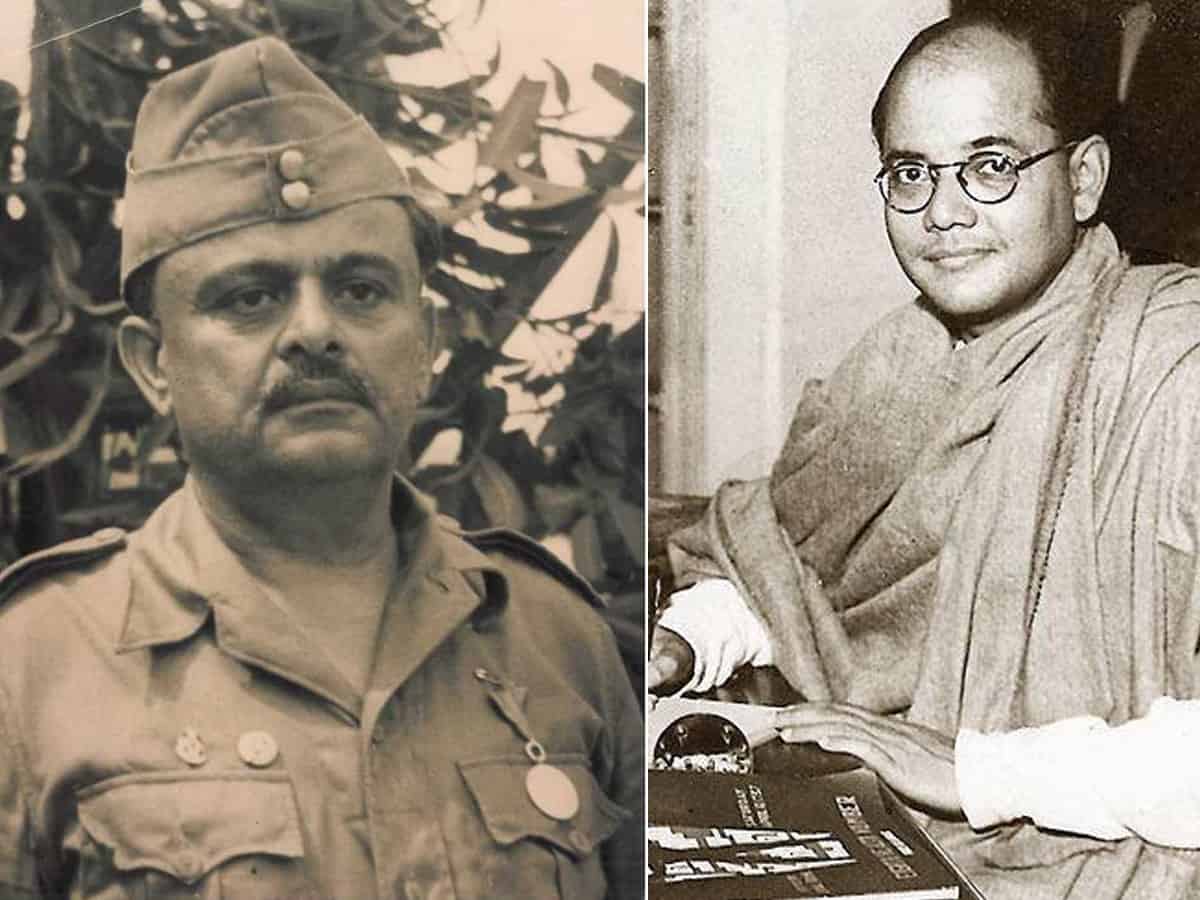
(Left) Habeeb Yusuf Marfani (Right) Subhas Chandra Bose
When Netaji Subhash Chandra Bose launched his fight for the freedom of India from British rule, several likeminded people offered him their whole hearted support and help. But these people and their sacrifices have now been largely forgotten. One such man was Abdul Habeeb Yusuf Marfani, a wealthy businessman who donated all of his fortune totalling one crore and three lakh rupees, to the Indian National Army (INA). Back then it was a princely sum and it helped the INA immensely.
Marfani hailed from the town of Dhoraji in Saurashtra but later the family settled in Rangoon where they set up a flourishing and diverse range of businesses. During the Second World War, When Netaji took charge of the Indian National Army and revived its flagging strength Marfani was the first to come forward to donate a massive amount to the leader for strengthening his army. Netaji honoured him by awarding the Sevak-e Hind medal.
He was the first person who was presented with this medal by Netaji himself. Marfani’s donation was in the form of cash as well as jewellery and property deeds. Reportedly Netaji was very moved by the patriotism and generosity displayed by Marfani. He declared: “I feel very happy about what Seth Marfani has done for the liberation movement. It is extremely commendable.”
Later Netaji realised that after the donation Marfani had become a pauper. So he asked Marfani what he wanted in return for donating his entire property. Marfani replied: “Give me the uniform of a soldier of the INA. I have donated my valuables. Now allow me to give my blood. I only want freedom for India and nothing else.”
His grand gesture inspired many others to come forward with donations. Several of the donations came from poor people like farmers, daily wage earners and coolies too. They donated whatever they could even if it was a few meagre rupees. In fact, Netaji was caught in two minds about whether it was right to take away the small earnings of these poor people. But at that stage one of his aides told him that he should not reject their sentiment or they will feel hurt and therefore Netaji obliged.
The qualities of generosity and sacrifice are held in high esteem in all cultures throughout the world. All people recognise that it takes a big heart and a great soul to be so generous. Whenever Netaji and his deeds are remembered, it is important to also remember the deeds of the men who stood behind the scenes and supported the freedom struggle with everything that they had.
source: http://www.siasat.com / The Siasat Daily / Home> Featured News> by Abhijit Sen Gupta / January 22nd, 2024
Kshetri Awang Leikai(Porompat sub-division of Imphal East District), MANIPUR:
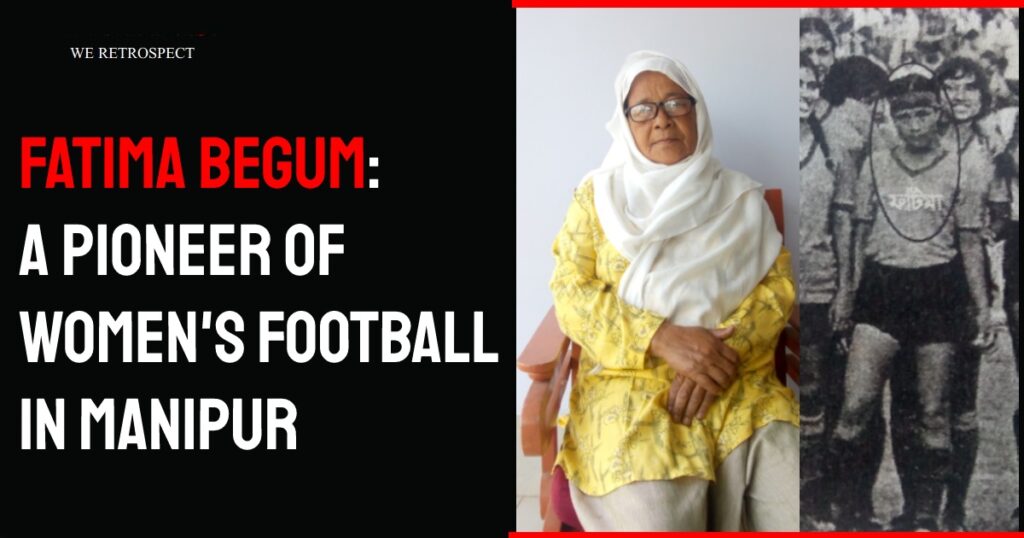
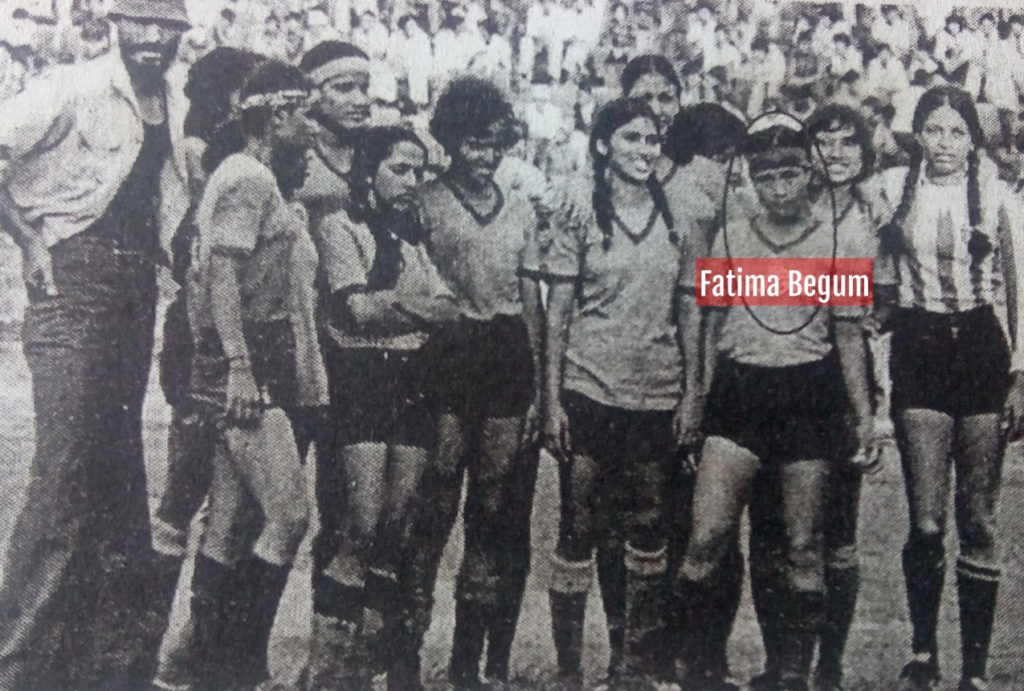
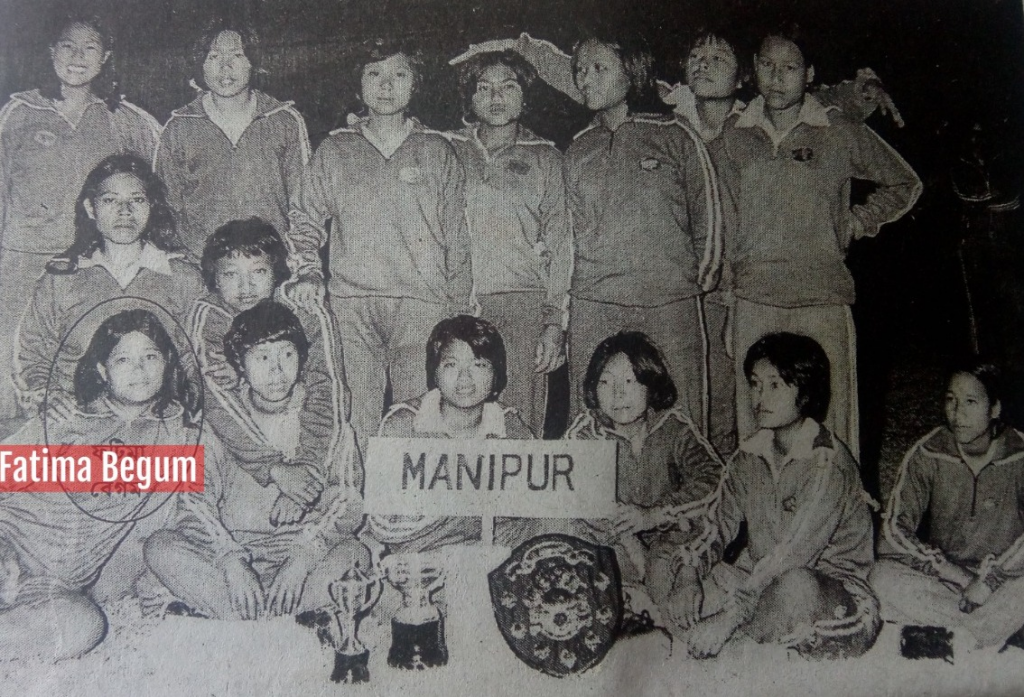
Fatima Begum, a pioneer of women’s football in Manipur, started playing football since her childhood days. She started playing football in a small playground in Kshetrigao among boys. They used to stuff torn footballs with clothes and sometimes even stole nobab (pomelo) and played with it.
From State to International Level
When the women football tournament first started in Manipur, she joined the Eastern Sporting Union. She belonged to the first batch of women football players. Back in her days, the government did not spend much money in promoting sports and games in Manipur. She says that generous people like Yambung Nimai who were interested in football helped her buy boots and football. They even provided money for her diet as she could not afford it. She became part of the Manipur team around 1974-75 and also captained the team for three years. After playing at the national level, she was called to Kolkata for a camp. She says, “Amusana, late Chawui, late Bijyalakhsmi and I were called there and that was how we joined the Indian team.”
At international level, she also played against the England team in Manipur. The match happened in Polo ground. It was a friendly match to raise some funds. She also played against the Nepal team in Kathmandu. Remembering her visit to Kathmandu, she says, “It was the first time I had gone to a foreign country. Earlier we had opportunities but given that we did not have money, I could not go. We always have seven-eight players from Manipur in the Indian team. In our time also, there would be five-six players.”
According to Salam Irene’s book, The Muslims of Manipur, “Fatima Begum of Kshetri Awang Leikai was a member of the India eleven team that played at Bhirt Nagar, Nepal in 1975. She captained the Manipur team that played against the UK football team at Imphal. Fatima was the first Muslim player of the North-east in this discipline.”
Paving Ways for Many
She laughed telling us that she failed the matriculation exam five times. Fatima recollects, “My family’s economic situation was not good. Playing football was very tiring. So, it was hard for me to study. I was not good in studies. Finally, I did clear the matric exam. I did not study much. I did not take much interest in it. Football was always on my mind. I liked sports.” She told us that she also played other sports such as handball, softball and other track sports at national level. According to her, there were not many good women athletes at that time. “I was good at those things,” she says, “so, I got selected.” Having said that, she feels that the situation of women in sports has improved considerably compared to those days.
During those days, she says that she was the only pangal woman in the football team. After her, there were one or two pangal women who joined the team. She says, “Now, there are many good players. The one from Khutheibam, I do not remember her name. We call her Thoibi. She played in Eastern Sporting Union. There is another one called Bukshera. Kashmina is also another one. She is famous now. She lives in mainland India.”
Regarding the support she got from her family and community, she tells us, “My family was alright with me playing sports. The community was reluctant at that time. In the villages, there was purdah system. They did not like the clothes we were wearing while playing. So, they were a little unhappy. But I continued playing football anyway.” When asked about the situation of pangal women in sports these days, she says, “These days, things are much better. Now, we think that we should participate in sports. It is not about looking down at my community. We should also preserve our religion but at the same time, we should also be participating in these things.” Nowadays, she says, there are lots of pangal women in sports such as Judo, Taekwondo and racing.
Experiences and Memories
Regarding her experiences while she was playing football, she says that “at times, we suffered because we had to travel without any reservation on the train in crowded compartments. There would be no place to stand even. On the other hand, there were also times when the whole compartment would be reserved for us. We would sing and play music and enjoy ourselves.” The most pleasant of the memories she says was her visit to Goa. She says, “They are good people. They welcomed us nicely. They played nicely and took care if we got injured. They have discipline.” Regarding her unpleasant experiences she had during her career, she says, “The most unpleasant experience I had was in Kolkata, Bengal. They did not care about us. They would kick on our knees, they would attack our calves. They wanted us to fall down and get injured. They would attack our good players like that.” Furthemore, she says, “Bengalis are a little cunning. They controlled the selection process for the Indian team. So, they selected mostly their people. They are not good people. Goa and Maharashtra are a little better. Manipur and Bengal will always confront in the finals at the national level. They are hard to deal with.”
When we asked her about the goals she scored, remembering her friend Amusana, she said, “When I was in Eastern Sporting Union, Amusana was a stopper. I was the striker. Her long kick was beautiful. I can run really fast. People say that the horse is running. She would start the ball. I would give the ball back to her and she would immediately do a long kick. There was an understanding between us. The moment I passed the ball to her I would run really fast. And, she would pass it to me. That is how we scored easily. At that time, there were no good women players. I teamed up with her, that was why I could do that. She could do that because I was there. Given that we have two-three good players, we managed that. But it became boring if we scored a lot of goals. If we scored around twelve-thirteen goals, then it became boring.” When asked about the match when she scored the most goals, she says, “I think it was in Pondicherry. I scored seven goals. I was becoming famous that time. I could not score much against Goa and Bengal because they had better players.”
Post-Retirement Days
After she joined the state’s sports department, it became her responsibility to take the teams for matches as a coach.
At times, she would take a friend from another sports department as a manager if others did not agree to go with her. “If the people who work with me on football did not want to go,” she says, “I would take someone from other sports.”
Post her retirement from playing, she has been actively participating in improving sports facilities and helping those interested in football, especially women. She used to support the club KIYC in her locality monetarily. She is also supporting some women players in the locality. She proudly tells us one of the players she supported is playing in KRYPHSA, Naoremthong. She has also sent some Muslim women in Chaoba’s team. Chaoba is her junior, who is now the assistant coach of the Indian team. There are some women also from her locality in Eastern Sporting Union. Fatima is grooming them.
source: http://www.weretrospect.com / We Retrospect / Home> History / by We Retrospect / January 25th, 2021
“The utmost service to the religion during these times is to educate our youth and upcoming generations with contemporary subjects while keeping their faith firmly established and their self-confidence high; so that, they excel in religion, are adorned with education, have appreciation of hard work and therefore are able to navigate and take confident decisions in their life.” ~Hazrat Maulana Mohammad Sayyid Wali Rahmani Sb.
Getting medical education and becoming a doctor to serve humanity is the dream of millions in the country. However every year only a few thousand fortunate students are able to realize their dream. Paying exorbitant fees of private medical colleges is not possible for everyone and seats are limited in government medical colleges. So the majority of students ended up losing hope in the absence of affordable resources and start considering other alternatives.
Admission in any government medical college is becoming tougher with every passing year with an increasing number of aspirants and limited medical seats. Its competitive exam (NEET) is one of the toughest exams in the country. It requires rigorous preparation.
In such a situation, Rahmani30 founder Hazrat Maulana Md Wali Rahmani Sahab started this program for meritorious students with a vision of providing free education for all and even sponsoring other expenses for those who can’t afford. Alhumdulillah, the vision of Hz. Ml. Md. Wali Rahmani sb ra has transformed into an educational movement, instilling hope & motivation in people who have remained deprived of such opportunities.
It is worth noting that 19 students (boys & girls) had participated in NEET-UG 2023 from Manipur state, in which all the students qualified NEET-UG 2023, while 11 students scored 500+ marks and got Government MBBS seats in Manipur viz. RIMS, JNIMS, CMC and SAHS which is a huge success. Also 7 students scored more than 400+ marks and got 2 BDS Government seats. Of course, this achievement is the guarantee of bright academic future of Rahmani30 students.
Parents, guardians and well-wishers of Rahmani30
RAHMANI30 – MERIT LIST OF NEET-UG 2023 OBC MEITEI-PANGAL
Sl. No. / State Rank / Roll Number / Name of candidate /Sex / Category NEET Score MBBS Seat @ NEET / Rank
We Manipur state (NE Region) are really fortunate to be part Rahmani Program of Excellence, RAHMANI30 UNIQUE Educational Movement.
For us, it is our proud moment for whole Ummah RAHMANI30 has done so much for entire community in the field of EDUCATION.
Marhoom Hazrat Maulana Mohammad Sayyid Wali Rahmani Sb left behind some pleasant memories as dedicated his life in the efforts for uplifting the community as a scholar, as an educationalist, and with ‘never say die’ spirit.
So far, RAHMANI30 has produced 10000+ students in Engineering (IIT), Medical (NEET), Commerce (CA/CS), Law (CLAT), Defence (NDA), and Institutes of National Importance (INI) and tremendous noble cause initiatives.
The Rahmani Program of Excellence (Rahmani30), along with its mentor organization, The Rahmani Foundation, is effectively turning the educational desperation of the minority community into hope and confidence, making its learning process more effective with each passing year.
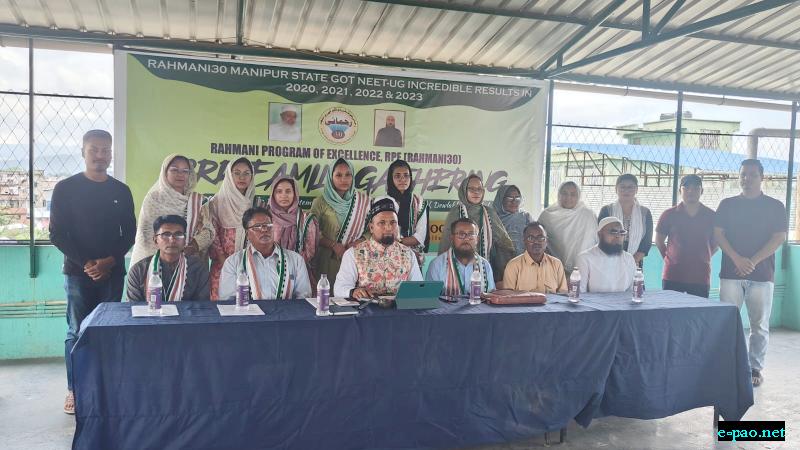
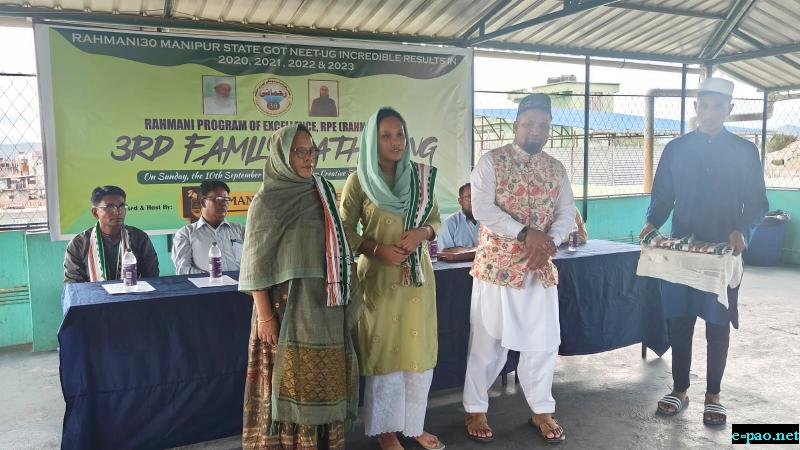
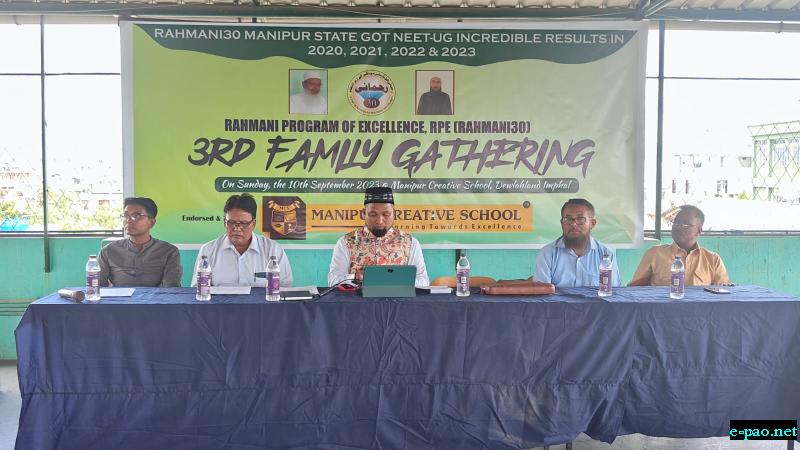
On this Family Gathering Occasion here at Manipur Creative School, Sermon Road, 5th Avenue, Dewlahland, Imphal East, Manipur 795001 on Sunday, the 10th September 2023, the parents, guardians and well-wishers of Rahmani30, congratulating and felicitating the successful students by Manipur State Coordinator Md Raees Ahamed Tampak, said in his speech that surely all the success and achievement are the results of hard work of team, students, and the prayers of all the stakeholders. So far, RAHMANI30 Manipur State produced 23 MBBS and 2 BDS Seats.
Md Raees Ahamed Tampak, Coordinator, Rahmani Program of Excellence, RAHMANI30, Manipur State said that this achievement is definitely achieved due to the tireless efforts of Mr. Fahad Rahmani (CEO Rahmani30), Ma’am Rafatur Rahmani (Team Lead, Maharashtra Girls program) and former DGP of Bihar, Janab. Abhyanand Sahab, by his efficient Academic leadership and guidance as well as the tireless hard work of the faculty, management and other staff. This has been possible only through identification of the target and recognition of the goal and mutual cooperation by the students and their parents.
“The Best way to predict your Future is to create it.” ~Abraham Lincoln
Parents, guardians and well-wishers of Rahmani30
Md Raees Ahamed Tampak / State Coordinator – Manipur State Rahmani Program of Excellence / (RPE – RAHMANI30)
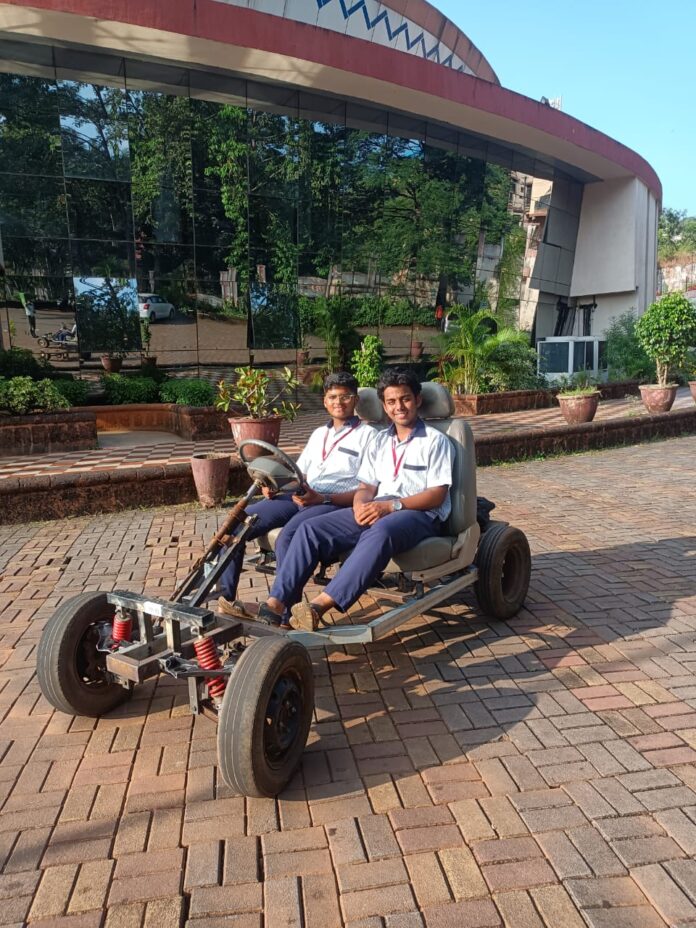
Mohammad Sehab Beig and Muhammad Shaan Sheikh with their car
Mohammad Sehab Beig and Muhammad Shaan Sheikh, two classmates from Shantadurga Higher Secondary School in Goa’s Bicholim town, were assigned a 20-mark physics assignment for 11th grade. The two youngsters, together with their friend Moun Mamlekar, a commerce student, worked for a month to develop an electric car powered by a lead acid battery.
The car gained attention when it was displayed at Delhi’s Ravindra Bhavan as part of ‘The Western India Science Fair Competition’. The electric car is powered by a lead acid battery rather than a lithium battery, which reduces its cost significantly.
From a Physics Project To Developing an EV
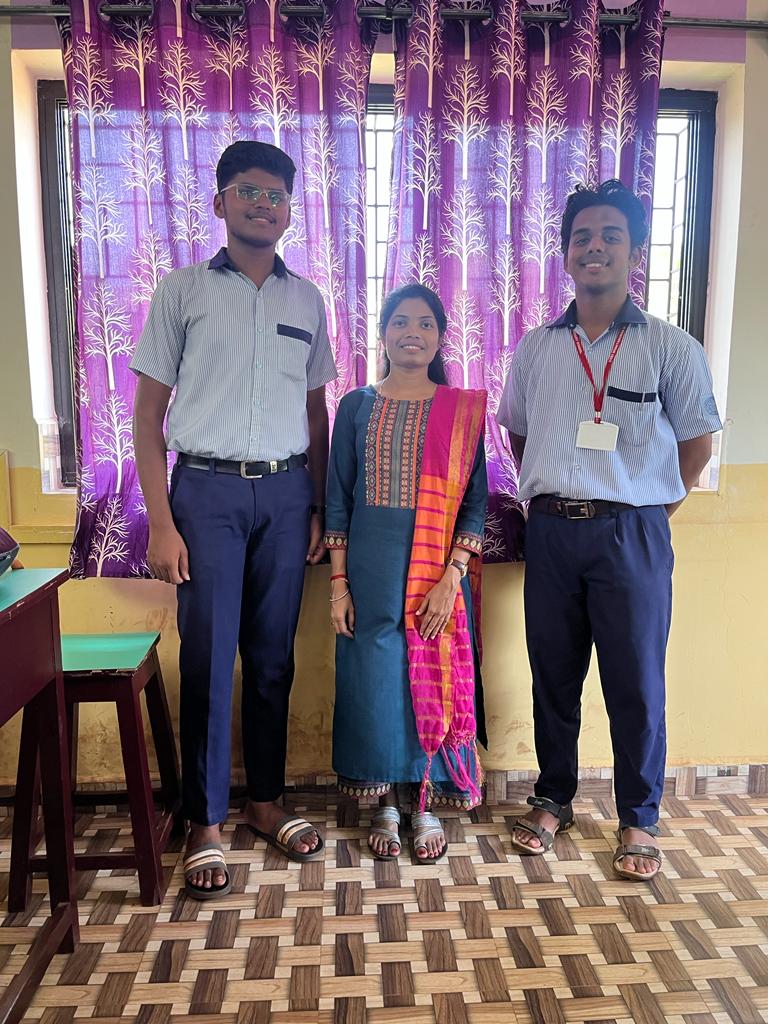
Sheikh and Beig had been friends since childhood and used to repair remote-controlled cars when they broke down, so when their physics teacher, Deviya Gaonkar, assigned them a physics project to build something innovative worth 20 points, the boys seized the opportunity to demonstrate their talent for building things.
Shaan & Sehab with their teacher Deviya Gaonkar
“When our teacher assigned us the project and specified that we may design anything related to physics, our initial goal was to build an engine, but we later decided not to limit ourselves to just engines. So, taking a step forward, we decided to build an entire car,” Sheikh told Two Circles.
The motive for developing an electric car aligns with the growing demand for sustainable transportation options, as electric vehicles dramatically reduce air pollution and greenhouse gas emissions, thereby addressing environmental concerns.
Mamlekar, whose family owns an automobile garage, assisted Sheikh and Beig with the technical aspects of the project.
They showed the model to their teacher, Goankar, and after receiving a positive response, they began collecting the parts and materials required to build the car.
Specifications of the Electric Car
After working tirelessly for a month, the duo completed the automobile, which includes a brushless DC motor that converts electrical energy into mechanical energy and a 48-volt lead-acid battery system connected in series with four 12-volt batteries. Its standout feature is its strong load-bearing capacity, which can support up to one tonne of weight.
Charging the vehicle is achieved by connecting it to a power source compatible with the lead-acid battery setup. While charging periods may be longer than with advanced lithium-ion batteries, the lead-acid configuration remains a practical option. In terms of speed, the automobile can reach a maximum of 60-70 kilometers per hour, demonstrating its ability to cover moderate distances efficiently, making it suitable for diverse urban and suburban commuting needs.
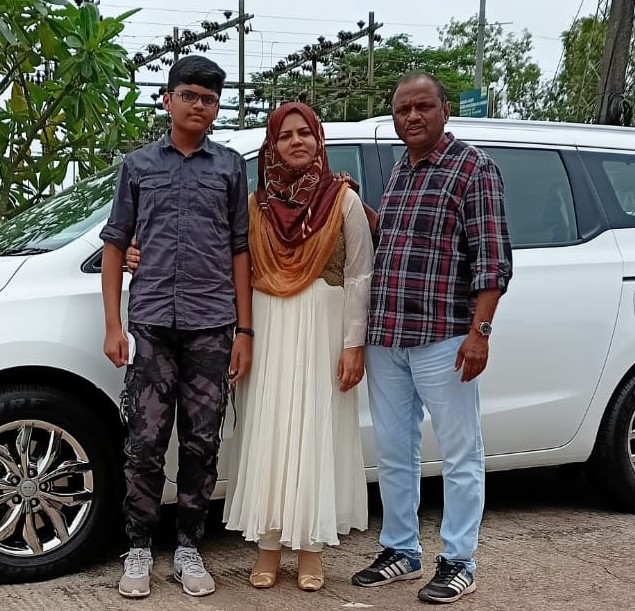
Shaan with his family
Hindrances Along the Way
Building the electric car was a difficult endeavour, and they faced discouragement from others. Gaonkar, their physics teacher, stated that many people discouraged them from building the car, but they persevered and completed it.
The two spent over INR 70,000 on making the car, which they received from their parents and several well-wishers.
They have also attempted to raise funds to upgrade their automobile to ones that can be auto-charged while in motion but have had little success. The project is only two alternators away from being self-sufficient in terms of charging.
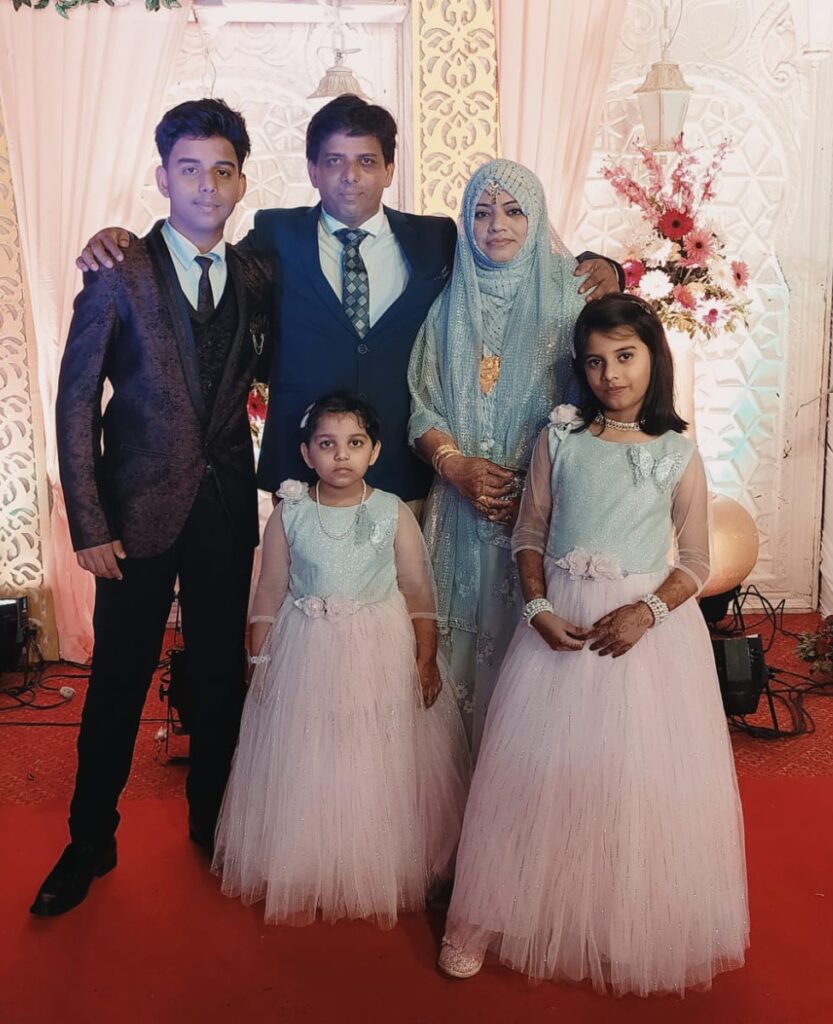
Sehab with his family
‘Parents Have Always Been a Huge Support’
Sheikh’s mother is a chemist, and his father is a businessman; both are very supportive of their son’s project.
Beig’s mother, Mubina Beig, who runs a pre-primary school in town, helped them in finding spare parts for the car.
“My parents have always been a huge support when it comes to my inclination towards experimenting with things,” he stated.
A Career in Innovation
This is not the duo’s first innovative design. Sheikh created a small solar vehicle a few years ago, while Beig made a generator in fifth grade and a hydraulic crane in eighth grade.
Speaking about their goals, Beig stated that he wants to pursue a career in science and research to enhance his curiosity and innovative tendencies, whilst Sheikh is interested in a career that allows him to blend science and compassion to contribute to the well-being of others.
They intend to submit their design to vehicle manufacturers. “If a compelling proposition arises, we are open to collaboration,” Sheikh said.
Imran Inamdar is an independent reporter based in Goa, India.
source: http://www.twocircles.net / TwoCircles.net / Home> India News / by Imran Inamdar, TwoCircles.net / January 16th, 2024
Kalpakancheri (Malappuram District), KERALA / Dubai, U.A.E:
Indian recalls journey from being a fundraiser to rebuild a mosque to emerging a tycoon.
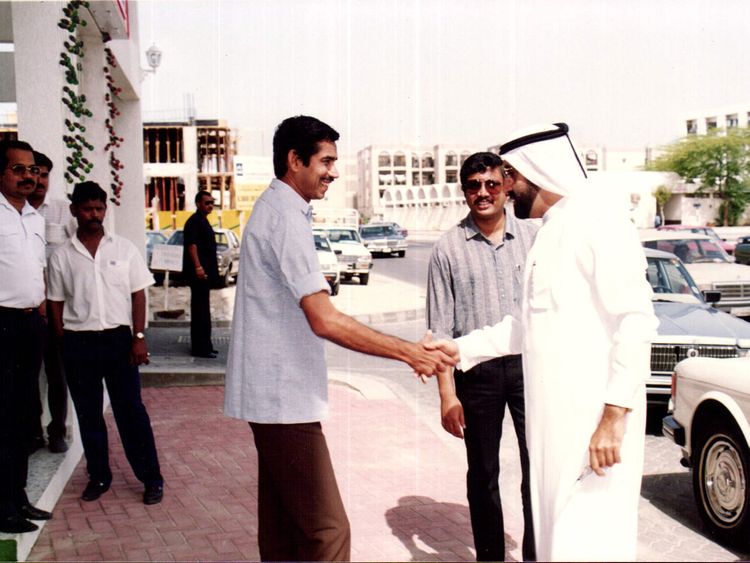
A young Azad Moopen at the inauguration of one of his clinics / Image Credit: Supplied
HIGHLIGHTS
Dr Azad Moopen came to the UAE in February 1987 to raise money for the renovation of a mosque in his hometown, Kalpakancheri in Malappuram district, Kerala.
Dr Moopen leased a two-bedroom apartment in Bur Dubai to start a clinic
In 2008, Dr Moopen invited a private equity firm to invest in the company and they valued Aster DM Healthcare at $100 million.
In 2010 and 2011, Dr Moopen was awarded the Pravasi Bharatiya Samman and Padma Shri, respectively, by the Government of India.
Aster DM is listed at NSE and BSE
Dubai:
Azad Moopen came to Dubai 34 years ago to raise money for the renovation of a mosque in his hometown, Kalpakancheri, in the Malappuram district, Kerala. He needed Rs1 million then, or Dh250,000 as per the currency exchange rate in 1987. The plan was just to collect the funds and return home. He had no intention to settle in the UAE.
Destiny, however, had other plans for Moopen – a gold medallist in general medicine and a lecturer at the Calicut Medical College at the time. Looking back, Moopen said it was this noble intention that perhaps set the background for something big to happen in his life.
Fast forward to today, he is now a household name in the UAE. Just about everybody in the region knows him well as the multi-billion dollar businessman and developer of health-care facilities in the UAE and Asia-Pacific region. He is the chairman and managing director of Aster DM Healthcare, a conglomerate in the Middle East and India that Moopen founded in December 1987, just ten months after arriving in the UAE to raise funds for a mosque.
According to a report published in September 2018, he owned and managed 21 hospitals, 113 clinics and 216 pharmacies. The health-care company serves 50,000 patients a day in nine countries. In 2018, Aster treated 17 million patients across all its facilities. Of this these, 15 million patients were from the Gulf Cooperation Council (GCC) countries, while two million were from India.
In 2017, Forbes ranked him sixth on the ‘Top 100 Indian Leaders in UAE’ list and his total wealth was estimated at approximately $5.9 billion (Dh21.7 billion).
How it all started
“When I finished collecting money for the mosque reconstruction, my job was over in the UAE. It was time to return home, but when I went home, I was not happy. There was something pulling me back to this country as there was magic here,” said Moopen. “In June (1987), I came back on a visit to the UAE. I stayed with a friend in Ajman who was a doctor as well. There were plenty of opportunities for a doctor like me and I was raring to tap into some of them.”
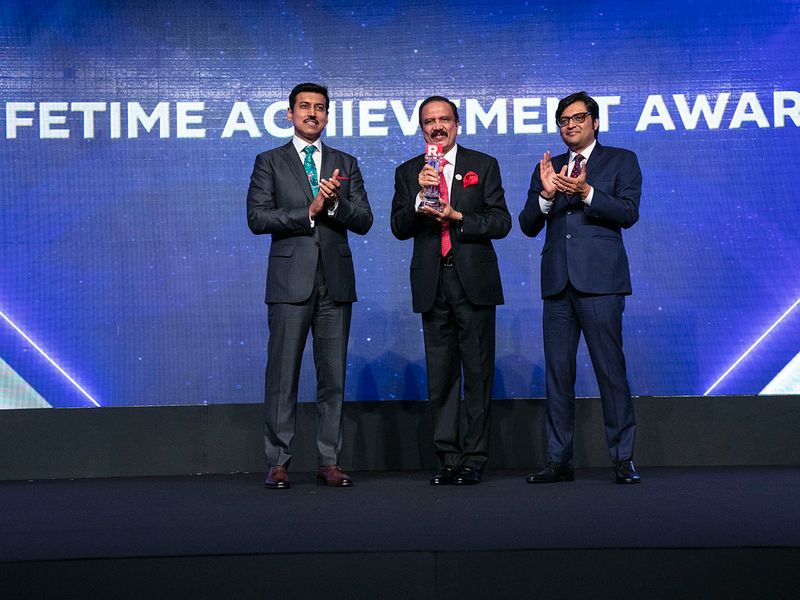
Azad Moopen receives a Lifetime Achievement Award / Image Credit: Supplied
Moopen’s friend was setting up a clinic in Ajman and he invited him to join there as a physician. Back in the day, there were no post-graduate doctors practising in Ajman and Moopen, who was a Bachelor of Medicine and Surgery (MBBS) and a Doctor of Medicine, with a a Diploma in treating Tuberculosis and Chest Diseases (DTCD), was already highly qualified. In fact, his varied degrees made him quite a sought-after doctor in Ajman.
“But my friend bowled me a googlie, as we say in cricketing terms! He turned around one day and told me to start a clinic in Dubai. To be honest, I thought he did not like me and that’s why he was pushing me away to Dubai. But I took his advice and today, I believe he is my guardian angel. That moment, when I heeded his advise and came to Dubai, it was the turning point in my life. I know now he was a friend, he was a God-sent and he is ‘the person’ in my life.”
No matter how successful you become in life, you never forget the people who helped you along the way. And this, to me, has been the biggest reason for my success.
– Azad Moopen
In December 1987, Moopen leased a two-bedroom apartment in Bur Dubai close to the Port Rashid area. “Port Rashid was one of the main areas in Dubai where there were many ongoing activities. A lot of people worked here and I wanted to serve them.”
He said the consultation charges were between Dh10 and 15. Some people got reimbursement from their companies while others paid the bills from their pocket.
“The challenge, however, was collecting money from some blue collared workers who could not afford to pay even this amount. So every Tuesday we started offering free consultations for half a day. We also kept sample medicines which we gave to these workers.”
Within a year, the clinic started receiving 100 patients a day. There were just two doctors – Moopen and a gynaecologist.
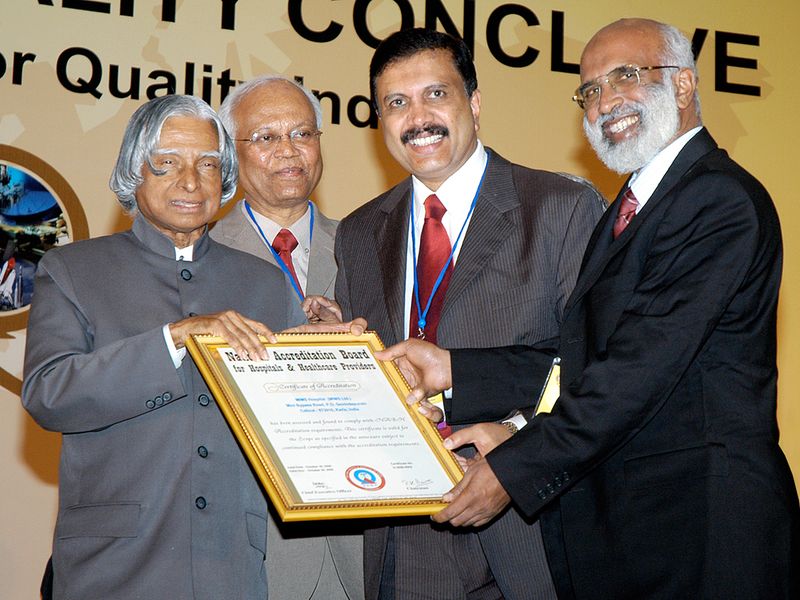
Dr. Azad Moopen receiving an award from late Indian President APJ Kalam / Image Credit: Supplied
“I myself worked from 8 in the morning until mid-night. But it was becoming very congested and we needed to move to a bigger place,” he said. “I found a three-bedroom apartment in Al Rafa and we moved there. We hired two more doctors – both paediatricians. We were able to see more patients as a result.”
By that time in 1988, Moopen was getting a hang of running a health-care facility. “One of the things we discovered early on was that people came to us for consultation, but were picking up medicines from another pharmacy. So, we thought why not make this in-house? And that is how Al Rafa Pharmacy was born.”
Moopen said that in 2008, he had his real brush with success. “Until then, I was just doing my job of opening clinics, hospitals and pharmacies. I was not really counting or sitting down to see and evaluate the success of my business. In 2008, as part of our expansion plans, we invited a private equity firm to invest with us. They valued our company at $100 million and that reality hit me. We had grown and how! It was an emotional moment for me, reading the valuation report and made me think of how hard the company staff and me had worked to bring it that far,” he said.
Dr. Azad Moopen with his youngest daughter Zeba Moopen who is now a practicing doctor / Image Credit: Supplied
In 2012, a second private equity firm came on board and they valued Aster DM Healthcare at $400 million. “This means we had grown four times in four years. It was massive.”
Today, Aster DM is listed at the National Stock Exchange of India (NSE) and the company’s total revenue in 2019 was fixed at a massive $1.4 billion.
Reason behind this phenomenal success
“Without batting an eyelid I will say that it is my staff, my people, my doctors who have made this company successful. I am blessed and lucky to have these people working for me for decades. Our doctor turnover at the consultant level is as low as five per cent. This means our doctors practically never leave us. And, because of this, our patients never leave us.
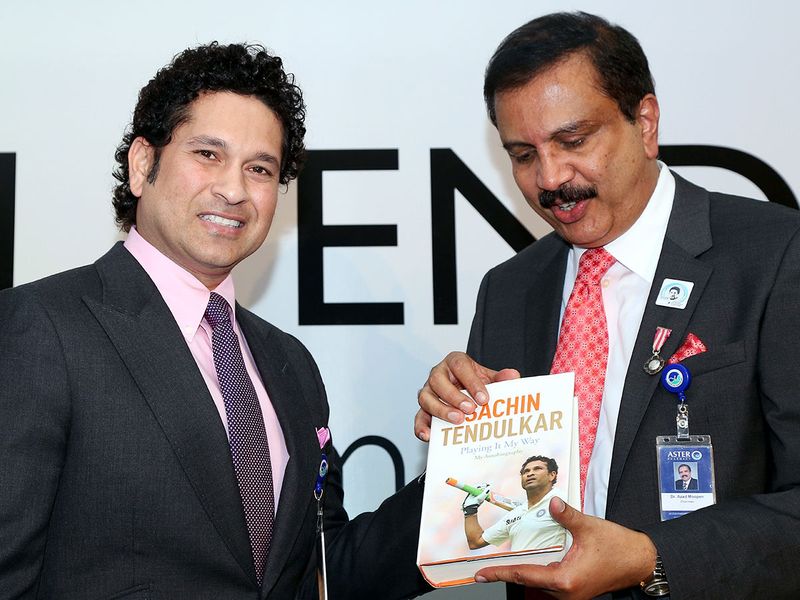
Azad Moopen with cricketer Sachin Tendulkar during the latter’s book launch. / Image Credit: Supplied
“No matter how successful you become in life, you never forget the people who helped you along the way. And this, to me, has been the biggest reason for my success. To give you an example, the other day, one of my CEOs brought me a staff member’s performance report. He wanted me to fire him as he was not performing well. When I saw the report I realised he was an old friend’s son. This friend, I remember, had loaned me Dh500 when I had come to the UAE for the first time.”
“As the memories flooded me, I simply refused to sign the sack letter. Instead, I called this young boy and his father and told them about the report. From my part, I have given this boy a second chance. I pray he will make use of the opportunity given to him.”
Challenges
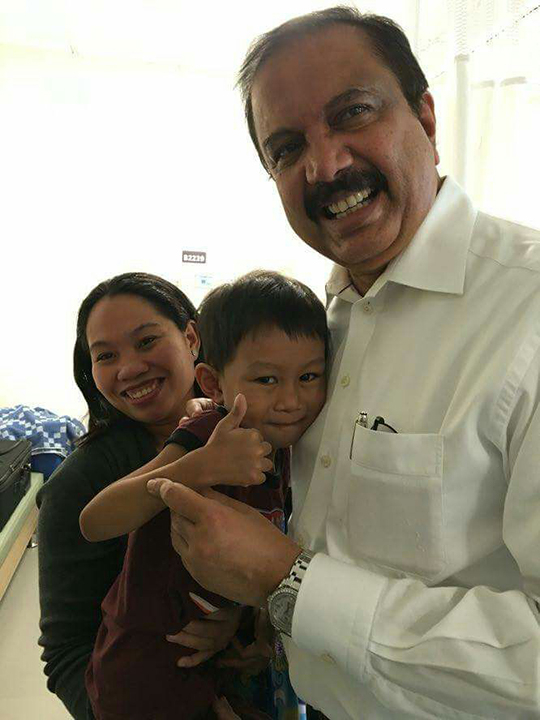
Dr. Moopen during one of his philanthropic activities / Image Credit: Supplied
“There are always challenges in business. If you want your career graph to have a smooth ride, then you must not pick business as your profession. Success in business lies in finding your challenges and meeting them head-on,” said Moopen.
“For example, the UAE’s mandatory insurance has proved to be beneficial for the consumer, but for health-care providers like us, it is a challenge. People would come to us because of our credibility. Now, it has to do with the kind of insurance coverage they have.”
Philanthropy the way to life
Moopen has pledged to give 20 per cent of his wealth to charity. An off-shoot of this has been the ‘Aster Volunteers’ programme to help patients with free consultations, treatment and surgeries. More than 900,000 lives have been touched by the programme.
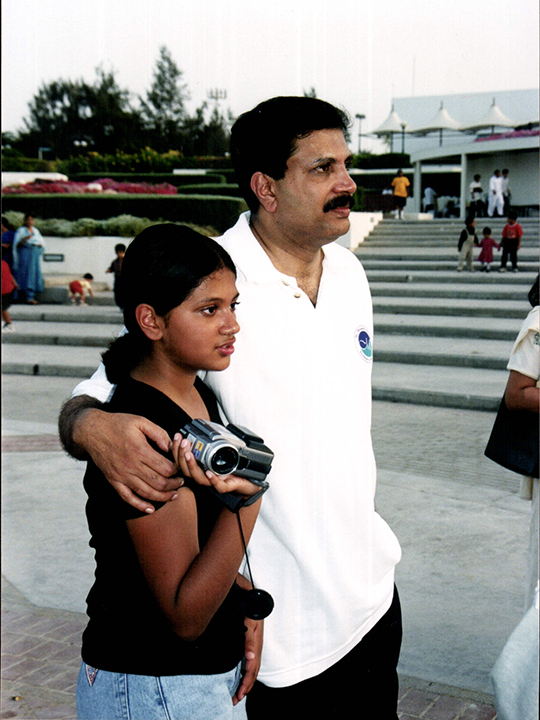
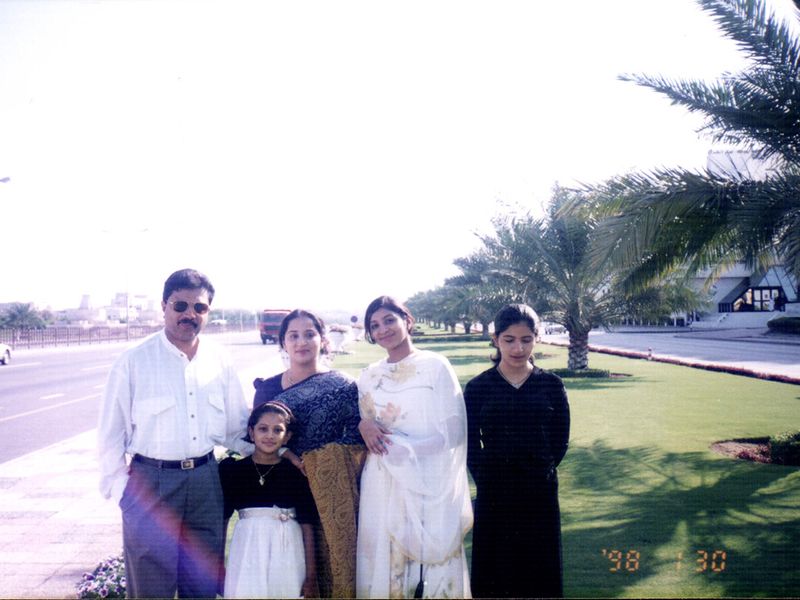
Dr. Moopen with his family in an earlier picture / Image Credit: Supplied
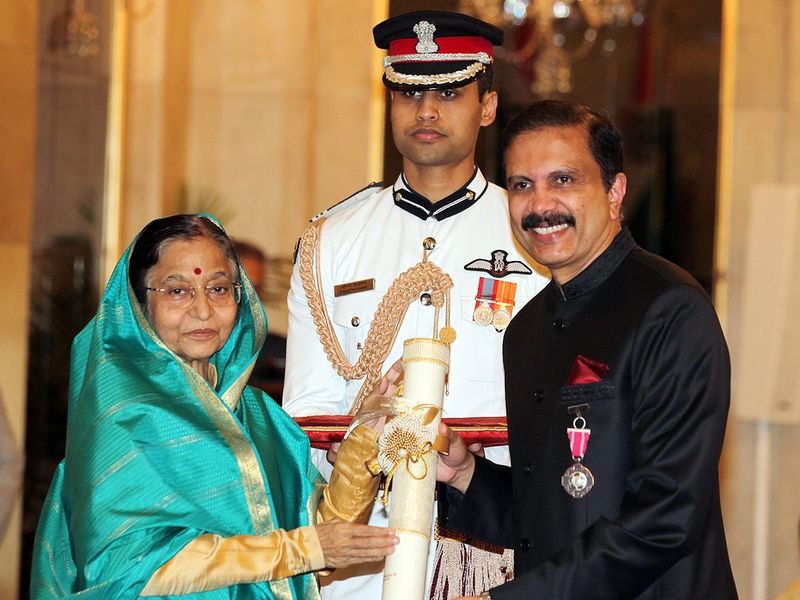
In 2010 and 2011, Moopen was awarded the Pravasi Bharatiya Samman and Padma Shri, respectively, by the Government of India.
Dr. Azad Moopen awarded the coveted Padma Shri in 2011 / Image Credit: Supplied
“By God’s grace, I have everything in life. Name, fame, wealth, a great family. It is my duty and responsibility now to help others. When I started out, I was in the right place at the right time with the right people. I want others to be in my shoes. I am nearing retirement and my only dream now is to hand over my business to my team of professionals who, I believe, will do a better job than me.”
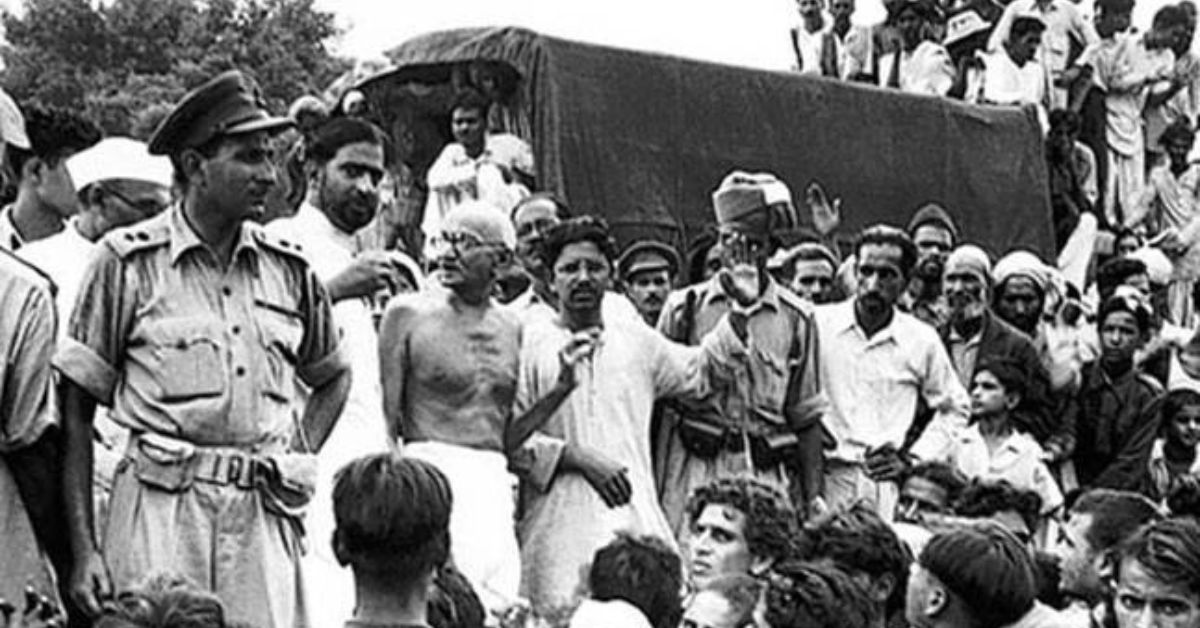
The Champaran Satyagraha is a landmark chapter in India’s history, and an important catalyst for it was journalist Pir Muhammed Munis, whose letter to Gandhi set the stage for the monumental resistance.
In 1917, when British rule prevailed over India, the government prepared a list to keep track of 32 of MK Gandhi’s closest associates. At number 10 was a name that history hasn’t forgotten since.
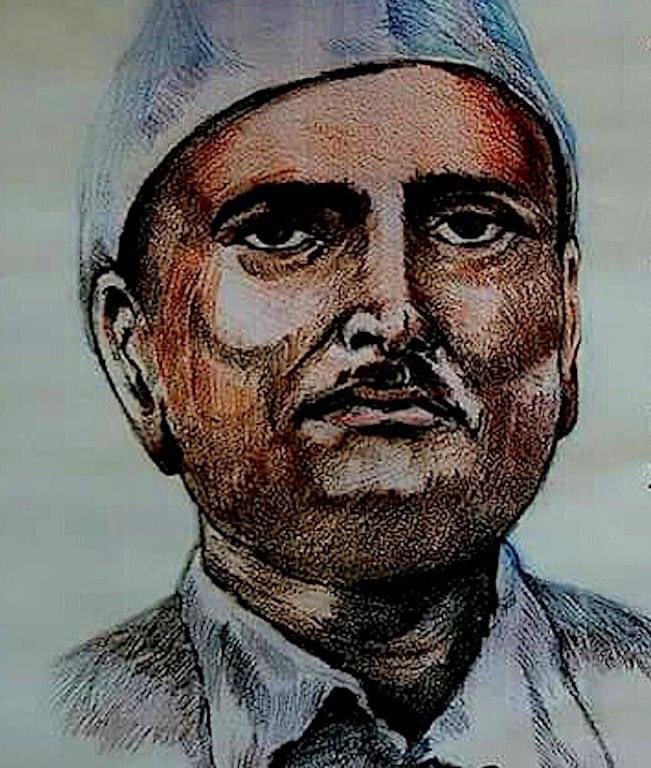
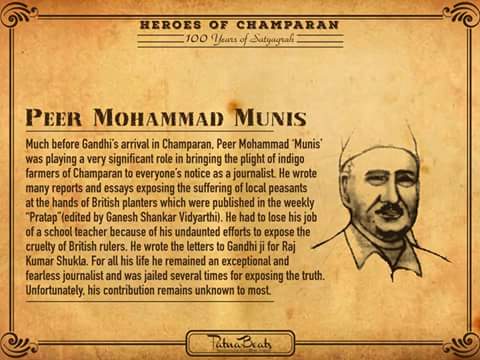
Pir Muhammed Munis, a journalist known for the power of his pen, was instrumental in his role in the Champaran Satyagraha movement, also touted as India’s first organised act of civil disobedience.
Through his body of work, he scripted a record of heroism that is etched into the sands of time.
To truly appreciate Munis’ role in the struggle for Independence, we trace our steps to 1916, when the British Raj was exercising exceeding control over Indians. One particularly vulnerable group were the farmers in Champaran, Bihar.
The source of contention was the agrarian practices in the region. While the British were intent on the peasants growing indigo, a lucrative cash crop with sizable demand in the markets abroad, the farmers were deprived of land for growing food crops instead. This tussle culminated in a famine, causing the farmers to rise in revolt against the dominion of the British. As the conflict escalated, word reached Gandhi. How?
Pir Muhammed Munis was behind it.
A ‘rouge journalist’
The uprising of the peasants in Champaran wasn’t going unnoticed. The country was reading about it thanks to Munis, who left no stone unturned in letting his views reflect his patriotic feelings. In the years to come, Pir Muhammed Munis would go down in history as the journalist who raised his voice when it was most difficult to be heard.
He chronicled the efforts of the farmers, the unlawful practices of the British and more such news in Hindi — despite the elite class being fluent in Urdu, Persian and English — displaying his ardent love for the language. In his later life, he went on to advocate for Hindi to be propagated amongst the masses. Anecdotes suggest during his later interactions with Gandhi, Munis even went on to teach the legend the language, a skill that greatly helped the latter.
So persistent and vocal was he about his patriotic opinions that he was termed as “notorious”, “bitter” and “dangerous” by the British, eventually being branded as a ‘badmash patrakar (rouge journalist)’.
A British Police document from the Azadi Ke Deewane Museum at Red Fort reads, “Pir Muhammed Munis is actually a dangerous and hoodlum journalist who through his questionable literature, brought to light the sufferings of a backward place like Champaran in Bihar.”
The letter that set the stage for the uprising
Pir Muhammed Munis fought for the farmers in the Champaran region of Bihar, Picture source: Twitter: Muslims of India
But nothing stopped Munis from continuing to write, his pen a double-edged sword. His works appeared frequently in Pratap, a Hindi weekly, and monthlys such as Gyanshakti and Gorakhpur. He was also on the editorial board of Desh launched and edited by Dr Rajendra Prasad.
The most famous letter among his repertoire of literary works is a letter he penned with local farmer Rajkumar Shukla, intended to be sent to Gandhi on 27 February 1917. Shukla conveyed the grievances of the farming community, while Munis coupled this with his power of words. An excerpt from the letter reads, “Our sad tale is much worse than what you and your comrades have suffered in South Africa”.
In another letter dated 22 March 1917, Munis once again voiced his concerns about the peasants in Champaran, and asked Gandhi to pay them a visit. And when he did on 10 April 1917, people commended the bond between the two, often calling Munis Gandhi’s pillar as he hatched plans for the Champaran Satyagraha.
As the first Satyagraha movement, it set the stage for future mass protests and uprisings. Gandhi set up schools in the Champaran area, gathered volunteers, conducted village surveys, organised protests, and strikes, and advocated for control over the sale of crops to be given to the farmers. And through this mutiny, Munis was by his side.
This did not go down well with the British. As a letter written by W H Lewis, sub-division officer to the commissioner of Tirhut division indicates, “… Mr Gandhi got offers of assistance, the most prominent is Pir Muhammad. I have not (sic) full details of his career, but either Whitty or Marsham could give them. He is, I believe, a convert to Muhammadanism and was a teacher in the Raj School. He was dismissed from his post for virulent attacks on local management published in or about 1915 in the press. He lives in Bettiah and works as a press correspondent for the Pratap of Lucknow, a paper which distinguished itself for its immoderate expressions on Champaran Questions… Pir Muhammad is the link between this Bettiah class of mostly educated and semi-educated men and the next class, i.e. the Raiyats’ own leaders…”
The result of the tyranny
History never forgets the cries of the just, and the Champaran Satyagraha was proof of this.
The mutiny ended with the British officers agreeing to formulate the Champaran Agrarian Act of 1918. The Act abolished the forcible cultivation of indigo and thus relieved tremendous pressure being put on the farmers here. The event has gone down in history as one of the first major revolts that forced the English to introduce a Bill in favour of the Indians.
With the Tinkathia system being abolished, the farmers thought the worst was over. But the British continued to oppress them in different ways. Fuelled by ending this once and for all, Munis started Raiyati Sabha, a platform that would advocate for and protect the rights of the farming community. For this, Munis faced a six-month jail term.
This wasn’t the last of imprisonment. In 1930 he was imprisoned in the Patna Camp jail for three months for his participation in the Salt Satyagraha of the Civil Disobedience Movement.
However, nothing could deter him from his goal of protecting the rights of his countrymen. In 1937, he led sugarcane producers who were protesting against intermediaries who were pocketing a major part of the earnings. He was also elected member of the Champaran Zila Parishad (District Board) on the Congress ticket and became President of Bettiah Local Board, from which he resigned to join the Individual Civil Disobedience Movement.
Throughout his lifetime, he advocated for rural development, popularisation of Hindi in primary schools and the rights of his fellow Indians. Until his passing away on 23 September 1949 Munis continued to be a leader worth looking up to for his countrymen.
Lauding the efforts of Munis on his passing away, Pratap editor Ganesh Shankar Vidyarthi, wrote in his newspaper, “We have the utmost sorrow that Pir Muhammed Munis of Bettiah, Champaran district has died. We have the privilege to see such souls who are quietly lying aside. The world doesn’t come to know anything about their issues. The lesser these sons of Mother India are renowned, the more profound is their work, the more philanthropic.”
He further wrote, “You recited the dreadful story of Champaran to Gandhi ji and this was a result of your hard-work only that Mahatma Gandhi visited Champaran which made this land a pious place and the place which is unerasable in the pages of history”.
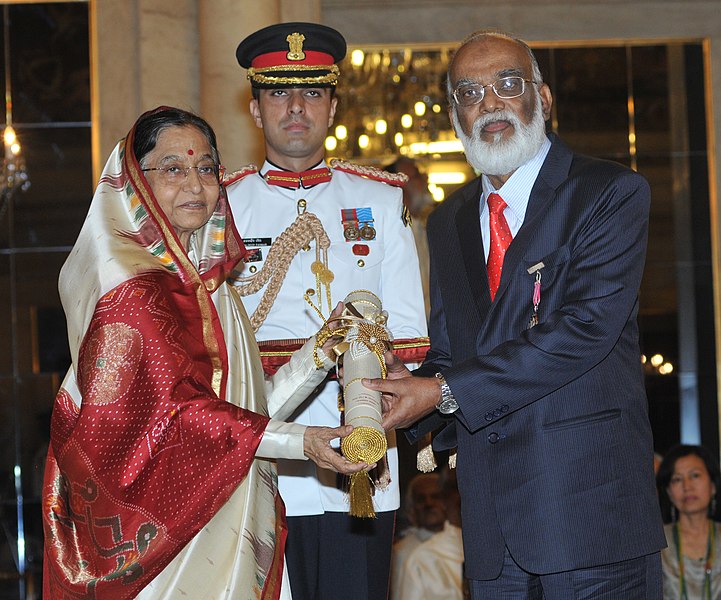
The President, Smt. Pratibha Devisingh Patil presenting the Padma Shri Award to Prof. (Dr.) M. Ahmed Ali, at an Investiture Ceremony II, at Rashtrapati Bhavan, in New Delhi on April 01, 2011./ pix: en.wikipedia.org
Dr. Ahmed Ali can perhaps scale Mount Everest to gain knowledge in surgery, and will come back to serve the poor and needy. That is the thirst he has, and the skill gained by his extra ordinary, photographic memory power.
After obtaining the highest degree in surgery such as M.Ch, he was awarded the prestigious Doctor of Science D.Sc.in surgery.
The Padma Shree Awardees, listed on January 31, 2011, Dr. Ahmed Ali, won the nation’s prestigious award.
A dedicated, and most devoted to his profession, he declined an opportunity, assigned in New York soon after post graduation in gastroenterology and proctology. Surgery is an art to him same as a gifted and a born artist plays with his brush and colors. There is no exaggeration that if it is said that his tournament is surgery.
He visits every month to his native town to impart free service, in addition he gives nutrient suppliments and other vitamins and other additives to less fortunates. He does this as a token of gratitude to the school he studied and for the people who mutually loved.
Born in Ambur in 1940, graduated from Madras Medical College, and after retiring from service, he is concentrating his profession in Mehtha Nursing Home,Chetpet in Chennai.
His only son Dr. Mansoor is a surgical specialist in liver, pancreas, and bile duct (Hepato Pancreato Bilary Specialist) working in Kings Hospital, London UK. Dr. Mansoor is as good as his father, and was the student of Dr. Rela, the world renowned liver specialist.
Ambur, a town in Vellore District in Tamil Nadu is famous for leather industry, as well the elite of the society Ambur Muslim Educational Society, and it is fully devoted in concentrating women’s education and the students performance is par excellent.
Mr. Mecca Rafeeque Ahmed, a renowned leather industrialist, from Ambur also awarded Padma Shree for his industrial achievements.
Dr. Ali was felicitated with standing ovation by different groups elites, but he stood humble and modest.
source: http://www.amityindias.blogspot.com / April 05th, 2011
Dr Valli is the scientist who made the world realise the importance of food grains
He had a comfortable US job that he left to return to India and make it healthy. More than two decades since he launched his mission, India’s ‘Millet Man’ Dr Khadar Valli Dudekula was recognised by the government of India with the civilian honour Padma Shri during the 74th Republic Day celebrations on Thursday, January 26.
Dr Valli is the scientist who made the world realise the importance of food grains. He has numerous researches to his name and has worked extensively for revival of grains over 20 years. As per The Better India, Dr Valli woke up to the problem of diet-related consequences in society around 1986-87 when he came across the case of a girl who had started menstruating at 6 years of age. Shocked by this, he decided to return to his country in 1997 and settled in Mysuru to work towards a healthy society rather than in a foreign nation.
Dr Valli is an independent scientist and food expert. In his pioneering work, he has revived five types of disappearing millets. He is a leading advocate of Millet cultivation and use. He was born in a humble background in Kadapa District of Andhra Pradesh. He pursued his BSc (Education) and MSc (Education) from Regional College of Education, Mysuru before earning a PhD in Steroids from the Indian Institute of Science, Bengaluru. Besides being an agricultural scientist, he is also a homoeopath.
After completing education in India, he became a postdoctoral fellow in environmental science at Beaverton, Oregon for three years. He then worked as a scientist with Central Food Technological Research Institute (CFTRI) for four years before working with DuPont for a year in India and four plus years in the US. He discovered medicinal properties of grains during his research and named 5 specific types of grains he prescribed as “Siridhanyalu”.
source: http://www.dnaindia.com / DNA / Home> India / by DNA Web Team / January 28th, 2023

)