Category Archives: Arts, Culture & Entertainment

Standing tall with the new minaret

Salem, TAMIL NADU :

The latest addition at the historic Jamia Masjid, Salem, is the nine-tier tower

The historic Jamia Masjid on the southern banks of River Tirumanithar in the heart of Salem city has got a 135 ft. tall ‘minaret.’ This is said to be one of the tallest minarets to be constructed in a mosque in South India in the recent past.

The minaret is a significant feature of mosques across the world, and is one of the earliest characteristics of Islamic architecture. The ‘muezzin,’ a person who announces the call of prayer, usually delivers the ‘azaan’ from the minarets.

Jamia Masjid in any town or city is considered as the chief mosque. They are known as congregational mosques, as Muslims gather in large numbers to offer prayers on Fridays and during Ramzan, Bakrid and other festivals.

Rich past

Jamia Masjid in Salem city, standing on about 1.5 acres of land, has a rich past. It is one of the oldest mosques in the state and was said to have been built by the Mysore ruler Tipu Sultan (1750 – 1799), popularly known as the Tiger of Mysore, more than two centuries ago. Tipu Sultan, who had visited the Salem region on various occasions, is said to have offered prayers in this mosque. He has also donated inams (properties) for this mosque. The British regime, which understood the importance of this Jamia Masjid, also extended assistance to this mosque and gave ‘inams’.

This Jamia Masjid is built on the lines of the North Indian mosques. The prayer hall of this grand mosque stands on an elevated ground and is decorated with tall, elaborate granite pillars. On Fridays, this masjid gets more worshippers from the town and neighbouring areas of Salem.

According to S.R. Anwar, the Muthawalli of the Jamia Masjid, the minaret has nine small tiers ranging between 10 ft. and 20 ft. The cornice (metal kalasam), atop the minaret was made in Kumbakonam. A silver cone and crescent decorate this metal structure.

Anwar says that this Jamia Masjid plays a stellar role in promoting communal harmony in the entire western belt and has been held in high esteem by everyone.

S. Veerappan, an expert architect from Kamanayakkanpatti, led a team which was in-charge for the construction of this minaret. His name is engraved on the inaugural stone. “It is a great honour that my name is on the tablet stone of the mosque,” says Veerappan. “This highlights the mutual respect and goodwill that the people from different communities have for each other,” he adds.

The new minaret was inaugurated recently by A. Anwar Raajha, MP and Chairman of Tamil Nadu Wakf Board, in the presence of MPs V. Panneer Selvam, P.R. Sundaram and K. Kamaraj.

source: http://www.thehindu.com / The Hindu / Home> Today’s Paper> Features> Friday Review / by Syed Muthahar Saqaf / July 06th, 2018
Tamil scholar Nainar Mohamed passes away

Tiruchirapalli, TAMIL NADU / Texas, U.S.A :

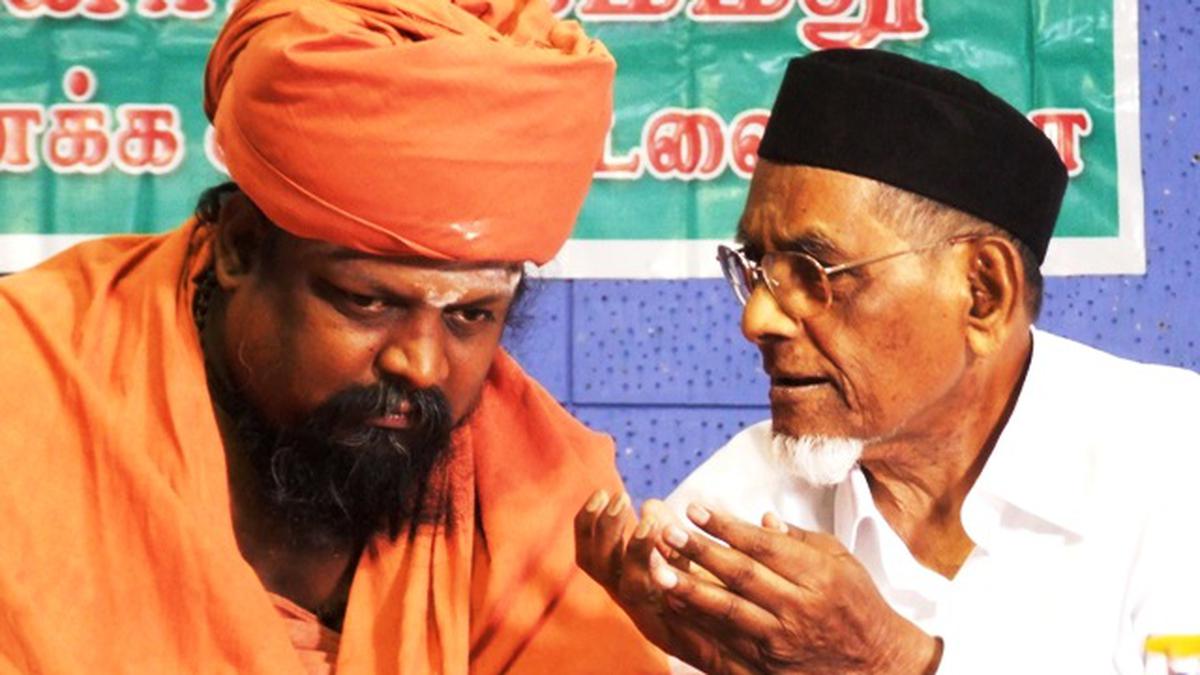
Thavathiru Kundrakudi Ponnambala Adigalar having a word with C. Nainar Mohamed (right). File Photo: R.M. Rajarathinam

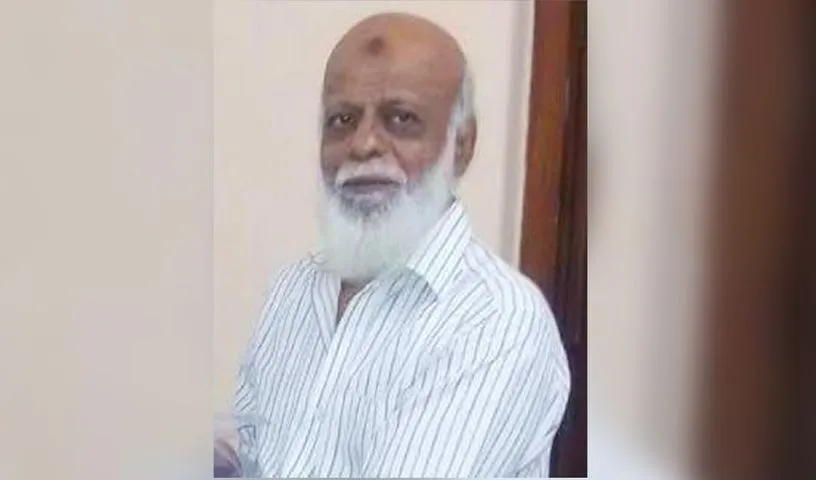
Renowned Tamil scholar, writer and former Principal of Jamal Mohamed College, Tiruchi, C. Nainar Mohamed passed away at his daughter’s residence at Texas in USA on Wednesday night. He was 85.

Popularly known as ‘Perum Pulavar’, a title conferred on him by late Kundrakudi Adigalar, Nainar Mohamed served as the Head of the Department of Tamil of Jamal Mohamed College for a record 32 years, and its Principal for four years in the 1980s. After retiring from the college service, he served as professor at Tamil University, Thanjavur for five years.

 He launched the Tamizhaga Pulavar Kuzhu along with late K.A.P. Viswanatham and served as its secretary for 28 years. He also set up the Islamia Ilakkiya Kazhagam. A leading figure in Tiruchi Tamil Sangam, he continued to remain as its deputy Minister till now.

The Madurai Kamaraj University honoured him with ‘Tamil Chemmal’ award and the Ulaga Tirukkural Peravai with ‘Tirukkural Neri Thondral’ and ‘Kural Gnayiru’ awards. Through the Islamia Ilakkiya Kazhagam, he organized five International Tamil Literary conferences, which brought to light the richness of the Islamic Tamil literary works to the world. 

A regular in world Tamil conferences, he has authored many books.

He is survived by wife Hasina Nainar, four sons and a daughter.

source: http://www.thehindu.com / The Hindu / Home> News> Cities> Tiruchirapalli / by Syed Muthahar Saqaf / July 24th, 2025

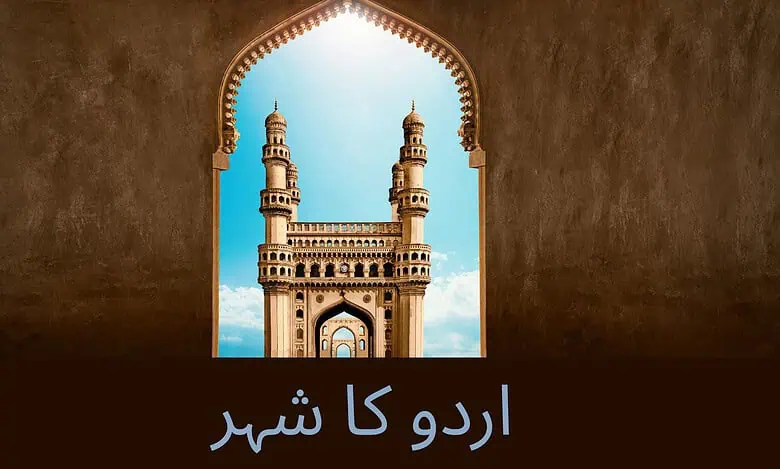
Hyderabad Urdu Ka Shahar: A cultural chronicle by Farooq Argali

Fatehpur, UTTAR PRADESH :

Hyderabad: 

Hyderabad is not merely a dot on the map; it is a vibrant symbol of elegance, culture, and an enduring legacy. Often hailed as the city of domes and minarets, Hyderabad is where history echoes through its majestic palaces, bustling bazaars, and the unmistakable aroma of biryani that fills the air. But beyond its architectural grandeur and culinary delights, the city is known for its Nawabi grace — a heritage shaped by the Nawabs and Nizams, whose generosity and cultural patronage continue to define its identity.

Capturing this soul of Hyderabad is the mission of noted journalist and author Farooq Argali. His upcoming documentary titled ‘Hyderabad: Urdu Ka Shahar’ offers a compelling journey through the city’s layered history — from the Qutb Shahi dynasty to the modern era. In this hour-long film, viewers are treated to glimpses of Hyderabad’s monuments, traditions, cuisine, and the famed tehzeeb — a word that transcends simple etiquette to embody respect, warmth, hospitality, and grace in everyday life.

Over the past three days, Argali has been crisscrossing the city, engaging with its people, documenting their stories, and capturing the sights, sounds, and scents that define Hyderabad. His previous acclaimed documentaries — Delhi: Rangon Ka Shahar and Lucknow: Tamaddun Ka Shahar — stand as testaments to his commitment to preserving cultural heritage through storytelling. His next project is set to focus on Azeembad, the ancient name of Patna.

At 86, Farooq Argali remains remarkably energetic and mentally sharp. Alongside the documentary, he plans to author a book titled Hyderabad Nama, envisioned as an archival treasure for researchers and culture enthusiasts alike. What strikes Argali most about Hyderabad is the thriving presence of Urdu — still seen on shop signs and nameplates, a sight now rare in Delhi and Lucknow.

A man of many talents, Argali is a journalist, playwright, historian, novelist, and poet. Over the last six decades, he has authored more than 500 books, ranging from romantic and detective fiction to literary criticism. In the 1960s, his pulp fiction, written at a breathtaking pace — sometimes a novel in just five days — was immensely popular. Titles like Haye Main Haar Gayee marked the beginning of a prolific writing career. Surprisingly, Argali never studied beyond the third grade in Urdu. When asked about his academic qualifications, he modestly replies, “Fourth failed.”

What, then, is the secret behind such a towering literary output? “Read more than you write,” he says simply. He credits his success to continuous reading and the vibrant literary circles he was part of in Delhi.

Born in Fatehpur, Uttar Pradesh, Argali held various odd jobs before turning to writing full-time. Despite his limited formal education, he calls his gift of writing a divine blessing. Writing under pseudonyms like Hasina Kanpuri in Urdu and Rati Mohan in Hindi, he penned bestsellers such as Ek Toofan Jawani Ka and Chahne Wale, which enjoyed huge success.

However, Argali now views his pulp fiction era as his personal ‘Ayyam al-Jāhiliyya’ — a period of creative indulgence. Over time, he shifted focus to enriching Urdu literature through research, biographies, and literary criticism. His two-volume work Urdu Hai Jis Ka Naam explores the contributions of as many as 400 renowned Urdu writers like Lala Sriram Dehlvi, Firaq Gorakhpuri, Saadat Hasan Manto, Nisar Ahmad Farooqi, and Rahi Masoom Raza to name a few.

Farooq Argali, who also served as the founding editor of the film magazine Rubi, has written extensively on Indian cinema. His historical writings include Bahadur Shah Zafar Ke Dardnaak Halaat, chronicling the last Mughal emperor’s tragic life, the partition story, Dastaan 1947, and Jahan-e-Khusro, a detailed account of the Sufi poet Amir Khusrau.

At a recent felicitation event hosted by Fazil Husain Parvez, Editor of Gawah and Mediaplus Foundation, Argali humbly dismissed the accolades, calling himself a “mazdoor qalam ka” — a laborer of the pen. “I write something broken and incomplete, yet it gets published,” he said with characteristic modesty.

As he continues his journey of literary and cultural documentation, Farooq Argali shares a heartfelt couplet expressing his deepest wish:

Aakhri waqt jab aaye to qalam haath mein ho,
Lafz ‘Allah’ likhoon aur dum nikal jaaye


(When my final moment comes, may the pen be in my hand,
May I write the word ‘Allah’ as I breathe my last)

source: http://www.siasat.com / The Siasat Daily / Home> Featured News / by J S Ifthekhar / May 10th, 2025

Abdul Raheem Khan: A silent champion of Urdu

TELANGANA :

Hyderabad: 

In his passing away, Hyderabad has lost not just a good educationist, an able administrator but a great champion of Urdu cause. No wonder the death of Dr. Abdul Raheem Khan, former Principal, Urdu Arts College, has plunged Urdu lovers into grief and left Urdu circles shell-shocked. Khan leaves behind two sons, a daughter and a legion of Urdu aficionados teary-eyed.

Over the years the soft spoken Khan became synonymous with Urdu and the Urdu Hall, Himayatnagar where he worked till the very end. He spent his entire life in this campus, joining the Urdu Arts College as a commerce lecturer in 1973 and retiring as its principal in 2006. But he contributed a lot for the propagation and preservation of Urdu as the general secretary of Anjuman-e -Tarqqi Urdu Telangana and Andhra Pradesh.

Khan touched many lives and moulded students looking for quality education. Quiet, firm and unrelenting in pursuit of causes dear to him, his death the other day following a brief illness, brought the curtains down on a multifaceted career. The crowded Urdu Hall on Sunday indicated his popularity. A large number of professors, teachers, students and Urdu lovers turned up to pay their respects at the condolence meeting organised here. ‘Ustad-e-mohtaram’ was how many chose to address him. He encouraged many of his students to take up teaching professions and gave breaks to the struggling ones. Dr. Nikhat Ara Shaheen recalled how Khan engaged her services for teaching of Urdu even though there was no vacancy. “I will miss him every day of my life”, she remarked.

Usually teachers do not make good administrators. But Khan begged to differ. His administrative skills came to the fore when he took up the affairs of the Anjuman-e-Taraqqi Urdu and management of the Urdu Hall. Though a commerce teacher basically, he strove to promote the Urdu language. He took the initiative of organising free Urdu classes during the summer vacations. Khan also organised budget discussions in Urdu to explain in simple terms a dry subject like budget. Under the title ‘Apne mulk aur budget ko janiye’, every year a lecture was organised at the Urdu Hall. Prof. Masood Ahmed, a management expert, explains the nitty-gritty of the Union budget within a week of its presentation.

As Prof. Majeed Bedar says, Khan remembered the past, worked for betterment of the present and meticulously planned for the future. No wonder he left his mark of excellence in whatever he did. It speaks about his honesty and integrity that he never misused his office position. He spent from his pocket to treat visitors who came to meet him. His colleague of several years, Zahoor, says he still has about Rs. 3000 given by Khan to arrange tea and snacks for people who come to meet him.

Though the vacuum created by his departure is difficult to be filled, the successor of Abdul Raheem Khan should be one who should carry forward the mission of Urdu so dear to him, said many including senior advocate, Ghulam Yezdani, who is also the president, Anjuman-e-Taraqqi Urdu.

source: http://www.telanganatoday.com / Telangana Today / Home> Hyderabad / by J S Ifthekhar / May 09th, 2022

‘Yahya Ali’ streets in Chennai: From street name to gobbledygook

Chennai, TAMIL NADU :

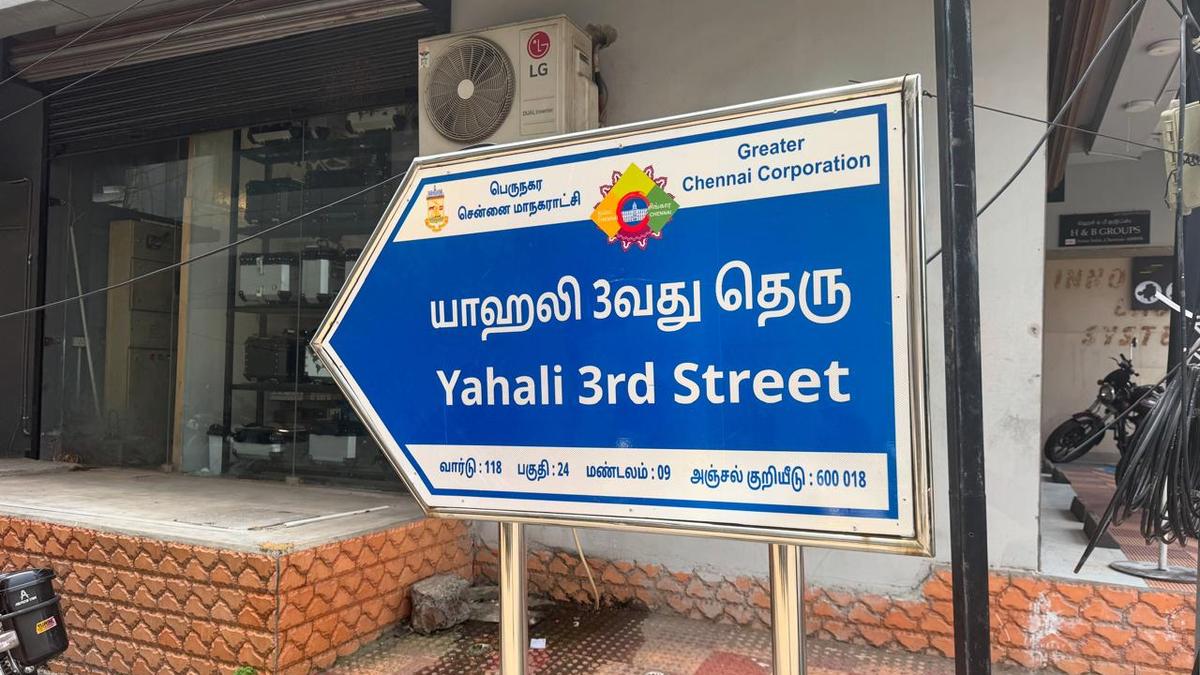
The correct name is Yahya Ali Streets – 1, 2 and 3, and they take their names from Justice Yahya Ali of the High Court of Madras.  | Photo Credit: Special Arrangement

The street sign says it all – Yahali 3rd Street. There are three of them, all connecting Anna Salai with G.N. Chetty Road, at Teynampet, very close to Semmozhi Poonga. Only Yahali is not the correct name. Google Maps has compounded matters further. You need to search under Yaya Hali Street if you need to find it. The correct name is Yahya Ali Streets – 1, 2, and 3, and they take their names from Justice Yahya Ali of the High Court of Madras.

The learned judge is not in public memory. When I spoke to a friend on this, he said that the Internet has no reference to such a judge, and I guess that would mean such a person did not exist. But he did. And when he died as a sitting judge in 1949, the High Court convened to condole his passing. The brilliant barrister and then Public Prosecutor V.L. Ethiraj led the mourners. He dwelt on the “keen intellect, great learning, profound human understanding and exquisite courtesy we found in that frail figure.” But to get full biographical details, we need to turn to the speech of an illustrious contemporary, V.C. Gopalaratnam, who spoke on behalf of the Madras Advocates Association.

Yahya Ali was born in August 1893 in Nellore, his father serving as Assistant Secretary in the Finance Department of the Nizams of Hyderabad. He graduated in History and Economics from the Presidency College in 1916 and then qualified in Law. He set up practice in Nellore and became Government Pleader and Public Prosecutor. He was a member of the Madras Legislative Council as well. In between, he became Chairman of Nellore Municipality, his election being testimony to the regard he enjoyed from all residents of the town. It was a place notorious for communal tension, and being a Hindu majority, it was considered impossible for a Muslim to win the ballot.

In 1926, Yahya Ali became District Judge, being posted in that capacity to various parts of Madras Presidency. His specialisation in matters concerning finance led to his being appointed by the then Imperial Government in 1942 as the Chairman of the Appellate Income Tax Tribunal where he equipped himself “with a thorough and exhaustive knowledge of Income Tax Law and Procedure.” In 1945 he became a judge of the High Court of Madras. It is interesting to note that he sat in judgment till the last day of his life, taking ill on April 21, 1949, and passing away the next day.

While these details are from Gopalaratnam’s speech during the condolence meet, we learn some more from what the then Chief Justice P.V. Rajamannar had to say. Yahya Ali, he noted, was a connoisseur of Telugu poetry and “he was a deeply cultured person – culture with the best ingredients of what I may call Moghul culture – urbanity, catholicity and instinctive love of all that was beautiful.”

What was his link to Teynampet? He was at the time of his death Mutawalli (trustee or guardian) of the Teynampet Mosque in which his family had taken a deep interest. It was also in the precincts of this mosque that Yahya Ali was buried. And eventually, a locality was named after him. And from there, the name has morphed phonetically as it were, to what it is now with street names changing accordingly.

I wish the Corporation would be more careful with street signs. We have suffered enough mutilation with truncation of many names to initials, morphing of others, and of course, name changes at the drop of a hat.

source: http://www.thehindu.com / The Hindu / Home> News> Cities> Chennai>My Madras / by Sriram V / June 11th, 2025

TN Women’s Right Activist Kavingar Salma Becomes Rajya Sabha MP

TAMIL NADU :

Noted writer, poet, women and transgender rights activist Salma alias Rokkaiya Malik from Thuvarankurichi in Trichy district developed a passion for reading and writing in her teens to become an accomplished writer. As an active member of DMK, she served as chairperson of the Tamil Nadu Social Welfare Board and presently DMK Media Wing joint secretary.

I raise up my voice – not so I can shout, but so that those without a voice can be heard. So said women rights activist Malala Yousafzai, the youngest Nobel Peace Prize recipient in 2014 for championing the cause of girls’ right to education. Not unusual to witness Muslim women-folk breaking the glass ceiling to reach dizzy heights in their chosen line of interest.

Meet 58-year-old Salma alias Rokkaiya Malik from Thuvarankurichi in Trichy district who has been nominated to Rajya Sabha as MP by the DMK party. A recognition for her active involvement as an accomplished poet, writer and women’s rights activist. Presently, she is a joint secretary in DMK media wing. Her life wasn’t all that rosy as she had to face the odds to become what she is now.

More often than not known by her pen name Salma, she received global acclaim for her writings in contemporary Tamil literature. In fact, she developed an interest for writing right from her teenage years, inspired by Russian literature more so the translated works of Fyodor Dostoevsky and Leo Tolstoy.  Ultimately, Nelson Mandela and Che Guevara became her icons.

Really heart-rending to read her story as she was betrothed to a cousin named Malik at the age of 13 and she got into wedlock after she turned 19 due to her mom’s pressure. Following marriage, Salma was granted the name of Rokkiah Begum and had two children. Her interest in literature continued in her married life and was seen as akin to insanity by her family.

At 22, Salma wrote her maiden poem, Oppandham, as an outlet for her frustration and anger with her situation. Forced to hide her passion from her family, she would write while sitting on the toilet, on pieces of paper ripped from calendars and notebooks. It is learnt that she was subjected to abuse by her husband because of her desire to write and he would often destroy her work. Her mother eventually helped her by smuggling out poems from her home and getting them published in a Tamil weekly.

Salma hogged the limelight in literary circles during the nineties. Later, she signed with the Kalachuvadu publishing house and was invited to a number of literary conventions around Tamil Nadu which she visited under the guise of medical visits. Since a woman travelling alone was frowned upon in her social setting, her mother accompanied her on her first event in Chennai city.

Brushing aside the criticisms, she contested the local body elections in 2001 and was elected president of Ponnampatti panchayat. Since the seat was reserved for women, she could easily win the polls and carved a niche for herself in discharging the responsibility bestowed upon her by the villagers. Seizing the opportunity, she created awareness among the Muslim women on the importance of education.

Going the extra mile in her chosen line of interest, Salma got her anthology of short stories titled Saabam published in 2009, which was translated by N Kalyan Raman into English as The Curse: Stories. In 2016, she published her second novel Manaamiyangal, which narrated the parallel lives of two women named Mehar and Parveen. In a review by the Hindustan Times, the novel was described as having captured Hélène Cixous’s “feminine practice of writing”. [It was translated from Tamil into English by Meena Kandasamy under the title of Women, Dreaming.

It is interesting to infer that her novel “Irandaam Jaamangalin Kadhai” in 2004 was described as a semi-autobiographical work which depicted the life and hardships faced by a young girl called Rabia born in an orthodox Muslim minority community. Noteworthy to mention that Salma’s life was documented by Kim Longinotto in her documentary Salma, which is described as a journey of an under-educated housewife who was subjected to an effective form of house arrest and became an acclaimed Tamil literary figure. Longinotto herself described Salma as an “extraordinary beacon of hope”. The documentary, which was screened in 2013, received several awards and was seen in eleven countries. The quote of Elizabeth Cady Stanton, the American writer and activist who was a leader of the women’s rights movement in the US during the mid-to late-19th century – “The best protection any woman can have is courage” is relevant to Kavingar Salma.

source: http://www.radiancenews.com / Radiance News / Home> Features> Latest News / by M Rafi Ahmed / May 26th, 2025

Mujeeb Syed QSM honored by Bhartiya Vidya Bhavan NZ

Hyderabad, TELANGANA / Auckland, NEW ZEALAND :

This recognition reaffirms Mujeeb Syed’s role as an inspiring leader in New Zealand’s multicultural landscape.

  Mujeeb Syed QSM

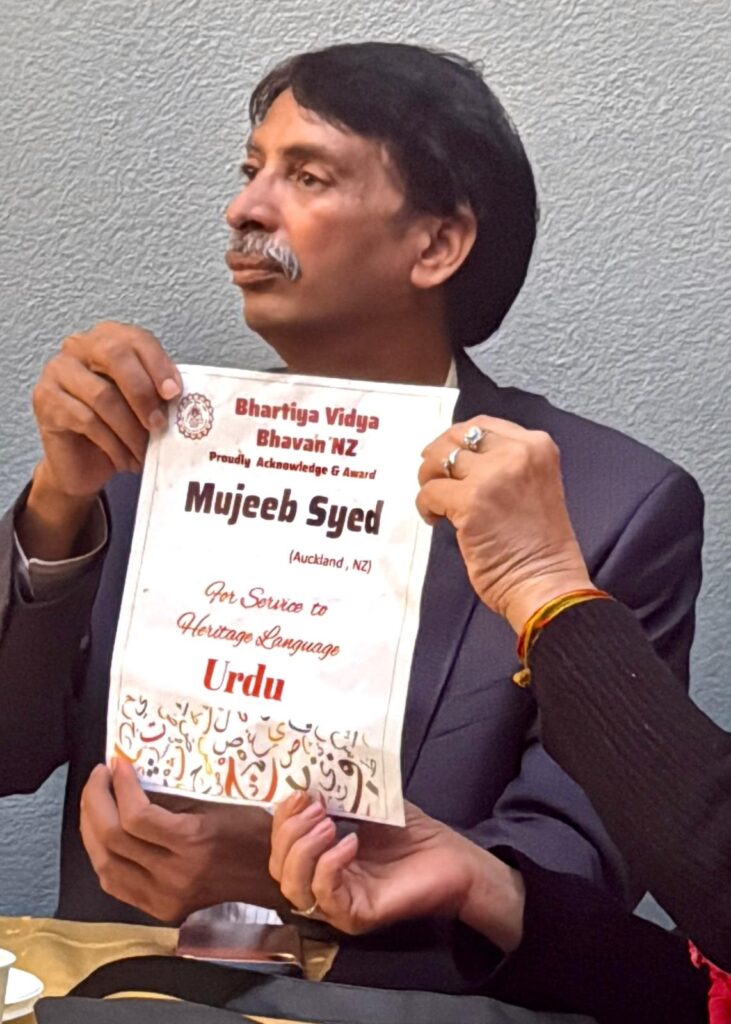
In a significant acknowledgment of his efforts to preserve linguistic and cultural heritage, journalist Mujeeb Syed—recipient of the Queen’s Service Medal (QSM)—was honored by Bhartiya Vidya Bhavan New Zealand for his outstanding contributions to the promotion of the Urdu language.

At a recent ceremony, Bhartiya Vidya Bhavan NZ presented Syed with a Certificate of Appreciation, recognizing his “Service to Heritage Language – Urdu.” The accolade celebrates his dedication to championing Urdu across communities in New Zealand, especially in Auckland.

Syed has long been a key figure in community media and cultural initiatives. Through organizing literary events, promoting Urdu education, and engaging diaspora communities via journalism and storytelling, he has played a pivotal role in preserving Urdu as a living, vibrant expression of South Asian identity in Aotearoa New Zealand.

Bhartiya Vidya Bhavan, an internationally respected institution promoting Indian culture and values, noted Syed’s commitment as exemplary. Attendees at the event praised his ability to unite generations and strengthen cultural bonds through language.

In his acceptance remarks, Syed said, “This honor is not just for me, but for every individual who believes in the power of language as a vessel of identity and expression. Urdu is a language of love, poetry, and deep heritage. I am humbled to play a small part in keeping it alive.”

This recognition reaffirms Mujeeb Syed’s role as an inspiring leader in New Zealand’s multicultural landscape, highlighting the vital importance of heritage languages in fostering social and cultural richness.

source: http://www.siasat.com / The Siasat Daily / Home> NRI’s Corner / May 21st, 2025

Kolkata young Muslim girl proves pen is mightier than sword, wins global honour

Kolkata, WEST BENGAL / New York (U.S.A) :

A 23-year-old Sarah Aziz from Kolkata won the prestigious UK’s The Press Award for investigative reporting. Armed with BA English, she is pursuing her Master of Science in Journalism at Columbia University Graduate School of Journalism in New York in the US. Interestingly, she started filing stories even while doing her UG in Kolkata during 2023. Her in-depth report on Rohingya Muslim refugees in Bangladesh for Voice of America (The American Multimedia Broadcasting Network) fetched her the highly commended “Young Journalist of The Year Award”.

Be bold, be curious, and be unyielding in your pursuit of the untold stories. Yes, this applies to 23-year-old Sarah Aziz from Kolkata in West Bengal, who had put up a brave face to report from the field about the inhuman treatment meted out to Rohingya Muslim refugees in Bangladesh for Voice of America, part of American Multimedia Broadcasting Network. This, in fact, fetched her the “Young Journalist of the Year” this year.

Armed with BA English from Loreto College in Kolkata, she is now pursuing her Master of Science in Journalism at Columbia University Graduate School of Journalism in New York in the US. Interestingly, she started filing stories as a freelancer even while doing her UG in Kolkata during 2023. To top it all, she has been a contributing reporter for The GuardianThe Telegraph (UK), South China Morning Post (SCMP) and The Christian Science Monitor besides others.

In November 2024, Aziz published an investigative report in The Telegraph (UK), exposing the truth behind the “mysterious” death of a Rohingya child who had been detained by the Indian government in New Delhi. The multimedia report not only delved into the medical negligence and abuse faced by the child in detention, but also revealed the wider pattern of the mass arbitrary detention and torture of Rohingya Muslims seeking refuge in India.

Earlier in the same year, Aziz had exposed the hidden scandal of rape and sexual abuse faced by incarcerated women in India, particularly in West Bengal. The investigative report, published in The Guardian, laid bare the tactics used by authorities to cover up crimes against some of the most vulnerable women in the country.

Aziz has extensively covered the persecution faced by Rohingya Muslims in India and Bangladesh for multiple international news outlets like The South China Morning PostVoice of America and The Guardian. Her investigative breaking news reporting on the 2025 Bangladesh student protests was published in The Times (UK).

On cloud nine, Sarah Aziz is reported to have said, “My interests lie in investigative reporting on human rights issues of national and global importance. Some beats I have covered extensively are women’s health, the Rohingya refugee crisis, human trafficking and Indigenous affairs both in India and the U.S. It’s a great honour to receive the Highly Commended “Young Journalist of the Year” instituted by The Press Awards (2025) and the Thomson Foundation.

Sarah Aziz dedicated this award to her dad Sheik Azizur Rahman and her seventh grade English teacher who motivated her to be what she is now. She will be graduating from Columbia University with an MS in Journalism in August 2025.  Glad to learn that Sarah Aziz is a poet, translator, and artist based in Kolkata, India. In 2021, her translation of Bangladeshi activist and author Pinaki Bhattacharya’s “History of Bengal: from Ancient to British Rule” got published receiving rave reviews.

Established in 1962 by The People and World’s Press News, the first award ceremony for the then-named Hannen Swaffer Awards, named after journalist Hannen Swaffer, was held in 1963. This got transformed from British Press Awards to The Press Awards which is being given under the aegis of Haymarket Media Group on behalf of the News Media Association.

Some of the categories include Business and Finance Journalist of the Year, Campaign of the Year, Cartoonist of the Year, Columnist of the Year, Critic of the Year, Environment Journalist of the Year, Excellence in Diversity Award, Feature Writer of the Year, Foreign Reporter of the Year, Front Page of the Year, Health Journalist of the Year, Interviewer of the Year, Investigation of the Year, News Podcast of the Year, News Website of the Year, Newspaper of the Year, Photographer of the Year, Political Journalist of the Year, Science and Technology Journalist of the Year, Scoop of the Year, Specialist journalist of the Year, Supplement of the Year, The Hugh McIlvanney Award for Sports Journalist of the Year, Travel Journalist of the Year, and Young Journalist of the Year.

[The author is former Indian Express and Deccan Chronicle chief]

source: http://www.radiancenews.com / Radiance News / Home> Pride of the Nation / by M Rafi Ahmed / May 31st, 2025

Guwahati teacher Saikh Md. Sabah Al-Ahmed’s on Kashmiri youth features in Penguin Book of Poems

Guwahati, ASSAM :

Guwahati-based school teacher Saikh Md. Sabah Al-Ahmed

At a time when Pakistan’s sponsored terrorism in India has drawn global attention, a Guwahati-based school teacher Saikh Md. Sabah Al-Ahmed has tried to highlight the same issue through a different medium. His poetry “In the Valley of Red,” which talks about the loss of lives of Kashmiri youths, has featured in the Penguin Book of Poems on the Indian City.

From Ghalib’s Delhi and Nissim Ezekiel’s Bombay to Agha Shahid Ali’s Srinagar and Kamala Das’s Calcutta, from Sarojini Naidu’s Hyderabad to Arundhathi Subramaniam’s Madras to Kynpham Sing Nongkynrih’s ShillongThe Penguin Book of Poems on the Indian City takes readers on a spectacular poetic journey across 37 cities in India.

His anthology contains nearly 300 poems, some written in English, and those translated from 25 regional languages. This collection offers an immersive lyrical exploration of India’s urban landscape.

Sabah Ahmed with renowed author from Penduin Zubaan (Women) Preeti Gill

Speaking to Awaz-The Voice, Sabah Ahmed said his poem “In the Valley of Red” talks of the plight & irony of innocent Kashmiri youths who are brainwashed and taken to the other side of the border to become terrorists. He said these youth again come back to their home (Kashmir) to kill their people, and eventually they also get killed in the hands of security forces in different encounters.

“Through the poem, I try to capture the emotions of parents of these Kashmiri youths who eagerly wait for their sons to return home one day. But in the end, these parents have to receive their dead bodies. My poem tries to depict how a paradise (Kashmir) has been destroyed by Pakistan,” Sabah Ahmed said.    

Before the Penguin Book of Poems Sabah Ahmed poem on Kashmir was published in WITNESS: The Red River Book of Poetry of Dissent (2021), an anthology of “Poetry of Dissent from the Margins” as seen by Indian poets, edited by Nabina Das. Subsequently, it was also published in the London-based Joao-Roque Literary Journal on February 28, 2022, edited by British-Asian writer and editor Selma Carvalho.

Another poem of Sabah Ahmed on Guwahati Diaries has also been featured in the Penguin Book of Poems on the Indian City. This poem highlights the situation of Guwahati during Covid-19 pandemic.

The Penguin Book of Poems on the Indian City is edited by Bilal Moin from Oxford University. The anthology is slated for release on May 30, 2025.

Sabah Ahmed, 50, who teaches social science in the prestigious Don Bosco School Pan Bazar in Guwahati, is popular among students, parents, and his peers for his affable nature.

“I scribbled a few lines, way back in 1988 or 1989, when I was in class 8 or 9. I felt like a 14-year-old while putting down my feelings on paper. The rest is this long journey since then. I was awarded the Reuel International Prize for Poetry in 2019 for the best upcoming poet from the North East. My poems were translated into Italian by Italian poet Giorgio Moio, based in Naples, Italy. My poems were also translated into Manipuri by veteran Manipuri critic Laishram Memo Singh,” Sabah Ahmed said.

Sabah Ahmed is very disturbed about the present situation in Kashmir. “Things were coming back to normal in Kashmir after decades. But the Pahalgam attack has finished everything. But I am still hopeful for better days in Kashmir. It will be the happiest moment in my life if my poem touches the Kashmiri youths and they quit the wrong path shown from the other side of the border,” he said.

source: http://www.awazthevoice.in / Awaz, The Voice / Home> Stories / by Daulat Rahman, Guwahati (headline edited) / May 20th, 2025

Book Review: Reclaiming Syncretic Histories – A Journey Through Bihar’s Sufi Landscape

BIHAR :

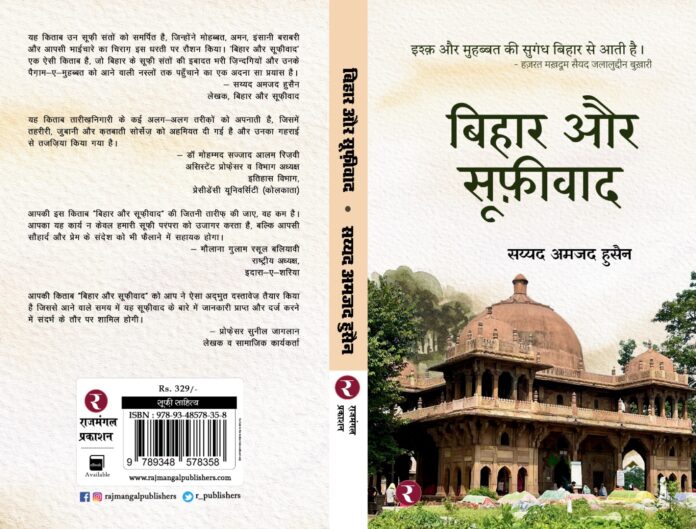
In a time marked by growing communal tensions and polarizing narratives, young author and scholar Syed Amjad Hussain’s book ‘Bihar Aur Sufivad’ arrives not only as a work of history but also as a much-needed spiritual intervention. Spanning more than 300 pages, the book immerses the reader in Bihar’s rich and pluralistic Sufi heritage, offering a profound counter-narrative rooted in peace, love and human dignity.

Bihar is generally remembered for its political agitations and socio-economic challenges, but beneath the surface lies an older, deeper history – a rich tapestry of sufi saints who arrived as early as the 12th century. Through systematic research and a respectful tone, Hussain revives this forgotten spiritual geography.

Beginning with the arrival of Hazrat Peer Shah Mushk Nafah, Hazrat Momin Arif Ansari Yemeni and Hazrat Imam Muhammad Taj Faqih Zubairi Hashmi, followed by the transformative presence of Hazrat Qazi Syed Shahabuddin Suhrawardi Peer Jagjot Kashgari in Fatuha (Patna), the book presents a chronologically overlapping map of Sufi presence in Bihar. These are not mere biographies; they are glimpses into a world where divine love was not only preached but lived, practiced and internalised.

Thematic Depth, Scholarly Rigor

Divided into well-organised sections, ‘Bihar Aur Sufivad’ details the lives of 20 influential sufi saints. Each chapter offers insights into their teachings (taalim), spiritual practices, miracles (karamaat) and most importantly, their social engagements. The saints in Hussain’s work are not passive mystics withdrawn from the world; they are reformers, healers, poets and bridges between communities.

The book also discusses the various sufi orders (silsilas) present in Bihar – Firdausi, Shattari, Husami, Warsi, Chishti, Qadri, Suhrawardi and Naqshbandi – illustrating how each infused its own spiritual philosophy into the soil of Bihar. Of special mention is Hussain’s inclusion of female figures such as Hazrat Bibi Kamal of Kako Sharif, a rare and valuable recognition of women’s contributions to Bihar’s mystic culture.

Language, Tone and Accessibility

Hussain’s writing flows with a gentle rhythm that recalls classical Urdu and Hindi scholarship yet remains accessible to contemporary readers. The prose is rich and poetic without sacrificing academic precision. His background as a researcher is evident in the meticulous citation of works in Persian, Urdu, Arabic, Hindi and English, many of which are obscure or little known to the general public.

This is not a dry academic treatise; it is a living, breathing narrative of spiritual heritage, crafted to engage scholars, young seekers and general readers alike.

Relevance in Today’s India

What makes the book particularly significant is its timing. At a moment when histories are being erased or rewritten to suit political agendas, this book affirms that India’s collective spiritual heritage must not be forgotten. The sufi saints of Bihar transcended caste, creed and religion. Their khanqahs were open to people of all faiths. They preached service, not supremacy.

In this age of ideological divisions, Hussain’s work reminds the bridges that once united communities. It is a call to return – not to nostalgia, but to the ethics of inclusiveness, humility and compassion that the sufis embodied.

‘Bihar Aur Sufivad’ is more than a book; it is a spiritual journey and a historical reclamation. In reviving the voices of Bihar’s forgotten sufi saints, Hussain does more than pay tribute; he builds a bridge for contemporary readers to reconnect with a heritage that offers solutions to some of our most pressing problems.

This book deserves a place not only on library shelves but also in classrooms, living rooms and community discussions. It is an invitation to think, to remember and to heal.

Hussain has not merely authored a book – he has attempted to revive a spiritual legacy and present it afresh to the modern world. This work warrants a place of honour in the study of Indian Islam, Sufism and regional spiritual histories. It is hoped that it will inspire further research, dialogue and, most importantly, personal transformation.

It is strongly recommended for scholars, spiritual seekers and anyone interested in the rich diversity of India’s syncretic traditions.

Book Name: Bihar Aur Sufivad / Author: Syed Amjad Hussain / Publisher: Rajmangal Prakashan / Published: April 27, 2025 / Language: Hindi / ISBN: 978-9348578358 / Pages: 308 / Price: Rs 329

(Dr. Shujaat Ali Quadri is an Indian journalist, deputy director of the Indo-Islamic Heritage Center and the chairman of the Muslim Students Organisation of India)

source: http://www.twocircles.net / TwoCircles.net / Home> Arts & Culture> Book Review / by Dr Shujaat Ali Quadri / May 07th, 2025