Category Archives: Arts, Culture & Entertainment

The art of writing time

hennai, TAMIL NADU :
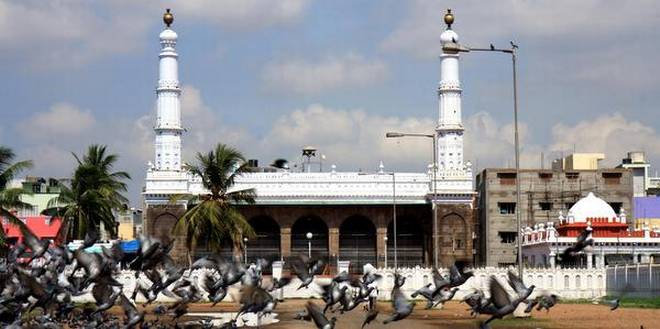
The chronogram by Raja Makhan Lal Khirad at the Wallajah mosque and the exterior of the mosque. Photo: S. Anwar

As part of the Madras Week, S. Anwar throws light on the chronograms etched in mosques across the city.

When Saadathullah Khan, the new Nawab of Arcot created a beautiful garden in his capital city Arcot, and was looking for a suitable name, Jaswant Rai, his chronicler presented him with the name ‘Humayun Bagh,’ meaning ‘Auspicious Garden.’ The Nawab was very impressed and mighty pleased as he also understood that his chronicler had offered him much more than a name.

Earlier the Nawab had gone to great lengths in adorning Arcot with stately buildings. What was missing was the gardens. Being a Mughal protégé, the Garden was important. And so next to the river he laid an extensive garden with flower beds and fruit bearing trees of different kinds. He further decorated it with one hundred and fifty fountains that were perennially fed by a system of waterworks.

Keeping the climatic conditions of Arcot in mind the Nawab ordered for trees from Telengana to be planted in the garden. Once the work was done, he was equally keen to have a worthy name for his royal garden. That was when Jaswant Rai pleased him not just with a name but a skilfully composed ‘Chronogram’ which, when carefully read, also revealed the year of its (Garden) creation in the Islamic calendar of Hijri as 1,113 (corresponds to 1,701 CE).

Before the Indo-Arab numerals came into wide use, it was common to assign numerical value to alphabets as the Greeks did. Chronograms essentially took it one step further where the numerical value assigned to each letter in the text when added, the sum total reflected the year of the event on which the chronogram is composed. Essentially the word “Chronogram” meant “time writing,” derived from the Greek words chronos (“time”) and gramma (“letter”).

Typically the chronograms could be just one word, a verse or verses including those from the Holy Scriptures of any of the Abrahamite religions. The Jews composed chronograms using Hebrew numerical system and it was known as Gematria. The Abjad system assigns numerical value to the Arabic letters and it is common to see the important Islamic phrase, a phrase with which Muslims begin their prayer or any good deed – ‘Bismillahir Rahmanir Rahim’ (“In the name of Allah, the most merciful, the most compassionate”) – with a numeric value of 786.

Though this tradition of composing chronograms was prevalent among various societies, it came into its own during the medieval period with the Jews, Christians and Muslims taking to composing ‘chronograms’ to commemorate events. It could be a victory of an army, inauguration of a palace, a church, a mosque or could be even death.

When Begum Sahiba, the Nawab’s companion of many years, died during the month of Muharram, many a poet in Saadathullah Khan’s court wrote elegies and as was the tradition some of them attempted composing chronograms. The most appropriate one was of course composed by the Nawab’s elder brother Ghulam Ali Khan. It was a verse from the Holy Quran, Wadhkhuli Jannati (“And enter my Paradise”). It gave the year of her death as 1114 Hijri era, which in Gregorian calendar translates to 1702 CE.

A year after her death the Nawab built another garden of the same dimension as the Humayun Bagh. Jaswant Rai called the new garden the ‘Nau Jahan Bagh,’ which when read as a chronogram, revealed the year of opening the garden as 1115 A.H (corresponds to 1703 CE)

In Madras, we do have a number of mosques that have their year of construction beautifully camouflaged in chronograms. Nawab Muhammad Ali Walajah, another celebrated Nawab of Arcot, was equally known for his liberal donations cutting across religions. The Kapaleeswarar temple tank at Mylapore was his donation. He moved the court to Madras and built a palace for himself at Chepauk. When the Muslim merchants of George Town approached him for a mosque, he built the Masjid-e-Mamoor mosque for them on Angappa Naicken Street. From the chronogram composed in Persian and inscribed inside the mosque, it is understood to have been constructed in the Hijri year 1199, which corresponds to 1784 CE.

A little later when the Nawab wanted to build a Big Mosque in Triplicane, nearer to his palace at Chepauk, he held a competition for the best chronogram to be inscribed. Interestingly it was won by Raja Makhan Lal Khirad, a Hindu who was a munshi and in the employment of the Nawab. His chronogram, ‘Dhikrullahi Akbar’ (Remembrance of God is great) is inscribed above the Mihrab (a semicircular niche in the wall of the mosque that indicates the qibla; that is, the direction of the Kaaba in Mecca and hence the direction that Muslims should face when praying) and gives us the year of construction as 1209 Hijri which translates to 1794 CE.

These are just a few examples of the many chronograms that dot our landscape. The chronograms of the Arcot Nawabs were not just about the art of writing time but also a reminder of our secular past we can be rightfully proud about.

source: http://www.thehindu.com / The Hindu / Home> Friday Review / by Kombai S. Anwar / August 25th, 2016
Hyderabad boy’s life holds spotlight in London

Hyderabad, TELANGANA :

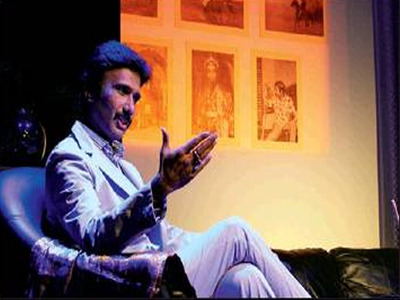
Mohammad Ali Baig in a scene from 'Under an Oak Tree' in London
Mohammad Ali Baig in a scene from ‘Under an Oak Tree’ in London

Hyderabad :

A play based on a Hyderabadi palace set in the mid-19th century has taken centre stage in London. The play’s premier attracted connoisseurs of theatre and enthusiasts of Hyderabadi history, drama and heritage.
“Under an Oak Tree”, presented by Hyderabadi theatre revivalist Mohammad Ali Baig, is based on the story of a boy born in the 19th century Ahmed Bowla Bagh Palace built by Nizam V Nawab Afzal Jah Bahadur. The play was produced by Qadir Ali Baig Theatre Foundation. The premiere show was sold out one week before the play was staged.

“The hour-long bio-play retraces the protagonist’s journey from the seclusion of a 19th century palace spread over 100 acres with a 100-horse stud farm, to the glitzy world of advertising and ultimately, to the intense spotlight of theatre, getting him one of the highest civilian honours of the country. The play aptly presents the changing political and social scenario in a post-Independence, post-Privy Purse era of the princely state of Berar and Deccan and consequently, the changing times,” Mohammad Ali Baig told TOI.

He said the play beautifully captures the story of a boy growing into adolescence without any friends, where the next neighbour was 5km away. The boy had more ponies than toys to play with. Written by Noor Baig, the play was directed by Mohammad Ali Baig. He also acts in it.

Mohammad Ali Baig has presented his plays earlier in Turkey, US, Canada and UK, taking Hyderabadi heritage to the global spotlight. The play is scheduled for its Indian tour in Bengaluru, Mumbai and other places this month.

“It’s really fulfilling when global audiences, accustomed to the best of world theatre, give an original Hyderabadi flavour such an amazing response with full house attendance,” he said.

According to Rehana Ameer, councillor of the City of London (the first Indian-origin woman of the elite Westminister district), the buzz was such that people from the Edinburgh and Oxford Universities came to London to watch the show. Prof Tariq Muneer, Millennium Fellow at Edinburgh University, also lauded the Hyderabadi play.

source: http://www.timesofindia.indiatimes.com / The Times of India / News> City News> Hyderabad News / by Syed Akbar / TNN / April 12th, 2018

65th National Film Awards: AR Rahman bags Best Background Score for ‘Mom’ and Best Music Direction for ‘Kaatru Veliyidai’

Chennai, TAMIL NADU :

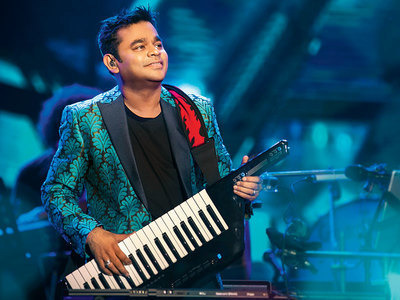
ARRahmanMPOs17apr2018

The 65th National Film Awards were announced on Friday by Shekhar Kapur, the head of the Jury for feature films.

Music director AR Rahman has been honoured with two prestigious National Awards for the year 2018. He has bagged the Best Music Director award for ‘ Kaatru Veliyidai ‘ directed by Mani Ratnam and also won the Best Background Score award for the film ‘ Mom ‘ starring the late  Sridevi.

The 10-member-panel reportedly comprised of screenwriter Imtiaz Hussain, lyricist Mehboob, actress Gautami Tadimalla and Kannada director P. Sheshadri among others.

source: http://www.timesofindia.indiatimes.com / The Times of India / Home> E-Times – Entertainment News / News> Entertainment> Hindu> Music> News / TNN / April 13th, 2018

Love and Life in Lucknow: An Imaginary Biography of a City by Mehru Jaffer reviewed by Mihir Vatsa

Lucknow, UTTAR PRADESH :

LifeinLucknow17apr2018

An enjoyable ride through Lucknow, but is it real?

Mehru Jaffer’s Love and Life in Lucknow takes us through the lives of the city as well as its people. Written in a light vein in the first person, each chapter introduces us to different aspects of Lucknow’s history and culture while also keeping us close to Jaffer’s own experiential world. The narrator is a shadow of Jaffer, who travels back and forth in time to associate events in her life with the city’s larger contextual fabric.

The book is an unsure khichdi of genres. The title suggests an exploratory memoir, the subtitle asks us to think of it as an “imaginary biography”, the publisher, Niyogi Books, categorises it as a work of fiction, and once we start reading, what should have been a creative narration often steers into dry history. It is left to us to decide how best to read the book. According to Jaffer, the characters belong to “different recesses of the region, from its imaginary past to records preserved in archives and in history books.”

Colourful citizens

What roots the city’s dynamism is the narrator’s experiences of living in it. She steers our perception of Lucknow as we are introduced by her to the city’s “colourful citizens”, its monuments, its heritage. The commanding presence of Bano Bua is palpable, at times coming dangerously close to overriding the presence of the city as well as of the narrator. Though Jaffer stops short of expressly identifying the city with her, the old but resolute Bano Bua nonetheless emerges as a key character who holds everything together.

But Bano Bua is not alone in Lucknow. We are introduced to the quick-witted vegetable seller who counters Bano Bua’s sharp rebukes with a honey-laced tongue. Such seduction through words may appear extraordinary in other cities but not so in Lucknow, where the culture of language and lyricism is embedded deeply in the city’s spirit.

We are also introduced to Naresh, a rickshaw-puller who is a successful nautankibaaz but carries in his heart the wish to play Laila in a Laila-Majnun production. Similarly, we learn about the wonderfully named Baba of the Bottles, who lives in a cave at Lakshman Tila, accepts folded currency in a bottle, and who, with one neat trick, converts the currency into a piece of paper on which he gives his expert advice to get rid of problems.

Monotony of facts

The memorable characters are not always alive. The book goes to great lengths to take us through the city’s past, from the time of the Ramayana to the arrival of the British, from the birth of Urdu to the cultivation of English, from Sita gazing at the golden deer to the courageous Uda Bai firing at the British colonialists.

It is through these explorations of Lucknow’s history that Jaffer establishes her credibility as an informed writer. However, it is also in these explorations that Jaffer’s strength as a writer is tested. Some passages are rescued in time from the monotony of facts, but reading the rest, one wishes to be taken back immediately to the people.

The book is not bereft of tenderness. A remarkable moment occurs between the young narrator and her grandmother. It is her grandparents’ wedding anniversary which the grandfather forgets. The grandmother, having prepared a nice anniversary dinner for the evening, waits for her husband to return. Slowly the night mutates into dawn, and when he does return, he informs his wife that he has already eaten and makes for the bathroom.

When the narrator asks her grandmother to remind her husband the importance of the date, she refuses. “It is not enough for just one person to consider something important that requires two people to do so,” she says and closes the conversation.

Jaffer’s book should be read for the people in it. Though the writing is of varying merit, when it does succeed in bringing out nuances, the experience of reading is elevated and the city becomes immediately accessible. But the book also struggles to sustain this elevation. Jaffer’s writing undulates through the pages, taking us on both enjoyable drives and tiring detours.

The writer is the author of Painting That Red Circle White, a poetry collection.

Love and Life in Lucknow: An Imaginary Biography of a City; Mehru Jaffer, Niyogi Books, ₹395

source: http://www.thehindu.com / The Hindu / Home> Books > Imaginary Biography / by Mihir Vatsa /  April 14th, 2018

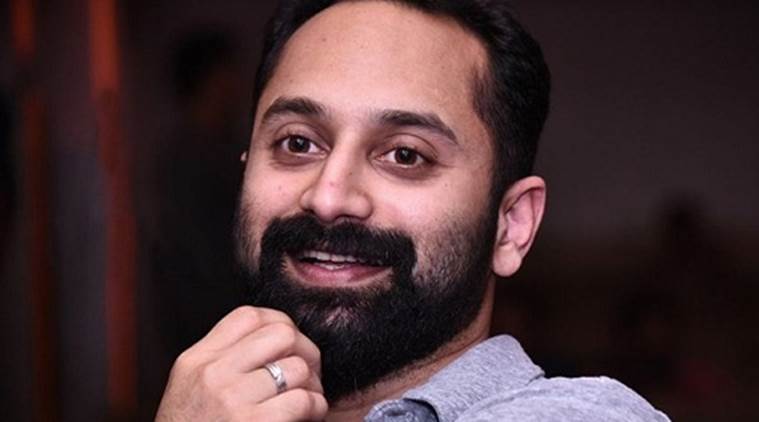
Fahadh Faasil on National Award win: I’ll continue to do films that excite me

KERALA :

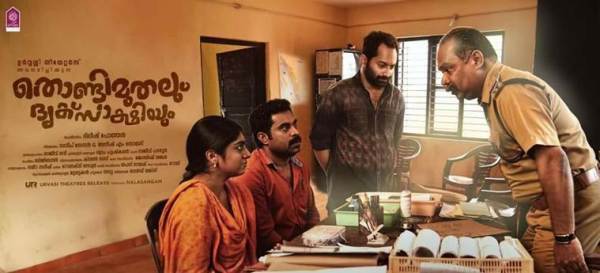
Actor Fahadh Faasil won the best supporting actor (male) award for his performance as a petty thief in the drama Thondimuthalum Driksakshiyum, that also became a successful venture at the box office.

Fahadh Faasil congratulated his fellow cast and crew of Take Off for winning the coveted awards.

Critically acclaimed Malayalam film Thondimuthalum Driksakshiyum, which was directed by Dileesh Pothan, bagged several top honors at the 65th National Film Awards on Friday. Actor Fahadh Faasil won the best supporting actor (male) award for his performance as a petty thief in the drama, that also became a successful venture at the box office.

“When I began acting, my biggest fear was whether the audience will appreciate the kind of films I do. It is because I was born a Malayalee, I’m able to do such films. I feel blessed and very happy,” Fahadh, who is shooting for director Amal Neerad’s next, told the media.

“Whenever I work with Amal, something good happens in my life. While shooting for Iyobinte Pusthakam I won Kerala State awards and I also got engaged (to Nazriya Nazim),” he recalled.

Thondimuthalum Driksakshiyum was named the best Malayalam film and its writer Sajeev Pazhoor won the recognition in the best original screenplay category. It may be recalled that the film, which was unanimously liked by critics and the audience, failed to make a cut in the recently announced Kerala State Film Awards.

“I don’t expect to win awards while working in films. I want my films to make money first. Awards and all can come later,” said Fahadh.

“I was afraid of the commercial viability of this film (Thondimuthalum Driksakshiyum), but Dileesh was very confident and assured that this film will be appreciated by the masses and will become a bigger hit than Maheshinte Prathikaaram,” revealed the National Award winner.

Fahadh02MPOs17apr2018

He also added that the film was a different experience to him as an actor. “It is by far the most challenging role I have played. The story of this film happens at a police station. In real life, I have never stepped inside a police station so far. I’m not sure about the future though.”

“I was completely unaware of the way a police station works. But, I played a character, who is a regular at a police station. The director and my fellow actors helped me to understand my character and improved my performance,” added the actor.

“Dileesh is one of the finest directors I have worked with. He will ask actors to suggest what we want to do in a scene and work on it. It makes him stands out from the rest,” quipped Fahadh Faasil.

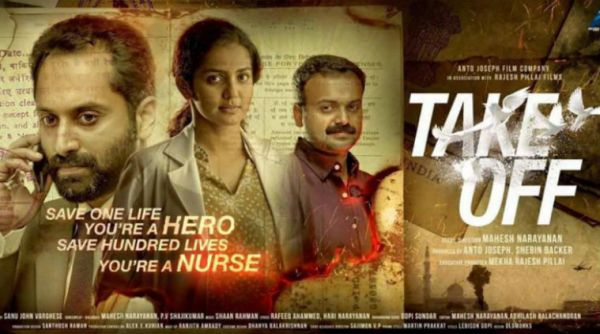
Fahadh’s hit film Take Off also bagged two National Awards, including a special mention award and best production design award (Santhosh Raman). The debut of editor Mahesh Narayan, which was inspired by real events, had Parvathy in the lead role.

Fahadh03MPOs17apr2018

Fahadh Faasil congratulated his fellow cast and crew of Take Off for winning the coveted awards.

He said his approach to cinema will remain the same. “I will continue to do films that excite me. I won’t change my methods because I got an award like this,” said the actor.

source: http://www.indianexpress.com / The Indian Express / Home> Entertainment> Malayalam / by Manoj Kumar, Bengaluru / April 13th, 2018

Imprint of a saint and a brimming degchi

Hyderabad, TELANGANA :

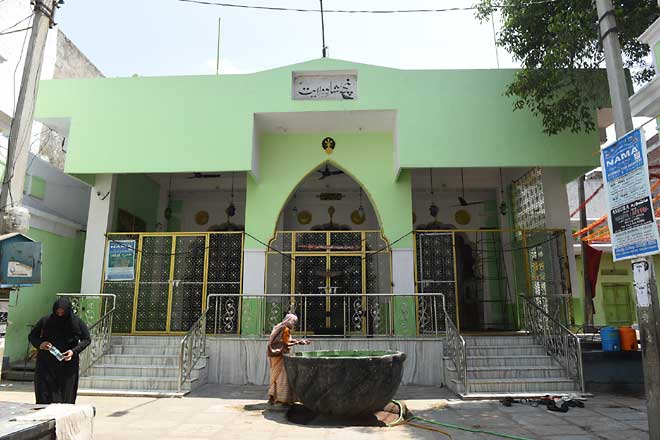
The area of Panje Shah houses relics of saints and the Messenger of God and many stories of forgotten riches .

Kali Kaman road in Panje Shah. — Photos: Surya Sridhar


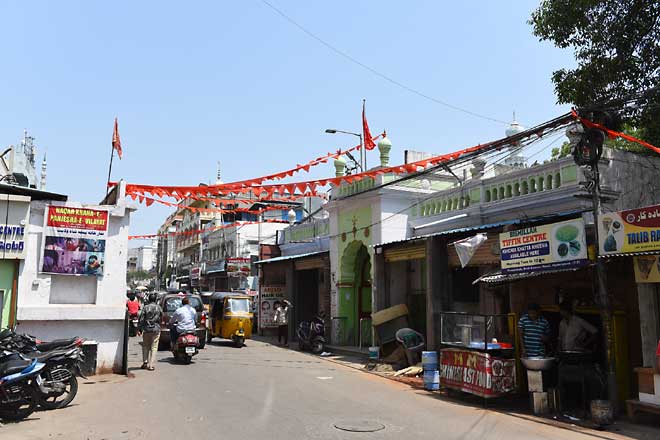
The area of Panje shah has a rich history behind it. The word, ‘Panja’ means an ‘imprint of hand’. It is located on the left of the main road leading towards Kaali Kamaan from Aitbaar Chowk. The story goes that during the reign of Sultan Abdullah Qutb Shah, a person named Ibn-e-Sher Ali came to Golconda from Najaf-e-Shareef in Iraq, where Hazrat Ali is buried.

He brought an imprint of the Hazrat’s hand and gifted it to the Sultan, who built an Aashoor Khana and installed the imprint there. The imprint is an amalgamation of metals and resembles solid wax. Light brown in colour, it is about 15 inches in length and 8-10 inches in width. The holy names of Prophet Mohammed, Hazrat Ali, Hazrat Bibi Fatima, Hazrat Hasan and Hazrat Hussain are engraved on the Panja. It is covered with a piece of cloth. Above the Panja on a platform is an alam(standard). Since it was installed by the king, the area came to be known as Panje shah.

During the mourning month of Moharram, more alams are set up around it. A round stone cistern is placed in the courtyard, where the sharbat prepared during this month is stored and distributed to the visitors.

On the walls are some paintings depicting the martyrs of Karbala, scenes of strange phenomena like bleeding trees among other subjects of the artworks.

Opposite this holy place is another place of faith called ‘Qadam-e-Rasool’, where a foot-print of Prophet Mohammed is placed. Sayyad Mohammed Ali is said to have got it from Isfahan, Iran, in 1575, along with adequate proof of its authenticity. He bought a large house, got it decorated and installed the footprint there. (Qadam-foot, Rasool-Prophet Mohammed). There are two stone reservoirs at the gate which are filled with milk beverage (sharbat) and distributed to the devotees during Moharram.

The annual Bibi ki Sawari, which arrives on an elephant stops here on the 10th day of Moharram. It is said Bibi Fatima, the daughter of the Prophet and mother of Hazrat Hussain, laments and woes about the merciless killing of her son in Karbala. This scene is so heart-rending that it leaves everybody present in tears and inconsolable.

Apart from the holy footprint, relics such as the hair of Hazrat Ali and Hazrat Hussain are also kept here.

A round stone cistern in the courtyard, where the sharbat prepared during the month of Muharram, is stored and distributed to the visitors. — Photos: Surya Sridhar

Gurvanna gali

Opposite Panje shah is a lane named after Hakeem Guruvanna, which leads to Mir Alam Mandi. An important landmark of this lane is Kashmiri Qivam factory, established by the descendants of Guajarati businessman Poorandas Ranchoddas, in 1973. Qivam is a paste made of saffron, tobacco, cardamom and other spices which is added to paan to give it a kick. This Kashmiri Qivam was a favourite with film stars like Sunil Dutt, Meena Kumari and Nargis. Shaik Mujeeb-ur-rahman, the first President of Bangladesh was also a customer. Apart from Qivam, a hair oil named ‘Zulf-e-Kashmir hair oil’ is also prepared here. The factory is spread over a vast area of 3,700 sq yards and is managed by the grandsons of Poorandas ji. A Shivalaya has been constructed here near a large peepal tree.

Deghchi galli

This lane is situated close to Guruvanna galli and owes its name to a fantasy like story. Long ago, a deghchi (a vessel) full of rich gems and jewellery was found here during digging. Close to Panje shah is another lane called Kotaah galli (narrow lane) which is erroneously called Kotta galli.

On the way to Panje shah from Aitbaar Chowk, lies the haveli of Raja Mahipat Ram, an army commander and a minister of the second Nizam. It was called ‘baawan darwaazon ki haveli’ since it had 52 doors. The havelis of Raja Vithal Pershad and Raja Shainblum Pershad were also located here and came on the way to Kaali Kamaan and Gulzar Houz.

Upon crossing the Kaali Kamaan, one also gets to see several shops selling kites, thread, maanja and charqas. The kites have many fascinating names like dulhanpachchisilangotaiyyawarek qakamgola sulemanchand-tarasinghada, and lehanga. Similarly, the names of maanja are also very interesting like motiyagandhakferoza, and angoori to name a few.

source: http://www.telanganatoday.com / Telangana Today / Home / by Dr. Anand Raj Varma / April 15th, 2018

The world’s only handwritten newspaper is 91 and sells at 75 paise

Chennai, TAMIL NADU :

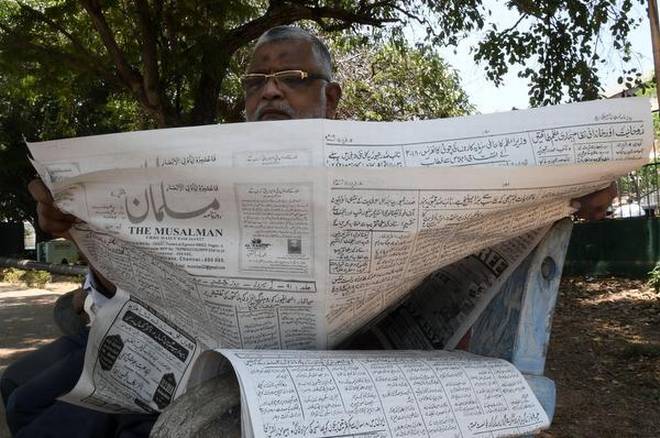
The calligraphy is the soul of The Musalman. | Photo Credit: R. Ragu

The Musalman was established in Chennai in 1927

Reed pens, ink bottles, stacks of papers — these are the first things you notice when you step into the computer-less office of The Musalman. Aged a venerable 91, what is possibly the world’s only handwritten newspaper (and the only one without a computer) shows no signs of signing off.

In its office in Chennai,  a dark green visiting card bears the newspaper’s name and that of its editor, Sayed Arifullah, and lists the 13 degrees he holds.

Arifullah, in his mid-30s with a salt-and-pepper beard, exudes a casual confidence. He has been at the helm for nearly 10 years now.

The Musalman, established in 1927, was started by Syed Azathulla, Arifullah’s grandfather, because “he felt there was no voice for Muslims and there should be one.” Located in a small lane next to Chennai’s iconic Wallajah Mosque, the office is a tight space with two rooms, one housing the press and the other acting as reception area. “We are renovating, hence the bustle,” he says.

Since its inception, the newspaper has seen three editors: Azathulla, his son Syed Fazlullah and now, Arifullah. When I ask if he had always planned to take over the reins from his father, he shrugs. “It was important that the newspaper be kept running and so I chose to do it. I edit, I write, and I run the paper now.”

Potter-esque

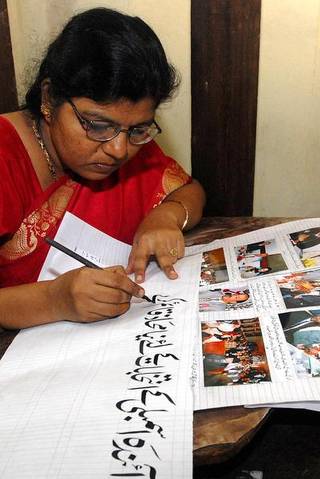
Almost all the articles in the four-page broadsheet are selected by Arifullah himself. He says he has reporters in different parts of the country, but the newspaper, much like The Economist, does not carry bylines. Around 10 every morning, two translators come in and set out the news in Urdu. In the next two hours, the paper’s three calligraphers, called katibs, painstakingly write out each news item on to the broadsheet using calligraphy pens in a Harry Potter-esque manner.

The calligraphy is really the soul of the paper. But with the advent of technology, the katibs, earlier employed in newspapers and Urdu publishing houses, have become redundant. The Industrial Training Institute in Srinagar, one of the last government institutes where Urdu calligraphy was taught, wound up the course last May because of no takers.

Finding skilled scribes is a challenge, Arifullah acknowledges, but he is quick to add that he isn’t looking yet. His scribes have been with the paper for the past 30 years. “At that time, my father conducted calligraphy tests, analysed their handwriting, and hired them. They have remained with us all these years — we’re like a family,” he says.

Once the laborious scripting is done, the advertisements are added and the paper is set to the negative. It goes to print around 1 p.m. and reaches most of its 21,000 readers by the evening. And it costs 75 paise. “It’s the cheapest paper in the country!” Arifulla quips dryly, his income coming from the press and not the paper.

Musalman02CF16apr2016

“We cover all sorts of news: national, international, local… all the important happenings,” says the editor. From the Egypt elections to ‘carcinogenic’ coffee, The Musalman does cover it all. But like most Urdu newspapers, the focus is on opinions rather than news itself. “The Urdu newspapers in our country are often revenue-strapped and might not be able to carry breaking news or pay for agency copy, so the focus is on providing opinions and context,” says veteran journalist and Urdu aficionado Shams Ur Rehman Alavi.

Arifullah seconds this. “We don’t carry breaking news. It’s very difficult to rewrite entire pages, so we stopped.” He also says that there is a strong preference for topics that are close to the community. “Our focus is obviously on Islam and Islamic teachings, but that is not all of it. We have many Urdu readers who are non-Muslims as well,” he says.

Personal process

The paper has readers all over the country. “Delhi, Kolkata… families who have been subscribing to the newspaper for generations. We send them the paper by courier. It’s a very personal process,” says Arifullah.

The newspaper carries a few advertisements, in English and Urdu, for jewellery, furniture, tour operators, even a few government tenders. Otherwise, it largely sticks to a format. The front page is for top stories with a thrust on international news. Page two carries the editorial, and the other two pages are for local news and advertisements. The Monday edition is different — there are more articles on the Quran and a bit of Islamic history.

In the pre-Independence era, many prominent newspapers in north India were in Urdu and were read by everybody, regardless of religion. But after Partition, Urdu fell out of favour and many newspapers shut down. The last decade has seen a slow reversal, with the revival of papers like Sahara (renamed Roznama Sahara) and Inquilab.

Other papers might be going online, but The Musalman has no such plans. As Arifullah says, the paper’s uniqueness is in being handwritten, and anything else would kill the legacy.

For 91 years, the paper has been published every day, without fail. Even during Partition, The Musalman was on duty. So what happens after Arifullah? Will his children carry forward the legacy? “Sure,” he says, sounding amused. “They aren’t even five yet, but sure.”

navmi.krishna@thehindu.co.in

source: http://www.thehindu.com / The Hindu / Home> Focus> Society / by Navmi Krishna / April 14th, 2018

A calligraphed 200-year-old Padmaavat preserved for posterity

Hyderabad, TELANGANA :

Malik Muhammad Jayasi’s Padmaavat in Hyderabad. | Photo Credit: The Hindu

Digitised manuscript of epic tale draws scholars from all over

Away from the violence and din surrounding the release of Padmaavat, a nearly 200-year-old copy of Malik Muhammad Jayasi’s 16th-century epic poem, on which the film is based, sits in the library of the Jamia Nizamia Islamic seminary here.

Records at the Jamia, which is itself a 140-year-old institution, show that the book was copied in 1239 Hijiri (Islamic calendar), which corresponds to 1823 CE.

The title finds a place in the library alongside over 2,500 books and rare manuscripts, one of which — on Islamic jurisprudence — is 700 years old.

‘Padmaavat’ review: an insipid love letter to Rajputs

In the poem, the Sufi Jayasi speaks of Padmavati, princess of Sinhaldweep in Sri Lanka, and Ratansen, the King of Chittor. After hearing of the princess’ beauty from Hiraman, a parrot, the king, who is already married to Nagmati, embarks on an arduous journey to Sinhaldweep, and later marries the princess.

But there is a twist: Devpal, another king, too, has heard of Padmavati’s unmatched beauty and covets her. A battle ensues between the two kings. Meanwhile, a banished courtier seeking vengeance tells Alauddin Khilji of Padmavati and he marches to Chittor. But upon his arrival, he sees that the princess has committed jauhar.

The Jamia’s library is on the first storey in one of several buildings on its sprawling campus in the Old City. There are several cupboards and shelves which contain books, most of them handwritten, on different disciplines. One has books on tasawwuf, or Sufi mysticism, written in Farsi, others house books on Arabic grammar, and a third has books on liturgy in Urdu.

But perched on a shelf marked adab, or literature, is Padmaavat. The poem, handwritten in delicate nastaliq calligraphy on ageing paper, is contained within fine boundaries in red ink. Its 216 pages, which narrate the tale, are largely well-preserved. It has also been digitised.

The Jamia’s chief librarian of 20 years, Mohammed Fasihuddin Nizami, alumnus of the Islamic varsity, points out that the book belonged to its founder Maulana Anwarullah Farooqui.

Reverentially referring to Maulana Farooqui as Baani-e-Jamia, he says, “He was the vazeer (Minister) for the Umoor-e-Mazhabi (ecclesiastical affairs) in the Hyderabad State. He tutored the sixth Nizam Mir Mahbub Ali Khan and seventh Nizam Mir Osman Ali Khan. Once he was appointed Minister, it was realised that the Hyderabad State did not have a Jamia. The Jamia Nizamia is a result of this realisation. This copy of Padmaavat is a part of his vast collection.”

Mr. Nizami explains how the book reached Maulana Farooqui’s library. “While we do not know for how much [this copy of] Padmaavat was procured, Baani-e-Jamia was a Minister and he had the required resources at his disposal. He had men and money to procure books,” he says.

The seasoned librarian then turns to the last page of the book and reads the name of the calligrapher who painstakingly made of the copy of the original so that it could be preserved for posterity, “Az qalam Tilokchand.” From the pen of Tilokchand. Apart from using scientific methods to preserve the book, the Jamia has digitised it for scholars. Researchers have arrived here from West Asian countries and even Japan. “We cannot say that there is an increase in footfalls as the general public is unaware of its [the copy of Padmaavat] existence here. Primarily, the kutub khana is for scholars and researchers.

The book is old and needs to be preserved. We do not want to damage the manuscript by wear and tear. This is why we let scholars use the digitised version,” Mr. Nizami says.

But there is more to the poem than meets the eye. Jayasi’s work is deeply allegorical as is the nature of Sufi mysticism. Each character in Padmaavat has an implied meaning.

Speaking to The Hindu, noted historian Rana Safvi said, “The parrot is the spiritual teacher. Ratansen is the Sufi seeker. Padmavati is the wisdom which he is seeking. Nagmati, the first wife, is the material world. Ratansen brings Padmavati to his palace. There is a fight between the two wives. He tells them that they have to live together. This is the existence of the temporal and spiritual world.”

source: http://www.thehindu.com / The Hindu / Home> News> Cities> Hyderabad – Sunday Special / by Syed Mohammed / Hyderabad – January 27th, 2018

With God’s grace

Mumbai, MAHARASHTRA :

Faisal Khan | Photo Credit: 12dmc Faisal Khan

Winner Faisal Khan on his journey in “Jhalak Dikhhla Jaa”

Faisal Khan has won the 8th season of Jhalak Dikhhla Jaa on Colors along with partner Vaishnavi Patil and choreographer Vivek.

The young actor became a household name when he depicted the childhood years of Maharana Pratap in Sony’s series on the king of Mewar so much so that the channel slowed down the pace of the series and took a long time in introducing the adult Pratap.

A product of reality television, Faisal has earlier appeared in dance-based reality shows like Dance Ke Superstars and Dance India Dance.

In Jhalak he withstood the strong competition put by Shamita Shetty in the finale.

Edited excerpts:

How are you feeling after winning the title?

I feel great and excited. I think my hard work and Allah’s will is the reason that I am here.

Tell us about your journey in the series

The experience was very good. In the third week we had some negative comments and scores were not good which made me nervous but with Allah’s grace things turned out in favour of us and we are here.

How was it performing before ace dancers like Shahid Kapur, Ganesh Acharya and Malaika Arora?

I have learned so much in this show while working with supportive judges. I remember the incident when Ganesh sir applauded me by standing on a table. That was a very touching moment for me. Malaika (Arora) ma’am told me that her sons are huge fans of mine.

What was your family’s reaction to your grand victory?

My mother has deep confidence in me and both my parents are very proud of me.

With very basic training of dance in your formative years, how did you manage practising for big dance shows?

I think hurdles were there, but it’s about how you come out of them with your hard work and dedication.

Who is your ideal in life?

My dance teacher Shrikanth Ahire, who was there with me at every stage.

Which dance form is closest to your heart?

I like dance as a medium but as I do Hip-Hop, it’s always closest to my heart and I want to learn every nuance of it.

How do you balance your studies with dance?

We used to practice around 4 to 6 hours daily and after that I had time reserved for studies. I don’t compromise on my studies and even on Maharana Pratap’s shoot in Gujarat I had a tutor to teach me after pack-up. I cleared the higher secondary board last year with full dedication.

You have already bought a house in Mumbai for your family. What are your plans with the winning amount?

I don’t want anything special for me as I have everything in my life. As for the prize money, it’s up to the parents what they do with it as I have given it to them.

Any plans after this?

I don’t have any project to share with you right now and I have put it on the will of the almighty.

source: http://www.thehindu.com / The Hindu / Home> Metroplus / by Atif Khan / October 11th, 2015

Entertainment with a finesse

Mumbai, MAHARASHTRA / Coonoor, TAMIL NADU :

Going With the flow: Mansoor Khan. —Photo: Sushil Kumar Verma

Filmmaker Mansoor Khan on the cinema of his illustrious father and his comeback plans

Director Mansoor Khan puts his father Nasir Husain’s contribution in perspective following the release of Music, Masti, Modernity – The Cinema of Nasir Hussain by author Akshay Manwani in New Delhi recently. Excerpts from an interview:

The book mentions that you criticised the kind of films your father made. What then made you take up filmmaking?

I always thought I wanted to do engineering. I pursued it for 5 years, but when in my last year at MIT, I felt I did not want to be in a 9 to 5 job. I dropped out and returned to India. Around this time, I wrote a short film and shot it with friends. It turned out well and my father felt I could direct. He did not guide me formally, but I learnt a lot sub-consciously when I was in school and college and that is what I recalled while working along with him on the script of Qayamat Se Qayamat Tak.

Your dad was a dynamic personality. As a son, how do you remember him best, as a writer, producer or director?

I always think of my father first as a writer, director and then producer. That is the order in which he emerged as a film personality. His forte was writing and he developed a unique style that was fresh and counter-current to the times. That is apparent from the movies he wrote and directed.

He wrote dialogues for a number of films but his dialogue writing was always under appreciated?

I feel that he wrote dialogues with subtlety, without being overly melodramatic. Audiences tend to remember dramatic dialogues and that is why he is under-appreciated. That applies to his sense of humour too.

What are the elements that made him standout in the league of top filmmakers?

The primary focus of my father was to entertain the audience with finesse, and leaning towards the new. This combined with excellent music and hilarious situational comedy made a tasty concoction that worked time and again. He made no bones of the fact that he repeated the basic plot in most of his films.

Nasir Husain changed the way Hindi film heroes behaved on screen. Did you have any particular image in mind while writing the role for Aamir Khan in Qayamat Se Qayamat Tak and Jo Jeeta Wohi Sikandar ?

In QSQT he had to play an honest man who loved his father and family, and also stayed true to his girl. These counter forces created the endearing moments in the film. Sanjaylal inJo Jeeta…. is a brat who wants the easy way out in life and has a justification for all his antics. He needs to grow up and understand what character and hard work are all about. This he learns the hard way when his actions almost result in his brother losing his life and shattering his father’s dream of him winning the cycle race. So it is not as though I have a particular hero in mind. It has to be true to the premise of the story.

What kind of music he used to listen to? Who were those singers who influenced him?

He had a tremendous intuitive sense of a good melody. It is hard to pin down which singer he liked particularly, because he went mainly for was a good melody. It could be in any genre of music from western pop to Indian folk. He did not advise me as such but he led me to listen to some bands in the early ‘70s like Pink Floyd and Emerson, Lake and Palmer that influenced my taste. He bought their albums on trips abroad. That is how I ended up listening to them.

Aamir Khan assisted your father before becoming an actor. But the kind of cinema he makes is different from Nasir’s cinema.

Aamir has a tremendous love for cinema and a great sense of script. He goes by his inner instinct and belief in a good script.

Are you planning for a comeback!

I live peacefully in Coonoor and I am following my heart. I was clear about this even before I made my first film. I will continue to follow my heart and if that leads to a film then so be it.

I will make a film if it comes to me but that has to emerge from within. As of now, I am not planning ,it but be optimistic about the future.

source: http://www.thehindu.com / The Hindu / Home> News> Cities> Mumbai / by Atif Khan / November 10th, 2016