Category Archives: Arts, Culture & Entertainment

Remembering a legend

Hyderabad, TELANGANA :

A homage By Ustad Shabbir Nisar and others

 The tribute concert for Tabla Nawaz Ustad Shaik Dawood Khan Saheb on Sunday promises a musical extravagance

Bengaluru :

Music lovers are in for a treat this Sunday with a stellar tribute concert on the occasion of the birth centenary celebrations of Tabla Nawaz Ustad Shaik Dawood Khan Saheb. Featuring some of the biggest names in Hindustani classical music in the country, the musical extravaganza is scheduled for April 3 at Rajatha Bhavan, 8th Main Road, (Opposite St. Peter’s Seminary), Malleswaram, 5 p.m. onwards.

Best known as the Thirakwa of Hyderabad, Ustad Shaik Dawood (December 1916 to 1992) was one of the greatest tabla maestros of his time and the torchbearer of some of the most traditional gharanas of tabla such as Farrukhabad, Ajrada, Lucknow, Punjab and Delhi.

A homage By Ustad Shabbir Nisar and others

His son, Ustad Shabbir Nisar, affirms this is one concert that music lovers should not miss.

“Almost everyone knows about my father. He garnered respect during his time and continues to do so even now. He was a simple down-to-earth person and yet renowned for his greatness on the tabla. This is an opportunity for us to remember that great personality and refresh the memory of people who have heard him before. The concert will bring everyone who respects and loves him together.”

He adds that they will continue to celebrate all through the year. “We hope to hold a concert in Pune and later in Delhi and close with Hyderabad where we started the celebration in December last year. This is all for music,” the maestro adds.

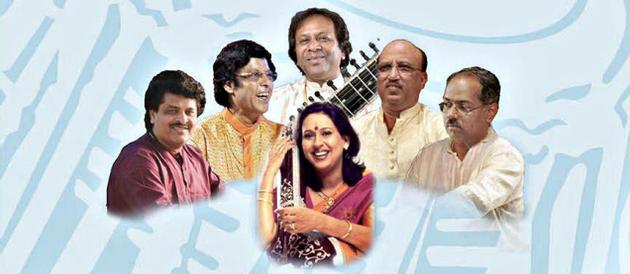
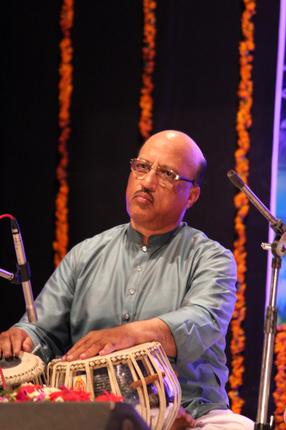
The concert will kick off with a tabla homage by Sarfaraz Ahmed, the grandson of Shaik Dawood, followed by a tabla ensemble by Shabbir Nisar along with two senior disciples Uday Kumar and Mihir Kallianpur. Vocalist Arati Ankalikar-Tikekar will follow with a recital. The finale will be a sitar recital by Shahid Parvez backed by Anindo Chatterjee on the tabla.

source: http://www.thehindu.com / The Hindu / Home> Features> MetroPlus / by Allan Moses Rodricks / Bengaluru – March 24th, 2016

Mausoleum that Humayun never built

NEW DELHI :

HumayunMPOs04apr2016

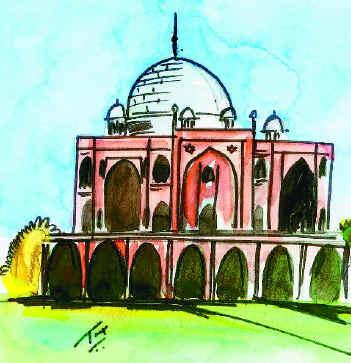
HUMAYUN’S TOMB, one of the 23 heritage sites in India, has come alive – at a cost of Rs.3 crore thanks to the Aga Khan – with dormant fountains playing again, old forgotten wells being redug and lights illuminating the mausoleum whose garden, in which tobacco was given till 1915, has been redesigned. Unlike many emperors, Humayun did not plan his own tomb for the simple reason that he did not expect to die so soon and suddenly at the age of 55, after a fall down the stairs of his library in the Purana Qila.

It was in response to the evening – maghrib – call for prayer on January 24, 1556 that Humayun got up from his seat on the terrace and hastily started descending the staircase. His robe got caught in his foot and he came tumbling down. He died two days later. What makes his death more tragic is the fact that the aazan had been given by one Miskin earlier than the scheduled time, disturbing the emperor who, as a keen astronomer, was scanning the heavens for the planet Venus.

The task of erecting a monument to his memory was left to Bega Begum or Haji Begum, his first wife, with monetary support from her stepson, Akbar. The mausoleum, whose architect was a Persian, Mirza Ghayak, was unique in the sense that it later served as the model for Shah Jahan to build the Taj Mahal. Besides, this, Humayun’s Tomb is also the last resting place of many of the emperor’s successors – princes and princesses – including Dara Shikoh, whose headless body was interred there after his execution on the orders of Aurangzeb.

Akbar was very fond of Haji Begum, though his love for Hamida Banu, his own mother, was naturally intense. It is interesting to note that the title of Mariam Makani was given by Akbar to his mother, because he regarded her as the epitome of innocence. And Mariam, as we know was the name of the mother of Christ of which the anglicised version is Mary. It shows the love and respect he had for her.

Humayun, following in the footsteps of his father, Babar, also had more than four wives. He was married to Bega Begum at an early age. Then Chand Bibi and Shad Bibi joined his harem. There were others too like Mah-Chehak Begum, Gunwar Bibi, Gul-Barg Barlas, Maywa-Jan and Shahnam Agha.

Hamida Banu was only 13 when Humayun saw her and fell in love at first sight. He was old enough to be her father but then love knows no bounds. Hamida was too young to respond and just giggled at the man who kept following her with his eyes. It was after his defeat at the hands of Sher Shah Suri that a dejected Humayun had gone to meet his half-brother Hindal at Lahore.

His meeting with Hamida took place at a dinner hosted by Hindal’s mother, Dildar Begum. The girl’s pretty face and liquid eyes attracted Humayun who had had a dream earlier in which a sufi saint, Zinda Pir, had predicted that the emperor would marry a girl from his tribe who would give birth to one of the greatest rulers of the world.

Hamida happened to be the great-granddaughter of the pir. But she refused to marry him. It was a very depressing experience for a man who had just lost an empire. What made it worse was that Hamida even declined to meet him again. But with the help of Hindal and Dildar Begum a number of meetings were arranged and the girl, finally realising the worth of the man who was courting her, gave her consent.

From there the story is a well-known one, Humayun was on the road again as Hindal, fearing an attract by Sher Shah, advised him to leave. It was in the desert of Sindh that he sought shelter with the Rana of Umarkot and it was there that Hamida gave birth to a son. When the Rana became hostile Humayun was a fugitive again, and leaving the infant with his wife and trusted followers, he fled to Persia.The journey back to Delhi was a long one, Bega Begum had been captured by Sher Shah after the Battle of Chausa while Chand Bibi and Shad Bibi had presumably been drowned.

Sher Shah treated Bega Begum with respect. As a matter of fact he is said to have ordered that “no Moghul woman is to be enslaved or killed but sent to Haji Begum’s pavilion.” That was in 1539. But it seems that Humayun did not like Bega Begum very much. His sister Gulbadan Begum records that on the eve of the Battle of Chausa the Begum had told the emperor that he was giving her a raw deal. This so infuriated Humayun that he asked her to make a written apology and also promise that she would never make similar complaints in future.

Haji Begum is supposed to have been left behind when Humayun fled after his second defeat at the hands of Sher Shah. But some say that she was escorted back to his court by Khawas Khan, a nobleman attached to the Afghan chief. Perhaps her only fault was that she was too domineering and Humayun’s other wives, and also concubines, resented this. But her love for Humayun was great because she was the one who supervised the building of her husband’s tomb. Not only that, she brought 300 Arabs from Mecca to pray for the emperor’s soul. And hence the name Arab-ki-Sarai for the enclosure near the tomb. Incidentally, the dome of Humayun’s tomb is modelled after the dome of Taimur’s mausoleum in Samarkand.

Haji Begum died in 1581 and was mourned by Akbar who escorted her body to Humayun’s mausoleum, where she was buried. Hamida Banu Begum died in 1603 and was laid to rest in a crypt in Humayun’s tomb, the emperor accompanying her body to Delhi from Agra. Two years later Akbar himself died but to his dying day he missed Mariam Makani who, though his mother, was less than 15 years older than him and could have easily passed off as his elder sister.

source: http://www.thehindu.com / The Hindu / Home> MetroPlus Delhi / Online Edition / Monday – April 28th, 2003
Hazrat Ali remembered

Allahabad, UTTAR PRADESH :

Allahabad:

Hazrat Ali, the fourth Caliph and son-in-law of Prophet Mohammad, was remembered at a programme organized in his memory at Kareli.

Maulana Mohammad Shafique Hanfi said, “For eternal peace and amity, rulers of the world should rule in accordance with the path shown by Hazrat Ali. People and humanity will be served better if the path treaded by Hazrat Ali is followed.”

Maulana Syed Faraz Warsi of Bhagalpur said, “Hazrat Ali was the first personality of the world who was born in the holy Kaba in Mecca and attained martyrdom in the mosque at Kufa. He assisted Prophet Mohammad in spreading Islam in all corners of the world.”

He also spoke about the bravery and humanity of Hazrat Ali. Meanwhile, Syed Jalal Moin-ud-din Banarsi and Nizam Shakri Sultanpuri recited poems in honour of Prophet Mohammad. The programme was conducted by Janab Ashrafi.

source: http://www.timesofindia.indiatimes.com / The Times of India / News Home> City> Allahabad / TNN / April 22nd, 2016

Shah Jahan’s birth anniversary celebrations to begin from tomorrow

Agra, UTTAR PRADESH :

Mughal emperor Shah Jahan’s Urs (birth anniversary) celebrations are to begin from May 3. This is the only time of the year when the graves of the royal couple at Taj Mahal are opened to the public. An 870m multi-colour chadar, representing different religions, will be laid on the grave of the emperor. Entry to the white marble mausoleum Taj Mahal will be free for three days.

While on May 3 and 4 tourists entry will be free from 2pm to sunset. On the last day, May 5, entry will be free throughout the day. This will be Shah Jahan’s 361st birth anniversary celebrations which will begin with the washing of the graves of the emperor and his queen Mumtaz Mahal.

Every year Khuddam-e-roza (traditional caretakers of the Taj) committee offers a long multi-colour chadar, representing different faiths of the country, at the grave during Urs. Last year it was 810 metre. And this has been increased to 870 metre this year and will be offered on May 5, last day of the event. The unique thing about this offering is that the chadar is made by stitching pieces of cloths presented to the committee by people from different religions on fulfillment of their wishes. Moreover, the chadar starts its journey every year from a religious site, be it a temple, church or mosque.

According to committee member it is the seventh generation which is offering the chadar at the Mughal emperor’s grave. The occasion of urs is chosen to spread message of communal harmony in the society.

Syed Munawwar Ali, president of Taj Mahal Masjid Intezamiya committee, said: “Following the age-old tradition, shehnai and qawwali sessions will be held on all the three days at the royal gate.”

A meeting of senior officials of CISF, UP police, district administration and Archaeological of Survey of India was held to discuss the arrangements made for the annual celebration.

source: http://www.timesofindia.indiatimes.com / The Times of India / News Home> City> Agra / TNN / May 02nd, 2016

Summer poses threat to rare manuscripts at Raza Library

Rampur(Bareilly), UTTAR PRADESH :

Rampur:

With no air conditioners, the approaching summer may spell doom for the thousands of rare and antique books of the famous Raza Library here.

The lab technicians have claimed that the precious books and manuscripts of the library may get damaged if the temperature soars in the coming months.

“The library had proposed a new building, with AC facilities, to preserve the books and Rs 20 crore was also sanctioned by the government,” said Himanshu Singh, spokesman of Raza Library.

But, governor Aziz Qureshi stopped it, he said. The state governor is also the chairman of Raza library board.

The library staff preserves the manuscripts manually and no high -tech support has been provided by the government. Speaking with TOI, Singh said, “Temperature between 18 and 24 degree Celsius is considered ideal for preservation of these documents and objects.”

The library is a treasure trove of rare documents and books. “Rare documents in different Indian languages written on palm leaves, more than 60 thousand published books in Indian and foreign languages.

There is also a Qur’an hand written by Hadhrat Ali on deer skin,” the spokesman said.

According to Singh, the library has also about 17 thousand rare documents in Arabic, Persian, Sanskrit, Urdu, Pushto, Hindi and Turkish etc as well as rare specimens of arts and paintings.

“Since the days of Nawabs, not much attention was paid nor was it needed in preserving these documents. But, because of changing weather conditions during the past few years temperatures in summers and winters are varying greatly because of which more care and suitable temperature is needed,” said, Naved Qaisar, research scholar at the library.

Former director of Raza Library, Muhammad Azizuddin Husain, had prepared a proposal for setting up a separate building for preserving the documents. Archaeological Survey of India’s (ASI) permission was also obtained. The ASI has also suggested that the height of this new building should be one metre less than the old building, the spokesman said.

source: http://www.timesofindia.indiatimes.com / The Times of India / News Home> City> Bareilly / by Nazar Abbas / TNN / April 09th, 2016

Thursday Nights at Delhi’s Nizamuddin Dargah Are All About the Magic of Qawwali

NEW DELHI :

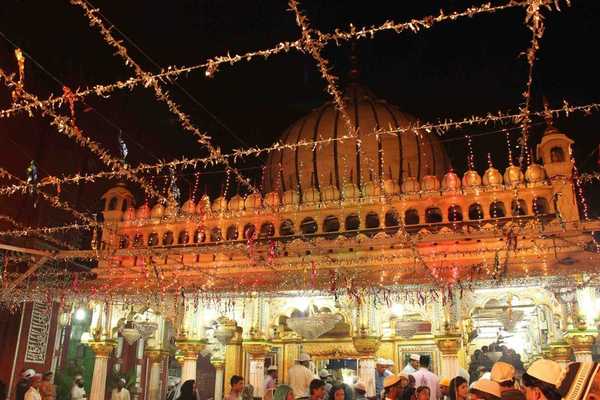
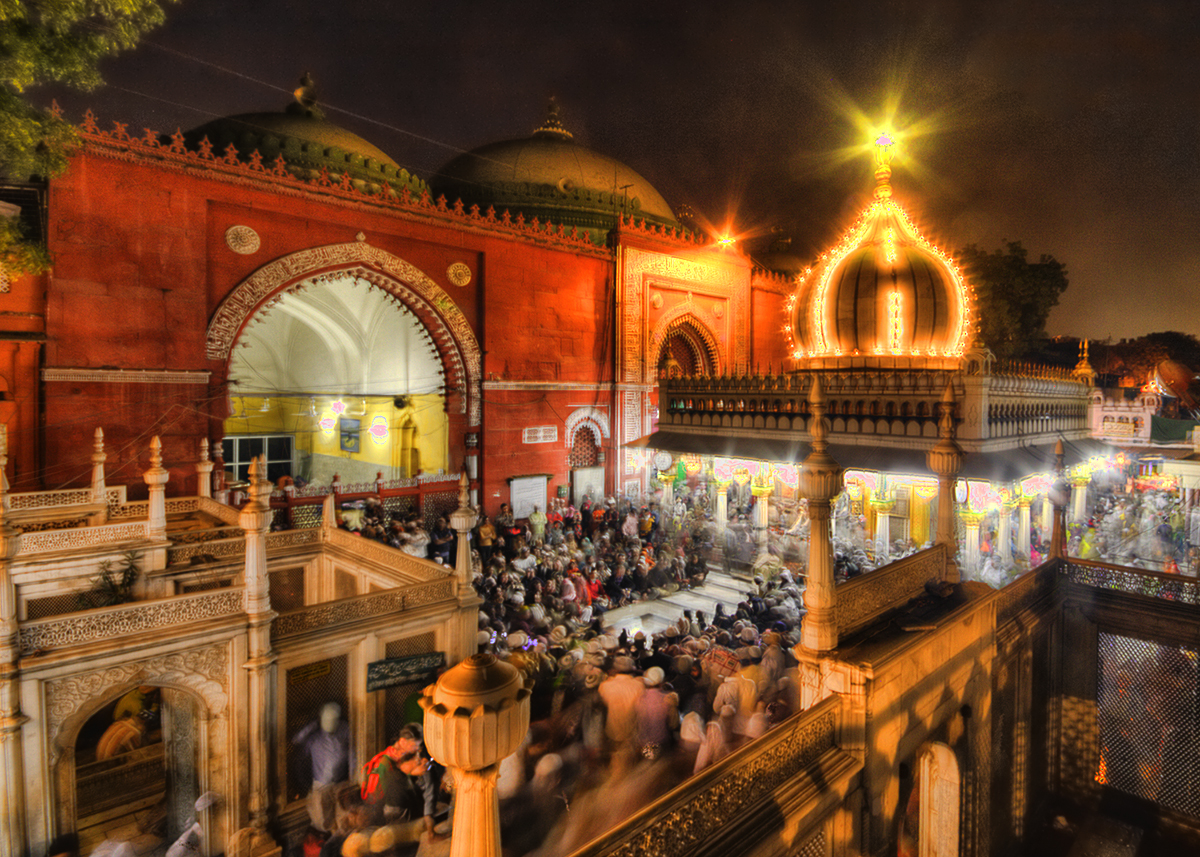
Nizamuddin Dargah in Delhi is the dargah of one of the world’s most famous Sufi saints, Nizamuddin Auliya. Although any day is a good time to visit the dargah, the Thursday night qawwalis, steeped in Sufi devotional music and sung in an an electric atmosphere, should not be missed!

Hazrat Nizamuddin Dargah is renowned all over the country for the unique experience it offers – a chance to hear and enjoy Sufi music up close. The qawwali sessions on Thursday evenings are incredibly popular and people from all walks of life come in huge numbers to be swept up in the magic of the devotional soul-stirring music.

The dargah is located in the Nizamuddin area of Delhi, amidst narrow bylanes and rows and rows of hawkers selling knick-knacks.  It was featured in a number of Bollywood films including Rockstar (2011) , Delhi 6 (2009)  andBajrangi Bhaijaan (2015).

On Thursday nights, as the scent of rose petals mixes with the searing aroma of chargrilled kebabs, traders sell chaddars to devotees and incense holders send plumes into the air. The rest is music, and music only.

The Niazi Nizami Brothers at the Dargah

Source: YouTube

True to Sufi tradition, love for God is invoked in terms of romance through the music. The lyrics for qawwalis are usually simple, their meaning clear, and the artistes have plenty of room to improvise. The vocalists sit in the front with the harmonium player, the percussionists and the accompanying singers are at the back – there is a convergence of voices, a combined effort that is enchanting to the senses.

The dargah is named after Sheik Hazrat Nizamuddin Auliya (1236-1325). His grave and a hospice are situated here.

The saint was believed to be a Sufi mystic and was revered amongst the rich as well as the poor.

Pic: ibb.in
Pic: ibb.in

His teachings, his spirit, his contribution to the world and an unshakeable faith in God are celebrated with regular gatherings of people who pay their respects and hold on steadfastly to a tradition as old as time.

The dargah is visited by thousands of Muslims every week, and sees a fair share of Hindus, Christians and people from other religions too.

Source: Saad Akhtar / Flickr

Best time to go: The sessions take place twice every Thursday, once at 4:30 pm and the other at 6:15 pm. Go slightly early to explore and get a good spot! The dargah is open on all days – 6 am to 10 pm.

How to get there: The nearest metro station is Jawahar Lal Nehru Stadium.

Check out their website for more information.

source: http://www.thebetterindia.com / The Better India / Home> Culture> Delhi> Music / by TBI Team / May 03rd, 2016

Nawabi history to unfold on water screen at Husainabad

Lucknow, UTTAR PRADESH :

Lucknow :

Husainabad picture gallery pond is soon to become venue in the evening for a water screen show with fountains and laser lights depicting the history of the city since Nawab Asaf ud Daula’s arrival at Lucknow in 1775. As part of the beautification work around the Husainabad area, a water screen has been proposed with laser light multimedia projection against the backdrop of the red stoned picture gallery.

Blending technology with history, the multimedia projection will narrate story of the Nawabi era up to the British period and finally the modern Lucknow. Using laser lights projected on an aqua curtain comprising jets of water, the multimedia film would be of around 20 minutes.

“Lucknow will have a water screen show similar to what they have at Akshardham temples in Delhi and Gujarat and while mythological stories are there, the subject of the film here will be historic,” said Tracy, the consulting architect of the project.

With no visible structure in the background, the water screen creates a 3D effect with complete transparency, a fine spray of water jet allowing laser lights to form a graphic image. Apart from the water screen, a musical fountain with 72 effects of light and sound will also be beautifying the picture gallery pond.

Built by the third King of Awadh, Mohammad Ali Shah in 1839, the pond has been renovated with sandstones on the steps and both the zanana (for women) and mardana (for men) hamaam khana (enclosure for bathing and changing clothes) on either side of the pond have been restored to their original form with bricks.

source: http://www.timesofindia.indiatimes.com / The Times of India / News Home> City> Lucknow / Yusra Husain / TNN / May 03rd, 2016

Lucknow University to start PG course on Awadh Culture

Lucknow, UTTAR PRADESH :

Lucknow :

The Urdu department of Lucknow University (LU) will be introducing a two years masters degree in Awadh culture from the coming session. The course will incorporate everything synonymous with Awadh in its course structure.

Announced by vice chancellor (VC), SB Nimse during the International Urdu Conference organised by the university’s Urdu department and Maulana Azad Institute of Humanities, Science and Technology, Mahmudabad, the degree will accommodate 130 students in one batch. A language lab has also been set up in the department, he said.

“The course will be all about Awadh. Its festival, its Muharram, its Angarkha, topi and sherwani to Awadhi poets and writers, its architecture and places of worship, everything Awadh,” added head of the department, Abbas Raza Nayyar.

“We further plan to bifurcate these 130 seats into three more disciplines including Urdu literature, linguistic and also an MA in Mass Communication for which the language lab is set,” he added.

source: http://www.timesofindia.indiatimes.com / The Times of India / News Home> City> Lucknow / by Ashish Tripathi & Yusra Husain / TNN / May 03rd, 2016

‘Need to promote Urdu script’

Lucknow, UTTAR PRADESH :

Lucknow:

Even though social media has acted as a boon for Urdu with growing attraction of youth towards the language through the medium, speakers at the International Urdu Conference at Lucknow University (LU) on Tuesday said there is need to protect the script as well.

Parveen Shujaat presenting her paper on Urdu and social media cited the example of websites, twitter handles, Facebook pages and WhatsApp groups. Additionally, Roman form of writing Urdu in English script, the speakers said, calls for a protection of the Urdu’s own script.

The conference also acted as a platform for appeal when attendees were urged to take up the issue of imparting Urdu at schools, with various school managements.

“If we talk of dwindling number of students taking up Urdu for higher education, we as parents need to make sure that at the primary level, schools teach Urdu,” said Waqar Rizvi.

Clarification: La Martiniere College is not the first English medium schools to offer Urdu as optional subject to students.

Schools like Lucknow Public collegiate (LPC) have introduced Urdu as an optional language for classes V to VIII.

On Tuesday, TOI had reported that La Martiniere College was the first English medium school in the city to offer Urdu course.

source: http://www.timesofindia.indiatimes.com / The Times of India / News Home> City> Lucknow / TNN / May 04th, 2016

Special prayer for rain

Virudhunagar, TAMIL NADU :

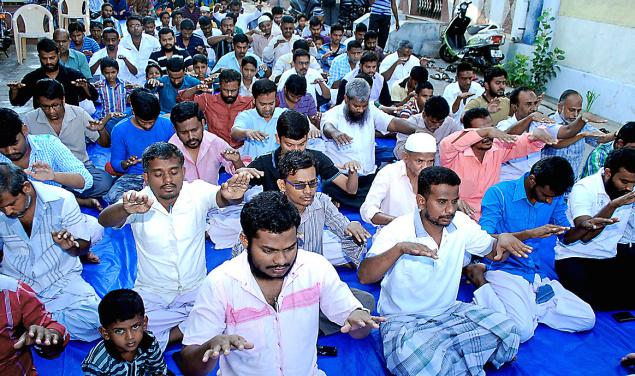
Common GOOD:Muslims taking part in a special prayer held for rain in Monni Street in Virudhunagar on Saturday

Muslims of Virudhunagar participated in a special prayer for rain in Monni Street on Saturday.

The prayer, which lasted for about half an hour from 7.15 a.m., was held on the street as the usual venue for such prayers, a school playground, happened to be part of a polling booth.

According to the organisers, it was a different prayer as participants held their palms facing the ground, instead of skywards. All the participants had their shirts inside out.

The prayer was led by Riyaz Ahmed, district president of Tamil Nadu Thowheed Jamath.

source: http://www.thehindu.com / The Hindu / Home> National> Tamil Nadu / by Special Correspondent / Virudhunagar – May 01st, 2016