A seminar on ‘Understanding Islam’ will be organized by the Centre for Gandhian and Peace Studies, Manipal University, at 3.30pm at Old TAPMI building behind Manipal post office on Saturday.
Prof Varadesh Hiregange, director, Centre for Gandhian and Peace Studies, Manipal University, said the seminar proposes to explore different dimensions of Islam as a religious culture with its own belief systems, philosophy, science, day-to-day practices, festivals, customs, and diversity and reforms movements.
“It is an attempt to understand Islam in its diversity as practised in different regions of the world, much against the image of a ‘stereotype’.
The seminar essentially makes an attempt to clear all the misunderstandings,” he said.
source: http://www.timesofindia.indiatimes.com / The Times of India / News Home> City> Mangalore / TNN / April 156th, 2016
Huma Qureshi is paired with Mammootty in ‘White’, a movie about a peculiar relationship between the two.
Actor Huma Qureshi, who is all set to debut in South India with her Malayalam film White, says she is glad that her debut in southern cinema is with superstar Mammootty and nobody else.
Talking about Mammootty, Huma told IANS: “I am glad that my south debut was with him and nobody else.”
How was her experience working with the Manglish star?
“Mammootty is a thorough gentleman. I got to learn a lot under him of course he’s an acting legend so it was an intimidating thought but he made it very easy to work with him,” said the 29-year-old.
The Badlapur actor added that Mammootty helped her “with the language and was extremely supportive”.
Directed by Uday Ananthan and produced by Eros International, the film has been shot extensively in London, Mumbai and Kochi.
In the film, Huma plays Roshni Menon, a software engineer who moves to London on an overseas assignment. There, things change unexpectedly when Prakash Roy (Mammootty), a billionaire enters her life. Prakash and Roshni’s peculiar, yet charming relationship is what takes the story of Whiteforward.
Apart from them, the film also stars Shankar Ramakrishnan, Siddique, Sunil Sugadha, Ahmad Siddique, Manjulika, Sona Nair and KPAC Lalita.
source: http://www.thehindu.com / The Hindu / Home> Entertainment / IANS / New Delhi – April 06th, 2016
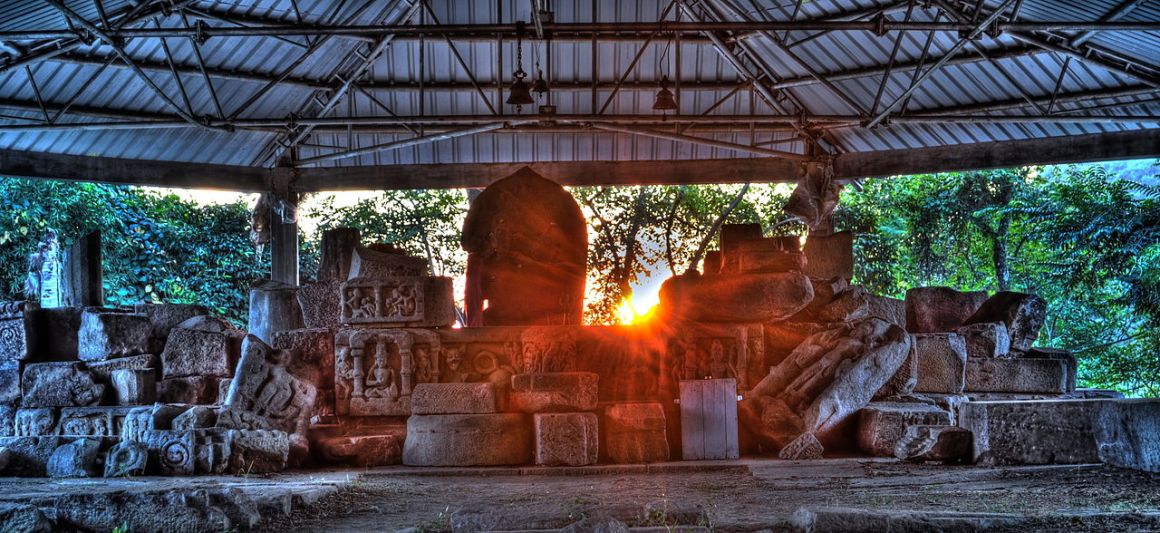
The ancient site of the Madan Kamdev temple was once preserved by a Muslim. The fact that this has been forgotten is a sign of a larger erasure that we should be concerned about.
Madan Kamdev in Assam. Credit: Wikimedia Commons/Arup Malakar.
Over a century ago, the incisive colonial historian Edward Gait, who compiled the first compendium of history in modern Assam lamented the fact that “…there is probably no part of India regarding whose past less is generally known. In the histories of India, as a whole, Assam is barely mentioned, and only ten lines are devoted to its annals in the historical portion of Hunter’s Indian Empire.”
Despite the passage of a hundred years, Gait’s observations on the narrativisation of Assam in popular Indian historiography remain true as ever. Timothy Garton Ash writes that recorded history is a history of memories. And when memories are being deliberated upon, can forgetting be far away? The act of peeking into the silences of historical narratives that have developed over centuries in Assam, or anywhere else in the world, becomes a crucial intervention.
Some such silences are palpably becoming more visible in the culturescape of poll-oriented Assam. The state has often been termed as ‘Sankardev-Azaan Ore Dexh’ – the land of Sankardev and Azaan Fakir, two religious and cultural saints of medieval Assam responsible for altering its socio-religious landscape. Srimanta Sankardev inspired the Bhakti movement, while Azaan Fakir established Sufi Islam here. Renowned Assamese geographer and social scientist Mohammed Taher observed that the syncretic relationship between Sankardev’s Vaishnavite religious traditions and Azan Fakir’s Sufi Islam was one of the main reasons that Muslims became a part of Assamese society.
These syncretic traditions have been an intrinsic part of Assamese society, including its political and cultural milieus. They are also reflected in the case of Ismail Siddiqui, one of the main commanders of the great Ahom general Lachit Barphukan. Siddiqui defeated the Mughal Army led by Raja Ram Singh in the historic Battle of Saraighat in the 17thCentury. For his bravado, Siddiqui was given the honorific Bagh Hazarika, or the Tiger commanding a thousand soldiers.
Religious sites have also been a significant marker of this syncretism. There have been many instances where Hindu religious sites have been taken care of by Muslims for years and Muslim sites have had been under the care of Hindus. In fact, Azan Fakir who ventured into Assam around 1636 AD, was known to have married a high-status Ahom woman. His dargah was constructed by the Ahom King Swargadeo Churamfa as an act of penance, at Saraguri Chapori in Sivasagar District close to the Ahom capital.
Madan Kamdev
There are many such stories across the Brahmaputra valley in Assam, and one of them is found in the history of the ancient temple site Madan Kamdev, the mythical place where Kamdev supposedly resurrected himself after being burnt to ashes by Shiva. These magnificent ruins lie 40 kilometres outside Guwahati.
Though the site has been dated to the 11-12th century CE, new scholarship suggests that the place may have been even older. Construction may have started with the ruler Vanamalavarmadeva of the Salasthambha dynasty in the 9th century, and continued by the succeeding Pala dynasty up to the 12th century.
The site is the capital of ancient Assam, which was known as Kamrupanagara. Even today, one of the major districts in Assam which encompasses this area is known as Kamrup, and those staying in this district in Lower Assam are generally referred to as Kamrupiyas.
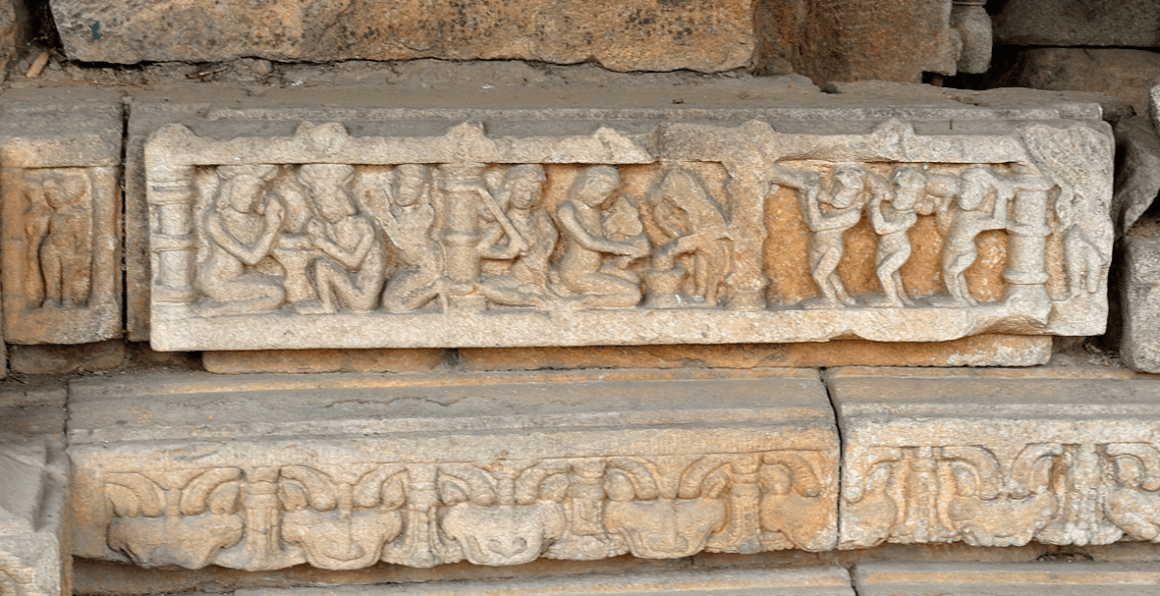
Though the temple is dedicated to Uma-Maheshwar, the site of Madan Kamdev has often been referred to as the Khajuraho of the east due to the numerous erotic sculptures dotting the expansive landscape. Madan Kamdev finds mention in the important 10th century Hindu text, Kalika Purana and in the 16th century Tantric text from Assam, Yogini Tantra. However, this stone temple stretching to around half a km was subsequently destroyed by various earthquakes over the centuries, starting with the earthquake of 1548 CE.
Sculpture at Madan Kamdev temple. Credit: Travelling Slacker/Flickr CC 2.0
The ruins of Madan Kamdev were first excavated in 1855 by the colonial military officer, Captain Dalton. But not much information is available on the kind of preservation or conservation efforts that were undertaken post this discovery. However, records do show that a Muslim land official of the colonial administration, Niyamat Ali Mondol, took the responsibility of preserving this ancient temple. Niyamat Ali belonged to the nearby Piyolikhata Village, around 2 kms from the temple site. He was given the title ‘Mondol’ by the British administration, which meant that he measured land in order to calculate revenue for the colonial administration, and also arbitrated land disputes.
Very little is known or written about Niyamat Ali Mondol, but what is significant is that he became the first doloi or chief administrative officer of Madan Kamdev for 10 years, starting in 1901. The upkeep of Madan Kamdev, as with a lot of similar temple sites was administered by a committee made of locals till either the Government of India or the Assam government or the Archaeological Survey of India (ASI) took over the responsibilities of conservation and restoration. It was only as recently as 1977 that the directorate of archaeology in Assam officially took over the responsibility of the upkeep of this ancient site.
Mondol’s role
When the temple faced a severe scarcity of funds, Mondol paid its khazna or land tax in his individual capacity for about four years. With such a history, one would expect the temple to hold information or the villages around the temple to offer some narratives, oral or otherwise. However, as Garton-Ash writes, ‘…writing history is nothing less than an infinity of individual memories of any person or event’. One can definitely discern a new form of historiography in the making – one that is complicit in the erasure of certain persons or events or even the linear chronological history of a tangible space. The ASI museum at the site of the temple does not offer any narrative on who discovered the site, how was it maintained, and who was associated with the site in modern history.
Mondol’s descendants who still live close to Madan Kamdev feel that there is an effort to do away with this part of the history of the temple, and in the history of Assam in general. ‘In the early 1990s, the temple officials including the thendoloi came to our house and took away the only surviving portrait that we had of Mondol, as they wanted to honour his efforts and install the portrait at the temple office,’ says his grandson, 86-year-old Bhola Chowdhury. ‘But the portrait went missing after a few years. We have tried locating it as that was our only tangible memory of him, but unfortunately we have no trace of it,’ he rues.
Kamal Nayan Patowary, an assistant professor of history whose doctoral thesis was on Madan Kamdev, offers an interesting anecdote on Mondol: ‘The locals did tell me about a person called Mondol who was the first doloi of this temple. But apparently, there was some issue with the locals and he was removed from the post of doloi soon (after). Hence, in anger, he took a tamrapatra or copper inscription from the temple, and threw it into a pond. According to the locals, the history of the temple has thus been lost. I did try to excavate the inscription during my doctoral research, and even employed divers to search in the pond, but it was a futile exercise.’
This narrative is however confounded by the fact that Mondol’s son, Chand Mohammed Chowdhury Kamrupi himself was part of the temple committee for about five years after the death of his father. Chowdhury was also part of the temple committees of other ancient temples in the region such as Goreswar, Pingleswar, and the 200-year-old Patrapur mosque. He was a prominent citizen of the region, who was bestowed the title Kamrupi by the locals because of his avowedly secular nature and love of the land. Kamrupi was also a well-known political figure, as well as a published writer and poet. He authored the book Vivaah Chitra in 1936, and also had his essay Purdah published in the journal Chetana which was edited by Ambika Giri Rai Chowdhury, popularly known as Assam Kesari.
Forgetting
In the temple precinct, there is also a palpable reluctance by the current trustees to talk about the modern history of Madan Kamdev. There is no awareness of the histories or narratives associated with sites such as these among devotees, or even in the villages nearby. Historian Will Pooley exhorts us to engage with the absent narratives and corroborate the voices that are heard.
In 2016, the state is facing elections which many term as a game-changer in the political landscape of Assam. Perhaps this is also a historical moment to critically examine the larger absences that are being created. It is a narrative or an absent presence that seems to haunt the Khilonjia or local Muslim community of Assam, which has always identified itself with its ethnic rather than religious identity.
History and memory are always interlinked. Changing memories involve the process of what Garton Ash has called ‘slow fading or forgetting.’ Whether this forgetting can be contained and lost memories retrieved is a question that the Assamese community as a whole may want to ponder upon this year.
The author is a PhD research scholar at the School of Arts and Aesthetics, Jawaharlal Nehru University.
source: http://www.thewire.in / The Wire / Home> Communities> by Shaheen Ahmed / April 10th, 2016
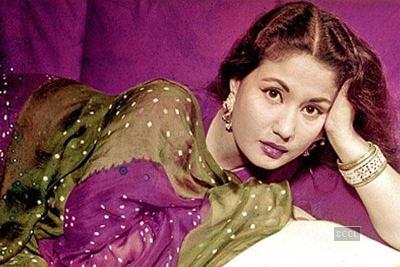
Iconic Bollywood actress Meena Kumari’s original publicity material and memorabilia, including paintings and portraits of her films, will be on the display at the Womanhood Festival here.
At the event, paintings of 1972 ‘Pakeezah’ and the 1953 classic ‘Daera’, co-starring Nasir Khan will be showcased. Portraits of Dilip Kumar-Meena Kumari starrer ‘Kohinoor’ and ‘Benazir’, co-starring Ashok Kumar and Shashi Kapoor, will be on the display at an event scheduled tomorrow at Osianama Liberty as part of the ongoing festival. Besides, posters of ‘Meena Kumari ki Amar Kahani’, ‘Phool Aur Pathar’ and images of ‘Sahib Bibi Aur Ghulam’ will also be featured.
The actress’ films like ‘Pakeezah’, ‘Parineeta’ and ‘Daayra’ will also be screened at the event. “She is a true icon for Womanhood & Cinema, absorbing all, breaking all, in the search to be herself… Along with Nargis and Madhubala, she represents the feminine iconicity just as ‘Mother India’, ‘Mughal-E-Azam’ and ”Pakeezah’ represents a different trinity of Indian cinema,”Neville Tuli, chairman, Osian’s Group said in a statement. Meena Kumari aka Mahjabeen Bano, starred in over 90 films in her career spanning nearly 30 years.
Listen to the songs of Meena Kumari on gaana.com
http://gaana.com/album/meena-kumari-hits
WATCH: Chalte Chalte Yunhi Koi Mil Gaya Tha – Meena Kumari – Pakeezah – Ghulam Mohammed – Old Hindi Song
Did you know that the mother of prominent Bollywood actor ‘tragedy queen’ Meena Kumari had a Lucknow connection?
When her mother Ikbal Bano was a young woman, she left her hometown Kolkata and came to Lucknow with her mother in the 1920s to explore a career in the arts. Meena, though, never visited Lucknow.
Bano had come to Lucknow following her connection with Rabindranath Tagore’s family. She worked as a dancer here for some time before moving to Mumbai to try her luck in Bollywood. There she met Ali Baksh, a harmonium player, whom she married. Their daughter Meena Kumari is a name we know well.
Several such lesser known facts about the life and journey of Hindi cinema’s enduring actress Meena Kumari will be shown in a play called ‘Adhoore Khwaab’, to be staged in the city on Monday. Over 40 trained actors will portray various tangents of her life in an 80-minute show organized as part of the 27th International Literary Festival by the Hindi Urdu Sahitya Award Committee.
SN Lal, the writer of the play, said, “In this play, we have tried to bring to light a different side of her charismatic personality. For the first time, we have incorporated one of the verses of matam (mourning during Moharram) penned by her in a play,” explained Lal.
Despite being one of the most popular names in cinema, Meena faced several hardships, he added.
The last scene of the play has been kept identical to real incidents of her life. “While shooting a song for Pakeezah, she had fallen ill and after that, never returned to movies or shooting. She died following the long illness. We have tried to recreate those moments on stage,” said Middat Khan, the director of the play.
source: http://www.timesofindia.indiatimes.com / The Times of India / News Home> City> Lucknow / Vidita Chandra / TNN / April 11th, 2016
Hindi-urdu Sahitya Award Committee, Uttar Pradesh is organising an International Literary Seminar on the poetic contribution of the former Indian President APJ Abdul Kalam to literature.
The seminar is part of the annual celebrations of the committee which will be held on April 9 at Rai Umanath Bali Auditorium in Qaiserbagh.
Getting together people from both Hindi and Urdu backgrounds, the seminar will have writer and poet Ganga Prasad Vimal, Irtiza Karim, chairperson National Council for Promotion of Urdu Language, Yogendra Narayan and Qazi OR Hashmi, Jamia Millia Islamia among other academicians and poets.
source: http://www.timesofindia.indiatimes.com / The Times of India / News Home> City> Lucknow / TNN / April 08th, 2016
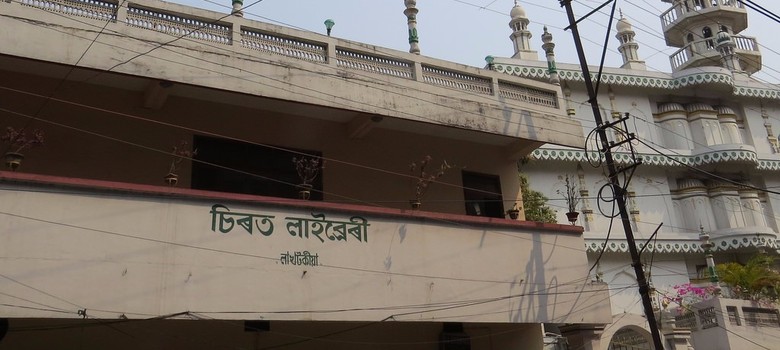
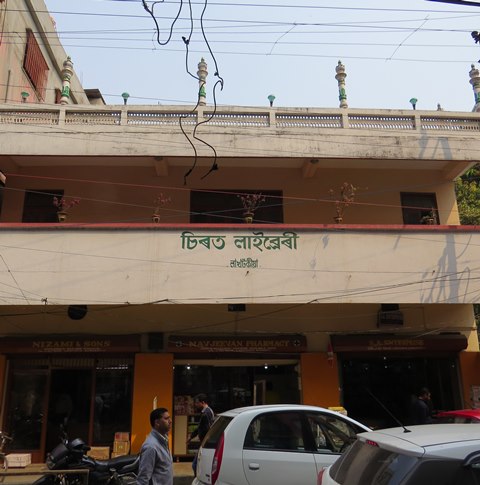
Sirat Library finds few mentions in recorded history and it is even fading from the personal histories of the Khilonjia Muslims who live around it.
Image credit: Shaheen Ahmed
Every time Assam heads into an election, the political discourse in the state invariably veers towards the issue of indigeniety. Who is an original inhabitant (and who is not) becomes a central question, with all the political parties nudging the electorate’s collective memory to recall real and imagined injustices.
With elections having kicked off in Assam again, my thoughts returned to something else, to my childhood when I would accompany my parents to a concrete structure in Guwahati’s Lakhtokia area. The structure was architecturally nondescript, but the images and the experiences of it still coalesced to form fragments of my memory. Known locally as Sirat Library – although the Assamese pronunciation Sirot often rendered the name incomprehensible – it was located within the precincts of a mosque called Lakhtokia Masjid No. 1.
I vaguely recall public meetings being held in the small library. And till the early 2000s, it moonlighted as a voting booth. For a child, it was an unusual sight to see so many people of different religions line up to cast their votes and even more unusual to see them do so in a library inside a mosque.
The structure still stands today. But the only sight that greets a visitor is of a small room bereft of books or readers. Its holdings are restricted to a small glass cupboard and a few Islamic texts in it.
Legacy of the past
The history of the library is really important to the Khilonjia Muslims or ethnic Assamese Muslims living in Guwahati. Khilonjia Muslims have been in Assam since before the Ahom invasion in the 13th century and they have always been known to relate to their ethnic, rather than their religious, identity.
Shehabuddin Talish, the official scribe of Mir Jumlah, the Nawab of Bengal who invaded Assam in 1662, described their encounter with the Muslims in Assam: “The Muslims whom we met in Assam are Assamese in their habits, and Muhammadans but in name.”
The famous colonial historian Sir Edward Gait, in his monumental work A History of Assam published in 1905, extensively employed Talish’s descriptions to map out a definitive chart of Assam’s history. Nevertheless, historical narratives of Khilonjia Muslims remain sketchy. The same fate is shared by the library in Lakhtokia.
There are no written records of when or who constructed the library. It is, however, believed that the structure is among of the oldest libraries in Guwahati, and the mosque it is a part of is among the three oldest mosques constructed in the colonial period.
The mosque finds a mention in an article in 1885 in the journal Assam Bandhu, which was edited by the Assamese intellectual Gunabhiram Barua. The land for the mosque was donated by Col. Jalnur Ali Ahmed, the father of the fifth President of India, Fakhruddin Ali Ahmed. Col. Ahmed was a distinguished Assamese of his time: he was the second Assamese associated with the Imperial Medical Services and the first Assamese to receive an M.D. degree from London.
Personal histories
Writer-lawyer Akdas Ali Mir, one of the inhabitants of the locality, points to a letter written in 1915 by AHW Benting, the then Commissioner of Assam, which is probably one of the earliest and only clues to tracing the history of the library. “Benting had issued directions in an Order Letter to shift the Makhtab (primary Islamic school) established by the British from the mosque to the present location, where the Junior Madrassa High School is in Guwahati.”
Mir continued: “We can surmise that Sirat Library is the spot where the Makhtab was and then got converted into a library.” This may be true as Sirat is an Arabic word meaning a “way of life”.
As with all public libraries in the state, Sirat Library too was awarded a monthly grant from the government for its upkeep. But the actual running was done by the area’s Assamese Muslims, with people taking turns as librarians. Renowned Assamese filmmaker Altaf Majid remembers his childhood days spent in the library reading in the quiet. “My uncle used to be the librarian for many years. Every Friday afternoon he would take me to the iconic Lawyers’ Book Stall in nearby Pan Bazaar to buy books. In fact I read the Mahabharata in Bengali in Sirat Library in the 1960s.”
Majid continued: “This library was also a repository of well-known pulp fiction of the period. They were in English, Assamese and Bengali. In fact, I also read my first English novel in this library as well as the famous Bengali Mohan Detective Series and the Assamese adventure series Pa-Phu.”
Credit: Shaheen Ahmed
Mukimuddin Ahmed, another resident, talks of the days in the late 1950s when he would act as the librarian in the evenings. “I was paid Rs 5 every month as the librarian and I worked for a year. Every afternoon after school I would go to the residences to collect the newspapers for the library. In the evenings after the readers had finished reading them I would then return them to the respective households.”
Assamese Muslim women had a strong role to play in the library’s upkeep. In the late 1960s, the only Assamese Muslim women’s social organisation, Anjumaan-E-Khawaateenein Islam, contributed Rs 10,000 to construct the new building for the library from the earlier Assam-type house construction. Noted Assamese woman writer Alimun Nessa Piyar donated furniture to the library in 1960.
As Helena Barranha and Susana S. Martins poignantly observed , “Memory has become both an intellectual challenge and a commodity for easy consumption.” This is true for contemporary India in general, and Sirat Library epitomises the trend. The erasure of the library from popular memory testifies to the erasure of cultural traditions that were once so integral to the Assamese society.
source: http://www.scroll.in / Scroll.in / Home> Memory Lane / by Shaheen Ahmed / April 05th, 2016
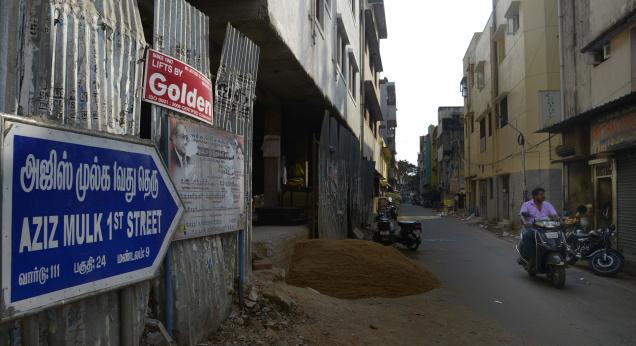
A view of Aziz Mulk Street off Model School Road. / Photo: V. Ganesan
Just beyond the Gemini flyover, Model School Road, Anna Salai and Graeme’s Road enclose a perfect rabbit’s warren of streets. There are nine of them, and they all take their name from Aziz Ul Mulk, a Muslim nobleman who once owned the entire area.
This was known as Aziz Baugh till the early 20th Century and was most likely more of a garden than the residence of the owner. When Sir William Thomas Denison, Governor of Madras, was leaving the city in 1866, he, his wife and daughter were invited for a farewell hosted by the Muslims at the ‘Gardens of Azeez Ool Moolk Bahadoor, Graemes Road, at 7 1/2 pm, on Saturday, the 24th of March’.
‘An evening entertainment in the gardens of a man bearing such a name!’ enthused Denison in his diary. He expected something out of the Arabian Nights and was not disappointed. The first family alighted in front of a wide, open verandah that was brilliantly lit, the brightness being enhanced by ‘suspended globular mirrors’. The hosts, all clad in white but sporting red turbans and sashes, stood on either side of the steps and ushered the guests to sofas at the rear of the verandah. A formal address was presented.
Dinner was in a shamiana to the side of this pavilion and ‘old Azeez Ool Moolk’ led Lady Denison to it, while the Governor was escorted by Nazim Jung, his son ‘who is an active intriguing man, a sort of politician in his way, and the presiding genius of the present entertainment’. Dinner was served in European style and described as a ‘tedious affair’ in which the English found much to their amazement that the hosts ate nothing but a ‘biscuit and some fruit’. Thereafter, the group moved to another shamiana where a nautch was presented.
‘Eight dancing girls, all dressed alike, stood in the centre of the apartment, each holding one of a cluster of eight ropes, which were suspended from the ceiling; and then with a slow and graceful movement passed to and fro, in and out, in such a manner as, by this movement only, to twist the eight ropes into a regular plait through their whole length, and then to untwist them, the whole being done by the dance only, without the application of the hands’. We would recognise this today as pinnal kolattam.
All this gaiety hid the fact that Aziz Ul Mulk was heavily indebted, mortgaging much of his valuables with the bank of Girdar Das Vallaba Das. Like the aristocrat in Satyajit Ray’s Jalsaghar, he was clearly spending his money on entertainment he could ill afford. Aziz Ul Mulk’s death is not recorded, but by 1868, the intriguing son — Sumsaum Ud Dowlah Bahadur aka Nazim Jung — was dead. The family finances must have declined thereafter, for, by 1902, we find the area recognised as a slum. Certainly, there is no trace of the garden where a Governor once dined.
source: http://www.thehindu.com / The Hindu / Home> Features> MetroPlus> Hidden Histories / by Sriram V / Chennai – April 08th, 2016
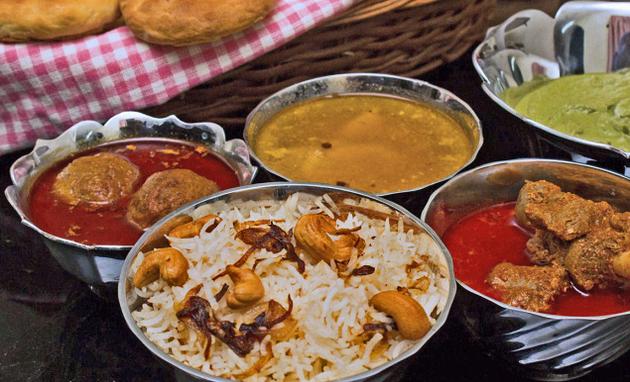
All things Mughlai Biriyani, kebabs and more / Photos:Special Arrangement
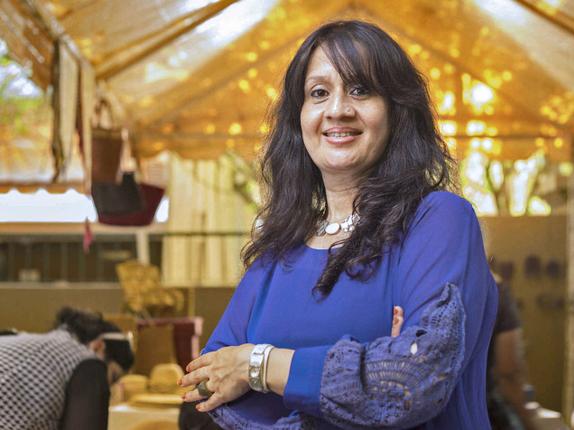
Tasneem Ayub Khan will tell you how to make it, writes K. JESHI
Fourteen ingredients. “That’s all you need to make Dhakni biriyani,” says Tasneem Ayub. “One has to know the right proportion of ingredients, the order in which they have to be added, the time and, most importantly, the confidence. Anyone who loves cooking can easily learn,” she says.
A home chef and home baker, Tasneem runs Ammee’s Kitchen in Chennai. She conducts workshops on how to make biriyani.
“Everyone loves biriyani and so they are eager to make the yummy mughlai biriyani. It is not as difficult as it is made out to be. Keep it simple is what I tell them,” explains Tasneem.
Tasneem draws her inspiration from her mom. “She was a fabulous cook. She worked full-time, as the principal of Ethiraj College, yet she ensured that she made tasty food before she stepped out for work. I have learnt all my recipes from her.”
While Tasneem’s father’s ancestors come from Pakistan, her mother is from Kozhikode in North Kerala, a foodie’s paradise. “I love my mom’s meen moily, a Kerala special; the fish curry, appam and stew. I haven’t changed a thing from my mom’s recipes. ”
Tasneem says it’s a misconception that Mughlai dishes are high on spices. “The Mughals didn’t use spices. It was all about rich, creamy bases made from cashew or almond paste, inspired by Persian and Turkish style of cooking. They never use lime in any of the preparations. I follow the same style.”
She calls herself a traditionalist.
“I stick to the original recipes. Cooking gives me the utmost joy. Even when I am unwell, I crawl to the kitchen and cook. I try out Italian, and Mediterranean cuisines, but there is nothing to beat the versatility of Indian cuisine. I tell people at my classes to try and buy organic ingredients. And, don’t buy anything readymade, even curd or yoghurt. Make them at home. I make my own ginger-garlic paste,” she says.
Tasneem is currently working on a book, a compilation of recipes collected from friends and family members.
“I want to give it a personal touch with the recipes in their own handwriting,” she says.
And, what is her favourite food? “Dal chawal. I love to have it with the pickles I make at home as well!”
To know more about her recipes visit: www.facebook.com/ Ammees
Kitchen Or mail her at ammeeskitchen @gmail.com
source: http://www.thehindu.com / The Hindu / Home> Cities> Coimbatore / Coimbatore – April 06th, 2016
India today said Begum Hazrat Mahal, who had rebelled against British colonial rule in the country in 1857-58, will always be remembered for her contribution in India’s freedom struggle and described her as a “source of inspiration”.
Recalling Begum’s contributions towards the freedom movement of India, India’s Ambassador to Nepal Ranjit Rae laid a wreath on her tomb to commemorate her 137th death anniversary here.
“We must remember her with great honour as she has been a source of inspiration for us all,” Rae said.
Begum of Awadh and the first wife of Nawab Wajid Ali Shah, who was one of the heroes of freedom struggle of 1857, died on April 7, 1879 during her refuge in Nepal.
Noting that Mahal was one of the freedom fighters of the first freedom movement of India, Rae said she had always been remembered for her contributions in India’s freedom struggle.
He also offered to provide necessary assistance to protect and preserve one and a half century old Hazrat Mahal tomb located in the heart of Kathmandu.
“Hazrat Mahal has been a symbol of age old tie between Nepal and India,” Rae said.
Begum fiercely fought the British East India Company during the Indian Mutiny of 1857-58, with the help of her commander Raja Jailal Singh. When her forces regained power of Lucknow for a brief stint, her son Brijis Qadra was declared ruler of Awadh.
When the forces under the command of the British re-captured Lucknow and most of Awadh, she was forced to retreat. She then took refuge in Kathmandu along with 10-year-old Qadr and some other loyal supporters.
Begum’s rebellion was ignited by the demolition of temples and mosques by the East India Company to make way for roads.
source: http://www.ptinews.com / Press Trust of India (PTI) / Home> International / by Shrish B Pradhan / Kathmandu – PTI, April 07th, 2016