Category Archives: Arts, Culture & Entertainment

At Sufi meet, Modi lauds Islam as a religion of peace

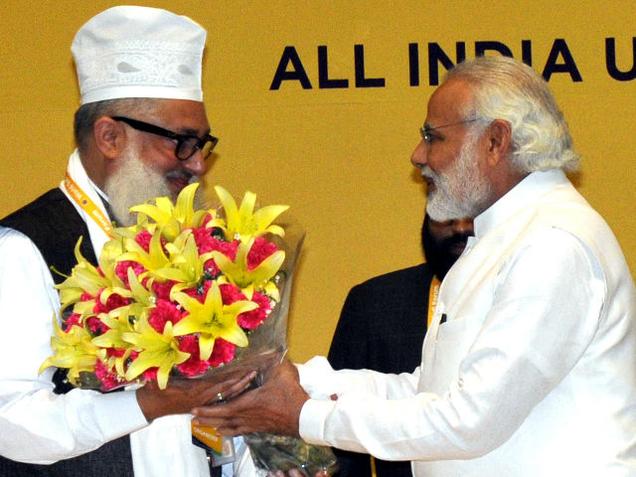
Prime Minister being welcomed by AIUMB founder-president Syed Mohammad Ashraf Kichuachwi at the inaugural ceremony of the World Sufi Forum in New Delhi on Thursday. / The Hindu

The Prime Minister quotes from Koran and makes a strong pitch against terrorism.

Prime Minister Narendra Modi said on Thursday that all Indian communities were an integral part of India, making a pitch for pluralism and diversity.

Mr. Modi was addressing delegates of a global Sufi meet here at a time when shrill statements from many within the BJP and the Sangh Parivar have created controversies in the past few months.

Rejecting terrorism, Mr. Modi hailed Islam as a religion of peace, citing the Koran and also paying rich tributes to the eclecticism of the Sufi tradition.

“Welcome to a people with an abiding belief in Vasudhaiva Kutumbakam, the world is one family,” Mr. Modi said. Mr. Modi said leaders like Maulana Abul Kalam Azad chose not to side with the idea of division based on religion after Independence.

“This is the spirit of India. This is the strength of our nation,” he said. “All our people, Hindus, Muslims, Sikhs, Christians, Jains, Buddhists, the micro-minority of Parsis, believers, non-believers, are an integral part of India.”

He sought to draw a parallel between these values and his own policies, saying, “The values of harmony, welfare, compassion and love for human beings are the foundation of a just society. That is the principle behind my creed of Sab Ka Saath, Sab Ka Vikas.”

The Prime Minister made a strong pitch against terrorism, underlining that “terrorism divides and destroys us”. “Indeed, when terrorism and extremism have become the most destructive force of our times, the message of Sufism has global relevance,” he said.

“Sufism is a celebration of diversity and pluralism, expressed in the words of Hazrat Nizamuddin Auliya, that every people has its own path of truth, beliefs and focus of reverence. These words reflect the divine message of the Holy Prophet that there is no compulsion in religion; and also that to every people, we have appointed ways of worship which they observe,” Mr. Modi said amid applause.

In reading Islam as a religion of peace, the Prime Minister may, however, have broken with many Hindutva outfits that, academic studies have argued, have tended to highlight Islam as an “invader” in India.

The PM also saw the basic attributes of Sufism among Indian Muslims: “It is this spirit of Sufism, the love for their country and the pride in their nation that define the Muslims in India.”

“They are shaped by the values of the Islamic heritage of India. It upholds the highest ideals of Islam and has always rejected the forces of terrorism and extremism,” he said.

Underlining that Islam is a religion of peace, Mr. Modi said: “When we think of the 99 names of Allah, none stand for force and violence, and that the first two names denote compassionate and merciful. Allah is Rahman and Raheem.”

While asserting that the fight against terror was not a fight against any religion but one between humanism and inhumanity, he hit out at terror as a threat to religion itself. “Terrorists distort a religion whose cause they profess to support. They kill and destroy more in their own land and among their own people than they do elsewhere. Those who spread terror in the name of religion are anti-religious.”

source: http://www.thehindu.com / The Hindu / Home> National /by Vikas Pathak / New Delhi – March 18th, 2016

Return of the prince

THEATRE Playwright Danish Iqbal tells SWATI DAFTUAR about “Dara Shikoh”, a play that takes a look at one of Mughal India’s great lost names.

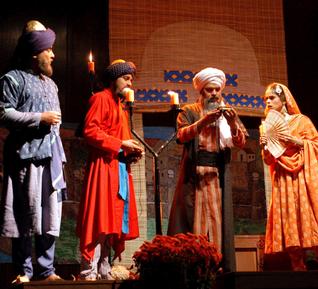
The cerebral MughalA scene from the play; (left) Danish Iqbal

It is 1653, and the siege of Kandahar is raging. Dara Shikoh sits in his tent at night, writing his treatise on comparative religion. His general, a veteran and a contemporary of his great grandfather, enters with the request to discuss battle strategy for the next day. Dara Shikoh explains that for him, the treatise is more important. He doesn’t ask the general to sit down, showing him this respect only later, when the general’s conversation takes an intellectual turn.

This is a scene from “Dara Shikoh”, the modern classic directed by M.S. Sathyu and written by Danish Iqbal, which encapsulates the play’s portrayal of the young Mughal prince and heir apparent to Shah Jahan. The play, being performed after three years, is once again being directed by the eminent director and stage designer and art director M.S. Sathyu and presented by Impressario Asia. After a recent show in Gurgaon’s Epicentre, it will be performed this Friday at the India Habitat Centre in New Delhi.

The play, Iqbal believes, cannot be considered a revival. “It’s been performed on and off over the years. This time, it’s only got minor changes. It’s a little shorter now, and there are a few new scenes.”

It was ten years ago, in 2004, that Iqbal, who confesses that he only works on commission because he needs to know that the words he pens will be performed, was approached by K.K. Kohli of Impressario Asia, the play’s producer. It could easily have been action oriented, a harsh, blood and gore portrayal of a prince whose life ended brutally and violently, killed in a succession struggle by his own brother. Iqbal and Kohli, though, decided to go a different way. The Dara Shikoh that Iqbal has penned is a prince who respects intellect over privilege. He is an egoistical, liberal, peace loving man who ignored war and translated scriptures.

“Dara was, in my opinion, the greatest person in Mughal history. I think he was greater than Akbar too.” Iqbal, while researching his play, says that he was surprised to see that this giant had been ignored by history. In this play, he has been careful to highlight Dara to the maximum, not allowing Aurangzeb or Sufi Sarmad, Dara Shikoh’s mentor, to take the stage. “I was questioned about this, but I think that in the case of Aurangzeb, the fear of the invisible and unknown would be much greater. Plus I didn’t want Dara overshadowed in any way.”

The playwright also goes on to admit that he owes more than half his knowledge about writing and stage skills to Sathyu. “He’s a grand old man of Indian theatre. He has a terrific sense of aesthetics. He makes sketches of every scene before the performance, to work out how the stage characters, headgear, beards, dresses, everything would look. He’s a very meticulous person. It’s a pleasure working with him. His art work is tremendously beautiful.” Iqbal adds that while he has indeed provided the dialogues, characters and content of the play, they’ve been given shape by Sathyu.

The shape this play has taken seems strangely placed in the past and the present. For Iqbal, the play holds a sort of every day importance. “In the past 10 years the challenges to inclusiveness and coexistence have increased in a big way; people are more fanatic. And terrorism is a bigger threat than before. The play has actually become more relevant.” He terms Dara as the first prince who died for his ideals, and adds that “Dara Shikoh” is today’s play. “It is a metaphor. We discussed if this play, because of how it ends, was becoming too sad and tragic, but it was in his defeat and death that Dara’s principles emerged victorious. This is what we wanted the play to show.”

Iqbal, a student of philosophy, has written a work that plays with many concepts and ideas that affect and influence human existence. Of death, a quote from the play says, “ Maut kya hai, maut hai fakth ek dehleez ”, which loosely translates to mean that death is ultimately the first step to a door between one chamber and the next. That death, ultimately, is nothing.

In a play packed with such layered, ambiguous dialogues, Iqbal confesses that it has become hard to cast the right actors for the roles. “It’s a great challenge. We don’t have very good actors, and especially young actors lack the capacity to understand the nuances of the play, absorb its ideas and translate them into emotions and gestures. This requires intellectuals of a certain calibre, and not all actors can deliver. Often, the average actor only sees the superficial meaning of a dialogue. To overcome this, we have conducted workshops with the actors, to explain the multilayered aspects of play.” Iqbal adds that there are hardly any professional actors hired for this season of the play. “They have their jobs, and (we have) amateur actors who wanted to be part of the production.”

He’s holding a book on Pataudi, and as a closing remark, adds that he’s working on another story that gives him the goose bumps, that of Mansoor Ali Khan Pataudi. “Like Dara Shikoh, his story is also inspiring, and can reach people in manifold ways.”

Director M.S. Sathyu says, “We’ve only made minor changes in the play, and this time there is a new choreographer (Astha Dixit) and they’ve got trained Kathak dancers. The casting is always a problem, because this play requires a lot of Urdu and there are very few actors who can speak good Urdu. They can speak in Hindi and Punjabi but Urdu is a challenge.”

source: http://www.thehindu.com / The Hindu / Home> MetroPlus / by Swati Dastur / January 23rd, 2014

SJCE Wins ‘YUKTI’ Quiz Contest

ATMECE emerges runners-up

YuktiQuizMPOs15mar2016

Mysuru :

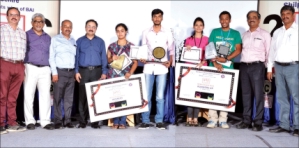
Builders’ Association of India (BAI), Mysuru, had organised an Inter-College quiz competition ‘YUKTI 2016, The Battle Of Brains…’ for the Civil Engineering and CTM students of various Engineering colleges of Mysuru, Mandya and Chamarajanagar districts.

The quiz was conducted by Shilpi, students’ wing of BAI, Mysuru, on Mar. 6 at MBCT premises, Mysuru. Five finalists were selected after the first round of written test among 18 teams.

There was a technical talk for the students on ‘Smart Cities – Spain Model’ by M.P. Manjunath Prasad, COO of Brigade Group, Benagaluru, on the same occasion. The technical talk also included short film on Building Technologies which ended with an interactive session.

After the Techtalk, the Quiz YUKTI 2016 continued for the finalists — NIE, MIT, SJCE (Civil), SJCE (CTM) and ATMECE.

An excellent Audio Visual final round was conducted by the Quiz Master S. Prakash, who is the Past Chairman of BAI, Mysuru and MD of Pramur Constructions.

Mohammad Zaidur Rehman and Bindushree of SJCE (Civil) emerged winners of YUKTI 2016. S. Supreeth and K.P. Meghana of ATMECE were declared Runners-Up.

A cash prize, mementoes and certificates, along with a trophy for the College, were given to both the teams. All the finalists were also given certificates.

BAI Mysuru Chairman M.S.Ramprasad, Hon. Sec. JVR Naidhruva, Shilpi Co-ordinators A.S Yoganarasimha and Ganapathy and others were present on the occasion.

source: http://www.starofmysore.com / Star of  Mysore / Home> General News / March 15th, 2016

Urdu Academy picks 4 names for Gaurav awards

After pondering over it for long, Gujarat Urdu Sahitya Academy has announced Gaurav awards to poets and authors of Urdu language.

After pondering over it for long, Gujarat Urdu Sahitya Academy has announced Gaurav awards to poets and authors of Urdu language. Names of four persons have been announced and they have been conveyed individually about the academy’s decision. The awards are likely to be given in April.

According to sources, Urdu poet Shakil Azmi, academic and Congress leader Nisar Ansari, Palanpur-based poet Musafir Palanpuri and Surat-based poet and former Surat Municipal councillor Vaseem Malik have been nominated for academy award for different years.

The announcement has been received in literary circles with applause, but there are many who are not amused because some senior writers have been “sidelined” by the academy.

One such person is Qayyum Kanwal Fatehpuri, a former member of the Academy in its early years. He has authored four poetry collections, besides having edited the Academy’s journal Sabarnama. He was also a close associate of former Congress MP Ehsan Jafri. “The academy has overlooked senior writers like me for some unknown reason for a long time now,” said Fatehpuri whose first collection Sang-o-Gul was published in the early 1980s.

To him, it is hard to establish the credentials of some people who have been named for awards. “Something is seriously lacking in the functioning of the academy and something should be done if the credibility of its awards has to be saved,” said Fatehpuri, who had published an Urdu monthly magazine for some time.

Bhagyesh Jha, chairman of the Academy, said there was no favouritism or grudge at work in selection of persons selected for the awards. “Before announcing the names, we duly consult experts of the subject who suggest panels of names of likely winners, then these names are sent to the executive committee of the academy, which sends the names to the culture minister for final approval,” Jha said.

He said the names were worked out by a senior academic M G Bombaywala, who had been associated with the affairs of the academy for many years. “The names were discussed with him before the announcement,” Jha said. He said he had no information about several writers or their background. “The academy is ready to discuss issues and suggestions threadbare with persons in the know of things,” he said. He added that the criteria was that the candidate should have made contribution to Urdu literature.

Bombaywala said, “I have been suggesting names even before Jha became president. No one objected when other names were suggested and they got awards till 2010. There are better names than Qayyum Kanwal even at present, but still they have been left out for some reason. Let Kanwal go to the academy and present his case if he feels injustice has been done to him. Awards are not given by one’s age or to maulvis, but on literary merit.”

source: http://www.indianexpress.com /  The Indian Express / Home> Cities> Ahmedabad / by Tanvir A. Siddiqui / Ahmedabad / March 14th, 2016

On a mission to prevent suicides

SanaMPOs12mar2016

by S.N. Venkatnag Sobers

Majority of women in our country spend their lives within the four walls unaware about the outer world. For them, their family is their world. Though women put all efforts to cater to the need of their loved ones, yet there are incidents of them being harassed for dowry or other reasons. Only, few have braved the dare consequences to stand tall in the society and emerge as the role models for fellow women.

Here is a woman from Hyderabad who has been travelling across the country creating awareness against committing suicide and also motivating the youth fight depression.

Meet Sana Iqbal, a native of Hyderabad, who has been travelling across the country creating awareness against taking the extreme step. A mother of the seven-month-old son Mohammed Saqib Ali, Sana has taken up the initiative to prevent youth from ending their lives for trivial reasons. “It is important to address the youth and children in certain issues as they get very emotional and sensitive with matters closely related to them. It is very important for parents to spend quality time with their kids and talk to them as they feel depressed on not being given concentration they rightly deserve. When it comes to youth, they fall for the person who listens to them and sometimes get into relationships without knowing if the person is an ideal partners and later regret when the relationship turns sour. And that is when they get depressed and think of taking the extreme step,” says Sana.

Having covered 17,500 kms since November, 2015, on her Royal Enfield, Sana has covered 49 cities in North and Central part of the country. She has been visiting various colleges and giving special lectures on how to come out of depression and not to take the decision to ending lives. Talking about her decision to take up this initiative, Sana tells that she was also a victim of depression for 5 years and had spent many sleepless nights.

Having gone through the trauma, Sana, one fine day decided to break the shackles to come out depression by going on a bike ride and that is when she decided to go on a solo tour throughout the country on her motorbike creating awareness. Sana was in Mysuru recently where she addressed students at a few colleges before heading to Ooty. She expects to complete her solo tour during first week of June this year.

Being a lone woman travelling across the country, Sana has been received well by the people at places she has visited. For her, it has been a memorable journey so far as many people have come for her help at the times when her motorbike broke down. “There have been instances when my vehicle broke down in middle of the road and people came to my help without any expectation after they learnt about my mission. In fact many offered me free hospitality at her houses which motivated me to carry the message that India is a safe country for women,” adds Sana.

One look at her jacket and you will get to see the badges of various bikers clubs. But, one badge that Sana adores is the one presented to her by Civil Defence of Patiala in Punjab which has the National Emblem presented to her in recognition for her initiative. There was a time during the tour when Sana had to cut short her tour while in Delhi as her father-in-law fell seriously ill and she had to return to Hyderabad. Without giving a second thought she came back to Hyderabad but sadly her father-in-law passed away. She later continued with her tour. Sana, who has been away from her kid over the past few months is determined to reach her goal and motivate the youth. Hats off Sana!

source: http://www.starofmysore.com / Star of Mysore / Home> Feature Articles / March 12th, 2016

Tansen lives! Ghulam Mustafa Khan

Hailing from the senia tradition of Tansen, Ustaad Ghulam Mustafa Khan is that gem that Hindi filmdom can still boast off. Rubina P. Banerjee salutes the maestro whose journey started at the age of 8 and continues even today at 82!

Coke Studio recently witnessed the magic meandering of the golden voice of Ghulam Mustafa Khan Sa’ab as he sang Rahman’s composition ‘Aao balma…’. The studio rebounded with the sonorous depths of Khan Sa’ab’s voice while Prasanna, on the Carnatic guitar, kept pace with his vocal dexterity. At 82, the Padmabhushan awardee is keeping in tune with the times while keeping alive the tradition of the Rampur Sahaswan Gharana.

What can one ask an Ustaad, who started singing at 8 and is still going strong at 82! All my questions seemed banal when it came to his art but one has to start somewhere so we started at the very beginning with his first concert…

“My journey into music had started with the music inherent in my family. At the time, every city had a Victoria Garden and it was the custom that on Janmashtami, the first public performance of those interested in music be performed as a debut. Ali Maqsood Sa’ab, who was the Chairman of the Municipality, organised the Janmashtami function every year and asked me to perform. I was only 8 then and it was the January of 1950 but my performance was much appreciated and people lauded me for my courage to perform at this tender age in front of such a well-informed audience!”

If he performed so well at 8, at what age did he start learning music?

My question brings a smile to his lips…

“I started learning to sing before I had even started talking! My father used to hold me on his chest and teach me sa re ga… even as I was starting to lisp my first words. After a point, I began saying sa re ga… before any other word. My mother was the daughter of the great Inayat Hussain Khan and music was the legacy of my family. Our seniya traditions go back to the times of Tansen and my great great grandfather Ustaad Qutubuddin Khan Sa’ab was the court musician of the Nawab of Oudh, Wajid Ali Shah. My father, Ustaad Waaris Hussain Khan was my first guru. Both my parents wanted me to be a singer.

I started so young that I could remember the tune but not the words! After my father I was trained by Ustaad Fida Hussain Khan who was the court singer at the Baroda royal durbar. And then I learnt with none other than the great Nissar Hussain Khan Sa’ab himself. I never had to find a guru outside my family as there were so many eminent musicians in my family itself.”

Does he look back on his childhood with laughter?

“I have only one complaint with my childhood – that my parents never allowed me to play. Studies and riyaaz; that’s all I did! My father had told all the elders in my family that if I stepped out they should discipline me and make sure I was back inside. Even my mother, who loved me immensely, would complain to my father and ensure I got a sound beating when I played truant. So I have no idea what it is to play and never learnt any sport. I only play with my tanpura.”

When did he realise that he could also sing well?

“You know you are good if the people who are in this field praise you, as they minutely observe and know your strengths and weaknesses. I was indeed very lucky as my brother, Hafeez Ahmed Khan became a producer for All India Radio and I came over to Mumbai. He had organised a programme with all the great performers of the time and I had the privilege of singing with Ustaad Bade Ghulam Ali Khan Sa’ab for four hours at a stretch!

“At the end of the performance, Ustaadji asked me how I managed this deep sonorous voice when my frame was so thin! – and he blessed me. It was a wonderful moment for me.”

The path of music which he embarked on now saw him perform for Dr. Rajendra Prasad (former President of India) in 1952. He was named Junior Tansen in the Haridas Sangeet Sabha in 1969 and awarded the Ustaad Haafiz Ali Khan and Ustaad Chand Khan awards. He performed in India and abroad in the presence of the Queen and Lady Diana and was awarded the Padmashri in 1991, the Sangeet Natak Academy Award (2003) and the Padmabhushan in 2006.

How did he then find his way into the Hindi film world?

“The first film I sang for was in Marathi, ‘Chand Pretticha’. I was here from 1957 and started singing playback for Marathi and Gujarati films but if you ask me if I know the languages, I don’t. At a function, a lady came up to me and said, ‘Khan Sa’ab, aap ga rahi thi, main sun raha tha,’ Yeh mujhe ek aurat keh rahi thi!” His laughter fills the room.

Getting back to films, he says he started with Mrinal Sen’s ‘Bhuvan Shome’ and sang ‘Sajanaa kahe nahi aaye…’  for ‘Badnaam Basti’ under the same music director, Pandit Vijay Raghav Rao. It was Muzaffar Ali’s ‘Umrao Jaan’ that saw him sing the immortal ‘Jhoola kinne dala…’ and ‘Pratham dhar dhyan…’ under Khayyam’s music direction. The ambience of the kotha and the plight of the little Umrao as she is sold into the life of a courtesan, are made all the more poignant by the soulful rendition of the song by Khan Sa’ab.

His connection to Hindi filmdom doesn’t end there. From the late ’50s, he has been a guru to Asha Bhosle, Manna Dey, Geeta Dutt and today, Hariharan, Shaan and Sonu Nigam are among his students. “They have all given me a lot of love and respect and brought me fame as a teacher,” says the Ustaad. On their part, his shagirds acknowledge that their singing skills have been greatly enhanced by their guru.

The most satisfying part of his life is perhaps knowing that he has done his best to keep alive the tradition of the Rampur Sahaswan Gharana; a gharana known for vocal dexterity. His four sons Ghulam Murtaza, Ghulam Qadir, Ghulam Rabbani and Ghulam Hasan Khan are singers as well and have been trained by him.

Today they are professional singers in their own right and have sung for the renowned Rahman in films like ‘Fiza’, ‘Meenakshi’ and ‘Saathiya’. Rahman himself is a student of Khan Sa’ab’s and says he has a lot to learn from his guru. The mellifluous Ustaad Rashid Khan is his nephew as well as his shagird.

However, it is his grandsons who make him proud. Little Faiz and Shoaib have received taalim from the great Ustaad that is their grandfather. Watching Rahman’s song ‘Soz o salaam…’, I see Khan Sa’ab’s eyes light up as Faiz sings the verse flawlessly. His eyes wander wistfully as if seeing in his grandson, his own 8-year-old avatar, performing at his first concert in Victoria Gardens!

source: http://www.freepressjournal.in / The Free Press Journal / Home> Entertainmen / by FPJ Bureau / February 16th, 2014
Actress Gauhar Khan All Set to Make Her Hollywood Debut

Gauhar is all set to make her hollywood debut with a song in the big budget film 'Solar Eclipse-Depth Of Darkness' | (File/IANS)
Gauhar is all set to make her hollywood debut with a song in the big budget film ‘Solar Eclipse-Depth Of Darkness’ | (File/IANS)

Popular model and actress Gauhar Khan seems to be following the footsteps of Priyanka Chopra and Deepika Padukone.

After PeeCee and Deepu, now Gauhar is all set to make her Hollywood debut with a song in the big budget film ‘Solar Eclipse-Depth Of Darkness’ which is based on Indian independence and set in Violent India, post partition.

According to the reports in Times of India, ‘Chand Bibi’ will be seen in Mujra sequence which is choreographed by none other than Saroj Khan, making it more special for her.

In an interview with the leading newspaper, she said, “After seeing me dance on ‘Jhalak Dikhhla Jaa’, Sarojji had said that she wished I was her daughter. I’m thrilled that she is choreographing this song.”

Talking about her fitness, “My fitness is keeping me super excited. I do crazy weight training and I’m very happy with the shape I’m in. Of course, in the mujra I’ll be all covered up!” she added.

source:  http://www.newindianexpress.com  / The New Indian Express / Home> Entertainment> Hindi / by Online Desk / March 03rd, 2016

Tribute to Tabla Maestro Brings Stalwarts to Bengaluru

Hyderabad, TELANGANA :

UstadShaikDawoodMPOs28feb2016

Bengaluru :

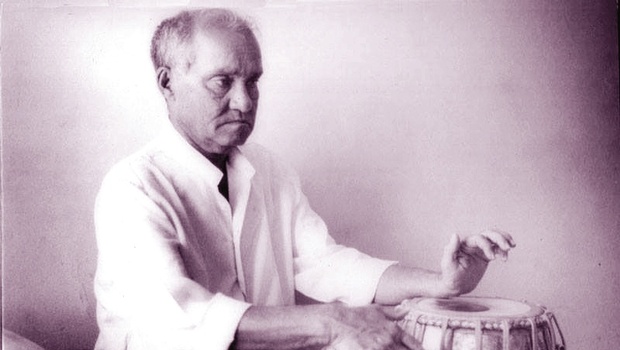
A musical evening on February 27 marks the birth centenary of one the world’s most renowned tabla players – Ustad Shaik Dawood Khan.

This event, at the Palace Grounds, is organised by the Tabla Nawaz Ustad Shaik Dawood Trust.

Shaik Dawood Khan (1916-1992) is regarded as one of the greatest tabla maestros of his time, and was the torch bearer of the Farrukhabad, Ajrada, Lucknow, Punjab and Delhi styles.

As part of the centenary celebrations, the trust has organised concerts across the country. In December 2015, a two-day festival took place in Hyderabad. A second season began in Hyderabad on January 7 and 8, 2016.

The Bengaluru event is the third in the series.

Varied Journey

Ustad Shaik Dawood Khan is known as the ‘Thirakwa of Hyderabad’. Between 1926 and 1990, he accompanied hundreds of vocalists and instrumentalists, with equal respect and admiration, irrespective of their age or rank.

Shaik Dawood Khan was born on December 16, 1916. He was attracted to music from a very tender age, and his father Shaik Hashim took him to his neighbour Ameer Qawwal (a performing artist) from whom Shaik Dawood gained knowledge in singing and playing the tabla.

When he was nine, he became a formal disciple of Ustad Khasim Saheb of Sholapur, who had attained fame in the region as a tabla accompanist. During eight years under him, Shaik Dawood Khan emerged as a musician in his own right. Subsequently, he learnt from Ustad Alladia Khan, a Hyderabadi tabla nawaz, as also from Ustad Mohmmed Khan, Ustad Chote Khan and Ustad Jahangir Khan.

At the age of 46, when the whole music world was at his feet, Shaik Dawood Khan had the humility to become a disciple of Ustad Mahboob Khan Mirajkar.

Shaik Dawood Khan had accompanied almost all the greats of his time – Ustad Abdul Kareem Khan, Ustad Fayyaz Khan, Ustad Bade Ghulam Ali Khan, Ustad Vilayat Khan, Ustad Abdul Haleem Jaffer Khan, Ustad Ali Akbar Khan, Pandit Ravi Shankar and illustrious women  vocalists such as Roshan Ara Begum, Girija Devi, Begum Akhtar, and Gangubai Hangal. In fact, Shaik Dawood had the unique distinction of having accompanied four generations of artistes.

Decorations

Shaik Dawood Khan was honoured with the Hindu-Muslim Unity Front Award in 1975. In February 1992, he was presented the Sangeet Natak Akademy Award. He was a star attraction on Deccan Radio run by the Nizam, which subsequently became All India Radio, Hyderabad.

At Palace Grounds

The musical evening on Saturday begins with a tabla homage by Sarfaraz Ahmed, grandson of Ustad Shaik Dawood, followed by a tabla ensemble featuring Ustad Shabbir Nisar (son of the ustad) and Abhman Kaushal (USA), Uday Kumar, Mihir Kallianpur and Roopak Kallurkar.

This will be followed by vocal music by Vidushi Arati Ankalikar-Tikekar. The grand finale is a sitar session with Ustad Shahid Parvez accompanied on the tabla by Pandit Anindo Chatterjee.

5.30 pm, Palace Grounds, Gate 4. Entry free.

source: http://www.newindianexpress.com / The New Indian Express / Home> Cities> Bengaluru / by Express News Service / February 27th, 2016

Award for Frontline journalist

Vikhar Ahmed Sayeed.

Bangalore, KARNATAKA :

Frontline’s reporter in Bengaluru, Vikhar Ahmed Sayeed, has been awarded the Nasheman Award in Journalism for his contribution to journalism.

The award has been instituted in the memory of the late founder of Nasheman, Usman Asad.

The award was given at a special function that marked 55 years of the publication of “The Nasheman Weekly”, an Urdu news weekly published in Bengaluru that has a pan-Indian presence.

The jury for the selection consisted of Rizwan Asad, Editor of “The Nasheman Weekly”, and senior journalists of the newspaper.

The award was given by Karnataka’s Minister for Infrastructure, Development and Hajj, Roshan Baig, and Deputy Chairman of the State Planning Board, C.M. Ibrahim, at a function at the Press Club of Bengaluru on January 27.

source: http://www.frontline.in / Frontline / Home> The Nation> Media / Print editin: March 04th, 2016

This Man Wants to Make Mysuru’s Ring Road Cooler

Mysuru, KARNATAKA :

Hyder Ali Khan of Kalyangiri in Mysuru

Mysuru :

Thandi Sadak in Haldwani, Uttarakahand, is famous for lush green trees and pleasant breeze.

Here, a man is on a mission  to make the Ring Road as city’s Thandi Sadak.

It started with one Honge tree sapling at Idagh Maidan 16 years ago.

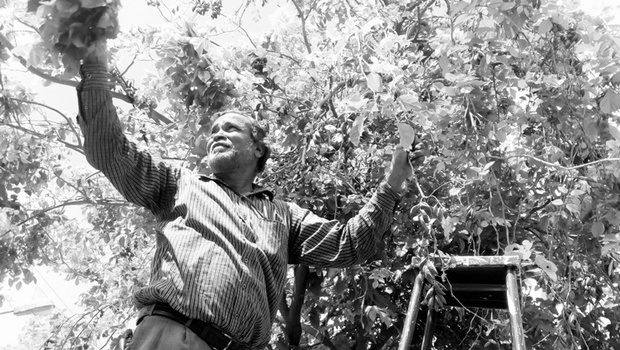
Now for Hyder Ali Khan of Kalyangiri, life’s sole aim is to plant maximum saplings.  Khan has already created green canopy in several schools and public parks by planting nearly 2,500 saplings and is knocking at the doors of the government for help to increase green cover in the city. He plans to plant the saplings of certain selected trees on the  stretch of the Ring Road beginning from the Mysuru-Bengaluru intersection.

In the initial stage, he wants to plant 925 saplings in the one-km stretch. He approached MUDA officials seeking support for his mission.

“A green canopy can be created on the highway which benefits motorists immensely. If I get permission from the government, I intend to plant wild Almond Trees (Kaddabadami) along the one-km stretch of the Ring Road. It takes four years to complete the project. If we can do this, Mysuru will become a role model for other cities and towns in the country,” he said.

“I had worked as fitter for 27 years. One day, when I got exhausted while riding my bike, I sat beneath a roadside tree and felt immensely relaxed and rejuvenated. It was then I decided to plant trees. Nothing gives me more satisfaction than planting trees,” he said.

He planted 313 saplings of Honge tree at the famous Idagh Maidan in the city, thereby creating a green canopy. Today 15,000 people can sit under the shade of the trees at the Maidan.

He has created such green pandals in several schools too.

“The Thandi Sadak of yesteryears had introduced in Mysuru by  Wadiyars; a portion of which can still be seen inside zoo. We can convert the entire city into a green canopy and make the district more tourist-friendly, if we plant more trees,” he said.

source: http://www.newindianexpress.com / The New Indian Express / Home> States> Karnataka / by K. Rathna / February 26th, 2016