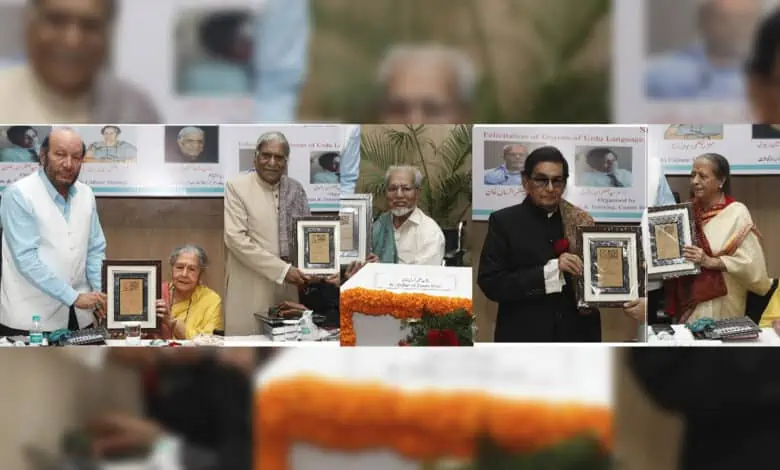
MANUU VC Syed Ainul Hasan presenting mementos to Lakshmi Devi Raj, Shahid Husain Zuberi, Mazhar uz Zaman Khan, Syed Jafar Amir Rizvi, and Oudesh Rani Bawa
Hyderabad:
Urdu lovers exist and MANUU will bring them to its platform and honour them, said Prof. Syed Ainul Hasan, Vice-Chancellor, Maulana Azad National Urdu University (MANUU).
He was honoring five eminent personalities from Hyderabad as “Sitara-e-Urdu” (Doyens of Urdu). The university presented Lakshmi Devi Raj, Syed Jafar Amir Rizvi, Shahid Husain Zuberi, Oudesh Rani Bawa and Mazhar uz Zaman Khan with a memento, a shawl, and a flower plant in recognition of their contribution towards Urdu language, literature and culture on Monday.
The ‘Sitara-e-Urdu’ programme was organized by Centre for Urdu Culture Studies on the occasion of Teacher’s Day at CPDUMT auditorium.
source: http://www.siasat.com / The Siasat Daily / Home> News> Hyderabad / by News Desk X / September 05th, 2022
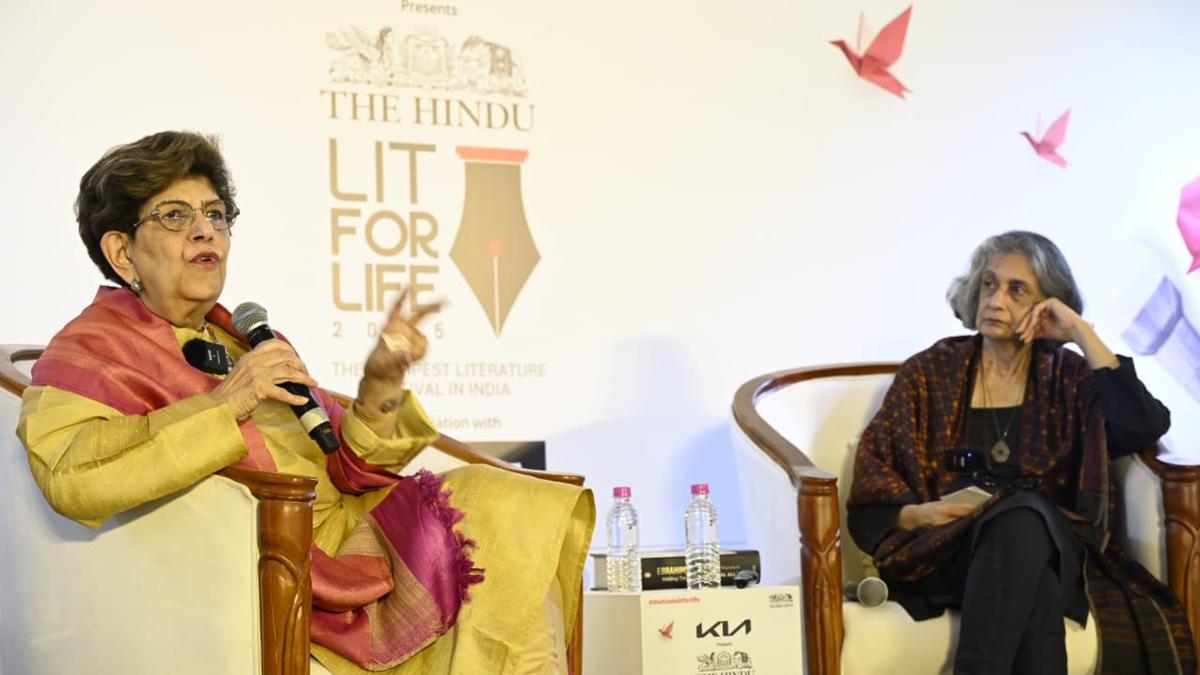
At The Hindu Lit for Life 2025, Amal Allana speaks about her father Ebrahim Alkazi, who led the modern theatre movement in India with an extraordinary vision.
Amal Allana in conversation with Ritu Menon at The Hindu Lit for Life 2025. | Photo Credit: R. Ragu
Theatre director Amal Allana, who recently released a riveting biography of her father Ebrahim Alkazi: Holding Time Captive gave a racy account of Alkazi’s revolutionary contributions to arts and culture in the creative landscape that was emerging in pre-independence India into the later decades.
She said the title of her book was apt as she found the words scribbled by her father in his notes that read ‘I wish I could live longer to hold time captive.’
A six-minute documentary on Alkazi charting the journey of his quest for a liberal approach to the arts in the Indian sub-Continent preceded Amal Allana’s conversation with Ritu Menon at The Hindu Lit for Life session on the second day.
Setting the narrative in Bombay of the 1940s when Alkazi came as the son of a migrant trader from Saudi Arabia, Amal spoke about how his innovative ideas from the young age of 22 coupled with daring new experimental projects transformed the theatre movements pan-India and later led to the establishment of the National School of Drama in Delhi in the 1960s. It was the time when creative history was under-researched and Alkazi strode the stage with arrogance, resoluteness, and brilliance.
As the daughter, Amal brought a personal perspective to the intangible landscape of Alkazi’s passions as she step-by-step unfolded the layers of his cultural, artistic and nationalistic identity. “His pedagogical skills took form as a response to the social and political life. He introduced language in theatre and nationalised it,” she said.
With Sultan Padamsee (elder brother of filmmaker Alyque Padmasee) and other independent-minded creative individuals, he broke boundaries and embraced the radical and precarious theatre life. They were all progressives and reinforcing each other. Amal narrated how Alkazi went overseas to study modern theatre and took Nissim Ezekiel along. He had the disposition of taking people along with and their idea of total theatre included all forms of arts feeding into one another.
“So with music, lights, costumes, literature, discussions and brochures he created dramatic experiences translating, producing and directing plays from the Western pantheon,” Amal said and added Alkazi was particularly influenced by Tagore’s concept of Santiniketan integrating liberalism with fine arts.
Not only was Alkazi interested in training a body of thinking actors but he also trained audiences to appreciate modernity in theatre, she said.
The Hindu Lit for Life event is presented by KIA India and is in association with Christ University. Associate Partners: LIC, RR Donnelley, Blue Star, Brigade Group, NITTE Deemed-to-be University, PROchure, Singer, Chennai Port Authority & Kamarajar Port Ltd, Uttarakhand Tourism, Vajiram and Ravi, Indian Bank, Akshayakalpa and ICFAI Group. Realty Partner: Casagrand. Bookstore Partner: Crossword. Food Partner: Wow Momo, Beverage Partner: Beachville, Radio Partner: Big FM, TV Partner: Puthiya Thalaimurai Gift Partner: Anand Prakash. Supported by: US Consulate, Chennai, Water Partner: Repute
source: http://www.thehindu.com / The Hindu / Home> Lit for Life / by Soma Basu / January 19th, 2025
Mr Farhan Khan, an alumnus of Aligarh Muslim University has been awarded the prestigious Global Talent Visa (Tier 1) by the United Kingdom under the endorsement of Arts Council, England.
This coveted recognition honours the exceptional talent and leadership quality of individuals in their respective fields, and this award to Khan establishes him as a global icon in the field of fine art photography.
Khan’s inspiring academic journey began at the Syedna Tahir Saifuddin (STS) School, followed by his XII from Saiyyid Hamid Senior Secondary School, AMU, and his formative years at AMU cultivated in him a strong sense of discipline, creativity and excellence, which paved the way for his future success.
After graduating from Jamia Millia Islamia (JMI), in Architecture (B.Arch.), he developed a passion for photography and completed a Postgraduate Diploma in Still Photography and Visual Communication from JMI with a gold medal. Later, he developed advanced skills in photography and visual storytelling, with his works being featured in prominent exhibitions.
Khan earned a Master of Arts in Photography: Image and Electronic Arts from the prestigious Goldsmiths, University of London, with Merit and gradually excelled in photography and designing by working out at diverse photography projects across architecture, real estate, interiors, food, and product photography.
He is currently employed as a Photography Specialist and Brand Ambassador at Fujifilm House of Photography, London, where he drives innovation, delivers high-quality results, and engages in client training.
His work has been exhibited globally, including notable exhibitions like Nexus & Now (2022): Degree Show at Goldsmiths, London; International Art Exhibition 3D Gallery (2020): Berlin, Germany; Postcards to Gandhi (2020): A narrative on climate change, JMI, New Delhi and Freedom to Live (2019): Photo series at Modoo Gallery, Brazil.
His evocative art has garnered numerous accolades, including a Top 5 Shortlist for the Historic Photographer of the Year Award (2020) and the First Prize in the National Photography Competition on Urban Eco-Systems (2018). His works have also been featured in esteemed publications like The Week Junior UK, Outlook India, and Outlook Traveller.
Khan’s passion extends beyond photography to teaching and mentorship. He has conducted 44+ beginner photography workshops in London and delivered lectures on innovative topics such as surrealism and graphic design in photography. His interactive and student-focused pedagogical approach empowers young artists to thrive in creative fields.
source: http://www.radiancenews.com / Radiance News / Home> Art & Culture> Latest News / by Radiance News Bureau / January 12th, 2025
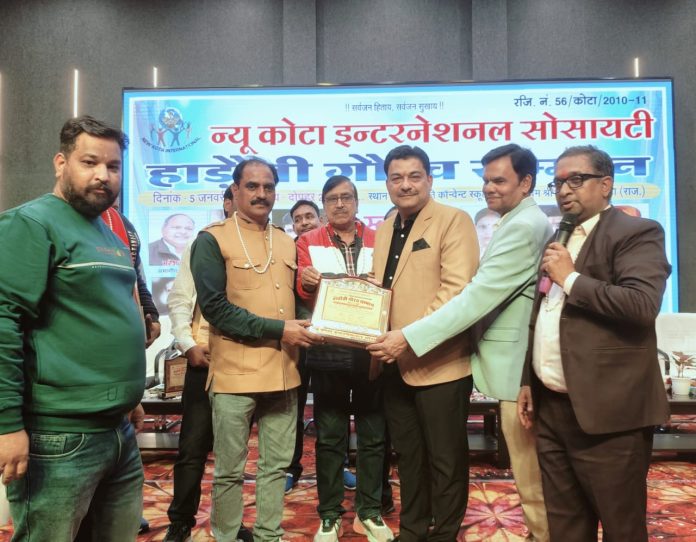
Poet Rais Faizi has been honoured with the prestigious Hadouti Gaurav Samman for his exceptional contributions to poetry. The award was presented at Hadouti Gaurav Samman 2024 ceremony, organised by New Kota International Society at Shiv Jyoti Convent School auditorium in Kota’s Srinathpuram locality.
Programme coordinator K.K. Sharma Kamal and society president Anju Sharma highlighted that the event recognised 101 outstanding individuals across various fields, including social service, animal welfare, philanthropy, and academic excellence. Honourees were presented with shawls, beaded necklaces, and commemorative mementos.
The ceremony’s chief guest was Additional Divisional Commissioner Mamta Tiwari, accompanied by Additional District Collector Anil Kumar Singhal, BJP city district president Rakesh Jain, and other distinguished guests. Nearly a dozen individuals from Baran district were among those honoured at the event.
Rais Faizi’s recognition as a distinguished poet brought joy to his community. Former Baran Haj Committee chairman Haji Liaqat Ali Mev, Anjuman president Majid Salim, former Waqf Committee chairman Sajid Salim, District Congress Committee vice president Zakir Mansoori, minority district president Shahid Kundi, Madrasa Committee deputy chairman Shahid Iqbal Bhatti, and other notable figures, including Sheikh Bahadur, Junaid Ansari, Bobby Rain, and bank manager Alsar Khan Bhatti, expressed their heartfelt congratulations.
The Hadouti Gaurav Samman is a prominent regional award, recognising individuals, who have made significant contributions to the Hadouti region, encompassing Kota, Baran, Bundi, and Jhalawar districts in Rajasthan. This year’s event celebrated the region’s cultural heritage and achievements of its talented individuals.
source: http://www.radiancenews.com / Radiance News / Home>Pride of the Nation> Awards> Latest News / by Raheem Khan, Radiance News Bureau / January 06th, 2025
Renowned Hyderabad-based writer and doctor, Dr. Abid Moiz, has been conferred the prestigious Delhi Urdu Academy Award for his outstanding contributions to science literature in Urdu. He is the only recipient from South India to receive this recognition for 2023-24, which includes a cash prize of ₹2 lakh.
As per Siyasat daily, Dr. Moiz’s ground-breaking work has made scientific concepts more accessible to Urdu-speaking audiences, fostering a deeper appreciation for science within the community. Known for his unique ability to merge science with literature, he has authored 23 science books and 17 humour and satire books, carving a distinct niche in the Urdu literature.
Dr. Moiz’s journey into science writing began with Diabetes Ke Saath Saath (Living with Diabetes), aimed at promoting health awareness. His repertoire includes books like Chiknai Aur Hamari Sehat (Fats and Our Health), Cholesterol Kam Kijiye (Reduce Cholesterol), Namak Kam Karen (Reduce Salt), and Ramzan Aur Hamari Sehat (Ramzan and Our Health). These books focus on health management and dietary choices, blending scientific knowledge with simple language and engaging graphics.
Dr. Moiz’s works, such as Motapa (Obesity) and Tarkari aur Phal Khayen (Eat Vegetables and Fruits), emphasise balanced nutrition and healthy living, solidifying his legacy as a visionary in the underrepresented genre of Urdu science literature.
In addition to his literary contributions, Dr. Moiz serves on the advisory board of Science Urdu, a popular science monthly magazine edited by Dr. Aslam Parvez, former Vice-Chancellor of Maulana Azad National Urdu University. His involvement underscores his commitment to promoting scientific awareness among Urdu readers.
The Delhi Urdu Academy also honoured several other luminaries this year, including Javed Akhtar for promoting Urdu, Taha Naseem for children’s literature, Anee Aazmi for drama, Prof. Ahmed Mahfooz for research and criticism, and Rakshanda Roohi for prose.
Previously, Dr. Moiz received Lifetime Achievement Award from the Telangana State Urdu Academy in 2019 for his sustained contributions to Urdu literature and science writing.
Dr. Moiz’s achievements exemplify how science and literature can harmoniously coexist, even in languages traditionally associated with arts and culture. By simplifying complex scientific ideas, he continues to empower readers and enrich the legacy of Urdu literature.
source: http://www.radiancenews.com / Radiance News / Home>Pride of the Nation> Awards> Latest News / by Radiance News Bureau / January 09th, 2025
Muslim Mirror’s list of 100 Indian Muslim achievers features four notable personalities from Karnataka, recognized for their contributions to education, business, journalism, and community development.
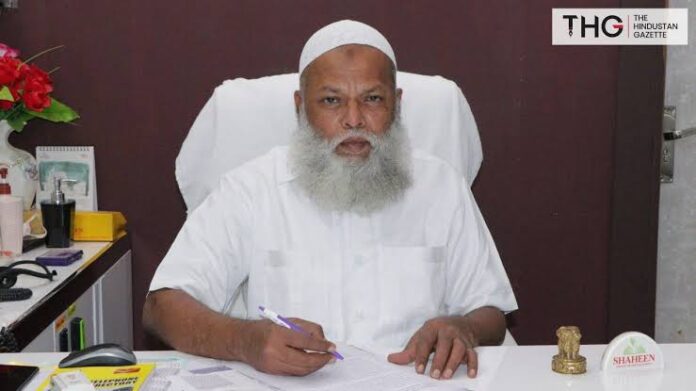
Bidar’s Abdul Qadeer – Educator and Visionary Leader Abdul Qadeer, a renowned educationist and founder of the Shaheen Group of Institutions in Bidar, has dedicated his life to empowering marginalized communities through education.
Under his leadership, Shaheen Institutions have grown into a network providing quality education, emphasizing academic excellence and holistic development. His commitment to integrating modern and traditional education has enabled numerous students to excel in competitive examinations and achieve higher educational aspirations.
Mangaluru’s Dr. Abdullah Kunhi – Entrepreneur and Educationist Dr. Yenepoya Abdullah Kunhi, the founder of Yenepoya University in Mangalore, has transformed education and healthcare in Karnataka.
Known for his vision and humanitarian spirit, Dr. Kunhi established Yenepoya University as a multidisciplinary institution offering innovative programs across various fields.
He also expanded healthcare access through advanced medical facilities and initiated programs to uplift marginalized communities, including scholarships and community health initiatives.
Azim Hashim Premji – Business Tycoon and Philanthropist Azim Premji, former chairman of Wipro Limited, revolutionized India’s IT industry and emerged as one of the country’s most influential business leaders.
A recipient of the Padma Bhushan and Padma Vibhushan, Premji is also one of the world’s leading philanthropists. Through the Azim Premji Foundation, he has donated over $21 billion, primarily to improve education and healthcare in India, leaving an indelible mark on society.
Mohammed Zubair – Journalist and Fact-Checker Mohammed Zubair, co-founder of the fact-checking website Alt News, is a pivotal figure in combating misinformation in India.
Transitioning from an engineering background to journalism, Zubair has exposed numerous instances of fake news and disinformation, fostering accountability and promoting responsible journalism. Despite facing harassment and legal challenges, his dedication to truth and transparency remains unwavering.
Irfan Razack – Real Estate Mogul and Community Advocate Irfan Razack, Chairman and Managing Director of Prestige Group, is one of India’s leading real estate entrepreneurs.
Based in Bengaluru, he has played a pivotal role in shaping India’s real estate landscape, making Prestige Group one of the most prominent property developers in the country.
Razack is also the co-founder of Inventure Academy in Bengaluru and has held esteemed positions, including Honorary Secretary of the Al-Ameen Educational Society and Chairman of CREDAI.
His community contributions through the Kutchi Memon Jamat and philanthropic initiatives have earned him numerous awards, including the Real Estate Excellence Award (2008) and Entrepreneur Extraordinaire Award (2010).
According to the 2024 Forbes list of India’s 100 richest tycoons, Irfan Razack and his siblings are ranked 49th, with a net worth of $6 billion.
These five distinguished individuals from Karnataka exemplify excellence, resilience, and a commitment to societal progress, earning them well-deserved recognition on this prestigious list.
source: http://www.thehindustangazette.com / The Hindustan Gazette / Home> News> Education / by The Hindustan Gazette / January 06th, 2024
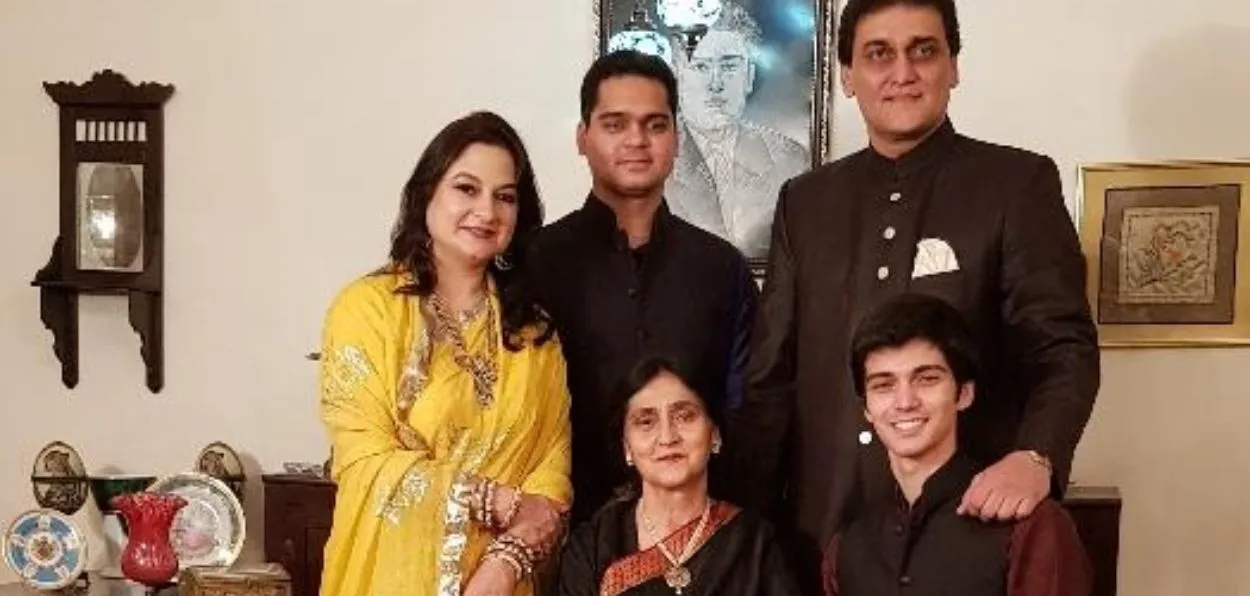
Paigah decendent Faiz Khan with mother Begum Tahira Sirajuddin Khan, wife Nida Fatima Khan, sons Dr. Mohammed Faraaz Khan and Mohammed Kamil Khan
A visit to the scion of the Paigah family and the great-great-grandson of H.E. Nawab Sir Vicar- Ul-Umara Bahadur, Amir-e-Paigah and former Prime Minister of erstwhile Hyderabad state M A Faiz Khan grew up seeing their family as ardent patrons of homegrown textiles, superior garments, and spectacular gems even as history is witness to the global influence of Indian Prince and Princesses.
He says that a visit to Hyderabad’s Salarjung Museum is an exciting part of a scholar’s life, it becomes more meaningful and engaging to realize that the museum itself is an astounding part of history for those researching elite Indian menswear. A visit to his house can easily get one an insight into the Nizam and Paigah family pictures which gives one a peek into the refined taste of the family and made the family stand out in the pages of history.
Faiz Khan says, “India boasts of a rich tapestry of cultural diversity, each thread intricately woven into the fabric of its magnificent royal heritage but the royal families have since long been the custodians of not just history and tradition but also of opulent style and regal elegance.
“Their grandeur, opulence, and penchant for fashion continue to inspire modern-day designers, setting the stage for some stupendous ensembles that blend the allure of the past with contemporary flair.”
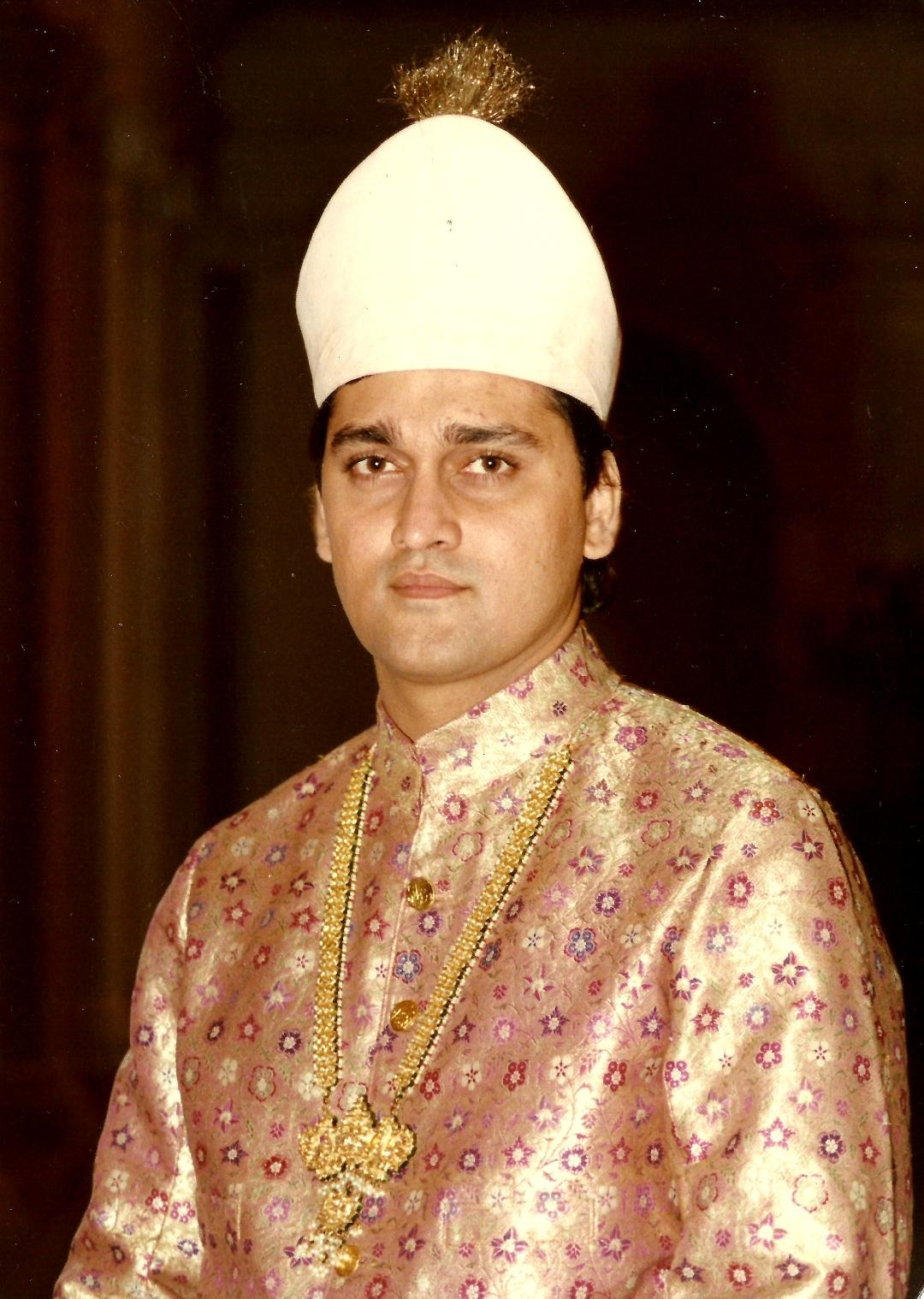
Scion of Paigah Mohammed Abul Faiz Khan wearing a sherwani of his great great grandfather H.E. Nawab Sir Vicar-ul-Umara Bahadur, the fifth Amir of Paigah
He says that the Dress and fashion during the era of the Nizams and the Paigahs included ‘angrakhas’, ‘neema’ and ‘jama’. During the last quarter of the 19th century the ‘achkan’, a fitted cape, and ‘angrakha’ developed with a few improvements into the sherwani which extended slightly below the knee and had four pockets, two upper and two on the sides, and seven buttons in front.
He said that the royals paid homage to the grandeur of their dynasty through their attire. Sherwanis were crafted from rich and regal fabrics like brocade, silk, and velvet which boasted of works like Karchobi, a kind of raised metallic thread embroidery, or Kimkhab a kind of brocade woven with silk and gold or silver threads sometimes set in precious stones too. Gold and silver metals were used in surface ornamentation. Even the weft yarns are said to be of gold and silver wire in himru, mashru and brocade fabrics.
These sherwanis reminiscent of historical figures like the 6th Nizam H.H. Nawab Mir Mahboob Ali Khan or the Paigahs were characterized by intricate embroidery and elaborate embellishments creating an aura of regal elegance. The ‘sherwani’ became very popular among all the public in Hyderabad during the rule of Nizam VI and Nizam VII during the first half of the 20th century. It used to be worn with ‘dastar’ (headgear). The Zari work the timeless elegance and regal grandeur of the noble including the Paigahs added a touch of luxury and opulence.
The colour palettes were inspired by the grandeur of the Nizam’s Palace or the Chowmohalla Palace the first official palace of the Nizam where darbars were held and dignitaries received and from where the administrative offices of the Nizam functioned, which included deep vibrant colours like rich maroon, royal blue and emerald green which symbolized grandeur and elegance then.
Faiz Khan says that the safa an important component of the royal’s attire added a touch of grandeur and lush. Intricately draped, it complemented the colour scheme of the ensemble and featured ornate broaches, echoing the meticulous elegance of the royal era then. Traditional pearls or jewelry including head broaches, often adorned with precious and semi-precious stones evoked the splendor celebrated by royalty and nobility.
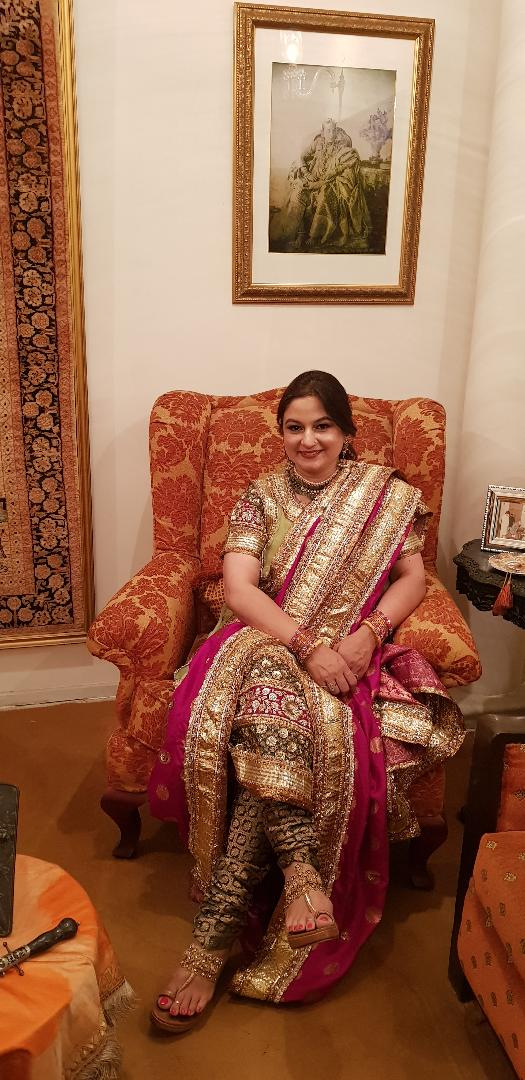
Nida Fatima Khan Granddaughter of Major General Nawab Khusru Jung Bahadur CIE married to Faiz Khan of Paigah is wearing a Chowhashya/ Khafa Dupatta and traditional Jewelry.
Footwear like Mojris or juthis showcased elaborate embroidery and designs These designs continue to embrace these elements by grooms honouring the regal legacy of the then royals and embodying the same style during their weddings even today.
The Jama‘angrakhas’, ‘neema’ the Fez caps and even the head gears known as Dastaar or the Rumi topi have been taken over by the Western attire for day-to-day dressing. Though Sherwani continues to be still popular and worn with a loose ankle-length pyjama or a churidar (legging-like) during festive occasions and Friday prayers sadly it is no longer the power dressing of the 19th century
The Paigah grooms inspired by the then-historical figures adorned themselves with elaborate Polki jewellery head ornament, bajuband, armlets all featuring precious gemstones, which accentuated their royal allure The vibrant colour palette exuded grandeur with bright ruby reds, deep blues, and rich greens transforming grooms into timeless symbols of regal elegance.
The Kimkhab choga the achkans woven in luxury was a different ball game for these men.
Although in possession of immense wealth, it was their refined taste that made some of this Indian royalty and nobility stand out in the pages of history. While the Nizam was the more familiar figure who immediately comes to mind, the Paigahs and their predecessors like Faiz were equally proficient. Faiz Khan adds that the royals were also instrumental in deliberately straying from conventional style norms and introducing it to the women of Indian society at a time when restrictive customs such as the pardah system existed. Here we talk of the cohesive picture of Princess Durru Shehvar, Princess Niloufer, H.E.Lady Vicar –Ul-Umara their iconic style, and how it garnered the attention of designers, legacy brands, and publications from all over the world.
He says that the contribution of the Nizams to textiles is especially noteworthy as he was passionate about good clothes jewellery and delicacies. Nizam Mir Mahboob Ali Khan to store his large collections of clothes built a 240 feet long wardrobe at Purani Haveli Hyderabad in the hallway on either side it had 133 built-in cupboards to accommodate his large collections of clothes shoes, headgear, hats, and accessories.
Today the legacy of the Nizam and the Paigah royals lives on the fashion choices of modern brides and grooms. Inspired by the timeless style of their ancestors, modern brides opt for gharara, sarisKhadaDupatta and sharara that pay homage to the intricate embroidery in zardozi gotta patti work.
The safa reminiscent of the ornate turbans complete their royal look. Traditional leather jootis often in coordinating colours, offer a touch of authenticity making the ensemble a bridge between the past and present.
source: http://www.awazthevoice.in / Awaz, The Voice / Home> Story / by Raja Chotrani / January 05th, 2025
Abdussalam Puthige, Editor-in-Chief of Vartha Bharati
Bengaluru:
The Karnataka Media Academy announced its Lifetime Achievement Awards, Annual Awards, and Endowment Awards for 2023 and 2024 on Thursday.
For 2024, Abdussalam Puthige, Editor-in-Chief of Vartha Bharati, was selected for this honour for his significant contributions to journalism.
Among the Annual Award recipients for 2023 was Ibrahim Adkasthala from Vartha Bharati, recognised for his outstanding work. Muhammad Akheel, also from Vartha Bharati, received an Endowment Award for his impactful reporting. Special mentions for 2024 included his report on untouchability in Koppal.
Abdussalam Puthige started his career as sub-editor in Sanmarga weekly published from Mangalore. He is author, orator and good debater as well.
source: http://www.radiancenews.com / Radiance News / Home> Awards> Latest News / by Mohammed Atherulla Shariff, Radiance News Bureau / January 03rd, 2025
Tonk has been renowned for its calligraphy, a centuries-old art form that has earned the nawabi city an esteemed reputation on the international stage. This rich cultural heritage continues to thrive through the dedication of talented artists.
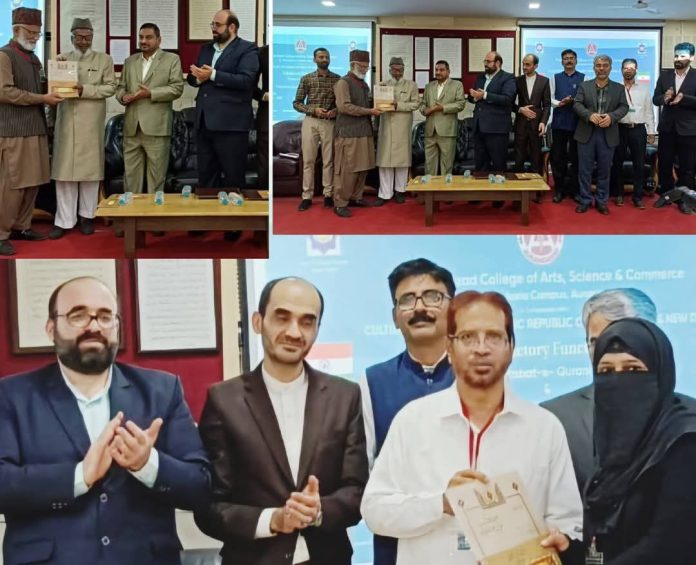
Recently, a national-level calligraphy competition was held in Aurangabad, attracting participants from across India, including Telangana, Maharashtra, Kashmir, and Rajasthan. Ustad Zafar Raza Khan and his student Shahjahan, both from Tonk’s Markaz-Talimul-Khutut institute, represented their city at the Second All-India Quranic Calligraphy Competition. The event was organised in collaboration with Maulana Azad College of Arts, Science, and Commerce (Aurangabad) and the Iran Culture House, Mumbai and New Delhi.
Participants were initially shortlisted based on online submissions of their work. Those selected were invited to the competition held on December 27. Among the contenders, Tonk’s calligraphers distinguished themselves, securing the top two honours and bringing glory to their city.
Ustad Zafar Raza Khan received high praise for his exceptional skill in the Nasta’liq script. While judges unanimously considered his work the finest, he was awarded the second prize due to international competition rules. These rules stipulate that if only one individual meeting the standard for first place remains in the competition, the top prize is withheld, and the second prize is awarded instead.
Shahjahan, another participant from Tonk, triumphed in the Naskh Arabic (Osmani Naskh) script category, winning first prize. Their achievements underscore the exceptional training provided at Markaz-Talimul-Khutut, a new institute established in Tonk on January 1, 2024.
The institute has rapidly gained prominence, thanks to its internationally acclaimed instructors, Ustad Zafar Raza Khan and Ustad Khurshid Alam. Both are celebrated as among the finest calligraphy masters globally. Their dedication has elevated the institute and inspired a new generation of artists to master this ancient art form.
The institute’s officials attribute their success to the hard work of their students and faculty, pledging continued efforts to preserve and promote the art of calligraphy. This achievement is a source of pride not only for Tonk but for Rajasthan and the entire nation.
source: http://www.radiancenews.com / Radiance News / Home> Latest News / by Raheem Khan, Radiance News Bureau / January 01st, 2025
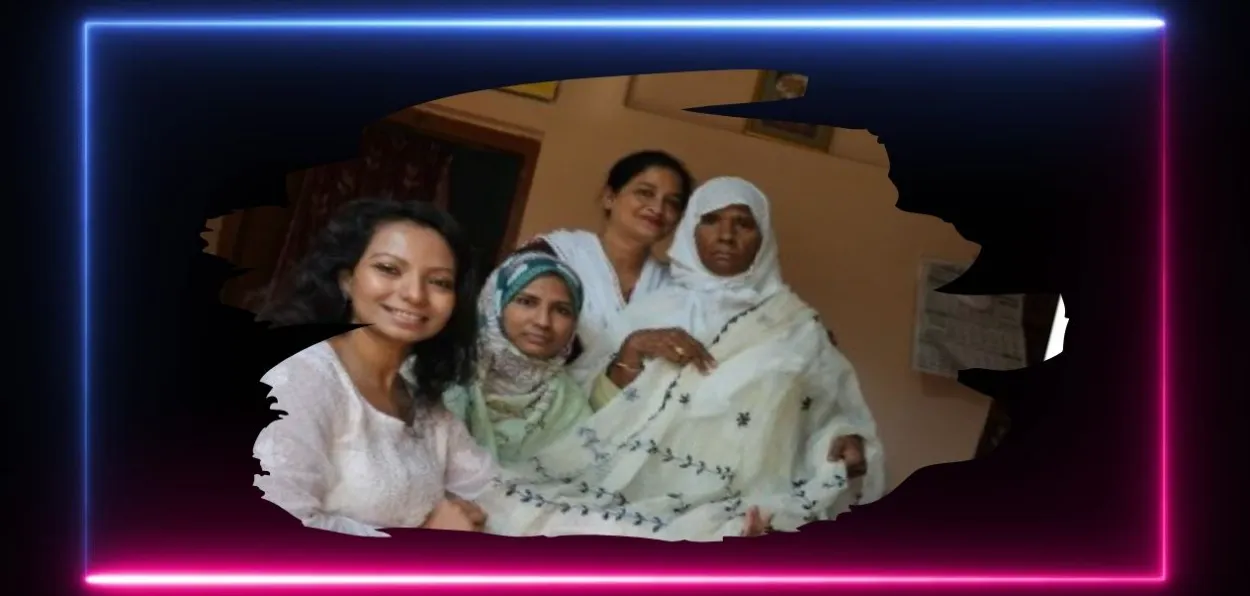
Rubina Rashid Ali with artisans (Source: Instagram)
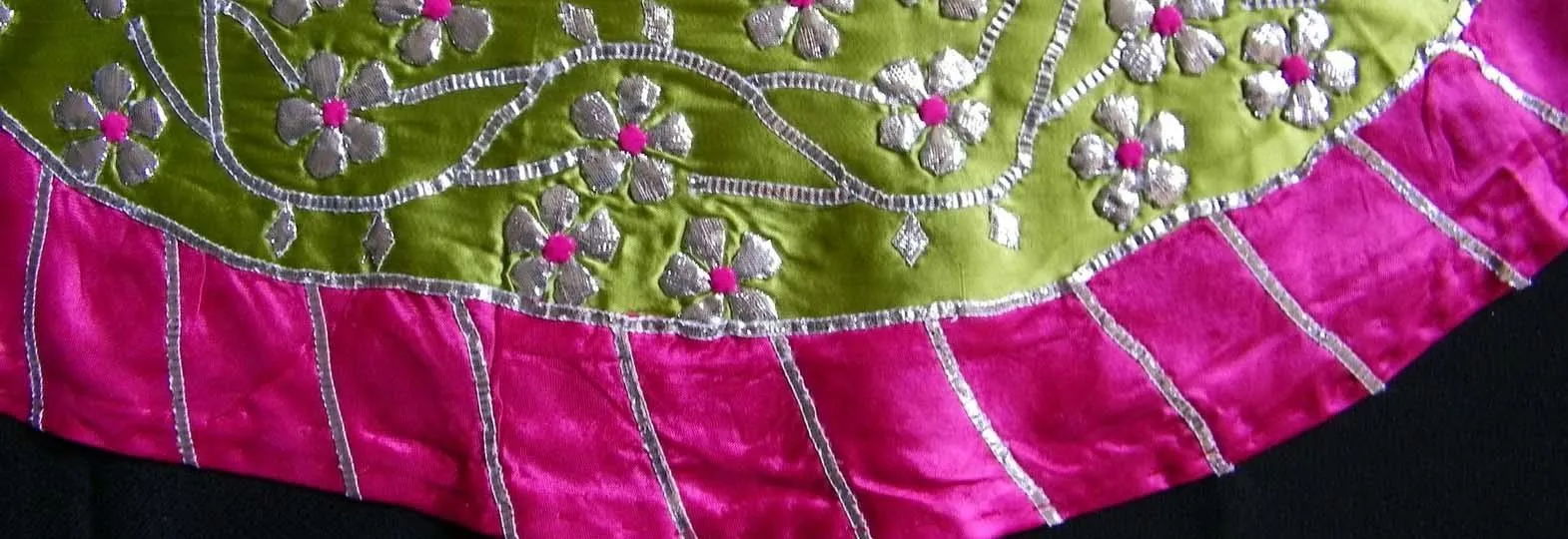
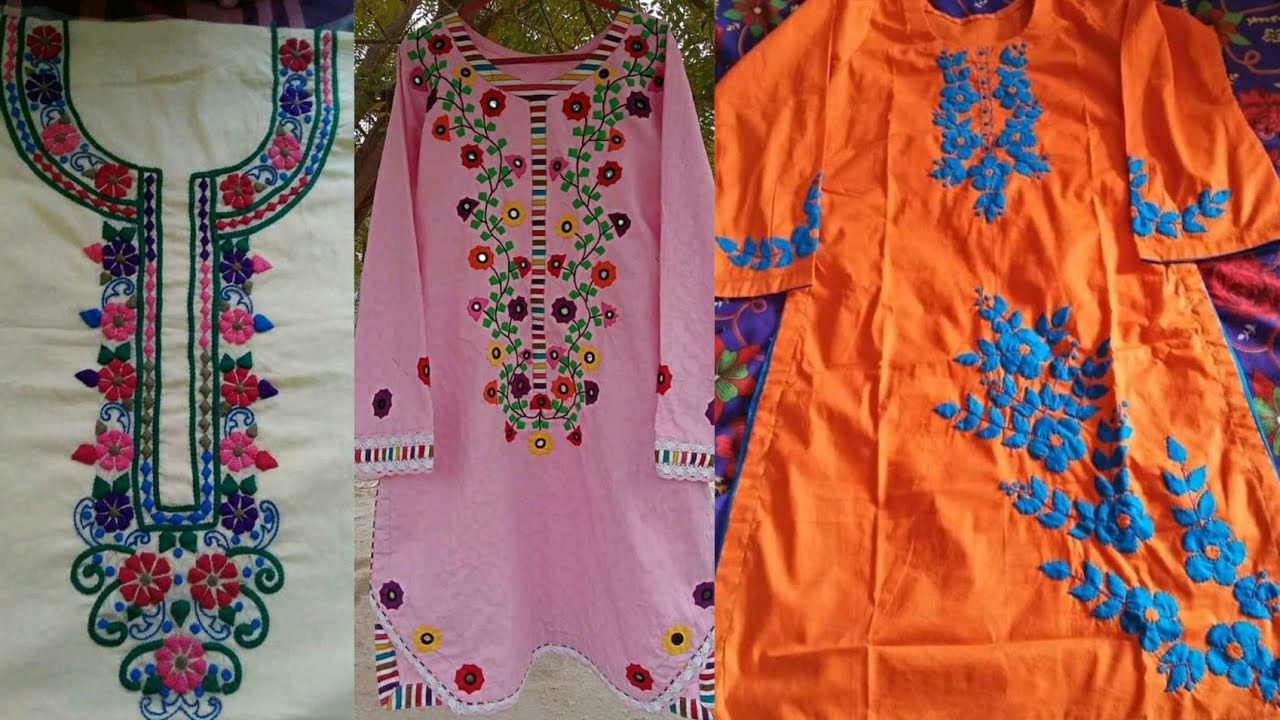
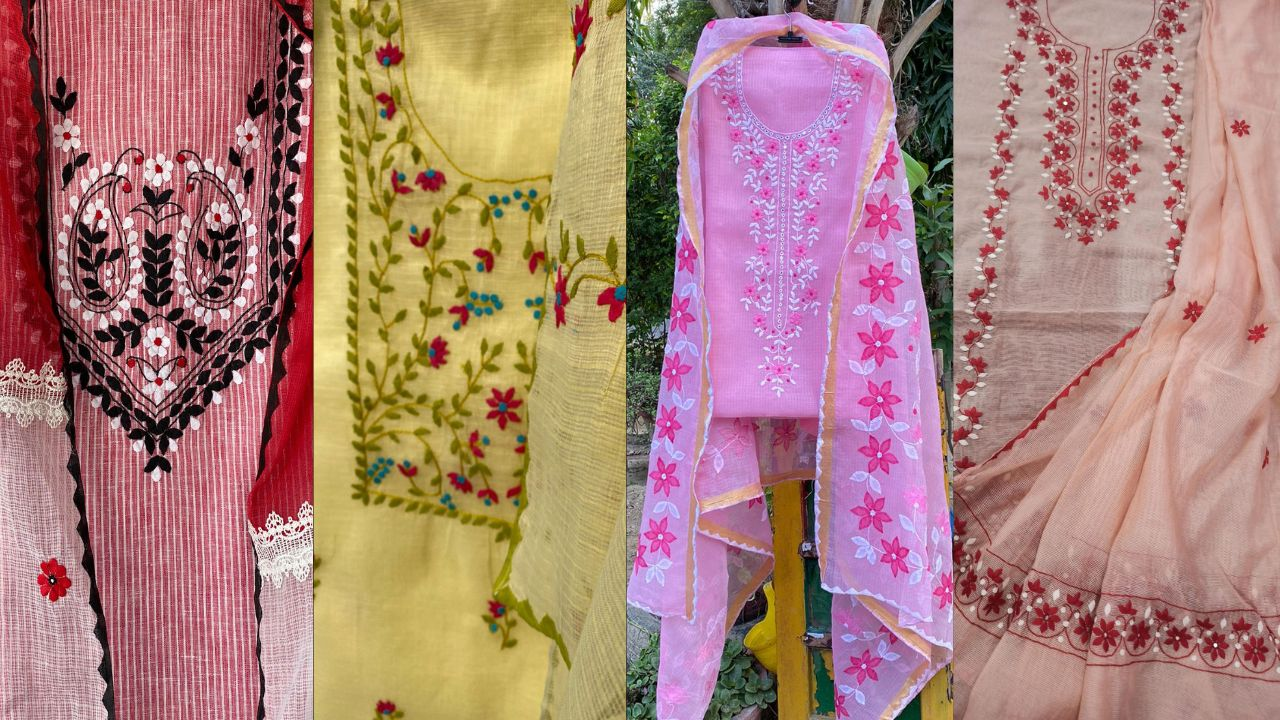
Phool Patti embroidery or applique work has been the forte of women of Aligarh and Rampur regions of Uttar Pradesh since the Mughal period.
Rubina Rashid Ali from Aligarh told Awaz-the Voice that after she realised that women who are preserving this art were not getting due remuneration, she took up the cause of popularising this art form.
Rubina Rashid Ali works in the administrative department of Aligarh Muslim University. She lives on the AMU campus with her three children and husband. She did her Masters in Advertising and Communication from the National Institute of Advertising, Delhi.
Rubina Rashid Ali told Awaz-The Voice that she has been interested in ‘Phool-patti’ work and embroidery since 2003. However, only after becoming stable in her studies, job, and family life, did she dedicate her time and energy to promote it in 2019. She got connected to women who are into applique style. Now they take orders online and deliver them with their team on a contract basis.
Rubina Rashid Ali told Awaz-The Voice that women are mainly engaged in making articles with embroidery, while men take orders. This drained the earnings as a big part of the profit went to the middlemen.
“This craft suffers from a lack of design intervention and diversification and has to catch up with the contemporary aesthetics,” she said.
Rubina Rashid Ali said that the book Phool-Patti Ka Kaam is the first publication on this unique embroidery form. Phool-Patti Ka Kaam is the story of embroidery told through glimpses of Saleha Khan’s work with artisan women and girls during the 1970s and 1980s.
A beautifully illustrated book, it traces its background and scope. it takes us through the array of different floral patterns, designs, and materials. It covers experiments with ornamentation and innovations, including its use on various garments and home décor. And most importantly, it provides a glimpse of the artisans of Aligarh
This book is for art connoisseurs and those who appreciate, learn, promote, explore, and experiment with this unique applique style.
Apart from being a useful resource for craft lovers, the book aims to generate interest among designers, entrepreneurs, and policy planners to further the scope, popularity, and prospects of Phool-Patti, while ensuring a fair share of economic benefits and recognition for its artisans.
Rubina Rashid Ali told Awaz-the Voice that the suitable combination of flower leaf work with other crafts like Chinkara, Gota Patti work, hand-painting, tie and dye, Mukesh work, etc. needs to be widely explored in different colour palettes.
Product diversification not only in clothing and fashion accessories but also in home decor, lifestyle-based products, corporate gifts, souvenirs, etc. ensures its wide reach and penetration in various segments.
In the era of easy availability of fabrics, many people are interested in spending extra money for handmade applique work.
Rubina Rashid said that the original cotton, cambric cotton, Kota cotton, etc. are used for embroidery. However, these days it is also being done on Chanderi silk which is a unique silk from Madhya Pradesh. To promote the flower-leaf embroidery, she does new experiments every day in which sometimes she does the flower-leaf work using crochet, and sometimes other types of embroidery so that she can make that piece even better.
Rubina Rashid Ali and her artisans make articles like ladies’ kurtas, saree, dupatta, etc. for sale. She says this work involves designing it on fine fabric, cutting and skilfully folding these before shaping each piece into small petals and leaves by embroidering on the cloth.
This special applique work finds limited mention in the collection of Indian and global embroidery forms.
Rubina Rashid Ali prepares all her designs and also takes full care of the welfare of the artisans working with her. Rubina Rashid Ali told Awaz-The Voice that she exhibited her works at Delhi Haat, Kolkata Bazaar, Bangalore, Rajasthan, Kota, etc. She found people appreciated her work.
Rubina Rashid Ali told Awaz-The Voice that over time, crafts have become an integral part of the socio-cultural aspect of the country. Unfortunately, in the last few years, many crafts have reached the verge of extinction as fast fashion brands are dominating the market with their easily available cheap clothing options.
source: http://www.awazthevoice.in / Awaz, The Voice / Home> Story / by Onika Maheshwari, New Delhi / January 12th 2025