Tag Archives: Urdu Poets of Hyderabad

Mahtab Qadr, the Versatile Artist of Urdu Poetry, Prose and Journalism, Passes Away

Jeddah, SAUDI ARABIA / Hyderabad, TELANGANA :
OBITUARY

Bengaluru :

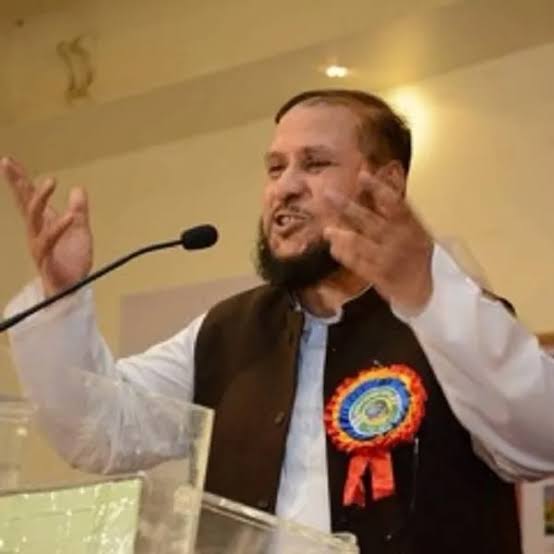
Hundreds of thousands of Urdu lovers across the world are mourning the passing of Syed Sarfaraz Ali, widely known by his pen name Mahtab Qadr, a versatile poet, prose writer and journalist who selflessly dedicated over five decades of his life to protecting and promoting Urdu in the Arabian desert.

Mahtab Qadr breathed his last in Hyderabad, the city of his birth, on Friday. He had come from Jeddah, Saudi Arabia — where he spent most of his life in the service of Urdu — for a knee surgery. He passed away before the procedure could be performed.

He was 70.

According to family sources, he will be laid to rest in Hyderabad on Saturday afternoon. He is survived by his wife, two daughters and a son.

Born in 1956, Mahtab Qadr earned his Master’s in Library Science from Osmania University. He served as a medical librarian at King Abdulaziz University in Jeddah for nearly three decades.

A multifaceted literary personality, Qadr was a distinguished poet, prose writer, sketch writer, translator, organiser and travelogue writer. He was also the founder of “Urdu Gulbun,” an active literary forum in Jeddah.

Above all, he was a fellow traveller on the delicate and rugged path of journalism. When the Jeddah-based English daily Saudi Gazette launched its Urdu supplement, Mahtab Qadr was part of its editorial team.

A native of the Deccan, with its fertile literary and cultural traditions, Qadr’s own thought and craft reflected the same depth and diversity. At a time when Urdu faces growing challenges in India, he kept the lamp of word and pen alight, working tirelessly for its promotion.

His published works include poetry and prose collections Chhaon-e-Sahra, Sabz Sahra and Nazriat-e-Mahtab, and the travelogue Awargi Thodi Si.

There is a distinct movement in Qadr’s writings; they break stagnation. His poetry and prose are marked by a freshness and energy that grips the reader. His style was unconventional — he moved off the beaten track to explore new subjects and ideas. While his poetry carries a note of romanticism, it also reflects a deep insight into social issues. His literary sketches reveal a subtle understanding of human psychology and nature.

His contribution was not limited to his own writings. Through Urdu Gulbun, he provided a vital platform in Jeddah for Urdu lovers, where literary gatherings were held and emerging writers found encouragement and expression. His journalistic writings for the Urdu supplement of the Saudi Gazette were both thought-provoking and instrumental in promoting the language.

His travelogue Awargi Thodi Si is a testament to his love for travel and his keen powers of observation. Narrated with simplicity and fluency, it transports the reader to the places he describes, making his prose accessible to readers from all walks of life.

In his passing, Urdu has lost a sincere and tireless servant whose writings compelled readers to think and sought social change through literature.

_______________

Syed Athar Hasnain Rizvi is a senior journalist. He was associated with the National Herald in New Delhi and the Saudi Gazette in Jeddah. He can be contacted at: sahrizvi35@yahoo.com

source: http://www.clarionindia.net / Clarion India / Home> Editor’s Pick>Personalities / by Syed Athar Hasnain Rizvi / September 25th, 2026
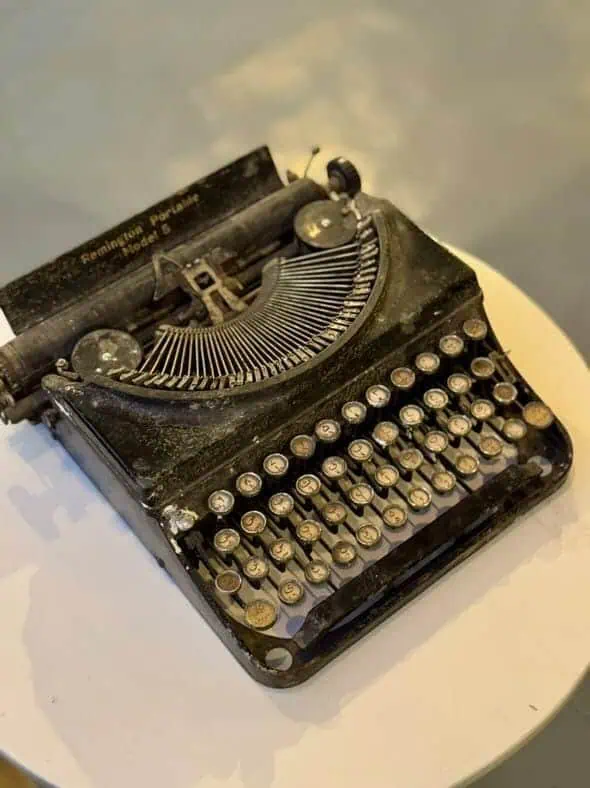
Rare 1900s Urdu typewriter, manuscripts displayed at exhibition in Hyderabad

Hyderabad, TELANGANA :

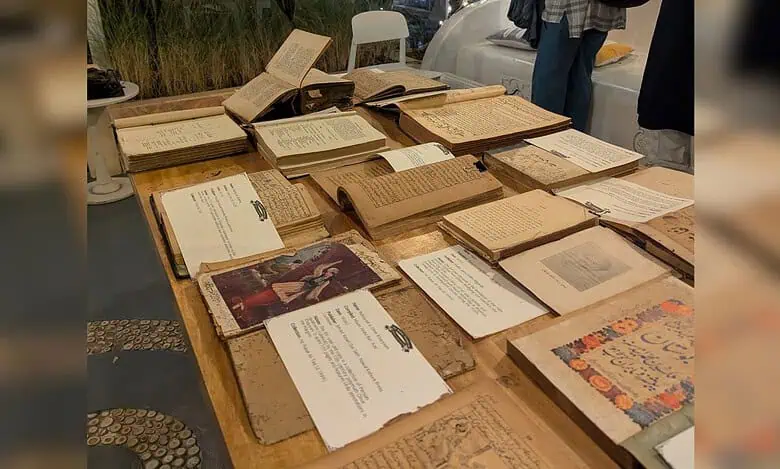
Exhibition showcases rare literary treasures, including 1937 Osmania University textbook and 1931 Urdu translation of Goethe’s Faust.

  Rare books and manuscripts on display at exhibition in Hyderabad

Hyderabad: 

Book lovers and history enthusiasts in Hyderabad were in for a rare treat as The Kabikaj Foundation in collaboration with the Deccan Archives Foundation hosted an exhibition of rare books and manuscripts on Friday, February 7.

The exhibition took place at Thrivesome Cafe and Community, Jubilee Hills which showcased a curated selection of literary treasures, including a 1937 Osmania University history textbook, a 1931 Urdu translation of Goethe’s Faust, Masnavis of Maulana Rumi works from the historic Nawal Kishore Publications, and rare prints from Hyderabad’s now-extinct presses.

The exhibition was organised to commemorate the birth anniversary of renowned Hyderabad poet Riasat Ali Taaj (1930–1999). The exhibition featured a curated selection of books from his collection, preserved by his family and presented by his grandson, founder of The Kabikaj Foundation, Riasath Ali Asrar.

Rare literary gems on display at Hyderabad exhibition

The Hyderabad exhibition showcased a remarkable collection of rare books and manuscripts, including:

  • A mid-1900s Urdu typewriter (Remington Portable 5), a rare artefact highlighting the evolution of Urdu script in typewriting technology
  • A 100-year-old Masnavi of Mawlana Rumi, Mirat-ul-Masnavi, published by Azam Steam Press, Hyderabad
  • A 1937 history textbook for matriculation, from Osmania University, featuring a 1937 South Asia map and the original Osmania University logo
  • Early and first editions of Urdu translations of Goethe’s Faust and Conan Doyle’s The Poison Belt from the early 1900s.
  • Rare lexicons, including:
    • Farhang-e-Asafiya (1970)
    • Dakhni Urdu ki Lughat (1969)
    • Lughat un Nisa (1917)
    • Kalaam-e-Nanak ma’ Farhang (1970)
    • Ruq‘at-e-Alamgeeri, a collection of letters by Mughal Emperor Aurangzeb, published in Hyderabad in 1911, with references to the first Asaf Jah of the Asaf Jahi dynasty.
    • An 1893 Ottoman-era Arabic edition of Alf Laylah wa Laylah (The Arabian Nights), published in Egypt.
    • Nawal Kishore publications, including:
      • Singhasan Batteesi (a collection of Indian folklore, 1953).
      • Masnavi-e-Bustan of Saadi Shirazi (a 150-year-old edition).
    • Tulsi Das’s Ramayan in Perso-Arabic script, published in 1913.
    • Justice Syed Mahmood’s Urdu translation of the 1872 Law of Evidence Act, published in 1893.
    • Transactions of the Indian History Congress: Fifth Hyderabad Session (1941) and The Hyderabad Code (1951).
    • A mid-1900s Urdu typewriter (Remington Portable 5), a rare artefact highlighting the evolution of Urdu script in typewriting technology.

A mid-1900s Urdu typewriter (Remington Portable 5) (Photo: By Arrangement)

Young Urdu poet Riasath Ali Asrar provided a detailed commentary on each book, guiding visitors through their historical and literary significance.

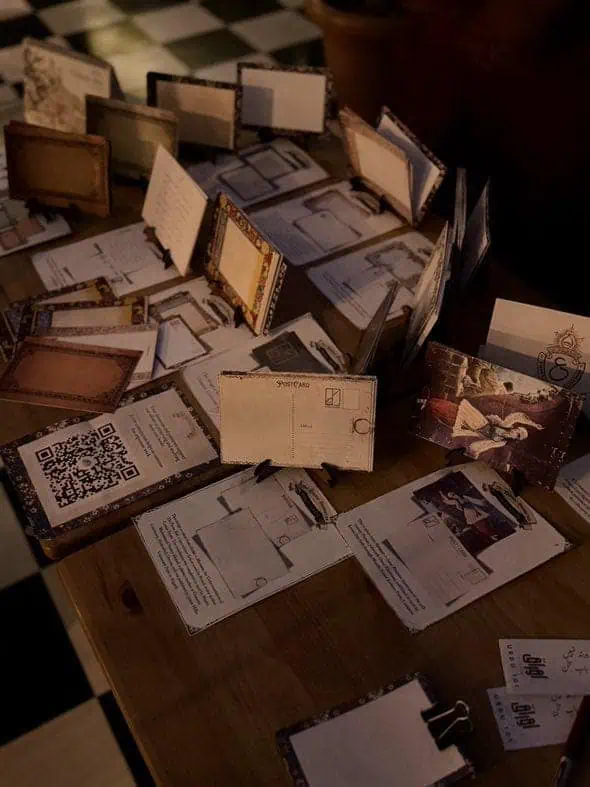
As part of the Kabikaaj Foundation’s ongoing efforts to raise funds for book preservation, a series of postcards featuring artwork and inscriptions from the rare books on display were available for purchase at the Hyderabad exhibition. Those with a passion for history, preserving culture and literature would be able to take home a unique piece of literary history which would in turn help in supporting the foundation’s vital work in archiving, digitising, and restoring rare manuscripts.

A series of postcards featuring artwork and inscriptions from the rare books on display (Photo: By Arrangement

Established in Hyderabad in December 2021, The Kabikaj Foundation is dedicated to preserving and promoting rare books and manuscripts of literary, cultural, historical, academic, religious, and traditional significance, organising exhibitions and events bringing together people with similar passion.

source: http://www.siasat.com / The Siasat Daily / Home> News> Hyderabad / by News Desk X / February 08th, 2025

MANUU honours five persons from Hyderabad as ‘Sitara-e-Urdu’

Hyderabad, TELANGANA :

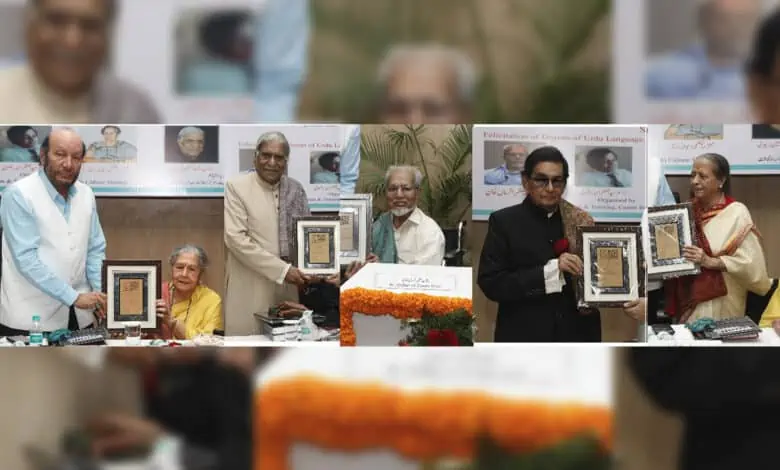
MANUU VC Syed Ainul Hasan presenting mementos to Lakshmi Devi Raj, Shahid Husain Zuberi, Mazhar uz Zaman Khan, Syed Jafar Amir Rizvi, and Oudesh Rani Bawa

Hyderabad: 

Urdu lovers exist and MANUU will bring them to its platform and honour them, said Prof. Syed Ainul Hasan, Vice-Chancellor, Maulana Azad National Urdu University (MANUU).

He was honoring five eminent personalities from Hyderabad as “Sitara-e-Urdu” (Doyens of Urdu). The university presented Lakshmi Devi Raj,  Syed Jafar Amir Rizvi, Shahid Husain Zuberi, Oudesh Rani Bawa and Mazhar uz Zaman Khan with a memento, a shawl, and a flower plant in recognition of their contribution towards Urdu language, literature and culture on Monday.

The ‘Sitara-e-Urdu’ programme was organized by Centre for Urdu Culture Studies on the occasion of Teacher’s Day at CPDUMT auditorium.

source: http://www.siasat.com / The Siasat Daily / Home> News> Hyderabad / by News Desk X / September 05th, 2022