Category Archives: Arts, Culture & Entertainment

How this 26-year-old UP girl came to be known as ‘Cylinder Bitiya’

She reaches out to people in need with Oxygen cylinders.

Shahjahanpur, UTTAR PRADESH :

A 26-year-old woman from Uttar Pradesh has earned the moniker Shahjahanpur’s ‘Cylinder Bitiya’ (cylinder daughter), for reaching out to people in need with Oxygen cylinders on her Scooty.

Arshi Ansari’s father, Mashkoor (65), fell ill on April 2, the first day of Ramzan. Tests revealed that he was COVID-19 positive. Arshi went to the city magistrate to ask for an Oxygen cylinder for him but was told that there was no such provision for patients in home isolation. The official suggested that she finds a hospital for her father.

Arshi, a resident of Madar Khel area, went to the district hospital but was appalled by its stench and dirt. She then tried a few private hospitals, but was told that they had no Oxygen and that she would have to make her own arrangements.

“I did not want to leave my father uncared for, in a hospital,” says the woman who has completed her Bachelor of Arts in English and Urdu.

Next morning, she again went to the city magistrate and pleaded for a cylinder. This time she was given one.

Meanwhile, Arshi’s appeal for a cylinder on social media had attracted response from a group of volunteers in Rudraprayag, who sent her 10 cylinders.

Though Arshi’s father took a month to get well, after the first 12 days of illness, he did not need Oxygen cylinders. Arshi then decided that she would distribute these to the needy, who could reach out to her through a WhatsApp group. Around Shahjahanpur and even to Hardoi which is 67 km away, to the neighbouring state of Uttarakhand, Arshi has carried the life-giving gas over long distances without any charge. She also gets empty cylinders filled on request.

“No one hoards a cylinder. After have no use of it, they refill it and pass it on to others in need”, she says.

Arshi started distributing Oxygen cylinders during the month of Ramzan. Yet, she says, she never felt any discomfort or hunger. “It is my belief that I got success in my work because it was Ramzan and I had Allah’s blessings”.

When she started the work, she had to face nasty comments from passers-by and cat calling by boys. “There were even filthy posts and memes made on me”, she said.

However, the woman, who runs a computer coaching institute for underprivileged children, said, “It will be so much better to give up this childish behaviour and get out of your homes to help at least one person in need. This pandemic has taught that all we have are each other”.

source: http://www.theweek.in / The Week / Home> News> India / by Puja Awasthi / May 17th, 2021

Jamia professor, who put out Twitter request looking for a bed for herself, dies of Covid

According to colleagues and friends, Dr Nabila Sadiq, a PhD scholar from JNU, was teaching and helping students with their thesis until April 20.

NEW DELHI :

Dr Nabila Sadiq

Nearly a week after she tested positive for Covid — and sought an ICU bed for herself on Twitter — a 38-year-old assistant professor from Jamia Millia Islamia died at a Faridabad hospital on Monday night.

According to colleagues and friends, Dr Nabila Sadiq, a PhD scholar from JNU, was teaching and helping students with their thesis until April 20.

Ten days before Nabila’s death, her mother Nuzhat (76) had also died of Covid-related complications. Her father was hospitalised for Covid but was eventually discharged and is under home quarantine.

Friends and family said Nabila wasn’t aware of her mother’s death, and died “worrying” about her parents.

Among her last tweets, on May 2, was: “At this rate no one will stay alive in Delhi at least.”

Laraib Neyazi (27), an MA student from Jamia, said, “When I came to know about her health, I rushed to her home with other students, and we started looking for a bed. We found one at Alshifa hospital, where she also tested positive for Covid. Two-four students would always stay at the hospital. Meanwhile, we rushed her mother to Sanjay Gandhi Hospital but she passed away. We didn’t tell Nabila because she was critical…”

Students said Nabila was a caring teacher who loved writing poems, and discussing politics and gender theory. Her students helped perform her mother’s last rites on May 7. Around the same time, Nabila’s health deteriorated.

Waqar, a student from JMI, recalls calling “every hospital in Delhi-NCR to get an oxygen bed”.

“Her friends helped us get a bed at Fortis Hospital in Faridabad. However, her oxygen levels dropped to 32%. After a CT scan, the doctor said her lungs were damaged. I received hundreds of calls every day from her colleagues, relatives and friends asking about her health. We didn’t know what to do” said Waqar.

“Every student who was pursuing gender studies wanted to do their PhD under her mentorship. She helped so many people during the pandemic. We would talk to her and tell her that her parents were missing her, hoping she would feel better and recover. But on Saturday night she was put on a ventilator,” said Waqar.

Nabila’s doctors said she wasn’t responding to medicines and treatment. She died around 11 pm on Monday.

On Tuesday, her students and friends performed her last rites at Mangolpuri, where her mother was buried ten days earlier.

Nabila’s father Sadique (80), a retired professor who taught at Aligarh Muslim University and JNU, was told about his daughter’s death in the afternoon.

He told his family members: “I think she loved her mother more and left with her… leaving me alone here.”

Nabila’s colleague and friend Tarannum Siddiqui said she feels helpless because Sadique is alone. “I have known Nabila and her family for seven years. They helped me last month when I had Covid. When Nabila was admitted to the ICU, I sent her messages on her phone. I knew she wasn’t reading them but I was waiting for her to recover, read those texts and meet me. She was an honest woman. We both taught gender studies. I can’t believe she has left me. JMI has lost a great academician,” said Tarannum.

Manasi Singh, a professor from the Central University of Gujarat, said she has known Nabila for 18 years. “We pursued our Master’s and PhD at JNU together. She was a good friend and a great scholar. I would watch her seminars online and admire her work. She was jovial and I loved her child-like innocence,” said Singh.

source: http://www.indianexpress.com / The Indian Express / Home> Cities> Delhi / by Jignasa Sinha, New Delhi / May 19th, 2021

Builders of Bengal: Begum Rokeya

Pairaband Village (Rangpur), BENGAL (British India):

A PAST WE MUST PRESERVE | She was a pioneer of women’s education and feminist writing who started the first school for education of Muslim girls in Calcutta

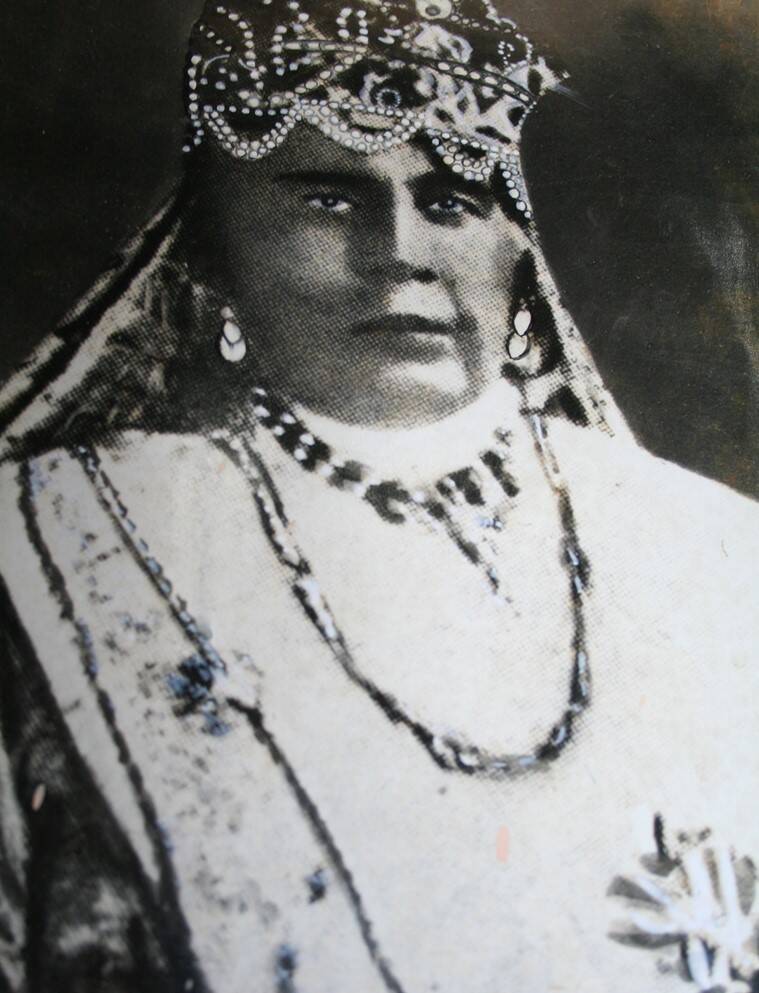
Begum Rokeya, 1880-1932 / File picture

Rokeya Sakhawat Hossain, popularly known as Begum Rokeya, was a pioneer of women’s education and feminist writing who started the first school for education of Muslim girls in Calcutta. She considered education to be crucial to women’s emancipation.

She was born in 1880 at Pairaband village in Rangpur, now in Bangladesh. Her elder sister Karimunnesa, who was a poet who wrote in Bengali, was a great influence on her life. Rokeya at 18 was married to Khan Bahadur Sakhawat Hussain, who was 38 and the deputy magistrate of Bhagalpur.

A liberal man who spoke Urdu, he encouraged his young wife to continue her studies in Bengali and English and to write.

Rokeya chose to principally write in Bengali and her works uphold the equality of men and women. Matichur (1904, 1922) is a two-volume collection of her essays on her thoughts about women and society, Padmarag (1924) is about the oppression of Bengali wives and Abarodhbasini (1931) is a robust critique of the severe forms of purdah for women.

Ten years before the American novelist Charlotte P. Gilman published Herland, Begum Rokeya wrote her feminist utopia Sultana’s Dream in 1905. Written in English, it is a novella set in Ladyland, ruled by women.

A few months after her husband’s death in 1909, Begum Rokeya started Sakhawat Memorial Girls’ High School in Bhagalpur, with five students. She moved the school to Calcutta in 1911, where it is still located, but is run by the government.

In 1916, Begum Rokeya founded Anjuman-e-Khawateen-e-Islam (Islamic Women’s Association) to hold discussions on women, education and progress. She advocated change in Muslim women’s lives and spoke up against rigidity and conservatism.

She went from door to door to ask Muslim families to send their daughters to school. She was engaged till the very end of her life in ideas and activities that would lead to the empowerment of women. She passed away on December 9, 1932, shortly after presiding over a session of the Indian Women’s Conference.

Bangladesh observes Rokeya Day on her death anniversary every year.

source: http://www.telegraphindia.com / The Telegraph Online / Home> Culture> People / by Chandrima S. Bhattacharya / March 28th, 2021

100-oxygenated-bed facility at Haj Bhavan inaugurated

Bengaluru, KARNATAKA :

A 100-oxygenated-bed facility was inaugurated at Haj Bhavan COVID-19 Care Centre in Bengaluru on Saturday.   | Photo Credit: Murali Kumar K

8 doctors, 12 nurses, 12 housekeeping staff, data operator posted at the CCC

As many as 100 of the 400 beds at the COVID-19 Care Centre (CCC) in Haj Bhavan in Bengaluru have been converted to oxygenated beds. The facility was inaugurated by Minister for Revenue R. Ashok on Saturday. The Minister told reporters that in the second phase, 50 beds each would be converted to ICU and HDU beds.

According to a press release, 8 doctors, 12 nurses, 12 housekeeping staff and a data operator have been posted at the CCC, which is also a triaging centre. For emergency purposes, 2 ambulances are on standby.

Mr. Ashok said that to mitigate the oxygen shortage supply in the city, all CCCs have been equipped with oxygenated beds. Over 800 oxygen concentrators have been delivered to the CCCs apart from ‘Oxybuses’ to support patients. “Every day, we are striving to increase 100 oxygen beds. This will cut down the oxygen problem in the city,” he said.

CCC with 46 oxygenated beds

A COVID-19 Care Centre with 46 oxygenated beds has been established at the Kempegowda Community Hall, near Nandini Layout, in Mahalakshmi Layout Assembly constituency. The facility, which is also a triage centre, was inaugurated by Union Minister D.V. Sadananda Gowda and Minister for Excise K. Gopalaiah on Saturday.

Mr. Gowda said the CCC will be operational from Sunday. Three oxygen mobile vans have been making the rounds of the constituency to provide oxygen to patients in critical need, he said and added that a systematic plan is in place to contain COVID-19 in the city.

source: http://www.thehindu.com / The Hindu / Home> News> Cities> Bengaluru / by Special Correspondent / May 16th, 2021

A Nawab, an Englishman and a maestro

Bhopal, MADHYA PRADESH :

The Nawab of Pataudi. It was one of India’s greatest triumphs…with a most remarkable man leading the way… (Published in The Sportstar on October 19, 1985) PHOTO: THE HINDU ARCHIVES  

Cricket and music? Yes, they are perfectly in tune with each other

It was January 1973. India was playing England in a Test series. Ajit Wadekar was leading India, while Tony Lewis was the English captain. The Nawab of Pataudi had been inducted into the team after a fine show in a tour match. The two teams had wound their way to Chennai (then Madras) for the third Test. The series was tied one-all. And the match at Chepauk was crucial.

But this story is not about cricket and the unflappable Pataudi’s exploits with the bat or of Wadekar’s marshalling of his troops on a turning Chepauk pitch. In those days, Test cricket was played over six days with a rest day after three days. I was a student of the Indian Institute of Technology, Madras. The institute had a music club (still does), and a violin concert by Lalgudi Jayaraman had been organised for Sunday evening.

The ace violinist had just begun his concert and essayed the varnam, when suddenly there was a minor commotion at the entrance. In walked Pataudi with Tony Lewis (Monday was a rest day). They proceeded to the front row, where two seats had been hastily vacated for them, and sat in rapt attention while Lalgudi, after a courteous bow to acknowledge their presence, proceeded with his concert. We later learned that Tony Lewis was a part-time musician and violinist, and Pataudi wanted to expose him to how India had adapted this instrument for its classical music.

Even in those pre-WhatsApp days, word of the great man’s presence in the Central Lecture Theatre spread like wildfire on the campus and the hall which had till then only a sprinkling of listeners, fast filled up and was soon overflowing. Concert over, Pataudi and Tony Lewis exchanged a few pleasantries with the maestro and left.

I dare say that Pataudi had unwittingly acted as a catalyst to convert quite a few of the Pop, Rock, Blues and Jazz aficionados among the young IITians to serious listeners of Indian classical music.

srinivasan.bhashyam@gmail.com

source: http://www.thehindu.com / The Hindu / Home> Opinion> Open Page / by S. Bhashyam / May 09th, 2021

Sheik Chinna Moulana’s recitals immortalised in digital format

Tiruchirapalli, TAMIL NADU :

An old record of Sheik Chinna Moulana’s nadaswaram recital from his son Subhan Kasim’s collection.  

The archive is being maintained at ‘Alapana’, the 1950s-era house in Srirangam that was formerly Sheik Chinna Moulana’s residence.

Nadaswaram exponent Subhan Kasim has put the long spells of isolation caused by the lockdown this past year to good use by cataloguing at least 250 hours of music recitals by his grandfather and guru Sheik Chinna Moulana in a digital audio format along with a collection of video performances.

The archive is being maintained at ‘Alapana’, the 1950s-era house in Srirangam that was formerly Sheik Chinna Moulana’s residence and is now Mr. Kasim’s home.

“From the age of 14, I was interested in collecting music discs as a hobby. This shifted to cassette tapes and CDs. I still remember the gramophone which we had to crank up manually to play three-minute recordings in those days,” Mr. Kasim told The Hindu.

The archive is a good example of the advancements in sound recording technology, added Mr. Kasim. “At first we had releases from Columbia Records, [established in 1889], where the discs played only for three minutes. When HMV took over, LP discs introduced in the late 1950s, which allowed for up to 18 minutes of recording per side, made it easier to accommodate lengthier recitals,” he said.

Though he had meticulously preserved much of his grandfather’s work in various formats from an early age, Mr. Kasim opted to digitise the invaluable collection only recently, when some of the tapes started deteriorating. “Though I had the records from HMV and Columbia, the machines to play them were out of production. So I used digital technology to convert everything from wax records to spool tapes, cassettes and CDs into digitised copies, which I have saved in .mp3 and .wav formats.”

In addition to several complimentary discs given by recording companies, Mr. Kasim completed his collection of his grandfather’s work with the help of V.V. Sundaram, a key organiser of the annual Thiyagaraja aradhana (homage concert) in Cleveland, Ohio, and V. K. Viswanathan, a NASA scientist and ardent fan of Sheik Chinna Moulana.

Among the most significant recordings in the archive is that of a live concert in Chennai in the 1950s, whose broadcast by All India Radio had to be extended beyond its allotted two-hour slot to over three hours on popular demand.

The collection also includes the album of Sheik Chinna Moulana’s recital at Haus der Kulturen der Welt (House of World Culture) in Berlin released by German authorities as part of ‘Festival of India’ in 1991.

Mr. Kasim says the digital archive will be useful for aspiring artistes. “I am quite willing to guide serious students of nadaswaram, and share copies of the recordings with them. As per our grandfather’s guidance, the research and education will be free of cost.”

Mr. Kasim collaborates professionally with his younger brother Subhan Babu. Dr. Chinnamoulana Memorial Trust run by them has been encouraging the growth of traditional nadhaswaram music and supporting aging artistes since 1999. Both brothers are special nadaswaram artistes of Tirumala Tirupati Devasthanams.

source: http://www.thehindu.com / The Hindu / Home> News> Cities> Tiruchirapalli / by Nahla Nainar / Tiruchi – May 11th, 2021

Uttar Pradesh: Sahitya Akademi awardee falls to Covid-19

Bahraich / Lucknow, UTTAR PRADESH :

pix: timesofindia.indiatimes.com

Lucknow :

Sahitya Akademi awardee and former PCS officer, Mohd Idrees Amber Bahraichi (71), died of Covid-19 complicat ..

He was the husband of All India Muslim Women Personal Law Board (AIMWPLB) president Shaista Amber.

Both Mohd Idrees Amber and Shaista Amber had tested negative for Covid-19 in their RT-PCR report which came out on April .

“Both my parents gave their samples on April 25 and tested negative. They were both at home. When my mother’s oxygen saturation level started dipping, I got a CT scan done for my parents which confirmed both of them had coronavirus infection,” said their daughter Aaisha Sumbul.

“My mother is currently on oxygen support at home and is not very stable and needs prayers,” she said

“My father was fine and all his other vitals were getting better too. Suddenly, he had a heart attack and a stroke and left us on Friday,” Aaisha said.

source: http://www.timesofindia.indiatimes.com / The Times of India / Home> News> City News / by TNN / May 09th, 2021

Yasmin Zaidi paints the pandemic

UTTAR PRADESH / Mumbai, MAHARASHTRA :

Yasmin Zaidi’s new artworks reflect on the COVID pandemic, isolation and grief

Yasmin Zaidi has begun to paint grief. It comes through in her two new works: one shows a young woman holding chrysanthemums in her arms, with graves behind; another has masked, socially distant people along a stairway (to heaven?).

She asked her family what to name them, and got a number of replies: Viral Apartheid 2021, Loveliness and Loneliness. “I realised that everyone is feeling personally involved during this pandemic… They will give their own names to the paintings,” says the 70-year-old artist who paints flowers and people.

Zaidi has lived across India — Firozpur Jhirka (in Haryana), JK Puram and JK Gram (in Rajasthan), Delhi and many more — where she worked as an educationalist through her life, mostly in administrative positions, though she trained as an English and Social Studies teacher. “I taught art sometimes because I was just able to,” says the hobbyist, whose home, when growing up, was filled with letters and pictures. Her father, Syed Ali Jawad Zaidi, was an Urdu poet and scholar, and her grandfather dabbled in art.

Yasmin Zaidi   | Photo Credit: Special arrangement

She draws from the various elements of Nature she has encountered through life: The stairway in her current oil on canvas leads towards birch trees she retrieved from mental images of Kashmir. The red bottle brush and yellow tecoma in the ‘girl with chrysanthemums’ are from her ground floor flat in Mumbai, where she has a little garden. “My mother was very fond of gardening,” she remembers.

This time though, flowers have been used as a metaphor for the departed. Urdu poet Afzal Ahmed Syed’s Hamein Bahut Sare Phool Chahiye, which seems to allude to war and talks about how we need a lot of flowers to cover our dead, played in her head as she painted.

“When I paint, personal things come in — a book by Annie (her daughter, a writer), but the whole world was becoming personal,” she says of the shock waves that seemed to have affected everyone.

She hasn’t thought of selling: “I hardly think of the paintings as belonging to me.” She adds she wouldn’t know how to, and even if she did, it would go to COVID relief.

Right now, she’s recovering from a gall bladder surgery and is with her son in Pune. “I want to paint more, but I have run out of canvas, and it’s difficult to get it right now,” she says.

source: http://www.thehindu.com / The Hindu / Home> Entertainment> Art / by Sunalini Mathew / May 04th, 2021

Ismail Shariff the ‘Snow Leopard Man of India’ shares his journey

TELANGANA :

What started as documenting his own life in Europe while pursuing his Masters gradually gained direction and came to focus on wildlife photography.

Hyderabad:

 His photographs of a snow leopard from Spiti, Himachal Pradesh broke the internet, literally. Yet the man is still calm, unassuming.

Ismail Shariff, Hyderabad-based nature and wildlife photographer, is known to wildlife and photography enthusiasts as the ‘Snow Leopard Man of India’. His long and passionate association with photography began in his student days. What started as documenting his own life in Europe while pursuing his Masters gradually gained direction and came to focus on wildlife photography.

Picking up his first camera in 2005, Ismail was treated to the magnificent sight of a huge male tiger in 2008 while on a trip to the Kanha National Park in Madhya Pradesh. That was the defining moment of his life. “It became one of the reasons for me to move back to India to pursue of wildlife photography and tourism here,” he said.

Ismail, an alumnus of the Hyderabad Public School, Begumpet, has been part of nine snow leopard expeditions in the last seven years with the recent one being in 2020, apart from several other wildlife expeditions. The first thing that strikes his mind about snow leopards is the long fluffy tail, blue eyes, thick fur and a true-blue cat attitude. Snow leopards are one of the world’s most elusive animals and the most common way to spot one is high up on the mountain ridges. After an hour or more of patient stalking in Spiti in 2017, he finally spotted a snow leopard passing by. The shots he posted on various wildlife photo websites are trending even today.

“I was obsessed with snow leopards ever since a photograph taken in 2012 by Dhritiman Mukherjee, India’s leading wildlife photographer,” said Ismail, adding that seeing the mysterious ghost of the mountains for the first time in Hemis National Park, Ladakh, was an unforgettable experience in itself.

Ismail said the snow leopard is a notoriously elusive creature. It is also listed as “Vulnerable” on the IUCN Red List since the global population is estimated to be between 4,000 to 6,000. India is believed to have less than 1,000. That adds stars to his journey from just another photographer to being called the Snow Leopard Man of India.

“There were struggles. My parents were expecting me to get a corporate job. But I chose photography as my career. It was tough initially, since you’ve to invest a lot of time and money with very uncertain returns to make a name. But at the end of the day, if you want to be successful, you have to be willing to work hard, even if it means making more than a few sacrifices along the way,” said Ismail, a Computer Science engineer from Central European
University, Budapest, Hungary.

He moved to Paris to work there for two and half years before wildlife photography took over him.

Ismail, who has had solo photography exhibitions on Snow Leopards even in Los Angeles and New York, also indulges in fine art printing. He also works with the Snow Leopard Trust in helping raise funds for their conservation efforts.

source: http://www.telanganatoday.com / Telangana Today / Home> Hyderabad / by Sowmya Sangam / May 01st, 2021