Category Archives: Community Involvement / Social Issues

JIH Karnataka, Rifah Chamber of Commerce Host Workshop for Female Entrepreneurs and Business Starters

Bengaluru, KARNATAKA :

When Haram Appears Dominant, There Is a Need to Establish Halal – Ali Shareef

Bengaluru:

Emphasising the importance of halal and ethical trade for the economic empowerment of the Muslim community, Mr. Ali Shareef, General Secretary of Lifeline Foundation, stated that mosques should be developed as centres for economic guidance. Where this is not feasible, local schools should be utilised to educate people about the principles of economic development. He stressed that businesses can be initiated even with small capital, and institutions like Jamaat-e-Islami Hind, Lifeline Foundation, and others are actively guiding the community in this direction.

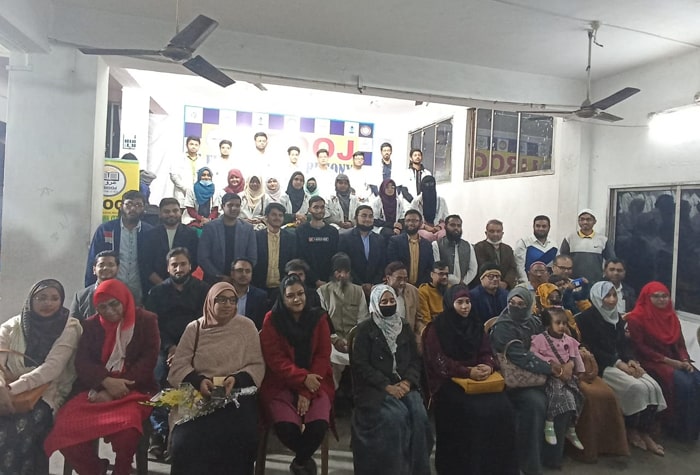
Mr. Ali Shareef was addressing a programme organised for Muslim women engaged in small-scale businesses at the Agriculture Institute of Technology, Bengaluru. The programme was jointly organised by Jamaat-e-Islami Hind, Karnataka, and Rifah Chamber of Commerce, Karnataka, under the theme of community economic development.

Speaking on the occasion, Ms. Fakhra Atiq, Assistant Secretary Markaz JIH and MD Saheliyan, highlighted the importance of business planning and sustainability. She emphasised that proper planning is essential for long-term economic growth and stability and encouraged Muslim women to utilise their skills while remaining mindful of ethical and social boundaries.

Mr. Riyaz Ahmed Kopal, Director of MEWA, introduced various central and state government schemes, urging participants to focus particularly on schemes related to medical services, education, MSMEs, and agriculture. He pointed out that many government schemes fail to reach beneficiaries due to lack of awareness and information.

Delivering the keynote address, Er. Syed Mumtaz Mansoori, President of Rifah Chamber of Commerce, Karnataka, reflected on the responsibilities of women in the light of the Qur’an and Hadith. He cited examples of courageous Muslim businesswomen from early Islamic history, including Hazrat Asma bint Makhzuma, who was engaged in the perfume trade, and highlighted the role of Ansari women who worked in agriculture and supervised date palm cultivation. He also elaborated on various dimensions of trade and commerce.

During the programme, Naheeda, Tayyab Nourishers, Madiha Sheerin, Chocko Turf, Pratibha, and Energy Bar shared their entrepreneurial experiences. Mr. Afnan Hasan, CEO of Hamd Foods and Founder of Pizza Valley, spoke on effective marketing strategies for small businesses.

In his concluding address, Mr. Muhammad Yusuf Kanni, Secretary of Jamaat-e-Islami Hind, Karnataka, remarked that the economic condition of Muslims in the country can be gauged from the fact that many Muslim women are compelled to conceal their identity and work in others’ homes. He explained that the title of the programme, “Azm” (Resolve), symbolises firm determination, strong intent, and perseverance. He emphasised that commitment, planning, and consistent effort are essential for economic empowerment.

Highlighting the initiatives of Jamaat-e-Islami Hind, Karnataka, he mentioned the establishment of Rifah Chamber of Commerce, engagement with traders on a large scale, formation of facilitation societies, efforts toward microfinance initiatives, guidance for small businesses, and a focused approach toward agricultural development. He concluded by stating that sustainable progress is possible only through patience, perseverance, piety, and righteousness.

The programme commenced with a motivational address by Mr. Rafiq Ahmed, National Advisory Member of Rifah Chamber of Commerce. Ms. Tasneem Farzana, Assistant Secretary (Halqa), delivered the opening remarks and explained the objective of the programme, stating that it was named “Azm” to reflect the resolve to support families through halal and ethical trade while seeking the pleasure of Allah and success in the Hereafter.

The responsibilities of the convener were carried out by Ms. Arshiya Fatima Tanzil, while the vote of thanks was presented by Ms. Sameena Bano, General Secretary.

source: http://www.radiancenews.com / Radiance News / Home> Entrepreneurship > Latest News / by Radiance News Bureau / February 10th, 2026

A First for Malegaon: Muslim Women Elected Mayor and Deputy Mayor

Malegaon, MAHARASHTRA :

The Malegaon Secular Front of ISLAM Party and the Samajwadi Party, secured the mayor and deputy mayor posts in the civic body, while AIMIM and BJP stayed away from voting

Malegaon :

Malegaon in Maharashtra has entered a new phase in local politics after the mayor and deputy mayor elections brought a clear win for the ISLAM Party–Samajwadi Party alliance, known as the Malegaon Secular Front. Sheikh Nasreen Khalid was elected mayor, while Shan-e-Hind Nihal Ahmed was chosen as deputy mayor on Saturday.

The election took place in the 84-member Malegaon Municipal Corporation, where 43 votes were needed to secure a majority. With the backing of the Congress, the Malegaon Secular Front reached the required number and took control of the civic body.

Sheikh Nasreen Khalid received 43 votes in the mayoral election. These included 35 councillors from the ISLAM Party, five from the Samajwadi Party, and three from the Congress. Her nearest rival, Shiv Sena candidate Lata Ghodke from the Eknath Shinde group, managed to secure only 18 votes.

All India Majlis Ittehad-ul Muslimeen’s (AIMIM) 21 councillors and the BJP’s two councillors stayed away from the voting process. The BJP, which is part of the ruling alliance at the Centre and in Maharashtra, did not vote in support of the Shiv Sena candidate, dealing a setback to the Shinde faction in Malegaon.

Speaking after her election, Mayor Sheikh Nasreen Khalid said, “This victory belongs to the people of Malegaon. We will work for justice, development, and equal respect for every section of society.”

In the deputy mayor election, Samajwadi Party councillor Shan-e-Hind Nihal Ahmed defeated Shiv Sena’s Advocate Nilesh Kakade by the same margin. Nihal Ahmed secured 43 votes, while Kakade received 18. AIMIM again stayed away, and the BJP did not take part in the vote.

After her win, Deputy Mayor Nihal Ahmed said, “Malegaon has shown faith in secular values. Our duty is to serve the city honestly and listen to the voice of the common people.”

The municipal elections were held on 15 January. Results showed the ISLAM Party emerging as the single largest party with 35 seats. AIMIM won 21 seats, Shiv Sena secured 18, the Samajwadi Party five, Congress three, and the BJP two.

The ISLAM Party was founded by former Congress MLA Sheikh Asif Sheikh Rashid on 20 October 2024. In its first civic election, the party succeeded in winning the mayor’s post, marking a strong start in local politics.

District Collector Ayush Prasad conducted the election as the presiding officer. He said, “The mayor and deputy mayor elections were completed in a peaceful and orderly manner.”

For many residents, the result reflects the political strength and unity of Malegaon’s Muslim-majority population and reinforces their role in shaping the city’s democratic future through the ballot box.

source: http://www.clarionindia.net / Clarion India / Home> Editor’s Pick> India> Indian Muslims / by Team Clarion / February 08th, 2026

Muslims emerging as important players ahead of Assembly elections in Tamil Nadu; welfare initiatives rolled out

TAMIL NADU :

Representational photograph

New Delhi :

Ahead of the Assembly elections in Tamil Nadu, scheduled for April-May 2026, the Muslim community is emerging as an important player in the poll-bound state, with Chief Minister M.K. Stalin rolling out several welfare initiatives aimed at benefiting them. Stalin has laid emphasis on the ruling Dravida Munnetra Kazhagam’s (DMK) historical ties with Muslims.

Muslims in Tamil Nadu constitute approximately 5.86% of the state’s population. Their number in the state was 42 lakh, as per the 2011 Census, and they primarily belong to the Tamil-speaking Labbai, Marakayar, and Rowther communities. With a history dating back to 7th century Arab trade, they are well-integrated, often using Tamil as their native tongue, and exhibit high social, literacy, and economic indicators compared to other regions.

In a powerful message to the ruling Bharatiya Janata Party (BJP) at the Centre, Stalin has claimed that Tamil Nadu is the “only state which is safe for Muslims” and described the DMK as a fortress that protects the minorities in the state. Because of this, incidents like mob lynching could not rear their head in Tamil Nadu, Stalin said at a function at Kumbakonam recently.

The occasion was the State Mahalla Jamaats Conference organised by Indian Union Muslim League (IUML) near Kumbakonam, in which office-bearers of around 8,000 Jamaats from across the state participated. In his address, Stalin launched a scathing attack on the Central Government, accusing it of using central agencies like the CBI, ED, and IT to intimidate political opponents and the public.

The Chief Minister remarked that he did not need to explain the current situation of the country further, implying a climate of pressure from the Centre. His remarks were indicative of the DMK’s strategy to consolidate minority votes by positioning itself as a primary defender against central interference and communal insecurity.

Stalin accused the Opposition All India Anna Dravida Munnetra Kazhagam (AIADMK) of betraying minority communities to appease central authorities in Delhi. He asserted that only the DMK-led Secular Progressive Alliance has the strength to defeat the anti-people AIADMK-BJP alliance in the upcoming Assembly elections.

Stalin announced five welfare schemes for Muslims on the occasion, including the establishment of a third Waqf Tribunal at Coimbatore and the increase of pension for Ulema registered with Tamil Nadu Waqf Board from Rs. 3,000 to Rs. 5,000, and the family pension from Rs. 1,500 to Rs. 2,500.

Stalin also announced that in the first phase of a scheme, 1,000 Ulema will receive the increased subsidy of Rs. 50,000 for buying two-wheelers. The Ulema play a pivotal role as Islamic scholars in Tamil Nadu’s Muslim societies, acting as guardians and interpreters of religious knowledge and law. They are highly respected for their deep understanding of Islamic theology, Sharia law, and the Hadiths, guiding the Muslim community on matters of faith and practice.

The other announcements included creation of burial grounds in City Corporation areas where there is none, and filling of 10 vacant posts of Urdu language teachers at the government high schools and higher secondary schools. Stalin said the efforts of those who were trying to disturb peace had been in vain, and added that they had formed in their own interest, an alliance of those who are servile by threatening with agencies like ED, CBI and IT.

Pointing at AIADMK’s support to the contentious Citizenship Amendment Act (CAA), 2019, the Chief Minister said the Leader of Opposition, Edappadi K. Palaniswami, has been continuing his betrayal of Muslims. “But for AIADMK’s support, the CAA Bill would have been defeated in the Rajya Sabha,” he said. He further pointed out that the DMK government had courageously declared the CAA would not be implemented in Tamil Nadu.

Stalin also referred to the DMK’s vote against the Triple Talaq Bill and Waqf Amendment Bill. “If the BJP alliance comes to power in Tamil Nadu, it will ruin the developed state. Only the DMK alliance has the courage and strength to stop it from coming to power,” he declared.

Pointing out that the DMK cadre have started their door-to-door campaign, he urged the IUML cadre, particularly the youth and women, to campaign for those who will protect and enable their growth. IUML chief K.M. Kader Mohideen, who presided over the meeting, said his party and members of Mahalla Jamaats will ensure the continuance of the Dravida model of governance.

The key aspects of Muslims in Tamil Nadu include their cultural fusion, social harmony, and concentration in towns like Kayalpatnam, Kilakkarai, Adirampattinam, and Melapalayam. Chennai also has a notable Muslim population, comprising about 9.45% of the capital city’s total population.

The Tamil Muslims are known for a unique synthesis of Tamil culture and Islamic faith, with strong traditions in trade and education, particularly in coastal towns. The community is primarily Sunni, with diverse, well-integrated, and long-settled, as well as some Dakani-speaking groups. The presence of ancient mosques like the Kilakaraj Jumma Masjid, built in 7th century, highlights early Islamic contact through maritime trade, while Tamil Nadu is often described as a model for communal coexistence because of its peaceful Muslim community.

source: http://www.indiatomorrow.net / India Tomorrow / Home> Debate / by India Tomorrow Correspondent / February 03rd, 2026

CONNECTA Cultural Exhibition: Reclaiming Human Bonds in an Age of Separation

Kannur, KERALA :

Kannur:

On a January evening, the busy town square of Kannur changed in a big way.  Usually, the square is crowded with people rushing about their daily work. But on this day, it became a calm and welcoming space. People slowed down, reflected, and spoke with one another. They discussed daily habits, shared ideas, learned about different cultures, and understood what others believe in.

This transformation happened because the CONNECTA Cultural Exhibition was inaugurated. The event was organised by the Dialogue Centre Kerala.

A Call to Kindness and Togetherness

The inauguration was not a routine ceremony. It was a strong message inviting people to show kindness and build unity. CONNECTA reminded everyone that all human beings are connected in many ways. This message is especially important today, when people often focus more on differences than shared values.

CONNECTA highlighted common issues, lifestyles, and moral values that unite people, regardless of faith, culture, or background.

CONNECTA is built on three key ideas: Faith, Culture, and Dialogue. These elements can help heal divisions in society. The organisers carefully selected displays that encouraged visitors to reflect and engage in meaningful conversations. Alongside this, the exhibition included many cultural activities that brought people together.

Every display in CONNECTA carried a clear message: faith and culture should unite people, not separate them. The exhibition emphasised that belief systems and traditions are meant to build understanding and harmony.

We live in a world where disagreements are common and often lead to conflict. CONNECTA offers a hopeful vision. It encourages people to recognise differences, respect them, and even celebrate them. According to CONNECTA, diversity is not a weakness; it is what makes us truly human and is something to value.

Message from Ms. A. Rahmathunnissa

Ms. A. Rahmathunnissa, National Secretary of Jamaat-e-Islami Hind and Executive Member of All India Muslim Personal Law Board, addressed the gathering. She spoke about the deep importance of the exhibition’s theme and thanked everyone who worked together to make CONNECTA possible.

She began by highlighting the disturbing patterns that exist in today’s society. She noted that messages of disconnection, isolation, and separation are being heard again and again, shaping attitudes in ways that lead people to demonise one another, push others to the margins, and cut themselves off from the collective. In such a context, the call to connect people becomes not just relevant, but essential. Rebuilding bonds, restoring trust, and bringing people together is the urgent need of our time.

She pointed out that people today are growing increasingly distant from one another. In such times, exhibitions like CONNECTA are deeply needed, as they help rebuild human connections and strengthen relationships. CONNECTA, she said, reminds us to care for one another and to restore lost bonds.

CONNECTA as a Way of Life

Ms. Rahmathunnissa explained that CONNECTA represents a way of living. It encourages personal responsibility, peaceful coexistence, and moral awareness. CONNECTA serves as a guide for ethical and spiritual living, teaching people how to act with integrity and live in harmony with others.

She described CONNECTA as a path rooted in responsibility, social balance, and moral consciousness – principles that can help people lead meaningful lives.

Ms. Rahmathunnissa expanded CONNECTA as an acronym and explained its meaning as

C – Contemplate the signs of God in the universe

She encouraged people to reflect on nature, culture, and humanity. The variety we see in the world is a sign of God’s wisdom. Diversity is not accidental; it is part of the Creator’s design. Differences in creation reflect God’s intention and should be appreciated.

O – Open hearts to compassion and empathy

True faith, she said, softens the heart. It helps people feel compassion for others. Compassion allows us to see others not as strangers, but as fellow travellers sharing the same journey of life.

N – Nurture relationships with all creatures

Human beings have a duty to care for everyone, not just those close to them. Every person, animal, and living being deserves kindness and respect. Caring for the Earth and its creatures is a core human responsibility.

N – Navigate the path of balance and harmony

Extremes can damage communities. Balance creates unity. Harmony grows when justice, mercy, and wisdom work together. This balance strengthens society and brings people closer.

E – Embrace the interconnectedness of all things

No one lives in isolation. Each person’s life is linked to others. Communities thrive because of these connections, even when we are not always aware of them.

C – Cultivate gratitude and mindfulness

Gratitude keeps people aware of what truly matters. Mindfulness reminds us that our words and actions have consequences. Together, gratitude and awareness help people act responsibly and thoughtfully.

T – Transmit love, peace, and kindness

These values are not just beliefs; they must be practised. People must actively live these values and share them through their actions every day.

A – Awaken to our role as ambassadors of God on Earth.

Being ambassadors of Allah, it is our duty to consider everyone and take everyone together.

A Timely and Lasting Message

Ms. Rahamathunnisa expressed hope that CONNECTA would inspire people to practise kindness and responsibility. The exhibition encourages gratitude toward the Creator and care for one another.

CONNECTA promotes dialogue, shared values, empathy, and understanding – qualities essential for harmony in a diverse society. By encouraging connection over isolation and compassion over fear, CONNECTA calls on humanity to honour one another and the Creator who gave life to all.

[The writer is Assistant Secretary, Jamaat-e-Islami Hind, Media In-Charge Women’s Department]

source: http://www.radiancenews.com / Radiance News / Home> Latest News> Report / by Rabia Basri / February 06th, 2026

Madrasa Imdadiya in Tamil Nadu Offers Light to Poor and Blind Muslim Students

Chennai/Ranipet, TAMIL NADU :

Visually-impaired children from deprived Muslim families gain education and dignity at the institution founded by Mohammad Usman in Chennai and Ranipet

Chennai :

In the busy streets of Chennai and surrounding districts, where poverty often limits opportunity, one institution is rewriting the story for visually impaired Muslim children. Madrasa Imdadiya, a semi-residential trust founded by Mohammad Usman, offers education, skills, and dignity to children who might otherwise have spent their lives begging.

Ashraf Khan, a Tamil teacher in a private college in Chennai, was born blind into a poor family. He recalls his early years at a small madrasa for blind students in Melvisharam, near Ranipet, as life-changing. Today, he earns about ₹50,000 per month. “Education saved my life,” he says.

Usman draws a stark contrast. He has often seen blind children on streets with equally deprived parents. “This is what happens with the poorest Muslims. When parents are blind and poor, the children end up on the streets,” he explains. This inspired him to act.

Founded in 2010, the madrasa now runs centres in Chennai and Ranipet, inspiring similar institutions in Pune, Ahmedabad, Aurangabad, and Kashmir. The Tamil Nadu centre, the largest, covers 5,000 square feet and hosts 50 blind students, including ten girls, with hostel staff managing daily needs.

The madrasa blends religious and formal education, filling gaps left by government institutions. Students study the Qur’an, Hadith, and other religious texts in Braille, alongside school and college instruction via audio tools. Children with other disabilities are also accepted, though Braille education is separate.

Usman stresses self-reliance. “Some parents still take financial help from the trust, but many become self-reliant through their educated children. This is the real success,” he says. Students often pursue higher education, vocational training, or government jobs, with some returning as teachers.

The madrasa also produces copies of Qur’an in Braille, distributed free across India and abroad. Each copy costs about ₹3,500 to print. “All our students become Huffaz and complete Class 12 and degree education,” Usman adds.

Mobina (name changed), a blind and disabled girl who lost her father early, is a shining example. With the madrasa’s support, she now teaches in a government school and earns ₹75,000 per month. “Without this madrasa, I would have remained invisible,” she says.

Challenges remain, especially for girls. Deep social barriers, safety concerns, and marriage prospects keep many girls out of school. Usman says patience is key. “Families do not outright reject education but hesitate. Inclusion is about changing attitudes regarding gender, disability, and value,” he explains.

Disability activists note that blind children in poorer districts often lack access to formal education. Government schools exist only on paper, and families may be unaware of disability certificates, scholarships, or assistive technology. Without early intervention, entire families risk cycles of begging or informal labour.

Madrasa Imdadiya shows how targeted community efforts can break generational poverty and empower blind Muslim children. By providing education, accommodation, and skills, the madrasa transforms lives and reinforces that education is a right, not charity.

“Other communities invest in education, but we do not,” Usman remarks, highlighting a broader challenge within the Muslim community. Yet he takes pride in his students’ successes. With over 500 students across India benefiting from similar madrasas, he dreams of a school for blind children in every district and tuition centre in every village.

“Every story here is regrettable. Happy stories go to cities and private schools; they do not come to my trust’s madrasa,” he admits, underscoring the ongoing need for support for India’s most vulnerable children.

source: http://www.clarionindia.net / Clarion India / Home> Editor’s Pick> India / by Team Clarion / January 10th, 2026

Muslim bodies reach out to Tripura villagers rendered homeless

TRIPURA :

Muslim leaders with relief material

Ahead of the holy month of Ramazan, an inspiring example of humanity, compassion, and community solidarity has emerged from the northeastern Indian state of Tripura.

The Northeast India Emirate Sharia and Nadwatut Tameer jointly launched an initiative to assist distressed Muslim families affected by the recent violence in the Shimultali area of ​​Kumarghat Phatikra in northern Tripura.

This humanitarian effort involved the distribution of blankets and other essential household items to the needy families and also provided one-time financial assistance to enable them to live with dignity during the sacred month.

On January 10, a mosque in the Shimultali area of ​​Kumarghat Phatikara, and houses of Muslims around it were damaged. As such, the locals belong to the lower-income group.

This incident left many families suddenly homeless and helpless, ahead of the fasting month.

Although the state government provided one-time compensation to the affected families, at least five families in the area remained in dire straits due to their limited resources. The Northeast India Emirates Sharia and Nadwatut Tamir provided relief to such families.

The delegation leader at the venue of arson

A delegation led by the organisation’s central general secretary, Maulana Ataur Rahman Mazharbhuiyan, visited the affected homes and met with the families. It was ensured that the assistance provided was not merely symbolic but in line with actual needs.

Each affected family received cash assistance starting at a minimum of Rs 5,000. They also received blankets and other essential items.

On this occasion, the organisation’s leadership appealed to affected Muslim citizens to remain patient and reassured them that they were not alone.

They urged them to trust the state and national governments, protect their rights through constitutional means, and refrain from any provocation.

Speakers particularly emphasised that maintaining an atmosphere of social harmony and brotherhood is the need of the hour, so that such incidents are not repeated in the future.

The Tripura government’s Waqf Board has taken a significant step ahead of Ramazan. The Tripura Waqf Board has allocated Rs 3.8 lakh for the restoration of the damaged mosque in Shimultali.

Board Chairman and former MLA Mafswar Ali emphasised that the Waqf Board was working to preserve, maintain, and rebuild minority Waqf properties.

The delegation included Central Office Secretary Maulana Nayeem Uddin Choudhury, Tripura State Nadwa Secretary Abul Kalam, Kailashahar District Emirate Sharia and Nadwatut Tamir General Secretary Maulana Syed Ahmed, District Qazi Maulana Yusuf Ali, prominent Nadwa activist and advocate Kamal M. Masdar, and several other dignitaries.

source: http://www.awazthevoice.in / Awaz, The Voice / Home> Stories / by Nurul Haque, Agartala / January 31st, 2026

Maharashtra Polls: Rubina Feroze Wins Mira-Bhayandar Ward Again, Defying BJP Wave

Mira-Bhayandar (Thane), MAHARASHTRA :

Congress leader retains Prabhag 19 seat, credits public trust, service record and cross-community support

Mira-Bhayandar, Thane :

Congress leader Rubina Feroze has returned to the Mira-Bhayandar Municipal Corporation in Thane district of Maharashtra for a second consecutive term, winning from Prabhag No. 19 and leading all four candidates of her panel to victory. Her win stands out in an election largely dominated by the BJP, which saw several smaller parties wiped out.

Rubina, who first won the ward in 2017, secured a fresh mandate from the same constituency. Prabhag 19 has a mixed population of Marathi and Gujarati speakers, with Hindus, Muslims, Christians and Jains living together. Muslims form a small minority in the ward, yet the results reflected broad support cutting across community lines.

Speaking to Urdu daily Inquilab, Feroze said repeated attempts were made to polarise Mira-Bhayandar on religious and linguistic lines. “Over the last three years, there was a clear effort to push the city towards communal tension. Even the Marathi language was dragged into politics last year,” she said.

“Many parties tried to win votes by invoking religion and identity,” she added. “But in ward number 19, that kind of politics did not work. People judged me by my work and by the stand taken by the Congress.”

Overall, the Congress improved its performance in the civic polls, winning 13 corporator seats compared to 12 in the previous election, helping the party avoid a poor showing in the city. Shiv Sena (Shinde faction), backed by state minister Pratap Sir Naik, was restricted to just two seats.

Describing her victory as a responsibility rather than a personal achievement, Rubina Feroze said, “I thank the people of my ward for trusting me again. I will work harder in the new term and address every issue faced by residents.”

During her previous term, she focused on welfare initiatives and local issues, including helping women access government schemes, organising self-defence classes, holding a job fair for unemployed youth, and conducting career guidance programmes for students. She also assisted cancer patients in securing financial aid from the Municipal Corporation.

Residents cited her accessibility as a key factor behind her re-election. “She listens to people and follows up on issues. That is why people from every community voted for her,” a local voter said.

The result is being widely seen as a signal that development-oriented politics and social harmony continue to resonate with voters, even amid a charged political climate.

source: http://www.clarionindia.net / Clarion India / Home> Editor’s Pick> India / by Team Clarion / January 23rd, 2026

Assam imam uses mosque loudspeaker to save passengers trapped underwater

Sribhumi District, ASSAM :

A mosque imam in Assam used the mosque loudspeaker at dawn to raise an alarm that ultimately saved seven lives after a vehicle plunged into a pond.

The incident occurred early Tuesday in Sribhumi district when a car lost control on the National Highway, skidded off the road and crashed into a waterbody.

The passengers, most of whom were asleep, found themselves trapped as the vehicle began sinking with its windows shut.

Upon hearing the sudden crash, Maulana Abdul Basit, Imam of Jama Masjid and a teacher at Mirabari Madrasa, immediately turned to the mosque’s microphone to alert the community.

He called on residents to rush for help, a local resident told NDTV.

The appeal sparked a swift response. Villagers hurried to the site and launched a rescue effort, eventually pulling all seven passengers out of the submerged vehicle.

“I noticed the car’s lights glowing under the water and realised we had to act without delay,” Basit said, The Observer Post reported.

He added that his actions were driven purely by humanity: “We did not think about religion. Saving lives was all that mattered.”

source: http://www.maktoobmedia.com / Maktoob Media / Home> India / by Maktoob Staff / December 03rd, 2025.

Women-Exclusive Exhibition-cum-Sale in Shivamogga Empowers Women Entrepreneurs

Shivamogga, KARNATAKA :

A one-day Exhibition-cum-Sale was organised by the Women’s Wing of Jamaat-e-Islami Hind, Shivamogga District. The exhibition was inaugurated by the State Secretary of the Women’s Wing, Jamaat-e-Islami Hind, Mohtarma Taskeela Khanum.

The objective of such programmes is to economically strengthen and empower women. In the context of rising inflation, unemployment, and poverty, it was emphasised that addressing these challenges is a shared responsibility, and that women must play an effective role alongside men in the nation’s economic development.

The organisers highlighted that such exhibitions provide women with practical business experience, opportunities to interact with people from diverse backgrounds, and support in developing entrepreneurial ideas. These platforms also enable women to engage in halal business practices within the limits of Shari’ah, while facilitating growth through networking and referrals.

Islam permits women to engage in business, including running enterprises from their homes, as reflected in Islamic history through the example of Khadijah bint Khuwaylid رضی الله عنها, a successful businesswoman. Islam also encourages honest and ethical business practices for both men and women.

Nearly 100 women from across the district set up stalls showcasing clothing, handbags, fancy items, abayas, home-made products, and more. A food court offering a wide variety of food items was another major attraction. Members, associates of Jamaat-e-Islami Hind, and women entrepreneurs from different parts of the district actively participated in the exhibition.

The women-exclusive exhibition attracted around 3000 women visitors, who actively shopped at the stalls. The event was described as highly encouraging, as it highlighted the talents, skills, and entrepreneurial potential of women.

Such exhibitions form part of the organisational plan of Jamaat-e-Islami Hind to promote women’s empowerment. Efforts will be made to strengthen the women entrepreneurs’ network.

Feedback received from participants reflected a high level of satisfaction, with many expressing a desire for similar programmes to be organised regularly. Participants particularly appreciated that the exhibition was organised by women, for women, and exclusively for women, creating a comfortable environment that enabled them to conduct business with confidence.

The organisers were widely appreciated, and participants expressed eagerness to remain connected and take part in future programmes. The total sales from all stalls amounted to approximately ₹3 lakh during the one-day exhibition.

The programme concluded on a positive note, reinforcing the importance of such initiatives in promoting women’s economic empowerment and community development.

[The writer of this report is Member Mashavrati Board Karnataka, and District Organiser of JIH Women’s Wing Shimoga]

source: http://www.radiancenews.com / Radiance News / Home> Entrepreneurship> Focus / by Naseema Begum / February 01st, 2026

Imran Lone trains Kashmiri youth to join Army

Athwatoo Village (Bandipora District, KASHMIR), JAMMU & KASHMIR :

A training session at Imran Lone’s Academy in Srinagar

Hailing from the picturesque village of Athwatoo in Bandipora district, which is located about 10 km from the Line of Control in northern Kashmir, Imran Lone grew up amidst the lack of amenities, and this didn’t help him realise his dream of donning the Army’s uniform.

Today, Imran has become a ray of hope for thousands of Kashmiri Youth who aspire to serve the nation and Jammu and Kashmir by joining the army or police.

Imran Lone says, “I wanted to join the army. But no one guided me at the right time, and I had no information about the procedures. By the time I understood what should be done, I was already too old. It was my dream to join the army and serve the country.”

Imran Lone rappling

Although his dream never came true, today, inspired by that dream, he is preparing Kashmiri youth to join the Police forces and the Indian Army.

Speaking to Awaz-The Voice, Imran explains that the atmosphere in Kashmir is changing. Long-term unemployment and a lack of opportunities have led to frustration and drug addiction in Kashmiri youth. “About 80 per cent of the youth are depressed because there are no jobs here.

Many young people, frustrated, turn to drugs,” he says. Today, the picture is slowly changing. Kashmiri youth have become increasingly interested in army and police recruitment. Today, thousands of young people are participating in recruitment rallies and working hard in training camps.

Imran Lone is part of this change. He has started a free fitness academy for young people preparing for military and police recruitment. Training takes place after Fajr prayers in the morning and at 4 p.m.

Imran Lone in snowy wilderness

His academy trains not only boys but also a large number of girls. Recently, seven girls and thirty boys from his academy were successful in the constable recruitment. Currently, he is preparing students for recruitment under the Agniveer scheme.

Imran is a callisthenics practitioner. It is a martial art and fitness system that develops strength, balance, and control using one’s own body weight. Through exercises like push-ups, pull-ups, squats, and planks, it not only improves strength and endurance but also promotes injury prevention and overall functional fitness.

Callisthenics is considered highly effective in improving abilities like striking, grappling, and stability. This is the first and currently the only academy for this art in Kashmir, run by Imran Lone.

Imran’s own story was no less than a struggle. His village lacked even basic amenities like roads, electricity, and internet. To attend school, he had to walk seven to eight kilometres daily, braving the harsh weather. Due to circumstances, he was forced to leave school midway. His search for further education and a life path brought him to Srinagar.

Imran Lone

His early days in Srinagar were difficult. To make ends meet, he worked as a waiter, dishwasher, and salesman in hotels. But he harboured a burning desire to do something different. From childhood, he was inspired by the films of Bruce Lee and Jackie Chan.

Those films drew him to martial arts. Imran says that at that time, there were martial arts coaching clubs on almost every street in Srinagar. So he decided that if he wanted to do something, he had to do something different.

This is where his life took a new turn. He took up callisthenics, a highly demanding and disciplined sport. After years of hard work and practice, he mastered the art. Today, it is his identity and primary source of livelihood.

He began creating and posting callisthenics and fitness videos on social media, which quickly became popular. Today, Imran Lone is considered one of Kashmir’s leading social media influencers. As a fitness coach, he not only trains thousands of young people but also strengthens them mentally.

Imran believes that social media has become a highly effective medium for spreading awareness about fitness. “If used in the right direction, social media can help lift young people out of addiction and despair,” he says. Today, his earnings from social media are his primary source of income, but his contribution is even greater than that, in the change he is bringing to the lives of young people.

Inspired by the Para Forces, Imran aims to provide the same level of training to young people. Most of the young people who come to his academy are from economically disadvantaged backgrounds. Imran does not charge them any fees, knowing that a timely opportunity can change someone’s entire life, as it did for him.

source: http://www.awazthevoice.in / Awaz, The Voice / Home> Stories / by Danish Ali, Srinagar / January 14th, 2026