RBTC is a group of 100 Muslim women honourees at national-level and 100 at state-level
Lucknow:
Muslim women professionals, in a novel initiative, will now mentor girls from socially weaker sections with ‘Rising Beyond the Ceiling’ (RBTC) launching its free mentorship programme on the International Women’s Day.
RBTC is a group of 100 Muslim women honourees at national-level and 100 at state-level. These women will now mentor girls on professional, educational, emotional, and financial matters.
“Why is a Muslim woman considered illiterate if she is wearing burqa or naqaab? If provided an opportunity, she can achieve anything she desires,” said Sabiha Ahmad, RBTC Uttar Pradesh coordinator and UP Sunni Waqf Board member.
“This is an opportunity we will provide to young girls from socially weaker sections”, she added.
Explaining further she said that RBTC is not just helping in breaking the stereotype about the Muslim women but is also contributing to nation building.
“Bringing women from different areas of work, such as the women in uniform, in academics, arts, journalism and others, for mentoring helps in building self-confidence in young girls and gives wings to their aspirations,” she said.
“Regardless of religion, any girl with the aspiration to work in any field can get in touch with the organisation to seek whatever help is required. The mentorship is free of cost, and we have started inviting submissions for it apart from the current mentees being guided already,” she added.
source: http://www.ummid.com / Ummid.com / Home> Business & Economy / by IANS / March 08th, 2022
When bullock carts were the prime mode of transport, an Arab businessman was pained to see the beasts carry loads up the steep, rough climb.
In the 1930s, when bullock carts were the prime mode of transport, an Arab businessman was pained to see the beasts carry loads up the steep, rough climb from Hebbal Tank. Their hoofs wore thin very soon. So, he levelled the path, spending Rs 10,000 out of his pocket. When this came to the notice of Sir Mirza Ismail, the then diwan of Mysore, he promptly informed Krishnaraja Wadiyar. A private citizen spending for public good, the king thought, reflected badly on his administration. He made good the businessman’s expenses and named the area at the junction of Bellary Road, Jayamahal Road and CV Raman Avenue in his honour. Today , we call it Mekhri Circle.
The selfless businessman was M Enayathulla Mehkri (not ‘Mekhri’ as it is spelt today). The Enayathulla Mehkri Square was inaugurated by Sir John Hope, governor of the Madras Presidency , in April 1935.The space had a lamp post with five lights. A garden around it was maintained by ward officers. Later, in 1965, RM Patil, minister of home and municipal administration, notified it as Enayathulla Mekhri Circle through a notification in the state gazette.
Mehkri’s story , however, goes beyond the one philanthropic initiative he is most known by.
Mehkris were originally based near Medina in Arabia and migrated to India after the Turkish invasion. The family’s legacy dates back to more than 600 years. “While people believe that our name is derived from a place called ‘Mehkr’ in Syria, documents suggest that we were named after Mekhar in Maharashtra,” said Fazal Mehkri, nephew of Enayathulla Mehkri.
In India, the family held key posts under the Mughals and the Mysore maharajas.
Enayathulla Mehkri, born in 1898, went on to become a freedom fighter. At 17, he joined the Indian National Congress.
A contractor by profession, he participated in the freedom struggle, and was jailed for six months at Madras Central Jail along with C Rajagopalachari and EV Ramaswamy Naicker.
Mehkri was the municipal commissioner (between 1947 and 1948) and a councilor of the City Corporation for 16 years before that. He was not only the only member from Karnataka to be on the Advisory Council of the Freedom Fighters Cell of the AICC, he also headed the Karnataka Freedom Fighters’ Association till his death on November 28, 1990.
source: http://www.economictimes.indiatimes.com / The Economic Times / Home> Panache> ET Magazine> Travel> Business News> Magazine / by Divya Shekhar, ET Bureau / April 28th, 2016
But for the Bahujan Samaj Party (BSP) , and at a few places other parties, the number of Muslims in the Uttar Pradesh assembly could have been doubled.
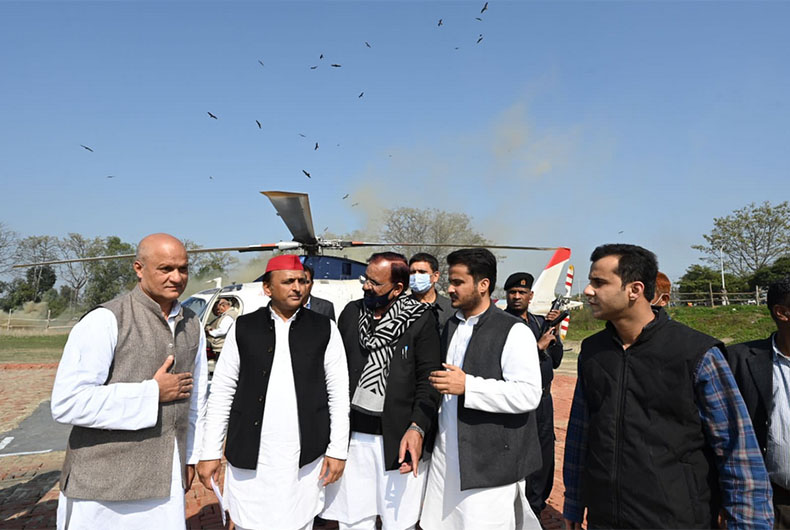
[Mohammed Abdullah Azam Khan with SP Chief Akhilesh Yadav in a file photo.]
Uttar Pradesh Election 2022:
The newly elected Uttar Pradesh Assembly will have 33 Muslims in the house of 403, as per the final result of the 2022 UP Polls announced by the Election Commission of India Thursday.
A total of 24 Muslims had won the election in 2017. It was the second lowest number in the history of Uttar Pradesh Assembly and down by 45 if compared with the strength of Muslims in the 2012 Assembly .
This time around Muslims have improved their representation in the Uttar Pradesh by 08. But for the Bahujan Samaj Party (BSP) , and at few places other parties, the number of Muslims in the Uttar Pradesh assembly could have been doubled.
This is because as many as 31 Muslims who contested the 2022 UP Elections lost their seat by a whisker, and by the margin of votes which is far less than the votes polled by their rivals in the BSP.
During the electioneering process, it was alleged that Mayawati’s BSP was fielding candidates and giving tickets in such a way that could prove damaging for Samajwadi Party (SP) candidates – especially the Muslims in the race. A quick analysis of the 2022 UP Election result proves this was correct.
It was also alleged that Asaduddin Owaisi’s AIMIM is in the electoral race to divide Muslim votes. If it was really a design then the election result analysis proved otherwise.
The 2022 UP election results also showed that Muslims in the state rejected Team Owaisi. Not only that Guddu Jamali, the one man who was sure to win the 2022 elections, AIMIM Uttar Pradesh President Shaukat Ali had to surrender his deposit.
List of Muslims who won 2022 Uttar Pradesh Elections
1.Mehboob Ali of Samajwadi Party from Amroha 2. Ataur Rehman of SP from Baheri 3. Umar Ali Khan of SP from Behat 4. Zahid of SP from Bhadohi 5. Shazil Islam Ansari of SP from Bhojipura 6. Mohammad Faheem Irfan of SP from Bilari 7. Naseer Ahmad Khan of SP from Chamraua 8. Saiyada Khatoon of SP from Domariyaganj 9. Nafees Ahmad of SP from Gopalpur 10. Mohd Tahir Khan of SP from Isauli 11. Mohd. Arshad Khan of SP from Jaunpur 12. Nahid Hasan of SP from Kairana 13. Mohammad Hasan of SP from Kanpur Cantt. 14. Kamal Akhtar of SP from Kanth 15. Shahid Manzoor of SP from Kithore 16. Zia Ur Rehman Barq of SP from Kundarki 17. Armaan Khan of SP from Lucknow West 18. Abbas Ansari of Suheldev Bharatiya Samaj Party from Mau 19. Rafiq Ansari of SP from Meerut 20. Suhaib Alias Mannu Ansari of SP from Mohammadabad 21. Mohd Nasir of SP from Moradabad Rural 22. Tasleem Ahmad of SP from Najibabad 23. Alam Badi of SP from Nizamabad 24. Nadira Sultan of SP from Patiyali 25. Fareed Mahfooz Kidwai of SP from Ram Nagar by 261 votes 26. Mohammad Azam Khan of SP from Rampur 27. Iqbal Mehmood of SP from Sambhal 28. Ziyauddin Rizvi of SP from Sikanderpur 29. Haji Irfan Solanki of SP from Sishamau 30. Ghulam Mohammad of RLD from Siwalkhas 31. Mohammad Abdullah Azam Khan of SP from Suar 32. Navab Jan of SP from Thakurdwara 33. Ashraf Ali Khan of RLD from Thana Bhawan
Muslims who lost 2022 UP Polls by a whisker
1. Shabbir Abbas of BSP from Agra North 2. Zafar Alam of SP from Aligarh [Razia Khan of BSP polled 18273 votes] 3. Rais Ahmad of SP from Badaun [Rajesh Kumar Singh of BSP polled 23135 votes] 4. Mohd Ahmed Hameed of RLD from Baghpat [Arun Kasana of BSP polled 12863 votes] 5. Yasar Shah of SP from Bahraich by 4078 votes [Naeem of BSP polled 10299 votes, Rashid Jamil of AIMIM polled 2240 votes] 6. Arshad Jamal Siddiqui of SP from Bhojpur 7. Firoz Khan of SP from Bikapur by 5560 votes [Sunil of BSP polled 21385 votes] 8. Afzaal Kausar of SP from Biswan by 10478 votes [Hashim Ali of BSP polled 24086 votes] 9. Mohammad Yunus of SP from Bulandshahr by 25830 votes [Mohd. Mobin Kallu Qureshi of BSP got 24373 votes] 10. Naim ul Hasan of SP from Dhampur by 203 votes [Thakur Moolchand Chauhan of BSP got 38993 votes] 11. Aslam Ali of SP from Dhaulana by 12628 votes [Basit of BSP got 32999 votes] 12. Saifurrahaman Urf Chhuttan Bhai of SP from Firozabad by 32955 votes [Shazia Hasan of BSP got 37643 votes] 13. Shaz Ishaq of SP from Koil by 5028 votes [Mohd Bilal of BSP got 23016 votes] 14. Sultan Beg of SP from Meerganj 15. Mohd Adil of SP from Meerut South by 7942 votes [Dilshad Ali of BSP got 39857 votes] 16. Daud Ahmad of SP from Mohammdi by 4871 votes [Shakeel Ahmad Siddiqui of BSP polled 31144 votes] 17. Mohd Yusuf Ansari of SP from Moradabad Nagar by 782 votes [Irshad Hussain of BSP polled 14013 votes, Rizwan Qureshi of Congress polled 5351 votes and Waqi Rasheed of AIMIM polled 2661 votes] 18. Ansar Ahmad of SP from Phaphamau by 14324 votes [Om Prakash of BSP got 27286 votes] 19. Mohd.Mujataba Siddiqui of SP from Phulpur by 2732 votes [Ram Taulan Yadav of BSP has polled 33036 votes] 20. Fasiha Manzar Ghazala Lari of SP from Rampur Karkhana by 14670 votes [Pushpa Shahi of BSP got 30493 votes] 21. Musarrat Ali of BSP from Sahaswan (defeated by SP candidate) 22. Abdul Mannan of BSP from Sandila by 37103 votes [Sunil Arkvanshi of SBSP got 24655 votes] 23. Mohd Asif Khan of SP from Shahabad by 6479 votes [Ahivran of BSP polled 37475 votes] 24. Tanveer Khan of SP from Shahjahanpur by 9313 votes [Sarvesh Chandra Dhandhu of BSP got 8726 votes] 25. Mohhamad Aslam Rainee of SP from Shrawasti by 1457 votes [Muhammad Ramjan of Congress and Ahtishamul Haque Khan of Peace Party have together polled 8125 votes] 26. Haidar Ali Khan Alias Hamza Mian of Apna Dal defeated by Azam Khan 27. Dilnawaz Khan of RLD from Syana 28. Mohd Naim of SP from Tiloi 29. Zeba Rizwan Independent from Tulsipur by 35781 votes [Abdul Mashhood Khan of SP got 42815 votes] 30. Hasib Khan of SP from Utraula by 21769 votes [Dhirendra Pratap Singh Urf Dhiru Singh of Congress polled 12944 votes and Ram Pratap of BSP got 9669 votes] 31. Ashfaque of SP from Varanasi North
source: http://www.ummid.com / Ummid.com / Home / by ummid.com News Network / March 11th, 2022
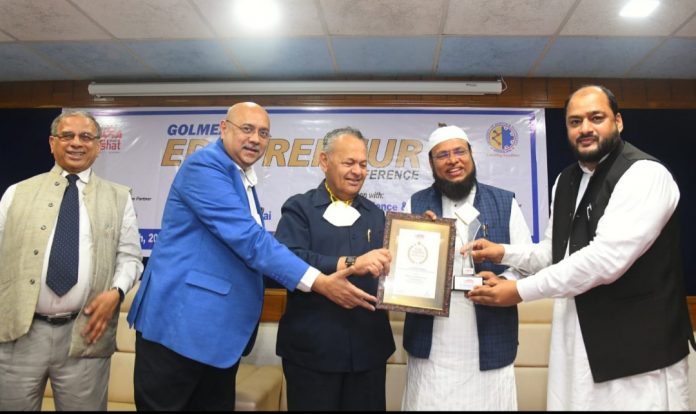
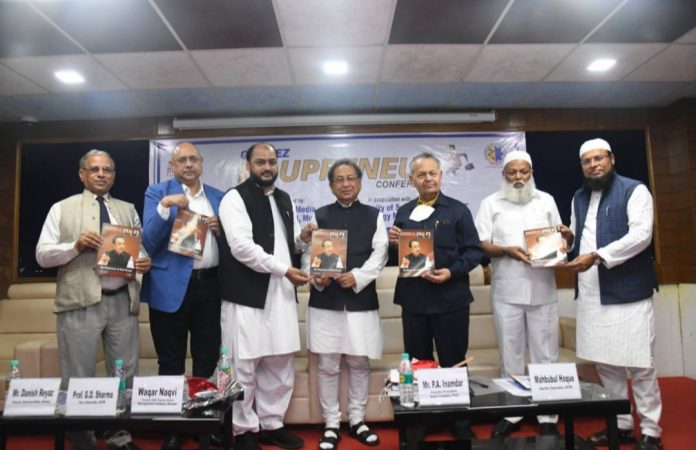
Mahbubul Hoque, Chancellor of USTM receiving Maeeshat Edu Doctor Award-2022 from the hands of P. A. Inamdar, Founder President, Azam Campus, Pune (centre) at Golmez Edupreneur Conference held at USTM on March 10, 2022
9th Mile, Khanapara, Ri Bhoi :
Maeeshat Media Pvt. Ltd, India’s first media outlet dedicated to covering economic activities of minority communities, has given away its 11th edition of business awards at the Golmez Edupreneur Conference held in association with the University of Science and Technology Meghalaya (USTM) here today. Mahbubul Hoque, Chancellor of USTM and P. A. Inamdar, Founder President, Azam Campus, Pune was conferred with Edu Doctor Award-2022 while Dr Abdul Qadeer, Founder Chairman, Shaheen Group, Karnataka was conferred with the Edupreneur of the Year Award.
The keynote address of the conference was delivered by Dr Frank F Islam, Chairman and CEO of FI investment group, USA. The conference has been attended by economic experts, business leaders, entrepreneurs, social workers, and professionals from across India.
Addressing the gathering of entrepreneurs, P. A. Inamdar urged, “Let us not talk about anything negative. We have to talk how much we have achieved and how far we have to achieve for development.” Emphasizing on imparting spoken English in all vernacular medium schools, he said that technology can create a much better environment and contribute to educational progress. He suggested all to think about how to empower neighbourhood small institutions.
(From left) Prof. G. D. Sharma, VC, USTM, Waqar Naqvi, Managing Partner, RDVLLP Mumbai; Danish Reyaz, Managing Editor, Maeeshat Media; M. Nurul Islam, Founder General Secretary, Al Ameen Mission, Kolkata; P. A. Inamdar, Founder President, Azam Campus, Pune; Dr Abdul Qadeer, Founder Chairman, Shaheen Group, Karnataka and Mahbubul Hoque,
Delivering the keynote address in the inaugural session, Dr Frank F Islam emphasized on the need for edupreneurship in India. “Much has been done for the development of education among the minorities in India, and unfortunately much remains to be done”, he said.
Welcoming the guests, Mahbubul Hoque said that through institution building one can change the environment of a particular place and bring progress to the people of the area. He thanked all the participants for coming over to the North East and for their desire to contribute for the development of the people through promotion of education. “We as Indians have to think for development of every citizen, not simply of the minorities”, he added.
Speaking on the occasion, Prof G. D. Sharma, VC, USTM mentioned about National Education Policy-2020 and said that USTM is preparing 82 teachers for technology oriented courses so that the university becomes a global university through technology. “We have to establish peace in the North East region though the means of education”, he added.
A magazine of Maeeshat Media was released on the occasion by M. Nurul Islam, Founder General Secretary, Al Ameen Mission, Kolkata and other dignitaries.
Some of the distinguished participants in the conference include: Waqar Naqvi, Former CEO, Taurus Asset Management Company, Mumbai; Danish Reyaz, Managing Editor, Maeeshat Media; Munir uz Zaman Deshmukh, Pearls Academy, Aurangabad; Rashid Nayyar; M Mohammed Tahir Madani, M Burhanuddin Qasmi, Director, MMERC, Mumbai; Moulana Mohammad Ilyas Nadvi, GS, AHAN Islamic Academy; Moulana Mutiur Rahman Madni, Founder, Imam Bukhari University, Kishanganj; M Azizurrahman, Founder, TCIS, Malda, Dr Nazibur Rahman, Principal, Kaliachak College, Malda; M Wajihuddin, Assistant Editor, Times of India, Mumbai; Zaya Ahmed from Delhi; Izhar Khan and Affan Ahmed Kamil from Mumbai.
source: http://www.muslimmirror.com / Muslim Mirror / Home> Indian Muslim> Positive Story / by Muslim Media Networks / March 10th, 2022
The Frank and Debbie Islam Incubation Center at AMU mentors the women in their craft, upgrading their skill base and providing them design and marketing support.
Aligarh:
The Frank and Debbie Islam Incubation Center of the Department of Business Administration at Aligarh Muslim University (AMU) is crafting the future of Muslim Women Entrepreneurs in Uttar Pradesh and elsewhere, and definitely the bells should toll for it on the Women’s Day that falls on March 8.
The Frank and Debbie Islam Incubation Center at AMU mentors the women in their craft, upgrading their skill base and providing them design and marketing support. This enables the incubation center to bring applique craftswomen to get trained in entrepreneurial skills to help start their small businesses.
This project was conceived during the world Alumni summit of 2008 when Mr. Ameer Ahmad (MBA1978) and Mr. A.G. Danish (MBA1988) committed Rs. 1 crore and Rs. 10 Lakh respectively for the building project.
The project got a major fillip when Dr. Frank Islam, a Washington-based AMU alumnus originally from Azamgarh and his wife Debbie Driesman, through their Frank Islam and Debbie Driesman, pledged USD 2 million for this project.
In addition to the contribution of Dr. Frank Islam, the project received contributions from other alumni, well-wishers, students, faculty members, and others from India and all over the world.
This building of this innovative project is constructed on a 3-acre plot in the Sir Syed House Complex. The Complex is the new home of the Department of Business Administration and Faculty of Management Studies and Research. The building is a state-of-the-art facility but maintains the architectural legacy of AMU.
The construction began in May 2015 and the foundation stone was laid on 15th February 2016. The Project was completed in a record time of two years, creating a facility of 50000 sq feet, containing an academic block, a faculty-cum-administrative block, a facility block comprising library & IT facilities, and open areas. Phase 1 of this Building was inaugurated on 12 Feb 2017 and it was occupied in June 2017.
Phase 2 of the project is being built with the help of Dr. Nadeem Tarin, another distinguished and committed alumnus of AMU. This phase shall house a seminar hall, an incubation center, additional classrooms, including facilities for executive training.
The additional facilities will broaden the scope of the MBA Department’s offering that has already started two additional Master’s programmes, namely MBA (Islamic Banking and Finance) and MBA (Hospital Management). Another MBA for working executive is due to be started soon. In addition, phase 2 shall provide additional space for other incubating start-ups.
source: http://www.ummid.com / Ummid.com / Home> Business & Economy / by Syed Ali Mujtaba / March 08th, 2022
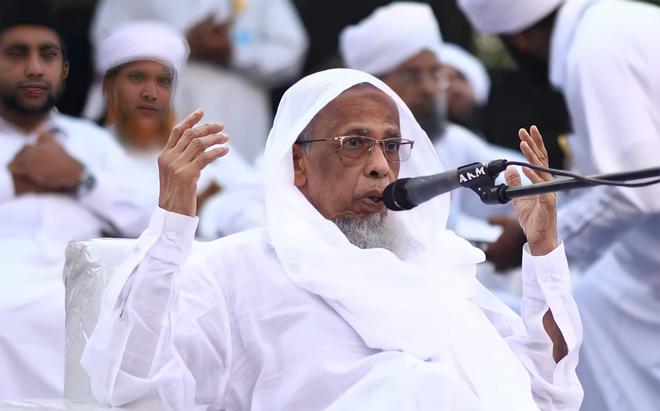
P.T. Kunhammu Musliar, popularly known as Kottur Ustad, leading the opening prayer at a function held to celebrate the 60th year of his teaching career at Kottur near Kottakkal on Monday. | Photo Credit: SAKEER HUSSAIN
Educational institution will be set up to mark 60th year of Kottur Ustad’s teaching career, says Kanthapuram
Veteran Islamic scholar P.T. Kunhammu Musliar, popularly known as Kottur Ustad, was felicitated at a function held to mark the 60 th year of his dars or teaching career at Kottur near Kottakkal on Monday.
His disciples from across the State, many of them veterans including leading fiqh (jurisprudence) scholar Ponmala Abdul Khadir Musliar, attended the function and prayed for their teacher whom they endearingly called Tajul Muhaqqiqin.
Sunni leader and Grand Mufti Kanthapuram A.P. Aboobacker Musliar led a special prayer for Samastha Kerala Jamiyyathul Ulama vice president Syed Hyderali Shihab Thangal, who died on Sunday.
Delivering the keynote address, Mr. Kanthapuram announced that an educational institution named Masalik Attariqa Al Muhammadiyya would be set up at Kottur to mark the 60 th year of Kottur Ustad’s dars.
Kanthapuram A.P. Mohammed Musliar, head of the Department of Fiqh at Markaz Sharia College, inaugurated the function. Samastha Kerala Jamiyyathul Ulama (AP group) president E. Sulaiman Musliar presided over the function. Fiqh scholar Ponmala Abdul Khadir Musliar, Haj Committee chairman C. Mohammed Faizi, and Kerala State Sunni Students Federation general secretary Nizamuddin Faizi spoke.
E. Sulaiman Musliar and Markaz president Syed Ali Bafaqi were also felicitated at the function.
Kottur Ustad, who has been a member of the Samastha Mushawara, the highest body of Islamic scholars, since 1989, led the opening prayer. He is estimated to have more than 20,000 students spread across the country.
He won the Imam Bukhari Award given by the Bukhari Institutions, Kondotty, in 2019. In 2018, he won Madin Academy’s Syed Ahmed Al Bukhari Award for his contributions to the Arabic language. He was the winner of the Imam Gazzali Award instituted by the Darul Ma’arif, Kodampuzha, in 2010.
source: http://www.thehindu.com / The Hindu / Home> News> National> Kerala / by Staff Reporter / Malappuram – March 09th, 2022
A “Hope Registry” has been set up to help people who are in need of kidney transplant but unable to get it due to various reasons.
Fr. Davis Chiramel, found, Kidney Federation of India, is the chief patron of the registry. According to Jawad Ahmed, administrator, many people are forced to depend on dialysis because they are unable to do the transplant owing to lack of matching kidneys or other reasons.
The registry wishes to help these people due to swap transplant method. Both donors and receivers need to register their details. If the donors are incompatible with the recipients, their kidneys are exchanged with another pair. It is like a chain which continues till the first recipient gets a matching kidney. Fr. Chiramel said in a release that this was a legally accepted procedure and it was a first-of-its-kind initiative in the country. It was expected to stop social evils such as organ trade, he said.
Dr. Jawad said that the registration would be free and the cooperation of nephrologists in all the hospitals was being sought.
source: http://www.thehindu.com / The Hindu / Home> News> National> Kerala / by Special Correspondent / March 10th, 2022
As Urdu Day approaches, Hyderabad-based author Jeelani Bano speaks about her bond with the language.
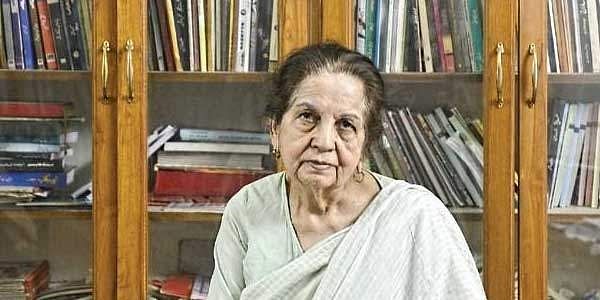
Jeelani Bano(Photo | R Satish Babu)
Jeelani Bano, 80, looks frail in her sea green sari with that mop of pepper-and-salt hair. Her demeanour is genteel, but only a talk about her stories on bonded labour, her aapa Ismat Chughtai and Progressive Writers’ Movement lights up her eyes. The decades pass on her soft wrinkled face as she turns pages of her autobiographical book Main Kaun Hoon and takes you back to an era gone by that’s still alive in her Banjara Hills house in Hyderabad, serenely tucked in another time-frame.
As Urdu Day approaches on November 9, she speaks about her association with the language. Many of her stories appear to be of our time. Jagirdari may have gone but capitalistic clutches don’t let go of the bonded slavery. Her story Paththaron ki Barish is heart-wrenching. Bano, who has authored 22 books, says, “A lot of writers of our time revolted against this inhuman system. Something also sparked in me and I wrote such stories. But today also, the situation of daily labourers is the same.”
Her book Aiwan-e-Ghazal, which tells the tales of feudal landlords in Hyderabad, has been translated into 14 languages. She then talks about her dear aapa—Ismat Chughtai—the firebrand writer.
“She was also from Badayun in Hyderabad, where I was born. She was friends with my mother and supported me a lot in writing,” says the 2016 NTR National Literary Award winner showing the letters Chughtai sent to her. Ismat wrote to her, “After marriage, respect your writing as much as you would respect your husband and in-laws.” In ’70s, when Jeelani Bano and her husband Anwar Moazzam, poet and writer, went to Pakistan, famous poets and scholars came to meet them at the border. She shares, “Nobody wants to understand what people of both the nations want. Sarhadein dilon ko nahin baant saktin (Borders can’t divide hearts).”
When once she went to the US, a scholar asked her, “You’re a Muslim woman. How did you get permission to write?” To this, she replied, “Nobody has stopped me from writing. Perhaps you haven’t been to India or else you wouldn’t have asked me this.”
Renowned poets and scholars such as Shakeel Badayuni, Makhdoom Mohiuddin, Jigar Muradabadi and Kaifi Azmi were hosted at her Mallepally home. But, she along with other children weren’t allowed to go to the baithaks. The young Bano would watch these poets, while playing in the courtyard.
source: http://www.newindianexpress.com / The New Indian Express / Home> Magazine / by Saima Afreen / November 05t, 2016
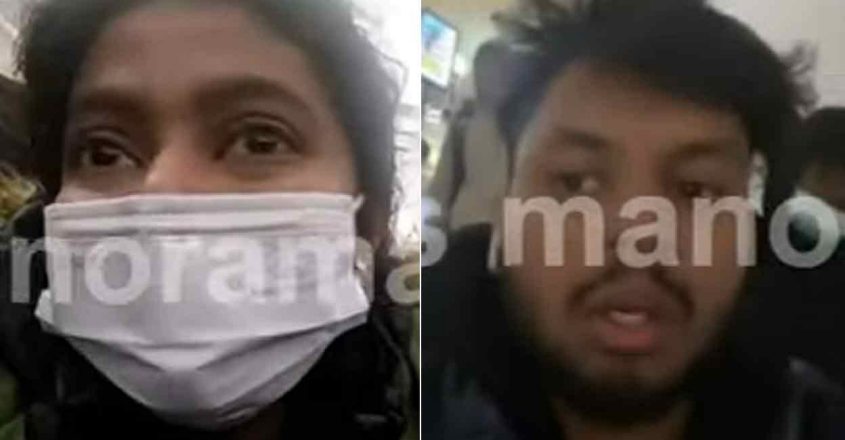
Hasna Iqbal (left) and Muhammed Nahid. Screenshots/ Manorama News
“They may shoot us,” said Hasna Iqbal, a Malayali student stranded in Kharkiv, the northeastern Ukrainian city that is under immense shelling from Russian forces on Wednesday.
Talking to Manorama News from the Vokzal metro station in Kharkiv at 3.45 pm (7.15 pm IST), the second-year medical student in Ukraine said they are unsure of what might happen next.
The student’s response comes hardly an hour after the Embassy of India in Kyiv issued a couple of advisories asking Indian citizens in Kharkiv to exit the city immediately.
The Embassy had reportedly acted in a haste based on Russian inputs. Vladimir Putin’s forces had been launching heavy attacks on the northeastern city the last two days.
“I don’t know what the Indian government wants us to do. Here there is a curfew from 4 pm to 6 am. If we are found outside during the curfew, they will shoot out,” Hasna said, braving tears. “There is heavy shelling and on top of it, we can hear gunfires.”
According to the Ministry of External Affairs, Kharkiv has, possibly, the biggest concentration of Indians in Ukraine. “At least 1,000 Indians are here,” Hasna said.
“Many have left by foot holding Indian flags. We don’t know what has happened to them. Things are getting worse here,” she said.
“Some of us reached the railway station at 6 am and three trains have left since. But not an Indian was allowed to board. They are giving preference to Ukrainians,” said Hasna.
“We’ll be here and hope to be safe, Insha Allah,” she added.
‘They aimed guns at us’
Another Malayali student Muhammed Nahid, who spoke to Manorama soon after, said they have not been contacted by the Embassy yet today.
“We reached the railway station at 5 am. They are boarding Ukrainians. They (Ukrainian forces) point guns at us and fired into the sky. We don’t know what to do,” said Nahid.
“We are still hanging around hoping we may be able to board a train somehow. We are running out of water and food,” he added.
source: http://www.onmanorama.com / OnManorama / Home> News> Kerala / by Onmanorama Staff / March 02nd, 2022
Payal Panwar, a final year medical student who returned to her Kotdwar home in Uttarakhand, said the stranded students need help of the Indian government and the Indian embassy people more.
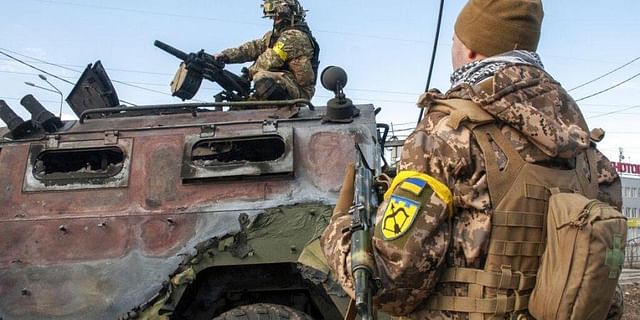
Ukrainian soldiers inspect a damaged military vehicle after fighting in Kharkiv, Ukraine, Sunday, Feb. 27, 2022. (Photo | AP)
Indore / Aurangabad / Dehradun :
Depleting food stocks and long queues for water are adding to the trauma of stranded Indian students in war-hit Ukraine awaiting evacuation amid reports of some being roughed up by security personnel and spending freezing nights out in the open.
As Indian and Ukrainian authorities on Monday described the situation as “complex” and “very difficult” in terms of evacuation of people, the students, joined by their parents, appealed to the Indian government to expedite efforts to evacuate them.
Russia launched its attack on Ukraine last Thursday.
“I want my son in front of my eyes as soon as possible,” said Kamini Sharma, who is praying for the safe return of Vibhor Sharma (22), a resident of Indore in Madhya Pradesh.
Vibhor is pursuing a medical course at the Ternopil National Medical University.
Payal Panwar, a final year medical student who returned to her Kotdwar home in Uttarakhand, said the stranded students need help of the Indian government and the Indian embassy people more while they are still inside Ukraine rather than when they have moved out of the war-torn country.
“The problems end when you cross the borders but while you are inside Ukraine it is really difficult with food supplies running out and no cash in ATMs. Stranded students need the help of Indian authorities while they are still inside Ukrainian borders,” said Payal, who studies in Ivano-Frankivsk city in western Ukraine.
Recounting her ordeal, she said around 60-70 Indian students had to book a bus and also walk a distance of 8-10 km in freezing cold to reach the Romanian border to get out of Ukraine.
Many ATMs could not dispense cash and long queues of men and women waiting for their turn for food supplies were seen at several points, she said.
Though happy and relieved to be reunited with her parents, Payal and her parents are worried about her brother who was still stuck in Kharkiv.
An Indian student who managed to reach the Kyiv train station said Ukrainian guards were not allowing students to board trains and also beating up people and made a fervent appeal to the Indian embassy to evacuate them as soon as possible.
“It’s getting difficult for us to stay here,” Ansh Pandita told PTI, as scores of Indian students, including women, sat huddled together at the teeming Vokzal railway station in the Ukrainian capital, holding a large tricolour aloft so they could be recognised in the crowd and also so no one from the group gets lost.
The group of about 100 students managed to reach the station but no one could board a train.
“Ukrainian soldiers are not allowing us to board the train to Hungary. In fact, they are not allowing any international resident to get out,” Pandita, a student of Taras Shevchenko National Medical University in Kyiv, said over the phone from the station.
“We requested them to at least allow the girls to go but that request too fell on deaf ears.”
The opposition Congress also alleged that Indian students were assaulted by security personnel on the Ukraine-Poland border.
“Students are crying out for help, requesting the Modi government to intervene but to no avail.
We saw a video last night on the Ukraine-Poland border where students are being beaten up,” party spokesperson Ragini Nayak told reporters.
India managed to accelerate its efforts to get its nationals out of Ukraine in the last 24 hours, though the situation on the ground continues to be “complex and fluid” in terms of evacuation of people, the Ministry of External Affairs (MEA) said.
It said a total of 1,396 Indians were brought back home in six flights as part of the evacuation mission and the total number of Indians who have left Ukraine since India issued the first advisory earlier this month is around 8,000.
An estimated 20,000 Indian nationals, mainly medical students, reside in Ukraine.
As the battle for Kharkiv rages on, at least three students from Maharashtra pursuing medicine in the city located in northeast Ukraine, narrated how they had to stand in long queues for a can of water, drink soda, stay in bunkers, and risk their lives to fetch food items amid bomb blasts.
Hritik Bapulohar, a first-year medical student from Palghar, said he had reached Kharkiv city only a couple of months back.
“We can hear bomb explosions as they are taking place in a periphery of around 500 metres from where we are currently staying in Kharkiv. We are struggling even for basic needs. As many as 500 students are staying in two bunkers for the past four days. When the curfew was lifted some of them left the hostel. The situation is worsening fast. I appeal to the Indian government to evacuate us urgently,” he told a Marathi news channel.
Bapulohar’s senior Aishwarya Patil, who hails from Sangli, said drinking water stocks have exhausted at their Kharkiv hostel.
“We are currently using soda water for drinking. After standing in queues stretching up to 2 km, we can get a can of five-litre water. Food prices have tripled since the war began. We are taking huge risks by stepping out to purchase food items. We are hiding as bomb blasts are happening here. During nights, we are given an hour for cooking by authorities. We cook using mobile flashlights,” she said.
Shivanjali Yadav, also from Sangli, said students and other Indians are asked to stay in bunkers in Kharkiv even though we don’t have much food and water with us.
“The students trapped in a bunker in the Kharkiv region are facing difficulties in arranging food, water. Some of them have fallen sick in freezing temperatures, few blankets, and dipping oxygen. There are also no transportation facilities available for them,” said one of the students who returned to Odisha.
Several students wanting to return to India from Ukraine had to spend two days under the sky in severe cold weather at the Romanian border after travelling by bus and then walking for 25 km, a mother of one of the students said.
“My son somehow boarded a bus from Ternopil to reach Romania. But, on the way, he had to get down from the bus due to some problem and the border was still far away,” the Indore-based Kamini Sharma, told PTI.
The woman said her son along with several other Indian students walked for 25 km to reach the border of Romania.
“But, these students, gathered at the Romanian border, had to stay under the open sky for two days in the harsh winter weather as they were not allowed to enter Romania immediately,” she said quoting the phone conversation with her son.
Sharma said she has now come to know that clearance has been given for the entry of these Indian students into Romania on Monday morning.
Ukrainian Ambassador Igor Polikha said his country is helping the stranded Indians and extending assistance in their evacuation notwithstanding the “very difficult” ground situation.
Polikha said he himself reached out to some of the Ukrainian border guarding commanders requesting them to assist the Indians who are trying to exit the country through land borders.
“The situation is very difficult and complex. My resources are limited. We are victims of aggression. Still, we are trying to help people including those from other countries,” he told a media briefing in Delhi.
Polikha said the circumstances at the Ukraine-Poland border crossing are challenging as lakhs of people including diplomats, foreigners and Ukrainian citizens are queuing up to exit the war-hit country.
Trapped inside a bunker in Kharkiv city of Ukraine, Assoiun Hussain (25), who hails from Kerala, told PTI over phone on Monday that he only had a loaf of bread in the last 48 hours.
He said the bunkers are freezing 24X7 and are overcrowded, adding that they also lack basic amenities like water or bathrooms with doors.
“We bought four to five bedsheets and arranged them together for makeshift beds. We are sleeping near railway tracks and on platforms. Our jackets are worn out because it is very cold here. The conditions are quite bad here,” Hussain said.
Indian students trapped in Ukraine have also alleged racial discrimination against them by the locals.
Recently, videos showing Indians being attacked did the rounds of social media.
In one of the videos shot during night time, a student wheeling his suitcase behind him is kicked by a guard in uniform.
In another video, students claimed that they were being thrown off the train parked at a railway station in Kyiv and beaten with sticks.
Manogya Bora (19), who recently returned from the Poland border to Lviv, alleged that Indians are being subjected to racist attacks and students were beaten up.
“People here are telling us to go back to Ukraine. The situation is much worse for boys. I have seen boys being beaten up,” she said.
Talking further about the pitiable conditions in the bunkers, Hussain said, “I received a loaf of bread today. I did not get food yesterday. The Ukrainian authorities are providing food and medicine, including insulin and food for babies. However, priority is given to Ukrainians not Indians.”
“We are only getting what is left after distributing to Ukrainians,” he said.
The student said getting food from outside is not a cakewalk with continuous shelling underway.
Moreover, no food supplies are available in the market, he added.
“There is only one supermarket and there is nothing in there — only juices and water. We have self-respect, we cannot beg them. The Ukrainian authorities allowed us to go out to get fod because some locals complained that because of us, they are running out of food fast,” he said.
“I tried going out today, but ran back as there was continuous shelling,” Hussain added.
Kharkiv is among the Ukrainian cities where the situation is dire with continuous shelling.
Thousands have taken refuge in metro bunkers to protect themselves.
Recently, a nine-storey residential tower was hit, killing an elderly woman, while about 60 people survived after hiding in the basement.
21-year-old Shana Shaji of Kerala said there is continuous shelling.
“It appears as if the building will fall apart,” she said.
Thousands of Indian students are stranded in Ukraine after the Russian Army launched a brutal offensive last week.
With the war now entering the fifth day, the Indian government has been carrying out evacuations of its citizens from Romania and Hungary — neighbouring countries of Ukraine.
When asked about the evacuation process, Hussain said the embassy has asked the students to reach the western border at their own risk.
“It is not possible for us to reach borders. There is heavy shelling outside. In trains and buses, the priority is being given to Ukrainians,” he said.
Gujarat native Ronak Sherasiya, an MBBS student in Ukraine, was meant to take a morning flight out of Kyiv on Thursday, on way to India, but fate has so far brought him only out of the conflict-hit eastern European country.
The 18-year-old, a first year student at the Bukovinian State Medical University (BSMU) in Chernivtsi, a beautiful town in western Ukraine, about 500 km from capital Kyiv, told PTI over phone that he had “finally crossed the Ukrainian border and was now in Romania”.
“I was part of a group of students who travelled in a bus provided by our university. We alighted a little before the border, and then walked. We reached Ukraine-Romania border on February 25 at around 4 pm (local time). There were about 2,000-3,000 people, mostly Indians at the border. It was a massive crowd, and only a couple of MEA officials, so processing took time. After waiting for hours, we finally crossed the border and entered Romania at about 6 am (local time) on February 26,” he said.
“We are now lodged in a sports complex on the Romanian side, but airport is still far away. We have been provided food, and WiFi connectivity has also been provided, but only limited number of people can join at a time. We are biding our time to fly out of Romania to India,” Sherasiya said.
Asked about various videos circulating on social media about alleged misbehaviour by security forces at some border area, he said, “Things are chaotic at the border area.”
“Ukrainian army personnel were asking people to move back, but when the commotion grew, some of the security personnel started firing in the air,” he claimed.
source: http://www.newindianexpress.com / The New Indian Express / Home> Nation / by PTI / February 28th, 2022