Category Archives: Community Involvement / Social Issues

Uncommon gesture: Minister tips cook Rs. 25k, trip to Umrah

KARNATAKA :

Image Courtesy: The News Minute

Mangaluru :

Impressed by the culinary skills of a Mangaluru cook, Karnataka minister gifts a cash of 25,000 as a tip and a pilgrimage to holy Makkah to perform Umrah.

According to reports, the Minister for Food and Civil Supplies BZ Zameer Ahmed Khan on Thursday (October 18) was in the coastal district for an official review meeting.

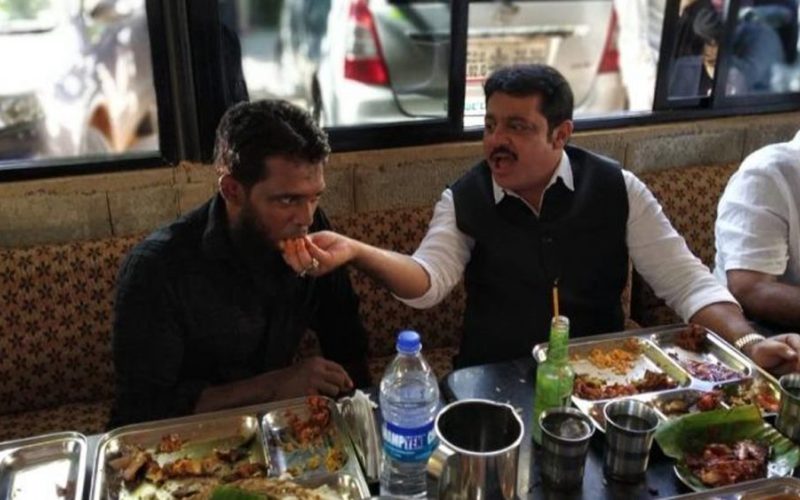
He went to ‘Fish Market,’ a seafood restaurant in Lower Bendoor for lunch along with the President of Wakf Committee UK Monu, Former MLA Mohiuddin Bawa and UT Iftikhar Ali, brother of minister UT Khader.

Haneef Mohammed, the 48-year-old chef and co-owner of the restaurants served the minister the local delicacies such as stuffed Pomfret and Green Tawa Pomfret along with rice preparations.

Such was the flavour and aroma of the sumptuous meal that the minister made the cook sit next to him, fed him a mouthful from his own plate.

“As I entered, the minister greeted me warmly. He made me sit next to him, fed me a mouthful of food and told me that he had never eaten such an appetising course of fish,” said the father of six, reported TNM.

Post lunch, he promptly handed over a hefty tip of Rs 25,000 to Haneef with a promised that he would pay for his Umrah (Islamic pilgrimage) as well.

Haneef, who has been a chef for the last 18 years, serving fish as his speciality said he never come across by such benevolent offer.

He distributed Rs 25,000 out of the tip to all the employees at his restaurant.

The legislator, who holds the post of Minority Welfare alongside the portfolio of Hajj and Wakf, famed for his generosity.

source:  http://www.siasat.com / The Siasat Daily / Home> Bangalore> Featured News> News> Top Stories / by Safoora / October 23rd, 2018

This man feeds 300 people outside hospitals

Bengaluru, KARNATAKA :

Serving compassion

Nimhans saviour
Nimhans saviour

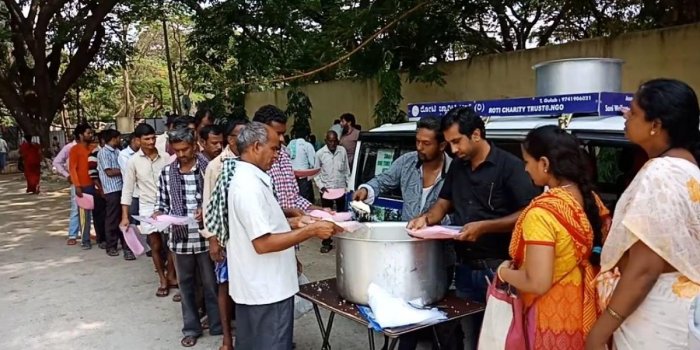
Syed Gulab, an automobile spray painter by profession, is a saviour for many who live on the pavement outside NIMHANS and nearby hospitals.

He has been serving free lunches to over 300 people for the last two years.

People come from across the country to admit their family members at these hospitals.

But with very little savings they tend to skip meals for days to afford the treatment at the hospital. The hospitals only provide food for the patients and not their family. Unable to afford accommodation the relatives also sleep on the pavements or  sheds outside the hospital. Pained by this scene while visiting a relative at a hospital in 2015, Gulab started serving the meals.

“The sight would pain me and I wanted to do something about it,” said Gulab who has set up the Roti Charity Trust for carrying out the initiative.

Gulab started it with the support of some of his friends. “We started by serving lunch on Sundays as the nearby hotels would remain closed at noon. I was inspired by Azhar Maqsusi from Hyderabad who has been feeding destitute people every afternoon for the last six years in the Old City,” he added.

When Maqsusi met Gulab on his visit to Bengaluru he was impressed by the initiative and said he will also support Gulab. He then started sending 30 bags of rice weighing 25 kg each to Gulab every month.

“It was due to his encouragement and support that we were able to make it a daily service,” Gulab added.

Gulab has now rented a small house near Jayanagar to store his materials. The lunch is cooked by 1 pm and a van takes the food to the hospital to be served by 2 pm.

They started serving breakfast — idli and chutney — a few months ago.

Gulab said they have never sought for donations but many people have come forward with donations.

Sharath Kumar from Kolkata has admitted his child at the Indira Gandhi Institute of Child Health for a kidney disease for the last two months. “Gulab is a blessing in disguise. It is because of him that people like me are able to get our meals,”  Kumar said.

source: http://www.deccanherald.com / Deccan Herald / Home> City / by Aparna Karthik, DH News Service, Bengaluru / October 20th, 2018

Amer Ali Khan releases book on ‘Karbala’

Hyderabad, TELANGANA :

KarbalaMPOs24oct2018

Hyderabad:

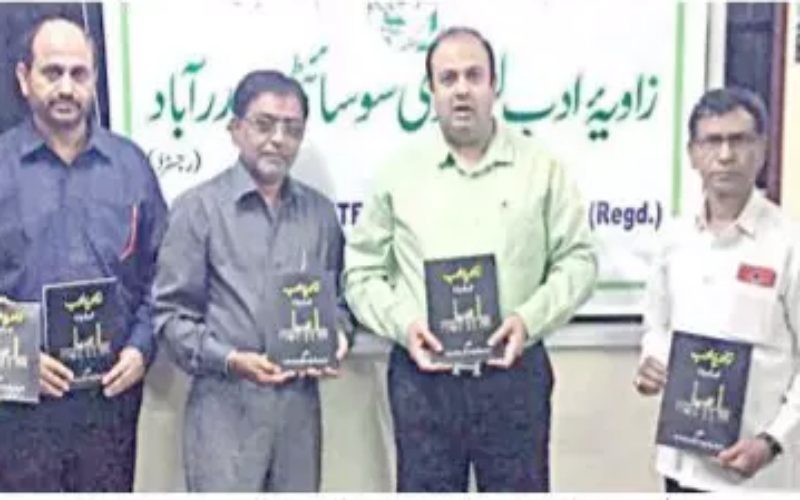
Mr. Amer Ali Khan, News Editor of Siasat Urdu Daily released the Sovenir of “Zawia Adab” society.

It is the first book of the society. In his speech, Mr. Amer Ali Khan told that the incident of Karbala is the eradication of evil forces and support of the values of Islam.

On this occasion, he made a references to various literary books published in English, Hindi and Urdu right from Meer Taqi Meer to the present day.

At the beginning of the function, Mr. Mazharul Haq, President of the society highlighted its aims and objectives.

Present on the occasion were Mr. Ali Anjum Sadiq, Mr. Ali Inayat, Mr. Baquer Mehdi Abedi, Mr. Akhtarul Hasan and Mr. Meer Haider Ali.

Mr. Faraz Rizvi thanked Mr. Amer Ali Khan and the audience.

source: http://www.siasat.com / The Siasat Daily / Home> Hyderabad / by Sameer / October 23rd, 2018

The personal side of a public servant

Chennai (formerly Madras),  TAMIL NADU :

Mohamed Usman held important Government posts in pre- and post-Independence India.

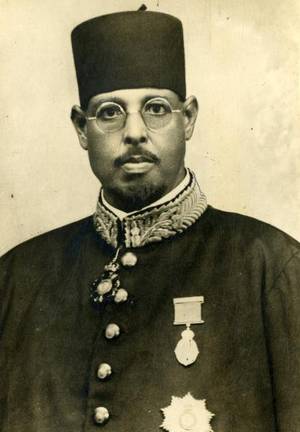
Ahead of Madras Week celebrations (August 20 to 27, 2017), we profile Sir Mohamed Usman, the first Indian to be appointed Acting Governor of the Madras Presidency

Usman Road is one of Chennai’s most popular shopping districts. It was recently in the news for a fire that gutted a popular clothing store here in early June. YouTube houses a mine of video information (albeit of dubious value) about the many angles of the busy thoroughfare.

And yet, only the most ardent of history buffs may be able to identify the person whose name graces the road.

Khan Bahadur Sir Mahomed Usman (1884-1960) is the man whose name has been enshrined in Chennai’s street signage. With increasing levels of Indianisation, his titles (he was also a KCSI — Knight Commander of Star of India and KCIE — Knight Commander of the Indian Empire) have disappeared, and his name is spelled as Mohamed or Muhammad in scholarly journals.

A Minister of Home for the Madras Presidency in the Justice Party government of the Raja of Bobbili (Sir Ramakrishna Ranga Rao), Sir Usman was the first Indian to be appointed as its Acting Governor on May 16, 1934.

Born in 1884 to Mohamed Yaqub Sahib Bahadur, of Madras (with links going back to Thanjavur), Sir Usman was educated at the Madras Christian College.

He married Shahzady Begum, daughter of Shifa-ul-Mulk Zaynulabideen Sahib Bahadur, a native medicine practitioner from Thanjavur, who later settled down in Madras.

Sir Usman held several offices of distinction during his early career and was, among others, Honorary Presidency Magistrate, Member of the Senate of Madras University, Sheriff of Madras and President of the Madras Corporation.

From 1925-1934, he served as Member of the Executive Council of the Madras Government.

Later, he was Vice-Chancellor of the Madras University, and from 1942-46, he went over to the Central Government as Member of the Viceroy’s Executive Council. At the time of his death on February 2, 1960, he was a member of the Madras Legislative Council.

Offices of the Madras Corporation, The Anjuman (of which Sir Mohammad Usman was the president) and the Government College of Integrated Medicine (later renamed as College of Indian Medicine) were all closed as a mark of respect on the day he died.

A key study

The maternal and paternal grandfathers of Sir Usman were skilled practitioners of Unani medicine — a Perso-Arab system based on the teachings of Greek physicians Hippocrates and Galen (Unani means Greek in Arabic).

Sir Usman was a respected Unani physician and often addressed as ‘Hakim sahab’ or ‘Doctor’ though he didn’t have a medical practice of his own.

In 1921, he chaired a Government committee whose deliberations led to the founding of the School of Indian Medicine in 1925. The findings of The Usman Report, detailed the indigenous systems of healing in India and the need to let them thrive alongside Western medicine. The document is considered to be the first major health report to have been published in India.

As mentioned in Modern and Global Ayurveda: Pluralism and Paradigms, (edited by Dagmar Wujastyk, Frederick M Smith, published by State of New York University Press in 2008), among the more interesting features of the exhaustive report are the testimonies of Vaidyas and Hakims recorded in their original languages.

There were 183 responses to a detailed questionnaire prepared by the Usman Committee that were sent out in English, Tamil, Sanskrit, Urdu, Telugu, Kanarese and Oriya.

Though published as a regional report, a 3-member sub-committee had toured the entire country, and the views represented an all-India survey.

Sepia memories

Despite his distinguished career, it is difficult to find anyone today who can speak about him as a person away from the public eye.

Fatima Yaqub, the 76-year-old widow of Sir Usman’s foster son Mohamed Yaqub, is perhaps among the last of his relatives to remember life in the Bada Bungla (Big Bungalow) in Teynampet that housed the Governor’s joint family.

The palatial home on Eldams Road was demolished in 1993 to make way for the inevitable block of apartments.

“My maternal grandfather and Sir Usman’s mother were siblings. Sir Usman didn’t have any children of his own. So he was foster parent to his younger brother Dr Abdullah’s two children — my husband and his sister Khamarjaan,” says Mrs Fatima.

The arrangement, though not strictly conforming to Islam (which forbids adoption), was quite common in close-knit Muslim families of the day.

For over an hour and a half, Mrs Fatima, who was married at the age of 10, in 1953, sketches a verbal portrait in Urdu of a sepia-tinted life teeming with memories of a lavish lifestyle.

Lavish lifestyle

“There were only three bungalows on Eldams Road at the time. Bada Bangla’sgrounds started from the Teynampet gardens and spanned over two and a half streets away,” says Mrs Fatima, whose current home neighbours the former site of the family pad. “The house itself was 8,000 square feet, with three floors. Sir Usman and his wife (called Ammajaan by the family) used to have a bedroom, prayer room, visiting hall, dining hall and dance hall for their use. The other side of the house was occupied by Sir Usman’s aunt who had two sons. My mother-in-law (Yaqub’s mother) had died of a heart attack, before our marriage. There were 10 servants’ quarters at one end of the estate. So we had a mixture of people living together,” she adds.

Mrs Fatima’s reminiscences have a childlike awe attached to them, because as she reiterates often, she was no more than a child herself when she got married. Her husband was 21 years old. “My mother’s elder sister and my mother-in-law were classmates in school, so they used to visit very often, especially over the weekends,” says Mrs Fatima, whose father Mohamed Azmatullah Basha was a leather, jute and gold merchant from Arcot later based in Triplicane.

Sir Usman and Ammajaan used to be based in Delhi for the best part of the year. The couple used to come home to Madras for summer holidays and also for Ramadan, says Mrs Fatima.

“After our marriage, we visited him twice in Delhi, but his life was very different from ours. He used to move around with at least four security guards. It was very difficult to meet him when he was on official duty,” she says.

Hospitality for all

Mrs Fatima remembers Sir Usman as a man of simple eating habits. “He would ask for everything to be served as a soft mash or gruel rather than solid food,” she says. There was no stinting on the hospitality for the others though. “At least 50 padi measures of rice would be cooked daily to feed the fasting Muslims in the area during Ramadan. And there would be two different types of banquets for Eid — one at midday for the family, and the other, with a different team of cooks, for his friends in the evening,” she says.

Off-duty, Sir Usman was a caring and jovial companion, says Mrs Fatima. “Whenever we’d request to watch a film in the city, he would book the entire balcony of the cinema theatre,” she remembers.

Sir Usman treated his foster children as his own, and was a big influence on their life, says Mrs Fatima. “When I visited my parents in Triplicane, he would send his Hillman car and his manservant to follow my husband’s Rover to drop me off. I was so well-taken care of, more of a daughter than a daughter-in-law,” she says.

Denouement

A snakebite is thought to have led to Sir Usman’s demise. Mrs Fatima says, “Sir Usman tried to cure himself with allopathic and Unani remedies, and got back on his feet within six months. But then his health started weakening, and he became bedridden for a month before his death.”

Upheaval of family and fortune soon followed. “First the security guards left. And then slowly, after the death of Ammajaan in the mid-1960s, the family started growing apart,” says Mrs Fatima with a sad smile. Mrs Fatima’s husband passed away on May 28, 1974. “It was a huge shock to me,” she recalls. “I had two children aged 3 and 5, and no real education.”

She suffered an emotional breakdown that took her a year to recover from.

“For the first time in 1974, I started using public transport. I would personally go to the lawyers’ offices to sort out property disputes and other issues after my husband’s death,” she says.

Though few photographs of Sir Mohamed Usman have survived in the family collection, there are some keepsakes, such as a marble-topped circular dining table, that Mrs Fatima still treasures.

“Sometimes as a family we feel ashamed that we know so little about this great man. But in a way Sir Usman would have been happy. He always used to say that one should never achieve things by showing off one’s rutba (rank). Then the adulation is for the position, not the person himself.”

source: http://www.thehindu.com / The Hindu / Home> Society> History & Culture / by Nahla Nainar / August 18th, 2017
Thousands pay last respects to P B Abdul Razak

Kasargod, KERALA :

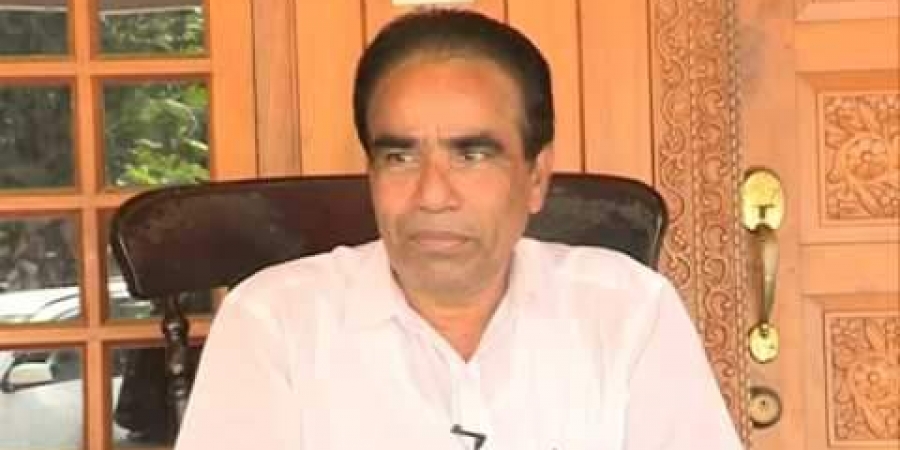
PB Abdul Razak. (Photo|Youtube screen grab)

Kasargod :

P B Abdul Razak’s body was taken to his house at Naimarmoola in Kasargod. Later in the evening, the body was taken to Uppala in Manjeshwaram constituency for the public to pay their last respects.

Razak, a two-time MLA, registered a dramatic victory in the 2016 Assembly election by defeating K Surendran of the BJP by 89 votes. The slender margin shook the party, but he gifted himself a car and took 89 as its registration number. He first became an MLA in 2011, when he defeated C H Kunhambu of the CPM by 5,828 votes in Manjeshwaram constituency.

Razak, a businessman, was also a member of IUML national working committees.Born on October 1, 1955, to Beeran Moideen and Beefathima, Razak’s schooling stopped at class 4.

He entered politics through the Muslim Youth League and went on to become the general secretary of the organisation.In 1979, he went abroad to make a living, and returned in 1990 and dived into active politics.

In 2000, he became the president of Chengala grama panchayat and held the post for seven years. In 2008, he was elected to the district panchayat council and became the district panchayat president in 2009.

He is survived by wife Safiya Abdu Razak, and children Saira, Shafeeq, Shyla and Shyma.

Those who paid their last respects include ministers E Chandrasekharan and Kadannappally Ramachandran; Opposition leader Ramesh Chennithala, deputy opposition leader M K Muneer; MPs P K Kunhalikutty, E T Mohammed Basheer, P V Abdul Wahab and M K Raghavan, MLAs K N A Khader, V K Ebrahimkunju, P K Abdu Rabb, K K Abid Hussain Thangal, T V Ibrahim, Manjalamkuzhi Ali, P Ubaidulla, C Mammootty, N Shamsudheen, K M Shaji, N A Nellikkunnu, C Krishnan, K Kunhiraman, Sunny Joseph, Shafi Parambil, P Abdul Hameed, M Rajagopalan, P T A Rahim and Karat Razack and party leaders Panakkad Sahid Ali Shihab Thangal and Munavvar Ali Shihab Thangal.

source: http://www.newindianexpress.com / The New Indian Express / Home> States> Kerala / by Express News Service / October 21st, 2018

The forgotten Muslim heroes of WWI

FRANCE / EUROPE :

How Muslim soldiers helped save the allies from defeat in the First World War

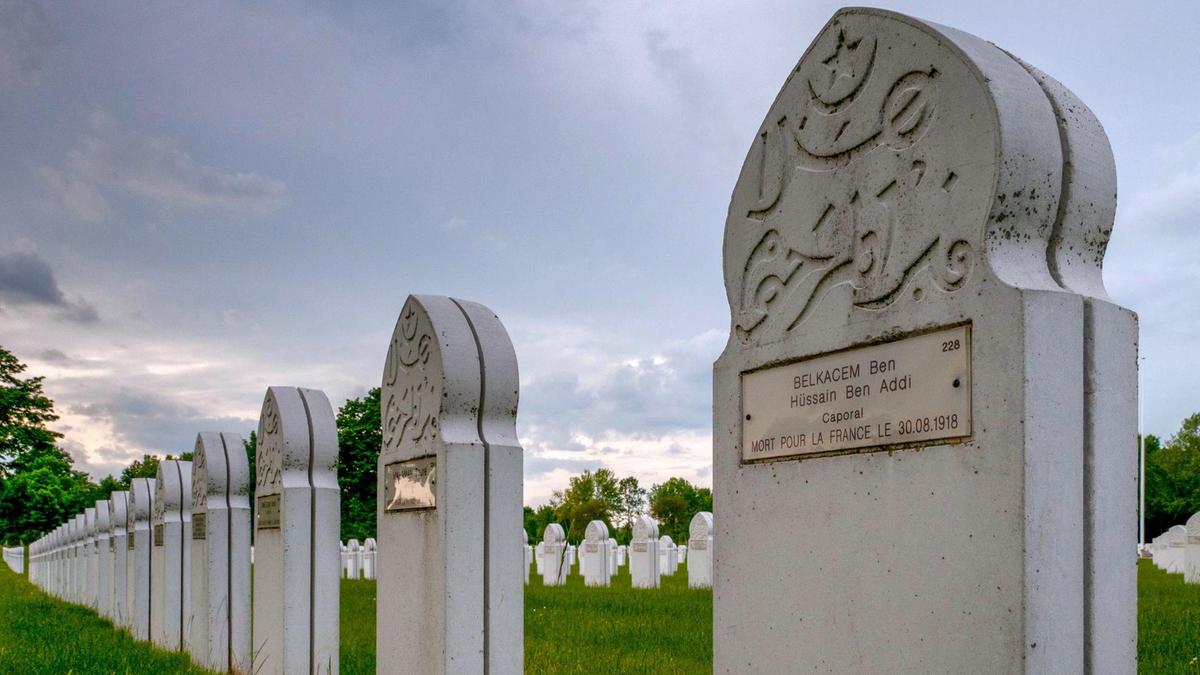
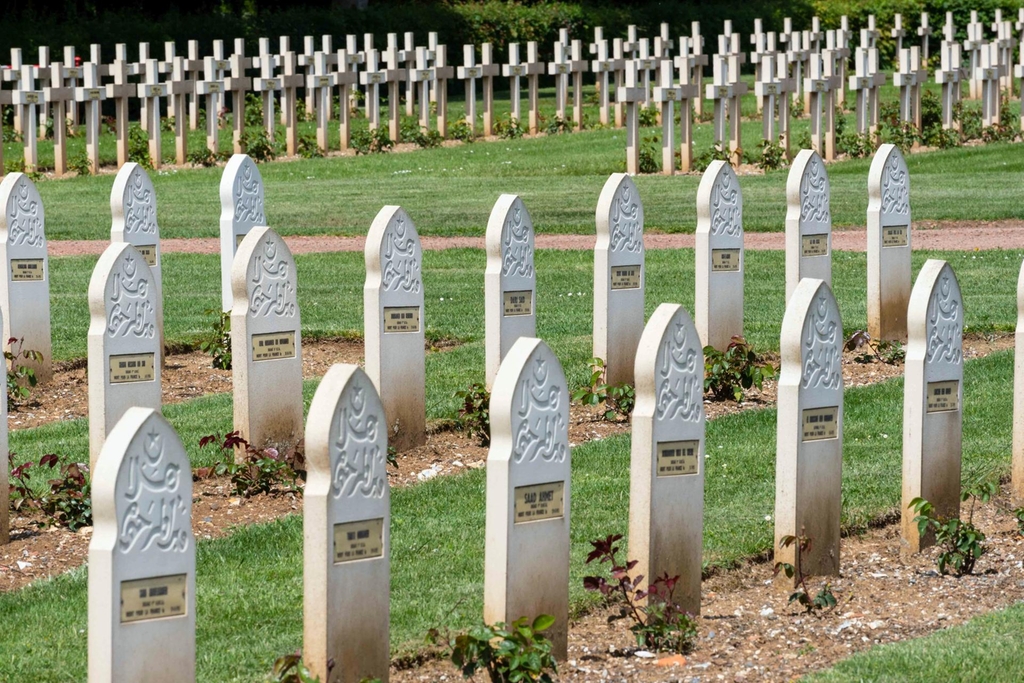
A grave of a Muslim soldier who died during the First World War in the French war cemetery La Ferme de Suippes, Champagne. David Crossland / The National

Engraved with Islamic inscriptions, the headstones of 576 Muslim soldiers stand in ranks facing Mecca at Notre Dame de Lorette, the biggest of France’s many war cemeteries.

Each one is also inscribed with the words “Mort Pour La France” – died for France – like the massed crosses of their Christian comrades in this 62-acre memorial containing the remains of over 40,000 soldiers. Today it is a lonely place of birdsong and rustling trees overlooking the slag heaps of the Artois mining region but it was once one of the bloodiest battlefields of the First World War.

The Muslim graves have lain mostly forgotten for almost a century, save on three occasions in the last decades when their graves were desecrated with anti-Muslim graffiti. The sacrifices made by these soldiers and their 2.5 million fellow Muslims who fought for France, the British empire and Russia has been largely ignored, especially in comparison with the exhaustive accounts of Western troops in poems, diaries and histories.

Muslim headstones from the First World War in Notre Dame de Lorette French national cemetery. In the background are Christian headstones. David Crossland / The National

Luc Ferrier, the Belgian founder and chairman of the Forgotten Heroes 14-19 Foundation, is battling to change that.

He is convinced that without Muslim troops and labourers, the Allies would have lost the war. Raising public awareness of their contribution could help counter anti-Islamic sentiment in Europe, and give immigrant communities a stronger sense of belonging, he told The National.

“This project is contradicting the myth that Muslims have not played a positive role in Europe or in modern history,” he said.

“By adding a wealth of authentic documented evidence portraying Muslims positively, we can counter Islamophobia, as well as the divisive ‘clash of civilisations’ narrative which both the far-right and ‘religious’ extremists rely on to further their narrow aims.”

The last four years have seen intense commemoration of the war’s centenary, which will culminate in ceremonies marking the armistice on November 11.

Paradoxically, the remembrance has coincided with a rise in the kind of nationalism that spawned the “war to end all wars.” Right-wing populists across Europe are targeting immigrants but also the European Union, set up in the wake of the Second World War to bring lasting peace to the ravaged continent.

Mr Ferrier, a 55-year-old former executive in the aeronautical industry who is not Muslim, set up the foundation in 2012 after discovering the diaries of his great-grandfather, a soldier in the First World War. “I was impressed by the enormous respect he had for his Muslim brothers in arms from all these continents, while he himself was a very devout Christian,” he said.

When he tried to learn more, he found there was a dearth of literature on Muslim troops. The foundation has encouraged broader research into the topic. He has addressed conferences and secured the support of researchers worldwide who helped unearth and translate historical documents. His book, The Unknown Fallen, contains stories and photos that convey the global Muslim contribution in the war.

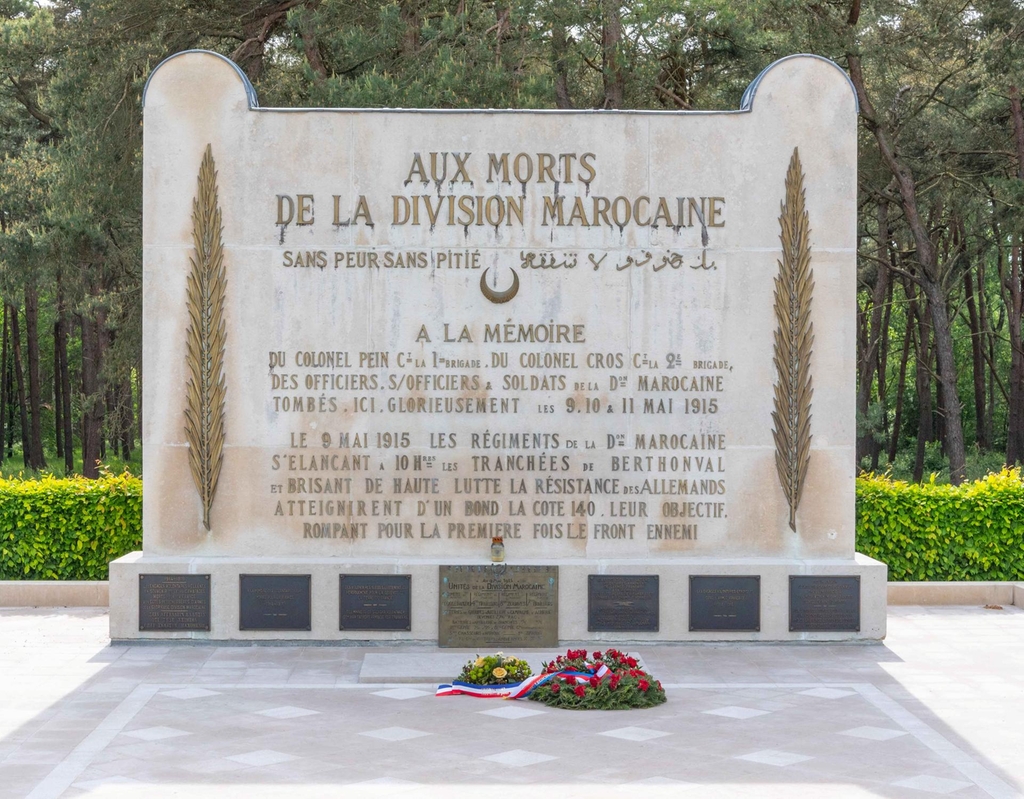
The memorial to the French-Moroccan division at Vimy Ridge, northern France. David Crossland / The National

Researchers have unearthed accounts of comradeship that saw priests, imams and rabbis learn each other’s burial ceremonies and prayers so that they could lay the dead of all faiths to rest on the battlefield. Stories have surfaced of North African Muslims saving the lives of European soldiers using herbal medicines when field medical supplies ran out.

After German troops marched into France in August 1914 and got close enough to Paris to see the Eiffel Tower, the French hastily summoned soldiers from French North Africa — Algeria, Morocco and Tunisia — while the British called troops from across its empire including India.

They cut dashing figures arriving in Marseille in their fezzes, turbans and brightly coloured uniforms, and crowds welcomed them as saviours. They were quickly dispatched to the front.

Troops from the British Indian Army, consisting of Muslims, Sikhs and Hindus with Muslims making up around a third, were in the thick of the fighting almost from the start. Arriving before troops from Canada, Australia and New Zealand, they reinforced exhausted British troops just in time to stop the German army breaking through to ports on the English channel in the First Battle of Ypres in 1914.

They were volunteers, trained and experienced soldiers, but like Western troops they were unprepared for the inferno of shells, machine guns, poison gas and rat-infested trenches they were thrown into.

“Just like a turnip is cut to pieces, so a man is blown to bits by the explosion of a shell,” wrote a Pathan soldier from northern India. “All those who came with me have ceased to exist … In taking a hundred yards of trench it is like the destruction of the world.”

But they didn’t buckle in the face of gas, freezing weather and the best-equipped army in the world, and quickly gained the admiration of European officers and men.

“It was known that Muslims troops attacked fiercely,” said Mr Ferrier. “Western troops had an ambiguous feeling when they showed up; they were happy to have them on their side but it was also a sign that an attack was on the way.”

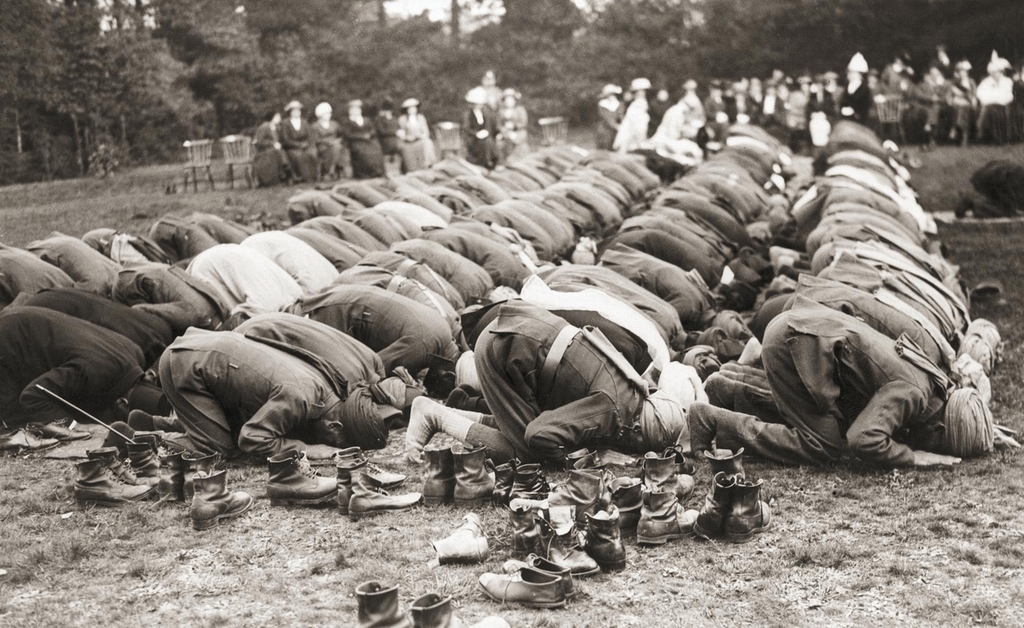
Indian troops serving with the British Army pray outside the Shah Jahan Mosque in Woking, Surrey, during the Muslim festival of Baqrid, or Eid al-Adha, (Festival of Sacrifice), circa 1916. (Photo by FPG/Hulton Archive/Getty Images)

In this merciless war, they saw their comrades gassed and bayoneted to death. Yet the British and French were struck by how humanely Muslim troops treated prisoners of war. Asked why, they referred to Islamic teaching that prisoners must be fed in a dignified manner.

They won medals for their courage, and the British, masters of propaganda, ensured that photos of King George V, Emperor of India, pinning medals on their chests were circulated around India to encourage more men to volunteer.

Recipients included Sepoy Khudadad Khan of the 129th Baluchis, who won Britain’s highest military award, the Victoria Cross, at the Belgian village of Hollebeke near Ypres on October 31, 1914 for preventing a German breakthrough by continuing to fire his machine gun after all his comrades had been killed and he had been wounded.

He was the first South Asian to win the VC, and Indian forces won around a dozen more during more the war. Some 1.5 million men from what is now India, Pakistan, Bangladesh and Myanmar fought on the Western front, in Africa, the Middle East and Gallipoli.

Officers made efforts to provide troops with halal food and there was a high death rate among Indian cooks who advanced dangerously close to German shells to serve the men chapatis and hot curry.

The cold was as bitter an enemy as the Germans and the incessant, freezing rain in the autumn of 1914 brought wistful memories of the monsoon that gave relief from the summer heat back home, so far away. There was no home leave. Going back all the way to India was too expensive, the troops were told.

“They suffered from frostbite and exposure, causing them to lose fingers,” said Mr Ferrier. “The trenches did little to provide shelter or warmth from the extreme low temperatures, especially at night, when even clothes and blankets froze solid.”

His foundation approached Britain’s Anglia Tours, which has experience in running guided visits to First World War sites, to help organise bespoke visits to the battlefields and memorial sites where Muslims fought.

The company started off with a promotional tour last November with about 50 people, including Muslim community representatives, journalists and historians.

“We’ve done a lot of work with Forgotten Heroes to make sure it’s their tour and that we get it exactly right from their point of view and make sure it’s historically accurate,” said Alison Biegel, the company’s operations director.

“As yet we don’t have a lot of people travelling because it’s still very much in its infancy. We would expect it to attract inter-faith groups and school groups as it’s a fascinating area that is of general interest. But it’s taking time. The community are not used to touring in this way so there’s quite a lot of confidence-building.”

Anglia Tours is talking to a mosque in London about a tour in September which may be the next one.

The lack of awareness of the Muslim contribution can’t be blamed solely on Western indifference. “It was more the global lack of interest from the grassroots Muslim community that caused it,” said Mr Ferrier.

In India, which lost over 70,000 troops in the war, that indifference is easily explained. The returning troops got no heroes’ welcome because they had fought for the British cause at a time when India was pushing for greater autonomy. Hopes that the sacrifice of so many Indian soldiers would persuade Britain to give in to demands from nationalists were brutally shattered by the massacre of Amritsar in 1919, when British troops murdered hundreds of people during a protest in Punjab.

“The soldiers and the war were already in the past,” wrote London-based historian Shrabani Basu in her 2015 book For King and Another Country. Nationalists were the new heroes, so the names etched on war memorials and headstones erected by grateful colonial rulers were forgotten.

For Mr Ferrier, the time has come to remember them.

source: http://www.thenational.ae / The National / Home> World> Europe / by David Crosland / June 07th, 2018

Retired Dubai Police official helps rebuild Kerala

Dubai, U.A.E :

MushtaqMPOs21oct2018

The 72-year-old retired official managed to collect Rs1.5 million (about Dh75,000) with some friends and set off for Kerala.

Shocked by the devastation caused by the Kerala floods in August, a retired Dubai Police official is now actively involved in rebuilding efforts in the Indian state.

First Warrant Officer Mushtaq Ahmed, an Indian who served as head of the photography section of the General Department of Community Happiness at Dubai Police, could not rest when he saw the visuals from the floods that killed more than 400 people and left 800,000 homeless.

“I was shocked to see people suffering after the waters destroyed their houses. I decided that I needed to make a move,” said Ahmed, a UAE resident since 1977.

The 72-year-old retired official managed to collect Rs1.5 million (about Dh75,000) with some friends and set off for Kerala. He has since helped rebuild three houses and is also funding repairs to others.

“The poor were the ones who were the worst affected. Some lost their lives while others lost their already ramshackle dwellings.”

Ahmed also contributed to an orphanage and a school with over 1,000 children. He said mere donations are impersonal. “Sometimes you need to go personally and see what people are going through and get involved,” said Ahmed. After spending 41 years documenting the history of Dubai Police through his photographs, he said he has found a sense of purpose.

sherouk@khaleejtimes.com

source: http://www.khaleejtimes.com / Khaleej Times / Home> Nation> Dubai / by Sherouk Zakaria, Dubai / October 19th, 2018

‘Nur Jahan is the history of India’: Historian Ruby Lal on her new book

INDIA :

In an interview with Indianexpress.com, Lal spoke about the incredible achievements of Nur Jahan. Remnants of imperial orders issued by her, coins minted in her name, paintings that paid ode to her sovereignty and bravery are all evidence of the enormously powerful figure she was.

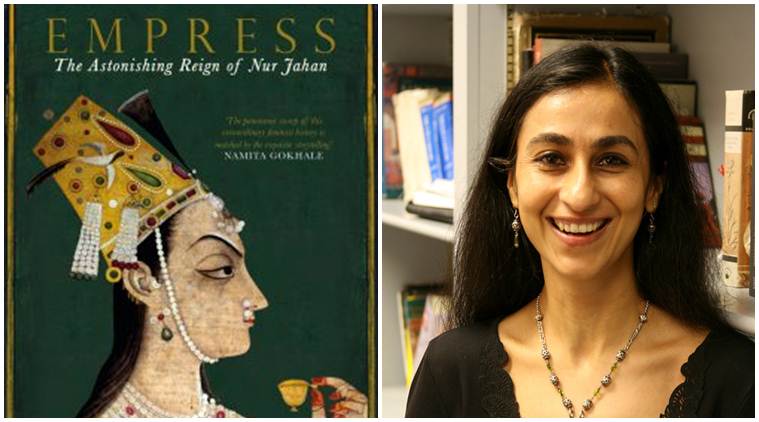
Left- Cover of the book ‘Empress: The astonishing reign of Nur Jahan’ (wwnorton.com) Right- Historian Ruby Lal (personal website of Ruby Lal)

For four centuries, from when she was at the centre of one of the largest empires of the world, Nur Jahan, the twentieth and supposedly the most loved wife of Mughal emperor Jahangir, has been a household name in the Subcontinent. Though she was not officially the ruler of Mughal India, Nur Jahan has been noted by historians to be the real power behind the throne. A politically astute and charismatic figure, she ruled Mughal India as a co-sovereign of Jahangir and is known to have been more decisive and influential than he ever was. Historian Ruby Lal in her latest book, ‘Empress: The astonishing reign of Nur Jahan’, dives deep into the intriguing world of the only woman to have helmed the Mughal empire. Tracing her life in great detail, Lal attempts to rip apart narratives of romance and exoticism that surround the image of Nur Jahan and focus upon what made a Muslim woman living in seventeenth-century India, one of the most authoritarian figures in Indian history.

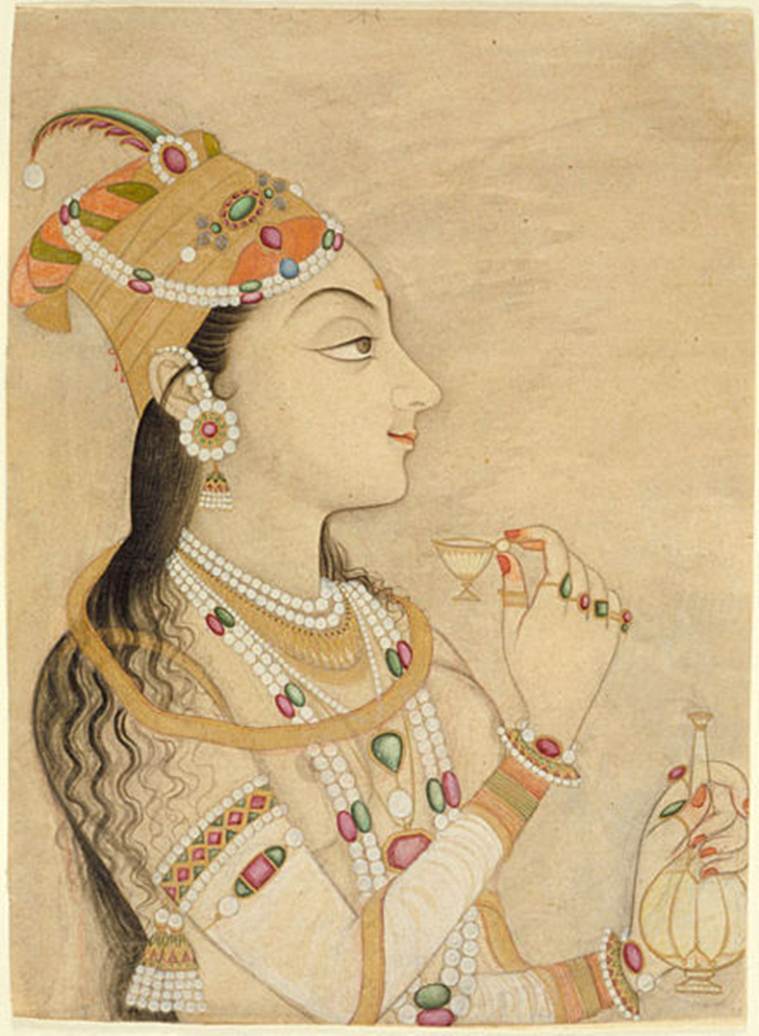
In an interview with Indianexpress.com, Lal spoke about the incredible achievements of Nur Jahan. “People say she always sat right next to Jehangir in the court and that if some cases or decisions came up and if she agreed with him, she would pat him on the back and he would say yes to that decision,” says Lal who is Professor of South Asian Studies at Emory University in Atlanta. Remnants of imperial orders issued by her, coins minted in her name, paintings that paid ode to her sovereignty and bravery are all evidence of the enormously powerful figure she was. Charting the life history of Nur Jahan, and placing her in the background of the pluralistic cultural space that Mughal India was, Lal puts together an evocative biographical account of the queen.

Here are excerpts from the interview with Lal.

Popular perception of Nur Jahan is somehow constricted to the romantic relationship she shared with Jahangir. Why is that the case?

There is a very long history of the erasure of Nur Jahan’s power that I chart in the book. As she traveled through the length and breadth of the country with Jahangir – issuing imperial orders, hunting a killer tiger near Mathura, discussing the expansion of the empire- she rose to being the co-sovereign. This does not mean that in her own time people did not raise eyebrows. In 1622, her stepson and Jahangir’s son Shah Jahan had risen in revolt. The catalyst for his revolt was the moment when Nur Jahan arranged a match for her daughter from her first marriage, Ladli; she chose the youngest prince, Shahriyar for her. About that time, Shah Jahan went into rebellion against Jahangir. And its is very clear that he felt threatened; he knew about the power of Nur Jahan. In fact, Shah Jahan and Nur Jahan had been closely aligned. The year 1622 is when certain chroniclers begin to write about the chaos that Nur Jahan Begum had raked up between the father and son.

“There is a very long history of the erasure of Nur Jahan’s power that I chart in the book,” says Ruby Lal. (Wikimedia Commons)

So the early criticism appears to begin around this time. The other major moment of critique of Nur’s power was when they were on their way to Kashmir and Mahabat Khan (who went on to capture Jahangir later in 1626) goes on the journey with them to a certain distance and according to one of the chroniclers he says to Jahangir that a man who was governed by a woman is likely to suffer from unforseen results. In 1626, she, completely visible, goes to save Jahangir (sitting upon an elephant on a roaring river), commanding all men including her brother Asaf Khan. She stratergises and eventually saves the emperor. After this, we begin to come across a word called Fitna, in the records.

Fitna is a very loaded term in Islamic history. It is used for the first time during the Shia-Sunni split for civil strife. It was also used against Ayesha, Prophet Muhammad’s favourite wife, when she went on a battle against Ali who was eventually the leader of the Shias. Over time, the word came to be used against women’s visibility, their sexuality and so on. Following 1626, this is one word that is used repeatedly against nur – that is to say that her power produced chaos.

Later, in the Shahjahanama, we find that at one point that the chronicler lists her power as a “problem”: the Shahjahanama reverts to the male inheritance of power and completely undoes her co-sovereignty with Jahangir.

Then there were also visitors to India like Thomas Roe, the ambassador of James I of England who follows Nur and Jahangir through the camps in Gujarat and Malwa. He calls her the Goddess of heathen impiety.

In the 19th century orientalist renditions of the romance of Nur and Jahangir become very important in the histories of the time; later, the colonial renditions highlight and forward such stories. Nur Jahan becomes classic oriental queen. Thus, a long-standing history of the erasure of the power of an astonishing emperess. It is certain that the erasure of Nur’s power travels into modern times and we only hear about her romance with Jahangir, not about her work as co-sovereign of the empire.

Jahangir is often compared with Akbar and criticised for being an uncompetitive, flamboyant king, who spent much of his time in drinking and merrymaking. But the fact that it was during the reign of Jahangir that a woman became so powerful, what does it say about his attitude towards women?

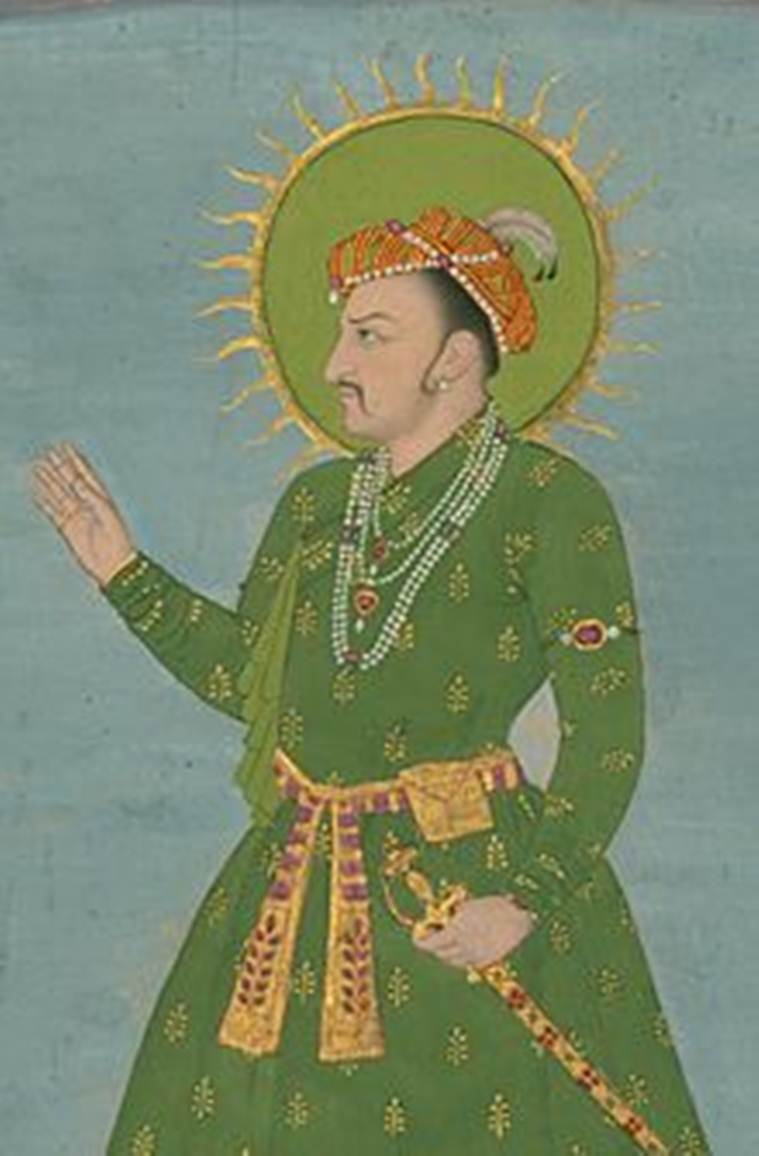
You are right, this is how Jahangir has come to be imagined. There are a range of scholars who for sometime now have been rethinking Jahangir’s reign, his philosophical and artistic engagements. My book foregrounds the ways in which Jahangir seeks to go differently from how Akbar articulated his sovereignty. If you look at the reigns of Babur and Humayun, there was no stone harem: the kings were nomadic and forever on the move. During Akbar the Great, for the first time in Mughal history, the imperial harem is built in stone in Fatehpur Sikhri. For the first time in the Ain-e-Akbari, women are declared as ‘pardeh-giyan’ which means “the veiled ones.”

“My book foregrounds the ways in which Jahangir seeks to go differently from how Akbar articulated his sovereignty,” says Ruby Lal. (Wikimedia Commons)

But what Jahangir does is that he goes back to the ethics of Babur. He was constantly wandering, he was constantly moving. The ethics of a peripatetic life and movement, which contributed to the co-sovereignty of Nur Jahan. Nur Jahan is the biggest example of Jahangir’s attitude towards women. An 18th-century chronicler that advances the Jahangirnama to the end of Jahangir’s death had suggested that the emperor had once claimed that he had given the sovereignty to Nur Jahan Begum and that he was quite content with his wine and meat. It’s an allegorical statement: and one indicates his admiration of Nur, something that he chronicles in his own memoir

Would Nur Jahan be this powerful had she not been married to Jahangir or had she not been part of the Mughal empire?

I think, Nur Jahan, looking at her whole life history and context, would have expressed her power differently in other circumstances. Her life history shows her dynamism and boldness. Of course, as I have been saying, and detail in the book that the plural landscape of Hindustan was very important- in that that it fostered experimentation and all sorts of ways of being (alongside war other challenges of co-existence of multi-confessional identities). We should also remember that she comes from an important Persian family background, deeply invested in poetry, arts, calligraphy. Then her own initiative must be highlighted: there were other women in the harem – and indeed Nur walks in the tracks of these women’s power – but no one becomes a co-sovereign. That speaks something about her boldness, her endeavours and of course her ambition.

Islamic societies are often noted to be more regressive compared to others in their treatment of women. In your book do you try to subvert this notion?

I Am trying to suggest that Nur Jahan is the history of India. She was a Shia married to a Sunni Muslim who was also half Hindu Rajput. Further, Nur Jahan is the only woman ruler among the great Mughals of India (there are technical signs of being a sovereign and informal signs, both of which I detail in the book). That is the history of India. As far as Islam is concerned, people should know that there were incredible and powerful women in Islamic history all the way through. We have Ayesha, Raziya, we have Nur Jahan Begum, we have any number of powerful women. It is also the multicultural world. In the modern world, we tend to think in terms of fixed identities. People in early modern times were much more open. Jahangir was engaging with Siddichandra, a Jain monk. Nur Jahan used to tease him about the pleasures of the flesh.  What does this tell you? It tells you about an open engagement. It tells you about how experimental Islam is, how mixed Islam is, how vibrant Muslim women are and how Islam is so deeply attached to India.

‘Empress: The astonishing reign of Nur Jahan’ has been published by W.W.Norton in the United States earlier this month and will be published by Penguin Books in India soon.
source: http://www.indianexpress.com / The Indian Express / Home> Research / by Anrija Roychowdhury, New Delhi / July 11th, 2018

A Tribute to Badi Ammi: Educationist Mrs Fatima Anees

Sholapur / Mumbai , MAHARASHTRA  :

Mrs Fatima Anees.
Mrs Fatima Anees.

It seemed Badi Ammi was going to live forever. We were so used to her.

The shore that tells you to traipse along braving the storms, helps you comprehend your mess, allows you to walk over it, the rock you know is there to push you to learn to lean on your own shoulders and not anyone else’s, the proverbial friend philosopher and guide who shows you how to trudge along with your feet full of thorns, with a smile.

Meet Mrs Fatima Anees, educationist, columnist, Principal of Anjuman Khairul Islam Girls High School, Mumbai, who also happened to be the first Muslim woman to pass her matriculate from the city of Sholapur.

My Badi Ammi [Elder Mother]  sister to my mother Qamar, passed away on August 6, at the age of eighty-five.

She was a unique kind of a human being.  How many people do you find today, who literally can call out your bluff to your face? Would speak the bitterest of truth without mincing words and with extreme nonchalance? Would roll on burning coals whenever they saw injustice?

Mrs.Fatima Anees was all this and more.

Born in 1934, she was the eldest child. Her father Husain Sahab Josh, was a school headmaster,  called Congressi Janab, with the white curved cap over his small head. Wrote patriotic verses and of the love of Imam Husain, and sent his four daughters to school in the early 40s.

Sending girls to school?

In the late thirties it was treason. For this ‘crime’ Mr Hussain Sahab Josh and his family were boycotted, communication was banned with the rebel family. No wedding invitations came their way. But Mr Hussain was a tough guy, he declared, I have four sons and one daughter, I am sending all my sons to school, what is your problem? He was referring to his four girls and a son. The freedom fighter was drunk on Gandhism, he wore khadi and Gandhi cap became his trademark. Simple living was something that came naturally. They had little money to speak of anyway!

FatimaAnis02MPOs16oct2018

But little girl Fatima would be apprehensive on her way to school. There she would make it a point to walk along with her teachers to enter and leave the classroom, to avoid being jeered. Soon a day came when she became the first female Muslim matriculate. Today, her name is taken with much pride. Whenever I see hordes of girls in blue chequered uniforms and two tight pony tails, leaving schools in the evenings, almost choking the roads, I smile almost instinctively and send a prayer for my Badi Ammi.

She was I think literally the one and only woman whom I never saw making usual complaints on and about  in laws, and other relations. Never! She had faced hard times, a divorce and then widowhood at a rather young age. Despite this, have I ever seen her bickering about fate etc. No, absolutely no one heard her complain.

Oh, yes, but she would incessantly complain about how pot-holed the roads were, how injustice was being done to people and how one could better progress right and high, if one used one’s brain properly. Anyone commenting foolishly would be taken to task immediately.

She worked hard. Her daily rituals were quite elaborate. She would be up and about at 4 a.m. and washed sacks full of clothes. Her daughters pleaded her not to, but when it is Fatima Anees, it was hard to make her stray from the path, she had chosen for herself. She continued this 4.a.m. ritual until she fell down in her home, this March and got bedridden.

She was a damn interesting lady. The one quality that distinguished her from other ordinary mortals was her courage to speak the truth almost blatantly. She spared no excuses and no one to say what was necessary, to be said and which most of us shy away from uttering. It happened on a railway station, she is being asked to advise and welcome  the new daughter in law in our family. She promptly begins to grumble , why is it that only women need to be advised? Then she  turns around and tells the groom, her nephew, Be the best in your behaviour to your wife, repeating the Prophetic saying, “The best among you is the best to his wife”. The bewildered expression on the faces around still makes me giggle. The mother of the bride looked dumb struck for a prolonged minute.

When I lost my young daughter Sanaa’, she called me  after a month. Listening perhaps to my forlorn voice, she chided, “Don’t you know how many children are being killed in Iraq? Don’t you mourn for them? What about those mothers who don’t even have the luxury of mourning?”

That was my Badi Ammi, her personal was always political. She was not capable of thinking selfishly and her pain was all encompassing.

Towards the end, she spent most of her time at home. Punctual to the core she reached on time even at the weddings!  Last year, she decided to attend one and obviously was on time, the first to arrive at the empty hall. When the groom arrived, stopping his father, she gave an earful, on being ‘so’ late. Both looked sheepish but didn’t mind it.  Everyone knew she was Fatima aapa, always expressive of her mind and could never hold it inside. We all knew her to be this way and never ever regretted her chidings. In fact we enjoyed such encounters. Her ‘anecdotes of truth’ have become part of our family folklore, relished each time we meet, and we have a huge repository of them!

Almost everyone in our family owed to her big way for some help or the other. Despite hardships, personal losses she raised her three daughters perfectly well as a single mother.[Her husband Mr.Ghafoor Anees who worked for TOI,  had passed away when the kids were quite young.] she never had complaints on how she was doing it alone, no irritation, just a dedicated fervent desire to work and work some more. I have seen her writing her columns once she returned from school. Sitting on the sofa, with papers and books spread all over.  Writing a column every week, with a job, raising three girls single handedly, and all the household work she preferred doing herself; can you even imagine?

What an enigma! And she did all this, nonchalantly, without making a fuss, without a word on how good she was at doing things.

She has left behind a huge legacy of education, of compassion, of the good work, and of speaking the truth, least bothered about the consequences. In fact she didn’t even understand consequence in her own innocent way.

source: http://www.caravandaily.com / Caravan / Home> Community / by Asma Anjum Khan / October 13th, 2018

The Bilirubin Bub

Srinagar, JAMMU & KASHMIR :

Faith healing is a scientifically accepted way-out. In Srinagar outskirts lives Abdul Qadir who treats more than 15000 patients a month and is considered a key healer for jaundice, reports Irtiza Rafiq

Abdul Qadir
Abdul Qadir

The plasma screen at Srinagar International airport shows the arrival of the Delhi- Srinagar flight and the lounge gets instantly active. Among the curious mixture of excited and bored arrivals, Ruqaya, a 33-year-old woman with her pale yellow face, sunken cheeks, and a feeble body stands out. Accompanied by her husband Javaid, 37, as she makes her way out of the airport, her anxious relatives waste no time in elaborate greetings. Flying straight from the USA, the couple is literally bundled into the car and their journey started towards Syedpora (Dhara) in city outskirts.

After a drive of around 29 km, the couple gets off, pass a small bridge across a shallow, crooked, clear, stream, walk down some narrow alleys and enter a house. In the time Ruqaya waits with dozens of other women, most of them mothers with children nestled up in their arms in a compound brimful of multifarious people, Javaid proceeds towards a chaotic, almost endless queue at a congested staircase where scores of people are nudging each other to pass their Rs 10 note for the exchange of a stamped paper piece from a 40-year-old man upstanding at the middle of the stairs. There is another man at the foot of the staircase for crowd control.

The scene resembles the representation of a shrine where followers with raised hands propel each other to get a touch of some higher deity or a sacred thing. The chit for which they are struggling for is their ticket to cross the stairway. This stairway crossing is heavenly for most of them because it leads to the Bab, the ‘spiritual healer’.

For the last five decades, the septuagenarian Bab has been treating all kinds of ailments, at his residence, a quiet and picturesque place, almost 2.5 km from Harwan.

The influx of patients can be gauged by the fact that the Reshi abode comprises three houses: one where the family lives, second where the patients wait for their turn and the third where Abdul Qadir Reshi, the Bab examines and treats his patients.

The room of the treatment-building is jammed by people, among yellow faces, crying neonates, ailing individuals, on the left corner, Bab sits on a bed at a slight elevation with his youngest son Abdul Ghani Reshi. In between them is a large copper bowl of water, on their either side various bottled up solutions, some powders, and in the front, lies a knife and a leather belt.

Khadija, 65, a woman from Rajbagh approaches him with her eight-day-old granddaughter having 7.68 mg/dL bilirubin level, Bab takes hold of baby’s clothes, lays her in front of him, squeezes her nipples, sprinkles handful of water from the copper bowl on her and then slowly rubs her forehead, eyelids all the while muttering something under his breath. He then hands the baby over to Khadija and asks her to make sure that her mother doesn’t eat oily or non-vegetable food. Interestingly, Khadija reveals that the mother of the kid is herself a doctor but has a firm belief in the healing powers of Bab. The medico mom didn’t comply to the paediatrician’s suggestion of exchange transfusion (blood change).

The certitude of this kind doesn’t come as a surprise, for Bab has treated thousands of people. Some of them approached him after they keenly heard their treating doctors telling them: “There is nothing more we can do”. But somehow after following Bab’s prescription, some of these people managed to do the unexpected − they lived, fully treated.

For 55 years and counting, sort of miracles have been happening around this solemn looking spiritual healer who credits it all to the Almighty. “I have been bestowed upon by the knowledge and ability by God that I can say by looking at a person what he is suffering from, particularly jaundice patients, one look at them and I can tell if they will make it or not,” Bab said after managing his patients. “It is a vision by God; the verses I read have a healing effect in them so the healing comes from God.”

This peculiar wisdom runs in the Reshi family and has been transferring from generation to generation. The story of this bequeathed enlightenment started when a spiritual healer from Kabul had a dream, so goes the family legend, wherein he was commanded to visit Mulfak, a neighbouring area of Syedpora, which is known to be home of peers. Once there, he spent a night and went touring adjoining areas escorted by a peer from Mulfak. When he saw ancestors of Abdul Qadir Reshi working in paddy fields, he told his escort, according to Bab’s son Abdul Gani Reshi, “Go back I have got what I was looking for. From that day, he resided with my great-grandfather and passed him his saintly knowledge,” said Reshi Jr.

“But we were warned by our spiritual teacher against being greedy,” Gami said. “So we do not take any money except on Sundays when we take Rs 10 from people and that too for Darsgah and charity. On the contrary, we provide tea and refreshments to visitors.”

Every day, up to 600 patients visit the place, and on Sundays, the number crosses 1000 people, all of whom are treated free of cost by Bab who does it as a social service. He and his family make their living out of their orchards and are financially well off.

“Except for gallbladder stones, everything is treated here,” claims Gani, and he then goes to name the ailments they take care of : Sorphtoph (snake bite), Gunstoph (cobra bite), Arkhor, Hounchop (dog bite), Malder (Herpes), Diabetes, Kambal (jaundice), psoriasis. “We deal with everything but a lot of cautiousness must be exhibited on our parts and we should abide by guidelines of our forefathers. Once my uncle made some mistake and as a consequence, he had a brush with death. This is like a sword hanging on our heads we have to be vigilant at every step.”

This guarded approach is quite evident from the way Bab instructs his son while he prepares herbal remedies and writes prescriptions for patients, even whilst himself dealing with a Malder (Herpes Zoster) patient, Fatima, 55, from Shalimar by dragging and flipping the knife over her lesions. He is doing the shoving and thrusting amid the surging crowd. Angry, he finally uses the leather belt and whips it over the unruly assemblage.

Family’s makeshift shop selling the prescriptions is run by his younger son, Ghulam Masood Reshi and grandson Rayees Ahmad Reshi. Even though it’s not mandatory for people to buy their stock from this shop, still they prefer it, because patients are patiently helped to understand how to follow their prescription. Bab’s prescriptions usually comprise of 80 per cent of herbs and 20 per cent of Hamdard products. Rishis say they take great care that herbs are genuine and hire peasants to handpick them.

People waiting outside Abdul Qadir 's abode.
People waiting outside Abdul Qadir ‘s abode.

“These unadulterated herbs when used in treatment do wonders,” Masood Reshi said. “There is a specific herb Wagan which heals the bite of rabies dog, without any need of injections, another herb, Sumbloo and Kawidarh Moul, helps to treat blood cancer, diabetes, cholesterol, and thyroid. Yet another herb, Jogi Patsah, found in dog free area of Ladakh aids in treating kidney and ovarian cysts. For jaundice patients, we use a rare herb called Michre Komal. The market value of these herbs is in thousands but we sell them at Rs 600 at the maximum.”

More diverse than the herbs here are the people who flock around Bub. People from all parts of Kashmir, urban as well as rural, from all socio-economic backgrounds, pin the hope of their healing on Bab, but what is more captivating is that people from different religions have belief in him as well.

Jaswant Singh, 60, brings his son, Gurpal Singh, 24, with some throat allergies and Bab after prescribing the medicines holds his turban and reads verses from Quran. This presents a quite peculiar sight.

= A month later, Bab informed this reporter that a non-resident Kashmiri couple from the USA have also come to him for a treatment. In the USA, she was diagnosed with severe jaundice. Her bilirubin count was 65 mg/dL, a level that has the least chances of recovery as per medical sciences. She and her husband then decided to return home, maybe they were preparing for the worst.

But back home, Ruqaya’s family wanted to try for the last time for which they travelled straightaway from Airport for Bab’s consultation.

After twenty days of Bab’s treatment, Ruqaya recovered and then left for the US along with her husband happily.

(Names of patients mentioned in this story have been changed to protect their identities.)

source: http://www.kashmirlife.net / Kashmir Life / Home / by Irtiza Rafiq / October 03rd, 2018