Category Archives: Community Involvement / Social Issues

When women ran police stations with elan

Kozhikode, KERALA :

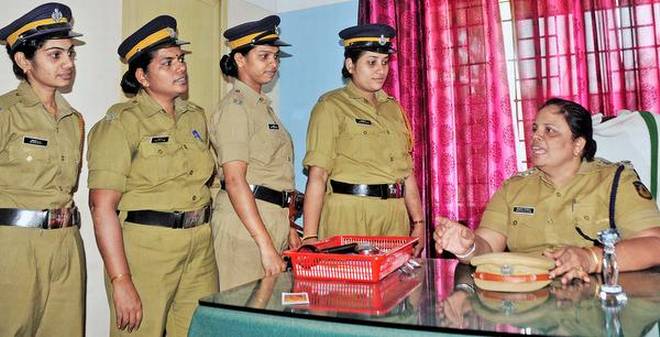
Circle Inspector and station house officer Shanty Cyriac giving instructions to her team members at the Kasaba police station in the city on Thursday. | Photo Credit: K-RAGESH

They handle services efficiently at 5 stations in city on International Women’s Day

Scripting a new chapter in women-friendly policing, khaki-clad women on Thursday handled the entire administrative and law and order responsibilities at five police stations within the Kozhikode city limits as part of the International Women’s Day observance.

The five stations — Kasaba, Panniyankara, Elathur, Mavoor, and Chemmangad — functioned under the control of woman station house officers (SHO) who were deputed by the District Police Chief (Kozhikode city).

Celebrating the occasion, the officers hosted special events including a reception to women who had made outstanding contributions to various fields. The Mavoor police station honoured eight such women who were short-listed from various fields. A.K. Jameela, who was given the charge of SHO for the day, coordinated the event and felicitated the women.

T.P. Banisha, a civil police officer (CPO) attached to the Mavoor police station, said it was for the first time that women personnel had got an opportunity as a group in charge of the entire responsibilities of a station, including the General Diary responsibility. They recorded all major incidents that happened within the station limits on Thursday. “We had the support of five women to handle the job, and the rush was moderate,” she said.

At the Kasaba station, there were seven women personnel to handle administrative affairs and law and order issues. To mark the day, CPOs accorded a warm reception to Circle Inspector Shanty Cyriac who assumed charge as SHO. The CPOs said that many of them had prior experience in handling duties, but doing everything on their own created some joyful moments.“It was a wonderful experience, and we shared the delight among ourselves by greeting the SHO with a bouquet,” said C. Sajitha, a CPO at Kasaba station.

“All our team members performed well in their assigned duties such as reception counter management, case registration, and counselling service,” she pointed out.

At the Elathoor station, Sub Inspector Raziya Bengalath led five women personnel in discharging duties. Most of them were busy with the routine administrative duties as the number of complaints was minimal. The SHO said that she had received only one complaint till Thursday evening, and that it was temporarily settled through mediation. The complained pertained to a property dispute between two bus owners from Elathur, she added.

Assistant Commissioner K.P. Abdul Razak said that the purpose of the novel observance was to highlight the need for women empowerment. There had been no such celebrations in the past covering the five major stations within the city limits, he pointed out.

source: http://www.thehindu.com / The Hindu / Home> News> Cities> Kozhikode / by Staff Reporter / March 09th, 2018

NRI becomes first Muslim Lord Mayor of UK town

KENYA / Leicester, UNITED KINGDOM:

Leicester previously had Hindu and Sikh Lord Mayors,but Abdul Osman is first Muslim to hold the office.

Indian-origin councillor Abdul Razak Osman has become the first Lord Mayor of the Islamic faith to hold the high office in the multi-cultural town of Leicester,which has a large minority of Indian origin people.

Osman was born in Kenya and arrived in the UK in 1971.

His late father Yousuf Razak worked on the East African Railway,and worked for a local engineering firm after moving to Leicester.

The Lord Mayor is Leicester’s first Citizen and has a high profile role maintaining and promoting the interests of the city and its citizens, by attending a variety of civic engagements during the year.

Leicester previously had Hindu and Sikh Lord Mayors,but Osman is the first Muslim to hold the high office.

Incidentally,the office of the Deputy Lord Mayor of Leicester is also held by an Indian-origin councillor,Mustafa Kamal,who hails from Ferozepur,Punjab.

Osman has worked with several charity organisations and was instrumental in fundraising to build two villages and a school in Kutch,Gujarat for orphaned children,following an earthquake in 2011.

Osman,who joined the city council in 1996,takes over from Councillor Rob Wann.

Osman said after being sworn in at the Town Hall last night: “It’s an important year,with the Diamond Jubilee and the Olympics,so it’s a privilege for me to hold office with everything that’s going on”.

He added: “I want to focus on visiting the communities and raising the profile of the office of Lord Mayor.

I’m proud to be the first Muslim councillor to hold the position – we’ve had Christian,Hindu,Sikh and now I’m able to bring the Islamic faith to the office which is a great honour”.

Osman,who previously held the office of High Bailiff and Deputy Lord Mayor,is married to Shaina,who will serve as the Lady Mayoress.

The couple have two children.

The term of Leicester’s Lord Mayor is one year,and runs from May to May. Each year the longest serving City Councillor is offered the role. Leicester has had a Mayor since the year 1209. From 1928,the Mayor became a Lord Mayor.

The town also has a separately elected Mayor,currently Peter Soulsby (Labour).

source: http://www.indianexpress.com / The Indian Express / Home> News Archive> Print / by Agencies, London / May 18th, 2012

Rahman Abbas: ‘English writers enjoy more freedom than us’

Mumbai, MAHARASHTRA :
Urdu writer Rahman Abbas on the challenges of being defiant

RahmanAbbasBookMPOs28sept2018

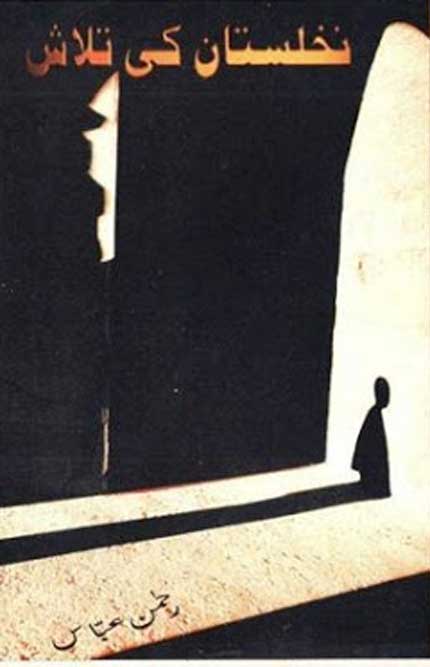
A few paragraphs were all it took for the trouble to start. Thirteen years ago, Urdu writer Rahman Abbas was booked for obscenity for his debut novel Nakhlistan ki Talash, a love story set in Bombay following the 1992-93 riots. The offending two or three paragraphs dealt with love and sex.

It’s been more than 10 years since that particular combination of words got him arrested and two since the case of obscenity was closed. But aside from polishing the rawness of a first novel, he probably wouldn’t change the words.

“I may [take] care about a few words; I will use those words but will try to use them more creatively,” he says, when asked what he would have done in hindsight. “But I don’t think there is any word we should hide. I, for one, cannot.” He continues, “As Manto said, you say ‘breast’ for ‘breast’, you can’t use another word. Or for a ‘chair’ you have to say ‘chair’, you cannot say ‘donkey’.”

RahmanAbbasMPOs28sept2018

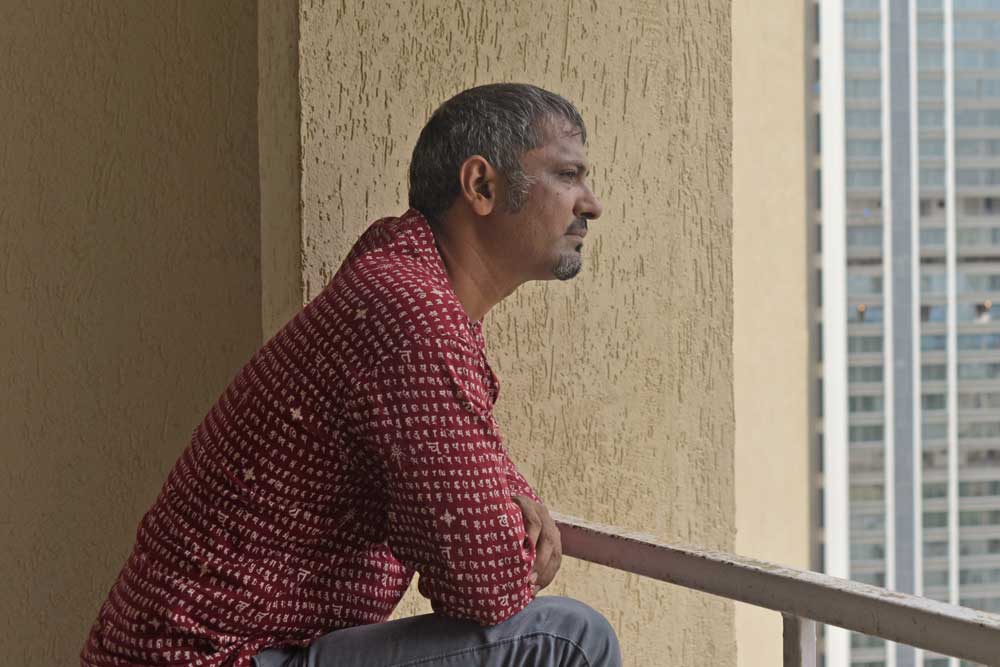
A medium-height man with a soul patch and a disarming frankness, Abbas, 46, is currently translating Nakhlistan into English, and expects it to be published next year. He has just come back from a tour of Germany with the German translation of his fourth and latest novel Rohzin—the first time any of his novels has been translated. Next month, Rohzin’s English translation, by Sabika Abbas Naqvi, is slated for release. Set in Mumbai, the love story opens with the flood of July 2005 and won a state Sahitya Akademi award in 2017.

But to a general audience Abbas, a former teacher, is still perhaps best known as the writer who found himself in the crosshairs of an outdated legal provision: Section 292 of the Indian Penal Code that punishes obscenity in writing and art.

“I don’t regret what happened,” he says. “These are the challenges you have to face as a writer or creative person. If your society is orthodox, it is your duty to challenge the orthodoxy.”

And that is precisely what he plans to do. Since the police case that changed his life, Abbas has left the teaching profession, won and returned a Sahitya Akademi award, won and retained a Sahitya Akademi award, and is in the incipient stages of launching a broader campaign against Section 292. That section, among others, has for years been a part of the restrictive free speech architecture that bedevils Indian writers and artists.

“There is freedom for people to protest against a book, to dislike a book. I respect that freedom. If I have the freedom to write, people have the freedom to criticise,” says Abbas, who won his first state Sahitya Akademi award for his third novel, Ek Mamnua Mohabbat ki Kahani . “But a [legal] provision that gives people an opportunity to send a writer to jail, that should be stopped.” He adds, “For a democracy, this is crucial.”

The first step, Abbas believes, is to galvanise public opinion through writing and advocacy against Section 292 in particular. A public interest litigation (PIL) opposing the use of this provision against writers and artists is already in the works.

Abbas is also busy working on a fresh piece of Urdu fiction, his first literary effort since the case against him was closed in 2016, liberating him in several ways. “For my next novel, I will try to explore the things I couldn’t explore in my previous three novels,” he says. “Since the case has ended, I feel I am free to write.”

Abbas denies the impact that fame— or infamy—can have on the reception of a work. “I think if you aren’t a good writer, it will not help,” he says. “Nothing can help.” He names Sadat Hasan Manto and Ismat Chughtai as illustrious Urdu predecessors who were prosecuted (though ultimately unsuccessfully) under the same law he was. Then he chuckles: “There is no single example of bad writers having any problem.”

Good or bad, Indian filmmakers and artists have consistently faced oppressive free speech laws, whether through criminal prosecution, government bans or threats from conservative factions.

In 2016, various groups protested against Tamil writer Perumal Murugan’s One Part Woman and sought a ban on it. In 2015, Jharkhand-based writer Hansda Sowvendra Shekhar’s The Adivasi Will Not Dance was banned by the state government on allegations of having violated Section 292, among others. Earlier this month, the Supreme Court dismissed a plea seeking a ban on the Malayalam novel Meesha. To Abbas, this is part of a wider pattern. “English writers enjoy more freedom than us. I don’t know why. Alice Walker’s novel was in our syllabus and used those same words that I did and went to jail for,” he says. “On the one hand, the Government makes you read a book; on the other hand, if you use the same word in your text, you are a criminal.”

Though he was let off without a trial—the complainant told the court she had misunderstood the offending passages and the case was closed—Abbas spent one night under arrest in Arthur Road jail until his lawyer was able to complete the bail formalities. “It was quite a humiliating process,” he says, its memory still fresh more than a decade later. “When you go to jail, you feel your whole freedom is gone, that you will never get out of there.”

The experience was both debilitating and transformative. “I remembered Manto and wrote about how I felt the pain of Manto,” says Abbas, a touch dramatically. “If you are a writer or journalist and you experience jail, you understand the importance of freedom. I had it when I was writing; when it is stopped, you realise the importance of maintaining it. It’s not only your struggle, but a struggle of humanity.”

Though he lost his job, was pilloried at the time by the Urdu media, and still faces the censure of conservative Muslims, he now has more enthusiastic readers, he believes. “Now my writing has been accepted in a big way. Urdu readers are not that narrow minded,” he says. “They are openly reading and I am happy when young people appreciate the work which the previous generation had condemned.”

Abbas taught at a Muslim institution for several years and was also the principal of one. He later decided to leave academia and joined a think-tank fulltime in 2012. “If you are liberal Hindu, you won’t work in an RSS shakha,” he says of leaving that minority institution. “It is very conservative. Through education, they want to promote their religious ideas. I believe education should be 100 per cent secular; there shouldn’t be any discussion on religion. But now both communities are insisting on preaching religion and morality, and that is antieducation, anti-scientific temper.”

In 2015, Abbas joined the awards return protests initiated by authors disturbed by the silence of institutions and the apathy of the Government to violence against free thinkers. Like many writers and intellectuals, he too is concerned about what he perceives as the shrinking space for dissent in the country and the rise of divisive politics. “The right-wing is gaining. And only because it is doing the same ugly, dirty propaganda and dividing people in the name of religion,” he says. “There is a feeling that Dalits, Muslims, Christians, Adivasis can be targeted. Yes, there is a fear. And people should speak up.”

source: http://www.openthemagazine.com / Open / Home> Salon > Web Exclusive: Books / by Bhavya Dore / September 21st, 2018

Anantnag youth creates website to check fake news

Bijbehara Town, Anantnag District, JAMMU & KASHMIR :

Amir Ali Shah (23) from Bijbehara town of the district has spent more than two years to come up with the website ‘Stop Fake in Kashmir’, reported The Tribune.

Amir Ali Shah
Amir Ali Shah

A youth from south Kashmir’s Anantnag district has created a website to tackle the menace of fake news.

Amir Ali Shah (23) from Bijbehara town of the district has spent more than two years to come up with the website ‘Stop Fake in Kashmir’, reported The Tribune.

The website is the first of its kind developed in the Kashmir valley, said the report.

The website is already up on the Internet though it is waiting for formal launch which will take place in coming weeks.

Shah claimed that the website will act as a watchdog to keep tabs on unverified and fake news circulated on the social media where users can upload a link or screenshot of the news they want to verify.

“The website will give a feedback on whether the news is true or fake based on web searches,” Shah was quoted as saying by the report.

He said that the back-end team of the website will also run the information through its sources on the ground and check the veracity of the news.

Shah said he conceived the idea of developing such a platform in January 2016 after the entire Kashmir valley went into mass hysteria following fake news that suggested that the polio vaccine administered to children was expired and had caused some deaths.

source: http://www.greaterkashmir.com / Greater Kashmir / Home> Kashmir / by GK WebDesk, Srinagar / September 24th, 2018

Mangaluru: C M Mustafa elected president of Meenu Marata & Commission Agentara Sangha

Mangaluru, KARNATAKA :

Mangaluru :

The general meeting of Meenu Marata & Commission Agentara Sangha was held at the office of the sangha here recently.

C M Mustafa was elected president, Bharath Bhooshan elected honorary president, K Ashraf as executive president, K E Rashid as vice president, K Abdul Azeez P P A as treasurer, K M Ibrahim as chief secretary, J B Shiva as joint secretary and C B Azharuddin, K M Bava and S A Saleem were elected executive committee members on the occasion.

source: http://www.daijiworld.com / DaijiWorld.com / Home> Karnataka / by Spoorthy Ullah, Daijiworld Media Network – Mangaluru(EP) / September 21st, 2018

South African Indian cinema mogul Moosa Moosa passes away

Johanessburg, SOUTH AFRICA :

South African Indian cinema doyen Moosa Moosa has passed away. He was 75. Moosa succumbed to a heart attack on Sunday after undergoing surgery.

He was buried in Johannesburg on Monday according to Muslim rites.

Moosa had earned the title of being the longest-serving cinema group executive in the world, adding to the company’s reputation of having the longest relationship with Hollywood production house 20th Century Fox for almost eight decades now.

In 2007, Moosa received the South African Film and Television Industry Lifetime Achievement Award.

Tributes from all across the world continued to pour in for Moosa as the news of his demise spread.

Family and friends recalled how Moosa had taken over the family cinema business of the Avalon Group, started by his father 79 years ago as the first and still only Indian-owned cinema group in South Africa, after most of the 18 cinemas in the group were shut down by the draconian apartheid-era laws restricting property ownership in city centres to the minority white community.

Undeterred by this as the Avalon Group continued with just one cinema in an area designated for Indians in Durban, Moosa took on the seemingly impossible task of challenging the monopolies of white-owned major national cinema chains and won legal battles in the new democratic South Africa headed by President Nelson Mandela.

Moosa then started rebuilding the business as his son Aboobaker, popularly known as AB, also joined the business as the chief executive officer.

Currently they have cinemas in three major South African cities where new Bollywood releases play alongside Hollywood titles every week.

“My father showed tenacity and strength in keeping alive the Avalon dream through the tough times,” AB Moosa said in paying tribute to his father.

“When many had already begun to write the company’s obituary, my father’s resolve never wavered,” he added.

Many community leaders also paid tribute to Moosa for his support of community initiatives.

“He was always willing to support a variety of important social justice issues and always availed Avalon cinema venues for such events at no charge,” said Lubna Nadvi, from the University of KwaZulu Natal’s School of Social Science.

“Moosa will be justly remembered as a courageous and articulate businessman who was determined in his challenge of white monopolies in the 1980’s,” businessman Nirode Bramdaw recalled.

source: http://www.thehindu.com / The Hindu / Home> News> International / by PTI / June 26th, 2018

Winning Muslim candidates say Shiv Sena ‘our true well-wisher’

Mumbai, MAHARASHTRA :

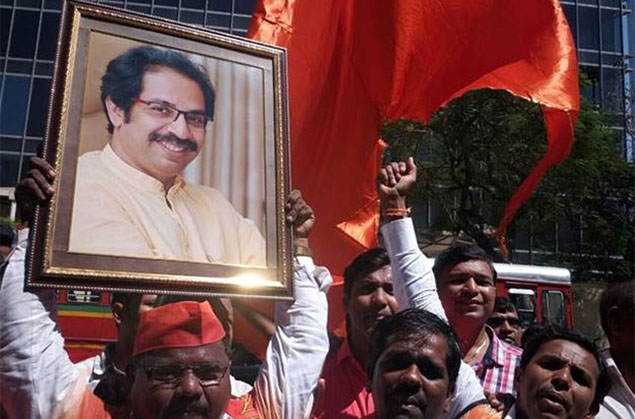
Shiv Sena candidate Haji Mohammed Halim Khan (centre), who won from ward no. 96 in Behrampada in Bandra (East), alleged that the projection that the party was ‘anti-Muslim’ was the “handiwork of certain sections of people.” He also accused the Congress of treating the community as a mere vote-bank. | Photo Credit: Vijay Bate

Saying that Sena is anti-Muslim is nothing but crap: Haji Halim Khan

Shiv Sena, which is identified with the ‘Hindutva’ ideology, has managed to make inroads into Mumbai’s two Muslim pockets with the winning candidates calling the saffron party as their “true well-wisher.”

The party put up a decent show by winning on 84 seats in the fiercely contested Mumbai civic body polls. The party had fielded five Muslim candidates, out of which two have won from Behrampada in Bandra locality and a ward representing suburban Amboli and Jogeshwari.

Sena candidate Haji Mohammed Halim Khan (35), who won from ward no. 96 in Behrampada in Bandra (East), alleged that the projection that the party was ‘anti-Muslim’ was the “handiwork of certain sections of people.”

‘Sena has always been helpful’

“Saying that Sena is anti-Muslim is nothing but crap and Sena’s projection of Muslims in a bad light is a handiwork of certain sections of the society. Rather, Sena has always been helpful in sorting out our problems. They are our true well-wisher,” he said.

“I can recollect that one of our prominent mosques came up only when Balasaheb Thackerayji helped,” he said.

A tour operator by profession, Mr. Khan’s win has facilitated the Shiv Sena register its first victory in the Muslim-dominated ward, which has been a Congress bastion. He charged the Congress with treating the community as vote-bank.

“The Congress considers Muslim as merely a vote-bank and nothing more than that, while Shiv Sena encourages every Muslim to be faithful towards the country. Balasaheb always praised ‘sachche musalman’ [true Muslims],” added Mr. Khan.

‘Nothing wrong with Hindutva’

Shahida Khan (52), who has won from ward no. 64 to represent suburban Amboli and Jogeshwari, also echoed the views of Mr. Khan and said the Sena has always helped people from the community whosoever has approached with a genuine problem.

“Hindutva a shadow, no one can deny and we need to live under it. There is nothing wrong when our party head says so. Most importantly, my party has always helped always been helpful to those from the community who have approached with a genuine problem,” Ms. Shahida said.

Ms. Shahida, who was a homemaker until now, is confident to address the issues of her locality with the help of her husband Haroon Khan, who is the party ‘shakha pramukh’ of the locality for the last 16 years.

Reaching out to Muslims

According to political analysts, Sena’s effort to reach out to Muslims is not an overnight stand, but it was a decision taken after due deliberation, which has yielded positive results.

Anil Tiwari, resident editor of Dopahar Ka Saamna, party’s mouthpiece, said, “We never used our paper to create a divide in the society on the basis of caste and religion. However, lately we tried to connect with the Muslims and highlighted issues concerning them through our editorial pieces and I think it worked well.”

The Sena, well-known for anti-Muslim tirades, was pulled up by the Srikrishna Commission probing the 1992-93 communal riots, proved its soft stand towards Muslims when it gave wide advertisements in the Urdu dailies few day before polling and sought their votes.

source: http://www.thehindu.com / The Hindu / Home> Other States / by PTI / Mumbai – February 26th, 2017

Haji Halim Khan of Shiv Sena wins 2017 Mumbai civic elections

Mumbai, MAHARASHTRA :

HajiHalimKhanMPOs27sept2018

Mumbai:

Mohammad Halim Khan, a Muslim candidate of Shiv Sena, has won the municipal corporation elections in Mumbai where counting of votes to elect the new body of 227-member Mahanagar Palika is still under way.

Haji Halim Khan won the 2017 BMC elections from Ward No 96.

Shiv Sena and BJP – two right wing Hindu parties are not known for having Muslims as party members.

Meanwhile, the ruling Shiv Sena is set to better its 2012 performance of 75 corporators as counting of votes still continues in Mumbai. According to trends available at 03:30 pm, the Sena which broke its allinace with the BJP and decided to contest the BMC election alonse, is leading in 84 wards.

The BJP is ahead of its rivals in 80 wards. Congress candidates are ahead in 30 wards, whereas the NCP has taken lead in 08 and MNS in 07 wards.

The AIMIM has won in 03 wards so far whereas the Samajwadi Party (SP) has won 04 seats.

These are just trends. Final results are still awaited.

Live Update:
02:30 PM The ruling Shiv Sena is set to better its 2012 performance of 75 corporators as counting of votes still continues in Mumbai. According to trends available at 02: 30 pm, the Sena which broke its allinace with the BJP and decided to contest the BMC election alonse, is leading in 93 wards.

The BJP is ahead of its rivals in 73 wards. Congress candidates are ahead in 22 wards, whereas the NCP has taken lead in 07 and MNS in 07 wards.

The AIMIM has won in 03 wards so far whereas the Samajwadi Party (SP) has won 04 seats.

02:00 PM Rais Shaikh and Akhtar Qureshi of the Samajwadi Party (SP) have won the Brihanmumbai Municipal Corporation (BMC) elections held on February 21, according to the results announced by the State Election Commission today afternoon.

Rais Shaikh, the house leader of the Samajwadi Party (SP) and Member of Standing Committee in the last body, had won the best corporator award.

“Thanks for your faith in me, it’s a privilege to serve you all. Will continue doing it”, Rais Shaikh tweeted after the victory.

Rais Shaikh won the election from Madanpura/Nagpada area in Mumbai Central area. He defaeted his nearest rival by over 4,000 votes.

01:00 PM The All India Majlis-e-Ittehadul Muslimeen (AIMIM) registered its first victory in the cash-rich Mumbai Municipal Corporation (BMC) elections after the party candidate Waqarunnisa Ansari defeated her rivals by a comfortable margin.

Waqarunnisa Ansari, a corporator since last twenty years, had joined the AIMIM after she was denied the ticket by the Congress party.

Waqarunnisa Ansari has won the BMC election from Ward No. 223 Umerkhadi.

There are also reports that the AIMIM is also leading on one other seat.

Elsewhere in the city, Ruskhsana Siddiquee and Saira Fahad Azmi, both the candidates of Samajwadi Party (SP) led by Abu Asim Azmi in Maharashtra, have won the Mumbai Municipal Corporation (BMC) elections in their respective wards.

While Rukhsana Siddiquee has won the BMC 2017 election from Ward No. 136, Saira Fahad Azmi defeated her rivals in Ward No 134, according to the results declared by the State Election Commission today afternoon.

Meanwhile, the ruling Shiv Sena has bettered its 2012 performance of 85 seats by leading in 85 wards of Mumbai.

The BJP is leading in 52 wards, the Congress in 18, MNS in 10 and NCP in 03 wards. The AIMIM is yet to open its account in Mumbai, according to trends at 01:00 pm.

12:30 PM Ruskhsana Siddiquee and Saira Fahad Azmi, both the candidates of Samajwadi Party (SP) led by Abu Asim Azmi in Maharashtra, have won the Mumbai Municipal Corporation (BMC) elections in their respective wards.

While Rukhsana Siddiquee has won the BMC 2017 election from Ward No. 136, Saira Fahad Azmi defeated her rivals in Ward No 134, according to the results declared by the State Election Commission today afternoon.

Meanwhile, the ruling Shiv Sena has bettered its 2012 performance of 75 seats by leading in 85 wards of Mumbai.

The BJP is leading in 53 wards, the Congress in 19, MNS in 10 and NCP in 05 wards. The AIMIM is yet to open its account in Mumbai.

11:45 AM The ruling Shiv Sena is heading for a thumping victory in Mumbai. According to trends available at 11: 45 am, the Sena which broke its allinace with the BJP and decided to contest the BMC election alonse, is leading on 72 seats.

The BJP is ahead of its rivals on 40 seatss. Congress’ candidates are ahead on 14 seats, whereas the NCP has taken the lead in 05 and MNS in 08 wards. The AIMIM, SP and others are leaders in 04 wards.

Shiv Sena’s performance in Mumbai poll battle is way better than the party fared in 2012 elections. Shiv Sena had won 75 seats. However, Shiv Sena’s final tally in this round of polls is expected to exceed the previous figures of 75.

11:00 AM The ruling Shiv Sena is heading for a thumoing victory in Mumbai. Aaccording to trends available at 11: 00 am, the Sena which broke its allinace with the BJP and decided to contest the BMC election alonse, is leading in 45 wards.

The BJP is ahead of its rivals in 28 wards. Congress’ candidates are ahead on 07 seats, whereas the NCP has taken the lead in 2. MNS leads in 02 wards. The AIMIM, SP and others are yet to open account.

Meanwhile, Shiv Sena workers have gathered in several parts of Mumbai and Thane. The party workers have begun the celebration. As per the early trends, Shiv Sena appears to be making huge leap in the electoral battle.

10:40 AM The Counting of votes in Mumbai to elect the new body of the Mumbai Maha Nagar Palika (BMC) began Thursday morning at around 10:00 am. According to trends available at 10: 40 am, Shiv Sena is leading in 07 wards whereas the BJP is ahead of its rivals in 03 wards.

These are just trends. Final results are still awaited.

10:15 AM The Counting of votes in Mumbai to elect the new body of the Mumbai Maha Nagar Palika (BMC) began Thursday morning at around 10:00 am. The process began with counting of postal votes.

After counting of postal votes are over, the round wise counting of different Municipal wards will begin, election officials said.

Trends and results are expected to start coming by 11:00 am

09:00 AM Counting of votes to elect the new body of 227-member cash-rich Brihanmumbai Municipal Corporation (BMC) is scheduled to begin today i.e. Thursday February 23, 2017 at 10:00 am, an election officer said. India’s commercial hub Mumbai went to polls on Tuesday, recording 55.28 per cent voter turnout – highest in recent years.

Along with Mumbai, 09 other Municipal Corporations also went to the poll on Tuesday. Counting of votes in all these civic bodies including Nashik, Pune, Nagpur, Thane and Akola will start at 10:00 am today, the election officer added.

In Mumbai, the main parties in the fray are the ruling Shiv Sena, Bhartiya Janata Party (BJP), Congress, Nationalist Congress Party (NCP), Samajwadi Party (SP) and All India Majlis-e-Ittehadul Muslimeen (AIMIM).

About 2,275 candidates contested the bitterly fought elections.Over 92 lakh voters exercised their democratic rights.

While overall turnout for the BMC election was nearly 10 percentage points up from the last time, in 52 of the total 227 electoral wards, more than 60% of voters exercised their franchise. That’s nearly two of every three registered voters.

BJP and its bickering ally in the state government Shiv Sena, who could not form an alliance for the civic poll in the megapolis or elsewhere this time, fought keenly, lashing out freely at each other during the bitter campaign.

Surge in voting occurred in two suburban clusters, the stretch comprising Bhandup, Mulund, Vikhroli and Ghatkopar in the eastern suburbs, and the areas comprising Jogeshwari, Dindoshi, Malad, Kandivli, Borivli, Gorai and Dahisar in the west.

Overall, though turnout was high in pure percentage terms, the absolute number of voters rose by less than 5 lakh.This is because the electoral list shrunk due to roll revisions after deletion of names for various reasons.

As per the existing position, Shiv Sena has 75 – maximum number of corporators and ruling the Mumbai Mahanagar Palika in alliance with the BJP which has 31 members.

Congress has a total of 52 members, the Nationalist Congress Party (NCP) has 13 members and others including Abu Asim Azmi led Samajwadi Party (SP) and independents have a total of 28 members.

The AIMIM currently has no member in Mumbai, as the Owaisi led Hyderabad based party is contesting the Mumbai BMC Elections for the first time.

Chief minister Devendra Fadnavis and Shiv Sena president Uddhav Thackeray are sailing in the same boat over the outcome of the crucial elections to the BMC.

In the event BJP fails to secure a clear majority, Fadnavis will be in trouble though he has declared that the outcome of the polls will not be a referendum on his two-year-old government.

Thackeray has made the election a prestige issue as it is for the first time in the recent past that the Shiv Sena has been challenged in the BMC polls. Sena has directly controlled the BMC since 1997.

Ever since Sena unilaterally terminated the alliance with BJP, Fadnavis embarked on an aggressive campaign against it, saying, it was alone responsible for the corruption and irregularities in BMC. Fadnavis alleged that the Sena was collecting `haftas’ from BMC contractors, and as a result, the quality of work was poor.

He addressed more than 22 election meetings and BJP put up well over 1,000 banners and hoardings across the metropolis, depicting Fadnavis as the posterboy of BJP.

“We have exposed the Sena’s corruption in BMC. We established that the quality of services in Mumbai was poor. BJP expects a clear majo rity. The mandate will be in our favour, we will not require a post-poll alliance,“ Fadnavis had told ToI a week ago.

Uddhav too did not lag behind in his aggressive campaign against BJP, particularly PM Narendra Modi and Fadnavis.

“The CM is presiding over a cabinet of goons,“ he observed.Thackeray and his son Aaditya concentrated on Mumbai to ensure that the Sena does not lose control over BMC.

Mumbai Congress president Sanjay Nirupam predicted a hung corporation.

“Congress will improve its performance. After the BMC polls, Sena and BJP will come together,“ Nirupam said. Nirupam said in the event BJP fails to secure a clear majority , it will be a verdict against the CM, since he had personally led the campaign against the Sena.

“The CM will have to accept the verdict and then decide,“ he said.

According to an NCP leader, if Sena secures a clear majority , Thackeray will not hesitate to pull out of the government.

The AIMIM led by Asaduddin Owaisi and Samajwadi Party led by Abu Asim Azmi too are optimistic about the results.

“High voter turnout was in our favour. We are confident of winning at least 15-20 seats in Mumbai”, AIMIM MLA Waris Pathan said.

source: http://www.ummid.com / Ummid.com / Home> Regional / by ummid.com Staff Reporter / February 23rd, 2017
BJP majority Amravati Municipal Corporation to have 11 AIMIM members

Amravati, MAHARASHTRA :

AIMIM is celebrating after election victory in Amravati Municipal Corporation elections.

Amravati:

In a strong show of electoral victory, the All India Majlis-e-Ittehadul Muslimeen (AIMIM) has won 11 seats in 87-member Amravati Municipal Corporation (AMC) the election of which were held on February 21 and results were announced after counting of votes today.

The Bhartiya Janata Party (BJP) has emerged as victorious in Amravati bagging 45 seats in a house of 87. The Congress is next with 20 members whereas the Shiv Sena will have a total of 07 members.

The AIMIM candidates who won in Amravti are:

A Khalique, Naseem Bano, Razia Khatoon and A Nazim who have won from Aleem Nagar area.

Meera Kamble, Rubeena Haroon Ali, Mohd Sabir and S M Imran are the AIMIM candidates who have won from Badnera Juni Basti of Amravati whereas Afzal Husain, Saheb Bi and Najmunnisa have won from Jameel Colony.

The Hyderabad based AIMIM entered into Maharashtra politics after it contested Nanded municipal elections and won 13 seats. The party later contested Maharashtra assembly elections, and two seats – one in Mumbai and the other in Aurangabad.

The AIMIM also contested Auragabad, Kalyan Dombivali, Shahada, Udgir and other civic elections and won seats.

Elsewhere in the state, the AIMIM has also won 09 seats in Solapur Municipal Corporation and 01 seat in Pune civic body. In Mumbai the AIMIM has won 02 seats whereas in nearby Mumbra it won 02 seats.

In Pune, Ashwini Daniel Landge became the first All India Majlis-e-Ittehadul Muslimeen (AIMIM) Corporator to enter the Pune Municipal Corporation (PMC).

Ashwini Daniel Landge, who contested the election as AIMIM candidate from Prabhag 06 in Yerawada area of the city defeated her nearest rival by 25 votes, party sources said.

Asaduddin Owaisi led AIMIM contesting the Pune Municipal Corporation election for the first time had fielded 25 candidates.

As per overall results, the Bhartiya Janata Party (BJP) became the single largest party in the Pune Municipal Corporation (PMC). According to the results announced by the state election commission, the BJP won 94 seats, dislodging the ruling NCP from the all important civic body.

The NCP which won the PMC elections in 2012 could won just 40 seats of the total 162 seats in Pune Maha Nagar Palika (PMC).

The Congress gained after slow start and won 11 seats. The Shiv Sena and MNS respectively won 10 and 02 seats of the Pune Municipal Corporation.

Live Update
05:30 PM 
The Bhartiya Janata Party (BJP) is set to become the single largest party in the Pune Municipal Corporation (PMC). According to trends available at 05:30 pm, the BJP is leading on 77 seats and it is on way to dislodge the ruling NCP from the all important civic body.

The NCP which won the PMC elections in 2012 is ahead on just 44 seats of the total 162 seats in Pune Maha Nagar Palika (PMC).

The Congress gained after slow start. It is now leading on as many as 16 seats.

The Shiv Sena and MNS are respectively leading on 10 and 06 seats of the Pune Municipal Corporation. Others are ahead on 06 seats.

These are just trends. Final results are still awaited. The Counting of votes in Pune to elect the new body of the Pune Maha Nagar Palika (PMC) began Thursday morning at around 10:00 am.

02:15 PM 
According to trends available at 02:15 pm, the BJP is leading on 67 seats whereas the ruling NCP is ahead of its rivals on 33 seats of the total 162 seats in Pune Maha Nagar Palika (PMC)

The Congress gained after slow start. It is now leading on as many as 12 seats.

The Shiv Sena and MNS are respectively leading on 10 and 06 seats of the Pune Municipal Corporation. Others are ahead on 06 seats.

These are just trends. Final results are still awaited. The Counting of votes in Pune to elect the new body of the Pune Maha Nagar Palika (PMC) began Thursday morning at around 10:00 am.

11:30 AM According to trends available at 11:30 am, the BJP is leading on 30 seats whereas the ruling NCP is ahead of its rivals on 12 seats of the total 162 seats in Pune Maha Nagar Palika (PMC)

The Congress and Shiv Sena are ahead on 01 seat each.

11:00 AM
 The Counting of votes in Pune to elect the new body of the Pune Maha Nagar Palika (PMC) began Thursday morning at around 10:00 am. According to trends available at 11:00 am, the BJP is leading in 19 wards whereas the ruling NCP is ahead of its rivals in 07 wards.

The Congress and Shiv Sena are ahead in 01 ward each.

10:45 AM 
The Counting of votes in Pune to elect the new body of the Pune Maha Nagar Palika (PMC) began Thursday morning at around 10:00 am. According to trends available at 10: 40 am, the BJP is leading in 11 wards whereas the ruling NCP is ahead of its rivals in 05 wards.

The Congress is leading in 01 ward.

These are just trends. Final results are still awaited.

10:15 AM 
The Counting of votes in Pune to elect the new body of the Pune Maha Nagar Palika (PMC) began Thursday morning. The process began by counting of postal votes.

After counting of postal votes are over, the round wise counting of different Wards (Prabhags) will begin, election officials said.

Trends and results are expected to start coming by 11:00 am.

09:00 AM
 Counting of votes to elect the new body of 162-member Pune Municipal Corporation (PMC) also called as Pune Mahanagar Plaika is scheduled to begin today i.e. Thursday February 23, 2017 at 10:00 am, an election officer said. India’s Education hub Pune went to polls on Tuesday along with 09 other civic bodies of Maharashtra.

Pune recorded a voter turnout of 53.55 per cent – higher as compared to the 2012 civic polls. Out of 26 lakh registered voters, over 14 lakh voters exercised their franchise. In 2012, the total voter turnout stood at 50.92% in Pune civic polls.

Along with Pune, 09 other Municipal Corporations also went to the poll on Tuesday. Counting of votes in all these civic bodies including MumbaiNashik, Nagpur, Thane and Akola will start at 10:00 am today, the election officer added.

In Pune, the Municipal Corporation is currently ruled by Sharad Pawar led Nationalost Congress Party (NCP). Besides NCP, other parties in the fray are the Shiv Sena, Bhartiya Janata Party (BJP), Congress, Maharashtra Navnirman Sena (MNS) and Asaduddin Owaisi’s All India Majlis-e-Ittehadul Muslimeen (AIMIM).

The Pune PMC is in charge of the civic needs and infrastructure of the metropolis. Pune is divided into 48 municipal wards, each represented by 03 members and overseen by an Assistant Municipal Commissioner for administrative purposes.

As per the current party position, the NCP has a total of 51 members followed by MNS 29 members, Congress 28 members, BJP 26 mebers, Shiv Sena 15 and others 03.

The All India Majlis-e-Ittehadul Muslimeen (AIMIM) has no member in Pune at present since it is contesting the PMC election for the first time.

The All India Majlis-e-Ittehadul Muslimeen (AIMIM) has fielded a total of 25 candidates for the Pune Municipal Corporation (PMC) elections.

According to the list of candidates provided by Waseem Shaikh, AIMIM Pune Unit Chief, the party has fielded Shabbir Shaikh (Open), Sunita Dilip Varpe (SC ladies) and Adv. Benazir Shaukat Inamdar (OBC ladies) in Prabhag No. 1 AND Mrs Ashwini Daniel Landge (Open ladies), Shailendra Bhosale (SC), Javed Altaf Sayyed (Open) and Mrs. Sayra Hanif Shaikh (OBC ladies) from Prabhag 06.

Likewise, Fayyaz Qureshi (OBC) is AIMIM Pune candidate in Prabhag 16 whereas Shahid Shaikh (Open), Rehana Yousuf Shaikh (ladies Open) and Jamshed Bagwan (Open) are AIMIM candidates in Prabhag 17.

The Asaduddin Owaisi led AIMIM which is contesting the Pune Municipal Corporation (PMC) election for the first time has also fielded Rekha Arjun Chauhan (SC ladies), Mrs Farida Sabir Shaikh (OBC ladies), Farid Rashid Khan (Open) and Umer Bagwan (Open) from Prabhag 18.

Zuber Babu Shaikh (Open), Afsari Shaikh (OBC ladies) and Hasina Dawood Shaikh (Open ladies) are AIMIM candidates from Prabhag 19 whereas the lone AIMIM candidate in Prabhag 20 is Mazhar Qureshi (Open).

In Prabhag 27, the AIMIM has fielded four candidates. They are: Mrs. Mubina Ahmed Khan (Open ladies), Hussain Khan (OBC), Tasneem Chabil Patel (Open ladies) and Tausif Shaikh (Open).

The two AIMIM candidates in Prabhag 28 are Mrs Salimabi Shaikh (Open ladies) and Rafiq Kazi (Open).

According to Municipal Commissioner Kunal Kumar, as many as 2,661 nominations were filed by the end of the day on Friday. The process of submission was carried out at 14 ward offices.

He said some aspirants had downloaded several forms and some had not submitted any of them. It had reduced some burden on the staff.

Kumar said there were a few complaints about the glitches and a majority of the aspirants had completed their online formalities much earlier.

“Though I have got calls from people using the online system, not a single written complaint has reached me,“ he added.

source: http://www.ummid.com / Ummid.com / Home> Politics / by Ummid.com  Staff Reporter / February 23rd, 2017
The Ghazi of Peace

Bahraich, UTTAR PRADESH :

Shahid Amin, one of India’s most creative and learned historians, explores Indian syncretism through the legend of an 11th century warrior-saint.

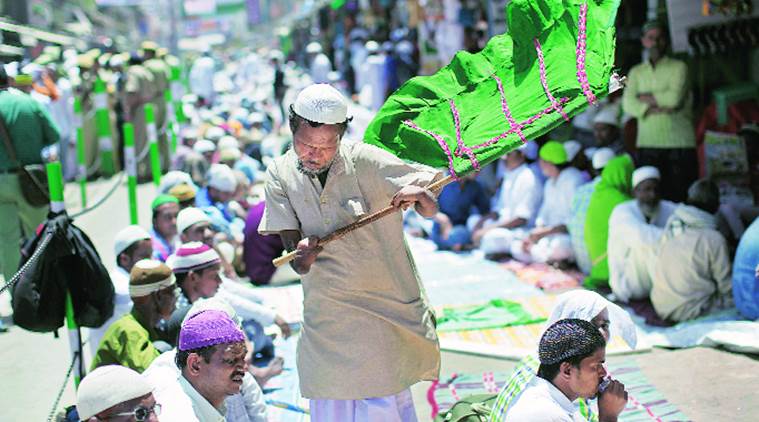
Dargahs such as the one in Ajmer (above) and Bahraich symbolise India’s syncretic heritage. Vishal Srivastav

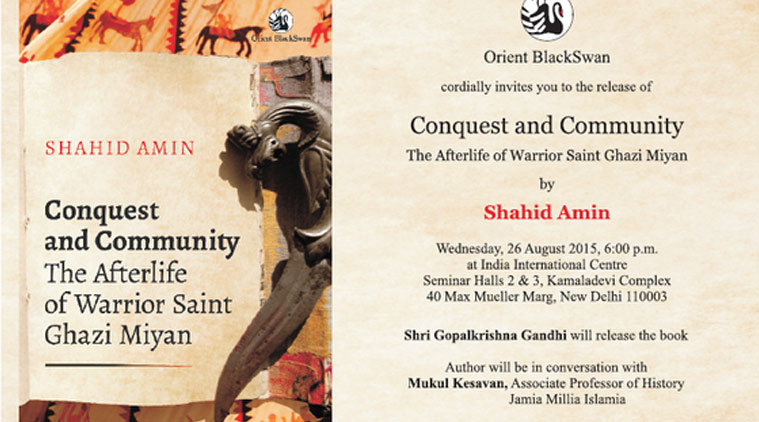
Book- Conquest and Community: The Afterlife of Warrior Saint Ghazi Miyan

Author: Shahid Amin

Publication: Orient BlackSwan

Pages: 348

Price: Rs 850

Three decades ago, the historian Shahid Amin wrote a brilliant piece, ‘Gandhi as Mahatma’, which is in many respects the locus classicus of what became the subaltern school of Indian history. What he offered was far more than what is ordinarily called “history from below”, showing that the masses made of Gandhi what they could, stepping outside the role habitually assigned to them by nationalist historiography. The Mahatma, Amin suggested, had been metamorphosed into a floating signifier.

In the present work, Conquest and Community, which cements Amin’s reputation as one of India’s most creative and learned historians, he extends this mode of analysis and turns his attention to Salar Masud or Ghazi Miyan as he is more popularly known, a warrior saint whose cult appears to have been well established by the 14th century.

GhaziMianMPOs26sept2018

The story of Ghazi Miyan begins, we may say, with Sultan Mahmud of Ghazni, whose name is calculated to turn the middle-class Hindu into a figure of rage: this early 11th century warrior made repeated incursions into India, “utterly ruined the prosperity of the country” and desecrated the shrine of Somnath. Folklore would inscribe a place for Salar Masud as Mahmud’s nephew, though contemporary records make no mention of such kinship, and representations of him as a warrior taking up arms on behalf of his uncle until he was felled in battle in 1034 against a confederation of Hindu kings began to proliferate.

More surprising still is the fact that the Ghazi was transformed into a Sufi saint, the extent of whose following and reputation might be gauged by the presence at his dargah of Mohammad bin Tughlaq, the Sultan of Delhi. Abdur Rahman Chishti’s 17th century hagiography, Mirat-i-Masudi, would displace Mahmud with Miyan Ghazi. To this day, the cult of the 11th century Indo-Turkic warrior saint thrives in north India, and Hindus and Muslims continue to be drawn in large numbers to his dargah at Bahraich.

Just how is it that the popular assent to the cult of Ghazi Miyan was garnered across the religious divide, and that too with respect to a figure associated in educated Hindu minds with the image of the rapacious Muslim invader? Amin says rather modestly that his “book eschews definitive explanations” and that he is not interested in asking why a 17th century Sufi wrote the text “at the time that he did,” or why “Hindu castes felt no compunction in installing a Muslim warrior on their domestic altar”.

He sets out, rather, to explore those aspects of the Ghazi Miyan narrative which took hold firmly in Gangetic popular culture. This leads him knee deep into some extraordinary anomalies. The commonplace view of Muslims in India renders them as beef eaters, but the Ghazi Miyan of folklore is a protector of cows, the saviour of oppressed cowherds, and a determined foe of the landlords who claimed as their prerogative the right to impregnate the virgin daughters of the Ahirs. In a similar vein, the ballads celebrate the story of the married Brahmin woman, Sati Amina, at whose home the sandalwood tree has dried up.

The family priest avers that the tree will regenerate upon the Ghazi’s arrival — and so it does. In gratitude, Amina washes the feet of the Ghazi and his followers, the Panchon Pir, and then serves them a lavish meal. What could be more violative of the social order than for a Brahmin woman to cook for a Muslim man? Yet, as the very name Sati Amina signifies — Amina is the Prophet’s mother — this is a story about in-between spaces and the risks (and pleasures) of transgressive and forbidden acts.

By the 19th century, as Amin shows, the cult of the Ghazi had become a source of acute anxiety to British, Muslim, and Hindu elites alike. Colonial ethnographers and officials had set out to clearly differentiate “Hindu” and “Muslim” communities, and the presence of a large number of Hindu worshippers at the sites associated with the Ghazi was immensely bewildering to them. On the specious ground that Bahraich was a “cosmopolitan” site and therefore not deserving to be characterized as a special religious endowment of the Muslims, the British sought to bring the dargah under their control and pocket the considerable donations left by devotees.

To the Ashraf or Muslim elites, their low-class and illiterate brethren who consorted with Hindu devotees were little better than idolaters, and the Muslim clergy had no difficulty in attributing the ignorance of Muslim devotees to their frequent social intercourse with Hindus. The zealots of the Arya Samaj and Hindu revivalists expressed alarm that “their” women were willing to surrender their dignity before a Muslim warrior saint, all too often in the hope of gaining male progeny. Such had been the consummate nature of Muslim dominance that, in Amin’s marvelously elegant and provocative rendering of the revivalist view, Hindus “partaking of holy unction” at “the altars of Muslim saints” were “virtually ingesting the leftovers from their Muslim neighbours’ kitchen.”

Few questions have animated Indian historiography, and discussions in the public sphere, as much as the relations between Hindus and Muslims. Amin’s study is a signal contribution to this literature, and he is particularly enlightening in his suggestion that while we cannot be dismissive of those who have posited a syncretic Indian past, it behooves us to view syncretism not only as a narrative of pluralism and accommodation but also in equal parts as a story of agonism, conflict and clash. His masterful study argues that while our narrative understanding of the Ghazi Miyan saga cannot stop at viewing him as “just a conqueror”, it must also contend with the fabrications and the verisimilitude engendered by local histories, ballads and folklore.

In what Amin calls “the quotidian culture of north India” reside perhaps our best hopes for neutralising those who would seek to homogenise the Indian past in the vain and dangerous quest to create the patriotic and “new Indian national”.

The writer is professor of history, University of California

source: http://www.indianexpress.com / The Indian Express / Home> Lifestyle / by Vinay Lal / October 10th, 2015