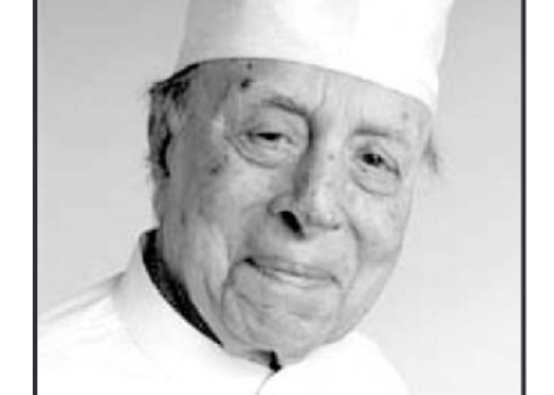
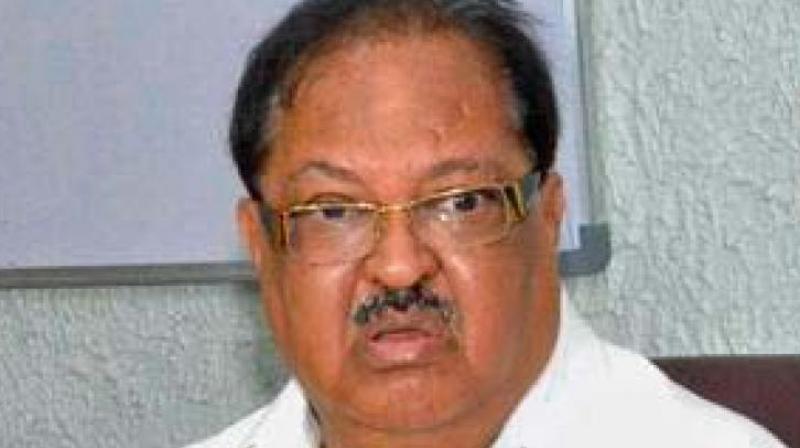
Nawab Shah Alam Khan, Chairman of Hyderabad Deccan Cigarette Factory expired today at 1 am.
He was also the chairman of Anwarul Uloom Educational Society and many more educational societies.
He converted Anwaruloom from a small educational institute into an educational hub. Today about 18,000 students attend schools and colleges run by society.
An engineering college ‘Nawab Shah Alam’ was named after him.
He is survived by seven sons
Nawab Mehboob Alam Khan
Nawab Qader Alam Khan
Nawab Zahed Alam Khan
Nawab Mohammed Alam Khan
Nawab Mehmood Alam Khan
Nawab Ahmed Alam Khan and
Dr. Mustafa Alam Khan.
He was born in a Jagirdar family in 1921 and expired at the age of 96.
Namaz-e-Janaza will be performed at Masjid E Salima Khatoon, Himayath Nagar after Asar prayer today.
For further details contact +91-9849030244
source: http://www.siasat.com / The Siasat Daily / Home> Hyderabad> Top Stories / October 23rd, 2017
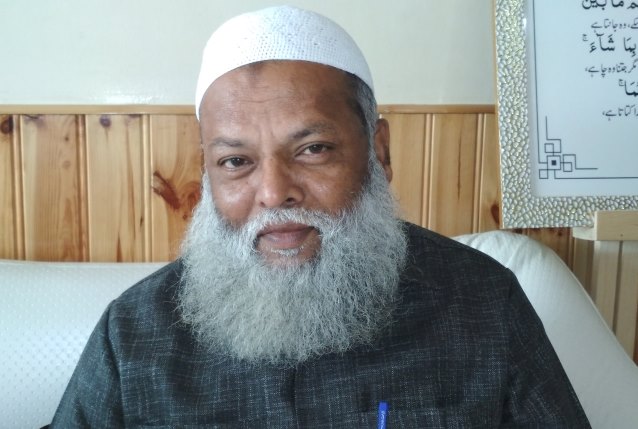
Dr.Abdul Qadeer, the founder of Shaheen Group of Institutions.
When Dr. Abdul Qadeer, an engineer by profession, had begun teaching 17 students in one room in in Bidar district – the northernmost part of Karnataka – in 1989, he would have even imagined that his effort would take the shape of an education revolution. The institute set up in a room with an aim of “shaping an ideal seat of learning that is accessible to one and all” has now turned into Shaheen Group of Institutions, which runs nine schools, 16 pre-university colleges and a degree college with branches in Bangalore and Mysore.
In 2012, it sent 71 students government colleges that offer professional courses. The number went up to 89 in 2013, 93 in 2014, 111 in 2015 158 in 2016 and 2000 in 2017.
More than 90% of the identified students have been gaining admission in professional courses every year and 1764 students have obtained free Government seats in Medical, Engineering and other professional courses since 2008. Over 900 Shaheenians had cracked MBBS, setting a new record of success.
One of the Shaheenians secured third medical rank in the KCET last year.
Shaheen Group of Institutions accommodate over 16,000 students from across the country in different courses. Its students topping in different examinations is nothing new. Shaheen has consistent growth securing seats in government colleges through Karnataka Common Entrance Test (KCET) that offer admissions in various undergraduate as well as professional courses.
For this “selfless service towards society”, its founder Dr Qadeer he has been conferred on several awards such as Gurukul Award (2004), District Level Rajyotsava Award (2008), Shikshana Ratna Prashasti from Chitradurga math (2011), Dr. Multaj Khan Award (2012) for communal harmony, Karnataka Urdu Academy Award (2012).
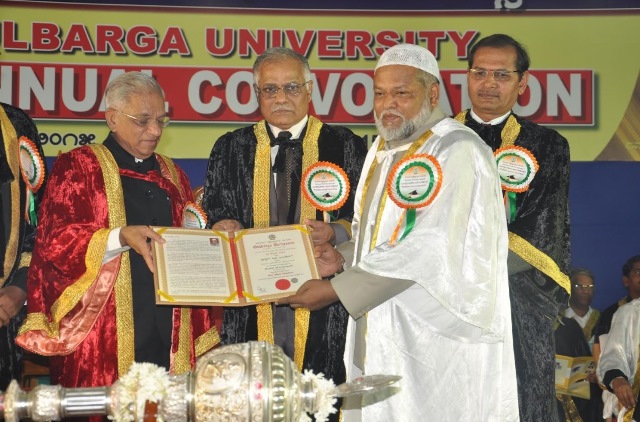
He has been also awarded with Honorary Doctorate Degree for his service in the field of Education, Arts, Culture and Health Care by the Gulbarga University in their 33rd Annual Convocation Day.
Khushboo Khan spoke to him for MuslimMirror.com on his initiatives, challenges he faced and his 25-year-old journey as an educationist. Excerpts:
KK: Tell us about your transition from a technocrat to an educationist.
Dr.Abdul Qadeer: I wanted to educate my younger brother Abdul Hannan. We got him admitted to Darul Huda, Hyderabad, but came back within the three days with many excuses. I realised that he is not at all interested in studies. It was a turning point of my life. I decided to facilitate thousands of families whose children drop schools due to the lack of interest and weakness in studies.
I established an elementary school on December 1, 1989 in my one-room accommodation with just 17 students. When the number of students started rising, we shifted the school to a rented accommodation.
Now after 28 years, we have our branch in Bangalore, Aurangabad, Bidar with 17,000 students from 25 states all over the country. Students from at least eight gulf nations also come to study here.
Around 1,000 Shaheenians are studying in different medical colleges of the state and the country
KK: How do you prepare students?
Dr. Abdul Qadeer: We make them hardworking and disciplined. We provide students such a competitive atmosphere where they learn to compete. We also discourage tuition culture as we consider it a kind of sickness. Bidar is a tuition-free district in the country. The tuition trend has no more been into existence here for the past 15 years. Our teachers find out the weakness of students and help them improve. Now, other institutions also following our pattern.
KK: What are the challenges you faced in this journey of 28 years?
Dr.Abdul Qadeer: When you try to do something new and break an existing trend, you face opposition and criticism. I also faced the same but ignored them and continued to move towards the goals. When we started getting success, the people’s perception also changed and now they appreciate our efforts.
KK: Do you have students belonging to the Muslim community only?
Dr.Abdul Qadeer: No, we have students from different communities. In fact, we have non-Muslim students in large number. Parents value the quality education we impart. They appreciate the environment of the Shaheen’s campus.
We believe enrolment of diverse ethnicity would strengthen brotherhood in the country and cultural values. I believe Hindus and Muslims are two arms of Shaheen who would take this country to global success.
Gulbarga University has conferred Honorary Doctorate to Dr. Abdul Qadeer during the 33rd Annual Convocation.
KK: The Shaheen Group majorly concentrates on providing education till pre-university. You don’t have medical, engineering and colleges that offer professional. Why?
Dr.Abdul Qadeer: Well, we don’t find any need to set up new medical or engineering institutions as we have more prestigious colleges run by our Indian government that have nominal fee structure. We need to work on good schooling so that students would become focused and productive. Only a few institutions in the country are providing a good education without any external distraction, while rests are in the money-making business.
KK: Do you have any arrangement to bring students from madrasa background in the mainstream?
Dr.Abdul Qadeer: Yes. Along with the universal education, we initiated a course for Hafizs (those who have completely memorized the holy Qur’an). It’s an effort to impart them modern education so that they can become lawyers and teachers as well can compete in the modern arena.
Shaheen schools have regular classes to teach Qur’an so that students can get both educations without any external burden. I have seen many of the institutions that are giving both the knowledge with the ratio of 50:50 but the effort was not less than a boon.
KK: Do you have only hostellers or day scholars as well?
Dr.Abdul Qadeer: Actually, most of our students are from outside the city or from different states – especially Bihar. Therefore, it is convenient for them to stay in Shaheen’s accommodations.
KK: Why does the Shaheen Group mainly focuses on science, not humanities?
Dr.Abdul Qadeer: We are making efforts to provide arts education to students come here from religious seminaries so that they can appear in civil services examinations and get themselves enrolled in law and teaching courses.
KK: What is the fee structure of Shaheen?
Dr.Abdul Qadeer: It’s Rs 1 lakh per annum, but for Hafizs it is around Rs 36,000. In addition, we give concession to 20 % students who have weaker financial conditions. I request to all capable people and institutions to please help those students who are not economically well-off.
KK: You said the institution does not allow students to use mobile phones, internet and other gadgets to avoid the chances of distraction. How will they become tech savvy and aware of what is happing in the world?
Dr.Abdul Qadeer: I think they are already living in a world where they get chances to interact with people from diverse background. We allow them to make difference between right and wrong which automatically leads them to better understanding of the world.
KK: Where do you see the Shaheen Group five years down the line?
Dr.Abdul Qadeer: At present, Shaheen dominates over 6% medical seats in the state and 0.3 seats in the country. We want this to improve both at state and national levels.
source: http://www.muslimmirror.com / Muslim Mirror / Home> Education / by admin – Muslim Mirror Staff / October 17th, 2017
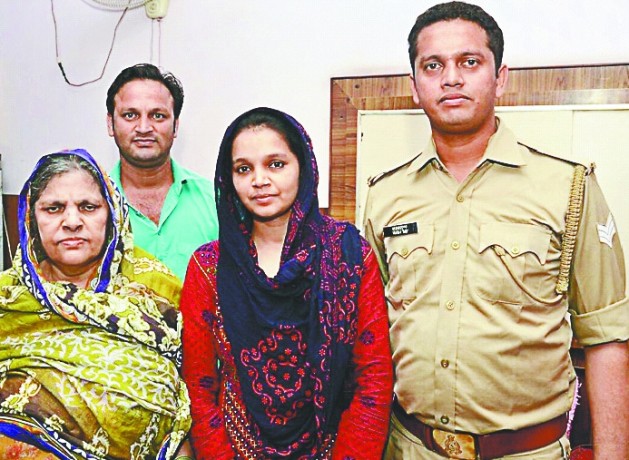
At the age of four, Anjum Saifi lost her father who was gunned down for standing up against extortionists in a market at Muzaffarnagar in western Uttar Pradesh where he had a hardware shop. She has a faint memory of how her father used to ask her to become a judge.
Her happines knew no bounds on Friday when she saw her name in the list of successful candidates who cracked civil judge junior divison exams conducted by the Uttar Pradesh Service Commission.
Her eyes were moist as becoming a judge for Anjum, who is now 29, was significant not because it was her dream, but for the reason that it was the wish of her father, who lost his life in 1992.
“My father died fighting for what was right. His sacrifice will not go waste. My only aim has been to uphold his values and keep people’s faith in righteousness intact. Now god has given me the power to initiate that change and I will try to make a difference in whatever capacity I can. I wish he was here to see it happen,” the only daughter among five sons told The Times of India.
Rasheed Ahmad, her father, was killed in broad daylight after he protested against goons who were extracting money from a hawker.
Cracking the prestegious examination was not an easy job for the young woman. She had to face “unspeakable hardships” all these years. The entire family went through a lot to see the realization of the father’s dream.
It was a struggle at many fronts, monetary concerns were just a small part. They had to even withdraw the case pertaining to his murder because the priority was to educate children and not put their lives at risk.
An overwhelmed Hamida Begum added, “Today, I am a content woman. The seed of values and principles that my husband had sown into my children has started yielding fruit.”
Anjum’s eldest brother Dilshad Ahmad, who is now 40, did not marry because he had to support his family after his father’s death.
source: http://www.muslimmirror.com / Muslim Mirror / Home> Editor’s Pick / by admin – Muslim Mirror Staff / October 16th, 2017
Twelve Muslim aspirants (seven girls and five boys) caracked Uttar Pradesh Provincial Civil Service Judicial or UP PCSJ examination whose result was declared on October 13. Girls outshined boys in this prestigious examination.
All these successful women have different stories of sacrifice, hard work and firm determination to achieve their goals.
Rumana
With 12th rank, Rumana – who has graduated from Aligarh Muslim University (AMU) – has secured the best position among the Muslim candidates.
Naghma Khan
UP’s Sambhal resident Naghma Khan has got 29th rank, Samina – who is from the same district – has secured 34th rank in the prestigious examination to enter into judicial services in the state.
Daughter of an engine mechanic, Naghma has done masters (LLM) from Jamia Millia Islamia in New Delhi. She has earlier been invited for lectures in Australia, Switzerland and Japan.
Talking about his daughter’s success, Mubeen Khan says, “It is like a dream come. Naghma has proved where there is a will, there is a way. She can be an inspiration for many daughters who have potential and want to achieve something in life.”
Samina Jameel
She is privileged to have an educated family background. She got all the support she needed during studies. Her father Jameel Ahmad was an employee of UP Secreteriat and her brother Mohsin Jameel is a Deputy SP in the state police.
Zeba Rauf
Hapur’s resident Zeba Rauf got 35th rank.
She comes from a Rajput Muslim family at Hapur in western Uttar Pradesh where female literacy rate is extremely low.
She got all the support from her father Rauf Ahmad and brother Samiullah Khan who studies at Jamia Millia Islamia.
Arshi Noor
She was posted at Bulanshahr as the Assistant District Prosecution Officer (ADPO). She prepared for the judicial services examination without any specialised coaching while doing her.
She is from Eatah and her father Noorul Hasan was an administrative assistant with the district court.
She is quite active on social media and runs a page titled ‘Our Dream PCS J’ on Facebook.
Anjum Saifi
Muzaffarnagar resident Anjum grabbed headlines of almost newspapers after the result was declared. She lost her father – who was gunned down 25 years ago by goons for raising voice against extortionists – when she was just four year old.
Her father, who had a hardware shop, wanted to see her as a judge. To fulfill his father’s dream and pay tribute to the departed soul, Anjum’s brother took the financial burden of the family on his shoulder.
He did not marry to ensure that her sister faces no economical hindrance in her preparations.
Kisa Zaheer
Kisa Zaheer from Lucknow was ranked at 74th, Arshi Noor from Etah at 117th and Anjum Saifi from Muzaffarnagar at 159th positions.
Five Muslim men also became judge this year. While Sharjeel Khan secured 19th rank, Arif Siddiqui got 36th position. Naved Muzaffar was ranked at 46, Zeeshan Masood at 64 and at Wakeel 218.
source: http://www.muslimmirror.com / Muslim Mirror / Home> Editor’s Pick / by admin – Muslim Mirror Staff / October 20th, 2017
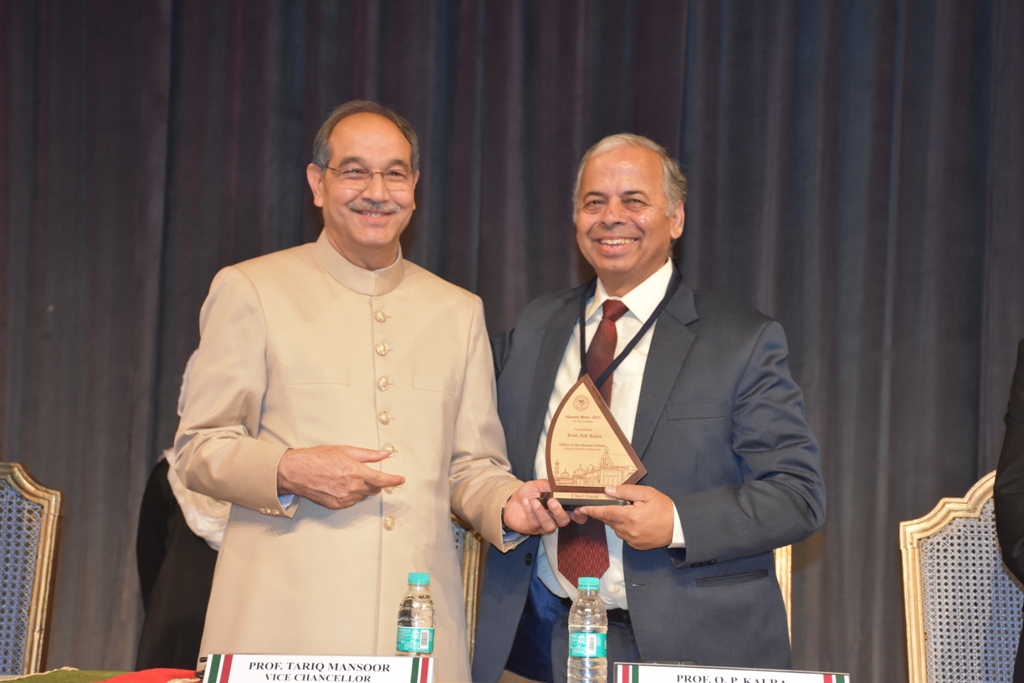
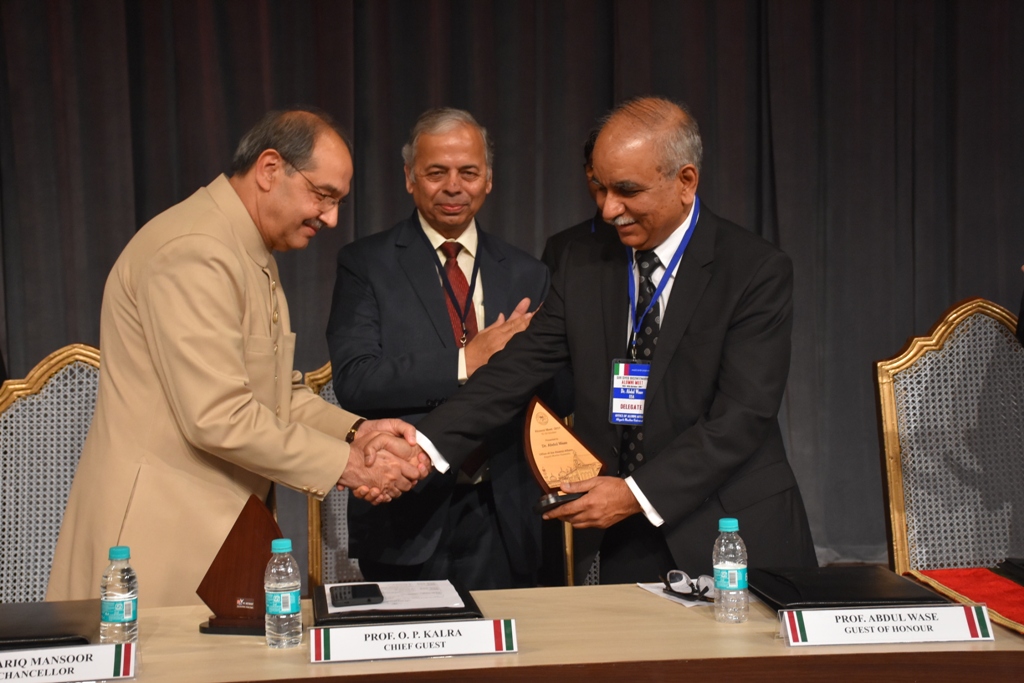
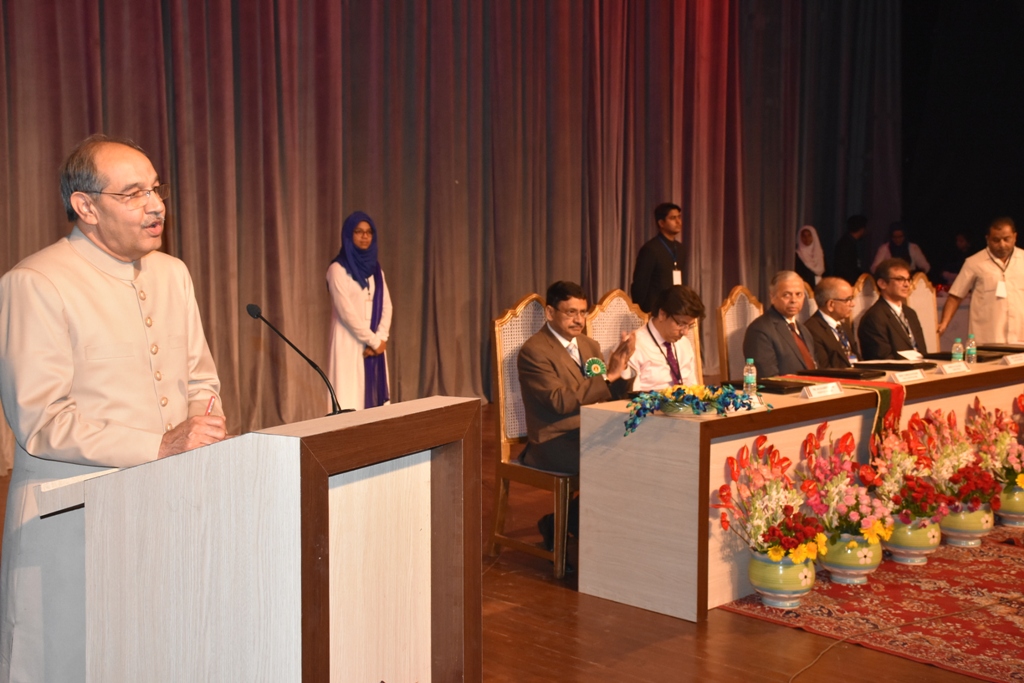
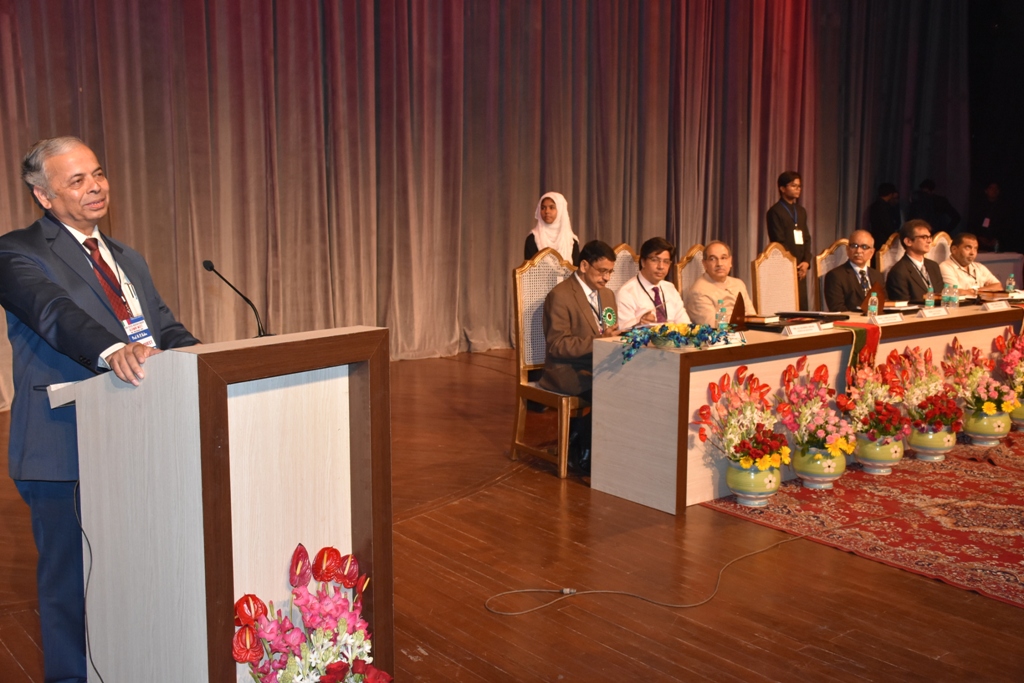
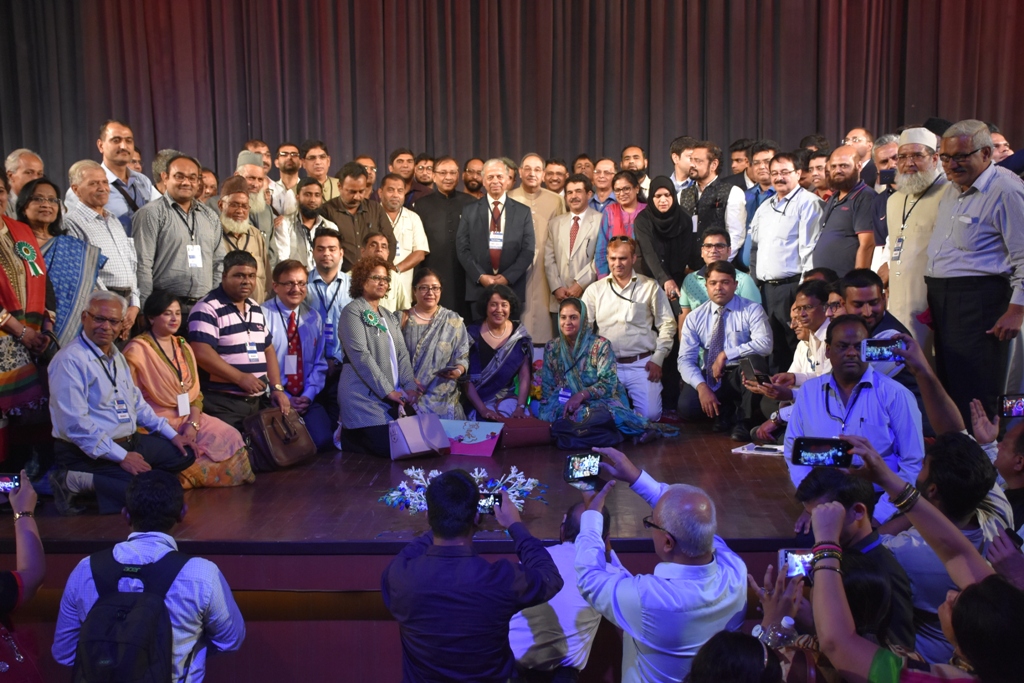
Hundreds of Aligarh Muslim University (AMU) alumni from across the world who attended the Sir Syed Bicentenary AMU Alumni Meet 2017 at the university’s Kennedy Hall Auditorium were caught up in nostalgia as the meet concluded with a valedictory function. AMU Vice Chancellor, Professor Tariq Mansoor after thanking the alumni for their visit said that the university will soon have ‘Distinguished Alumni Awards’ in national and international categories.
He pointed out that there is a plan to introduce alumni meets for all the faculties separately, which will be organised under the aegis of a central body of university’s Alumni Affairs Committee. “However, the idea is subject to change and discussions and has yet to be finalised,” said Prof Mansoor.
The Vice Chancellor further said that AMU is also planning to connect children of Alumni with the university through internships and other programmes. “Children of many alumni living in different parts of India and abroad are attending universities in various parts of world, we would like them to connect with the alma mater of their parents through special programmes,” said Prof Mansoor adding that many universities have been doing this and it can be done in AMU too.
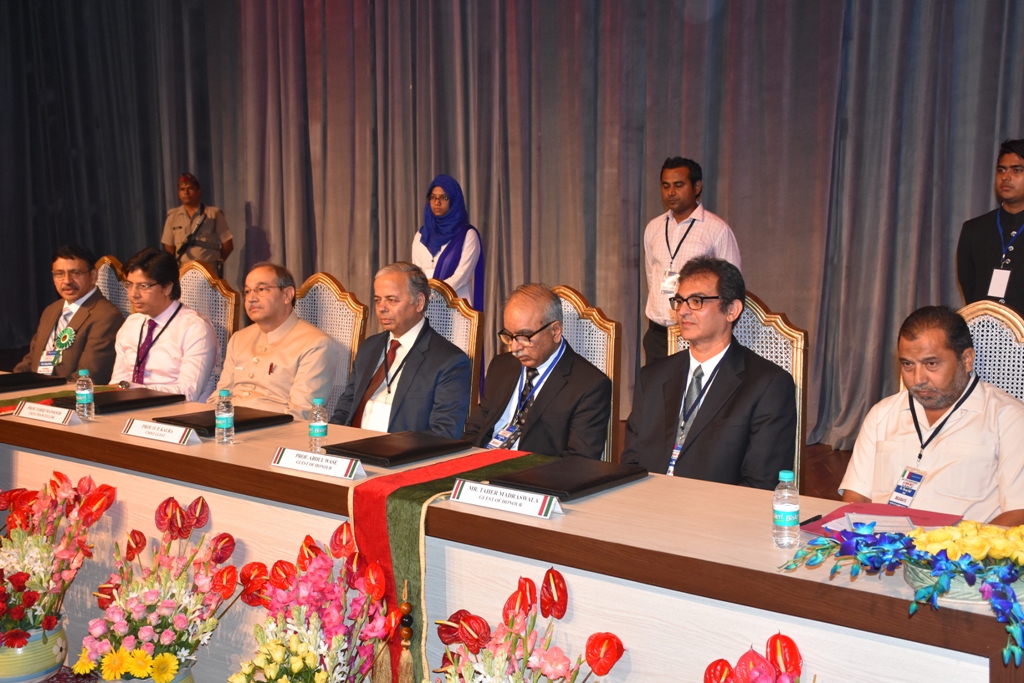
Prof O P Kalra (Vice Chancellor, Pt H L Sharma University of Health Sciences), who attended the function as the chief guest said that he came to Aligarh to appear in the MBBS entrance exam with hardly any money and a place to stay. “I stayed in a Gurudwara and was selected in the waiting list for admission in MBBS,” said Prof Kalra adding that my candidature for admission was selected in AMU’s Jawaharlal Nehru Medical College and Banaras Hindu University’s Medical College at the same time.
“My father advised me to attend AMU and taught me Urdu,” recalled Mr Kalra pointing out that a few years ago he visited his hostel room and found a research scholar of Sanskrit from a Muslim background residing in his room. “This is exactly what Sir Syed’s vision was,” he said adding that a student from a Hindu background like him learnt Urdu in AMU, while a Muslim boy becomes a researcher scholar of Sanskrit in the same University.
USA based Dr Abdul Wasey (senior cardiologist) pointed out that the revelation of the Holy Quran began with the word Iqra, urging humanity to read in the name of Lord who has created them. He added that the religious scriptures invite people towards knowledge and wisdom and Sir Syed with his efforts led people to the light of knowledge from the darkness of ignorance.
He urged students to not get distracted and to keep focussing on their goals. “If you keep your focus and work hard with determination, success will sure come,” said Dr Wasey.
USA based entrepreneur, Taher Madraswala said that he reached New York with just $90 in his pocket and worked hard to put a 100 million dollars company. “My success has been because I was groomed by my teachers in the Zakir Hussain College of Engineering and Technology and I was loved by my seniors and juniors,” he said.
Madraswala urged students to gain knowledge in the 20s, apply that knowledge in the 30s, chase money in their 40s, enjoy the hard earned money in their 50’s and do charity when they retire.
Ali Harris Shere (Vice President, Britannia) said that his education in AMU shaped his value system and taught him to respect people. Recollecting a meeting with Bollywood superstar, Salman Khan; he said that the actor soon recognised his AMU background after meeting him. “Salman Khan told me that the ethos of AMU were reflecting in my conversations,” said Shere.
He urged students to keep their hunger for knowledge, have proper mentorship, be visible with their achievements, understand the importance of networking and to have fresh perspectives to succeed in life.
On the occasion, a newsletter and a book, ‘Sir Syed – Bharat ke Anmol Ratan’ authored by Ikhlas Ahmad Sherwani was released by the Vice Chancellor.
A special attraction of the meet was a session of AMU’s women achievers in which Prof Yasmin Saikia (Arizona State University), Arifa Khanam (Senior journalist), Sabiha Said (Vice President, KPMG), Tasneem Rasol Boaz (Indian Railway Traffic Services), Nuzhat Parveen Khan (Dean, Faculty of Law, Jamia Milia Islamia), Ghazala Kohkan Shamsi (New York, USA) and Taab Siddiqui (Owner, Harvest Gold Food India) were the panellists.
Meanwhile a session on Aligarh Open University, a platform through which AMU alumni spread all over the world share knowledge and experiences with current university students was also organised. Earlier, in the day students associated with the University Drama Club performed a play on Sir Syed.
A troupe of ‘Ahmadi School for Visually Challenged’ sang the Tarana and the National Anthem. Dr Shariq Aqeel conducted the programme, while Prof Suhail Sabir proposed the vote of thanks.
source: http://www.twocirlces.net / Two Circles / Home> Indian Muslim / October 17th, 2017
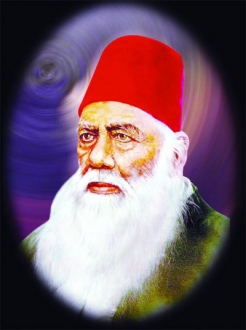
As we celebrate the 200th birth anniversary of Sir Syed Ahmad Khan, it’s a good time to remember his contributions to society as a social reformer, educationist, and philosopher
Sir Syed Ahmad Khan was born into a noble Syed family in Delhi, which was then the capital of the Mughal empire. His family was well connected and both his maternal and paternal side of the family had connections with the Mughal court. Sir Syed was raised by his mother, Azis-un-Nisa, with a disciplined upbringing. His mother laid strong emphasis on modern education. He was well versed with Persian, Arabic and Urdu and his education consisted of orthodox religious subjects as well as modern subjects like mathematics and astronomy.
Sir Syed was also well-known for his physical strength. He enjoyed swimming and archery and was particularly good at both. He was born at a time when there were a lot of rebellious Governors and religious insurrections aided and led by the East India Company. Together, these factors were diminishing the power of the Mughal empire. He saw this as an opportunity and used his education prowess to stand up and make an impact in such dire circumstances.
Social reform: Sir Syed is referred by many as the “man who knew tomorrow”. He played a very influential role in bridging the gap between the Oriental and the Western world. He knew what changes were required in the society in order to move forward and keep up with the rest of the world. He dedicated his life to strike a balance between tradition and modernity and strived for traditional Oriental and Western scholarship.
Emphasis on English: Sir Syed encouraged the society to keep up with the rest of the world by stressing on the importance of English language. Many of his contemporaries were against his ideology and felt that this was a disservice to their own culture. However, Sir Syed saw the importance of English as a step through which the society could make major advancements.
At that time, most knowledge about modern arts and sciences were available only in English. Previously, Muslim scholars had adopted the use of Persian and Greek language to study science and art. Sir Syed argued that people shouldn’t disregard a whole treasure of knowledge in English just because English was the language adopted by the Westerners. He rightly believed that there is a lot of benefit that can be gained from learning the language. His advocacy of English didn’t mean he wanted to move people away from the Arabic language.
Sir Syed was, in fact, a strong supporter of Arab culture and Arabic language. He stressed on the importance of another language, English, because of the plethora of knowledge bases it opens up.
Sir Syed was also very practical with his school of thought. After the revolt in 1857, he saw how the British empire was taking shape and that English education style was taking charge. He realised that learning English was absolutely necessary in order to keep up in those days and that was a school of thought that was very different than other scholars of his era. This was one of Sir Syed’s biggest social policies.
Modern, pragmatic views: Another important factor that differentiates Sir Syed’s social policy is that he always stood by his principles and defended what he thought was right. He did not succumb to pressure from the people around him. His advocacy of English was, of course, one example of that. Sir Syed also proposed a modern take on Islamic education, which included present-day science. This was not the norm at that time. He also had forward-looking views on women and their rights. He was a strong voice, defending women’s rights and recognised their potential to contribute to the society, which again never used to be the case. Sir Syed was termed as a “collective individual” by French sociologist Pierre Bourdieu. He successfully managed to take up roles of a free-thinker, an administrator, reformer, educationalist, religious scholar and a devout family man.
Educational reform: As mentioned earlier, Sir Syed was a major proponent of Western style education and gaining a modern outlook of the world. He believed that this was the fundamental driving force the Muslim community needed in order to match the rest of the world. He displayed his devotion to education by founding various educational institutions in India and also contributing to the community by writing his own journal and writings on different topics.
Dedication to scholarly work: Sir Syed was himself one of the most respected scholars of his time. Despite heavily being involved in the political scene and being an active social reformist, Sir Syed always found time for his academic pursuits. His topics of interest included history, politics, archaeology, journalism, literature, religion and science. Sir Syed felt like the future of Muslims would be in jeopardy if they continue to avoid modern science and technology. That is why he published many writings that promoted a liberal, rational and pragmatic train of thought. Most Muslim scholars disagreed with his views on issues such as jihad, polygamy and animal slaughtering but Sir Syed stood his ground and stuck by his belief. He started facing increasing pressure from orthodox Muslims about his views and, hence, he eventually stopped discussing religious subjects and instead focused on improving the education system.
Sir Syed was then posted in Aligarh in 1864 and that is where he founded the first scientific association in India called the Scientific Society of Aligarh. Sir Syed gathered Muslim scholars from different parts of the country and modeled it after the Royal Asiatic Society. The society held several conferences and even collected and spent money for different educational causes. The purpose of this society was to translate Western works into Indian languages so that Indian scholars can learn from the Western world. Sir Syed was appointed as the fellow of Calcutta University in 1876 and fellow of Allahabad University by the Viceroy in 1887.
Bridging education and politics: Sir Syed was the leader of the Aligarh movement. He founded the Mohammadan Anglo Oriential College in 1875 and this came to be known as the Aligarh movement. This move marked the birth of the first Muslim university in South Asia and drove modern Muslim education to make a large political impact on Indian Muslims in all parts of India. Sir Syed modeled this college after Oxford and Cambridge after he took a trip to England. He wanted to build a college that aligned with the British education system without compromising on any Islamic values. This movement encouraged poets and writers to switch from a romantic style of prose and poetry to a more cultural and political mindset which influenced the common life of Indian Muslims. Aligarh Muslim University is a creation of this movement.
In 1878, Sir Syed was nominated to the Viceroy’s Legislative Council. He later asked the education commission to establish more colleges and schools across the country. He also organised the All India Mohammadan Educational Conference in Aligarh where he encouraged people to give more importance to modern education and Muslim unity. Sir Syed’s valiant efforts never went unnoticed.
(This is the first article in a two-part series on Sir Syed Ahmed Khan. The second part will appear in these columns on Tuesday, October 17. The writer is a well-known linguist, author and columnist)
source: http://www.dailypioneer.com / The Pioneer / Home> Columnists> OpEd / by M J Warsi / Monday – October 16th, 2017
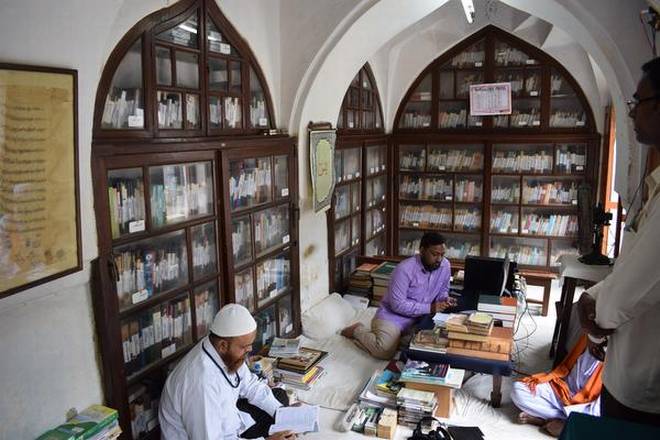
The library at the Khaja Bandanawaz Dargah in Gulbarga.
The library of Khaja Bandanawaz Dargah takes you back to the time of the emperors
The city of Gulbarga in Karnataka received much attention when the government decided to rename it as Kalaburagi a few years ago. Tucked away in the corner of freshly-minted Kalaburagi is a library that is seldom mentioned anywhere. Yet, this library, of the Dargah of Khaja Bandanawaz in Gulbarga, is a repository of some of the rarest of books on Tasawwuf (Sufism), Tafsir (Koranic commentary), Fiqh (Islamic jurisprudence), Ilm-e-Kalam (science of discourse), history, linguistics, and biographies of the Sufis of yore.
Operating out of a remote corner in the mausoleum complex, the library is not known to many people, except scholars researching Islam or Sufism. But that is going to change soon, thanks to the current sajjada nashin (custodian) of the Dargah, Syed Shah Khusro Hussaini.
The library is going to be moved to new premises with state-of-the art facilities, which will enable access to its carefully archived resources.
Lac seal
A part of the All India Syed Muhammad Gisudaraz Research Academy, the library has a collection of over 4,000 books and nearly 500 manuscripts. The collection includes about 25 biographies of Khaja Bandanawaz.
Perhaps the most prized item in the collection are three bound volumes of letters titled Khutoot Shahan e Salf (Letters from the Emperors) dating back to 1755. These are 23 letters, each on a page made of cardboard, with a lac seal embedded in a corner. This was the practice followed at that time to authenticate the origin of firmans (decrees) and letters from the imperial court. Some of the letters are from Aurangzeb’s court.
Khaja Bandanawaz Gisudaraz (1321 to 1422 AD), who carried the Chishti order of saints to South India, was a disciple of Hazrat Nasiruddin Chiragh Dehalvi. He moved first to Daulatabad, the capital of India during the Tughlaq era, and then came to Gulbarga in 1400 AD under the reign of Firuzshah Bahamani. Bandanawaz himself wrote a commentary of the Koran titled Tafsir e Multaqit, which ran to two volumes.
One of the volumes was preserved in Kutubkhana-i-Nasiriya, Lucknow. The other ended up in the British Library. An old patron of Gulbarga Library who had migrated to Karachi during Partition noticed it in London and sent a photocopy to the sajjada nashin a few years back. The Dairatul Maarifil Osmania (Institute of Oriental Studies in Hyderabad’s Osmania University) recently published Tafsir e Multaqit.
Sword-patterned decree
The library also preserves the original volume of Awariful Maarif, the famous Persian treatise on Sufism by Shahabuddin Suharwardy, written in the 12th century.
Khaja Bandanawaz wrote its key in Persian and titled it Maariful Awarif. Tafseer e Azeezi, written on silk pages, is yet another marvellous book treasured by the library.
It is a translation of and commentary on the Koran by the 18th-century Delhi scholar, Shah Abdul Aziz. The calligraphy was done about 200 years ago but the text retains the original brightness and beauty. While the Urdu translation runs underneath every line of the original Arabic text, the commentary is on the margins.
An imperial firman that hangs in a glass panel is written in Khat-e-Shikasta (calligraphy mimicking various objects) dating back to the 986th year of the Hijri calendar (corresponding to 1578 AD). Here, the lines of the firman run in the pattern of a sword.
The library is now headed by Dr. Mohamad Qamaruddun, an Arabic and Persian scholar from Bihar. Qamaruddin says the library receives scholars from the Oriental Studies department of universities in the U.S. and the U.K. The library plans to soon prepare a catalogue of the books and microfilms of all manuscripts. It will also digitise some of the more important works.
M.A. Siraj is a Bengaluru-based journalist.
source: http://www.thehindu.com / The Hindu / Home> Books / by M.A. Siraj / October 14th, 2017
Mr Islam’s wife, Kaneez Fathima could make her announcement after the 40 days of mourning are up on September 27.
Qamarul Islam
Kalaburagi:
Late Congress leader and former Minister, Qamarul- Islam’s wife could contest the coming Assembly polls from the Gulbarga North Assembly constituency he represented, according to his close associates.
Mr Islam’s wife, Kaneez Fathima could make her announcement after the 40 days of mourning are up on September 27.
A six term MLA and a former Lok Sabha member, Mr Islam passed away on September 19 after a brief illness. He was Minister for Muncipal Administration and Wakf in the Siddaramaiah government before he was dropped from the cabinet in June 2016.
As a politician he had a strong hold over Muslim voters, especially of Gulbarga city and neighbouring constituencies. When he wasalive, the Gulbarga North seat was a safe bet for Congress as he would inevitably win it. His death has left a big void as there is no other Muslim Congress leader, who can match him in stature in the district unit of the party.
With no choice, the party has reportedly persuaded Mrs Kaneez Fatima to enter politics. “Mr Islam held sway over the Muslim population for well over 40 years and we don’t want this to end following his demise. Moreover, the Muslim voters will be divided if somebody other than a family member takes over from him. The party will benefit immensely from the sympathy factor,” said party sources.
source: http://www.deccanchronicle.com / Deccan Chronicle / Home> Nation> Politics / by K N Reddy , Deccan Chronicle / October 05th, 2017
Lalitpur (Jhansi) & Agra (UTTAR PRADESH) / London, GREAT BRITAIN with Empress of India
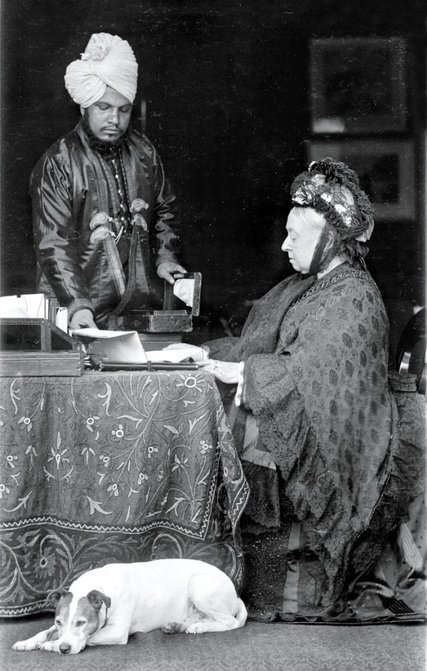
Queen Victoria at her desk, assisted by her servant Abdul Karim, the munshi.
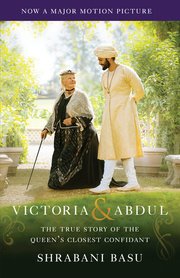
VICTORIA & ABDUL
The True Story of the Queen’s Closest Confidant
By Shrabani Basu
Illustrated. 334 pp. Vintage Books. Paper, $16.
I really do wonder if I am qualified to review this remarkable work. I am a nonagenarian, Anglo-Welsh, republican, agnostic liberal, an only half-redeemed British imperialist, sexually complex and incorrigibly romantic. “Victoria & Abdul” is about an aging British queen, her eccentric obsession with an engaging Muslim servant from India and the half-farcical opposition of the British establishment to their relationship. I had never heard of the story until the book reached me for my critique, and I had no idea it was about to be the subject of a much-publicized movie. Am I qualified to respond to it for The New York Timer? Reader, judge for yourself.
When it first reached me I began, as a republican, by scoffing. The very status of Alexandrina Victoria, Queen of England, at the time of her first encounter with that Indian servant struck me as perfectly ridiculous. She was a woman in her late 60s who was treated with almost religious reverence and responded accordingly. The whole preposterous charade of royalty was performed perpetually in her presence. It was wildly exaggerated, too, because she happened to be the titular head not simply of a small island nation but of the most enormous empire in the history of empires, claiming sovereignty over nearly a quarter of the earth’s surface. Perhaps the least logical of these bizarre circumstances was the fact that among her far-flung territories was one of the proudest and most ancient of all human entities, India. Since 1877, Victoria had been called Queen Empress, and India was the reason.
I scoffed, but then that Indian charmer entered the book, and I was beguiled.
So was Victoria. Abdul Karim was 24 when he arrived in England in 1887, engaged as an orderly for the queen during her Golden Jubilee celebrations and presently also charged with teaching Her Imperial Majesty Hindustani (as the British habitually referred to both Hindi and Urdu). Although of relatively humble stock, he was a born winner, educated, good-looking, clever and ambitious. I soon fell for him myself.
In no time at all, it seems, he became far more than an orderly, but rather an Indian gentleman of the court, more or less self-promoted out of the servants’ quarters and dubbed, by Her Majesty’s command, a “munshi” — which meant, I gather, a sort of more-than-teacher. This in turn seems to have morphed into a vaguely aristocratic honorific, and before long the delightful young orderly had become the Munshi. For the rest of his life he flaunted the title, and “Bravo,” say I!
I find myself genuinely touched by the bond between the empress and the munshi. He was an opportunist, but he was kind, which for my money redeems many faults, and old Victoria had been having a rotten time of it. First she lost her adored husband, Albert, and never got over it, and then John Brown, her beloved Scots gillie, died on her. Victoria’s nine children were scattered across Britain and Europe, and they were a mixed bag anyway. It must have been a lonely time for the old lady, but then along came Abdul Karim, in his virile youth, and he was very soon treating her not only as an empress but as a woman.
There was obviously nothing carnal about the relationship. Heaven forbid! The munshi seems to have regarded Victoria as an affectionate and generous surrogate mother. (She gave Abdul Karim and his wife three cottages, each near one of her own palaces, plus some land in India, and when he traveled on the royal train he had a whole carriage to himself.) In return he gave her his sympathy and understanding, and in particular they both seem to have enjoyed her daily (and very successful) lessons in Hindustani.
The affair, if we can call it that, spilled over into the style of the British court, which became more and more Indianified. Indian colors were everywhere, Indian sounds and even Indian smells (for curries were often served). When the court indulged itself or its visitors with one of its elaborate tableaux vivants, Indian faces were prominent on the stage, and indeed in the tableau of the king of Egypt, pictured in this book, the Pharaonic ruler himself was played by none other than — the munshi!
The generally snobbish and often racist British establishment of the day came to detest the munshi with an almost comical fervor, and, led by Victoria’s son and heir, Bertie, who later reigned as Edward VII, persecuted even Abdul Karim’s memory when he and his love were both long gone. I suspect that the munshi was a sort of dual reincarnation of Victoria’s beloved Albert and her dear, dear John Brown. And if there was something rather excessive — even, to my mind, schoolgirlish — about her attachment to her young servant, it was perhaps only a late and pathetic extension of the maternal instinct.
I grew fond of them both as I read this generous and meticulous book, and I write this review now with a sentimental tear in my eye. So what think you, Reader? Am I qualified for the job?
Orthopaedic surgeon Dr Farasat Hussain was honoured at a special function today.
Sports and culture minister Renu Devi felicitated Dr Hussain at the function organised to honour people associated with sports.
Dr Hussain, national president of Sports Medicine Association of India, received the honour for his contribution in the field of sports medicine and for promoting sports among physically challenged persons, including polio patients. Other members of sports fraternity were also felicitated at the function organised at the Sri Krishna Memorial Hall in Patna. Renu Devi came on behalf of chief minister Nitish Kumar, who, due to some reason could not attend the function.
Dr Hussain has represented India at several international conferences on sports medicine at Muscat, Darussalam (Brunei), Bangkok (Thailand), Riyadh (Saudi Arabia) and Tehran (Iran). Presently, he is associated with the Commonwealth Games.
Dr Hussain is also associated with Arpan, a Gaya-based organisation for physically challenged persons. He has motivated boys and girls in Magadh division to overcome their challenges and turn them into opportunities to participate in activities as equal partners in society.
Krishna Murari is one such member of Arpan. Encouraged by Dr Hussain, he represented India recently at the sitting volleyball competition held in the USA.
Dozens of other Arpan members have also made it to several national level sporting events, including cricket and cycling.
An expert in corrective surgery, Dr Farasat Hussain has operated on nearly 3,000 polio-affected children in different areas of Magadh division over the years.
President of a Gaya-based orphanage, Dr Hussain has also been associated with several other social, professional and charitable organisations, including Red Cross, IMA, Lions Club and Gaya District Sports Association.
Dr Hussain, after being honoured, told The Telegraph he would be continue on his mission to promote sports medicine for the larger benefit of the sporting community and would encourage physically challenged persons to find new meaning in their life through games and sport. Games, he believes, are the best levellers in society.
“This honour has given me a fresh impetus to carry forward my work. I hope that now the government will take more initiatives to promote sports among the physically challenged persons and give them jobs,” Dr Hussain said.
source: http://www.telegraphindia.com / The Telegraph, Calcutta, India / Front Page> Bihar> Story / by Farhana Kalam / Monday – August 30th, 2010