Category Archives: Community Involvement / Social Issues

‘Mini Brazil of India’ Was Once Infamous for Illegal Liquor: How One Man Transformed a Village

Bicharpur Village (Shahdol District), MADHYA PRADESH :

Once known for illegal liquor, Bicharpur village in Madhya Pradesh is now a football hub, producing around 45 national players.

Learn how coach Raees Ahmed’s efforts kickstarted this transformation.
Almost a decade ago, Bicharpur — a village in the tribal-dominated Shahdol district of Madhya Pradesh — was notorious for its rampant production of illicit liquor and narcotics. The primary source of income for many families was the production of liquor from the locally available mahua fruit.

“In this village, every house has been making kachhi shat (mahua liquor) for generations. They did not consider it wrong or illegal since it was deeply ingrained in their culture for a long time. Even children, regardless of their ages, were involved in this work. In fact, the villagers, including children, consumed liquor regularly; it was like their everyday tea and the medicine for any disease,” Raees Ahmed tells The Better India.

However, today the village has undergone a remarkable transformation, emerging as a hub for the rising stars of football . It has produced around 45 state and national-level football players — including Sanya Kunde, Rajni Singh, Laxmi Sahis, Anil Singh Gond, and Hanuman Singh.

Because every household in the village has a football player, it has come to be known as the ‘Mini Brazil’ of Madhya Pradesh. The journey of Bicharpur village from its miserable state to ‘Mini Brazil’ was orchestrated by former footballer and coach Raees Ahmed.

An unlikely football hub

Raees says that the Shahdol division has been a football hub for nearly three generations. The tribal children grew up playing football but without any formal training. Raaes, who has been playing football since the age of 10, was one of them.

“We used to learn football by seeing players in tournaments. But we did not have any formal training or guidance in the sport,” says the 53-year-old who grew up following Diego Armando Maradona — a professional football player from Argentina.
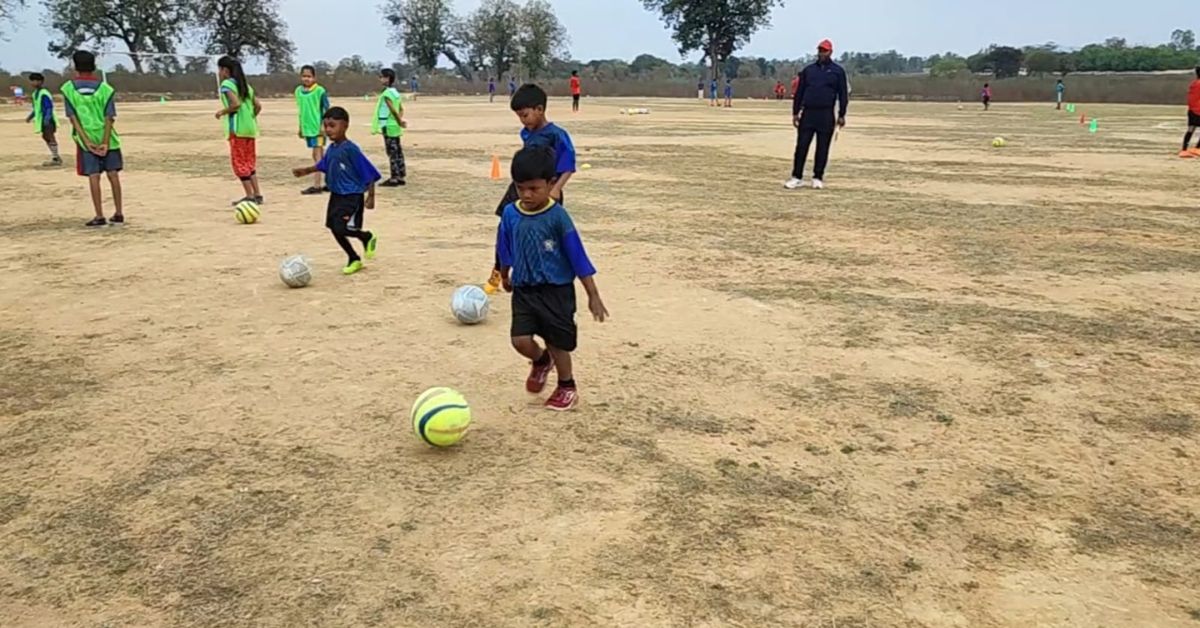
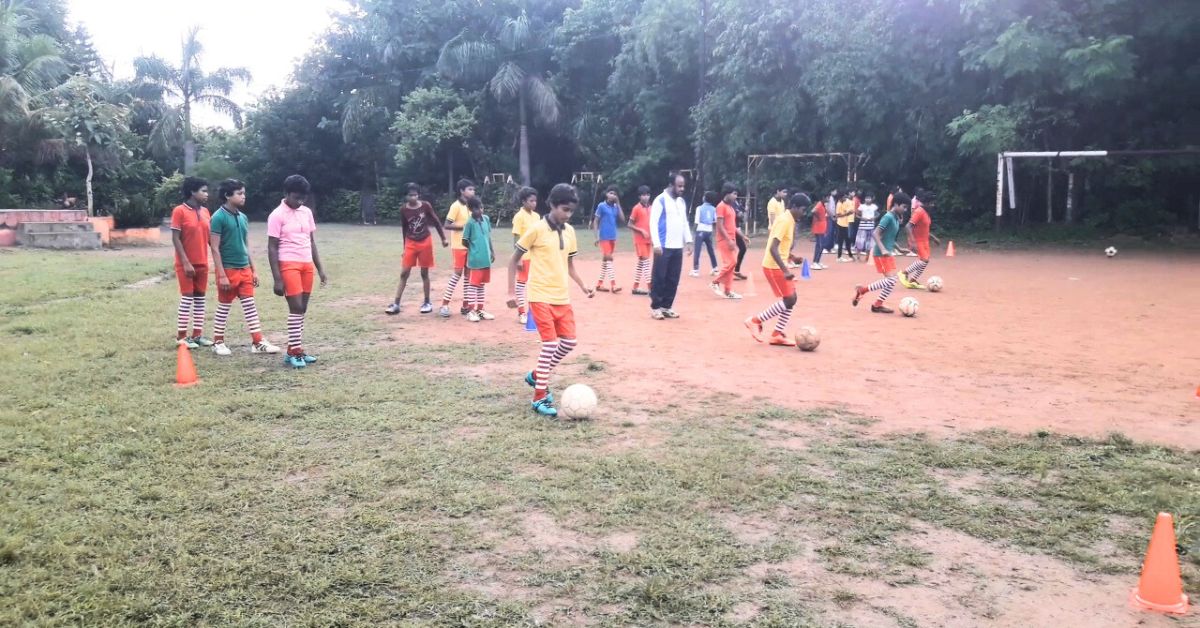
Earlier, the tribal children grew up playing football but without any formal training.

When Raees was in Class 8, he recalls, he played in the ‘under 19’ category at the national level. He went on to play football professionally at the national level seven times during his career. After graduating with a Bachelor of Arts in 1995, he secured a job as a sports teacher at a higher secondary school in Shahdol.

Then in 1997, he took formal training from the National Institute of Sports (NIS) in Kolkata. “To be a player and to be a coach are two different things. Since I was a national-level player, I thought I was an expert, but I was under the wrong impression. There [at NIS], I realised I had very limited knowledge. I realised if I had known these professional techniques, I could have played at the international level,” he says.

Coming back home, Raees went back to his old job. A couple of years later in 2001, he visited the nondescript village of Bicharpur, roughly three kilometres from his workplace.

“I saw many children in this village playing football. They had the fitness of an athlete but lacked training and techniques. They did not know how to pass the football and when to hit the ball to score a goal. After speaking to them, I realised that they did not know much about the outside world, and suddenly, I remembered my childhood!” he adds.

That day, Raees decided to be the support he desired when he was a child.

Where there’s a will…

Every evening, post his office hours, Raees would set out for the village on his bicycle. He started training children in the age group of 8–12 years. But there was no formal set up for the ground and tribal children lacked basic amenities like shoes and jerseys. “Initially, I would dedicate half of my salary to arrange basics for them,” he says.
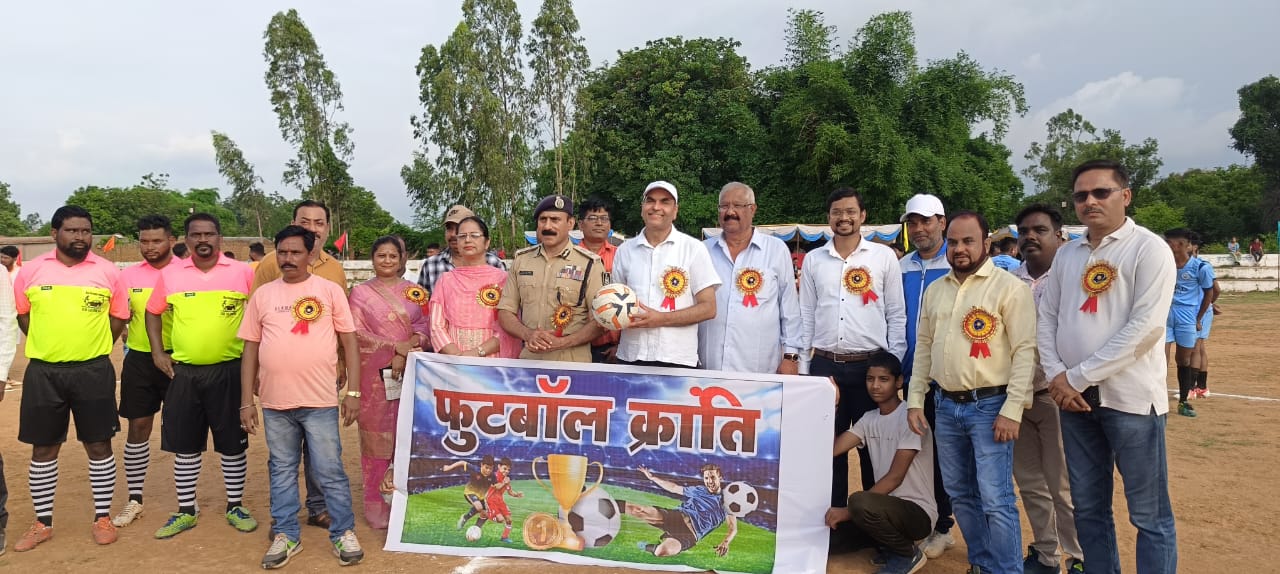
Raees says, Shahdol divisional commissioner Rajeev Sharma established at least 1,200 clubs in all villages across the Shahdol division.

Seeing a good response from the children, the coach also encouraged them to quit the mahua work if they wanted to seriously dedicate themselves to building a career in sports. “These children helped their families quit nasha khori (alcoholism) and switch to other works like labour jobs,” he informs.

Raees adds that by 2003, these children started playing in the ‘under 14’ category at the state and national level, and by 2004, girls also started participating in the sport. So far, the coach has trained at least 1,500 children, and of these, 45 have made it to the state and national level competitions.

One of his students, Laxmi Sahees, has been playing football since she was 12. She would tag along with her brothers to the football ground after school. She tells The Better India, “Initially, we went out of curiosity and for fun, but soon, we became so interested that we would rush to the ground for daily practice after finishing all household work.”

She continues, “Raees Sir told us about the tournaments for the women’s team. And within a year, in 2007, I participated in the national level competition and was selected in the first round. We competed with Kerala, Tamil Nadu, and UP and reached the quarter-finals.”

“Football has given me an opportunity to learn about the outside world. If I had not been into football, I guess I would have been married off at an early age and had a few kids like my elder sisters,” adds the 27-year-old who, so far, has played at nine national level competitions.
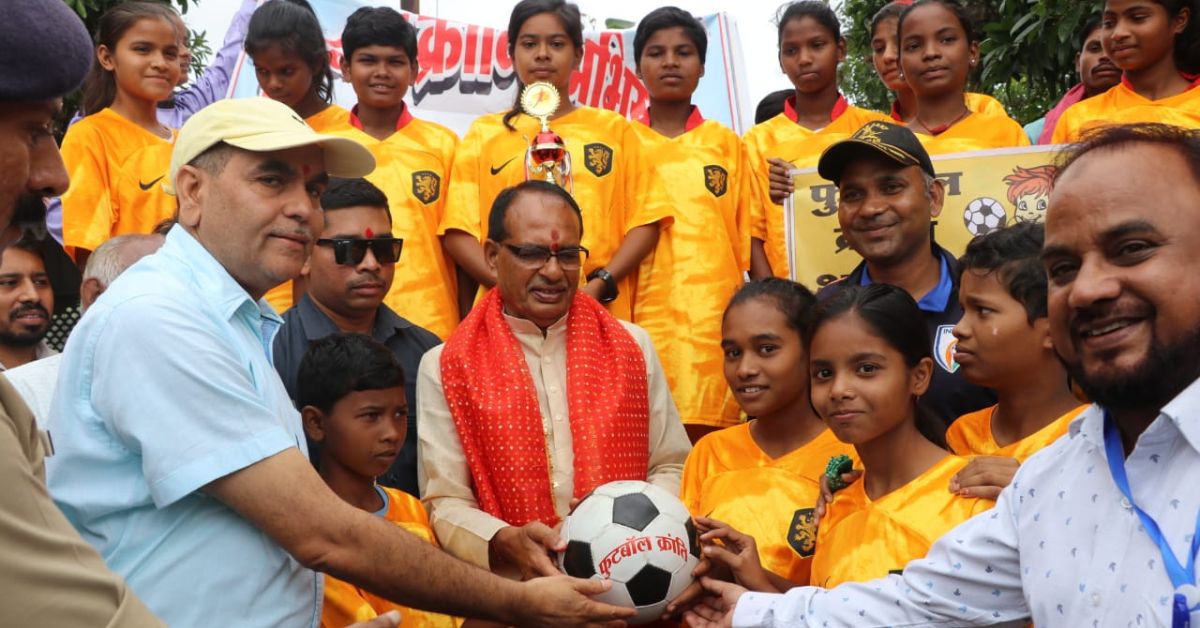
Raees and his students with Chief Minister Shivraj Singh Chouhan.

Currently, Laxmi coaches 40 students from Bicharpur and nearby villages. In the recent Khelo MP Youth Games 2023, her students bagged gold.

Laxmi’s coach sir is extremely proud of her and her students. “It is a matter of extreme pride to be able to compete and be a state champion coming from a small village,” remarks Raees.

Over the years, Raees says, Shahdol divisional commissioner Rajeev Sharma also recognised the talent in Bicharpur and established at least 1,200 clubs in all villages across the Shahdol division. “Today, 80 to 85 football tournaments are organised in the division every year. By 2022, there had been a noticeable improvement in the local people’s quality of life. They now enjoy facilities like electricity, a professional ground, and an open gym. Additionally, the government provides a dedicated budget for the sport in the area,” he adds.

Recently, Prime Minister Narendra Modi also highlighted the budding footballing talent of Bicharpur on Mann Ki Baat. “Just imagine — a tribal area, which was known for illicit liquor and was infamous for drug addiction, has now become the ‘football nursery’ of the country. That is why it is said, ‘Where there is a will, there is a way’. There is no dearth of talent in our country, but there is certainly a need to find and nurture them,” said the PM.

Raees still coaches students in the division, and now he’s joined by national players from Bicharpur who are mentoring new talent in the Shahdol division. For him, the village’s transformative journey has been emotionally inspiring.

“Whenever I watch my students on TV, competing against other skilled players, I feel nervous throughout the match. When our students win, it is not just their victory but also a win for me as their coach. It brings happy tears to my eyes. Now, my students are also training other children, and the happiness cannot be expressed in words. Over the past few years, the entire village’s atmosphere has transformed. We hope to produce many more national players from the entire Shahdol division,” says Raees.

Edited by Pranita Bhat; All photos: Raees Ahmed.

source: http://www.thebetterindia.com / The Better India / Home> English> Stories> Football> Rural India / by Shivani Gupta / October 09th, 2023

Renowned Scholar and Educator Dr. V. Abdur Rahim Passes Away

Vaniyambadi, TAMIL NADU / Madinah, SAUDI ARABIA :

He has written scores of books in Arabic, English and Urdu. One of his unique books is Attibyan which helps in teaching Qur’an to neo-Muslim brothers and sisters.

New Delhi :

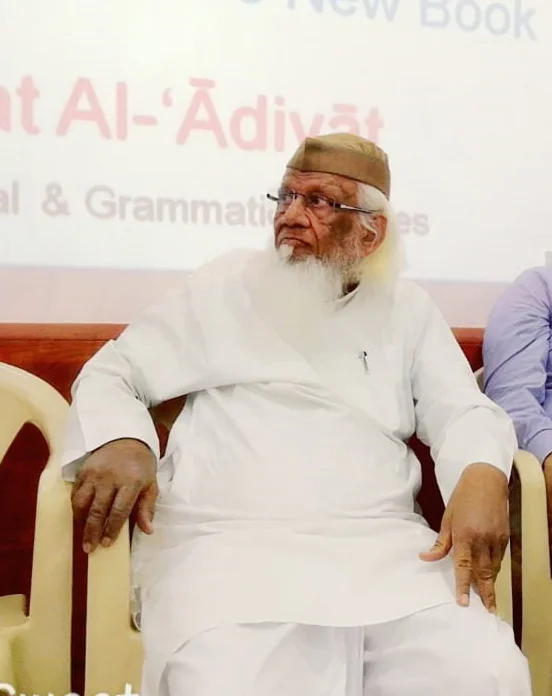
Dr. V. Abdur Rahim, world renowned Islamic scholar, multilinguist, author, teacher and translator passed away in the holy city of Madinah on Thursday.

Author of several popular books on teaching Arabic language, Dr. Abdur Rahim was laid to rest in Jannat al Baqi cemetery near the Prophet’s Mosque after Friday noon prayers, reports reaching here said.

Dr. Abdur Rahim has written scores of books in Arabic, English and Urdu. One of his unique books is Attibyan which helps in teaching Qur’an to neo-Muslim brothers and sisters. The scholar was closely associated with Chennai-based Islamic Foundation Trust (IFT) and a majority of his books have been published by it. 

Dr. Abdur Rahim was born in the small town of Vaniyambadi in Tamil Nadu in 1933. After completing his secondary school studies, he joined Presidency College, University of Madras where he majored in English language and literature. He graduated in 1957. In 1964, he joined the prestigious Al-Azhar University in Cairo, from where he completed his M.Phil. and Ph.D. in Arabic philology.

Dr. Abdur Rahim adopted innovative teaching methodologies and pedagogical approaches, which revolutionised the teaching of Arabic. He joined the Islamic University of Madinah in 1969, where he played a pivotal role in the program of teaching Arabic as a foreign language. He also imparted his knowledge at various institutions, including the Islaamic University Omdurman Sudan, Khartoum University Sudan, and Arabic Institutions in Germany, Washington D.C., and British Guyana.

His most significant contribution to Arabic education was the development of the renowned Madinah Arabic Course. This comprehensive series of textbooks and audiovisual materials simplified the complexities of the Arabic language, making it accessible to learners from diverse linguistic backgrounds. His teaching not only facilitated learning but also promoted intercultural dialogue and understanding.

Beyond his teaching endeavors, Dr. Abdur Rahim served as the Director of the translations section at the King Fahad Qur’an Printing Press in Madinah, where he contributed to translating and interpreting the Qur’an into various languages, ensuring its accessibility to people worldwide.

In recognition of his exceptional contributions to Arabic language education, Dr. V Abdur Rahim was honored with the prestigious President of India Award. This recognition celebrated his tireless efforts in promoting Arabic language learning and fostering cultural understanding through linguistic knowledge.

source: http://www.clarionindia.net / Clarion India / Home> India / by Team Clarion / October 21st, 2023

Motivational Speaker Extraordinaire Saeed Ahmed Changes Lives of Depressed Individuals

Sholapur / Pune, MAHARASHTRA :

Meet the man who is on a mission. He even gave up his lucrative job to completely devote himself to this cause. His goal is to inspire the next generation to become responsible and productive citizens by raising their level of awareness about education. He has been crisscrossing the length and breadth of the country since 2006.

The man is Syed Saeed Ahmed, a distinguished motivational speaker with a multifaceted personality who inspires and motivates others and unearths their hidden potential. He has an amazing sense of spontaneity, an inquisitive mind, and a captivating personality.

Throughout India, he has conducted countless personality development programs for the student fraternity, diverse academic community stakeholders involved in the teaching-learning process, the corporate sector, workers in extremely stressful work environments, and the group of people who accept their fate as pseudo-failures.

Saeed Ahmed’s workshops are widely recognized for their great content and distinctive, compelling style of delivery.

Ranked as one of the leading motivational speakers in India, Saeed Ahmed’s workshops are widely recognized for their great content and distinctive, compelling style of delivery. His energizing classes are intuitive, inspiring participants to realize their full potential, release their innate energy, and develop a burning drive for achievement and personal excellence. They are intended to provide participants with a great deal of energy and vitality, enabling them to advance both personally and professionally.

His successful endeavors to bring back to life pseudo-failures, particularly those with low motivational factors and a criminal past, have grabbed significant media attention. The last few years have seen the frequent publication of pieces celebrating these accomplishments in prominent newspapers, and multiple news channels have aired his pre-recorded interviews on the subject.

Born in Sholapur, a textile town in Maharashtra, Saeed Ahmed did his schooling through the Urdu medium and graduated in geography and political science. He went on to pursue higher learning. After completing his studies in library and information science, he did his post-graduation in the Urdu literature from Shivaji University in Kolhapur. He started his career in a modest capacity as an assistant librarian at a reputable college in Pune.

His early and modest profession served as a palette for shaping him into a multifaceted personality, as he was surrounded by antique and modern books, newsletters, and printed reference material of inter-disciplinary content. Gradually and steadily, he began to embody the roles of an actor, director, dramatist, journalist, writer, peace activist promoting global fraternity, and, most recently, a student. He is currently pursuing a doctorate at Pune University on the extremely relevant subject of “Hindustani stage and tradition of Urdu drama in Maharashtra.”

He is an expert at improving life skills, including stress management, time management, positive thinking, emotion management (for overcoming fear, grief, sorrow, rage, boredom, etc.), and a number of other crucial areas that participants may reveal themselves in. The contents change based on the situation, the amount of time available for engagement, and the participants’ overall characteristics, expectations, and concerns.

The evolution of a nationally renowned motivational speaker can be summed up by examining the thirty years of his career. This shows how a person’s life experiences, some natural and some others artificially created, play a crucial role in shaping a flexible personality that can handle any circumstance with ease. What makes the one and only “Saeed Ahmed” is a combination of his varied experiences with controversial topics and his recording of the algorithms used to address them.

Having spent a significant portion of his career working for an organization, he has encountered the typical challenges that all workers face in today’s cutthroat and materialistic workplace. As he began his dazzling career, he experienced moments of rivalry, envy, and unpleasant camaraderie from coworkers, superiors, and even higher authorities. To nearly all of them, he answered with forbearance, patience, and strengthened willpower. In actuality, they functioned as an oven to solidify his supple clay and imparted to him free psychological counseling, stress management techniques, and elegant interpersonal interactions.

Saeed Ahmed is not just a motivator of the highest caliber; he is also an actor, director, writer, documentary filmmaker, and journalist.

He was connected to several prominent theaters in Lahore, Pakistan, as well as Prithvi (Mumbai), Nehru Centre (Mumbai), Rangshankara (Bangalore), Hamdard University, Delhi, Balgandharva (Pune), and Punjab Naat-shala (Amritsar). He performed widely for an Indian audience with these theater groups, and three of his shows, which were shown consecutively for three years in a row at the “World Performing and Visual Arts Festival” in Lahore, were acclaimed internationally (2004, 2005, 2006). These were “Naquab” by Rafi Peerzada, “Jis Lahore Naee Dekhya” by Dr. Asghar Wajahat, and “Portrait” by Ratnakar Matkari.

Prior to this, most of the plays he directed and performed across the country were “Dhilli Khaat” by Naseem Mannan, “Portrait” by Ratnakar Matkari, “Najat” by Abdul Wahab Lunje, “Nafrat ke Rang” by Kazi Mushtaque Ahmed, and a few plays he wrote himself, including “Sir Sayyed Ahmed Khan (Founder of Aligarh Muslim University)”, “Toba Tek Singh,” a drama based on Saadat Hassan Monto, “Kahain Hai,” and “Dilli Ka Thagh” have received favorable reviews from critics and audiences alike. He made his acting debut as a character actor in the “Sunita” serial that was broadcast on Doordarshan. His drama “Sare Jahan Se Accha” had more than forty performances in Maharashtra.

An audio presentation in the form of an audio cassette, followed by audio CDs, and is currently in the process of creating a documentary directed, produced, and narrated by him about the life of Sir Sayyed Ahmed Khan. He also wrote the book “Sare Jahan Se Accha,” released by the Haji Ghulam Mohammed Azam Educational Trust, Pune.

In addition, he has contributed his expertise to the production of multiple documentaries for Pune-based organizations and cable networks.

Alongside his involvement in theater and the arts, he pursued a career as a professional journalist. From 1995 to 2001, he worked as a correspondent for Mumbai’s daily Inquilab and Munsif of Hyderabad and  Pune’s Urdu fortnightly Usool. He had also interviewed prominent figures.

When asked what inspired him to pursue a career in motivational speaking, he admitted with honesty that I was a shy boy in school with an inferiority complex who was accustomed to self-analysis.

Life is a “give and take” proposition, and the previous decades of my diverse work helped me learn enough to be ready for a “second innings” or platform change, in which I now hope to “give,” and in 2002, I made a lifestyle change, he said. In the year 2006, I left the well-secured job to venture into the turbulent waters of lending my ‘know-how’ for the personality development of all, he added.

About his experiences, he pointed out that materialism is prevalent in Muslim society, and there is a wrong notion prevailing in the society that education is for seeking a job. He stresses the need for “Taleem ke saath Tarbiat.”

Under his All India Educational Awareness 93-day tour, last year he traveled 10,000 km across the seven states and conducted 179 workshops in 134 cities. In the second part of the tour, starting on November 11, 2023, he will travel to 13 states.

source: http://www.radiancenews.com / Radiance News / Home> Focus> Pride of the Nation / by Abdul Bari Masoud / November 01st, 2023

Faraz Ahmed Elected SIO Telangana President for 2025-26

TELANGANA :

Hyderabad:

The Students Islamic Organisation (SIO) Telangana conducted its elections for the term 2025-26 here Tuesday. Chaired by Dr. MKM Zafar, President of JIH Telangana, and Abdul Hafeez, National President of SIO India, the meeting elected Mohd Faraz Ahmed, a Political Science graduate from MANUU, as Zonal President for the term 2025-26. Faraz Ahmed has a notable record of service, having previously served as State Secretary, SIO Telangana, and Secretary SIO Nizamabad. His contributions to SIO’s organ, Rafeeq-e-Manzil, have also been widely recognised.

Mohd Hammaduddin, a student of M. Pharm, was appointed Zonal Secretary. He brings with him extensive experience, having served as President of SIO Hyderabad and as a member of ZAC.

The Zonal Advisory Council (ZAC) members for the 2025-26 are Ashfaq Ahmed, Dr. Osaid Waseem, Suhaib Ahmed Khan, Umar Shahroz, Adv. Ghiyasuddin, Musab Abdul Rahman, Sohail Rizwan, Irfan Khan, Hussain Shahbaz, Abdus Salam Shakir, Samaan Rafid, Qayamuddin, Abdul Khaliq Subhani, Faheemuddin Sufi, Faizan Khan, Azeem Khan, Faisal Khan, Fazl-ul-Bari Irfan.

These leaders took their oath of responsibility during the event, with Dr. MKM Zafar offering prayers for their success.

source: http://www.radiancenews.com / Radiance News / Home> Latest News> Report / by Radiance News Report / December 04th, 2024

Ghulam Dastagir, the Unsung Hero of Bhopal Gas Tragedy

Bhopal, MADHYA PRADESH :

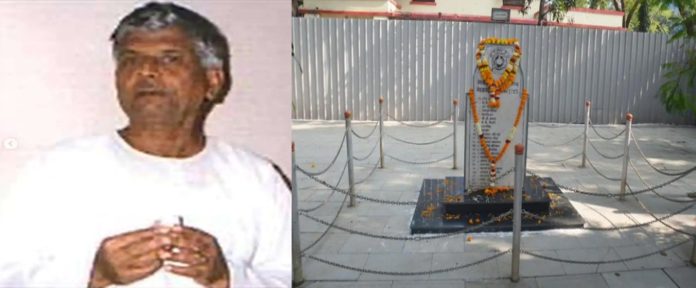
FORGOTTEN HERO OF BHOPAL GAS LEAK TRAGEDY: The saviour Ghulam Dastagir, the Deputy Station Superintendent at Bhopal Railway Junction who saved thousands of lives on December 2 and 3 went unrecognised and was buried in the history.

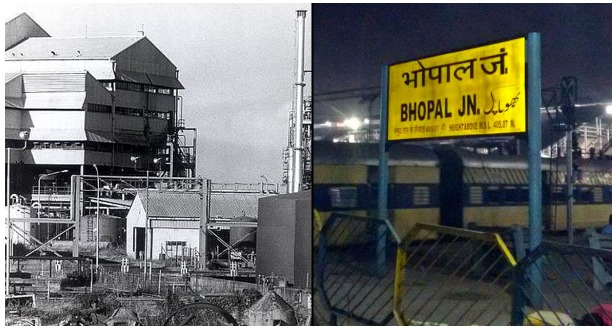
Much has been said and written about the fateful Bhopal Gas Leak Tragedy in 1984 that claimed around 5,479 lives while affecting over six lakh people with serious skin disorders. However, the saviour Ghulam Dastagir, Deputy Station Superintendent at Bhopal Railway Junction, who saved thousands of lives on December 2 and 3,1984 went unrecognised and was buried in history.

Ghulam Dastagir’s case isn’t an isolated one as thousands of Muslim freedom fighters who sacrificed their lives for the cause of Indian freedom struggle were more often than not either concealed or forgotten by the Union Government on one pretext or the other. This scribe flipped through the pages of history to zero in on the world’s deadliest industrial tragedy which sent shockwaves among the people across the globe.

Even after four decades after the Union Carbide Factory gas leak episode, the scars still remain in the hearts of the victim families.  What is irking is the fact that a memorial erected at Bhopal Railway Junction for 23 railway men, who lost their lives while rescuing people, have been inscribed but there is hardly any mention about Ghulam Dastagir who played a pivotal role in the rescue operations on the dreadful day.

Sources from various news portals revealed that a deadly gas leak from the Union Carbide factory engulfed the Bhopal city, killing thousands and injuring many more. Amidst the chaos and panic, one man acted swiftly and bravely to save lives: Gulam Dastagir, Deputy Station Superintendent at Bhopal Railway Junction. Few people know that during the Bhopal gas tragedy, a heroic stationmaster risked his own life to save others. But for him the causalities in the catastrophe would have been much higher.

On the fateful night of December 2, 1984, Ghulam Dastagir found himself in the midst of routine paperwork. Little did he know that this night would forever alter the course of his life. As the Bombay-Gorakhpur Express was due to arrive, Dastagir’s routine took a drastic turn when he sensed something was amiss. His swift action would soon prove to be the difference between life and death for many. Upon stepping out of his office, Dastagir experienced burning eyes and a bitter throat – a tell-tale sign that something was terribly wrong. Shockingly, he discovered the lifeless form of Dhurva, the station superintendent, in his cabin. Acting swiftly, Dastagir communicated with nearby stations to halt incoming trains, potentially saving countless lives. Despite the looming danger, he ordered the immediate departure of the Gorakhpur-bound train, ensuring the safety of its passengers.

As the deadly gas claimed the lives of 23 station staff members, including Dastagir’s own son, he and his team worked tirelessly to manage the crisis. Despite struggling to breathe, Dastagir remained composed, coordinating medical help, and providing a ray of hope in the face of impending doom. The station became a scene of chaos as large crowds desperately sought escape from the poisonous air, and Dastagir’s leadership became a beacon of strength.

While Dastagir’s selfless actions spared countless lives, the tragedy took a heavy toll on him personally. The toxic gas led to health issues, with a lump forming in his throat, and subsequent years were marked by frequent hospital visits. The heavy personal cost included the loss of his son to the gas and another developing a permanent skin infection. Despite the challenges, Dastagir continued to exhibit resilience until his demise in 2003.

At Bhopal Junction, a memorial stands in honour of 23 railway personnel who lost their lives on that tragic night. Unfortunately, Ghulam Dastagir’s name doesn’t grace the memorial, as his demise occurred nearly two decades later. However, during those critical hours in December 1984, Dastagir exemplified the truth in Gerard Way’s famous quote, proving that heroes emerge from ordinary people who rise to extraordinary challenges.

Meanwhile, Netflix’s series, “The Railway Men” made headlines based on the Bhopal gas tragedy of 1984. Amidst the widespread acclaim for the show, this review reflects on one of the unsung heroes of that tragic night – the deputy station master of Bhopal railway station, Ghulam Dastagir. His extraordinary actions saved lives and offered a glimmer of hope in the face of an unimaginable disaster.

Shadab Dastagir, youngest son of late Dastagir, while speaking to a media in 2023, said that his father’s heroic role in the entire episode on Bhopal Railway Junction on the night intervening December 2 and 3, 1984, has mainly remained unsung.

“Little official acknowledgment and appreciation came his way in these four decades. And now when an OTT series has been made on the episode, it is upsetting that we were never consulted about the actual happenings,” he told The Week.

“I have watched the teaser and the official trailer and I can make out that the character being portrayed by Kay Kay Menon is based upon my father. But then we are highly apprehensive as to how much close to truth the character has been made,” Shadab, who is into the family business of chemicals and fertilisers, said.

He also mentioned that the family had already sold out the copyright of a script on Dastagir’s life and work – based on narration by his father himself during his lifetime – to a production house called Small Box Media. The Mumbai-based production house was planning a full-length movie based on the script when YRF cut in with the miniseries.

A forgotten hero whose sense of duty and commitment saved countless lives, Dastagir’s story deserves to be recognised and remembered by his fellow countrymen.

[The author is former Indian Express and Deccan Chronicle chief]

source: http://www.radiancenews.com / Radiance News / Home> Focus> Social Service / by M Rafi Ahmed / September 02nd, 2025

Gujjar leader, Padma Bhushan awardee Mian Bashir Ahmed dies at age 98

Wangat Village (Ganderbal District), JAMMU & KASHMIR :

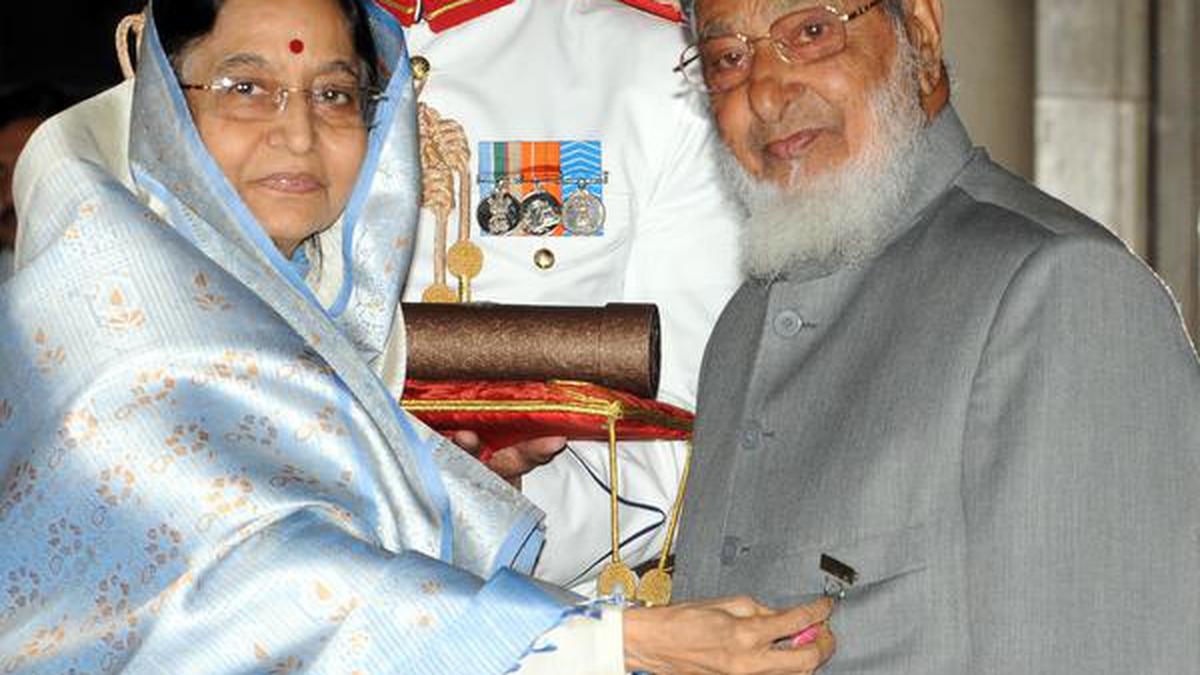
Former President Pratibha Patil presenting the Padma Bhushan Award to gujjar leader Mian Bashir Ahmed, during the presentation of Padma Awards at Rashtrapati Bhavan in New Delhi on May 10, 2008

A former minister in Sheikh Mohammad Abdullah’s cabinet, he was honoured with the Padma Bhushan for his extraordinary service for the Gujjar-Bakarwal community and other downtrodden groups.

Veteran Gujjar leader and Padma Bhushan awardee Mian Bashir Ahmed, a resident of Ganderbal district of Jammu and Kashmir, passed away on Saturday night after a prolonged illness. He was 98.

Ahmed, a resident of village Wangat in Kangan area of the central Kashmir district, breathed his last at about 10 pm, family sources said.

His Nimaz-e-Jinazah (funeral prayers) will be performed on Sunday at Mizar Shrief Baba ji Sahib Larvi located at Baba Nagari Wangat, they said.

Ahmed was the son of top Gujjar leader and saint Mian Nizam Din Larvi and father of former Minister and National Conference (NC) leader Mian Altaf Ahmad.

Born in November 1923, Mian Bashir Ahmed was a minister in Sheikh Mohammad Abdullah’s cabinet. Later, he left politics and started working for Islamic Sufi tradition and to help downtrodden people.

In 2008, he was honoured with the Padma Bhushan award for his extraordinary service for the Gujjar-Bakarwal community and other downtrodden groups.

Condolences to his family poured in from various quarters.

“Just heard about the sad demise of Mian Bashir Sahib, a spiritual leader & a mass leader revered by many especially in the Gujjar community. His demise will be deeply felt by many of us. My condolences to my colleague Mian Altaf Sb & his family,” NC vice president Omar Abdullah said in a tweet.

His party said Ahmed’s death has felt a void that cannot be filled.

“Grieved over the passing of Mian Bashir Ahmad Laaravi, a renowned spiritual leader & political figure. His death has felt a void that can’t be filled. Our condolences go out to Mian Altaf Laaravi, the entire family & Bashir Sb’s admirers. May Allah grant him a place in Jannat,” the NC wrote on Twitter.

Jammu and Kashmir Pradesh Congress committee (JKPCC) expressed profound grief over his passing, describing it as a great loss to the UT.

In his condolence message, JKPCC president Ghulam Ahmad Mir expressed deep sorrow over the passing of the eminent religious scholar, socio-political figure, saying Ahmed was known for his spirituality and social work he rendered to the people of Jammu and Kashmir.

“Saddened to learn about the passing away of Mian Bashir Saheb. I have no words to express my grief,” Mir said.

He expressed deepest condolences to Mian Altaf and other members of the bereaved family and Ahmed’s followers.

Praying for the eternal peace to the departed soul, the JKPCC president said, adding that Ahmed’s guidance and teachings shall continue to inspire generations.

Jammu and Kashmir Peoples Conference chairman Sajad Lone described Ahmed as an inspirational leader.

“Deepest and heartfelt condolences to the family of Mian Bashir Sahab. An inspirational leader, defined by simplicity who had a humbling effect on people he interacted with. May his soul rest in peace,” Lone said.

source: http://www.thehindu.com / The Hindu / Home> News> India> Other States / by PTI / August 15th, 2021

Mumbai : Felicitation of AMU Achievers by Beauties of AMU

Mumbai, MAHARASHTRA :

Mumbai :

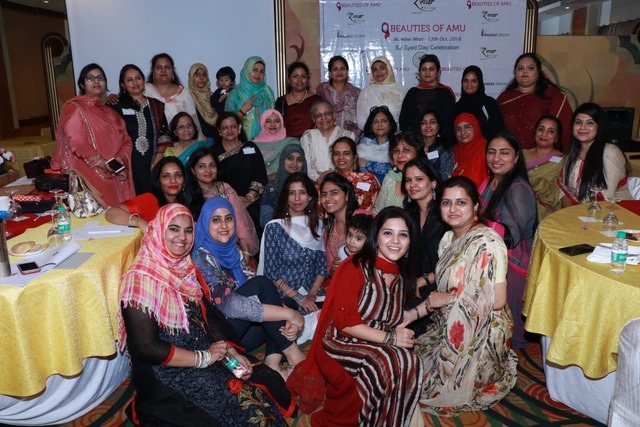
The Aligarh Muslim University Alumni Group formed by female community of this iconic citadel of modern education, known as Beauties of AMU held its Mumbai Meet  towards the Sir Syed Day celebrations on 13th October at Hotel Marine Plaza, Mumbai.

Noted philanthropist, business giant and AMU alumni, Raees Ahmad, MD, Rassaz Group was the Guest of Honour at the event. Faridoon Shehryar, a well known Bollywood journalist was among the AMU stars which illuminated the galaxy of AMU achievers at the event. Faraz Haider, director of War Chhod Na Yaar fame attended the meet in capacity of another AMU stars while famous lyricist Arafat Mehmood stole the show with his magical spell of beautiful words in perfect sync with the event.

The event saw a huge turnout including personalities from all walks of life who build up the social circuit of Mumbai.

Sir Syed lived briefly in the city which now boasts of being the financial capital of India, hence it is imperative to take the message to this very city which had alumni association focussing on male alumni.

Since it couldn’t offer much space to the female alumni based in the city for the nostalgic networking over chai. Beauties of AMU took the plunge and brought them all on the same page, allowing them their own space for discussing and dealing with issues of societal concerns.

At the event Mrs Farrukh Sayyeda highlighted the importance of space for women. She said it’s good to be ‘Mrs Somebody’ but anything that gives you self identity is rather more important and brings self-satisfaction. This identity is not necessarily connected to financial income, added Mrs Farrukh (former principal).

Extending the thoughts, Mr Rais Ahmed (Guest of Honor) talked about the role of Sir Syed in Women Empowerment.

Mumbai is more popularly known for the Indian film industry which has considerable contribution from Aligarh, such as Khwaja Ahmad Abbas, Saeed Jafri, Javed Akhtar, Surekha Sikri, Naseeruddin Shah, Dilip Tahil and to name recent additions, there are Anubhav Sinha, Faraz Haider, Faridoon Sheheryaar and Arafat Mehmood.

Alumni of AMU are front runners in every industry in every corner of the country and the world as well, whether it is Frank Islam of USA, who was the member of Barack Obama’s contingent to deliberate with Muslim world, being a key figure in the economy of USA or the pharma giant Cipla’s founder Khalid Hameed, who has served humanity in Africa so well that nobody would ever find an example like it.

Aligarh has come out of its cocoon with the first and second generations and prepares its next generations following the footsteps of Ismat Chugtai and Qurratulain Haider.

Beauties of AMU is playing the catalyst in this inferno which would reassure the paying back to the great institution of Aligarh, which has contributed largely for the cause of nation building.

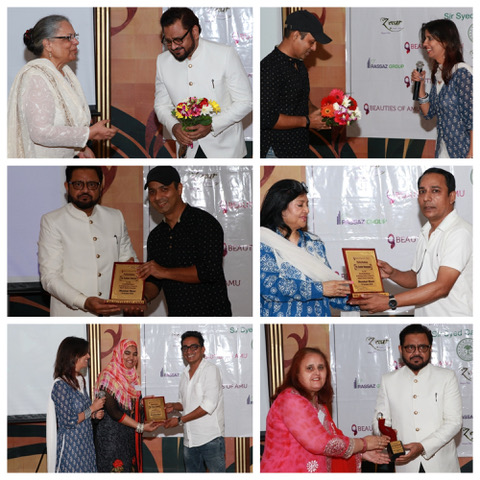
Felicitation for AMU Achievers in Bollywood

  1. Faridoon Shahryar- An award winning journalist and known face as an anchor for popular chat show Talking Film, Mr Faridoon was felicitated for his achievements. He participated in event with exuded fervor reminiscing his AMU days with a mention of jumping walls and taste of fritters
  2. Mehmood Arafat- Inspired by his father who is a well known trade unionist, political figure, writer and a popular poet of west Bengal, Mr Arafat is a popular Bollywood Lyricist. His famous work includes songs from Loveyatri, Half Girlfriend, Heartless, Housefull 3, Welcome Back, Sarabjit, Kis kis ko pyar Karen, Machine, Jalebi etc. Mehmood Arafat relived the AMU days by reciting a poem filled with complete nostalgia of AMU, Abdullah Hall, Shamshad Market , Kennedy Hall
  3. Faraz Haider is a well known director of war na chod yaar and Nanu ki Jaanu movie fame attended the event and filled the vibes with laughter and fun by recalling an incident where he got a chance to visit Abdullah Hall

Beauties of AMU(BOA)  is a social welfare organization formed by female alumni of Aligarh Muslim University that functions to spread awareness about education and empowerment of women of all sections of society.

Started off as a Facebook group in 2017, by Iram Raza, a graduate of Department of Mass Communication, Aligarh Muslim University, Aligarh, this group has done meets in 3 cities (New Delhi, Lucknow, Aligarh) so far and the Mumbai Meet Up towards Sir Syed Day was a part of the reunion initiative of the group in the time span of 1 year.

The organization now plans to hold similar events in other parts of country for reuniting the female alumni of the university living in those cities, spreading out the message of goodness and universality.

BOA has been organizing meet-ups in different cities of India for the female alumni who haven’t been included in the old boys associations, providing them a platform to meet and greet and share happiness and nostalgia of their days at Aligarh furthering the reunions to social causes.

BOA has been instrumental in organising several events that contributed well to the cause of social welfare in general and AMU alumni in particular, that makes it stand apart from other alumni associations concerned with AMU.

source: http://www.muslimmirror.com / Muslim Mirror / Home> Exclusive Reports> Indian Muslim / by Faisal Hasan / October 18th, 202

 Maulana Abdul Majid Daryabadi 

Dariyabad (Barabanki), UTTAR PRADESH / NEW DELHI :

Maulana Rabey Nadwi releasing a book on Daryabadi; to his right stands Maulana Anzar Shah Kashmiri and to his left is Haryana governor, Akhlaqur Rahman Qidwai

New Delhi:

Delhi’s Shah Waliullah Institute and National Council for the Promotion of Urdu Language (NCPUL) jointly organised a national seminar on the life and services of Maulana Abdul Majid Daryabadi, a famous writer and mufassir of the Qur’an, on 15 January at Rajinder Bhawan, New Delhi.

Haryana governor, Dr Akhlaqur Rahman Qidwai presided over the seminar. Prominent among those who attended were Maulana Syed Rabey Hasani Nadwi, Maulana Anzar Shah Kashmiri, Maulana Wali Rahmani, Dr Hamidullah Bhat and Mohsina Qidwai.

Maulana Nadwi in his speech said that Maulana Daryabadi was a philosopher, researcher, man of letters, critic, and a man of high moral values who worked for the betterment of the nation. Maulana Daryabadi was the editor of Sidq-e Jadeed. India has been the cradle of different cultures and civilisations. We should move forward on the principles laid down by Maulana Abdul Majid, that is unity in diversity, which has been an important feature of our country. Maulana Daryabadi rendered unmatched services to the country, community and religion and we should benefit from his views and lofty ideals, he added.

Dr Akhlaqur Rahman Qidwai praised the services of Shah Waliullah Institute. He said that Maulana Daryabadi’s philosophy was relevant even today. He hoped that both the country and the community would continue to benefited from his views and writings.

The participants presented 17 scholarly papers on different aspects of the life and services of Maulana Daryabadi. Maulana Mohammad Wali Rahmani, Khwaja Hasan Sani Nizami, Dr Hashim Qidwai, Prof. Yaqubur Rahman and Prof. Siddiqur Rahman Qidwai presented papers among others.

Dr Hashim Qidwai, Mohsina Qidwai and Habiba Qidwai talked about their close relationship and shared moments with Maulana Daryabadi and narrated some incidents of his great life.

Dr Hamidullah Bhatt and Khawaja Hasan Sani Nizami assured their cooperation to the Shah Waliullah Institute in any project undertaken on Maulana Daryabadi. 

Scholars who presented papers felt that though they had covered many aspects of Maulana Daryabadi’s life, yet there were many other aspects of his life that needed to be studied.

Two books, one written by Maulana Ataur Rahman Qasmi in Urdu, Imam Shah Waliullah and his Philosophy and Ideology and the other, Muslim Personal Law and Uniform Civil Code authored by (late) Maulana Minnatullah Rahmani, were released at the seminar. Shah Waliullah Institute organised an exhibition of books published by it.  «

source: http://www.milligazette.com / The Milli Gazette / Home> 1-15th February 2005

Centenarian Abdullah Maulavi is poster boy of Kerala’s digital literacy campaign

KERALA :

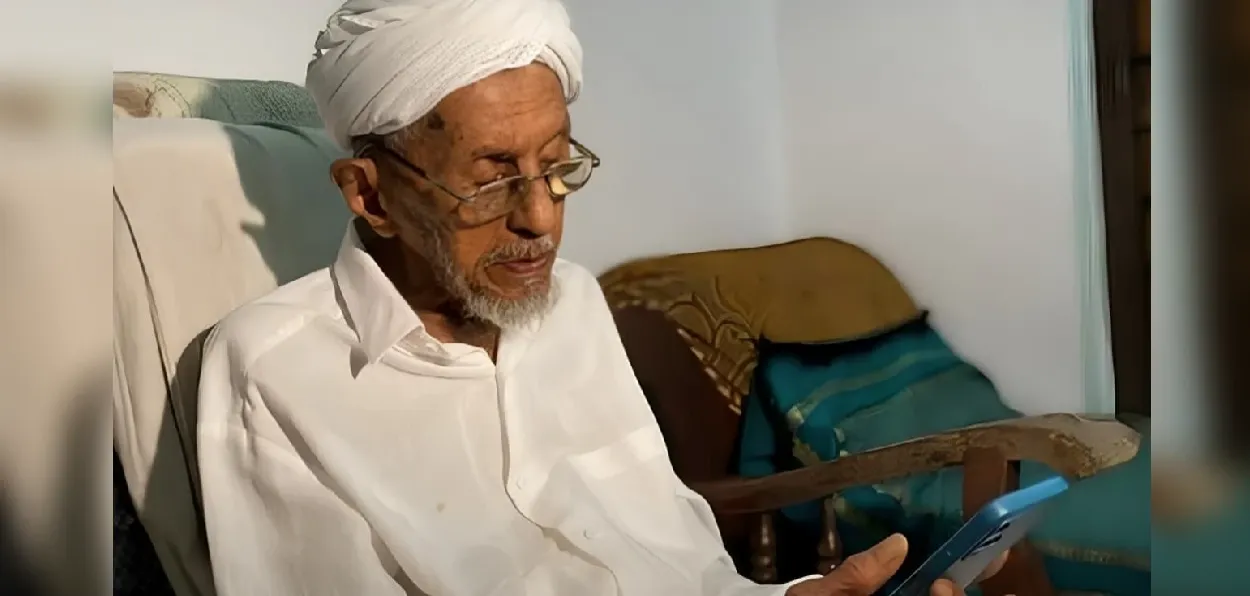
MA Abdullah Maulavi at his smartphone

New Delhi :

Age is just a number and never a barrier to keep up with the changing times. MA Abdullah Maulavi Kerala has proved as at the age of 105 years, he is as good at using his smartphone as a teen ager.

During the COVID-19-induced lockdown, Abdullah Maulvi did not get newspapers delivered to his home. Being an avid news buff, he picked up a smartphone as an alternative.

Today, he enjoys scrolling through social media for reels and other content, searching news on YouTube, logging on to prayer songs on his son’s smartphone, and making video calls to his grandson abroad.

Abdullah of of Oddakali in Ernakulam district’s Peerambavoor, was one of the 2.2 million people who received digital education under the Kerala government’s ‘Digi Keralam’ scheme. The campaign has changed the way of life for people in the state. 

Locals taking a selfie with MA Abdullah Maulavi

“When newspapers stopped coming to my house during the lockdown, my father asked me if it was possible to read the news on the phone,” said Faizal Ali, son of Abdullah Maulvi.

That question was his first step toward digital literacy. He and his children later supported the Patriarch’s wishes. His grandson Shakir was the first to teach him the use of a smartphone.

Faizal said a ‘Digi Keralam’ volunteer from Asmanur Gram Panchayat visited their house during this period and trained his father. This enabled the 105-year-old to become digitally literate and independently use a smartphone. Using voice typing, he now looks up news on YouTube. He makes video calls every day to his grandson Shakir, who now lives abroad and was instrumental in steering him into the digital world.

At first, Abdullah Maulavi relied on his son’s and grandchildren’s smartphones. Kerala Minister MB Rajesh presented the eldest digitally literate Malayalee with a smartphone at his home.

Minister Rajesh asked the cleric what difficulty he faced in his learning. “Everything was easy,” the cleric replied with a smile. He even demonstrated how he uses YouTube and made a video call.

The cleric told the minister that he would also call him on his phone.

There are many success stories of the Digi Kerala campaign.

MA Abdullah Maulvi using his smartphone

A 79-year-old worker, who opposed digital education, has now launched his YouTube channel. Sulchana, 80, now accesses government services through her mobile phone, independently.

According to officials, Kerala would soon be declared the first digitally literate state in the country, with 99.98 percent of students acquiring basic digital skills.

On September 22, 2022, the Local Self-Government Department (LSGD) launched the ambitious campaign. Under this, digitally illiterate persons are identified and trained in the use of smartphones, access to online government services, and the use of digital tools.

LSGD minister, M B Rajesh, said that 21,87,677 digitally illiterate persons identified through a survey were trained to use digital tools effectively. Chief Minister Pinrayi Vijayan will declare Kerala a fully digitally literate state at a function at the Central Stadium in Thiruvananthapuram in August.

He said, “A Digital literacy program is being implemented on the lines of the full literacy movement. We felt the need for total digital literacy when government services, especially the LSGD department services, went online.

A Digi Keralam Vounteer teaching a woman how to use her smartphone

“When we implemented the initiative to put all our department’s services online, the digital literacy initiative was also undertaken simultaneously, to digitally empower people,” the minister explained.

LSGD Principal Director Jeromic George said, Digi Keralam has been launched to enable every citizen to access and benefit from e-governance and digital services.

This is not just a government program, but a people’s movement, connecting generations and communities. More than 15,000 of these digital learners are over the age of 90, including sources of inspiration like Abdullah Maulavi. 

“During the pandemic, we used to see long queues in front of the only bank in our village,” said an official who conceptualized and led the digital literacy drive in Pullampara. They were just queuing up to see if the MGNREGA wages had been credited to their accounts. Some even spent ₹200-300 to go to the bank by auto just to check their balance.

“If they were digitally literate, they would be able to check their balances on their mobile phones, and that thought inspired the Panchayat authorities to start planning a digital literacy drive.”

The Kerala Institute of Local Administration developed training modules suitable for the entire state. “Then we started volunteer registration. Master trainers were identified, and trainers were trained through them. They, in turn, imparted training to the volunteers. The training sessions were almost online,” Minister Rajesh said.

source: http://www.awazthevoice.in / Awaz, The Voice / Home> Stories / by Aasha Khosa, ATV / August 24th, 2025

IUML Sets Up National Headquarters in Delhi, Eyes Expansion Beyond South

KERALA / NEW DELHI :

New Delhi:

The Indian Union Muslim League (IUML) formally opened its first national headquarters in Daryaganj, marking a major step in expanding its role in Indian politics. The five-storey building, named after party founder Qaid-e-Millat Mohammed Ismail Saheb, was inaugurated by National Affairs Committee Chairman Panakkad Syed Sadik Ali Shihab Thangal in the presence of MPs, MLAs, and leaders from across the country.

The IUML, founded in 1948, has until now confined its activities largely to Kerala and Tamil Nadu. In Kerala, it has played an influential role for decades, partnering with both Congress-led and Left-led coalitions. Its participation in government helped secure significant progress for Muslims in education, business, and social development.

To introduce itself in North India, IUML will hold a public meeting at Jawaharlal Nehru Stadium with senior leaders of the INDIA bloc, including Sonia Gandhi, Priyanka Gandhi, and Akhilesh Yadav. Senior advocate and MP Kapil Sibal will deliver a keynote address on “Election Fraud: Death of Democracy.”

IUML leaders said the party plans to engage OBC, Dalit, and minority communities while tackling the challenge of operating in a more polarized political environment. They stressed that the IUML is open to all communities and already has non-Muslims in leadership roles in Kerala.

Analysts believe the Delhi headquarters signals a long-term strategy to counter the influence of AIMIM and provide an alternative Muslim-led voice within the INDIA alliance framework. The move is expected to amplify IUML’s national presence and influence in the coming years.

source: http://www.radiancenews.com / Radiance News / Home> Latest News> Report / by Radiance News Bureau / August 24th, 2025