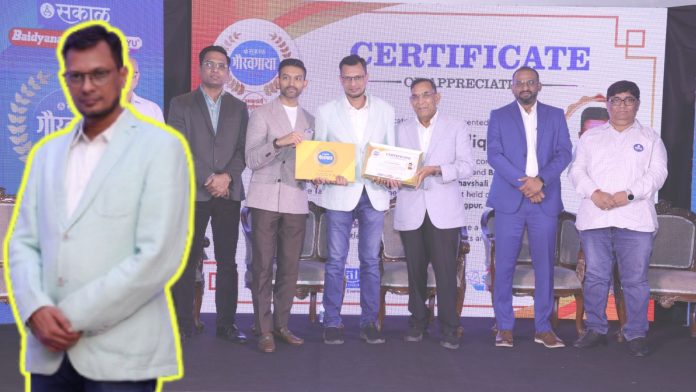
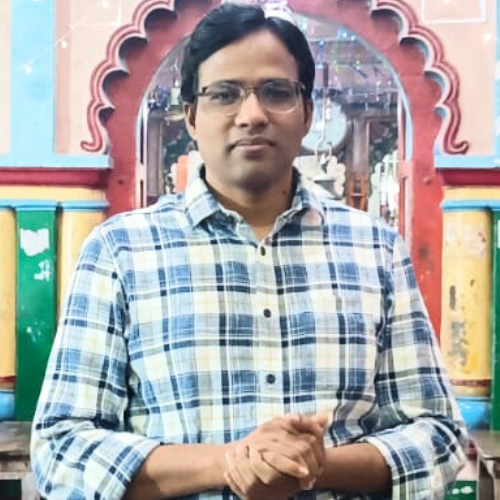
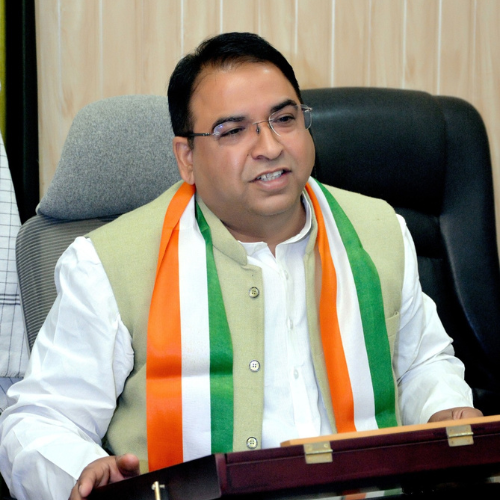
Dr Anwar Siddiqui, head of Panchakarma at Shri KR Pandav Ayurveda College and founder of Kerala Ayurveda & Panchakarma, received the Influential Ayurvedacharya Award from Sakal and Baidyanath. The award recognized his contributions to Ayurvedic medicine and social service.
The event was attended by Union minister Nitin Gadkari, Baidyanath’s managing director Suresh Sharma, and 45 leading Ayurveda doctors from across India. Dr Siddiqui, a BAMS and MD in Panchakarma from Poddar Government Ayurveda College in Mumbai, also holds a Master’s degree in Sanskrit. He has authored the book Ayurvedic Detoxification in Obesity, published in Germany.
With more than two decades of practice, Dr Siddiqui has gained recognition for treating chronic illnesses through Panchakarma therapy. During the Covid-19 pandemic, he helped set up a free hospital in Pachpaoli, strengthening his reputation for service to both healthcare and the community. Dr Siddiqui is a prominent leader associated with Jamaat-e-Islami Hind and a member of its Maharashtra State Advisory Council.
source: http://www.radiancenews.com / Radiance News / Home> Latest News> Report / by Radiance News Bureau / August 24th, 2025
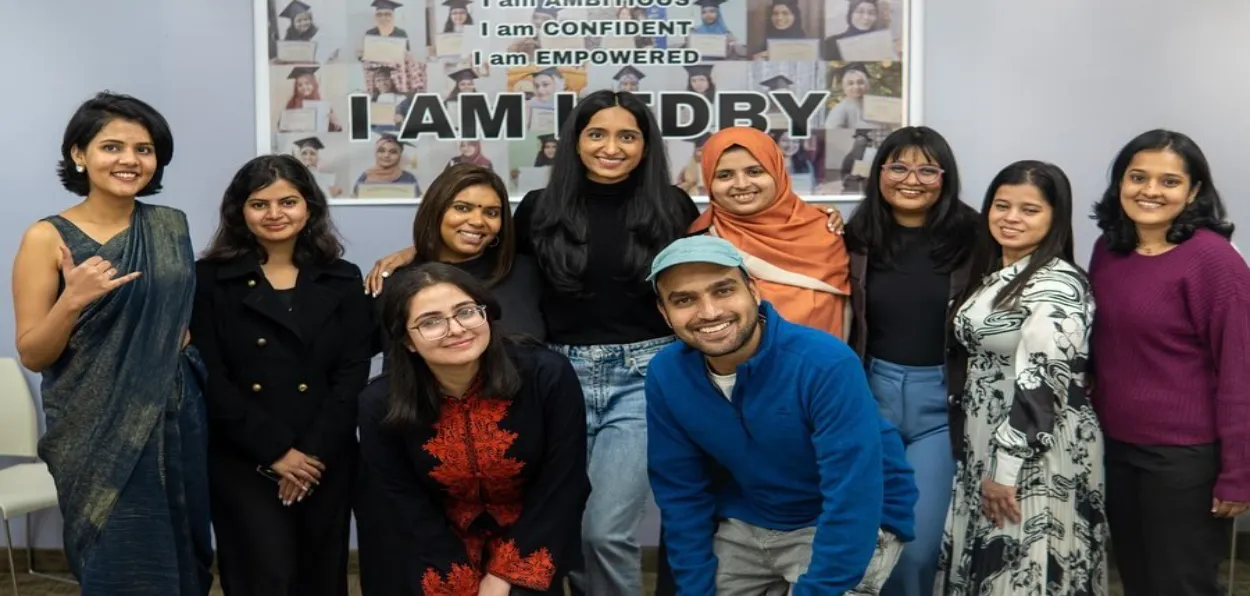
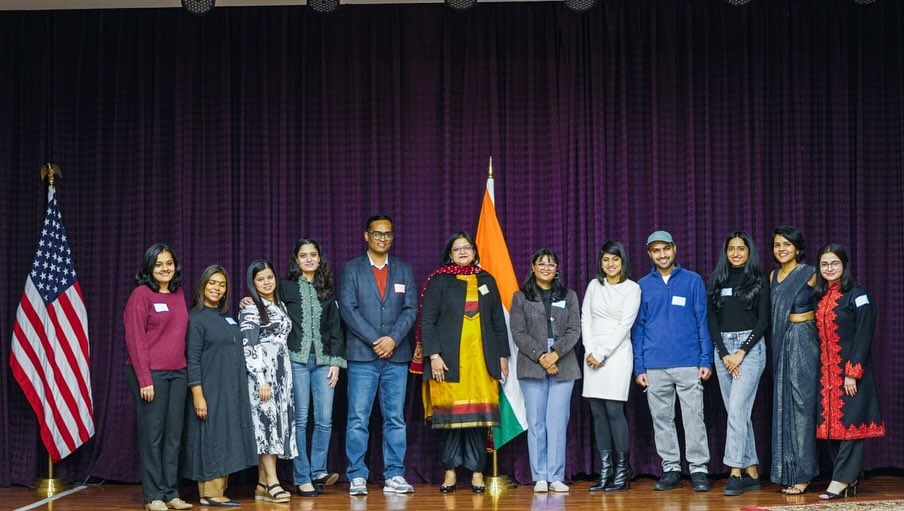
Ruha Shadab in the center (Wearing black top and jeans) with her team
Ruha Shadab acquired a degree in medicine from the Lady Harding Medical College, New Delhi, before joining Harvard University for higher studies. She along with her team at Ledby Foundation are working towards empowering Indian Muslim women to be gainfully employed and become independent. Awaz-The Voice Editor-in-Chief Atir Khan spoke to her about her work. Excerpts:
What was the intent behind starting Ledby Foundation?
There were many reasons why we started Ledby Foundation. The primary reason was that I hardly saw any Muslim women in the offices that I had worked in. Also, the overall socioeconomic indicators of our community made me feel compelled to start this. But the story most close to my heart is that of my mother, who, I think is one of the most intelligent people that I know. Many people like her are there in a community who weren’t able to realize their intellect and develop their professional dreams.
So that was something that influenced me as I started my early career and then went on to do better at Harvard. But I got time to think about what I want to do with my life, and what kind of social impact I needed to create. And I always knew that I wanted to create a social impact for the Muslim community, especially for women. As I spent more time thinking about what I could do for the community I ended up on the idea of professional empowerment of Indian Muslim women and supporting them in the workforce.
Sky was the limit for you at Harvard; you could have chosen to work in any other field. Why did you choose to do what you’re doing?
Even my medical background of becoming a doctor had to do with creating social impact. That was my goal from the beginning. The progression from doing medicine to doing global health to working on policy and helping improve Indian society has just been a natural transition to what I think can have the most impact. And as to why Muslim women, it is one of my core identities, I thought there is a strong need, and if we don’t do it, who else will? I remember when I was 14-year-old I used to tell my mother that I wanted to go to Africa to help people who were suffering from poverty and hunger.
And she said why don’t you first fix your own backyard first? There is so much that needs to be done in India, so much that needs to be done in our community. So, that made me pause and reflect and that’s what brought me here.
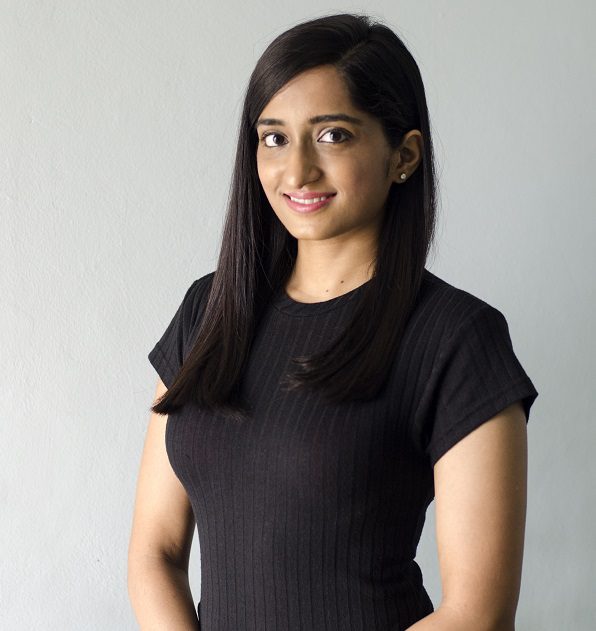
Ruha Shadab
Many people must be asking you why you only choose to work to empower Muslim women. Why not others?
Yes, there have been all combinations of questions. Why Muslim women? Why not Muslim men? Why not Hindu women, and X, Y, Z combination? Right. The truth is that I think of this almost from a doctor’s mindset. So, what is the issue that you’re trying to solve? The issue that we’re trying to solve is underemployment, the lack of job opportunities, and the lack of converting your education into employment.
As a Muslim woman, somebody might say, why don’t you work for the education and employment of women from other communities in India? Why only focus on Muslim women? And that’s true. India has one of the lowest female labor force participation rates in the world. And my answer to that is to think of it as seeing two patients in your clinic.
If both patients show up you can give them paracetamol. But as a doctor, I’m also going to run diagnostic tests on them and try to understand what is the underlying cause, what is the underlying disease that they have and then give them specific treatment.
One might have a bacterial infection; one might have a viral infection. Under different segments, different combinations of communities might be suffering from some of the macro issues we have in India with unemployment and job availability. But the reason is that they are not able to realize those opportunities or those unknown opportunities before us.
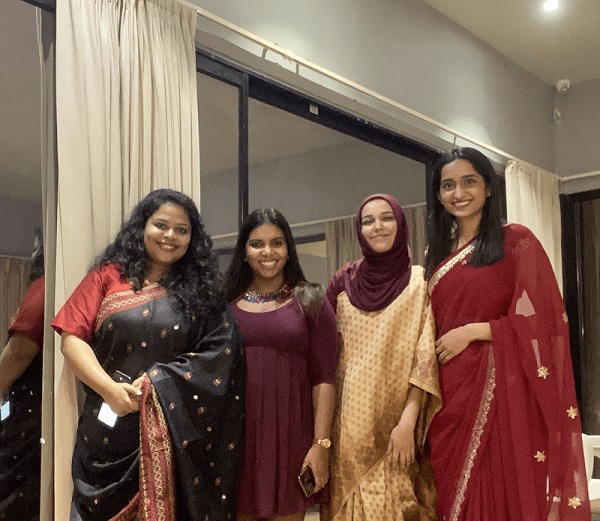
Ruha Shadab (extreme right) with her team members
So, the root causes differ. And then building on this, you don’t have targeted interventions focused on these root causes. You will not be able to meaningfully address them and solve them. You need to have at least focused approaches to solving that unique set of root causes that is hindering them from getting full participation in India’s workforce.
The constitution of your Ledby foundation is quite interesting. Your team members are Hindu and you have people from other faiths for the cause of empowering Muslim women. Isn’t it great? In today’s world where every community is looking inwards and they’re busy thinking about themselves?
It’s very validating. My chief operating officer is not from the Muslim community. 20% of our 120 advisers and residents are non-Muslims. 100 out of 500 of our volunteers are non-Muslims. And that just goes to show that the narrative that we are told about our country and our brethren in the country is not entirely true.
If you put your head, you will be surprised to see how many people are willing to stand up and support you. And I think that is what this shows. It also shows that supporting Indian Muslim women is not just important if you are an Indian Muslim woman, but it is in the interest of every Muslim woman, and every Indian to ensure that this unity can realize its dreams today.
Absolutely. Very important point. You know, it’s the intent and the good leadership, that you have, these are the things that matter the most. And when reach out to people irrespective of their faiths people come and support you. You have to have a good cause; people are always there to support you. Tell us more about your programs at Ledby Foundation.
Sure. So, our programs are completely virtual fellowships that we offer to Muslim women who are either in college or in the early stages of their careers. Think of it as if you are 18 to 20 years old and an Indian Muslim woman, then getting into one of the best professional development programs is probably in your best interest to expedite your professional career. There are several components to it. So, one component is online training programs that help you with, your interpersonal skills, your communication skills, and some of the basics of being able to find jobs, reach out to people, submit an excellent CV, and do interview preps.
Another workshop modules look at improving your negotiation skills. Our negotiation curriculum is developed in conjunction with Harvard professors who interviewed Indian women and developed case studies with Indian Muslim women as protagonists that we use to teach negotiations to our fellows. And then the third part, which is often cited as one of the long-lasting effects of the fellowships is our mentorship program. And our mentorship program is a 360-degree framework so each young Muslim woman who joins gets mentored.
The other aspect of the mentorship program is that each Muslim woman has to then have sessions with people in her class. And I would just say women are from across India. So, we have a very diverse group, even though we say Muslim women, it’s a very diverse Muslim women group and we get to speak to each other. The last part of this mentorship program is coaching at the school level over six months.
Ruha Shadab with the team of Ledby Foundation at a function
That’s amazing. Tell us how you make these students or candidates job-ready.
Our fellowship is very much about teaching people how to fish rather than giving them fish. So, we teach them how to identify the right opportunity, how to network with folks, and how to help them with an interview. And then we also have them practice interviews with us. They have access to facilitators, who help practice as you continue to progress.
So who are your stakeholders? Of course, the students, then you have the policymakers who are others you reach out to?
So, we try to bridge that supply-demand gap. We are creating a supply of highly skilled professional Indian Muslim women. And then we’re also making sure that there is a demand from companies to intentionally recruit and create a diverse workforce within their organizations. We bridge the gap between our fellows and companies that want to promote religious inclusion in India.
What is the kind of feedback you get from, say, policymakers and the corporate world when you approach them with this kind of information?
So, we usually try to approach them from a very fact-based point of view. We also carry out research to identify what are the barriers to entry and retention of Muslim women in India’s workforce. The research we conduct help a lot of companies see through a fresh perspective. So even if you educate Muslim women, that does not necessarily mean they have the same chances at employment. The company officials tell us that they never thought about this, they were never made to confront this reality. So, we meet them just to reflect.
Ruha Shadab with a support group of her Foundation
So what kind of support and responses you’re getting from people that you’re reaching out to?
Well, overall, it’s been positive. People are interested in understanding what we do, supporting us in even exploring the talent pool that we are creating. And we have several stories of women who’ve gotten recruited through our own pipeline to companies.
That’s wonderful. And there must be some very bright candidates you come across. We see there is an awareness among Muslim families even in small towns for pursuing higher education.
That’s true. There is a very strong drive and fire within the women that we meet. And we try to move more away from urban centers.
Right now, we are more focused on urban centers and ensure that we are able to move farther away from that in the future. And yes, we do see that. See, I think in addition to being pleasantly surprised at how many people from outside of the Muslim community are willing to help us, with very positive insights.
I’m sure that you inspired a lot of Muslim girls, you’re a big success story from India, an Indian who’s doing so well. Do you also think that we need to convey more such success stories to these aspiring girls to inspire them?
Absolutely. And I think what helped was having people believe in me, and we’re trying to make more Muslim women feel that they are heard and that somebody believes in their talent.
You’re doing deep thinking and you’re working in this field, what would be your appeal to the government and the corporate sector for improving the employability chances of Indian Muslim women?
My appeal would be to have intentionality behind getting more Muslim women into the workforce. The truth is that we shy away from talking about religious inclusion in India, which is strange. Because so much of our lived reality is a function of our religious identity. There is no distinction between the personal, the political, and the professional and it is incorrect to create these artificial distinctions.
source: http://www.awazthevoice.in / Awaz, The Voice / Home> Stories / by Atir Khan / February 29th, 2024
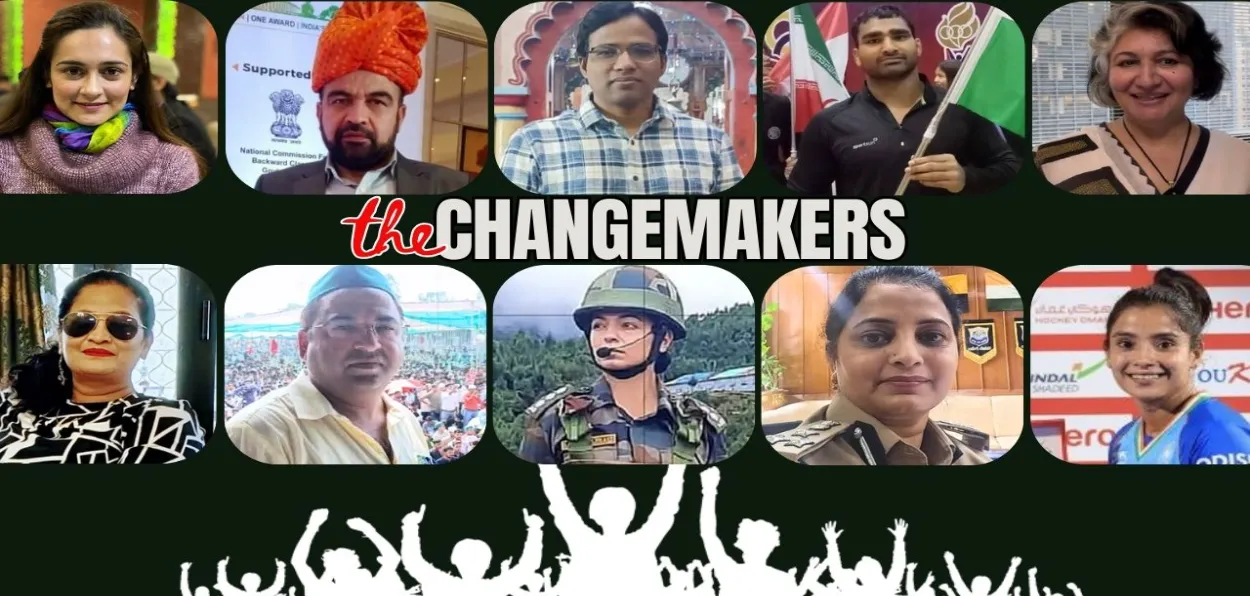
While media spotlight often shines on celebrities and politicians, the real engine of India’s progress runs on the resolve of countless unsung heroes who, away from limelight, quietly transform society.
From national defense to grassroots education, sports, science, and civil service, these individuals from Uttar Pradesh show how courage, compassion, and conviction can drive extraordinary change. Here are 10 such trailblazers whose stories deserve to be heard:
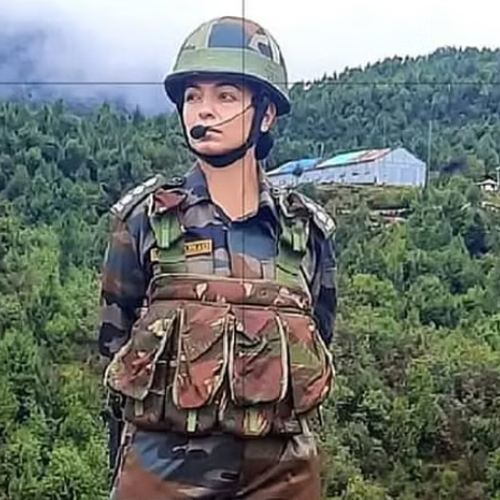
Captain Sariya Abbasi: A Woman in Uniform on the Frontlines
Hailing from a small city of Gorakhpur, Uttar Pradesh, Captain Sayria Abbasi broke every convention to join the Indian Army. A graduate in Genetic Engineering and with plenty of job offers and career opportunities from big companies was not enough for her to pursue in life. The call of service for the motherland was too strong to be sacrificed.
The world noticed her as a soldier deployed at the Line of Actual Control (LAC), India-China temporary border, manning an Air Gun. Today, Sariya leads drone-killer teams and operates L-70 anti-aircraft guns on the border. Her journey from an academic achiever to a defender of the nation’s borders is not just about military precision; it’s about shattering glass ceilings and reshaping how India imagines women in uniform.
Dr. Faiyaz Ahmad Fyzie: Voice for the Voiceless Pasmanda Community
Dr. Faiyaz Ahmad Fyzie, an AYUSH physician, is more than a healer—he is a public intellectual, columnist, translator, and relentless advocate for the Pasmanda (socially backward) Muslim community. Raised in modest conditions, his rise to national recognition is built on fearless writing and tireless grassroots work.
When even the Prime Minister refers to Pasmanda voices, Fyzie’s years of advocacy resonate. His pen continues to empower those whose struggles were long silenced. His work is a call to conscience—and a roadmap for inclusive discourse.
Mohammad Luqman Ali: Wrestling His Way to Glory and Degree
Wrestler Mohammad Luqman Ali, a student of Social Work at Jamia Millia Islamia, is balancing body and brain. Born in Amroha’s tiny village of Mohraka Patti, his father worked on the railways, and his mother gave him religious grounding. Despite limited resources, Luqman’s grit has earned him recognition in India’s wrestling circles.
From the mat to the classroom, his dual commitment shows that excellence doesn’t require compromise. It requires discipline, heart—and a family’s belief in you.
Rubina Rashid Ali: Reviving Mughal-Era Art with a Modern Mission
In a sun-drenched corner of Aligarh, Rubina Rashid Ali has quietly built a movement. Her work in floral appliqué embroidery, a legacy of Mughal art, now supports dozens of women in Aligarh and Rampur. What was once an undervalued craft monopolized by middlemen has been transformed by Rubina into a vehicle for women’s economic empowerment.
Her home resonates not only with the sound of needles and threads but also with the hum of independence. “Real artists were reduced to laborers,” she says. Today, she ensures their hands are not just working — but also earning.
Babban Mian: A Gaushala Keeper Inspired by His Mother’s Love
At Madhu Sudan Gaushalla in Bulandshahr, Babban Mian tends to cows not out of ritual, but reverence — inspired by his late mother Hamidunnisa Begum. “She loved cows like her own children,” he recalls. After she passed away in 2015, Babban vowed to preserve her legacy.
Despite being a Muslim in a Hindu-dominated tradition, he runs a government-recognized shelter rooted in compassion, not controversy. For him, animal welfare is a universal value — not a communal issue. His work quietly redefines what shared culture and interfaith harmony look like.
Khushboo Mirza: From Amroha to the Moon with ISRO
Khushboo Mirza, scientist at ISRO and part of the Chandrayaan-1 and Chandrayaan-2 missions, is a stellar example of perseverance. After her father’s death when she was just seven, her mother raised three children alone, running a petrol pump and defying social norms.
Khushboo earned a Gold Medal in Electronics Engineering from AMU and was the youngest member of the Chandrayaan-1 checkout team. A practicing Muslim and a symbol of India’s scientific aspirations, she turned down corporate offers to reach for the stars—and took a whole generation of girls with her.
Zaheer Farooqui: A People’s Leader with a Vision for Purkazi
In western UP’s Purkazi, Zaheer Farooqui is rewriting what local leadership means. As Nagar Panchayat Chairperson, he donated land worth ₹1.5 crore for the area’s first Intermediate College and modernized local schools into PM Shri-certified institutions.
His initiatives go beyond classrooms. From India’s first double-storey government-run cow shelter to a gym for Muslim women, and one of the most sophisticated rural CCTV networks in the region — Farooqui’s governance is a blend of tradition and tech, equity and empowerment. His Tiranga Yatra revives local history, reminding citizens that patriotism is inclusive and action-oriented.
Dr. Farah Usmani: From AMU to Global Health Leadership
On a cold morning in New York, Dr. Farah Usmani stood outside an apartment, a folder in hand, her eyes bright with resolve. The daughter of Uttar Pradesh, she is today a formidable presence in global health policy.
n M.D. in Obstetrics & Gynecology from AMU, Farah sought impact beyond hospital walls. Armed with a Master’s in Health Policy from LSE and the London School of Hygiene & Tropical Medicine, she’s led transformative health initiatives around the world. Her journey is one of intellect guided by idealism — a doctor who chose not just to heal individuals but to reform systems.
Anjum Ara: Bridging Communities Through Compassionate Policing
Hailing from Azamgarh’s Kamharia village, Anjum Ara, a 2012-batch IPS officer, has redefined the image of policing with a human touch. A computer engineer by training, her journey from Integral University to Senior Superintendent of Police in Shimla has been marked by integrity and reform. Known for her work in cybercrime and her community-focused policing model, Anjum is also a fierce advocate for girls’ education.
Together with her husband, IAS officer Yunus Khan, Anjum adopted the cause of Khushdeep, the daughter of a martyred soldier, pledging to support her upbringing. This act of empathy mirrors her professional ethos, proactive, principled, and deeply people-centered.
Mumtaz Khan: From Vegetable Stall to World Hockey Stage
From the bustling alleys of Lucknow’s Cantt area to the turf fields of South Africa, Mumtaz Khan’s journey is pure grit. Once helping her father at a vegetable stall, a single race at school changed her life when Coach Neelam Siddiqui noticed her speed. That moment set her on a course to become a leading forward in India’s Junior Women’s Hockey Team.
Her standout performance at the 2018 Youth Olympics, where she scored 10 goals, earned her national acclaim. Yet, Mumtaz remains rooted, balancing hope and humility as she eyes the Olympics. She is proof that dreams born in dusty streets can blaze across international arenas.
These ten changemakers hail from Uttar Pradesh, from narrow village lanes to bustling metros, from battlefields to laboratories. But they are united by one thing: quiet, relentless courage. In their lives, we find the India that persists, uplifts, and transforms—not with headlines, but with hard work.
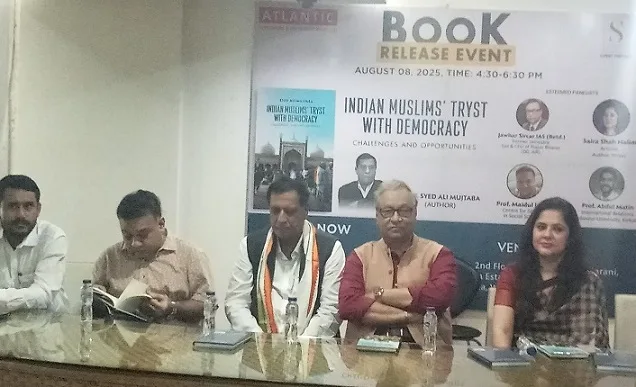
At the launch of the book Indian Muslims’ Tryst with Democracy: Challenges and Opportunities at ICCR Library, Kolkata, academics and public figures underlined that meaningful improvements in government schools and hospitals could significantly uplift India’s Muslim community, especially its poorest segments.
Professor Abdul Matin of Jadavpur University stressed that socio-economic realities leave many Muslims dependent on failing public services. “We keep saying Muslims lag in education — but how do we fix it? When families earn only ₹8,000–₹10,000 a month, they cannot afford private schools. They rely on government schools, which have deteriorated so much that students rarely move up in life,” he said.
Matin pointed out that this crisis is not limited to rural Bengal but also affects Muslim-majority urban areas such as Metiabruz, Khidirpur, Topsia, Park Circus, and Raja Bazar. Once-active Kolkata Municipal Corporation schools, he noted, have shut down, worsening access. The state’s public education system, weakened by years of political interference, has hit all low-income communities hard — with Muslims among the worst affected.
He also painted a bleak picture of healthcare: “In rural Bengal, people travel overnight and queue from midnight for a doctor’s appointment. We must revive mohalla-level schools and clinics.”
Jawhar Sircar, former Rajya Sabha MP and bureaucrat, urged the community to prioritise education over religious symbolism and to resist being reduced to a political vote bank. He encouraged Muslims to join democratic, secular movements fighting to restore India’s plural ethos. On the castecensus, Sircar advised patience, saying its 2026 release could be a “game changer” for the community.
Political activist and CPM leader Saira Shah Halim spoke bluntly about systemic discrimination, citing examples from both Delhi and Kolkata. On housing bias, she noted: “People say Muslims are ghettoised — but do they have a choice?” She also criticised the absence of certain MPs, including secular leaders, during critical parliamentary debates on Muslim concerns such as the CAA and the abrogation of Article 370.
From a historical and political perspective, Prof Maidul Islam of the Centre for Studies in Social Sciences, Calcutta, traced a steady decline in Muslim political representation — in the Lok Sabha since 1980 and in the Bengal Assembly since 2011. He alleged that parties deliberately withhold tickets from Muslim candidates, echoing warnings made decades ago by B.R. Ambedkar. The lack of progressive leadership, he argued, further limits the community’s advancement.
The book itself — Indian Muslims’ Tryst with Democracy — offers a detailed examination of these socio-political dynamics, combining historical insight with policy recommendations. Described by speakers as “a guide for collective action,” it lays out both the challenges and the concrete opportunities available for India’s Muslims to achieve equitable development.
You can order a copy from Atlantic Publishers & Distributors Pvt. Ltd 7/22, Ansari Road, Darya Ganj, New Delhi – 110002. Email- aparna@atlanticbooks.com – Phone: 011-40775252 Website: www.atlanticbooks.com
source: http://www.theindianawaaz.com / The Indian Awaaz / Home> Quami Awaaz / August 13th, 2025
For years M. Amjad of Patna worked at a jewellery purse-making agency, earning barely ₹5,000–6,000 a month – an amount too small to cover even the basic needs of his family.
In 2025, with financial support of ₹20,000 from ZCI–Patna, Amjad seized the opportunity to start on his own. Today, his earnings have more than doubled, giving his family both financial security and a sense of dignity.
Amjad’s journey is a shining example of how Zakat, when channelled with vision, becomes more than charity – it becomes a tool of empowerment. By enabling individuals to stand on their own feet, Zakat Centre India is fulfilling its mission of transforming recipients into contributors, and compassion into lasting change.
[The writer is Secretary (Hon.) Zakat Centre India-Patna]
source: http://www.radiancenews.com / Radiance News / Home> Latest News> Social Service / by M Naushad Ansari / August 19th, 2025
For the past six days, Arif has been working tirelessly to rescue the victims, regardless of their faith, trapped under mounds of debris or washed away by torrents.
Arif Rashid during his rescue effort / The Telegraph
When fear and panic gripped Chositi village of Kishtwar on August 14, Arif Rashid went beyond the call of duty and put his life in danger to save lives, not caring who the victims were or where they came from.
A flash flood triggered by a cloudburst hit the remote mountain village last week, leaving behind a trail of destruction with scores dead and missing, more than 100 injured and homes, roads and bridges flattened.
Arif, who works as a driver for the free 108 ambulance service that works on a public-private partnership model, was a lucky survivor.
“It all unfolded in front of me. As I saw a mountain of water and debris unleashed on a small valley, I, like many others, started running for safety. But 10 minutes later, I realised there were a lot of people trapped under the debris and I should rush back,” Arif told The Telegraph over the phone from Kishtwar.
For the past six days, Arif has been working tirelessly to rescue the victims, regardless of their faith, trapped under mounds of debris or washed away by torrents. Hundreds of army, NDRF, police and CRPF personnel, along with several volunteers, have been helping in the rescue operation.
Multiple videos or pictures on social media paint Arif as a tireless rescuer. He lives in a village 25km from Chositi, both part of the larger Padder area of Kishtwar where Muslims are a small minority. Most of the victims were Hindu pilgrims.
Muslim-majority Kishtwar is a communally sensitive district in Jammu’s Chenab Valley, often in the news for the wrong reasons. But small efforts by individuals from both communities, like the one displayed by Arif, serve as a beacon of hope.
“I must have rescued 15 to 20 injured people and pulled several bodies from the debris. I first rescued an injured girl and several others. There were just two ambulances there, including ours. My ambulance was stuck in debris, but luckily only up to the tyres. With great effort, some of us pulled it out,” he said.
Moments later, he started shifting the injured towards the hospital, but the bridge nearby was damaged too. Ambulances started arriving from different places, and the injured were carried on shoulders to the other side of the damaged bridge before they were taken to the hospital.
On Monday, a video showed him and a few others lifting a body on a stretcher, walking through rocks, before tying it to a rope that was pulled by people on the other side of a stream. Arif said the body was found some 20km from Chositi.
“I am doing this all for the sake of humanity. For me, they are all humans and I do not think about anything else,” he said.
Also leading from the front are the volunteers of Ababeel, a group known for their assistance during emergencies in the Chenab Valley.
Syed Imran, a volunteer, said they camped in the village for five days. “There were more than 30 volunteers from our group, with nine ambulances, working in shifts. All these days we helped shift the deceased and injured to the hospitals,” he said.
The group has around 250 volunteers connected through WhatsApp, and among the first responders during calamities and accidents.
source: http://www.telegraphindia.com / The Telegraph Online / Home> India / by Muzaffar Raina / August 20th, 2025
With scarcity of good ulama, the passing away of Maulana Muhammad Salim Qasmi, rector of Al-Jamia Al-Islamia Darul Uloom Waqf, Deoband, has sent a sense of gloom across India.
People have written obituaries describing his death as the loss of the last chain in the golden series of Khanwada-e-Qasmiyat, a metaphor used to describe the great legacy whose history got prominence with establishment of Darul Uloom in Deoband in 1867 against the backdrop of persistent British onslaught on Indians on the one hand and its ugly design to kill ulama in large numbers on the other hand, to mitigate the impact of resistance against the Colonial power.
Maulana Salim Qasmi was a witness to the British cruelty on Indians and the Indian ulama during the eventful years if Independence. He had lived those times as a young student of India’s most prominent madrasa that had been a great centre of anti-British movements like the Silk Letter Movement.
Being the great-grandson of Maulana Muhammad Qasim Nanautwi, Salim Qasmi knew well the role he had to play to live up to the reputation and expectations both of his family and its followers and admirers spread over countries and continents. He rightly did so. His demise thus has rightly been described as the end of that golden chain. However, as there are others from the same family trying to carry forward both the academic and social and historical legacy, will they be able to do justice with that, only time will tell.
Muhammad Salim was born on 8 January, 1926 at Deoband and received primary education from many teachers. He completed his studies in 1948 from Darul Uloom Deoband where his teachers included great luminaries like Maulana Hussain Ahmad Madani, Maulana Aizaz Ali, Allama Ibrahim Balyawi, Maulana Syed Fakhrul Hasan Moradabadi.
He is said to be the last surviving disciple of Maulana Ashraf Ali Thanwi from whom he studied Mizan, an important book of Arabic grammar. Soon after passing out, he was appointed a teacher there. However, later, due to a serious conflict and crisis then in Darul Uloom, he along with some other colleagues, decided to stay away from it and established Darul Uloom Waqf which he nurtured till his last breath. Besides looking after its administrative affairs as a rector, he also taught Bukhari Sharif, the well-known book of hadith. Earlier, he had taught Muslim Sharif, another important book of hadith.
Some of the key positions he held at the time of his death are as follows:
Vice-President, All India Muslim Personal Law Board,
Member, Aligarh Muslim University Court,
Member of Advisory Board and Managing Committee, Darul Uloom Nadwatul Ulama,
Member of Advisory Board, Mazahir Uloom Waqf, Saharanpur,
Permanent Member of the Fiqh Council, Al-Azhar,Cairo,
President, All India Muslim Majlis-e-Mushawarat (before two fractions of it finally united),
Patron, Kul Hind Rabta-e-Masajid,
Patron, Islamic Fiqh Academy, India.
About his written contribution to the domain of knowledge, the website of Darul Uloom Waqf Deoband mentions that besides being:
… one of the top speakers of ulama, his articles and writings are also much admired. Some of the books are worthy to be mentioned here like (1) Mabaadi al-Tarbiyat al-Islami (Arabic), (2) Jaiza Tarjama Quran Karim, (3) Taajdar-e-Arz-e-Haram ka Paigham, (4) Mardaan-e-Ghaazi, (5) Ek Azeem Tarikhi Khidmat, (6) Safar Nama-e-Burma.
(7) The book Khutbat-e-Khatibul Islam (a collection of his speeches) has been published in 5 volumes. Moreover, there are many articles and scripts awaiting publication.
Formally, Maulana received bai’at (a reformative and self-actualization method historically in vogue for quite long as an Islamic tradition in certain schools of thought) at the hand of Maulana Shah Abdul Qadir Raipuri. However, he received much of the training from his glorious father, Qari Muhammad Tayyib (d. 17 July, 1983)
A remarkable trait of his personality was to maintain the dignity of a true aalim (religious scholar) by not partaking in sectarian lines as is the wont of some Ulama. He was therefore respected among all sections of Muslims and his views were very well received. Maulana Salim did not create the binary division of education between religious and modern. He believed that ‘the source of all streams of knowledge is one’.
In recognition of his services to the domain of knowledge and ideas Maulana Salim was honoured with many awards, some of which are as follows:
Nishan-e-Imtiyaz (Mark of Distinction) from the Government of Egypt for being a distinguished aalim of the Indian Sub-Continent,
Imam Muhammad Qasim Nanotwi Award,
Shah Waliullah Award.
Prominent leaders and ulama from different countries have expressed grief over the demise of Maulana Salim Qasmi. In her telephonic message, External Affairs Minister Sushma Swaraj said that Maulana Salim’s love for education was amazing. Outside the country he worked as an exemplary ambassador of education. Congress President Rahul Gandhi said Maulana Salim Qasmi illuminated the world through education and he would touch people through simplicity. Samajwadi Party chief, Mulayam Singh Yadav said that Maulana never asked anything for himself. He was a crown prince of education whose absence would be felt long.
Former Justice of Pakistan’s Shariah Court, Mufti Taqi Usmani described Maulana Salim Qasmi as an ocean of knowledge. His death is a huge loss to the Islamic world. The simplicity with which he lived is rare, he said adding, “His service in the field of education is a golden chapter”.
Member of Parliament and AIUDF President Maulana Badruddin Ajmal Qasmi termed the demise of Maulana Salim Qasmi as ‘end of an era’ whose enumerable services are worth to be written in golden words. Senior leaders Ahmad Patel, Ghulam Nabi Azad, Syed Shahnawaz Hussain and others also sent their condolence messages.
Maulana Syed Rabey Hasani Nadwi, President of All India Muslim Personal Law Board, who had closely worked with Maulana Salim Qasmi and had also been his classmate at Darul Uloom Deoaband, wrote an article in which he stated that Maulana Salim Sahab had acquired many of the qualities of his father Qari Tayyib Sahab and his great grandfather Maulana Qasim Nanautwi. He worked in a similar way from whom different sections of ummah benefitted. His death therefore has caused concerns about the void in the ummah and in religious circles.
Maulana Arshad Madani described Maulana Salim Qasmi’s death as a loss which does not seem to be filled in near future. “Whenever there is a crisis he would be remembered’ he said. The responsibility to protect the institution that he established falls on all of us.
Prof Humayun Murad said that Maulana knew well how to avoid confrontation and find peaceful and constructive ways. Darul Uloom Waqf Deoband is its living example.
Maulana Muhammad Sayeedi, nazim, Mazahir Uloom Waqf said, “In the passing away of Maulana Salim Qasmi, Mazahir Uloom has been deprived of one of its true guide and patron”. He was its member since 1988. Mufti Muzaffar Husain would trust him a lot and his suggestions were highly helpful.
As against the commonly held opinion of ulama who do not tire of speaking about the division of knowledge between religious and modern or worldly, Maulana Salim Qasmi, in June 2013, had in a public programme, very categorically said that all the available forms of knowledge are from Allah. There is nothing as religious and worldly knowledge.
Maulana Qasmi said that the division of knowledge (between religious and worldly) is a political creation because all streams of knowledge flow from God. He then asked heads of madrasas to invite people of other faiths to their madrasas and exchange views and, share their problems with them also.
As I write this obituary, his soft-spoken words remind me of the sincerity with which he would draw the attention of the people to real issues and to the approaches that need to be adopted to find their solution.
Maulana Salim Qasmi was among the important personalities who had set up the Darul Uloom Waqf. His colleagues Maulana Muhammad Nayeem Deobandi died a little over a decade ago on 23 August, 2007, Shaikhul Hadith Maulana Syed Anzar Shah Kashmiri died 10 years ago on 26 April, 2008, Mufti Khursheed Alam died on 7 February, 2012, while Maulana Salim’s younger brother Maulana Muhammad Aslam Qasmi, an outstanding orator, died about five months ago on 13 November, 2017. Finally, this great son of the great Khanwada-e-Qasmiyat passed away on 14 April, 2018. He is survived by four sons and two daughters.
May the Almighty grant him an exalted place in Jannah!
The author is a PhD Fellow at the Academy of International Studies, Jamia Millia Islamia and is also doing an online program “Contending Modernities” of the University of Notre Dame, USA.
source: http://www.twocircles.net / TwoCircles.net / Home> Articles> Indian Muslim> Lead Story / by Manzar Imam for TwoCircles.net / April 28th, 2018
A man of few words, he would listen more and speak less. He was not known for dropping names, loose talk or gossip. No wonder he had friends across the political spectrum, recalls Shahid Siddiqui.
I met Ahmed Patel in 1980 for the first time as a journalist.
He mostly preferred to remain away from lime light but I persuaded him to give an interview to my weekly Nai Duniya. Even then I was impressed by his very precise responses to the most provocative questions. I came to know him in last thirty-five years both as a politician and friend. What held him above other politicians in Delhi was his honesty and dedication not only to the Congress Party but to basic moral values of public life. While many leaders protected their personal interests at the cost of the party, Ahmed Bhai did everything rising above his own political and personal interests.
Ahmed Patel was one of the finest Congressman in modern times, especially after the demise of the generation of leaders groomed by Indira Gandhi. Congress was in shambles in the post-Narsimha Rao period and with the emergence of NDA, future seemed to be bleak for Congress. It was pragmatic, realistic, dedicated hard work of Ahmed Patel and few others, which allowed UPA, led by Indian National Congress to form a government in Delhi in 2004. His networking abilities, his humble demeanor, his ability to listen to everyone and then give a sane and practical advice to the Congress President Sonia Gandhi and Prime Minister Manmohan Singh was what kept UPA together and allowed it to come back to power with larger numbers in 2009.
There came many occasions when this twenty-four or more parties’ ragtag alliance would have collapsed, but for the persuasive abilities of Ahmed Bhai. Political analysts call him troubleshooter for Sonia Gandhi, in my view he was Sankat Mochak and firefighter for the Congress Party.
On 7th December 1992, a day after the demolition of Babri Masjid, I sent my resignation from the Congress Party. I was an AICC member and part of a Committee with Shri Pranab Mukherjee, Manmohan Singh ji, K. R. Narayanan Saheb, called, ‘Pamphlet Committee’. Ahmed Bhai immediately rushed to my house and said if you resign I will also resign, and if we Muslims resign from Congress in large numbers, would we be helping the cause of Secularism or damaging it? Ultimately a call from Harkishan Singh Surjeet, who in a way was my political Guru, persuaded me to withdraw my resignation. Much later I learned that Ahmed Bhai had requested Comrade Surjeet to call me and desist from resigning from the Congress Party.
Ahmed Bhai was famous for his nighttime politics when he would call friends and opponents for advice and information. He was fond of good food and would suddenly ring me up at night saying, ‘Yaar can I come to have a few kebabs at your house’. He used to come alone without fanfare at midnight and chat. He was a political animal, who breathed Congress politics twenty-four-seven, but never tried to harm even his worst opponents.
Ahmed Bhai was ears and eyes to Sonia Ji in the most crucial days of her Presidentship. Her ability to take everyone along and keep the party together made Congress a force again, but no less was the contribution of Ahmed Bhai, who didn’t hesitate in sacrificing even his close friends if the party’s interest demanded it and advised Sonia Ji accordingly. He was one Congressman who had hundreds of critics and opponents but no enemies. Even most bitter enemies of the Congress Party could speak to Ahmed Bhai in confidence, knowing that their faith will never be betrayed.
Congress has no replacement for Ahmed Patel, at a juncture when he is required most. His contribution to Indian democracy and Secularism is immense. At a time when politicians of all hues and parties are losing respect in the eyes of the common man, Ahmed Patel will be missed much more for his cool, unemotional, positive attitude.
source: http://www.nationalheraldindia.com / National Herald / Home> States360 > Obituary / by Shahid Siddiqui / November 25th, 2020
The All India Muslim Development Council (AIMDC) has officially unveiled the final list of “40 Under 40 Leaders” — a landmark initiative aimed at identifying, nurturing, and empowering the next generation of Muslim leaders in India. The announcement follows one of the most exhaustive and merit-based selection processes in the nation’s recent history, spanning a year-long journey and involving multiple stages of evaluation.
From 950 Applications to 40 Leaders
The initiative drew an overwhelming response, with approximately 95 applications from across the country. Candidates came from diverse fields — education, politics, corporate leadership, engineering, medicine, activism, journalism, law, research, academia, entrepreneurship, economics, Shariah scholarship, counselling, motivational speaking, Ulemas, students and governance.
The journey began with a meticulous application process, requiring detailed documentation of qualifications, achievements, contributions to society, and personal background. Based on rigorous assessment criteria, 215 applicants were shortlisted for personal interviews.
An expert panel then conducted comprehensive interviews, narrowing the field to 112. Following further scrutiny, 105 exceptional candidates earned a place in the in-person finale for 4 days.
Four Days of Intense Evaluation in Bengaluru
In India’s startup capital, Bengaluru, hosted the four-day in-person selection event.
Candidates participated in group discussions, parliamentary-style debates, and collaborative tasks designed to assess both individual brilliance and teamwork capabilities.
Organizers also closely evaluated their commitment to nation-building, sincerity towards the Community, Human Relations and personal discipline
From this stage, 70 leaders were selected, each awarded a Certificate of Leadership in addition to a Certificate of Participation.
Silent Assessment for the Final 40
On July 1, 2025, the same day as the 70 Leaders’ announcement, AIMDC formed an Adhoc (Consultation) Committee of 40 Under 40 Leader blending self-nominated leaders and organizer nominations.
They were asked to pick two projects of their interest from a curated list of initiatives aligned with Community and nation-building. The objective: evaluate their decision-making capabilities, foster team bonding, spark brainstorming, and plant the foundational seeds of advanced leadership skills.
Unbeknownst to many participants, this period doubled as an “invisible” final evaluation. Organizers monitored sincerity, akhlaaq (good character), ikhlaas (pure intentions), punctuality, and the ability to follow through on commitments. Participation in educational events, organizational skills, and collaborative spirit were also critical factors in determining who would advance.
The Final 40 — India’s Muslim Leaders of Tomorrow
After months of observation, assessment, and engagement, AIMDC has now announced the final 40 Under 40 Leaders — individuals under the age of 40 whose vision, expertise, and dedication position them as catalysts for positive change.
We were truly overwhelmed by the remarkable talent, dedication, and vision demonstrated by all 70 leaders who participated in the process. After a rigorous evaluation, the final 40 leaders selected under the 40 Under 40 Initiative will form the National Executive, serving as the strategic and driving force of the initiative.
Recognizing the immense value and potential of the remaining 30 outstanding leaders, we have proudly welcomed them as members of the National 40u40 Team. They will play a pivotal role in executing projects and events at all levels, ensuring our mission reaches communities across the country and contributes meaningfully to nation-building.
“This initiative is more than a recognition program — it is the foundation of a Change,” said an AIMDC Gen Secretary. – Mohammed Imthiyaz “These leaders represent the intellectual, moral, and strategic strength needed to guide our community and contribute meaningfully to the nation.”
“I came here thinking I would meet other young leaders. I leave knowing I am part of a network, a brotherhood and sisterhood of purpose,” said one of the selected leaders from Maharashtra.
“The process was humbling. It wasn’t just about our CVs — it was about our character, our sincerity, and our ability to work for something bigger than ourselves,” added another finalist from Kerala.
Sidebar: Fields of Expertise Represented in the Final 40
• Education Specialists
• Politicians & Policy Advocates
• Corporate Leaders & Entrepreneurs
• Engineers & Doctors
• Activists & Journalists
• Legal Experts & Researchers
• Shariah Scholars & Counsellors
• Motivational Speakers & Coaches
• Economic Policy Experts
• Ulemas
• Students
Names of the Selected Candidates:
Afza Khan
Imaan Hawwa Hafiz
Amreen Farooq
Juveriya Sarkar
Amrin Ayaz Shaikh
K. HAJIRA SULTHANA
Areefa ali
Ramsa Jaan
B Seeni Rahfu Nisha
Raniya Zulaikha
Fathima Saba
Rikza Pervez
Gulzar Karishma Malik
Shabnam Mohammed Akbar Khan
Hina Fatima Sarfraz Ali Sayed
Zulekha S Rajani
Mufti Yahya Moin Samar
Mohd Imad Ali
Abdul Gani Nadeem Punjabi
Mohd Ovais
Adil kampoo
Mohd Zeeshan
Afsar Rayeen
Mossab Mustafa Khan
Asadullah Waliullah Khan
Muhammed Rafi KE
Asiruddin Shaikh
Mujtaba Muneeb
Dr Bilal Sheth
Nawaz S
Dr Mirza Alamdar Ali Baig
Nouman Alam
Fahad Abdul Basit Hani
Ramiz Abdul Wadood
Khan Abdur Rehman
Reyaz Haider
Md Faizan
Sarfaraz Khan
Md Faizan Ahmad
Sarfraj Nawaj
Md Faizul Bari
Seemab Qayyum
Md Fateen Raza
Shaaz ahmed faruqui
Md Hifzur Rahman
Shaik Shabeer
Md Osama
Sharukh Syed
Md Sadaf Kamran
Sheikh Khurshid Alam
Md Saleh Umar
Suhaim ul islam
Md Yazdani Feroze
Syed Ansar Ali
Meer Faisal
Syed Hamid Ali Moin
Mohamed Maaz
Syed Shoaib Qasim
Mohammad Aamir Ansari
Syed Umar Ahmed
Mohammad Abdul Ahad
Tariq Abdullah Akhon
Mohammed Aftab Ahamed
Umar Farooq Masoodi
Mohammed Feroz
Wafi Shihad
Mohammed Gulam Ahmed Khan
Yusuf Mohamedy
Mohammed Ismail
Zubair Ahmed
About AIMDC’s Vision
The All India Muslim Development Council (AIMDC) is committed to fostering leadership that serves both the Community and the nation with excellence, integrity, and unity. The 40 Under 40 Leaders Initiative is envisioned as an incubator for change-makers, equipping them with networks, mentorship, and the moral compass required to navigate the complex challenges of modern society with Collective Efforts
source: http://www.muslimmirror.com / Muslim Mirror / Home> Indian Muslims> Positive Story / by Muslim Mirror Network / August 16th, 2025