Category Archives: Community Involvement / Social Issues

A mahal called farangi: A story from another time, of another Lucknow almost forgotten

Lucknow, UTTAR PRADESH:

The Telegraph visits the haveli where the Khilafat and Non-Cooperation movements came to be mergedThe Telegraph visits the haveli where the Khilafat and Non-Cooperation movements came to be merged.

Farangi Mahal in Lucknow. / Photo courtesy: Adnan Abdul Wali

Stepping into Farangi Mahal in Lucknow after skirting rows of low-priced chikankari salwar kameez shops and their steady din is somewhat like stepping into the stillness of a forest after having left a busy city. Only, Farangi Mahal is anything but a forest. It is a cluster of buildings that hold within them a bit of history that has been almost forgotten, as the past often is in India, obscured by new settlements or construction, or billboards, if not demolished altogether.

In Farangi Mahal the past is difficult to see also because of the turn Indian politics has taken.

I am part of a group from Calcutta visiting Lucknow last October.

Inside Farangi Mahal, located in the old neighbourhood of Chowk, we enter its elegant and serene courtyard. The lime-and-mortar white exterior is tinged with a blue, peeling off in places. The afternoon sun slants down on the pillared arches and the exposed bricks but does not take away from the fragile beauty of the structure.

Adnan Abdul Wali, a member of the family that owns the house, the Farangi Mahalis, ushers us into the courtyard. His Urdu and Hindi are as impeccable as his courtesy. He is a direct descendant of Maulana Abdul Bari Farangi Mahali, who was a leader of the Khilafat Movement.

Farangi Mahal’s story, however, goes back beyond the nawabs and the British. It was occupied by French merchants during the rule of Mughal emperor Aurangzeb and that is how it got its name. The merchants, owing to some offence, lost the property and Aurangzeb gave it to Abdul Bari’s ancestors, who needed a safe haven.

The farman issued by Mughal emperor Aurangzeb decreeing that Bari’s ancestors could live here / Photo courtesy: Adnan Abdul Wali

“The Khilafat movement started from here,” says Wali. Farangi Mahal is where the idea of joining the Khilafat Movement and the Non-Cooperation Movement was born and Abdul Bari was the architect of the plan. It was a glorious moment of Hindu-Muslim unity in Indian history and Lucknow played its part in it.

Abdul Bari, an eminent religious scholar who belonged to the tradition of highly respected scholars from his family, was also an astute politician. He had travelled across many Muslim countries and was acutely aware of the impact of British imperialism on the Islamic world.

In March 1919 came the Rowlatt Act, which was to be followed by the horrors of the Jallianwala Bagh massacre in April 1919, one of the events that would lead Mahatma Gandhi to launch the Non-Cooperation Movement. Before that happened, a large number of Muslims in India were already disturbed by the threat of the dismemberment of the Ottoman Empire in Turkey following World War I and the jeopardised future of the Caliph, the Ottoman head of state, who is nominally the supreme religious and political leader of Sunni Muslims across the world. Turkey had been defeated by the Allied Forces, which included the British.

Adnan Abdul Wali, a direct descendant of Abdul Bari and the family that owns the house. / Photo courtesy: Adnan Abdul Wali

Abdul Bari was convinced that in India, Muslims needed to be made aware that the fate of the Ottoman Empire was their religious concern — and the articulation of the Khilafat (Caliphate) cause needed a larger, national platform.

From around 1919, Abdul Bari was raising support in the countryside, says Francis Robinson, a historian who specialises in Islam in South Asia. Abdul Bari had founded a newspaper for the purpose. But more importantly, he wanted to woo Gandhi to the Khilafat struggle.

Gandhi came to stay in Farangi Mahal for the first time in March 1919 and within six months, Abdul Bari had won him over, says Robinson. This also led to a period of a very special friendship between the two men, which was rooted not only in a common political cause but also shared spiritual beliefs and a love for mysticism, as embodied in Sufi philosophy.

Politically, the campaign for Khilafat and Gandhi’s stamp on it saw Abdul Bari reaching the height of his influence during 1919 and 1920.

Abdul Bari and his Farangi Mahal relatives, with the help of the lawyer Chaudhri Khaliquzzaman, drew up the constitution of the All-India Central Khilafat Committee, says Robinson. “He devoted enormous effort first to persuade the Khilafat Committee to adopt non-cooperation as a policy and second, at the Allahabad meetings in June (1920), in persuading the committee to accept Gandhi as chair of the group that was to put non-cooperation into action,” adds Robinson.

From then on till September 1920, Abdul Bari successfully campaigned to organise a significant Muslim presence at the Calcutta Special Congress, which was held from September 4 to 9, 1920. The session passed the resolution of the Non-Cooperation Movement with a demand for Swaraj. The Khilafat Committee and the Congress came together with non-cooperation as the common goal.

After March 1919, Gandhi stayed at Farangi Mahal three times, recounts Wali proudly. Other leaders such as Jawaharlal Nehru, Maulana Abul Kalam Azad and Sarojini Naidu stayed here as well. During Gandhi’s second visit, in September 1919, Muslims in the area abstained from cow slaughter during Bakrid as a mark of respect to Gandhi and appreciation for his support to the Khilafat cause. “Abdul Bari had requested Muslim families to make the gesture,” says Wali.

This was somewhat different from the recent celebration of November 25 as No Non-Veg Day by the BJP government in Uttar Pradesh. The announcement was made to honour the birth anniversary of Sadhu T.L. Vaswani and slaughterhouses and meat shops were required to remain closed that day. There is a world of difference between giving up meat voluntarily and being forced to do so, as there is between non-violence and violence. But such distinctions perhaps do not make much sense anymore in Lucknow, once the capital of nawab-ruled Oudh, now ruled by the BJP with Yogi Adityanath at its helm. Like the No Non-Veg Day, the city has several streets and institutions named after lesser-known Hindu saints.

Abdul Bari is said to have introduced Gandhi to the sufi saint Bakhtiyar Kaki, disciple and successor to Moinuddin Chishti. Three days before his death, Gandhi delivered his last public address at the shrine of Bakhtiyar Kaki in Mehrauli.

Abdul Bari had earlier invited Gandhi to Ajmer, where Chishti is enshrined. At Ajmer Sharif Dargah, Gandhi is said to have experienced his first qawwali on Chishti. It was there that he asked Abdul Bari about Bakhtiyar Kaki. He had first visited Ajmer Sharif in 1921 and would visit it again.

In 1922, after the Chauri Chaura incident, Gandhi withdrew the Non-Cooperation Movement. Abdul Bari did not relent; he was not sparing of Gandhi either, says Robinson, but one has to remember his politics was primarily religious in inspiration. His influence declined steadily from this time and he died in 1926, a disappointed man, according to Robinson.

His name is often seen missing now from the roll call of prominent Khilafat leaders.

And yet Abdul Bari was not only a politician but also an eminent educator, Wali reminds. His ancestors had established a madrasah that became well-known all over the Islamic world and had introduced a syllabus, Dars-e-Nazami, which became a much-respected system of learning.

As a revered teacher in his family tradition, Abdul Bari introduced major changes to the curriculum by stressing the learning of Western sciences and discouraging rote learning.

Wali breaks down. It is very difficult to reconcile the present with the past, he says. Lucknow was never a utopia; communal riots had broken out here around the time of Gandhi’s visits to Farangi Mahal. But now the very fabric of society has changed, he feels. He reads from an Urdu book, and though the meaning of the words remains elusive, the music lingers. Farangi Mahal, with Wali bent over his book, look almost unreal.

But Farangi Mahal still stands, held up by its ancient, sturdy, flat bricks, and memory. Some things stay.

source: http://www.telegraphindia.com / The Telegraph Online / Home> Culture / by Chandrima S Bhattacharya / January 07th, 2024

Dr. Syed Sehrish Gets Coveted PM’s Award for Excellence in Public Administration- 2022

JAMMU & KASHMIR:

Dr. Syed Sehrish Gets Coveted PM's Award for Excellence in Public  Administration- 2022 - The Global Kashmir

Award has been Conferred in Category of Aspirational Districts Prog; Becomes 1st DC of B’la to Win the Prestigious Title

Baramulla :

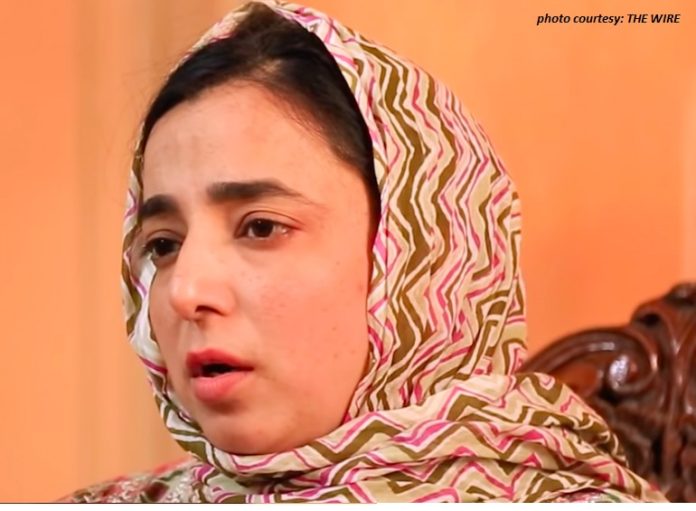
Bringing laurels for the UT of Jammu and Kashmir in general and for district Baramulla in particular, Deputy Commissioner Baramulla Dr Syed Sehrish Asgar has achieved the coveted Prime Minister’s Award for Excellence in Public Administration-2022, India’s highest award in civil services.

Dr Sehrish has been selected for this prestigious achievement in the category of Aspirational Districts programme as she has brought transformative changes in the identified parameters envisaged in the said programme.

As per reports, key aspects for Aspirational District Programme in Baramulla for which the Deputy Commissioner was awarded by the Prime Minister include establishment of Birth Waiting Wards in Primary Health Centres, Community Health Centres, Upgradation of diagnostic services at all delivery points and Poshan Tracker Tabs for all Anganwadi workers.

The Deputy Commissioner supported farmers through mechanism, plant protection, nursery strengthening, robust root stocks, quality planning material etc and organized marketing facility established at Sopore which is the second largest Fruit Mandi in Asia.

Severe Acute Malnutrition has been reduced in the district to 0.01 percent from 3 percent and Moderate Acute Malnutrition to 0.039 percent from 11.93 percent. A two-year paramedical diploma course has been introduced for 300 border area students to fill up the critical gap in the health sector.

Under financial inclusion, 56,215 PM Jan Dhan Yojana accounts have been opened in Baramulla district.Meanwhile, various stakeholders including Lieutenant Governor have extended their warm appreciations and felicitations to Dr. Syed Sehrish for this achievement besides earning accolades from several other quarters.

(Source: GNS)

source: http://www.globaltoday.in / Global Today / Home> English> Kashmir> News / April 18th, 2023

Dubai expat publishes book on UAE’s contributions to Urdu language

INDIA / Dubai, U.A.E:

Ulfat, who has also authored a travelogue, a poetry collection, and a novel, says it was important for him to preserve rich heritage of language.

The Sharjah International Book Fair (SIBF) saw the launch of a remarkable book titled ‘Itrdaan,’ offering an intriguing exploration of the history of Urdu literature in the UAE.

Authored by Shadab Ulfat, an Indian expatriate, the 326-page book sheds light on the significant contributions of over 180 UAE-based individuals to the Urdu language, which ranks as the 10th most widely spoken language globally.

‘Itrdaan,’ a term that translates to “fragrance” in English, is structured into three distinct sections. The first section delves into the pivotal role played by individuals from earlier times in shaping Urdu literature in the country. The second section spotlights the present-day contributors to Urdu literature in the region, while the third part introduces the new and promising voices in the UAE’s Urdu literary scene.

Ulfat expressed his inspiration for this work, saying, “I was deeply moved by our elders, who would fondly reminisce about the bygone days of Urdu when we gathered together. Their stories motivated me to embark on a two-year journey to immortalise their memories and invaluable contributions within the pages of this book.” Ulfat, who has also authored a travelogue, a poetry collection, and a novel, said it was important for him to preserve this rich heritage.

The publishing process, including the book launch, was managed by Bazm e Urdu, a Dubai-based organisation dedicated to promoting Urdu language and literature in the country.

Bazm e Urdu has been closely collaborating with the Sharjah Book Authority (SBA) and SIBF for several years. They have organised events for schools during the Sharjah Children’s Reading Festival (SCRF) and hosted celebrity talk shows and book launches during SIBF. However, this marks the first time they have a stall of their own at the fair.

Rehan Khan, the founder and general secretary of Bazm e Urdu, mentioned that ‘Itrdaan’ can be found at the ‘Gosha-e-Kutub’ Stall at SIBF, where it shares space with 500 other Urdu titles by renowned authors and esteemed publishing houses. The collection caters to readers of all ages, encompassing poetry, prose, biographies, historical fiction, and even Urdu translations or adaptations of the record-breaking Harry Potter series.

Khan stressed that their aim is to rekindle and promote love for the Urdu language, uniting people across all barriers of age, race, and religion. The Sharjah International Book Fair runs at Expo Centre Sharjah until November 11.

source: http://www.khaleejtimes.com / Khaleej Times / Home> UAE / by Mazhar Farooqui / November 06th, 2023

Manzoor Khan: A symbol of communal harmony in Ramgarh

Lari Village (Ramgarh District) , JHARKHAND:

Ramgarh :

Manzoor Khan, 72, a resident of Lari village in Ramgarh district, holds the license for the Ramnavmi procession in accordance with a local tradition of giving such licences to a Muslim.

Chitarpur is a sensitive area of Ramgarh district and adjacent to village Lari, but the area has set an example of communal harmony because of the tradition of giving a licence to a Muslim. Earlier, the licence was issued in the name of Manzoor Khan’s father late Ismayal Khan. After his death, Manzoor Khan took up the task and during the last few years, the licence has been issued in his name.

“I apply to Rajrappa police station for the licence and the deputy superintendent of police’s office issues it. At first we organise a meeting of villagers and they give the work to me. At once, the licence is issued for two and a half panchayats,” he said.

He said, “Once only a single Muslim family of my forefathers was living in Lari village and so the villagers used to select my father for taking the Ramnavmi procession licence. I celebrate all Hindu festivals with the villagers.”

The license of the Ramnavmi procession in the area is issued in his name and he leads the procession not only for Ramnavmi but also for other religious festivals like Durga Puja, Kali Puja. He has always maintained a record of communal harmony. The tradition to get Ramnavmi Procession in the name of a Muslim community man has kicked off years ago.

The story and work of Manzoor Khan are famous throughout Jharkhand. Some time ago, he had to face a little problem from both the Hindu and Muslim communities but with the help of one God belief, he managed everything.

This year the Ramnavmi procession with a grand celebration will be organised at Lari. Manzoor is busy again with lots of enthusiasm. The entire village has worn a Ramnavmi loot and he is the leader of the entire program. All villagers are supporting him. A few Muslims are also busy with him celebrating this memorable festival. Mahaveeri flags are waving and Festival songs are being played in the village.

“As long as I am alive I will organize the procession. I hope my sons will also follow this tradition of their forefathers. They are busy with me to celebrate Ramnavmi in the village,” he added.

source: http://www.lagatar24.com / Lagatar / Home / by Manoj Sinha / March 29th, 2023

Launch Of Cogito Media Foundation For Digital Media Platforms

NEW DELHI:

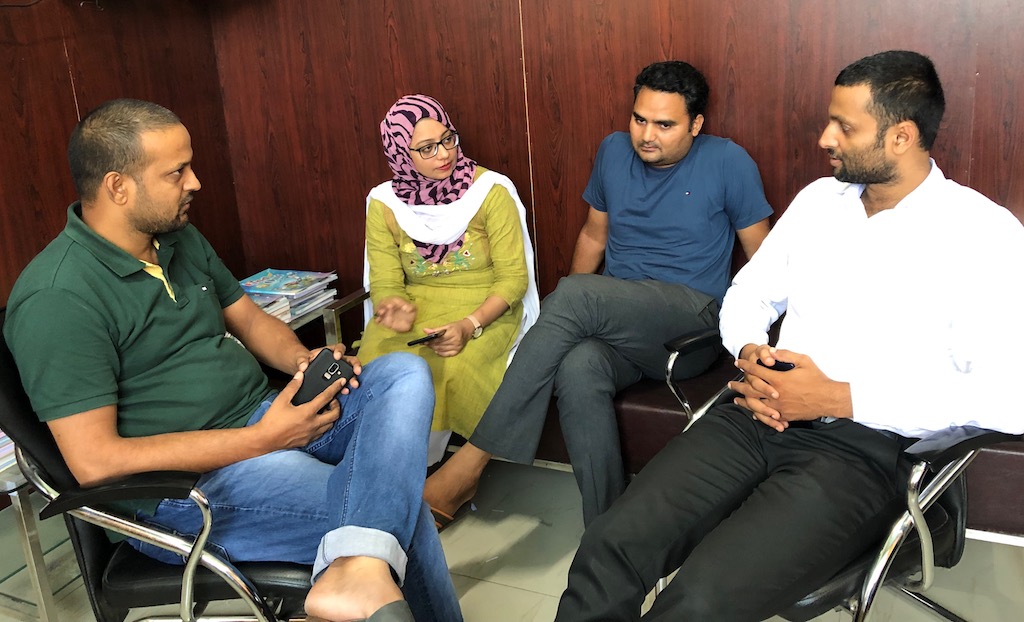
Leading English, Urdu, and Hindi news portals in the country have come together to establish a national-level joint platform officially named “Cogito Media Foundation.” The announcement took place at the Millat Times office in Batla House, Delhi. The foundation aims to unite digital media platforms at various levels and enhance journalistic values and responsibility.

At the launch, journalists highlighted the importance of collective responsibility among digital media platforms to safeguard press freedom and uphold journalistic values. Cogito Media Foundation intends to facilitate training for journalists at the district and block levels, establish a self-regulatory system, and address legal issues faced by journalists and media institutions. The foundation also plans to launch campaigns for public awareness to solve financial challenges faced by media organizations.

Journalists associated with Cogito Media Foundation expressed concerns about the current state of journalism, emphasizing the need to shift focus from political turmoil to addressing the real problems faced by marginalized communities, including Muslims, Dalits, women, and tribals. They called for strengthening journalism that represents the neglected narratives of these sections and contributes to societal development, health, education, economy, and social bonds.

Cogito Media Foundation comprises 16 digital media organizations, including Millat Times, Maktoob Media, Muslim Mirror, The Cognate, The Observer Post, Haque Media, Nous Network, Baseerat Online, Stories Karvan, Clarion India, Asia Times, Milli Digest, Insaaf Times, Journo Mirror, and Khabar Adda.

The foundation has invited other media organizations to join the initiative by filling out an online form. Additionally, plans for a detailed program with new members and a major media conclave in the capital are underway, with details to be released soon.

Online Form for Joining: https://forms.gle/qHw2cfDsXtQxmbRaA

source: http://www.thecognate.com / The Cognate / Home> News / by The Cognate News Desk / January 04th, 2024

Tamil Nadu: Perambalur man develops wood stoves as alternative to costly LPG

Viswakudi Village (Veppanthattai Block),Perambalur, TAMIL NADU:

With limited formal education but an interest in electronics, Rahmatullah leveraged his experience as an electrician and TV mechanic to make the modern wood stoves as a replacement to gas stoves.

Perambalur :

The high pricing of Liquefied Petroleum Gas (LPG) cylinders is forcing Perambalur residents to switch back to cooking with firewood.

But instead of traditional firewood cooking, the residents are using modern wood-burning stoves, thanks to an entrepreneur from Viswakudi village in Veppanthattai block.

Tamil Nadu: Perambalur man develops wood stoves as alternative to costly LPG
Tamil Nadu: Perambalur man develops wood stoves as alternative to costly LPG© Provided by The New Indian Express

The stoves, designed and manufactured by 57-year-old S Rahmatullah, are in high demand in the district. Three years ago, Rahmatullah recognised the need for an alternative and established a workshop on Attur Road. With limited formal education but an interest in electronics, Rahmatullah leveraged his experience as an electrician and TV mechanic to make the modern wood stoves as a replacement to gas stoves.

He develops wood-burning stoves equipped with blower technology, ensuring high efficiency, quick cooking, and minimal fuel consumption. The stove, ignited by air from the blower, caters not only to homes but also finds application in hotels in Perambalur and other districts. The price ranges from Rs 5,300 to Rs 2 lakh depending on the specifications.

“I initially made this stove for personal use and found it more efficient than traditional firewood stoves. It requires only 30 per cent of the wood used in conventional stoves. We sell three types of stoves to homes. If people buy firewood for around Rs 500, it will fuel the stove for 4-5 months,” Rahmatullah told TNIE. “The firewood should be cut into small pieces before keeping it in the stove.

The stove with controlled combustion using a blower ensures efficient cooking without a spike in electricity bills. I sell 1-2 stoves per day to hotels and 2-3 stoves to homes. In the last two and a half years I have sold over 2,100 stoves,” he added.

A Naseera Banu, a resident of Vadakkumadevi said, “There are four members in our house. We used to buy a gas cylinder once a month and the prices has been high for a few years. Unable to cope with this, we purchased the modern wood-burning stove two years ago. We have been cooking with it since. It has allowed us to cook faster, at a lower cost, and the taste is even better.”

source: http://www.newindianexpress.com / The New Indian Express / Home> States> Tamil Nadu / by Thiruselvam , Express News Service / January 06th, 2023

Ajmal Super 40 Shines Again in NEET, 2023

ASSAM:

Mumbai: 

Being a medical doctor has always been a well cherished dream and a coveted profession, as it provides opportunity to save human lives. This public zeal towards the field of medicine gave rise to a number of academic institutions. Sensing the demand from students and parents, corporate sector also stepped in to provide courses for preparation of the NEET exam, as it proved to be a hugely profitable business for them. But this trend restricted the children of poor families from dreaming to become a doctor. However, some non-profitable institutions are rendering remarkable services to the nation by providing NEET coaching free or at a very low cost, like Ajmal Super-40 run by Ajmal Foundation.

Ajmal Foundation has been running this program for the last three years and its results have remarkably been improving by each year. The number of qualifying students of Ajmal Foundation in NEET exam last year was 245 which has this year increased up to 350.

This is indeed a huge gain for the Foundation, while a great hope for the underprivileged section of the society. Other institutions running on the same pattern are Shaheen of Bidar, Al-Ameen of Kolkata and Rahmani-30 of Patna.

The results for NEET 2023 were finally announced on June 13th this year. Just like every previous years, it was finely a nerve-wracking time for all the aspiring medical students who gave their best to crack this competitive exam. Among over 20 lakh applicants from across the country, half of the candidates could be declared as qualified but due to the seats limitations in the medical colleges, all passed candidates may not be the doctors they dreamed about.

The giant coaching institutions are busy celebrating the success of their toppers. But success of the non-profitable institutions should be celebrated and appreciated by common masses. Maulana Badruddin Ajmal, CEO Ajmal CSR and the philanthropic endeavours of Ajmal family, especially in the northeast of India, are laudable.

source: http://www.easterncrescent.net / Eastern Crescent / Home> Blog> National> North East / by Eastern Crescent Desk / December 02nd, 2023

Asif Iqbal – A trailblazer in education, social change, and Urdu literature

Solapur, MAHARASHTRA :

Asif’s mantra, “My life is the purpose of everyone’s work,” resonates deeply within his rich personality. Dr. Khan aptly encapsulates Asif’s unwavering commitment to illuminating the path of education and eradicating societal darkness, echoing the sentiment that Asif’s life is dedicated to serving others.

In the landscape of educators, Asif Iqbal stands as a beacon of inspiration and dedication, reshaping the conventional norms of teaching and community engagement. While the average routine for most teachers comprises daily duties and personal engagements, Asif Iqbal, a 41-year-old teacher, exemplifies an extraordinary commitment that extends far beyond the traditional roles.

His passion for teaching goes beyond the classroom walls. Asif’s dedication spans across various domains, including social work, promotion of Urdu language and literature, active political participation, and tireless efforts toward educational empowerment. Unlike many, his primary focus lies in the upliftment of students and communities, striving to instigate positive transformations in their lives.

Embarking on his journey after completing a Diploma in Education, Asif began his career at a Zilla Parishad primary school in 2001. However, it was his departure from a secure government job in 2010 that marked a pivotal shift. At the young age of 28, he joined a renowned government-aided school in his city, ultimately rising to the position of Head Master at the SSA Urdu Primary School in Solapur.

His responsibilities extend far beyond the confines of an educational institution. As the spokesperson for the City Indian National Congress committee and President of the Lions Club Solapur (Classic), Asif actively engages in diverse social and political roles. Additionally, his affiliations with organizations like the All India Human Rights Association, Khidmate Khalq Organization of India, and various literary bodies underline his multifaceted contributions.

Asif’s devotion to education and his compassionate approach have earned him immense popularity among students and parents alike.

Maaz A. Gafoor Sagri, one of his brightest students currently preparing for NEET, hails Asif as a motivator who consistently creates platforms for students to showcase their talents. Despite the school’s substantial size of nearly 2000 students, Asif manages to establish personal connections with a vast majority, prioritizing character and behavior development.

Dr. A.A. Pagan, a PTA member of the school, lauds Asif Iqbal for his administrative prowess, capacity for work, and forward-thinking attitude. According to Dr. Pagan, Asif’s initiatives have brought about positive changes and regular personality development activities within the school.

In a conversation with Muslim Mirror, Asif reflects on the dearth of educational infrastructure in his city, especially for the substantial Muslim population. He laments the absence of universities and well-equipped campuses, emphasizing the need for investments in education over commercial endeavors like land development and construction projects.

Highlighting the broader educational landscape in Maharashtra, Asif points out the scarcity of institutions offering higher and professional education, while acknowledging the few notable ones like PA Inamdar University in Pune and Anjuman E Islam in Mumbai.

Asif’s vision extends beyond his current commitments. He expresses a strong desire to build an Asian Minority University, a dream he is diligently working towards with the acquisition of a 100-acre land. This envisioned educational hub aims to become a center for Indian Muslims, fostering educational growth and empowerment.

His influence on Urdu literature and poetry is equally significant. As a host to numerous All India Mushairas, including prestigious events like the Delhi Urdu Academy in the presence of Delhi’s Deputy Chief Minister Manish Sisodia, Asif has actively contributed to nurturing Urdu literary talents.

Despite commendations for his leadership potential in politics, Prakash Wale, a senior Congress Party leader, advocates for Asif’s continued presence in the education sector, acknowledging its need for individuals like Asif Iqbal, while cautioning about the intricate nature of politics.

Dr. Asadullah Khan, an eminent figure in the education realm, celebrates Asif Iqbal as a catalyst for educational and social transformation in Solapur. Recognizing Asif’s multifaceted abilities as an educator, poet, and orator, Dr. Khan commends his dedication to service and highlights Asif’s poetic work, “Naya Asman,” as a significant contribution to the world of literature.

Asif’s mantra, “My life is the purpose of everyone’s work,” resonates deeply within his rich personality. Dr. Khan aptly encapsulates Asif’s unwavering commitment to illuminating the path of education and eradicating societal darkness, echoing the sentiment that Asif’s life is dedicated to serving others.

This expansion not only delves deeper into Asif Iqbal’s multifaceted contributions but also elaborates on his vision, impact, and the endorsements he has received from various stakeholders within the education, social, and political spheres.

source: http://www.muslimmirror.com / Muslim Mirror / Home> Education> Positive Story / by Imran Inamdar / December 19th, 2023

How the Ajmals turned Assam’s Hojai into the Kota of Eastern India?

Guwahati, ASSAM:

Maulana Badruddin Ajmal

The perfume town of Hojai, nestled in the plains between Nagaon and Dima Hasao in central Assam, was once known as the trading hub of agarwood. On the other hand, Kolkata and Guwahati, the capitals of West Bengal and Assam respectively, were known to be the educational hubs of the entire Northeast India.

The picture is different today. For the aspiring NEET, JEE, CEE, and civil services examination students, Hojai is the Kota of Eastern India. Meritorious students from not only Assam but also from West Bengal, Sikkim, and all the other states of the Northeast flock into Hojai to prepare themselves to crack the competitive examinations like their counterparts from parts of the country do in Kota in Rajasthan. When a team from Awaz – The Voice traveled to Hojai, almost every alternate youngster it came across was from Guwahati or Kolkata with high hopes in their minds.

Thanks to the Ajmal Foundation, a charitable organization run by a perfume baron family of Assam the Ajmals, including Dhubri Lok Sabha MP Maulana Badruddin Ajmal and his brother Sirajuddin Ajmal, who is the MLA from Jamunamukh in Assam Legislative Assembly. The Dimasa rulers named the place Hojai, meaning priest in the Dimasa language, and the Ajmal Foundation is now producing real priests; though not to preach faith but to master science and modern education.

Hostel of Ajmal Super 40

Ajmal Foundation’s education empire in Hojai comprises not only a junior college and coaching institute called Ajmal Super 40, which has been one of the most successful institutions in cracking competitive examinations but also the Ajmal Residential Schools in the entire Hojai district, the Maryam Ajmal Women’s College of Science and Technology, the Najir Ajmal College of Education, Ajmal Law College, Ajmal IAS Academy and others. All the institutions are residential and impart modern education in an atmosphere where students are meant only to study and play sports physically.

It all started in the early 2000s when the Ajmal family started the Markazul Ma’arif School and the Ajmal Hospital in Hojai. After that, the Ajmal Foundation was raised in 2005 to work in the education sector for the underprivileged. The first initiative of the Foundation was to set up a college for underprivileged women.

The under construction building of the Ajmal Residential school

“When I joined the Ajmal Foundation in 2005, Maulana Badruddin Ajmal told us that he wanted to see Hojai as an education hub. With only the Markazul Ma’arif School in place, it was beyond our imagination to fulfill his dream. Our journey began with the setting up of the Maryam Ajmal Women’s College of Science and Technology for those women who could hardly afford higher education … But, one must appreciate the amazing far-sightedness of this person. In hardly a decade, Hojai has become an education hub not only for Assam but also for the students of different states of the country. It gives us great pleasure and motivates us to do more. Our next objective would be to set up a Maryam Ajmal Women’s University and an Ajmal University for the underprivileged students,” said Ajmal Foundation’s director Dr Khasrul Islam.

Opportunities for celebration come to Ajmal Foundation every time the results of a competitive examination are declared. One of the secrets behind the success story is a blanket ban on the use of mobile phones in any of its educational institution campuses. Students are allowed to talk to their families on the phone only twice a week unless there is an emergency. All the campuses wear only academic atmosphere.

Abdul Qadir, head of Ajmal Super 40

“We get results because we have created such an academic atmosphere in our campuses. Students from different parts of eastern India come here to shape their academic careers. Last year we received applications from 21,000 candidates. However, we could accommodate only about 1500 in our limited infrastructure. Ajmal Super 40 structure now has students from Class VIII to XII and about 3000 students are studying.

“One of the major factors that has made our campuses fully academic is that they are all residential and have a completely disturbance/distraction-free atmosphere. We don’t allow any electronic devices such as mobile phones, on our campuses. During the day time, the students attend classes and the self-study time in the evening is constantly monitored by us. Thus everybody is bound to study,” Abdul Qadir, head of Ajmal Super 40 told Awaz – The Voice.

Ajmal Super 40 started as a coaching centre for 40 economically backward meritorious students in 2016 providing Class XI and XII education along with coaching for Medical and Engineering entrance examinations. It tasted success in the very first year when its student Amar Singh Thapa topped the Higher Secondary Science examination in Assam. It made the institute an instant hit in the academic circles of the state as well as the region. Demands for accommodation of more students increased rapidly forcing the Ajmal Foundation to increase it to 40 boys and 40 girls. Thereafter, pressure mounted on the Foundation to accommodate students on a payment basis.

Ajmal Foundation’s director Dr Khasrul Islam

The institute has constantly been producing successful candidates in all competitive examinations ever since.

“I have chosen Ajmal Super 40 over any other college because of its student life discipline which is a key to success. Not only are we taught by very highly qualified and competent teachers, but our self-study is also constantly monitored,” said Vijay Singha of Doboka in Hojai district who aims to be a doctor.

“Ajmal Super 40 is such a place where there is great motivation for study. The study material and the mock tests here are very useful,” David of Bokajan in Karbi Anglong said, adding that his focus is on the 720 marks in NEET like almost all other students of the institute.

“The transition from Class X to XI and XII has a vast gap. But Ajmal Super 40 is a place with highly competent teachers who bridge the gap so smoothly that students don’t lose the first 3-4 months in adapting to the new course,” Rizwan Ahmed of Juria in Nagaon district said.

To prevent untoward incidents like Kota where students come under tremendous pressure to develop the tendency for drastic steps, Ajmal Super 40 has also involved psychological counselors to constantly monitor the student’s progress and keep them stress-free.

source: http://www.awazthevoice.in / Awaz, The Voice / Home> Stories / by Imtiaz Ahmed & Ariful Islam, Hojai / November 27th, 2023

Neral (Maharashtra): At Rahman Foundation Care Clinic majority of poor Hindu patients treat Maulanas as semi-god

Belagavi, KARNATAKA / Neral, MAHARASHTRA:

What’s striking is that nearly 80% of the clinic’s beneficiaries are Hindus, a fact that Maulana Majid considers instrumental in fostering communal harmony. “Serving these impoverished communities is our way of contributing to unity in diversity,” he stated with conviction.

Rahman Care Clinic nestled within the heart of Samrat Nagar in Neral

As Lakshmi made her third visit to the Rahman Foundation Care Clinic nestled within the heart of Samrat Nagar in Neral, Maharashtra, She couldn’t help but praise the unparalleled treatment offered at nominal charges. “It’s my third time here, and each visit reaffirms the exceptional care and expertise of the doctors. The nominal fees we pay for such quality treatment is unparalleled,” she expressed gratefully.

Some Hindu patients at Rahman Care Clinic.

Echoing Lakshmi’s sentiment, Maulana Shaih Majid, overseeing the medical section of the Rahman Foundation, emphasized the significant role the clinic plays in the lives of the predominantly Maratha Hindu population. “The locals, hailing from modest backgrounds, hold the clinic staff and doctors in high regard, almost akin to semi-gods,” he mentioned with pride.

What’s striking is that nearly 80% of the clinic’s beneficiaries are Hindus, a fact that Maulans  Majid considers instrumental in fostering communal harmony. “Serving these impoverished communities is our way of contributing to unity in diversity,” he stated with conviction.

Kavita, another patient, expressed her regularity at Rahman Clinic. “I’m a frequent visitor. The care and treatment we receive here, priced at a mere 20 rupees including medication, is a lifeline for the underprivileged. A simple injection costs just 10 rupees,” she shared, highlighting the clinic’s affordability and accessibility for those in need.

Other patients echoed similar sentiments, praising not only the cost-effective treatment but also the warm and courteous demeanor of the entire clinic staff. “Here, we receive top-notch treatment at minimal expenses, and the staff’s friendliness adds a comforting touch to our visits,” remarked another patient.

The clinic’s roster of highly qualified doctors further elevates its reputation. Professionals like Dr. Vajaykumar Pawar (MBBS), Dr. Dipnayan Shinde Pawar (MBBS, MD), Dr. Samiya (BUMS), and Dr. Sana (MPTH) cater to the medical needs of patients at Neral Rahman Foundation Clinic, ensuring expert care within a modest setting.

Rahman Foundation’s reach extends far beyond the boundaries of Neral. With a network encompassing nine Rahman Clinics, four hospitals, and a diagnostic center spread across Maharashtra, Karnataka, Gujarat, Madhya Pradesh, and Uttar Pradesh, the foundation extends its services to 8,000 to 10,000 patients monthly, all at nominal charges. Additionally, the foundation actively conducts medical check-up camps to further extend its outreach.

The journey of Rahman Foundation, initiated in 1995 under the guidance of the visionary Islamic scholar Maulana Khaleelur Rahman Sajjad Naumani, has been nothing short of remarkable. From establishing Islamic seminaries to introducing CBSE pattern English medium schools, the Foundation’s evolution has been multifaceted. In 2017, it ventured into providing medical services. Over the last five years, the foundation has expanded its footprint, setting up Rahman Care Clinics, Rahman Hospitals, and Rahman Diagnostic Centers across five states, catering to approximately 8,000 to 10,000 patients every month.

‘Our vision is to expand and replicate this model across India’ said Maulana Majid with  promising eyes.

source: http://www.muslimmirror.com / Muslim Mirror / Home> Health> Indian Muslim> Positive Story / by Special Correspondent, Muslim Mirror / December 19th, 2023