Bengaluru, KARNATAKA / New York, U.S.A / Mumbai, MAHARASHTRA :
Rummana Hussain’s conceptual artistic imprint on the state of India is relevant now more than ever. Dealing in the currency of feminist expression, postcolonial thought and perennial ideas, Rummana’s India is both doubly colourful and doubly dark.
In an inaugural show in its new West Village location, New York’s Institute of Arab and Islamic Art presents The Tomb of Begum Hazrat Mahal an exhibition encapsulating Rummana Hussain’s artistic ruminations about the space our bodies occupy in present and past through one of India’s most prominent Muslim woman.
Bangalore-born Rummana Hussain (1952-1999) was a pioneer in conceptual and performance-based political art in India during the 1980s and 1990s.
She was part of the Sahmat collective, a platform for liberal, secular engagés multidisciplinary artists including Safdar Hashmi, Bharti Kher, and Manjeet Bawa among others.
In this recreation of The Tomb of Begum Hazrat Mahal (1997), the respectful visitor enters a one-room shrine.
“In seeing The Tomb of Begum Hazrat Mahal today, I remembered Hussain’s bold feminist reclamation of her Muslim body through the reincarnated aura of Begum Hazrat Mahal to question monolithic identity, national narratives, and systemic marginalisation”
Various objects signify a site of lamentation, pride, and remembrance.
On the floor, occupying a central location, 12 votive-like papaya halves sit atop a mattress of uncooked rice, evoking both an altar to womanhood and fertility, and a symbolic funerary pyre.
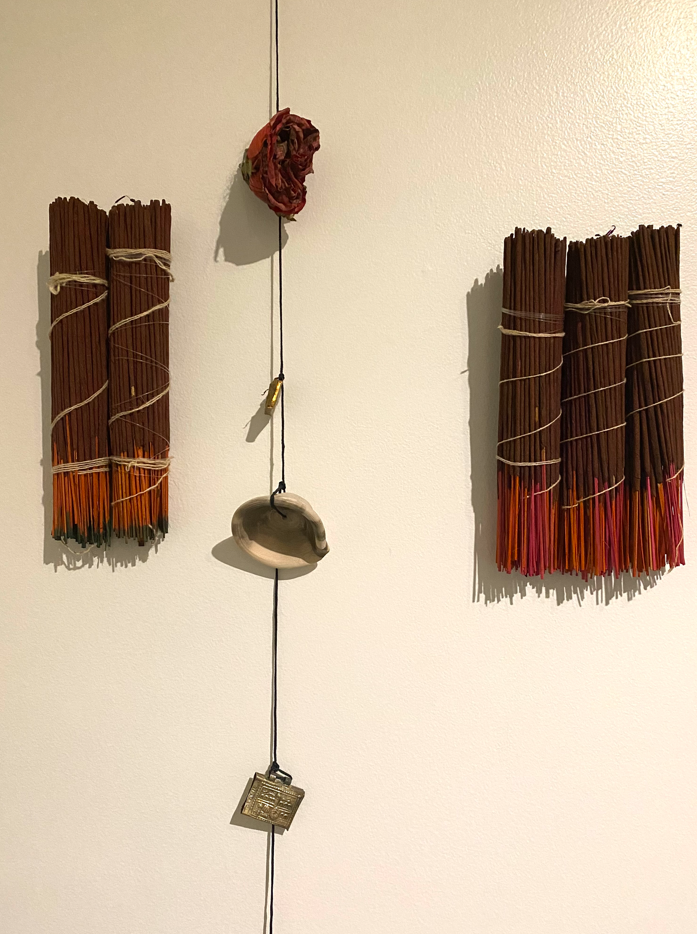
In front of them stands an installation of offerings comprising amulets, dried roses, shells, and incense sticks, tied in a rope.
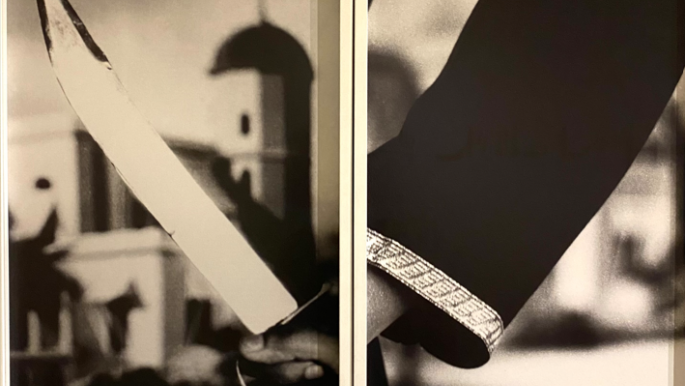
Against the three other walls is a calligraphic sculpture from rusty metal that reminds of a sacred spell and the embodiment of time, and an image frieze of detailed black and white triumphant photographs showing a woman’s arms, wrists, and hands.
In one of these frames, a woman raises her fist up as if calling others to join in. In another, she holds an ominous knife. Images of flames are interjected between the simulacra of archives.
The room is devoted to a woman, an invisible physical body which radiates from each of the static objects. Begum Hazrat Mahal (1820-1879), née Muhammadi Khanum, was born into a poor family.
She was sold and entered the royal harem of art-loving Wajid Ali Shah, the last king of Awadh, a kingdom that occupied the area of the present-day northern Indian state of Uttar Pradesh. Trained as a harem attendant, she would eventually rise to become the king’s concubine – one of his favourites. Beyond her charms, Begum Hazrat Mahal owes her entrance on the historical stage foremost to her political prowess and courage.
The British-owned East India Company operated in Awadh since the early 19th century. The Company increased its grip in 1856, when it directly seized control of Awadh, citing poor governance and the need to uphold the rule of law to justify their annexation (an excuse known as the “Doctrine of Lapse”).
A Chief Commissioner was rapidly appointed. This caused the king to leave Lucknow and seek refuge in Calcutta. The Queen Mother of Awadh petitioned Queen Victoria in person for her son’s rights, in vain. Wives, including Begum Hazrat Mahal were left behind in occupied Lucknow.
After this brutal annexation, discontent grew in several parts of India against the British and the interference of the Company, culminating in a mutiny and revolt in May 1857. Rebels looked to Awadh’s Crown Prince as a successor to his absent father when they captured Lucknow.
But Birjis Qadr, the son of Begum Hazrat Mahal and Wajid Ali Shah, was still a child then, too young to assume power. In his stead, Begum Hazrat Mahal took over Awadh’s revolutionary affairs, actively leading the armed revolt during her regency, towards the reinstatement of Indian rule over Awadh in July 1857.
She continued resisting British rule well after the retaking of Awadh by the occupying troops in 1858, as she refused various offers of collaboration. She died in exile in Kathmandu, Nepal, as an unwavering freedom fighter. Today, a humble stele near Kathmandu’s Jama Masjid marks her tomb.
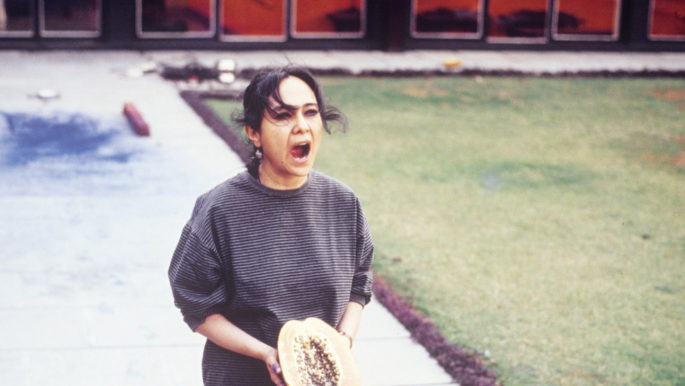
Rummana Hussain, Living on the Margins, 1995, performance at the National Centre for Performing Arts, Mumbai
When Rummana Hussain first showed The Tomb of Begum Hazrat Mahal to the public in 1997, it was during a period marked by the tragic aftermath of inter-communal violence.
During the 1980s, radical Hindu nationalists campaigned to build a temple on the site believed to be the birthplace of Rama, where a mosque had been erected since the 16th century.
They took to the streets of Ayodhya, Uttar Pradesh, en masse in 1992. Security lost control of the crowd which eventually stormed into the site, demolishing the mosque.
This ignited weeks of violent clashes between Hindu and Muslim communities, causing the deaths of thousands. A later investigation on the destruction of Babri Masjid in Ayodhya pointed out the responsibility of leaders and supporters of the right-wing Bharatiya Janata Party (BJP), the political party of India’s incumbent Prime Minister, Narendra Modi.
Babri Masjid launched a turning point in Hussain’s artistic journey towards a more intimate, politically-conscious form of expression. In Dissected Projection (1993), she explored the multilayered meaning of ruins and dislocation through an allegorical work that exposes a fracture, a shattered piece of terracotta.
In her show Multiples and Fragments (1994), Hussain engaged with historical and domestic oppression in an installation of pigmented pieces of fabric on a clothesline, to denounce the colonial extraction of indigo in India and unpaid housework traditionally performed by women and girls. Labour is always physical and violence first hurts the most vulnerable.
In her 1995 performance Living on the Margins, Hussain screamed while holding papaya halves, shapes that represent a universal vessel and the female anatomy.
Her works have been exhibited in the India Pavilion of the Venice Biennale in 2019, and in multiple institutions across India, Canada, Australia, Mexico, the United Kingdom and the United States during her lifetime and posthumously.
In seeing The Tomb of Begum Hazrat Mahal today, I remembered Hussain’s bold feminist reclamation of her Muslim body through the reincarnated aura of Begum Hazrat Mahal to question monolithic identity, national narratives, and systemic marginalisation. She wanted to say, we can turn the hate in love, we can turn the oppressed, the victims, into heroes they will one day celebrate. We can tell our own stories. They matter.
Outside, scores of brunch-goers live, love, laugh. If it’s dissonance we are meant to acknowledge, I acknowledge it. I closed my eyes in the silent white cube of the Institute of Arab and Islamic Art and saw images of the relentless violence and bullying Muslim women continue to face in Narendra Modi’s India.
In this reconstituted tomb, it’s hard to feel alone. Around me swarmed many other ghosts, of ordinary Muslim women – from Afghanistan to Iran and beyond – crushed and slain in their contemporary defence of freedom and justice against oppressors. Many have been killed in their fight.
A shrine calls for a quiet prayer, I realised.
Farah Abdessamad is a New York City-based essayist/critic, from France and Tunisia.
Dr. Azra Nalatwad’s forefathers were from a tiny town named Karnul in Andhra pradesh and had migrated to Karnataka. Behind her success of becoming a doctor is an incredible story of hard work and grit that lifted a poor family of weavers to a family of doctors. Dr Azra Nalatwad shared her and her parents’ inspirational story with Awaz-the Voice.
“My parents were extremely hardworking, poor, and struggled to make ends meet, particularly my father, Abdul Khader Karnu used to manually weave traditional saris through wooden looms, as machines had not yet arrived at that time. During his early 20s, after a lot of labour, he would make one saree.”
His family was living hand-to-mouth existence. Though Abdul Khader struggled with poverty, he dreamed big – he was determined to become a doctor. Without any prodding or help, he studied by himself while weaving sarees. Back then, there was no societal help, counselors, or family push to improve his lot. With sheer grit, he started to excel in his studies. He was so brilliant that he was sponsored for his studies in a boarding school. During holidays, he would return home and help with the business of his father and brothers.
“With great tenacity, he finally finished his studies to complete his MBBS and achieved his goal of becoming a doctor, specializing as an ENT physician. He was the first in the family to be so. Our father paved the way to help us all come up as a family.”
Her mother was a schoolteacher when she married Abdul Khader, who persuaded her to complete her MBBS and she became a gynecologist.
Dr. Azra who teaches anatomy at Karnataka Medical College says, “On seeing my parent’s hard work and toil, I resolved to study hard as well. Early in my school days, I wanted to become a doctor. So, I focused on getting admission to MBBS, which I managed to get in the area without going to a hostel to my relief.” Dr. Azra says that her life was made smooth due to the hard work of her parents.
Describing the life around her, she explains, “Around my neighbourhood, most of the girls would do some BST course, and then get married, but my parents spurred me on to do something significant and not hurry to get married. My parents always had a vision that we as a family should not just study and stay at home to be engrossed and wrapped up only in our lives but use our enlightenment to serve the community.”
Dr Azra Nalatwad during her PG course
Azra’s family is a family of doctors. “My eldest sister is a dentist, her husband is a Pathologist (MD) and younger brother Dr. Adil is a neurosurgeon, his wife is a doctor with MBA and MBBS degrees.”
Interestingly, Azra’s husband is the only non-doctor in the family and it was deliberate. She explains: “When it was time for me to get married, my father told me that since there are many doctors in their family, it was better to find my prospective husband in another field. As a family, our conversations revolved around patients and their cases, so my father felt it would be better to get a non-medical groom.”
She married an engineer who working with one of India’s leading software companies.
To follow their father’s advice to his children that they must pay it back to society, Dr. Azra says, The siblings often organize free health checkup camps at Gulbarga.” (Gulbarga is now known as Kalaburagi and has developed to become a city).
She continued, “After writing my entrance test for the post-graduation, my father encouraged me to take the course wherever I get it. He taught me never to throw away opportunities. I was selected for anatomy and it took me to teaching. I did a course to learn ultrasound technology, and in the hospital where my mother was working, I was appointed as a sinologist.”
Dr. Azra Nalatwad’s father died during the COVID surge. “He continued to see patients even during the pandemic; never isolated them and eventually caught the virus and succumbed to it while during his duty in Gulbarga.”
Azra worked at different places like Kadapa in Andhra Pradesh, Ernakulam in Kerala and now she is in Bengaluru. Mother of two growing-up boys, she travels in her car from Bengaluru to Kolar daily for her anatomy teaching classes.
She explains, “I took up the teaching line in anatomy and was interested in ultrasound, so I went towards the clinical side for one and a half years, I also worked in Manipal Hospital as a senior resident doctor. Night duties in the hospital became problematic with my son as my mother-in-law was not there with me, so I quit that job and came back to teaching.”
She however loves her teaching job, “The new generation of doctors do not talk to their patients because of the long queues of people waiting to see them and they want to see as many patients as possible in a day, so impatiently, they quickly write something out for the patients and push them out to directly go for CT scans, ultrasounds without noting the signs and symptoms in the patient. There is no personal touch or caring. Once again, after their illness is diagnosed, they do not convey to the patient properly what was the problem and what steps to take, nor do they serve the patients their options. The doctors need to show them different modalities of treatment which and required them to communication properly.
“Therefore, I encourage my students to develop doctor-patient communication skills with more empathy and compassion, some emotional attachment is necessary. A patient needs to feel trust in a doctor to return to them. In the early days, a patient would only go back to their favourite doctor holding him in great esteem. These days it is sad to see patients changing the doctor midway during the treatment while complaining that the previous one was noncommittal and indifferent or even rude. These days, most of the doctors are cold and detached.
Dr Azra Nalatwad at the hospital (wearing a black Abayya)
She says her students are becoming aware of the bad doctor-patient cases as newspapers report about incidents of people assaulting doctors. “We guide them so that they will not learn through bitter experience but rather as we say, prevention is better than cure, so we teach them that when they are checking female patients, they need to take their consent and explain why they need to touch her body.”
I tell students, “You suddenly cannot ask her to lift her clothes without her consent, even if one is checking the wrist, the patient needs to be informed what the doctor is doing.” Thus, we teach our students to inform the patient before doing even a tiny procedure or even checking the pulse or temperature as a form of respect between the doctor and the patient and leave the lines open for good communication. Just directly touching the patient does not work nowadays. Teaching is a great responsibility where one does not just teach and go but has to inculcate empathy, sensitivity, communication skills, and other qualities in our students.”
Brightening up, she said, “One thing I am looking forward to is I am going to open my clinic very soon working as a family physician, serving my residents, and treating small illnesses, which do not require complicated procedures.”
She continued, “Why I want to start my clinic in Bengaluru is to ease the burden of the poor in a modest area. Nowadays, for simple sicknesses, people are going to big hospitals and get embroiled in unnecessary expenses and procedures. The OPD fees will be more than Rs. 500 or Rs. 750, an outrageous amount not required for small illnesses which is ripping the pockets of the poor. Things like a common upper respiratory tract infection, ear pain, or other little illnesses do not need an OPD visit but rather a small affordable clinic with a small fee such as Rs. 50 or Rs. 100 to make it very light and easy for them.”
She explained, “In big health centers, there is a lot of corruption going on where they hoodwink patients into paying large amounts of money for unnecessary tests, procedures, and treatment. I feel if I can help the poor in a smaller way such as this evading all the bribing that happens in big clinics and enabling health care at their doorsteps, figuratively. I want to ensure that they get immediate help and cure for their illness without running to mega hospitals to give large amounts of money which they cannot afford, to get treated.”
To pay tribute to the man who worked hard and changed his destiny, Dr Azra says she would name her hospital after her father. That she says would take a little time. Right now, besides taking care of her parents-in-law and husband, she has to look after her 12-year-old son and four-and-a-half-year-old daughter.
Rita Farhat Mukand is an independent writer
source: http://www.awazthevoice.in / Awaz, The Voice / Home> Stories / by Rita Farhat Mukund / May 14th, 2024
A joint study conducted by a Delhi-based think tank – Centre for Study and Research (CSR) and NOUS Network Private Limited – has busted the myth that Muslim-run institutions cater to Muslims only.
The study titled “A Survey of Muslim-managed Public and Private Institutions of Higher Education in India” reveals that Hindu students outnumber Muslim students in higher education in Muslim-managed institutions across the country.
The percentage of Hindus, according to the report, is about 55 percent in these institutions against 42 percent of Muslim students.
However, the report is silent about the reasons behind Hindu students exceeding their Muslim counterparts in Muslim-run institutions.
But the higher number of Hindu students is an indicator that the Muslim institutions do not discriminate against non-Muslims and are open to all religious communities against the prevailing misconception that Muslim institutions serve only Muslim students.
This is also a proof that the standard of education in Muslim-run institutions are at par with institutions run by other communities. Had the quality of education in Muslim institutions been poor, Hindu students would certainly have avoided it and not enrolled en mass as is happening currently.
The study provides empirical evidence against the prevailing false notion among certain sections of society regarding Muslim-managed educational institutions.
The report reveals a surprising trend: in Muslim-run universities, Hindus constitute the majority of students (52.7%), while Muslims make up 42.1%. This pattern holds true for colleges managed by the Muslim minority as well, where Hindus are the largest student group (55.1%), followed by Muslims (42.1%) and other minority groups (2.8%).
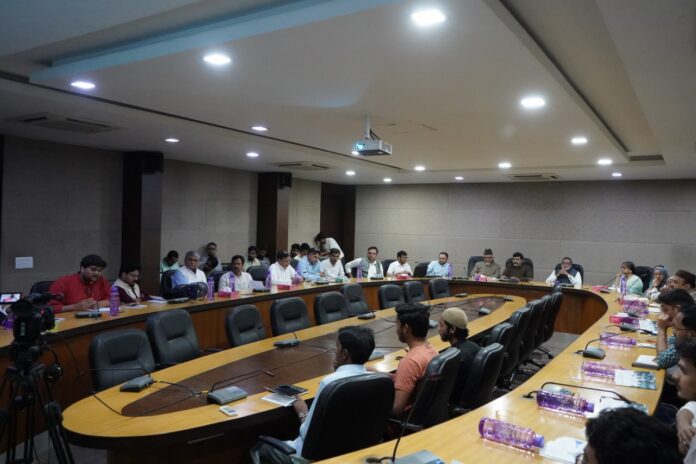
The findings of the report were discussed at a roundtable event attended by educators, policymakers and stakeholders. They applauded the report as a valuable resource for addressing existing challenges faced by the Muslim community in the realm of higher education.
Concerns were also expressed over the grim situation of the community, particularly their meagre share in higher education and their sharp dropout rates.
CSR director Dr. Mohammed Rizwan presented the vision of CSR, which aims to evolve a purposeful, holistic, and value-based knowledge ecosystem. He asserted that the report is a “myth-buster” that provides empirical evidence against the prevailing misinformation among certain sections of society.
“To our knowledge, no such study has been conducted to date, and there is currently no data available on the number of institutions for higher education affiliated with the Muslim minority group, while this research represents the first attempt of its kind to address this critical gap,” Dr. Rizwan stated.
Elaborating that despite consistent efforts from the community, empirical evidence suggests a need for even more concrete efforts, Dr. Rizwan said that those efforts should particularly focus on areas like gross enrolment in higher education, decreasing the dropout rate, and other aspects of higher education.
Dr. Rizwan believes that this report sheds light on the challenges and opportunities within higher education by meticulously analyzing various facets. These facets include the number and types of educational institutions, the gender ratio within them, their affiliation status, their academic productivity, their NAAC accreditation standing, student demographics, and more.
“The report’s findings underscore the importance of recognizing the unique needs of the Muslim minority in higher education and advocating for targeted interventions to address those needs,” he added.
Speaking at the roundtable, Jamaat-e-Islami Hind (JIH) Vice President Prof. Salim Engineer commended the CSR and NOUS team for conducting such an important study. However, he cautioned that the findings regarding the community’s education situation are not encouraging.
Prof. Salim highlighted that the study serves as a roadmap for improvement, identifying areas where the community needs to focus its efforts while acknowledging its achievements.
Emphasizing the need to encourage the community, not discourage it, by recognizing its accomplishments and contributions in the past 75 years of independence, he pointed out the community’s resilience in the face of continued communal riots and a challenging post-partition atmosphere.
Criticizing the apathy of successive governments towards the Muslim minority, Prof. Salim lamented that numerous studies, including the noteworthy Sachar Committee report, have been conducted on the community’s socio-economic and educational status. However, these reports have been largely debated without any significant implementation of their recommendations.
Acknowledging the community’s progress in education despite these hurdles and the negative attitudes of some governments, the JIH leader commended, the establishment of numerous educational institutions and the achievements of students in higher education and civil services.
Stressing that the country’s progress hinges on the advancement of the Muslim minority, Prof. Salim urged the community to avoid self-blame and instead celebrate its achievements in the face of adversity. He concluded by referencing the Quran, stating that the Muslim community is meant to serve others.
Ali Javed, CEO of NOUS Network Pvt. Ltd., a Delhi-based think tank and media house, asserted that this report stands out as a truly unique attempt, as there is currently no existing comprehensive overview providing insights into the status of higher education in institutions catering to Muslims.
Ali Javed expressed the hope that this report would be an indispensable resource for academics, policymakers, and anyone interested in educational advancement. He believed it would significantly contribute to our understanding of Muslim-affiliated higher education institutions, paving the way for further discussions and initiatives in this area.
Emphasizing the importance of collective action, NOUS CEO explained that the purpose of convening this roundtable of experts, educators, academics, and stakeholders is to collaborate and find solutions to the community’s problems. He stressed that joint efforts are necessary for progress.
Expressing concern about the “extreme deprivation” faced by the community, not just in education but across various indicators, Javed proposed a multi-pronged approach, including data collection through surveys in Muslim-dominated areas, gathering disaggregated data, and developing the community’s own policy documents for negotiation with policymakers. He also emphasized the need for an evidence-based strategy for societal reform and infrastructure development.
Highlighting the study’s findings, researcher Abid Faheem, who played a key role in compiling the data, pointed out that Muslims constitute over 14% of India’s population. However, their representation in higher education remains low. According to the latest All India Survey of Higher Education (AISHE-2021-22), only 4.8% of students enrolled in higher education are Muslims. This is even lower than the enrolment rates for Scheduled Castes (SC) and Scheduled Tribes (ST), which stand at 15.3% and 6.3% respectively. SCs and STs comprise 16.6% and 8.6% of the total population, respectively.
Faheem used a PPT to show that the gross enrolment ratio for Muslim students in colleges affiliated with Muslim institutions is 1.23. This ratio is significantly lower in universities, at just 0.23. The combined gross enrolment ratio for Muslim students is 1.46. However, the situation is even worse in institutions of national importance like IITs, IIITs, IISERs, NITs, and IIMs, where only 1.72% of students are Muslim.
Faheem expressed concern that despite the Sachar Committee report on the socio-economic and educational status of the Muslim community released 17 years ago, there has not been much progress. He noted that in 2006, when the Sachar report was published, Muslim enrolment in higher education was 3.6%. While efforts have been made to improve this ratio, the first AISHE report in 2012-13 showed only a 0.6% increase after six years. A decade later, the AISHE report indicated another modest increase of 0.6%. In contrast, other disadvantaged groups like SCs and STs have made significant progress. Their enrolment rates have risen from 2.4% in 2006 to 15.3% and 6.3% in 2021-22, respectively.
However, the enrolment rates for SCs and STs have shown a much sharper rise compared to Muslims. Their share in higher education has climbed from a combined 2.4% in 2006 to 15.3% for SCs and 6.3% for STs in 2021-22.
It’s important to note that the Sachar report initially reported a combined enrolment rate of 2.4% for SCs and STs.
Speaking on the occasion, Prof. Sanghmitra, Chairperson of the Centre for Social Medicine and Community Health at Jawaharlal Nehru University, appreciated the CSR and Nous Networks team. She also appreciated their work in clarifying some widely held misconceptions about the Muslim community.
Prof. Sanghmitra emphasized the importance of inclusivity in policymaking. However, she expressed concern about the gap between policy and reality. She pointed out that the Sachar Committee report had already documented the disadvantaged state of Muslims and provided evidence. She further noted that the Amitabh Kundu Committee report, which followed the Sachar Committee report and received less attention, showed minimal progress in the community’s status despite the evidence and recommendations presented earlier.
Prof. Sanghmitra also recommended collecting data on the Muslim community at the secondary level in addition to the primary level.
Dr. Kamal Farooqi, spokesperson for the AIMPLB and former chairman of the Delhi Minority Commission, emphasized the importance of shifting the Muslim community’s fundamental attitude and mindset towards education.
Prof. Sadia Halima, an economics professor at Jamia Millia Islamia University, asserted for a shift in focus from mere literacy rates, ratio, enrolment figures and the number of students or institutions to prioritizing knowledge and quality education.
Prof. Majid Jameel, an electrical engineering professor at Jamia Millia Islamia University, commended the CSR-NOUS Network for the study. He shared his experiences motivating students in his hometown Saharanpur, UP, to pursue higher education, while also expressing concern about the high dropout rate within the community.
Former civil servant Akhtar Mahboob Syed stressed the importance of data collection and studies to understand the socio-economic state of the Muslim community. He pointed out that while the Sachar Committee report receives much attention, the Amitabh Kundu Committee report and Professor Mattu reports are less discussed.
Having worked with various government departments, he questioned the impact of existing schemes aimed at improving education for minorities, such as pre and post matric scholarships and the Maulana Azad Foundation and Ministry of Minority affairs. He argued that the community itself needs to gather data on the effectiveness of these initiatives, as the government is unlikely to do so. In addition to data collection, he suggested addressing the “fear complex” within the community.
Mr. Nizamuddin Shaikh of the Institute of Objective Studies and the All India Milli Council highlighted three key points: Islamization of knowledge, changing the community’s attitude towards education, and establishing more educational institutions.
The Millat Time editor Shams Tabrez Qasmi also spoke on the occasion. In the open session, various noted participants expressed their views on the study.
The report illuminates the number and growth trajectory of Muslim-affiliated institutions, along with their demographic characteristics. It underscores the pressing need for policymakers to address the under-representation of Muslims in higher education. The report also provides valuable insights into the educational quality, programme offerings, and research output of these institutions.
Other Key Results of the Study:
Universities:
Out of the total 1113 universities in India as per AISHE 2020-21 data, 23 universities belong to Muslim Minority. The share of Muslim managed universities is just 2.1%.
2. Uttar Pradesh has the highest number of universities, followed by Karnataka.
3. Of the 23 Muslim universities, the majority (43.5%) are privately managed, followed by public state universities (26.1%), deemed private universities (13%), and central universities (13%).
4. Around 69.9% of Muslim universities are located in urban areas.
5. Out of the total 97,928 students enrolled in the academic year 2021-22, 42.1% are Muslims, 52.7% are Hindus, and 5.2% belong to Other Minority groups.
6. Regarding Muslim students, there were 26,039 (63.09%) male students and 15,236 (36.91%) female students enrolled in Higher Education.
7. Among the 41,275 Muslim students enrolled, less than 1% represent Scheduled
8. Tribes, 34% were belong to Other Backward Classes, 42.8% were from the Unreserved Category, and the remaining 16.4% are from the Economically Weaker Sections (EWS).
COLLEGES:
1. Out of the total 43,796 colleges in India as per AISHE 2020-21 data, 1,155 colleges are managed by Muslim minority community. It means that the share of Muslim managed colleges is just 2.6%.
2. Of these 1,155 colleges, 141 (12.2%) are technical colleges registered with the All India Council for Technical Education.
3. Despite making up 73.4% of all minority groups, Muslim minority communities only have a 16.6% share in technical colleges. In contrast, other minority groups, comprising 26.6% of the population, hold an 83.4% share in technical colleges.
4. 6.4% of Muslim colleges in India are exclusively for girls.
5. The top 10 states in terms of the number of colleges in India are Kerala, Uttar Pradesh, Maharashtra, Karnataka, Telangana, Tamil Nadu, Andhra Pradesh, West Bengal, Bihar, and Jammu & Kashmir. These states account for 90.47% of the total colleges in the country.
6. Of the 1,155 Muslim minority colleges, 85.5% are private (unaided), 10.6% are private (aided), and 3.9% are government colleges.
7. Kerala has 24.9 colleges per lakh population while UP has 4.9 colleges and West Bengal has a mere 1.8 colleges per lakh population. The national average of colleges per lakh population stands at 6.4%.
8. Of the 1155 Muslim minority colleges, 85.5% are private (unaided), 10.6% are private (aided), and 3.9% are government colleges.
9. About 57.8% of Muslim minority colleges are located in rural areas.
10. The majority of colleges (93.16%) offer Undergraduate level programs, while only 6.32% offer PhD level programs.
11. Kerala has the highest number of colleges offering PhD programs, followed by Tamil Nadu and Maharashtra.
12. Around 51% of colleges only provide undergraduate level programmes.
13. Out of the total 524,441 students enrolled in the academic year 2021-22, 42.1% are Muslims, 55.1% are Hindus, and 2.8% belong to Other Minority groups.
14. In terms of Muslim students, there were 104,163 (47.18%) male students and 116,622 (52.82%) female students enrolled in Higher Education.
15. Among the 220,785 Muslim students enrolled, less than 1% represent Scheduled Tribes, 48.1% belong to Other Backward Classes, 50.7%
16. come from the Unreserved Category, and the remaining 0.9% are from the Economically Weaker Sections (EWS).
17. 96.4% of colleges did not participate in the NIRF ranking of 2023.
18. None of the colleges secured a position in the top 100 in the NIRF 2023 college rankings.
source: http://www.indiatomorrow.net / India Tomorrow / Home> Education / by Anwarulhaq Baig / May 15th, 2024
Dr. Ayesha Sultana stands as a beacon of innovation in the realm of Islamic education, particularly for youth and women, through her pioneering online initiatives. Armed with a profound grasp of both Islamic studies and psychology, Dr. Sultana is on a steadfast mission to imbue moral values and Islamic teachings in the hearts of the youth, with a special focus on empowering women, through accessible and dynamic courses.
Her latest endeavor, the “Taalimul Islam Certificate Course,” stands as a testament to her unwavering dedication to delivering high-quality education. Tailored for children up to 14 years old, this comprehensive 10-week online program provides an interactive platform to acquire fundamental Islamic knowledge. Transitioning seamlessly from physical to online classes, Dr. Sultana, former assistant secretary of the Women’s Wing of Jamaat-e-Islami Hind Telangana, has impacted over 1500 women during the pandemic.
Under the esteemed banner of Al Huda, Dr. Sultana established the Ayat Al-Fariya Islamic Academy, a sanctuary of knowledge catering to women and children alike. Here, hundreds of women benefit from Quranic teachings and personality development courses, while children engage in interactive sessions on Quranic memorization and Islamic principles.
In her pursuit of holistic development, Dr. Sultana organizes summer short courses for children, blending physical activities with essential Islamic values. Moreover, she offers initiatives such as the “Fahm e Quran” course and “Talaash e Qadr” series for women, enriching their Ramadan experience.
Dr. Sultana’s commitment to empowering youth extends to organizing online competitions for children, where participants are recognized and awarded certificates and trophies for their accomplishments in various categories, including video competitions, speech contests, and oral exams. With 300 children joining the course and 100 already certified, the impact of her initiatives is palpable.
The journey of Al Huda Islamic School began in 2013 in Khammam, Telangana, under Dr. Sultana’s guidance. Initially offering offline classes for women, complete with free transportation facilities, the school provided courses such as Certificate in Islamic Studies, Diploma and Memorization of Quran, Basic Arabic Grammar, Tafseer, Seerah, and Personality Development until 2018. Hundreds of women benefited from these courses, with many now actively involved with Jamaat-e-Islami Hind as volunteers and members.
Dr. Sultana’s dedication to education led her to conduct motivational lectures in numerous colleges, including medical and engineering institutions, and to organize moral classes for school children. Despite her busy schedule as the assistant secretary and Dawah secretary of Telangana, she spearheaded various women empowerment programs throughout the region. With the onset of the pandemic in 2019, she seamlessly transitioned to online classes, offering a plethora of courses and short programs for women, including Akse Furqan, Dawah classes, Qasal ul Ambiya course, Qurb e Ilaahi, and numerous quiz and exam series, engaging over 1500 women.
In 2023, Dr. Sultana expanded her online educational initiatives with the establishment of Ayat Al Fariya Online Academy under the auspices of Al Huda Islamic School. Introducing short courses for women, such as Tafseer and Memorization of Surah Mulk, Surah Rahman, and Surah Yaseen, the academy continued to positively impact hundreds of women. Additionally, pre-Ramadan courses like Shahru Ramadan, along with courses during Ramadan such as Fahm e Quran and Talaash e Qadr series, were conducted, benefitting a vast number of participants.
Despite her demanding schedule, Dr. Sultana remains resolute in her commitment to providing education free of charge.
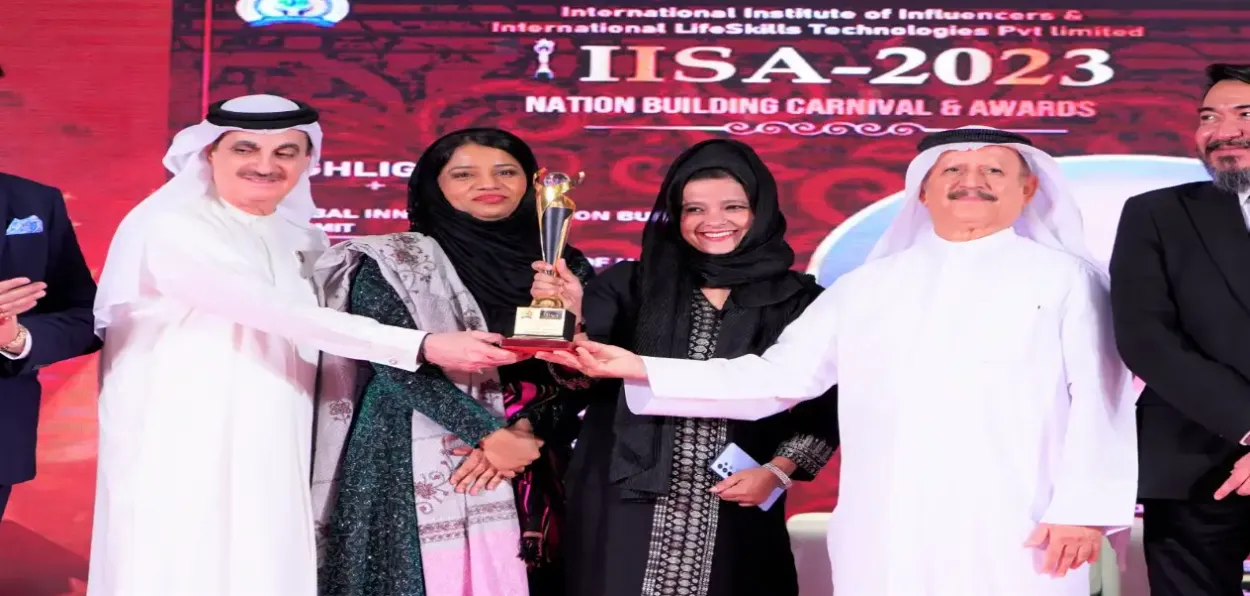
Her recent accolades, including the Rastra Ratna Puraskar Award from the Veniyl Foundation, attest to her dedication to nurturing young minds. Additionally, she has been recognized with the Best Educator and Academician Award from the Book of Excellence and the Worthy Well Foundation, earning her a place in the prestigious Book of World Records.
Beyond her educational initiatives, Dr. Sultana is also an accomplished author, with titles such as “Beyond Ramadan” and “Embodied Wisdom” under her belt. As the Assistant Editor of Radiance News Portal and a member of the Aware Trust at Jamaat-e-Islami Hind Markaz, she continues to inspire and empower individuals through her tireless efforts in education and community development.
In line with her commitment to continuous improvement and advancement, Dr. Sultana announces the upcoming launch of the Taalimul Islam Level 2 advanced course for children from May 16th to May 31st. This 15-day program will further enrich the educational journey of young learners under her guidance.
Dr. Ayesha Sultana’s tireless dedication to Islamic education and community development continues to leave an indelible mark, inspiring countless individuals to pursue knowledge and virtue.
source: http://www.radiancenews.com / Radiance News / Home> Features> Pride of the Nation> Markers of Excellence / by Radiance News Bureau / May 11th, 2024
Oomerabad Village (Tirupathur District, Ambur Taluk), TAMIL NADU :
Renowned Islamic scholar and Chancellor of Jamia Darussalam Oomerabad, Maulana Kaka Sayeed Ahmed Oomeri, has passed away on Saturday, May 11, 2024, in Oomerabad, Tamil Nadu. He also held the esteemed position of Vice President of the All India Muslim Personal Law Board (AIMPLB).
Maulana Kaka Sayeed Ahmed Oomeri hailed from the distinguished Kaka family of Oomerabad, renowned for their enduring contributions to education and philanthropy. The family’s legacy dates back to his great-grandfather, the esteemed philanthropist and hides and skins merchant, Kaka Mohammad Oomer Sahib. In 1924, Kaka Mohammad Oomer Sahib founded Jamia Darussalam College, a testament to his commitment to education. The college’s location, Oomerabad, was named in honor of his invaluable contributions.
Jamia Darussalam, now a part of a broader educational society, remains a beacon of education and service. It encompasses a Tamil medium primary school, an Urdu medium primary school, a technical institute focusing on computer education, and Jamia Hospital, a comprehensive healthcare facility catering to the community’s healthcare needs.
The passing of Maulana Kaka Sayeed Ahmed Oomeri leaves a profound void in the scholarly and educational spheres. However, his enduring contributions and teachings will continue to inspire generations to come. The entire community extends heartfelt condolences to his family, friends, and associates during this period of mourning.
source: http://www.muslimmirror.com / Muslim Mirror / Home> Obituary / by Muslim Mirror Desk / May 11th, 2024
Ex bureaucrat Moosa Raza has passed away in Chennai on Thursday. He was 87. He is survived by his son and two daughters.
Moosa Raza’s life is a testament to dedication, integrity, and a deep-rooted commitment to public service. Born on 27th February 1937 in Minambur, a small village in Tamil Nadu, India, Moosa Raza’s journey from humble beginnings to becoming a respected bureaucrat and prolific writer is marked by his unwavering principles and tireless efforts to make a positive impact on society.
Education played a pivotal role in shaping Moosa Raza’s worldview. He displayed exceptional academic prowess from a young age, graduating with a Bachelor of Arts (Honours) degree in English Language and Literature from Madras Presidency College, now Presidency College, Chennai. His academic achievements were exceptional, winning seven college medals across various disciplines. This included a First Class First in his degree, a testament to his dedication and intellectual acumen.
In 1958, Moosa Raza embarked on a dual path of academia and civil service. He was appointed as an Assistant Professor of English at Presidency College, his alma mater, while also preparing for the prestigious Indian Administrative Service (IAS) examinations. His commitment to both teaching and public service underscored his multifaceted talents and passion for contributing to society.
In 1960, Moosa Raza’s dedication paid off as he was selected for the Indian Administrative Service for Gujarat in his first attempt. This marked the beginning of a distinguished career that spanned over three decades and left an indelible mark on India’s administrative landscape.
Throughout his career, Moosa Raza held several key positions that showcased his leadership abilities and commitment to public welfare. He served as Collector and District Magistrate in various districts of Gujarat, managing critical responsibilities such as flood relief operations and drought management with unparalleled dedication and effectiveness. His tenure as Principal Secretary to the Chief Minister of Gujarat and later as Chief Secretary of Jammu and Kashmir demonstrated his administrative acumen in handling complex governance challenges.
Moosa Raza’s contributions extended beyond government service. He played pivotal roles in prestigious industrial and commercial enterprises, including chairing the National Textiles Corporation and Gujarat State Fertilizers Company Ltd. His strategic leadership helped turn around struggling enterprises, saving thousands of jobs and contributing to Gujarat’s industrial growth.
In recognition of his exemplary service and contributions to society, Moosa Raza was awarded the Padma Bhushan in 2010, one of India’s highest civilian honors. This prestigious accolade is a testament to his lasting impact and dedication to public welfare.
Apart from his illustrious bureaucratic career, Moosa Raza is also a celebrated author. His book “Of Nawabs and Nightingales” offers a glimpse into his early experiences in the Indian Administrative Service, showcasing his keen observations and insights into governance and society. He has also authored books on spirituality and personal reflections, such as “In Search of Oneness” and “Khwab-e-Natamaam” (Incomplete Dreams), showcasing his diverse literary interests and philosophical depth.
Moosa Raza’s contributions go beyond professional achievements. He has been actively involved in educational initiatives, serving as the chairman of the South Indian Educational Trust (S.I.E.T.) and supporting initiatives for women’s education, dyslexic children, and communal harmony.
In his personal life, Moosa Raza is a devoted husband and father, exemplifying the values of family and community that underpin his life’s work.
Moosa Raza’s journey from a small village in Tamil Nadu to a revered bureaucrat, accomplished author, and dedicated advocate for societal progress embodies the essence of service, leadership, and intellectual pursuit. His life and legacy continue to inspire generations, reminding us of the transformative power of individuals committed to making a positive difference in the world.
source: http://www.muslimmirror.com / Muslim Mirror / Home> Indian Muslim> Obituary / by Muslim Mirror / May 08th, 2024
Sana Khan, founder Rahat Foundation receiving an award in Dubai
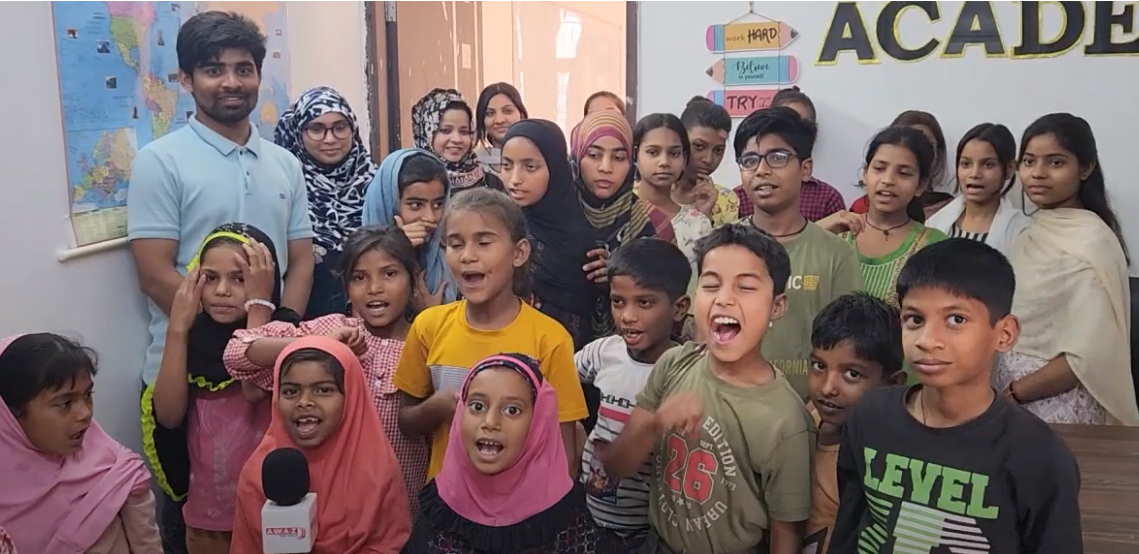
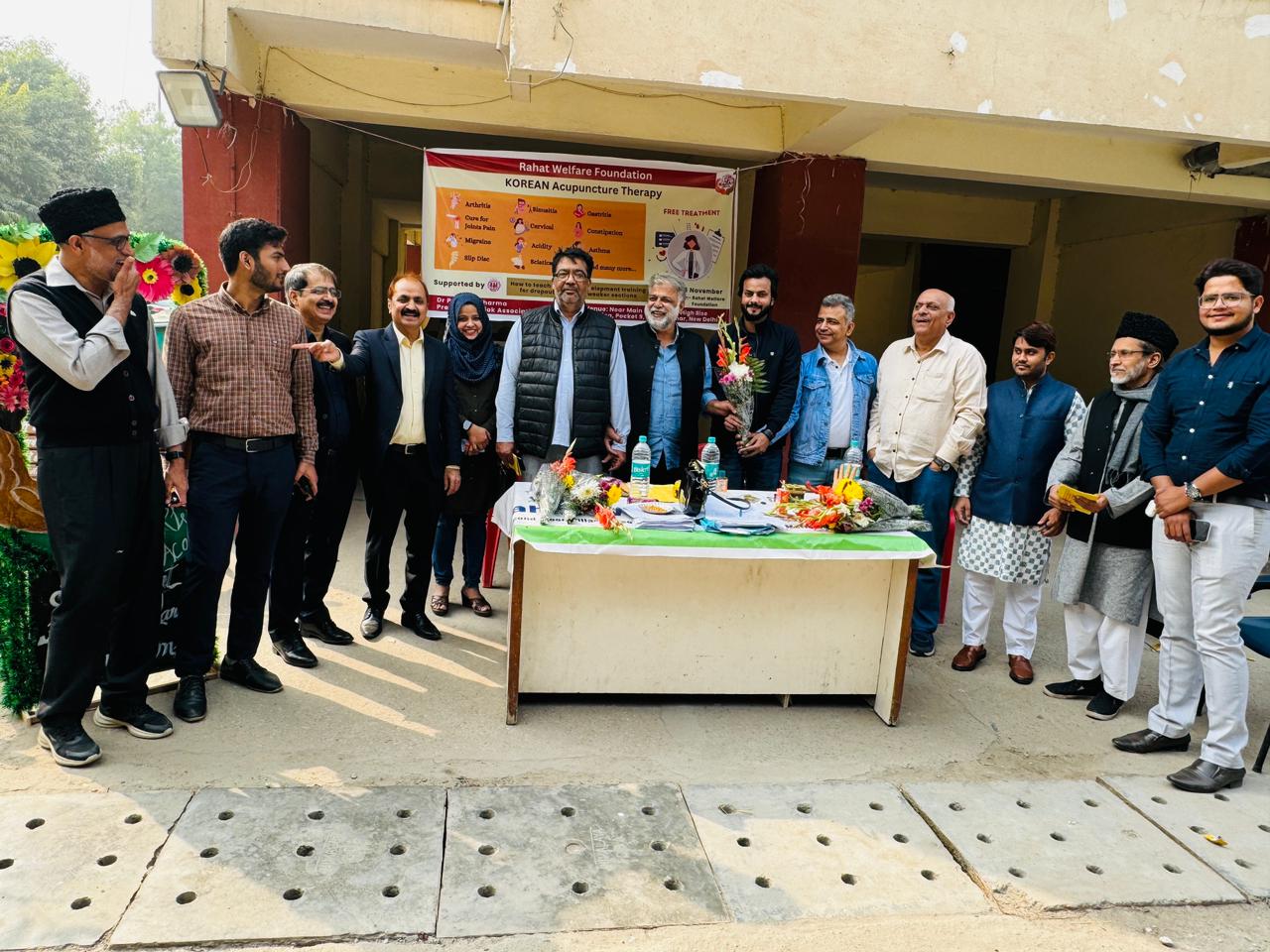
Sana Khan set up the Rahat Foundation on 26 February 2010 and during the 14 years of its existence in the states of Uttar Pradesh, Uttarakhand, and Maharashtra it helps women school dropouts.
Sitting in her modest office in Jasola village in south east Delhi, Sana Khan, 47, told Awaz-the Voice that presently her most important project is about getting the school dropouts to complete their education. She gets such women admitted to the Jamia’s openm school of National Institute of Open Schooling (NIOS).
Sana Khan says belueves that the right to education is universal and with this thought she has so far rehablitated 2,000 dropout children back into the educational mainstream.
Sana Khan not only sends the dropouts back to school but also takes the responsibility of imparting them skills and ensuring their job placements.
Her NGO teaches courses like digital marketing, fashion designing, etc. Interestingly, Rahat Foundation also managed to train 256 women drivers and helped them get licenses to drive.
Sana Khan says so far her NGO has employed about 10 thousand young men and women. They had acquired different skills at the classes of the Rahat Foundation.
Of these, 6000 did learn digital marketing, and 4000 fashion designing . Sana Khan says she contacted the fashion designing industry located in Okhla Phase 2 in Delhi, while the digital marketing trainees gots jobs in the IT sector, call centers, Swiggy, Zomato, Ola, etc
Some beneficieries of Rahat Foundation
She also remains in touch with the companies where she enrolls the skilled young men and women of the Rahat Foundation for jobs.
Sana Khan said, “My father died when I was in my 8th class. I was 13 years old. I had two elder brothers and a mother in my house. I can’t even describe the financial difficulties we faced at that time. One day a person from an NGO touched our lives and everything started changing.”
“Back then I got support and today I am at the stage where I have created a successful world of my own. I always try to help others, ” she says.
Rahat Foundation takes utmost care of all their beneficiaries. It arranges their exam fees, books, etc. The NGO does occasional fundraising to meet its expenses.
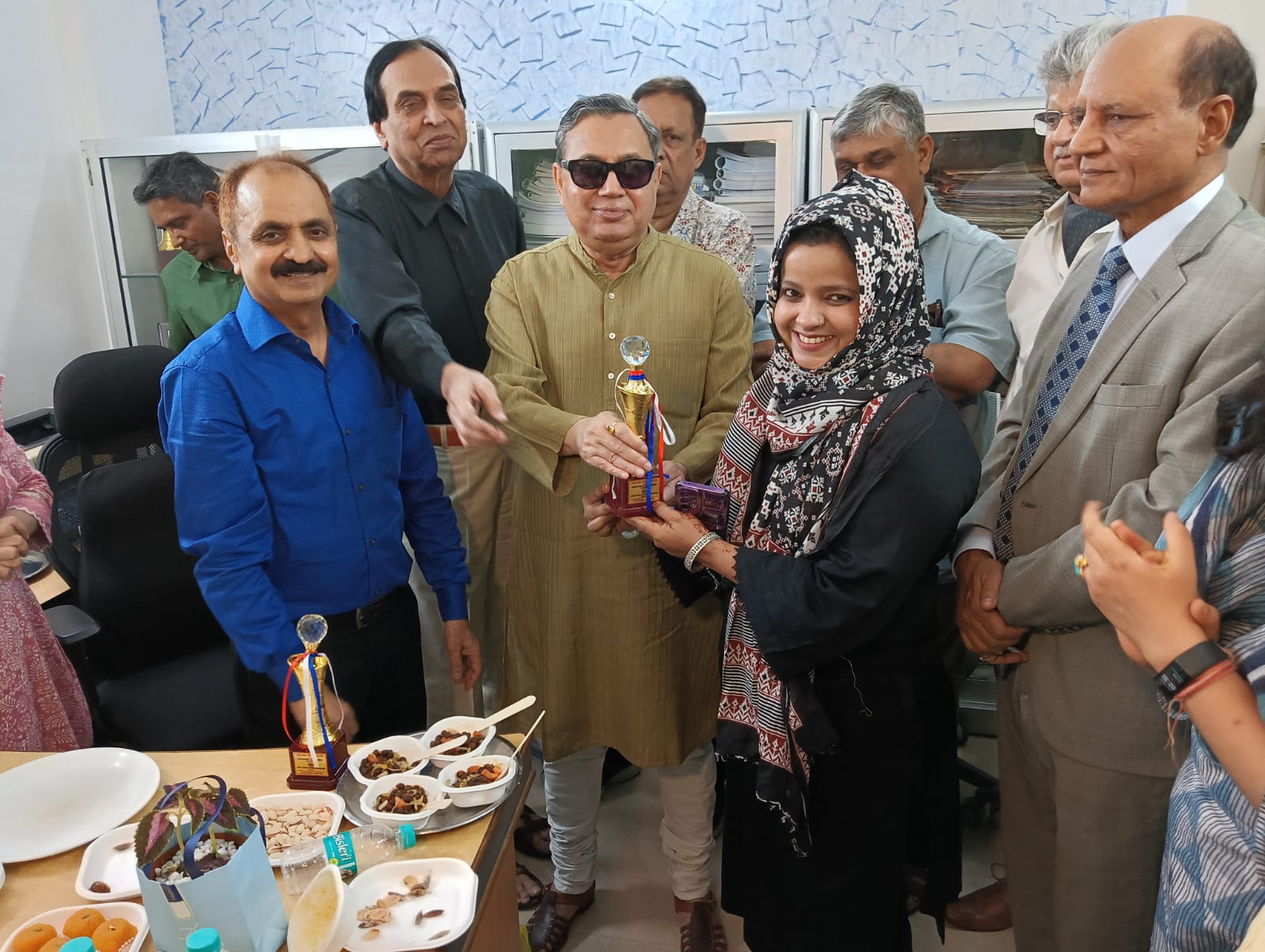
Sana Khan receiving an award
Sana Khan says she is careful in checking the genuineness of the beneficiery. She says there is a strict system of checking and whetting of a potential beneficiery. Rahat Foundation takens both boys and girls under its wings, she said.
Sana Khan has 70 people in her team who are divided into groups to form sub-units and working at the grass root in Uttar Pradesh, Uttarakhand, Maharashtra.
Sana Khan said that soon Rahat Foundation will set up its centers in Bangalore, Karnataka.
Sana Khan says that from time to time she organizes camps in which awareness about education is spread in society. So far, she has set up 500 to 600 campuses under the banner of Rahat Foundation.
Sana Khan receiving an award
Going down memory lane, Sana Khan said that when she did a mass communication course from South Delhi Polytechnic, New delhi in 2010, she also worked with the Sahara group of publications.
“However, while working with the newspaper, my wish to help the needy kept over powering my mind and ultimately, I had laid the foundation of Rahat Foundation.”
Sana Khan says that today her NGO is well-known for its work and people do recognise her work. She said she received immense support from society during the Covid-19 pandemic when Rahat Foundation distributed blankets and dry rations to the people. It also ditributed school bags for children to keep their hopes alibe and essential medicines during that difficult phase.
Recently Sana Khan was honoured in Dubai, the UAE. She had already received several awards and honours from companies and forums in Bengaluru, and Delhi.
Sana Khan is willing to help people who contact her on her website and Facebook page. .
source: http://www.awazthevoice.in / Awaz, The Voice / Home> Story / by Onika Maheshwari, New Delhi / May 04th, 2024
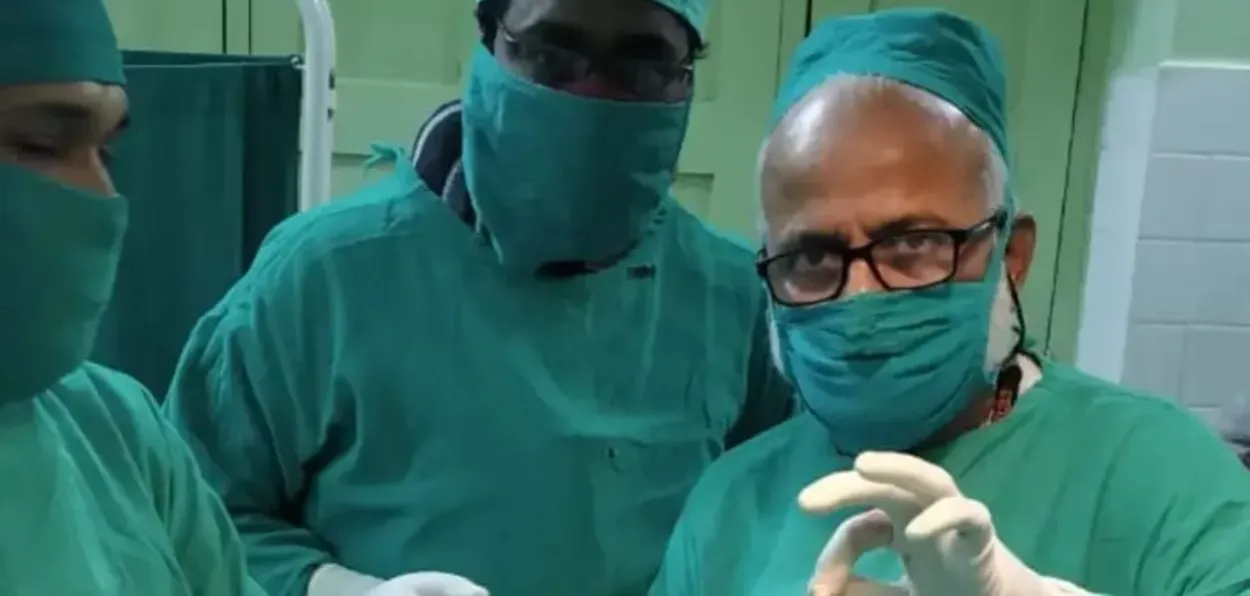
Dr. Ijaz Ali wears many hats: he is a well-known surgeon of Bihar, a former member of Parliament, and a crusader for the rights of marginalized people. As president of the All India United Muslim Morcha, he has extended his support to the BJP for its pro-Pasmanda stance, and, is thereby, supporting the NDA candidates in the ongoing Lok Sabha Elections, Mahfooz Alam spoke to Dr. Ijaz Ali on his life and mission.
Dr.Ijaz Ali was born in a lower-middle-class family in 1958. His father Sheikh Mumtaz Ali was the first in the family to have received an education and he rose to the position of BDO in the British Raj. Ijaz Ali started his education at a Madrasa Anjuman Islamia School associated with an orphanage in Munger town up to the seventh standard.
However, he joined the government school for his eighth standard and later cleared his matriculation examination from the Hazaribagh District School. He was always a topper in school and also topped the matriculation examination at the State level.
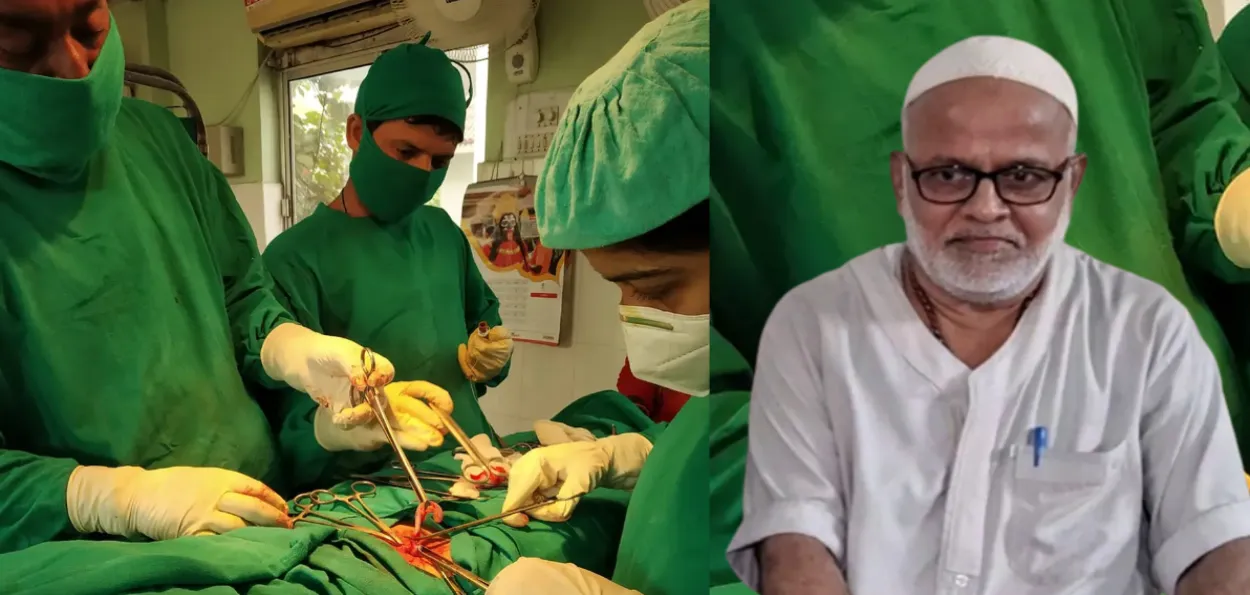
Dr Ijaz Ali at his clinic
Ijaz Ali says that he was the sixth among 10 brothers and sisters. Though his father was paid well due to a large brood of children, the family lived hand to mouth. So as a father, he focused on giving education and imparting moral values to all his children.
Dr.Ijaz Ali says he studied in a school meant for orphans since his father could not afford to send him to a private school. “I was a very good student and stood first in every class,” he said proudly.
Thereafter, he joined the prestigious Science College in Patna for further studies. “I loved mathematics, physics, and chemistry, but my parents wanted me to become a doctor and I shifted to biology. At first, I didn’t like it ( the idea of studying biology), but my family admitted me to the Science College in the Biology stream.
“Studying biology was the turning point in my life,” says the surgeon, who is a name to reckon with in the state and outside.
Dr Ijaz Ali is always surrounded by patients
For him, the first year of college was very difficult, as he had no interest in biology. Soon he realized there was a good future ahead for him if he studied well. “As a student, I never wasted time – he follows this routine even today. I worked hard, and soon I started enjoying the subject I once hated. I also topped the higher secondary examination in the Patna Science College I also was among three toppers of the entrance examination for the MBBS course in the Patna Medical College.”
When Ijaz Ali joined the Patna Medical College in 1975, his family was proud of him as he would be the first one among them to become a doctor. However, he faced financial difficulties while studying in the PMCH, “Food in PMCH canteen was expensive so I arranged to eat at another hostel, next to PMCH and spent two years studying and spending time in the crowded neighborhood. Buying books was also difficult for me. When he reached the second year”
He said, “Books were costly and I didn’t have money to buy them, so I used to manage my studies somehow. “Even during my medical studies, my passion for studies did not let any difficulty stand in the way. I was in the top three in MBBS in medical college and I got admission for M.S.”
Dr. Ijaz Ali says he got some relief while studying for his Master’s in Surgery. In 1980, he married the daughter of Ghulam Sarwar, a prominent political leader. Due to his in-law’s support, he was relieved of basic financial problems and also joined as an assistant to Dr. Kamal Ashraf, a well-known surgeon of the city.
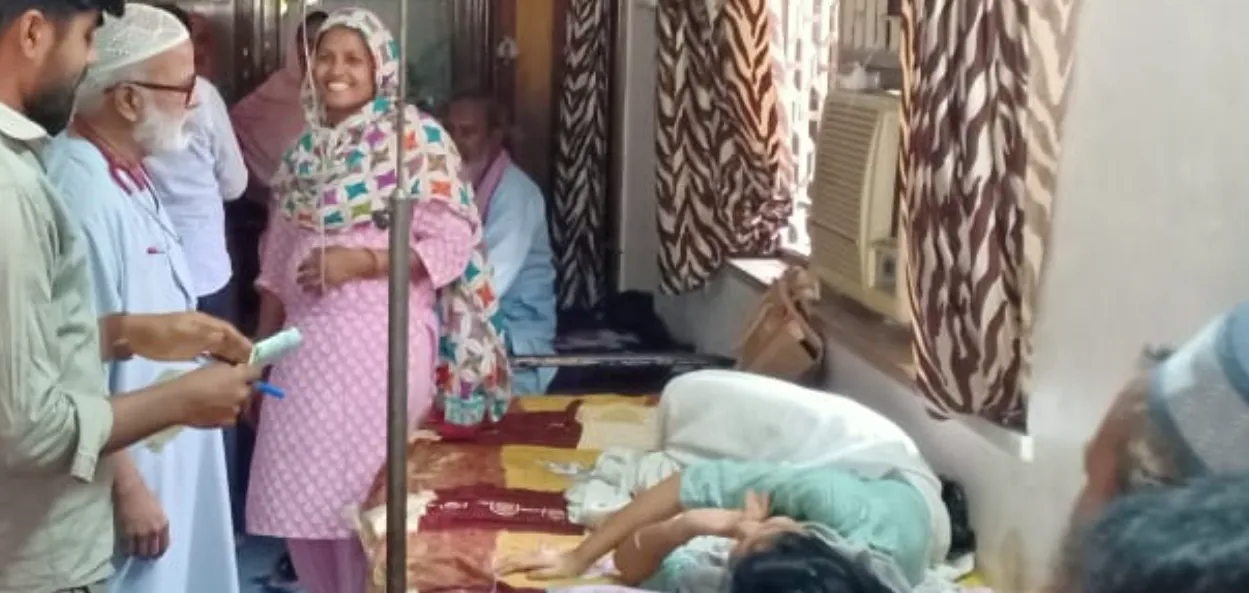
Dr. Ijaz Ali treating a hospitalised patient
“I used to get a Rs 400 stipend from PMCH and most importantly, I got the opportunity to stay with Ghulam Sarwar and learn from Dr. Kamal Ashraf. I was eating home-cooked food and was being trained as a surgeon by the best person.” He completed his MS degree from Patna Medical College and again topped the exams.
On the advice of Ghulam Sarwar, he opened a clinic in 1984 in his house in Patna. In the same year, Prime Minister Indira Gandhi was assassinated and there was uproar throughout the country. Slowly my picked up. “In 1990, Ghulam Sarwar became the Minister of the Bihar Government and he handed over his house to me for use as a clinic.
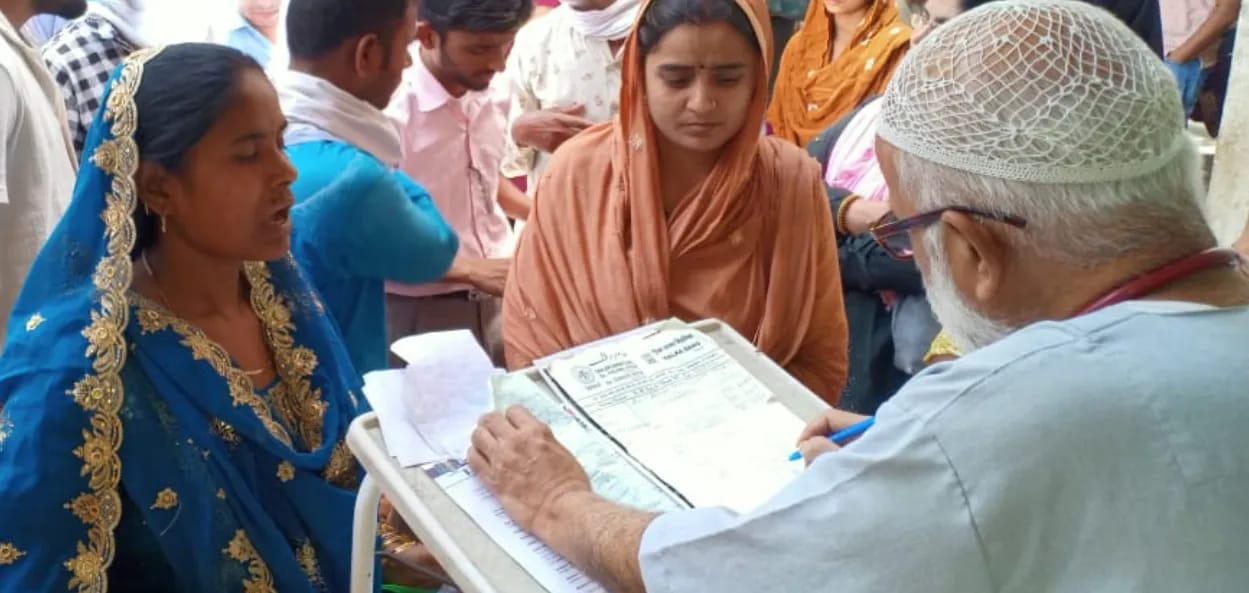
Dr. Ejaz Ali took up medicine as a social service and while all consultants in Patna charge Rs 300 as consultation fees he has kept it as low as Rs 10.
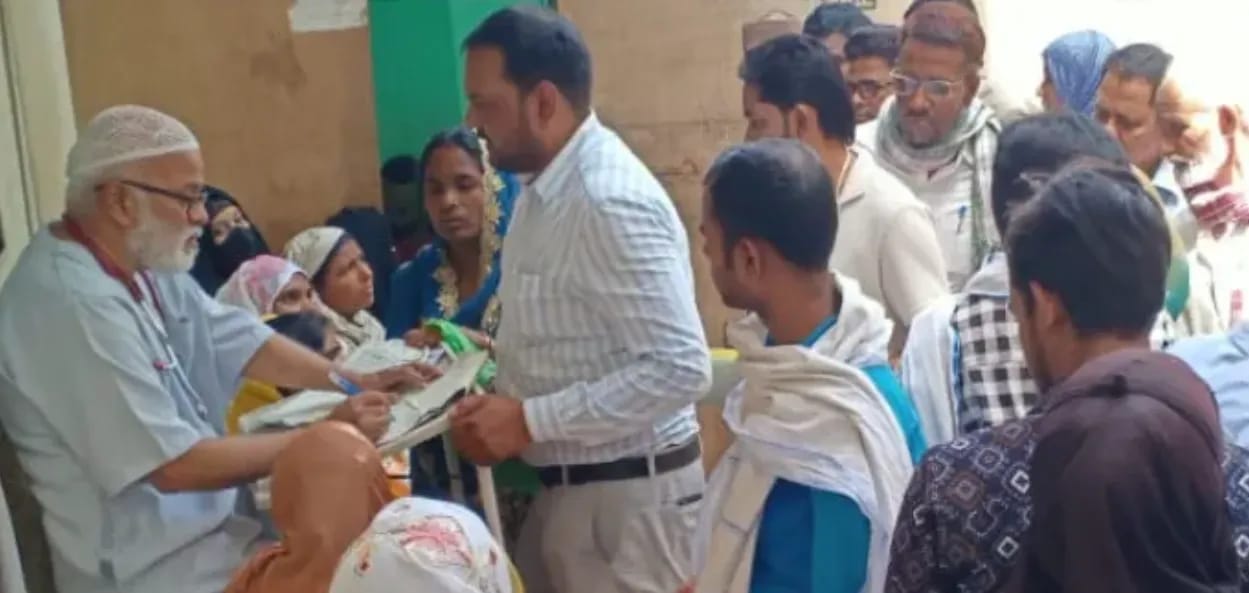
“A good doctor was available at a lower fee, so a caravan of people started arriving at the hospital. The rickshaw-pullers, thela-walas, sabzi-walas, and people from the rural areas started coming in droves,” he said.
“I was a surgeon but started all kinds of treatment. Many villagers who came to me had no money to eat and I wondered how they would buy medicines. Though I was a surgeon, I was treating patients with tuberculosis, kala azar, and everything.”
He realized most of his patients were poor Muslims. He reduced his fees for surgery to a minimum. I understood that there is so much poverty among Muslims.
Dr. Ijaz Ali
Dr. Ijaz Ali says he became successful because of his hard work and discipline but he is pained to see that children in neighbourhood where he was born were living in the same conditions. “Children are still hurling abuses at each other while playing street games and indulging in Lathi Danda in Muharram
“After I became a doctor and started practicing, many poor Muslims came to me for treatment and consultations. I started visiting the villages to know their conditions. After visiting hundreds of villages and seeing the condition of people, I felt that I should fight for their development and welfare.”
For 44 years, Dr. Ijaz Ali has been traveling to a village every Friday to be with the people and understand their problems. “During 1990-92, the environment across the country was surcharged. Ghulam Sarwar Sahib was a great leader of the Muslims of Bihar, so many people used to visit him. He was my father-in-law, and I lived with him. He did not like people who seek political advantage by inflaming the feelings of Muslims. Under these circumstances, I felt that Muslims do not need emotional slogans but should get opportunities to become good and empowered citizens.”
Dr. Ijaz Ali says that to bring justice to the weaker sections of backward Muslims, he set up the All India Muslim United Morcha. “Our demand to the government is that the Dalit section of the Muslims should also be provided with the facility of Section 341 of the Constitution so that they can also raise their standard of living.
“From what we have seen on the ground’, Dr. Ijaz Ali says, “There is a need for reservation for this section of the Indian population for the overall development of society and the nation If this large section of the population is facilitated to join the developmental mainstream, it will change the situation.”
Dr Ijaz Ali says that no one can be successful in life without clear goals and objectives. The greater the success, the more effort it will demand. Therefore, even in difficult situations, people should not leave the path of justice, patience, and peace.
He says that for a successful person, it is equally important that he thinks about the welfare of the society.
source: http://www.awazthevoice.in / Awaz, The Voice / Home> Story / by Mehfooz Alam, Pune / May 06th, 2024
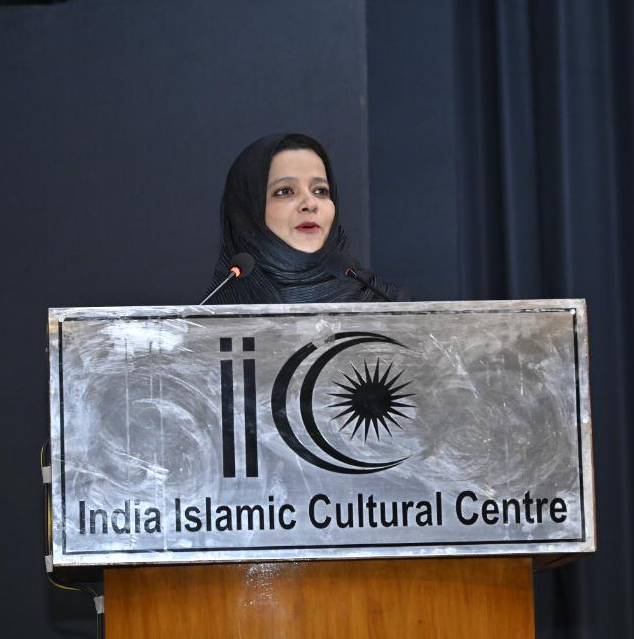
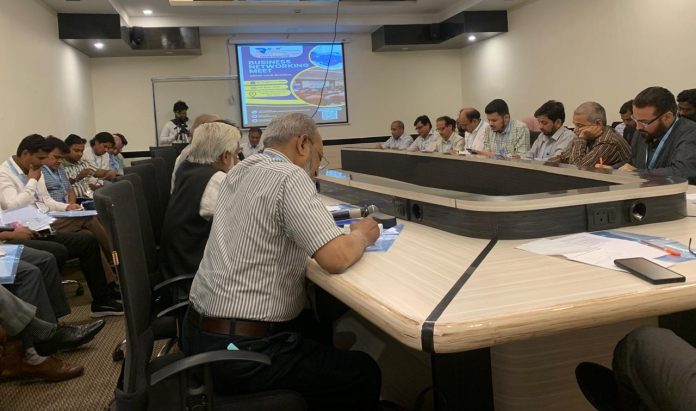
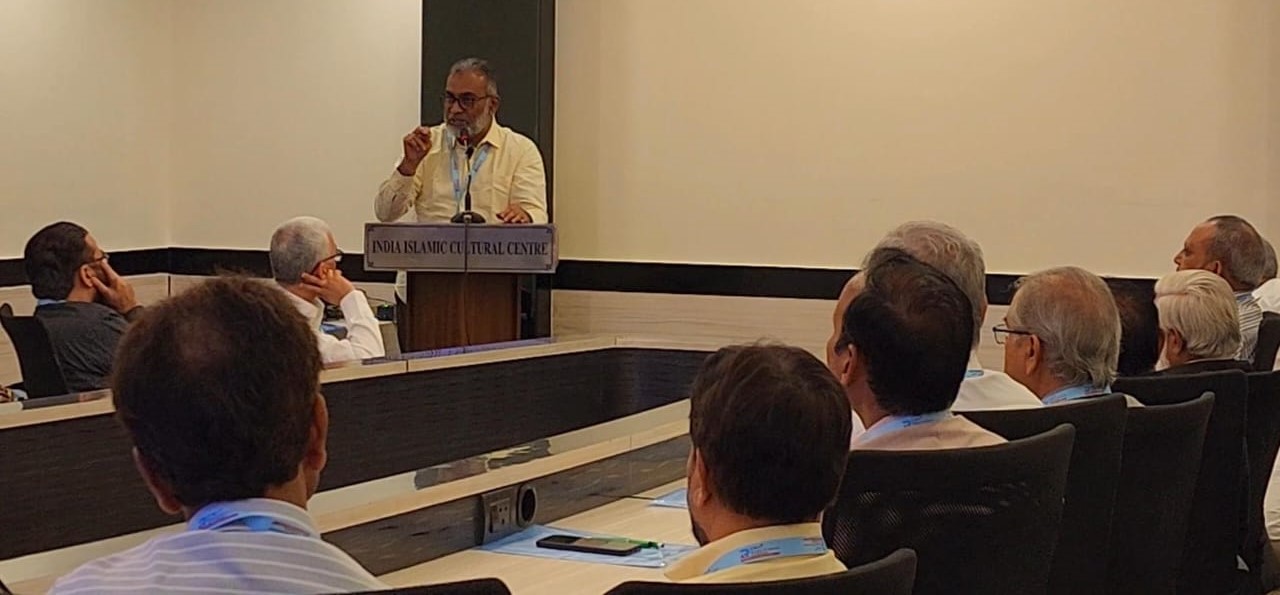
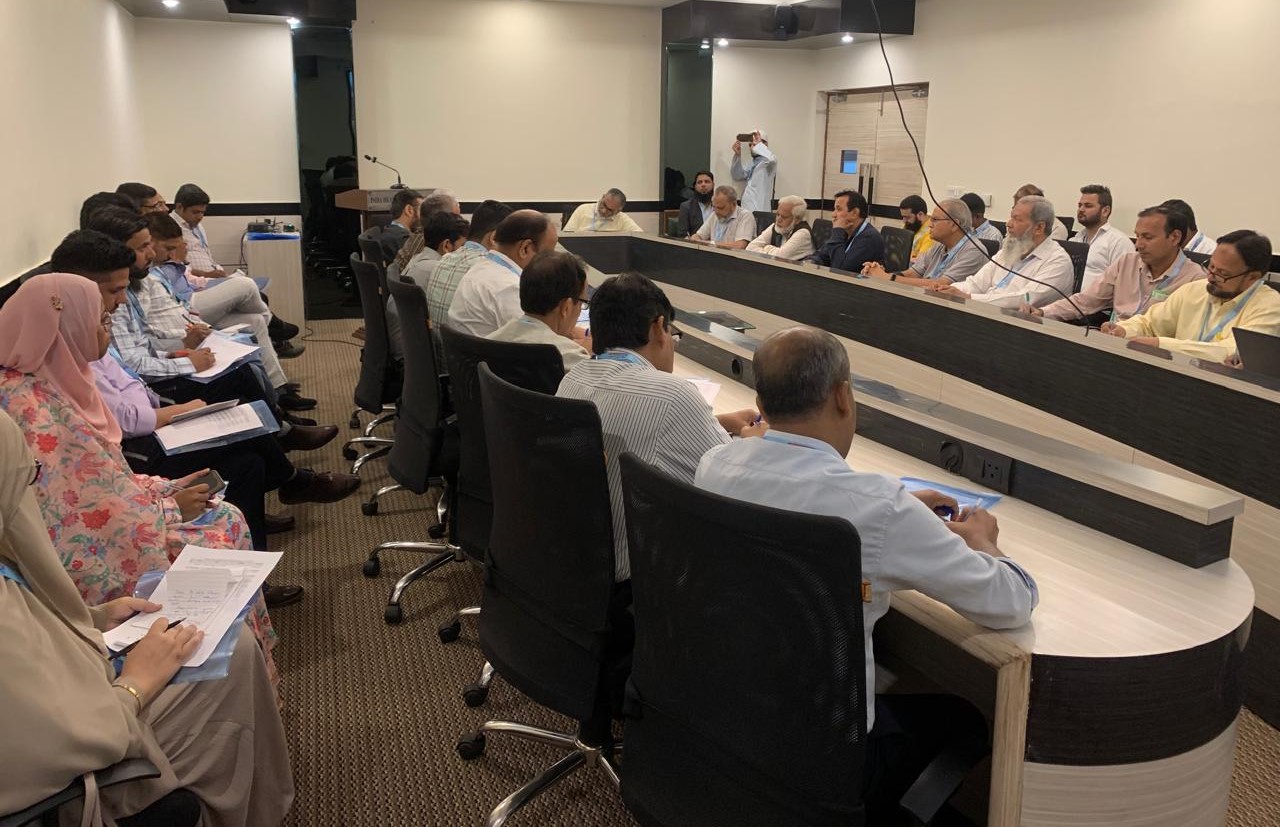
The Rifah Chamber of Commerce and Industry Delhi Chapter organized a business networking event at India Islamic Cultural Centre, here Saturday. The event saw the participation of various manufacturers, traders and service providers and industrialists from Delhi and nearby areas such as Ghaziabad, Noida, and Gurgaon.
The program commenced with a high tea session where attendees mingled and networked with each other over refreshments. Following this, the program began with recitation of the Quran, setting a spiritual tone for the event. Mr. Sultan Salahuddin, State President of Delhi, initiated the proceedings with his opening remarks.
Mr. Salahuddin Ahmad, ex-National Admin of Rifah, conducted a presentation on how manufacturers, traders and services providers could introduce their companies effectively during such networking events. All the manufacturers, traders and service providers presented their companies in accordance with the provided guidelines.
Mr. Sayed Ahmed Saood, a seasoned business coach and strategic management consultant, shared insights into the challenges of marketing and proposed solutions based on his extensive experience in the field. Mr. Rashid Kamal Lari presented his company, Larson Paint, as a sponsor of the event and highlighted its contributions.
The program concluded with a powerful speech by Mr. S. Ameenul Hasan, the Chairman of Rifah, who emphasized how Rifah is evolving into an eco-friendly platform for the benefit of manufacturers, traders and service providers. He also enlightened the audience about the leadership skills of Prophet Muhammad ﷺ and the successful principles of business in Islam.
Mr. Salimullah Khan, Ameer Halqa Jamaat-e-Islami Hind Delhi, expressed gratitude to all participants and the Rifah Delhi team for organizing the event successfully.
The business networking meet facilitated valuable interactions among manufacturers, traders and service providers, providing them with insights, networking opportunities, and a platform to showcase their businesses. It also underscored Rifah’s commitment to fostering a supportive and environmentally conscious business environment.
source: http://www.radiancenews.com / Radiance News / Home> Latest News / by Radiance News Bureau / May 06th, 2024
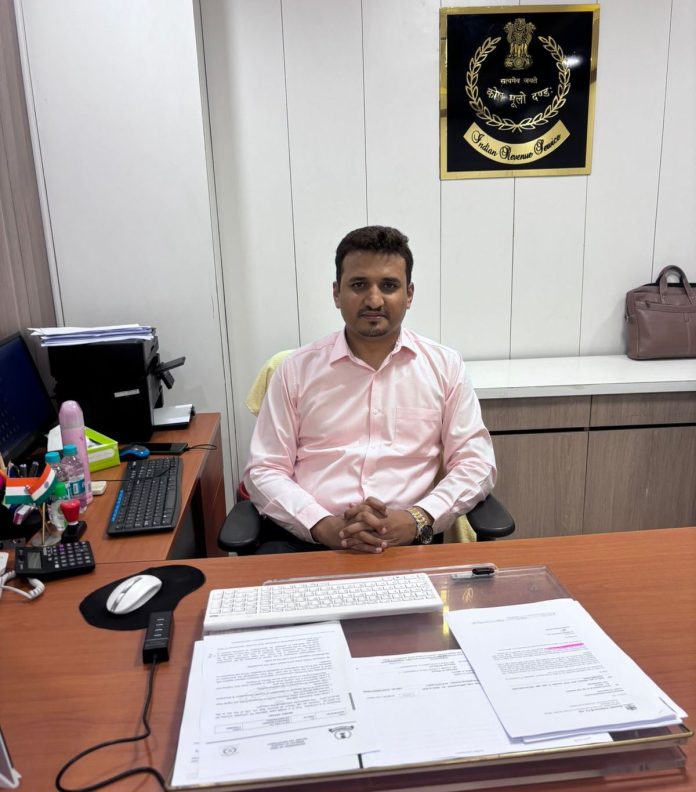
In an enlightening conversation with Mohd Naushad Khan, Deputy Commissioner Nooh Siddiqui shares profound insights into his UPSC journey, highlighting the significance of Urdu as an optional subject.
Here’s a deeper exploration of the dialogue:
Q: Can you share how your life has evolved post-UPSC success and elaborate on your current role and location?
Siddiqui: The journey post-UPSC success has been a transformative one. Clearing the exam brought a sense of stability and purpose to my life. Currently serving as the Deputy Commissioner of Income Tax in Bhopal, I find myself navigating new challenges while contributing to the betterment of the community.
Q: Could you shed some light on the challenges and advantages of choosing Urdu as an optional subject, and offer guidance for students opting for the same?
Siddiqui: Opting for Urdu as my optional subject felt like a natural choice, given my educational background and familiarity with the language. However, I encountered initial challenges in accessing comprehensive study material tailored to UPSC requirements. Through diligent effort, I compiled comprehensive study material, including the books “Kawish” and “Ummeed,” which have since become invaluable resources for Urdu aspirants. Urdu, with its rich literary tradition, offers unique insights and opportunities for personal growth. My advice to students opting for Urdu is to embrace the subject’s richness and seek guidance to excel in the exam.
Q: Beyond UPSC success, what are your aspirations in life moving forward?
Siddiqui: While qualifying UPSC was a significant milestone, I view it as a stepping stone to further endeavors. I aspire to pursue a master’s degree in public policy and administration, deepening my understanding of governance and policy frameworks. Concurrently, I remain committed to mentoring aspiring candidates, guiding them on their journey to success.
Q: What words of wisdom do you have for Muslim students preparing for UPSC, as well as students in general?
Siddiqui: I urge all students, particularly those from the Muslim community, to approach preparation with dedication and diligence. UPSC is not just about acquiring knowledge but also about personal growth and transformation. Embrace the journey, seize opportunities, and pursue your goals with sincerity and focus. Your journey has the potential to inspire others and lead to meaningful contributions to society.
Nooh Siddiqui’s journey, securing AIR 326, illustrates the transformative power of dedication and perseverance. He emphasizes Urdu’s significance as an optional subject, with average scores ranging between 240 and 265, and mentions the highest score recorded at 296. Through his mentorship and contributions, Siddiqui continues to shape the future of UPSC aspirants, leaving an indelible mark on the landscape of competitive exams.
source: http://www.radiancenews.com / Radiance News / Home> Focus / by Mohd Naushad Khan, Radiance News Bureau / May 06th, 2024