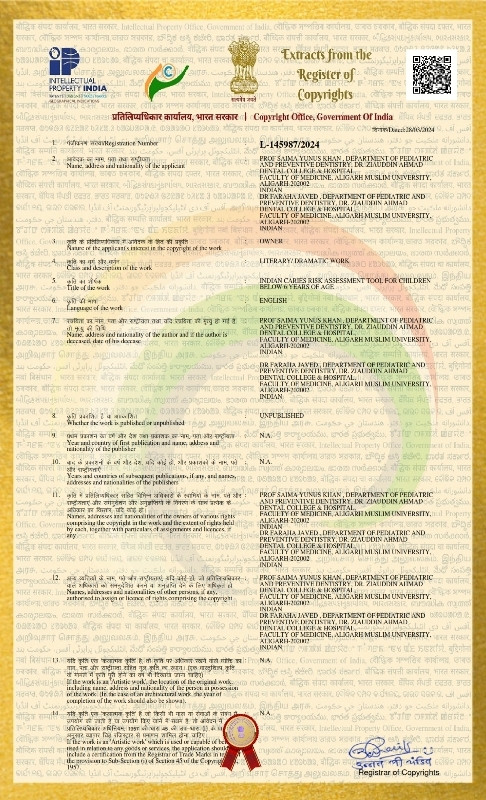
Prof Saima Yunus Khan, Chairperson, Department of Pediatric and Preventive Dentistry, Dr. Z.A. Dental College, Aligarh Muslim University has been awarded the Copyright by the Government of India for her original innovative work on an evidence based Indian Caries Risk Assessment tool for the children up to 6 years of age.
She started to work on the project in 2021, on receiving the John Clarkson Fellowship from the Prestigious International Association for Dental Research.
Being the first Indian to receive this fellowship, she worked in collaboration with Dr. Gerald Niznick, College of Dentistry, Rady Faculty of Health Sciences University of Manitoba, Canada.
According to Dr. Saima, the CRA tool would be beneficial to the Indian children as it addresses the risk factors of early childhood caries of Indian preschoolers. It’s a small compact tool form which can be used with ease by the masses in hospital or field settings.
The Dean, Faculty of Medicine and the Principal, J.N. Medical College, Prof Veena Maheshwari, and the Principal, Dr. Z. A. Dental College & Hospital, Prof R.K. Tewari congratulated Prof. Saima on her exemplary achievement.
source: http://www.amu.ac.in / AMU, Aligarh Muslim University / Home> Public Relations Office (headline edited & additional pix edited) / April 02nd, 2024
It was December 2001. I was at Dr Rafiq Zakaria’s beautiful, book-lined study at Cuffe Parade house in South Mumbai. In that spacious room Allama Iqbal vied for space with William Wordsworth and Mirza Ghalib sat alongside Shakespeare. World religions and their prophets and pundits were there in plenty. So were heroes and heroines of India’s freedom struggle. Present also were a few villains amidst a pantheon of popular leaders. Muhammad Ali Jinnah could not have been absent. He was there too.
In fact, Jinnah those days was in the intellectual air on both sides of the Indo-Pak border. The Outlook magazine had sent Dr Rafiq Zakaria’s book on Jinnah ‘The Man Who Divided India’ to noted Pakistani journalist Najam Sethi for review and he had panned the book. In the review Sethi had also suggested that Dr Zakaria should have heeded advice of his wife Fatma Zakaria who had tried to stop him from wiring the book, suggesting, “I think you should leave Jinnah alone for a while.” Dr Zakaria had written a rejoinder to Sethi’s piece and explained that he could not help but write about a man responsible for not just dividing India but breaking the social cohesion of the subcontinent Muslims. First, Muslims were divided between two countries–India and Pakistan. Subsequently, a part of Pakistan broke away, leaving Muslims divided in India, Pakistan and Bangladesh. The blood-curdling riots that accompanied these divisions had left Dr Zakaria deeply disturbed and could not rest till he took the grief off his chest.
While he gave an interview to me for the ‘Indian Express” on why he wrote this book and the debate it had generated, he told his office staff that he would not entertain any telephone calls or visitors for the next one hour. Dr Zakaria was holding forth forcefully in the closed room when unexpectedly and suddenly the door opened and Fatma Zakaria, in yellow salwar-kameez clutching a page, breezed in. “The secretary is so terrified after you asked her not to disturb you that she pleaded with me to come. This needs your signature and has to be faxed urgently,” Fatma said, got the paper signed and left quickly.
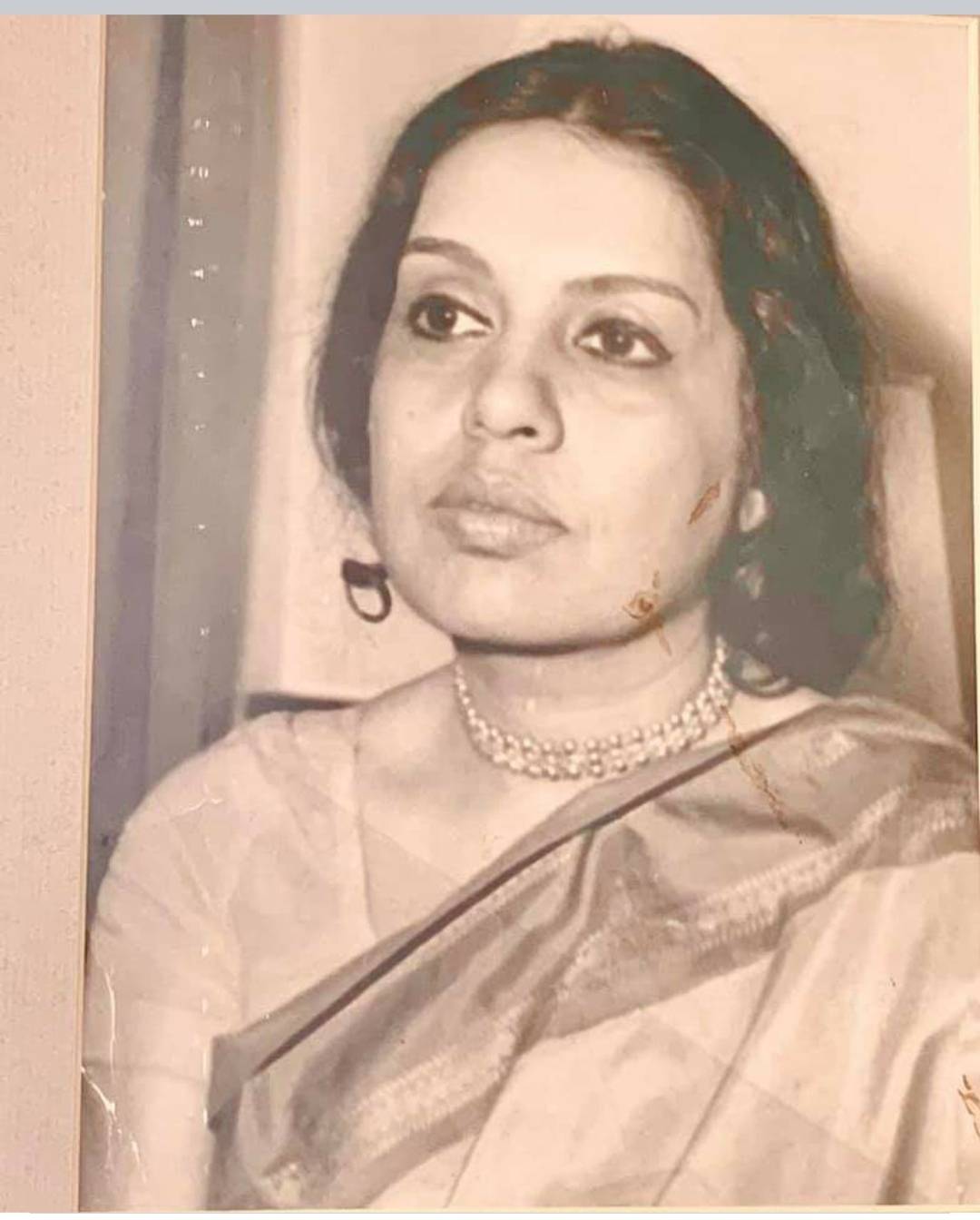
The Zakarias, husband and wife, complimented each other. One half left in 2005. The better half departed yesterday. She was 85. Her famous son, US-based author and Television anchor Fareed Zakaria couldn’t have encapsulated his feelings in a tweet better than this: “My mother, Fatma Zakaria, passed away last night at 85. She lived a long, rich, eventful life, with children and grandchildren whom she adored. She loved this photograph.” The photograph that I use with this essay is the one Fareed Zakaria tweeted. She is survived by, apart from Fareed, her son Arshad Zakaria and step son Mansoor Zakaria and step daughter Tasneem Mehta Zakaria.
Life was never the same again in Mumbai after Dr Rafiq Zakaria had exited. Life at the beautiful educational campus Dr Rafiq Zakaria built in Aurangabad will never be the same again after Fatma Zakaria’s departure. After Dr Zakaria’s death in 2005, Fatma had stepped in to carry on the educational legacy her famous educationist, politician and Islamic scholar husband had left behind.
As you enter the green campus, a sense of gratitude for the Zakarias grips you. For years, Dr Zakaria and then his wife Fatma nursed this seat of learning, endowing it with institutions of repute. Most politicians use their constituencies to scale heights and abandon them once they leave politics and walk into sunset. Few remain clung to their constituencies till they die. Dr Rafiq Zakaria belonged to the second category. “He is the architect of modern Aurangabad and Mrs. Fatma Zakaria was a big pillar of support to him. I don’t think Dr Zakaria could have done so much in the fields of politics, education and scholarship without her,” says eminent Urdu scholar and linguist Prof Abdus Sattar Dalvi who have known the Zakarias for the last five decades. Prof Dalvi had also translated Dr Zakaria’s seminal work Iqbal: Poet and Politician in Urdu.
Fatma was Dr Zakaria’s first reader and critic too. With their children flown out of the nest and into the wider world where they planted victory flags on as varied fields as Investment Banking and Journalism, it was Fatma who provided the much-needed inputs as well as emotional support to Zakaria who heads so many institutions and i wrote so prolifically till his end.
Fatma had worked under legendary editor and ‘dream boss’ of every fledgling journalist, Khushwant Singh, and knew how to curb verbosity in a sentence and straighten a complex paragraph. In book after book that Dr Zakaria churned out, he acknowledged the unpaid services of this able, inhouse editor. She knew Urdu too and could write on arts and literature with as much felicity as she could do political pieces. The biggies she had interviewed included Indira Gandhi, Margaret Thatcher and Jaya Prakash Narayan.
Bachi Karkaria, M J Akbar, Bikram Vora, Jiggs Kalra, Badshah Sen and Ramesh Chandran were her contemporaries when they worked with “The Illustrated Weekly of India” under the stewardship of Khushwant Singh. When I informed Akbar about Fatma’s death yesterday, he reacted with a few words: “What a tragedy. I am saddened.” Akbar was so close to the Zakarias that once I heard him saying, “I feel adopted by the Zakarias.” Perhaps no book launch of Dr Zakaria–and he had at least one or two every year—was held without Akbar as one of the speakers. The speed with which Dr Zakria wrote books, published and launched them left us youngsters amazed. I once joked when he informed me about the launch of yet another book: “Dr Sahab, now I have left count of the number of your book launches and book readings I have attended.” This couldn’t have been possible without the meticulous planning Fatma Zakaria did and tireless support she provided.
It was the launch of Zakaria’s book ” Indian Muslims: Where Have they Gone Wrong?” at the Nehru Centre in Mumbai. The 900-odd capacity auditorium was houseful with young college students (Dr Zakaria and, Fatma after him, was chairperson of the Maharashtra College in Mumbai) occupying a substantial number of seats. As always, Fatma Zakaria didn’t figure among those who graced the stage. When Akbar rose to speak, he inquired about Fatma Zakaria who was seated among the audience. Akbar requested her to come on stage. She refused and was seemingly embarrassed for being invited to the stage. Leaving her to where she felt comfortable, Akbar went on to say: “It is only Dr Rafiq Zakaria who can turn a book launch into a public meeting.”
A couple of years after Dr Zakaria’s death, Islamic scholar and secretary general of the Wisdom Foundation, Dr Zeenat Shaukat Ali, and I were in Aurangabad to participate in a seminar political scientist Dr Zaheer Ali had organized. Historian and ex-VC of Jamia Millia Islamia Prof Mushirul Hasan too had flown in from Delhi. After the seminar, Zeenat Shaukat Ali and I went to see Fatma Zakaria in her office. She was in fine fettle, command of things and ran the show meticulously. We chatted for a while and then she told us not to leave without visiting Dr Sahab’s grave on the same campus.
Zeenat Shaukat Ali and I walked down the paved pathway and reached a small patch of land where Dr Zakaria’s open-to-sky grave squats. With several couplets of Allama Iqbal adorning the place, it resembles a Sufi saint’s last resting place. After a long, eventful life, Fatma Zakaria joined her husband. They will be there till the creator calls them up, along with all of us, on the Judgement Day.
source: http://www.timesofindia.indiatimes.com / The Times of India / Home> India / by Mohammed Wajihuddin in Beyond the Burqa, India, TOI / April 07th, 2021
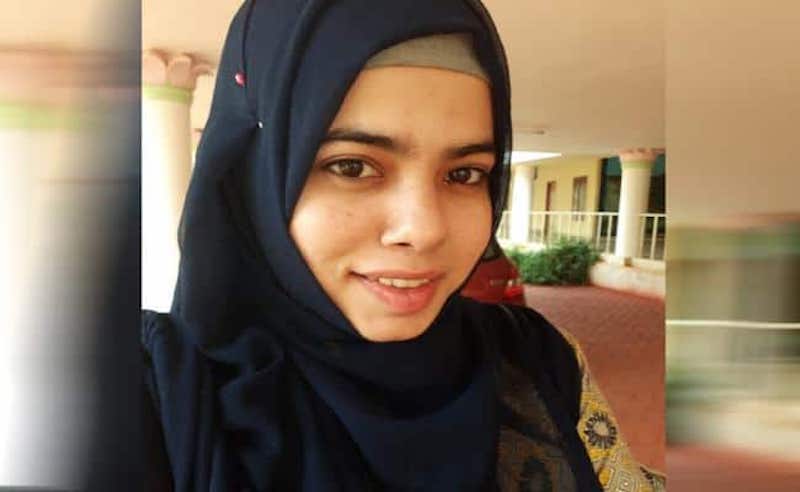
Our Prime Minister Narendra Modi fondly refers to girls as Bharat ki Beti. One such Bharat ki Beti Uzma Fatima, 26, an assistant engineer at the Srisailam Power Plant in the Telangana State left a blazing trail of bravery as she saved 4 of her colleagues from the fire reportedly caused due to short circuit a few days ago.
Modi also says: Beti Bachao, Beti Padhao (Save girl child, educate girl child). Young Hyderabadi Uzma’s bravery can make us say: Beti Padhao, Beti Bachaati (Educate girl child, she will save you)!
Thousands of girls have been raped and burnt to death. Many others have been burnt to death for dowry. But when girls get a chance, they save the families and the nation. Uzma Fatima was a notch higher in the sense that she saved those 4 colleagues, who were not even her own family. She put humanity first!
Uzma Fatima’s father Mohammed Zubair runs a footwear business at Chappal Bazar in Hyderabad. He has three daughters and a son. The elder daughter is married. Uzma Fatima was his second daughter and was unmarried. His youngest daughter is in the eighth standard.
Mohammed Zubair’s son Mohammed Minhaj who is a degree college student told that his family is in a state of shock due to the sudden tragedy. According to him, Uzma Fatima was working in Srisailam Power Station as an Assistant Engineer for the past four years. The CCTV footage of the fire accident shows that Uzma had come out of the fire engulfed place. According to the survivors, she saved 4 (four) of her colleagues. She went back to bring out the other assistant engineers trapped there. She could not come of the tunnel along with eight other colleagues. The brave engineers perished in the fire.
It may be recalled that women were finally given combat roles in the Indian Army after a long struggle. Uzma’s sacrifice proves that women are second to none in bravery. Women are our best bet to save our country within and on our borders. Rani Laxmi Bai of Jhansi proved her bravery in the battlefield against the British. Every girl in our country is a potential Rani Laxmi Bai. They prove it when they get chances. Our Prime Minister Narendra Modi may certainly be feeling proud about the sacrifice of Bharat ki Beti Uzma Fatima.
A fitting tribute to Uzma’s memory would be institute a gallantry award her name and also rechristen Srisailam Power Plant as Uzma Fatima Power Plant. It will not only generate electricity but it will also generate bravery for our future generations of girls to emulate.
The Telangana Chief Minister K. Chandrasekhar Rao (KCR) should pay tribute to Telangana’s daughter Uzma Fatima by naming a major road in Hyderabad after her. The Malakpet Railway Station near her residence can be named as Uzma Fatima Railway Station. Are Modi ji and KCR Garu listening?
source: http://www.beyondheadlines.in / Beyond Headlines / Home> Real Heroes / by Dr. Ahmed Moinuddin Siddiqui / August 25th, 2020
From a humble beginning as a student of a Madrasa to being selected for Masters in Peace Studies at University of Notre Dame, one of world’s leading universities, Furqan’s journey is an answer to those critics of madrasas who refuse to accept their relevance and contribution to the society and academia.
While hundreds of Madarasas are being shut down allegedly for being non-productive, a good number of graduates of independent Madrasas are making great academic strides. One such Madrasa graduate, Mohammad Furqan has qualified for the Masters of Global Affairs in Peace Studies at the University of Notre Dame, Indiana, USA.
Furqan’s selection has been widely welcomed by graduates of different Indian madrasas and especially by the graduates of Madrasa Discourses Program run by the Keogh School of Global Affairs, University of Notre Dame.
Buoyed by the good wishes, Furqan said:
“It all started with the Madrasa Discourses, and it would have not been possible without the great leadership of Prof. Ebrahim Moosa and Dr. Waris Mazhari. Coming from an ordinary family, I could have never imagined to study in the USA with scholarship.”
Belonging to Darbhanga district of Bihar, Furqan graduated with a Fazilat degree from Madrasa Alia Arabia, Masjid Fatehpuri, Delhi in 2016, after which he did BA (Hons) in English Literature from Jamia Millia Islamia (JMI). In 2023, he completed Masters of Arts in Islamic and Arabic Studies from JMI.
[M Furqan with his friends at Jamia Millia Islamia New Delhi in a file photo.]
While continuing his formal studies, Furqan also pursued the three-year research program for Madrasa graduates namely “Advancing Scientific and Theological Literacy in Madrasa Discourses”, offered by the University of Notre Dame. It is where he made the most of his time and had the opportunity to interact with a number of renowned academicians and scholars from different countries.
Recalling those years Furqan says:
“It was indeed a life changing journey for me to connect with you all for more than five years”.
Extending his special thanks to his Madrasa Discourses fellows Mohammad Ali, Manzar Imam, Mohammad Ehtesham, Mohammad Fozail, Muhammad Zeeshan, Mohammad Aadil Affan, Ghulam Rasool, Md Khaleeque Rehmani, Abul Aala Subhani, Syed Abdur Rasheed, Tajammul Husain, Saif ul Hadi and others, Furqan expressed his intention to remain connected with what he called “our shared commitment for our society and madrasa community.”
From a humble beginning as a student of a Madrasa to being selected for Masters in Peace Studies in one of world’s leading universities, Furqan’s journey is an answer to those critics of madrasas who refuse to accept their relevance and contribution to the society and academia.
Indian madrasas need some reform but more than that they need to sustain and serve the society to carry forward the huge academic and intellectual legacy which has been the hallmark and pride of India’s story of diversity and open discourse.
(A graduate of Madrasa Discourses Program, the writer, Manzar Imam, is Director of MJ Achievers Academy LLP)
source: http://www.ummid.com / Ummid.com / Home> Education & Career / by Manzar Imam / April 01st, 2024
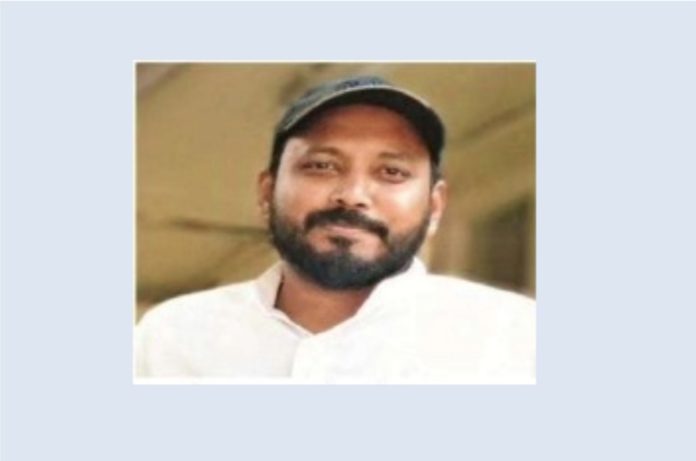
In a remarkable feat, Habibur Rahman, a resident of Malegaon, has outshined 9,000 candidates to clinch the top position in the recruitment exam conducted by the Maharashtra State Waqf Board. Rahman’s achievement underscores his exceptional performance and dedication towards his goal.
The recruitment exam, aimed at filling vacancies for district officers and junior clerks within the Waqf Board, witnessed rigorous competition from aspirants across the state. Rahman’s success stands as a testament to his hard work and preparation.
Expressing his gratitude, Rahman attributed his accomplishment to divine blessings and the unwavering support of his teachers, parents, and relatives. He highlighted the role of study material provided by Sheikh Qamaruddin, editor of Urdu House in Malegaon, in his exam preparation.
Having completed his education from Sheikh Abdul Wadood Primary School and Junior College in Malegaon, Rahman pursued higher studies at Loni’s Parvaraz World Engineering College. While working in Mumbai, he diligently prepared for competitive exams, a journey that has now culminated in his success in the Waqf Board recruitment exam.
Rahman’s stellar performance, in the written examination, is a testament to his academic prowess and determination. His achievement has not only brought pride to Malegaon but has also positioned him as a shining example of excellence in competitive exams.
With Rahman’s success, Malegaon celebrates yet another milestone, reinforcing its position as a hub of talent and academic excellence. As Rahman prepares to embark on this new chapter in his career, his success serves as an inspiration for aspiring candidates across the region.
source: http://www.radiancenews.com / Radiance News / Home> Latest News> Markers of Excellence/ by Zaina Aman / Radiance News Bureau / March 06th, 2024
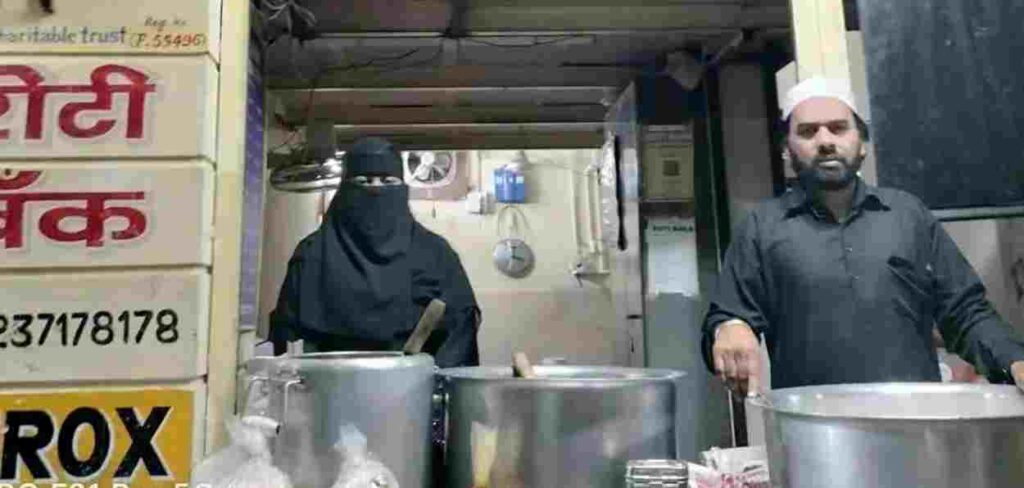
Following the Islamic principle that ‘if your neighbors sleep hungry while you are there, then you are not a true Muslim,’ neighbours in Pune Kondhwa in Maharashtra have replicated the initiatives of “Roti Bank” (bread bank) across many Indian cities and soup kitchens run by religious organization in the West, to address the hunger in the IT hub.
“Ark Charitable Trust’ was launched in August 2019 when many people in the city had lost jobs or livelihoods due to the COVID and hunger was rampant.
The trust was set up by a Kondhwah couple Aliya Shaikh and Nasir Shaikh from their house. The trust has been running a “Roti Bank” to and feeding widows and destitute women who are forced to wander around in search of food of alms to buy it.
Gradually, the Shaikhs realized that feeding people was a temporary solution to the problem of poverty and they started focusing on its root – lack of education. The trust got involved in educating children wandering on streets picking trash and leftover food and enrolled them in various schools
The trust has also provided job works to many widows whom they came in contact with while distributing food.
The Trust distributes food among people of all castes and religions.
Aliya Shaikh says she completed her 12th from Abeda Inamdar College in Lashkar area of Pune.
“I wanted to study, but I got married early, so I could not and then I realized what if I did not study? I can teach the girls living around me. My children today are doing well; studying in schools but what about those who do not have money? That is why I am trying to ensure that no one’s education stops due to financial constrains.”
Nasir also completed his schooling from Moledina High School in Lashkar area. Though he joined class eleventh he had to drop out due to financial problems at home. He started working as a commercial painter.
Nasir says, “Food satisfies the hunger of the stomach, while education satisfies the hunger of the mind. That is why both are considered basic needs.”
After seeing the work of Nasir and Aliya, a neighbor Ayesha Shaikh also joined them.
Ayesha, 65 has retired from a good position in a multinational company. Aliya, 30, works as a beautician and Nasir, 40, is a building contractor. All three work for ‘Ark’ while handling their business and family responsibilities.
In many weddings a lot of food is left over. To ensure this food doesn’t end in trash bins of the city, the Trust has displayed boards in key points in the city with this statement printed on these: ‘If you have leftover food, contact us… We will deliver this food to the hungry stomachs.’
‘Ark’ also gets financial support from various people and institutions on their auspicious occasions.
The three started this work from their homes without any funds. For the first eight days, Aliya used to cook food while Nasir distributed it. For the next eight days, Nasir took to cooking and Aliya to distribution. They would alternate their responsibilities ensuring that no single person has to take workload.
Aliya says, “We kept reaching out to the needy. As the work progressed, other people came forward to help us. Some started helping us financially, other by donating rations like oil, grains, etc.”
Soon many others more people had joined Ark.
Nasir empathises more with poor and says they are very sensitive. Instead of doling out food, the trio started a ‘Roti Bank’ to give dignity to those needing food.
Nasir says, “The work of ‘Roti Bank’ is not a one-day job. We cannot do one program in one month and then do the next program the next month. It has to be continuous work.
“It’s a challenge to feed their children and send them to school. But it’s also satisfying to see that someone’s life is changing because of you.”
“We have seen people cooking using paper as the only fuel. We have seen them struggling to satisfy their hunger,” says Ayesha. Food is provided to 50 families every day through ‘Ark’. Children’s education fees are paid.”
Aliya, Ayesha and Nasir deliver food to the people of Kondhwa, Bhagyodayanagar area. But the needy people of Hadapsar and Katraj area are not able to reach them every day, nor is it possible for Aliya, Ayesha and Nasir to take food boxes there every day.
So all three of them go to that area and distribute enough ration for at least two months on the basis of the given identity card. They also offer ‘Sehri’ and ‘Iftari’ facilities during Ramzan. A satisfied Ayesha says,
“It is a pleasure to be able to reach out and help the needy. Because of the work of Aliya and Nasir, I am associated with a good organization.”
source: http://www.awazthevoice.in / Awaz, The Voice / Home> Stories / by Chhaya Kavire, Pune / April 04th, 2024
Mohammad Affan Khan of Bhopal, Madhya Pradesh, has helped over 200 Imams, who are in charge of mosques and not paid well, to start their small businesses to supplement their incomes and live with dignity.
Speaking with Awaz-the Voice Mohammad Affan said to begin with he contacted the Imams of Bhopal and nearby areas to understand their conditions. His friends also came forward to join this mission.
They contacted the Imams of different mosques to gather information about their financial status and to their shock found out that most of them lived in poverty and some young people were even contemplating contemplating leaving their job that otherwise is socially prestigious.
“We heard them and realized why many young Imams were leaving their jobs. After that, we complied the statistics.”
He discussed it with his group of friends and everyone agreed that the Imams should run shops in neighbourhoods so that they can make money by selling stuff.
“We started by giving Rs.10,000 to each Imam. In the first instance, five Imams were assisted to start general stores in their localities. “We asked the Imams to experiment by starting their business and leave everything to Allah.”
Affan Khan sent a message of his intent to his relatives and friends and requested them to help with Zakat as the financially weak imams were eligible to receive it.
“I wrote to them that if everyone helps the mission could be extended and the lives of many could change. This will also solve the problem of imparting religious education to the children, who feared their Imam would run away leaving them in the lurch.
“As we traveled further down the road, we realized that not every Imam can run a grocery store as many areas have already such stores. This is the reason that other Imams were taught skills for starting a source of livelihood.”
Some of the Imams were helped to open tailoring shops, some opened four mills. Some of them started selling clothes, while some started making metal pots.
Affan Khan said he and his team didn’t expect this mission to be so successful.
In a year, the group has helped some 200 Imam start and run their businesses.
Later the Association of Muslim Professionals joined in this mission enabling Affan and his friends to help more Imams. The AMP joined in the campaign in a big way as it counseled the Imams to upscale their businesses.
It is worth noting that these stores gradually increased the volumes of their business as locals wanted to buy from their Imam and asked them to stock everything.
This made them do brisk business and today they have helped Imams in opening 222 shops.
source: http://www.awazthevoice.in / Awaz, The Voice / Home> Stories / April 13th, 2024
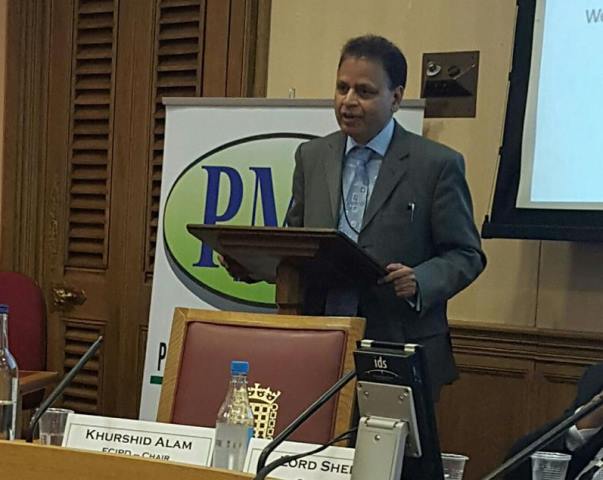
For ex-health commissioner of London Khurshid Alam, education is the only solution for all the problems currently gripping the Muslim community. Saira Aslam talks to Mr Alam for muslimmirror.com about his life struggles, a tragic childhood and his growing up braving it all.
He has several feathers to his cap – from being the health commissioner of London, serving the Indian Army, setting up a vocational training institute in the UK to adopting a school in Nuh near Gurgaon, but Alam feels it is important to continue to learn.
Having lost his mother when he was just three years’ old and then later losing his father at six years’ old meant the end of the world for him. And if this wasn’t enough, he also witnessed the 1964 riots in Jamshedpur in which hundreds of people were killed. But, he says what kept him going and helped him immensely later in life was his education, which he managed to complete despite all the challenges that one could think of.
For over 20 years, Alam has been involved extensively in a variety of roles ranging from being an advisor to leading a wide range of charities and public services in health, education and social care. He has developed and implemented several policies and strategic plans of improving public services and access; and promoting good healthcare and education for community, including working with and giving advice to government bodies and other organisations internationally.
Currently based in London, he has adopted a school in Nuh district, about 45 kilometres (28 mi) from Gurgaon. He has also worked out collaboration between the institution and a school in London, and wants to see his school grow to be the region’s leading school in the next three years. Within six months of its adoption, the school has won two prestigious awards, giving him hopes that the future for the institution looks bright. He points out that the people of the district, who are mostly Muslims, are a marginalised lot and the literacy rate is extremely low.
“Muslims are today lagging so much behind than other communities, not only in India but across the world. And unfortunately, this gap is rising rapidly. Hence, a multi-pronged approach should be undertaken backed by innovative projects on the grass-root level by authorities as well as non-government organisations in coordination and support of each other,” he told MuslimMirror.com during his recent visit to India.
Alam, a Commissioner of the Healthcare Commission who currently holds two other ministerial appointments – Member of Employment Tribunal and Member of Mental Health Review Tribunal, has been running training courses on healthcare and business entrepreneurship skills development programme in the UK and UAE for the past few years but feels “most satisfied” by adopting the school in Nuh, which he describes as “a very deprived area”.
He has set up the AOC International and Academy for Advanced Studies & Training International, an institution specialising in education and training in the UK. He added that he has successfully launched skill development programmes in rural areas as well as initiated women empowerment drives focusing on health, adult education, equality and anti-dowry. He says all such community efforts should focus on the youth, women and other weaker groups.
“My one word answer to all misery of Muslims in India and the world is real and meaningful education. At the same time, the community should strive to become economically and scientifically strong,” he says, adding that all efforts should revolve around the unshaken belief in the Almighty. As part of his long-term plan, he remains passionate about bringing about quality education and value added training courses in different countries.
When asked about the skill development areas Muslims should focus on, Alam says innovative and unique skills that are industry-focused and those that will provide early employment or sources of earnings to themselves and the dependents are important. For example, handicraft, stitching and sewing would be helpful for women, and so will be the basic level training for healthcare nursing assistants, primary teachers, nannies, cleaners, cooks and others.
It is also important for the youth (men) to focus on the skills required for plumbing, plastering, tiling, crane operation, taxi or auto driving, guarding, refrigeration, mechanical work, electronics repair. A society with trained primary teachers, healthcare assistants, chefs, etc is extremely important, he points out, adding that entrepreneurship should be encouraged.
Small NGO groups should reach out to more remote areas under schemes like anganwadi with result-oriented programmes. The divisions and prejudices either based on caste or class systems have proved to be huge obstacles and barriers for a progressive society. Islamic learning or other forms of learning and awareness programmes must be undertaken, particularly in rural areas, says Alam.
Teaching the basic tenets of Islam on equality should be encouraged through awareness camps alongside tackling and working with the religious institutions, bringing all stakeholders under one umbrella tactfully and avoiding differences. However, this work must be undertaken with the sole purpose of helping the Muslim community progress on all fronts, he adds.
He says the positive thing is that “awareness is increasing and we must work relentlessly to make use of every window of opportunity presented to us but remaining focused to our goals through teamwork and equality”. “In fact, in my view it is more important for women to seek complete education and acquire necessary skills,” says Alam the father of two successful daughters (one is law graduate from LSE and another doing MBBS) in his parting reply.
source: http://www.muslimmirror.com / Muslim Mirror / Home> Indian Muslim> Interviews / by Saira Aslam / January 14th, 2018
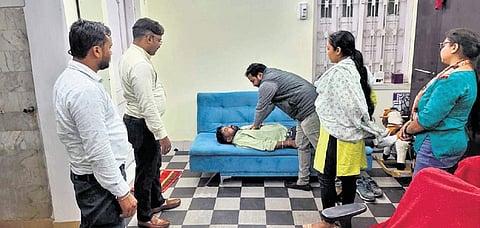
With a resolute commitment to saving lives, Excise Commissioner Faiz AQ Ahmed Mumtaz embarks on a mission to bridge the gap between life and death CPR interventions, reports Mukesh Ranjan.
Mumtaz, spurred by a conversation with his wife, Dr. Hena Shadiyah, embarked on a mission to bridge the gap between life and death by ensuring timely CPR interventions. (Photo | Express)
Jharkhand :
In a bold and unprecedented move, the Excise Department of Jharkhand has launched a groundbreaking initiative aimed at equipping individuals across various sectors with the life-saving skills of Cardiopulmonary Resuscitation (CPR).
Spearheaded by the visionary Excise Commissioner, Faiz AQ Ahmed Mumtaz, this initiative has birthed an army of over 10,000 first responders, poised to become beacons of hope in times of crisis across the state.
CPR, a vital technique employed during emergencies such as cardiac arrests or instances of respiratory distress, has long been recognition for its potential to double or even triple the chances of survival when administered promptly by trained individuals. The significance of CPR was recently underscored by a remarkable incident involving an elderly woman in Chhattisgarh, who defied death’s grip and regained consciousness upon her arrival in Bihar after a journey fraught with peril.
Mumtaz, spurred by a conversation with his wife, Dr. Hena Shadiyah, embarked on a mission to bridge the gap between life and death by ensuring timely CPR interventions. Recognizing the dire need for widespread awareness, Mumtaz initiated CPR sessions within the Excise Department, igniting a flame that spread rapidly across district offices, bars, and clubs. This initiative operates on a shoestring budget, requiring only minimal resources and a mere 1-1.5 hours per training session .
Mumtaz’s vision extends beyond mere training; he envisions a ripple effect where trained individuals become instructors, multiplying the impact of CPR expertise exponentially. Transitioning to his new role as Horticulture Director, Mumtaz is determined to ingrain CPR education into the fabric of Jharkhand’s society.
Medical professionals echo Mumtaz’s sentiment, acknowledging CPR as a fundamental aspect of health awareness. Dr. DP Singh, a general physician, commends Mumtaz’s initiative, recognising its potential to salvage countless lives lost to ignorance and apathy. Dr. Danish Ejaz, another medical expert, emphasises the critical role of CPR in augmenting survival chances during cardiac emergencies.
Testimonials from establishments like The Ruin House and Swarnrekha Bar and Restaurant in Ranchi attest to the transformative power of CPR training, empowering employees to act decisively in the face of adversity.
Sikandar Rajwar, owner of Swarnrekha Bar and Restaurant, praises Mumtaz’s efforts, affirming that his staff are now equipped to handle any cardiac emergency with aplomb.
Ripple effect
Recognizing the urgent need for widespread awareness, Mumtaz initiated CPR sessions within the Excise Department. This initiative operates on a shoestring budget, requiring only minimal resources and a mere 1-1.5 hours per training session. He envisions a ripple effect where trained individuals become instructors, multiplying the impact of CPR expertise.
source:h http://www.newindianexpress.com / The New Indian Express / Home> Good News / by Mukesh Ranjan / March 24th, 2024
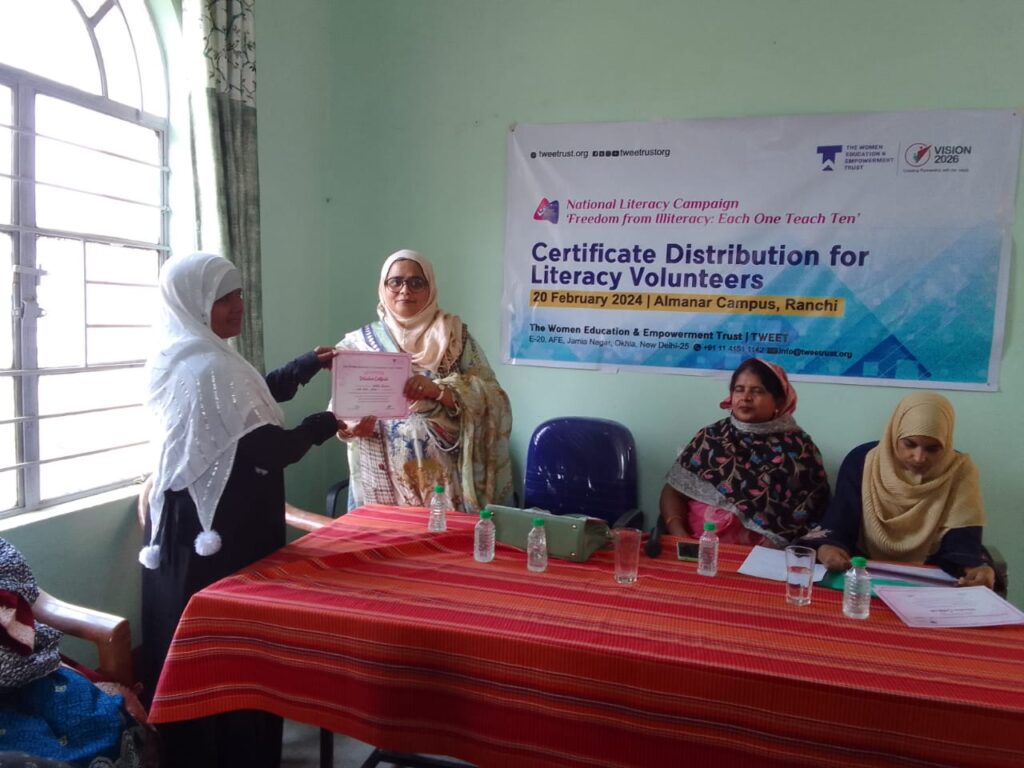
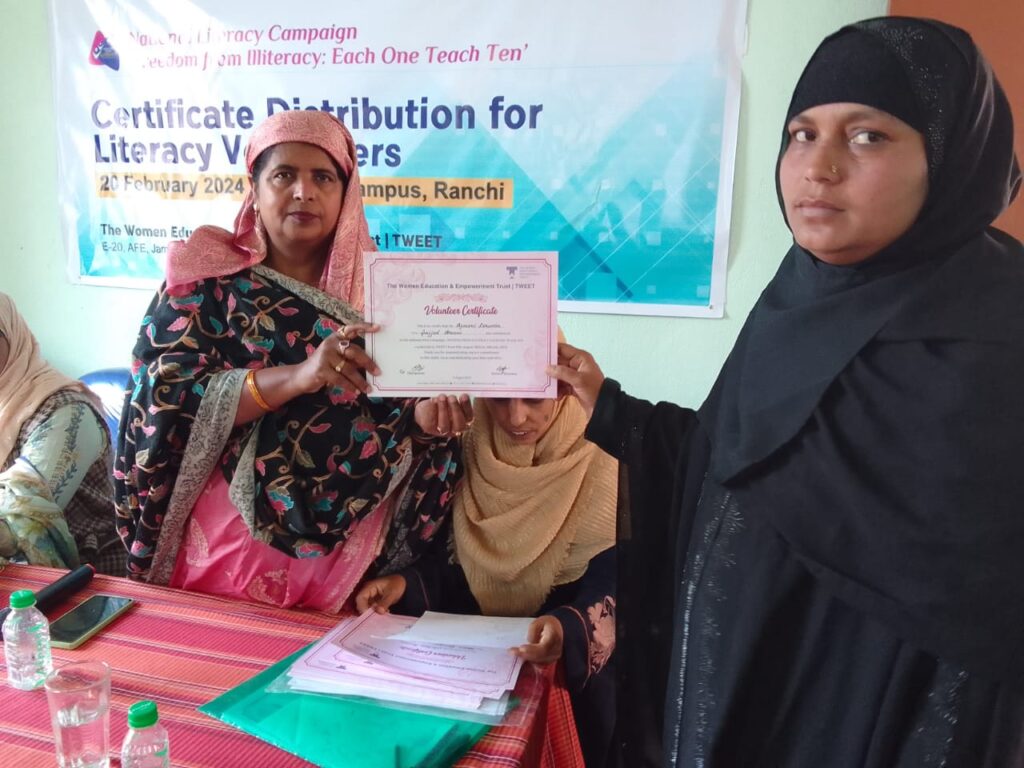
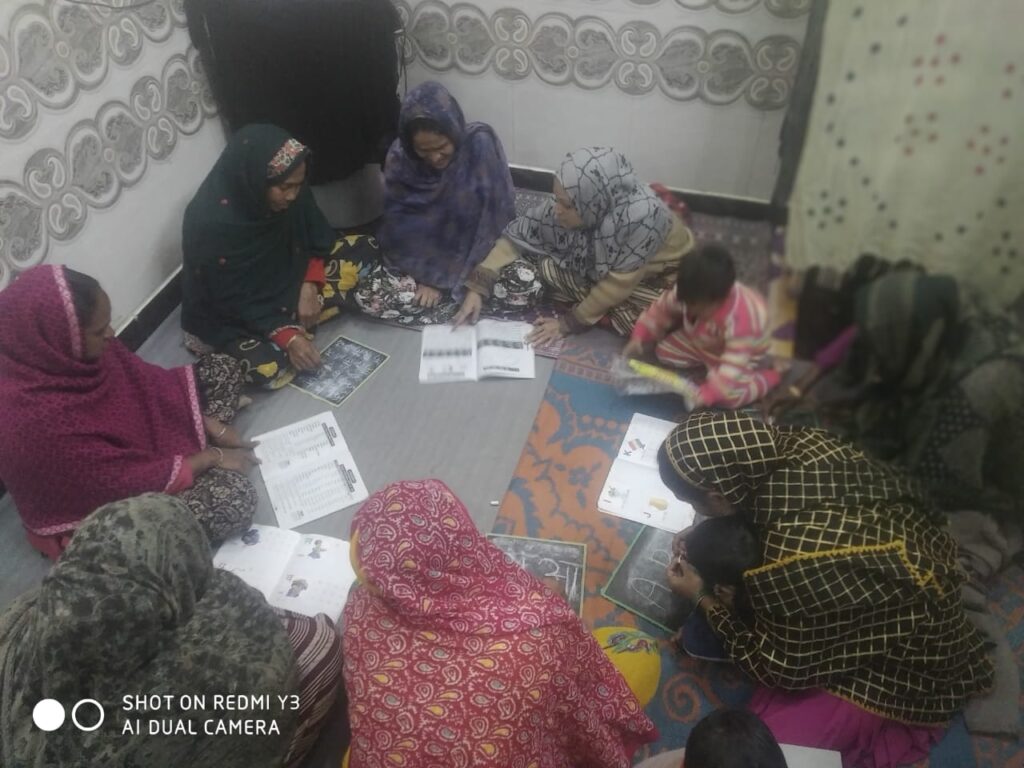
In a remarkable ceremony held on Tuesday, TWEET (The Women Education & Empowerment Trust) honored 30 dedicated volunteers in the state of Jharkhand for their exceptional commitment to eradicating illiteracy.
The event, marking the culmination of a yearlong campaign titled “Freedom from Illiteracy, Each One Teach Ten,” saw the volunteers being presented with certificates in recognition of their significant contributions.
Ms. Shabnam Parween, a distinguished Member of the Jharkhand Food Commission, graced the occasion with her presence and extended heartfelt appreciation to the volunteers for their unwavering dedication to the cause of education, particularly in empowering women. In her address, Ms. Parween underscored the profound impact of women’s education on the socio-economic fabric of society, emphasizing its pivotal role in shaping future generations.
Dr. Hena Tabassum, a prominent figure in the field of education, shared her insightful perspectives on the crucial role that educated women play in fostering societal development. Her remarks resonated deeply with the audience, highlighting the transformative potential of education in uplifting communities.
Dr. Naaz Aafreen, the esteemed State Coordinator of TWEET in Jharkhand, took the opportunity to provide an overview of TWEET’s mission and initiatives, underscoring the organization’s steadfast commitment to promoting literacy and education across the region. Dr. Aafreen also presented a comprehensive account of the organization’s achievements, reaffirming TWEET’s unwavering dedication to its noble cause.
The felicitation ceremony not only celebrated the exemplary efforts of the volunteers but also served as a poignant reminder of the collective responsibility towards fostering a literate and enlightened society. As the applause reverberated through the venue, it was evident that the spirit of altruism and service embodied by the volunteers continues to inspire and ignite hope for a brighter, more educated future in Jharkhand.
source: http://www.radiancenews.com / Radiance News / Home> Education> Focus / by Radiance News Bureau / February 24th, 2024