Khilorband (Patharkandi Village, Karimganj District), ASSAM:
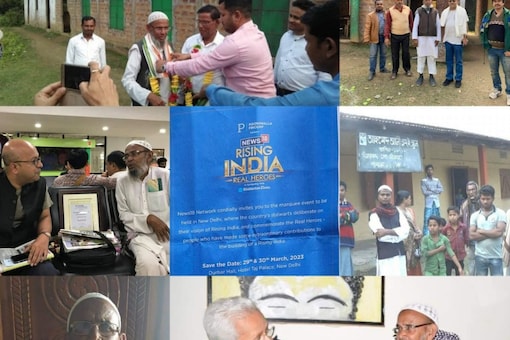
By establishing nine schools with the money collected from driving an autorickshaw, Ali has helped bridge the gap between education and poverty in his community.
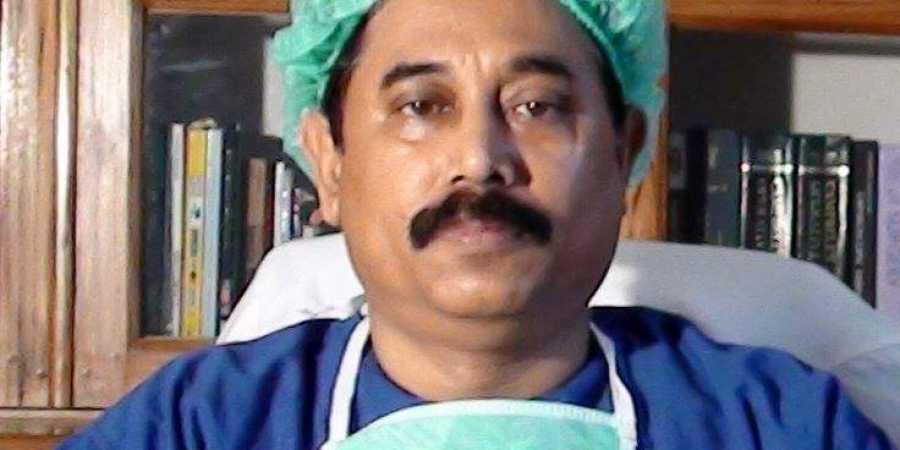
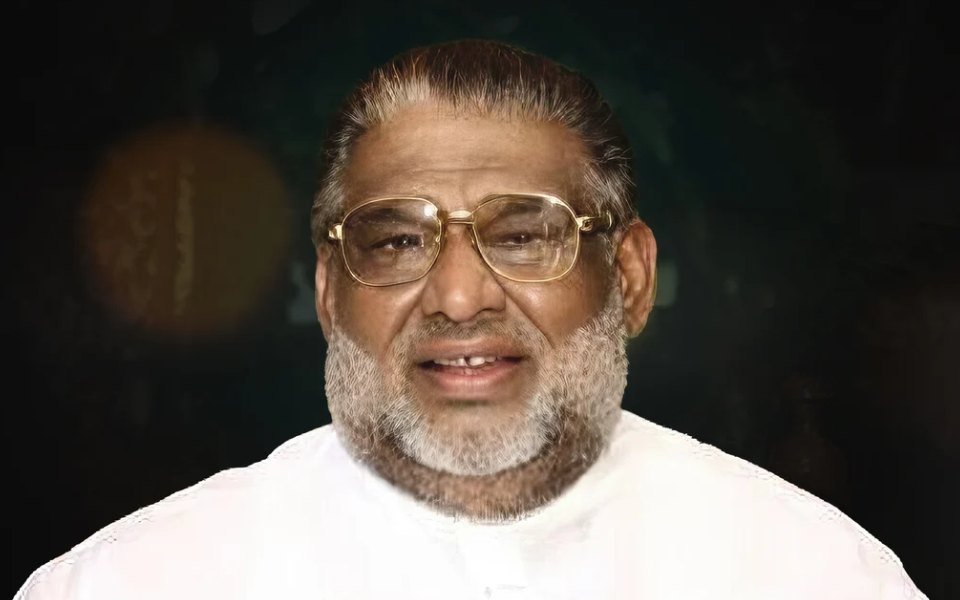
Ahmed Ali, from Assam’s Karimganj district, is a true inspiration for many, especially those who are determined to make a positive difference in their communities. Despite facing financial challenges, the 87-year-old decided to take matters into his own hands and established schools in his village to provide education to underprivileged children.
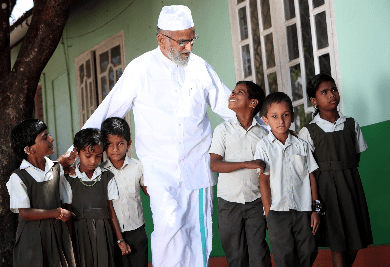
By establishing nine schools with the money collected from driving an autorickshaw, Ali has helped bridge the gap between education and poverty in his community. He understands that education is the key to unlocking opportunities and breaking the cycle of poverty. His schools offer affordable education to students who would otherwise not have access to it.
He is a resident of Khilorband, a marginal village of Patharkandi in the Indian state of Assam, bordering Bangladesh. Ali started the first school in 1978 in his village Madhurband. He sold some of his land and donated a part of the land to the school, on which it was built. Out of his 36 bigha land, he donated 32 bigha land for the construction of the school. Funding of the school is also done from its deposits, daily earnings and donations.
His high School was set up in 1990. In addition to it, he also established three lower secondary schools, five secondary schools and one higher secondary school. He hopes to establish a college in the future.
Besides donating his own land for the schools’ construction, Ali also works hard to keep them running. He drives a rickshaw during the day to earn a living, and at night, he cuts wood to help maintain the school’s finances. His dedication and hard work have made a significant impact on the education of many children in his community.
Ahmed Ali’s work has not gone unnoticed. He was nominated for the News18 Rising India Real Heroes Award in the education category, and he will be conferred with the award at the News18 Rising India Summit at the Taj Palace Hotel in New Delhi on March 30.
His story has been shared by Prime Minister Narendra Modi on his radio programme ‘Mann Ki Baat,’ inspiring many others to take action in their own communities. Narendra Modi said, “I have come to know that a rickshaw puller named Ahmed Ali of Assam’s Karimganj district has opened nine schools for the education of poor children. It is a beautiful manifestation of the will of the people of our country.” Ali was also invited to Delhi as a speaker by an NGO Jookto.
source: http://www.news18.com / News 18 / Home> India / by Akhi Das, edited by Jessica Nani / March 29th, 2023
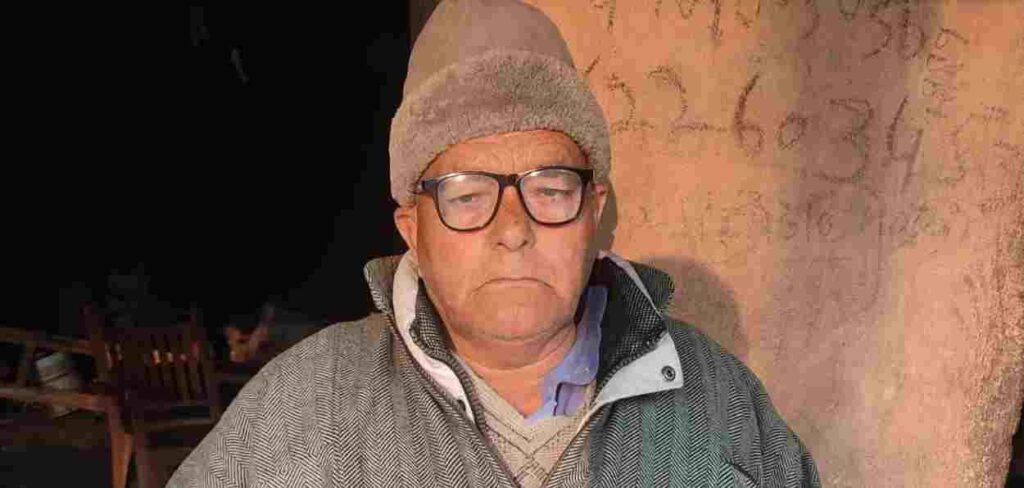
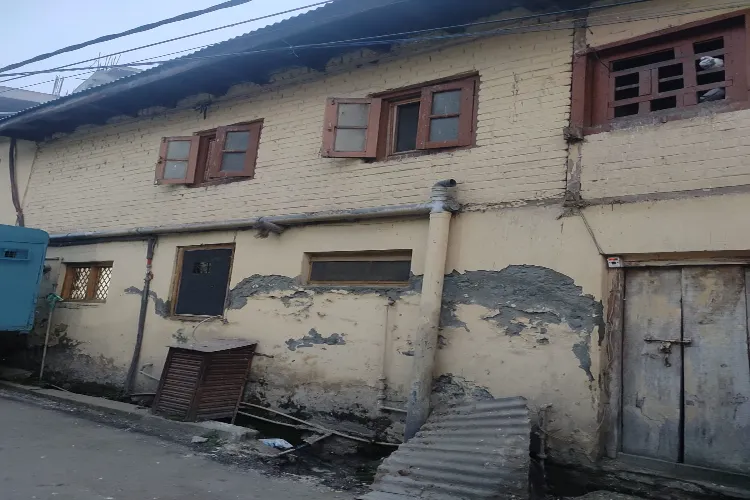
Ghulam Mohammad Mir at his house in Magam, Kashmir
This is the story of how a powerful lobby in Kashmir comprising men and women in politics, bureaucracy, media, and academia was allowed to spread fake narratives for years with the apparent motive of currying favours with pro-Pakistan terrorists and separatists, and it went unchallenged.
It’s interesting to note that the two Kashmiris, who were conferred India’s fourth highest civilian award—Padma Shri—for helping security forces in service of the nation, were poor and uneducated residents of Central Kashmir’s Tangmarg-Magam belt.
While Mohammad Deen Jagir of Tangmarg was conferred upon Padam Shri for foiling Pakistan’s “Operation Gibraltar” in 1965, Ghulam Mohammad Mir of Magam aka Moma Kanna, was honoured in 2010 for wiping out insurgency in its hotbed in the 1990s.
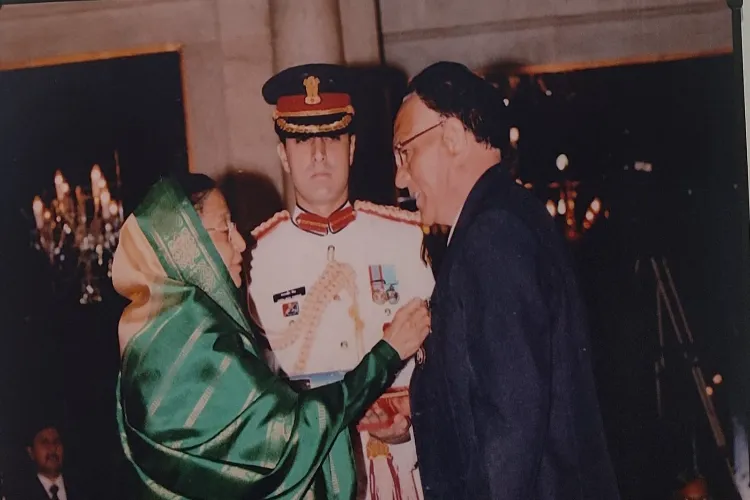
Ghulam Mohammad Mir receiving Padma Shri from President Pratibha Patil
Kanna, who claims to have neutralized “more than 5,000 militants”, also lost 10 of his relatives, including three family members, before his services to the nation were recognized in 2010.The announcement of Padma Shri to Kanna in February 2010 triggered controversy and prodigious reactions from the Valley’s mainstream politicians. In the era of competitive separatism being at its peak, the mainstream leaders outsmarted even the rank secessionists, raising questions about how a ‘collaborator of security forces’ had been selected for a prestigious national honour.
Interestingly, it was Farooq Abdullah, a Minister in Manmohan Singh’s cabinet, who had recommended the award for Kanna. Interestingly, his son, Omar Abdullah, then the chief minister publically distanced himself from the award. He denied that his party or government had recommended the name of a man who was seen as working against terrorists.
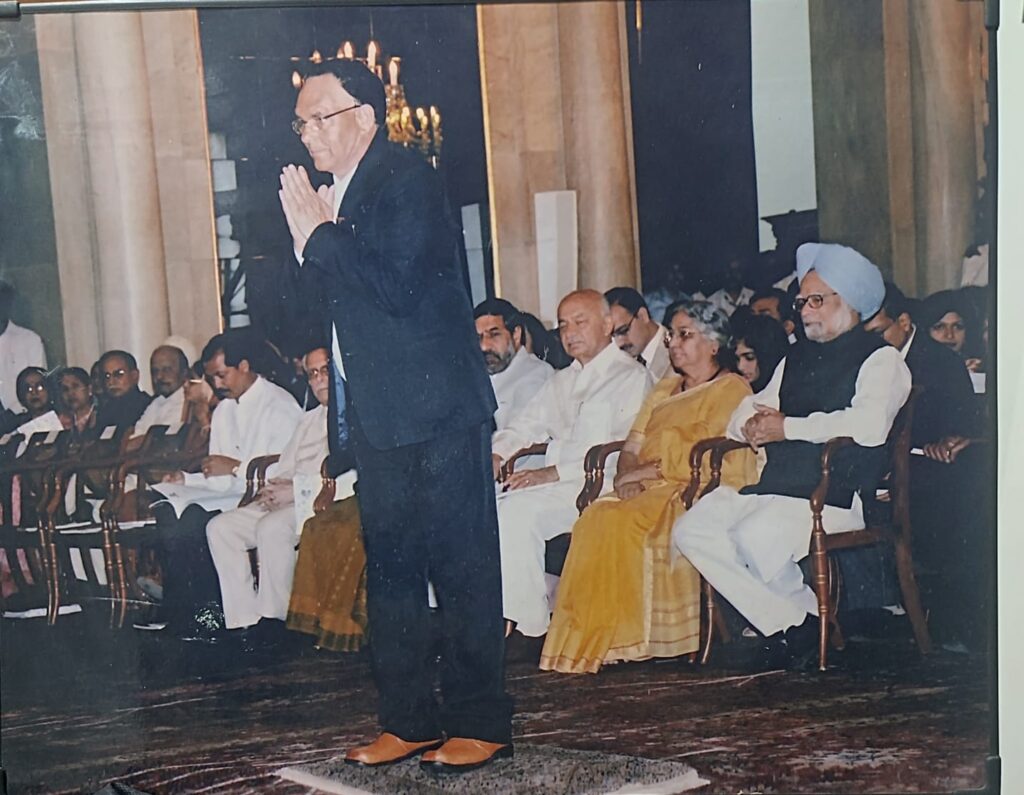
Ghulam Mohammad Mir at the Padma Awards ceremony
In an op-ed in the local newspaper Greater Kashmir, a top bureaucrat, who later held key positions in Mufti Mohammad Sayeed’s cabinet also blasted Kanna and those behind Padma Shree to Kanna.All those in power alleged that Kanna was behind the custodial killing and fake encounters of “hundreds of innocent civilians”. Reports in the media claimed that Kanna was a pro-Pakistan militant who subsequently became a pro-India ‘renegade’. However, Farooq Abdullah quickly admitted that he had recommended Kanna “on the merit of his services to the nation”.
Kanna’s name was recommended by top Army and BSF officers and also the then Chief Information Commissioner of India, Wajahat Habibullah. Habibullah was Kashmir’s Divisional Commissioner when Kanna helped security forces.
The house of Ghulam Mohammad Mir at Magam, Kashmir
The local and the national media demonized Kanna, buttressing the populist narrative that informers and counterinsurgents were not entitled to Padma awards. They conveniently glossed over the fact that the very first Padma Shree in Kashmir had gone to Mohammad Deen, who had informed the authorities of the presence of Pakistani intruders in Gulmarg in 1965-66.
In an interview with Awaz-The Voice at his Magam residence this week, 73-year-old Kanna claimed to have neutralized “more than 5,000 militants” in the first 10-12 years of the insurgency but asserted that he had never killed a civilian in custody, a fake encounter or otherwise. He said that thousands of militants got either killed or arrested even as hundreds more surrendered.
This 73-year-old man, who lives in a nondescript mud-plastered house under the Police and CRPF protection, and runs an ordinary sawmill on the premises to eke out his family’s livelihood, claimed he was never a militant.
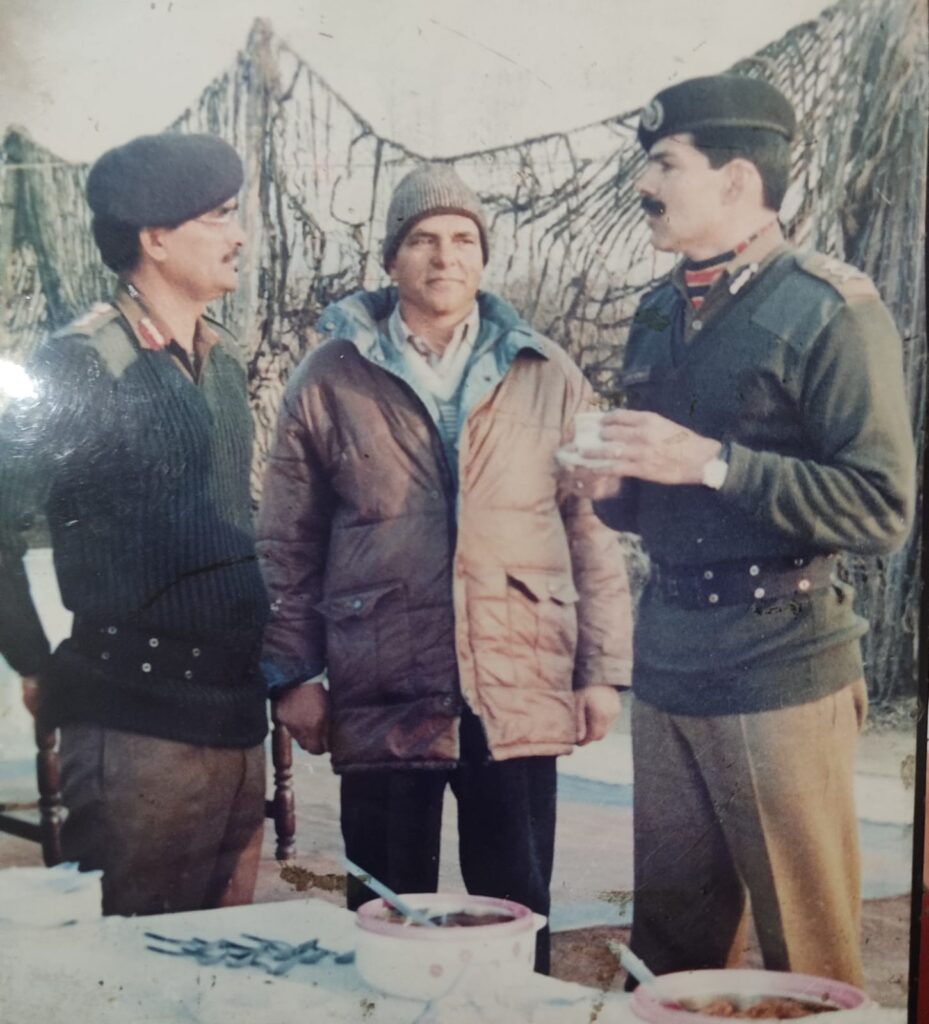
Ghulam Mohammad Mir with security forces in Kashmir
“All those politicians and journalists were lying to the world as they were darlings of (Syed Ali Shah) Geelani and (Mohammad Yasin) Malik and their job was limited to their glorification and appeasement. Go and check the records at all Police Stations. Not a single FIR for murder or any other crime was registered against me”, Kanna asserted.
“I began helping the security forces from day one of militancy in 1989 as I firmly believed that gun culture, violence, and terrorism, would lead us to nowhere. Since I was never a militant, there’s no question of my becoming a renegade. All those media reports about me were trash. I never killed a civilian in custody or encounter. I never committed any atrocities on any human being. That’s why there wasn’t any complaint against me”, Kanna added.
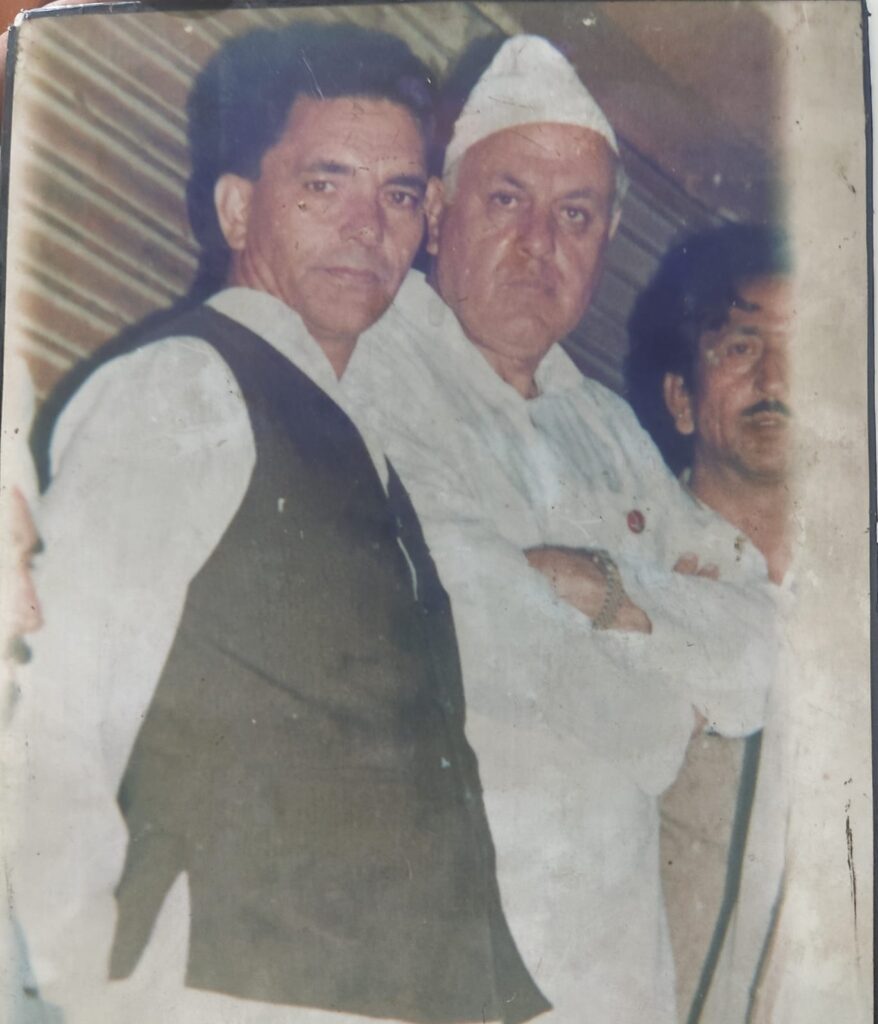
Ghulam Mohammad Mir with Dr Farooq Abdullah
“I didn’t kill anybody even after the militants killed 10 of my relatives including three of my family members”.
Kanna disclosed that being in the Congress party, he knew Mufti Mohammad Sayeed as J&K Pradesh Congress Committee president in the 1980s.
“I was given a temporary class-IV job in the Forest Department when Ghulam Mohammad Shah was the Chief Minister in 1984. In December 1989, when Mufti Sahab became India’s Home Minister and I heard about his daughter Rubaiya’s kidnapping, I did my bit to trace her to Uthura village of Baramulla with the help of a brick kiln owner who was my friend. Later, she was released when Mufti’s men struck a deal with the militants”, Kanna said.
“I met the Minister in charge of J&K in VP Singh’s government, George Fernandes, at Bakshi Stadium in Srinagar. He sought my help to contain insurgency. Ghulam Ahmad Itoo alias ‘Ama Kanna’ of Sultanpora was the first militant who surrendered before me”.
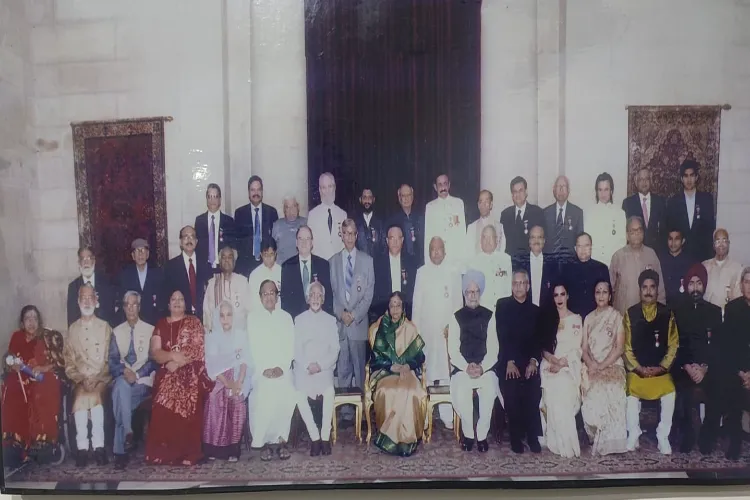
All the Padma awardees of 2010 with President Pratibha Patil in one frame
Later Qasim Khar of Nowgam and three militants of Dab Wakora surrendered before Kanna. This was the first group of Kashmiri youths who switched loyalties and helped security forces in counterterror operations. Within a year, it grew into a sizable network.
Kanna turned to the security forces’ side when some civilians and militants captured and killed Constable Samrat Singh of the CRPF 48th battalion. “They got him booby-trapped in our neighbourhood. They snatched away his .303 rifle. A government school teacher, who is still alive, set him on fire and burned him alive at Hagarpora. There was never any action against him and other killers”, Kanna said.
Unlike Moma Kanna, Amma Kanna indulged in human rights abuse and allegedly committed atrocities against the militant families. Over a year after his surrender, he was buying a lamb for sacrifice on the eve of Eid-ul-Azha near Magam when some militants seized him and chopped off his head with a butcher’s cleaver. It was carried to Budgam and hanged to a tree at Nasrullahpora to terrorize those daring to side with the forces.
source: http://www.awazthevoice.in / Awaz, The Voice / Home> Story / by Ahmed Ali Fayyaz, Magam (Budgam) / November 19th, 2023
The retired surgeon of Gauhati Medical College and Hospital traverses like a nomad to advocate birth control, especially among Assam’s rural Muslim populace.
Dr. Ilias Ali. | Express Photo Services
Guwahati :
Assam’s “family planning jihadi”, who quotes from the holy texts, has finally got his dues, the Padma Shri.
For the past many years, Dr. Ilias Ali has been on a holy mission. The retired surgeon of Gauhati Medical College and Hospital traverses like a nomad to advocate birth control, especially among Assam’s rural Muslim populace.
The 63-year-old often adopts unusual but unique methods to motivate people to go for ‘No Scalpel Vasectomy’ (NSV). He quotes verses from the Quran and the Hadith to encourage people to go for NSV. He mostly works in the state’s Bengali Muslim settlements where people view NSV and the use of contraceptive pills as un-Islamic. Resistance is common, yet he has been able to motivate over 55,000 people to go for NSV.
“The first few years of my mission were very challenging. Those days, my family would get scared when I embarked on a journey to conduct an NSV camp. It feared for my life,” Dr. Ali, who is still a part of Assam’s NSV programme, told this correspondent.
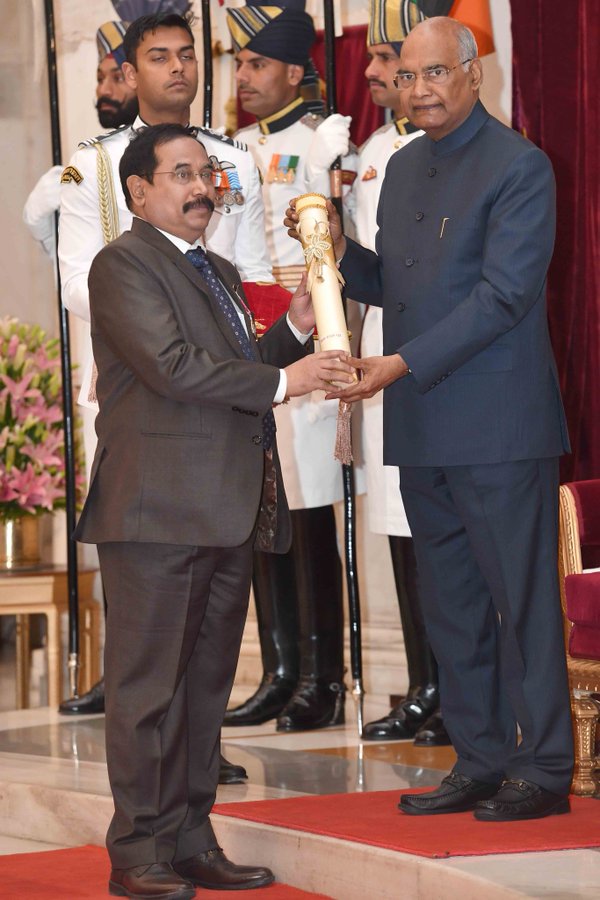
President Kovind presents Padma Shri to Prof Dr Ilias Ali for Medicine. A public health specialist, he has spread awareness about family planning and popularised different means of birth control / pix: rashtrapatibhvn
He is happy that the government has recognised his contribution to society.
“I am very happy that my contribution has been recognised. It is an honour to the entire medical team that I have been a part with for years,” he said.
Uddhab Bharali is the other person from Assam to be named for the award. The 57-year-old has to his kitty over 150 innovations.
Three decades ago, Bharali had to drop out of his engineering studies as he could not afford to pay fees and was required to take care of his family. However, that was hardly an obstacle. Riding on his passion for creativity and innovation, he started developing machines, mostly from scrap, for everyday use. The turnaround was when he created a polythene-making machine for surrounding tea estates.
Much of his inventions are today centred round agriculture. His machines for de-seeding of pomegranates, peeling areca nuts and cassava, cutting tobacco leaves to extracting passion fruit juice helped in speedy agricultural process and provided livelihood to many.
Earlier, the BBC had done a documentary on the innovations of Bharali who is a recipient of several awards including three from abroad. He said he was very happy to be honoured.
“I’m feeling very happy that I have got a national recognition. I will continue with my work,” the innovator who works with students from various IITs, said. Bharali takes care of 25 families with poor financial backgrounds and is widely known for his philanthropic works.
Two others from the Northeast to be named for Padma Shri are archer Bombayla Devi Laishram of Manipur and flutist Thanga Darlong of Tripura. The 99-year-old Darlong is the last tribal musician to play “Rosem” which is a bamboo-made flute-like musical instrument.
source: http://www.newindianexpress.com / The New Indian Express / Home> Nation / by Prasanta Mazumdar (picture edited) / Express News Service / additional photograph of Padma Shri Award introduced – pix: source: rashtrapatibhvn: / January 26th, 2019
Rana’s feat assumes significance in the wake of a rise in the number of drowning cases in the state.
Rana Fathima shows off her skills in the water
Kozhikode :
Rana Fathima, a five-year-old swimming prodigy hailing from Kodiyathoor panchayat, has been enchanting denizens on the internet with her skills in the water for some years now. Now, as a brand ambassador of ‘Neenthi vaa Makkale’, an initiative organised by Mukkam municipality to impart swimming lessons to students, she is a role model, inspiring youngsters in the panchayat to take up swimming.
Rana learned to swim in a small river in Thottumukham under the tutelage of her grandmother, Ramla Manaf. She is the daughter of journalist Rafeeque Thottumukham and Rifana.“It is important for children to learn how to swim. It’s equally important for parents to encourage their kids to come out of their cocoons. Mobile phones and television are adversely affecting the young generation. Children should stay close to nature,” Rafeeque said.
After her videos went viral, Rana was frequented by social media influencers, all eager to capture her story in greater detail. Rahul Gandhi, too, had paid her a visit on one of his trips to the state.
Rana’s feat assumes significance in the wake of a rise in the number of drowning cases in the state. “Most of the drowning cases happen during the vacation. People who take to the water bodies here do not heed our warnings. You might have prior experience in swimming, but the rivers here have strong currents. Even the native swimmers are scared to get down sometimes,” said Muralidharan C K, assistant station officer, Fire and Rescue Services, Mukkam.
In the past five years, around 41 people have died by drowning in the region. Most of them were youngsters aged 15-28.
source: http://www.newindianexpress.com / The New Indian Express / Home> Kerala / by Alka Mariya & Heera Hari / May 22nd, 2023
Senior Congress leader and former state minister T H Mustafa died on Sunday at a private hospital here due to multiple age-related ailments.
He was 82 and is survived by wife and eight children, family sources said.
Mustafa was a former Food Minister in the K Karunakaran cabinet and a five-time legislator. He was undergoing treatment for various ailments at the private hospital where he breathed his last at 5.43 AM, hospital sources told PTI.
Leaders cutting across party lines condoled Mustafa’s demise.
Kerala Chief minister Pinarayi Vijayan said Mustafa had left his mark on the public life of Kerala as a minister, a legislator and a Congress leader.
Leader of Opposition in the state assembly, V D Satheesan, said Mustafa strengthened the Congress and led it well in Ernakulam district.
KPCC chief K Sudhakaran termed Mustafa’s demise as a ‘great loss’ to the party.
”He has played a major role in strengthening the Congress party in Ernakulam District. He was a great orator and an organiser. He used to help anyone who approached him, without considering their politics or religion,” Sudhakaran said.
With the demise of T H Mustafa, Congress lost a strong leader, AICC General Secretary in charge of Organisation, K C Venugopal, said in a statement. Venugopal noted that Mustafa rose to prominence in the Congress party through the Youth Congress.
”His immense contribution helped in the growth of Congress in the district. He supported the party by even selling his own property,” Venugopal said.
Mustafa was the Ernakulam District Congress Committee President for 14 years and functioned as KPCC General Secretary and KPCC Vice President.
source: http://www.english.varthabharati.in / Vartha Bharati / Home> India / by Vartha Bharati / January 14th, 2024
Ansar Ahmed Sheikh, the son of an autorickshaw driver, became India’s youngest IAS officer at the age of 21 in 2016, inspiring millions with his journey from humble beginnings to the pinnacle of civil service.
IAS Ansar Ahmed Sheikh
New Delhi:
Ansar Ahmed Sheikh has achieved the distinction of becoming India’s youngest IAS officer after successfully clearing the UPSC examination on his first attempt. His accomplishment underscores the power of perseverance and dedication in overcoming challenging circumstances.
Facing financial hardships due to unfavorable conditions, Ansar’s family struggled to make ends meet. However, undeterred by the obstacles, he pursued his dreams relentlessly. In 2016, Ansar made history by excelling in one of the most challenging exams, surpassing all previous records.
Hailing from a modest background, Ansar is the son of Yonus Sheikh Ahmad, an auto-rickshaw driver, and his mother, who works in the fields. The family resides in a rented home in Shelgaon village, situated in the Jalna district of Maharashtra’s Marathwada region.
Growing up in extreme poverty, Ansar worked diligently from a young age to provide for his family’s basic needs. Despite the lack of emphasis on education within his family, they faced pressure to discontinue his studies due to difficult circumstances. However, Ansar, always a standout student, persisted in his pursuit of knowledge.
Against all odds, Ansar achieved an impressive All India Rank of 361 in the UPSC examination at the age of 21. Before setting the record as India’s youngest IAS officer, he had previously scored 91% in his X board examinations and attained a 73% in his graduation, where he pursued a Political Science degree at Fergusson College, Pune.
While preparing for the UPSC examinations, Ansar’s financially strapped family supported him, demonstrating their commitment to his education. His remarkable results serve as a testament to how his unwavering dedication and hard work distinguished him from the crowd.
source: http://www.zeenews.india.com / ZEE News / Home> News / by Zee Media Bureau / edited by Mahi Mishra / January 12th, 2024
Indian freedom fighter Mohammad Ali Jauhar was buried in the compound of Al-Aqsa Mosque after his death on 4 January 1931
On 4 January 1931, the legendary freedom fighter, journalist, educationist and Islamic philosopher Mohammad Ali Jauhar (born 10 December 1878) passed away. He is known as one of the most dynamic and versatile leaders of the subcontinent and, indeed, the Muslim world. The story of his passing and burial in Palestine is as captivating as his role in India’s freedom struggle from British rule.
In November 1928, during his European tour, information was received in Al-Quds (Jerusalem) that Jauhar would visit Palestine on his way back to India. This news brought immense joy to the Palestinian Muslims, particularly those deeply devoted to him, and they awaited his arrival eagerly.
One Palestinian observer, Nazir Hassan Al-Ansari, wrote a detailed report on this impending visit in the Delhi-based Urdu newspaper Hamdard. In the 3 December, 1928, issue, he said that Jauhar’s telegram from Damascus was received by Syed Amin Al-Husseini, the Grand Mufti of Jerusalem, and the Head of the Muslim Supreme Council in British Mandate Palestine. He was due to arrive in Al-Quds from Damascus on 15 November, and the spacious rooms above the Sharia Department in Al-Quds were prepared for him.
According to the same report, this news spread rapidly throughout Palestine, and preparations for his reception started on the border, from the ancient crossing over of the River Jordan, Banat Yaqoob, all the way to Al-Quds. Thousands gathered along the roads, observing customary Arab traditions with horse riders and women singing Arabic songs of welcome. Although anticipated to arrive around noon, Jauhar was delayed until 10pm, leading to disappointed crowds heading homeward.
His entry into Palestine was initially declined by the British Mandate High Commissioner of Palestine, Sir (later Lord) Herbert Plumer on 16 November, despite the fervent anticipation of the Palestinians. He was finally permitted to enter Palestine on 20 November, arriving in Tiberias late in the evening in the chilling cold. Despite the adverse weather conditions, his arrival in Al-Quds the following day was met with wholehearted warmth, sincerity and enthusiasm from the people of Palestine.
Comrade and Hamdard were both newspapers published in India by Mohammad Ali Jauhar, in which he gave plenty of column inches to Palestine. He was always concerned about Palestine, and wrote about it from the beginning of his career in journalism. He was particularly vocal after the 1917 Balfour Declaration. The British government closely monitored him and others who expressed their apprehension about the fate of Jerusalem, and opposition to the Zionist movement.
This monitoring is evident in a letter from the office of the Lieutenant Governor’s Camp of the United Province, dated 1 December, 1917, to Sir James DuBoulay. The letter discussed concerns regarding the growing Muslim interest in Jerusalem and the need to monitor the New Era newspaper. “[We] are watching this particular newspaper, which is sailing as near the wind as the Comrade and Hamdard used to do; and it may be at any moment necessary to impose pre-censorship upon it or in some other way to draw its teeth.” This letter is available in the national archives of India.
Jauhar was always raising awareness about Palestine through his writing and speeches, along with his brother Shaukat Ali. A delegation from Palestine came to India in 1923–24. On 29 January 1924, the Khilafat Committee organised a public meeting in Chhota Kabrastan, Grant Road, Bombay (now Mumbai), where members of the Palestine Deputation were also present.
A report in the Times of India on 31 January 1924, headed “Palestine Deputation: An Appeal for Funds”, detailed the arrival of Muhammed Ali, Shaukat Ali and their mother, Bi Amma, who were greeted with cries of Allahu Akbar (God is Great).
The report said that after meeting the members of the Palestine Deputation, Mohammad Ali moved the following resolution: “This meeting of the Musalmans [Muslims] of Bombay offers its hearty welcome to the Palestine Deputation that has come to India to ask for financial support for the necessary repairs of Masjid-i-Aqsa and Masjid-i-Sakhra [Dome of the Rock] and is of the opinion that it is the duty of every Muslim man, woman and child to take part in this work and thus achieve prosperity and salvation in this world and the world to come.” He also appealed for donations from the Muslims, successfully mobilising the Indian Muslims for the cause of Palestine.
Mohammad Ali Jauhar arrived in London in 1930 to participate in the Round Table Conference for the Independence of India, despite his ailing health. His speech there was historic. He breathed his last at London’s Hyde Park Hotel on 4 January 1931. The funeral prayer was scheduled for the following day at 6pm in Paddington Town Hall. The then Afghan Ambassador, Egyptian Ambassador, Iranian Ambassador and all the members of the Round Table offered their shoulders to carry the bier on which lay Jauhar’s body. There was a huge crowd of British people outside the hall, and British representatives of all parties were also present inside the hall.
Everyone wanted Jauhar to be buried in their city. The people of London believed that he should be buried there, but his family was against it. His widow, Amjadi Bano Begum, wanted to take him to India, and hundreds of telegrams came from India calling for him to be taken home.
The Grand Mufti of Palestine, Amin Al-Husseini, requested that Mohammad Ali Jauhar be buried in Baitul Muqaddas, Jerusalem. It is said that his motive was to associate the Muslims of India with Palestine on religious grounds. Just as the Muslims of India love Makkah and Madinah, so too should they love Baitul Muqaddas.
Shaukat Ali agreed to the Grand Mufti’s request. The body was kept in London for five days, then it was sent by ship to Egypt, arriving in Port Said on 21 January 1931, where it was placed under the supervision of representatives of the Egyptian government and conveyed to the Abbas Mosque, accompanied by a police bodyguard. Egypt presented a piece of the Kiswa (the cloth that covers the Ka’bah in Makkah) to be placed on the coffin. The funeral prayer was performed again in the mosque, after which Jauhar’s remains were carried through the streets lined by respectful crowds.
According to Reuters, special prayers were held in mosques across Palestine after the midday prayer. The news that the body was being taken for interment in the Noble Sanctuary of Al-Aqsa (Haram Al-Sharif) was welcomed widely as evidence of the strengthening of the friendship between the Muslims of India and Palestine.
When Mohammad Ali Jauhar’s remains arrived in Jerusalem on 23 January, all shops closed out of respect.
Shaukat Ali and Mufti Amin Al-Husseini led the funeral procession; navigating through a massive crowd, it took them three hours to reach Masjid Al-Aqsa. Following the Friday prayer, the funeral prayer was offered for the third time, with an estimated congregation of around two hundred thousand people. Mohammad Ali Jauhar was finally laid to rest amidst speeches by numerous prominent Muslim leaders.
According to a report by the Times of India on 14 September 1929, Jauhar presided over a public meeting of Muslims in Bombay the day before. The meeting deliberated on the appropriate next steps considering the responses of British ministers and the Government of India to the unified demands of Muslims regarding the ongoing events in Palestine. He was reported to have said that the Muslims alone were the owners of Jerusalem, which was the land of their first Qibla (direction of prayer) and thus held in great reverence.
“The British wanted to give the Jews full rights over the Wailing Wall,” said Jauhar. “The divide-and-rule policy of the Europeans had proved useful. Instead of withdrawing the Balfour Declaration, the government wanted to enforce it on the Arabs, and the only reply they could give to it was that the Mussalmans [sic] should ask for the independence of India and free it from the shackles of India.” The meeting and other such events were utilised by him to garner support for India’s freedom and educate Muslims about Palestine.
He was also reported to have said that he would sacrifice his life and see that no stone was left unturned to liberate Palestine from British control. He urged Indian Muslims to intensify their efforts to secure India’s freedom, stating that the freedom of Palestine and other Islamic countries from foreign domination hinged on India’s independence.
An article in the Palestine Bulletin on 5 January 1931 following his demise mentioned Jamaal Husseini’s visit to the esteemed leader just before leaving London. During their meeting, Mohammad Ali Jauhar assured Husseini: “Do not think that I have forgotten Palestine. The memory of Palestine will be in my mind as long as I live.” He then asked him to give his greetings to all of the Muslims of Palestine.
The life of Mohammad Ali Jauhar was an exemplary bridge between the Muslims of India and Palestine. After his death, his brother Shaukat Ali took over the task of further strengthening the cause of Palestine in India. As ongoing events in Israeli-occupied Palestine demonstrate, that need is as great today, if not more so, than it was a century ago.
Afroz Alam Sahil is an Indian journalist and author. Afshan Khan is a PhD candidate in Political Science and International Relations at Istanbul Sabahattin Zaim University. She can be contacted at @AfshanKhanSahil on X.
source: http://www.middleeastmonitor.com / Middle East Monitor (MEMO) / Home> Opinion / by Afzoz Alam Sahil and Afshan Khan / January 04th, 2024
MA Mohammed Jamal, the revered godfather to thousands of orphans and general secretary of Wayanad Muslim Orphanage (WMO) in Kerala’s Wayanad district, passed away on Thursday, 21 December.
Having dedicated his life to the orphanage since 1967, Jamal transformed the lives of numerous orphans.
Initially a member of the Indian Union Muslim League, he assumed leadership of the orphanage in 1987 following the passing of veteran Muslim leader Abdul Rahman Bafaqui Thangal.
Over 400 students, with WMO’s financial support, pursue higher studies nationwide after leaving the orphanage, and many expressed their grief on social media following the death of “Jamaluppa,” the name they used to call him.
Jamal, also a Kerala state committee member of the Indian Union Muslim League, was 83.
His demise leaves a significant void at the helm of the 19 institutes providing religious and moral education to approximately 9000 students in Wayanad.
In recognition of his philanthropic endeavors, Jamal received prestigious awards, including the Kerala Mappila Kala Academy’s first Sharifa Fatima Award in 2006, the Indira Gandhi Sadbhavana Award for Best Education Worker in 2008, the KSTU’s first Shihab Thangal Award for Best Social Worker in 2011, and the Quaid-E-Millath Foundation’s Quaid-E-Millath Award.
source: http://www.maktoobmedia.com / Maktoob Media / Home> India / by Maktoob Staff / December 21st, 2023
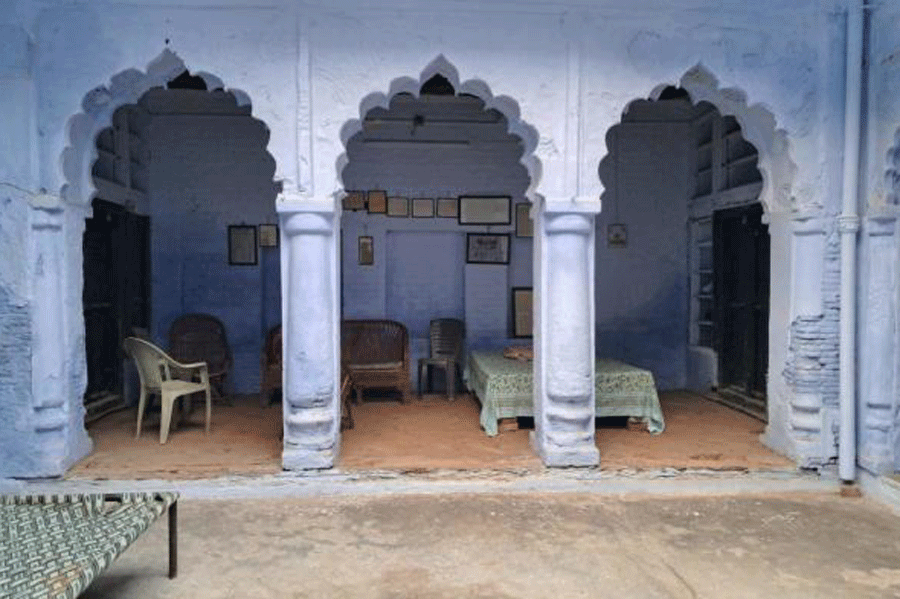
The Telegraph visits the haveli where the Khilafat and Non-Cooperation movements came to be mergedThe Telegraph visits the haveli where the Khilafat and Non-Cooperation movements came to be merged.
Farangi Mahal in Lucknow. / Photo courtesy: Adnan Abdul Wali
Stepping into Farangi Mahal in Lucknow after skirting rows of low-priced chikankari salwar kameez shops and their steady din is somewhat like stepping into the stillness of a forest after having left a busy city. Only, Farangi Mahal is anything but a forest. It is a cluster of buildings that hold within them a bit of history that has been almost forgotten, as the past often is in India, obscured by new settlements or construction, or billboards, if not demolished altogether.
In Farangi Mahal the past is difficult to see also because of the turn Indian politics has taken.
I am part of a group from Calcutta visiting Lucknow last October.
Inside Farangi Mahal, located in the old neighbourhood of Chowk, we enter its elegant and serene courtyard. The lime-and-mortar white exterior is tinged with a blue, peeling off in places. The afternoon sun slants down on the pillared arches and the exposed bricks but does not take away from the fragile beauty of the structure.
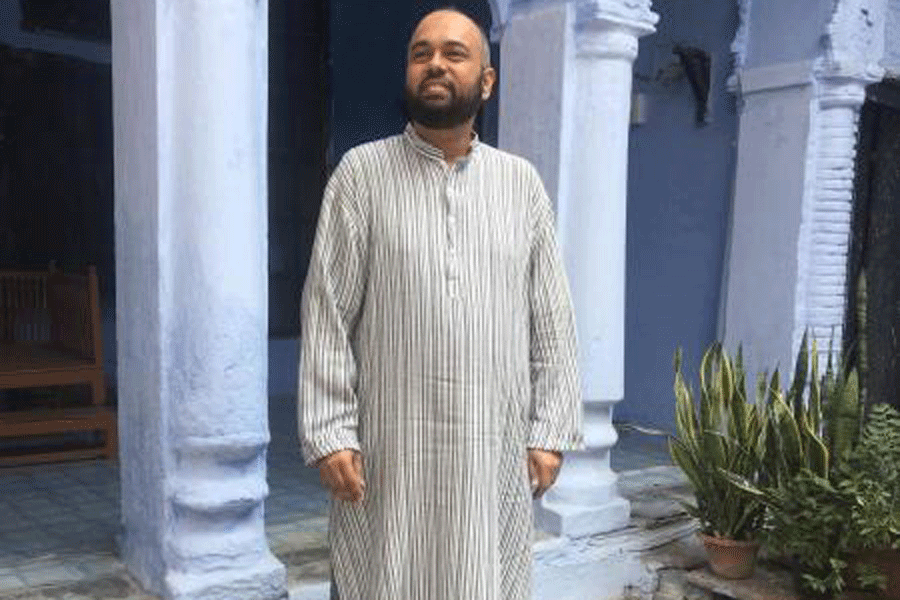
Adnan Abdul Wali, a member of the family that owns the house, the Farangi Mahalis, ushers us into the courtyard. His Urdu and Hindi are as impeccable as his courtesy. He is a direct descendant of Maulana Abdul Bari Farangi Mahali, who was a leader of the Khilafat Movement.
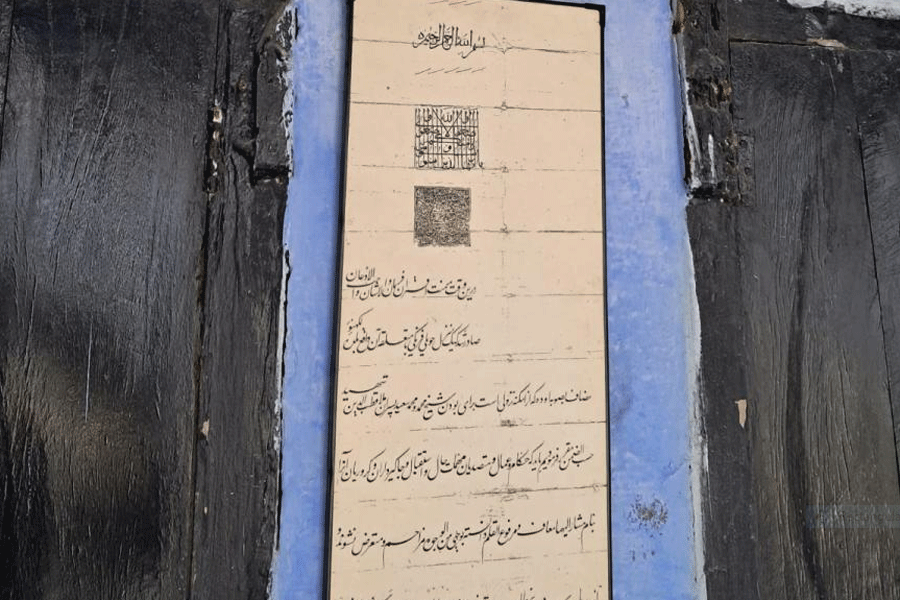
Farangi Mahal’s story, however, goes back beyond the nawabs and the British. It was occupied by French merchants during the rule of Mughal emperor Aurangzeb and that is how it got its name. The merchants, owing to some offence, lost the property and Aurangzeb gave it to Abdul Bari’s ancestors, who needed a safe haven.
The farman issued by Mughal emperor Aurangzeb decreeing that Bari’s ancestors could live here / Photo courtesy: Adnan Abdul Wali
“The Khilafat movement started from here,” says Wali. Farangi Mahal is where the idea of joining the Khilafat Movement and the Non-Cooperation Movement was born and Abdul Bari was the architect of the plan. It was a glorious moment of Hindu-Muslim unity in Indian history and Lucknow played its part in it.
Abdul Bari, an eminent religious scholar who belonged to the tradition of highly respected scholars from his family, was also an astute politician. He had travelled across many Muslim countries and was acutely aware of the impact of British imperialism on the Islamic world.
In March 1919 came the Rowlatt Act, which was to be followed by the horrors of the Jallianwala Bagh massacre in April 1919, one of the events that would lead Mahatma Gandhi to launch the Non-Cooperation Movement. Before that happened, a large number of Muslims in India were already disturbed by the threat of the dismemberment of the Ottoman Empire in Turkey following World War I and the jeopardised future of the Caliph, the Ottoman head of state, who is nominally the supreme religious and political leader of Sunni Muslims across the world. Turkey had been defeated by the Allied Forces, which included the British.
Adnan Abdul Wali, a direct descendant of Abdul Bari and the family that owns the house. / Photo courtesy: Adnan Abdul Wali
Abdul Bari was convinced that in India, Muslims needed to be made aware that the fate of the Ottoman Empire was their religious concern — and the articulation of the Khilafat (Caliphate) cause needed a larger, national platform.
From around 1919, Abdul Bari was raising support in the countryside, says Francis Robinson, a historian who specialises in Islam in South Asia. Abdul Bari had founded a newspaper for the purpose. But more importantly, he wanted to woo Gandhi to the Khilafat struggle.
Gandhi came to stay in Farangi Mahal for the first time in March 1919 and within six months, Abdul Bari had won him over, says Robinson. This also led to a period of a very special friendship between the two men, which was rooted not only in a common political cause but also shared spiritual beliefs and a love for mysticism, as embodied in Sufi philosophy.
Politically, the campaign for Khilafat and Gandhi’s stamp on it saw Abdul Bari reaching the height of his influence during 1919 and 1920.
Abdul Bari and his Farangi Mahal relatives, with the help of the lawyer Chaudhri Khaliquzzaman, drew up the constitution of the All-India Central Khilafat Committee, says Robinson. “He devoted enormous effort first to persuade the Khilafat Committee to adopt non-cooperation as a policy and second, at the Allahabad meetings in June (1920), in persuading the committee to accept Gandhi as chair of the group that was to put non-cooperation into action,” adds Robinson.
From then on till September 1920, Abdul Bari successfully campaigned to organise a significant Muslim presence at the Calcutta Special Congress, which was held from September 4 to 9, 1920. The session passed the resolution of the Non-Cooperation Movement with a demand for Swaraj. The Khilafat Committee and the Congress came together with non-cooperation as the common goal.
After March 1919, Gandhi stayed at Farangi Mahal three times, recounts Wali proudly. Other leaders such as Jawaharlal Nehru, Maulana Abul Kalam Azad and Sarojini Naidu stayed here as well. During Gandhi’s second visit, in September 1919, Muslims in the area abstained from cow slaughter during Bakrid as a mark of respect to Gandhi and appreciation for his support to the Khilafat cause. “Abdul Bari had requested Muslim families to make the gesture,” says Wali.
This was somewhat different from the recent celebration of November 25 as No Non-Veg Day by the BJP government in Uttar Pradesh. The announcement was made to honour the birth anniversary of Sadhu T.L. Vaswani and slaughterhouses and meat shops were required to remain closed that day. There is a world of difference between giving up meat voluntarily and being forced to do so, as there is between non-violence and violence. But such distinctions perhaps do not make much sense anymore in Lucknow, once the capital of nawab-ruled Oudh, now ruled by the BJP with Yogi Adityanath at its helm. Like the No Non-Veg Day, the city has several streets and institutions named after lesser-known Hindu saints.
Abdul Bari is said to have introduced Gandhi to the sufi saint Bakhtiyar Kaki, disciple and successor to Moinuddin Chishti. Three days before his death, Gandhi delivered his last public address at the shrine of Bakhtiyar Kaki in Mehrauli.
Abdul Bari had earlier invited Gandhi to Ajmer, where Chishti is enshrined. At Ajmer Sharif Dargah, Gandhi is said to have experienced his first qawwali on Chishti. It was there that he asked Abdul Bari about Bakhtiyar Kaki. He had first visited Ajmer Sharif in 1921 and would visit it again.
In 1922, after the Chauri Chaura incident, Gandhi withdrew the Non-Cooperation Movement. Abdul Bari did not relent; he was not sparing of Gandhi either, says Robinson, but one has to remember his politics was primarily religious in inspiration. His influence declined steadily from this time and he died in 1926, a disappointed man, according to Robinson.
His name is often seen missing now from the roll call of prominent Khilafat leaders.
And yet Abdul Bari was not only a politician but also an eminent educator, Wali reminds. His ancestors had established a madrasah that became well-known all over the Islamic world and had introduced a syllabus, Dars-e-Nazami, which became a much-respected system of learning.
As a revered teacher in his family tradition, Abdul Bari introduced major changes to the curriculum by stressing the learning of Western sciences and discouraging rote learning.
Wali breaks down. It is very difficult to reconcile the present with the past, he says. Lucknow was never a utopia; communal riots had broken out here around the time of Gandhi’s visits to Farangi Mahal. But now the very fabric of society has changed, he feels. He reads from an Urdu book, and though the meaning of the words remains elusive, the music lingers. Farangi Mahal, with Wali bent over his book, look almost unreal.
But Farangi Mahal still stands, held up by its ancient, sturdy, flat bricks, and memory. Some things stay.
source: http://www.telegraphindia.com / The Telegraph Online / Home> Culture / by Chandrima S Bhattacharya / January 07th, 2024
Award has been Conferred in Category of Aspirational Districts Prog; Becomes 1st DC of B’la to Win the Prestigious Title
Baramulla :
Bringing laurels for the UT of Jammu and Kashmir in general and for district Baramulla in particular, Deputy Commissioner Baramulla Dr Syed Sehrish Asgar has achieved the coveted Prime Minister’s Award for Excellence in Public Administration-2022, India’s highest award in civil services.
Dr Sehrish has been selected for this prestigious achievement in the category of Aspirational Districts programme as she has brought transformative changes in the identified parameters envisaged in the said programme.
As per reports, key aspects for Aspirational District Programme in Baramulla for which the Deputy Commissioner was awarded by the Prime Minister include establishment of Birth Waiting Wards in Primary Health Centres, Community Health Centres, Upgradation of diagnostic services at all delivery points and Poshan Tracker Tabs for all Anganwadi workers.
The Deputy Commissioner supported farmers through mechanism, plant protection, nursery strengthening, robust root stocks, quality planning material etc and organized marketing facility established at Sopore which is the second largest Fruit Mandi in Asia.
Severe Acute Malnutrition has been reduced in the district to 0.01 percent from 3 percent and Moderate Acute Malnutrition to 0.039 percent from 11.93 percent. A two-year paramedical diploma course has been introduced for 300 border area students to fill up the critical gap in the health sector.
Under financial inclusion, 56,215 PM Jan Dhan Yojana accounts have been opened in Baramulla district.Meanwhile, various stakeholders including Lieutenant Governor have extended their warm appreciations and felicitations to Dr. Syed Sehrish for this achievement besides earning accolades from several other quarters.
(Source: GNS)
source: http://www.globaltoday.in / Global Today / Home> English> Kashmir> News / April 18th, 2023