Tag Archives: Positive News of Muslims of Lucknow

‘Talat Mahmood: The Definitive Biography’ is a befitting introduction to a singing genius

Lucknow, UTTAR PRADESH / Mumbai, MAHARASHTRA :

The book reads more like a collection of anecdotes
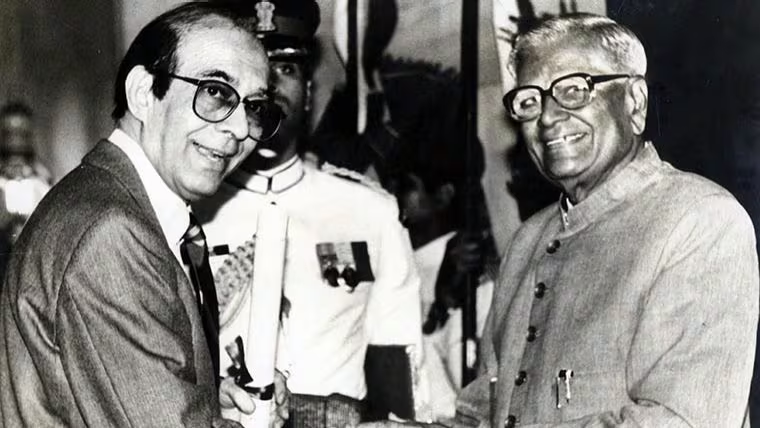
Nation’s pride: Talat Mahmood receiving Padma Bhushan from president R. Venkataraman in 1992 | P. Musthafa

To encapsulate the life of a man often described the ‘King of Ghazals’, though he was much more than that, is no easy task. Just for attempting that, Sahar Zaman deserves applause.

” Mahmood’s musical life was a rich amalgamation of traditions and languages “

Talat Mahmood, born in Lucknow and trained at what was then the Marris College of Music (now Bhatkhande Sanskriti Vishwavidyalaya) was a singer unlike any other. His natural velvet voice bore a slight quiver. It is a quiver which singers take years to cultivate. Musically termed vibrato, this quick and subtle change of voice between notes which are pitched very closely conveys emotions more powerfully than lyrics. When used without dedicated cultivation, a vibrato sounds contrived and the unevenness of breath can be made out by the trained ear; but when it comes naturally, it is as smooth as the wax and wane of emotion. Yet, in his early years in Mumbai, Mahmood strove to hide this unique quality, attempting often to sing in the nasal tones of his idol K.L. Saigal. This would not last long as Anil Biswas, a composer he had worked with for long, angrily walked out of a recording studio asking Mahmood to return only when the real Talat was found.

Ghazals came first to Mahmood because of his affinity with Urdu, and also because of the cultural bearings at home. His father, Manzoor Mahmood, who was a member of the Indian Medical Mission to Ottoman, would often sing to pep up his fellow travellers, while his sisters were flawless renderers of the nath (songs in praise of the Prophet), and his elder brother, Kamal, too, had a rich singing voice. While everyone in the family had strong voices with good throws, Mahmood’s was tuned differently. It was far gentler, almost like a dewdrop caressing a rosebud. It was the kind of voice that could dull the impact of the unkindest of blows. In the 2022 release Gangubai Kathiawadi, for instance, when the lead character learns of being sold to a brothel by her boyfriend, there is a snippet of a song that plays in the background. Mahmood’s voice is like a gentle nuzzle that softens the harsh truth.

Pathos was the most marked emotion of Mahmood’s voice. It was the embodiment of a disembodied, deep sadness. No wonder then that ‘Tragedy King’Dilip Kumar spoke of him as the ‘true musical speaker of my soul’.

Mahmood’s musical life was a rich amalgamation of traditions and languages. Under the name Tapan Kumar, he was a leading voice of the modern Bengal Music movement in which lyrics became as important as the music. He sang in 16 languages including Malayalam, Tamil and Kannada. And while you can close your eyes and imagine him most readily as a dejected Dilip Kumar pictured behind gauzy, fluttering curtains singing ‘Shaam-e-Gham ki qasam’ (On the promise of this sadness soaked evening), close them for some more time and you will just as easily picture him as a boyish Raj Kapoor singing ‘Main dil hun ek armaan bhara’ (I am a heart full of desires), a song that lends itself most readily to the waltz.

As a singer he had many firsts to his name, including being the pioneer of world tours. His pleasant face (which incidentally is also the meaning of Talat) made him a singing-actor and he also dabbled in composition. To audiences in the USA, he was introduced as the Frank Sinatra of India. He became a recognised voice, courtesy All India Radio, at just the age of 16. The book records a delightful incident in which the young Mahmood was accosted by a group of girls in Lucknow to sing as he cycled his way to his music college. Among that gaggle of fans was Qurratulain Hyder, who would go on to become a famed Urdu writer.

He was also a man deeply devoted to the larger cause of his art. He raised his voice for the payment of royalties to singers and also became a part of programmes to raise funds for senior, out-of-work artists. He joyfully gave away songs to Mukesh when he was going through a rough patch. His delight in singing for troops and in encouraging new talent all made him a perfect gentleman, a word often used in the book to describe him.

Biographies can never be divorced from the times that their subjects lived in. Thus, we read in bits about the decline of the film industry in Kolkata after the partition of Bengal, the government’s press for the Bhoodan movement, for which Mahmood sang; the start of recordings in sound-proof rooms; the introduction of multi-instrument orchestra for playback singing; and the rise of version songs. We also read of how the Partition tore apart Mahmood’s family. In a particularly poignant recollection, his father asked his elder son who would water the plants in the courtyard if he left for Pakistan (he did anyway).

The book at places digresses from a linear telling of Mahmood’s story and moves to talking about other stars of the time. This could appear jarring to some, but it is perhaps inevitable given that Mahmood’s journey was intertwined with those of others. One example being that of the actor Shyam, whose death resulting from an accident on a film set is talked about in some detail, to later merge it with the fact that his last three songs, sung by Mahmood, became ‘locked’in his voice.

If you are looking for a book which offers an undeviating narrative of Mahmood’s life, this perhaps is not it. This book reads more like a collection of anecdotes―some known, some not so well known. His gentleness is a quality emphasised throughout the book. He earned it perhaps from spending his formative years with his paternal aunt Mahlaqa Begum. We also come to know that he was a keeper of his words―both to friends and the girlfriend he left in Kolkata.

To those who have known the music of Mahmood, this book is a ready reckoner of his songs and will send you to listen to those you have loved and search for those you have forgotten. To those who do not know the music of Mahmood, take this as a befitting introduction to a singing genius. To do both in under 500 pages, in easy language, peppered with countless photos of the handsome Mahmood, is Zaman’s biggest achievement.
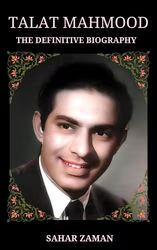
TALAT MAHMOOD: THE DEFINITIVE BIOGRAPHY / Author: Sahar Zaman / Pages: 480

source: http://www.theweek.in / The Week / Home> TheWeek / by Puja Awasthi / February 11th, 2024
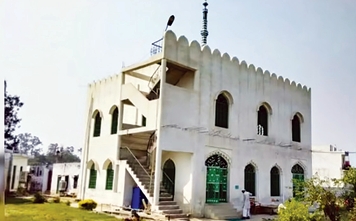
A doughty warrior builds a mosque for women

Lucknow, UTTAR PRADESH :

Mosques in Hindi heartland states are an exclusive male preserve. Though Islam doesn’t barentry of women into mosques, they are scrupulously kept away from the holy precincts all across north India. But Amber Mosque in the outskirts of Lucknow challenges this shibboleth. It was founded and built by Ms. Shaista Ambar, a social activist from Lucknow who wouldn’t take such taboos lying down.

Wife of a bureaucrat in Uttar Pradesh, Shaista conceived the idea of a mosque where women could also offer namaz alongside men, in 1995. As a young woman, Shaista would take up social causes during the 1980s and 90s. Construction of a mosque was certainly not on her mental screen. But the rebel in her got awakened when she took a child inside a mosque to introduce him to the collective prayers.

For the imam the sight of woman inside the mosque was no less than a sacrilege. She was ordered out. The outrageous behaviour left a deep imprint on her. Beating a hasty retreat, she vowed to build a mosque where both men and women could pray. She drove straight to Nadwatul Uloom, the world famous centre of Islamic learning in Lucknow seeking an audience with Maulana Ali Miyan, the 7th Chancellor of the seminary and a world re nowned scholar of Islam.

The revered Maulana signalled her to go ahead pledging his full support. Pouring the family’s savings, a 26,000 square feet plot of land was bought in Teli Bagh, 15 kms away from the city centre on the road going to Rae Bareli. She sold away her car and ornaments to raise the required funds. The move gathered support from wider circle of relatives and acquaintances.

Lo and behold! The mosque came up opposite the trauma care centre of the Sanjay Gandhi Post Graduate Institute of Medical Sciences. And it was none other than Maulana Ali Miyan Nadwi who presided over the consecration of the mosque in 1999. (He passed away on December 31, 1999). The mosque can host a congregation of over a thousand persons on a Friday when doughty Shaista Amber ensures her weekly presence.

She presides over the committee taking care of the mosque as the chief mutawalli with several other members of the family. She has resolutely stood against traditional maulvis taking over the management of the mosque. There have been pleas to start a madrassa (Islamic theological school) within the precincts.

She has declined permission and has instead started a dharamshala (stay-homes for wayfarers) within the boundary of the mosque where women attendants of inmates at the Sanjay Gandhi Institute find accommodation at a very reasonable rent. And they could belong to any faith. She says Uttar Pradesh has several thousands of madrassas but no dharamshalas and other such key civic facilities set up by Muslims.

The mosque is open for namaz to Sunnis as well as Shias, the major sects within Muslims. The mosque also runs a counselling centre where family disputes, mainly post-marital, are referred for resolution. Shaista has had differences with the All India Muslim Personal Law Board on several issues pertaining to women’s rights in Islam.

Critical about the rigidity on its outmoded stances, she and several of her supporters set up the All India Muslim Women Personal Law Board nearly a decade ago. The Board has appreciated the law banning the practice of triple talaq at one sitting and has suggested several progressive reforms. One who completed her graduation from the Aligarh Muslim University and later acquired Adib and Kamil certificates, Shaista has willed that her two daughters and son would look after the management of the mosque after her passing away.

Shaista came visiting Bengaluru last May at the invitation of the Azim Premji University for a seminar where this author had a chance meeting as a participant. Log onto www.shaista ambar.com for an overview of her vision and activities. 

source: http://www.newstrailindia.com / News Trail / Home / by M A Siraj / October 19th, 2025

Celebrating Unsung Heroes: Indian Muslim Changemakers

INDIA :

AI generated image

Amid our fast-paced lives, there exists a remarkable group of individuals who believe in slow, steady, and consistent efforts to create meaningful change.

These individuals are known as changemakers—people who quietly dedicate themselves to bettering society, far from the spotlight and the noise of daily routine.

They don’t seek fame or recognition. Instead, they focus on making a positive impact in their communities. Often unheard of, these changemakers influence others through their actions, values, and vision for a better world.

Awaz–The Voice is proud to launch a special series starting this Sunday, spotlighting Indian Muslim changemakers of India.

Through their inspiring stories, we aim to shine a light on individuals whose work exemplifies compassion, dedication, and innovation.

Our editorial team has carefully selected these changemakers based on several parameters, including the authenticity of their efforts and the tangible impact they have made.

These are everyday heroes who are addressing pressing social, environmental, and economic challenges—often with limited resources but unwavering commitment.

They are improving access to education, healthcare, and sanitation; they are empowering women, protecting the environment, and uplifting their communities—all without expecting any rewards or recognition. For them, the satisfaction of doing good is reward enough.

Their actions may seem small, but their impact is profound. As the saying goes, “Every drop counts in making an ocean.” Each changemaker is a vital part of the wave of progress that is quietly transforming India.

One of our key criteria in identifying these individuals was whether they are creating tangible change or inspiring others to become changemakers themselves. For us, a changemaker is someone who brings positivity into the world through innovative solutions, leadership, and a commitment to improving lives and systems.

In a world that often celebrates loud success, we believe it’s important to pause and acknowledge those who uphold the highest ideals of humanity. These changemakers serve as a moral compass, reminding us of our own responsibilities to society and to one another.

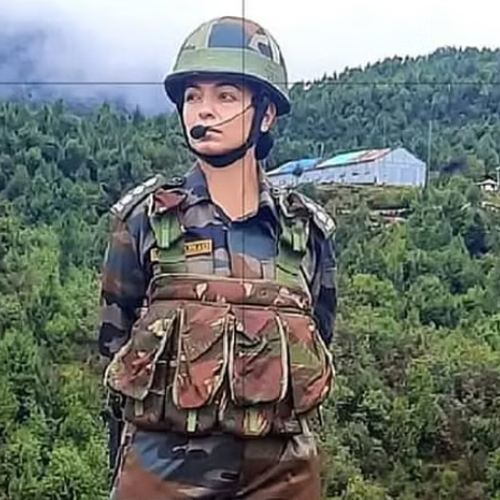
We begin our series with changemakers from Uttar Pradesh, featuring stories like that of Capt. Saria Abbasi, who dreamt of joining the Indian Armed Forces from a young age. After earning her engineering degree and receiving multiple job offers, she chose instead to follow her dream and joined the Indian Army—becoming a role model for countless Muslim women aspiring to serve the nation. She has done challenging missions like serving at Indo-China border post at Tawang in October 2021.

Rubina Rashid Ali, who lives in Aligarh Muslim University’s campus has become a champion for women earning their livelihood out of applique (ornamental needlework in which pieces of fabric are sewn or stuck). She has stood up for them to ensure that these women from poor backgrounds get the wages they deserve.

The changemakers of India

Dr Farha Usmani, a medical practitioner who hails from Aligarh, went to US to pursue her career in the United Nations Population Fund in 2007. Leaving behind her family was a tough call for her. She is the only Muslim woman to have risen to the position of director in the UNFPA. Today, she is making world policies for women’s health and rights. She is the Vice President of SAFAR, an organization that is responsible for the overall advancement and rights of minority and marginalized women and girls in India. 

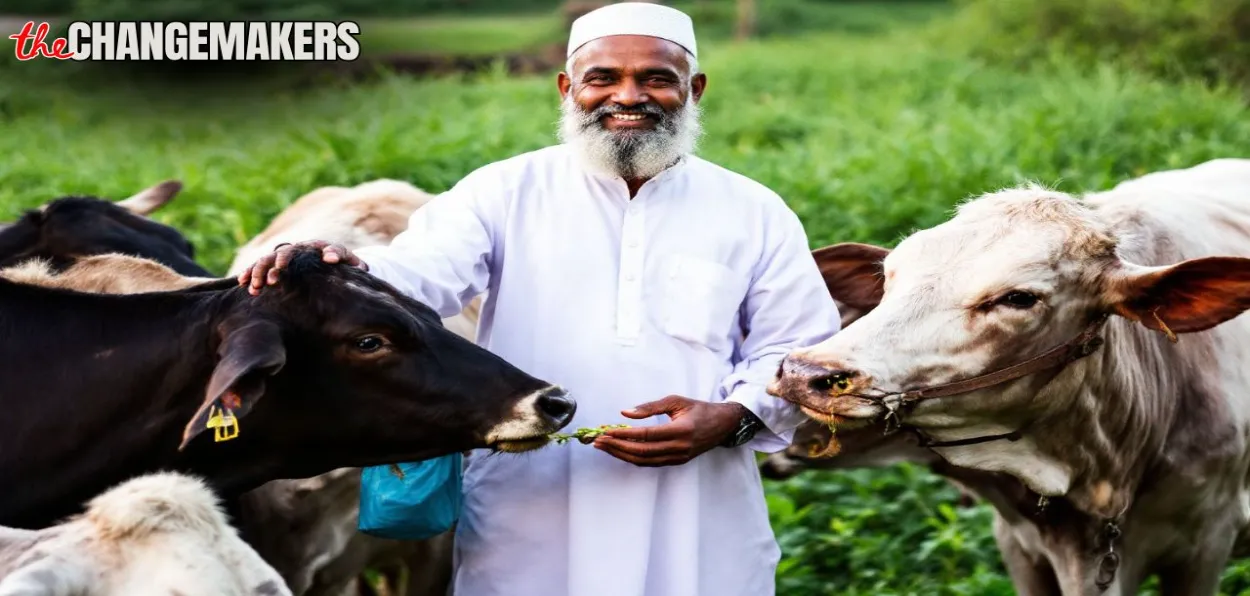
Another inspiring figure is Babban Mian, a businessman who runs a large gaushala (cow shelter) in Bulandshahar, caring for hundreds of cows. Inspired by his late mother’s deep affection for animals, Babban Mian’s work also challenges stereotypes and promotes harmony by offering a different perspective on the Muslim community’s relationship with animal care.

Some of the changemakers will remind you of characters straight from Indian folklore and vernacular literature. People who have been nurtured by Indian civilizational values of compassion and selflessness.

Through these stories and many more, we hope to inspire our readers and celebrate the quiet revolution being led by changemakers who are shaping a better, more inclusive India.

We’d love to hear your thoughts on this series. Write to us at input@awazthevoice.in or engage with us on our social media platforms.

The author is the Editor-in-Chief of Awaz-the Voice portal

source: http://www.awazthevoice.in / Awaz, The Voice / Home> Stories / by Atir Khan, Editor-in-Chief, Awaz-the Voice portal / May 22nd, 2025

Collective efforts lead to the betterment of the nation: Farooq Siddiqui

UTTAR PRADESH :

Lucknow :

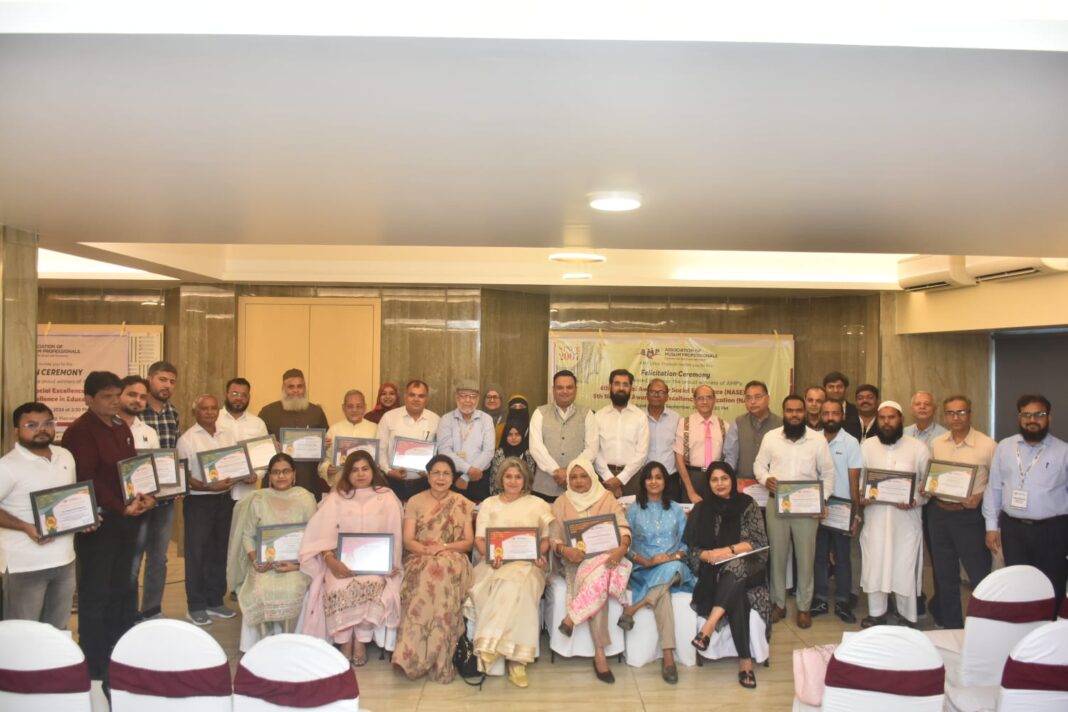
The Uttar Pradesh Chapter of the Association of Muslim Professionals (AMP) organized an ceremony at Hotel Arif Castle for the recipients of the 4th National Awards for Social Excellence and the 8th National Awards for Excellence in Education from Uttar Pradesh.

Among special guests were senior gastro surgeon Dr. Waliullah Siddiqui from Apollo Hospital and Mirza Mubeen Baig from Gautam Budh Nagar. Distinguished educationist and career counsellor Dr. Amrita Das was to attend as the chief guest but could not participate due to health issues, so former senior bureaucrat Zahra Chatterjee filled the role.

The programme began with a recitation from the Holy Quran by Maulana Muhammad Rehan Qasmi.

The welcome address was delivered by AMP’s Zonal Head for Central Zone, Syed Shoaib. AMP’s State Head, Shaheen Islam, introduced the audience to AMP’s objectives and activities, mentioning that this non-governmental, non-political, and non-profit organization was founded in 2007. Over the years, AMP has been engaged in educational, social, economic, and developmental activities aimed at empowering marginalized communities.

Guest of honour Mirza Mubeen Baig emphasized that working for NGOs is becoming increasingly challenging, and only those organizations that serve selflessly and with sincerity will succeed. He stressed the need for collaboration among serious NGOs to benefit from each other’s experiences.

Dr. Waliullah Siddiqui congratulated the awardees for their contributions to education and social services, highlighting that the responsibility for educating and nurturing children lies with both parents and teachers. In today’s changing times, this responsibility has grown even more significant. He shared personal lessons from his life, crediting his parents for playing a central role in his achievements.

Speaking as the chief guest, retired IAS officer Zahra Chatterjee praised AMP’s work and said that every individual’s contribution is crucial for the nation’s development. She stressed the need to reach out to the last individual to ensure educational awareness and economic stability.

Farooq Siddiqui, Head of AMP’s National Coordination Team, addressed the audience, stating that these awards aim to encourage individuals and organizations committed to transforming the nation through their selfless services. He emphasized the importance of collective efforts and mutual cooperation, noting that the welfare of the country and nation lies in unity and partnership.

The vote of thanks was delivered by Mohammad Mohiuddin, Chapter Head of AMP Lucknow, and the event was hosted by Dr. Sumbul Shakeel.

The recipients of the National Awards for Social Excellence included the Best NGO awardees:

Tauheedul Muslimeen Trust, Institute of Social Harmony and Upliftment.

Among the Change Maker Awardees were:

Professor Dr. Nuzhat Hussain from Lucknow, Dr. Mohammad Mubashir, Sabiha Ahmed, Balbir Singh Maan, Dr. Kaleem Ahmed Khan from Kanpur, Dr. Saba Yunus, Shahid Kamran Khan, Sagheer Khaksar from Balrampur, Dr. Saleem Mohammad Khan and Naseem Ahmed Khan from Aligarh, and Ramesh Chandra Srivastava from Ayodhya.

The recipients of the National Awards for Excellence in Education included:

Professor Mirza Mohammad Sufiyan Baig, Professor Naseem Ahmed Khan, Ausaf Azeem Kirmani from Aligarh, Mohammad Shahid Khan, Dr. Mohammad Shamim, Samiullah Ansari from Kanpur, Chitra Maheshwari from Lucknow, Dr. Roohi, and Maulana Mohammad Rehan Qasmi.

Lifetime Achievement Awardees included senior teacher Sheila Lawrence from Lucknow and Jamaluddin Khan from Kanpur.

A large number of attendees were present at the event, including Dr. Anis Ansari (former IAS), Mohammad Khalid Ashu, Mujtaba Khan, Najm-ul-Hasan Rizvi Najmi, Dr. Uzma Mubashir, Syed Abrar, Rizwan Ansari, Mohammad Zeeshan, Mohammad Imran, Javed Akbar Khan Lodi, Shahenshah Ansari, Fahad Mahmood, Ayesha Mahmood, Alma Siddiqui, Ayesha Alvi, Zaheer Baig, and Aqib Rauf.

source: http://www.indiatomorrow.net / India Tomorrow / Home> Education / by India Tomorrow / September 03rd, 2024

10 trailblazers of Uttar Pradesh reshaping India’s future

UTTAR PRADESH :

New Delhi :

While media spotlight often shines on celebrities and politicians, the real engine of India’s progress runs on the resolve of countless unsung heroes who, away from limelight, quietly transform society.

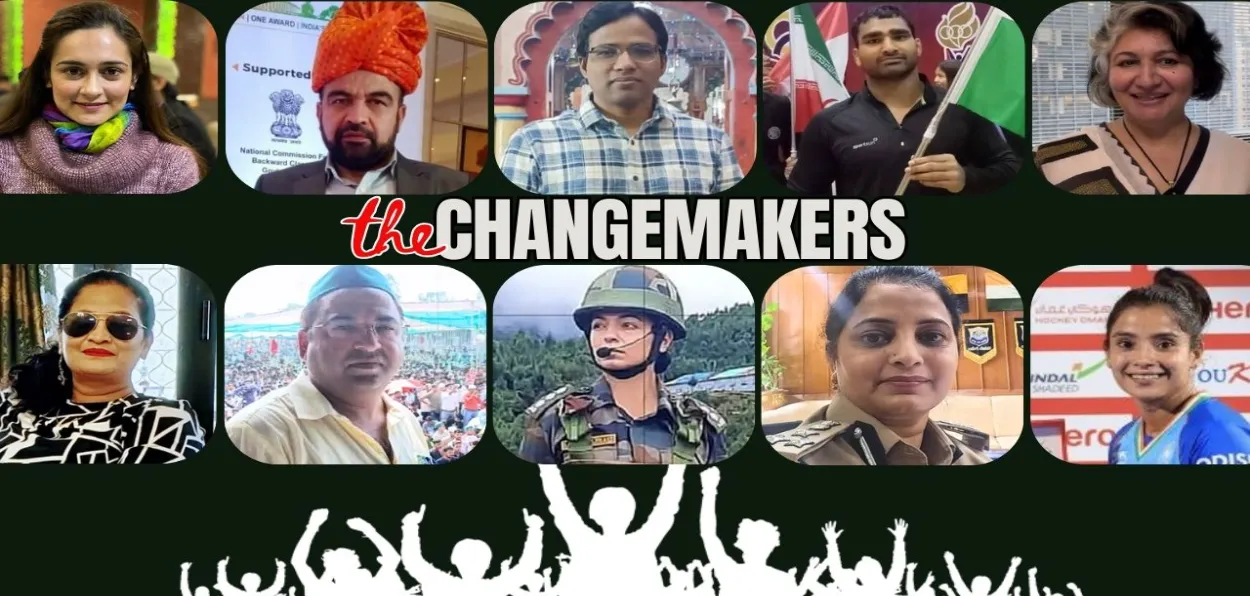
From national defense to grassroots education, sports, science, and civil service, these individuals from Uttar Pradesh show how courage, compassion, and conviction can drive extraordinary change. Here are 10 such trailblazers whose stories deserve to be heard:

Captain Sariya Abbasi: A Woman in Uniform on the Frontlines

Hailing from a small city of Gorakhpur, Uttar Pradesh, Captain Sayria Abbasi broke every convention to join the Indian Army. A graduate in Genetic Engineering and with plenty of job offers and career opportunities from big companies was not enough for her to pursue in life. The call of service for the motherland was too strong to be sacrificed.

The world noticed her as a soldier deployed at the Line of Actual Control (LAC), India-China temporary border, manning an Air Gun. Today, Sariya leads drone-killer teams and operates L-70 anti-aircraft guns on the border. Her journey from an academic achiever to a defender of the nation’s borders is not just about military precision; it’s about shattering glass ceilings and reshaping how India imagines women in uniform.

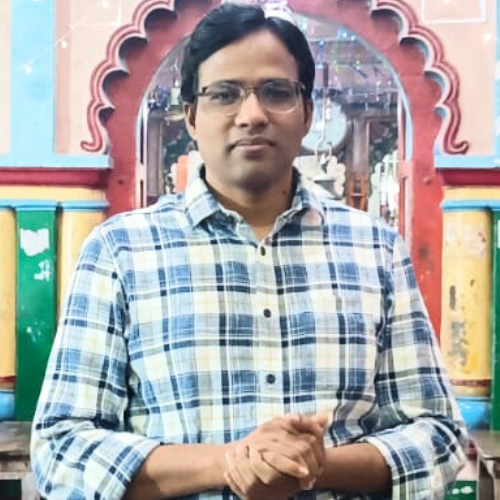
Dr. Faiyaz Ahmad Fyzie: Voice for the Voiceless Pasmanda Community

Dr. Faiyaz Ahmad Fyziean AYUSH physician, is more than a healer—he is a public intellectual, columnist, translator, and relentless advocate for the Pasmanda (socially backward) Muslim community. Raised in modest conditions, his rise to national recognition is built on fearless writing and tireless grassroots work.

When even the Prime Minister refers to Pasmanda voices, Fyzie’s years of advocacy resonate. His pen continues to empower those whose struggles were long silenced. His work is a call to conscience—and a roadmap for inclusive discourse.

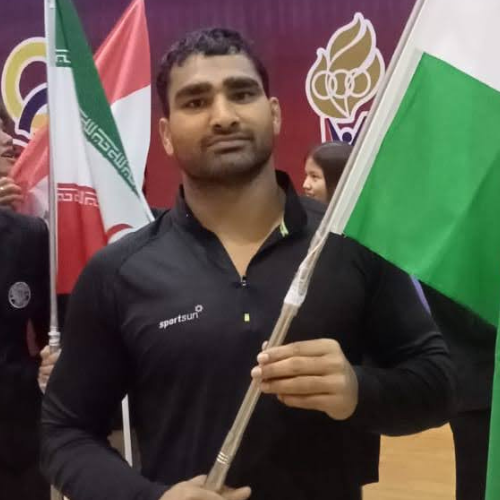
Mohammad Luqman Ali: Wrestling His Way to Glory and Degree

Wrestler Mohammad Luqman Ali, a student of Social Work at Jamia Millia Islamia, is balancing body and brain. Born in Amroha’s tiny village of Mohraka Patti, his father worked on the railways, and his mother gave him religious grounding. Despite limited resources, Luqman’s grit has earned him recognition in India’s wrestling circles.

From the mat to the classroom, his dual commitment shows that excellence doesn’t require compromise. It requires discipline, heart—and a family’s belief in you.

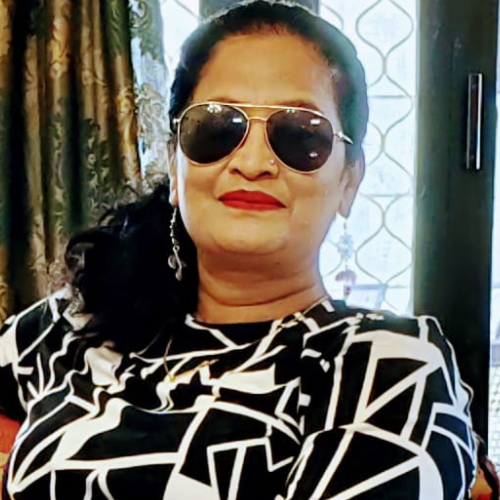
Rubina Rashid Ali: Reviving Mughal-Era Art with a Modern Mission

In a sun-drenched corner of Aligarh, Rubina Rashid Ali has quietly built a movement. Her work in floral appliqué embroidery, a legacy of Mughal art, now supports dozens of women in Aligarh and Rampur. What was once an undervalued craft monopolized by middlemen has been transformed by Rubina into a vehicle for women’s economic empowerment.

Her home resonates not only with the sound of needles and threads but also with the hum of independence. “Real artists were reduced to laborers,” she says. Today, she ensures their hands are not just working — but also earning.

Babban Mian: A Gaushala Keeper Inspired by His Mother’s Love

At Madhu Sudan Gaushalla in Bulandshahr, Babban Mian tends to cows not out of ritual, but reverence — inspired by his late mother Hamidunnisa Begum. “She loved cows like her own children,” he recalls. After she passed away in 2015, Babban vowed to preserve her legacy.

Despite being a Muslim in a Hindu-dominated tradition, he runs a government-recognized shelter rooted in compassion, not controversy. For him, animal welfare is a universal value — not a communal issue. His work quietly redefines what shared culture and interfaith harmony look like.

Khushboo Mirza: From Amroha to the Moon with ISRO

 Khushboo Mirza, scientist at ISRO and part of the Chandrayaan-1 and Chandrayaan-2 missions, is a stellar example of perseverance. After her father’s death when she was just seven, her mother raised three children alone, running a petrol pump and defying social norms.

Khushboo earned a Gold Medal in Electronics Engineering from AMU and was the youngest member of the Chandrayaan-1 checkout team. A practicing Muslim and a symbol of India’s scientific aspirations, she turned down corporate offers to reach for the stars—and took a whole generation of girls with her.

Zaheer Farooqui: A People’s Leader with a Vision for Purkazi

In western UP’s PurkaziZaheer Farooqui is rewriting what local leadership means. As Nagar Panchayat Chairperson, he donated land worth ₹1.5 crore for the area’s first Intermediate College and modernized local schools into PM Shri-certified institutions.

His initiatives go beyond classrooms. From India’s first double-storey government-run cow shelter to a gym for Muslim women, and one of the most sophisticated rural CCTV networks in the region — Farooqui’s governance is a blend of tradition and tech, equity and empowerment. His Tiranga Yatra revives local history, reminding citizens that patriotism is inclusive and action-oriented.

Dr. Farah Usmani: From AMU to Global Health Leadership

On a cold morning in New York, Dr. Farah Usmani stood outside an apartment, a folder in hand, her eyes bright with resolve. The daughter of Uttar Pradesh, she is today a formidable presence in global health policy.

n M.D. in Obstetrics & Gynecology from AMU, Farah sought impact beyond hospital walls. Armed with a Master’s in Health Policy from LSE and the London School of Hygiene & Tropical Medicine, she’s led transformative health initiatives around the world. Her journey is one of intellect guided by idealism — a doctor who chose not just to heal individuals but to reform systems.

Anjum Ara: Bridging Communities Through Compassionate Policing

Hailing from Azamgarh’s Kamharia village, Anjum Ara, a 2012-batch IPS officer, has redefined the image of policing with a human touch. A computer engineer by training, her journey from Integral University to Senior Superintendent of Police in Shimla has been marked by integrity and reform. Known for her work in cybercrime and her community-focused policing model, Anjum is also a fierce advocate for girls’ education.

Together with her husband, IAS officer Yunus Khan, Anjum adopted the cause of Khushdeep, the daughter of a martyred soldier, pledging to support her upbringing. This act of empathy mirrors her professional ethos, proactive, principled, and deeply people-centered.

Mumtaz Khan: From Vegetable Stall to World Hockey Stage

From the bustling alleys of Lucknow’s Cantt area to the turf fields of South Africa, Mumtaz Khan’s journey is pure grit. Once helping her father at a vegetable stall, a single race at school changed her life when Coach Neelam Siddiqui noticed her speed. That moment set her on a course to become a leading forward in India’s Junior Women’s Hockey Team.

Her standout performance at the 2018 Youth Olympics, where she scored 10 goals, earned her national acclaim. Yet, Mumtaz remains rooted, balancing hope and humility as she eyes the Olympics. She is proof that dreams born in dusty streets can blaze across international arenas.

These ten changemakers hail from Uttar Pradesh, from narrow village lanes to bustling metros, from battlefields to laboratories. But they are united by one thing:  quiet, relentless courage. In their lives, we find the India that persists, uplifts, and transforms—not with headlines, but with hard work.

Tap HERE to watch the video

source: http://www.awazthevoice.in / Awaz, The Voice / Home> The Changemakers / by Vidushi Gaur / May 24th, 2025

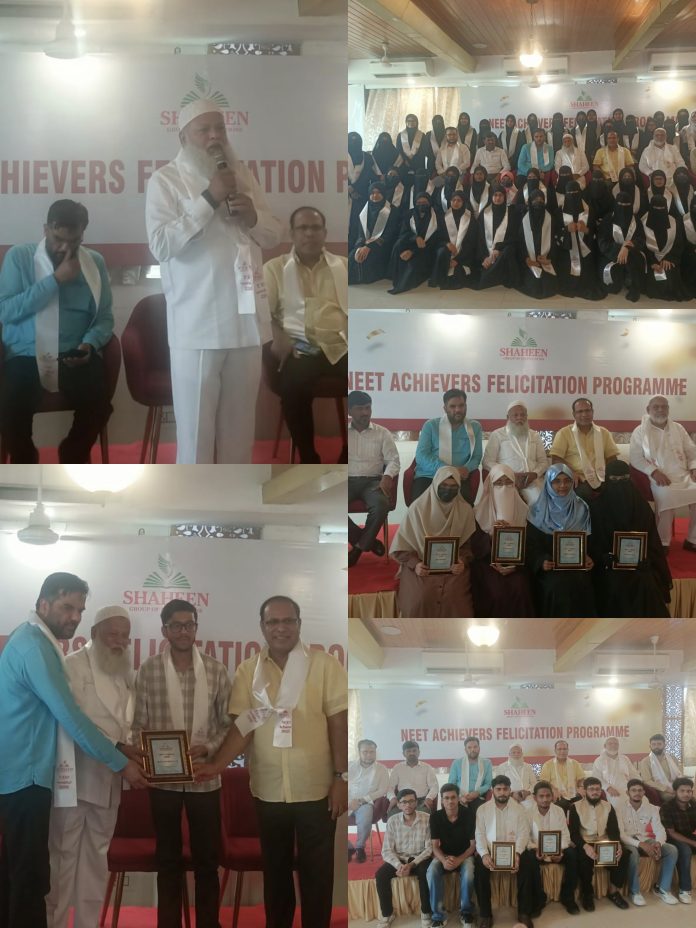
Shaheen Academy Felicitates NEET Achievers; Abdul Qadeer Urges Education-Led Social Reform

Bidar, KARNATAKA / UTTAR PRADESH :

New Delhi:

Shaheen Academy organised a grand event to honour its NEET achievers. The ceremony celebrated the students’ success and dedication.

The event was attended by educationists and community leaders. Among them was Abdul Qadeer, founder and chairman of Shaheen Group of Institutions.

In his keynote speech, Abdul Qadeer praised students and faculty. He stressed that education should not just be for earning. “Education can uplift society and spark social change,” he said. “It plays a key role in national growth and development.”

He reaffirmed Shaheen Academy’s mission: to offer value-based, holistic education. He said students must grow into responsible citizens and future leaders.

Abdul Qadeer urged students to look beyond personal success. He asked them to engage in social service and nation-building.

He also made a heartfelt appeal against lavish weddings. “Don’t spend lakhs on grand celebrations,” he said. “Use that money to educate your children, neighbours, and the poor.”

He called education the true celebration. “Transforming lives through education is the real joy,” he added.

He also underlined the need for wider educational outreach. “Five or six institutions are not enough,” he said. “We need 5,000 organisations working for value-based education. Shaheen must have 500 branches to transform society.”

Kaleemul Hafeez, Chairman of Al-Hafeez Educational Academy, also spoke. He compared Abdul Qadeer’s work to that of Sir Syed Ahmad Khan. “Abdul Qadeer Sahib is continuing that legacy to educate a new generation,” he said.

Noor Nawaz, founder of The Hind Guru Academy, echoed the same spirit. He reminded students of the idea of Rabbul Alamin—Lord of all worlds. “Be ambassadors of Prophet Muhammad ﷺ,” he said. “Show compassion, honesty, and service in all you do.”

The event ended with a special honour for teachers and staff of Shaheen Academy. Their hard work was praised as a key part of the students’ success.

The celebration not only recognised academic achievement but also highlighted education’s role in building a better society.

source: http://www.radiancenews.com / Radiance News / Home> Latest News> Report / by Radiance News Bureau / June 28th, 2025

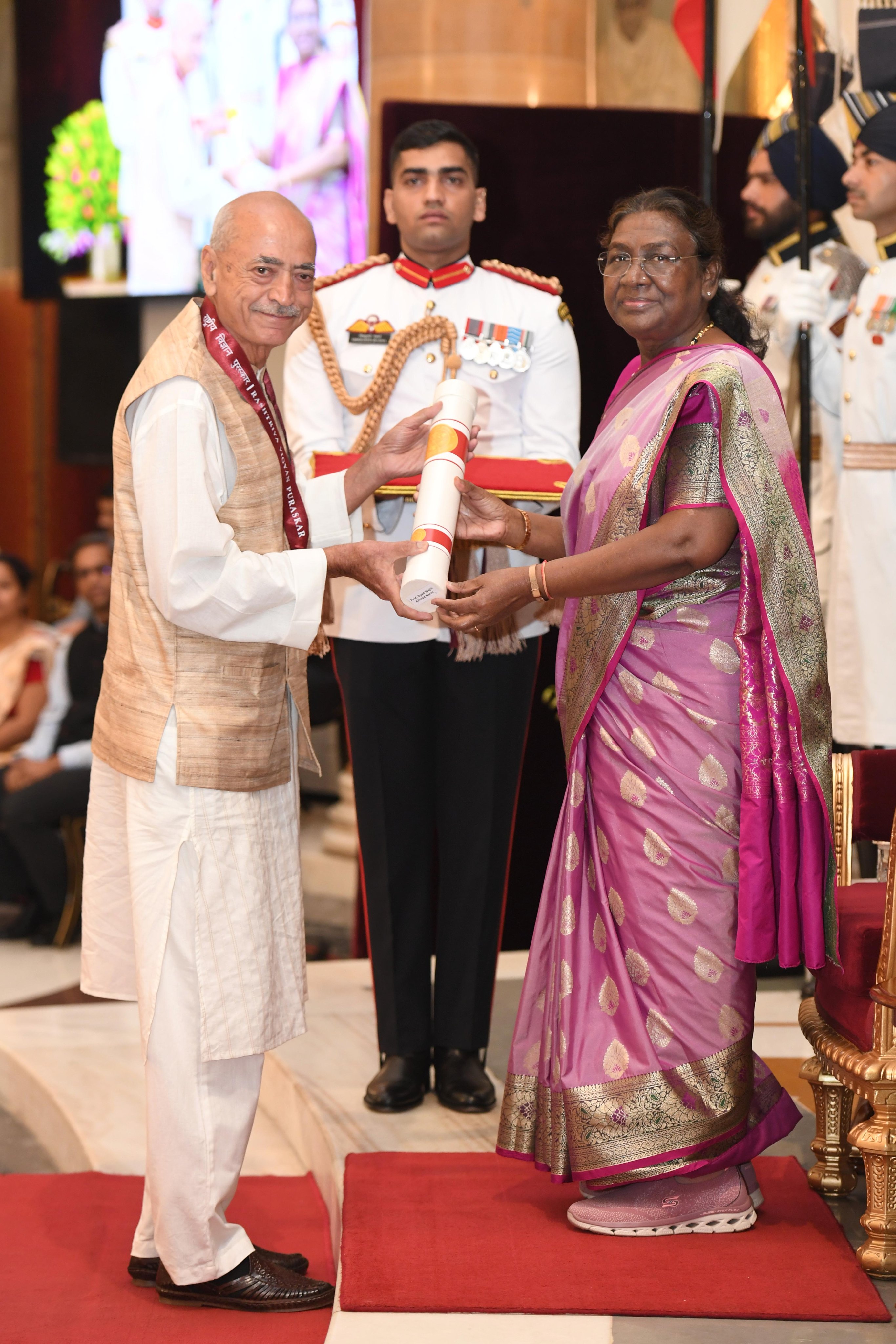
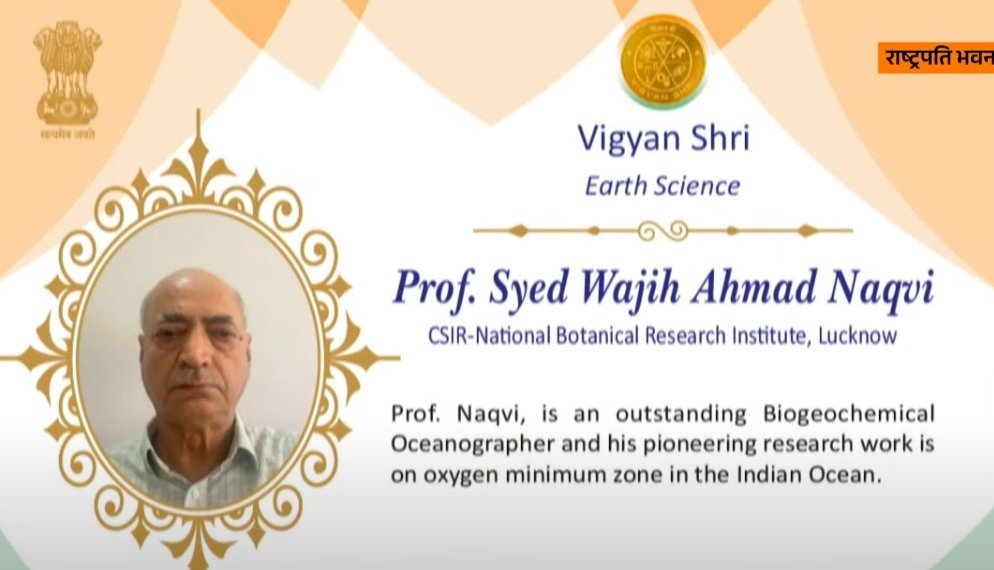
President Droupadi Murmu confers the Vigyan Shri Award 2024 on Prof. Syed Wajih Ahmad Naqvi in the ‘Earth Sciences’ Category

Lucknow, UTTAR PRADESH / NEW DELHI :

pix: x.com/rashtrapatibhvn

President Droupadi Murmu confers the Vigyan Shri Award on Professor Syed Wajih Ahmad Naqvi in Earth Sciences during the Rashtriya Vigyan Puraskar-2024, at Rashtrapati Bhavan, in New Delhi on Thursday August 22nd, 2024 .

Prof. Syed Wajih Ahmad Naqv from CSIR-National Botanical Research Institute (NBRI), Lucknow receives Vigyan Shri award in Earth Science from President Droupadi Murmu / pix: x.com/DDNewslive

New Delhi :

President Droupadi Murmu confers the Vigyan Shri Award on Professor Syed Wajih Ahmad Naqvi in Earth Sciences during the Rashtriya Vigyan Puraskar-2024, at Rashtrapati Bhavan, in New Delhi on Thursday August 22nd, 2024 .

source: http://www. pix: x.com/rashtrapatibhvn

Saria Khan of Lucknow is second topper in ICSC board exam

Lucknow, UTTAR PRADESH:

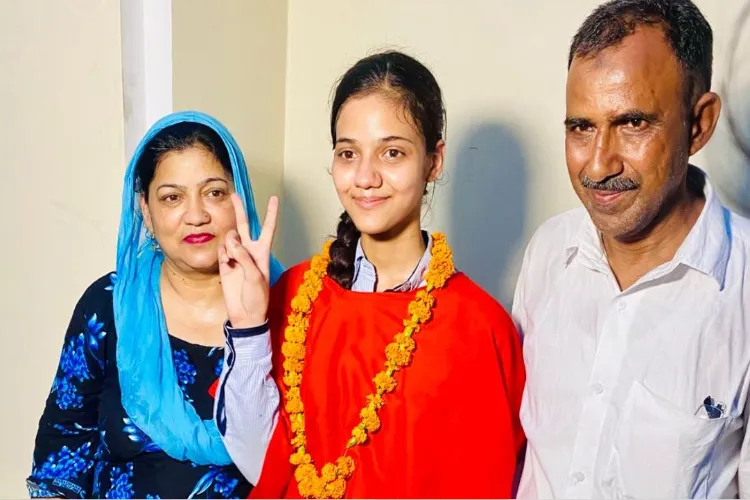
Saria Khan with her parents after the result

Saria Khan of Lucknow has become the second topper in the International Council for Schools Certification (ICSC) Board.

Saria Khan’s family lives in the middle-class neighborhood of Daliganj in the city. Her father Rais Khan is a lawyer by profession. She has two brothers senior to her.

After her results were declared, Saria said since she has an interest in Biology, she wants to become a doctor. She says medicine is a profession in which there is an opportunity to help others.

She said she is determined to become a doctor since her teachers have taught her not to have options in life. Options will not allow one to focus on the goal. Her parents and brothers have been supportive of her dreams and kept encouraging her to continue her focus. Saria says that she left no stone unturned in preparing for the board examination. She used to study for seven to eight hours after school.

The ICSE board released the 10th standard results with 99.97 percent clearing it. The result for the girl students was 99.98 percent and for boys 99.97 percent.

 There are four toppers of the exam: Hargun Kaur Matharu from Pune, Anika Gupta from Kanpur, Pushkar Tripathi from Balrampur, and Kanishka Mittal from Lucknow – with 499 marks (99.80%).

Saria says there is only one mantra for success in life -focus on your goal. While doing other work never forget the target. To become a topper, she studied hard and diligently.

“I could see my goal and stay focused by adopting different strategies. Today, I am very happy that I have reached the first step toward fulfilling the dreams of my parents. But the destination is still far away, and I have to work for it.

Saria and her family have been busy receiving the congratulatory message on phone and receiving guests who are dropping in to meet her.

“I will never forget this moment, the way the people of the country are showering love on me. I am even exhausted from attending to the phone, but I am attending to each call and visitor. A total of 110 students are included in the list of top three rank holders for the ICSE board 10th examination. In which there is a difference of one point each between the three ranks.

While four candidates secured the top rank with 499 marks out of 500, 34 students including Saria stood second with 498 marks. Similarly, 72 candidates secured the third rank with 497 marks out of 500.

The Council for the Indian School Certificate Examinations announced a merit list after two years. The results were declared based on an alternate evaluation scheme after the examination was not conducted due to the COVID-19 pandemic. The overall pass percentage is 99.97, the officials said.

source: http://www.awazthevoice.in / Awaz, The Voice / Home> Story / by Tajo Khan, Lucknow / July 18th, 2022

THE INDIAN HERO : Resham Fatma – Acid reflex

BIHAR / Lucknow, UTTAR PRADESH / NEW DELHI :

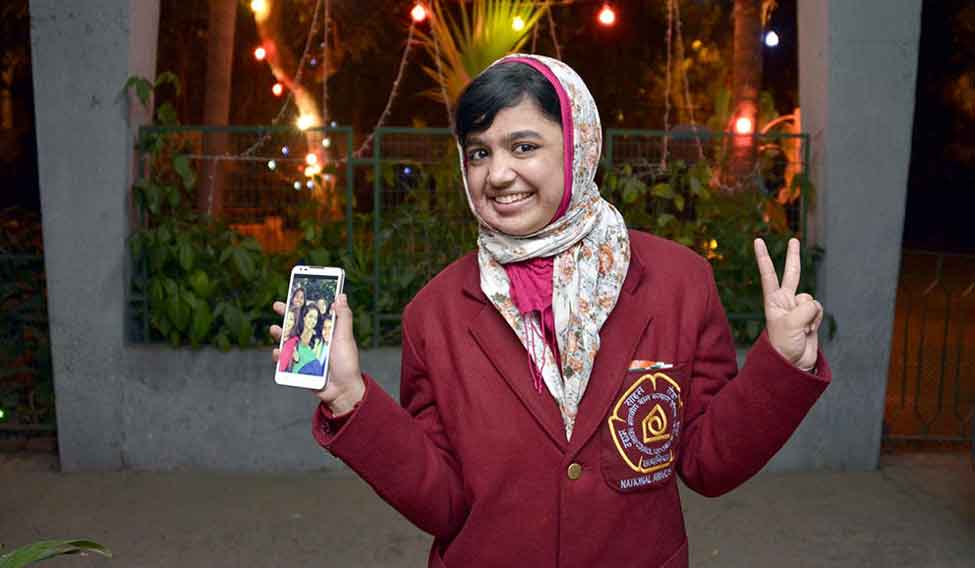
It burnt her face, but not her spirit. Resham Fatma, National Bravery Award winner, is confident about tomorrow

Sometime last summer, Resham Fatma, 17, decided that she needed to score 98 per cent in her twelfth standard board examinations. For days, she had been scouring the newspapers to find the best college to pursue her favourite subject, mathematics. St Stephen’s College, Delhi, it was. “Last year’s cut off was 97.2 per cent, so with 98, it will be smooth sailing,” says the Lucknow girl.

Resham has planned her future in detail. After graduation, she will do an MBA from IIM-Ahmedabad. Then, she will take the Union Public Service Commission exams, get into the Indian Administrative Service and work towards the post of district magistrate, a post from which she believes she can implement all the glorious government policies that remain on paper. “If I set my mind on something, I can achieve it,” she says. But, the future does not always work out the way you plan it. The last year has been, to put it bleakly, scarring for Resham.

The day is etched into her memory. It was February 1. On the previous day, her class had given their seniors a formal farewell. Her hair was a curtain of black satin, glossy from all the shampooing and conditioning. “See, this is me, in the centre,” she says, fishing out her smartphone and showing a groupfie with friends at the farewell.

The next day, she headed for her tuition, getting off the autorickshaw and walking the last mile as per routine. Suddenly, Riyaz, 38, her mother’s cousin, pulled up in his Tata Indica. He had been pestering her for a few years, and she had learnt to avoid him. On farewell day, he had asked her to meet him and she had said, “Main pagalon se baat nahi karti [I don’t talk to madmen].” She had no idea how mad he was.

After dragging her into the car, he held a butcher’s knife to her throat and asked her to marry him. She struggled; he got forceful. When she loosened his grip on the knife, he pulled out a barber’s razor from under the seat. “The car was auto-locked,” she says. “I was in his grip, struggling with all my strength. He banged his head on the steering and asked why I was refusing him. Then, suddenly, he pulled out a plastic bottle from the recess in the car door. It was filled with a yellowish liquid. He asked me if I knew what it was and said it was shakkar pani ghol [sugar solution]. He poured the liquid over my head.”

For a fraction of a second, she did not know what it was. Then it began to burn and she immediately shut her eyes. Her face, arm and thigh were on fire. He pulled her by the hair, still holding the knife to her throat. “I do not know how I got this phenomenal strength at that moment,” she says. “I pushed him and he crumpled towards the door. I fumbled blindly with the ignition, unlocked the car and tumbled out.” It was a dark winter evening and the road was desolate. Presently, an autorickshaw drove by and she pleaded to be taken to the police station. Luck was on her side, the occupants rushed to help. Later, as she was taken from the police station to hospital in an autorickshaw, they had to stop at a railway crossing. Passers-by peered into the auto, clucking in sympathy or gasping in horror. “That’s when I learnt that my face was black and I had my first shudder,” she says. “Riyaz mama ko mat chodna [Don’t let Riyaz get away], I screamed.”

Resham had so far known only unconditional love. She was the eldest grandchild from her maternal side, and her mother’s brothers doted on her so much that when she entered primary school, she moved from Bihar, where her father is an automobile dealer, to her grandfather’s residence at Amausi, near the Lucknow airport. Both her uncles have sons, she grew up as the only girl and the apple of everyone’s eyes. She has a younger sister and brother, who live with her parents. “I am more comfortable here, this is my home,” she says.

Resham means silk. But in the months ahead, the teenager discovered reserves of steel within her. Her long tresses were shorn, there is a huge patch on the scalp where follicles are dead. Resham, for the first time in her life, started wearing a scarf and headed for her evening coaching. She had to skip regular school at Stella Maris; her skin was not ready to face the onslaught of the sun.

In between, she kept popping into the hospital for surgeries. Her thigh needed grafting and her face needs a lot more work, but that has not deterred Resham from going out with nonchalance. A few months after the incident, her uncle declared she could do her own shopping without being escorted around like an invalid. “People ask me what happened, most ask whether it’s an allergy,” she says. “I tell them blankly, ‘No allergy, I survived an acid attack.’’’ Does she miss her old face? “Well, I am a girl, I like looking into the mirror and I’d want to like what I see,” she says. “I am still not bad looking, am I? This is my new identity.”

Most of her friends broke down when they visited and she consoled them. Her best friend is her diary. One day, she wrote about her dream: “I wanted to become the district magistrate and visit Riyaz in jail and tell him, see where you are today and where I am.” But these Bollywood-type situations are not meant for off-screen lives, even if they are as extraordinary as Resham’s.

Riyaz was arrested and was in lockup, where on December 28, he committed suicide. “I read about it in the newspaper next day and felt blank,” Resham says. “He got away so easily. He should have lived a long life, regretting every moment.”

Her earliest recollections of Riyaz are of sitting on his shoulders as he ran across the lawn. As she grew up though, his presence began getting uncomfortable. He would enter her room, force her to leave her books and talk to him. At one point, her grandfather, a former policeman, banished him from their house.

Resham today prefers to look at the possibilities that the future offers. “I have bad days, though I don’t cry in public,” she says. “Some days ago, I was very angry with Allah pak. But then, I got this call from Delhi that I was getting the Bharat Award at the Republic Day celebrations. I am so happy today. I have met big people, Modiji himself. I am a heroine, isn’t that great?” The scar tissue on her face hurts a lot, especially when she has to receive injections for treatment. But now she is complaining happily about how her cheeks are hurting with the constant smiling. “I am posing for cameras all day. Yaay,” she shrieks.

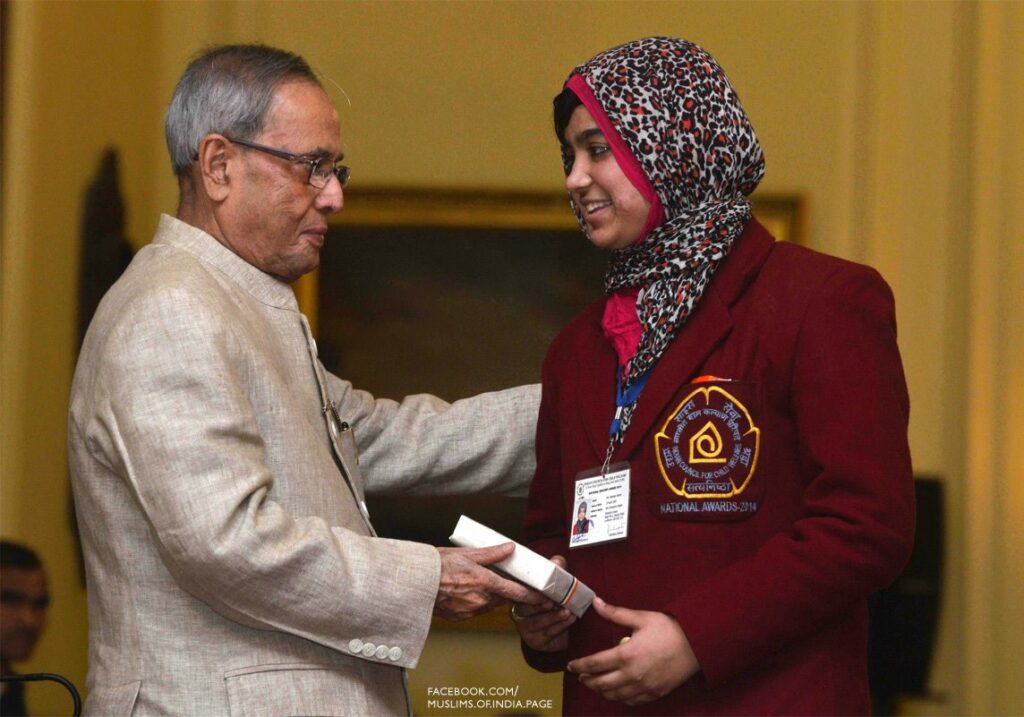
President of India Shri Pranab Mukherjee presenting the ‘National Bravery Awards 2014’ at Rashtrapati Bhavan . January 22nd, 2015. pic credit: facebook.com/Muslims.of.India.Page

There’s a bit of regret, though. “When I came to Delhi, I learnt that all the other children had been felicitated by their states. But no one from my state government ever came to me. A Supreme Court order says the state has to give an immediate relief of 03 lakh to an acid attack victim. I have not got anything yet, though my family has sent several Right To Information pleas. We could afford my treatment, but there are those for whom this money means a lot more. You know, there is a lot of good intent and great laws, but what we lack in this country is implementation. That’s why I want to be an IAS officer,” she emphasises with all her Taurean determination.

source: http://www.theweek.in / The Week / Home> Web Specials> Features> Heroes / by Rekha Dixit / Headline Edited + Additional image inserted courtesy of Facebook.com/Muslims.of.India.page / February 08th, 2015

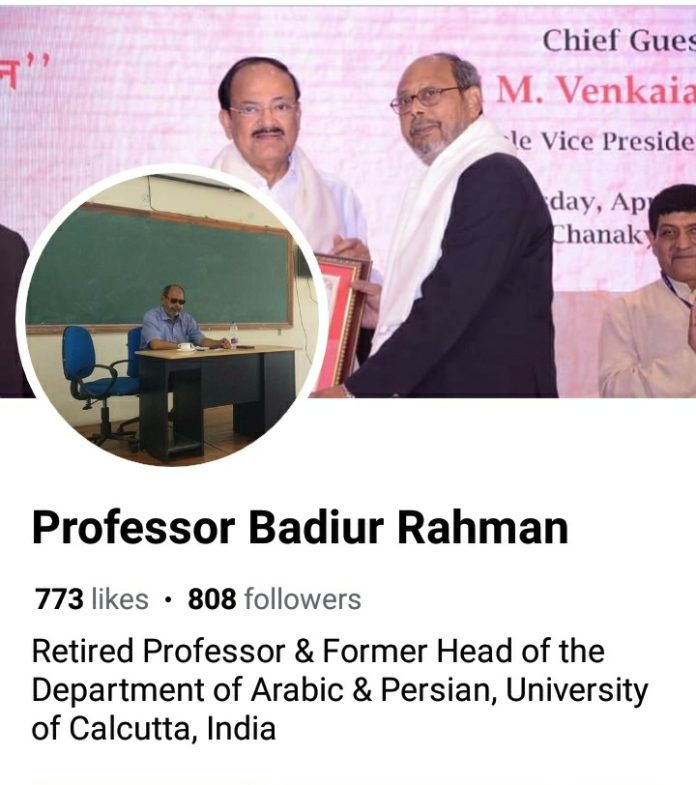
Professor Badiur Rahman – An Exemplary Personality

Hooghly / Kolkata, WEST BENGAL:

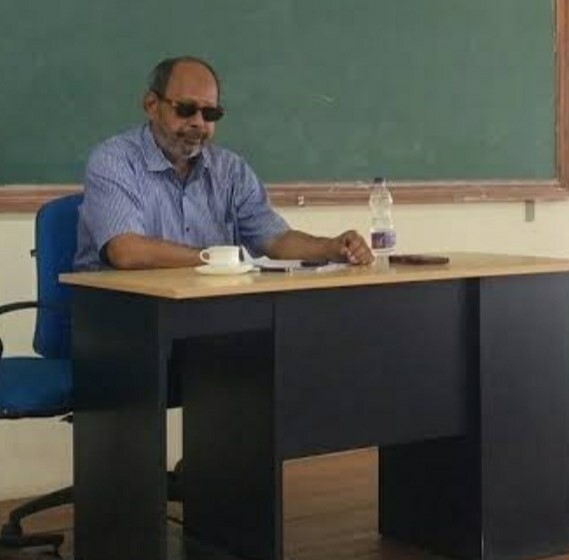
Professor Badiur Rahman, former Head of the Department of Arabic and Persian, University of Calcutta, a well-known educationist, celebrated writer, accomplished journalist, prominent Islamic scholar and a beloved teacher passed away in Kolkata on September 19, 2023.

He was scion of an illustrious and religious family of district Hooghly of West Bengal. His father Abdur Rahman was also an MBBS and associated with Tablighi Jamat.

He got his basic education at Darul Uloom Pandua, Hooghly, West Bengal. Thereafter, he did Alim in 1967 and Fazil in 1969 respectively from Madrasa Alia, Calcutta. He derived considerable benefits from a galaxy of eminent Islamic scholars over there. Especially, he achieved immense academic gains from noted Islamic scholars like Maulana Abu Mahfuz Karim Masumi and Maulana Rahatullah Azhari. After that, he did his B.A. (Hons) in 1974 and M.A. in 1976 respectively from University of Calcutta. He also did L.L.B and Ph.D therefrom.

Professor Badiur Rahman was an institution in himself. He was a familiar figure among the intellectual circles throughout India. Due to his extraordinary knowledge and being a paragon of morality, he carved a niche in the temple of fame. He had a say at the University of Calcutta. Despite being an Islamic scholar, he considerably impressed all faculty members, including VCs of University of Calcutta. Because of his profound knowledge of different languages, noble qualities and sublime norms everyone held him in high esteem.

Visiting Professor of Alia University, Kolkata, Dr. Rahman was also on the Senate and Syndicate of Calcutta University and Ph.D. Communities, Calcutta University and Alia University. He was also Ex-Chairman of PG Board of Studies in Arabic, Calcutta University, and U.G.B.O.S in Arabic, Kalyani University.

My acquaintance with Professor Badiur Rahman
I think it was during the summer of 2009 when I first met him. The meet was actually regarding my Ph.D admission at University of Calcutta. Dr. Masihur Rahman, now professor at Alia University, Kolkata introduced me to him. Since then till his last breath, I remained in touch with him. I am fortunate enough to have done my Ph.D. under his supervision and guidance. He always treated me like his brother. Whenever I met him, I gained immense inspiration from him. Despite being a celebrated scholar, he was devoid of arrogance.

As a Teacher
Professor Badiur Rahman started his teaching career as a lecturer at the University of Calcutta in 1983 and retired in 2016. Even after his retirement, he kept on teaching as a visiting faculty in the University of Calcutta and Alia University, Kolkata. He always proved himself as a selfless and dedicated teacher. He was an embodiment of all sublime qualities and virtues necessary for a good teacher. His method of teaching was unprecedented. It was his sword which he wielded so effectively that very few persons could match him. During lectures he pointed out such subtle points as students could not help without being impressed with him. He left an indelible mark in the domain of the teaching profession.

Undoubtedly, he was a beloved teacher. He was fondly described as B.R. Sir by his students. Scores of students quenched their thirst for knowledge from him. His talk was very touching. He met everyone cheerfully. His deep knowledge of comparative studies made him popular among his contemporaries. His learning was varied and profound. His personality was many-sided and balanced.

Right from the beginning, he was laborious and punctual. He was a man of transparent heart. No doubt, his extraordinary scholarship and erudition brought him wide reputation and fame. His main mission was to spread education. He left a galaxy of pupils behind him who impart education and work in various fields in and out of India. In fact, it is an everlasting tribute to him.

Dr. Badiur Rahman and Dr. Taha Husayn
Dr. Rahman was an ardent admirer of Dr. Taha Husayn. He had vast knowledge about Dr. Taha. He did not only study all his books but he digested them. He also wrote a book titled, “Essays On Dr. Taha Husayn” published by Mazhar Education and Welfare Society, Malda.

Maulana Alauddin Nadwi, Head of the Department of Arabic, Darul Uloom Nadwatul Ulama, Lucknow wrote in the Preface of the said book, “To a great extent Dr. Badiur Rahman tried to introduce Dr. Taha Husayn in the Introduction to his book. The author regards Dr. Taha as a born critic. He presented Taha’s thoughts in a lucid way. To clear his viewpoints, he propounded various references from Dr. Taha’s books. Besides, he holds Taha as a moderate critic to the core.”

He had also done several research works on the first Nobel Laurate in the Arabic language Dr. Naguib Mahfouz.

Dr. Badiur Rahman and Rabindra Nath Tagore

Like Dr. Taha, Dr. Rahman was also a fan of Rabindranath Tagore. He wrote various articles and short stories on Tagore’s life and works in Arabic. And thus he introduced him in the Arabic World.

It should be noted that Dr. Rahman participated in different national and international seminars and exhibited his scholarly caliber there.

Because of his outstanding and remarkable services to the Arabic language and literature, he was conferred the President Award in 2018.

As a Writer
Dr. Rahman was a prolific writer. He wrote several books on different subjects. Some of his major publications are:

  • History of Arabic Literature (Pre-Islamic Period)
  • Textbook for B.A. Arabic (Hons.) Calcutta University
  • Textbook for B.A. General, Calcutta University
  • Essays On Dr. Taha Husayn

Besides, he had 31 research articles in Arabic, English, Urdu and Bengali published in different literary journals. He had earned distinction in Belles Letters, short stories, poetry in English, Arabic and Bengali. He had long experience of research guidance in Arabic. He had examined about 26 theses and 15 M.Phil dissertations of various universitas of India and abroad.

Truly speaking, the comprehensive knowledge and intellectual brilliance of Dr. Rahman had been acknowledged by his contemporaries.

Describing his yeomen services, Professor Mohammad Noman Khan, former Head of the Department of Arabic Delhi University stated that the passing away of Dr. Badiur Rahman was a personal loss to him. He played a leading role in spreading the Arabic language in West Bengal. He gave new impetus to the students of W.B.

Professor Sanaullah Nadwi, Head of the Department of Arabic said, “Dr. Badiur Rahman was a highly qualified person and he was an emblem of morality. Everyone who observed him very closely would testify it. He also described his outstanding contribution in the field of education.

Similarly, Professor Ashfaq Ahmad Nadwi Head of the Department of Arabic Banaras Hindu University stated that Almighty Allah bestowed upon him different qualities. His personality was a marvellous amalgamation of teacher, writer and guide par excellence. Besides, he was a righteous, God-fearing and pious personality.

Dr. Rahman’s death caused a great vacuum. His myriad contributions to promotion and propagation of the Arabic language and literature will always be remembered. He is survived by his wife.

Thousands of his admirers thronged to attend the last rite of the departed soul. He was buried at Ghobra-1 Graveyard, of Park Circus Kolkata. May Allah adorn his grave with luminosity and refulgence and grant peace to his soul. Aameen!

[The writer is Faculty Member, Darul Uloom Nadwatul Ulama, Lucknow]

source: http://www.radiancenews.com / Radiance News / Home> Latest News / by Dr. Obaidur Rahman Nadwi / Radiance News Bureau / September 24th, 2023