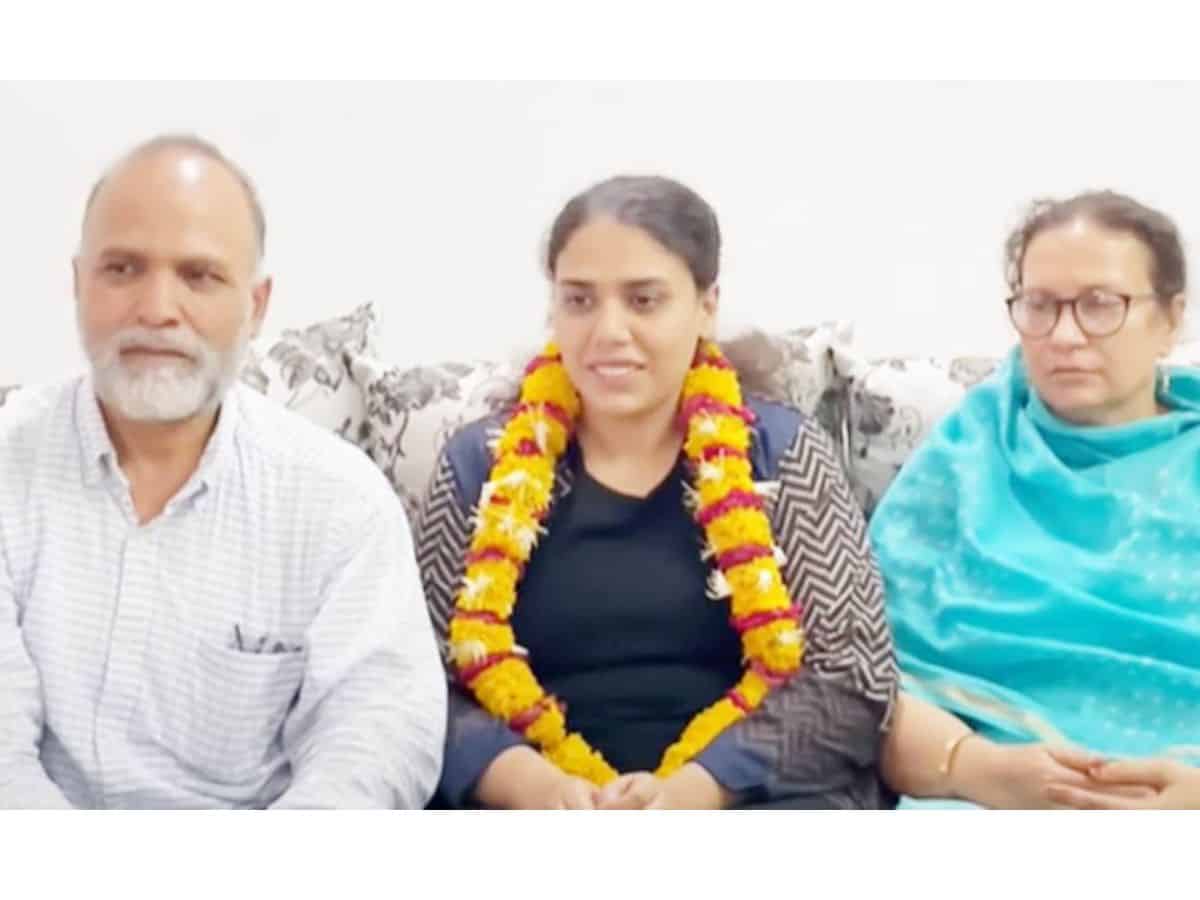
Ayesha Fatima will be the first Muslim woman police officer of IPS cadre for Telangana state.
Hyderabad:
The Centre has allocated additional 10 IPS officers to Telangana state. This development came following an appeal made by chief minister Revanth Reddy to Union Home Minister Amit Shah during their maiden meeting in New Delhi earlier this month.
Ayesha Fatima is among the new IPS officials for Telangana. Ayesha is the 2022-batch Muslim woman from Madhya Pradesh who secured 184th rank in the UPSC examination.
Ayesha pursued her education at Vindhyachal School in Dewas, which falls in the Malwa region of the state, until 11th grade. She completed 12th grade at Model Public School. Her father, Naziruddin Sheikh, is a government teacher, and her mother serves as a school director.
Ayesha, the second daughter in her family, excelled in competitive exams like JEE, becoming an electrical engineer after graduating from SGSITS college, Indore in 2015.
Despite her engineering accomplishments, Ayesha felt the urge to contribute to society and embarked on her UPSC journey in 2019. After facing initial setbacks, she finally achieved long-awaited success.
Ayesha Fatima will be the first Muslim woman police official of IPS cadre for the state.
Notably, Telangana CM told Amit Shah only 76 IPS officers were allotted to Telangana during the bifurcation of Andhra Pradesh. The CM had requested the Home Minister to sanction 29 additional IPS posts to the state in view of creation of new districts and for supervision of various departments.
source: http://www.siasat.com / The Siasat Daily / Home> News> Telangana / by Irfan Mohammed / January 17th, 2024
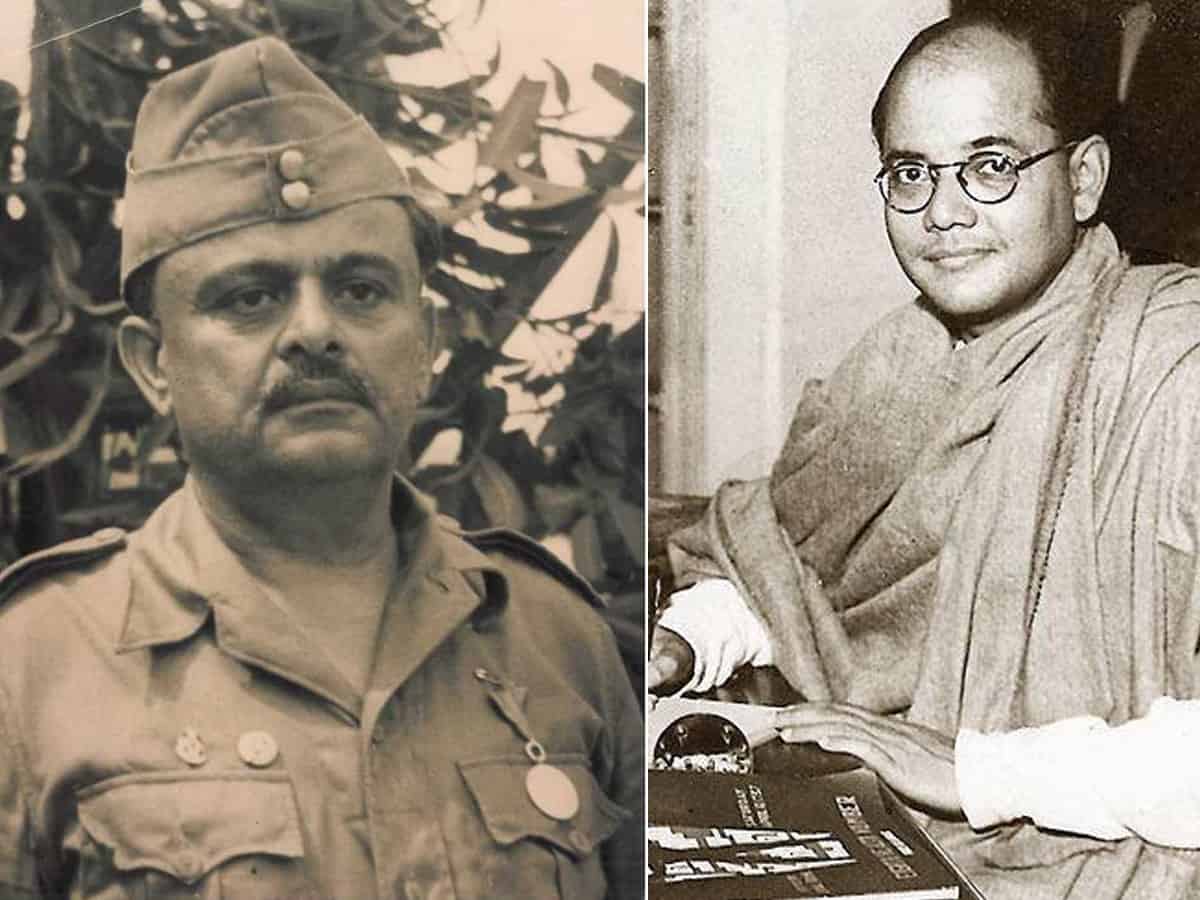
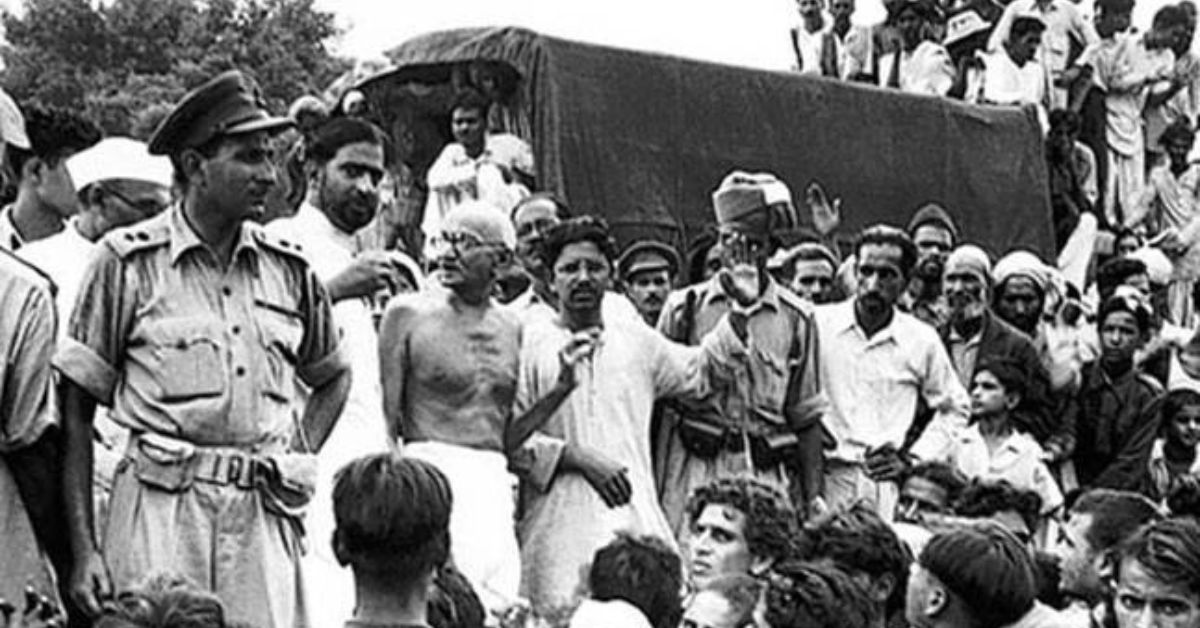
(Left) Habeeb Yusuf Marfani (Right) Subhas Chandra Bose
When Netaji Subhash Chandra Bose launched his fight for the freedom of India from British rule, several likeminded people offered him their whole hearted support and help. But these people and their sacrifices have now been largely forgotten. One such man was Abdul Habeeb Yusuf Marfani, a wealthy businessman who donated all of his fortune totalling one crore and three lakh rupees, to the Indian National Army (INA). Back then it was a princely sum and it helped the INA immensely.
Marfani hailed from the town of Dhoraji in Saurashtra but later the family settled in Rangoon where they set up a flourishing and diverse range of businesses. During the Second World War, When Netaji took charge of the Indian National Army and revived its flagging strength Marfani was the first to come forward to donate a massive amount to the leader for strengthening his army. Netaji honoured him by awarding the Sevak-e Hind medal.
He was the first person who was presented with this medal by Netaji himself. Marfani’s donation was in the form of cash as well as jewellery and property deeds. Reportedly Netaji was very moved by the patriotism and generosity displayed by Marfani. He declared: “I feel very happy about what Seth Marfani has done for the liberation movement. It is extremely commendable.”
Later Netaji realised that after the donation Marfani had become a pauper. So he asked Marfani what he wanted in return for donating his entire property. Marfani replied: “Give me the uniform of a soldier of the INA. I have donated my valuables. Now allow me to give my blood. I only want freedom for India and nothing else.”
His grand gesture inspired many others to come forward with donations. Several of the donations came from poor people like farmers, daily wage earners and coolies too. They donated whatever they could even if it was a few meagre rupees. In fact, Netaji was caught in two minds about whether it was right to take away the small earnings of these poor people. But at that stage one of his aides told him that he should not reject their sentiment or they will feel hurt and therefore Netaji obliged.
The qualities of generosity and sacrifice are held in high esteem in all cultures throughout the world. All people recognise that it takes a big heart and a great soul to be so generous. Whenever Netaji and his deeds are remembered, it is important to also remember the deeds of the men who stood behind the scenes and supported the freedom struggle with everything that they had.
source: http://www.siasat.com / The Siasat Daily / Home> Featured News> by Abhijit Sen Gupta / January 22nd, 2024
Hokkodgoli (Arambodi Village, Belthangady Taluk) Mangaluru, KARNATAKA:
Mangaluru:
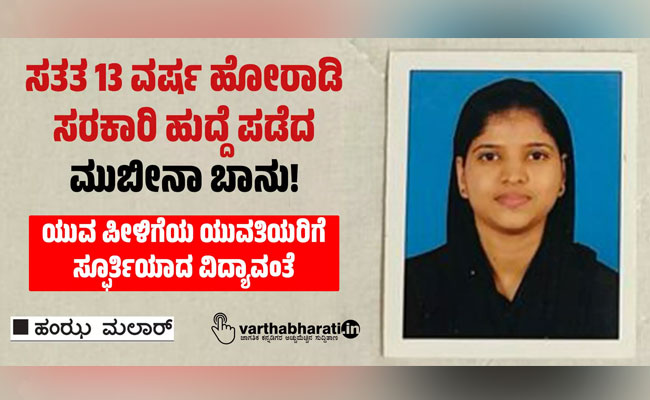
In a remarkable tale of perseverance and determination, Mubeena Banu, a Muslim woman from Hokkodigoli in Arambodi village, Belthangady taluk, has secured a government post after a 13-year-long legal battle.
Mubeena Banu, the tenth child of Muhammad H, a beedi contractor, and D. Zainaba, pursued her education in her village from 1st standard to 2nd PUC. She later completed her graduation from a private college in Moodbidri and earned her post-graduation (MA) from Mangalore University, Konaje. In 2008, with the aim of fulfilling her parents’ dream, she applied for the post of Supervisor in the Women and Child Welfare Department.
Despite her qualifications, she faced a setback when she was not selected for the post in 2010. Undeterred, Mubeena Banu investigated the reason for her exclusion and discovered a discrepancy in her marks. Her BA degree marks were recorded incorrectly as 71.79% instead of the actual 75.36%. Despite facing resistance from senior officers, Mubeena persisted in her efforts, seeking support from former MLAs Vasant Bangera and Ramanatha Rai.
Having relocated from Mittabailu to Melkar and working as a lecturer in a private educational institution, Mubeena approached Speaker UT Khader for assistance in her final attempt. She filed a complaint with the Lokayukta and approached the Karnataka Administrative Tribunal (KAT). Through persistent efforts, KAT ruled in favor of Mubeena Banu.
On January 10, 2024, the Women and Child Welfare Department issued an appointment order to Mubeena Banu for the position of Supervisor at the Office of Child Development Project Officer, Bantwal Taluk. Mubeena, who initially applied from Arambodi village, is now in Sajipa Muda village of Bantwal taluk with her husband, marking the culmination of her arduous journey.
Reflecting on her journey, Mubeena expressed gratitude to her late father, a social worker who emphasized education, and her mother for their unwavering support. She acknowledged the financial assistance from her parents and husband Ismail Khader during her numerous trips to Bangalore Vidhana Soudha and departmental offices. Mubeena also highlighted the crucial support from Lokayukta officer Amanullah, Speaker UT Khader, and his close assistant Libzat.
In her own words, Mubeena Banu said, “UT Khader always supported my persistence and struggled to get that government post, which I missed due to the mistake on the part of the officials. Maybe it can be said that after he intervened, the path of my struggle became easier.”
source: http://www.english.varthabharati.in / Vartha Bharati / Home> Karavali / by Vartha Bharati / January 22nd, 2024
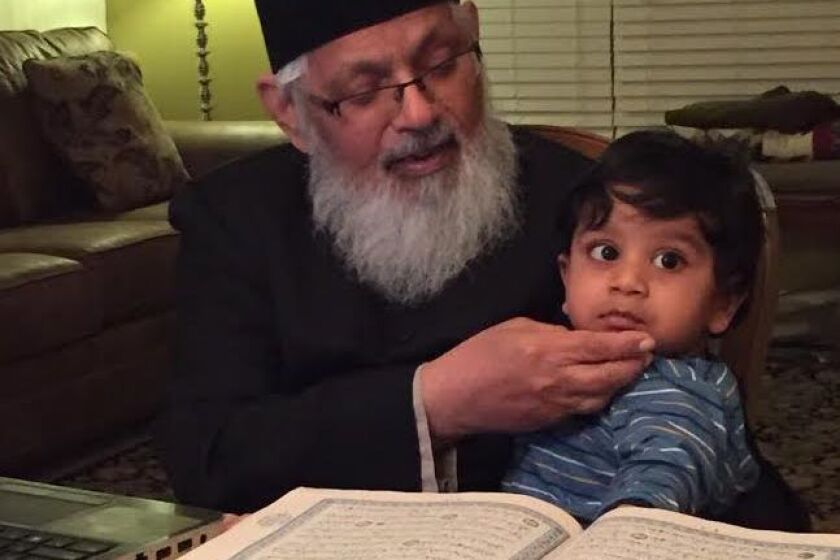
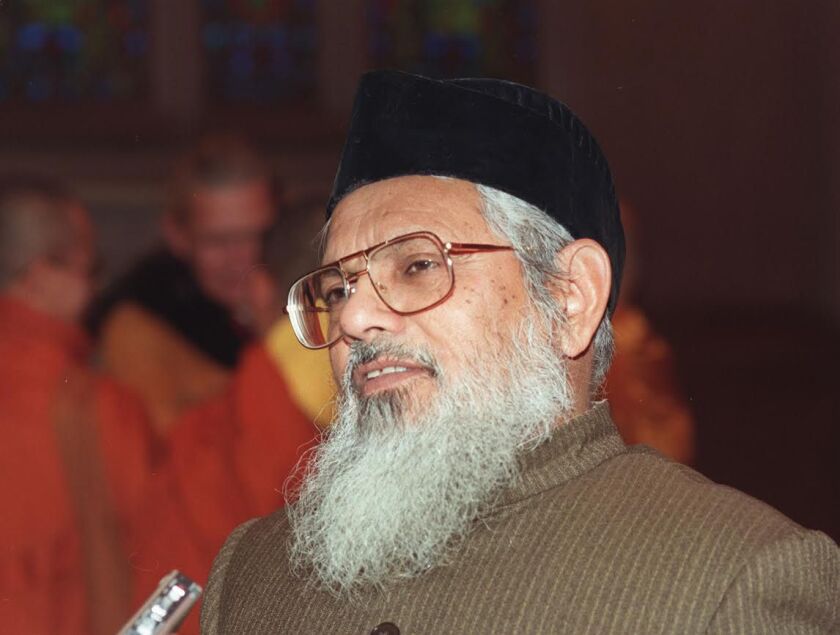
Irfan Ahmad Khan taught many people about the Quran, including his great-grandchild Sulayman Ahmed Ansari. | Provided photo
Irfan Ahmad Khan wrote books, taught college classes, gave lectures and counseled inmates after their release from jail to help people learn about the Quran.
One of the best-known Quranic scholars in Chicago’s South Asian Muslim community, he also worked to promote understanding among different religions through interfaith groups.
“My father’s aim was not for material gain or fame,” said his daughter Humera Hai. “Spiritual peace and harmony was his main aim.”
He would go hours out of his way to drive medicine to a sick person or to resolve disputes, Hai said.
Mr. Khan, 86, who had been having heart problems, died April 3 in Chicago, said his grandson Saeb Ahsan.
Irfan Ahmad Khan in 1996. | Sun-Times files
Mr. Khan, who lived in Markham, spoke and wrote in English, Urdu, Hindi and Arabic. He also could read and write in Farsi and Latin.
His books included “An Introduction to Understanding the Quran,” “An Exercise in Understanding the Quran” and “Reflections on the Quran.” He also edited a journal on Islamic thought.
He was born in 1931 in British India, in Saharanpur in the state of Uttar Pradesh. His father was a well-to-do merchant and landlord. He expected his son to take a role in the family businesses, but “He wanted to study,” said his daughter.
In 1952, he earned a degree in physical sciences from India’s Aligarh Muslim University and continued his Islamic studies in the city of Rampur. He taught at the Indian university from 1958 to 1973.
Irfan Ahmad Khan and his wife Shamim. | Provided photo
Mr. Khan married Shamim Akthar Khan in 1957.
“He was always so gentle, so kind,” his wife said.
In 1974, he arrived in Chicago to study at the University of Illinois at Chicago. His wife, who was raising their seven children in India, had to await immigration clearance and wasn’t able to join him full-time until 1981, Hai said. “Both of them struggled” with being apart, their daughter said.
Mr. Khan, who admired the philosophers Immanuel Kant and Rene Descartes, earned a master’s degree in philosophy from UIC in 1977 and a doctorate in philosophy in 1986, according to the university.
Irfan Ahmad Khan, with then-Mayor Eugene Sawyer in the background. | Provided photo
He taught Islamic philosophy at UIC and lectured at schools including the University of Chicago, the School of the Art Institute of Chicago and the University of Iowa, his family said.
He was founder and president of the World Council of Muslims for Interfaith Relations, an emeritus board member of the Parliament of the World’s Religions, founding president of the Interreligious Engagement Project for the 21st Century and director of the Association for Quranic Understanding.
“His message was that there was a commonality in many faiths — a commitment to justice and fairness,” said Abdullah Mitchell, a lawyer and friend who said Mr. Khan was known for his outreach to the African-American Muslim community.
His lectures were delivered with energy and humor, and he always was approachable, said another friend, Afaq Mujtaba.
Mujtaba said young people in the South Asian Muslim community referred to him as “Uncle,” a term of affection and respect.
When Mujtaba’s mother died, “The way he consoled me, I will remember for the rest of my life,” he said.
Mr. Khan made multiple pilgrimages to Mecca and traveled to educational and interfaith conferences in Asia, Africa, Australia and Europe.
Islamic scholar Irfan Ahmad Khan worked to build relationships with other religions and interfaith groups. | Provided photo
His grandson said Mr. Khan would tell him, “Develop your relationship with God” and “Keep your studies’ focus; don’t necessarily get married too early.”
He enjoyed Red Lobster, Reza’s Restaurant on Ontario Street and anything that tasted of mango, his grandson said. Every morning, he ate toast and drank strong English breakfast tea with milk and lots of sugar. He liked it in a china cup and saucer, the hotter the better.
Once, when a student brought him tea, he removed his topi — a traditional hat — and placed it atop the drink like a tea cozy to keep it warm. But Mr. Khan forgot where the tea was. So the student brought him a second cup. “He picked up his hat,” said his son Farhan, “and he found the other tea.”
Irfan Ahmad Khan. | Provided photo
He always made sure his sherwani — a formal, knee-length coat — was pressed and crisp.
Though he usually focused on philosophical questions and lectures, his family found it endearing when Mr. Khan would catch a glimpse of an Indian or Pakistani soap opera on TV and then comment, with serious deliberation, on the motivations of the characters.
“This person is not being honest,” he’d say. “They are trying to take advantage.”
He is also survived by daughters Nusba Parveen, Husna Ahmad, Bushra Islam and Saba Khan, son Salman, brothers Ehtasham, Afzal, Iqbal and Rehan, sisters Ayesha Jamal and Rehana Bilquis and 21 grandchildren and two great-grandchildren. Services have been held.
source: http://www.chicago.suntimes.com / Chicago Sun*Times / Home> Obituaries> News> Religion / by Maureen O’Donnell / April 14th, 2018
“The utmost service to the religion during these times is to educate our youth and upcoming generations with contemporary subjects while keeping their faith firmly established and their self-confidence high; so that, they excel in religion, are adorned with education, have appreciation of hard work and therefore are able to navigate and take confident decisions in their life.” ~Hazrat Maulana Mohammad Sayyid Wali Rahmani Sb.
Getting medical education and becoming a doctor to serve humanity is the dream of millions in the country. However every year only a few thousand fortunate students are able to realize their dream. Paying exorbitant fees of private medical colleges is not possible for everyone and seats are limited in government medical colleges. So the majority of students ended up losing hope in the absence of affordable resources and start considering other alternatives.
Admission in any government medical college is becoming tougher with every passing year with an increasing number of aspirants and limited medical seats. Its competitive exam (NEET) is one of the toughest exams in the country. It requires rigorous preparation.
In such a situation, Rahmani30 founder Hazrat Maulana Md Wali Rahmani Sahab started this program for meritorious students with a vision of providing free education for all and even sponsoring other expenses for those who can’t afford. Alhumdulillah, the vision of Hz. Ml. Md. Wali Rahmani sb ra has transformed into an educational movement, instilling hope & motivation in people who have remained deprived of such opportunities.
It is worth noting that 19 students (boys & girls) had participated in NEET-UG 2023 from Manipur state, in which all the students qualified NEET-UG 2023, while 11 students scored 500+ marks and got Government MBBS seats in Manipur viz. RIMS, JNIMS, CMC and SAHS which is a huge success. Also 7 students scored more than 400+ marks and got 2 BDS Government seats. Of course, this achievement is the guarantee of bright academic future of Rahmani30 students.
Parents, guardians and well-wishers of Rahmani30
RAHMANI30 – MERIT LIST OF NEET-UG 2023 OBC MEITEI-PANGAL
Sl. No. / State Rank / Roll Number / Name of candidate /Sex / Category NEET Score MBBS Seat @ NEET / Rank
We Manipur state (NE Region) are really fortunate to be part Rahmani Program of Excellence, RAHMANI30 UNIQUE Educational Movement.
For us, it is our proud moment for whole Ummah RAHMANI30 has done so much for entire community in the field of EDUCATION.
Marhoom Hazrat Maulana Mohammad Sayyid Wali Rahmani Sb left behind some pleasant memories as dedicated his life in the efforts for uplifting the community as a scholar, as an educationalist, and with ‘never say die’ spirit.
So far, RAHMANI30 has produced 10000+ students in Engineering (IIT), Medical (NEET), Commerce (CA/CS), Law (CLAT), Defence (NDA), and Institutes of National Importance (INI) and tremendous noble cause initiatives.
The Rahmani Program of Excellence (Rahmani30), along with its mentor organization, The Rahmani Foundation, is effectively turning the educational desperation of the minority community into hope and confidence, making its learning process more effective with each passing year.
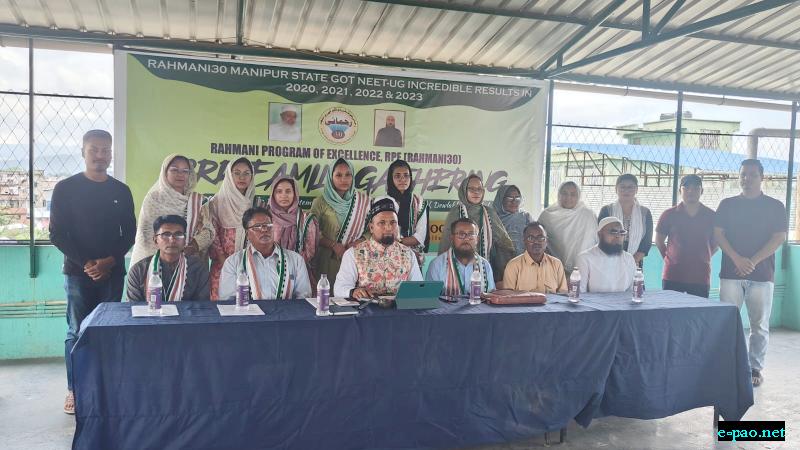
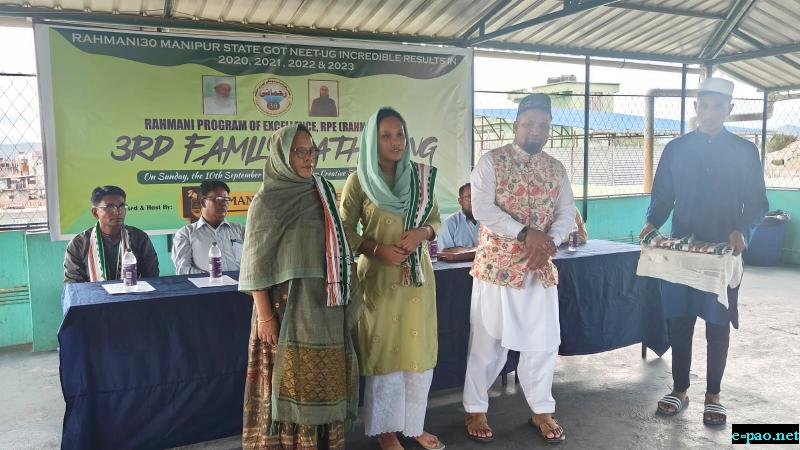
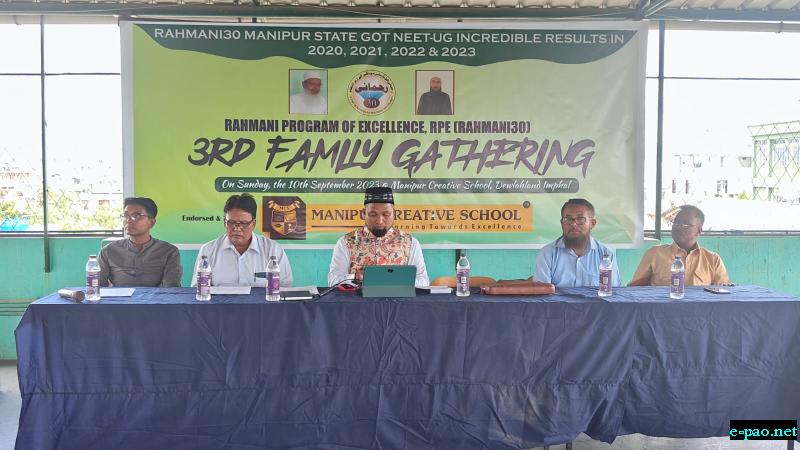
On this Family Gathering Occasion here at Manipur Creative School, Sermon Road, 5th Avenue, Dewlahland, Imphal East, Manipur 795001 on Sunday, the 10th September 2023, the parents, guardians and well-wishers of Rahmani30, congratulating and felicitating the successful students by Manipur State Coordinator Md Raees Ahamed Tampak, said in his speech that surely all the success and achievement are the results of hard work of team, students, and the prayers of all the stakeholders. So far, RAHMANI30 Manipur State produced 23 MBBS and 2 BDS Seats.
Md Raees Ahamed Tampak, Coordinator, Rahmani Program of Excellence, RAHMANI30, Manipur State said that this achievement is definitely achieved due to the tireless efforts of Mr. Fahad Rahmani (CEO Rahmani30), Ma’am Rafatur Rahmani (Team Lead, Maharashtra Girls program) and former DGP of Bihar, Janab. Abhyanand Sahab, by his efficient Academic leadership and guidance as well as the tireless hard work of the faculty, management and other staff. This has been possible only through identification of the target and recognition of the goal and mutual cooperation by the students and their parents.
“The Best way to predict your Future is to create it.” ~Abraham Lincoln
Parents, guardians and well-wishers of Rahmani30
Md Raees Ahamed Tampak / State Coordinator – Manipur State Rahmani Program of Excellence / (RPE – RAHMANI30)
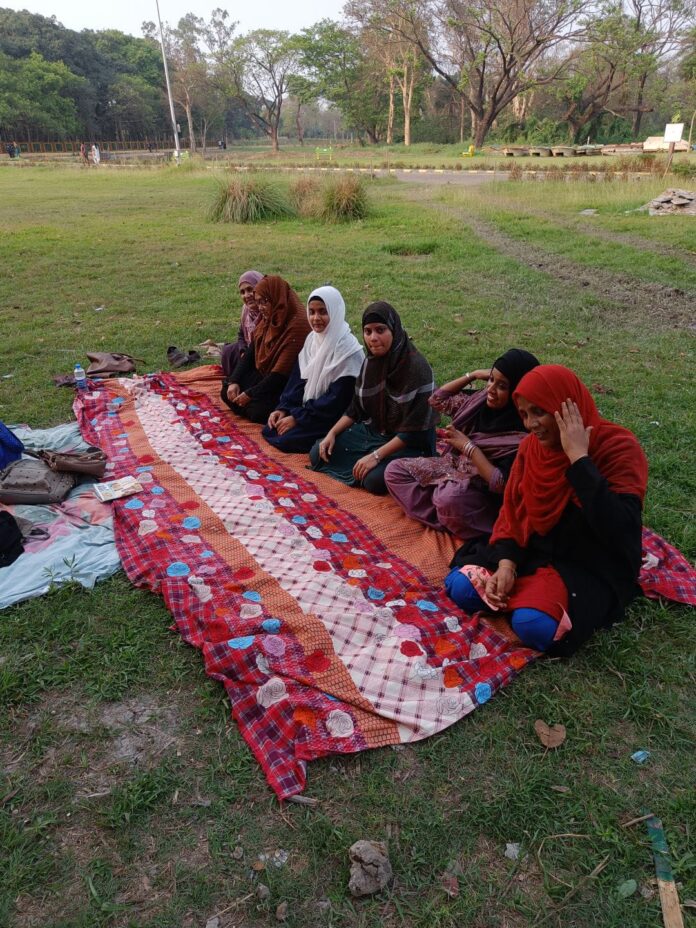
Muslim Women Study Circle’s Team Kolkata offering namaz at Botanical Garden, Kolkata
A Kolkata-based collective Muslim Women Study Circle is working towards reclaiming the agency of Muslim women at a time when Islamophobia has been reared into the country’s social and political fabric.
New Delhi:
In April 2019, a collective of Muslim women predominantly belonging to Metiabruz, a suburb in Kolkata, came together to understand the Quran, Hadith, and contemporary news events. As the year progressed, the group actively participated in the protests against the contentious Citizenship Amendment Act. This prompted the realization of a need for a more extensive network of Muslim women from across India, which marked the beginning of the Muslim Women Study Circle (MWSC).
The formation of the MWSC comes at a time of unprecedented rise of islamophobia in India with Indian Muslim women, a regular target of the Hindu right wing. For instance, in 2021, Hindu right-wing men scraped the internet for pictures of prominent Indian Muslim women and uploaded them to an app called Sulli Deals, hosted on GitHub, listing them on “sale” with the intent to humiliate them. A year later they held a similar “auction” with pictures of Muslim women posted on another app called Bulli Bai. Same year, the high court in India’s Karnataka state ruled that the hijab is not “essential” to Islam. Amidst this, digital platforms such as Twitter, Facebook, WhatsApp, YouTube, and Reddit have accelerated the spread of anti-Muslim hate.
However, as COVID-19 spread in India, MWSC transitioned to the online platform, broadening its reach and significantly enhancing engagement. This transition facilitated the systematic recording, archiving, and dissemination of their sessions through various social media platforms.
MWSC operates as a porous organisation. Volunteers from across the country, including Islamic reverts participate in discussions that are conducted mainly in English, Urdu, and Hindi. Sessions with experts are conducted by the core team or MWSC Chat group, comprising around seven people. Beyond that, MWSC dedicates time to its Muslim Women Mental Health Support Group. These sessions provide a safe space to delve into issues pertinent to Muslim women, addressing challenges and solutions.
In day-to-day functioning, the organisation remains active on multiple fronts. WhatsApp chat groups buzz with conversations spanning the Muslim Women Book Club readings, subjects such as domestic violence, secularism, caste, creative writing politics, citizenship, legal rights, academic scholarships, etc., and the creation of materials for social media platforms.
“We explored ideas at the intersection of politics and spirituality, which were never previously discussed before, and were often overlooked in the context of Muslim women. Moving to an online platform helped us connect with other Muslim women specialising in different fields, such as academics, journalists, mental health professionals, religious scholars, etc. While sharing their knowledge, they also got to amplify their voices. Once we got that momentum, it just kept going,” said Sania Mariam, a MWSC founder and a research scholar of Political Science and Governance at IIT Bombay’s Monash Research Academy.
Bringing Muslim Women to Mosques
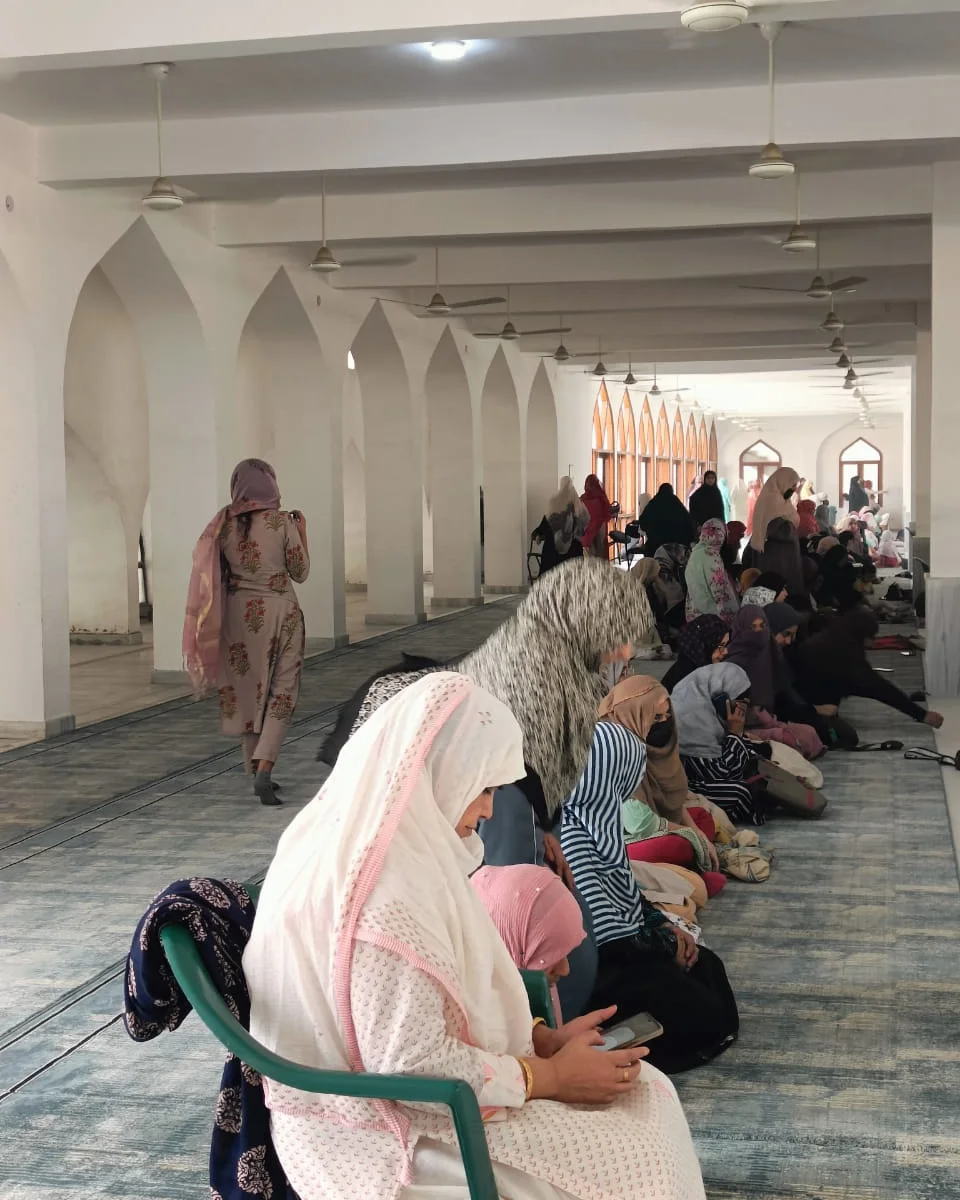
Women praying together at Ishat-e-Islam Mosque, New Delhi as a part of the Masjid Project
Despite the global historical prevalence of Muslim women praying in mosques, such spaces are noticeably lacking in India. MWSC’s ‘Muslim Women Masjid Project’, inspired by Al-Masjid-an-Nabawi (The Prophet’s Mosque), not only served as a palace of prayer for both men and women but also sheltered the homeless and the hungry.
The project started by making a catalog of existing women-friendly mosques. Along with open- discussions on “Women in masjids” online, MWSC started with Quranic dars on the importance of women in prayer spaces. They found that a huge number of women longed for offering namaz in Eidgah, instead of being at home waiting for the men to come back.
Aisha Masooma, a volunteer with MWSC from Guwahati said, “It is common to find women’s prayer areas confined to small rooms or basements of the mosques. When I was volunteering for the Assam chapter of this project, I was astonished to find women who had never been acquainted with the idea of visiting a mosque. So many Muslim women told me that the very idea of attending a mosque is an alien concept to them.”
Women the organisation visited different mosques to inquire about spaces for women to pray. “We made a list of such mosques and talked to the Imams. In Kolkata, for example, we had a one-on-one conversation with Imams, and they appreciated the ideas. Even if there was no separate place for women to pray, they allowed women to come, designating them an area in the mosque and promised to make a separate space for women in the future,” said Mariam.
A Petition Challenging the Hijab-Ban
In 2022, with the Hijab ban issue in Karnataka and court proceedings, MWSC recognized that among the arguments and counter-arguments by different parties, the most critical voice of the discourse was silenced, that of young Muslim women who chose to pursue their education as well as their faith.
They believed that the Hijab-row in Karnataka was essentially infantilising, and dismissing Muslim women, forcing them to choose between non-existing binaries such as education or hijab, Indianness or Muslimness, especially at a time when Muslim women are one of the lowestliteracy rates in the country.
Therefore, in July 2022, MWSC challenged the Karnataka High Court’s decision to ban Hijabs in educational institutes in the Supreme Court. Prominent lawyer-activist Prashant Bhushan pro-bono represented the organisation.
While the petition challenged the idea that the two, Hijab and education are antagonistic in principle, it was also meant to create awareness that oppositional forces exist to the country’s increasing saffronisation. As a result, MWSC aimed to create an active role for Muslim women in the public sphere, and demand to creation of more such spaces. “There is a lot of skepticism related to Muslim women owning their agency from the existing political scenario. People always think, about who’s funding them, and which political arm they belong to. There is skepticism from within the community,” said Mariam.
She said that as Muslim women trying to create a forum like MWSC, they are often boxed into distinct categories such as secular Muslims, feminist Muslims, and religious Muslims. “It is difficult for them to imagine that there are Muslim women who want to be committed to their Deen [religion] while achieving a lot in this world,” she told Two Circles.
Backlash and Targeting From Hindu Right-Wing
In India, Muslims have been experiencing discrimination across various spheres, such as employment, education, housing, law, and justice among others. This pattern of discrimination has notably marginalised Muslim women, materialising in their isolation, for instance, a recent study revealed that Muslim women in India are half as likely to get callbacks for entry-level jobs as compared to Hindu women. Another study underscores the compounded disadvantage faced by Muslim women, positioning them as one of the least empowered segments of society. This disadvantage stems from their dual status as women and as members of the minority community in India.
During the Sulli deals incident, certain members of MWSC were subjected to an “online auction” due to their outspoken political views on social media. The organization has consistently encountered online trolling, with a notable example being a video addressing Hindu nationalism that attracted numerous offensive comments. The backlash has emanated from both inside and outside the Muslim community.
Ghazala Jamil, assistant professor at the Centre for the Study of Law and Governance, Jawaharlal Nehru University said, “Muslim Women’s organisations like the MWSC can be seen as a corner in the larger public sphere or a satellite public sphere, which can give Muslim women a chance to express their views without feeling they have to maintain silence about or hide their Muslim identity.”
Across the subcontinent, a dynamic wave of Muslim women’s rights networks is actively challenging essentialist perceptions of Muslim womanhood. Situated within the burgeoning Islamic feminist movement, these organisations articulate the multiple identities of Muslim women, cultivating a unique Islamic feminist consciousness as opposed to the idea of ‘universal sisterhood.’
“Instead of criticising these spaces as regressive or causing division, we should recognise them as opportunities for learning within the larger movement for gender equality. Organisations specifically for Muslim women provide a valuable place for them to express themselves without feeling overshadowed by dominant perspectives of Hindu or liberal feminists,” Jamil added.
The founders do not intend to convert the organisation into an NGO but rather see it as a diversified environment where Muslim women may freely express themselves and share their perspectives. “We just wanted to be a collective where women can come, speak, and put their views forward. They develop their agency, they get inspired. We aim to be better Muslims, better Muslim women, more confident Muslim women,” said Mariam.
Tasneem Khan is a student of History at Delhi’s St. Stephens College.
Nuzhat Khan is an independent reporter based in Delhi.
source: http://www.twocircles.net / TwoCircles.net / Home> Indian Muslim / by Tasneem Khan and Nuzhat Khan / January 11th, 2024
Kalpakancheri (Malappuram District), KERALA / Dubai, U.A.E:
Indian recalls journey from being a fundraiser to rebuild a mosque to emerging a tycoon.
A young Azad Moopen at the inauguration of one of his clinics / Image Credit: Supplied
HIGHLIGHTS
Dr Azad Moopen came to the UAE in February 1987 to raise money for the renovation of a mosque in his hometown, Kalpakancheri in Malappuram district, Kerala.
Dr Moopen leased a two-bedroom apartment in Bur Dubai to start a clinic
In 2008, Dr Moopen invited a private equity firm to invest in the company and they valued Aster DM Healthcare at $100 million.
In 2010 and 2011, Dr Moopen was awarded the Pravasi Bharatiya Samman and Padma Shri, respectively, by the Government of India.
Aster DM is listed at NSE and BSE
Dubai:
Azad Moopen came to Dubai 34 years ago to raise money for the renovation of a mosque in his hometown, Kalpakancheri, in the Malappuram district, Kerala. He needed Rs1 million then, or Dh250,000 as per the currency exchange rate in 1987. The plan was just to collect the funds and return home. He had no intention to settle in the UAE.
Destiny, however, had other plans for Moopen – a gold medallist in general medicine and a lecturer at the Calicut Medical College at the time. Looking back, Moopen said it was this noble intention that perhaps set the background for something big to happen in his life.
Fast forward to today, he is now a household name in the UAE. Just about everybody in the region knows him well as the multi-billion dollar businessman and developer of health-care facilities in the UAE and Asia-Pacific region. He is the chairman and managing director of Aster DM Healthcare, a conglomerate in the Middle East and India that Moopen founded in December 1987, just ten months after arriving in the UAE to raise funds for a mosque.
According to a report published in September 2018, he owned and managed 21 hospitals, 113 clinics and 216 pharmacies. The health-care company serves 50,000 patients a day in nine countries. In 2018, Aster treated 17 million patients across all its facilities. Of this these, 15 million patients were from the Gulf Cooperation Council (GCC) countries, while two million were from India.
In 2017, Forbes ranked him sixth on the ‘Top 100 Indian Leaders in UAE’ list and his total wealth was estimated at approximately $5.9 billion (Dh21.7 billion).
How it all started
“When I finished collecting money for the mosque reconstruction, my job was over in the UAE. It was time to return home, but when I went home, I was not happy. There was something pulling me back to this country as there was magic here,” said Moopen. “In June (1987), I came back on a visit to the UAE. I stayed with a friend in Ajman who was a doctor as well. There were plenty of opportunities for a doctor like me and I was raring to tap into some of them.”
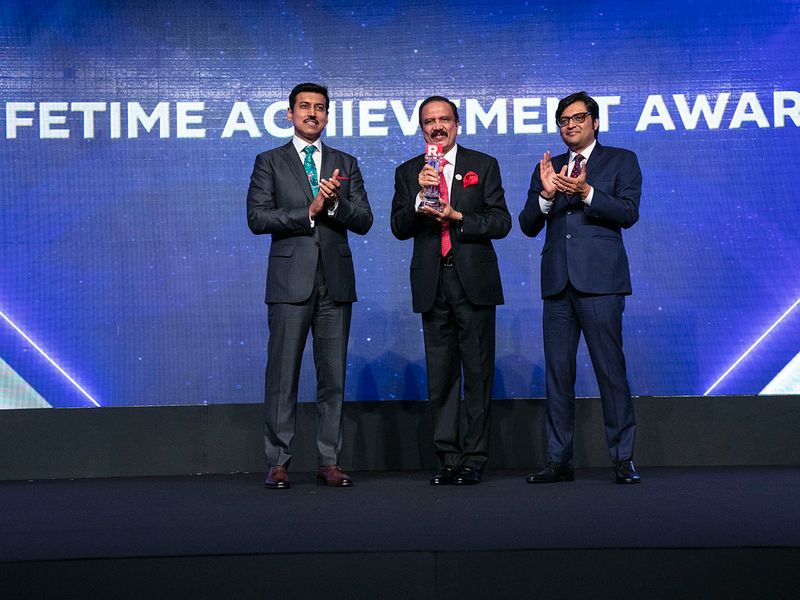
Azad Moopen receives a Lifetime Achievement Award / Image Credit: Supplied
Moopen’s friend was setting up a clinic in Ajman and he invited him to join there as a physician. Back in the day, there were no post-graduate doctors practising in Ajman and Moopen, who was a Bachelor of Medicine and Surgery (MBBS) and a Doctor of Medicine, with a a Diploma in treating Tuberculosis and Chest Diseases (DTCD), was already highly qualified. In fact, his varied degrees made him quite a sought-after doctor in Ajman.
“But my friend bowled me a googlie, as we say in cricketing terms! He turned around one day and told me to start a clinic in Dubai. To be honest, I thought he did not like me and that’s why he was pushing me away to Dubai. But I took his advice and today, I believe he is my guardian angel. That moment, when I heeded his advise and came to Dubai, it was the turning point in my life. I know now he was a friend, he was a God-sent and he is ‘the person’ in my life.”
No matter how successful you become in life, you never forget the people who helped you along the way. And this, to me, has been the biggest reason for my success.
– Azad Moopen
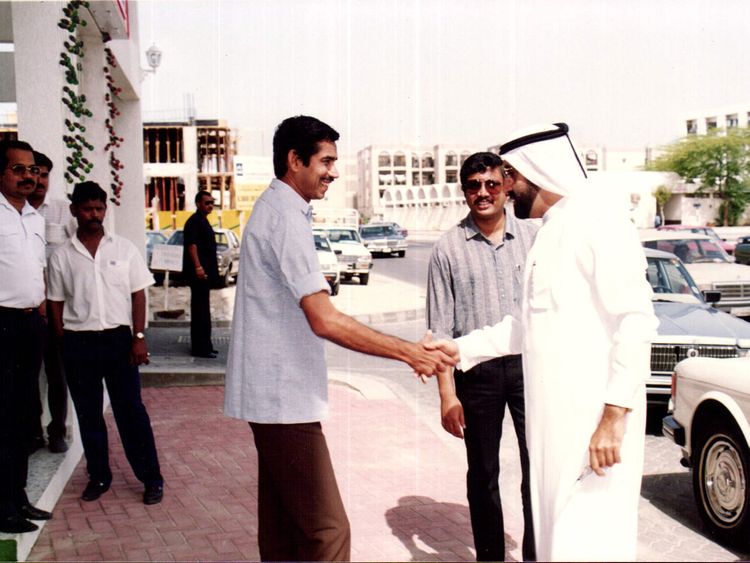
In December 1987, Moopen leased a two-bedroom apartment in Bur Dubai close to the Port Rashid area. “Port Rashid was one of the main areas in Dubai where there were many ongoing activities. A lot of people worked here and I wanted to serve them.”
He said the consultation charges were between Dh10 and 15. Some people got reimbursement from their companies while others paid the bills from their pocket.
“The challenge, however, was collecting money from some blue collared workers who could not afford to pay even this amount. So every Tuesday we started offering free consultations for half a day. We also kept sample medicines which we gave to these workers.”
Within a year, the clinic started receiving 100 patients a day. There were just two doctors – Moopen and a gynaecologist.
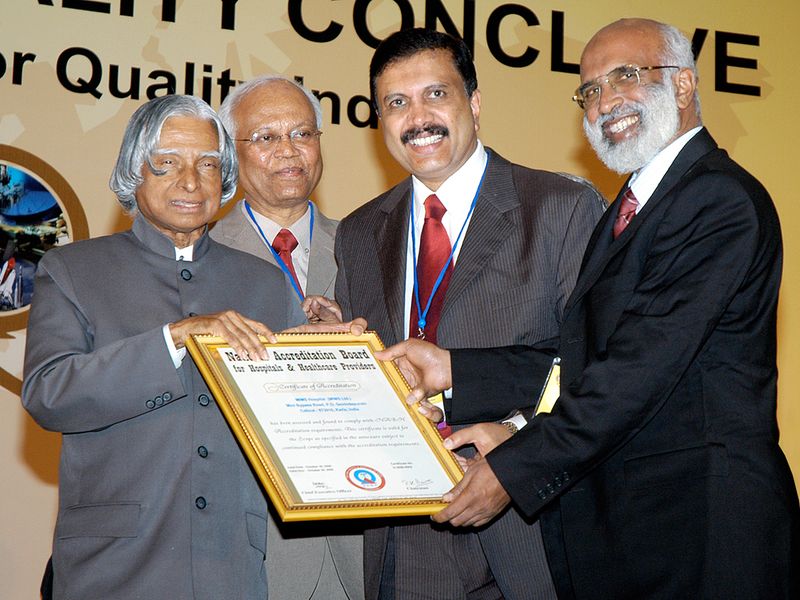
Dr. Azad Moopen receiving an award from late Indian President APJ Kalam / Image Credit: Supplied
“I myself worked from 8 in the morning until mid-night. But it was becoming very congested and we needed to move to a bigger place,” he said. “I found a three-bedroom apartment in Al Rafa and we moved there. We hired two more doctors – both paediatricians. We were able to see more patients as a result.”
By that time in 1988, Moopen was getting a hang of running a health-care facility. “One of the things we discovered early on was that people came to us for consultation, but were picking up medicines from another pharmacy. So, we thought why not make this in-house? And that is how Al Rafa Pharmacy was born.”
Moopen said that in 2008, he had his real brush with success. “Until then, I was just doing my job of opening clinics, hospitals and pharmacies. I was not really counting or sitting down to see and evaluate the success of my business. In 2008, as part of our expansion plans, we invited a private equity firm to invest with us. They valued our company at $100 million and that reality hit me. We had grown and how! It was an emotional moment for me, reading the valuation report and made me think of how hard the company staff and me had worked to bring it that far,” he said.
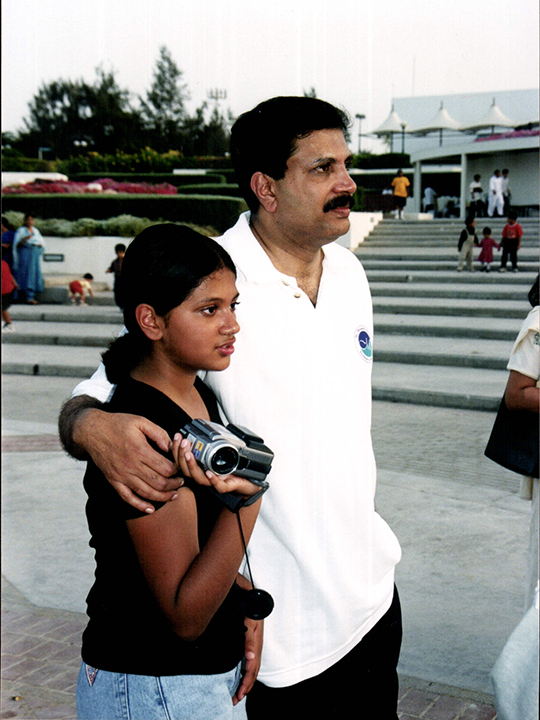
Dr. Azad Moopen with his youngest daughter Zeba Moopen who is now a practicing doctor / Image Credit: Supplied
In 2012, a second private equity firm came on board and they valued Aster DM Healthcare at $400 million. “This means we had grown four times in four years. It was massive.”
Today, Aster DM is listed at the National Stock Exchange of India (NSE) and the company’s total revenue in 2019 was fixed at a massive $1.4 billion.
Reason behind this phenomenal success
“Without batting an eyelid I will say that it is my staff, my people, my doctors who have made this company successful. I am blessed and lucky to have these people working for me for decades. Our doctor turnover at the consultant level is as low as five per cent. This means our doctors practically never leave us. And, because of this, our patients never leave us.
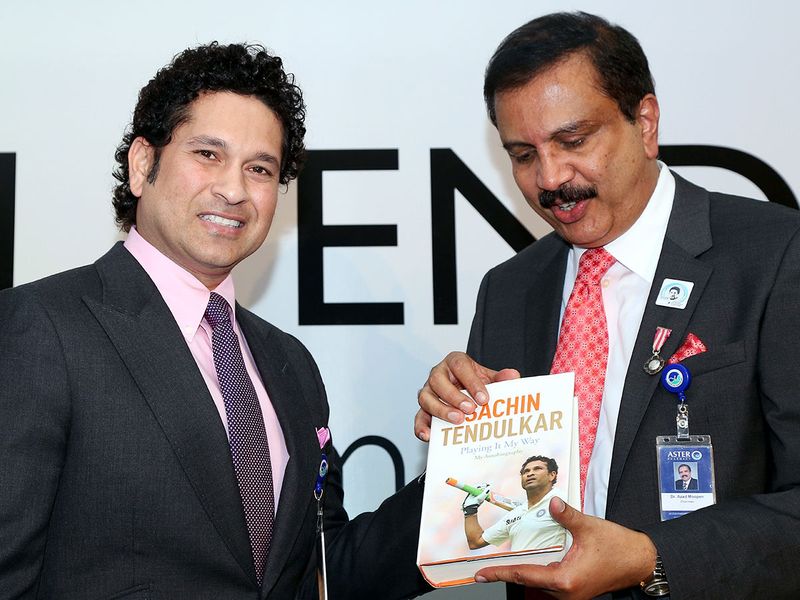
Azad Moopen with cricketer Sachin Tendulkar during the latter’s book launch. / Image Credit: Supplied
“No matter how successful you become in life, you never forget the people who helped you along the way. And this, to me, has been the biggest reason for my success. To give you an example, the other day, one of my CEOs brought me a staff member’s performance report. He wanted me to fire him as he was not performing well. When I saw the report I realised he was an old friend’s son. This friend, I remember, had loaned me Dh500 when I had come to the UAE for the first time.”
“As the memories flooded me, I simply refused to sign the sack letter. Instead, I called this young boy and his father and told them about the report. From my part, I have given this boy a second chance. I pray he will make use of the opportunity given to him.”
Challenges
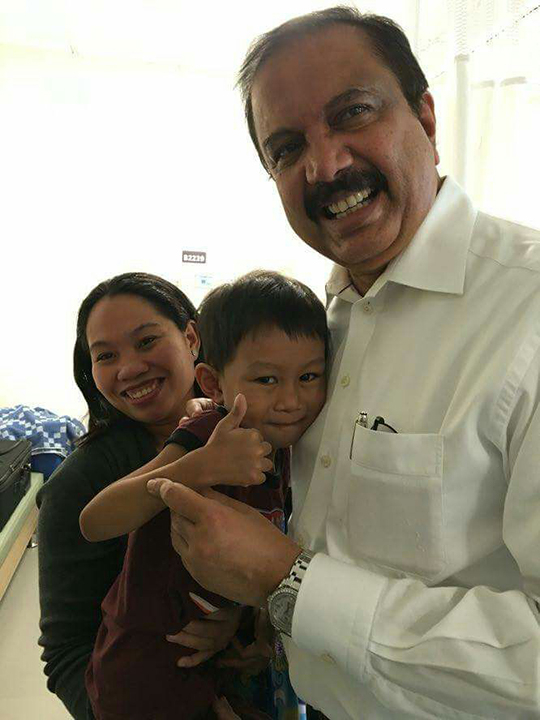
Dr. Moopen during one of his philanthropic activities / Image Credit: Supplied
“There are always challenges in business. If you want your career graph to have a smooth ride, then you must not pick business as your profession. Success in business lies in finding your challenges and meeting them head-on,” said Moopen.
“For example, the UAE’s mandatory insurance has proved to be beneficial for the consumer, but for health-care providers like us, it is a challenge. People would come to us because of our credibility. Now, it has to do with the kind of insurance coverage they have.”
Philanthropy the way to life
Moopen has pledged to give 20 per cent of his wealth to charity. An off-shoot of this has been the ‘Aster Volunteers’ programme to help patients with free consultations, treatment and surgeries. More than 900,000 lives have been touched by the programme.
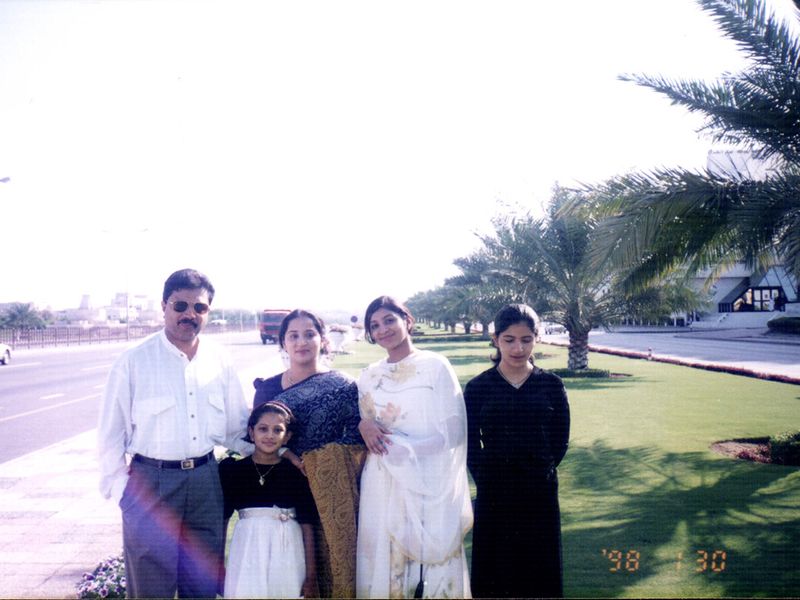
Dr. Moopen with his family in an earlier picture / Image Credit: Supplied
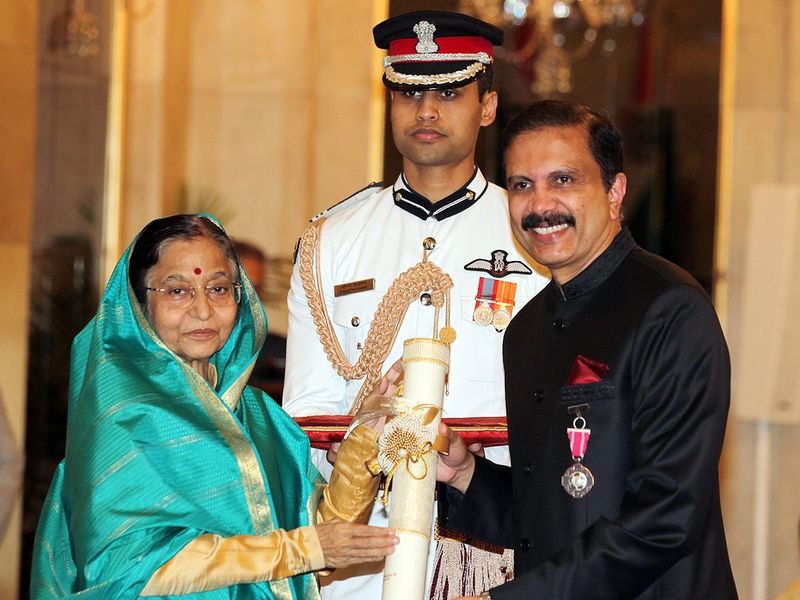
In 2010 and 2011, Moopen was awarded the Pravasi Bharatiya Samman and Padma Shri, respectively, by the Government of India.
Dr. Azad Moopen awarded the coveted Padma Shri in 2011 / Image Credit: Supplied
“By God’s grace, I have everything in life. Name, fame, wealth, a great family. It is my duty and responsibility now to help others. When I started out, I was in the right place at the right time with the right people. I want others to be in my shoes. I am nearing retirement and my only dream now is to hand over my business to my team of professionals who, I believe, will do a better job than me.”
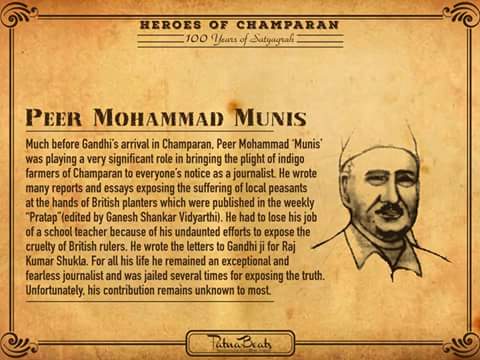
The Champaran Satyagraha is a landmark chapter in India’s history, and an important catalyst for it was journalist Pir Muhammed Munis, whose letter to Gandhi set the stage for the monumental resistance.
In 1917, when British rule prevailed over India, the government prepared a list to keep track of 32 of MK Gandhi’s closest associates. At number 10 was a name that history hasn’t forgotten since.
Pir Muhammed Munis, a journalist known for the power of his pen, was instrumental in his role in the Champaran Satyagraha movement, also touted as India’s first organised act of civil disobedience.
Through his body of work, he scripted a record of heroism that is etched into the sands of time.
To truly appreciate Munis’ role in the struggle for Independence, we trace our steps to 1916, when the British Raj was exercising exceeding control over Indians. One particularly vulnerable group were the farmers in Champaran, Bihar.
The source of contention was the agrarian practices in the region. While the British were intent on the peasants growing indigo, a lucrative cash crop with sizable demand in the markets abroad, the farmers were deprived of land for growing food crops instead. This tussle culminated in a famine, causing the farmers to rise in revolt against the dominion of the British. As the conflict escalated, word reached Gandhi. How?
Pir Muhammed Munis was behind it.
A ‘rouge journalist’
The uprising of the peasants in Champaran wasn’t going unnoticed. The country was reading about it thanks to Munis, who left no stone unturned in letting his views reflect his patriotic feelings. In the years to come, Pir Muhammed Munis would go down in history as the journalist who raised his voice when it was most difficult to be heard.
He chronicled the efforts of the farmers, the unlawful practices of the British and more such news in Hindi — despite the elite class being fluent in Urdu, Persian and English — displaying his ardent love for the language. In his later life, he went on to advocate for Hindi to be propagated amongst the masses. Anecdotes suggest during his later interactions with Gandhi, Munis even went on to teach the legend the language, a skill that greatly helped the latter.
So persistent and vocal was he about his patriotic opinions that he was termed as “notorious”, “bitter” and “dangerous” by the British, eventually being branded as a ‘badmash patrakar (rouge journalist)’.
A British Police document from the Azadi Ke Deewane Museum at Red Fort reads, “Pir Muhammed Munis is actually a dangerous and hoodlum journalist who through his questionable literature, brought to light the sufferings of a backward place like Champaran in Bihar.”
The letter that set the stage for the uprising
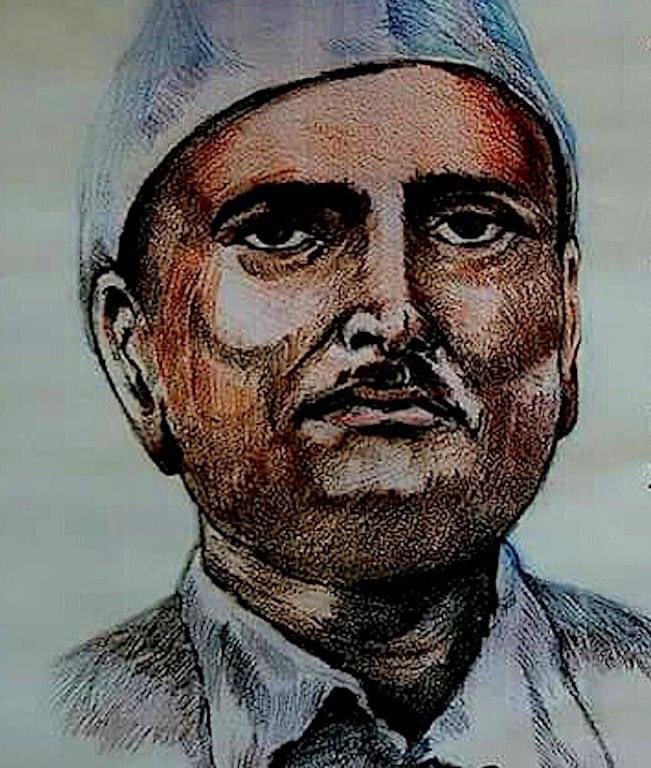
Pir Muhammed Munis fought for the farmers in the Champaran region of Bihar, Picture source: Twitter: Muslims of India
But nothing stopped Munis from continuing to write, his pen a double-edged sword. His works appeared frequently in Pratap, a Hindi weekly, and monthlys such as Gyanshakti and Gorakhpur. He was also on the editorial board of Desh launched and edited by Dr Rajendra Prasad.
The most famous letter among his repertoire of literary works is a letter he penned with local farmer Rajkumar Shukla, intended to be sent to Gandhi on 27 February 1917. Shukla conveyed the grievances of the farming community, while Munis coupled this with his power of words. An excerpt from the letter reads, “Our sad tale is much worse than what you and your comrades have suffered in South Africa”.
In another letter dated 22 March 1917, Munis once again voiced his concerns about the peasants in Champaran, and asked Gandhi to pay them a visit. And when he did on 10 April 1917, people commended the bond between the two, often calling Munis Gandhi’s pillar as he hatched plans for the Champaran Satyagraha.
As the first Satyagraha movement, it set the stage for future mass protests and uprisings. Gandhi set up schools in the Champaran area, gathered volunteers, conducted village surveys, organised protests, and strikes, and advocated for control over the sale of crops to be given to the farmers. And through this mutiny, Munis was by his side.
This did not go down well with the British. As a letter written by W H Lewis, sub-division officer to the commissioner of Tirhut division indicates, “… Mr Gandhi got offers of assistance, the most prominent is Pir Muhammad. I have not (sic) full details of his career, but either Whitty or Marsham could give them. He is, I believe, a convert to Muhammadanism and was a teacher in the Raj School. He was dismissed from his post for virulent attacks on local management published in or about 1915 in the press. He lives in Bettiah and works as a press correspondent for the Pratap of Lucknow, a paper which distinguished itself for its immoderate expressions on Champaran Questions… Pir Muhammad is the link between this Bettiah class of mostly educated and semi-educated men and the next class, i.e. the Raiyats’ own leaders…”
The result of the tyranny
History never forgets the cries of the just, and the Champaran Satyagraha was proof of this.
The mutiny ended with the British officers agreeing to formulate the Champaran Agrarian Act of 1918. The Act abolished the forcible cultivation of indigo and thus relieved tremendous pressure being put on the farmers here. The event has gone down in history as one of the first major revolts that forced the English to introduce a Bill in favour of the Indians.
With the Tinkathia system being abolished, the farmers thought the worst was over. But the British continued to oppress them in different ways. Fuelled by ending this once and for all, Munis started Raiyati Sabha, a platform that would advocate for and protect the rights of the farming community. For this, Munis faced a six-month jail term.
This wasn’t the last of imprisonment. In 1930 he was imprisoned in the Patna Camp jail for three months for his participation in the Salt Satyagraha of the Civil Disobedience Movement.
However, nothing could deter him from his goal of protecting the rights of his countrymen. In 1937, he led sugarcane producers who were protesting against intermediaries who were pocketing a major part of the earnings. He was also elected member of the Champaran Zila Parishad (District Board) on the Congress ticket and became President of Bettiah Local Board, from which he resigned to join the Individual Civil Disobedience Movement.
Throughout his lifetime, he advocated for rural development, popularisation of Hindi in primary schools and the rights of his fellow Indians. Until his passing away on 23 September 1949 Munis continued to be a leader worth looking up to for his countrymen.
Lauding the efforts of Munis on his passing away, Pratap editor Ganesh Shankar Vidyarthi, wrote in his newspaper, “We have the utmost sorrow that Pir Muhammed Munis of Bettiah, Champaran district has died. We have the privilege to see such souls who are quietly lying aside. The world doesn’t come to know anything about their issues. The lesser these sons of Mother India are renowned, the more profound is their work, the more philanthropic.”
He further wrote, “You recited the dreadful story of Champaran to Gandhi ji and this was a result of your hard-work only that Mahatma Gandhi visited Champaran which made this land a pious place and the place which is unerasable in the pages of history”.
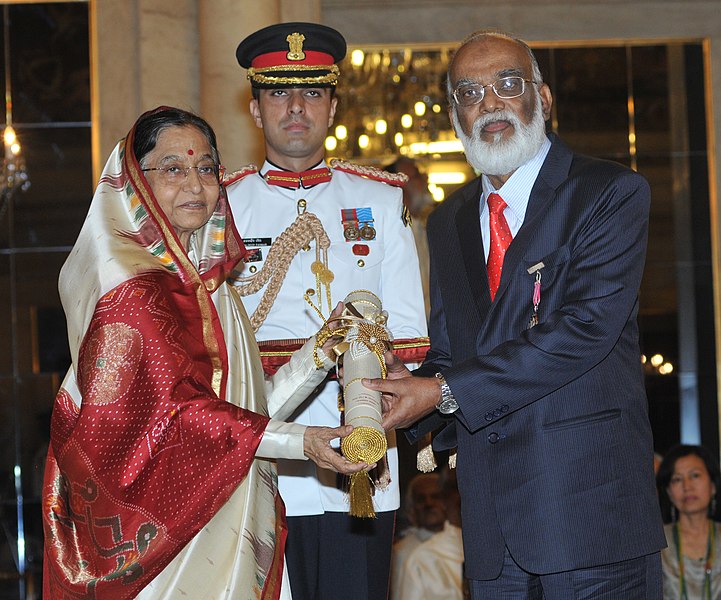
The President, Smt. Pratibha Devisingh Patil presenting the Padma Shri Award to Prof. (Dr.) M. Ahmed Ali, at an Investiture Ceremony II, at Rashtrapati Bhavan, in New Delhi on April 01, 2011./ pix: en.wikipedia.org
Dr. Ahmed Ali can perhaps scale Mount Everest to gain knowledge in surgery, and will come back to serve the poor and needy. That is the thirst he has, and the skill gained by his extra ordinary, photographic memory power.
After obtaining the highest degree in surgery such as M.Ch, he was awarded the prestigious Doctor of Science D.Sc.in surgery.
The Padma Shree Awardees, listed on January 31, 2011, Dr. Ahmed Ali, won the nation’s prestigious award.
A dedicated, and most devoted to his profession, he declined an opportunity, assigned in New York soon after post graduation in gastroenterology and proctology. Surgery is an art to him same as a gifted and a born artist plays with his brush and colors. There is no exaggeration that if it is said that his tournament is surgery.
He visits every month to his native town to impart free service, in addition he gives nutrient suppliments and other vitamins and other additives to less fortunates. He does this as a token of gratitude to the school he studied and for the people who mutually loved.
Born in Ambur in 1940, graduated from Madras Medical College, and after retiring from service, he is concentrating his profession in Mehtha Nursing Home,Chetpet in Chennai.
His only son Dr. Mansoor is a surgical specialist in liver, pancreas, and bile duct (Hepato Pancreato Bilary Specialist) working in Kings Hospital, London UK. Dr. Mansoor is as good as his father, and was the student of Dr. Rela, the world renowned liver specialist.
Ambur, a town in Vellore District in Tamil Nadu is famous for leather industry, as well the elite of the society Ambur Muslim Educational Society, and it is fully devoted in concentrating women’s education and the students performance is par excellent.
Mr. Mecca Rafeeque Ahmed, a renowned leather industrialist, from Ambur also awarded Padma Shree for his industrial achievements.
Dr. Ali was felicitated with standing ovation by different groups elites, but he stood humble and modest.
source: http://www.amityindias.blogspot.com / April 05th, 2011
Dr Valli is the scientist who made the world realise the importance of food grains
He had a comfortable US job that he left to return to India and make it healthy. More than two decades since he launched his mission, India’s ‘Millet Man’ Dr Khadar Valli Dudekula was recognised by the government of India with the civilian honour Padma Shri during the 74th Republic Day celebrations on Thursday, January 26.
Dr Valli is the scientist who made the world realise the importance of food grains. He has numerous researches to his name and has worked extensively for revival of grains over 20 years. As per The Better India, Dr Valli woke up to the problem of diet-related consequences in society around 1986-87 when he came across the case of a girl who had started menstruating at 6 years of age. Shocked by this, he decided to return to his country in 1997 and settled in Mysuru to work towards a healthy society rather than in a foreign nation.
Dr Valli is an independent scientist and food expert. In his pioneering work, he has revived five types of disappearing millets. He is a leading advocate of Millet cultivation and use. He was born in a humble background in Kadapa District of Andhra Pradesh. He pursued his BSc (Education) and MSc (Education) from Regional College of Education, Mysuru before earning a PhD in Steroids from the Indian Institute of Science, Bengaluru. Besides being an agricultural scientist, he is also a homoeopath.
After completing education in India, he became a postdoctoral fellow in environmental science at Beaverton, Oregon for three years. He then worked as a scientist with Central Food Technological Research Institute (CFTRI) for four years before working with DuPont for a year in India and four plus years in the US. He discovered medicinal properties of grains during his research and named 5 specific types of grains he prescribed as “Siridhanyalu”.
source: http://www.dnaindia.com / DNA / Home> India / by DNA Web Team / January 28th, 2023
)