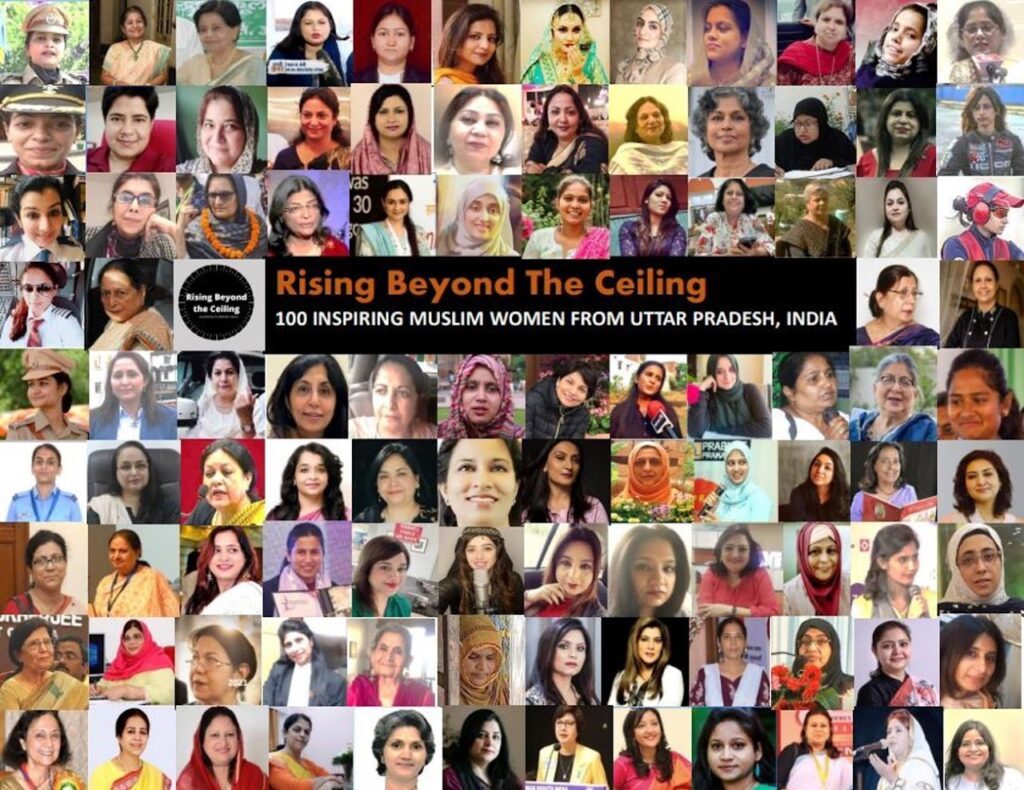
Muslim women are not a monolith, says Dr Farah Usmani, the founder and honorary editor of the “Rising Beyond The Ceiling” (RBTC), an initiative born out of frustration with the stereotypical narrative surrounding Muslim women in India. RBTC is preparing a directory of Muslim women who have excelled in different fields.
However, millions of Indian women, who identify themselves as Muslim, reach across spectra of ethnicities and languages, states and union territories, do not look the same or sound the same and contribute towards nation building in a variety of ways, says Dr Usmani adding that the compendium is under finalisation.
Member, UP Sunni Central Waqf Board, Sabiha Ahmad, who is busy preparing the list of prominent Muslim women in Uttar Pradesh, said, “The organisation is in the process of preparing a directory of such Muslim women who hold certain positions in social, corporate and professional workspace.”
She says the women spotlighted here from Uttar Pradesh do many things—they fly planes, serve in police and armed forces, they are skeet shooters and bike riders, write books and poetry, create art, play snooker and tennis, administer and govern, espouse social issues, serve as lawyers, scientists and doctors, are entrepreneurs and corporate professionals and are substantive contributors to the progress of the country.
Recently an online international meeting was organised in which the issue was discussed at length.
Veteran politician Mohsina Kidwai; vice chancellor, Era University, Lucknow, prof Farzana Mahdi; writer Sabeeha Anwar; artist Dr Farzana Shahabuddin and Samreen Ahmad were prominent among those who attended the virtual event.
Ahmad further says there is a myth surrounding Muslim women in India that they are highly conservative, prefer to stay home, not at par in education with women of other communities.
“Rising Beyond the Ceiling (RBTC), a non-profit organisation focused on supporting and promoting Indian Muslim women and their leadership and contributions in their respective fields, is working to bust this myth,” says Ahmad, who is also incharge, RBTC UP 100 .
RBTC UP 100 is a congregation of 100 women representing 22 million (2.2 crore) Muslim women from UP.
It is working under the leadership of Dr Farah Usmani, the founder and honorary editor of RBTC initiative who is also serving at United Nations Population Fund (UNFPA) headquarters in New York as director-1 level.
“The stories of these Indian Muslim women are for all women and girls to draw inspiration, role model them and thus become mentors in their own districts and neighbourhoods thereby become inspirations themselves for future generations,” Ahmad adds.
source: http://www.hindustantimes.com / Hindustan Times / Home / by HT Correspondent, Lucknow / September 22nd, 2021
In the heart of Bangalore, where diversity thrives and stories of perseverance resonate, two remarkable individuals, Lubna Afza and Azeem Azeez, are rewriting the narrative of education and hope through their initiative, “Our English School.”
This inspiring journey began with two distinct backgrounds converging in a shared mission to make a difference. Lubna Afza, an advocate, and Azeem Azeez, a social activist, embarked on a remarkable endeavor to provide education to madrasa students and differently-abled children.
In 2015, Lubna Afza endured a heart-wrenching series of tragedies that would break anyone’s spirit. She lost her father, mother, niece, and brother-in-law in a tragic road accident in Saudi Arabia. The same day, her husband divorced her, leaving her in a state of emotional despair. Struggling with the loss of her family and her marriage, Lubna spiraled into severe depression. Her sole source of strength was her 8-year-old son, who sometimes had to step into the role of caregiver during her darkest moments.
Azeem Azeez, a seasoned community activist, had spent years volunteering at government schools and organizing scholarship camps for disadvantaged children. It was during the COVID-19 pandemic that fate brought Azeem and Lubna together as they volunteered at an NGO. This serendipitous encounter led to a shared dream of making a positive impact on society.
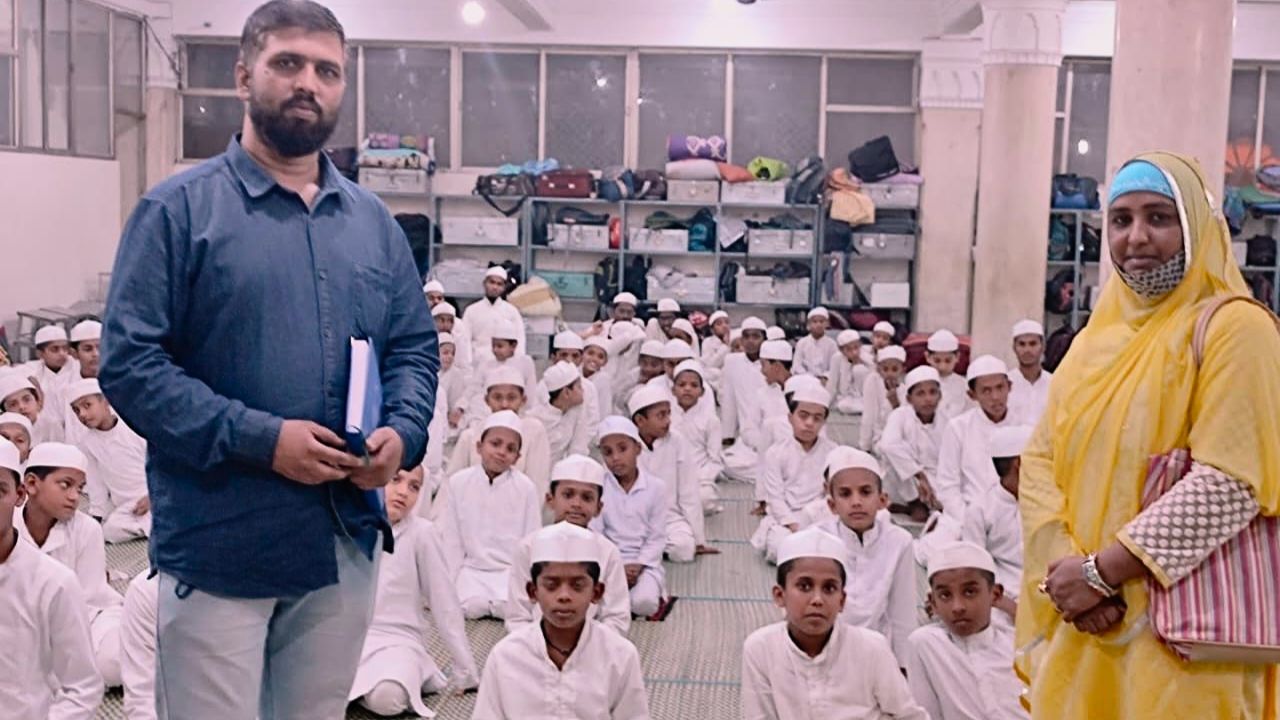
Their journey took a significant turn when Azeem introduced Lubna to the world of madrasas. Together, they embarked on a mission to provide quality education to madrasa students, starting with their work at a madrasa in Varthur. The bond they formed with these students ignited a fire within them to do more.
Their vision took a leap forward when they stumbled upon “Our English School,” a historic institution in Jayanagar established in 1965. The school had fallen on hard times due to the pandemic, and its owners were considering selling it. Azeem and Lubna made a bold decision to purchase the school’s license, envisioning a brighter future for it.
However, challenges remained. The pandemic forced them to adapt, and “Our English School” became a mobile school, reaching students across three madrasas in Bangalore. Under Lubna and Azeem’s leadership, the school began offering English, Hindi, Kannada, Maths, and Science courses to students pursuing Hifz or Aalim programs, impacting the lives of over 200 madrasa students.
For Lubna, this endeavor became her lifeline, giving her a renewed sense of purpose after enduring immense personal hardships. However, a crucial hurdle looms ahead. To maintain their school license, they must establish a physical school, a financial burden they are unable to bear alone.
Lubna, Azeem, and the dedicated teachers they have assembled are passionate about their transformative work but need support to secure a permanent space. They have exhausted their life savings and are now reaching out to the community for assistance, appealing for funds or space to establish a proper school.
The need for their services is evident as this year, over a thousand students are eagerly waiting to enroll in “Our English School.” These aspiring students are a testament to the impact Lubna and Azeem’s initiative has had on the community.
“Our English School” has become a beacon of hope for many madrasa students seeking a well-rounded education. It symbolizes the resilience of individuals like Lubna and Azeem, who are determined to make a difference despite facing adversity.
To contribute to their mission or learn more about “Our English School,” please visit www.ourenglishschool.org.
source: http://www.thecognate.com / The Cognate / Home> Education / by Shaik Zakeer Hussain / September 04th, 2023
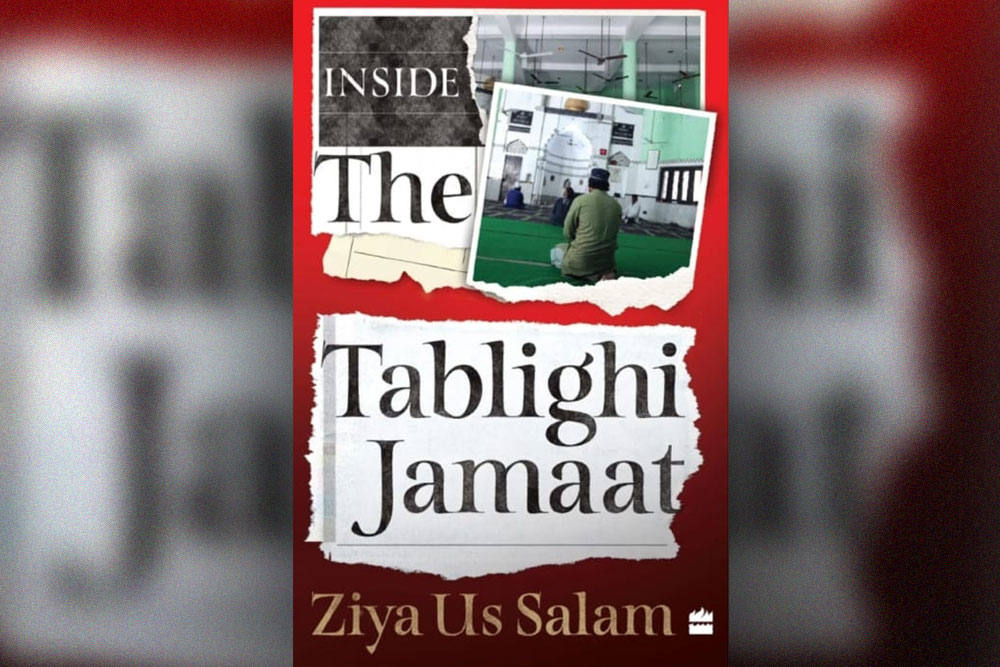
As Tablighis came under the scanner of the government post lockdown in India for allegedly ‘ spreading the coronavirus intentionally’, journalist and noted author, Ziya Us Salam pens down a topical book on the history and evolution of this Jamaat. The book is being published by Harper Collins India.
Cover Page of The Book : Inside The Tablighi Jamaat
A book such as Inside the Tablighi Jamaat is an important intervention to understand the historical continuity of a contemporary phenomenon, more so in the context the controversy involving the movement and its headquarters popularly known as Markaz. Tablighi Jamaat has been in existence for almost one hundred years but it preferred a life of quietude till such time it was made the focus of sustained media attention in the month of April for its congregation in the context of the pandemic.
Many would have preferred to remain quiet on the issue but Ziya us Salam chose to dig out material from the history and place them and the movement in the contemporary context. Devoting twenty four chapters and 260 pages to unravel the layers of the existence of the movement must be viewed with as much seriousness as the book deserves. The scholarly community as well as an interested reader would find mist evaporating from the body and the movement that were initiated about a hundred years ago.
The clarion call of the movement has been to invite the Muslims to become better Muslims and follow the prescribed rituals of Islam. But in the course of doing so it moved in the direction of revivalism in personal life of a member of Jamaati and then spreading out to those who would come under its influence through personal contacts in the course of conducting Chilla whether for three days or forty days or a year. The very fact that the Jamaatis would invite their contacts to live a life of piety as modeled during the times of the Prophet Muhammad and his companions.
For the purpose of helping a new entrant to the charmed circle of the Jamaatis, a book consisting of several volumes known as Fazail-i-Amal was compiled, generally believed to have been done in good faith preaching lessons from the Islamic scholarship and traditions. Among the jamaatis the book evokes tremendous respect and acceptability. As a matter of matter of fact in their circle the book attracts much greater attention than any other book. It is believed that for a Jamaati there is no word beyond Fazail-i-Amal. But the author is not quite impressed as his scholarly scrutiny of the movement takes him to argue, “In other words, Fazail-i-Amal introduces a lot that is biddah (a practice not approved in Islam) based on hearsay. The stories and anecdotes might seem attractive to a layman, but they do not always pass the crucible with scholars of Islam.” (p.102)
An overwhelming emphasis on the good conduct and personal piety does not create conditions of bringing about social reforms within the community of believers. For instance it has opened the door of the Jamaat on women without laying emphasis on social reforms leading to an ideological and cultural climate of gender equality. The Tablighi Jamaat has been shying away from the question of women performing namaz in masjids. The author has highlighted instances where tablighi controlled masjids have been openly hostile to the idea of men and women performing namaz simultaneously. Precedents from the instructions by Hazrat Umar are invoked while a reference to Surah Tauba talking about men and women going for prayers in a masjid is ignored.
The author explains has argued that the tablighis rarely engage themselves in issues which social and political bearings. This benign neglect of contemporary issues such as Tripple Talaq or the issue of Babri Masjid judgement etc. is borne out of their understanding of the movement that it must not get involved in the worldly affairs. This reclusive approach has helps the movement to keep itself away from the gaze of public and the government of the day. However, the fact remains that values imbibed on social plane have bearings in personal life too as it become hard to maintain a distinction between the two. Seen in this perspective, life of an average tablighi is reflective of the larger values they inculcate in the course of their interactions within the organization.
However, such an approach has borne them fruits of a different kind. Their apolitical nature and tendencies to avoid getting involved in contentious issues have gained them access to far off land in the Western hemisphere. They have significant bases in countries such as the UK and USA in a significant way. They have managed to penetrate certain African nations such as South Africa and others without difficulty. However, South-east Asian nations such Indonesia and Malysia have proved to be fertile grounds for the expansion of the Tablighi work. But in the Central Asian countries a similar luck eluded the movement as many regimes suspected it for spreading too much religious mindedness and making masjids as centers of their activities.
While the author has subjected the tablighi movement to scrutiny in a number of ways especially as regards gender justice in spiritual spaces he emerges a trenchant critic of the movement as regards the leadership issues. He raises the issue of absence of democratic values within the oragnisation as no member of the organization has risen to the leadership position due to the stranglehold of the family since the time of Maulana Ilyas. There is a dedicated chapter, ‘All in the Family’ and has argued, “Right from the 1920s to 2020 not a single president has come from outside the family.” (p.138)
The most interesting aspect of the book is its journey into the past to explore historical dimensions of the Tablighi Jamaat and return to the contemporary to examine the continuity and digressions and adjustments. Attempts to locate its genesis take the readers to 1920s when the Shudhi movement under the aegis of the Arya smamaj, especially it’s leader Swami Shradhanand was launched. Culturally vulnerable groups were targeted. Much like the Ghar Wapsi campaigns in recent years.
The author has cleverly used his skills of navigating between the popular and academic language format, which makes the book immensely readable. While it is a book on Tablighi Jamaat, it quietly introduces myriad dimensions of the Islamic religious traditions to the readers.
( Views are personal)
The Reviewer, Prof. Rizwan Qaiser teaches History at Jamia Millia Islamia.
The Author , Ziya Us Salam writes for Frontline Magazine.
source: http://www.outlookindia.com / Outlook / Home> Books / by Rizwan Qaiser / September 29th, 2020
Abdul Nasir Maudany and his son Salahudeen Ayyoobi
Salahudeen Ayyoobi was 10 months old when his father and Peoples Democratic Party chairman Abdul Nasir Maudany got arrested and sent to Coimbatore central jail in 1998. Unlike other kids, Salahudeen grew up visiting his father in jail.
Salahudeen rarely spent time with his father during his childhood. His limited memory was those periodical visits to the jail, amidst tight security, and looking at his beloved father standing behind the bars at the visiting space and graciously looking at his skull cap and a magnificent beard.
His father’s oratory skills, analytical and intelligent skills, empathy, and caring nature, Salahudeen learned through the admirers across Kerala, was a forbidden treasure for him to enjoy. Every day in his life, he lived the injustice unleashed by the Indian judiciary system and coped through the vacuum created by his father’s absence.
“Father’s absence left a void in my life which cannot be filled by anything. There are no ways to cover it up. I crave for his presence during Eid days and to guide me through my academics,” said Salahudeen, while sitting in the guest area of his two-storey house in Ernakulam district’s Kaloor.
However, at least two decades later, an example of poetic justice can be seen in the enrollment of Salahudeen at the Kerala High Court. He graduated from Bharat Mata College with a degree in Legal studies in January 2023 and has now enrolled today, March 19, 2023.
According to Salahudeen, the degree of injustice his father and family faced throughout his life and the prolonged legal fight in the Indian courts are the major driving force behind his decision to study law and his father inspired him to pursue law.
Salahudheen’s father Abdul Nasir Maudany, an assertive Muslim politician who founded Islamic Sevak Sangh and People’s Democratic Party, was arrested in connection with the Coimbatore bomb blast on 31 March 1998. After spending around 9 years in jail, he got acquitted of all charges in August 2007.
However, in August 2010, he was arrested and taken to Parappana Agrahara central prison in Bangalore in connection with the 2008 Bangalore blast case. In July 2014, Maudany got bail on medical grounds by the Supreme Court on the condition that he will not leave Bangalore and the government is at liberty to take all steps, including putting him under surveillance, to ensure he does not get in touch with witnesses in the case.
Similarly, his wife Sufiya Madani was arrested from her residence in December 2009 in connection with the burning of a Tamil Nadu bus in Kerala’s Kalamassery in September 2005. She got bail in 2009 from rom the NIA court under the condition not to leave Ernakulam district without permission. The court later relaxed her bail in July 2014 after she approached the court to grant her permission to visit her husband in Bangalore who was battling with many health issues, including diabetes and urinary issues.
Maudany lost his right leg in August 1992 following a bomb attack from an RSS cadre near Anwarssery in Kerala’s Kollam district. In April 2021, the Muslim leader moved the Supreme Court seeking permission to leave Bangalore for his hometown in Kerala, citing health issues. However, the then chief justice of the apex court denied him permission and called Maudany a “dangerous man.”
Salahudeen spent most of his childhood thinking that it’s normal for a grown-up person to end up in jail and similar to him most of the kids’ fathers are in jail.
Salahudeen Ayyoobi. Photo: Thoufeeq K
“I thought the only time they were allowed to meet is during festivals or another day of special occasions,” he said.
Although Abdul Nasir Maudany will not be able to attend his son’s enrolment due to safety reasons and bureaucratic red tape, he is so satisfied and happy with his son’s achievement.
An elixir of happiness amidst the dark days and nights of grave injustice,” his father took to Facebook to share Salahudeen’s achievement.
“I want to meet him in person and need to watch that excitement in his eyes,” Salahudeen said with proudness in his eyes.
Maudany is currently struggling with a lot of illness and was advised to take rest by his doctors. They also advised him not to talk over the phone for a long time.
“I missed my parents’ presence almost all important stages of my life. The prolonging tale of injustice is the sole reason behind those missing,” Salahudeen said.
Salahudeen made up his mind to pursue law while he was studying in the ninth standard.
“It’s the need of the hour for the marginalised community including Dalits, Muslims, and Adivasis to study law, represent them in court, and fight for justice. They must be part of the judiciary and law-making institutions,” he added, stating the importance of representation in the legal sector.
According to him, a judge from a marginalised community or with lived experiences of injustice might be able to ensure righteous judgments. “They will be able to understand and empathise with the pain, injustice, and problems faced by the common man and its impacts on their daily life. Instead of merely seeing it as a profession,” he said.
However, due to his father’s prolonged imprisonment under draconian laws, Salahudeen missed the privilege of having a smooth school education. He spent the lion’s share of his academic life, almost 13 years, in boarding school as his family don’t want his study to get affected by the case. There were days in which Salahudeen cried the whole night in hostel beds due to the injustice faced by his family.
“We have experience in the management of an educational institution expressing their concern over continuing my studies due to case-related issues. We respected their concern, discontinued the course, and enrolled in other institutes,” he said.
“Although we faced many hardships in life, there were many people who supported us, considered us as their family members, and showered us with love and care. Those love and affections healed us and empowered us to survive,” he said while showing a black-coloured Mont Blanc pen gifted by renowned writer Kamala Surayya’s son Nalappad in his childhood wishing him successful academics. “I am planning to carry this pen with me on my enrolment day,” he said.
Although many college-mates empathised Salahudeen’s cause and offered solidarity, a few of them were of the notion that his family is of terrorists. “As they started interacting with me closely, hanging out with me, understanding my ideals and principles, they started to rethink about the manipulated portrayal of my family and became so close in the next 5 years,” he said.
Salahudeen points out the media trial as the main reason behind the vilification of his family. “Those innocent people portrayed as criminals and terrorists by the media, have to carry the scar of accusation even after they got acquitted. There are many lives in the country destroyed by the media. Those lives include our family too. For the general public, their reference materials are those distorted facts and constructed lies peddled by the media. Common conscience was formulated from those biases,” he said.
During our one-hour-long conversation, he highlighted that the prolonged jailing of undertrial prisoners is a grave injustice not only for them but to their close ones including children, parents, spouses, and comrades.
“This crisis must be addressed with seriousness by civil society. Such prolonged incarcerations might halt the creative intervention by those individuals aimed at societal change and would affect the progress and welfare of the society as a whole,” he said.
The system ensures prolonged incarceration mainly by delaying the filing of the chargesheet and presenting fabricated evidence and witnesses in court. Salahudeen alleged many witnesses presented by the investigation agencies on his father’s case later confessed to the court that they were forced by the investigation agencies to give false testimonies and a few of them were not even interrogated but their testimonies were included.
“Under the present circumstances, it’s easy for an investigating officer or an agency to persuade an individual or force him/her to give false witness testimony in court. There must be a responsible system to effectively monitor the investigation process and ensure transparency,” he said.
Although many people were offering solidarity and empathising with political prisoners, most of them were unable to stay with the cause for long term. In most cases, family and closer ones of the prisoners were left to fight the battle alone, he said, questioning the silence of the Kerala society over his father’s arrest.
“Be it the public or responsible individuals, most of them were silent on the injustice faced by my father. My father has been battling with various issues including legal and health. He is fighting every day for his existence. But the concerned authorities and rights advocates were relatively silent,” he added.
Being the elder son of a man who propagated the politics of the unity of the oppressed in Kerala at least three decades ago, Salahudeen is well aware of the hope and aspirations many people have in him. “There are many unfinished social justice missions and movements kickstarted by my Vaapachi (father). I am planning my future in a way to be part of it and play my role in it,” he said.
source: http://www.maktoobmedia.com / Maktoob / Home> Features> India> South India / by Ashfaque EJ / March 19th, 2023
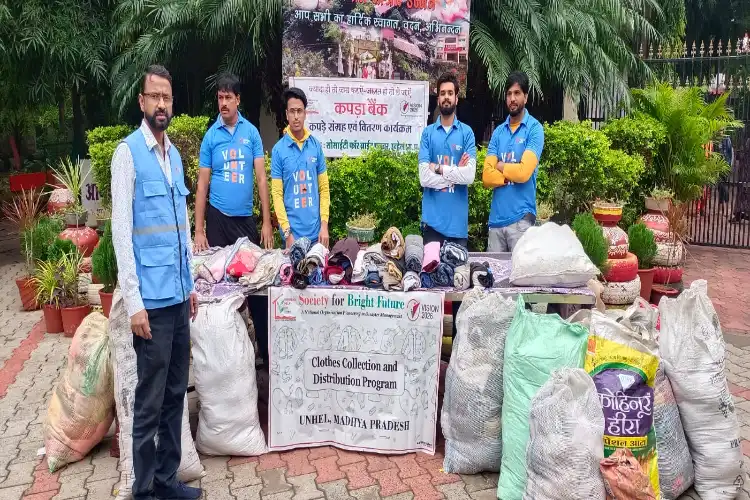
Roti Kapda aur Makkan; (Bread, Cloth, and house) are considered the basic needs of human beings. Just as many people in the world today do not have enough food, many do not have proper clothing to protect them during extreme winter.
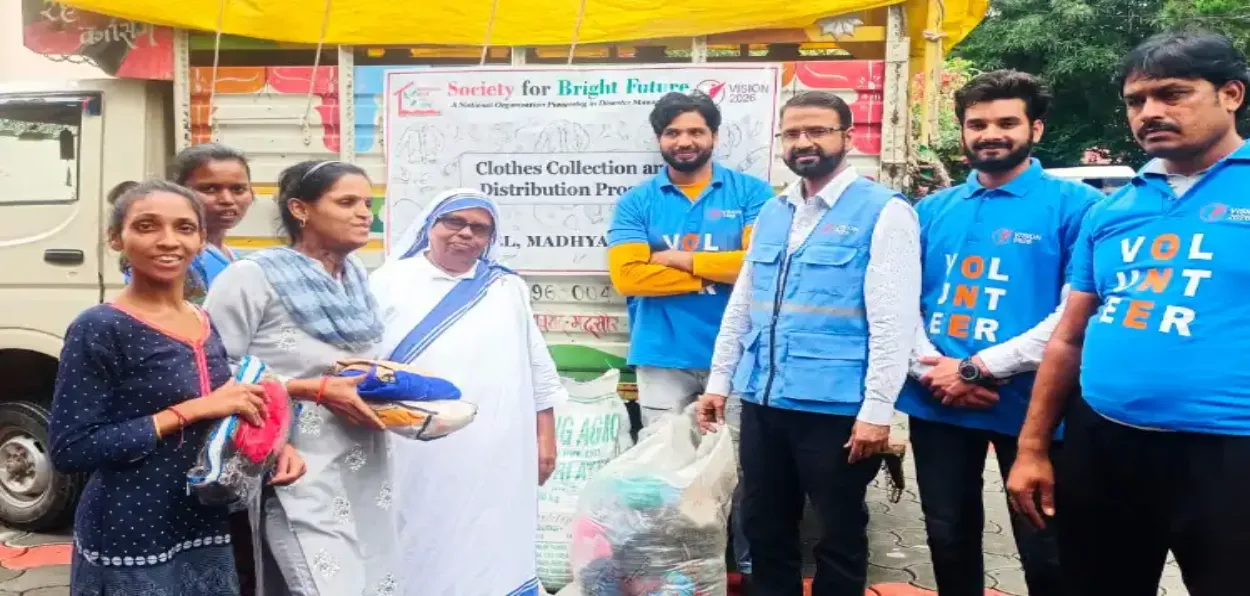
This reality triggered the idea of a cloth bank that is run by the Society for Bright Future. The project executive of the campaign Mohammad Marghub says they are working in Madhya Pradesh, Uttar Pradesh, Bihar, Jharkhand, and Delhi.
He however says the need for proper clothing is everywhere and for this reason, his NGO is planning to open Cloth banks all over the country.
“We appeal to people to donate new and used clothes or money. We do not accept torn and unusable clothes, says Mohammad Marghoub.
Society for Bright Future organised Cloth Bank
Only clothes that are in wearable condition are accepted. “We wash, iron, and pack these clothes well and distribute them at the camps set up for the purpose.”
He says each cloth has a token price. “We don’t give away these clothes for free, the prices are nominal says – Rs 5 to 10.”
Marghoub says it is done to give people dignity and make them feel these are not donated or bought by them with their money. Accepting free stuff has a psychological effect. One tends to misuse and mistreat a thing that has come free but takes care of it when it is purchased.”
The NGO thus also recovers a small cost that goes into waching, ironing, and packing the donated clothes.
He said the poor people feel the loss of prestige while accepting free stuff. They are also embarrassed to know that others know about accepting or wearing donated clothes.
The NGO thus takes extreme care not to expose the people who are benefitted from this campaign. The activists are careful in clicking pictures for their documentation purposes, etc,
“This is the reason why even while taking photos of the users, we take care not to highlight their features. Marghoub says that we also try to make the beneficiaries realize that today they are the needy ones but tomorrow when they are fine, they must donate to others.
Mohammad Marghob says that just a few months ago, we conducted a cloth bank campaign at Milli Model School in Abul Fazl Enclave, New Delhi, from which thousands of people benefited. He said that hundreds of people donated clothes for this campaign and many people gave money so that we could buy clothes and deliver them to the needy. Now we are looking for a place where we can set up a permanent Cloth Bank.
According to Mohammad Marghob, setups have been readied for the launch of Cloth Banks in Jharkhand, Bengal, Bihar, and Assam.
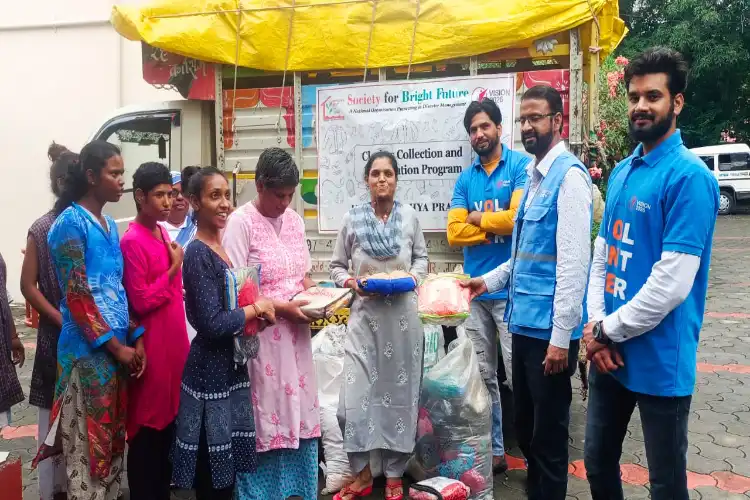
Clothes being gifted by Volunteers of Society for Bright Future
We try to get different beneficiaries each time we set up a camp,” he says. Don’t distribute things in the same place every time. There are needy people everywhere. Our job is simply to bridge the gap between givers and takers.”
How do they find the area with the most in need of clothes? To this, Marghoub explained that the NGO first holds a survey on the ground, and a camp is set up after sifting through the facts and reports of the survey.
The first cloth bank was started two years ago. Last year they set up three cloth banks at different locations.
So far this campaign has been launched in five states. The NGO has hundreds of trained volunteers in 16 states of India and Marghoub feels the cloth banks can be easily established in each state.
He says, the NGO is planning to raise a force of 5,000 volunteers by 2026 and then spread its work all over India.
source: http://www.awazthevoice.in / Awaz, The Voice / Home> Story / by Ghaus Siwani, New Delhi / posted by Aasha Khosa / April 03rd, 2023
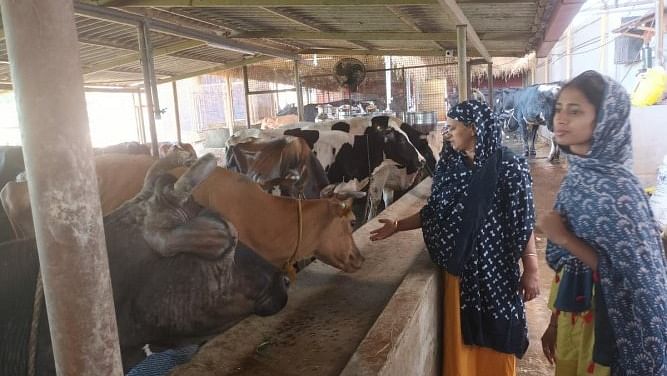
The farm has different breeds, including Holstein Friesian, Gir, Australian and jersey. Her aim is to own 101 cows as dreamt by her father.
Maimoona and daughter Marzeena with the cows in their farm at Harekala. Credit: DH photo
Maimoona, with her three daughters, re-started her venture of dairy farming with just one cow at Harekala, situated on the outskirts of Mangaluru, about two years ago.
She now sells 320 litres of milk daily and owns 40 cows. The shed has a total of 67 cattle, including calves. The striking point is that she sets aside a portion of her earning for helping the needy.
“When my husband Abdul Majeed died in the year 2020, we were shattered. He loved cows and had started Majeed Farm and owned around 25 cows. His dream was to own a farm with 101 cows. After his death, we sold all the cows. However, we did not spend money earned from selling cows. Later, it was my second daughter Marzeena, who is an engineering graduate, persuaded me to purchase a cow and re-start the venture,’’ Maimoona told DH.
Initially, she purchased one cow and later added more into the fleet of cows.
Maimoona said, “I re-established the farm with the support of my daughters Ramzeena, Marzeena and Azwena. Initially, we only managed all the work. As the farm grew, we hired labourers to help us. The cattle are milked using two machines. In spite of using a machine, we have to milk manually at the end. Along with labourers, my daughter Marzeena and I take care of the cattle.”
The farm has different breeds, including Holstein Friesian, Gir, Australian and jersey. Her aim is to own 101 cows as dreamt by her father.
“We are happy with the initiative and it is the only source of our livelihood. Our driver Prashanth is helping us in reaching out the milk to the dairy at Ellyarpadavu and Konaje in time. Maintaining a dairy farm is challenging as we need to constantly work hard,” Maimoona said.
The family also sells cow dung.
I am planning to grow grass required for the cows in my own farm. Now, we procure the required dry hay from Hassan, she said.
The family owns about two acres of land in which they have cultivated arecanut and coconut. In addition, the house is surrounded by a variety of fruits, like apple, grapes, chikoo, fig and musambi.
‘’We also have started goat farm and have a poultry farm on small scale. At present, there are 23 goats. When my father was alive, we had 150 goats,” Marzeena said.
“My husband was keen that we lend a helping hand to those in needy. Accordingly, I keep aside a portion of my earning from the farm to charity,” Maimoona added.
Lauding the success, Harekala Gram Panchayat president Badruddin said people need to learn from the success of Maimoona. With hard work and dedication, she has proved that anything is possible.
‘’She lends a helping hand to the needy and has donated AC, cooler, and an aquarium to the newly built Harekala GP building and has also donated money to distribute financial assistance to the differently abled,” he said.
source: http://www.deccanherald.com / Deccan Herald / Home> India> Karnataka / by Naina J A, DHNS / January 24th, 2023
Deralakatte Renjali (Ullal Taluk),Mangaluru, KARNATAKA / Saudi Arabia/ UAE:
Dr Abdul Shakeel has been selected for the coveted Asia Achievers award given by Indian Council for Cultural Relations, Swami Vivekananda Cultural Centre Colombo and High Commission of India Colombo for his social service including providing rice to more than 10000 eligible families cutting across religion and caste during Covid pandemic, adopting students who are financially poor and encouragement to outstanding students.
The award will be presented by Vidura Vikramanayake, minister for religious and cultural affairs, government of Sri Lanka and higher education minister of Sri Lanka Surena Raghavan at the 40th International cultural convention that is organized on August 25 at the auditorium of University of Visual and Performing Arts in Sri Lanka.
Dr Abdul Shakeel is the son of Abdul Khader Harekala and Maimuna couple, residents of Deralakatte Renjadi under Ullal taluk.
He is NRI entrepreneur having business interest in gulf countries. Dr Shakeel is the managing director of MMA Advertisement and interiors Saudi Arabia, Dubai, managing director of Grey Line Interior and Advertisement (UAE) and director of Readymix Concrete, India.
Dr Shakeel reserves 50% of profits of his business for social work through Dr Abdul Shakeel Charitable trust. During Corona pandemic he felicitated doctors, medical profession helpers and social workers who worked risking their own lives. Dr Shakeel supports youth, who are financially poor, to compete in national and international level sports and other activities. He has encouraged hundreds of children to get educated. He has also adopted several children. Dr Shakeel paid the educational expenses of students of backward community who have scored high marks in examinations and also took complete responsibility of their education. He has built houses for homeless people. Dr Shakeel also rendered financial help to those who get stuck in overseas countries. In addition, he has provided employment to hundreds of people in gulf countries.
source: http://www.daijiworld.com / DaijiWorld.com / Home> Karnataka / by Daijiworld Media Network – Mangaluru (MS) / August 25th, 2023
Gulzar Azmi, Jamiat Ulema-I-Hind leader and known for his legal representation of Muslim youth falsely accused of terrorism, died in Mumbai on Sunday, 20 August.
Azmi, who was 89 years old, had been undergoing hospital treatment for a head injury he suffered in a recent slip and fall accident.
Azmi rose to prominence by spearheading Jamiat’s legal division, which assumed the responsibility of representing numerous Muslim youths wrongly charged with terrorism. Throughout the last decades, Jamiat has championed the legal rights of these accused youth, who were targeted by India’s draconian laws, leading to their prolonged incarceration.
Born in Mumbai on May 1, 1934, Azmi studied up to 5th grade at an Urdu Municipal School. He then had three years of religious education at the Darul Uloom Islamiya.
In 1958, he became the secretary of Jamiat Ulema’s Mumbai unit. Later, in 1968, he became the General Secretary of Jamiat Ulema Maharashtra and in 2002, he became the Vice President.
Azmi has been a part of Jamiat Ulema for more than 60 years. He was also a member of the Maharashtra Minority Commission.
“I won’t stop fighting for justice for the exploited. If they’re left alone, they’ll suffer from biased police investigations,” Azmi had said to TCN news website.
He asked, “I’m not scared for my life. I believe the time, place, and circumstances of my death are already decided. So why should I stop helping the oppressed in society?”
Azmi assisted the Sri Krishna Commission, which investigated the Mumbai serial blasts. He translated the Commission’s report into Urdu, making it available to Urdu readers in the country.
Azmi’s funeral was held at Bada Qabrastan.
source: http://www.maktoobmedia.com / Maktoob / Home> Central India> India> Latest / by Maktoob Staff / August 21st(.), 2023
Calcutta may not have a birthday, but there can be no disagreement that the city is an alchemy of multiple events and influences. One such is the arrival of the ruler of Awadh. Wajid Ali Shah arrived in Calcutta in 1856, remained here till his death in 1887 and continues to tick on in the city’s DNA.
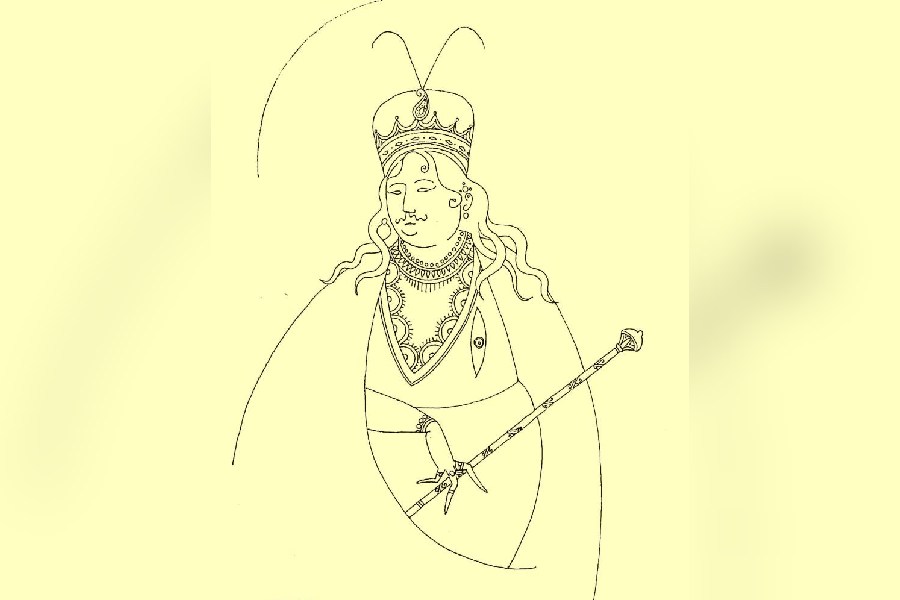
Illustration: Visual artist Soumyadeep Roy’s portrait of Wajid Ali Shah, a detail from his exhibition Dastaan e Akhtar celebrating the King’s bicentenary year at his resting place, the first ever exhibition held at the 159-year-old Sibtainabad Imambada in Metiabruz / Sourced by the Telegraph
Metiabruz
Before 1856, Metiabruz was a nondescript place on the outskirts of Calcutta taking its name from a matiya burz or earthen tower. The shipbuilding yard of Garden Reach had just started developing. It was the advent of Wajid Ali that transformed the very nature of the place. He purchased land from the King of Burdwan and built around 22 palatial residences in Metiabruz. With these at the core, an entire mini-Lucknow came up. “He made this city his home and left a legacy, some tangible and mostly intangible,” says Talat Fatima, one of the king’s progeny and currently working on the English translation of the book Wajid Ali Shah Ki Adabi Aur Saqafati Khidmat by Kaukab Quder Meerza. Meerza Sr’s son, Kamran, points to the remnants of the king’s mimic kingdom — Sibtainabad Imambara, Begum Masjid, Shahi Masjid, Baitun Nijat and Quasrul Buka.
Thumri
Until the early 19th century, Calcutta’s aristocracy had some exposure to Nidhu Babu or Ramnidhi Gupta’s semi-classical tappa. As for dance, there was the form practised by the khemtawalis of the red-light areas of Chitpore and Bowbazar in central Calcutta. Enter Wajid Ali Shah. He was, historians note, an “enthusiastic” patron of the arts. The “light classical” vocal form of thumri flourished in his court. He himself composed thumris under the pen name of Akhtar or Akhtar Piya. The thumri was traditionally performed by tawaifs or courtesans. And though there are arguments to the contrary, their dance style had “undeniable links” with Kathak. To make a long story very short, the king arrived in Calcutta with his musical entourage, thus stirring into its environs and culture a new rhythm. Courtesans like Malka Jaan were appointed by his court. Other ustads and musicians arrived too and many Bengali-speaking singers such as Bamacharan Bandyopadhyay were also groomed. A new style of thumri evolved with folk influences and it came to be known as the bol banao thumri. The babus of Calcutta loved it. Many of the musicians and courtesans settled down in the Chitpore area of north Calcutta, turning it into a production hub of musical instruments. This legacy, somewhat contagious, influenced commercial theatres and produced musical exponents such as Gauhar Jaan, Angoorbala and Indubala who went on to cut gramophone records and became the first artistes to do so. If Wajid Ali had not left Lucknow nagari, Ray’s Jalsaghar would be missing the jalsa; the sound of Begum Akhtar singing, “Bhar bhar aayi mori akhiyan piya bin…”
Haute Couture
It was not just Wajid Ali who arrived in Metiabruz; he was accompanied by his family, his many wives, dancers, a retinue of specialised servants and tailors. By some estimates, within a decade of his arrival, the palace had 2,000-plus employees and 1,000 soldiers. All of these people needed clothes, as did the king, who loved to dress. In his early 20th century work Lucknow: The Last Phase of an Oriental Culture, Abdul Halim Sharar suggests that the achkan was Wajid Ali’s gift to Indian haute couture. And so the fitted tunic with its stylish necks debuted in Bengal, as did the angrakhas. The king also wore an elaborate cap called the alam pasand. The royal tailors, their pupils and their descendants popularised Awadhi fashion — the chapkan, the churidar, the shararas, the ghararas… Their progeny has now turned Metiabruz into one of the largest tailoring hubs of unbranded garments. None of this would exist if it had not been for the good old trendy king. But for him, homegrown celebrity designers who are synonymous with wedding wear, sherwanis and fancy achkans would have been making patterns on their bottom line today.
Kabutarbazi
The king was famous for his menagerie and also for the thousands of kabutars or pigeons he reared and kept. He employed hundreds of people to look after the birds. Among the varieties were peshawari, gulvey, choya, chandan, shirazi — many fetched from Lucknow. Some of them were trained to perform manoeuvres during flight. “You’ll still find breeders invoking the royal pigeons while making a sell in the bird market,” says Kamran Meerza, the great-great-grandson of Wajed Ali Shah. Many babus of north Calcutta eventually embraced the hobby and pigeon roosts were a common architectural feature in old mansions of the city. The king also brought one of the best kite fliers of Lucknow, Ilahi Baksh Vilayat Ali, with him. He himself could design kites and encouraged others to compete with his team of kite fliers. The tradition of flying kites from those days still survives in Calcutta. Beginning August 15, right through to winter, the city skies are dotted with kites, most of them made in Metiabruz. Kabutarbazi and kite flying are not just random sports, they are synecdoches of a culture of great panache even in great leisure.
The Calcutta Biryani
The king’s khansamas gave Calcutta a taste of the Awadhi style of dum pukht or slow oven-cooking. Their descendants spread across the city and continued to popularise and adapt this style of cooking to fit the plebian kitchen. The Calcutta Biryani would be nowhere on the culinary map had it not been for the banished king. Manzilat Fatima, who is Wajid Ali’s great-great-granddaughter, wields her secret family recipes to create the Calcutta Shahi Biryani and Awadhi Galauti Kebab among other Lucknavi delicacies in her boutique restaurant in south Calcutta. Manzilat clarifies that the potato, an exotic tuber in the 19th century, was used as an experiment by the king to enhance the taste of the biryani and not to incorporate a cheaper substitute as has been suggested. Jab tak rahega biryani mein alu…
source: http://www.telegraphindia.com / The Telegraph Online / Home> Culture / by Prasun Chaudhuri / August 27th, 2023
In a major initiative set to generate new avenues, the Jodhpur-based Maulana Azad University, which is the first private university established by the Muslim community in Rajasthan, has set up a Minorities Research Chair for conducting targeted studies and research on the issues, problems and challenges confronting the minority communities in the state. The research chair will make important recommendations after its studies.
The Minorities Affairs Department of the Congress government in Rajasthan has sanctioned Rs. 2 crores as financial assistance for the research chair. The university was established by the Marwar Muslim Educational & Welfare Society (MMEWS) at Bujhawar village on the outskirts of Jodhpur in 2013. The institution of higher education is now imparting education to more than 15,000 students belonging to Muslim and other less privileged communities in multiple disciplines of studies.
The Minorities Research Chair will function under Maulana Azad University’s Centre of Excellence and Research, for which Chief Minister Ashok Gehlot had granted Rs. 15 crores in 2022. The research chair, which is expected to make a meaningful intervention for the development of Muslims and other minorities, is the brainchild of noted educationist Mohammed Atique, who is the MMEWS Chief Executive Officer and the Founder-Chancellor of Maulana Azad University.
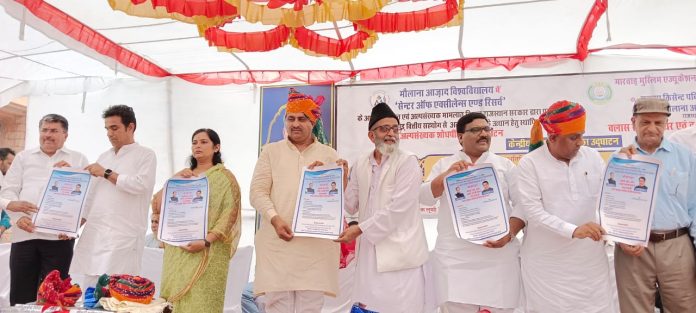
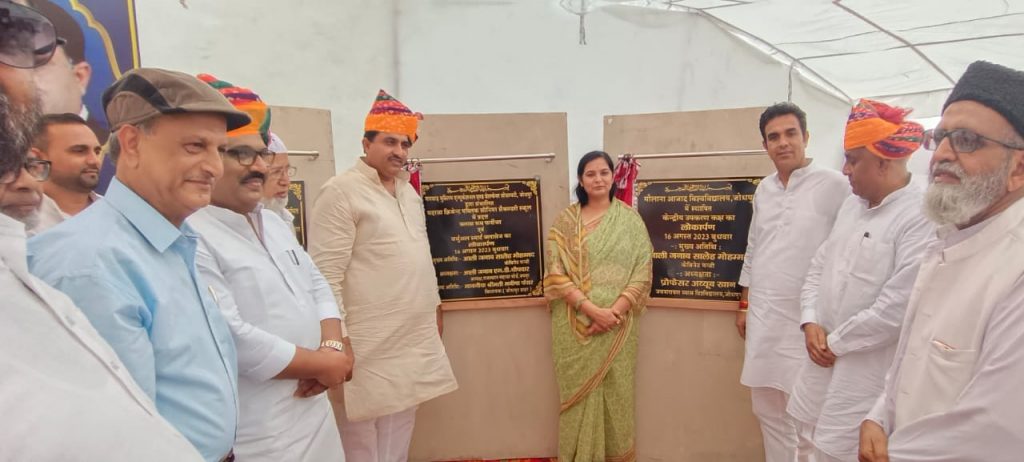
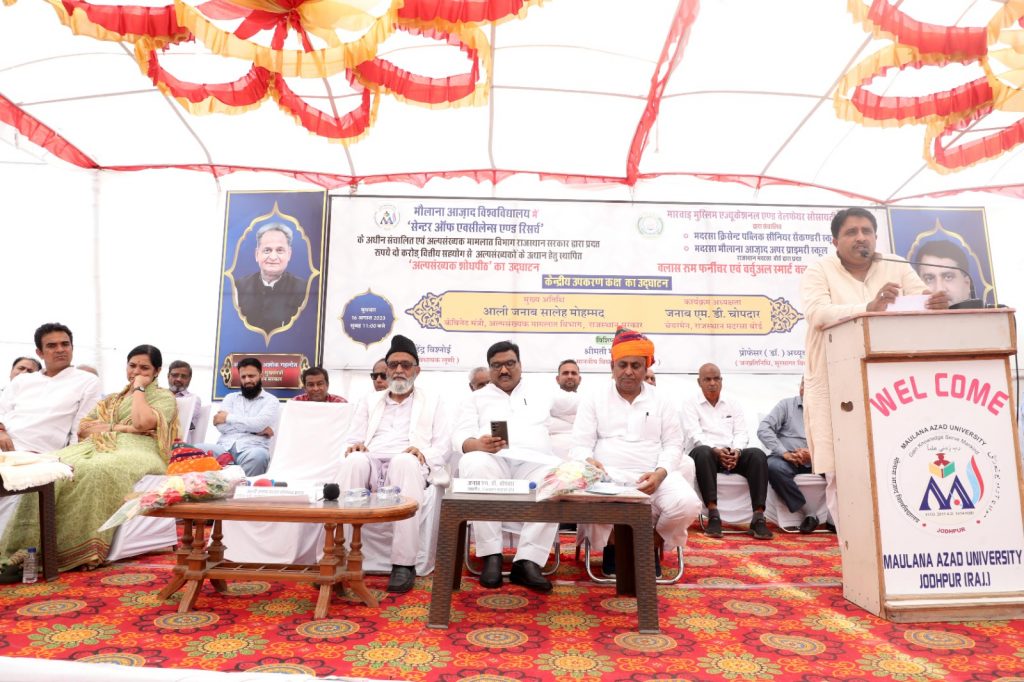
The research chair was inaugurated at a grand function organized on the university premises in the presence of Rajasthan Minorities Affairs Minister Saleh Mohammed, Rajasthan Madrasa Board Chairman M.D. Chopdar, several MLAs, public representatives, government officers, educationists, distinguished citizens, journalists and social activists on August 16. The university is already running M.Phil and Ph.D. programmes in various streams.
In his address, Saleh Mohammed said the Maulana Azad University, which had made consistent progress during the last 10 years, was another name for high-quality scientific education in the future. The Minorities Research Chair would prove to be extremely beneficial for research and education in the areas crucial for the development of minority communities, he said.
After the research chair’s inauguration, the Central Equipment Room of the university’s Faculty of Pharmacy, and the classroom furniture and virtual smart classes of Crescent Public School and Maulana Azad Upper Primary School run by MMEWS were dedicated to the students. A poster of the foreign language training programme under the Chief Minister’s Minority Language Proficiency and Communication Skills Development Scheme was also released on the occasion.
Mr Atique said the Maulana Azad University was making sincere efforts to achieve the goal of “education for all” with a clear objective that no child from the weaker sections of any community should be deprived of education because of the lack of basic facilities. University president Jameel Kazmi said the research chair would review the progress of the government’s schemes for the development of minority communities and evaluate their achievements and success, besides identifying the obstacles in their implementation.
Presiding over the function, M.D. Chopdar described Atique as “Sir Syed” of the modern era while pointing out that the initiatives taken under his leadership in Jodhpur had made a record of sorts. He said the Madrasa Board was taking steps for the modernization and development of madrasas, for which the MMEWS was rendering full cooperation to it. Chopdar also flagged off a vehicle carrying the furniture supplied by the Madrasa Board to various schools in the city.
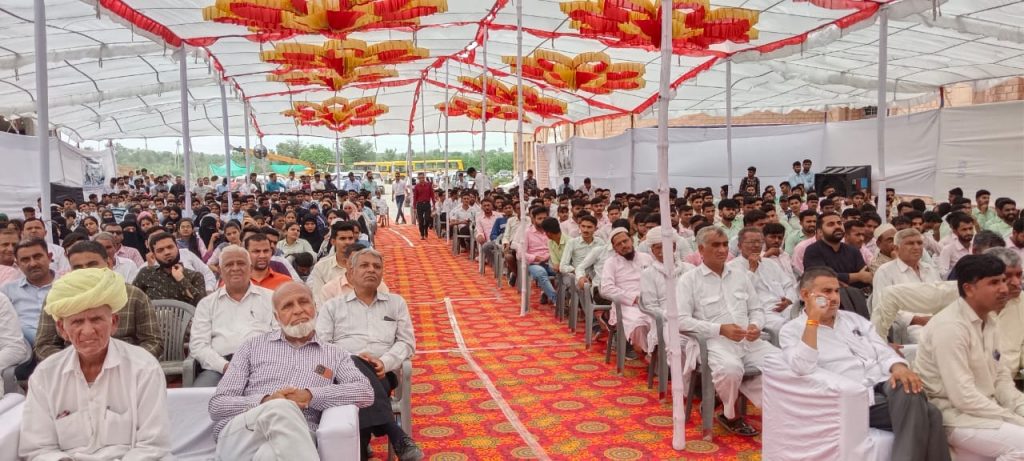
Luni MLA Mahendra Singh Bishnoi, Jodhpur City MLA Manisha Panwar and Congress leader from Soorsagar Assembly constituency, Ayub Khan, were special guests at the function. All of them praised the stellar role played by the MMEWS and Maulana Azad University in improving the educational standard of the Muslim community in Jodhpur. A large number of distinguished citizens from Barmer, Jaisalmer, Pokhran and Phalodi in western Rajasthan also came to attend the function.
The MMEWS, established in 1929 during the pre-Independence era, runs as many as 330 educational, health and social institutions. Atique has been instrumental in easing the lives of more than 45,000 youths through these institutions working in varied fields of education, health care, community development, rural development, waste-to-wealth initiatives and skill development programmes during the last four decades.
The then ruler of Jodhpur princely state, Maharaja Umaid Singh, was the patron of MMEWS and had gifted a school named ‘Durbar Muslim School’ to the Society in 1936. The Rajasthan government allotted five acres of land to the MMEWS in 1978, on which the Maulana Abul Kalam Azad Muslim Senior Secondary School was constructed.
Since then, the MMEWS has established several institutions, including the Industrial Training Institute, Nursing College, Pharmacy College, B.Ed. College, Mai Khadija Hospital, Rahmatul-Lil-Alameen Blood Bank, Marwar Adarsh Gaushala and Bujhawar Veterinary Hospital.
The MMEWS established the university in 2013 with the intention of providing higher education to the most deprived and marginalized sections of society.
The first president (Vice-Chancellor) of Maulana Azad University was the noted Islamic scholar from New Delhi, Akhtarul Wasey. The current president, Jameel Kazmi, hailing from Jaipur, has taken steps for interdisciplinary studies while maintaining the indigenous ethos and the spirit of plurality in the university’s functioning.
About 45,000 students have so far passed out from the MMEWS group of institutions and become doctors, engineers and business people and entered other professions as well. Some of them have also established nursing homes and clinics in remote rural areas, which are often ignored in the government’s development plans. Maulana Azad University has set the motto, “Gain Knowledge and Serve Mankind”, for itself.
source: http://www.indiatomorrow.net / India Tomorrow / Home> Education / by the India Tomorrow Correspondent / August 25th, 2023