In a significant move to support education and empower those in need, the Professor Obaid Siddiqui Memorial Scholarship 2024 has been awarded to six incoming students of the MA Convergent Journalism (MACJ) programme at Jamia Millia Islamia.
The announcement was made by the MACJ alumni group in July 2024, ahead of the new academic session.
The MACJ programme, established in 2005 and upgraded to a two-year master’s degree in 2007, is renowned as one of the top journalism programmes in India. Named after Professor Siddiqui, a veteran journalist and the programme’s founder, the scholarship offers substantial financial aid, covering up to 75% of the tuition fee. This initiative helps alleviate the financial burdens faced by students, particularly those from less affluent backgrounds.
Since its inception in 2022, the scholarship has been a beacon of hope for students struggling with tuition and living expenses.
This year’s recipients include Nida Fatima Momin, Shoaibur Rahman, Mohammad Naiyar Azam, Adnan Ali, Saher Hiba Khan and one student who chose to remain anonymous.
The fund, totaling Rs 2.5 lakh, was raised through contributions from alumni, with an additional Rs 75,000 collected to support two more students. This financial assistance goes beyond mere support; it empowers students to pursue their academic and career aspirations without financial constraints.
Shoaibur Rahman, a recipient from Katihar, Bihar, shared his experience of overcoming financial hurdles. “I initially considered leaving the course due to financial difficulties. However, a friend informed me about this scholarship, which eased my financial worries and allowed me to continue my studies,” he explained.
His story highlights the transformative power of the scholarship in enabling students to follow their dreams.
Sidra Fatima, a student from the outgoing 2025 batch, praised the scholarship as a crucial initiative. “Not everyone can afford the high fees for a master’s degree. The scholarship provides relief to those who excel academically but face financial barriers,” she said.
Fatima hopes that in the future, more deserving students will benefit from this support.
The scholarship exemplifies how educational support can empower individuals and transform lives. It honors Professor Siddiqui’s legacy by providing not just financial assistance but also hope and confidence to students.
Raghu Kalra, a member of the scholarship selection committee and alumnus of the 2014 batch, expressed his confidence in the recipients’ future success. “These students are exemplary and will undoubtedly achieve great things in journalism.”
Alia (name changed on request), an alumnus of the 2022 batch, highlighted the scholarship’s broader impact. “Many students across various demographics face financial barriers to pursuing higher education. This scholarship addresses that gap, but it’s crucial to ensure diversity and representation in future awards,” she noted.
In a world where education is often a privilege, initiatives like the Professor Obaid Siddiqui Memorial Scholarship play a vital role in making education accessible. They demonstrate the power of collective effort, and its impact on individuals and society, inspiring a brighter and more inclusive future in journalism.
source: http://www.twocircles.net / TwoCircles.net / Home> Education / by Sanjana Chawla, TwoCircles.net / July 30th, 2024
In a convocation ceremony held at Pandit Deendayal Upadhyaya Shekhawati University in Sikar, Rajasthan, Nigar Chaudhary, a student of Islamia PG College, was awarded gold medal by Governor Kalraj Mishra. Nigar Chaudhary achieved the top position in PG Home Science at Shekhawati University for the year 2022, marking a significant milestone in her academic journey.
Governor Kalraj Mishra, serving as the Chancellor of the university, awarded gold medals to a total of 72 outstanding students during the event. The convocation witnessed the conferral of degrees upon a vast number of graduates across various faculties, emphasizing the institution’s commitment to academic excellence and holistic education.
Among the dignitaries present were Haji Anwar Ahmed Qureshi, Chairman of Islamia Management Committee, and numerous well-wishers who congratulated Nigar Chaudhary, recognizing her dedication and academic prowess. The ceremony underscored the university’s role in nurturing talent and preparing students to contribute meaningfully to society and the nation at large.
The event also featured Governor’s address, highlighting the pivotal role of education in shaping a progressive society and urging students to pursue excellence with dedication and determination.
source: http://www.radiancenews.com / Radiance News / Home> Pride of the Nation> Awards / by Radiance News Bureau / July 07th, 2024
The students and teachers of the German Section, Department of Foreign Languages, Aligarh Muslim University (AMU) contributed significantly to the Translation Project conducted by Goethe-Institut, Max Mueller Bhavan, Mumbai.
The South Asian regional translation project, “Diamantenschliff: The Digital Translation Academy” focused on the translations of German literary works into the South Asian languages with special emphasis on the translation of selected works of Franz Kafka from German into various South Asian languages, including Bangla, Hindi, Kannada, Malayalam, Marathi, Sinhala, Tamil and Urdu.
Syed Salman Abbas, Assistant Professor, German Language and Literature, Department of Foreign Languages, who was the mentor for Urdu translations, moderated a lecture session on translation delivered by Dr Almuth Degener, a retired professor from the Indology Department, University of Mainz, Germany.
The current and former students of the German Section, including Mohammad Uzair, Mohammad Khalid, Sadique Khan, Mohammad Intizar, Muhammad Fahad and Syeda Alina Ali translated different works of Kafka from German into Urdu, while Mr Syed Salman Abbas contributed to and edited the Urdu translations for the website.
Dr Subair PM, Assistant Professor, made contributions as one of the translators of German texts into Malayalam.
The one-year-long project concluded with the launch of the translations on the official website of Goethe-Institut, on July 3, marking Franz Kafka’s birthday. The voice recordings of the Urdu translations are also available on the website.
Prof Muhammad Azhar, Dean of the Faculty of International Studies and Chairman of the concerned department appreciated the unique achievement of the students and faculty members of the department and congratulated them for their outreach.
source: http://www.radiancenews.com / Radiance News / Home> Education> Latest News / by Radiance News Bureau / July 31st, 2024
The Samastha Kerala Sunni Students Federation (SKSSF), the student wing of the Samastha Kerala Jem-iyyathul Ulama, a scholarly body in Kerala, has partnered with the Falcon group of institutes in Bengaluru for a one-year free residential civil service coaching program.
Falcon Civil Services Academy is renowned as one of the premier IAS coaching institutes in Bengaluru, specializing in preparing candidates for the UPSC exam in India. The FALCON IAS Residential Academy represents a prestigious initiative aimed at offering comprehensive and high-quality coaching at no cost to aspiring civil services candidates.
This academy is specifically designed to support individuals aiming for success in the challenging and esteemed field of civil services, including the Indian Administrative Service (IAS), Indian Police Service (IPS), and other allied services.
Recently, the academy conducted its inaugural entrance test at Iqra Public School, South Andaman, on June 30. O Bilal, a member of SKSSF, informed Radiance that similar tests are being held wherever SKSSF operates across India, with Iqra Public School being just one of the venues.
Fifteen students participated in the entrance test. Successful candidates will receive free residential civil services coaching in Bengaluru.
One candidate, speaking to Radiance, praised the inaugural scholarship civil service entrance exam in their city, noting the high standards, well-equipped facilities, professional conduct of proctors, and the motivational impact of thought-provoking questions. They expressed gratitude for the opportunity provided by their city to showcase their abilities and move closer to their goals.
Many students expressed concern about the short notice for the exam, which was not widely advertised and announced just one week before its date.
Mr. Shahid, General Secretary of SKSSF Andaman, spoke to Radiance, emphasizing that students in the Andaman Islands have long desired access to scholarship and coaching opportunities available on the mainland. Recognizing this need, SKSSF Andaman collaborated with Falcon and the national committee to establish an examination center on the islands, thereby enhancing accessibility for local students facing financial constraints or other challenges.
This partnership endeavors to provide outstanding education, fostering aspiring civil servants with thorough knowledge and skills. Its goal is to develop leaders who possess critical thinking abilities, capable of addressing complex societal challenges while maintaining steadfast ethics and principled behavior.
source: http://www.radiancenews.com / Radiance News / Home> Education> Focus / by Radiance News Bureau / July 01st, 2024
Ansari Mohammad Ayyub, popularly known as Ayyub Ansari Sir, passed away in Malegaon on Sunday June 30, 2024. Read on as one of his students pays tribute to this admired teacher.
Malegaon:
Ansari Mohammad Ayyub, popularly known as Ayyub Ansari Sir, passed away in Malegaon on Sunday June 30, 2024. He was 83.
Ayyub Ansari Sir retired as Assistant Head Master in 1997 after more than 35 years of service at A.T.T. High School and Junior College, Malegaon.
Ayyub Ansari Sir is survived by 07 sons, 04 daughters and hundreds of students who are spread across Malegaon, and also in other parts of India and abroad.
Early Life and Education
Ansari Mohammad Ayyub was born to Haji Abdus Shakoor Allah Rakhu, a resident of Angnu Seth Ka Malla in Fateh Maidan area of Malegaon. Ayyub Sir’s father Haji Abdus Shakoor was in the business of textiles and yarn trading.
The very first batch of Pilgrims from Malegaon that went to Makkah was in 1881. Ayyub Sir’s father Abdus Shakoor was among the second or third batch of Pilgrims who went to Makkah. Family remember does not remember the exact date, but said he performed Hajj about a decade before his death in 1960.
Ayyub Sir completed his early education at A.T.T. High School in Malegaon. He later went to Ismael Yusuf College in Mumbai. Ismael Yusuf College at that time was the preferred institution for the students of Malegaon.
For, after Matriculation the only institution in Malegaon for Pre-University (PU) or Inter was M.S.G. College where medium of instruction was Marathi. English Medium Ismail Yusuf College hence was suitable for the Malegaonians.
After completing graduation from Ismael Yusuf College, Ayyub Sir joined the Government College of Education Mumbai for B.Ed. Two years later, a teacher was born who later became one of the finest Mathematics.
Ayyub Ansari Sir’s Journey as Teacher
Ayyub Sir joined A.T.T. High School, his alma mater, sometimes in 1962 as Assistant Teacher. Mathematics was his forte, and he soon became the students’ darling.
“Ayyub Sir was a teacher of class. He was gifted with a very good hand writing and drawing skills, and used to explain his topics with artistically drawn geometrical figures”, Jameel Karanti, Vice Chairman of A.T.T. High School told ummid.com.
Jameel Karanti is one of the hundreds of students who learned Mathematics and Geometry from Ayyub Sir.
Colleagues recall, Ayyub Sir was very polite yet very strict and would always like to maintain discipline in classroom.
“He had a unique style of teaching, and had total control of the class and complete grip on the topic. He had smartly prepared his lessons to finish them in the allotted time”, Mushir Ansari said.
Mushir Ansari is one of Ayyub Sir’s students who also had a chance to teaching with him in the same school. He said Ayyub Sir was a master in time management and class control.
“He was neither very fast nor very slow and used to satisfy almost whole of the class. He was the one who will complete the syllabus with the end of the term. After taking charge as Asst HM, he used to say a teacher asking for Extra Class means he did not efficiently utilize the time allotted to him as per the time table”, Mushir Ansari Sir recalled while talking to ummid.com.
Personal Tragedy
Ayyub Sir would spend most of his time in the school. After school hours, he would be at home with the family and come out only for daily prayers.
In 1981, he lost his wife. The sudden demise of his wife changed Ayyub Sir further and he would now spend more of his time in the school and less at home.
“His wife’s death was a great loss for him. But he never expressed his grief in public. People would suggest him to opt for second marriage so as to fill the gap. He however never agreed. He in fact reprimanded a friend when he insisted him to marry again”, said Abdul Khalique, retired officer at Janata Co-Operative Bank and a colleague of Ayyub Sir’s eldest son Ashfaque.
A man of helping nature
Besides his unique teaching style and his commitment to duty, Ayyub Ansari Sir was also admired for his helping nature.
“He was the one to stand by the school and the students whenever they needed him. He was always ready to go an extra mile to help the school progress and students shine in the local and board exams”, Jamaluddin Abdullah, his colleague of 30 years at A.T.T. High School, recalled.
Jamaluddin Sir, one of my father Mohmmad Anwar Faizee’s best friends, was my patron at A.T.T. High School. I had topped the school in classes 8th and 9th. In 1985, when I was to appear in the SSC Board Exams, the target was to register a place in the Maharashtra State Board Merit List.
Ehtesham Sir was very kind to take the responsibility of preparing me in Social Sciences. English, General Science and other subjects were taken care of by Shakeel Ansari Sir, Abdul Latif Ansari Sir and others. Mathematics and Geometry were tricky as the board had introduced the new syllabus and the board exam pattern too was changed.
Jamaluddin Sir and Ehtesham Sir wanted Ayyub Ansari Sir to give me tuition. But, the problem was that after his wife’s death Ayyub Ansari Sir had lost interest in private coaching.
While working together, the two – Ayyub Ansari Sir and Jamaluddin Sir, had developed a special bond. It was because of this bond, Ayyub Ansari Sir, against his will, accepted Jamaluddin Sir’s request to provide me private tuition in Mathematics and Geometry.
The efforts of these noble souls bore fruits. Though I missed the Merit List by just 06 marks, I emerged the topper of the Nashik District scoring the highest marks in all subjects except Hindi and Marathi – Marathi being the subject introduced in the board exams for the first time.
Seven sons and four daughters – Ayyub Sir had a big family to take care of. He was living in a joint family where his brothers too had large families. The family’s ancestral textile business was not doing well. Neither was the salary Ayyub Sir was drawing enough to feed his children and other family members.
“We joined the service at a salary of INR 3,000 and the last salary we drew was a little over INR 12,000”, Jamaluddin Sir recalled.
With this salary, Ayyub Sir not only managed the routine expenses of the family but also made sure his children complete their education. The result is that his eldest son Ashfaque joined as an Officer at a bank, the younger son Altaf and daughter Aafiya became doctors, Khaleel Ansari and Naeemurrehman are teachers whereas Ataurrehman, Shafeequrrehman and Hifzurrehman are good at business. His grandchildren and granddaughters, in plenty, too are well educated, about half a dozen pursuing MBBS.
Besides the family members, a large number of colleagues and students were present for the final journey of Ayyub Sir. There was a somber yet tearful atmosphere, with light shower pouring down the sky, as the admired teacher was laid to rest Sunday night, in the same grave where his wife was buried 43 years ago at the iconic Bada Qabristan of Malegaon.
[The writer, Aleem Faizee, s Founder Editor of ummid.com. He can be reached at aleem.faizee@gmail.com]
source: http://www.ummid.com / Ummid.com / Home> Obituary / by Aleem Faizee, ummid.com / July 01st, 2024
Prof. Rubi Anjum, Department of Tahaffuzi Wa Samaji Tib, Faculty of Unani Medicine, Aligarh Muslim University has been appointed as the Chairperson of the concerned department, for a period of three years, with effect from July 1, 2024.
Prof Anjum, engaged in teaching and research for over the last 16 years, has authored two books and published more than 70 research papers in journals of national and international repute. Besides this, she has attended more than 70 national and international conferences and seminars and presented papers on myriad topics.
She received an Award of Appreciation at a World Health Day event held at Jawahar Lal Nehru Stadium, New Delhi on April 3, 2016, for her role in creating awareness about diabetes.
source: http://www.radiancenews.com / Radiance News / Home> Latest News> Report / by Radiance News Bureau / June 30th, 2024
Shaheen Tadipatri, who secured 90% marks in Civil Engineering, was felicitated in a programme jointly organized by Karnataka Dalit Sanghrash Samiti, Adi Jambav High School and Dr. Ambedkar Multi-Purpose Cooperative Society.
While inaugurating the program, Police Sub-Inspector Parshuram Mirjigi appreciated Shaheen Tadipatri for brightening the name of this small town by securing a distinction in engineering. Her future is bright and she will occupy higher positions in life, he expressed.
The SI advised the students to burn the midnight oil in their studies with keen interest. Get up early in the morning at 4 to 5 am and make it a habit to study.
A reception was held for the 8th class students of 2024-25 batch and a meeting was organized to commemorate the performance of the Maher soldiers in the British Army on 18th June.
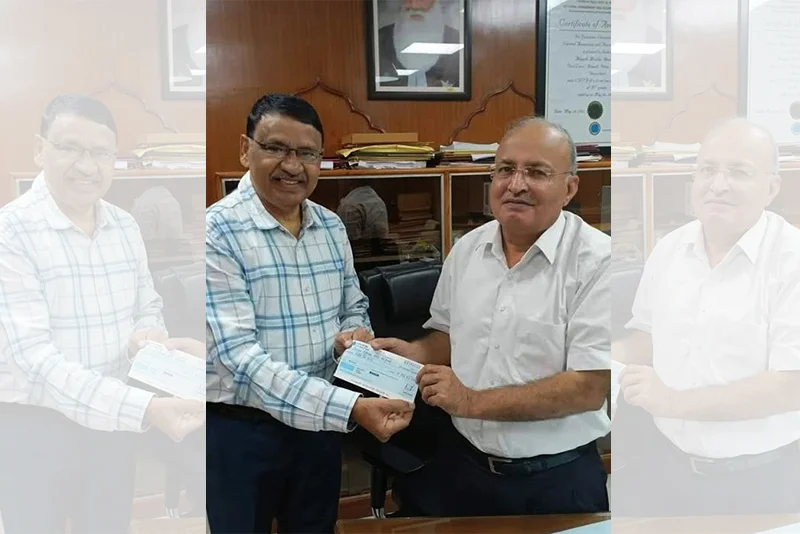
On this occasion, the founder president of Adi Jambav High School Faqir Appa felicitating Shaheen Tadipatri presented a cheque of Rs.5 thousand on behalf of the society. Office bearers of the society and school staff were present in the program.
source: http://www.radiancenews.com / Radiance News / Home> Focus> Markers of Excellence / by Mohammed Atherulla Shariff (headline edited) / June 22nd, 2024
Allama Shibli Nomani was born in Bindol Azamgarh village on June 4, 1857, and passed away on November 18, 1914. He possessed a multifaceted personality and held an esteemed position in various fields. Considering his contributions to knowledge and literature from different perspectives, it is hard to believe that it was the work of a single individual. Besides his contributions to poetry and literature, Allama Shibli Nomani put his indelible mark on history and biography, research and criticism, and education and preaching.
The main focus of Shibli’s academic endeavours was education and religion showing a deep interest in education and educational philosophies. His life was dedicated to the educational activities of his time. From Aligarh Muslim University to Nadwatul Ulama, his sacrifices in the field of education were immense. His vision extended beyond India, encompassing the educational activities and needs of the Islamic world as well.
While he valued traditional education, he was also a proponent of modern sciences. At Nadwatul Ulama, when he was entrusted with educational responsibilities, he included “Al-Durus al-Awliyyah fi al-Falsafah al-Tabi’ah” in the curriculum. This book, written by Christian scholar Allen Jackson and published in Beirut in 1882, was an illustrated text on the basic sciences of its time, covering practical topics such as matter, motion, gravity, liquids, optics, heat, and electricity. Shibli appointed Allama Muhammad Hameed-ud-Deen Farahi and Mirza Muhammad Hadi Ruswa to teach it. This information is derived from Shibli’s letters.
Additionally, in 1901, Shibli hired an English teacher at Nadwatul Ulama with a monthly salary of 15 rupees. This decision led Maulana Abdul Bari Nadvi to translate several modern books on philosophy. The inclusion of English and modern philosophy in the curriculum was a revolutionary step by Shibli. However, after Shibli stepped down in 1913, these subjects were dropped from the curriculum.
Shibli spent his entire life cultivating knowledge and literature. He wrote books, encouraged others to study, and was devoted to the national spirit. Not only did he inspire the youth of the nation towards education, but also guided them in their educational pursuits. The openness of Shibli’s educational ideas is evident from his belief in higher education for women and his support for a curriculum that was equal for both boys and girls. In a letter to Atiya Faizi, he expressed his wish for her to become a speaker and lecturer like other famous women.
In a letter to Maulana Habib-ur-Rehman Khan Sharvani, he wrote about the impressive patterns of women’s education he observed in Bombay. Similarly, during his visits to Italy, Egypt, and Syria, he admired the women’s education and training system in Turkey, spontaneously writing words of praise for the Turks. Shibli tirelessly worked for the education and social awareness of Muslim women.
In 1908, when Nawab Bahawalpur’s grandmother donated 50,000 rupees for the construction of Nadwa, Allama Shibli wrote an enthusiastic article in Al-Nadwa. He referred to her as a “Living Zubaida Khatun,” comparing her generosity to that of Zubaida Khatun, Baramakka, and Taimoor. He wrote:
“The generosity of this lady has not only strengthened the foundation of Darul Uloom Nadwatul Ulama but has also paved the way for its future advancements.”
Extraordinary Passion
“O Subah Allahabad, O Oudh, you are a vast and distinguished region, but the truth is that now you must admit that it is not Punjab, but a part of it, that has earned your enduring respect through one of its revered women. You may have produced Burhan-ul-Mulk and Asif-ud-Daulah, but you cannot claim a Zubeda among your ranks.” (Maqalate Shibli, Vol. 8, p. 80)
Shibli’s travelogue “Safarnama-e-Room-o-Misr-o-Sham [Travelogue of Rome and Egypt, Syria] is essentially an educational report. Shibli’s writings reflect the deep passion he had for education and the kind of education he envisioned. His interest was not confined to India; he also kept a keen eye on the educational landscape of the Islamic world. The core of Shibli’s educational mission was the openness and spread of thought. While he respected ancient academic traditions, he was not averse to embracing new knowledge and wisdom. This excerpt from his travelogue is a significant reflection on the integration of modern and ancient educational ideas:
“Education among the Turks began with the Empire, which is what we now remember as ancient education… But the current state of education has declined so much that, in comparison, our education in India seems deteriorated. The realisation of this in the travelogue shattered all my joy and satisfaction — the fallacy of this ancient teaching… The grief and sorrow expressed by the newly educated in our country over the old education is not genuine sorrow, but rather arrogance and disdain. Although I appreciate new education, I am a strong advocate of old education. I believe that old education is necessary and very important for the survival of Muslim nationality.” (Safarnama-e-Room-o-Misr-o-Sham p. 56)
Due to his constant stress on education, Shibli concluded that it would be beneficial to reduce the gap between ancient and modern education and educational institutions, fostering a mutual exchange of benefits. Shibli believed that English education alone cannot address our current challenges, nor can the old style of education fully support us in the present era. In his opinion:
“We have said this again and again, and now we say it once more: it is not enough for us Muslims to only have English madrasas or ancient Arabic madrasas. The remedy for our pain is a combination of Eastern and Western education.” (Maqalate Shibli, Vol. III, P 57)
In his reference to Constantinople, Shibli emphasises that freedom of thought cannot thrive under government control. He also mentions educational institutes in Europe, where the people, rather than the government, play a significant role. He writes:
“What’s even more regrettable is that all the colleges and darul ulooms in Constantinople that I have mentioned are run by the government. The nation has not paid any attention to this yet. That is, there is not a single national college in such a big capital. No government, no matter how powerful and wealthy, can support the educational needs of the entire country. Even if it could, it wouldn’t be useful. The mental and spiritual powers of a nation whose needs are fulfilled by the government become dead and useless.” (P 40)
Shibli writes in his report on the School of Harbiya in Constantinople, after mentioning the happiness of the students, the ethics of the teachers, and the many branches of education:
“In fact, there is no better college in all of Constantinople in terms of building, supply of equipment, knowledge, education, and good management. However, it is regrettable that most of the people studying in its classes are Christians and the number of Muslims is very small.” (P 59)
Shibli’s analysis needs no further comment after mentioning the academic condition of Turkey, its authors, libraries, newspapers, magazines, and the writings of the masters of various arts:
“The fact is that the method of education in the Islamic world has become so degraded that people are not interested in any kind of modern information except for a few textbooks. As a result, the spirit of innovation and invention is lost to the nation, and there is no hope for it as long as this situation remains.” (P 69)
Shibli writes about the ethics of the students of Al-Azhar University:
“Throughout my journey, I was not as disheartened by the plight of Muslims as I was by the conditions at Al-Azhar University… But sadly, it has destroyed millions of Muslims instead of benefiting them… The condition of the students is such that when they buy goods in the market, they swear by ‘Bras Sayyidina al-Husayn,’ meaning they swear by the price of Imam Hussain’s head. Can such trained people be expected to enhance the glory of Islam?” (P 70)
Regarding the curriculum, Shibli writes:
“There is a continuous and basic teaching of fiqh and syntax, each for eight years. Logic, philosophy, mathematics, astronomy, and other sciences are not included in the teachings. The principles of fiqh, tafsir, hadith, literature, semantics, and narration are taught, but it is done at such a low level that such a large Darul Uloom does not hold any honour in any way.” (P 85)
About the teachers, he writes:
“Sheikh Taban has recently passed away. One of his works has been considered so significant that its annotations and commentaries are included in the curriculum. It is considered a great achievement to understand and memorize this entire series. I asked the students if Sheikh Azhar, who is regarded as a teacher, had done any original work. They proudly said yes, the annotations on Saban’s work are written by him.” (90)
Shibli was constantly active in the educational development of Muslims and did whatever was necessary to achieve this goal. The year 1913 was particularly challenging for him. After Aligarh, Nadwatul Ulama was the only centre of his aspirations, but he had to resign from there. He then dedicated himself to writing biographies. Meanwhile, in the April 15, 1913 issue of the Daily Zamindar Lahore, a proposal by Allama Shibli Nomani regarding the establishment of an Islamic university in Makkah was published. This proposal received many reactions, but Maulana Abul Kalam Azad and some other scholars supported it. Allama Shibli wrote:
“For me, the most important proposal is to establish a university of Islam in Makkah with a high level of education in all religious and worldly sciences (including modern sciences). It is obvious that today all kinds of power are based on knowledge, and in fact, knowledge is the real power. Therefore, nowadays the survival of every nation depends on being proficient in the sciences and arts.” (Ma’arif: November 2013, P 384)
Shibli provided several reasons for the establishment of a university in Makkah. The holy city is a centre of Muslims worldwide, and every Muslim could study there with enthusiasm. He also argued that no other place has as much financial resources as Makkah. If the pilgrims who visit every year were to contribute ten rupees individually to this university, the total amount could reach millions. Shibli also mentioned the presence of a very good library in Makkah. Additionally, he highlighted its pleasant weather conditions; favorable for both teachers and students. Moreover, he pointed out that all the tribes of Arabia, who have been “ignorant for thousands of years,” would benefit from education, with branches of the university being established in their major regions. They would be drawn to knowledge through consistent effort. Shibli concluded by expressing his conviction:
“All I can do is travel all over India for this and then migrate to Makkah and serve this blessed university.” (Zamindar/ April 15, 1913)
Allama Shibli holds a prominent position as a great writer and scholar, with a well-established reputation in this regard. However, less attention has been given to his educational efforts. The reality is that Shibli led a highly active life dedicated to education and educational activities. From his journey from Aligarh to Nadwa, he endured numerous challenges solely for the cause of education. He also faced adverse life circumstances in pursuit of education. If his curriculum reforms had been accepted at that time, the educational landscape today would be completely different. If Nadwatul Ulama had embraced his curriculum a hundred years ago, the madrasas in India today would have a distinct history and glory.
— Dr. Omair Manzar is an Assistant Professor in the Department of Urdu at Maulana Azad National Urdu University.
This article has been translated from Urdu to English by Mohammad Alamullah with the author’s permission.
source: http://www.clarionindia.net / Clarion India / Home> Clarion Special / by Dr Omair Manzar / translated by Mohammad Alamullah / June 05th, 2024
Tamanna Suman, an eighth-grade student from Government High School Vazhakad, has achieved a remarkable feat by being selected for the firing selection at the prestigious Thal Sainik Camp (TSC) 2024 in Delhi. Her selection comes through the National Cadet Corps (NCC) battalion at Calicut University.
Tamanna distinguished herself by securing the first position in the initial selection round held at her school. Demonstrating exceptional skill and dedication, she surpassed over a hundred students from various parts of the state to earn her place at the TSC. This achievement highlights her excellence not only in marksmanship but also in academics and extracurricular activities.
Tamanna is the daughter of T.K. Hameed, a mentor at Al Jamia Shantapuram, and Shahira, residents of Orkadavu in the Malappuram district. Her family’s support has been instrumental in her success, contributing to her balanced approach to both academic and extracurricular pursuits.
The selection of Tamanna Suman for the TSC 2024 has brought immense pride to GHS Vazhakad and its NCC unit. Her accomplishment serves as an inspiration to her peers and underscores the quality of training provided by the NCC battalion at Calicut University. The school community extends its best wishes to Tamanna as she prepares to represent her state and institution at the national level.
source: http://www.radiancenews.com / Radiance News / Home> Latest News> Markers of Excellence / by Radiance News Bureau / May 23rd, 2024
Students of Telangana Minorities Residential Educational Institutions Society (TGMREIS) have excelled in the TGLAWCET-2024 exam.
Telangana Law Common Entrance Test-2024 (TGLAWCET-2024) was conducted for admission into LLB course in the Colleges of Law in Telangana.
The test was conducted by Convenor, TGLAWCET/TGPGLCET-2024 Osmania University on behalf of the Telangana State Council of Higher Education.
According to TGMREIS Secretary Aisha Masarath Khanam, out of 57 TGMREIS students who appeared in the exam, 40 have qualified. They include 28 girls and 12 boys.
Amatul Waheed of Telangana Minority Residential Junior College (TGMRJC) Secunderabad Girls has secured state ninth rank. She has made TGMREIS proud, said Ayesha Khanam.
Out of 38 students from TGMRJC Secunderabad Girls, 28 have qualified. Seven students from TGMRJC Balapur Boys have qualified. A total of 13 students from this Junior College had written the exam. Out of six students of TGMRJC Barkas Boys who appeared in the exam, five have qualified.
Shahnawaz Qasim, Secretary to Chief Minister, Tafseer Iqbal, Special Secretary, Minorities Welfare Department and Aisha Khanam have congratulated students and teachers on their achievement.
Meanwhile, Mohammed Faheemuddin Qureshi, Vice-Chairman and President, TGMREIS has conducted a meeting with all the Principals of TGMR Schools and Junior Colleges and district minority welfare officers.
The meeting reviewed admission status for the academic year 2024-2025 and results of SSC and Intermediate Board Examinations, 2024. Instructions were given to the Principals to take necessary action for reopening of Schools and also emphasized the retention of newly admitted students.
Faheemuddin Qureshi congratulated the Principals for achieving good results in public examinations and felicitated 10 Principals for achievement of 100% results in SSC, IPE Board Examination results, 2024.
Faheemuddin Qureshi said that the Government of Telangana is fully committed to provide facilities to minorities specially TGMR Schools. He asked the Principals to inculcate discipline among the students and ensure that TGMR Schools should be top in all respects. He instructed the Principals to provide good hygienic food to the students. He informed the Principals that he will be visiting the schools shortly and take the feedback from the stakeholders and give the reward to the good institutions and will not tolerate any adverse remarks noticed.
Shahnawaz Qasim, Faheemuddin Qureshi, and Aisha Khanam congratulated the students, teachers and principals on their achievement.
source: http://www.radiancenews.com / Radiance News / Home> Education / by Radiance News Bureau / June 15th, 2024