INDIA:
New Delhi :
A joint study conducted by a Delhi-based think tank – Centre for Study and Research (CSR) and NOUS Network Private Limited – has busted the myth that Muslim-run institutions cater to Muslims only.
The study titled “A Survey of Muslim-managed Public and Private Institutions of Higher Education in India” reveals that Hindu students outnumber Muslim students in higher education in Muslim-managed institutions across the country.
The percentage of Hindus, according to the report, is about 55 percent in these institutions against 42 percent of Muslim students.
However, the report is silent about the reasons behind Hindu students exceeding their Muslim counterparts in Muslim-run institutions.
But the higher number of Hindu students is an indicator that the Muslim institutions do not discriminate against non-Muslims and are open to all religious communities against the prevailing misconception that Muslim institutions serve only Muslim students.
This is also a proof that the standard of education in Muslim-run institutions are at par with institutions run by other communities. Had the quality of education in Muslim institutions been poor, Hindu students would certainly have avoided it and not enrolled en mass as is happening currently.
The study provides empirical evidence against the prevailing false notion among certain sections of society regarding Muslim-managed educational institutions.
The report reveals a surprising trend: in Muslim-run universities, Hindus constitute the majority of students (52.7%), while Muslims make up 42.1%. This pattern holds true for colleges managed by the Muslim minority as well, where Hindus are the largest student group (55.1%), followed by Muslims (42.1%) and other minority groups (2.8%).
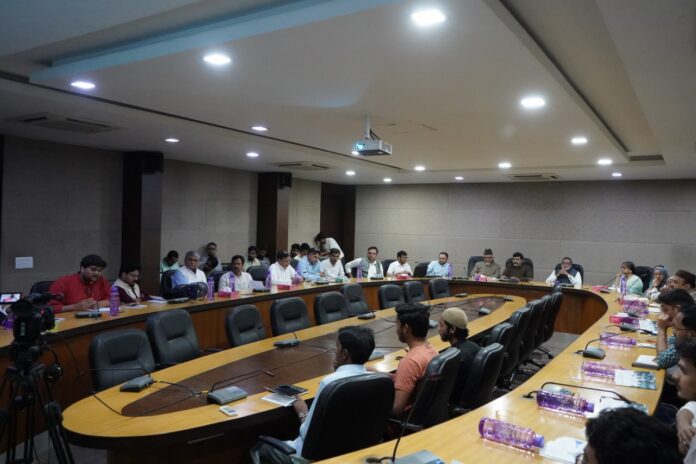
The findings of the report were discussed at a roundtable event attended by educators, policymakers and stakeholders. They applauded the report as a valuable resource for addressing existing challenges faced by the Muslim community in the realm of higher education.
Concerns were also expressed over the grim situation of the community, particularly their meagre share in higher education and their sharp dropout rates.
CSR director Dr. Mohammed Rizwan presented the vision of CSR, which aims to evolve a purposeful, holistic, and value-based knowledge ecosystem. He asserted that the report is a “myth-buster” that provides empirical evidence against the prevailing misinformation among certain sections of society.
“To our knowledge, no such study has been conducted to date, and there is currently no data available on the number of institutions for higher education affiliated with the Muslim minority group, while this research represents the first attempt of its kind to address this critical gap,” Dr. Rizwan stated.
Elaborating that despite consistent efforts from the community, empirical evidence suggests a need for even more concrete efforts, Dr. Rizwan said that those efforts should particularly focus on areas like gross enrolment in higher education, decreasing the dropout rate, and other aspects of higher education.
Dr. Rizwan believes that this report sheds light on the challenges and opportunities within higher education by meticulously analyzing various facets. These facets include the number and types of educational institutions, the gender ratio within them, their affiliation status, their academic productivity, their NAAC accreditation standing, student demographics, and more.
“The report’s findings underscore the importance of recognizing the unique needs of the Muslim minority in higher education and advocating for targeted interventions to address those needs,” he added.
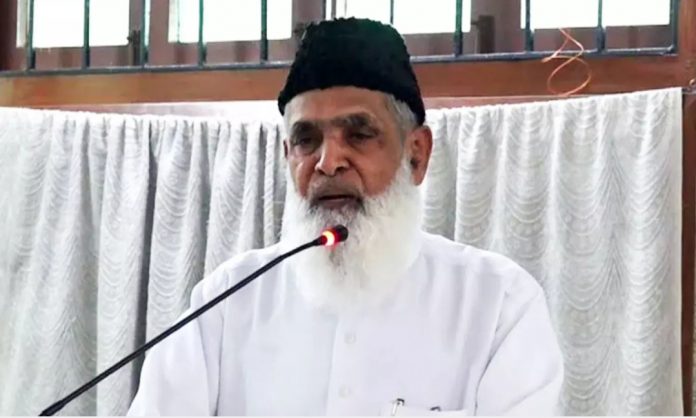
Speaking at the roundtable, Jamaat-e-Islami Hind (JIH) Vice President Prof. Salim Engineer commended the CSR and NOUS team for conducting such an important study. However, he cautioned that the findings regarding the community’s education situation are not encouraging.
Prof. Salim highlighted that the study serves as a roadmap for improvement, identifying areas where the community needs to focus its efforts while acknowledging its achievements.
Emphasizing the need to encourage the community, not discourage it, by recognizing its accomplishments and contributions in the past 75 years of independence, he pointed out the community’s resilience in the face of continued communal riots and a challenging post-partition atmosphere.
Criticizing the apathy of successive governments towards the Muslim minority, Prof. Salim lamented that numerous studies, including the noteworthy Sachar Committee report, have been conducted on the community’s socio-economic and educational status. However, these reports have been largely debated without any significant implementation of their recommendations.
Acknowledging the community’s progress in education despite these hurdles and the negative attitudes of some governments, the JIH leader commended, the establishment of numerous educational institutions and the achievements of students in higher education and civil services.
Stressing that the country’s progress hinges on the advancement of the Muslim minority, Prof. Salim urged the community to avoid self-blame and instead celebrate its achievements in the face of adversity. He concluded by referencing the Quran, stating that the Muslim community is meant to serve others.
Ali Javed, CEO of NOUS Network Pvt. Ltd., a Delhi-based think tank and media house, asserted that this report stands out as a truly unique attempt, as there is currently no existing comprehensive overview providing insights into the status of higher education in institutions catering to Muslims.
Ali Javed expressed the hope that this report would be an indispensable resource for academics, policymakers, and anyone interested in educational advancement. He believed it would significantly contribute to our understanding of Muslim-affiliated higher education institutions, paving the way for further discussions and initiatives in this area.
Emphasizing the importance of collective action, NOUS CEO explained that the purpose of convening this roundtable of experts, educators, academics, and stakeholders is to collaborate and find solutions to the community’s problems. He stressed that joint efforts are necessary for progress.
Expressing concern about the “extreme deprivation” faced by the community, not just in education but across various indicators, Javed proposed a multi-pronged approach, including data collection through surveys in Muslim-dominated areas, gathering disaggregated data, and developing the community’s own policy documents for negotiation with policymakers. He also emphasized the need for an evidence-based strategy for societal reform and infrastructure development.
Highlighting the study’s findings, researcher Abid Faheem, who played a key role in compiling the data, pointed out that Muslims constitute over 14% of India’s population. However, their representation in higher education remains low. According to the latest All India Survey of Higher Education (AISHE-2021-22), only 4.8% of students enrolled in higher education are Muslims. This is even lower than the enrolment rates for Scheduled Castes (SC) and Scheduled Tribes (ST), which stand at 15.3% and 6.3% respectively. SCs and STs comprise 16.6% and 8.6% of the total population, respectively.
Faheem used a PPT to show that the gross enrolment ratio for Muslim students in colleges affiliated with Muslim institutions is 1.23. This ratio is significantly lower in universities, at just 0.23. The combined gross enrolment ratio for Muslim students is 1.46. However, the situation is even worse in institutions of national importance like IITs, IIITs, IISERs, NITs, and IIMs, where only 1.72% of students are Muslim.
Faheem expressed concern that despite the Sachar Committee report on the socio-economic and educational status of the Muslim community released 17 years ago, there has not been much progress. He noted that in 2006, when the Sachar report was published, Muslim enrolment in higher education was 3.6%. While efforts have been made to improve this ratio, the first AISHE report in 2012-13 showed only a 0.6% increase after six years. A decade later, the AISHE report indicated another modest increase of 0.6%. In contrast, other disadvantaged groups like SCs and STs have made significant progress. Their enrolment rates have risen from 2.4% in 2006 to 15.3% and 6.3% in 2021-22, respectively.
However, the enrolment rates for SCs and STs have shown a much sharper rise compared to Muslims. Their share in higher education has climbed from a combined 2.4% in 2006 to 15.3% for SCs and 6.3% for STs in 2021-22.
It’s important to note that the Sachar report initially reported a combined enrolment rate of 2.4% for SCs and STs.
Speaking on the occasion, Prof. Sanghmitra, Chairperson of the Centre for Social Medicine and Community Health at Jawaharlal Nehru University, appreciated the CSR and Nous Networks team. She also appreciated their work in clarifying some widely held misconceptions about the Muslim community.
Prof. Sanghmitra emphasized the importance of inclusivity in policymaking. However, she expressed concern about the gap between policy and reality. She pointed out that the Sachar Committee report had already documented the disadvantaged state of Muslims and provided evidence. She further noted that the Amitabh Kundu Committee report, which followed the Sachar Committee report and received less attention, showed minimal progress in the community’s status despite the evidence and recommendations presented earlier.
Prof. Sanghmitra also recommended collecting data on the Muslim community at the secondary level in addition to the primary level.
Dr. Kamal Farooqi, spokesperson for the AIMPLB and former chairman of the Delhi Minority Commission, emphasized the importance of shifting the Muslim community’s fundamental attitude and mindset towards education.
Prof. Sadia Halima, an economics professor at Jamia Millia Islamia University, asserted for a shift in focus from mere literacy rates, ratio, enrolment figures and the number of students or institutions to prioritizing knowledge and quality education.
Prof. Majid Jameel, an electrical engineering professor at Jamia Millia Islamia University, commended the CSR-NOUS Network for the study. He shared his experiences motivating students in his hometown Saharanpur, UP, to pursue higher education, while also expressing concern about the high dropout rate within the community.
Former civil servant Akhtar Mahboob Syed stressed the importance of data collection and studies to understand the socio-economic state of the Muslim community. He pointed out that while the Sachar Committee report receives much attention, the Amitabh Kundu Committee report and Professor Mattu reports are less discussed.
Having worked with various government departments, he questioned the impact of existing schemes aimed at improving education for minorities, such as pre and post matric scholarships and the Maulana Azad Foundation and Ministry of Minority affairs. He argued that the community itself needs to gather data on the effectiveness of these initiatives, as the government is unlikely to do so. In addition to data collection, he suggested addressing the “fear complex” within the community.
Mr. Nizamuddin Shaikh of the Institute of Objective Studies and the All India Milli Council highlighted three key points: Islamization of knowledge, changing the community’s attitude towards education, and establishing more educational institutions.
The Millat Time editor Shams Tabrez Qasmi also spoke on the occasion. In the open session, various noted participants expressed their views on the study.
The report illuminates the number and growth trajectory of Muslim-affiliated institutions, along with their demographic characteristics. It underscores the pressing need for policymakers to address the under-representation of Muslims in higher education. The report also provides valuable insights into the educational quality, programme offerings, and research output of these institutions.
Other Key Results of the Study:
Universities:
- Out of the total 1113 universities in India as per AISHE 2020-21 data, 23 universities belong to Muslim Minority. The share of Muslim managed universities is just 2.1%.
2. Uttar Pradesh has the highest number of universities, followed by Karnataka.
3. Of the 23 Muslim universities, the majority (43.5%) are privately managed, followed by public state universities (26.1%), deemed private universities (13%), and central universities (13%).
4. Around 69.9% of Muslim universities are located in urban areas.
5. Out of the total 97,928 students enrolled in the academic year 2021-22, 42.1% are Muslims, 52.7% are Hindus, and 5.2% belong to Other Minority groups.
6. Regarding Muslim students, there were 26,039 (63.09%) male students and 15,236 (36.91%) female students enrolled in Higher Education.
7. Among the 41,275 Muslim students enrolled, less than 1% represent Scheduled
8. Tribes, 34% were belong to Other Backward Classes, 42.8% were from the Unreserved Category, and the remaining 16.4% are from the Economically Weaker Sections (EWS).
COLLEGES:
1. Out of the total 43,796 colleges in India as per AISHE 2020-21 data, 1,155 colleges are managed by Muslim minority community. It means that the share of Muslim managed colleges is just 2.6%.
2. Of these 1,155 colleges, 141 (12.2%) are technical colleges registered with the All India Council for Technical Education.
3. Despite making up 73.4% of all minority groups, Muslim minority communities only have a 16.6% share in technical colleges. In contrast, other minority groups, comprising 26.6% of the population, hold an 83.4% share in technical colleges.
4. 6.4% of Muslim colleges in India are exclusively for girls.
5. The top 10 states in terms of the number of colleges in India are Kerala, Uttar Pradesh, Maharashtra, Karnataka, Telangana, Tamil Nadu, Andhra Pradesh, West Bengal, Bihar, and Jammu & Kashmir. These states account for 90.47% of the total colleges in the country.
6. Of the 1,155 Muslim minority colleges, 85.5% are private (unaided), 10.6% are private (aided), and 3.9% are government colleges.
7. Kerala has 24.9 colleges per lakh population while UP has 4.9 colleges and West Bengal has a mere 1.8 colleges per lakh population. The national average of colleges per lakh population stands at 6.4%.
8. Of the 1155 Muslim minority colleges, 85.5% are private (unaided), 10.6% are private (aided), and 3.9% are government colleges.
9. About 57.8% of Muslim minority colleges are located in rural areas.
10. The majority of colleges (93.16%) offer Undergraduate level programs, while only 6.32% offer PhD level programs.
11. Kerala has the highest number of colleges offering PhD programs, followed by Tamil Nadu and Maharashtra.
12. Around 51% of colleges only provide undergraduate level programmes.
13. Out of the total 524,441 students enrolled in the academic year 2021-22, 42.1% are Muslims, 55.1% are Hindus, and 2.8% belong to Other Minority groups.
14. In terms of Muslim students, there were 104,163 (47.18%) male students and 116,622 (52.82%) female students enrolled in Higher Education.
15. Among the 220,785 Muslim students enrolled, less than 1% represent Scheduled Tribes, 48.1% belong to Other Backward Classes, 50.7%
16. come from the Unreserved Category, and the remaining 0.9% are from the Economically Weaker Sections (EWS).
17. 96.4% of colleges did not participate in the NIRF ranking of 2023.
18. None of the colleges secured a position in the top 100 in the NIRF 2023 college rankings.
source: http://www.indiatomorrow.net / India Tomorrow / Home> Education / by Anwarulhaq Baig / May 15th, 2024