Category Archives: Education

Book: The role Aligarh Muslim University played in the making of the modern Indian Muslim

Mumbai, MAHARASHTRA / Aligarh, UTTAR PRADESH :
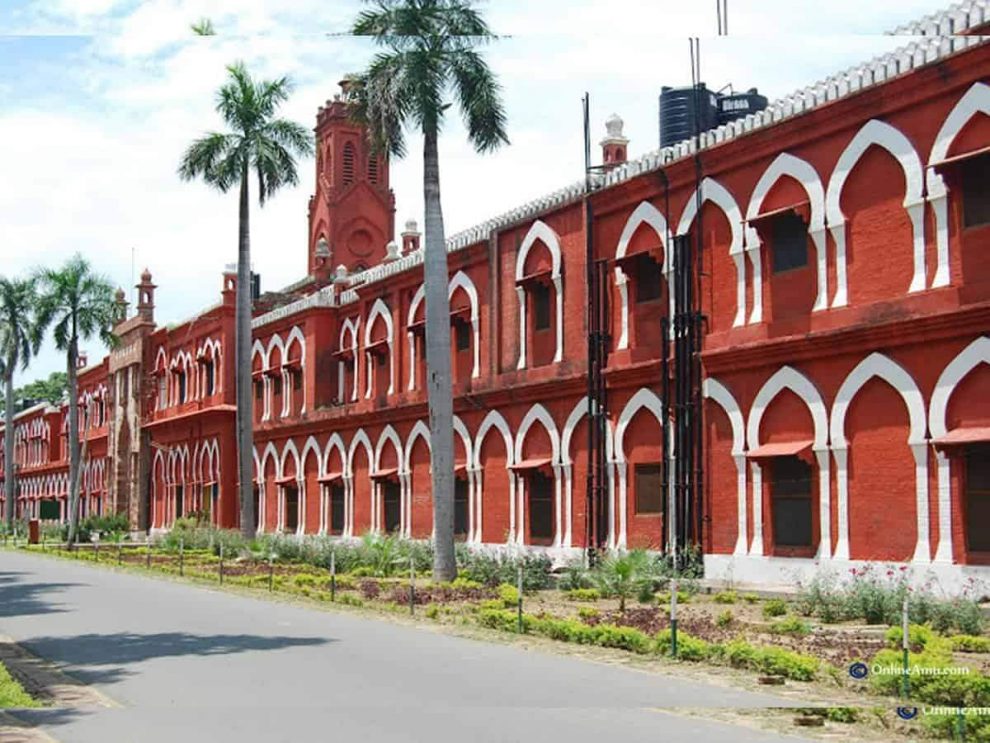
  • The book “Aligarh Muslim University: The Making of the Modern Indian Muslim” by Mohammed Wajihuddin  sheds light on AMU and its role in determining where the Muslim community stands in modern-day India.
  • The Aligarh Muslim University (AMU) completed a hundred years in December 2020. In December 1920, the Mohammedan Anglo Oriental (MAO) College founded by Sir Syed Ahmed Khan in 1877, was transformed into AMU. Sir Syed also established the All India Mohammedan Educational Conference to infuse the subcontinent’s Muslims with a spirit of modernism. This helped prepare the community, devastated in the aftermath of the Revolt of 1857, for new challenges.
  • Zakir Hussain, AMU alumnus, its former Vice-Chancellor and a former President of India, said over fifty years ago, ‘The way Aligarh participates in various walks of national life will determine the place of Muslims in India’s national life. The way India conducts itself towards Aligarh will determine largely, the form which our national life will acquire in the future.’
  • Read an excerpt from the book below.

With AMU turning a hundred, one is beholden to the MAO College Fund Committee’s first meeting on 10 February 1873. The fund committee was formed a year earlier, in 1872. Addressing the meeting, Syed Ahmad Khan’s son Syed Mahmood (1850–1903), had said: ‘I think what we mean to found is not a College but a university, and I hope the members will consent to my proposal that instead of the word “College”, the word “University” may be substituted.’

Since the formal opening of MAO College was getting delayed, the fund committee began a school called Madrasatul Uloom Musalmanan-e-Hind on 24 May 1875 at Aligarh. The school was a precursor to MAO College, which metamorphosed into AMU in 1920, and during whose foundation-stone-laying ceremony on 8 January 1877, presided over by Viceroy of India Lord Lytton, Sir Syed had observed:

… this is the first time in the history of Muhammedans of India that a college owes its establishment not to the charity or love of learning of an individual nor to the splendid patronage of a monarch, but to the combined wishes and the united efforts of a whole community. It has its origin in causes which the history of this country has never witnessed before.

So, what were the causes Sir Syed alluded to?

The large-scale killings and destruction in the wake of the failed 1857 Mutiny had unsettled Sir Syed, a judicial official in the East India Company. Muslims, who had borne the brunt of British repression heavily because the British held them responsible for the rebellion, had become fatalists. Irrationality, an obsession with obsolete and redundant social mores, rigidity in religious practices and a refusal to adapt to the new realities made them misfits in the era that the British Raj heralded. On close scrutiny, Sir Syed found that the reasons for the Muslims’ unfathomable desolation lay mainly in their educational backwardness and resistance to modern, scientific thinking. Therefore, he saw a panacea for the community in modern, scientific learning. He began thinking about ways and means to bring his community out of the stupendous self-pity it wallowed in.

A visit to England in 1869 enabled Sir Syed to see first-hand the education system of the West, including that at Oxford and Cambridge. With the dream of an Indian college modelled on Oxbridge before his eyes, he returned to India and set out to realize that cherished dream. He quit his job in Benares and made Aligarh, then a small mofussil town 100 miles off Delhi on the Delhi–Calcutta route, his home. Since Sir Syed had saved several family members, including women and children, of some senior British officials during the 1857 Mutiny from Indian rebels and was among the defenders of British rule in India, no roadblocks in his path to founding his college remained permanent.

In Aligarh, he set up a residential college which would become the heartbeat of Muslims, as well as of a large swathe of undivided India. Alongside the college project, Sir Syed began the herculean task of social and religious reform. For this he established the Tahzibul Akhlaq or Mohammedan Social Reformer, a magazine in Urdu, which began hitting at the obscurantist, obsolete views that fettered the community. Other magazines were specially published to counter the views spread by the Tahzibul Akhlaq. Some of Sir Syed’s religious views were unpalatable to the ulema and against accepted Islamic beliefs, and earned him the wrath of the orthodox elements in the community. He had to face the fury of fatwas. A maulvi even went all the way to Mecca to fetch a fatwa of kufr, declaring him an infidel. Sir Syed only chuckled at the serious drive to declare him a heretic, kafir or infidel, as it gave some of his tormentors an opportunity to visit Islam’s holiest places. Sir Syed’s debt to India in general and Muslims in particular lies not just in the college that he established but in the overall impact he left on the lives of Indians, especially Muslims.

Over 123 years after his death, Sir Syed is not considered a heretic, a naturi (one who propagated the belief that Islam is compatible with nature), a British stooge—epithets that some of his own community members hurled at him in his lifetime. Today, the orthodox ulema publicly say that Sir Syed, like any other person, is merely accountable to God for his lapses, and that his achievements and noble works outweigh his shortcomings and will pave his way to paradise.

Tomes have been penned on Sir Syed, MAO College, AMU and the movement Sir Syed and his associates like Mohsinul Mulk, Viqarul Mulk, Maulana Shibli Nomani, Maulana Zakaullah, Altaf Hussain Hali, Nazir Ahmad, and Chiragh Ali launched. This was called the Aligarh Movement, and it can only be described as the trigger for the Muslim renaissance in the subcontinent in late nineteenth and early twentieth centuries. It is easy to do a panegyric while evaluating the 100-year-long journey of a university which was born in the tumultuous times of India’s freedom struggle of the 1920s.

The circumstances in which Jamia Millia Islamia came up deserve some detailing. In 1920, Mahatma Gandhi gave a call for the boycott of government and government-aided schools and colleges. Muhammad Ali opposed MAO College as it was pro-government, since it received government grants. Gandhi, Muhammad Ali and Shaukat Ali tried to persuade the pro-government elements at Aligarh to join the nationalist movement and turn the college into a nationalist institution. The pro-government group at Aligarh opposed the presence of Gandhiji and the Ali brothers at the campus as they were trying to persuade students to join their movement. On 12 October 1920, Mahatma Gandhi addressed the students and left. But the real drama happened on 13 October, when the Ali brothers suddenly appeared at a meeting being held at the students’ union. Since they had been witness to Gandhiji being hooted and booed the previous day, the Ali brothers didn’t speak but said they had only come only to say goodbye to the students of their alma mater. And they wept too because they had seen Gandhiji being booed. Present there was also Zakir Hussain, who had done his MA in economics from AMU and was a part-time teacher at the university. Zakir Hussain had arrived from Delhi the same day; he was running a fever and didn’t want to speak. But he couldn’t hold back his own tears when he saw the Ali brothers weeping. He stood up and declared that he had decided to resign from his teaching assignment at MAO College and forego the scholarship being given to him. This tilted the balance and changed the mood. Many students joined him in boycotting government institutions. In his biography Dr Zakir Hussain, M. Mujeeb, a colleague and friend of the professor, says that Hussain went to Delhi, where he met Dr M.A. Ansari, Hakim Ajmal Khan, Muhammad Ali and many others and ‘assured them that a large number of teachers and students would leave the MAO College to join a national institution, if one was established. The leaders could ask for nothing better. On 29 October 1920, the Jamia Millia Islamia came into existence, and Maulana Mahmudul Hasan of Deoband delivered an address indicating its aims and ideals.’
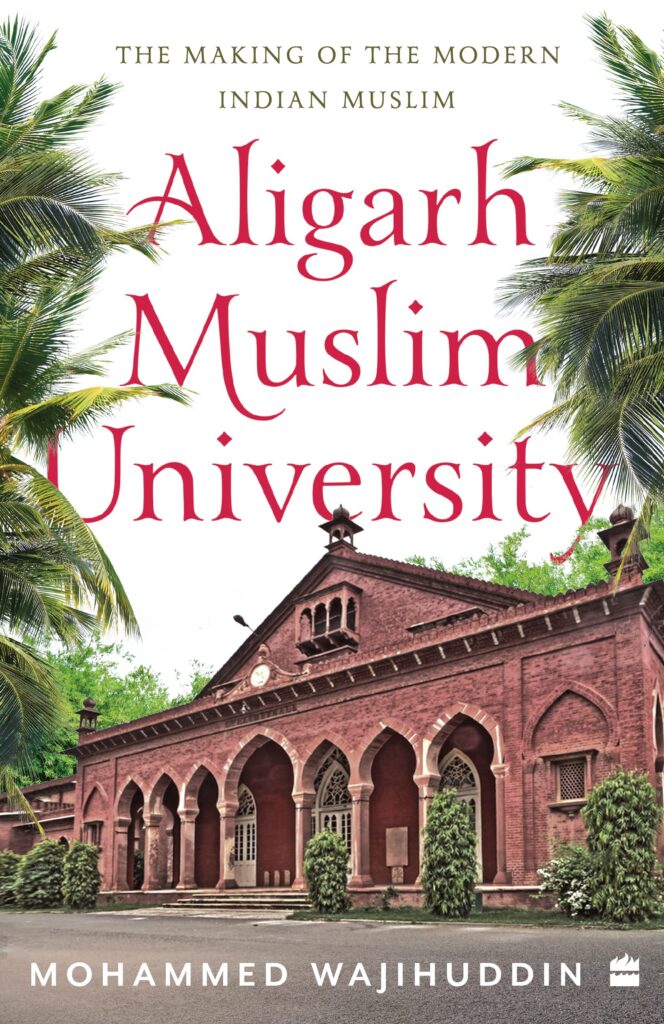
Excerpted with permission from Aligarh Muslim University: The Making of the Modern Indian Muslim, Mohammed Wajihuddin, HarperCollins India. Read more about the book here and buy it here.

source: http://www.thedispatch.in / The Dispatch / Home> Book House / by Mohammed Wajihuddin / January 25th, 2022
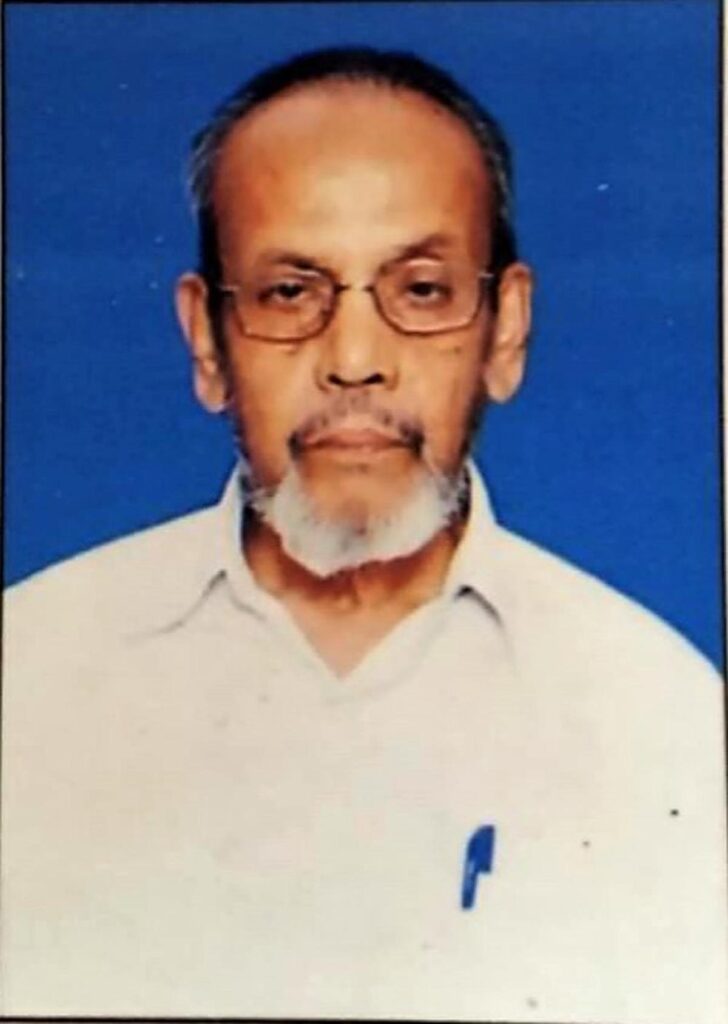
Professor Abdul Kareem is no more

Hubballi, KARNATAKA :

Abdul Kareem | Photo Credit: Special Arrangement

Erudite English professor and former syndicate member of Karnatak University, Abdul Kareem passed away in Hubballi on Monday night

Erudite English professor and former syndicate member of Karnatak University, Abdul Kareem passed away in Hubballi on Monday night.

Prof. Kareem, 83, had served as English lecturer at Sri Kadasiddeshwar Arts and H.S. Kotambri Science Institute in Hubballi, before becoming Principal of Anjuman-e-Islam’s Nehru College in Hubballi. He was also founder-trustee of Sana Educational Charitable Trust.

A man of great simplicity, Prof. Kareem is remembered by his students for his high grade of teaching and ethical values. He wrote extensively for various publications and newspapers. The final rites were held on Tuesday.

On Tuesday, the faculty members, students, and other staff held a condolence meeting at Sana Shaheen Independent PU College and Sana Group of Instittutions and mourned his demise.

source: http://www.thehindu.com / The Hindu / Home> News> India> Karnataka / by Special Correspondent / Hubballi – August 24th, 2022

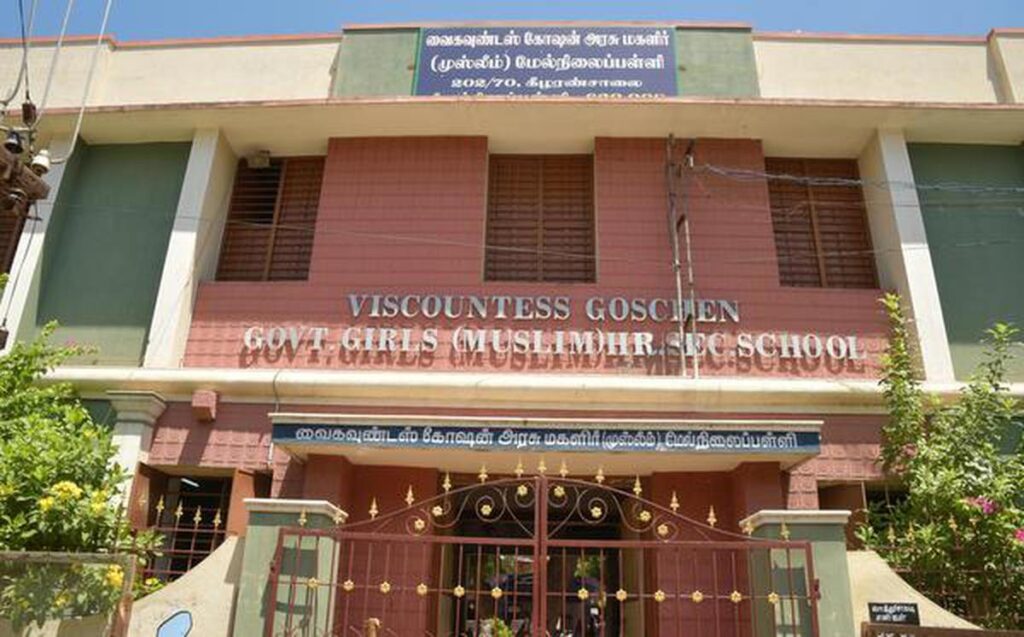
This 110-year-old Tiruchi school has empowered many Muslim girls with education

Trichy, TAMIL NADU :

Tiruchi’s Viscountess Goschen Government Girls (Muslim) Higher Secondary School has been functioning through highs and lows for over a century

As the bell announces the lunch break at the Viscountess Goschen Government Girls (Muslim) Higher Secondary School (VGGGMHSS) in Tharanallur, East Boulevard Road the aroma of freshly cooked food wafts through the campus and children stream out from the classrooms to get their fill.

It may seem like a regular day at a regular school, but the story of the 110-year-old institution, one of two managed by the State Government for Muslim girls, resembles that of the Phoenix, a mythical bird which keeps rising from the ashes of its predecessor.

The Hobart School for Muslim Girls (now known as Government Hobart Higher Secondary School) established in the 1870s in Chennai, is the other such institution.

The Urdu-medium school in Tiruchi, founded in 1910, was named after Lady Margaret Evelyn Gathorne-Hardy, the wife of British parliamentarian and former Governor of Madras Viscount George Joachim Goschen.

The model school attached to the Viscountess Goschen Teacher Training Institute was converted to a secondary school in 1939-40. It was upgraded to higher secondary in August 2018.

The school conformed to the Muslim community’s requirements of segregated education with a modern syllabus and separate religious instruction with the aim of improving the lot of girl children who would otherwise be denied schooling and married off at an early age.

“In its heyday, the school had up to 1,000 students on its rolls, with children coming from Beema Nagar, Varaganeri, Palakkarai, Nathershah Wali Dargah, Tennur, Woraiyur, Khaja Malai, Pon Malai in Tiruchi and other places in the Madras Presidency where Urdu was in prevalence, to study here,” says B Indrani, the school’s headmistress.

Islamic heritage

Housed in a building that had previously served as a prison, VGGGMHSS is squeezed in between the Jail and Bandekhana Streets of the busy commercial area behind the Gandhi Market.

In the olden days, when the purdah system was in observance, burqa-clad Muslim girls would travel in horse and bullock carts that would be fitted with cloth curtains to veil them from public view. The back gate (now no longer in use) was designed to allow the carts to reverse directly into the school compound to maintain privacy.

“Once they were inside, the purdah rule would be relaxed, but the campus remained off-limits to men,” says Indrani.

Many prominent Muslim families, even those whose mother tongue was Tamil, sent their children here, because of its safe environment.

_________________________________________________

Colonial roots

  • George Joachim Goschen, 2nd Viscount Goschen, was born on October 15, 1866 to George Joachim Goschen, 1st Viscount Goschen and Lucy Dalley.
  • He was the Governor of Madras Presidency from 1924 to 1929, and was made Viceroy of India in 1929.
  • Under his patronage, The Madras Presidency Radio Club started the city’s first radio transmission in 1924, which continued until 1927.
  • He was also involved in the early stages of the Loyola College, Chennai and presided over its first college day in 1928.
  • He also presided over the diamond jubilee of newly named Bishop Heber College in Tiruchi (formerly known as Society for the Propagation of the Gospel or SPG College) in 1926.
  • The British parliamentarian married Lady Margaret Evelyn Gathorne-Hardy in 1893, against his parents’ wishes, because she was 8 years senior to him.
  • As a result of her marriage, Lady Margaret was styled as Viscountess Goschen on February 7, 1907. The couple had three children.
  • Her name adorns some of the oldest public institutions in southern India. Besides the school for Muslim girls in Tiruchi, the Government Lady Goschen Maternity Hospital in Mangaluru is also named after her. The Germanic sounding surname is often mispronounced as ‘Ghosha’ or ‘Cosen’ in India.
  • Viscountess Goschen passed away in 1943, while her husband died on July 25, 1952 at the age of 85.

_______________________________________

Slow decline

The school’s fortunes suffered a setback after independence as English and Tamil gained precedence in Tamil Nadu’s education policy, and Urdu waned in the wake of the abolition of the princely states. The lack of higher secondary schooling in Urdu medium was another disadvantage.

By 2006, the school had only 2 students, and 5 teachers, with classes being held at the office of the Headmistress. Local authorities built hostels for students from minority and backward communities on a part of the campus, shrinking the school’s dimensions considerably and edging it towards closure.

Saved by the public

Thanks to the efforts of concerned educators and social workers, VGGGMHSS came back from the brink from the mid-2000s.

“In 2007, 19 Muslim business establishments in and around EB Road united to save the school by canvassing for admissions within the local community. But when the response was poor, they brought 25 students from Karnataka,” says V M Habibullah, managing trustee of the NEED Trust that runs a free hostel for VGGGMHSS students. Habibullah is also actively involved in Goschen School Development Committee, an ancillary body of the Parent-Teacher Association (PTA) that has played an important role in the school’s revival.

VGGGMHSS today has 314 children; it offers Urdu medium only from Class 1 to 5, with an option to switch over to Tamil or English from Class 6 to 12. Despite its precarious state, the school has maintained a consistent full pass rate in the annual examinations.

With most of the students coming from socially disadvantaged backgrounds, the school’s PTA gives them free breakfast and transport. It also organises Deeniyat or religious classes for girls from Class 1 to 9 in the evenings. VGGGMHSS has been under the noon-meal scheme of the Government from 2009. “We want our children to be proud of their school, and show them that education can lead the way to a great future,” says Indrani.

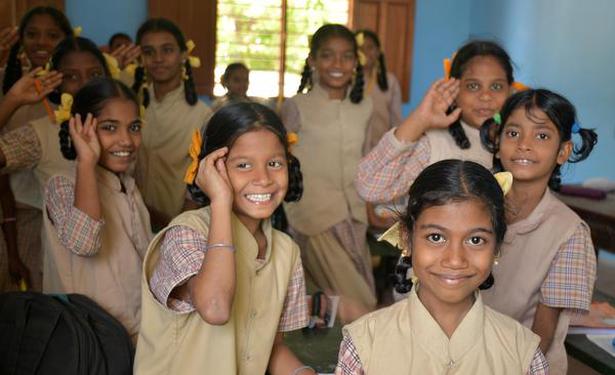
Students of the Viscountess Goschen Government Girls (Muslim) Higher Secondary School do their lessons in Urdu, Tamil and English mediums of instruction. Photo: M.Moorthy/THE HINDU

New issues

Among the challenges VGGGMHSS faces is the problem of encroachments by shanty dwellers, who have used the school’s compound wall along the Jail Street to set up at least 45 hutments.

“The windows of our classrooms overlook people’s living quarters instead of the open street,” says Habibullah.

“Children are often distracted by what they see during the class hours, and it’s not conducive to learning.”

Despite petitioning the local authorities in 2013, not much has been done to remove these illegal structures, he added.

A prayer hall has been sectioned off into classrooms, but as the school’s student population grows, at least 10 more rooms will be required to accommodate the new intake, says PKM Abdul Samad, Treasurer of the PTA, VGGGMHSS. “At the current market rate, this would involve an investment of at least ₹40 lakhs. We are hopeful of the city’s philanthropists helping us out.”

source: http://www.thehindu.com / The Hindu / Home> Education / by Nahla Nainar / August 02nd, 2019

Shama rises above difficulties to clears BPSC exam

Siwan, BIHAR :

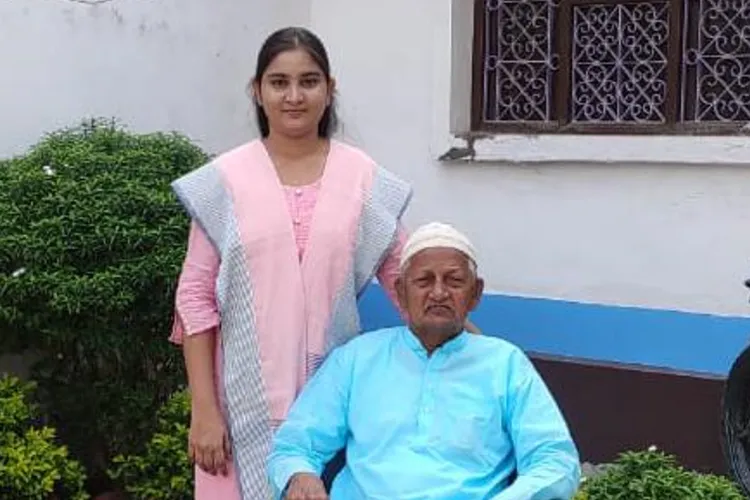
Shama Parveen with her grandfather

Shama Parveen of Chanaud Panchayat of Dhanauti police station in Bihar’s Siwan district lost her father when she was three years old. Her mother joined as a helper in the Integrated Child Development Scheme called Anganwadi to support her family. 

Shama’s grandfather Sheikh Mohammed Khurshid Alam,  who stood by the family. He supported Shama’s decision not to get married at an early age which infuriated relatives, and they started distancing themselves from the family.

Today when Shama Parveen has cleared the examination of the Bihar State Public Service Commission and is all set to become an administrator, everyone is admitting her and the family’s perseverance. 

perween

Shama Praveen has secured 568th rank in the Bihar Public Service Commission’s Supply Inspector class examination. The result of the 66th Combined Competitive Examination of the Bihar state Public service commission was released last week in which 685 candidates were successful. 

Shama’s success is all the more credible given the fact that he has achieved this success without joining a coaching center and through self-study and preparing at home. She says she would continue to study for clearing the UPSC and become a sub-divisional magistrate. 

She was born in a village where even today family elders away from giving higher education to the girl child. Married soon. Shama says that her grandfather, who was a government teacher, took care of her brothers and sisters and supported them. “My Nana (grandfather) would say, “Study as much as you want to. Due to his enthusiasm, I did my graduation and later went to Allahabad for post-graduation. 

When Shama Parveen completed her graduation, some of her relatives fixed her marriage to a close relative in 2014. Shama was upset and she refused to marry. “They fixed my marriage to a close relative and it wasn’t acceptable to me,” she said. 

At this stage, her grandfather encouraged her to follow her dreams and not to worry. He told me that he will support her always “Your dreams are my dreams,” he told her. 

All the criticism from society for her refusal to marry ended after her success in the BPSC. 

with mother

Shama Parveen’s mother Parveen Khatoon is a helper in Anganwadi and has supported her family with this job. The mother never compromised on the education of her children. 

Shama’s younger sister Saba Parveen is working in Delhi after studying journalism. “I did not attend any coaching to prepare for this exam and only studied at home.   

She is grateful to MM Tiwari Sir of Siwan for helping her in preparing for the coveted examination. 

“My Nana is my ideal. He never let us feel the absence of our father and held my hand at every step of my journey. We can never forget about his role in our lives.”

Shama says while growing up she had heard about the BPSC and UPSC. I followed this common conversation and started reading magazines etc from my days for general knowledge during my matriculation days.“I would read all the news about great peoples’ lives and used to read interviews of successful people. I got my inspiration from these readings, “ she said.

source: http://www.awazthevoice.in / Awaz The Voice / Home> Youth / by Mohammad Akram / August 18th, 2022

Gurucool, a Jamia alumni-led ed-tech start-up launches app for underprivileged

NEW DELHI :

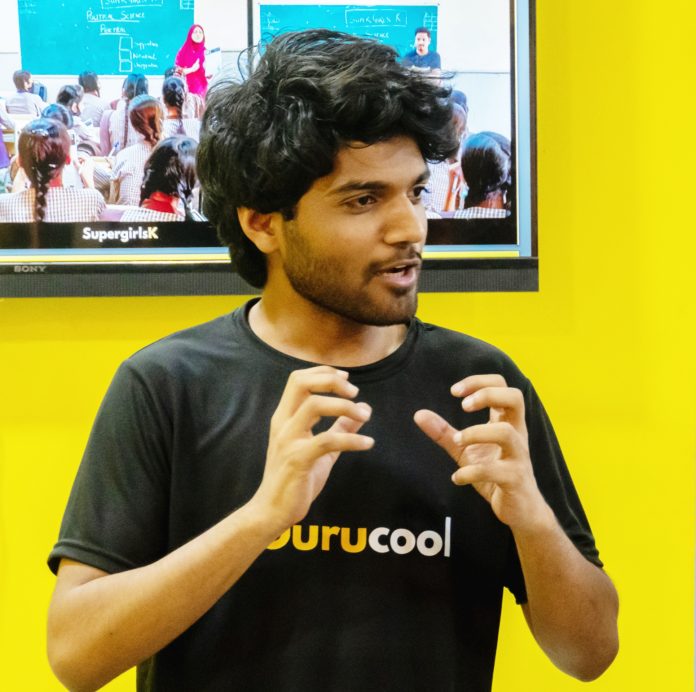
Adil Meraj: Co-founder of Gurucool. | Photo: By arrangement

The Padhai app will provide academic space for learning and to make quality education accessible for the underprivileged. 

New Delhi :

 Gurucool, a Delhi-based EdTech startup launched the Padhai app on Friday. The app seeks to provide an academic space for learning and to make quality education accessible for the underprivileged by providing more than 3500 curated open-source educational courses offered by platforms like MIT open courseware, Khan Academy, YouTube educators, and many more.

Adil Meraj and Khansa Fahad, the two alumni of Jamia Millia Islamia (JMI) started Gurucool in 2019. Gurucool is an educational networking platform that offers a suite of phygital (physical+digital) tools to connect learners and educators. The founders of Gurucool got into the limelight when they secured pre-seed funding of $150,000 (around 1 crore rupees) in November 2021.

“The Padhai app counters the price-tagged digital education offered by other ed-tech platforms while making digital education accessible and free for all,” Meraj told TwoCircles.net.

“The Padhai app provides information on scholarships, educational short videos similar to YouTube shorts called BITS, and other things of importance to learners. It offers curated courses in 8 regional languages,” Meraj said, adding that the app has live classes, study material, test series and questionnaires for K-12, competitive exams, and the skill India program. 

The higher education department of the government of Bihar approved the Padhai app as a pilot project, he said. Conversations are on with several other governments to start the Padhai app on a pilot project basis. 

Gurucool is an educational networking platform offering over 25 tools and a vast content pool for educators and learners to learn, network, and have fun with them. Gurucool aims to digitize education while not compromising on the need for physical classrooms. We are making education phygital, said Meraj. 

Gurucool got pre-seed funding from the Indian-American angel investor, Parvez Jasani (CEO, Zulie Venture Inc.) and Aqib Hussain of FreeFlow Venture Builders. The ed-tech platform is estimated worth $ 2 million. 

“When I spoke to Adil and Khansa for the first time I was super impressed with their vision and passion, and that made me invest in Gurucool instantly”, Parvez Jasani told TwoCircles.net. 

Gurucool offers a vast content pool, empowering educators, schools, and colleges with minimal financial support and which are functioning especially among the marginalized groups. The schools and colleges can potentially build their digital infrastructure using Gurucool’s content. 

The Ed-Tech platform follows the model of personalized learning by creating educational centres which implement the concept of a conference-based teaching ecosystem that has a 12:1 student-teacher ratio. These education centres have a club system, library, workshops, sessions, and smart classes among other things.

Gurucool  aims to launch 50 centres in 15 cities across India in the upcoming year with each centre having an accommodating capacity of 600 students.

www.gurucool.xyz

Mohd. Umair Yunus is a fellow in the SEEDS-TCN mentorship program. 

source: http://www.twocircle.net / TwoCircles.net / Home> Lead Story / by Mohd Umair Yunus, TwoCircles.net / August 13th, 2022

Freedom from Illiteracy: Each One Teach Ten; TWEET Launches National Level Literacy Campaign

NEW DELHI :

New Delhi :

The Women Education and Empowerment Trust (TWEET), one of the implementing organizations of the ‘Vision 2026’ project, has started a novel national-level year-long campaign ‘Freedom from Illiteracy: Each One Teach Ten’.

The campaign aims at providing illiterate adult women across the country with functional literacy. TWEET launched the campaign while the country is all set to celebrate its 76th Independence Day on 15 August.

TWEET is a national-level NGO based in New Delhi established for executing women empowerment initiatives under ‘Vision 2026’- a flagship project implemented by seven NGOs including TWEET. Vision is a decade-long program to bring about sustainable change in the socio-economic status of marginalized and deprived communities in the country. Right from its inception, Vision has been implementing numerous programs for illiteracy eradication. 

The campaign was launched on Sunday by Rahamathunnissa A, Chairperson, TWEET, at the Press Club of India, New Delhi in the presence of Shaista Rafat, general secretary, TWEET, and Dr. Sharnas Muthu, Treasurer, TWEET.

“The major mission of the ‘Freedom from Illiteracy: Each One Teach Ten’ campaign is to engage educated women all over the country to volunteer for the initiative, educating at least 10 illiterate adult women and creating a remarkable impact on their lives,” Rahamathunnissa said, while launching the initiative.

“TWEET also aims to address major issues among the women such as unemployment, poverty, social backwardness and unrest, discrimination, suppression, and many more through the effective execution of the campaign,” said Shaista Rafat, introducing the campaign.

India’s National Literacy Mission defines literacy as acquiring the skills of reading, writing, and arithmetic and the ability to apply them to one’s day-to-day life. According to National Family Health Survey (NFHS-5) 2019-21, the literacy rate amongst adult women (15-49 years) in the country stands at 71.5% while the literacy rate of adult men is 87.4%.

source: http://www.indiatomorrow.net / India Tomorrow / Home> Education / by Admin, India Tomorrow / August 08th, 2022

These youngsters want to make Hyderabad the hub of robotics

Hyderabad, TELANGANA :

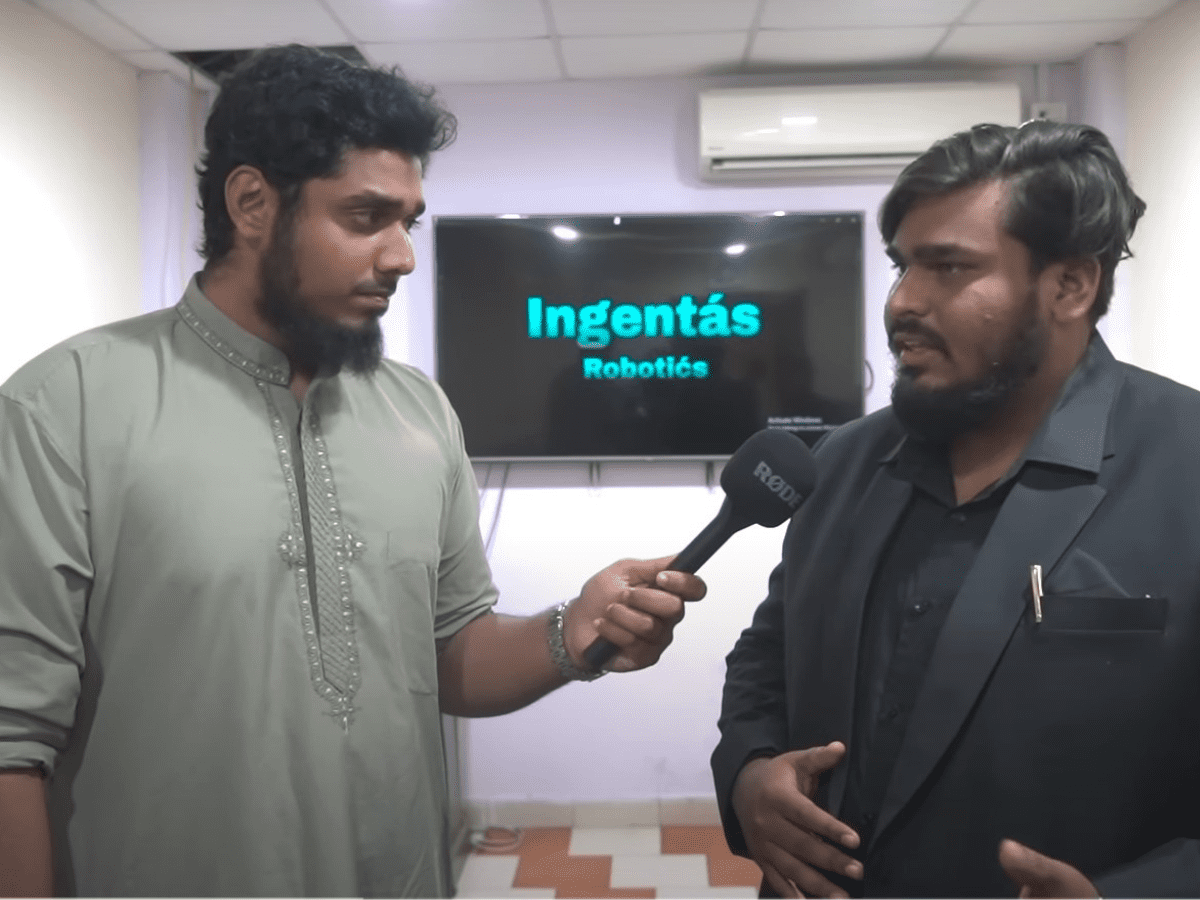
Ingentas is teaching people everything from basic batteries, jumper wires, buzzers, and sensors to the robotic arm, NASA’s Mars rover, and A.I.-driven drones.

Hyderabad: 

Realizing that any type of access to learning robotics and artificial intelligence is not available to most people, Ingentas started off in 2021 with its vision to empower local communities by teaching them technologies that will be more relevant in the future. It’s a first-of-its-kind workshop in Hyderabad, completely run by engineering graduates and students that aims to make the city a hub of robotics.

Tahami Mundewadi, who has been in the field of robotics for the last four years is the founder and CEO of Ingentas. Speaking to Siasat.com, he said that joining the Robotics club at Muffakham Jah College of Engineering (MJCET) helped him learn and grow more in the pursuit of his passion.

“Everything from a vacuum cleaner to the robotic arm used to build cars, all are based on robotics and artificial intelligence, we are living in an interesting time where even surgeries are being performed by robots,” Mundewadi remarked.

He further added that the world is moving at a very fast pace in this direction and that we have to be in this race and compete with the others.w

Ingentas is teaching people everything from basic batteries, jumper wires, buzzers, and sensors to the robotic arm, NASA’s Mars rover, and A.I.-driven drones.

Mundewadi stated, “you don’t necessarily have to be an engineering student to learn robotics, anything with passion can come.”

Furthermore, the CEO of Ingentas added that he believes that in 50 years everything will be based on robotics. “And to make anything mainstream in society we have to begin from the school level and that’s why we have classes from third-grade level all the way to advanced post-graduate level,” he remarked.

source: http://www.siasat.com / The Siasat Daily / Home> News> Hyderabad / by Usama Hazari / August 06th, 2022

Shabnam Khatoon is the best athlete of MANUU; wins cash award

Hyderabad, TELANGANA :

Hyderabad: 

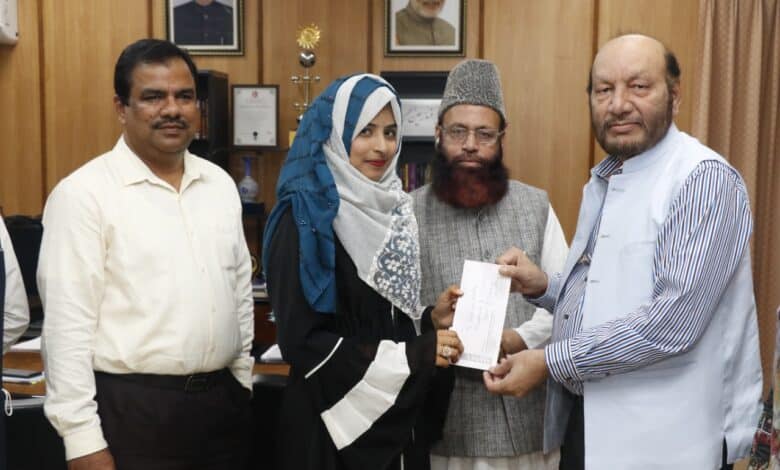
Shabnam Khatoon has been felicitated as best athlete of Maulana Azad National Urdu University (MANUU) on Friday. Prof. Syed Ainul Hasan, Vice-Chancellor, presented a cash award in recognition of her all round performance in sports events held recently during Jashn-e-Baharan, an annual event.

Shabnam, a student of B.Tech III Year, emerged as the fastest running girl of MANUU winning both 100 and 200 meter sprints. She also bagged first place in 50 kgs weight lifting event and led the Department of Computer Science & Information Technology girls’ Kabbadi team to the title.

Prof. Ainul Hasan lauded her performance and announced special coaching facility particularly for girl students at MANUU. He also felicitated Dr. A Kaleemulla, Deputy Director, Directorate of Physical Education & Sports for efficiently organizing the sports competitions.

Prof. Mohammed Abdul Azeem, Proctor, and Chairman Sports Committee informed that MANUU has availed the services of well known badminton coach Mr. Ziaur Rahman for the students.  Mr. Muzaffar Ali is the football coach.

source: http://www.siasat.com / The Siasat Daily / Home> News> Hyderabad / by News Desk / July 22nd, 2022

“Education abroad” was the theme of Star Talk held in Guwahati

ASSAM :

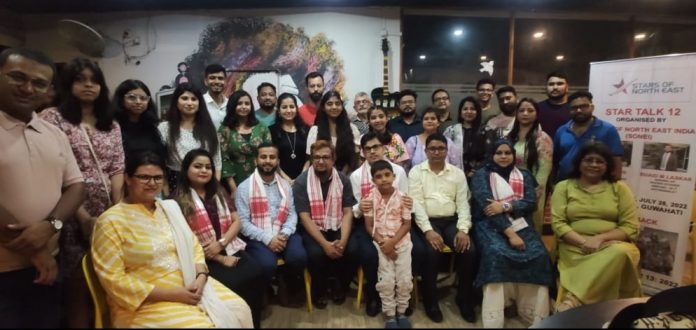
Members of SONEI along with guests pose for a group photo on the sidelines of the ‘Star Talk-12’ event held in Guwahati on Thursday.

Guwahati :

‘Star Talk-12’, an initiative of the Stars of North East India (SONEI), a registered public charitable trust and talent hunt platform, was held in Guwahati on Thursday.

The first appointed speaker of the event was Aman Wadud, a young lawyer who recently got his Masters in Law from the University of Texas under a Fulbright Scholarship. Besides sharing his American experience, Aman Wadud gave a very informative presentation of the evolution of Civil Rights in the USA.

The second appointed speaker, Suaid M Laskar, Head of Pan-India Sales, Admissify made a presentation to clear the common doubts people have about studying abroad. Laskar, who has been instrumental in facilitating overseas studies of more than 350 students from Assam, over the last five years, in countries like Australia, Germany, UK and USA, informed the audience that 93 per cent of the students who go abroad for studies belong to middle class families.

Abhishek Kumar, a graduate from Guwahati Commerce College, who is all set to study his Masters in Supply Chain Management at Cranfield University, UK also shared his experience on the occasion.

Alemoon Nessa of Bongaigaon, who recently received two national MSME awards along with a cash component of Rs eight lakh from the hands of Prime Minister Narendra Modi, was felicitated on the occasion.

Dr Faizuddin Ahmed, a physicist from Dhubri, who has made it to the Stanford list of world’s top 2% scientists, was also honoured on the occasion.

Shahnaz Islam, a budding poet whose book “Midnight’s melancholy” was launched from Sikkim recently, enthralled the audience by reciting a few poems from her book.

Mirza Arif Hazarika’s short film “Sorry” starring Barasha Rani Bishaya and Ravi Sharma is now live on Disney+Hotstar, a rare honour for an Assamese short film. Mirza shared his experiences of making the film.

Priyanka Paul Banerjee, an upcoming PR practitioner, was also felicitated along with other achievers at the event.

SONEI will complete eight years of its existence in September 2022 during which new projects will be announced in addition to its existing programmes in the field of education, promotion of skills, and social service.

The event was hosted by Samima Sultana Ali and Sharique Hussain.

source: http://www.muslimmirror.com / Muslim Mirror / Home> Education> Positive Story / by Special Correspondent / July 29th, 2022

Qasim Nanautawi : The Scholar who awakened Muslims through education

UTTAR PRADESH :

Darul Uloom Deoband

He is truly a forgotten warrior of the freedom movement. Few know about him and fewer are familiar with his name but delve into the pages of history and you realise that he deserves a better place.

He participated in the Indian Rebellion of 1857 in the Battle of Shamli between the British and the anti-colonialist ulema. The scholars were ultimately defeated at that battle.

He was Mohammad Qasim Nanautawi.

Nanautawi was born in 1832 into the Siddiqui family of Nanauta, a town near Saharanpur in Uttar Pradesh.

He was schooled at Nanauta, where he memorised the Quran and learned calligraphy.

At the age of nine, Nanautawi moved to Deoband where he studied at the madrasa of Karamat Hussain. The teacher at this madrasa was Mehtab Ali, the uncle of Mahmud Hasan Deobandi.

On the instruction of Mehtab Ali, Nanautawi completed the primary books of Arabic grammar and syntax.

Thereafter, his mother sent him to Saharanpur, where his maternal grandfather Wajihuddin Wakil, who was a poet of Urdu and Persian, lived.

Wakil enrolled his grandson in the Persian class of Muhammad Nawaz Saharanpuri, under whom, Nanautawi, then aged twelve, completed Persian studies.

In 1844, Nanautawi joined the Delhi College. Although was enrolled in the college, he would take private classes at his teachers’ home, instead of the college.

Nanautawi stayed in Delhi for around five or six years and graduated, at the age of 17.

After the completion of his education, Nanautawi became the editor of the press at Matbah-e-Ahmadi.

During this period, he wrote a scholium on the last few portions of Sahihul Bukhari.

Before the establishment of Darul Uloom Deoband, he taught for some time at the Chhatta Masjid. His lectures were delivered at the printing press. His teaching produced a group of accomplished Ulama, the example of which had not been seen since Shah Abdul Ghani’s time.

In 1860, he performed Haj and, on his return, he accepted a profession of collating books at Matbah-e-Mujtaba in Meerut. Nanautavi remained attached to this press until 1868.

In May 1876, a Fair for God-Consciousness was held at Chandapur village, near Shahjahanpur.

Christians, Hindus, and Muslims were invited through posters to attend and prove the truthfulness of their respective religions.

All prominent Ulama delivered speeches at the fair. Nanautawi repudiated the Doctrine of the Trinity, speaking in support of the Islamic conception of God.

Christians did not reply to the objections raised by the followers of Islam, while the Muslims replied to the Christians word by word and won.

Mohammad Qasim Nanautawi established the Darul Uloom Deoband in 1866 with the financial help and funding of the Muslim states within India and the rich individuals of the Muslim Indian community.

He conformed to the Sharia and worked to motivate other people to do so. It was through his work that a prominent madrasa was established in Deoband and a mosque was built in 1868. Through his efforts, Islamic schools were established at various other locations as well.

His greatest achievement was the revival of an educational movement for the renaissance of religious sciences in India and the creation of guiding principles for the madaris (schools).

Under his attention and supervision, madaris were established in several areas.

Under Muhammad Qasim Nanautvi’s guidance, these religious schools, at least in the beginning, remained distant from politics and devoted their services to providing only religious education to Muslim children.

Nanautawi died on 15 April 1880 at the age of 47. His grave is to the north of the Darul-Uloom.

Since Qasim Nanautawi is buried there, the place is known as Qabrastan-e-Qasimi, where countless Deobandi scholars, students, and others are buried.

Significantly, the elders of Deoband took more and more part in the struggle for the independence of the country.

After the establishment of Darul-Uloom, the period of participation in national politics began.

Darul-Uloom, Deoband, was a centre of revolution and political, training. It nurtured such a body of such a body of self-sacrificing soldiers of Islam and sympathisers of the community who themselves wept in the grief of the community and also made others weep; who themselves tossed about restlessly for the restitution of the Muslims’ dignity and caused others also to toss about.

They shattered the Muslims’ intellectual stagnation, they broke up the spell of the British imperialism, and, grappling with the contemporary tyrannical powers, dispelled fear and anxiety from the minds of the country.

They also kindled the candle of freedom in the political wilderness.

It is a historical fact that the political awakening in the beginning of the twentieth century was indebted to Deoband and some other revolutionary movements in the country, and the revolutionary freedom-lovers who rose up there were the products of the grace from the spring of thought of Deoband.

Then, after the establishment of Pakistan, the Indian leaders of Deoband guided the Indian Muslims in utterly adverse circumstances and helped keep up their spirits high. — IANS

source: http://www.muslimmirror.com / Muslim Mirror / Home / by Amita Verma / July 31st, 2022