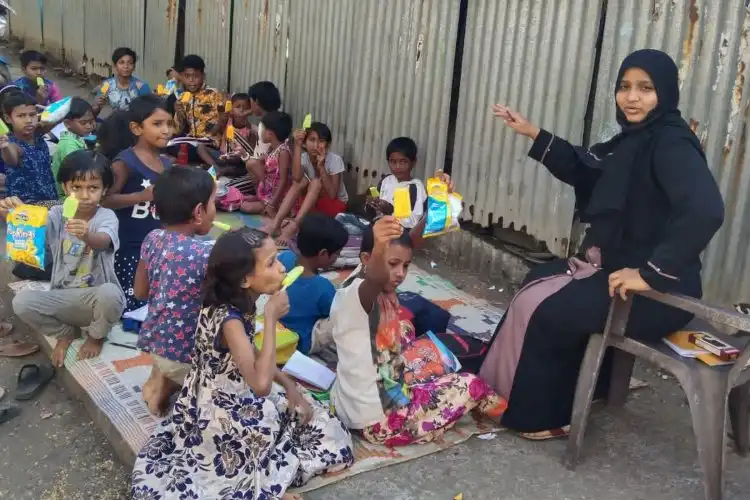
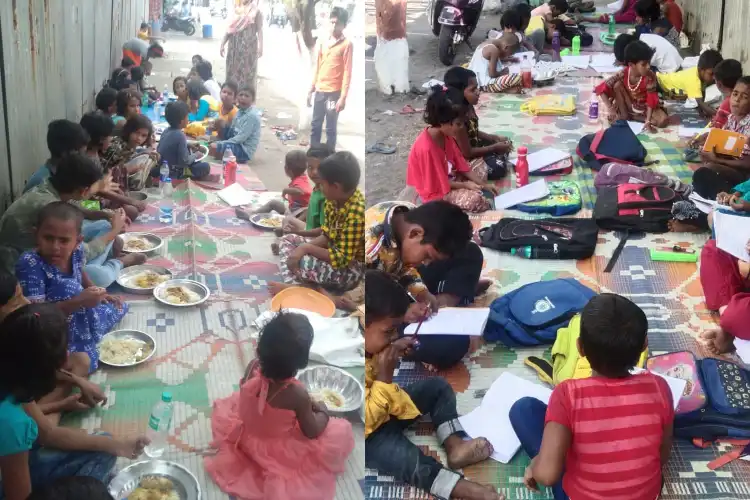
A few mats and a blackboard make a school on a city lane for 50 kids. This footpath of V Power Gym Street in the Kanakia area of Mira Road in Mumbai attracts the attention of the passers-by but the children remain engrossed in studying and oblivious of the world passing by.
The noise of passing traffic and pedestrians does not affect the privacy of students – mostly children of construction labourers and other daily wage earners – for their minds are focused on what their Yasmeen Madam says.
Yasmin Parvez Khan, a homemaker whose husband is a manager in a global software company, has been trying to provide basic education to children in this makeshift roadside school. She has been setting it up from 3 to 5 pm every day for the past ten years.
She is a volunteer who wants to change the lives of children who can’t afford a regular school for various reasons; she neither runs an NGO nor is affiliated with any government agency.
Gallery of images from Yasmeem’s school
Yasmeen says: “One day I thought of doing something for these poor children. After much deliberation, I realized that no amount of monetary or material help will be of much use to them while education has the potential to change their lives and also impact the future of their families. With this idea, I started teaching two kids and today I have 50 of them.”
Yasmeen’s school is for slum children where they receive basic education and then for formal education, Yasmin Madam takes the children for admission to regular schools. This way Yasmeen plays an important role in initiating these underprivileged children into regular education by invoking their interests in studies and knowledge. “It takes time to get children from very poor families interested in education and getting their parents to understand the importance of education is no less than a harder task.”
Yasmeen says she doesn’t charge a fee but children need many things like notebooks, pencils, books, colours, bags, etc. She has an innovative idea for getting these needs of children fulfilled. Pointing to her blackboard, she says, “Whenever I need something for children, write it on the board and you will be surprised that within a short time, someone delivers it.”
To date, children have never had to wait more than half an hour to get their basic things for studies. She smiles and says that she feels happy to cook for children each Thursday and feed them. After seeing this, many passersby and neighbours have started bringing food and gifts for the children. This makes children very happy and adds to their enthusiasm.
Children enjoying meals cooked by Yasmeen Khan on a Thursday
Yasmeen Madam’s teaching sidewalk has neither walls nor roof, but education is complete. The first child who got his primary education from this footpath and reached school today has reached the 11th standard.
People are often inquisitive about Yasmin Parvez Khan, who wears a Burqa. People stop for a moment when they see a veiled woman teaching children on the sidewalk.
Yasmeen says that initially, even her family was not happy with her decision. “When I explained my point that she has to go to them and teach, they understood.”
She says: “Today, my family including my mother-in-law, father-in-law, husband, and my children support me.” Yasmeen Parvez Khan’s husband is a project manager at Wipro Company.
These days Yasmeen’s school is on Monsoon break. She is looking forward to the end of the monsoon and the resumption of her school.
source: http://www.awazthevoice.in / Awaz, The Voice / Home> India / by Shantaj Khan, Pune / July 26th, 2022
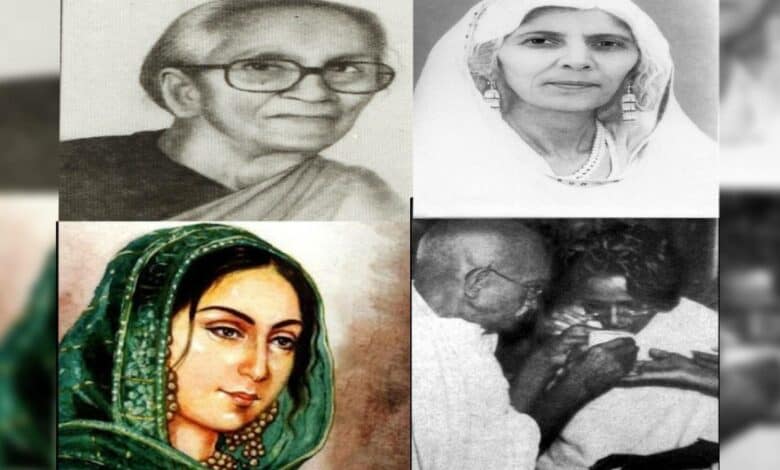
On the occasion of 74th Independence Day, let us remember these Muslim women who proved their strength, enthusiasm and determinism in the fight for freedom.
These women broke the stereotype of Muslim women in the society, who are merely perceived to be clad in Burqha and were never let out of the house. They participated in the India’s struggle for independence and emerged victorious.
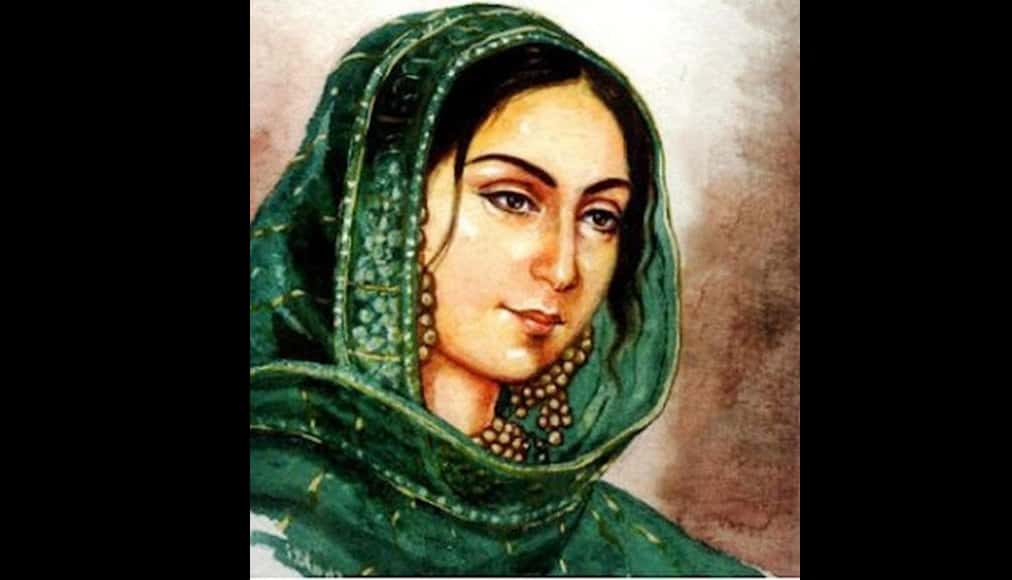
Begum Hazrat Mahal (1830–1879)
Begum Hazrat Mahal, a prominent woman of 1857 rebellion, was born in 1830 Faizabad of Uttar Pradesh. Her actual name was Muhammadi Khanum. Her father is Gulam Hussain of Faizabad. At her tender age itself, she showed good talent in literature.
She was married to Wajid Ali Shah, the Nawab of Awadh. They were blessed with a son Mirza Birjis Khadir Bahadur. On 13 February, 1856, the British troops imprisoned Wajid Ali Shah. They sent him to Calcutta on 13 March and occupied Awadh illegitimately. This irked the people and native rulers.
They revolted against the British under the leadership of Begum Hazrat Mahal. The native rulers and people met at Chavani area of Lucknow, the capital of Awadh on 31May, 1857 and declared independence. They taught a lesson to the British troops and wiped out their power in Lucknow. Later, Begum Hazrat Mahal declared her son Birjis Khadir as the Nawab of Awadh on 7 July, 1857.
As the King’s mother, she gathered 1,80,000 troops and renovated the Lucknow fort spending huge amount of money. She established a high level committee for the good governance of the state. Hazarat Mahal ruled the state on behalf of her son for about ten months and challenged the British force by inspiring patriotism among the people and the fellow native rulers. She issued a historic statement on 31 December, 1858 challenging the proclamation issued by the Queen Victoria on November 1, 1858.
But, when Delhi, the prime center for the First War of Independence was captured, the British troops surrounded and attacked Lucknow in March 1859. There was a fierce battle between the Company troops and the Begum troops. When defeat became inevitable, Begum Hazrat Mahal retreated to the Nepal forests along with the co-revolutionary leaders like Nana Sahib Peshwa and others.
The British rulers offered her huge amount of money and luxurious facilities in order to bring her back to Lucknow. But, the Begum denied them and made it clear that nothing else was acceptable to her except Independent Awadh state. Begum Hazarath Mahal was struggling for the independence of her state till her last breath. She passed away at Khathmound of Nepal on 7 April, 1879. In 1984 Government of India released a postal stamp in her honour.
Abadi Bano Begum (1852-1924)
Abadi Bano Begum, who took active part at par with men in the Indian National Movement, was born in 1852 in Amroha village, Moradabad district of Uttar Pradesh. She was married to Abdul Ali Khan of the Princely State Rampur.
Though she lost her husband at a young age, she did not remarry. She had two sons Moulana Mohammed Ali and Moulana Showkath Ali, who were famous as ‘Ali Brothers’. She nurtured her children, into becoming memorable leaders of the Indian Independence Movement. Her involvement in the freedom movement began with the Home Rule Movement, to which she rendered moral and most importantly, financial support.
When the British government detained the Ali Brothers in Chindanwad village, under the Indian Defence Regulations, she went along with them. When a police official proposed for the surrender of her sons, she bluntly refused saying, ‘If my sons agree to the proposal of the government, I will kill them by strangulation. I hope God will bestow enough energy into this old woman’s hands’. Abadi Bano met Mahatma Gandhi in 1917 for the first time.
There after Mahatma Gandhi always addressed her ‘Ammijan’, and all other freedom fighters followed Gandhi’s address. She helped Mahatma Gandhi and other Khilafath leaders financially for undertaking all India tours.
She attended the Indian National Congress and the All India Muslim League sessions in 1917, held at Calcutta. She spoke in those meetings emphasising that complete freedom could be achieved through unity between Hindus and Muslims.
She also played a constructive role in the Khilafat and Non[1]Cooperation Movement in 1919. She declared in several meetings that ‘it was her ambition that even the dogs and cats of her country should not be under the slavery of the British’.
The fact that the British government official records treated her as a ‘dangerous person’, which established the kind of challenge she hurled at the colonial rule.
Apart from participating in politics she also guided several women’s organisations all over India. So intensely patriotic and nationalist that Abadi Bano Begum who played an active role in national movement without caring old age, ill health and cruel atrocities of police, breathed her last on 13 November, 1924.
BIBI AMATUS SALAM (1907-1985)
Bibi Amatus Salam, who strongly believed that freedom from the slavery of British could be achieved, through the Gandhian methods only, was born in 1907 in Patiala of Punjab in Rajputhana family.
Her father was Colonel Abdul Hamid and her mother Amatur Rehaman. Amatus Salam was the younger sister of six elder brothers. Her health was very delicate since her childhood. She was inspired by her eldest brother, freedom fighter Mohammad Abdur Rashid Khan.
Following the footsteps of her brother, she decided to serve the people of the country.
Amatus Salam participated in the Khadi Movement and attended the meetings of the Indian National Movement along with her brother. She was attracted towards the Non[1]Violence theory of Mahathma Gandhi and Sevagram Ashram.
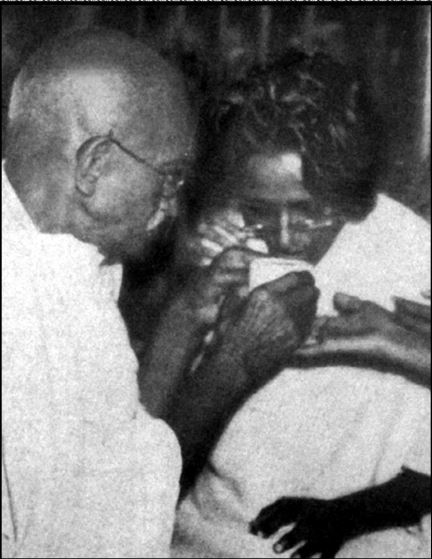
She decided to join Sevagram Ashram, and went there in 1931. She joined Ashram and followed the strict principles of the Ashram. With her selfless service she became very close to Gandhi couple.
They considered Amatus Salam as their beloved daughter. During the Indian National Movement, she went to jail along with other women in 1932 despite her illness with the permission of Gandhi.
After being released from Jail, she reached Sevagram and took over the responsibilities as Personal Assistant of Gandhi. She said that besides achieving independence, harmony between the Hindus and Muslims, Welfare of the Harijans and Women were her life ambitions. When communal riots erupted, she toured North-West Frontier, Sindh and Noukhali areas as an ambassador of Gandhi.
She held Satyagraha for 20 days to normalize the situation in those areas. After Independence, she rededicated herself to the Public Service. She published an Urdu Magazine called ‘Hindustan’ to promote national integration and communal harmony. When Khan Abdul Gaffar Khan toured in India in 1961, she travelled with him as his personal assistant. When India was at war with
China in 1962 and with Pakistan in 1965, she took all the pains in reaching the mountains or war area along with her adopted son Sunil Kumar to encourage our soldiers and to serve them. Bibi Amatus Salam, who spent all her life following the Gandhian ideology, breathed her last on 29 October, 1985.
HAJARA BEGUM (1910-2003)
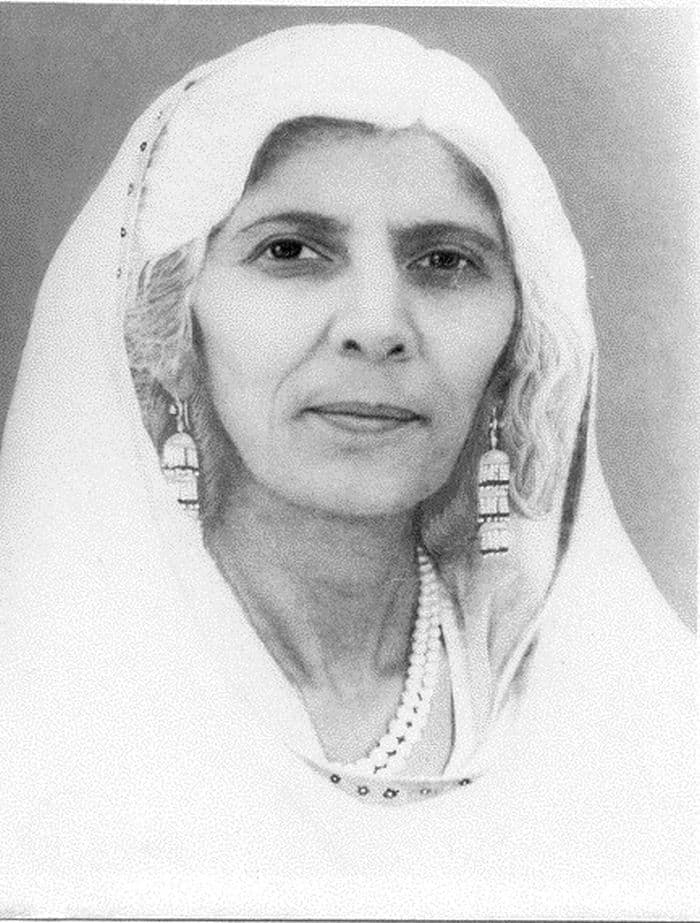
Hajara Begum, who fought against the British to liberate the Nation and worked for the welfare of the toiling masses of the country, was born on 22 December, 1910 at Saharanpur in Uttar Pradesh. She came to know about the sacrifices of the freedom fighters who were fighting against the British from her father, who was a police officer.
After the failure of her marriage, she went to London to pursue her higher education, where she got acquainted with the anti-British forces. This led her to decide to fight against the British Imperialist forces to liberate the nation. She had to face the anger of the British Government as she was criticizing their acts in several International fora.
She returned to India and joined as a lecturer in the Karamat Hussain women’s College at Lucknow in 1935.
She also worked along with famous poet Sajjad Zahir in the formation of All India Progressive Writers’ Association.
She got married to a nationalist leader Dr. Zainul Abedeen Ahmed in 1935 and in the same year both of them took membership in the Indian National Congress. Since the police were after them for their anti-British activities, they resigned their jobs and dedicated themselves totally to the Indian National Movement.
While participating in the activities of the Indian National Congress, Hajara Begum also campaigned for the Communist Party without the knowledge of the Police. She actively took part in the election campaign in those days, and as a result of this a number of Congress leaders could get elected. She attended a secret political workshop at Kotthapatnam in Andhra Pradesh in 1937.
She spoke on different subjects in the workshop as a lecturer. Hajara Begum was against the gender bias since her younger age. She fought against all types of inequalities successfully. She left the Indian National Congress in 1940 along with her husband. Since then, she played a vital role in organizing the unorganized labour sector.
She became very popular as ‘Hajara Aapa’ in the circles of toiling people and women. The Soviet Union honoured her with ‘Supreme Soviet Jubilee Award’ in 1960 in recognition of her work for the downtrodden people on the eve of the birth centenary of Lenin. Hajara Begum, who spent her entire life in the service of the country, breathed her last on 20 January, 2003.
Syed Naseer Ahamed can be contacted at Phone: +91 94402 41727
source: http://www.siasat.com / The Siasat Daily / Home> Featured News / by Nihad Ahmed / Input by Syed Naseer Ahmed / August 15th, 2020
Jamia Millia Islam faculty member, Dr. Shama Parveen, to receive prestigious Sayeeda Begum Women Scientist Prize 2018 to be presented by Hon’ble Vice President of India.
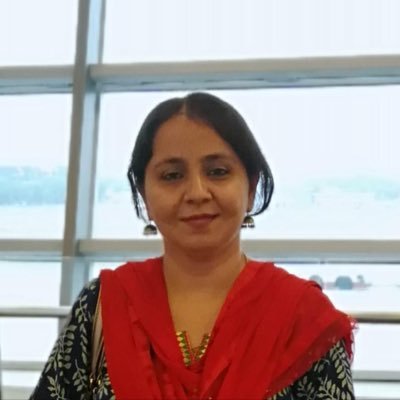
Dr. Shama Parveen, Assistant Professor at the Centre for Interdisciplinary Research in Basic Sciences, Jamia Millia Islamia (JMI) has been selected for the prestigious “Sayeeda Begum Women Scientist Prize 2018”, instituted by Jamia Hamdard (University).
pix: @ Twitter
Dr. Parveen is actively involved in research in the area of Molecular Biology of human viruses and focuses on Dengue, Chikungunya, Zika and respiratory viruses (human metapneumovirus, influenza and respiratory syncytial virus). Her research articles published in journals of international repute are being well cited.
The award is given annually in the memory of Late Mrs. Sayeeda Begum, wife of Late Hakeem Abdul Hameed, founder of Jamia Hamdard. The award aims at recognizing the academic excellence of women scientists working at any minority institution of the country in basic and applied research in the areas of biosciences, biotechnology, biomedical, pharmaceutical and environmental sciences. Scientific contributions of the candidate during last 5 years are evaluated for the award. The award carries a citation and prize money.
The award was announced on 14th September 2018 at the Founder’s Day of the Jamia Hamdard University and it will be presented to Dr. Shama Parveen during the forthcoming Convocation of the University on 23rd October 2018 by the Chief Guest, Hon’ble Vice President of India. (PRO, JMI)
source: http://www.milligazette.com / The Milli Gazette / Home> News> Community News / The Milli Gazette Online (headline edited)/ by PRO, JMI / September 21st, 2018
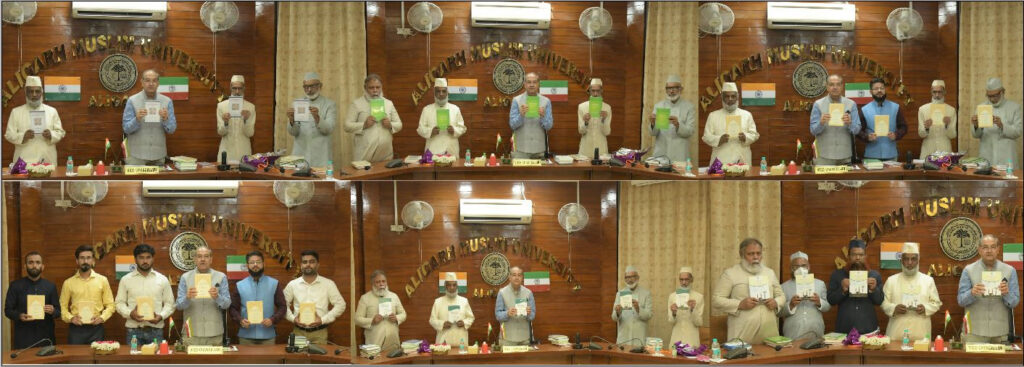
Eight books published by the K A Nizami Centre for Quranic Studies, Aligarh Muslim University (AMU) addressing key themes on the history of South Asian Muslims, diverse responses to the scholarly contributions and rationalist traditions of Islamic scholarship were released today at the Vice Chancellor’s Office.
They are ‘Contemporary Islamic Scholarship in South Asia: An Assessment’, ‘Humanness of Prophets: The Quranic Prophetology’ and ‘Contribution of Dar-ul-Uloom Deoband to Tafasir’ by Dr Abdul Kader Choughley; ‘Dil Jo tha Zulmat Kadah, Ma’ah-e-Munawwar Hogaya’ by Dr Mohammad Haris Mansoor; ‘Qurani Ulum ka Irtiqa Ahd-i-Islami ke Hindustan Mein’ by Prof Zafarul Islam; ‘How to Promote the Study of Quran among Women’, edited by Dr Nazeer Ahmad Ab. Majeed and Dr Arshad Iqbal; ‘Tarjumani Rahmani’ by Prof A R Kidwai and ‘Allah ki Kitab ki Paanch Mangay’ by Prof Fazlur Rahman Gunnouri.
“These books will answer some of the most frequently asked questions about traditions in Islamic faith, offer a new understanding on the works of Islamic scholars, explore key Islamic events and provide an understanding of important traditions in Islamic philosophy and the intellectual movement that emerged from South Asian Islam”, said AMU Vice Chancellor, Prof Tariq Mansoor while releasing the books.
Prof A R Kidwai (Honorary Director, K A Nizami Centre for Quranic Studies) pointed out: “The K A Nizami Centre has published over 80 titles on Quran-related scholarship since 2013. Publications of the Centre represent contemporary literature on furthering Quranic understanding and research in Hindi, English and Urdu by authors from various disciplines including translations from various languages”.
source: http://www.amu.ac.in / Aligarh Muslim University / Home / by Public Relations Department / Aligarh, July 13th, 2022
Edavarakad Village (Vypin Island) Ernakulam District, KERALA :
Photo Courtesy: Muhammed Shahabas
Muslims of Edavanakad in Vypin island of Kerala have set a vibrant example of empowerment by building community institutions that provide education, and interest-free loans to local farmers.
Kerala :
Edavanakad is a village in Vypin Island of Ernakulam district in Kerala. Surrounded by the Arabian sea and Vembanadu lake, the main livelihoods of the people here is fishing and agriculture. Muslims, Ezhavas, Arayas, and Latin Christians constitute the major communities of the place. Traditionally engaged in fish trade and agriculture, Muslims have set examples of community empowerment through various institutions.
Empowerment through education Hidayathul Islam primary school was run by one Vadakkeveettil Muhammed Haji, where children are taught modern education and Islamic principles.
Currently, a school and a madrasa are being run from the village. “After their primary education, teenagers had to go to the outskirts of the town to obtain higher education. It was far for them. This became a big concern for the elders in the town, and they decided to do something about it,” said Mahin PM, a local activist.
Irshadul Muslimeen Sabha [IMS] was established in 1850 to administer the madrasa. Later in 1922, Hidayathul Islam Primary School also came under IMS. Thus, the school and madrasa system came under one body and devised a comprehensive syllabus to provide religious and secular education. In 1979 the school got the status of a high school, and by 2000, it became Hidayathul Islam Higher Secondary School [HIHSS].
Mahin, the editor of the school’s jubilee souvenir, believes HIHSS sets the best example in the state for an effective model of success in public education. “Students from different backward communities study here. The school has continuously maintained a 100% success rate in the examinations.” Mahin said.
He said that IMS was active during relief activities after the 2004 tsunami that hit the coastal community. “Muslim traders came forward to open the gates of institutions and competed to help the affected as much as possible. Those were days that reflected the place’s fraternity,” he recalled.
Effective redistribution of wealth Zakat, a form of almsgiving in Islam, is considered obligatory for Muslims. Muslims in Edavanakad used to give the zakat in a dispersed manner. Many didn’t participate in it because of a lack of awareness of its importance. “It was Ali Kunju Mash who changed this situation by establishing an institution to distribute the zakat,” said Mahin.
Kunju, who came to Hidayathul Islam school as its headmaster, wanted to structurize the zakat distribution system. With the help of two other people KM Abdulla and PA Muhammed, he founded Al-lajnathul Islamiyathu Li-baithulmaal [AIL] in 1983.
AIL is the state’s first centralized community wealth redistribution system. “After Ramadan, we open applications to provide support for self-employment using the remaining zakat share. We also offer monthly scholarships to students and a weekly ration for widows,” said a committee member.
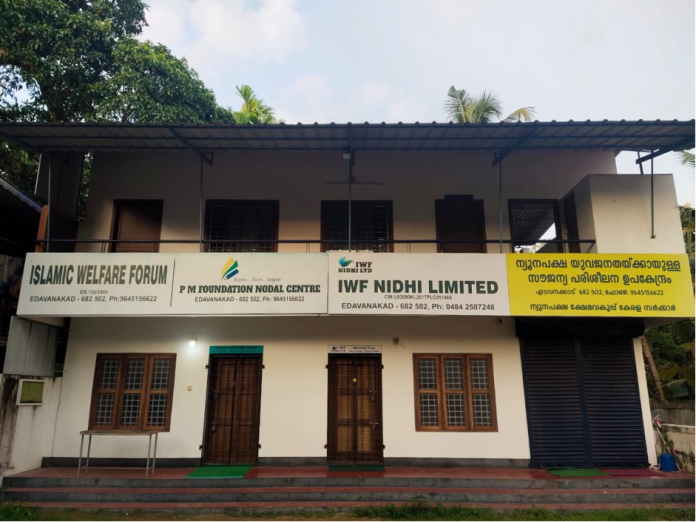
Towards a moral economy The people of Edavakannad, primarily farmers and fishers, depended on loans with heavy interest rates from moneylenders. The fluctuations in produce resulted in them falling into a debt trap. Understanding the pressing need to provide an alternative, five youths Abdussamad MK, Mahin PM, Aboobacker, Illyas, Rasheed, and Umar Khayyoom decided to form an interest-free credit society. In 1999, they invited people from the community to a general body meeting and presented their Islamic microfinance scheme.
Abdussamad, one of the founders, narrated how they convinced people to pool one rupee daily. “In this way, Islamic Welfare Fund got formed, and we approved its first loan of 3000 rupees to buy a boat and fishing net,” he said.
“We don’t work like ordinary credit societies. We form our working capital by pooling small amounts from every member. There will be a collective responsibility, and it becomes everyone’s duty to ensure the repayment of loans,” Abdussamad said.
The financing schemes provided by IWF do not promote consumerism in any way. They approve loans to the needy only after conducting a detailed investigation into the case, and one of the members will have to stand as a guarantee.
IWF’s activities have grown into many areas now. “Our headquarters facilitates an entrance coaching centre for applicants from minority communities to public services (PSC), and the nodal centre of the PM Foundation provides necessary information regarding educational scholarships,” one of the board members said.
Basil Islam is an independent journalist and researcher based in South India. He tweets at @baasiie
source: http://www.twocircles.net / TwoCircles.net / Home> Lead Story / by Basil Islam, TwoCircles.net / July 14th, 2022
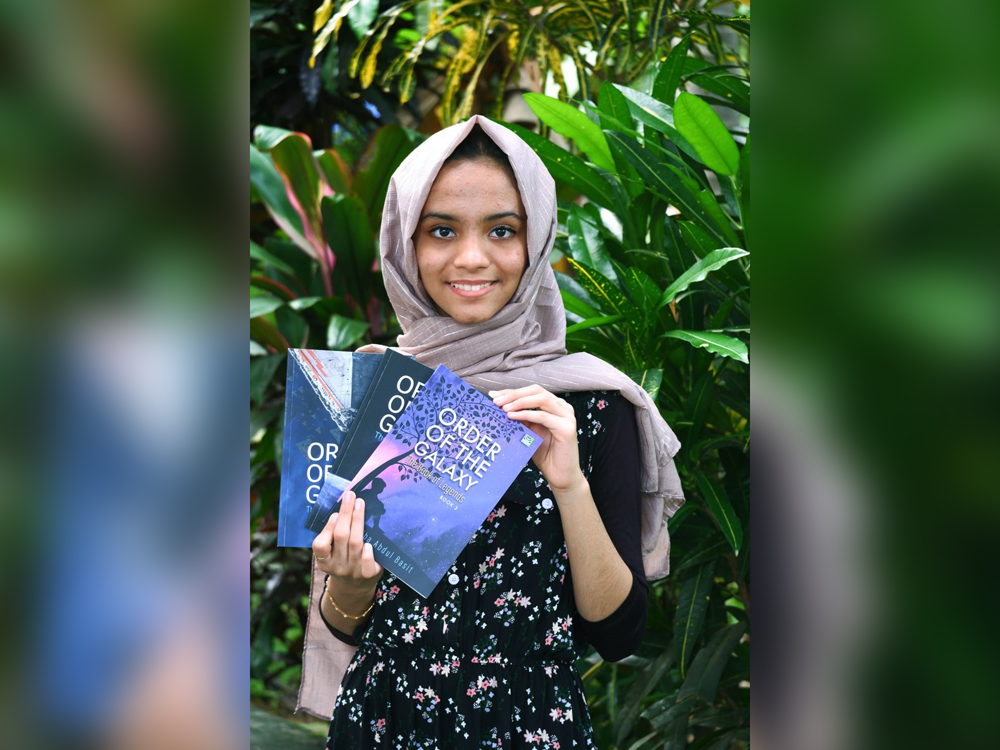
A Qatar-based 11-year-old student Laiba Abdul Basit has won the Guinness World Records as the youngest female person to publish a book series.
Laiba, hailing from the southern Indian state of Kerala, has accomplished this feat after her second book was published on August 29, 2021, while she was 10 years and 164 days old.
Laiba Abdul Basit surpassed the record of Ritaj Hussain Alhazmi of Saudi Arabia, who penned three novels before the age of 12 years 295 days.
Laiba published a three-book series called “Order of the Galaxy”, a fantasy story related to children’s fiction. The first book in this series titled “The War for The Stolen Boy” was published by Amazon and later by Lulu Online. The second book “The Snowflake of Life” was published by the Rome-based Tawasul International, while India-based Lipi Publications brought out the last book in the series, “The Book of Legends”. The second edition of her first and second books was also published by Lipi Publications.
A sixth grade student at the Olive International School, Doha, Laiba has been showing interest in reading and writing since the very young age. She started to write small stories and phrases on pieces of papers and used glue on walls of her house.
An ardent reader of fiction, science, religion, and biographies of prominent personalities, Laiba’s favourite authors include Enid Blyton, J K Rowling, Ann Frank, and Roald Dahl. Laiba inherited her passion for reading from her grandfathers, KM Abdur Raheem and Mohammed Parakkadavu, who were cultural and social activists in GCC. Support from her father Abdul Basit and mother Thasneem Mohammed has encouraged Laiba’s literary skills.
source: http://www.thepeninsulaqatar.com / The Peninsula Qatar /Home> General / July16th, 2022
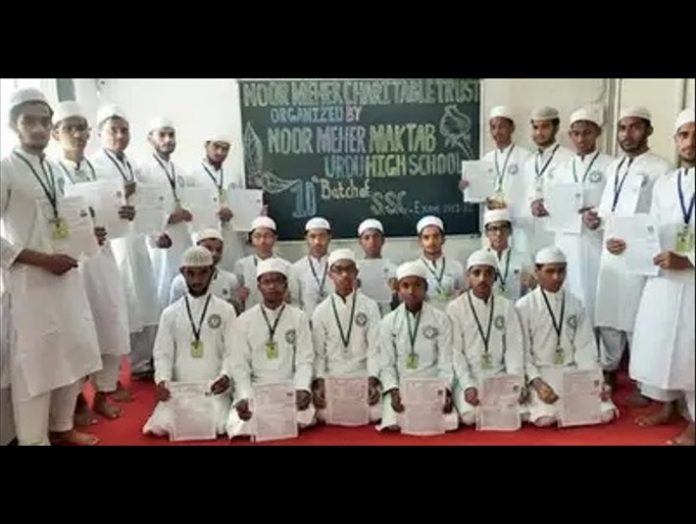
As per TOI, so far 97 Hafiz-e-Quran students have cleared the Maharashtra state board’s SSC exams. | Picture Source: Times of India
An Islamic seminary in the Malad area of Mumbai has a unique achievement with 22 of its Hafiz-e-Quran (Quran memorizers) clearing the state board’s SSC exams.
New Delhi:
Students from an Islamic seminary in Mumbai, Maharashtra Jamia Tajveedul Quran Madrasa and its sister institution, Noor Meher Urdu School have achieved success by clearing the Maharashtra board’s SSC examinations. All 22 huffaz (memorizers of the Quran) from the madrasa have successfully cleared the SSC this year. The results were announced on Friday, June 24.
Syed Ali converted his Malad bungalow in North Mumbai into a seminary in 2000. It began as an ordinary madrasa for learning and memorizing the Quran. In the last decade, Ali said he felt the need to include “formal education as part of the curriculum.”
“Prophet Muhammed’s saying on acquiring knowledge which asks us to seek knowledge even if one has to go to China inspired me,” Ali said in an interview with the Times of India.
The seminary collaborated with Noor Meher Urdu school for its students to receive formal education. At present, 13 teachers are leading the hifz course (Quran memorization) at the madrasa, and Noor Meher school has nine teachers to provide modern education to them,
Abu Talha Ansari, a hafiz of the Quran, scored 83.4% in SSC and plans to pursue engineering. “Due to covid restrictions, our studies weakened, and madrassa gave us extra classes to cover the portions. It helped us achieve this position,” he told Mumbai Times while acknowledging the madrassa’s efforts.
Talha said that students who study in Islamic seminaries usually lag in other streams of knowledge, and students who go for secular education fail to comply with their religious learnings. “This is why I decided to take up this effort to study both, and I believe this is the way,” Talha explained in an interview with Mumbai Times.
“Most madrassas are reluctant to introduce modern subjects like science and maths in their curricula. However, the achievement of this madrasa shows a way forward. This can be replicated at many madrasas in the country. Education of religious subjects is not disturbed at all while modern subjects are taught,” career counsellor Shaikh Akhlaq Ahmed explained to the Times of India . He had initially helped the founder with guidance and counselling of students.
Another hafiz who scored 80.18% wishes to continue his studies in software engineering. “I feel that the Muslim community is lagging in that field. I wanted to change that,” he told Mumbai Times.
He said that it was hard for them to manage the time between Islamic and modern education. “But we were able to manage it somehow,” he told Mumbai Times.
“Most huffaz here are orphans and stay in our hostel to continue their studies. So it is a residential academy,” a teacher of the madrasa said to Zee News.
Shazia, principal of Noor Meher High School, is thrilled with this achievement as it is scarce to see such a coming together of both kinds of education. So far, her institution has aided 97 huffaz from the madrasa to clear SSC examinations. “Lockdown period was crucial for the students, and we couldn’t afford to miss them. I want to thank the head teachers and students of the madrasa who put in the effort to achieve good results. Praise to Allah,” Shazia told Mumbai Times.
Basil Islam is an independent journalist and researcher based in South India. He tweets at@baasiie
source: http://www.twocircles.net / TwoCircles.net / Home> Lead Story / by Basil Islam, TwoCircles.net / July 01st, 2022
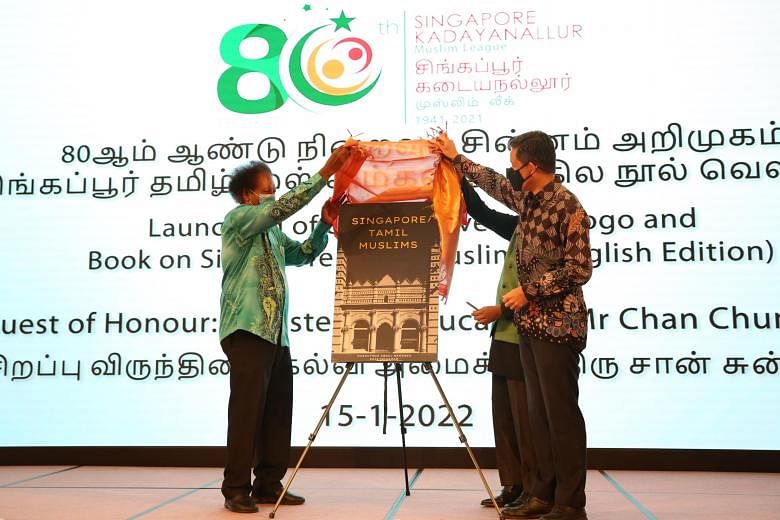
(From left) Co-authors A R Mashuthoo and Raja Mohd with Education Minister Chan Chun Sing at the launch of the English edition of Singapore Tamil Muslims. PHOTO: TAMIL MURASU
Singapore :
The Tamil Muslim community in Singapore has contributed to the Republic’s multiracial and religious harmony, with collective efforts that have strengthened the nation’s social compact, said Education Minister Chan Chun Sing on Saturday (Jan 15).
In 1946, for example, members of the community dedicated a portion of their salaries to help the Singapore Kadayanallur Muslim League (SKML) start the Umar Pulavar Tamil School, the first Tamil-medium secondary school in South-east Asia at the time.
The school played an important role in advancing and shaping Tamil language education here, and many graduates have taken up the baton and become Tamil teachers today, Mr Chan said.
“While the school was closed 40 years ago, its name lives on in today’s Umar Pulavar Tamil Language Centre, which continues the important mission of transmitting Tamil language and culture to the next generation.”
The centre is in Beatty Road.
Mr Chan was speaking at the launch of the English edition of a book titled Singapore Tamil Muslims.
The event was held in conjunction with SKML’s 80th anniversary celebrations in Chui Huay Lim Club in Newton.
The book, which looks to provide a better understanding of the Tamil Muslim community in Singapore, is supported by organisations including the National Heritage Board and Islamic Religious Council of Singapore.
It has forewords by President Halimah Yacob and former senior minister of state Zainul Abidin Rasheed.
The English edition of the book, which was first published in Tamil in 2015, is authored by SKML president Raja Mohamad and deputy president A. R. Mashuthoo.
In his speech, Mr Chan highlighted how the spirit of grit, resilience and service to community has shone brightly among Singapore’s Tamil Muslims.
Many have become successful professionals and leaders of the community, he said.
“But they have all imbibed the spirit of service, and continued to pay it forward to the community and nation.
“Importantly, these collective efforts by your community have also strengthened Singapore’s social compact – where we help the young to have a good start in life, give more to those with less, and enable our people to bounce back from adversity.”
The minister expressed his hope that the book can serve as a reminder, not just for the Tamil Muslim community but also to a broader audience, that Singaporeans must honour and protect what they have, and inspire the next generation to continue paying it forward.
The book can be purchased by contacting SKML, and funds raised will be used for its work to support the disabled community and education needs of children from low-income families.
source:http://www.straitstimes.com / The Straits Times / Home / by Choo Yun Ting / Jan 15th, 2022
Navabharat Night High School, considered the first night school in the country, has been serving society for last 8 decades.
Mangaluru :
As a high school boy, Khalid Mohammed used to often find illiterate people knocking on his doors to read letters for them. The visitors were mostly elderly and disadvantaged whose children had migrated from Mangaluru to Mumbai and elsewhere in search of greener pastures.
It was then that the young Khalid, motivated by Mahatma Gandhi’s call for adult education movement, decided to teach such people how to read and write. Mohammed, a tin maker in the neighbourhood who was also not educated, was generous enough to spare his courtyard for a few hours each day for the noble cause.
Five adults — Khader, Krishna, Kusappa, Rahiman and Mohammed himself — were the first students when the night school came into existence on March 15, 1943.
Buoyed by the good response, the next year Khalid started primary classes in a building opposite KRK Shet Building on BEM High School Road in Mangaluru and named it Noubahar Night School. Gradually, middle and high school classes were added. Later, during its golden jubilee celebration in 1992, the school managed to get its own three-storeyed building on Car Street.
Called Navabharat Night High School now, it is run by the Navabharat Education Society. Said to be the first night school in the country and the only one still functioning, it is celebrating 80 years of its existence this year. Khalid, who was an English teacher at Badriya High School for a while, later became the headmaster of the night school and continued in the same post till he passed away a few years ago. The school, which does not charge any fee from students, has seen a lot of transformation over the last eight decades.
During its initial years, the school got a stream of adults who did not know how to read or write. Later it started getting adults who had dropped out of schools due to financial constraints but wanted to complete their schooling to get a job or promotion. Those who study here write the SSLC examination by enrolling as private candidates.
The institution now has over 60 students, who are mostly children of labourers. Almost all these kids go to day schools, but also come to the night school as their parents are away at work in the evenings.
Dr Vaman Shenoy, president of the Navabharat Education Society, beams with pride when he says many students from here have gone on to become doctors, engineers, advocates and also are employed abroad. There was a time when the school used to brim with 250-300 students, who used to stand outside the doors and windows of classrooms to listen to lectures. Bicycles used to be parked on both sides of the narrow road in front of the school building in Bunder.
The school has not received any government grant since its inception and runs only on donations. “Our founder Khalid Mohammed’s son Dr AR Nazeer who is a professor at a university in Saudi Arabia, Dr Vinay Hegde of Nitte, Kind Foundation, Canara Foundation and others contribute to the cause,” said M Ramachandra, secretary of the Society. Ramachandra himself was a student at the school. He later became its manager before he became secretary. “I dropped out of school after Class 8 because of poverty. After a gap of five years, I joined the night school,” he says.
The free school has six teachers and two office staff. Dinesh Kumar, a clerk at Canara College, has been teaching at the night school for the last 25 years. “I wanted to contribute something for society and that is the reason I am here,” he says. He teaches at the school from 6 am to 8.30 pm. Varkady Ravi Alevoorya, the present headmaster, says they have not kept the count of the total number of students educated in the school, but it could be in thousands.
“The student strength has dwindled over the last few years as the government now lays a lot of stress on education and makes regular follow-ups on absentee students to bring them back. But we still keep our doors open as there may be people who still need our help,” he adds. The school has a computer centre and also teaches Yakshagana. Dr AR Naseer says the school belongs to the public and they need to take it forward.
“As a teenager, my father was drawn to Mahatma Gandhi’s adult education movement which led him to start this school. It was the first home for my father and he used to spend most of his time here,” he recalls.
source: http://www.newindianexpress.com / The New Indian Express / Home> Good News / by Vincent D’Souza, Express News Service / June 26th, 2022
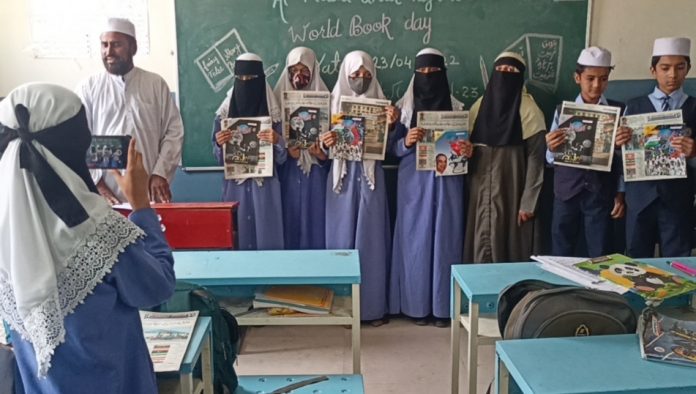
On World Book Day, the Maryam Mirza Mohilla (neighbourhood) library movement commemorated the occasion with zeal. Several book reading and distribution activities were held in city mosques and Urdu schools under the auspices of the Read & Lead Foundation.
The Foundation’s President, Mirza Abdul Qayyum Nadvi, announced the commencement of a “Book at Home, Book at Every Home” campaign at the event. He stated that the book-reading awareness campaign is only getting started because today’s young generation is losing interest in reading due to the introduction of new electronic gadgets, particularly smart phones
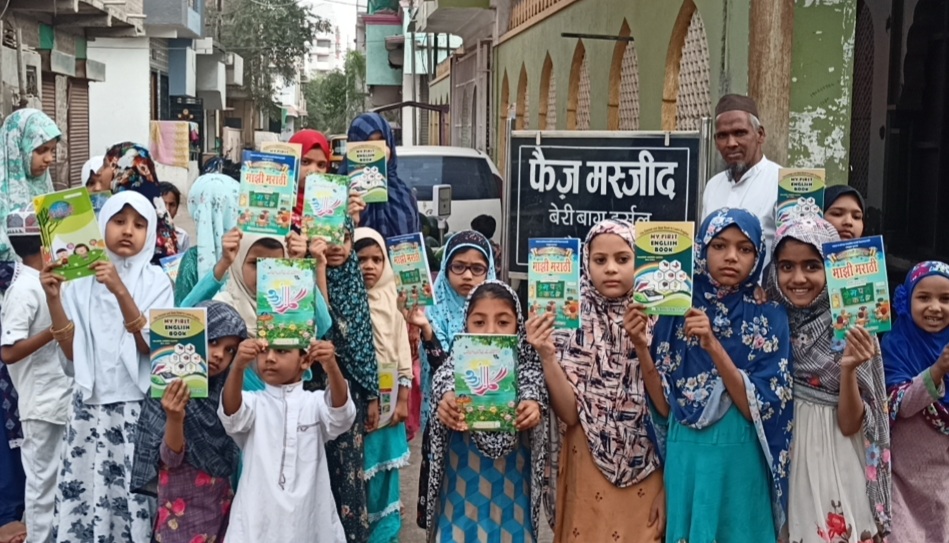
Urdu, Marathi, English books were distributed to the children members of Maulana Syed Abul Hassan Ali Nadvi Mohalla Library situated in Masjid Faiz Beri Bagh, Harsol area of Aurangabad.
It should be noted that for the past year in Aurangabad, 28 libraries have been working under the aegis of the Read & Lead Foundation in various sections of the city, slum mosques, Urdu schools, and neighbourhoods. More than 5,000 children are connected to these libraries.
It’s worth noting that eleven (11) of the 28 libraries are dedicated to children are located in mosques. Masjid Shadab Hina Nagar, Ahmadi Masjid, Shatabdi Nagar, Maulana Hasrat Mohani Mohalla Library, Misrarwadi, Qazi Iqbaluddin Mohalla Library, Bismillah Masjid, Madrasa Falah Darin Ghulam Mustafa, Sher Khan Pathan Mitra Mandal Library, Narey Village Mohalla Library and other places. In addition to this, Al-Huda Urdu High School Baijipura, Dr. APJ Abdul Kalam Mohalla Library Baijipura and other libraries celebrated World Book Day.
Maulana Sheikh Yusuf Nadvi, Imam of Masjid Faiz, where the Maulana Syed Abul Hassan Ali Nadvi Mohalla Library is located, stated that he would do everything in his power to ensure that the library benefits the children and women of the area as much as possible. After Friday prayers, he also declared the start of the door-to-door book drive.
Sheikh Nargis Fatima, Headmistress of Al-Huda Urdu High School, stated that her school’s students and instructors would be more active in the campaign and would offer all available assistance. Farhat Jahan, a school teacher, and other teachers took part in the presentation and offered their opinions..
Children’s monthly periodicals such as “Bachu ki Dunia,” “Umang,” “Taleemi inquilab,” “Majhi Marathi,” “Meri English Kitab,”,” “Gulzar Urdu,” and other books, magazines, and journals were distributed to members of the aforementioned libraries.
source: http://www.muslimmirror.com / Muslim Mirror / Home> Positive Story / by Special Correspondent / April 26th, 2022