The Maulavi of Faizabad managed to keep the city free from British rule for almost a year until his death at the hands of British agents on June 5, 1858.
Faizabad (Ayodhya District), UTTAR PRADESH :
The Relief of Lucknow, 1857, by Thomas Jon Barker. Photo: Wikimedia Commons
Ahmadullah Shah, born in 1787, more famously known as Maulavi of Faizabad, was one of the leading figures of the great Indian revolt of 1857. In the Awadh region, Maulavi Ahmadullah Shah was known as the ‘Lighthouse of Rebellion’. Hailing from a noble warrior family of Awadh in Faizabad, he grew up to be a political leader committed to armed revolutionary insurrection against British rule in India.
During the freedom struggle, Maulavi made Faizabad the centre and launched revolts in all of the Awadh region. He made the local mosque Masjid Sarai located in Chowk area of Faizabad his headquarters. As he liberated Faizabad and the larger part of Awadh region, he used the premises of this mosque to hold meetings with rebellion leaders.
Maulavi Ahmadullah Shah kept Faizabad free from British rule for almost one year, until his death at the hands of British agents on June 5, 1858.
According to researcher and historian Ram Shankar Tripathi, “With being a practicing Muslim, he was also the epitome of religious unity and Ganga-Jamuna culture of Faizabad. In the revolt of 1857, royalties like Nana Sahib of Kanpur, Kunwar Singh of Arrah fought alongside Maulavi Ahmadullah Shah. Maulavi’s 22nd Infantry Regiment was commanded by Subedar Ghamandi Singh and Subedar Umrao Singh in the famous Battle of Chinhat.”
Tripathi narrates, “Maulavi wanted Raja Jagannath Singh of Pawayan, a zamindar in district Shahjahanpur of Uttar Pradesh, to join the anti-colonial war. On June 5, 1858, with prior appointment, he went to meet Raja Jagannath Singh in his fortress-like house. On arriving at the gate, he was greeted with a volley of gunshots from Jagannath Singh’s brother and retainers. The Maulavi breathed his last on the spot.”
“The martyr’s head was severed and carried in a piece of cloth with blood still oozing from it to the district magistrate, Shahjahanpur, by the zamindar. The district magistrate was at lunch with his friends. But the depraved feudal lord rushed in and presented the severed head of the hero on the dining table of the district magistrate. With a reward of Rs 50,000, he returned home, flying atop the flag of loyalty.”
According to another historian Roshan Taqui, “Maulavi use to bring out revolutionary pamphlets mobilising the masses to do ‘Jihad’ against the British. Maulavi was arrested by the British in January 1857 and was held captive in Faizabad, but three months before the revolt broke out in Lucknow on June 3, he escaped and launched a war against the British in Awadh region including Faizabad, Lucknow and Shahjahanpur.”
“During the revolt, the revolutionaries appointed him as chief of 22nd Infantry Regiment that fought the famous battle of Chinhat in Ismailganj of Lucknow on June 30, 1857, against British forces led by Henry Lawrence. Britishers were badly defeated in this war,” informed Roshan Taqui.
British officers like George Bruce Malleson and Thomas Seaton have made mentions about courage, valour, personal and organisational capabilities of Maulavi Ahmadullah Shah. Malleson has repeatedly mentioned Ahmadullah in the History of Indian Mutiny, a book written in six volumes covering the revolt of 1857.
source: http://www.thewire.in / The Wire / Home> History / by Arshad Afzal Khan / June 05th, 2018
Watch Video: Dr Abidullah Ghazi laid to rest in Chicago
Ambehta (Sahranpur District),(formerly United Provinces) UTTAR PRADESH / INDIA, Chicago, U.S.A. :
Dr Abidullah Ghazi’s wife Dr Tasneem and others at the funeral ceremony held in Chicago on Monday afternoon.
The 85-year-old founder of Iqra International Educational Foundation was ailing since last few years and died on Sunday.
Chicago:
Dr Abidullah Ghazi – Scholar, Poet, Author, Philosopher and Activist, was laid to rest in the afternoon Monday April 12, 2021 in Chicago.
The 85-year-old founder of Iqra International Educational Foundation was ailing since last few years and under medication at a Chicago hospital-cum-rehab. He passed away in the wee hours of Sunday April 12, 2021.
He is survived by his wife, three sons and two daughters.
Immediate family members, including his wife Dr Tasneema Ghazi and children, were present when he was buried at Chicago cemetery on Monday.
The funeral that lasted for more than one and half hours was limited only to the immediate family members due to the Coronavirus pandemic.
Dr Abidullah Ghazi was born to Maulana Hamid Al Ansari – freedom fighter and a renowned journalist of his time, on July 6, 1936 in India. His mother had died when he was still in her early age. Under the guardianship of his grandmother, he was admitted in Jamia Millia at the age of 08.
Later he completed M A (Political Science) and BTh from Aligarh Muslim University (AMU). He went on to do M A in Economics from the London School of Economics and later wrote thesis on the revivalist views of Raja Rammohan Roy for his Ph.D. at the Ivy League, Harvard University.
Dr Ghazi also published, ‘Zikr-e-Saman Izaraan’, an anthology of Urdu poems.
After completing his education he first migrated to the United Kingdom and then to the United States where he stayed till his last breath.
Dr. Ghazi, who had also done Ph.D. in comparative religions from Harvard University, was a fixture in America’s Muslim community and a pioneer in providing quality Islamic education to our children.
Dr Ghazi was the author and editor of over 150 text and support books on Islamic syllabus designed with his wife Dr Tasneema Ghazi especially for Muslim children living in Western countries or studying in English-medium schools.
He had established Iqra Foundation in Mumbai which is run and taken care of by his younger brother Salman Ghazi and his wife Uzma Nahid.
Dr Abidullah Ghazi was named by the Royal Islamic Strategic Studies Centre as being among the 500 Most Influential Muslims in the World. Besides, Dr. Ghazi was also the recipient of numerous awards notably the Citizen’s Award, the Ronald Regan Award, Nishan-e-Imtiaz (Order of Excellence) from Pakistan, a Certificate of Welcome from the City of Los Angeles many others.
Condolences pour in
Condolences are pouring in from different circles and by prominent people who termed the demise of Dr Abidullah Ghazi a great loss not just for the Muslims in the United States but also for those living in other parts of the world, especially India.
“Dr Ghazi, a prominent alumnus, enriched cerebral legacy of Aligarh Movement. He was among a bunch of highly motivated, adventurous persons who broke barriers and went on to distinguish themselves in their chosen fields,” AMU Vice Chancellor, Prof Tariq Mansoor said.
Extending condolences to the bereaved family of the deceased, the Vice Chancellor said:
“I shared a warm personal rapport with Dr Ghazi. The AMU fraternity will always carry Dr Ghazi’s memory in hearts.”
In his condolence message, renowned literary personality Hashmat Sohail said:
“It’s hard to believe Dr. Ghazi is no longer with us. I spent many years together. He will be remembered forever in the worldwide literary community.”
Ali Khan, President and Founder of Urdu Semaj Chicago, in his condolence message said:
“He was a legend in our community and a very genuine, Urdu lover People from Chicago will especially miss the late Dr. Abid Ghazi This is a total loss for us. He was devoted and inspirational leader for the whole community.”
http://www.iqra.org
source: http://www.ummid.com / Ummid.com / Home> India>Life & Style / by ummid.com news network / April 13th, 2021
Well known educationist, intellectual, thinker and author of several books, Professor Anees Chishti has passed away in Pune at the age of 79. He was unsung hero of the community who made tremendous contributions in the progress of the community in the country. He will be also remembered for his dawha works as he translated Islamic literature into local Marathi language. He was a close confidant of late Maulana Abul al Hasan Nadvi who launched All India Tahreek e payam e insaaniyat with an aim to dispel misunderstandings about Islam. Chisty was one the pillars of this movement.
According to Anees Chishti’s family, he first suffered a heart attack and then later normal infected by COVID-19. During his treatment at Azam campus Unani hospital Pune He took his last breath and was buried on Monday, April 5, after Isha prayers at Muhammad Jamia Hussaini Masjid in the city.
As news of his demise spread, condolence messages flooded on social media. Many important personalities expressed their grief and sorrow who acknowledged the scholarly and social services of Anees Chishti.
Chisti was born on February 6, 1943 in Pune. His father Shakeel Ahmad was a freedom fighter. He was educated in Pune and Sholapur. Pune is considered the brain of Brahminical forces.
Expressing condolences on the demise of Anish Chishti, PA Inamdar administrator of Azam Campus Pune, said his demise is a great loss to the nation. He said that Anees Chishti was recognized as an authority in Islamic studies and science and literature.
Munawar Pir Bhai from Pune termed the demise of Anis Chishti as a great loss of the society and said that he was a very capable and intelligent person. Traveled to many countries, he had a keen eye on Islam and Allama iqbal. And he described the death of Anis Chishti as his personal loss.
Talha, nephew of Anees Chishti, said that after the death of Maulana Wali Rahmani, he had gone to Lucknow to meet Maulana Rabi Hasni Nadvi.
After returning from the trip, his health deteriorated and on April 5, at around 5.30 pm, he passed away. The personality of Anees Chishti was a person with various attributes. He was a member of the Majlis-e-Shura of Darul Uloom Nadwa tul Ulema, Lucknow and member of the, All India Muslim Personal Law Board.
He was very close to Maulana Syed Abul Hassan Ali Nadvi, a thinker of Islam, and he was the General Secretary of the All India Tahreek e payam e insaaniyat. The movement was launched in the backdrop of Babri masjid dispute which had been used by the communal forces to spread lies about Muslims and Islam in the country.
He was the author of many Urdu, Marathi and English books. His books have been translated into various languages. He was a connoisseur of calligraphy, a teacher of calligraphy, an Islamic scholar, and an educator. Apart from Urdu, many of his books have been published in Marathi.
Mirza Abdul Qayyum Nadvi, a bookseller and activist from Aurangabad, said that he had spoken to Anis Chishti two days before his death. More than 53 of his books have been published. Anis Chishti was fluent in many languages. These included Urdu, Marathi, Hindi, English, Arabic, Persian and other languages. He was a very good man, a man of knowledge, a good teacher, a good writer, a credible writer, an eloquent speaker, a guest lecturer on the panel of high-ranking training institutes. He has received numerous accolades for his books on education, and books on Muslim freedom fighters .and other books. In many countries, his Urdu and English language books are included in the Syllabus.
He trained soldiers at the Indian Institute of Education, College of Military Engineering Pune. He has delivered sermons and lectures on Islamic and scientific and literary topics in different parts of the country. He is survived by a daughter and four brothers. Arguably, his demise made the community further poorer as it was in the shocked after Muslim Personal Law Board General Secretary Maulana Mohammad Wali Rahmani in Patna just two days before.
source: http://www.muslimmirror.com / Muslim Mirror / Home> Indian Muslim / by Abdul Bari Masoud / April 07th, 2021
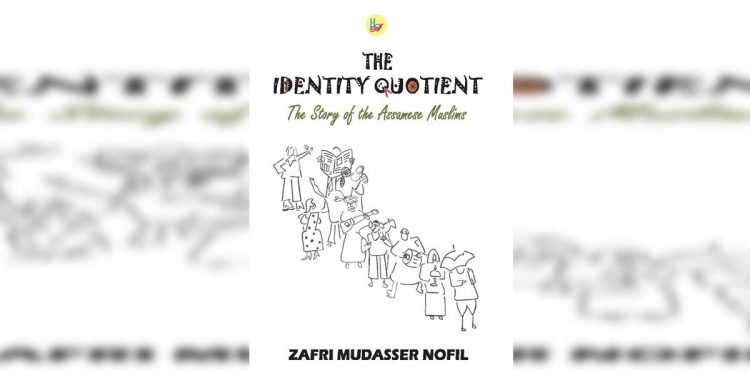
CM Sarbananda Sonowal calls Zafri Mudasser Nofil’s new book, The Identity Quotient: The Story of the Assamese Muslims, an informing and inspiring read as it significantly highlights the Assamese Muslims and their lineage to the medieval period when Muslim rulers and generals invaded the region
Assam epitome of Hindu-Muslim unity: CM Sonowal in foreword of Zafri’s new book(Twitter/zafrimn/sarbanandsonwal)
Assam has over the years set a perfect example of harmonious coexistence and is an “epitome of unity” between Hindus and Muslims, which is reflected in the Zikir devotional songs popularised by Muslim mystic Azan Pir and inspired by Vaishnavite saint Srimanta Sankaradeva, says Chief Minister Sarbananda Sonowal.
He makes these remarks in the foreword to a new book “The Identity Quotient: The Story of the Assamese Muslims” written by journalist Zafri Mudasser Nofil and brought out by Har-Anand Publications.
“Assam has over the years set a perfect example of harmonious coexistence of Hindus and Muslims. The state has been an epitome of Hindu-Muslim unity which becomes evident from the symbiosis of Hindu-Muslim friendship,” Sonowal says.
“The Zikir and Zari of Azan Pir inspired by Srimanta Sankaradeva essentially preach the secular message, the same way as to how Dr. Bhupen Hazarika’s songs reverberate the message of equality, peace and unity between religions and humanism,” he adds.
The Zikirs and Zaris are Muslim devotional songs in Assamese ascribed to Azan Pir who has become a spiritual icon of Assam exemplifying universal brotherhood. He was inspired by Srimanta Sankaradeva and was successful in building a bridge of unity.
The chief minister notes that the book significantly highlights the Assamese Muslims and their lineage to the medieval period when Muslim rulers and generals invaded the region. Nofil, himself an Assamese Muslim, covered Assam for ‘The Sentinel’ newspaper in Guwahati before moving to New Delhi where he is now working as a Senior News Editor for Press Trust of India (PTI) on its national desk. “I am happy with the book which encapsulates vignettes of the contributions of the Muslims of the state, their customs, traditions and their unique cuisines. With its uniqueness of being a narrative non-fiction with vivid quotes from historical texts, I am sure the book will be read and appreciated by all. I hope the book informs and inspires many,” Sonowal says.
In the book, Nofil traces the history of Muslims in Assam in the medieval era, their amalgamation with the locals and discusses their contribution to the state up to the present day, when talks of a controversial citizenship law and national register of citizens (NRC) have caused tension among the community “This book tells how Muslims of Assam are different from the rest of the country. They take pride in calling themselves Assamese first and never consider themselves to be lesser Assamese than Assamese Hindus,” Nofil writes. The book draws information from multitudes of credible historical documents and archives, interactions with litterateurs, scholars and artistes.
The contribution of Assamese Muslims has been multifaceted, diverse and immense. Be it politics, civil services, literature, art, education, law, sports, music, films and entertainment, they have excelled in every other field, Nofil says in the book.
It profiles several achievers, who have made a mark in their respective fields. They include former president Fakhruddin Ali Ahmed to actor Adil Hussain and classical singer Begum Parveen Sultana, to several people from the community who have many firsts to their names.
But of late, he says, the indigenous Muslims have been “suffering the ignominy” of being bracketed with illegal immigrants as ‘Miya’, an Urdu word meaning gentleman, which is, however, used in Assam for Bangladeshi-origin Muslims who mostly live in ‘char’ areas or floating river islands.
(This story has been published from a wire agency feed without modifications to the text. Only the headline has been changed.)
source: http://www.hindustantimes.com / Hindustan Times / Home> Lifestyle / by Press Trust of India / posted by Zafarshan Shiraz,New Delhi / December 14th, 2020
₹8 crore project for ‘one of its kind’ Azad Gallery will tell the story of revolutionaries in the Indian freedom movement.
From the spirit of the Ghadarites to the sacrifice of Durga ‘Bhabhi’, a section of historians and the political class feel that the contribution of revolutionaries to the Indian freedom movement has not been well-documented. In a bid to strike a balance, the Allahabad Museum is in the process of creating a “one of its kind” Azad Gallery, where the story of the revolutionary struggle of the Indian freedom movement would be told through artefacts and interactive displays.
Named after Chandra Shekhar Azad, who attained martyrdom at about 300 metres from the museum, the gallery is expected to be complete by July 23, 2021, the 115th birth anniversary of the revolutionary.
Backed by the Ministry of Culture and the National Council of Science Museums (NCSM), the infrastructure for the “multi-pronged project is being developed with a budget of around ₹8 crore in 7,500 sq. ft. of space where the revolutionary struggle will be specially depicted, starting with 1857’s First War of Independence to the Azad Hind Fauj,” said Sunil Gupta, Director in-charge of the museum.
Dr. Gupta, who has spent three decades at the museum in different capacities, said the story of this struggle had not been comprehensively told through curatorial display and was being done for the first time by the Allahabad Museum.
Promising a “world-class experience”, Dr. Gupta said the infrastructure would be ready by January and the NCSM would then take over to implement the design.
One of the highlights of the museum has been the .32 caliber Colt pistol which belonged to Azad. It is showcased in a bulletproof case and is guarded by U.P. police personnel. “As per our records, the pistol is said to have been received from John Knott Bower, the police officer who led the encounter against Azad,” said Dr. Gupta.
One of the highlights of the museum has been the .32 caliber Colt pistol which belonged to Chandra Shekhar Azad. It is showcased in a bulletproof case and is guarded by U.P. police personnel. | Photo Credit: Special Arrangement
On the theory that although the Colt could have belonged to Azad, it was a Mauser he used during the shoot out, Dr. Gupta said the records of Azad’s associates were being looked into. “Revolutionary Manmath Nath Gupta, in his book They Lived Dangerously, has recounted an incident in which a Mauser pistol owned by Azad went off accidentally. Gupta [the author] also recounted that Azad was also loading other pistols and revolvers that he had with him,” Dr. Gupta said.
Dr. Gupta recalled Durga (Devi Vohra) ‘Bhabhi’, who assumed the identity of Bhagat Singh’s wife to help him escape from Lahore after Saunders’ assassination, grew up in Kaushambi near Allahabad before being married to revolutionary Bhagwati Charan Vohra. “She was no less than Bhagat Singh. A day after Bhagat Singh and his associates were sentenced to death, she fired at a British police officer and his wife from a moving car in Bombay,” he said.
Dr. Gupta argued it was not that she was not celebrated at all but that she was never made an icon. “She almost remained incognito till she died in 1999. She ran a small school in Lucknow and we are in the process of acquiring documents related to her,” he said.
Liaquat Ali | Photo Credit: Special Arrangement
The museum also has a kurta–pyjama and sword of Maulvi Liaquat Ali, who was the leader of revolutionaries in 1857 in Allahabad. “Under him, Allahabad was liberated for at least 10-15 days. His headquarters was the historic Khusro Bagh, where he unfurled the flag of the Mughal emperor,” recounted Dr. Gupta.
In the arms and armoury gallery of the museum, there is a submachine gun of the First World War, “the kind which would have been used by Ghadar revolutionaries in 1915 had the rebellion not been thwarted because of international conspiracies,” Dr. Gupta said.
There are a number of welcome addresses as well which were “gifted to Pandit Nehru when he visited Singapore, Malaya and Burma in 1937-38 before the Second World War. They were given by Indian-origin merchants, who a few years later funded the INA (Indian National Army),” said Dr. Gupta.
There is also an original letter by Vishnu Sharan Dublish, an accused in the Kakori case.
World over, Dr. Gupta said, artefacts are backed by virtual experiences. “It excites children and helps fill the gaps in the narrative. Seven short films made by the Satyajit Ray Film and Television Institute will be on show,” he said.
On the ideological slant of the gallery, Dr Gupta said, “We already have galleries devoted to Gandhi and Nehru. As a student of history, I could say the revolutionaries have been horribly sidelined and in some cases, such as Durga ‘Bhabhi’, I would say it was consciously done. However, we were clear the museum is not just about the freedom struggle and have not parted with the [museum’s] Central Hall. We are located in the middle of the Gangetic civilisation and our sculpture collection is amazing. We are sending six-seven of them [sculptures] for an exhibition in the Metropolitan Museum, London.”
source: http://www.thehindu.com / The Hindu / Home> News> National / by Anuj Kumar / Prayagraj – January 03rd, 2021
Among the multitudes of tombs in the City of the Dead in Cairo, there lies buried a lone Indian — an eminent scholar, writer, debonair statesman and a leader of the Indian freedom movement. Who is he? How did he get there? For a man who used both the lectern and the pen to devastating effect in the cause of the Indian Independence movement led by the likes of Mahatma Gandhi, Sardar Patel and Jawaharlal Nehru, very little is known of Syud Hossain.
Born to an aristocratic family in Calcutta, he started a career in journalism early in life and became the editor of Motilal Nehru’s nationalist newspaper, “The Independent”. After a brief elopement with Nehru’s sister, Vijaya Lakshmi Pandit, Hossain, under immense pressure from Motilal Nehru and Gandhi, annulled the marriage and was asked to stay away from the country for a few years. Thus began several years of exile.
Eventually, he landed in the US where he imparted Gandhi’s message far and wide across the country. Gathering a group of Indian freedom fighters around him, he fought for India’s freedom from afar, decrying British oppression and garnering support in the US for his cause. Flitting from one place to another, making homes of hotel rooms, Syud Hossain inspired and irked in equal measure. With every speech he delivered and every editorial he penned, he sent a shiver down the spine of the colonial rulers.
Adding to his formidable list of causes, Hossain also took on the fight for Indian immigrant rights in the US, one that successfully culminated in President Harry Truman signing the Luce-Celler Bill into an Act in 1946. He returned to India to witness the triumph of her Independence, as well as the tragedy of Gandhi’s assassination. He was appointed the first ever Indian ambassador to Egypt, where he died while in service and was laid to rest in Cairo.
“A Forgotten Ambassador in Cairo” (Simon & Schuster) offers an illuminating narrative of Hossain’s life interspersed with historical details that landscapes a vivid political picture of that era. Through primary sources that include Hossain’s private papers, the British Intelligence files, letters of his friends and contemporary newspapers, N.S. Vinodh brilliantly brings to life a man who has been relegated far too long to the shadows of time. Vinodh, is a civil engineering graduate from IIT, Madras, and a M.B.A. from IIM, Lucknow. In a corporate career spanning 25 years, he has held senior positions in corporate real estate with leading multi-national financial services companies such as ANZ Grindlays Bank, HSBC, and Fidelity Investments. He opted for early retirement to start his own boutique real estate company, as well as pursue his passion of travelling and history. He is married to Sheela and they have two sons, both based in the United States. He is based in Bangalore.
IANS
source: http://www.thehawk.in / The Hawk / Home>Lifestyle / by IANS / December 30th, 2020
Colonial historians and scholars often claim that the Indian Freedom Movement was a disjointed movement with no nationalistic feeling among the people participating in it. This belief, that Indians fought against the British for local communal reasons without any coherence, has been further propagated by the Indian historians as well, after the independence. Often, we are made to believe that Muslims fought to secure their religion or Caliphate while Hindus to protect regressive social institutions. Similarly, urban elite, peasantry, tribal, and others have their own narrow interests in fighting against the British.The idea may be true and open to debate, but the fact that there was a coherence among different groups within India while fighting against the British is an undeniable fact.
During the early 19th century, the British decided to partition Bengal. Hindus and Muslims, together, rose up against the decision which based itself upon religious segregation. India in general, and Bengal in particular, adopted the Swadeshi campaign to oppose this decision. In 1905 Bengal got divided, agitating the youth. It must be noted that the present Bihar was part of Bengal at the time. The youth, led by people like Barin Ghosh, started adopting militant methods to oppose the British.
At the same time, in Champaran of Bengal (now, in Bihar) indigo planters led by Sheikh Gulab started a non-cooperation agitation against the British indigo planters. Gulab defied the tinkathia system, where indigo had to be planted on the best portions of land, on his 60 bigha land which was near Sathi factory in Champaran. It was 1907 & Champaran was part of Muzaffarpur commissionerate.
More and more peasants joined Gulab in his movement and another Sital Ray rose as another prominent leader. Planter’s Association had their own army called Bihar Light Horse, famous for its cruelties over peasants. In 1907, the government passed an order appointing Gulab and his comrades as the special constables in police. Gulab defied this appointment and did not join. Police arrested him under the Special Police Act, 1861.
Sentence of Gulab was reversed later by Kolkata Court in March, 1908.
Next month, in Muzaffarpur a judge, Kingsford, was transferred from Kolkata. Champaran lied under his jurisdiction. Indians were already angry with the judge for his anti Indian attitude and there was this apprehension that he had been brought to crush the anti British peasant movement. British reports were already pointing towards a collaboration between Kolkata based Bengali revolutionaries and the peasant movement of Champaran.
The arrest of Sheikh Gulab had stirred the local emotions and this transfer of Kingsford acted as a catalyst.
Within a few days, Khudiram Bose, a young boy of 17, and Prafulla Chaki, both of them Bengali tried to assassinate Kingsford with a bomb. Accidentally, they killed two English women.
Khudiram Bose was hanged till death in August, 1908.
Khudiram’s martyrdom instilled a new spirit in Sheikh Gulab. In September, 1908, he organized more peasants at Vijayadashami Mela in Bettiah, Champaran. Now, peasants were openly defying the planters and attacking them. On 16 October, 1908, peasants attacked the Parsa Indigo factory. Government reacted brutally. Sital Ray was arrested along with more than two hundred peasants.
In the Legislative Assembly of Calcutta, it was argued that Bengali and Bihari have worked in unison against the British in Champaran during 1907 – 1908. Further reports that a Burkha clad Muslim woman provided shelter and help to Khudiram Bose during his attempt on Kingsford’s life also point towards an association between Sheikh Gulab’s movement and Bengal revolutionaries. P.C Roy, implicitly, contends that the arrest and case against Sheikh Gulab may be one of the reasons that Khudiram Bose attacked Kingsford in Muzaffarpur.
(Writer is a well known historian)
source: http://www.heritagetimes.in / Heritage Times / Home> Bihar> Freedom Fighters / by Saquib Salim / July 17th, 2020
Allah Baksh Sumroo, a premier of Sindh province—equivalent to the current post of a chief minister—was a committed patriot, whom the Muslim League hated to the extreme. Sumroo’s story directly challenges the ongoing communal and divisive rhetoric where Muslims are projected as a comprador class that was wholeheartedly behind the Muslim League’s two-nation theory.
______________________________
The narrative that all Muslims got together to seek India’s partition on the basis of the two-nation theory is now a few decades old. It has acquired salience again, with some hyperventilating neo-nationalists reiterating that all Muslims are traitors as they joined Muhammad Ali Jinnah and his Muslim League to divide India. These people forget that a large number of Muslims, who consciously decided to stay back, had a choice—either to leave and be Pakistanis or stay back in India and choose their homeland. Many opted for the latter. A similar choice was made by many Hindus who decided to stay back in Pakistan. However, staying back in a democratic, secular and plural India was different from opting for a regressive and sectarian Islamist Pakistan. The future of both, who stayed behind, has proved that so tellingly.
Unfortunate political developments and the prevalent communal rhetoric in India has forced me to go back to the history afresh. There is a concerted campaign to malign all Indian Muslims as leftover Pakistanis, who are enemies within the country; the narrative is that these fifth columnists should be shunted out to Pakistan in the so-called national interest. But merely indicting all Muslims for the sake of petty majoritarian politics goes against the facts of history.
We are a nation obsessed with history, more often concerned with correcting the presumed historical wrongs than learning anything from the past. With this compulsive preoccupation, some of us live perpetually in the past. Even so, most people believe that Maulana Azad, an Independence-era leader, fought a lone battle for a united India, while a majority of Indian Muslims vouched for Muhammad Ali Jinnah, the founder of Pakistan, and his Muslim League. This has no factual basis and any extent of living in the past will help unravel actual facts.
To put the record straight, some unsung heroes from our recent history should be talked about. There are many historical characters that were crucial to countering the politics of hate and division of the country around the time of partition. Among them was Allah Baksh Sumroo, who served as a premier of the Sindh province—equivalent to the current post of a chief minister—for two terms between 1938 and 1942. Sumroo was a committed patriot, whom the Muslim League hated to the extreme. He belonged to a feudal Sindhi family but was known for a frugal living and commitment to democratic values. Sumroo wore khadi even as a young man of twenty. We hear about using flags as a power symbol so often these days, but he never used a flag on his official car even in those feudal and colonial times.
What is important to remember today is his commitment to undivided India. Sumroo emerged as a major challenge to the divisive politics of communalists of all hues, particularly the Muslim League. Azad was undoubtedly a national face, espousing composite nationalism, but he actually derived strength from such regional but powerful voices like Sumroo.
To go into the details of his massive anti-Muslim League politics would require a much longer discussion. Let me just refer to one of the most important episodes in the history of our sad partition of the country. The Muslim League passed a resolution recommending the creation of an independent state of Muslims on 23 March 1940 at Lahore. Soon, Sumroo organised a huge conference of patriotic Muslims between 27 and 30 April 1940 in Delhi, called the Azad Muslim Conference. According to some estimates, there were not less than seventy-five thousand people who gathered from all over India to condemn the Muslim League for its divisive politics.
Most of these people came from a large number of political and social organisations, largely representing the backward and artisanal sections of the Muslim society. This representation at the conference was an indicator that the Muslim League spoke for the ashraf, or the privileged sections of the Muslim society while the majority of Muslims—the ajlaf, or the backward sections—remained almost untouched by the League’s rhetoric. The British identified a collaborative section of the Muslim community, helped in forming the Muslim League but this section largely represented the affluent—the zamindars, and business and professional classes. The leadership that emerged in the League had little clue to the highly differentiated Muslim society they claimed to represent. Azad could see this early. Referring to Indian Muslims at the time, he wrote in his weekly Urdu language newspaper, Al Hilal, in 1912:
The most unfortunate part of their life is that they have a section of elite who are in the forefront and leading them. Those are the self-proclaimed leaders of the community. They have put the crown on their own head, with their own hands, instead of the masses doing the same. They indulged in all sorts of exhibitionism of power and the worst is show of their wealth. And by so doing they had converted the millat [class] of downtrodden men in their community as their slaves and camp followers. And now if anyone tries to question their validity as leaders or defy them, they are successfully suppressed and annihilated by those selfish leaders; as they have the power of money.
Sumroo’s presidential address at the Azad Muslim Conference in April 1940 also exposed the misplaced arguments of the League, particularly in the name of religion and culture. All through his speech he spoke extensively on the shared history and heritage, stressed on the compositeness of Indian nation and nationalism and emphasised that the compact between diverse communities cannot be severed. Strongly condemning the two-nation theory exponents, The Sunday Statesman of 28 April 1940 quoted him saying in his speech:
A majority of the 90,000,000 Indian Muslims who are descendants of the earlier inhabitants of India are in no sense other than the sons of the soil with the Dravidian and the Aryan and have as much right to be reckoned among the earliest settlers of this common land. The nationals of different countries cannot divest themselves of their nationality merely by embracing one or another faith. In its universal sweep Islam, the faith, can run in and out of as many nationalities and regional cultures as may be found in world.
He underlined the long history of shared heritage of Hindus and Muslims, as mentioned in a Hindustan Times report on the same day:
It is a vicious fallacy for Hindu, Muslim and other inhabitants of India to arrogate to themselves an exclusively proprietary right over either the whole or any particular part of India. The country as an indivisible whole and as one federated and composite unit belongs to all the inhabitants of the country alike and is as much the inalienable and imprescriptible heritage of the Indian Muslim as of other Indians.
Sumroo made these detailed references to the shared history and intermixing of Hindu and Muslim cultures over the centuries to counter both the League as well as those who were arguing for Hindutva majoritarianism. He was aware, like Azad, of the forces which threatened the future of united composite India. Sumroo needs to be talked about today more seriously to counter all those who threaten fellow Muslim citizens to go to Pakistan.
In his address, Sumroo provided a counter for another argument put forth by neo-nationalists today—that Muslims asked for Pakistan and once it was granted by dividing the country, all of them should have moved there. This would have settled the issue forever. All those who make such insinuations today need to know what popular Muslim leaders like Sumroo said of the creation of Pakistan:
It was based on false understanding that India is inhabited by two nations, Hindu and Muslim. It is much more to the point to say that all Indian Mussalmans are proud to be Indian nationals and they are equally proud that their spiritual level and creedal realm is Islam. As Indian nationals—Muslims and Hindus and others, inhabit the land and share every inch of the motherland and all its material and cultural treasures alike according to the measures of their just and fair rights and requirements as the proud sons of the soil.
Azad, too, sent a message of support to the Azad Muslim conference as he was not able to attend it. He expressed his solidarity with the conference and wished that the deliberations would be fruitful for the great cause of the freedom of the country and the Muslims.
This fight for composite and inclusive Indian nationalism, which looks so alarming and threatening today, is more than few decades old. Azad and Sumroo challenged these regressive and divisive forces in the 1930s and 1940s. They almost took the battle to the enemy’s camp by organising a huge conference in Delhi, which unnerved the Muslim League leadership. Sumroo was assassinated in 1943. It was suspected to be the League’s handiwork.
We can comprehend his stature and the sense of loss on his death by reading some of the reactions in contemporary press and also the pain expressed by several nationalist leaders. The Hindustan Times described him as follows:
… finest of Sindhis, one of the truest of Musalmans, one of the noblest sons of India who loved his peasants for he loved the land; and he used to wear khaddar even in the twenties, for he loved the poor. Both the Hindus and Muslims looked up to him as a leader … He had an all-India mind and in the midst of division and strife, pinned his faith on an independent united India, and dreamt the dream of the united State of Asia in the years to come …
His murder was seen as a national calamity by several papers. The Amrita Bazar Patrika called him “one of the most vigorous personalities, endowed with a high sense of duty and rare courage of conviction, who easily commanded the respect and admiration of all, even of those who differed from him on some or the other public questions.” Commenting on his death, the newspaper added, “A life so full of promise has been cut short. And India is much poorer today by the death of the young man of 42 whose sturdy patriotism and devotion to duty would be cherished long after the present unhappy situation has ended and India has come into her own.”
The right wing in India often says that Subhas Chandra Bose, a leader of the anticolonial struggle, did not find his rightful place in Indian history. I find it politically motivated and not really a sincere observation. It is people like Sumroo, who seem to be lost in our history records, even in the writings of the so-called liberal and Marxist historians, except for a chapter in a book by Shamshul Islam titled Muslims Against Partition of India.
Another prominent Muslim voice from the past, who can rightfully represent our composite nationalist ethos is Saifuddin Kitchlew, a Kashmiri freedom fighter whose family moved to Punjab. It was his arrest along with Dr Satyapal, a political leader, that triggered the protests leading to the Jallianwala Bagh massacre in 1919. Most of us are oblivious to his contributions as well. Kitchlew had also mourned the loss of Sumroo saying:
At this critical period of the freedom movement in the country the death of a man like Mr Allah Baksh is a thundering blow to the forces of nationalism. Mr Allah Baksh was a thorough going nationalist. Mr Allah Baksh is dead but his work will remain.
It is necessary to know about such men and women from our past as their profiles directly challenge the ongoing communal and divisive rhetoric where Muslims are projected as a comprador class that was wholeheartedly behind the League’s two-nation theory. Azad was surely the prime political figure, an Islamic scholar, who stressed on the composite nationalism. However, he was not fighting a lone battle against the Muslim League, as Jinnah wanted the British and the Muslims to believe. He was hated and derided as a show boy of the Congress party, precisely to show that most of the other Muslims and their leaders were with the idea of Pakistan. This falsehood needs to be exposed, particularly in the midst of the ongoing divisive politics.
S IRFAN HABIB is a historian and author. He was earlier the Maulana Azad Chair at the National University of Educational Planning and Administration, New Delhi.
source: http://www.caravanmagazine.in / The Caravan / Home> Commentary – History / by S Irfan Habib / July 28th, 2020
An old woman wearing green clothes, which fully covered her body (Burqa), carrying sword and gun, and riding a horse used to exhort the residents of Delhi to fight against the British forces during the summers of 1857. This old woman used to gather civilians behind her and attack the British forces stationed at ridge and Kashmiri Gate. People could never know her whereabouts. Out of nowhere, she used to appear on a horse and after the attack would disappear.
In a letter dated, 29th July, 1857, Lieutenant Hudson wrote to Deputy Commissioner of Ambala that this Muslim woman was very dangerous. The woman was weird and incited the Delhites to revolt against the British. She led the people into the skirmishes and was an able commander, who could manage untrained civilians into war against the trained British army. Hudson further noticed that she was excellent at fighting with swords and shooting with guns. She killed many British soldiers during the different skirmishes.
Hudson paid a tribute to the bravery of this woman by comparing her with Joan of Arc of France. He contended that the courage, leadership and valour of this green wearing Muslim woman was no less than Joan of Arc.
During one of the battles at the ridge in Delhi she fell from the horseback and was captured. Army General, looking at an old Muslim woman, felt unthreatened and ordered her release when Hudson intervened. Hudson told the General that this woman was the actual commander of the Indians and hence really dangerous. Afterwards, it was decided that the old woman would be shifted to a prison in Ambala.
This brave old woman was shifted to Ambala in July, 1857. Neither we know her name nor we have any idea of what happened to her in Ambala but surely this old Muslim woman clad in a green burqa is one of those unsung heroes of the 1857 who ignited a flame which later liberated India from the foreign rule.
source: http://www.heritagetimes.com / Heritage Times / Home> / by Saqib Salim / October 07th, 2020
Yusufpur- Mohammadabad (Ghazipur) , UTTAR PRADESH / NEW DELHI :
As Jamia celebrates 100 years of its foundation, we extend our gratitude to Dr Mukhtar Ansari for his contribution
Dr M A Ansari’s bust during a photo-exhibition at M.F. Husain Art Gallery, JMI on 24 Dec. 2014. (Photo Courtesy: Aniket Dikshit)
The three most important persons who, undoubtedly, not only played the most significant role in the foundation of Jamia Millia Islamia, but also shifted it from the makeshift arrangement of Aligarh to Delhi’s Karol Bagh on 7 July, 1925, are Hakim Ajmal Khan, Abdul Majeed Khwaja and Dr Mukhtar Ahmad Ansari.
In view of upheavals faced in Aligarh, Jamia was shifted but problems existed. The problems that made many think that Jamia will not survive long. However, the trio’s efforts were no way trivial. They set the future course of Jamia as ‘an institution with a difference.’
Mukhtar Ahmad Ansari’s consistent efforts bore fruits. Not only did Jamia get its first house in Karol Bagh in 1931, it was also shifted to a much bigger plot of land of its own in 1936 in its present location in South Delhi’s Okhla, then a ‘non-descript village’ where now it has a panoramic sprawling campus.
However, the journey was not as simple as it might look to a casual viewer. Within those ten years, much sweat and blood went in to nurse the tender sapling whose seed was sown in Aligarh on 29 October, 1920. Dr Ansari’s contribution through all these years is one of the most unforgettable and astonishingly stout chapters in the history of Jamia Millia Islamia.
Born on 25 December, 1880 in Yusufpur-Mohammadabad, Ghazipur in eastern Uttar Pradesh, son of Haji Abdur Rahman and Ilahan Bibi, Mukhtar Ahmad Ansari, received primary and secondary education at Ghazipur and Allahabad, then studied medicine and graduated from Madras Medical College. He went to England from where he achieved M.D. and M.S. degrees. He earned the Master of Surgery degree from the University of Edinburgh in 1910. Being a top-class student and a pioneering surgeon he worked in some well-known hospitals of England where “he had a successful medical career”.
Dr Ansari had everything – money, fame, fortune, and life that could be lived luxuriously. This brief background is provided to underscore the significance of his passion, devotion and commitment not just for Jamia but for the country’s struggle for freedom as those were the years of heightened activism for independence during which Dr Ansari – through his active involvement in and unwavering support for freedom, emerged as a committed nationalist leader.
From England, Dr Ansari returned to India in 1910 and started medical practice at Delhi. His contact with leaders like Motilal Nehru, Hakim Ajmal Khan and Pandit Jawaharlal Nehru rekindled in him the desire to take part in the country’s political developments.
Dr M A Ansari Health Centre, Jamia Millia Islamia. (Photo: Manzar Imam)
During the Balkan Wars of 1912-13, he led a Medical Mission to Turkey to provide medical aid to the Turkish army. “The mission”, according to Dr. Burak Akçapar, Ambassador of the Republic of Turkey to India, “not only established two field hospitals, but also did other humanitarian and political work.”
This was among his first political works which won the hearts and minds of the Turkish public and leaders which created a deep bond between Turkey and Jamia. Many Turkish leaders and prominent literary figures visited Jamia. The series of ‘Extension Lectures’ that began was his brainchild. It was on his invitation that famous Turkish scholars Dr Husein Raouf Bey (1933) and Ms Halide Edib (1936) and Dr Behadjet Wahbi of Cairo (1934) then delivered their lectures at Jamia.
His role in the Khilafat Movement was pivotal and his presence both in the Congress and Muslim League was equally felt. His Delhi house ‘Darus-Salam’ was a meeting point for leading Congressmen. For many years he was General Secretary of Congress and remained a member of the Congress Working Committee all through his life.
Dr M A Ansari Auditorium, Jamia Millia Islamia. (Photo: Manzar Imam)
Dr Ansari was the leader of the Khilafat delegation of 1920 which went to meet the Viceroy. He was also a member of the second delegation of Khilafat which went to England and other countries of Europe under the leadership of Maulana Mohammad Ali Jauhar. He was also president of the Delhi Khilafat Committee. During his presidential address at the Nagpur session of Muslim League in 1920 he demanded Swaraj.
When his name was proposed for the Secretary of the Foundation Committee of Jamia during its foundation, he requested not to appoint him for the post as it would require regular visits to Aligarh. Nevertheless, his interest in the activities of Jamia persisted.
Dr Ansari was among the front leaders of the Congress and was made its president in 1927. According to Prof Zafar Ahmad Nizami his name for the president of Congress was proposed at the instance of Mahatma Gandhi in 1924 who believed that “only he could make the efforts of Hindu-Muslim unity successful.”
Although Dr Ansari could not live long to see Jamia blossom into a beautiful university or see India breathing in freedom from the strangulating slavish life under the colonial rule, he had played his gigantic role both as a freedom seeker and as a founder of Jamia. He was a prominent member of the sixteen-member Foundation Committee formed on 29 October, 1920 to establish Jamia which would become a historic institution and the first one to be set up in response to call for boycott of the British Indian government-run, aided and supported academic institutions.
According to The British Medical Journal:
“As leader of the Congress movement, though at first opposed to the teaching of Gandhi on civil disobedience, he actively associated himself later with the various non-cooperative movements, and served at least one term of imprisonment.”
When it comes to Jamia as also to some other movements that were the currency of the 1920’s and 1930’s, it is very difficult to dissociate the trio of Hakim Ajmal Khan, Maulana Mohammad Ali Jauhar and Dr Mukhtar Ahmad Ansari, the “great Muslim trio of Indian politics”, as they were quite befittingly called so. However, each person has certain unique and individual personality traits and characteristics which separate him from others.
According to Dr Hamida Riaz (1988, p.119), Dr Ansari had a great passion for education. Initially, he highly appreciated Western education and culture and would keep himself completely away from what did not interest him. However, on the call of Mohammad Ali Jauhar, he participated in the medical delegation that went to Turkey and did a tremendous service. In a way, the beginning of international politics in India was made by Dr Ansari’s delegation.
Together with Hakim Ajmal Khan, Motilal Nehru and Maulana Azad, Dr Ansari formed a non-sectarian “Indian National Union.” He had opposed the Rowlatt Bill and participated in Home Rule and Non-Cooperation movements. In 1929, Dr Ansari formed the All India Muslim Nationalist Party. Besides Jamia, he was also associated with the foundation of Kashi Vidyapith, Benaras.
Faculty of Dentistry, Jamia Millia Islamia. (Photo: Manzar Imam)
Riaz (p.121) writes that all through his life he [Dr Ansari] “stayed away from sectarian groups” and continued his efforts to forge “Hindu-Muslim unity”. His wife Shamsun Nisa Begum too, was committed to the cause of women uplift.
Dr Ansari actively participated in the Jamia’s establishment, nurtured it, and, following the demise of Hakim Ajmal Khan in December 1927, served as its second Chancellor from 1928 to 1936. The financial needs that Hakim Sahab used to carry had fallen on his shoulder which he discharged diligently.
The “Ajmal Khan Fund”, set up exclusively for the purpose, was a result of his efforts. At a critical juncture when Jamia faced great financial crisis a Board of Trustees was created. Dr Ansari was appointed its chairman. It was at Gandhiji’s indication that industrialist Jamnalal Bajaj (1889-1942) was made its treasurer. Other bodies were also formed in which he was there.
As Chancellor of Jamia, Dr Ansari could not be an employee and Life Member of the ‘Anjuman Talim-e-Milli’. However, he extended all his support to all the bodies and continued to serve Jamia all his life. Remembering the services of Hakim Ajmal Khan and Dr Mukhtar Ahmad Ansari during a lecture in Jamia on 26 August 2014, former VC and renowned historian Prof Mushirul Hasan (d. 10 December 2018), terming the duo as the “real founders” of Jamia, had said, “Ansari raised money for Jamia and Hakim Ajmal Khan provided nobility and support.”
As mentioned earlier, Dr Ansari did not live long after Jamia was shifted to its present place in the national capital. He passed away on 10 May, 1936 and buried in the Jamia graveyard.
A radio speech which Dr Zakir Hussain had prepared for the 1936 Foundation Day of Jamia, which Dr Ansari could not hear as he passed away before it, sheds enough light both on the impact Dr Ansari had on Dr Zakir Husain and on his character and sphere of activity. It read:
[Dr Ansari] set out for a journey from which no one looks back…Dr Sahab’s personality was a fountain of blessings…a mainstay for anyone in times of need. His heart was a refuge where many would seek solace for their heartfelt grief.
As in life, in death too, he did not part ways from Jamia, writes Ghulam Haider, as he became the first among the founders of Jamia, to find his resting abode in Jamia Nagar where he was laid to rest three months before the primary madrasa of Jamia moved in.
Dr Mukhtar Ahmad Ansari, who died near Delhi on May 10th, at the age of 56, had been a member of the British Medical Association since 1909, and had gained distinction in India as a medical practitioner as well as in politics. In view of his services and to keep his memory as a prominent physician, Jamia has named its health centre and a big auditorium after him.
It was his sincerity for the national cause and his passionate commitment for Jamia that whenever Gandhiji would come to Jamia, he would definitely pay a visit to his grave. As Jamia celebrates 100 years of its foundation, we extend our gratitude to its architect for nurturing it with his consistent remedial care, unflinching commitment and great sacrifices!
[Sources: Celebrating India : Reflections on Eminent Indian Muslims 1857-2007, Meher Fatima Hussain (2009, Manak Publications, New Delhi), “Dr. Mukhtar Ahmed Ansari”, The British Medical Journal (Vol. 1, No. 3933 (May 23, 1936) p.1082, Mohammad Ali Jauhar, authored and published by Hamida Riaz (1988, Nagpur), Nuqoosh-e-Jamia (Jamia ki Kahani Jamia Walon ki Zabani or the Story of Jamia from Jamiites) by Ghulam Haider (2012, Maktaba Jamia Limited in collaboration with National Council for Promotion of Urdu Langue, New Delhi), www.jmi.ac.in.
Manzar Imam is a Ph.D. Candidate at Maulana Mohammad Ali Jauhar Academy of International Studies, Jamia Millia Islamia. He can be reached at manzarimam@rediffmail.com. The above article is ummid.com special series titled ‘Founders of Jamia Millia Islamia’. Read the first part here. To read the second article of the series click here. To read the 3rd article of the series, click here.]
source: http://www.ummid.com / Ummid.com / Home> India / by Manzar Imam, ummid.com / October 28th, 2020