Dr Anis Ahemad Ansari, Mechanical Engineering Section, Aligarh Muslim University Polytechnic has been granted a patent by the Patent Office, Government of India on his novel work, entitled, “A system for water and energy conservation in a Reverse Osmosis based water purifier”.
Dr Ansari said that a reverse osmosis (RO) based water purifier used in houses and offices generates a heavy amount of non-potable water which is continuously drained unutilized, although this water is clean and free from suspended matter. He said that the wastage of clean water on such a large scale increases the crisis of water manifold.
He stated that his invention provides a system for water and energy conservation in a reverse osmosis-based water purifier by making a provision for the collection of clean non-potable water generated from the reverse osmosis process. The hydraulic pressure is utilized in transferring this water into a tank and a flow control valve controls the discharge of accumulated clean water from the said tank, as and when required.
“Thus, the clean non-potable water generated from the RO process can be utilized for several purposes such as hand washing, utensil washing, floor washing, plantation, room cooler, toilet flushing, construction, vehicle washing, firefighting, etc. Moreover, it would save the electrical energy which is required otherwise to pump additional groundwater for these purposes,” he added.
source: http://www.amu.ac.in / Aligarh Muslim University / by Public Relations Office / June 04th, 2024
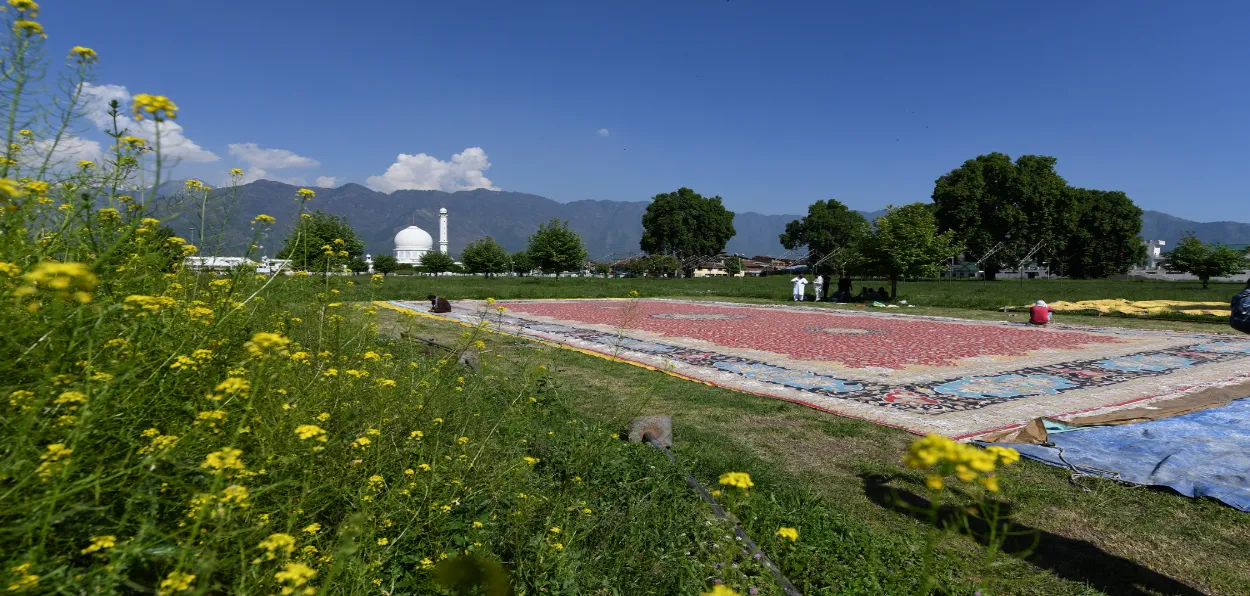
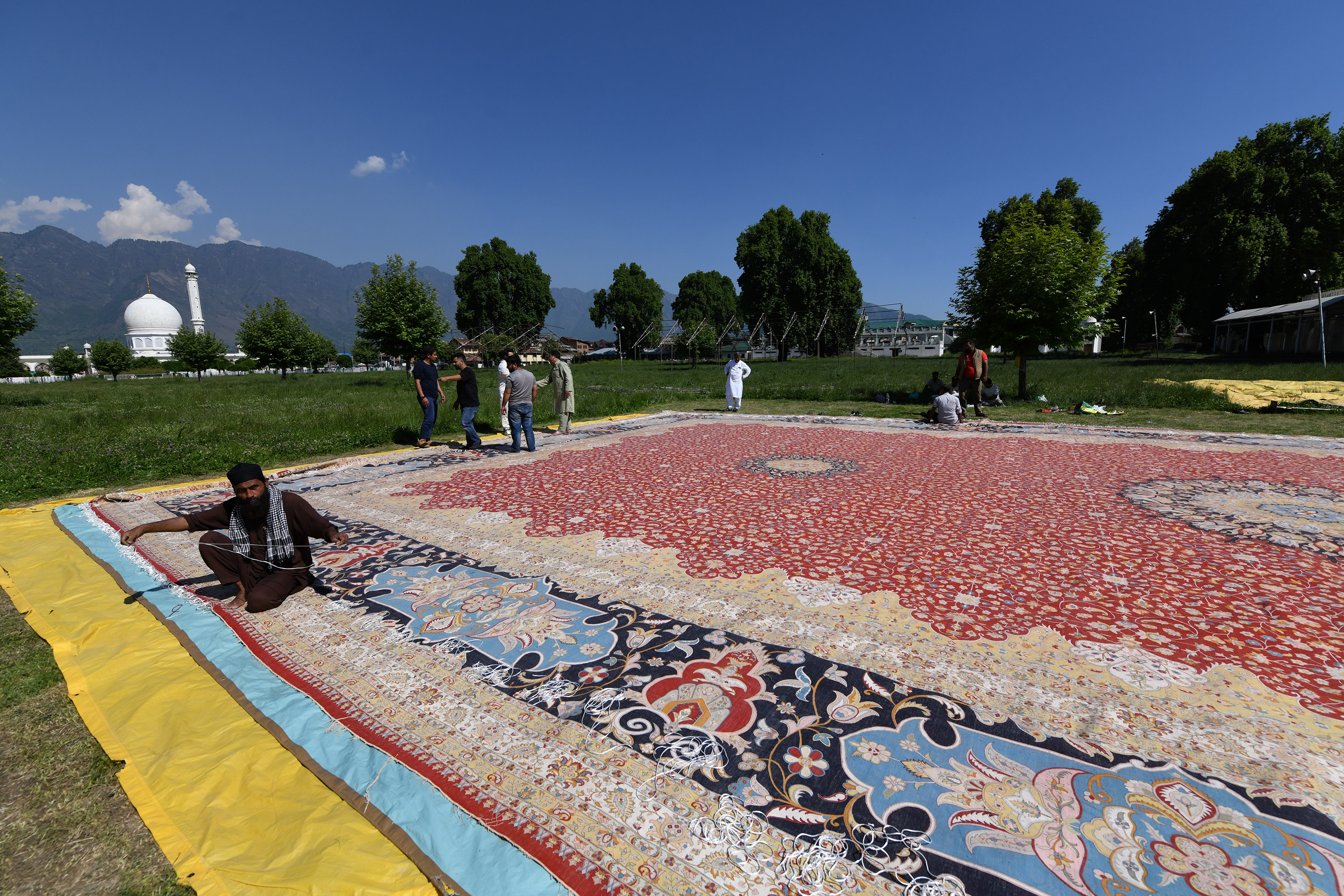
Asia’s largest carpet on display in Srinagar (Pics by Basit Zargar)
After Srinagar was designated among the most creative cities in the world, Kashmir Valley’s artisans are making sure to live up to the expectations of this title. In a village called Wayil in North Kashmir’s Kralpora area, a team of Kashmiri artisans have created a masterpiece touted as Asia’s largest handcrafted carpet.
This hand-knotted carpet measuring 72 by 40 feet covers an area of 2,880 square feet. It took over 25 artisans around eight long years to complete this masterpiece.
The huge carpet on display in Srinagar
The whole carpet industry of Kashmir Valley is priding itself on this masterpiece. The intricate weaving of this exceptional carpet was overseen by two seasoned artisans – Fayaz Ahmed Shah and Abdul Gaffar Sheikh. It is due to their dedication that this monumental piece has found shape.
”This was an order by someone from our country only. This carpet is 72 feet long and 40 feet broad, and we have never made such a big carpet in the Kashmir Valley ever. We had to put our minds to a lot of things as it required a huge loom to be woven on.
“It was a big challenge and thank god it’s been finally completed. I am sure it will be sold abroad, and I am sure that in future we will make something bigger than this, ” said Fayaz Ahmed Shah, a craft dealer.
Asia’s largest carpet
The last eight years of weaving this masterpiece have not been smooth. There have been multiple obstacles that the artisans faced particularly the COVID-19 Pandemic. The lockdowns led to a lot of supply chain-related disruptions.
This mammoth carpet has written a new chapter for Kashmir’s rich legacy of art and craft.
According to the craft dealers, hundreds of artisans are returning to looms to pick up carpet weaving again.
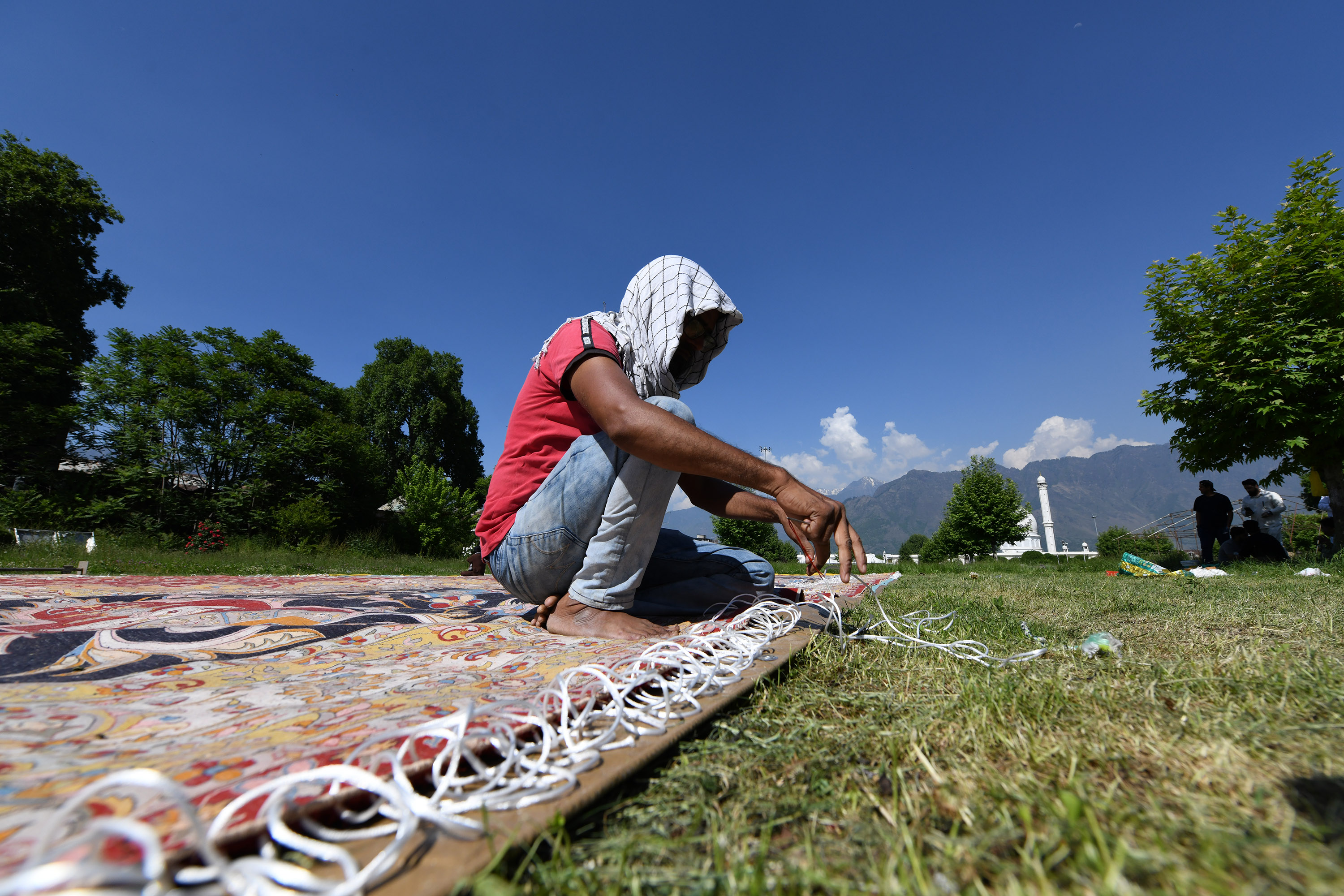
An artisan tying the loose threads of Asia’s biggest carpet
”We have artisans coming back to us after this carpet was made. Around 226 artisans have come back to us and said that they want to work again. We just hope the way any employees get paid; it has to be the same and equal wages for them as well. Our artisans need to have a life of dignity and they should be able to afford their families… I am telling you they will never leave the work if they are paid well. This is a teamwork. From the designs to artisans, everyone has worked very hard for the making of this masterpiece, ” Shah added.
As this masterpiece becomes a symbol of Kashmir’s craftsmanship and artistic prowess, it has also become a ray of hope for the revitalization and recognition of local artisans and their invaluable contributions to preserving the cultural heritage of the region.
source: http://www.awazthevoice.in / Awaz, The Voice / Home / by Basit Zargar, Srinagar / May 18th, 2024
Zungalpura Village (Kulgam District, Kashmir), JAMMU & KASHMIR :
Kulgam, South Kashmir :
Muneeb Amin Bhatt, a talented techie from Zungalpora village in Kulgam district, has achieved a remarkable milestone by being inducted into the National Aeronautics and Space Administration (NASA)’s prestigious ‘Hall of Fame.’ This honor recognizes his outstanding contributions to identifying and addressing data breach vulnerabilities, a critical aspect of cybersecurity. Previously recognized by Apple’s ‘Hall of Fame’ in 2023, he reported his findings through NASA’s Vulnerability Disclosure Program.
Muneeb’s achievement not only brings pride to his hometown but also emphasizes the global significance of cybersecurity. In an era where safeguarding sensitive information is paramount, his work highlights the crucial role individuals play in protecting digital landscapes from potential threats.
Currently, Muneeb is pursuing a Bachelor’s in Computer Applications (BCA) through Indira Gandhi National Open University (IGNOU). His dedication to his studies, coupled with his exceptional skills in cybersecurity, has propelled him onto an international platform, showcasing his potential and determination.
Bhatt’s recognition by NASA serves as a powerful inspiration, demonstrating that with passion and commitment, individuals from any background can make significant contributions to global security. His journey from a small village in South Kashmir to receiving acclaim from one of the world’s leading space agencies is a testament to the potential that lies within every individual, regardless of their origins.
This accolade not only celebrates Muneeb’s technical prowess but also puts a spotlight on the importance of nurturing talent and providing growth opportunities, especially in fields as critical as cybersecurity. As the digital world continues to expand, the need for skilled professionals like Muneeb becomes ever more evident, ensuring a safer and more secure future for all.
source: http://www.radiancenews.com / Radiance News / Home> Focus / by Radiance News Bureau / May 27th, 2024
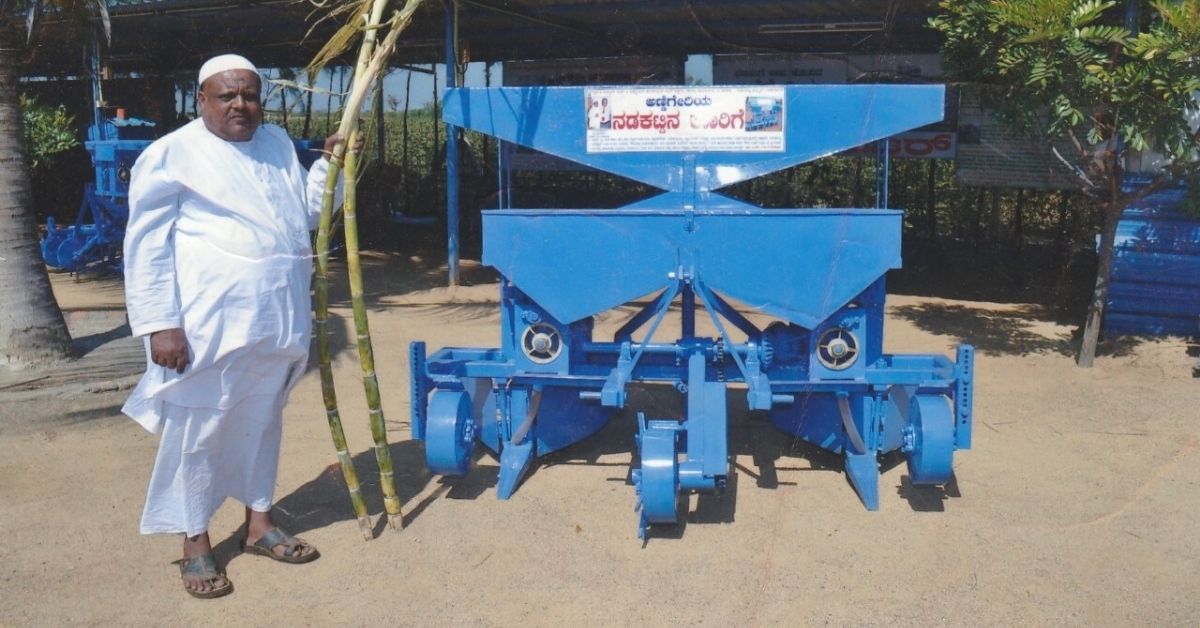
Abdul Khadar Nadakattin from Dharwad in Karnataka has 24 innovations under his belt.
The niche but problem-solving machines and innovations help farmers with everyday solutions and have also increased their yield up to 25 per cent.
Splashing water on a deep sleeper to wake them up is a clichéd scenario used in many comedy films and on social media. But Abdul Khadar Nadakattin earnestly practised this comedy routine on himself during his school days to wake up early.
A native of the Annigeri village of Dharwad district in Karnataka, Abdul struggled to push himself out of bed in the mornings. “A splash of water on my face was the only solution to wake me up. But I could not expect my parents to do this to me every day,” he tells The Better India.
A then 14-year-old Abdul devised an innovative Wa(h!)ter Alarm. Its functioning was simple — one end of a string was tied to the key of his alarm clock in a manner that when it rang, the thread would unwind itself and the other end was tied to a water bottle. Once the alarm key unwound, the bottle would tilt, and the water would fall on Abdul’s face.
“It helped me wake up and complete my school,” he recalls, laughing. Though he managed to pursue education until Class 10, he did not pursue higher studies.
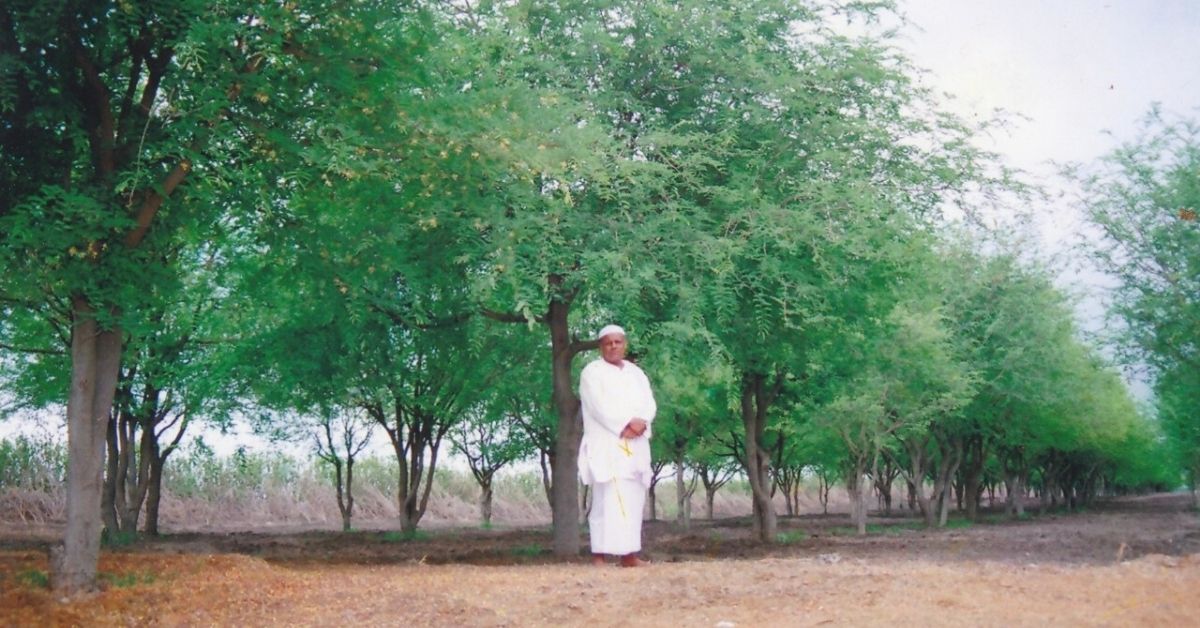
Abdul at his tamarind plantation
But his water alarm talks led to him speaking of the more serious water issues his village faced. “My father owned 60-acre ancestral land and the water scarcity deterred us from earning good profits from farming. My father admitted that our family’s financial condition was poor and asked me to contribute to the farm. So, I gave up my dream to pursue graduation in agriculture,” the 70-year-old says.
Being deprived of an education did not deter him from thinking out of the box. Little did he know then that the water alarm was the first of many of his innovations .
This farmer has come up with unique ideas to solve everyday farmer problems. To date, Abdul has had 24 innovations under his belt, which benefit thousands of farmers in India. It was for this reason that he won the Padma Shri award in 2022.
Helping Farmers, One Innovation At A Time
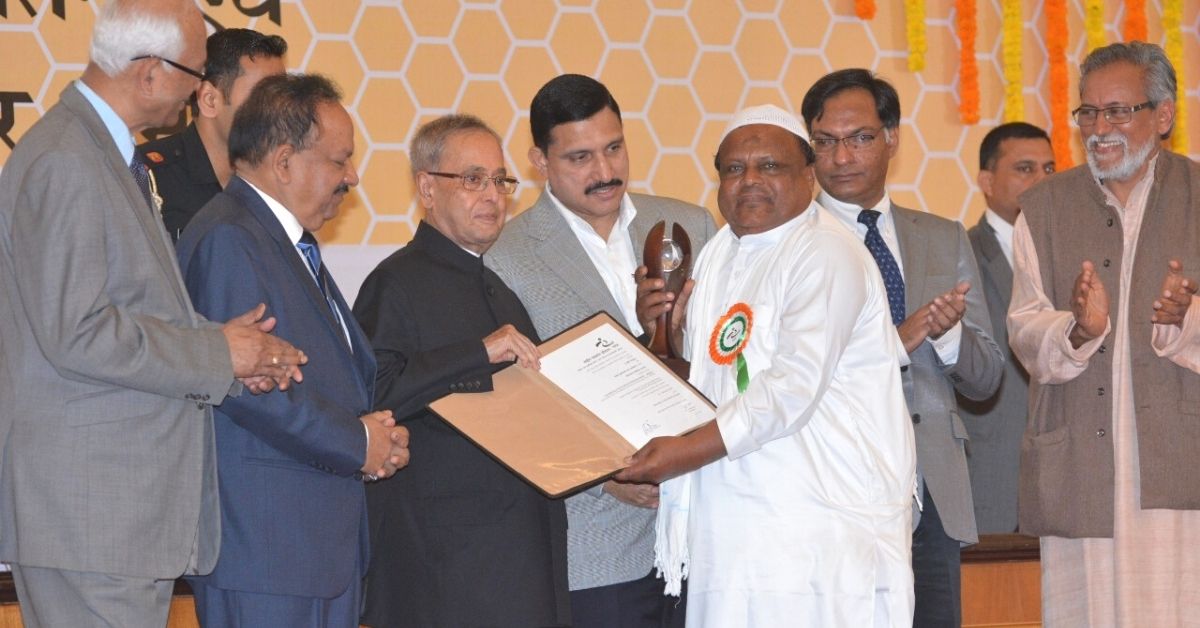
“Thomas Alva Edison is the source of my inspiration,” says the scientist who went barefoot to receive the President’s Lifetime Achievement Award in 2015 at the hands of the then President of India, Pranab Mukherjee. “I always thought of unique ways to solve a problem. That is how I conceived the water alarm. In 1974, I received the ancestral land from my father to continue farming. But interacting with fellow farmers and practising the occupation myself, I learned about the issues of finding labour and other difficulties faced in agriculture.”
Soon after taking over the reins, he built a tiller machine capable of deep ploughing which needed operating by a bullock. “In 1975, I established Vishwashanthi Agricultural Research and Industrial Research Centre to sell the product. But financial constraints did not allow me to market it well, and it failed to take off,” he says.
Later, he also built a plough blade that did not require sharpening and lasted for a long duration compared to others in the market. “The blade did not lose its sharpness, which ensured its long life. It could be attached to a tractor as well,” Abdul adds.
Following this, he built a seed-cum-fertiliser drill that enabled sowing seeds of different sizes with equal spacing. “The equipment is used in sowing a wide variety of seeds from jowar to groundnut. The device also facilitated the dispersal of fertilisers, soil and other organic matter,” he says.
To meet the demands of farmers in Maharashtra, Abdul constructed an automated sugarcane sowing machine. Slowly, his innovations became popular and saw an increase in demand.
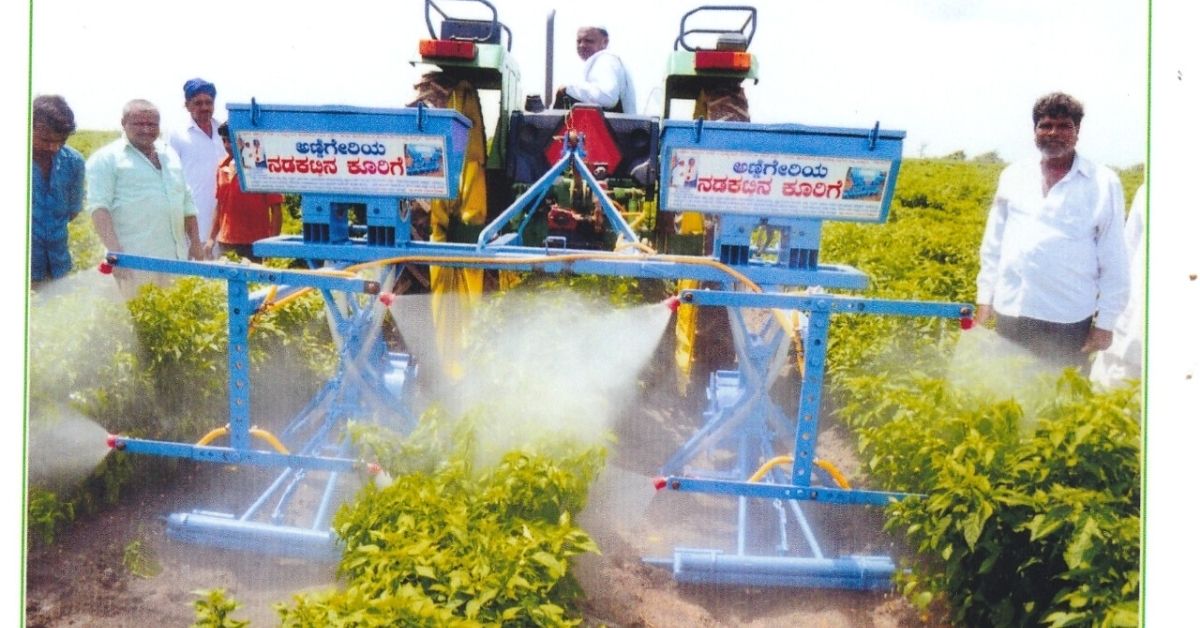
Abdul’s 5-in-1 tiller machine
Apart from his innovative pursuit of helping farmers, Abdul also worked to improve the agricultural yield on his farm.
As his father and grandfather suffered losses with erratic rains and limited groundwater reserves, Abdul decided to find an alternative. “In the early 1980s, I planted mango saplings, placed between ber and sapota (chikoo) trees. I planted chillies as an intercrop. But the lack of water killed the plantations. So I switched to growing tamarind as I learned that it required less water and maintenance,” he says.
He sourced 600 saplings and planted them across 6 acres of land by keeping a gap of 20 feet each.
In 1985, the region faced severe droughts, but Abdul managed to source water from a distance of 3 km. “I dug 11 bore wells, but only two yielded water. So I sourced water from a long distance and stored it by creating six farm ponds. They also helped to harvest rainwater during the monsoons. I used the water for flood irrigation of my plantation of 600 saplings,” he says.
“The plants grew well, and feeling confident with its success, I planted more than 1,100 trees in a 10-acre area, making a total of 1,800 saplings,” he says.
But there was another unexpected chapped Abdul faced. “I did not know how to make use of so much tamarind produce. My wife and daughter made pickles and jams to sell in the markets across the state including, neighbouring Hyderabad,” he says.
So, Abdul decided to harvest tamarind and make pickles out of them. “But the process of separating seeds from the tamarind was tedious, and labour shortage made it more difficult. The seeds had to be separated manually and were a time-consuming process,” he explains, building up the crescendo before revealing his next innovation.
After spending nearly Rs 3 lakh and over six months, Abdul conceived a machine that did the job. “The instrument involved a system where the tamarind slid on the tapered peg. This pushed the seeds out from the tamarind pod,” he says, adding that to make tamarind pickles convenient he built yet another device.
“The pickle making required tamarind to be sliced into smaller chunks which again was labour intensive. So, I designed another machine to make the slicing effective and efficient,” Abdul adds.
Over the years, Abdul produced more machines and sold them. His popularity with these niche but problem-solving innovations earned him the name ‘hunase huccha’, meaning ‘tamarind crazy’.
“It was the most difficult innovation of my life as the seeds often got stuck in the tamarind making the separation difficult. I researched and experimented for years to achieve the desired result,” he says.
An Innovation Revolution
Abdul receiving lifetime achievement award at the hands of then President Pranab Mukherji
Abdul has sold thousands of his various innovations to date, he claims with pride.
Shrikanth Jain, one of the farmers who purchased Nadakattin seed-cum-fertilizer drill a few years ago, says, “I used it to sow wheat pulses and other woodgrains. The machine does the job of sowing, dispersing fertiliser, covering the soil, spraying pesticides and saving fuel. It also helps to prevent excess sowing of seeds. Using the device has helped me increase my yield by 20 per cent.”
However, these innovations and his passion for helping the farming fraternity came at a heavy financial loss to Abdul who says, “I struggled with debts all my life and mortgaged part of my agricultural land to invest in research for innovations. I never sell equipment for profits and offer them at make-to-cost, which is about 25 per cent cheaper than the ones in the market. It is a seva (service) for the farmers, and I do not wish to burden them financially.”
Today, Abdul has received funding for his research from the National Innovation Foundation, University of Agricultural Sciences, Dharwad and Karnataka government. He adds, “I received Rs 16 lakh to develop the ploughing machine from the Karnataka government and have also invested other prize money received.”
Elaborating on his innovative process, he says that some innovations happen in months while others take a year or more. “Investing time and money can become very demanding.” But Abdul is relentless and wants to continue his dream of helping farmers. “I believe that the economy of this country runs on farmers. But our community is facing hardships at various levels. I aim to benefit them and ease their difficulty. Innovations can only bring the next revolution in agriculture,” he says.
source: http://www.thebetterindia.com / The Better India / Home> Stories> Innovation> Karnataka / by Himanshu Nitnaware (headline edited) / Edited by Yoshita Rao / February 05th, 2022
Like it or not, modern Indian culture is still heavily indebted to the legacy of the Mughals and the nawabs.
Stamps of both tangible and intangible heritage of India’s prosperous Muslim reign are still vivid, despite more than two centuries of indifference, ingratitude and insolence that followed.
From language and art to cuisine and architecture, every aspect of Indian cultural landscape has strong traces of Muslim sounds, flavours and colours that continue to trickle down from an era that drew the world to India.
Like it or not, modern Indian culture is still heavily indebted to the legacy of the Mughals and the nawabs. The Persianate culture that was dominant well into the decline of the Muslim dynasties, continues to influence our customs and traditions.
Intangible heritage Whether we call it Hindi or Hindustani, the language that is spoken by most Indians, especially in North India, took shape in the hallowed halls of the Mughal Delhi and Nawabi Lucknow.
Though, it’s been nearly two centuries since the sun set upon the fortunes of the Mughals, their cuisine is still in the ascendancy and gaining in popularity everyday. Can a party be complete without the biryani and kebabs?
Urdu may not be a particularly favoured language of our times, but no Urdu basher could be averse from the influence of its sweet melody. Despite some serious attempts at its erasure from the public consciousness, Bollywood or Hindi Cinema still has some strong strands of Urdu in its rapidly morphing personality.
The indelible Urdu legacy lies at the very heart of ‘Hindi’ cinema’s golden era, with some of the best dialogues and songs that most of us swoon over being still its biggest treasure trove.
As much as its intangible legacy, the tangible legacy of the Muslim architects still remains the biggest tourist attractions in India. Not just the Taj Mahal and the Jama Masjid of Delhi, Muslim architects have left towering symbols of aesthetic excellence in architectural marvels such as the Qutub Minar and the Charminar.
Besides Delhi, Agra and Lucknow, cities such as Ahmedabad, Hyderabad, Aurangabad and Bijapur wouldn’t have existed without their Muslim patrons. Their Muslim character is hard to miss despite consistent attempts at altering their nature.
The magnificent monuments, among the greatest landmarks of the tangible human heritage, are so deeply etched on the landscape and the psyche of India, that they have become synonymous to the grandeur of the Muslim ascendancy in India.
Artisanal legacy But, more than the glowing architecture, it is the enterprising artisanal traditions that continue to have the greatest traces of Muslim influence. Importantly, Muslims continue to preserve this legacy against all odds.
From the Pashmina Shawls and Banarasi Sarees to the Rogan Art and Bidriware, some of India’s best known handmade traditions are painstakingly preserved by Muslim artisans, maintaining a living heritage that can be traced to the patronage of the Great Mughals, the Bahamanis, the Adil Shahis, the Nizams and others.
It is no secret that the Mughals were the great patrons of art, craft and industry, with creativity, innovation and industry flourishing during their rule, making India the most prosperous country in the world.
Their generous patronage and facilitation meant artisans from different parts of the world made a beeline to India, adding new forms of craft to a landscape that was already full of life.
From muslin and brocade to diamonds and jewellery, the artisans of India produced some exquisite handmade goods that drew traders from all over the world to India.
Mughal India – World’s biggest economy
During the peak of the Mughal rule in India, when Aurangzeb Alamgir was at the helm, India accounted for 27 per cent of the world’s economy, greater than the GDP of the entire Europe combined.
Until the mid-18th century, when British started gaining greater control over some parts of the country, India was the biggest exporter of manufactured goods across the world.
Despite the unparalleled rapacity and depravity of the colonial administration that had led to the near extinction of the Indian craft traditions a century ago, Indian handicrafts survived largely through the resilience and industry of the artisans.
Though, the policy of erasure continued even after the British left India and continues till this day, Indian artisanal communities have shown remarkable resilience against the onslaught of monopoly, ruthlessly cruel economic policies and unfavourable terms and conditions.
Many craft clusters have also faced communal apathy, discrimination and prejudice.
Under such extreme conditions, it is nothing short of a miracle that ancient handmade craft traditions survive in India.
Story of Bidriware The tale of the Bidriware, primarily practised by Muslims, is one such story of skill, struggle and survival.
Bidriware is poetry crafted in metal
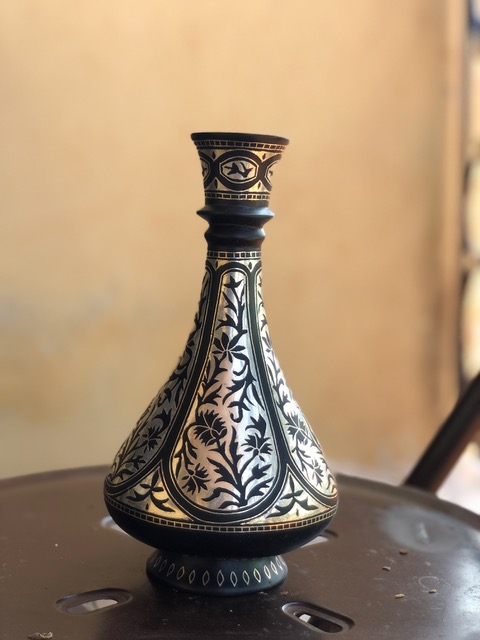
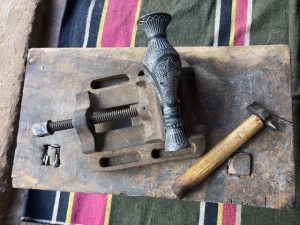
Cast in an alloy of copper and zinc, with silver and gold wires or sheets inlaid or overlaid, a Bidriware artefact is so graceful in its appearance that an indulgent heart longs to feel and touch it, if not wear it!
For more than five centuries, Bidriware objects have been must have pieces of adornment among the royalties and nobilities such as Mughal emperors, Rajput kings and Nawabs of Bengal to Bahmani, Adil Shahi and Vijayanagara Sultans (yes, the Vijayanagara kings loved to call themselves sultans!).
In the pre-modern era, the Nizams of Hyderabad have been the biggest patrons of this magical craft, not only collecting the artefacts such as hookahs (sheesha), vases, vanity boxes, ewers and pitchers, but also relocating several artisans to Hyderabad.
However, despite the early 20th century migration of artisans and losing patronage, Karnataka’s northern town of Bidar continues to remain a hub of Bidriware.
With all of the kingdoms and fiefdoms gone, ancient Bidriware items along with other surviving royal antique pieces are a collector’s treasure now, gracing the leading museums across the world.
The Origin Though, the Bidri metal craft has its origins in medieval Persia, Bidriware in its distinct Indian form blossomed in the capital of the early 15th century Bahmani Empire.
The tale of Bidriware, primarily practised by Muslims, is a story of skill, struggle and survival
The Bahmanis were renowned for their exquisite sensibilities for art and architecture, hence it is no surprise that a complex and intricate enterprise such as the Bidri metal craft originated in their royal atelier.
This, perhaps, is among the last few influences that the medieval Bahamanis continue to have on modern India.
Reinvention Despite the spell Bidriware has on art aficionados and connoisseurs of craft, the enterprise has seen a steady decline over the last few decades, with only a few masters working their magic.
Currently, the city of Bidar has around 150 registered artisans, but only a handful of artisans in the town have the depth of knowledge and the deftness of skills required to be called a master.
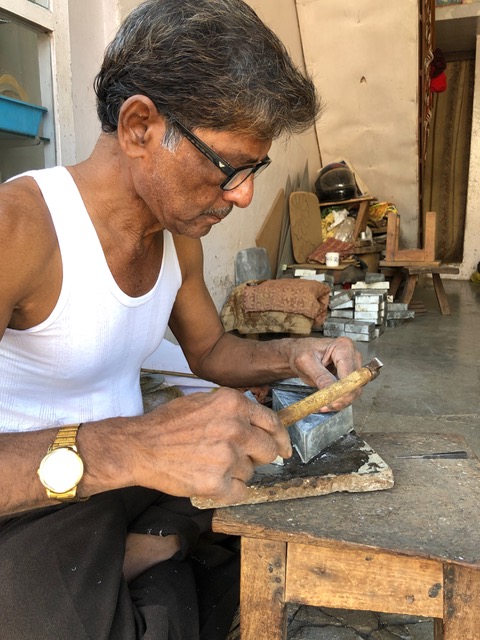
MA Rauf Siddiqui is a national-award winning master craftsman who is reinventing Bidriware, catering to the modern aesthetic sensibilities
Among the few masters is the national award-winning artisan MA Rauf Siddiqui.
Even as the overall scene of the Bidriware tradition is not particularly encouraging, the Shilpi Guru-winner is quietly reinventing the traditions, ably-assisted by his young and enterprising children.
Modernising the techniques, motifs and methods, the family has several generations involved in the craft, adopting latest softwares to come up with new patterns and using social media to reach new frontiers.
However, the traditional expression of the art-form continues to find patrons, even as the newer expressions in wearable forms give the craft a new lease of life.
Empowering the community Many Muslim communities in India sit on a huge treasure trove of craft traditions that have been part of the country’s cultural, economic and political legacy for centuries.
Many of these traditions are withering away due to multiple factors, including lack of upgrade or inability to adapt to the changing landscape, little government support and poor marketing.
With necessary attention and support we can not just preserve this precious legacy of India and Indian Muslims, but can also make hundreds of these craft clusters economically independent and sustainable.
source: http://www.radiancenews.com / Radiance News / Home> Arts & Culture> Forces / by Shafaat Shahbadari / Radiance News Bureau / September 26th, 2023
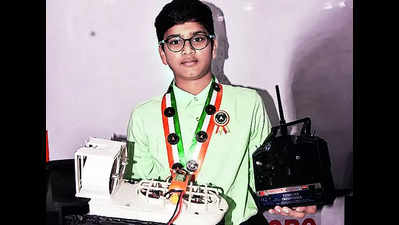
Izaan Ali, a 12-year old from the city, has made an entry into India Book of Records by making the smallest functional model of hovercraft measuring 10 inches x 6 inches.
Izaan’s hovercraft is remotely controlled and is connected to a GPS system. It uses four brushless motors and 3D printed components to run. This initiative that leverages smart technologies to revolutionise healthcare services was approved by the India Book of Records.
Currently studying in Class 7 at a private school in Ludhiana, Izaan thought of the idea years ago when he lost his grandfather to cardiac arrest. He said the family could not get urgent medical aid during the golden hour.
The hovercraft has been envisioned to seamlessly fill in the current lags in access to essential supplies which are currently restricted by operational constraints like working hours of delivery platforms, thus saving precious lives. An official launch and commercialisation are awaited.
Izaan’s parents are committed to his ambitions. While his father, Imtiaz Ali is an educational consultant, his mother Seher Imtiaz, is a rehabilitation psychologist. Residents of Dugri phase III, his parents shared that Izaan worked on this idea for around six-eight months and burnt the midnight oil (even during) his exams to achieve his goal.
Sharing details, Izaan Ali told TOI, “This hovercraft operates by creating a cushion of air underneath itself, allowing it to float above a surface. The main propulsion and lift for this hovercraft are provided by four brushless motors. The structure was enhanced using 3D printed components, making it customisable and relatively easy to repair or modify.”
His parents said the project is a demonstration of his commitment to renewable and sustainable technology and their importance in modern engineering. The project’s use of four brushless motors for propulsion and lift showcases its commitment to efficiency and performance. This design allows the hovercraft to glide smoothly over various terrains, opening up new possibilities for transportation in diverse environments.
“Furthermore, the project’s approach not only makes the hovercraft more adaptable to different needs but also emphasizes the importance of eco-friendly manufacturing practices.” Izaan added. Aiming to become an automobile engineer, he said, “ It me took around 6-8 months of time and around Rs 20,000 to create the prototype.”
Dimple Verma, Izaan’s mentor said, “This is a 4th generation mode of transport which reduces friction by 20-30% and can be beneficial for medical deliveries to rescue people who do not have connectivity, or are disadvantaged and die in challenging terrain.”
source: http://www.timesofindia.indiatimes.com / The Times of India / Home> News> City News> Ludhiana News / April 04th, 2024
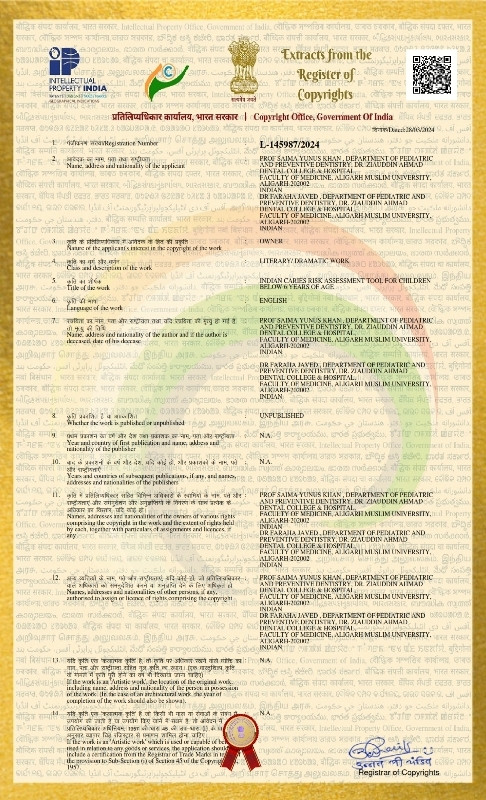
Prof Saima Yunus Khan, Chairperson, Department of Pediatric and Preventive Dentistry, Dr. Z.A. Dental College, Aligarh Muslim University has been awarded the Copyright by the Government of India for her original innovative work on an evidence based Indian Caries Risk Assessment tool for the children up to 6 years of age.
She started to work on the project in 2021, on receiving the John Clarkson Fellowship from the Prestigious International Association for Dental Research.
Being the first Indian to receive this fellowship, she worked in collaboration with Dr. Gerald Niznick, College of Dentistry, Rady Faculty of Health Sciences University of Manitoba, Canada.
According to Dr. Saima, the CRA tool would be beneficial to the Indian children as it addresses the risk factors of early childhood caries of Indian preschoolers. It’s a small compact tool form which can be used with ease by the masses in hospital or field settings.
The Dean, Faculty of Medicine and the Principal, J.N. Medical College, Prof Veena Maheshwari, and the Principal, Dr. Z. A. Dental College & Hospital, Prof R.K. Tewari congratulated Prof. Saima on her exemplary achievement.
source: http://www.amu.ac.in / AMU, Aligarh Muslim University / Home> Public Relations Office (headline edited & additional pix edited) / April 02nd, 2024
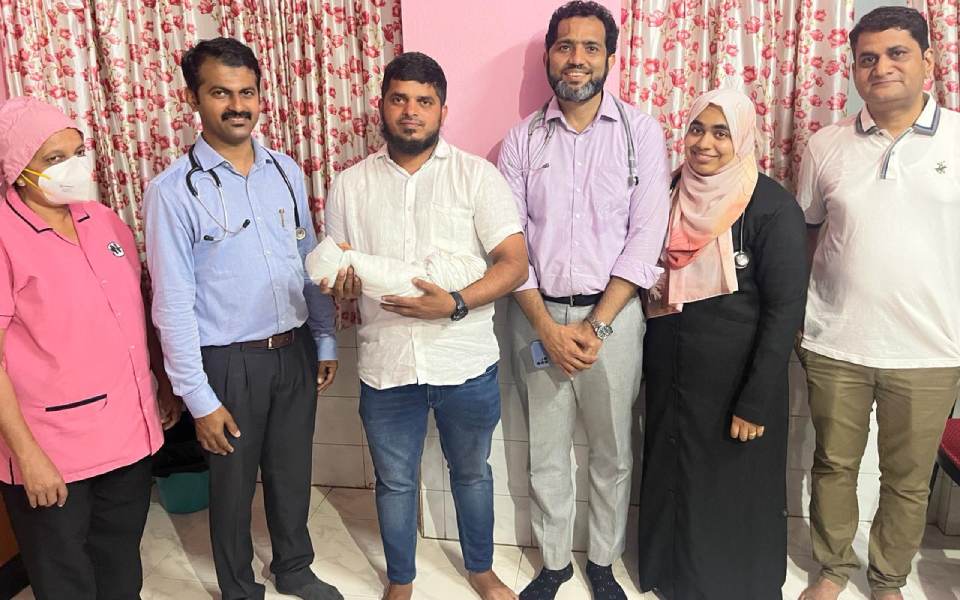
Dr Ayshath Safoorah Gynaecologist, Dr Muralidhar G K.. Fetal Medicine Specialist, Dr Abdul Bashith Pediatrician and Dr Preetham Tauro Pediatrician
Mangaluru:
In a remarkable medical achievement, an Rh ISO immunised baby was successfully discharged after undergoing multiple blood transfusions , including rare intrauterine blood transfusion.
Dr. Ayshath Safoorah,consultant obstetrician and gynaecologist at Lifeline Health Care plus falnir, recognizing the complications of the case, referred the expectant mother to Dr. Murlidhar( fetal medicine ) at Father Muller Hospital for ultrasound evaluation of foetal anemia.
After a thorough evaluation, Dr. Murlidhar carried out the intrauterine blood transfusion when the patient was in her 31st week of pregnancy.
The expectant mother, who came to Dr Ayshath Safoorah at 28th week of her pregnancy, faced complications due to antibodies present in her blood against the fetal blood cells ,along with increased blood pressure.
Three weeks following the intrauterine blood transfusion, the mother was induced at 34 weeks and delivered vaginally a preterm girl baby weighing 2.2 kg at Manglore Nursing home on 29th February . Both the mother’s health and the baby’s condition were closely monitored by the team of doctors at the hospital.
On Sunday, March 10, the newborn has been discharged.
What does positive Indirect Coombs Test mean?
When an Indirect Coombs Test is positive, it means that antibodies against red blood cells are present in the patient’s blood serum. The test detects these antibodies indirectly by mixing the patient’s serum with red blood cells of a known blood type. If antibodies in the serum react with the red blood cells, it indicates a positive result.
“In the context of pregnancy, a positive Indirect Coombs Test suggests that a pregnant woman has developed antibodies against the red blood cells of her unborn baby. This situation is often associated with Rh incompatibility, where the mother is Rh-negative, and the baby is Rh-positive.Injection Anti D is given after delivery to all Rh negative mothers to prevent this kind of iso immunisation,” Dr. Ayshath Safoorah told Vartha Bharati.
What is Intrauterine blood transfusion?
Intrauterine blood transfusion is a complex medical procedure performed during pregnancy to address severe fetal anemia. Through the procedure, the baby in mother’s womb is transfused blood.
Before the procedure, the mother undergoes thorough assessments, including ultrasound scans and blood tests. Continuous ultrasound guidance is used throughout the procedure to visualize the fetus, placenta, and the specific blood vessels involved. A thin, specialized needle is carefully inserted through the mother’s abdomen and into the amniotic sac, guided by real-time ultrasound imaging. The goal is to reach the umbilical vein of the fetus.
Once the needle is correctly positioned, compatible blood is slowly transfused into the fetus through the umbilical vein. The amount of blood transfused is carefully controlled to avoid overloading the fetal circulation.
“Prior to the intrauterine blood transfusion,the hemoglobin of the foetus was just 4 g/dl. While this situation presented complications of cardiac failure , our medical team implemented measures to ensure a smooth transfusion ,” Dr. Murlidhar who has handled cases of intrauterine blood transfusion during his practice abroad, told Vartha Bharati.
“Once the baby was delivered , she needed 2 exchange transfusions and one blood transfusion to combat the rising bilirubin levels due to hemolysis. Throughout the exchange blood transfusion, our medical team comprising Dr Preetham , faced challenges associated with the fluctuating and rising hemoglobin levels of the baby. The unexpected variations required vigilant monitoring and immediate responses to ensure the baby’s stability,” Dr. Abdul Bashith said while also adding that the team was overjoyed with the successful procedure and to see the baby and mother healthy.
Dr. Abdul Bashith also added that both mother and baby would require follow up at the hospital with their first visit being scheduled after 1 week .
Dr. Abdul Basith thanked and appreciated other members of the team including Manglore Nursing home NICU staffs and management, for their care and support.
source: http://www.english.varthabharati.in / Vartha Bharati / Home> Karavali / by Vartha Bharati / March 10th, 2024
Rizwan Ahmad, a research scholar, working under the supervision of Prof. Moinuddin in the Department of Biochemistry at the Faculty of Medicine, Aligarh Muslim University has won the “Young Innovator Award-2023” from the Indian Academy of Biomedical Sciences, held at AIIMS, Patna.
Ahmad’s outstanding poster presentation, titled “Modified Fibrinogen Entraps Blood Cells and Induces Oxidative Stress, Leading to Deposition of Arterial Clot: Possible Pathway in Metabolic Disorder and Development of a Novel Biomarker,” secured the second prize.
His research sheds light on the effects of fibrinogen protein under diabetes-induced stress, potentially aiding in the early detection of metabolic diseases.
Ahmad also attained first prize in an oral presentation at a symposium organized by the Endocrine Society of India and third prize at the Hematology conference organized by the Department of Pathology last year.
source: http://www.indiaeducationdiary.in / India Education Diary / Home> National News> University News / by India Education Diary (headline edited) / March 05th, 2024
Two people in Mirzapur have received the Padma Shri award. The first prize went to folk singer Urmila Srivastava and the second prize went to Khalil Ahmed. He has made a special contribution in the field of handmade durries.
Khaleel Ahmed / Photo: Amar Ujala
Thursday was a special day for Mirzapur district from the point of view of art, music and handicrafts. Along with Urmila Srivastava in folk singing, Khalil Ahmed was also selected for the Padma Shri award for his special contribution in the field of Handmade Durry, especially Panja Dari.
75-year-old Khalil, who hails from Imambara area, has not only been associated with the art form for three generations but has enriched it. Khalil was awarded the National Award in 2000 by the then President APJ Abdul Kalam. In 2007, he was awarded the most prestigious award of the Ministry of Textiles, Shilp Guru. His entire family is associated with the carpet business.
His three sons Rustam Sohrab, Iftikhar Ahmed, Jalil Ahmed are also associated with this art. Khaleel Ahmed expressed happiness on receiving the Padma Shri award. He said that this is the result of years of hard work and dedication. He said that this award will empower the new generation to join this genre. Explain that the carpet of Mirzapur has got a GI tag.
GI expert Dr. Rajinikanth said that Mirzapur’s handmade carpet is very special. Khaleel Ahmed has been associated with this task for years and gave it a new height. He wished him all the best for the award.
source: http://www.amarujala.com / Amar Ujala / Home> Hindi News> Uttar Pradesh> Mirzapur News / by Amar Ujala, News Desk (translated from the Hindi edition) / by Pragati Chand / January 26th, 2024