Category Archives: Leaders

A chat with ace cinematographer Farhad Ahmed Dehlvi

NEW DELHI :

His short film Please Hold is in the reckoning for an Oscar.
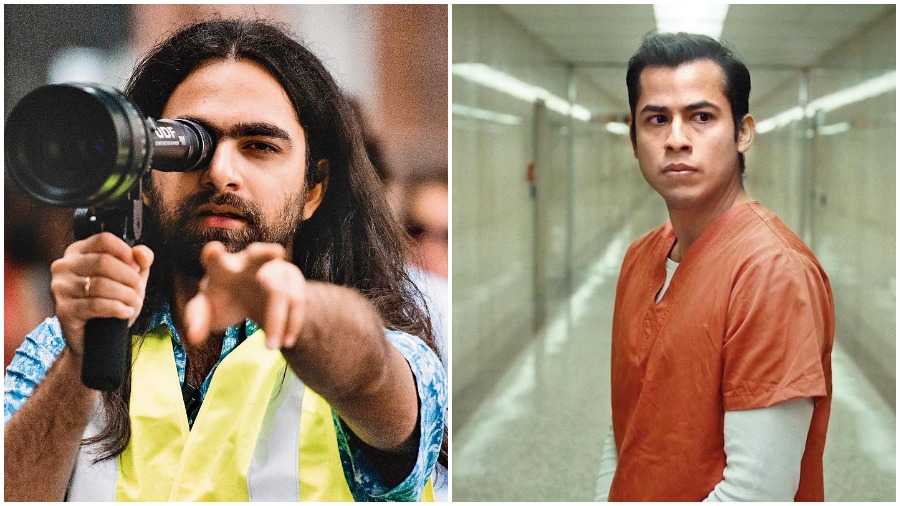
(L-R) Farhad Ahmed Dehlvi; a moment from Please Hold

Please Hold, a 19-minute sci-fi short about a young man’s life being derailed as he finds himself at the mercy of automated “justice”, is in the running for an Academy Award in the category of Best Live Action Short Film. Please Hold has been shot by ace cinematographer Farhad Ahmed Dehlvi, who has films like four-time Oscar winner Life of Pi, among others, to his credit. The Telegraph caught up with Dehlvi, who was born and raised in Delhi, for a chat on Please Hold, his craft and more.

Congratulations for Please Hold’s Oscar nomination. You are not new to awards and accolades, but does the fact that this is an Academy Award nomination make it more special?

It is special because of the history and prestige associated with the Oscars, and also the fact that ours is a Latino story, an outsider’s story about the privatised prison system in America and the degree of control technology can hold over our lives. I’m glad to see the Academy recognising this kind of work.

You can’t think about the outcome, awards or accolades while making a film… each film is a leap of faith. You hope that you do justice to the story and that it will have an impact on the audience. I’m happy that the film moved members of the Academy enough to vote in our favour. The nomination is a real honour and we have our fingers crossed for March 27. I hope people watch our film and hopefully engage in the ongoing conversations about the subject!

What makes Please Hold different from the other prestigious projects that you have shot?

One of the things I’m most proud of in Please Hold is the tone we struck, both visually, and in how the story plays out. It is a dark comedy that gets increasingly absurd and Kafkaesque. I drew inspiration from the portraits of Lucien Freud and the films Minority Report and Trainspotting. By the end of the film, I hope that you’re left with a pit in your stomach because of how closely this ‘science fiction’ parallels our reality.

One of the challenges of a short is that there isn’t much screen time to set up the world, to build context for the story. As a cinematographer, I search for ways to do this as simply and effectively as possible. With Please Hold, we found an elegant solution — to have a mural on the wall behind the character in the opening scene. The mural, which depicts a fire-breathing, rampaging robot with Lilliputian humans trying to control it, tells us so much about the world and setting of the film.

Our resources were very limited and we benefited from a lot of goodwill from within both the industry and the community. In particular, Panavision, with whom I’ve worked for many years, supported the project with a camera package and our choice of ‘Panavision Ultra Speed’ lenses to tell this story.

Your work, both as cinematographer and film-maker, has been eclectic. What would you pick as the biggest turning points in your career?

After finishing grad school at the American Film Institute in Los Angeles, I spent a few years travelling across the US working on documentary projects. My time on the road, especially in the rural south, was a real schooling in the stratifications and power structures of American society, and triggered a process of reflection that has given me a new perspective on my own culture and my childhood in India. Looking back, I’d have to say the biggest turning points have been the collaborators I met, some of whom have become like family now. They’ve taken me on journeys I could never have dreamed of, tasking me to lend images to their stories.

A large part of your work focuses on making the universal personal. What is the key to achieving that?

I strongly believe that beyond entertaining or diverting us, inclusive cinema has the power to bridge cultural divides, to help us recognise our own pathos as we see it in others. I acknowledge the dignity of those that stand in front of my lens, I accept their nuance and individuality, and treat each one as the hero of their own story.

I don’t use the camera as a shield or a dividing line on set. I recognise the intimacy between subject and cinematographer and step out from behind the lens and acknowledge that the actors are more than icons or subjects and they are living, breathing people. Of course you do this while respecting the actors’ space and their own process.

My hope is that when the credits roll at the end of a film, the audience has a moment, however brief or subliminal, where they see their own circumstances in a different light and through the shared experience of the film, perhaps feel more closely connected to the person in the next seat.

I draw a lot of influence from the world outside of film. In recent years I have been studying folk crafts, both across India and the ‘Mingei’ movement in Japan. In particular, I’ve been looking at the use of pattern, and how a motif evolves over time. The timeless quality of traditional patterns is something I want to infuse into my work. The writing of Soetsu Yanagi has had a big impact on me. Also the artist Agnes Martin and photographer Sebastiao Salgado.

Your work is distinguished by its simplicity. In this age of visual effects and tech tools, how do you manage to retain that?

My first priority is always to serve the story. Everything I do, my creative choices, my methodology, the technical decisions are all in service of translating the essence of the written word into images that can connect the audience with our characters. I spend a lot of time with the material in pre-production to ensure that I’m prepared to actively create the visuals while ensuring that the mechanistic aspects of our work don’t disrupt the flow of the performances. This often involves months of work together with the director and production designer where we break down the film and build the visual language piece by piece, talking about light, colour, movement, and also how we can best use the set design and blocking to support our storytelling.

I aim to create a safe and flexible space for the actors and director to work in. I try to keep the equipment and crew outside the set as much as possible, and once we are into a scene, be ready to capture the performances that unfold.

Of course, there are times when a scene calls for a more technical approach, whether it is a precisely constructed camera movement or a particular lighting technique. These moments can feel more mechanical on set, but you have to trust the medium, trust the craft, and if you’re in service of the story, then the final scene, when it plays on screen, will look effortless and truly emotional. The audience will be transported into the movie. These moments are far more effective when you’ve built them into the grammar of the visual storytelling, contrasted them against the quiet moments in the film. It is like a piece of music — you need the pianissimo to feel the effect of the big crescendos. So I wouldn’t say that I eschew any particular tech tools or follow a dogmatic approach of simplicity. I’m always in service of each moment in the story.

Growing up in Delhi, was there an epiphanic moment that made you want to pursue this as both career and passion?

There are many! With both parents working in the industry, I was introduced to films at an early age One moment comes to mind — my first memory looking through the viewfinder of a camera. A visiting photographer, a friend of my parents, allowed me to look through his camera. It was a Hasselblad, a medium-format still camera, and had a viewfinder that showed you a reversed image that was very crisp, almost like a 3D projection. I fell in love with the way this camera’s viewfinder made the everyday image of our garden look magical, more real than reality, like a glimmering 3D projection. I was quite young at the time, and was enchanted with this ‘black box’ that could literally turn the world inside out. Of course now I understand the physics behind it.

I love the mechanical, the optical, the photochemical side of film-making, and I think this goes all the way back to my earliest experiences with a still camera. Getting some black-and-white film out of my father’s ‘stash’ in the fridge, watching him load it into the camera, going out and pressing the shutter with a child’s curiosity and then watching the images develop in a darkroom tray. This process has always been magical for me — a kind of alchemy, pulling images from a place that lies even beyond my imagination. I try and bring that curiosity to my work every day.

Is directing a natural extension of your work in cinematography?

I have always been narratively driven in my work, and having been in the director’s chair has made me a more sensitive and thoughtful cinematographer. I can see things with a broader perspective, am better able to shoot “for the edit” and am more closely in tune with the overall rhythm of the film. I think each informs the other, but I don’t see directing as an extension of cinematography.

I’d like to explore directing, particularly in episodic fiction while continuing to work as a cinematographer. There are several cinematographers who are balancing directing and shooting. Andrij Parekh did this with HBO’s Succession a few years ago, and Dana Gonzales on Fargo.

source: http://www.telegraphindia.com / The Telegraph Online / Home> My Kolkata> Life Style – Oscar / by Priyanka Roy / March 01st, 2022
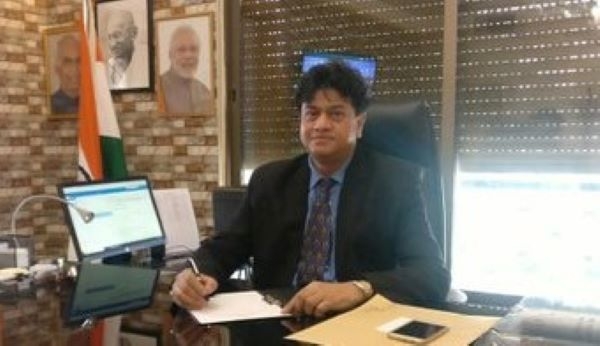
Noble man on prestigious post! Anwar Haleem takes charge as the new Indian ambassador to Jordan

Lucknow, UTTAR PRADESH :

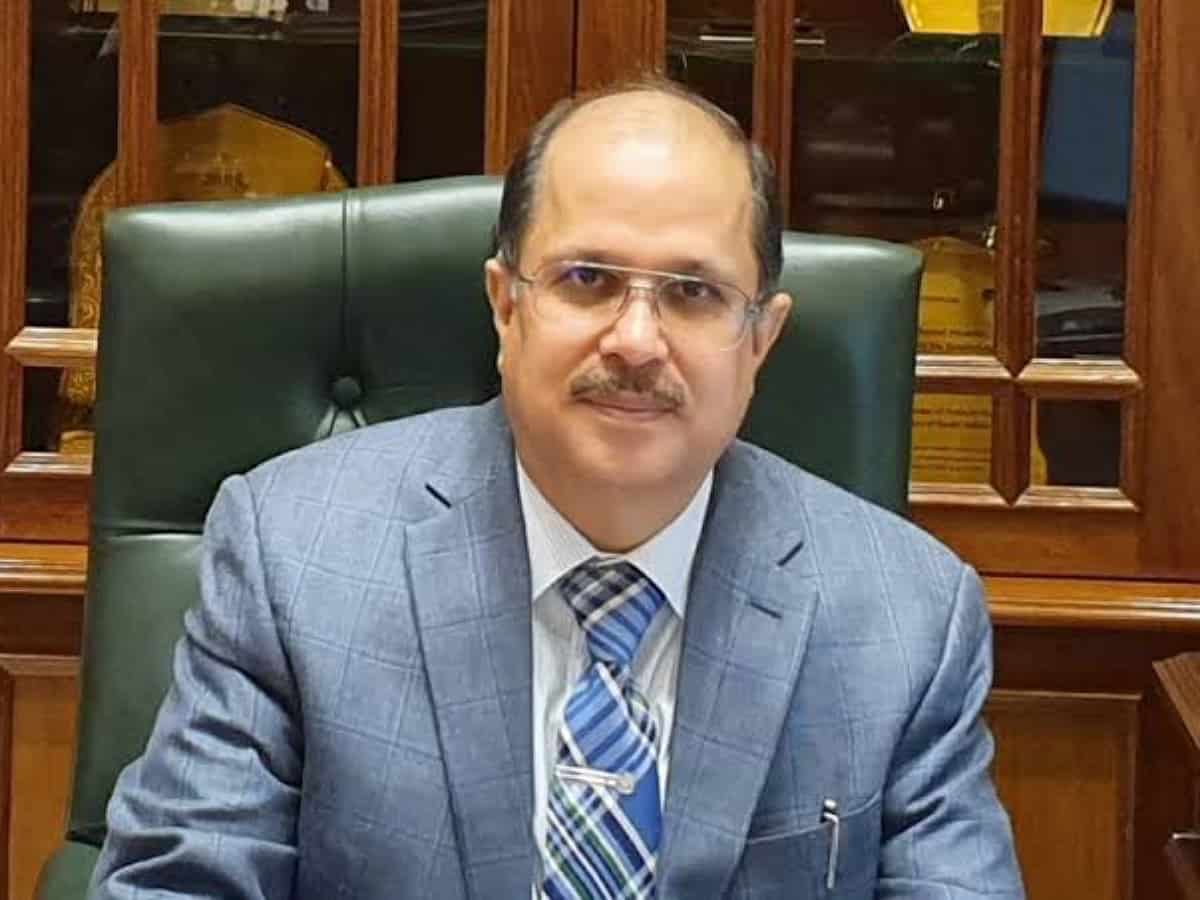
Veteran Indian diplomat Anwar Haleem today assumed charge as the Ambassador of India to the Hashemite Kingdom of Jordan. 

The new Ambassador was given warm welcome by all Mission officials in Amman upon his arrival at the Embassy premises. He presented a copy of his Credentials to H.E. Mr. Zaid Al-Louzi, Secretary General, Foreign Ministry in Amman.


Anwar Haleem is an IFS officer passed out in 1991. He was working as the Additional Secretary in the National Defence College before taking charge as an ambassador. 

Anwar Haleem obtained the MA degree in Indian History and International Studies from JNU. He joined M Phil in Disarmament Division as JRF Scholars. He has MBA Finance & LLB. He has a very distinguished academic record and varied experience in public affairs.

 
Anwar Haleem joined the Indian Foreign Service in 1991. He has served at Indian missions in Egypt, UAE and Saudi Arabia. He has vast experience of working in different divisions of the Ministry of External Affairs.

Haleem has served in different capacities in foreign missions, covering range of political, economic, cultural and community affairs activities as well as crisis management. He has Arabic as his foreign language with vast experience of Gulf and Muslims countries. 

At South Block, he was the Desk officer for Sri Lanka and later Director for Latin American Countries, Director SAARC and Director Gulf. He has served as Deputy Director General of India Council of cultural Relations (ICCR), India Council of World Affairs (ICWA) and Joint Secretary in MEA. 

 
Haleem has been the editor of ‘Gagananchal’ a Hindi magazine and ‘India Quarterly’, published by SAGE. He has published works on Technology Transfer from MacGraw Hill.

source: http://www.newsbharati.com / NewsBharati.com / Home / August 01st, 2019

Kalaburagi artist for Jordan

Kalaburagi, KARNATAKA :

Kalaburagi-based artist Mohammed Ayazuddin Patel will participate in a three-day International Art Festival titled Colours of the World organised in collaboration with Amman Greater Municipality and SMD Foundation at Ras Al Ain Art Gallery, Amman in Jordan.

The festival will be inaugurated under the patronage of Anwar Halim, Ambassador of India in Oman, on Saturday. 

Artists from the U.S., Jordan, Canada, Taiwan, India and other countries are taking part in the art festival.

Mr. Patel will display his digital painting works based on Indian culture.

source: http://www.thehindu.com / The Hindu / Home> News> National> Karnataka / by Staff Reporter / Kalaburagi – March 02nd, 2022

Mangaluru: K S Mohammed Masood reelected president of Kudroli Jamia Masjid

Mangaluru, KARNATAKA :

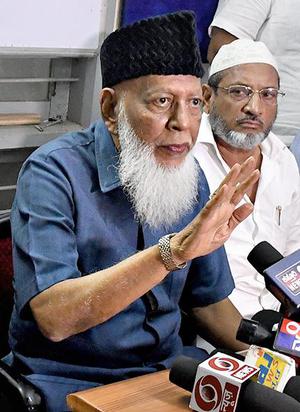
Veteran Congress leader, former MLC and former chairman of Karnataka State Minorities Commission, Haji K S Mohammed Masood, has been reelected as the new president of Kudroli Jamia Masjid in the city.

(L) K S Mohammed Masood / pix: thehindu.com

The general body meeting of the masjid was held in the auditorium of the masjid on Sunday February 27. Election for the office bearers of the managing committee of the mosque for the year 2022-2025 was held there.

Other office bearers elected were Yousuf Kardar (vice president), SV Khaleel Ahmed (general secretary), Maqbool Ahmed (secretary), Tajmul Ahmed (treasurer), Asif Sarfuddin (joint secretary), Dr Muhammed Arif Masood, Abdul Khaliq, Ashfaq Ahmed, Syed Iqbal and Saleem S (members).

source: http://www.daijiworld.com / DaijiWorld / Home> Karnataka / by Daijiworld Media Network – Mangaluru (SP) / Februry 28th, 2022

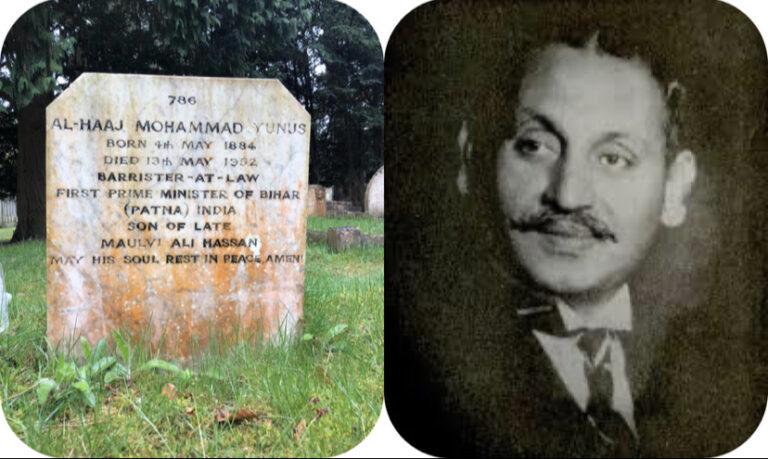
The First Prime Minister of Bihar. His grave lies at Brookwood Cemetery in Woking, England.

Patna, BIHAR / London, U.K :

I have been visiting Shah Jahan Mosque and the Brookwood cemetery in Woking for a few years now.

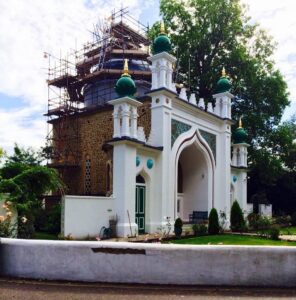
Woking, is a small town almost 30 miles from London. The town is famous for it’s first purpose build mosque in the UK .

 During, the two great wars this mosque served a purpose of spiritual centre for Muslim soldiers in Britain.

A few miles from the mosque lies a burial ground which was a designated ground for Muslim soldiers of WWI. Later, it has been transformed into a memorial park.

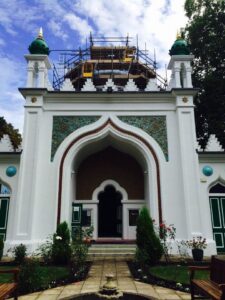
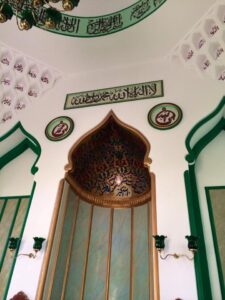
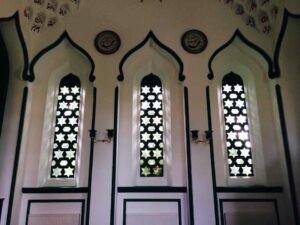
Shahjahan Mosque, Woking

Brookwood Cemetery is situated almost five miles from the Shah Jahan Mosque. The Cemetery is one of the largest in Europe. There are a number of famous Victorian Muslims resting here. Today, Woking has large Muslim population, mostly from Pakistan and they are very active in the community and maintaining the mosque very well.

My, very first trip was unplanned and somewhat impulsive. Though it was incredibly enlightening as well as moving. In 2016 after Eid prayer, on a spur I decided to drive my family to Woking. At the time I had only two boys; My eldest was 3 and his brother a year old. I had no idea how to reach to the mosque and locate graves of the early ‘Victorian Muslims.’ However I was committed to do both on the same day. On my SatNav I entered the postcode of Shah Jahan Mosque.

After two hours of drive we reached the Shah Jehan Mosque. There, we saw young and old, boys and girls in Asian Eid costumes. Contrary to the typical British cloudy weather it was a sunny day. Green dome of the mosque and good size open space with another impressive brick building gave an impression as if we are in a small but an affluent village of India.

The festive mood and the perfect sunny day was inviting us to explore and finish the target. After spending an hour there, we decided to drive to Brookwood cemetery.

The most challenging part was to locate the old Muslim section of the cemetery, where I wanted to the visit graves of Abdullah Yusuf Ali, Marmaduke Pickthall and Lord Headley.

To solve the problem, after reaching the cemetery gate; my intuition suggested me to drive only on the road which took us to the right side of the cemetery. First right, second right and then the third right. After a very short drive it was evident that the direction of graves has started changing, Muslim names with some Islamic symbols – crescent and stars on grave stones reassured me that we have entered into the Muslim section of the cemetery. In the end I reached to the place I wished. It was not easy to recognise Mr. Pickthall’s grave, three rows further, very close to the road is buried my favourite Abdullah Yusuf Ali the well known translator of the Holy Qur’an in today’s contemporary world who passed away in 1953. I was in search of another unmarked grave of Mr. Abdullah Quilliam, when my wife called me to show something. She excitedly pointed to a marked grave of the first Prime Minister of Bihar.

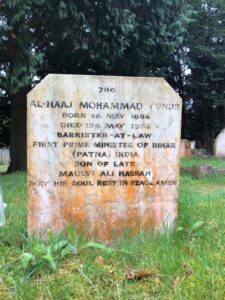
Grave of Mohammed Yunus

My wife is born and brought up in the UK. However she is fluent in Urdu and has enormous interest in her Indian roots. She located the grave of the ‘First Prime Minister of Bihar’ – Haji Mohammad Yunus. It was a huge surprise for me.

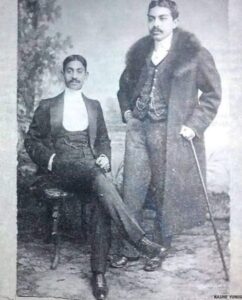
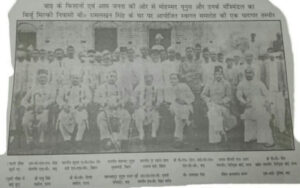
Barrister Mohammed Yunus (Sitting)

I don’t have any direct relationship with Late Haji Mohammad Yunus Saheb. However one of his nephews was my grandfather’s junior in the court and was a very close friend of his. My paternal grandfather was a successful and famous criminal lawyer who practiced in a small town in Bihar. Both of them worked in the same Court. In the 1940s my grandfather’s friend (Haji Yunus’s nephew) was the only Muslim in the town who had a Radio.

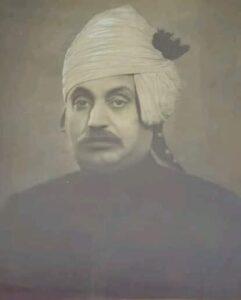
Barrister Mohammed Yunus

In fact in our ancestral town it was his radio that broke the bad news of Mahatma Gandhi’s cold blooded murder. Broadcasts from his Radio clarified that the murderer of Gandhi was ‘not a Muslim but a right wing Hindu’ .  Which was a momentous relief for the frightened local Muslim population during the violent and uncertain communal climate of the partition of India.

So, finding his grave reminded me of the old story of partition. When I was in school, our eldest uncle shared his experience as a child and narrated us with many stories of the partition; further, how they were taken to a safe place in Bengal for a short period of time by train.

Barrister Mohammed Yunus as Prime Minister of Bihar

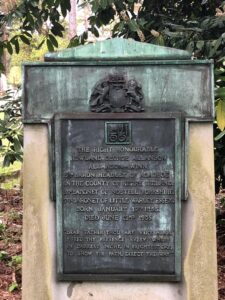
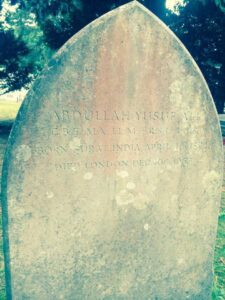
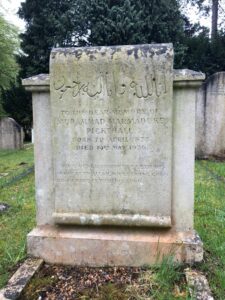
Below are photographs of Haji Mohammad Yunus grave stone and other famous British Muslims residents of the Brookwood Cemetery. May they all rest in peace; may Almighty Allah accepts their deeds and grant them highest place in Paradise. Ameen.

source: http://www.heritagetimes.in / Heritage Times / Home> Bihar> Heritage / by M S Siddiqui / July 29th, 2020

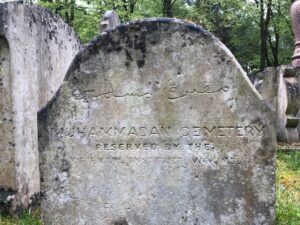
Preserving Persian Epigraphic Heritage

JAMMU & KASHMIR :

The earliest Persian and Arabic inscriptions are seen on the tombstones and walls in the olden graveyards of Kashmir

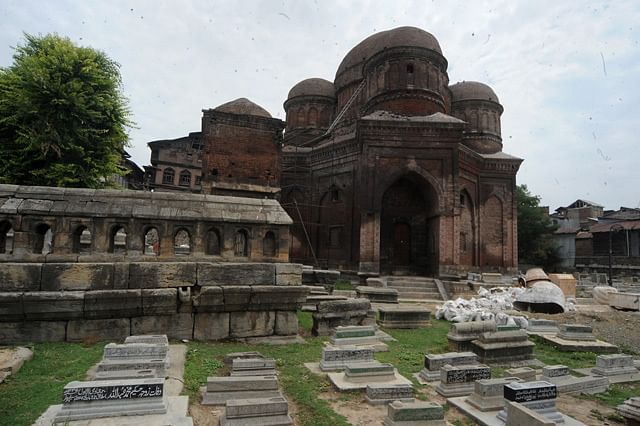
The historic tombs of the most famous Shahmiri period sultans and nobles, which included Sultan Sikander and Sultan Zain ul Abideen are also in this historic cemetery. [Tomb of Zain ul Abideen in Srinagar’s old city–Representational Image]File/ GK

With the establishment of Muslim sultanate in Kashmir, in late fourteenth century, the Sanskrit language and Sharda alphabet were also taken over by Persian and Arabic alphabet. The tradition of Sharda epigraphic culture also declined considerably and it gave way to Persian and Arabic inscriptions.

The earliest Persian and Arabic inscription are seen on the tomb stones and walls, in the olden graveyards, Khanqahs and mosques of Kashmir. Number of such inscriptions are documented in my book titled, Kashmir inscriptions of Kashmir, which was published in the year 2013 by Gulshan Books, Srinagar.

Persian inscription on a stone slab at the historic graveyard of Khanqah-e-mu’llah old Srinagar.

Epigraphs of royal graveyard at Mazari Kalan

Mazari Kalan popularly known to public as “Mazari Shiekh Bahau-ud-Din Ganj Baksh (RA)” lies in the foot of Kohi Maran to the west of Malkah. The history of the Mazar reveals that the site originally was proposed by Zain-ul-Abideen Badshah in 1421 AD for housing the only burial of her beloved wife called Ashama Bibi who belonged to a noble family of Bahaqi lineage. But when Sheikh Baha-ud-Din (RA), the reputed saint and Murshid of the Sultan left for heavenly abode in December 11, 1439 AD, he was laid to rest in this proposed site. Over the resting-place a shrine was also then erected.

Stone inscription in a dilapidated condition

The shrine looks to have been renovated, but it has lost most of its interesting architectural features. Adjacent to the shrine is seen the grave of a poet, Mir Illahi, who is saidto be the court poet of the Budshah. A beautiful inscription bearing few lines of his lyric is erected over the grave.

The grave of Asaha Bibi lies near the gate of the Mazar. The other burials it houses of the reputed saints and nobles of their times include; the grave of Solman, Sayyied Habib Shah Kashani, Moullana Mohammed Anie, Baba Qayim, Khwaja Mohammed Kakroo, Moullana Mohammed Balkhji, Sheikh Mohammed Trabali, Mulla Sarf-ud-Din Farhat, Mulla Nurullah Kath, Molvi Amir-ud-Din, Molvi Qulam-ud-Din Jami, Sayyied Mohammed Kermaniand others.

These all graves are very old and are crowned with gravestones, which are brilliantly carved in beautiful Arabic and Persian inscriptions.

Epigraphs of royal graveyard at Zain kadal

The royal graveyard of Zainkadal, locally called Mazari Salateen, enshrines the final resting places of Shahmeri Sultans. The historic tombs of the most famous Shahmiri period sultans and nobles, which included Sultan Sikander and Sultan Zain ul Abideen are also in this historic cemetery.

The tomb of Mirza Haider Dauglat, who administrated Kashmir as a Mughal governor for about 11 years during 1540-1552 AD, is also found in this historic graveyard.

There is a brilliant epigraph in Persian characters laid over his grave which is believed to have been installed by Moorcraft a British traveler during his vest of Kashmir in 19th century.

Persians inscription stone slab on the tomb of Mirza Haider Daughlat, Zainakadal Srinagar.

Zaindeep Epigraph

Persian stone inscription of Zain ul Abideen, SPS Museum Srinagar

Although there is no evidence of any standing Budshah’s Palace found anywhere in Kashmir valley but there is a magnificent stones slab inscription housed in the SPS museum at Lalmandi Srinagar which the experts claim provides vital information about Zaindeep, one of the famous Palaces of the Budshah’s period. Experts claim that this stone slab inscription, besides other details, has also provided the date of construction of this highest palace.

This inscription is Persian Nashk style. It is learnt that the inscription way back has been recovered from the Zianlank island of world famous Wullar lake in Bandipura district and later was shifted to this museum for its proper preservation. The inscription gives AH 841 as the date of construction of this world famous Zaindeep.

While providing description of this stone slab inscription experts say that this inscription is in Persian characters and is divided in four panels. The first two lines mentions the majesty, strength and the name of the Palace as Zaindeep and also describes it as the world famous, while as the date of foundation in Muslim calendar is mentioned in the last two lines in Persian words, which is calculated as 841.

Inscription of the palace

Ene bakha chun faluk muhakum bad

Mashoor ba zain deep dar alam bad

Shah Zain ibad ke daru jashin kunand

Pai vasta Chun tareekh khurdesh kahrum bad.

84l the inscription dates to 841 AH.

(The fort built by Shah Zain ul Abieein is so high and strong as the sky; and it is famous by the name of Zain deep. The king was very happy and celebrated the event when this palace was built)

Broken Stone inscription at Mazare Salateen old Srinagar

Besides these royal graveyards, the other historic and royal graveyards also carried brilliant epigraphs either engraved on tomb stones or on stone walls, these included Mazari Kalan, Mazari Salateen, Mazari Khanqah Mu’llah, Mazari Madine Sahib, Mazari Malik Sahib, Mazari Safakadal, Mazari Malkah and Mazari Bijbehra,.

But these human records are not preserved anywhere in these historic cementers. These inscribed records have fallen prey to the unchecked weathering and human vandalism.

Most of their inscriptions have defaced and it is very difficult to identify and decipher their epigraphs; steps are required to be taken to conserve this unprotected and unconcerned epigraphic heritage.

Disclaimer: The views and opinions expressed in this article are the personal opinions of the author.

The facts, analysis, assumptions and perspective appearing in the article do not reflect the views of GK

source: http://www.greaterkashmir.com / Greater Kashmir / Home> Op-Ed / by Iqbal Ahmad / February 20th, 2022

Indian ambassador to Saudi Arabia promoted as secretary of overseas Indian affairs

Hyderabad, INDIA / Riyadh, SAUDI ARABIA :

Dr. Ausaf Sayeed expected to accept his new assignment in New Delhi next month.

Indian ambassador to Saudi Arabia promoted as secretary of overseas Indian affairs
Dr. Ausaf Sayeed

New Delhi: 

India’s ambassador to Saudi Arabia, Dr Ausaf Sayeed, has been appointed to a new position as secretary, overseas Indian affairs in the country’s Ministry of External Affairs.

He has been appointed as the Secretary, (consular, passport, visa and Overseas Indian affairs). He is expected to accept his new assignment in New Delhi next month. The name of his successor in Riyadh is yet to be announced, but as per reports, the selection process has begun.

In terms of the bureaucratic arrangement, the new post is a promotion because the post is several degrees higher than that of an ambassador. The appointment was approved by the Indian cabinet on Tuesday.

About Dr Ausaf Sayeed

Dr Ausaf Sayeed completed his three-year term in Saudi Arabia after being appointed ambassador to Saudi Arabia in March 2019.

Dr Ausaf Sayeed’s tenure in the Kingdom of Saudi Arabia first as a Consul General and as Ambassador has been exemplary in strengthening Indo-Saudi bilateral relations.

He belongs to a well-known educated family of Hyderabad. His father, Awaz Sayeed, was a well-known modern Urdu essayist and short-story writer. He has performed diplomatic services in Egypt, Qatar, Denmark, Yemen, Chicago and Shashail.

Dr Ausaf Sayeed is known for his love for the Urdu language and its propagation. Wherever he was posted, he always convened Urdu Mushairas and brought Indian diaspora on a single platform.

source: http://www.siasat.com / The Siasat Daily / Home> News> India / by News Desk / February 16th, 2022

Padma Shri award for Najma Akhtar, first woman vice-chancellor of Jamia

NEW DELHI :

First woman vice-chancellor of Jamia Millia Islamia (JMI), Najma Akhtar has been selected for the Padma Shri award.

Najma Akhtar, Jamia VC at ceremony.

New Delhi : 

First woman vice-chancellor of Jamia Millia Islamia (JMI), Najma Akhtar has been selected for the Padma Shri award. Akhtar will be one of the 28 Indians, who will be conferred with the award in the field of literature and education by President Ram Nath Kovind, at a ceremonial function, which is held at Rashtrapati Bhawan every year.

Akhtar (67) who was appointed as Jamia Vice Chancellor (VC) in April 2019, scored a historic double – not only was she the first woman to hold the post, but she was also the first woman to head any central varsity in the national capital. 

She has previously served as the VC of University of Kashmir and headed the department of Educational Administration at the National Institute of Educational Planning and Administration (NIEPA) for 15 years. 
Akhtar said that she is grateful that her work was recognised and thanked both the PM and the President.

“I will accept this award just not for myself, but on behalf of my colleagues. Everyone works hard, but not everyone’s work reaches the recognition they may deserve. I thank the PM and the President for recognising my work, especially, the President, who entrusted me as the first woman VC of the university,” she said.

Besides her, three others from the field of literature and education, from Delhi, have been selected for the award including – Tara Jauhar, J K Bajaj and Dilip Shahani.    

source: http://www.newindianexpress.com / The New Indian Express / Home> Cities> Delhi / by Express News Service / January 26th, 2022

Scholarships worth ₹1 cr. given to over 3,600 girls

Bengaluru, KARNATAKA :

Seventeen-year-old Bushra Parveen, Rufiya K. and Mizba are happy that they can now realise their dreams of becoming professionals. These girls are among the 3,613 students who were awarded an educational scholarship by the Bazm-e-Niswan Charitable Trust in Bengaluru on Thursday. These girl students are happy that they can now pursue courses in medicine, engineering and accountancy, which they are aiming for.

The all-woman charitable trust distributed scholarships worth ₹1.32 crore to the 3,613 deserving girls from poorer sections of society. While 1,731 beneficiaries are PU students, 1,722 are pursuing undergraduate courses. As many as 65 are diploma students and 95 post-graduate students.

According to the organisers, the trust, which has been funding the education of poor girl students in 1971, has given scholarships to over 63,000 girls so far. These girls are now successfully qualified as teachers, professors, doctors, lawyers, government officers, business women, engineers, journalists among other professions.

“The purpose is to encourage women from the deprived sections of the community to pursue higher studies. Eligibility for the scholarship is based on academic merit and economic need. Any girl wishing to apply must have scored an average of at least 50 per cent in her exams and must also have documents proving her financial status,” said Husna Sheriff, president of the trust.

“We received 4,505 online applications this year as against 3,200 last year. This 40% increase in the number of applications can be attributed to the fact that many students who had dropped out of their higher education in 2020, came back this year,” Ms Sheriff said.

Pointing out that lakhs of students dropped out of higher education during the pandemic, she said: “Realizing the dire need to support the poor and needy girls, we decided to go ahead with the scholarship program despite many uncertainties.”

source: http://www.thehindu.com / The Hindu / Home> News> States> Bengaluru / by Special Correspondent / Bengaluru – February 10th, 2022

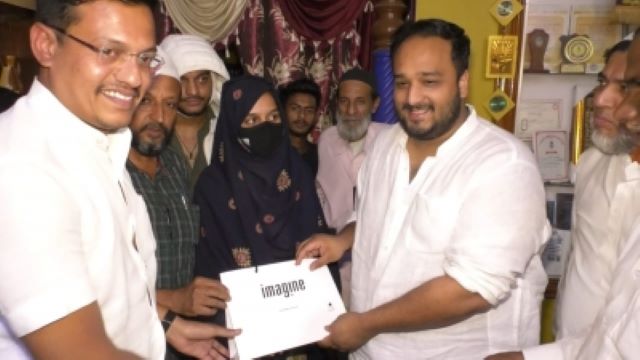
Hijab row: Mumbai MLA meets Mandya girl, gifts iPhone

Mandya, KARNATAKA :

Bengaluru : 

Karnataka college girl Muskaan Khan who confronted a crowd by raising slogans of “Allah hu Akbar” during protests that broke out on hijab row, continues to be in news.

Congress MLA from Mumbai’s Bandra Zeeshan Siddique came all the way from Maharashtra on Friday and paid visit to Muskan’s residence in Mandya city. The MLA appreciated her “courage”, assured support and gifted her an iPhone and smart watch.

“I came from so far to meet the girl from our community who showed exemplary courage. I am happy for her courageous act,” he stated.

“Today whole of Karnataka, entire country is taking pride of her act. She has shown what is the real power of woman. After seeing her brave act, other women who are being pressurised, subjected to harassment and whoever is meted with injustice, they can also confront such acts,” he asserted.

Her act against those zaalims (cruel people) is commendable, he added.

“Wearing hijab is a constitutional right. One can wear clothes of her choice. You have problem with her hijab or with the fact that she is getting educated,” the Congress MLA said.

“There are crores of brothers behind Muskaan to protect her right of wearing hijab. I felt happy after meeting her family,” he added.

Muskaan Khan, the student of PES College of Arts, Science and Commerce in Mandya district was allegedly heckled by a group of students in the college premises for wearing ‘burka’. The group raised slogan of ‘Jai Sriram’ while surrounding and following her. Muskan confronted the crowd with slogan of ‘Allah hu Akbar’. The video is now viral on social media.

Later, she was safely escorted inside the classroom by authorities. Muskaan has later stated that she will abide by the court order and thanked college authorities.

Meanwhile, various Muslim organisations have announced cash reward for her act. Complaint has also been lodged in connection with announcing cash prize to Muskaan.

source: http://www.daijiworld.com / DaijiWorld / Home> Top Stories / by IANS /Bengaluru, February 11th, 2022