Category Archives: Leaders

Shamsur Rahman Faruqi Dies a Month After Recovering from Covid-19

NEW DELHI / Allahabad, UTTAR PRADESH :
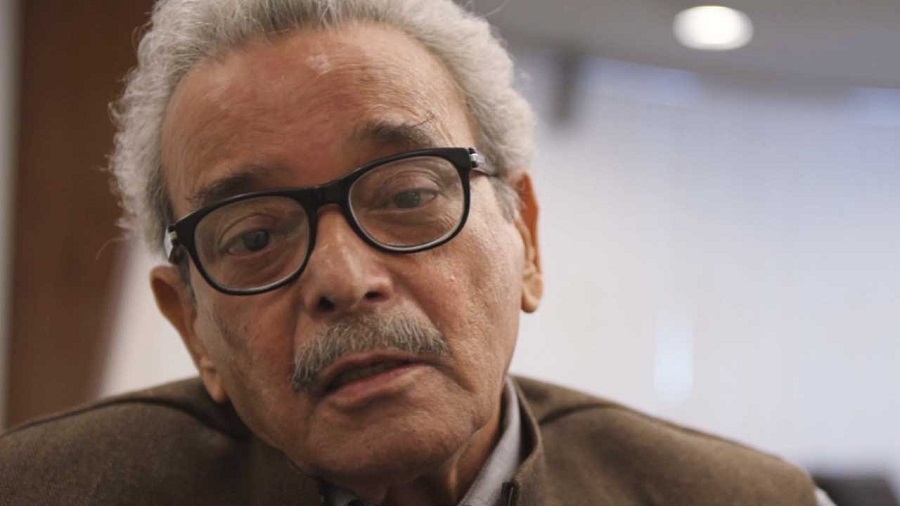
Shamsur Rahman Faruqi.

The legendary Urdu critic and Padma Shri awardee has contributed immensely to modern literary discourse

New Delhi :

Legendary Urdu writer and critic Shamsur Rahman Faruqi died in Allahabad, Uttar Pradesh, on Friday. His death came after a month of recovering from Covid-19. Faruqi, 85, was discharged from a hospital in Delhi on November 23.

“He had been insisting to go back to his home in Allahabad. We reached here only this morning and within half an hour he passed away at around 11,” Faruqi’s nephew and writer Mahmood Farooqui told PTI.

He used to live in Delhi after retiring as a chief postmaster-general and member of the Postal Services Board in 1994.

Faruqi was born on 30 September 1935 in Uttar Pradesh.

Author of several books, Faruqi has contributed to modern literary discourse with a profundity rarely seen in contemporary Urdu critics. His books of fiction, The Mirror of Beauty (translated into English from the Urdu Kai Chaand The Sar-e-Aasmaan in 2006), and The Sun That Rose From The Earth (Penguin India, 2014), have been highly critically acclaimed.

He used to edit a literary magazine Shabkhoon which he himself had launched. He is also credited with reviving “Dastangoi”, a 16th century Urdu oral storytelling art form.

Faruqi was the recipient of numerous honours including Padma Shri, Sahitya Akademi award and Saraswati Samman award.

His burial will take place at Ashok Nagar cemetery in Allahabad at 6 pm on Friday.

Writer William Dalrymple took to Twitter to mourn the demise of Faruqi.

“RIP, Janab Shamsur Rahman Faruqi saheb, one of the last great Padshahs of the Urdu literary world. This is such sad news,” Dalrymple said.

Sanjiv Saraf, the founder of the famous Rekhta portal, also condoled the death of “the century’s most iconic figure in the realm of Urdu literature”.

“His demise has left us bereaved as an entire generation of literature lovers mourn this loss. I extend heartfelt condolences to his family and loved ones,” Saraf said.

source: http://www.clarionindia.net / Clarion India / Home> India / by Team Clarion / December 25th, 2020
Saudi, Indian healthcare professionals join hands

Jeddah, SAUDI ARABIA :

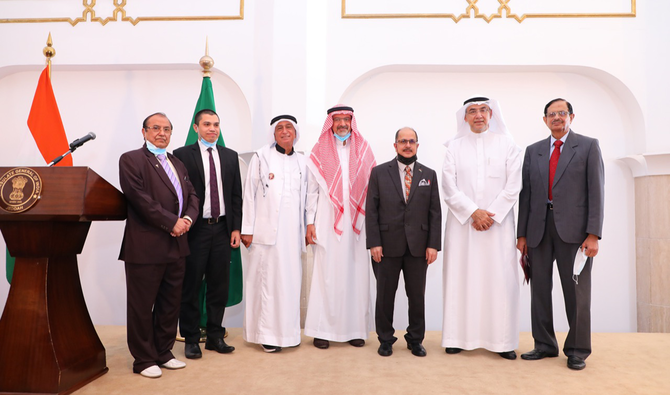
Indian Ambassador Dr. Ausaf Sayeed, third right; Dr. Ashraf A. Amir, second right; Acting Consul General Y. Sabir, second left; Dr. M.S. Karimuddin, right; and others.

The Jeddah chapter of the Indo-Saudi Medical Forum (ISMF) was launched at the InterContinental Jeddah on Friday by Indian Ambassador Dr. Ausaf Sayeed. The event took place in the presence of prominent Saudi and Indian healthcare professionals in the western region.

Dr. Sayeed thanked Dr. Ashraf A. Amir, chief medical officer (CMO) at Jeddah’s high-profile International Medical Center (IMC), for agreeing to become the forum’s president. He also thanked veteran and popular Indian pediatrician, Dr. M.S. Karimuddin, for becoming the forum’s vice president.

The ambassador highlighted the great strides that have taken place in recent times in relations between Saudi Arabia and India. Dr. Sayeed said the visit of Prime Minister Narendra Modi to Saudi Arabia in October last year plus the signing of a series of important agreements in different fields, including healthcare, have provided new momentum to the two countries’ relationship.

The ambassador highlighted the immense opportunities that “are waiting to be tapped in the healthcare industry.” He said the new forum, led by an energetic and experienced team, would be a good platform for complementing the steps and initiatives being taken by both governments — in Riyadh and New Delhi — to increase cooperation in the field of healthcare. He pointed out that India had become the “pharmacy of the world” during the coronavirus (COVID-19) pandemic. “India stands ready to play its part in alleviating the difficulties of the global community during times of global health crises.”

Dr. Ashraf Amir promised to take all steps to achieve the stated objectives of the Indo-Saudi Medical Forum. He said the advancement of the Indian healthcare sector had been phenomenal and that Saudi Arabia had won international praise for its exceptional handling of the coronavirus crisis.

Acting Consul General Y. Sabir welcomed the guests. He noted that the Indo-Saudi Medical Forum aimed to serve as a key platform point for high-level informal interactions between the medical fraternities of both India and Saudi Arabia.

Dr. Karimuddin highlighted the many activities that the forum plans to undertake in the coming days and months. Among other things, he said: “An effort will be made to bring together corporations working in the healthcare sector, including hospitals, pharma and surgical equipment firms, in order to collaborate with a view to providing excellent healthcare for Saudi citizens and expats.”

Dr. Karimuddin said the Indo-Saudi Medical Forum was a nonprofit body under the patronage of the Embassy of India. The forum, made up of Indian and Saudi doctors and experts in the field of healthcare and wellness, will play a supporting role in strengthening India-Saudi Arabian cooperation related to healthcare. ISMF will have three chapters in Jeddah, Riyadh and Dammam.

Nouf Marwaai, award-winning yoga instructor, spoke about how India’s expertise and facilities in the field of wellness and holistic healthcare was relevant to the Saudi healthcare system.

She said the momentum for the present Saudi-Indian relationship began during Modi’s visit to the Kingdom in April 2016 when King Salman presented him with the Kingdom’s highest civilian decoration, the Sash of King Abdul Aziz. “This recognition is an indication of the importance the Kingdom attaches to its relations with India,” she said.

Dr. Iqbal Musani, general secretary of the forum, highlighted with a PowerPoint presentation the giant strides that India and Indian doctors have made in the field of medicine. 

Prominent among those who were present at the event included Hamna Maryam, consul (commerce) at the Indian Consulate in Jeddah; Mohammed Alungal, chairman of Abeer Medical Group; V.P. Mohammed Ali, chairman and managing director of Jeddah National Hospital; Dr. Kavitha Marusamy of Ibn Sina National College; Dr. Ataat Khan and Dr. A.H. Maniyar.

A large number of Indian and Saudi doctors also attended the launch virtually in view of COVID-19-related restrictions.

source: http://www.arabnews.com / Arab News / Home> Business>Corporate News> Latest News / December 26th, 2020

3 Muslim Women Clear Judicial Services Exam in Uttarakhand

UTTARAKHAND :

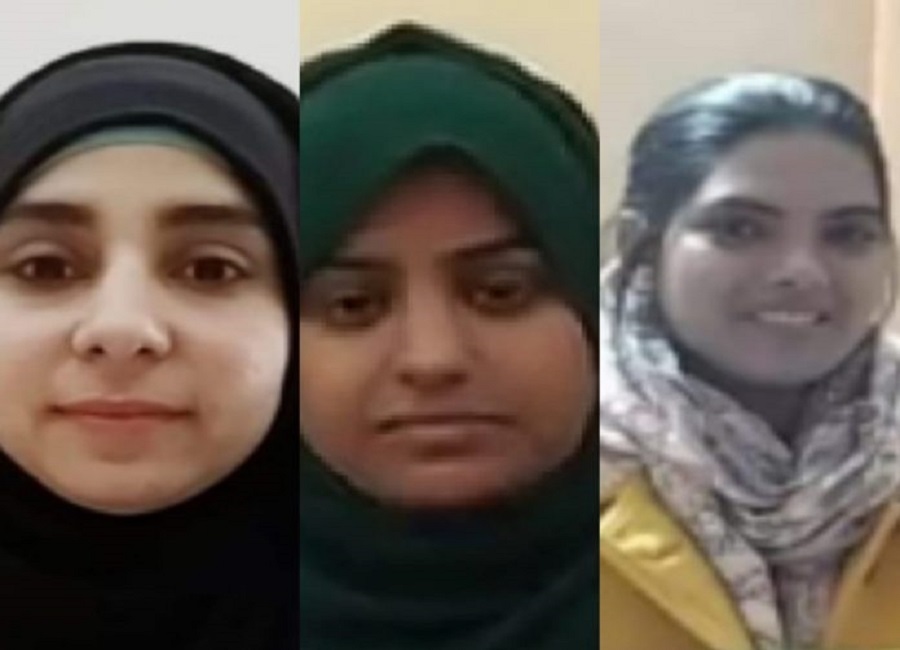
Aisha Farheen, Gulista Anjum and Jahan Aara Ansari of Uttarakhand have cleared the Judicial Services (Civil Judge-Junior Division) Examination. — Photo courtesy: twocircles.net

Earlier, 18 Muslim women in Rajasthan and 5 in Uttar Pradesh had cleared the exams this year.

New Delhi :’

Three Muslim women hailing from the villages around Haridwar in Uttarakhand have cleared the Judicial Services (Civil Judge-Junior Division) Examination whose final results were announced on December 22. There were four Muslims among the 17 candidates who appeared in the 2019 exams and have been selected this year with Udisha Singh at the top of the heaps.

The Uttarakhand Public Service Commission released the results of the Provincial Civil Services-Judge Main Examination on May 22 this year. Selected candidates were called for an interview during September 17-20. Seventeen candidates cleared the interview in the results released on Tuesday.

The three qualifying Muslim women are Aisha Farheen, Gulista Anjum and Jahan Aara Ansari. Earlier, 18 Muslim women in Rajasthan and 5 in Uttar Pradesh had cleared the judicial services exams this year.

Farheen, who hails from Rurkee’s Shahpur, is the first woman in her family to study the law. She is the most educated woman in her village who did LLB (Bachelor of Laws) from the Aligarh Muslim University (AMU).  Her father studied up to Class V only while the mother never went to school. Farheen, who was ranked 9th, said that she succeeded in her first attempt after 6 months of preparations for the exam.

“Allah has done justice with me. I will work professionally as per the law. I have not met any judge before. I gave importance only to two things in my life: one is my books and the second is my family. I feel that women should be given a lot of opportunities to study and progress. No one should have excuses for their failures,” Farheen was quoted by Twocircles.net as saying.

Farheen’s father said that although he studied up to only Class V, he was determined to educate her daughter and allow her to progress. He sent her to Rurkee, Allahbad and Aligarh Muslim University for higher studies. “Those who disliked the education of daughters are silent now,” he said.

Gulista Aara, whose father is a social worker, said that she had been able to achieve this because her father’s dream was to see her as a judge. Her father emphasised on women’s education among Muslims. He felt proud after his daughter succeeded in the judicial services exam. Gulista herself stressed on women’s education. She believes that if women are educated, society will be safe. This is not the first attempt of Gulista for the judicial services. In 2017, she had reached the interview segment but was not selected in the final result. She gives the credit for her success to her family members and teachers.

Jahan Aara, who hails from Jawalapur’s Sarai, has done her LLB course from Dehradun. Then, she did a diploma in journalism as she wanted to become a journalist. But when she saw that Muslim women are becoming judges in Uttar Pradesh, Rajasthan and Uttarakhand, she started her preparations for the judicial services exam at her home.

Her father Shahadat Hussain, a farmer, said that it was a lady police officer in Dehradun, Shahjahan Ansari, who inspired him to dream big about her daughter. His daughter finally fulfilled his dream.

Jahan Aara said that she got full freedom from her family to study whatever she wants. No family members stopped her from doing what she wanted to do.

source: http://www.clarionindia.net / Clarion India / Home> Editor’s Pick / by Team Clarion / December 28th, 2020

Jamal Qadri left an example of working selflessly with the Indian expats in KSA

Jeddah, SAUDI ARABIA / Hyderabad, TELANGANA :

Syed Jamaluddin Quadri who was known among his friends and family members as Khusro passed away last year in Hyderabad, his hometown.

He wasn’t keeping well for quite some time.  I had been told that he has developed difficulty in walking owing to serious knee problem.

I remember Jamal as Jamaluddin and not as Jamalullah that he is referred to by many of his friends.

When his close friend and companion Sheikh Ibrahim said his organization is bringing out a special issue on him and wanted me to pen my own thoughts, I agreed immediately.

His demise had triggered a stream of memories ranging from his childhood to the time he spent in Jeddah. I had attended his funeral prayers that were held at Abdullah Shah Saheb mosque in Hussaini Alam.

I first came to know of him when I was admitted to Modern Kinder Garten, a new English medium school in Hussaini Alam, the area in which I too lived. I was not alone in not knowing the meaning of Kinder Garten. We always thought it was Kinder Garden. And no one took pains to explain to the students the meaning of the school’s name. It was much later in life that I came to that Kinder means children and garten means garden.

Khusro was two years senior to me in the school. Traditionally, the juniors do not get the attention of the seniors.  But circumstances at the school were such that I came to know of him and his family in the first few weeks of entering the MKG. His father Janaab Imaduddin sahib, a salt and pepper bearded gentleman was committed to the cause of education. He was looked at with tremendous respect by his peers, teachers and students. Khusro was his only male child.  He had sisters, older and junior to him. Some of them taught at the school. We the students called them Bajis.  One such sister, Rafia Baji, later became the Principal of the school.  That of course was much later than I left the school. Interestingly, the school is still working.

I distinctly remember two incidents from the MKG days.  The first was a Kabbadi tournament where we the fourth or fifth class students were pitted against the eighth class boys in the finals. Khusro was in that team which won the tournament. We had no regrets in losing to the big boys because we had given them a tough competition. In fact, we won more appreciation as we were the underdogs.

The second incident belonged to the annual day function that was organized in the mid-sixties. The war with China was still fresh in the minds, therefore, the management decided to present a play on that subject. The play showed the dedication of the people to sacrifice their lives for the country. The story revolved around a family that had just celebrated the wedding of its son who was on vacation from his army duty.  Khusro played the bridegroom wearing an impressive army uniform.  Since the girls were not allowed to take part in the play on stage, especially with the boys, the management was looking for boys who could play the female characters. My friend and classmate Abdul Wahab Abid played the role of Khusro’s mother and I was cast as his newly wed bride. As I was being prepared in a red bridal dress and jewelry for the stage a senior student, Nayeem, suddenly entered the room, stared at me intently for a few moments and suddenly kissed on my cheek and ran away.  He left me red-faced and bewildered. I believe he was punished for the ‘mischief’ later.

It was a great show where the beautiful bride asks her handsome husband to attend to the call of the nation and fight against the enemy. But she does it with lots of weeping. That patriotic play was a hit.

A few years after I left the MKG I was invited by Khusro and his group of dedicated friends to teach younger students at a mosque during early morning hours every day.  I accepted the offer and joined the group.  That was a great social initiative led by Khusro. I saw in him at that age the leadership qualities that blossomed further during his long stint in the Kingdom of Saudi Arabia to which he had migrated in the middle seventies.  Incidentally, many of those who had worked in that mosque also left for the Kingdom. These young men and their families lived in a neighbourhood located on way to King Abdul Aziz University in Jeddah. It was perhaps called Kilo Six or Seven.

After joining Saudi Gazette, one of the two English language newspapers published from Jeddah, in early 1982 I started meeting some of the members of that group.  I found that in his own way Khusro had kept his tradition of social activism alive.  He was helping the newly arrived Indians to find jobs and settle down. He was holding weekly classes on social and religious norms of the Kingdom and explained to them matters pertaining to religion.

He began working for the preservation and promotion of Urdu by helping students.  He also started the tradition of celebrating The Education Day in commemoration of the birth anniversary of Maulana Abul Kalam Azad, every year on November 11. To coincide with the occasion he was regularly bringing out a souvenir on Maulana Azad.  While I was working with Maulana Azad National Urdu University in Hyderabad as its Consultant/Advisor he used to phone me asking for my articles for the souvenir. I contributed a couple of write-ups on Maulana Azad for the souvenir.

His another area of interest was Jamia Nizamia, the 135 years old Islamic institution in Hyderabad. He invited Aalims and scholars to Jeddah to be part of the celebrations he would organise to sustain the interest in religious education among Indians, especially students, who were missing a lot by being away from their homeland.

A Sufi by the belief he never hesitated in working with different groups.  I remember his regular meetings with Janaab Maslehuddin Saadi with friends to gain more knowledge about Sufi philosophy and practices.

I also remember the deep sorrow in his eyes when one of his sons drowned in the sea near Visakhapatnam. That boy was spending his vacation there. But Khusro managed to control it and did not allow the tragedy to deter him from his regular work.

I truly believe that people like Khusro come from are a rare breed. They do not forget that they have to play their role, however small or insignificant it may sound. I hope his friends in Hyderabad as well as those who are still in the Kingdom of Saudi Arabia or in other parts of the world would carry forward his positive work.

Mir Ayoob Ali Khan is a Senior Journalist who has worked with Saudi Gazette, Deccan Chronicle and Times of India. He is currently associated with Siasat.com, an English language news portal.

source: http://www.siasat.com / The Siasat Daily / Home> Featured News / by News Desk / December 28th, 2020

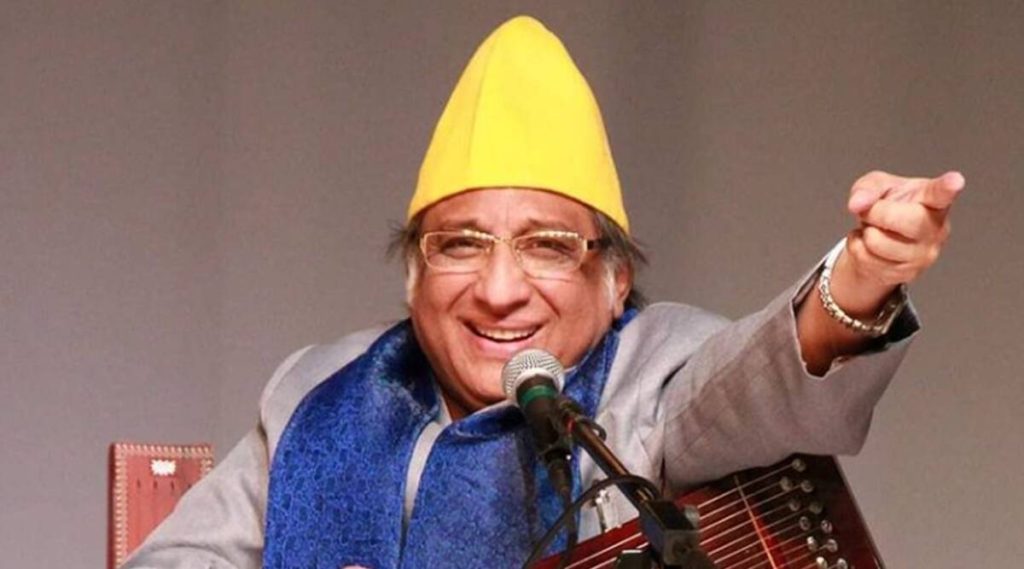
Dilli Gharana vocalist Ustad Iqbal Ahmed Khan dies at 66; a look at his unseen soirees

NEW DELHI :

Ustad Iqbal Ahmed Khan was a renowned vocalist. (Source: Instagram)


Since 1981, Ustad Iqbal Ahmed Khan was serving as the custodian or Khalifa of Dilli Gharana.

Hindustani classical music maestro Ustad Iqbal Ahmed Khan passed away at the age of 66 on Thursday, December 17, 2020. His demise left many people shocked who took to social media to express their condolences. The vocalist, who belonged to Dilli Gharana, was a recipient of the Sangeet Natak Akademi Award for his contribution to classical music.

After receiving his initial training in music from Ustad Chand Khan and later under the guidance of Ustad Hilal Ahmed Khan and Ustad Naseer Ahmed Khan, Ustad Iqbal went on to “teach Indian Classical Music and style of Dilli Gharana Gayaki”, as per his official LinkedIn profile.

A well-known name in Delhi’s cultural scene, owing to his immense contribution to the field, he was serving as the custodian/Khalifa of Dilli Gharana since 1981. He took over the reins after the demise of Ustad Chand Khan Sahib in 1980 and other senior members (rather in quick succession), as per the official website dilligharana.in.

The Gharana’s Sursagar Society was founded in 1940 by the late Ustad Chand Khan Sahab/Saheb (Sangeet Martand) in the memory of his father, Shams-e-Mousiqui Ustad Mamman Khan. The society aims to conserve and promote an awareness of both the rich and heterogeneous cultural tapestry through a focus on the classical arts, with their attendant legends, rituals, mythology and philosophy and the deeper and subtler values of these arts, as per dilligharana.in.

Here are some musical soirees the society used to organise at distant places in Delhi, courtesy Sursagar Society of Delhi Gharana page on Facebook.sources

His style of classical singing and his renderings of Thumri, Dadra, Tappa, Bhajans and Ghazals won him great acclaims.

He was actively involved with classical music through various mediums that included performing, teaching, research, recording and archiving, and curating productions and events that aimed towards preserving and promoting the classical repertoire, both in India and abroad.

source: http://www.indianexpress.com / The Indian Express / Home> Lifestyle> Art &Culture / by Lifestlye Desk / New Delhi – December 17th, 2020

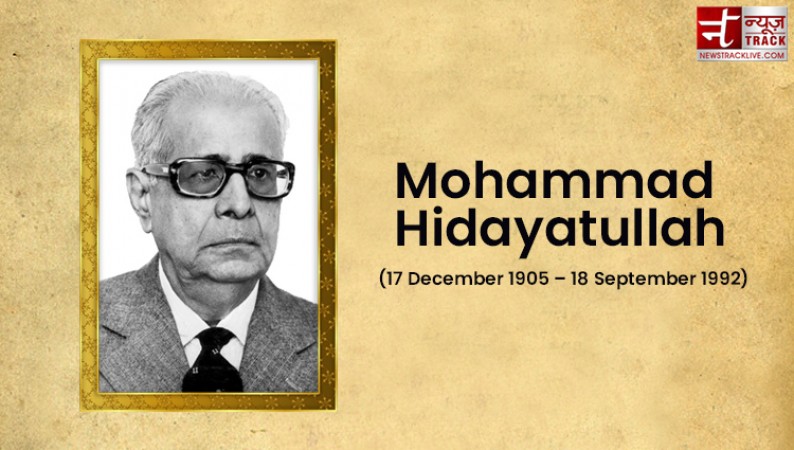
Mohammad Hidayatullah: India’s first Muslim judge, who also served as the acting President

Lucknow, United Provinces (British India) / Mumbai, MAHARASHTRA :

Mohammad Hidayatullah was born on 17th December 1905, he was the first Muslim Chief Justice of India. It would be more appropriate to call Mohammad Hidayatullah the first acting president of India, as he was not as elected president according to India’s constitutional system. He also assumed charge as the acting President of India on two occasions. He also became the sixth Vice-President of India.

On August 31, 1979, Mohammad Hidayatullah was appointed as the Vice-President of India. His tenure lasted till 31st August 1984. He was also vice-chancellor of Jamia Millia Islamia, Delhi and Punjab University from 1979 to 1984. On October 4, 1991, Mohammad Hidayatullah was also conferred honorary membership of the Indian Vidya Parishad. After concluding the term of vice president,  Mohammad Hidayatullah felt like an independent bird. He was also the chairman of the Rajya Sabha.  But he was never accused of misuse of his post or favouritism.

In the upper house, he was a friend to all. After retiring, eminent politicians praised him. Indira Gandhi, Vice President R Venkataraman, Home Minister Narasimha Rao and high officials were among those who were there at the station to see him off Mumbai after he completed the term of vice president. He passed away on 18th September 1992 due to a heart attack.

source: http://www.english.newstracklive.com / News Track / Home> NewsTrack / September 18th, 2020

KM Shareef, the voice of oppressed embraces eternal silence

Mangaluru, KARNATAKA :

Karnataka is mourning the demise of KM Shareef, the former National President of Popular Front of India. With his demise, the community has expressed grief and a great sense of loss for he was a voice that spoke in favour of the oppressed.

Since the year 2000, KM Shareef – known in the public sphere as a writer, critic, translator, author, orator, and journalist – has been working tirelessly on the social front.

After graduating with a BSc degree, he spent four years in Dubai as a career person.He was a student of Mittabailu Jabbar Ustad, the general secretary of the Samasta Kerala Jamiatul Ulema, from whom he secured religious education.His father, the late Abdullah Haji, served as a Mudarris for 30 consecutive years in the Mittabailu Jamath.

KM Shareef, who advocated towards creating a united struggle for the empowerment of Dalits, Muslims, and other marginalized communities, sought to unite these communities and struggled towards realizing this objective throughout his lifetime in the organizational setup.He emphasized the need to politically empower these communities and stressed the importance of alternative politics in this regard.

In 2003, he served as the convener of Coastal People’s Union, an organization that was established as a coalition of various Muslim social organizations across Coastal Karnataka.

He played a prominent role in establishing ‘Prastutha’, a fortnightly news magazine in 2007, and also served as the editor-in-chief of the publication.Through this media publication, he constantly wrote on behalf of exploited communities.

His writings delved into issues affecting the country, through which he warned that the country was endangered by communal fascism, capitalism, and imperialism.

He has been instrumental in bringing new press campaigns through the Prastutha publication and introducing newfacets of journalism to the press.He was constantly encouraging and inspiring budding young talents to read and write.

Opposing the exploitation of women in society, he has consistently asserted that dowry is a social evil and one of the main causes contributing to women’s atrocities and exploitation in the country.

His Kannada research work, ‘ಶಾಂತಿಗಾಗಿವಿವಾಹ'(Marriage for Peace), is by far the most prominent among his written works. In this book, he objectively outlines how dowry is in effect across the country and in what manner it is weaponized to commit atrocities against women.

When he was the President of the Karnataka Forum for Dignity (KFD), he organized a series of state-wide, anti-dowry campaigns and encouraged young people to organize simple weddings and dowry-free marriages.

In 2006, KM Shareef spearheaded theKFD campaign ‘ಕೋಮುವಾದಿಫ್ಯಾಶಿಸ್ಟರಿಂದಕರ್ನಾಟಕವನ್ನುರಕ್ಷಿಸಿ'(Protect Karnataka from Communal Fascists), across Karnataka. When the ‘VidhanaSoudhaChalo’ convention was held in Bangalore on the occasion ofconcluding the campaign, a delegation headed by KM Shareef had met with the then Chief Minister Kumaraswamy and filed an appeal.This historic campaign, which occurred amid a series of sustained attacks against minorities in coastal Karnataka, resulted in the KFD organization becoming a household name in Karnataka.

KM Shareef, who sought no limelight or fame in the public sphere, was known for his straightforward, simple personality and disciplined disposition.

He was in constant contact with other leaders who were activelyfightingtowards social justice in the activism circle.He continued to hold close associationswith Dalit leaders, progressive figures, human rights activists, thinkers, and writers.

He was a man who had already possessed farsighted vision and ideas towards Muslim empowerment, when he presented his paper titled, ‘Education and Empowerment of Muslims’ during the Second Beary Literature Conference.

KM Shareef is survived by his wife, three sons, three daughters, and a multitude of relatives, friends, and well-wishers.

source: http://www.prasthutha.com /Prasthutha.com / Home / December 22nd, 2020

Syed Mohammad Afzal, Former AMU Registrar passes away

MADHYA PRADESH / Aligarh, UTTAR PRADESH :

Aligarh: 

Former Aligarh Muslim University (AMU) Registrar, alumnus and  Madhya Pradesh cadre IPS officer, Mr Syed Mohammad Afzal passed away at a hospital, battling cancer. He was 56-years-old.

Expressing condolences on the former AMU Registrar’s demise, the Vice Chancellor, Professor Tariq Mansoor said that deceased will be remembered for numerous contributions to the university.

He added that Mr Afzal was a caring and compassionate person with a larger-than-life personality. His demise is a huge loss to the AMU community.

May the Almighty bless his soul with peace, said Prof Mansoor.

Mr Afzal served as the AMU Registrar from 2000 to 2002 and joined as the Jamia Millia Islamia Registrar in 2005. He also served as a regular resource person to Academic Staff College-AMU, taught IPC, CRPC course to the students of law at AMU regularly and also instructed different subjects of law to IPS probationers at NPA and to DSPs and Sub-Inspectors at State Police Academy, Sagar.

In his distinguished career, Mr Afzal was posted as the DIG of CID, SSP Telecommunication and Commandant 14th Battalion and SP Gwalior, SP Rajgarh and Chattarpur, Commandant of Jammu and Kashmir Battalion, Additional SP Jabalpur, ASP Sagar-Bhopal and ASP, SVP National Police Academy, Hyderabad.

Mr Afzal attended AMU for LL.M (1987), LL.B (1985), B.A Hons (1982) and PUC (1979). Mr Afzal’s brother, Dr Syed Mohammad Amin is a professor of Urdu at AMU and his family resides at Kabir Colony in Aligarh.

He used to run the Aligarh based Al Barakat Educational Society.   

source: http://www.amu.ac.in / Aligarh Muslim University / Home / by Public Relations Office, AMU / December 16th, 2020

Tomb of Abdur Rahim Khan-I-Khana restored

NEW DELHI :

The tomb stands within an ensemble of 16th century medieval monuments in the Nizamuddin area of the national capital

New Delhi: 

The tomb of Abdur Rahim Khan-I-Khana (1556-1627), popularly known as ‘Rahim — one of Akbars navratnas and a military leader — will open for visitors from December 17 here after completion of restoration work by Aga Khan Trust for Culture (AKTC) and InterGlobe Foundation.

The tomb stands within an ensemble of 16th century medieval monuments in the Nizamuddin area of the national capital.

The conservation project started in 2014, and included a cultural revival of Rahim’s legacy and poetry.

The Union Minister of State for Tourism and Culture Prahlad Singh Patel is scheduled to preside over the completion ceremony of Rahim’s Tomb on December 17, Rahim’s birth anniversary.

An expression of Mughal architecture, Rahim’s tomb informed the design for the Taj Mahal. Clad in red sandstone and marble, the interiors of the mausoleum are decorated with ornamental incised plasterwork, and decorative motifs such as the six-sided star and lotus medallions.

It stands at the edge of the buffer zone of the Humayun’s Tomb World Heritage Site, within an area of high archaeological significance.

Archeological Survey of India (ASI) is the custodian of the monument of note.

According to the organisations involved in the conservation effort, the physical revival of the tomb included repairs to the major damaged structures on the interior and exterior of the mausoleum dalans, canopies (chattris), dome, facade and landscape, along with the wall and ceiling surfaces.

The landscape around Rahim’s tomb has been restored to original slopes and height. The conservation of the dome has been completed with a symbolic addition of marble cladding.

“Conservation at Rahim’s tomb has been possible with a public-private partnership. Not only has a significant monument been conserved for posterity but dignity has been restored to the resting place of the cultural icon, Rahim. Conservation in the Indian context can benefit from thousands of years of building craft traditions and recourse to an interdisciplinary scientific approach. 175,000 craft days of work has helped restore this grandeur,” Ratish Nanda, CEO, Aga Khan Trust for Culture said.

The cultural revival efforts also witnessed compilation of Rahim’s literary works and archival research on his life and works by scholars, culminating in an English publication titled ‘Celebrating Rahim’.

A three-day music festival was also held in 2017 to disseminate Rahim’s literary works that saw a confluence of musical renditions, scholarly discussions on the multifaceted personality of Rahim and an informative exhibition.

The tomb was originally built by Rahim for his wife, making it the first ever Mughal tomb to be built for a woman, with the more celebrated Taj having been built later. As with other tombs in Nizamuddin, Rahim was buried here due the close proximity to the shrine of Hazrat Nizamuddin Auliya, as it was considered auspicious to be buried near a saint, said AKTC.

source: http://www.ummid.com / Ummid.com / Home> India / by IANS / December 16th, 2020

‘Memorable day’: Wife of army man witnesses 2nd son become army officer

Madurai, TAMIL NADU :

Wife of a retired army man, Shakeela had her elder son also serving in the army as a major and now with her younger son also in the army, she said it is all her “good fortune.”

Memorable day': Wife of army man witnesses 2nd son become army officer -  india news - Hindustan Times
On Saturday, she had come with her husband Naik Shaukat Ali (retired) and elder son Major Javed Khan to see her younger son Lieutenant Jafar Khan, 22, getting commissioned as an army officer. (HT photo)

It was a moment of immense pride for 52-year-old T Shakeela from Madurai when she witnessed her younger son being commissioned as an officer in Indian Army in the passing out parade held at Indian Military Academy (IMA) Dehradun on Saturday.

Wife of a retired army man, Shakeela had her elder son also serving in the army as a major and now with her younger son also in the army, she said it is all her “good fortune.”

On Saturday, she had come with her husband Naik Shaukat Ali (retired) and elder son Major Javed Khan to see her younger son Lieutenant Jafar Khan, 22, getting commissioned as an army officer.

“My husband served for 22 years in the army and then my elder son also joined the army. Today, when my younger son also became an Indian Army officer, I think this is the most memorable day for me. It’s all my good fortune that almighty has shown me this day,” said Shakeela.

Expressing happiness while showering love on younger son Jafar, she said, “I have two sons, both wanted to join the army. I supported them to pursue their dreams as nothing is bigger than serving your nation. If I had two more sons, I would have given them also to the army.”

Informing that both her sons went to Sainik School in Coimbatore with “excellent” marks, Shakeela said, “With the kind of upbringing I gave to them, I am all sure that they will perform their duty with full integrity.”

Her husband Shaukat too expressed happiness on seeing both his sons donning the olive green like him.

“Having served in the army, there is nothing I could have asked from almighty than seeing my both sons in the army. I am proud of both them,” he said.

Jafar who got commissioned in the army said he drew inspiration to join the army from his father.

“I had dreamt in the childhood itself to join the army after seeing my father. I went to Sainik School after that I sat for the NDA exam but could crack it only in the third attempt followed by IMA to see this day. I am happy that I made my parents proud,” he said.

source: http://www.hindustantimes.com / Hindustan Times / Home> India News / by Kalyan Das, Hindustan Times, Dehradun / December 12th, 2020