Category Archives: Leaders

Remembering the freedom fighter who grafted animal testicles onto humans to help build India

UTTAR PRADESH / NEW DELHI :

Dr Mukhtar Ahmed Ansari was a staunch Congressman and author of a book titled ‘Regeneration in Man’. Wednesday marks his 81st death anniversary.
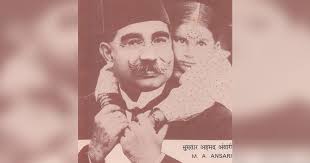
Dr Mukhtar Ahmed Ansari was a freedom fighter who also grafted animal  testicles onto humans

India’s political leadership during the British Raj was dominated by lawyers and journalists. A noted exception was Dr Mukhtar Ahmed Ansari (1880-1936), one of Delhi’s richest men, who dexterously balanced his busy medical practice with a deep involvement with politics.

Ansari was a close companion of Gandhi and an icon of the Khilafat movement. The few scholars who have studied his life have focused solely on his role as a Congress leader, and on his skills on the negotiating table of high politics. His exploits with the scalpel have been ignored. More than 80 years after he died, on May 10, 1936, it is remarkable that forget any serious study, there is hardly any discussion about the hundreds of operations he conducted in India in which he grafted animal testicles – from bulls, monkeys and sheep – onto human beings.

Adviser to princes

Dr Ansari studied at Queen’s Collegiate school in Benares and at the Muir Central College in Allahabad (which was later incorporated into Allahabad University). He later joined the Nizam College in Hyderabad where he was given a scholarship in 1900 to study medicine in the UK. After earning a medical degree at the University of Edinburgh, he worked in London at Charing Cross hospital, the Lock Hospital and St Peter’s Hospital. He returned to India in 1910, and set up his practice in Calcutta before shifting to Delhi.

He acted as medical adviser to the princes of Alwar, Rampur, Joara and Bhopal. His two older brothers were well-known hakims, who practised the traditional unani system of medicine. They were close to the scholars at the respected Islamic school in Deoband. His own circumstances and family background proved crucial in his positioning as a key functionary during the Khilafat movement of 1919. This movement was launched by Indian Muslims to urge the British government to preserve the authority of the Turkish Sultan as Caliph of Islam with the disintegration of the Ottoman Empire after World War I.

A new science

Along with his political activity, Ansari turned his mind to a matter that has obsessed physicians for centuries: the quest for medical interventions to help ageing clients produce heirs. In the early 20th century, medical journals in Europe and America were increasingly documenting cases of xenotransplantation – the transplantation of living cells, tissue or organs from one species to another. It was through such articles that Ansari became interested in this field.

In his role as a medical practitioner, Ansari was also constantly faced with a large number of patients suffering from a “real or imaginary decline in their mental, physical and sexual powers”. His brothers attempted to treat such with traditional medicines. But Ansari looked to Europe for possible answers.

In 1921, 1925 and 1932 he visited Vienna, Paris, Lucerne and London and spent a considerable amount of time in laboratories, hospitals and clinics. He met and observed urologist Dr Robert Lichenstern, Eugen Steiach, Dr Serge Voronoff  – all of whom are considered pioneers in the field of grafting animal testicles onto humans. He also collected vast amounts of literature on the subject, sourcing books and journals from Germany, France, Switzerland, Austria and the US.

This procedure may now be ridiculed but in the Roaring Twenties there was quite the rush of men wanting to undergo these regenerative surgeries. Ansari offered a treatment to his clientele in India that was only available to the elite in the West.

Rejuvenating the nation

According to Ansari, there were a few key reasons why the people of India suffered from poor health. These included unhygienic surroundings, poverty and the lack of medical facilities, as well as seclusion and segregation of the sexes, and rules confining the choice of marriage partner to a limited circle.

In his 1927 presidential address to the Congress in Madras, he dwelt on the problem of healthcare in India.

He said:

“Sixty percent of the revenues of India is absorbed by the Military Department in the name of Defence of the country but the government ought to know that there can be no defence of the country when people are allowed to exist in such a state of utter physical degeneration. The real defence lies in tackling the problem of manhood and improving the general health of the nation.”

In the last decade of his life, Ansari conducted such testicle grafting operations on around 700 people. These included property agents, merchants, jewellers, bankers, provincial civil servants, sportsmen and labourers.

In a letter to Aziz Ansari, his cousin, the doctor wrote that Eugen Steinach “urged me to publish my researches (sic) and not to hide my light under the bushel”.

Ansari meticulously noted down around 440 cases of grafting that he had done. He monitored or kept in touch with these individuals for a period of three to four years after the surgery. In one case, he wrote that a wrestler whose testicles were badly damaged by an opponent and lost his “sexual power” for eight years underwent grafting and found that his sexual appetite was restored. In another case, a man in his early 50s, who was a heavy drinker and had contracted sexual diseases in his 30s, found his health to be deteriorating drastically. After Ansari grafted slices of a bull’s testicles onto the man’s gonads, he gained weight, became healthy, and started leading a normal life with a new wife. Through such case studies, Ansari emphasised that his surgeries resulted in the rejuvenation of patients, which added to the productivity of the nation.

He gave Gandhi a copy of his book Regeneration in Man, who read it with great interest in one day. Describing it as evidence of “research and great labour”, Gandhi, whose aversion to western medical practices is well known, asked his friend: “What is revival of youth worth if you cannot be sure of persistent physical existence for two consecutive seconds?”

But for the short, well-built, moustachioed doctor who played the role of Othello in a play while a student at the University of Edinburgh, these procedures were part of a larger vision for a “universal campaign against the disability of old age”.

source: http://www.scroll.in / Scroll.in / Home / by Danish Khan / May 10th, 2017
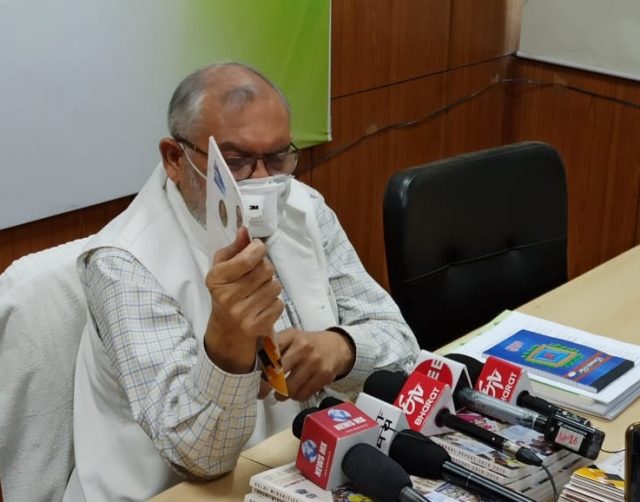
Delhi Minorities Commission announces Awards in various fields

NEW DELHI :

Delhi Minorities Commission initiated a scheme of awards to best performers in various fields of human endeavor in NCT of Delhi and beyond.

For 2019-2020, the Commission has decided to offer awards under 14 categories which are as follows:

(for X, XII classes students securing 96+ per cent marks), Communal Harmony, Community Service, Human Rights, Non-Government Organisations, Promotors of Punjabi, Promotors of Urdu, Sports, Supporters of Minorities, Teachers of Substance, Print & Electronic Media persons, Outstanding Schools, Special Awards, Life-Long Achievement. This year 178 awards have been given under these categories.

Two new categories, Special Awards and Lifetime Achievement Awards, have been added to the list this year.

These awards are given mainly to residents of NCT Delhi but in exceptional cases, awards are also been given to persons from outside Delhi. Each awardee will be honoured with a shield.

A booklet containing photo of each awardee with a short introduction about his/her achievements has also been printed and is available at https://archive.org/details/dmc-2019-awards . (Please see below for a short list of the awardees).

The following is the full list of the awardees under various categories:


ACADEMIC EXCELLENCE (students who secured over 95% in High School and Higher Secondary exams in 2019):

Flavia Ekka (St. George’s School, Alaknanda, High School Exams 97.6%), Tracey James (Fr. Angel Sr. Sec School, Senior Secondary Exams 97.4%), Himieka Jain (DPS Mathura Road, High School Exams 97.2%), Garima Jain (DPS Mathura Road, Senior Secondary Exam Exams 97.4%), Kulsum Azad (Hamdard Public School, High School Exams 96.6%), Abeer Mohammad Asad (DPS Mathura Road, Senior Secondary Exams 97%), Mahwash Rizvi (Greenfield School, Senior Secondary Exams 96.8%), Mohd. Sadique Raza (Father Agnel School, NOIDA, High School Exams 98.4%), Afrah Naayaab (DPS Indirapuram, High School 97%), Harjas Kaur (Guru Nanak Public School, Pushpanjali Enclave, High School Exams 96%), Harjyot Singh Sidhu (DPS Mathura Road, Senior Secondary 95.4%), Aliza Alvi (DPS Indirapuram, High School 97%), Ancy A Daniel (ST. George’s School,High School Exams 97%), Anjali Maria Antony (Mater DEI School, Senior Secondary Exams 98.4%), Divya Jain (St Joseph’s Academy, High School Exams 95.4%), Aayush Jain (DPS Mathura Road, Senior Secondary Exams 97.2%), Zainab S. Qazi (Hamdard Public School, High School Exams 96.2%), Ruba Haider (DPS Mathura Road, Senior Secondary Exams 96.8%), Ms Sana (SGGSS Sc 2, Jama Masjid, Senior Secondary Exams 97.6%), Ms. Mantasha Ilma (Jamia Girls Sr. Sec. School, High School Exams 97.6%, Dashmeet Kaur (St Joseph’s Academy, High School Exams98%), Japneet Singh (Springdale’s School Pusa Road, Senior Secondary Exams 97.8%), Harjeet Singh Bedi (DPS Mathura Road, Senior Secondary Exams95.4%), Mahi Singh (Springdale, Sr Sec Exam 96/75%), Namira Rasheed Khan (DPS Ghaziabad, High School 96.6%), Barundeep Singh Gambhir (DPS Mathura Rd, Sr. Sec. Exams 96%).

COMMUNAL HARMONY:

Fr. Dr. M.D. Thomas(interfaith dialogue), Rev. Dr Vincent Manoharan (interfaith dialogue), Tej Lal Bharti(communal harmony), M. Farooq Engineer (communal harmony), Raees Ahmad (journalist and human rights worker), Iqbal Mulla (interfaith dialogue), Baba Hardip Singh-ji (communal harmony), Soul of Humanity (NGO helping needy people), Vishav Satsang Sabha (NGO working for communal harmony), Syed Abdullah Tariq(interfaith dialogue and communal harmony), Jayshree Shukla (promoter of the composite culture, author of photo essays on Old Delhi).

COMMUNITY SERVICE:

Bhadant Buddha Kirti (serving the Buddhist community), Asad Masih (Muneer Social Welfare Society), Reena Charles ((Human rights, community service), Victor (social worker), Fr. Varghese Kunnath (seminar, orientation and training for youth, students, teachers), Rehab Foundation(community service), Karwan Foundation (community service), Sahulat Microfinance Society (national NGO promoting and facilitating interest-free microfinance), Ashwani Kumar Bairwa (president of NGO, social work in Badarpur area), Mohd. Khalid Khan (community service), Dr. Badrul Islam (promoter of Yoga), Sarabjeet Singh (community service), Adv. Abu Bakr Sabbaq(Community Service, human rights defender), Musharraf Husain (community service), Shama Khan (community service, especially in slum areas), Masroor Ul Hasan Siddiqui (community service), Mrs Feroza Jassawalla (community service), S. Gurvinder Singh (helping minority communities through promotion of education of children), Manjeet Singh (Nanak GA Charitable Foundation), Parmeet Singh Chadha (social worker), Mandeep Singh (serving minorities by supporting educational institutions and NGOs), Virasat Sikhism Trust (doing sewa to uplift Sikh Heritage and Punjabi language), Perminder Singh Malik (community service, especially by promoting education), Hasleen Singh Sodhi Adv. (helping minority community legally), Bibi Tarvinder Kaur Khalsa(community service), Avtar Singh (community service), Gagandeep Singh (community service), Inderjit Singh Asth (community service), Jaspal Singh (community service), Swaran Jeet Singh (community service), Ajeet Kaur (community service), Dr. Anju Jain (community service), Manjeet Singh(community service), Tanveer Kazi (community service as the Delhi head of Action Aid India), Ovais Sultan Khan (human rights activist), D. S. Bindra Adv. (regular organiser of langars), Victor (social worker), Adv. H R Khan (human rights and education activist), Manjeet Singh Chugh (RTI activist, PIL).

HUMAN RIGHTS:

Dr. Denzil Fernandes SJ (social scientist working for the human rights), AC Michael(minority rights activist, former Member, DMC), Mrs. Anna Pinto (human rights activist), Farah Naqvi (writer & human rights activist), Armeet Singh Khanpuri (escorted back home 32 Kashmiri girls; saved 15 girls in riots), Mahmood Pracha Adv. (human rights defender), Quill Foundation (human rights of marginalized communities).

NON-GOVERNMENT ORGANISATIONS:

Institute of Objective Studies (research institute and think tank), Haq Educational & Social Welfare Society (vocational training centre), Sikh Youth Organization, Mahakanishk Bodh Vihar Kalyan Samiti, Guru Daami Foundation, Pratyek (networking with 2000 schools in the country), Budhiye Dhamn Charika Samiti Delhi Pardesh, YWCA of Delhi, Action Aid India

PROMOTORS OF PUNJABI:

Punjabi Helpline, AnveetKaur Bhatia

PROMOTORS OF URDU:

Irfan Rahi(poet), Prof. Khalid Mahmood (writer, critic), Musharraf Alam Zauqi (writer, novelist, journalist), Syed Sahil Agha (Dastangoi).

SPORTS:

Mohd. Arif (Para athletics), Mariya Tehreem Khan (Football), Nazma (Judo), Mohd. Sadaqeen (Fencing), Ayesha (Rope skipping), Anushka Samuel (Football), Ronak Jain (Cricket), Adil Nargolwala (marathon runner), Harnaik Singh Sahni (Hockey), Zaorawar Singh (Jump rope), Manjeet Singh (Hockey), Dhavneet Singh Bakshi (Cricket), Tanveer Singh Jubbal (Marathon runner), Vineet Kaur (Air Pistol Shooting), Rahul Sagar (Karate, Taekwondo), Tushar (Karate), Ranveer Singh Saini(Golf)


SUPPORTERS OF MINORITIES:

Bhairav Singh (Ambedkar Samaj Vikas Sangthan), Dr. S. S. MINHAS (holistic development of young students), Gurminder Singh Matharu (Member, SGPC Amritsar), Jagtar Singh (helped repatriation of 32 stranded Kashmiri girls safely to their homes in the Valley), Gurpreet Singh Bindra (helped repatriation of 32 stranded Kashmiri girls safely to their homes in the Valley), Baljeet Singh (helped repatriation of 32 stranded Kashmiri girls safely to their homes in the Valley), Harminder Singh (helped repatriation of 32 stranded Kashmiri girls safely to their homes in the Valley), Jajinder Singh (helped repatriation of 32 stranded Kashmiri girls safely to their homes in the Valley), Msgr Susai Sebastian (former director, Chetanalaya),Victor Henry Sequeira (social worker), Bishop Warris Masih (peace-making in churches society), Franklin Ceasar Thomas (fighter for the rights of Christian and Muslim Dalits), Dr. Fr. P.R. John SJ (Principal, Vidya Jyoti College), Ajit Singh Sehra (Ujjwal Bhavishya NGO), Saleem Baig (worker for community uplift, RTI activist).

TEACHERS OF SUBSTANCE:

Saiby Mathew (Don Bosco School), Mrs. Magdalene Bhat (St. Michael’s Sr. Sec. School), Mrs. Maria Rodrigues (St. Xavier’s School), Ms. Grace David (St. Columba’s School), Mrs. Anne Albin (Mater Die School), Mrs. Tarannum Shoukat Ali (Rabea Girls Public School), Nazia Nikhat (Zakir Nagar 1 Urdu School), Rana Tasleem (Zakir Nagar 2 Urdu School), Mrs Jeanie Naozer Aibara (Principal of Ambience Public School), Pritam Singh (Guru Harkrishan Publicc School, Shahdra), dr. Prabhjot Kaur (educational consultant and motivator), Swarn Singh (Guru Harkrishan Public School, Vasant Vihar), Mr. S. L. Jain (Director, Mahavir Senior Model School), Dr. Haleema Sadia (26 years of experience as teacher, currently Dy. Director (Education), Delhi Waqf Board).

PRINT & ELECTRONIC MEDIA PERSONS:

Gurpreet Singh Sethi (photographer and maker of short films), S. Amrik Singh Kooner (Akaal Channel), S. Gurpreet Singh Bhooi (Akal Channel), Md. Mahtab Alam (The Wire Urdu), Qurban Ali (veteran TV, radio, print and Net journalist), Abhisar Sharma (outspoken and brave TV journalist), Lucy Gabriel Chattopadhyay (All India Radio External Services), Mobin Ahmed Khan (All India Radio), Humra Quraishi (prolific writer, columnist, journalist, book-reviewer and author), Masoom Moradabadi (celebrated Urdu journalist), Suhail Anjum (celebrated Urdu journalist), Muhmamad Anjum (Inquilab), Shaheen Abdulla (committed young journalist), Aditya Menon (journalist committed to the causes of the masses).

OUTSTANDING SCHOOLS:

Hamdard Public School, Talimabad, New Horizon School, Scholar School, Abul Fazal Enclave, St. Xavier’s School, Shahbad Daulatpur, Mater Dei School, Tilak Lane, Don Bosco School, Alaknanda, Dr Zakir Husain Memorial Sr. Sec. School Jafarabad, Rajkiya Pratibha Vikas Vidyalaya, Dwarka (first ranking in government-run day schools in the country).

SPECIAL AWARDS:

Mohd. Rizwan (young inventor), N.M. Theerthe Gowda (arbitrator and advocate), Ms. Khursheed R. Nariman (sculptor), Bhupinder Pal Singh Walia (historian of gurudwaras in Africa), Gobind Sadan, Gadaipur, Mehrauli (Sikh-led interfaith community celebrating all religions).

LIFE-LONG ACHIEVEMENT:

Dr. Manzoor Alam (Chairman, Institute of Objective Studies), S. Rajinder Singh-Ji (Head Granthi, Gurudwara Rakab Ganj), Mary Pat Fisher (author, promoter of interfaith dialogue), Fr. Cedric Prakash SJ (human rights, peace, interfaith and reconciliation activist), Nirmal Kumar Jain Sethi (welfare and promotion of the Jain community), Prof. Haseena Hashia (academia and welfare of the Muslim community), Teesta Setalvad (human rights and rule of law), Prof. Akhtarul Wasey (Islamic scholar with life-long commitment to academia, interfaith dialogue and welfare and promotion of the Muslim community), Mufti Ataur Rahman Qasmi (Islamic scholar, chronicler of Delhi, Haryana and Punjab mosques).


(Full list of DMC Awards 2019 with photographs and more information about each awardee is available here:https://archive.org/details/dmc-2019-awards)

source: http://www.theindianawaaz.com / The Indian Awaaz / Home> Amm/New Delhi / by Indian Awaaz / June 09th, 2020

Celebrating the Centenary of “Zinda Tilismath”

Hyderabad, TELANGANA :

In today’s era of social media, people are slowly losing the essence of celebration; rather they prefer to be amused and entertained. Celebration is an active state of expressing reverence and appreciation.

Here’s me celebrating the centennial anniversary of “Zinda Tilismath” and acclaiming their achievements in the field of Unani Medicine.

Unani medicine is popular in South Asian countries and its use is currently growing in other parts of the world. The history of Unani medicine can be traced back to the ancient Greek practitioners Hippocrates and Galen. Over the next few centuries, their principles were soon taken up by the by numerous Arab and Persian scholars. The very famous Ibn Sina, who is also known as Avicenna was an Arab philosopher and physicist, who wrote Kitab-al-shifa (Book of Healing) and the Canon of Medicine. This system, earlier known as “Galenics”, later became to be known as Unani Tibb, (Unani being the Arabic word for “Greek” and Tibb an Arabic word for “medicine”)

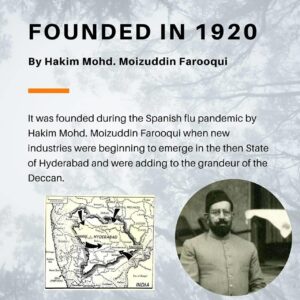
In India Hakeem Mohammed Moizuddin Farooqui founded the factory, Karkhana Zinda Tilismath which is known to produce one of the world’s best products of Unani Medicine.

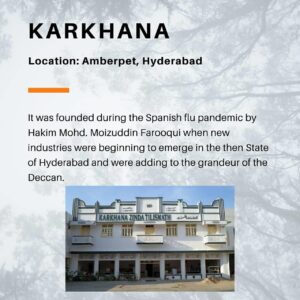
Karkhana Zinda Tilismath is located in Amberpet, Hyderabad and this year celebrates its centenary. The outset of Karkhana Zinda Tilismath in Hyderabad not only promoted the Unani medicine but also led to an industrial revolution and opened job opportunities for many.

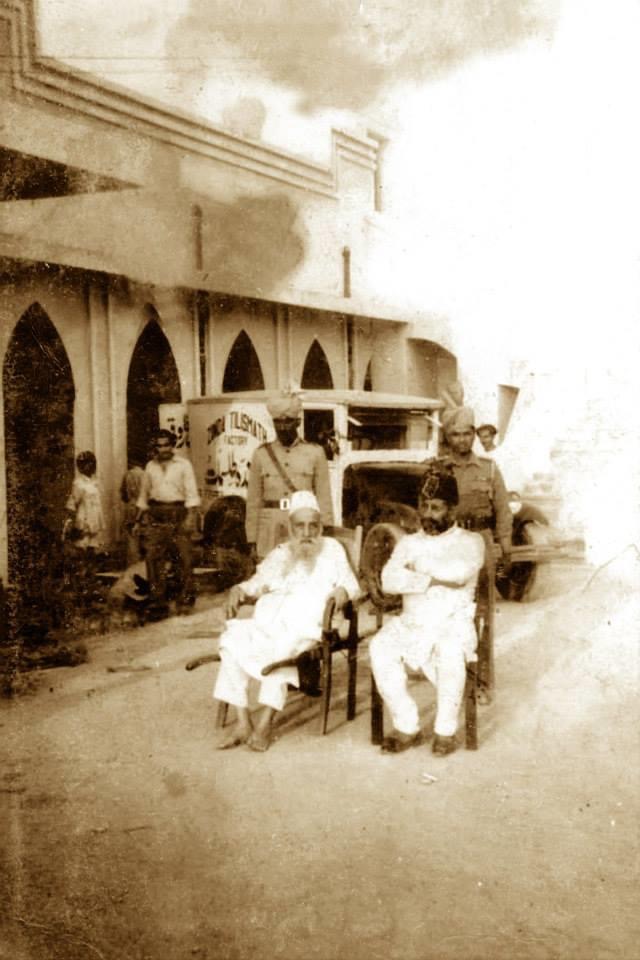
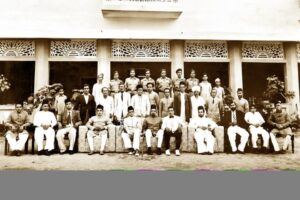
Hakim Mohammed Moizuddin Farooqui with his eldest son Minhajuddin Farooqui and staff members. Labour Welfare Officer of factory, CM Ansari can be seen in this Photo.

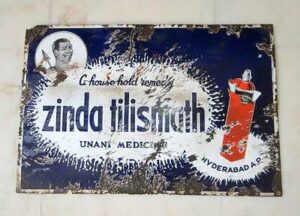
In 1920, Hakeem Mohammed Moizuddin formulated his very first Herbal medicine which was named “Zinda Tilismath” (an Urdu word for living magic). Many Hyderabadis and others who romanticize Unani medicine in India and around the globe pledge that this potion has a magical cure for all ailments. This magic started in 1920 when three hundred thousand vials in the 1950s-60s were made and recently the sales of the potion have shot up to seven hundred thousand bottles.

Zinda Tilismath consists of only five ingredients – eucalyptus, which is the main ingredient at 70 per cent and camphor, menthol, thymol, and ratanjyoth (a bark of a tree to give colour to this medication). This herbal medicine is unusual as it can be applied both externally and can also be consumed by adding few drops in to the milk or other drinks. A laboratory in Pune has confirmed that “Zinda Tilismath” can be used for preventing swine flu.

Apart from the zinda tilismath, there are other products also manufactured by the factory including zinda balm, Faroooky tooth powder and zint (throat lozenges) which had to compete with halls, Vicks and the strepsils throat lozenges.

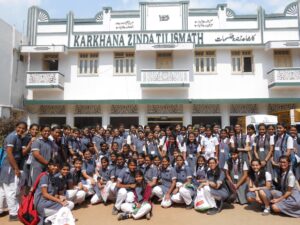
The door of the factory is always open and plays host to school children, exhibiting their benefits of herbal medication. They also allow pharmacy students to conduct their research and studies on their medicine.

Girls of St. George’s Grammar School on an Industrial Visit- November 3, 2015

Currently, the third generation of this prominent Unani Hakeem Mohammed Moizuddin Farooqui is running the company and are striving to maintain their reputed family business.

source: http://www.heritagetimes.in / Heritage Times / Home> Medicine / by Dr. Zareen Fatima / September 03rd, 2020

Indian disability rights activist Arman Ali takes part in US State Department event

NEW DELHI :

Disability rights activist Arman Ali represented India at a professional exchange programme offered by the United States, its consulate in Kolkata announced.

Ali took part in the US

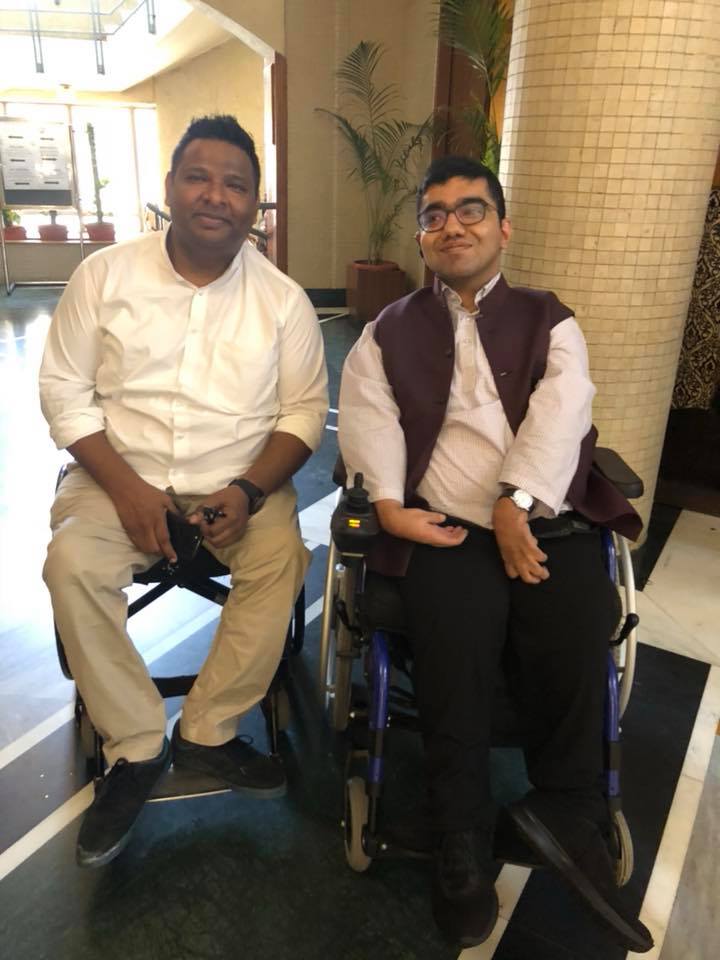
Arman Ali (left), presently the executive director of the National Centre for Promotion of Employment for Disabled People in New Delhi, is also on the board of NGO Shishu Sarothi in Guwahati. Photo courtesy: Facebook/Nipun Malhotra

Department of State’s International Visitor Leadership Programme (IVLP), which was held virtually this year owing to the COVID-19 outbreak.

The programme commemorated 30 years of the Americans with Disabilities Act and, apart from Ali, Fadi El Halabi from Lebanon and David Anyaele from Nigeria wwere chosen as representatives, the statement said.

In the virtual programme, representatives gave online presentations and took part in meetings and cultural activities. Ali delivered a presentation on his work and contributions in a virtual discussion hosted by the Graduate School USA and Harkin Institute at Drake University in Des Moines, Iowa.

The Gold Star initiative highlights the work of IVLP alumni who have made a significant impact in their home communities, and this year focused on alumni doing exceptional work in advancing disability rights.

Ali, presently the executive director of the National Centre for Promotion of Employment for Disabled People in New Delhi, is also on the board of NGO Shishu Sarothi in Guwahati.

In the previous years, representatives had visited the US to experience the country and cultivate relationships with their American counterparts, the statement added.

source: http://www.connectedtoindia.com / ConnectedToIndia.com / Home> News> Global / CtoI News Desk / July 29th, 2020

Three day workshop organised by FikroKhabar Bazm-e-Kalam concludes

Bhatkal, KARNATAKA :

Bhatkal :

A three-day workshop on research and writing, essay writing and journalism under the pen section of FikroKhabar came to an end at Alhaj Mohiddin Muniri Hall of Maulana Abul Hassan Ali Nadvi Islamic Academy.

The concluding session taught how to make journalism and the media a means of publishing the message of religion and how to work in the practical field. The meeting also decided on the strategy of the Bazm-e-Kalam, which includes the federation of the most important Muslim media. It also includes mentoring them with various workshops for those involved in the field of Bazm-e-Kalam. Bazm-e-Qalam membership forms were also distributed at the meeting, which the participants filled out and expressed their commitment to develop the sector and make it a source of Islamic da’wah . Participants in their written comments said that the establishment of such sectors is the most important need of the present era.

Among the guests on the stage, Jamia Islamia Bhatkal Superintendent Maulana Maqbool Ahmed Kobatte Nadvi said that media is a great way to get people on the right track. It can do things we can’t imagine. The same means of communication include Friday sermons, the benefits of which we can see in society today. Maulana congratulated the officials of Fakro Khabar and his entire team for organizing this workshop and also expressed his happiness to present it in a good and unique way. At the same time, the audience urged the audience to use mobile phones in the right direction.

Mr. Mohsin Shabandari, founder of Bhatkallys.com and Urdu Audio.com, the first website of Juma Bayanat, said that any news should be researched before it is made. Nowadays, it is very important to be careful about the news that is sent to WhatsApp without any research. He also expressed his desire to make the best use of mobile phones and create a platform for all media.

Maulana Ayub Barmawar Nadvi, Maulana Shoaib Nadvi, Maulana Irshad Africa Nadvi, Maulana Muhammad Ali Sharif Nadvi, Maulana Saud Nadvi, Maulana Rehmatullah Nadvi and others were present on the occasion.

source: http://www.bhatkallys.com / Bhatkallys.com / Home> Bhatkal News / by Bhatkal News Bureau / September 04th, 2020

London Blue Plaque honor for Indian Muslim ‘spy princess’

MYSURU / FRANCE / London, UNITED KINGDOM :

The late former British secret agent Noor Inayat Khan plays a Veena.(File/AFP)
  • English Heritage described her as “Britain’s first Muslim war heroine in Europe”
  • Khan was the first female wireless operator sent to Nazi-occupied France but was captured, tortured and shot dead

London :

A woman of Indian-origin dubbed “the spy princess” on Friday gets a new memorial in Britain honoring her espionage work and refusal to betray secrets in World War II.


English Heritage is putting up a Blue Plaque honoring Noor Inayat Khan outside 4 Taviton Street in the Bloomsbury area of central London where she lived from 1942-43.

In 2012, Queen Elizabeth II’s daughter Princess Anne unveiled a bronze bust of Khan in nearby Gordon Square Gardens.


Her biographer, Shrabani Basu, said Khan, born into a princely Indian Sufi family and descended from Tipu Sultan, the 18th century ruler of Mysore, was an “unlikely spy.”


She believed in non-violence and religious harmony but gave her life in the fight against fascism when her adopted country needed her, she said.
“It is fitting that Noor Inayat Khan is the first woman of Indian origin to be remembered with a Blue Plaque,” said Basu, who wrote “Spy Princess: The Life of Noor Inayat Khan.”


“As people walk by, Noor’s story will continue to inspire future generations. In today’s world, her vision of unity and freedom is more important than ever.”


Khan was the first female wireless operator sent to Nazi-occupied France but was captured, tortured and shot dead aged 30 at the Dachau concentration camp in September 1944.

English Heritage described her as “Britain’s first Muslim war heroine in Europe.” She was killed after refusing to give away secrets under repeated torture by the Gestapo.


Khan was posthumously awarded the George Cross and is one of only four women to have directly received Britain’s highest non-combat award for gallantry.

English Heritage has acknowledged that the proportion of women celebrated by its blue plaque scheme remains “unacceptably low.”
It is planning to unveil tributes to the secret agent Christine Granville at a west London hotel where she lived and the sculptor Barbara Hepworth in north London.


Another is planned for the headquarters of the National Union of Women’s Suffrage Societies, which campaigned successfully for women to be allowed to vote.

source: http://www.arabnews.com / Arab News / Home> World / by AFP / August 29th, 2020

India: Historians recall role of Muslims in freedom struggle

Coinciding 74th Independence Day on Aug. 15, scholars recollect help of Turkey to India’s national freedom struggle

Abdul Hameed Nomani, General secretary of the All India Muslim Majlis Mushawarat

New Delhi:

Celebrating country’s 74th Independence Day on Aug. 15, under the shadow of recent communal riots in capital Delhi and anti-citizenship law stir, many Indian scholars have called for recalling the role of Muslims during India’s freedom struggle.

Author and scholar Waseem Ahmed Saeed said over time, the contribution of Muslim freedom fighters in India has been forgotten.

In his book titled Kala Pani: Gumnam Mujahideen-e-Azadi 1857, Saeed said from the 1757 Battle of Plassey in Bengal, Tipu Sultan’s Seringapatam battle in South India in 1799 to the massive revolt in 1857 against the British was led by Muslims.

Saeed, who has authored a book on the subject in the Urdu language, said while India’s official history celebrates Udham Singh for killing Michael O’Dwyer, the lieutenant governor of Punjab in India, in revenge for the 1919 Jallianwala Bagh massacre in Amritsar, it does not recognize Sher Ali Afridi, who killed Lord Mayo, British viceroy and governor-general of India from 1869-1872.

Speaking to Anadolu Agency, many Muslim scholars and historians said the role of their ancestors in the freedom struggle has been overlooked.

According to Syed Jamaluddin, director of historical research projects at the Institute of Objective Studies, a think tank, there is no adequate coverage of the role of the Indian Muslims in the national movement.

“The contribution of Muslim revolutionaries, poets and writers is not known today. Similarly, little is known about the contribution of people like Ali Musliyar and Bi-Amma, who made significant contributions,” he told Anadolu Agency. He is currently editing a book on the Muslim role in India’s freedom struggle.

Saeed recalled in his book that it was the ruler of Bengal Siraj-ud-Daulah, who first fought and lost to the British in 1757, which became a cornerstone for the imperial power to colonize India.

He said that even after losing this battle, there were many rebellions led by Muslims until 1850.

Muslim revolts against British

Jamaluddin mentions the Fakir-Sannyasi rebellion, a joint revolt against colonial power by Muslim and Hindu ascetics, for preventing them from collecting religious tax from locals. It started in 1764 and continued until the 1850. He said the rebellion even spread its wings to southern India’s Madras (now Chennai) presidency.

But most prominent and popular movements that hit the British hard in the early 20th century in the subcontinent was the Reshmi-Rumaal Tehreek (Silk Cloth Movement) led by Maulana Ubaidullah Sindhi with the help of Turkey, Germany, and Afghanistan.

Speaking to Anadolu Agency, a prominent Muslim scholar Abdul Hameed Nomani said that despite his best efforts, Sindhi’s contribution has not been included in the official Indian history.

Along with an Indian prince Raja Mahender Pratap Singh, Sindhi, and Maulvi Barkatullah had established the exiled government of India in Afghanistan in 1915.

“The movement picked up around the same time when Subhash Chandra Bose [renowned Indian freedom fighter] was allying with Germany and Japan to oust the British from India. While Bose is celebrated nationwide, not much is known about Sindhi and his supporters,” said Nomani, who is also the general secretary of the All India Muslim Majlis Mushawarat, an umbrella group of prominent Muslim organizations.

It was named Silk Cloth Movement because Sindhi and other leaders used to send letters and directions to their cadres written on silk cloth.

Later, Sindhi went to Turkey and joined the country’s national struggle.

“The movement led to the formation of Indo-German-Turkish mission to encourage local tribes on the borders of Afghanistan to attack Britishers and their interests. While the key figures were arrested by the British, the movement remains a key event in the freedom history,” he added.

He said even though in 2011 the government released a postal stamp to commemorate Sindhi’s movement, there has been no vigor to record the sacrifice of Sindhi and his allies Mahmud Hasan and Husayn Ahmad.

“Only passing reference has been made about the role of Muslims in India’s national struggle,” rued Nomani.

source: http://www.aa.com.tr / Anadolu Agency / by Cheena Kapoor / August 14th, 2020

Azharuddin Quazi of Yavatmal secures AIR-315 in UPSC exam

Yavatmal (Vidharbha), MAHARASTHRA :

“I faced poverty and misery since childhood and my father took up odd jobs to support the family financially,” recalls Azharuddin. Son of Zahiruddin, a taxi driver from Yavatmal, Azharuddin Quazi has made his family proud by securing AIR-315 in the Civil Services examination of UPSC.

A jubilant Azharuddin remembers his childhood full of difficulties and obstacles when irrespective of their troubled socio-economic status, his parents encouraged him to study. “My mother played a huge role in education of all my brothers including myself,” he says. Azharuddin, who is the youngest of his other three siblings, was forced to come back to Yavatmal a year after he had gone to Pune for undergraduate. After securing the merit list in his standard 12th examinations, he was admitted to a college in Pune but could not continue his studies as his parents did not have enough resources to support his expenses in another city. He shares that his own life has been an example of how problems due to financial instability persisted but his mother, having studied till Matric, never gave up on the career of her children.

“For her, education was the only empowering tool,” he says about his mother, Meraj. He recounts that his mother was a bright student herself but due to family constraints, she was forced to give up studies after 10th. After her marriage with Zahiruddin, she continued her zeal for education and pursued her own dream by giving her children the best of education. Throughout schooling, his mother used to teach all her children at home, assisting the four of them with homework and projects. She was disciplined and strict and showed no mercy or excuses when it came to studies, shares Azharuddin fondly.

“I got felicitated by the then SP of Yavatmal, Mr Abdur Rahman Sir who became inspiration for my IAS dream,” says Azharuddin. He narrates that after having to drop out of college in Pune and motivated by his role model, Abdur Rahman, he resumed undergrad at Yavatmal itself. In 2010 after completing his graduation in Commerce, he went to Jamia Hamdard University in New Delhi for preparation of civil service examinations but again due to lack of finances he had suffered a hindrance. His determination, however, led him to grab a job in a Corporation Bank through a competitive exam and he was appointed as the Probationary Officer where he served for 6 years.

Seeing his younger siblings work hard, as the oldest one among them, he had always dreamt of doing something big for his family and community, he says. Azharuddin has three younger brothers – one has completed MBBS, second is a chemical engineer and third a lawyer. His father being a non matriculate and his mother a matriculate, were always focused on providing quality education to their children, he says.

Azharuddin, who is also a national colour holder in handball, served at the Corporation Bank in New Delhi from 2012 to 2018 in various capacities, including his days as a Branch Manager too. As better days were approaching due to his hard work and will, he resigned from the bank job in 2018 and decided to pursue his dream career as an IAS.

Once again, Azharuddin returned to Jamia Hamdard in New Delhi to prepare for civil services and after one attempt in 2018, he ultimately secured AIR-315 in 2019 examinations.

“Hard work, consistency and perseverance always pays,” he states, while describing that he was guided by Noorul Hasan (IPS addt. SP, Yavatmal) and Raj Kumar (SP Yavatmal dist.) during his UPSC preparation. He further praises his family, friends and teachers who guided him through thick and thin.

When asked about a message for the aspirants belonging to minority communities, Azharuddin says, “Those coming from backward regions and poor socio-economic backgrounds like me, I will tell them to not be afraid and distracted by these limitations.” The Constitution of this country as well as independent institutions like UPSC provides everyone with equal opportunities irrespective of caste, creed, religion, region and gender.

He continues, “If you are good at doing hard work, please have patience and confidence in our Constitution and institutions and Insha’Allah you will succeed.”

source: http://www.twocircles.net / TwoCircles.net / Home> Indian Muslims> Lead Story> TCN Positive / by Maariyah Siddique, TwoCircles.net / August 13th, 2020

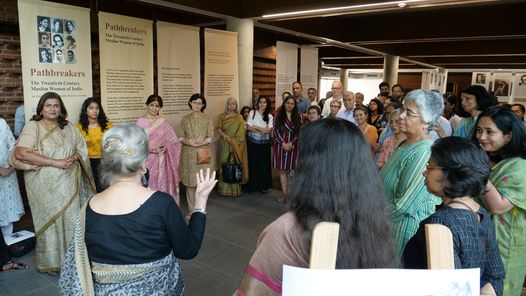
Pathbreakers: The 20th-Century Muslim Women of India

Do not miss this exhibition that extols the contribution of 20th-century Indian Muslim women

An interesting travelling exhibition is set for a re-run in New Delhi once the pandemic containment rules are eased further. Titled ‘Pathbreakers: The 20th Century Muslim Women of India’, it showcases 21 Indian Muslim women who broke the proverbial glass ceiling and refused to be stereotyped. The exhibition was earlier held in the national capital in 2018.

Speaking to the media in 2018, Syeda Hameed, chairperson of Muslim Women’s Forum (MVF), the organisation which assembled the exhibition, had said that the main idea was to bring to the forefront a galaxy of Indian Muslim women who contributed to nation building in various ways but largely remained unrecognised and unsung.

Past Events – MUSLIM WOMEN'S FORUM, INDIA

The women featured in the earlier exhibition include Anis Kidwai, Atiya Fyzee, Attia Hosain, Aziza Fatima Imam, Fathema Ismail, Hamida Habibullah, Hajrah Begum, Masuma Hosain Ali Khan, Mofida Ahmed, Mumtaz Jahan Haider, Qudsia Zaidi, Qudsia Aizaz Rasul, Razia Sajjad Zaheer, Saeeda Khurshid, Safia Jan Nisar Akhtar, Saliha Abid Hussain, Sharifa Hamid Ali, Siddiqa Kidwai, Surayya Tayabji, Tyeba Khedive Jung, and Zehra Ali Yavar Jung. Most of them left their marks in fields as diverse as politics, literature and social work.

Muslim Women’s Forum / 5 months ago / facebook.com

Tyeba Khedive Jung, the first Indian Muslim woman to receive a university degree in 1894, wrote a feminist novel ‘Anwari Begum’ way back in 1905 that spoke about women’s emancipation, and also chaired an annual conference of Brahmo Samaj, a Hindu reformist organisation. Sharifa Hamid Ali was a member of the Constituent Assembly. Although the jury is still out about who designed the Indian National Flag, according to many it was Surayya Tayabji who was responsible for the inclusion of the Ashok Chakra. Qudsia Zaidi, among other things, is famous as the founder of the Hindustani Theatre in 1955, said to be Delhi’s first post-independence professional theatre troupe. Fathema Ismail was instrumental in opening rehab clinics for children suffering from polio.

The exhibition was visiting Bengaluru just before the COVID-19 related lockdown was implemented.

source: http://www.outlookindia.com / Outlook Traveller / Home> Explore > Story / by Uttara Gangopadhyay /August 14th, 2020

Tribeni, Mosque & Dargah of Jafar Khan Gazi – Hooghly, West Bengal

Tribeni (Hoogly District), WEST BENGAL :

Triben generally refers to the confluence of the three rivers Ganga, Yamuna and the illusive Saraswati near Allahabad.

But the Hooghly district of West Bengal also houses another Tribeni, where the Bhagarati or Hooghly River disintegrates into three branches. The three branches are Hooghly, Sarswati and Jamuna (Kanchrapara Khal).

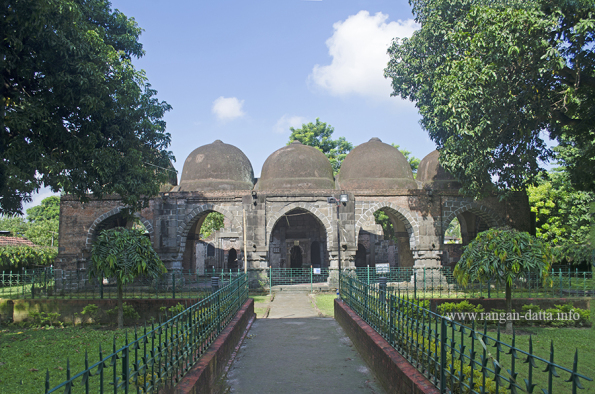
Zafar Khan Gazi Masjid, Tribeni, Hooghly

So like the Prayag near Allabahad, the Tribeni of Hooghly has also attracted pilgrims for centuries and is mentioned in ancient Bengali literature like the Mansamangal and Chandimangal .

Today Tribeni is located about 70 km north of Kolkata on the Bendel – Katwa rail line and is approachable both from Howrah and Sealdah by train.

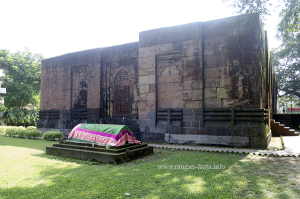
Dargah of Zafar Khan, with a grave outside it, Tribeni

Today the prime attraction of Tribeni is the Dargah of Zafar Khan Gazi. The dargah is located on a small mound over looking the Hooghly river.

It is housed inside a walled complex which also contains a mosque and several other scattered tomb. It remains an active religious site.

The mosque is not only the oldest Mosque in West Bengal but also happens to be the oldest Islamic structure in the whole of undivided Bengal.

Zafar Khan was a general of Delhi Sultan Feroze Shah, who invaded Hooghly in the late 13th century, he defeated the local Hindu king and established the Turkish rule in Bengal.

Zafar Khan settled in Tribeni as he was mesmerized by the beauty of the Hooghly River. The locals started considering him as a learned man and he came to be know as Zafar Khan Gazi. But soon after Zafar Khan was killed in a battle with another Hindu king of the region.

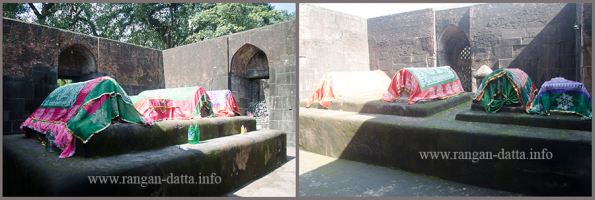
Inside the Zafar Khan Gazi Dargah. L: Eastern Chamber, R: Western Chamber with Zafar Khan’s grave at the extreme right

The Dargah was constructed in 1315 and is located on the eastern end of the walled complex. It has two chambers and the roof has long collapsed. The western chamber contains the grave of Zafar Khan along with the graves of his two sons Ain Khan Ghazi and Ghain Khan Ghazi. The fourth grave in the complex and the wife of Ughwan Khan, another son of Zafar Khan Gazi.

The eastern complex houses the grave of Zafar Khan’s third son Barkhan Ghazi. He is buried along with  and his two sons Rahim Khan Ghazi and Karim Khan Ghazi. The identity of one tomb remains unknown but it shape suggests it belongs to a woman.

The Dargah is located on a high plinth and both the chambers are approached by flight of stairs. Both the chambers are provided with Jali screens allowing sunlight to filter into the chambers.

Both the mosque and the dargah are built with a combination of stone and bricks, some thing quiet unusual in the land famous for terracotta.

Both the most unique feature of the Dargah and the Mosque is the presence of several Hindu motifs and symbols in its walls.

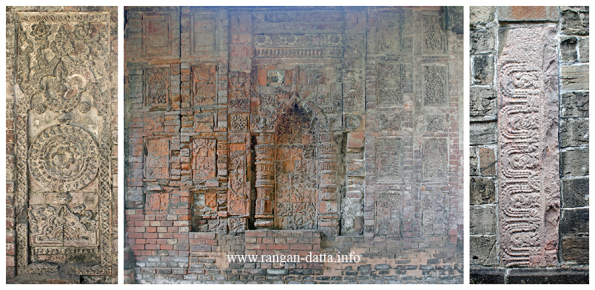
Hindu ornamentation from the outer walls of the Dargah of Zafar Khan Gazi, Tribeni, Hooghly

Both the structure contains stone panels of Hindu deities but most of them have been chiseled off leaving an faint imprint. It is quiet likely these motifs were removed from abandoned or demolished Hindu Temple and were used in the construction of the Mosque and Dargah.

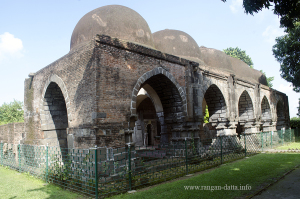
Mosque of Zafar Khan Gazi, Tribeni

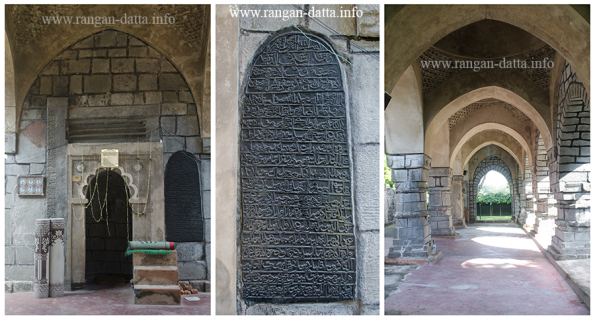
The rectangular Mosque measures 76 feet by 36 feet and dates back to 1292. It has five arched entrance in the front and two aisles create 10 squares, each of which is topped by a dome. Sadly only 6 of the 10 domes can be seen to this day.

The Zafar Khan Mosque, Tribeni. L: Central Mihrab, C: An Arabic Inscription and R: Arched aisle

There are five mihrabs on the western wall, out of which three are more or less intact. The central mihrab is ornamental and is made of stone. The two miharab flanking the central mihrab is made of bricks with beautiful terracotta ornamentation. Like the Dargah the Mosque also contains ornamentation from temples.

Ornamentation inside the Zafar Khan Gazi Mosque, Tribeni, Hooghly 

A trip to Tribeni is never complete without the visit to nearby Bansberia Bansberia famous for its Haneswari Temple  and Ananta Basudev Temple.

source: http://www.rangandatta.wordpress.com / Rangan Datta / Home> Bengal Archaeology, Bengal History, General / by Rangan Datta / photographs : www.rangan-datta.info / December 01st, 2016