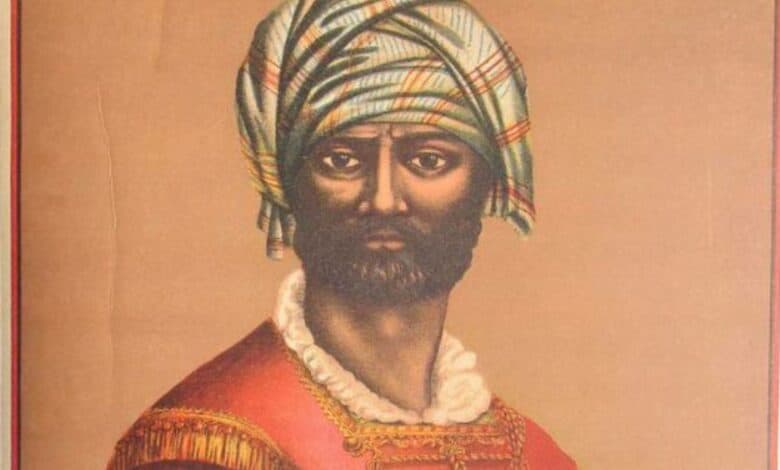
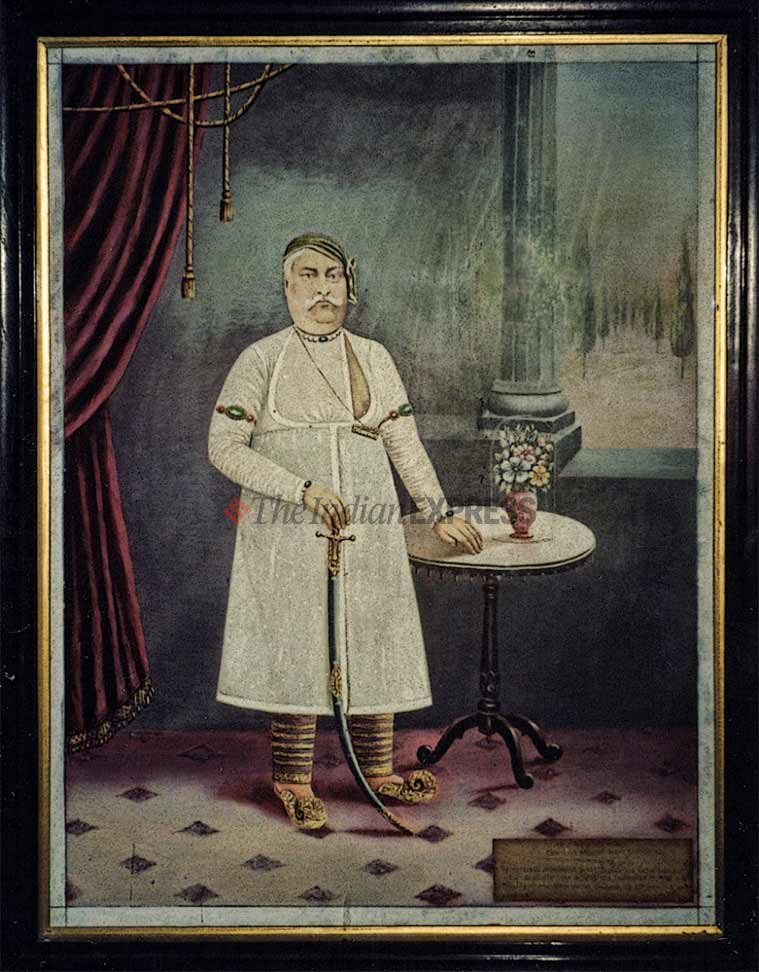
Hyder Ali, who is famously known as ‘the Nepoleon of South India’ for his relentless fighting against the conspiracies of the East India Company and its henchmen and for checkmating the British ambitions of expansion in South India, was born in 1722 at Devanahalli village, Karnataka state. His father was Fateh Mohammad Ali and mother Mujidan Begum.
Though he did not have any formal learning, he received training in martial arts. Hyder Ali was sharp in intellect, strong in will, capable of handling multiple tasks simultaneously and was brave at heart.
He had participated in Devanahalli war in 1749 as a young soldier of Mysore State. Recognizing his gallantry, Nanjaraj, the Minister of Mysore kingdom, honoured Hyder Ali with the title of ‘Khan’ and promoted him as the Chief of a battalion in the Mysore army.
They attacked Mysore several times with the help of the East India Company.
Though Hyder Ali suffered initial losses, he resisted them successfully and proved a virtual nightmare to East India Company. Even then, the British rulers provoked Hyder Ali again which led to the second Mysore war in July 1780. He went to the battlefield along with his son, Tipu Sultan.
While Hyder Ali captured the Arcot, his son Tipu defeated the East India Company troops and captured Kanjeevaram, which was about 50 miles from Madras. This sent shivers to Warren Hastings, the Governor General of East India Company.
He immediately sent additional troops from Culcutta, Madras with abundant funds under the control of his Commander General, Sir Eyre Coote. While fighting against the foreign enemy on one side, Hyder Ali and Tipu Sultan taught a befitting lesson to Malabar Nayars and chieftains, who revolted against him with the active support of Nizam of Hyderbad.
Hyder Ali, while leading his troops towards successive victories, fell ill and died in the battlefield on 7 December, 1782, near Narasingarayuni Peta village, which is now in Chitoor district of Andhra Pradesh.
source: http://www.siasat.com / The Siasat Daily / Home> Featured News / by Nihad Amani / August 22nd, 2020
Indian businessman honoured for his philanthropic work by UAE government
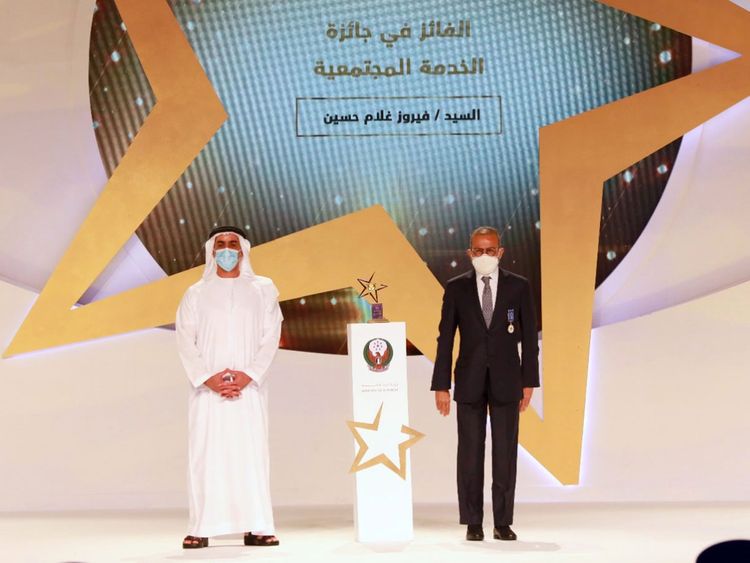
The excellence certificate and citation was handed over to Merchant by Shaikh Saif bin Zayed Al Nahyan, Deputy Prime Minister and Minister of Interior. Image Credit: Supplied
Dubai:
The UAE Ministry of Interior on August 19 honoured Indian businessman Firoz Goulam Merchant for his exemplary community services.
The excellence certificate and citation was handed over to Merchant by Shaikh Saif bin Zayed Al Nahyan, Deputy Prime Minister and Minister of Interior, in the presence of senior police officers and government officials.
Since 2008, Merchant, the proprietor of Pure Gold Jewellers, launched a philanthropic movement called the Forgotten Society. Spearheading this initiative, Merchant worked tirelessly with several correctional institutions in the country to identify debt-ridden prisoners and assisted them in repaying debts to the tune of millions, thereby securing their release and providing free air passage to their respective countries.
A deeply humbled Merchant told Gulf News: “It was a very proud moment for me to be acknowledged by the government of the land. I would like to express my gratitude to the UAE Government for this honourable recognition for my humble efforts to support the community.”
source: http://www.gulfnews.com / Gulf News / Home> UAE / by Staff Report / August 20th, 2020
A total of 19 police personnel from the state have been conferred with the President’s Police Medal on the occasion of Independence Day.
Bengaluru :
A total of 19 police personnel from the state have been conferred with the President’s Police Medal on the occasion of Independence Day.
V L N Prasanna Kumar, ASI, Criminal Investigation Department, has been honoured with the medal for distinguished service.
The others are:
R Hemanth Kumar, DySP, Special Investigation Team, Lokayukta; Parameshwar Hegde, DySP, CID; R Manjunath, DySP, ACB, Mandya; H M Shailendra, DySP, Kodagu; Arun Nagegowda, DySP, Mandya; H M Satish, ACP; H B Ramesh Kumar, DySP, intelligence, Bengaluru; Umesh, DySP (Armed), Police Training School, Mysuru; C N Diwakar, Circle Police Inspector, Kodagu; G N Rudresh, Special Reserve Police Inspector, KSRP, Bengaluru; B A Lakshminarayan, SI, City Special Branch, Bengaluru; M H Chandekar, special reserve SI, KSRP, Bengaluru; K Jayapra- kash, PSI, Mangaluru; H Nanjundaiah ASI, Chikkaballapur; Atheeq Ur Rahman, ASI, Shivamogga; Ramanjanaiah, ASI, Tumakuru, R N Balikai, ASI, Haveri, and K Honnappa, head constable, Bengaluru Rural.
source: http://www.newindianexpress.com / The New Indian Express / Home> Cities> Bengaluru / by Express News Service / August 15th, 2020
Decades before the birth of the city of Calcutta, the area that is now Tollygunge was a dense forest land called Russapugla with an abundance of mangrove trees.
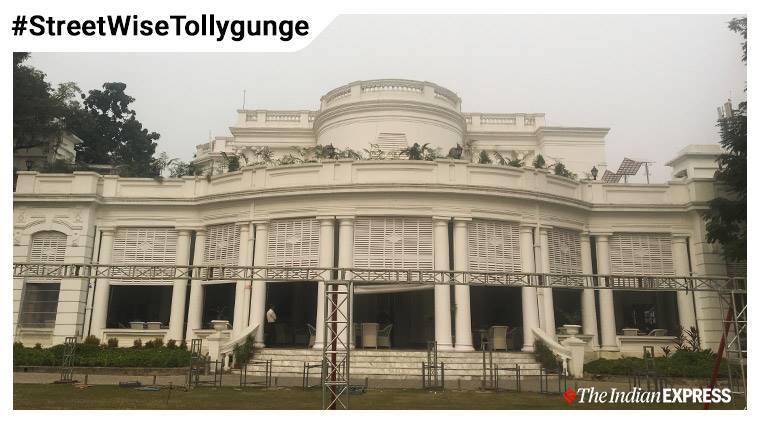
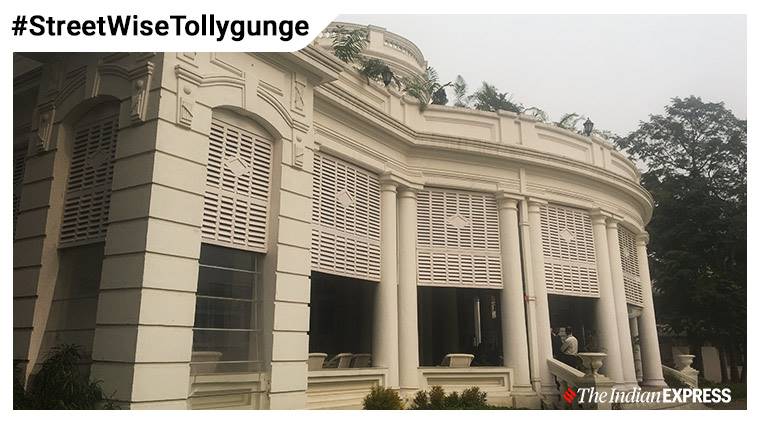
The clubhouse on the grounds of Tollygunge Club in Kolkata. The club is preparing for its New Year’s Eve party with stage equipment on its grounds. (Express photo: Neha Banka) ______________________
Most know Tollygunge as a neighbourhood in south Kolkata rather than the long stretch of road by the same name that cuts through a large swathe of the area.
Decades before the birth of the city of Calcutta, the area that is now Tollygunge was a dense forest land called Russapugla with an abundance of mangrove trees. Over the centuries, the land was cleared for settlement and urban planning but some traces of the forest can still be found in the expansive property belonging to Tollygunge Club and the Royal Calcutta Golf Club in the neighbourhood, some of the oldest social clubs in the city.
Tollygunge Club, established in 1895, derives its name from the neighbourhood of Tollygunge, that in turn got its name from William Tolly, a colonel in the British Army in 1767. Calcutta was a city of creeks, although many have been entirely or partially filled up. Today, few of those creeks remain, winding slowly across the city, trying to find their way into the Bay of Bengal, but one would have to search beneath cramped, illegal urban settlements and mounds of garbage to find them.
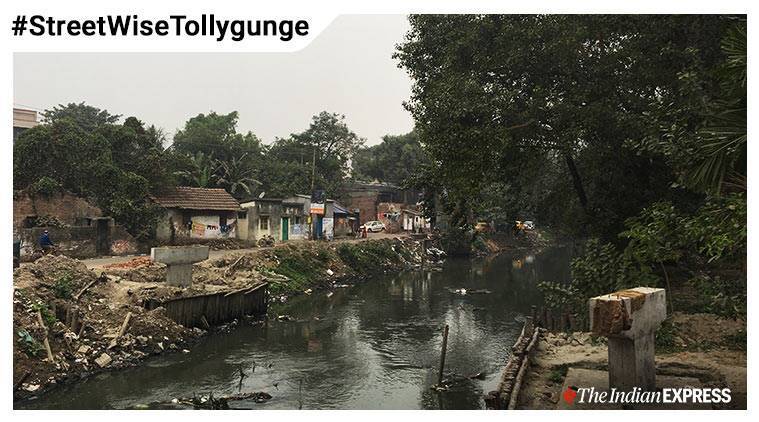
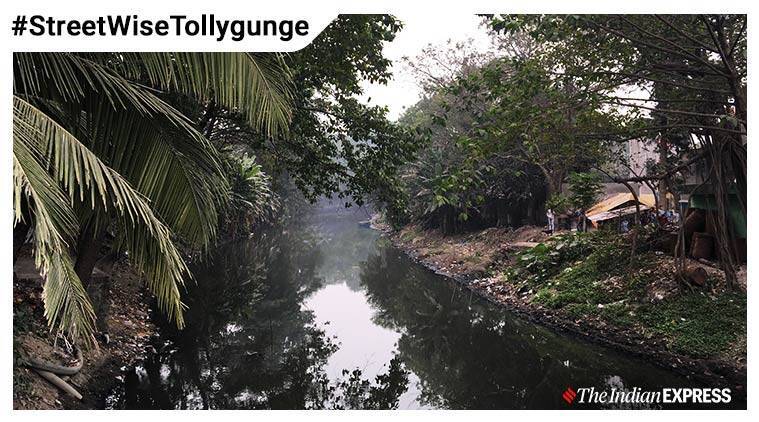
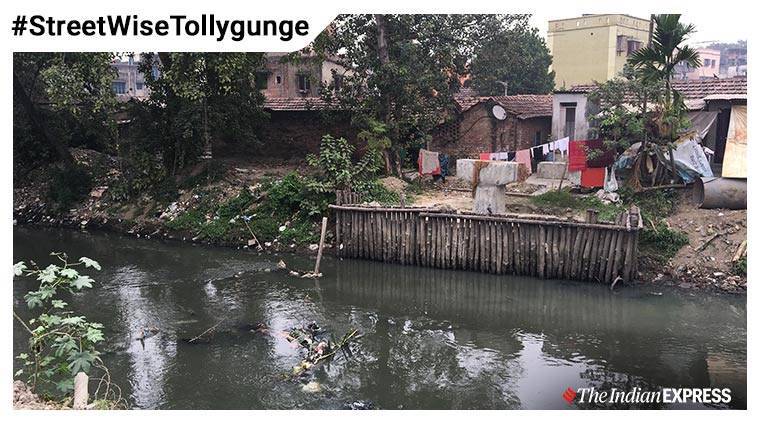
Tolly’s Nullah behind the grounds of Tollygunge Club in Kolkata. (Express photo: Neha Banka) ______________________
In the outer peripheries of the property that belongs to Tollygunge Club, a narrow creeks snakes past, as if conjoined to the boundaries of the club’s walls. On both banks of the creek, slums have developed over the years and garbage floats on the water, emanating a foul stench.
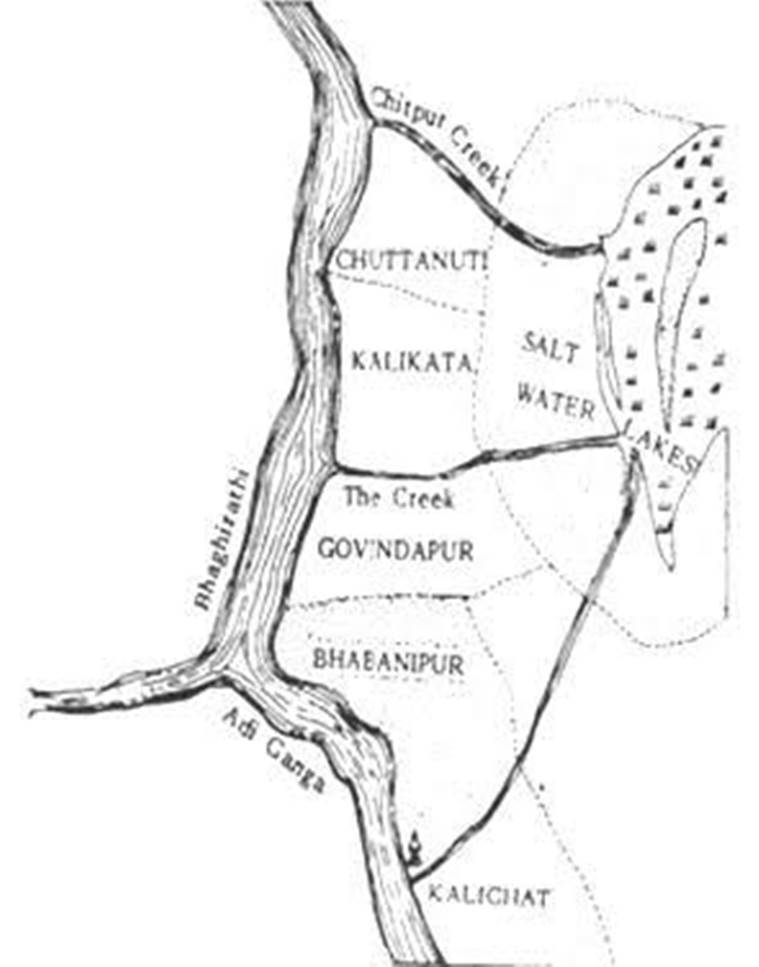
According to historian P Thankappan Nair, who has documented the city’s history extensively, this creek was originally called the Govindpur Creek. There is no historical documentation for why the creek was so named, but perhaps it acquired its name from that of the village of Govindapur, one of the three villages that went on to form the city of Calcutta. According to Nair, another name for this creek in Bengali was Adi Ganga or the original River Ganga that flows past the city.
This map is a conjecture map and shows the path of Adi Ganga. Tolly’s Canal is named ‘The Creek’ in this map and runs past Tollygunge when it was still the village of Govindapur. (Map credit: Chattopadhyay 1990/Jenia Mukherjee) ________________________
In 1775, Colonel Tolly wrote to Warren Hastings, the Governor-General of India, with a proposal of leading an excavation to connect the village of Balliaghat, now called the neighbourhood of Beliaghata, in the wetlands of the eastern fringes of the city, to the neighbourhood of Tollygunge through a waterway.
Slums have come up on both banks of Tolly’s Nullah. (Express photo: Neha Banka) ____________________
According to published letters in the Fort William-India House Correspondence Vol.7 (1773-1776), Tolly wrote to Hastings saying he can do the same on a contract with the East Indian Company or lend his services for Rs 80,000, along with a levy on tolls paid by boats passing through the creek for a period of 12 years. This plan was agreeable to the Company, and Tolly was directed to survey the land. This creek, 27 kilometres long, was then renamed Tolly’s Nullah after the colonel and opened for navigation in 1777.
After the opening of the Nullah, the neighbourhood became more developed and came to be known as Tollygunge. After Tolly’s death, his widow was unable to continue collecting the tolls and the maintenance of the waterways. The Company took over the management of the Nullah and auctioned its leasehold rights in March 1794 to an Englishman in the city, John Hooper Wilkinson. In 1804, the Bengal Government took control over the Nullah and the Collector of 24 Parganas was authorised to maintain it.
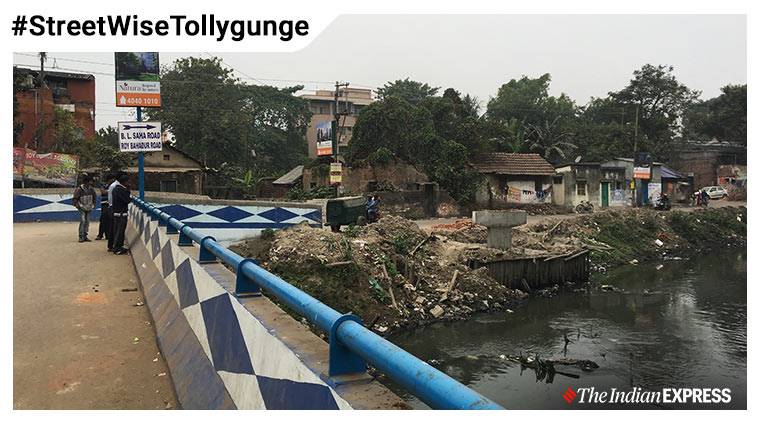
Passersby stand on a small bridge that connects the banks of Tolly’s Nullah. (Photo: Neha Banka) __________________________
There is no document to independently verify this fact, but according to the Tollygunge Club archives, the premises of the club was originally an indigo plantation home of Richard Johnson, a merchant in the East India Company, set up in 1781.
Around 1806, the British dispatched Tipu Sultan’s family to Calcutta and gave them a living allowance. Tipu Sultan’s son Ghulam Mohammed Shah purchased the plantation grounds from Johnson to be used as a residence and the family spent a considerable amount of time in the neighbourhood.
After the family’s fortunes changed, they sold some portions of the plantation and leased out other sections to William Dixon Cruickshank, a Scottish banker, who was looking to build a sports club for the British that would also allow residential facilities and provide space for the British to socialise.
After the fortunes of Tipu Sultan’s family changed, they sold some portions of the plantation and leased out other sections to William Dixon Cruickshank, who was looking to build a sports club for the British. (Express photo: Neha Banka) ___________________
Over time, Tipu Sultan’s family divested complete control of the estate and the lands came under the direct control of the Tollygunge Club, a name that the institution acquired because of the neighbourhood it was located in and because of the location of the creek that runs just behind its premises.
Over the decades, most of the open spaces in the club were converted into an 18-hole golf course and the forest land was cleared to make space for other structures and facilities inside the club premises.
Today, there are no signboards that indicate the location of the Tolly Nullah in the neighbourhood of Tollygunge. Haphazard modern construction has changed the facade of Tollygunge and to find the nullah, one would have to engage in a self-conducted walking tour using an old map of the city for guidance.
An offshoot of the main road in Tollygunge, a narrow lane, through which only one vehicle can pass at a time, is the only way to access the nullah these days. Slums occupy both banks of the waterway and an overwhelming sense of garbage permeates all around. Tollygunge Club itself has changed over the decades and its history can only be found in pockets.
Haphazard modern construction has changed the facade of Tollygunge and to find the nullah, one would have to engage in a self-conducted walking tour using an old map of the city for guidance. (Express photo: Neha Banka) ______________________
Although most of the dense forest has been cleared away over the years, jackals still roam its greens in the darkness of dusk and late into the night. On any given day, one can spot diverse species of birds on the club grounds, like kingfishers and cattle egret. Few city residents know of how the institution and its neighbourhood got its name and perhaps even fewer know of the existence of the waterway that lies beyond the high walls of the club.
source: http://www.indianexpress.com / The Indian Express / Home> Cities> Kolkata / by Neha Banka / Kolkata , December 27th, 2019
Dr. B. Ahmed Hajee Mohiudeen passed away on Sunday at a private hospital in Mangaluru after a brief period of illness
Dr B. Ahmed Hajee Mohiudeen, founder of the BA Group, Thumbay, was known for his philanthropic activities.
Dr B. Ahmed Hajee Mohiudeen, 86, entrepreneur, philanthropist, educationist and the founder chairman of BA Group, Thumbay, passed away on Sunday at a private hospital in Mangaluru after a brief period of illness.
According to former Karnataka minister U T Khader, the mortal remains of Dr. Ahmed Hajee will be kept at Thumbay PU College for the public to pay their tribute. Funeral will be held at Thumbay Masjid burial ground after 4pm on Sunday.
Ahmed Hajee, born in 1933 to B. Mohiudeen Hajee and Mariamma in a business family, graduated in commerce in 1954 and began his career soon after as a small scale industrialist in a village called Thumbay on the outskirts of Mangaluru.
He founded the BA Group, in 1957. From a fledgling company in the 1960s, the BA Group is now on the threshold of rapid expansion into areas such as urban housing, education, real estate, healthcare and exports and imports.
Ahmed Hajee, who was married to Bee Fathima Ahmed Hajee, is survived by three sons – Thumbay Moideen (founder president of Thumbay Group, headquartered at Ajman, UAE), B Abdul Salam (Managing Director & CEO – BA Group), B M Ashraf and his daughter Shabana Faizal (co-founder and Vice Chairperson of Kef Holdings).
Mohiudeen Educational Trust has been playing a vital role in the promotion of education by sponsoring a number of educational institutions such as BA Industrial Training and Technical Centre, a Kannada and English medium school, a pre-university college, a nursery school, and Darul Uloom Mohiudeen Arabic College.
Ahmed Hajee is also the founder president of a number of institutions and trusts in Mangalore and the surrounding areas. He is the president of the 80-year-old Badriya Educational Institutions at Mangaluru. He is also the president of Nav Bharat Night High School, which was established before India’s independence. He is one of the Trustees of Islamic Academy of Education, under Yenepoya Group.
source: http://www.khaleejtimes.com / Khaleej Times / Home> World> India / by Staff Report, Mangaluru / August 16th, 2020
Following up on The New York Times article on the imposters who called themselves the descendants of Wajid Ali Shah, we trace the last prince of Awadh and the story of a family that settled in Kolkata after decades on the move.
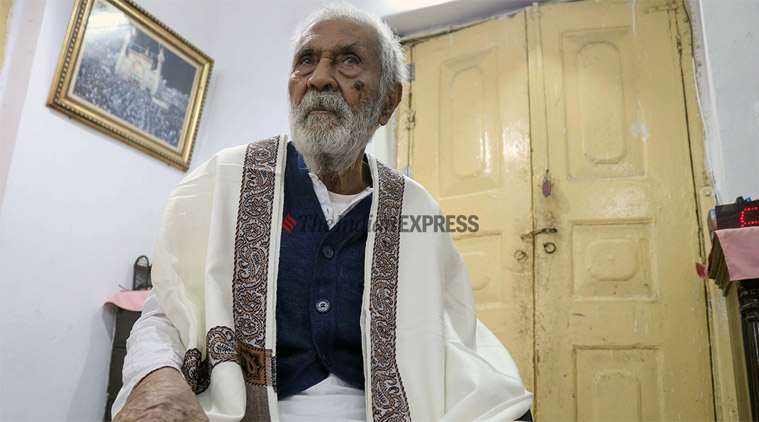
Dr Kaukab Quder Meerza, a direct descendant of Nawab Wajid Ali Shah, in his home in central Kolkata. (Express Photo: Shashi Ghosh) ________________________
Dr Kaukab Quder Meerza, 86, doesn’t keep well these days. Long conversations are challenging for him and his children and grandchildren have to help him walk short distances inside the house. His home, deep inside a bylane in the heart of Kolkata, an old, unassuming, one-storey building, is easy to miss if one isn’t paying attention. The modest interiors of his residence give no indication of who Meerza is or his family’s legacy. They are the last remaining descendants from the ruling line of Nawab Wajid Ali Shah, the last ruler of the kingdom of Awadh in India.
In November, The New York Times article titled “The Jungle Prince of Delhi ‘,brought focus back on the descendants of the Nawab after the story revealed that a family living in the ruins of a 14th-century hunting lodge in New Delhi for decades, claiming to be the descendants of the Awadh rulers, were actually imposters.
An ‘absurd’ story
Meerza and his family in Kolkata are familiar with the story of Wilayat Mahal, as are most people who have been associated with the former princely state of Awadh in various capacities or have spent time researching on Nawab Wajid Ali Shah. Wilayat, the woman at the centre of the deception, along with her son Ali Raza, also known as Cyrus, and her daughter Sakina, entertained journalists, mostly those from overseas, with her claims of ancestry, and the journalists, in turn, dedicated hours of time and spools of newsprint in telling their dramatic story.
“It was absurd,” says Meerza, recalling his meeting with Wilayat Mahal in the 1970s-80s. When Wilayat made her first appearance at the New Delhi railway station, Meerza and his brothers Anjum Quder and Nayyer Quder agreed that it was necessary to meet her to learn more about the basis of her claims. The family decided that Meerza would travel to Delhi for that purpose, having studied the family history most extensively. He doesn’t remember his first meeting with her very well—some four decades have passed since—but the second visit is more vivid in his memory.
A photograph of a painting of Nawab Wajid Ali Shah found in the Imambara Sibtainabad. Unlike the commonly seen paintings of the Nawab, here he is fully covered and is not depicted with one exposed nipple (Photo credits: Sudipta Mitra) _________________________
Sometime after his first meeting with Wilayat, Meerza took another trip to Delhi and met her at the Maurya Hotel, now called ITC Maurya. “She said many things about herself,” recalls Meerza. “With great difficulty, she met me because the place (the room they met in) was reserved for VIPs. The lady talked about nothing in particular.” It isn’t immediately clear why it was a challenge to meet Wilayat because Meerza’s age and health have impacted his speech.
A few of Meerza’s children and grandchildren who still live in Kolkata are gathered around him and his younger daughter Manzilat Fatima, 52, and son Kamran Ali Meerza, 46, express surprise at the revelation. Although Wilayat’s story is familiar to the family, this is the first time they have heard about their father’s second meeting with her. As he begins his tale, his voice becomes louder, emphatically denouncing the stories Wilayat and her children had spun over the years.
______________________
“It was a dark place and the meeting was absurd,” Meerza continues. Wilayat wore a sharara, he recalls, just like women did centuries ago in Lucknow, in the royal courts, not a sari, perhaps to add more credence to the character she had been attempting to play. “She wasn’t wearing jewellery. It was absurd. She spoke to us in Urdu and sometimes in English.” During their conversation, not once did Wilayat disagree that Meerza’s family members were descendants of Wajid Ali Shah. “We were interested in knowing the background of the lady. Of course, we told her about us. She never denied that we were from Wajid Ali Shah’s family, but she presented herself as a representative of the family. I told her that she was not a representative and that she was talking (about) absurd things.”
Meerza remembers that Wilayat showed some newspaper cuttings, not legal documents, to lend credibility to her claims. “Whenever I said anything about the branch of Birjis Quder’s family, she never (responded). I said that whatever she was talking about the background of the family was absurd. That she was not talking correctly about the family.” In this meeting, Meerza says, there was no sign of Wilayat’s daughter Sakina. “Only her son was there. A little older than Kamran now,” says Meerza, gesturing towards his son. “I’m sorry that I met her.”
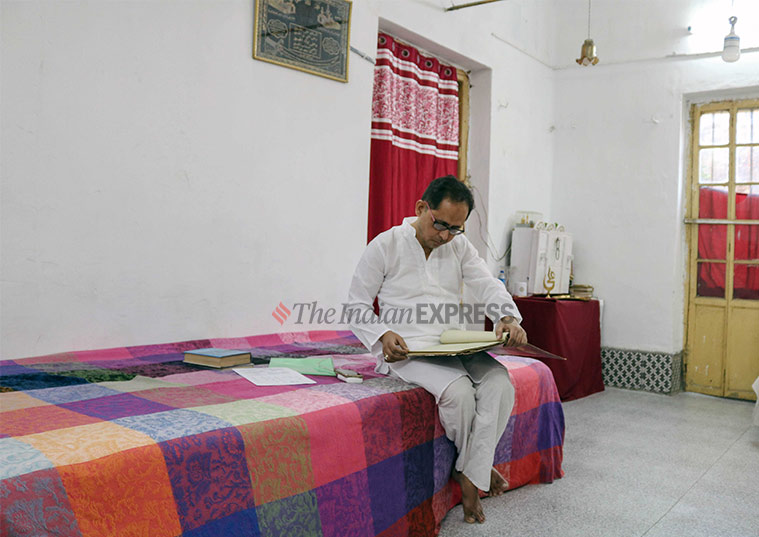
Kamran Ali Meerza browses through letters written by his family to the Indian government over the years, denouncing Wilayat Mahal’s claims of ancestry. (Photo: Shashi Ghosh) _________________________
After The New York Times story was published, Manzilat told her father that the world now knew what the family had been trying to tell people about Wilayat Mahal for decades. “What is there to say about that?” asks Meerza about the story. To Meerza and his family, and to many others who met Wilayat over the years, the revelation came as no surprise.
The Nawab’s 300 wives
“There is a saying that if you throw a stone in Lucknow, it will fall on a Nawab’s kothi (house). All fake. Most of them are fake,” says Manzilat. Nawab Wajid Ali Shah was a documented hedonist, who found joy and solace in music, women and extravagance and had some 300 wives, many of whom he divorced when the period of his decline started, presumably in an attempt to lessen his financial burden and responsibility. It is difficult to state the exact number of his descendants, but the figure would be somewhat in proportion to the number of Wajid Ali Shah’s consorts, in addition to his official spouses and the children he had with them.
The British officials who deposed and drove Wajid Ali Shah out of Awadh and imprisoned him in Calcutta in 1857, recorded the names of 185 officially recognised wives of the Nawab and his children. This list was published in the Awadh Pension Book of 1897 after the death of Wajid Ali Shah’s son and successor, Birjis Quder, the last official ruler of Awadh.
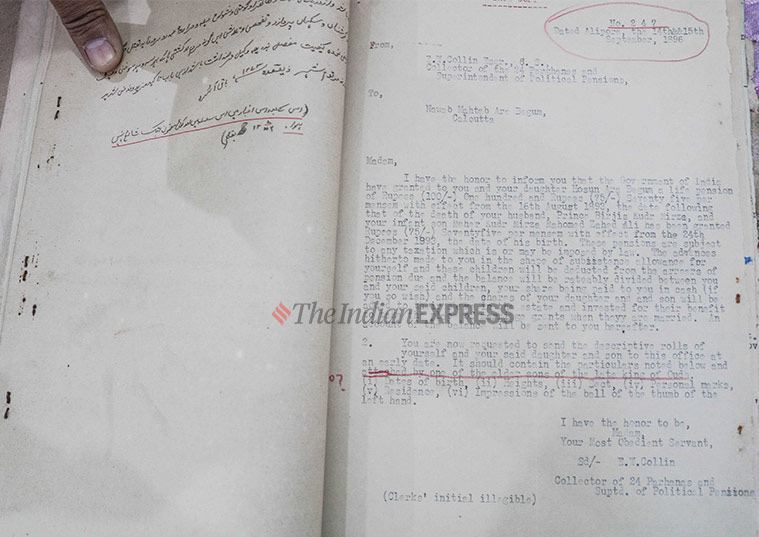
A type-written replica of a letter written in 1896 by EW Collins, Collector of 24 Perganas and Superintendent of Political Pensions to Nawab Mahtab Ara Begum informing her of the political pensions granted to her and her children by the British government. (Photo: Shashi Ghosh) ___________________________
The descendants mentioned in the Awadh Pension Book of 1897 were allotted political pensions, first given by the British government in India, a responsibility that later transferred to the government of independent India in 1947. The central government made no alterations to the names of the descendants mentioned in the Awadh Pension Book of 1897 and has continued paying the required monthly pension ever since. The Awadh Pension Book, however, hasn’t prevented pretenders in Lucknow and elsewhere from sprouting, claiming ancestry to the family, because few bother to check official documents to verify such claims.
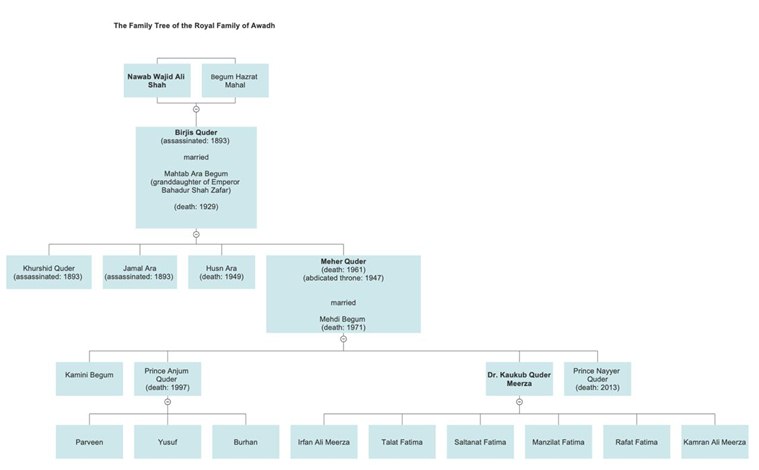
Meerza’s family are direct descendants of Birjis Quder, the son of Wajid Ali Shah and his wife Begum Hazrat Mahal, a courtesan who became the second official wife of the Nawab. But it would be doing Hazrat Mahal a disservice if she were to be dismissed as a mere court dancer whose fortunes changed when she captured the Nawab’s fascination and favour.
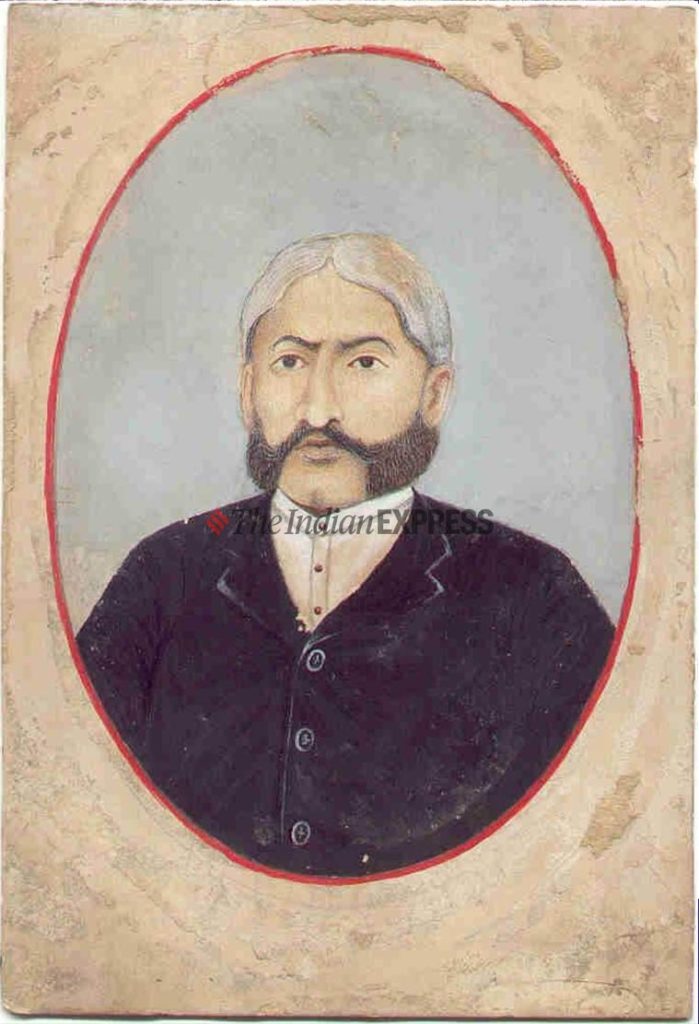
An undated hand-painted portrait of Birjis Quder. (Photo credit: Manzilat Fatima) ________________________
“She was a warrior and she was a purdah nasheen,” says Manzilat of her ancestor, who lived wearing a customary veil that she removed to launch into war with the British. When Wajid Ali Shah was dismissed and dispatched from Awadh, Begum Hazrat Mahal actively engaged in opposing the British during the Rebellion of 1857 on her own accord, without having been given any special political appointments by the deposed Nawab.
Her resistance against the British proved to be futile and she was compelled to flee Awadh. Taking her son Birjis Quder, she sought asylum in Nepal under the protection of King Jung Bahadur Kunwar Rana who demanded hefty financial compensation in return. The mother and son spent close to two decades in Nepal, but not much is known about their circumstances or where they found the finances to live in the country. Hazrat Mahal died away from her homeland, in a nameless grave in Kathmandu, forgotten till only recently.
The last Nawab of Awadh
Sometime in 1893, according to her father’s research, says Manzilat, Birjis Quder, now the ruler of Awadh in exile, was coaxed by the other wives and children of Wajid Ali Shah who had followed the Nawab to Calcutta, to join them in the city. “It was a conspiracy,” says Meerza, a statement he repeats several times during the interview with indianexpress.com. “It was a conspiracy among the other families of Wajid Ali Shah and the British because Birjis Quder was the last legal heir. The conspiracy was hatched and he was invited by deceit. They told him that he was the head of the family now and Birjis Quder was taken in by the sweet talk. So of all the places, he came to Calcutta. He could have also gone to Lucknow,” says Manzilat.
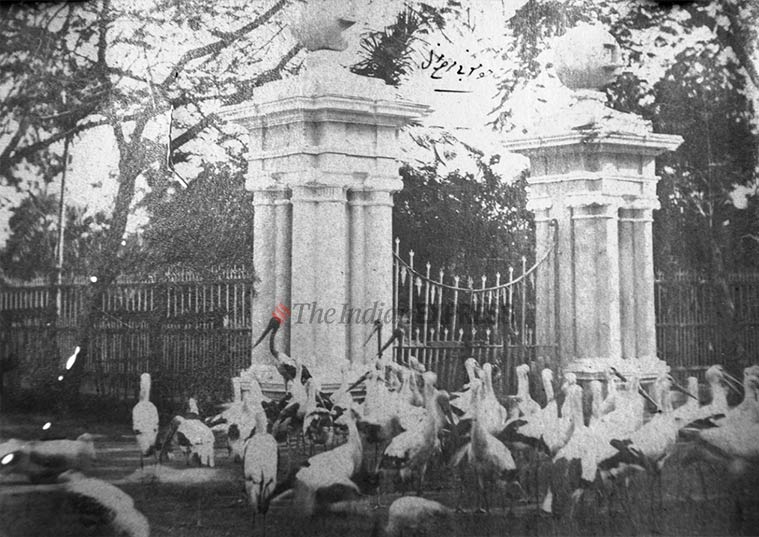
This rare photo depicts the main entrance of the family home of Birjis Quder and Mahtab Ara Begum in Metiabruz, Kolkata, now demolished. In the foreground, birds that appear to be storks are seen flocking near the entrance. (Photo credits: The private archives of Dr. Kaukab Quder Meerza and his family) ______________________
According to the story passed down in the family, Birjis Quder and his eldest sons Khurshid Quder and Jamal Ara were invited for dinner by the other families of Wajid Ali Shah on the night of August 14, 1893. All three died the next day, having been poisoned. When news reached of their murders, Birjis Quder’s wife, Mahtab Ara Begum, who was the granddaughter of Bahadur Shah Zafar, the last Mughal Emperor of India, fled Metiabruz, the neighbourhood in Calcutta where they had been staying, while she was pregnant with Mehr Quder, along with her remaining daughter, Husn Ara and reached central Calcutta in search of a safe house.
“When news of the death arrived, she ran from Metiabruz, along with her precious potli of jewels. These things I don’t know (much about), but my father will know,” says Manzilat. The house where the family now live in is not only unique because of its residents, but the building itself is of little-known historical importance.
“Perhaps she didn’t buy this house that very night itself. But she put up in another place somewhere close by in some small room, while she was trying to find some protection. From that time onwards, we are here and it’s my father’s wish that as long as he is around, we cannot construct anything here,” says Manzilat, looking around the living room of their home. Mahtab Ara Begum’s son Mehr Quder had three sons and one daughter, including Manzilat’s father Kaukab Quder Meerza.
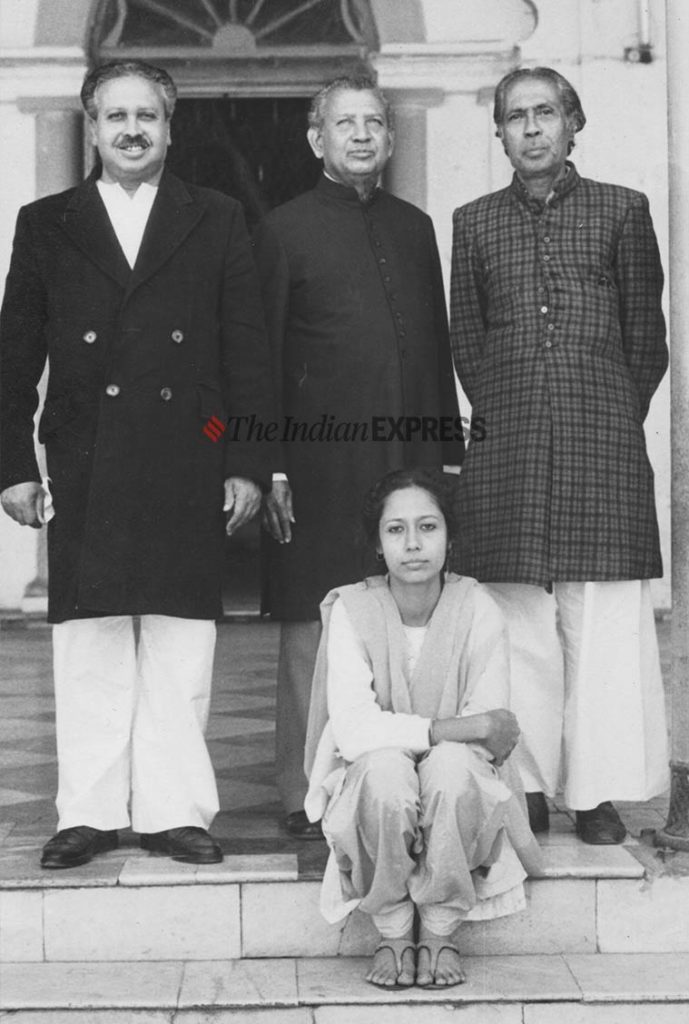
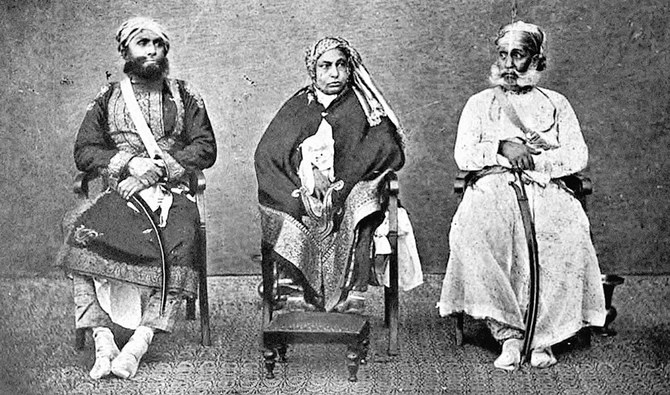
(From Left to Right) Prince Nayyar Quder, Prince Anjum Quder, Dr. Kaukab Quder Meerza pose for a photo with Meerza’s daughter Manzilat Fatima at Imambara Sibtainabad in Metiabruz, Kolkata, sometime during 1985-1986. (Photo credit: The private archives of Dr. Kaukab Quder Meerza and his family) ___________________
“The last pension holder is Dr. Kaukab Quder Meerza, the last living member of that generation,” says Sudipta Mitra, author of the book ‘Pearl by the River: Nawab Wajid Ali Shah’s Kingdom in Exile’, who has conducted research on the Nawab for more than a decade. The various provisions of this pension mean that Meerza is the last remaining recipient of this monthly pension that will not be transferred to Manzilat or her five siblings, Irfan Ali Meerza, Talat Fatima, Saltanat Fatima, Rafat Fatima and Kamran Ali Meerza. Prince Anjum Quder died in 1997, years after the death of his daughter Parveen. His two sons, Yusuf and Burhan live elsewhere in the country with their families and don’t spend much time in Kolkata these days. Prince Nayyer Quder never married. Unlike his brothers, Kaukab Quder Meerza never used the title of ‘Prince’ before his name, preferring to use the title of ‘Doctor’ to signify the Ph.D that he earned, explains Manzilat.
Mitra says this list and its provisions, left by the British, documenting the descendants of Wajid Ali Shah, not only provide a monthly pension to listed descendants, but it also serves to provide recognition to the descendants because it is the most authentic documentation available of the Awadh royal family tree. It also helps weed out pretenders like Wilayat Mahal and her children, who find no mention in either the Awadh Pension Book of 1897 or in other historical documentation and research on Awadh.
Asked about Wilayat Mahal, Mitra dismisses her entirely. “I did not find their names in the records and was hence not interested in them. They did it for publicity,” says Mitra.
Fake nawabs of Lucknow
The controversy surrounding claimants who say they are descendants of the Nawab or of the larger Awadh royal family is nothing new, but according to Mitra, there is very clear historical documentation that helps sift out fraudulent claims for those bothering to do the research. “When Wajid Ali Shah lived in Lucknow, there were many taluqdars who lived like kings themselves. So their descendants call themselves ‘royal’,” says Mitra of some such claimants. Mitra believes that although the Awadh Pension Book of 1897 is not the full and final record of all of the Nawab’s wives and children, it is the most authentic record available.
A photograph of a painting of Nawab Wajid Ali Shah, depicting the Nawab with white hair. (Photo: Sudipta Mitra) ______________________
So why then did the Uttar Pradesh government or the Indian government not do anything to weed out the imposters? “The belief is that the imposters are harmless. They aren’t taking anything. They aren’t asking for anything,” says Manzilat. She points to some individuals who live in Lucknow and have made the make-believe their business where they attempt to cash in by claiming to recreate the Awadh of the Nawabs and Awadhi cuisine, purportedly representing food as it was cooked in royal kitchens, especially for foreign tourists. “It is difficult to deny Dr. Kaukab Quder Meerza’s ancestry,” says Mitra. “The government has recognised the family and that is why they get the pension.”
There is little doubt that Wilayat Mahal and her family were a nuisance for the Indian government. She was attracting crowds and journalists and was occupying the VIP room at the railway station, filled with her children, fripperies, dogs and carpets. During their second meeting at the Maurya Hotel in Delhi, Meerza remembers that there were talks going on between the Indian government and Wilayat that were perhaps not heading in the direction in which she would have liked. Although the government eventually gave Wilayat consent to live with her children and dogs in Malcha Mahal, the dilapidated 14th century hunting lodge in the middle of Delhi, Meerza says in no way should it be considered official recognition of her claims.
“She did not get any recognition from the government. Forcibly living in the (railway) station was not the right thing (to do),” says Meerza. Two years ago, after the death of Wilayat’s son Cyrus, when he was able to speak more clearly, Meerza told his family that the Indian government gave Malcha Mahal to Wilayat not to give recognition to them, but because they were creating nuisance in public. “In order to keep them quiet, the government gave them ruins and she accepted it. No royal would accept something like this,” says Manzilat. “She was also offered some flats in Lucknow but she refused to accept it.”
Battling historical inaccuracy
The family continues to battle misinformation about their ancestors, particularly Wajid Ali Shah, especially concerning the time the Nawab spent in Calcutta. Government apathy towards correcting historically inaccurate information frustrates the family, but they say there is little they can do. Nobody has conducted as much research on Nawab Wajid Ali Shah and his wife Begum Hazrat Mahal, the line from which the Kolkata family descend, as Dr Kaukab Quder Meerza, but few are listening.
A few years ago, says Manzilat, heritage walking tours in the city held in conjunction with the city government began claiming that the Bengal Nagpur Railway (BNR) House in Kolkata, a large mansion in the Garden Reach neighbourhood of the city, was where Wajid Ali Shah once stayed in during his time in the city. A plaque was also installed in the premises of the mansion stating that this fact had been verified by her father. Local newspapers and blogs began repeating those claims and the myth took a life of its own, including a mention on Wikipedia. “My father’s name has been used to claim that the BNR property was a place where Wajid Ali Shah stayed. But my father is the sole authority (on the family history), and there is no evidence that (the BNR building) was associated with Wajid Ali Shah,” says Manzilat.
After graduating from St. Xavier’s College in Kolkata with a Bachelors in Economics, Meerza went on to do a double Masters in Political Science and Urdu from Aligarh Muslim University. When he started a Ph.D at Aligarh, his advisor told him to consider conducting research on his own family’s history, on Wajid Ali Shah. The family believes the thesis written in Urdu is the most comprehensive documentation of Wajid Ali Shah and his wife Begum Hazrat Mahal, and Manzilat’s elder sister Talat Fatima, 62, is in the process of translating it to English.
Helping Satyajit Ray write ‘Shatranj Ke Khilari’
In October 1976, when Satyajit Ray began writing his screenplay for the film ‘Shatranj Ke Khilari’, set in the backdrop of Awadh during the First War of Independence of 1857, the filmmaker made a trip to the Imambara Sibtainabad in Calcutta to learn more about the subject. Wajid Ali Shah’s descendants in Kolkata are trustees of the Imambara and Anjum Qudr directed Ray to his younger brother Meerza, who was at that time teaching Urdu as a lecturer at Aligarh Muslim University and simultaneously researching on Nawabi Lucknow and specifically, Wajid Ali Shah.
Pictured here are the interiors of the Imambara Sibtainabad in Metiabruz, Kolkata. The descendants from the ruling line of Wajid Ali Shah are the trustees of this property. (Photo credits: Sudipta Mitra) _____________________
That was how Satyajit Ray came to engage with Meerza in a long-term correspondence through letters, to better understand the character of Wajid Ali Shah for his screenplay. Over the course of weeks, Ray and Meerza discussed less well-known aspects of the Nawab’s life and Nawabi Lucknow, and conducted in-person meetings where the director made trips to Aligarh where Meerza had been occupied with his teaching and research.
“In my screenplay, I show (Wajid Ali Shah) as a tragic figure who realises that he should not have sat on the throne but should have pursued an artistic career. Do you agree with this viewpoint?” asks Ray in one of his first few letters to Meerza. The purpose of the correspondence, Ray says in his letter, was to fill in gaps of information that the filmmaker had found in his own research on Wajid Ali Shah.
Meerza doesn’t bring up his correspondence with Ray during the interview. His son Kamran shares this information, remembering at least one visit that the filmmaker made to their Kolkata home when Kamran was still a young boy, and opens up a folder containing letters exchanged between his father and the filmmaker. ‘Shatranj Ke Khilari’ would have probably still been made even if Ray had never corresponded with Meerza, but would it have been the masterpiece that it is without Meerza’s contributions? It is difficult to speculate but perhaps for this very reason, Ray invested time and funds pursuing Meerza’s insight and knowledge of his ancestor, and travelled around the country while Meerza was dividing his time between Kolkata and Aligarh.
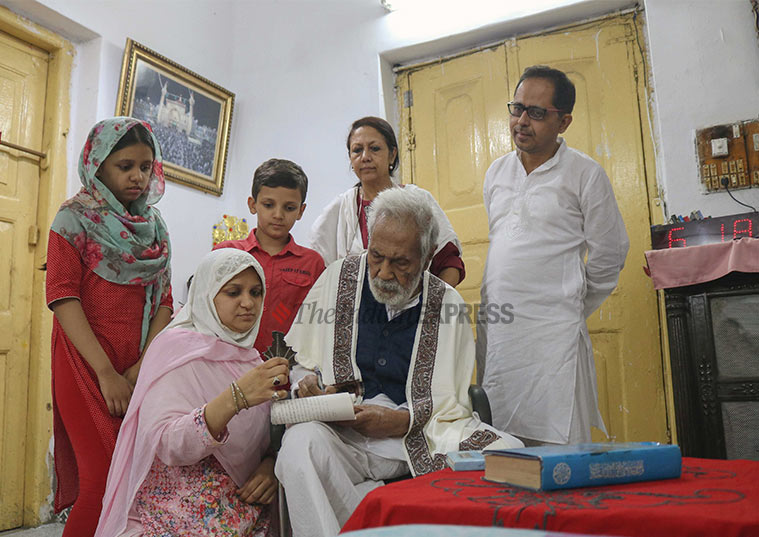
Two of Dr Kaukab Quder Meerza’s children (R-L) Kamran and Manzilat and Kamran’s children Mohammad Sulaiman Qudr Meerza (aged nine) and Zainab Fatema (aged 11), gather around to watch as Kamran’s wife, Nuzhat Zahra, helps her father-in-law translate the inscriptions written on the royal seals. (Photo: Shashi Ghosh) _____________________
Last remaining royal artefacts
The family doesn’t have many belongings of historical significance, in part due to the circumstances in which their ancestors fled for their lives. But two royal seals, carefully wrapped in a large square piece of red velvet fabric, are exceptions. One is a small rectangular metal seal with etchings of daggers and an inscription in Urdu that reads: ‘Nawab Hazrat Mahal Sahiba’. The etchings on Hazrat Mahal’s seal are unique because they feature daggers instead of floral motifs, signifying her role as a warrior queen who defended her kingdom against the foreign invasion of the British, explains Manzilat.
The second seal is slightly larger, featuring the royal coat of arms of Awadh, with elaborate etchings of floral motifs and an inscription in Arabic and Urdu. The calligraphy is elaborate and the family struggles to translate it; they’ve never done it before. Due to his age, Meerza finds it difficult to read the finely etched calligraphy of the seal. The family turns to Kamran’s wife Nuzhat Zahra, a 36-year-old lecturer in Urdu and a research scholar in the city, for help. Her Urdu language skills are better than those of her husband and his siblings.
Birjis Quder and Hazrat Mahal’s descendants in Kolkata only have two royal seals belonging to the last Nawab and his wife in their possession. The small rectangular metal seal (left) belonging to Begum Hazrat Mahal has etchings of daggers and an inscription in Urdu that reads: ‘Nawab Hazrat Mahal Sahiba’. The larger seal (right) features the royal coat of arms of the kingdom of Awadh, and belongs to Birjis Quder. Birjis Quder’s royal seal bears inscriptions in Arabic on the top, followed by his royal titles in Urdu below, saying, “NarsuminnAllah Fatun Qareeb” (Help from Allah and a near victory) and “Sikander Iqbal Shah, Khudullah Mulkohu Mirza Birjis Quder Ramzan Ali” (His Highness Keeper of Allah’s heaven-like nation. Mirza Birjis Quder Mohammad Ramzan Ali.) (Photo credit: Shashi Ghosh) ______________________
Not much is known about the circumstances that Birjis Quder found himself in, in a foreign land, far away from his home and inheritance, or even his thoughts at watching the British loot and strip his father of everything that he ever had. But perhaps the sentiments of the last Nawab of Awadh can be found in the elaborate calligraphy of the inscription denoting an Arabic phrase, followed by his royal titles, alqaab, on his seal:
“NarsuminnAllah Fatun Qareeb”; Help from Allah and a near victory.
“Sikander Iqbal Shah, Khudullah Mulkohu Mirza Birjis Quder Mohammad Ramzan Ali”; His Highness keeper of Allah’s heaven-like nation. Mirza Birjis Quder Mohammad Ramzan Ali.
source: http://www.indianexpress.com / Indian Express / Home> Research / by Neha Banka / Kolkata – January 04th, 2020
Sikandar Begum with her prime minister, left, and second minister. The photo was published in “A Pilgrimage to Mecca” (1870). (The Asiatic Society of Bombay via AN)
One of the most interesting aspects of Sikandar Begum’s account is her open criticism of Ottoman governance in Makkah
Imprecise library records obscured access to the original Urdu manuscript for decades
Warsaw :
History recently came to life in a manuscript with royal stamps discovered in the archives of SOAS University of London. The historic find? A tantalizing insight into the journey of the first ruler from the Indian subcontinent to set out for Hajj.
In November 1863, the ruler of the princely state of Bhopal, Sikandar Begum, began the sacred pilgrimage many other sovereigns of her time could not make for fear of losing power — in the 19th century, sea travel from India to Makkah meant long months of absence from the throne. Unlike them, Sikandar was safe. Her Hajj included a mission to compile a travelogue for those who guaranteed her reign.
Bhopal had gained independence from the declining Mughal Empire under Dost Mohammad Khan, a Pashtun warrior who, in the early 18th century, founded the Muslim state in today’s Madhya Pradesh. Under British rule, for more than a century the country was led by four women. Sikandar, who ruled from 1844 to 1868, was the most reform-oriented of them. She reorganized the army, appointed a consultative assembly and invested in free education for girls. She was also the first Indian ruler to replace Persian with vernacular Urdu as the official language.
In late January, SOAS librarians came across a title recorded in their archives’ catalogue as “‘Journal of a trip to Mecca’ by Skandar Baigam, Ra’isah’ of Bhopal. Bound manuscript in Urdu. Written at the suggestion of Major-General Sir Henry Marion Durand, 1883.”
“I was really intrigued that such a beautifully bound-in-silk manuscript with obvious royal stamps in its colophon could be linked to such an opaque and short library record,” SOAS Special Collections curator Dominique Akhoun-Schwarb told Arab News.
“It quickly became obvious that there was a bit more story and depth behind the note ‘written at the suggestion of Major-General Sir Henry Durand,’ when the author was a queen herself, a pioneer, since she was the first Indian ruler to have performed the Hajj and authored an account of her pilgrimage.”
The imprecise note had for decades obscured access to the text for researchers. A deformed transliteration of Sikandar’s name had compounded the issue.
Until the chance discovery a few months ago, all scholarship on the Bhopal ruler’s pilgrimage had to rely on two translations of the text as the original Urdu version had been missing for some 150 years. One was the abridgment of Sikandar’s account in Persian, compiled by her daughter, Shah Jahan Begum. The other one, “A Pilgrimage to Mecca, was an English translation by Emma Laura Willoughby-Osborne, wife of a British political agent in Bhopal, which was published in 1870, two years after Sikandar’s death. The two texts are quite different.
In the English version, Sikandar quotes a letter she received from Durand, the British colonial administrator mentioned in the SOAS record, and his wife: “He was anxious to hear what my impressions of Arabia generally, and of Mecca, in particular, might be. I replied that when I returned to Bhopal from the pilgrimage, I would comply with their request, and the present narrative is the result of that promise.”
The letter is nowhere to be found in the Persian text.
A preliminary reading by Arab News of the Urdu manuscript, which has been digitized by SOAS, reveals that Durand’s letter is mentioned in the very first pages of the text. The correspondence and accuracy of other parts, however, are not immediately obvious.
In the preface to “A Pilgrimage to Mecca,” Osborne said that the Urdu manuscript consisted of “rough notes” demanding some arrangement. According to Dr. Piotr Bachtin, from the Department of Iranian Studies of the University of Warsaw, who studied female pilgrimage of the era and translated the Persian version of Sikandar’s account, the English translator’s note immediately raises questions regarding Osborne’s interference in the text.
Osborne’s assurance that the only license she had allowed herself had been the “occasional transposition of a paragraph” seems to be an understatement. It appears that the text was heavily edited. Bachtin suggested that Sikandar might have been a “reporter” entrusted with a specific task and became an “incidental informer” in the service of the British Empire.
The most interesting aspect of the travelogue, which the manuscript may verify, was Sikandar’s political involvement with and open criticism of Ottoman governance in Makkah. One of the most prominent instances of Sikandar’s criticism is the following:
“The Sultan of Turkey gives thirty lakhs of rupees a year for the expenses incurred in keeping up the holy places at Mecca and Medina. But there is neither cleanliness in the city, nor are there any good arrangements made within the precincts of the shrines,” Sikandar wrote, adding that had the money been given to her, she would have made arrangements for a state of order and cleanliness. “I, in a few days, would effect a complete reformation!”
Sikandar’s political commentary is completely missing from the Persian version of her text. “Only in the English translation did she openly criticize both the Pasha and the Sharif of Makkah, going as far as to say that she would have managed Makkah better herself!” Bachtin said, “However, we must remember that her book was commissioned by Sir Henry Marion Durand. For me, this paradoxical dynamic is particularly interesting.”
With the original manuscript now available to researchers, further study should soon reveal how much of the Hajj account was informed by the colonial circumstances Sikandar faced at home, and to what extent it was guided by her own ambitions to be a modern and reformist Muslim ruler.
source: http://www.arabnews.com /Arab News / Home> Latest News> Middle East / by Natalia Laskowska / August 02nd, 2020
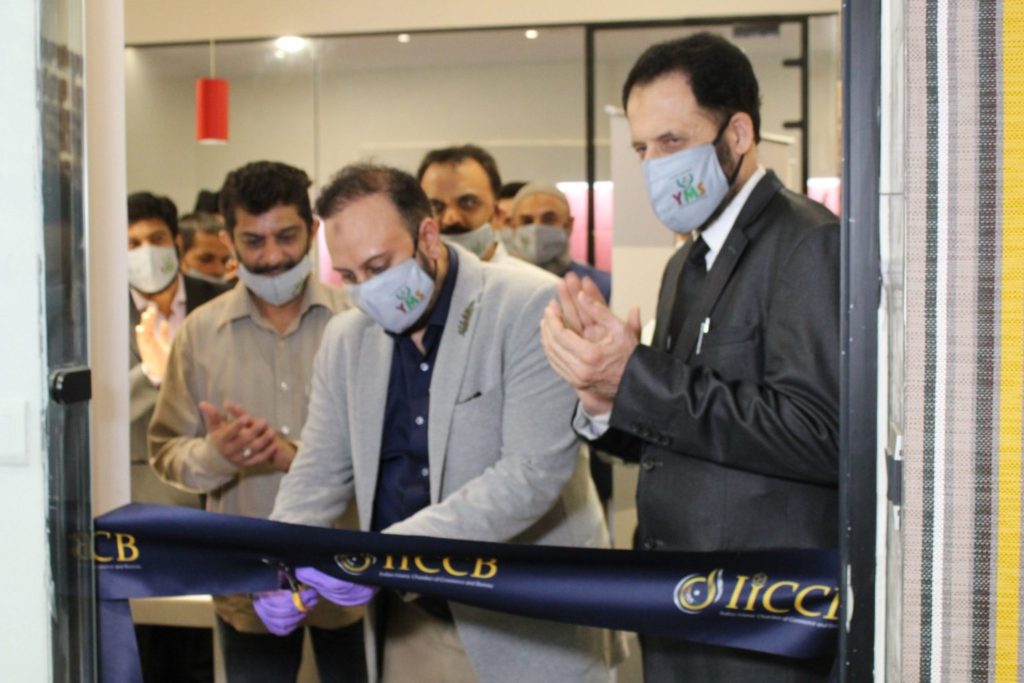
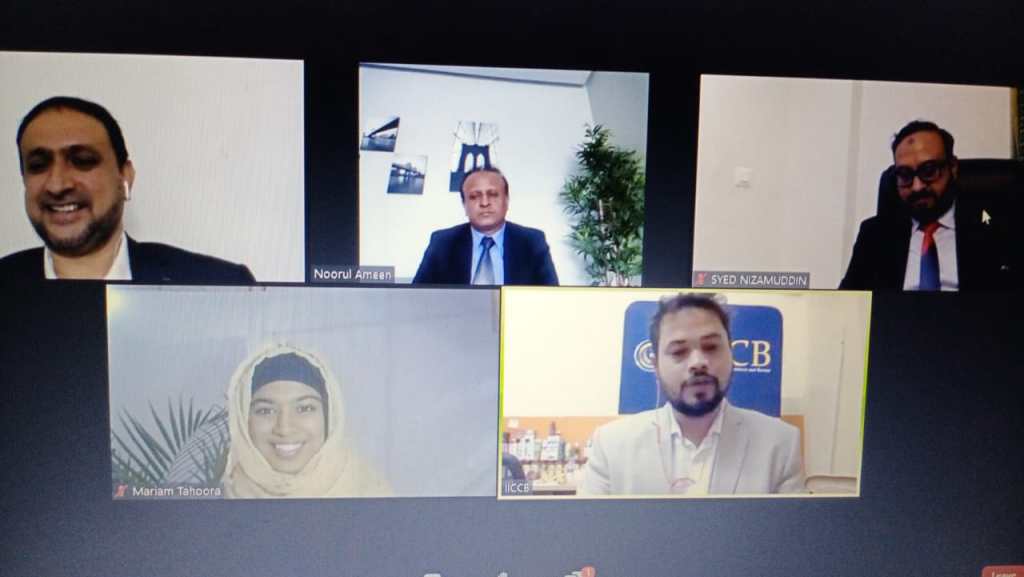
The Indian Islamic Chamber of Commerce and Bureau (IICCB) was launched on Thursday to provide support to Muslim businesses and entrepreneurs with resources, mentorship, networking and finance.
IICCB is a business chamber registered under The Indian Trust Act and is headquartered in Bangalore, with chapters in multiple states across India and in countries like the US, UK, Saudi Arabia, UAE and Canada.
The chamber aims to create a body of freelancers, SME’s, MSME’s, large corporates, professionals, consultants, start-ups, small entrepreneurs and to offer an industry-wide exchange of business ideas, exchange of opportunities, collaborations/partnerships, trade, investments, exchange of services, project funding, agent sourcing, overseas business expansion, rising funds, provide consultation, freelancing services & other advisory services to its members, according to Mr. K.M. Noorul Ameen, founder and patron the organisation.
Considering the ongoing coronavirus pandemic, it was a virtual launch with over 400 attendees belonging to different backgrounds ensuring diversity.
The launch was led by Mr. Noorul Ameen who spoke at length about IICCB and its mission.
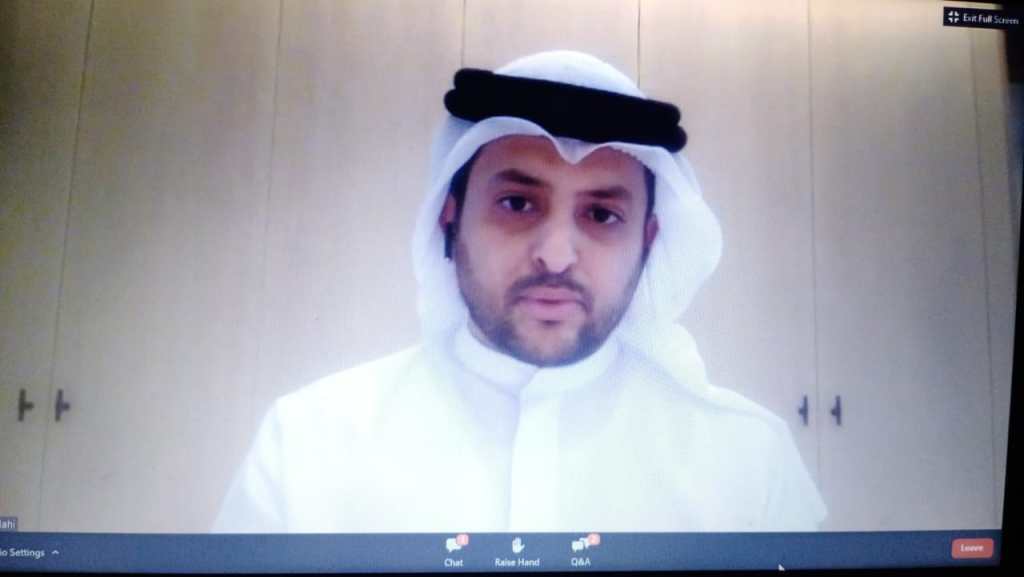
Ahmed Sultan Bin Harib Al Falahi, UAE Commercial Attaché to India.
Ahmad Sultan Bin Harib Alfalahi, UAE’s Commercial Attaché to India was the Guest of Honour for the event who expressed hope that the presence of a business chamber like IICCB in India will further enhance ties between India and UAE.
IICCB also aims to create awareness of business opportunities and promote ideas for national and international collaboration among its members.
The organisation is taking in registrations for new members on its website.
source: http://www.thecognate.com / The Cognate / Home> Business / by The Cognate News Desk / July 30th, 2020
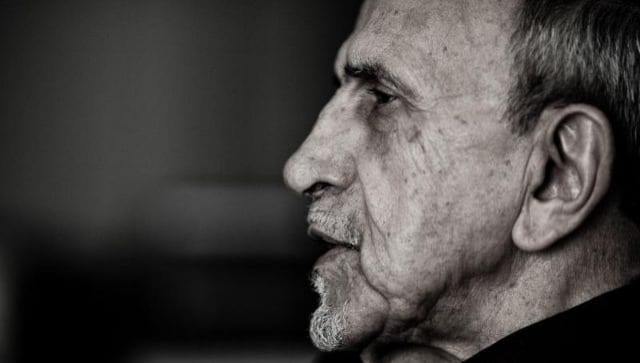
For an ephemeral form such as live theatre, where the works of most masters, especially theatre directors, disappear in the mist with their passing, it’s heartening that Ebrahim Alkazi’s legacy has been preserved for a posterity he had emphatically staked a claim to more than a half-century ago.
The grand old man of Indian theatre has passed into eternal incandescence, joining the extended roster of eminent luminaries who have left us this year. The extraordinary Ebrahim Alkazi wore many hats – unparalleled theatre doyen, a driven connoisseur of the arts, cultural ambassador – and leaves behind a staggering legacy as one of the most distinctive architects of 20th-century Indian theatre. He was 94, and the high point of his career in the performing arts was arguably his 15-year tenure as the director of the National School of Drama (NSD), from 1962 to 1977. Such was his trailblazing contribution to theatre and its practice, that the Sangeet Natak Akademi accorded him their highest honour, the Akademi Ratna, for lifetime achievement in 1967. No person below the age of 50 is ordinarily considered for this: Alkazi was just 42 when he received it, and remains one of its youngest recipients.
Alkazi grew up in a household of nine children. His family migrated from sun-kissed Unaizah in Saudi Arabia to salubrious Pune, where he was born in 1925, coming of age during World War II. He juggled Arabic tutelage and lessons on the Quran at home with convent education in English and French at the historically significant St Vincent’s High School. “That [blend] had its limitations but it opened up a whole world for me, almost half of mankind,” he told television anchor Syed Mohd Irfan. It was a charmed childhood in which books were never out of reach. From staging one-act plays at school, Alkazi moved to mature productions like Salomé and Othello at St Xavier’s College, with the charismatic Oxford-returned Sultan ‘Bobby’ Padamsee’s Theatre Group. The latter’s untimely demise in 1946 saw Alkazi take over the reins of the group; he later married Padamsee’s sister, Roshen.
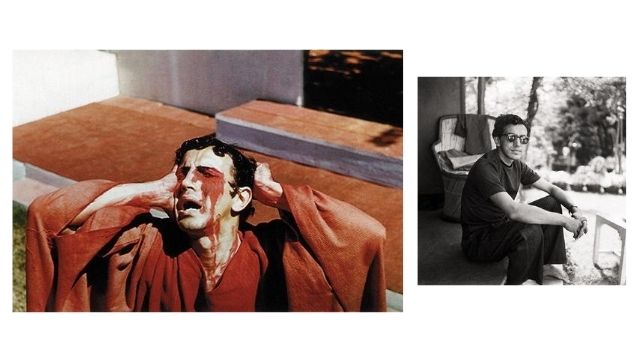
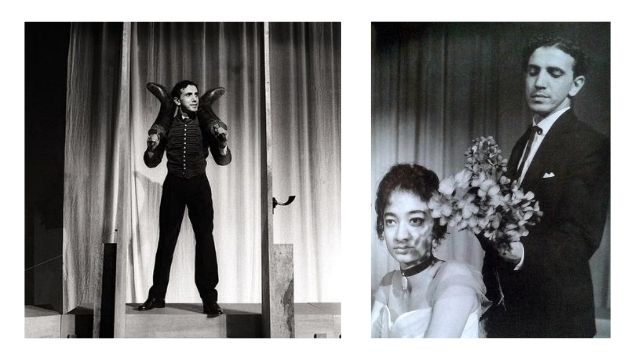
(Left): Alkazi as Oedipus in Oedipus Rex | Theater Group’s production, Bombay, 1954
In the 1950s, after a somewhat unsatisfactory stint as an acting student at the Royal Academy of Dramatic Arts, he returned to an India on the cusp of a first-wave cultural renaissance. “[RADA was] a rather closed institution, one which had not opened itself out to living theatre movements in other parts of the world,” he said in The Journal of South Asian Literature. That said, his own output as director with Theatre Group, and later Theatre Unit, was primarily productions of European and American plays in English. Working out of a bustling Mumbai terrace, his erstwhile collaborators included Gerson da Cunha, Satyadev Dubey, Usha Amin and Alaknanda Samarth.
One show particularly memorable was Alkazi’s 1959 production of August Strindberg’s Miss Julie, based on a blue-blooded woman’s tryst with her intensely impassive valet, in which he starred opposite Samarth. In Shanta Gokhale’s The Scenes We Made, Samarth remembers the play as a series of heightened, distanced, restrained images: “the final exit, an excruciatingly slow, steady walk on high heels through a guillotine-like door on to a ramp horizontal to the lit cyclorama.” Alkazi’s signature tools and approaches were crystallised during this phase. “I acquired administrative skills, learnt to employ ancient Indian arts like Iyengar Yoga and Kathakali in the practice of theatre, communicated a sense of social responsibility to my troupers who learnt to value their group activity as professional, meaningful, relevant, transformative,” he told journalist Sunil Mehra, of this decade-long inning of innovation and consolidation.
(Right): Alkazi in Shanta Gokhale’s The Scenes We Made.
Alkazi was hand-picked by the government to lead the Akademi’s newly formed drama school in Delhi, but after declining several times, he finally took over as NSD’s director in 1962, succeeding Satu Sen, the pioneering lights technician from Bengal. “They gave me a carte blanche to take charge, laying out the red carpet,” he remembered. Under Alkazi, the foundation for the NSD’s multi-pronged pedagogical programme was set in stone. It presented a coalescing of a Western approach to drama with India’s ‘theatre of roots’. And, as a director with a constant supply of dedicated actors, students and alumni (some of whom joined the school’s professional repertory company) alike, he was able to add substantially to his own distinguished oeuvre.
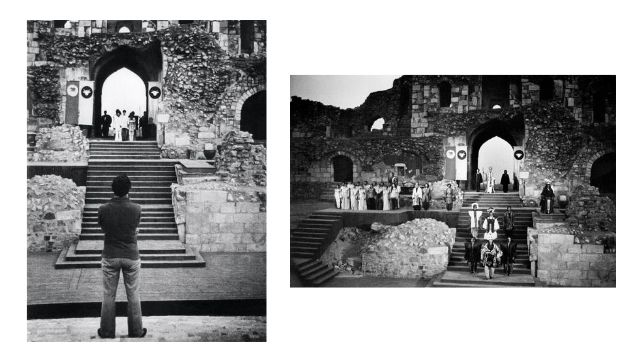
Some of his best-known works were staged in historical monuments and attracted audiences from a wide cross-section of society, from ticket-paying middle-class audiences to Prime Minister Jawaharlal Nehru, who was astounded by this rooted-yet-global brand of Indian theatre. His prized troika of productions include Mohan Rakesh’s Ashadh Ka Ek Din, Girish Karnad’s Tughlaq and Dharamvir Bharati’s Andha Yug, one of his earliest NSD stagings in which he commandeered what was essentially a radio play to create a spectacle in the mould of classical Greek theatre, with the bolstered ruins of Feroze Shah Kotla providing a staging of multiple levels, and unmistakable political echoes. The play placed Alkazi firmly on the national stage, even if the plays didn’t really cross over. When asked by Irfan about why the works did not ‘reach the people’ they were ostensibly intended for, he replied dismissively: “That’s their fault. We toured a lot with it.” Even in its large open-air spaces, the notion of the NSD as an insulated echo chamber set root in the Alkazi era.
Alkazi directing Dharamvir Bharati’s Andha Yug at the ruins of Feroze Shah Kotla.
Among the many illustrious graduates of the NSD who benefited directly from his tutelage, were actors like Naseeruddin Shah, Om Puri, Pankaj Kapur, Rohini Hattangadi and Surekha Sikri; and directors like Sai Paranjpe, Prasanna, Neelam Mansingh Chowdhry and Om Shivpuri — all stalwarts of the theatre business spanning generations and sensibilities. In his memoir, And Then One Day, Shah writes, “In Alkazi I had at last found an inspiring teacher, one who liked and appreciated me and didn’t make me feel like a fool, one who was interested in helping me improve my mind, and pushed hard to make me realise the potential he perceived in me.”
In the initial years, Alkazi had his students dig up the backyard of the rented house in New Delhi’s Kailash Colony, that the school operated from, to create a performing stage. Later, he designed two new theatres at the NSD’s present location at the Bahawalpur House, the former residence of the Nawab of Bahawalpur in Delhi. A 200-seater studio theatre, and the open-air Meghdoot Theatre, under a banyan tree, both of which are now housed in a complex christened the E Alkazi Rangpeeth in 2017, to mark 50 years of their inception.
In 1977, Alkazi resigned from the directorship of the school that had become synonymous with his identity. In Anil Dharker’s Icons, da Cunha describes the ‘abdication’ as “a casualty of the bureaucracy and the lobbies he had successfully skirted for many years [also known as] the notorious Delhi Syndrome.” There was an emergent tribe of detractors who enumerated the chinks in his armour, from an unmistakable hubris to an autocratic administrative flair to the creative belligerence and brute stamina that he brought to the rehearsal room, albeit in the kind of controlled environment that his protégés and imitators were loathed to replicate. Shah places his mentor’s processes in the context in an interview, “Any theatre activity is not a democratic process. There has to be a leader, so the charge that Alkazi was autocratic is baseless. Rather than his so-called elitism and arrogance, his students have inherited his discipline, dedication and ability to work himself to the bone. NSD has never quite been the same, his successors unable to shrug off the ghost of Alkazi that hovers around all the time.”
In Mehra’s 1996 article, director Anuradha Kapur says, “Undeniably, he professionalised theatre. One’s differences may be ideological vis-a-vis his characters’ sexual politics, motivations. But then he was a creature of his time.” On his perceived non-combativeness during the Emergency, Alkazi said, “Cheap sloganeering is not the work of academic institutions,” calling attention instead to the political subtext of the plays he staged around then. In 1975, he had said, “I think there is a very close connection between politics and theatre, between social conditions and theatre. I think theatre needs to play an even more active part in shaping the way people live, in creating a progressive form of government which is meaningful to large numbers of people.”
Of course, the closing of a chapter marked the beginning of another innings that took up much of the maestro’s later decades. With Roshen, he founded the Art Heritage Gallery in Delhi the same year he bid adieu to theatre (although there would be an ill-fated comeback). The full extent of his journey was the subject of a travelling exhibition and book, The Theatre of E. Alkazi – A Modernist Approach To Indian Theatre, put together by his daughter, theatre director Amal Allana, and her husband, the stage designer Nissar Allana. As this writer had written about the showcase, “Panels emblazoned The Alkazi Times present the signposts of Alkazi’s life as news clippings, interspersed with actual microfiche footage — ascensions of kings and prime ministers, declarations of war and independence, and even snapshots from theatre history. It is certainly monumental in scale, full of information about Alkazi’s genealogy, childhood, education and illustrious career. While there is the slightest whiff of propaganda, it is whittled down by Allana’s skills as a self-effacing raconteur during the talks. Her accounts are peppered with heart-warming personal anecdotes that give us a measure of the real person behind the bronzed persona.”
For such an ephemeral form as live theatre, the works of most masters, especially theatre directors, disappear in the mist with their passing. It’s heartening that Alkazi’s legacy has been preserved for a posterity he had emphatically staked a claim to more than a half-century ago.
— All images via Facebook
source: http//www.firstpost.com / Firstpost / Home> Art & Culture> News / by Vikram Phukan / August 05th, 2020
Baroda, MADHYA PRADESH / Paris, FRANCE / London, UNITED KINGDOM :
If the proposal is passed, it will be the first time that non-white people will be featured on British coins or notes.
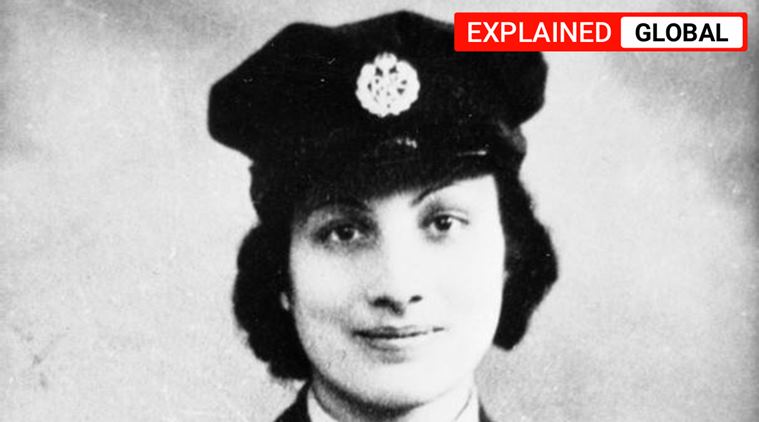
Born in Moscow to an Indian father and an American mother, Noor’s family moved to London and then to Paris during the First World War. (Source: Wikimedia Commons)
British media reported this week that Rishi Sunak, the Chancellor of the Exchequer, is considering a proposal to feature historical figures from the Black, Asian and minority ethnic (BAME) community of the country on a set of coins titled ‘Service to the Nation’.
If the proposal is passed, it will be the first time that non-white people will be featured on British coins or notes. The plan has been submitted to the Royal Mint, which is to come up with proposals and designs.
Zehra Zaidi of the advocacy campaign ‘Banknotes of Colour’, along with a group of historians and MPs, had written to the Chancellor proposing some historical figures. Among them were the Indian-origin British spy Noor Inayat Khan, as well as Khudadad Khan, the first soldier of the British Indian Army to receive the Victoria Cross. Khudadad Khan, who belonged to the Chakwal district of Punjab in present-day Pakistan, died in 1971.
The continuing Black Lives Matter protests in the United States , triggered by the killing of George Floyd by a police officer in Minneapolis in May, which have put a spotlight on the lack of BAME representation in the UK, and have compelled authorities to take appropriate steps.
Who was Noor Inayat Khan?
Born in Moscow to an Indian father and an American mother, her family moved to London and then to Paris during the First World War. Although Noor started working as a children’s writer in Paris, she escaped to England after the fall of France (when it was invaded by Germany) during the Second World War.
In November 1940, she joined the Women’s Auxiliary Air Force, an arm of the UK’s Royal Air Force to train as a wireless operator. She then did a stint at the secret intelligence organisation set up by Winston Churchill called Special Operations Executive (SOE).
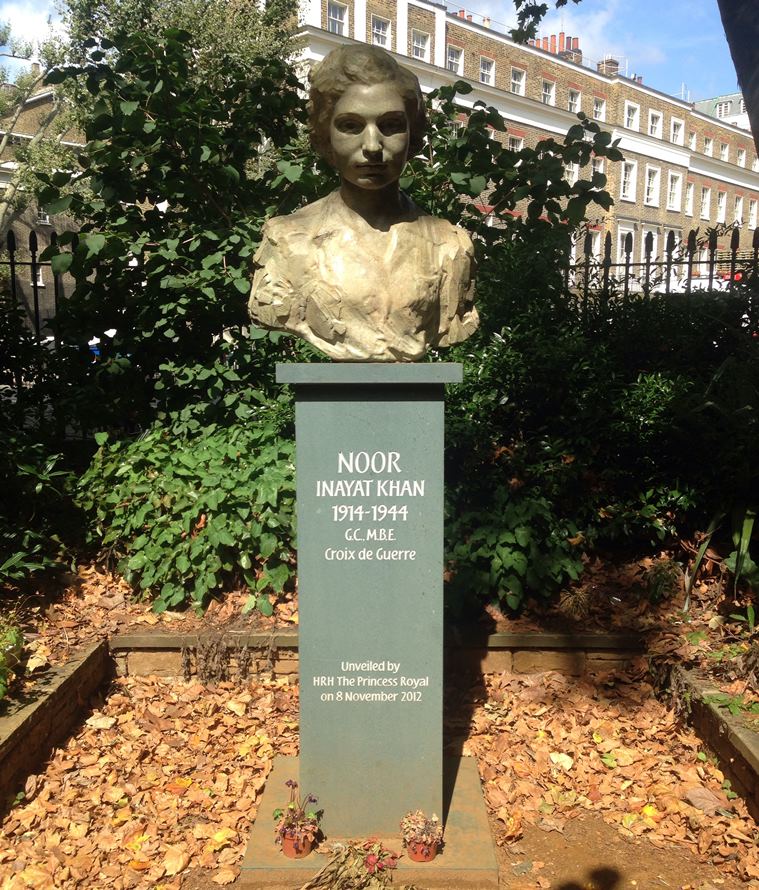
A bust of Noor Inayat Khan in Gordon Square, London. (Source: Wikimedia Commons)
She became the first radio operator to be sent to Paris to work for SOE’s Prosper resistance network under the codename Madeleine. She was just 29 then, and had signed up for a job in which people were not expected to be alive for longer than six weeks.
Even as many members of the network were being arrested by the Nazi secret police Gestapo, Noor chose to stay put — and spent the summer moving from one place to another, sending messages back to London, until she was arrested in 1943.
She was executed at the Dachau concentration camp in southern Germany near Munich. Noor was awarded the highest honour in the UK, the George Cross, in 1949, and the French Croix de Guerre with the silver star posthumously.
What was Noor’s connection to India?
She was connected to India through her father Inayat Khan. He was founder of the Sufi Order of the West, which is now known as the Inayati Order. He had migrated to the West as n Hindustani classical musician, and then moved to teaching Sufism.
Inayat Khan was born in Baroda. His maternal grandfather was the noted musician Ustad Maula Bakhsh Khan, who founded the music academy Gyanshala, which now serves as the Faculty of Performing Arts at Maharaja Sayajirao University. Maula Bakhsh’s wife, Qasim Bibi, was a granddaughter of Tipu Sultan of Mysore.
Inayat returned to India in 1926 and chose the site of his burial at the Nizamuddin Dargah complex in New Delhi. The Inayat Khan dargah still stands in a corner of the complex.
Besides being a GC, what other honours has Noor received?
In 2014, Britain’s Royal Mail had issued a postage stamp in honour of Noor as part of a set of 10 stamps in the ‘Remarkable Lives’ series. In 2012, a memorial with a bust of Noor was unveiled in London by Princess Anne. Shrabani Basu, author of ‘Spy Princess, The Life of Noor Inayat Khan’, and Chair of the Noor Inayat Khan Memorial Trust, had campaigned for the memorial.
In February 2019, Noor’s London home at 4 Taviton Street in Bloomsbury, the house that she left for her final mission, was honoured with a blue plaque. She was the first Indian-origin woman to be awarded the plaque.
How has Noor been represented in popular culture?
Various documentaries on women agents and the SOE have featured her story, such as Netflix’s ‘Churchill’s Secret Agents: The New Recruits’. In 2018, a play titled ‘Agent Madeleine’ premiered at the Ottawa Fringe Festival.
In 2012, Indian producers Zafar Hai and Tabrez Noorani obtained the film rights to the biography by Basu. In the film ‘Liberté: A Call to Spy’, an American historical drama, actor Radhike Apte played the role of Noor. The film had its world premiere at the Edinburgh International Film Festival last year.
source: http://www.indianexpress.com / The Indian Express / Home> Explained / by Surbhi Gupta / New Delhi / July 29th, 2020