Category Archives: Leaders

When Malegaon rolled out red carpet for Dr. Abdullah Omar Naseef

Mumbai, MAHARASHTRA / SAUDI ARABIA :

Former Chief of Muslim World League, President of King Abdulaziz University and the brain behind a number of key projects and initiatives, including the exemplary Hajj crowd management system, Dr. Abdullah Omar Naseef breathed his last aged 86 in Jeddah on Sunday October 12, 2025.

Dr. Abdullah Omar Naseef with King Fahd

Dr. Abdullah Omar Naseef is no more. Former Chief of Muslim World League, President of King Abdulaziz University and the brain behind a number of key projects and initiatives, including the exemplary Hajj crowd management system, Dr. Abdullah Omar Naseef breathed his last aged 86 in Jeddah on Sunday October 12, 2025.

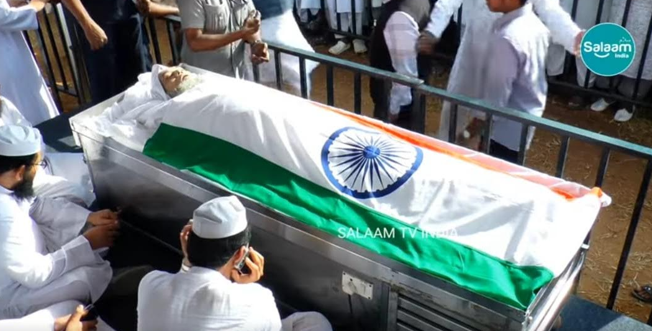
Dr Abdullah Omar Naseef’s funeral prayer was offered at Al-Juffali Mosque after Asr prayer Sunday. He was later buried at Al-Assad Cemetery in Jeddah.

Dr. Abdullah Omar Naseef was born in Jeddah in 1939. During his long career, Dr Abdullah Naseef held several key positions and also served as Secretary General of the Muslim World League (MWL) and Chairman of World Muslim Congress.

As Secretary General of the Muslim World League from 1983-1993, he extensively travelled all across the world to study the conditions of Muslim minorities and solve their problems.

Dr Abudllah Omar Naseef in Malegaon

Dr. Abdullah Omar Naseef receiving King Faisal Award

During the same period, he visited Malegaon on May 01, 1992 leading an extraordinary delegation of Muslim scholars and Arab dignitaries.

After arrival in Mumbai by air, Dr Naseef travelled to Malegaon by road with Maulana Mukhtar Ahmed Nadvi, renowned Islamic Scholar, Founder of Jamia Mohammadia Mansoora Malegaon, former Vice President of All India Muslim Personal Law Board (AIMPLB) and his host in Malegaon.

“A huge crowd had gathered on the two sides of the road from Girna Bridge to Jamia Mohammadia Mansoora to greet Dr Naseef and the members of his delegation”, Abdul Qayyum Faizee, General Secretary of Jamiat Ahle Hadees Maharashtra at that time, told ummid.com.

Qari Abdus Samad led the crowd, standing along the Malegaon-Manmad Road and repeating the chants of Ahlan w Sahlan Marhaba to greet Dr Naseef and other guests”, Abdul Qayyum Faizee recalled.

“The grand welcome was indeed heart-warming for the onlookers as well as the visiting guests”, he added.

Abdul Qayyum Faizee said after offering Friday prayers at Masjid Ayesha Al Duaij in Mansoora, Dr Naseef and his delegation took a tour of Malegaon and also visited Jamiatul Huda.

“During his day-long visit to Malegaon, Dr Abdullah Omar Naseef’s focus of discussion was the social, educational and economic empowerment of Muslims”, he recalled.

Dr Abudllah Omar Naseef’s Mumbai and Bhiwandi connection

Dr Abudllah Omar Naseef’s mother was sister of Islamic Scholar Maulana Abdus Samad Sharafuddin. Abdus Samad Sharafuddin was a publisher of Islamic books, owning a printing press in Bhiwandi and a book shop in Mumbai. Sharafuddin and Sons at Mumbai’s iconic Mohammad Ali Road is still a one stop shop for rare books.

Maulana Abdus Samad Sharafuddin had formidable connections with Mumbai’s elites. When Saudi King Saud bin Abdulaziz visited Bombay in 1955, on his way to Jama Masjid Ahle Hadees Mominpura, he suddenly asked his convoy to halt at Abdus Samad Sharafuddin’s home.

“His visit to Maulana Abdus Samad Sharafuddin’s home was unscheduled and hence left the local security personnel puzzled”, Abdul Qayyum Faizee recalled.

King Saud’s visit to Dr Naseef’s maternal uncle Maulana Abdus Samad Sharafuddin’s home in Mumbai is reminiscent of the special relation Dr Naseef and his family had with the Saudi Royal family.

Dr Abdullah Omar Naseef’s Contributions

After completing primary education, Dr Naseef obtained bachelor’s degree in Chemistry from King Saud University in 1964. He was holder of a doctorate degree in Geology from the University of Leeds in 1971. He started his career as a Teacher first at King Saud University in Riyadh and then at King Abdulaziz University in Jeddah. He continued to rise through the academic ranks, until becoming a Professor and later appointed as the President King Abdulaziz University. He was also a fellow of the Geological Society of London and the Geological Society of America.

Dr Naseef also served as Chief Scout and member of the Board of Directors of the Saudi Arabian Boy Scouts Association, which he joined in 1956. Later, he served as President of the International Union of Muslim Scouts and member of the World Scout Committee.

Besides serving as the Secretary General of the Makkah-based Muslim World League, Dr Naseef also held several key positions – both in Saudi Arabia and abroad. His contributions were highlighted in the Islamic Relief Project, known as “Sanabel Al-Khair,” which aims to save the poor masses in the far reaches of the Islamic world from poverty, ignorance, and disease. He represented Saudi Arabia in several international conferences and forums, defending Islamic causes and calling for dialogue and understanding between peoples and religions.

Dr Naseef later also served as Vice President of the Saudi Shoura Council and carved his niche as a model of wisdom, broad vision, and service to the national interests. The positions held by Dr. Naseef include vice chairman of the Saudi National Dialogue Committee for 10 years, Secretary General of the International Islamic Council for Call and Relief from 2008 to 2019, Chairman of the Board of the International Islamic Relief Organization in 2000, President of the World Muslim Congress, Vice Chairman of the Saudi National Dialogue Committee for 10 years, and President of the Abdullah bin Omar Nassif Charitable Foundation.

Among the Arab and international positions that he held include Member of the Board of Trustees of the University of Dar es Salaam in New Mexico, the Islamic American College in Chicago, the Royal Moroccan Academy, the Islamic Academy in Cambridge, and Vice President of the International Islamic University in Islamabad. He chaired the Boards of Trustees of the Islamic Cultural Center in Geneva, the Institute for the History of Arabic and Islamic Sciences at the University of Frankfurt, the Islamic Cultural Center in Sydney, the International Islamic University in Chittagong, Darul Ihsan University in Bangladesh, and the Islamic University in Niger.

British-Pakistani writer Ziauddin Sardar in his book “Desperately Seeking Paradise: Journeys of a Sceptical Muslim” has described at length how Dr Abdullah Omar Naseef was instrumental in fomalising a system to manage crowd during Hajj, the annual ritual when over 2 million Muslims from around the world throng the Two Holy Cities – Makkah and Madinah.

Dr. Naseef was awarded with the King Faisal Prize for Service to Islam in 1991 and the King Abdulaziz Medal of the First Class in 2004. In 1983 Nasseef was awarded the Bronze Wolf, the only distinction of the World Organization of the Scout Movement, awarded by the World Scout Committee, for exceptional services to world Scouting.

Condolences

Condolences are pouring in from all across the world after the demise of Dr Abdullah Omar Naseef.

“The Departure of a Man Who Shaped a Civilization and Human Presence for Muslims Across the Globe”, Faid Mohammed Said, University Professor and a Member of the European Council for Muslim Leaders, said condoling the death of Dr Naseef.

“A great friend of the UK Muslim community”, the Muslim Council of Britain (MCB) in its condolence message on the passing of Dr Abdullah Omar Nassef.

In his condolence message, The Mufti of Uganda, Sheikh Shaban Ramadhan Mubaje, paid tribute to the late Dr. Abdallah Omar Naseef, recognising his key role in rebuilding and strengthening the country’s Muslim community in the 1980s and 1990s.

“One of the finest persons lived in Saudi Arabia. May Allah be pleased with the departed”, Dr Khaled Almaeena, Former Editor in Chief Arab News and Saudi Gazette, paid tribute to Dr Abdullah Omar Naseef in these words.

[With inputs from Saudi Gazette. The writer, Aleem Faizee, is Founder Editor of ummid.com. Aleem Faizee has also worked as Researcher at Tata Institute of Social Sciences (TISS) and with Action Aid for its research work published as “BROKEN PROMISES -A study on the socio-economic status of Indian Muslims: Seven years post Sachar”. Aleem Faizee’s research work “Mollywood: The Rise and Fall of a Subaltern Cinema” is part of the book “Creative Industries in India” published by Routledge India of Taylor and Francis Group, London. A prolific writer, Aleem Faizee has also worked with The Times of India and The Milli Gazette as Freelance Journalist for over 10 years. Aleem Faizee is also a Social Entrepreneur and heads Malegaon Industries and Manufacturers Association (MIMA) and Samara’s Education and Welfare Association (SEWA)]

source: http://www.ummid.com / Ummid.com / Home> Obituary / by Aleem Faizee / October 13th, 2025

Celebrating a Century of Educational Book House: An Enduring Legacy of Literature and Learning in Aligarh

Meerut / Aligarh, UTTAR PRADESH :

Responding to this need, Abdul Shaheed Khan, an alumnus of MAO College Aligarh from Meerut, opened a small stationery shop in 1925, named this establishment “Educational Book House”, marking the beginning of a new chapter in Aligarh’s literary landscape.

Aligarh Muslim University, renowned as a beacon of knowledge and service to the nation, has nurtured multiple institutions dedicated to education and culture since its inception. Among these, the Educational Book House (EBH) stands out as a distinguished establishment, symbolizing a century of dedication to the dissemination of literature and learning.

Established in 1925, EBH is more than an ordinary bookstore; it holds a revered position among bibliophiles, scholars, and literary circles both nationally and internationally. Over the past hundred years, EBH has played a pivotal role in spreading the literary and academic works of Aligarh across a broad audience, ensuring its legacy endures today. Its contribution to the development and promotion of Urdu language and literature is of profound importance in the history of book publishing

Historical Roots of Book House at Aligarh:

The story of Book house in Aligarh is intertwined with the visionary efforts of Sir Syed Ahmad Khan (1817-1898) and his pioneering movement to elevate Muslim education in India. As early as 1888, Sir Syed aimed to establish a bookstore in Aligarh to serve the students and teachers of his educational institutions.  He launched a campaign to establish a bookstore in Aligarh and even raised funds for this purpose.  An advertisement in the Aligarh Institute Gazette dated 7th July 1888 announced the opening of a bookshop: “Aik Tijarti Dukan Kitabon aur Stationary yani Saman Nosht wa Khwand Kay Farokht Ke Aligarh Mein” – a commercial shop for books and stationery in Aligarh. (see AIG, 7th July 1888)

This initial venture was called the “College Book Depot” which quickly became a vital hub for literature, academic materials, and stationary. It functioned as a bridge connecting scholars, students, and the wider community, fostering a culture of learning and intellectual curiosity in Aligarh. The original depot thrived under the stewardship of Mir Wilayat Hussain (1862-1949) but faced decline after his retirement in 1920, eventually closing down. (see Aap Beeti ya MAO College Ke Kahani, Mir Wilayat Hussain Ki Zubani, Sir Syed Academy, Aligarh, 2024, p.126).

The Birth of EBH

The establishment of Aligarh Muslim University in 1920 created a renewed demand for a dedicated bookstore that could cater to the needs of students and faculty alike. Responding to this need, Abdul Shaheed Khan (1898-1968), an alumnus of MAO College Aligarh from Meerut, opened a small stationery shop in 1925 near Fuller Road, close to Tasweer Mahal. He named this establishment “Educational Book House”, marking the beginning of a new chapter in Aligarh’s literary landscape. His vision was to provide affordable and accessible academic books and stationery, supporting the educational aspirations of students and teachers.

Abdul Shaheed Khan, Founder EBH

Moving to Shamshad Market:

In 1928, Sahibzada Shamshad Ahmed Khan (1888-1954), son of eminent educationist and vice-chancellor of AMU, Sahibzada Aftab Ahmed Khan (1867-1930), built a bustling commercial complex known as “Shamshad Building” in civil line Aligarh near AMU. This market was designed to serve the needs of the university community and local residents, housing shops for tailoring, groceries, milk, bread, bicycle repairs, and more. A mosque was also constructed within the complex, serving as a spiritual and community center.

Recognizing the importance of proximity and accessibility, Sahibzada Shamshad Ahmed Khan requested Abdul Shaheed Khan to relocate EBH to this new marketplace. The bookstore shifted there in 1929, anchoring itself within a vibrant hub of activity. This move significantly increased EBH’s visibility and accessibility, making it a central point for students and scholars seeking academic and literary materials.

The Aligarh Magazine (1929-30) praised Shamshad Market as a vital institution, emphasizing how it simplified the lives of students by providing essential books and stationery close to their place of study. In an editorial note, editor write:

“The Shamshad building has undoubtedly rendered an invaluable service to the student community of the University, for all the requirements of the students are to be found in the shops contained in the building and they have no more to worry themselves by running down to the city to fetch even the most ordinary things of everyday use. Sahibzada Shamshad Ahmad Khan deserves the thanks of all those whose life has been made easy and pleasant by the erection of this splendid building and we most cordially congratulate him on this.” (see Editorial Notes, Aligarh Magazine, 1929-30, p.11)

According to renowned historian Prof. Iftikhar Alam Khan, in his authoritative work “Muslim University Ki Kahani, Imarton Ke Zubani 1920 to 1947”, the Shamshad Building was constructed in 1929 at a cost of Rs. 30,000, financed by Sahibzada Shamshad Ahmed Khan’s mother. The building housed 18 shops, including EBH, and was a bustling center of commercial and cultural activity.

EBH’s shop within this complex charged the highest rent—Rs. 31—indicating its prominence and importance in the market. Its strategic location made it an essential resource for students, teachers, and literary enthusiasts, solidifying its reputation as a hub of education and culture. (See “Muslim University Ki Kahani, Imarton Ke Zubani 1920 to 1947”, EBH, Aligarh, 2006, pp. 161-165)

Early Contributions to Literature and Publishing:

Even before India’s independence, EBH distinguished itself as a publisher committed to a broad spectrum of subjects. Unlike many publishers focused solely on literature or religion, EBH ventured into publishing works on children’s psychology, social sciences, philosophy, history, linguistics, and sciences. Its publications catered to the academic community and the general public, fostering a culture of knowledge dissemination. Notable early publications included: “Kainat Adab” by M. A. Hameed Alig (1935) editor Nazara Meerut,  “Ahsan-ul-Intikhab’’ by Ahsan Marehrawi, “Makhzan Adab” by M. A. Shahid, “Sukhna Nau”“Husn-e-Intikhab’’ by Abdul Jaleel Kidwai,  “Delhi Ka Ek Madar Akhiri Mushaira” by Mirza Farhatullah Beg, “Dastan Rani Ketki Aur Kanwar Uday Bhan Ki” by Syed Inshallah Khan Insha, “Bachhon Ki Tarbiyyah” by Musarrat Zamani, “Al-Aqeedah Al-Hasna” by Molvi Sham and Maulana Abdussalam etc.

These works reflected EBH’s commitment to educational and literary growth, providing resources that supported scholarly pursuits and cultural development.

Post-Independence Challenges and Resilience:

The partition of India in 1947 was a tumultuous period that resulted in massive migrations and upheavals. Many families left their ancestral homes, but Abdul Shaheed Khan chose to remain in Aligarh. His son Asad Yar Khan says that just after independence many of his father’s relatives and friends asked him, he also migrate to Pakistan, but Professor Rashid Ahmed Siddiqui and Dr. Aale Ahmad Suroor advised him to continue his work from here, thus his father put this idea out of his mind.

His dedication ensured that EBH continued serving the community, moving from Shamshad Market to the Conference Market in 1951 to accommodate expanding operations.

In this period, EBH expanded its publishing activities further. It published influential titles on Indian politics and governance, including Dr. Hashim Kidwai’s “Jhamooriya Hind” (1951), which analyzed India’s political system and constitution. Apart from Jhamooriya Hind, some of his titles are: Mubadiat Ilm Madniat (1951), Duniya Ke Hukoomatain(1961), Mubadi Siyasiyat (1971), Tareekh-e-Afkar siyasi (1982), Usool-e-Tammaddun, Usool-e-Siyasiyat (1988).

An Advertisements of book highlighted the importance of such works for students, scholars, and policymakers appeared in Weekly Jhamoor Aligarh dated 26th December 1955 states:

“In the book under consideration, the author has described the modern constitution of the Republic of India, all the essential things related to the constitution have been included in it. This book has done a great job not only for students but also for those interested in Indian political science. Sadq, Maarif, Jamiyat, Tanveer and Jamhur in their reviews congratulated the author for publishing this useful book.  Dr. Syed Mahmood, Minister for Development, Government of Bihar, and Professor Haroon Khan Sherwani, Head of the Department of Political Science, Osmania University, have liked it very much.”

Supporting Urdu Education and Literature:

A vital aspect of EBH’s mission was promoting Urdu language and education. The bookstore provided textbooks for institutions such as Jamia Osmania, Hyderabad, Aligarh Muslim University and Jamia Urdu, Aligarh and collaborated with teachers from Aligarh Muslim University to develop curricula that emphasized Urdu literature and linguistics.

This support helped to sustain and foster Urdu’s growth as a language of scholarship and culture across the region.

Asad Yar Khan

Following the death of Abdul Shaheed Khan in 1968, his sons, Asad Yar Khan (b. 1941, famously known as Kaptan Sb. as he served the Captain of Horse Riding in AMU several years) and Ahmed Saeed Khan (b.1948, affectionately Bhayya of all known people), inherited the legacy. Under their leadership, EBH grew into one of the most respected Urdu publishing houses in the subcontinent. They enhanced the quality of printing, expanded their catalog to include works of eminent poets, scholars, and political thinkers.

Ahmed Saeed Khan

Works of Prominent literary figures such as Iqbal, Faiz Ahmed Faiz, Khalifa Abdul Hakeem, and Ghulam Sarwar published and promoted through EBH, significantly contributing to the Urdu literary renaissance.

It also published works of  Wazir Agha, Abu Lais Siddiqui, Hassan Askari, Masood Hussain Khan, Akhtar Ansari, Syed Abdullah, Khaliq Ahmed Nizami, Muhammad Hashim Kidwai, Vaqar Azeem,  Majnoon Gorakhpur,  Ateeq Ahmad Siddiqui, Ibadat Barelvi, Raza Ali Abidi, Qurratul ain Haidar, Aal-e-Ahmad Suroor, Khurshid-ul-Islam,  Abdul Qadir Sarwari, Waheed Quraishi, Athar Parvez, Zaheer Ahmad Siddiqui, Khadeeja Mastoor, Ziauddin Alvi, Abdul Mughni, A.A. Hashmi, Rasheed Hasan Khan, Masood Hasan Khan, Masood Hassan Rizvi, Shaharyar,  Manzar Abbass Naqvi,  Mirza Khalil Beg, Abul Kalam Qasmi, Iftikhar Alam Khan, Asghar Abbas, Surraya Hussain, Sagheer Afrahim etc.

The Literary Magazine “Alfaaz”: A Cultural Milestone:

In 1975, Asad Yar Khan launched “Alfaaz”, a literary magazine dedicated to Urdu literature. Edited initially by Abul Kalam QasmiAlfaaz became a vital platform for poetry, literary criticism, and cultural dialogue. It provided a space for emerging writers and established intellectuals to exchange ideas, debate, and showcase their work.    

The magazine’s editorial board included notable scholars such as Khurshid-ul-Islam, Khalil-ur-Rehman Azmi, and Naseem Qureshi. Over nearly two decades, Alfaaz played an essential role in nurturing Urdu literature, fostering new talent, and preserving the cultural heritage of Urdu language and thought.

Personal Reflections:

The author’s personal association with EBH began in 1995, when as a seventh-grade student, he first visited the bookstore to buy storybooks and magazines. Over the years, this relationship deepened, leading to interactions with notable scholars, poets, and literary figures, including Professor Hashim Kidwai, Professor Mushir-ul-Hasan, Professor Qazi Abdul Sattar, Manzoor Hashmi, Professor Abul Kalam Qasmi, Qurban Ali (BBC Hindi), Tariq Hasan (Prominent Journalist), Mirza Masood Beg (Prominent Linguists) and many others.

In 2016, EBH published the author’s book on Aligarh’s journalism, “Aligarh Ke Urdu Sahafat”, a testament to their ongoing support for young writers and scholars.

Celebrating a Century of Service:

Today, as EBH celebrates its hundred years of existence, it stands as an integral part of Aligarh’s intellectual and cultural heritage. The dedication and honesty of Late Abdul Shaheed Khan and later his sons have made EBH a symbol of Urdu literature’s resilience and growth. Their efforts to promote Urdu, support education, and foster literary excellence have left an indelible mark on the Urdu circle.

A Legacy for the Future:

It is hoped that EBH continues to serve as a beacon of literary and educational excellence, nurturing new talents, publishing significant works, and promoting the Urdu language. As it celebrates a century of remarkable service, the entire community extends heartfelt congratulations and best wishes for its future endeavours.

The Educational Book House’s journey over the past hundred years stands as a shining example of dedication to knowledge, culture, and language. Its legacy is a reflection of the enduring power of literature to unite, educate, and inspire. May EBH continue to flourish and illuminate the path of learning for many more generations to come.

source: http://www.heritagetimes.in / Heritage Times / Home / by Dr Asad Faisal Farooqui / July 27th, 2025

Career guidance session titled “Exploring Careers in Defence” held at Bearys Academy of Learning

Mangaluru, KARNATAKA :

Mangaluru :

A career guidance session titled “Exploring Careers in Defence: Opportunities and Preparation” was held at Bearys Academy of Learning (BAL), Bearys Knowledge Campus, Innoli, on Sunday, October 12, 2025. The programme aimed to guide and motivate students from diverse academic streams to explore career opportunities in the Indian defence services.

The session was inaugurated by Syed Mohamed Beary, Chairman of Bearys Academy of Learning, who delivered the opening remarks. He highlighted the valuable work done by Anees Kutty, Founder and Director of Anees Defence Career Institute (ADCI), Pune, in mentoring and preparing youth for careers in the armed forces.

Beary observed that many young graduates from Mangaluru often seek employment in Gulf countries after completing their studies. Drawing a comparison between conventional jobs and defence careers, he said that serving in the armed forces brings immense pride not only to the individual but also to the entire family.

He further remarked that a majority of personnel in the Indian defence forces hail from northern parts of the country, and it is time for youth from southern India, particularly from Dakshina Kannada to take active interest in this sector. Citing the example of Kodagu, a region known for its significant representation in the armed forces, he urged students from the coastal belt to follow suit. He also encouraged female students to explore various roles and opportunities available in the defence sector.

The keynote session was conducted by Anees Kutty, who has over 36 years of experience as a Defence Career Counsellor. Through a detailed two-hour interactive presentation, he explained different career pathways in the defence sector, covering examinations such as NDA, CDS, AFCAT, and SSB, and discussed career prospects in premier institutions like ISRO, DRDO, Agniveer, RMS, RIMC, and Sainik Schools.

Kutty also elaborated on how various engineering specializations can help candidates qualify for technical and research roles within the defence services. He highlighted the scholarships and government-sponsored programmes available for aspiring candidates, emphasizing that both the government and the defence forces provide financial and institutional support for education and training before official recruitment.

He reminded students that success in the defence sector demands passion, consistency, and perseverance, noting that the preparation process is long and requires dedication and discipline.

In his concluding remarks and presidential address, Syed Mohamed Beary announced three major commitments for Bearys Academy of Learning: Establishment of a National Cadet Corps (NCC) unit at the campus, Appointment of a Colonel as campus administrator, who will also provide SSB training to students, Setting up of a Defence Career Counselling Centre within the campus to assist students aspiring for defence services.

The programme was hosted by Joyson Miranda.

Dr. Manjur Basha, Principal of Bearys Institute of Technology (BIT), Mangaluru, welcomed the gathering, while Abdul Latif, Principal of Bearys Pre-University College (BIPUC), proposed the vote of thanks.

Dr. Sadaf, Administrator of Anees Defence Career Institute, and Prof. Mohamed Sinan, Head of the Department of Computer Science and Engineering at BIT and the coordinator of the event, were present on the dais.

source: http://www.english.varthabharati.in / Vartha Bharati / Home> Karavali / by Vartha Bharati / October 12th, 2025

Prof. Faisal Devji and Dr Abdul Qadeer to Receive Sir Syed Excellence Awards

Zanzibari, TANZANIA / CANADA / Bidar, KARNATAKA :

Prof. Faisal Devji (L) and Dr Abdul Qadeer to receive Sir Syed Excellence Awards

Aligarh:

Aligarh Muslim University (AMU) has announced the recipients of the 2025 Sir Syed Excellence Awards, which will be presented during the Sir Syed Day Commemorative Ceremony on October 17, marking the birth anniversary of AMU founder, Sir Syed Ahmad Khan.

Prof. Shafey Kidwai, Director, Sir Syed Academy, and convener of the jury informed that the International Sir Syed Excellence Award will be conferred upon Professor Faisal Devji, Beit Professor of Global and Imperial History, Balliol College, University of Oxford. Widely regarded as a leading scholar of South Asian studies, Islam, globalisation, and ethics, Prof. Devji holds a Ph.D. and M.A. in Intellectual History from the University of Chicago and a B.A. (Double Honours) in History and Anthropology from the University of British Columbia.

Born in Tanzania, Prof. Devji has taught at institutions, including Yale, Cornell, Harvard, and the University of Chicago. His acclaimed works include Waning Crescent: The Rise and Fall of Global IslamMuslim Zion: Pakistan as a Political Idea, and The Impossible Indian: Gandhi and the Temptation of Violence. His influential essay Apologetic Modernity explores the 19th-century Muslim engagement with modernity, particularly through the lens of Sir Syed Ahmad Khan and the Aligarh Movement.

The National Sir Syed Excellence Award will be presented to Dr. Abdul Qadeer, Chairman of the Shaheen Group of Institutions, for his transformative contributions to education among marginalised communities. Founded in 1989, the group now educates over 20,000 students with a faculty of 500+ across 13 Indian states. It operates schools, PU and degree colleges, and offers coaching for NEET, JEE, UPSC, as well as runs Hifz-ul-Quran Plus and Madrasa Plus programmes.

The awards, carrying cash prizes of ₹2,00,000 (international) and ₹1,00,000 (national), recognise exceptional contributions in Sir Syed Studies, South Asian Studies, Urdu Literature, Medieval History, Social Reform, Communal Harmony, Journalism, Interfaith Dialogue, and related fields.

Awardees were selected by a distinguished jury chaired by Prof. Azarmi Dukht Safavi and comprising Prof. Anisur Rehman, Prof. A.R. Kidwai, Prof. Imtiaz Hasnain, and Prof. Shafey Kidwai, with final approval by AMU Vice Chancellor Prof. Naima Khatoon.

source: http://www.radiancenews.com / Radiance News / Home> Pride of the Nation> Awards> Latest News / by Radiance News Bureau / October 09th, 2025

Who was Imtiaz Qureshi? Tributes pour in as ‘Ustad’ of dum pukht style of cooking dies at 93

Lucknow, UTTAR PRADESH / Kolkata, WEST BENGAL / Mumbai, MAHARASHTRA :

Qureshi traces his lineage to chefs who served Awadh rulers more than 200 years ago.

Chef Imtiaz Qureshi receives Padma Shri award in 2016 from former President Pranab Mukherjee

Culinary legend Imtiaz Qureshi, who was credit with making the dum pukht style of cooking popular, died in Mumbai on Friday at the age of 93.

His eldest son and chef Ishtiaque Qureshi said the 93-year-old had issues with his vital organs and was hospitalised for some weeks due to old-age issues.

Who was Imtiaz Qureshi?

Born in a family of chefs in Lucknow on February 2, 1931, he traces his lineage to chefs who served Awadh rulers more than 200 years ago. His culinary journey started at the age of nine when his uncle was tasked with cooking for a British regiment. He later joined Krishna Caterers, a catering company that served the Indian Army during the 1962 war with China. He had even cooked for a state banquet hosted by former Prime Minister Jawaharlal Nehru. Along with this, he cooked for state banquets for visting foreign leaders including Queen Elizabeth II, Bill Clinton and Tony Blair on different occasions.

The Padma Shri awardee was also known for giving a fillip to the culinary excellence of ITC Hotels after he joined there in 1979. He established restaurants like Bukhara and Dum Pukht. Dum Pukht is a traditional slow-cooking technique.

He won the Padma Shri award in 2016. He is survived by two daughters and five sons. All seven of them are working in the culinary field. 

‘Lucknow lost its biggest ambassador’

Chef Kunal Kapur posted on X, “His culinary legacy and contributions will forever be remembered and cherished. May his soul find eternal peace and may his memory continue to inspire us all.”

Singer Adnan Sami said, “Sad to learn that Padma Shri Master Chef Imtiaz Qureshi has passed away. He was a culinary genius & a man full of zeal for life!! He was also the modern day father of Awadhi Cuisine & his Biryani was legendary amongst everything else he fed the world. My deepest heartfelt condolences to his family.”

Chef Ranveer Brar paid tribute to the legend, saying, “Lucknow has lost its biggest ambassador. As a Lucknow boy with dreams of becoming a chef, the folklore of Imtiaz Qureshi is something I grew up with. It was around 1999 when I was working as a trainee chef at the Taj in Delhi. I remember once taking the Rs 612/- I had earned to ITC Maurya next door and trying out the Galouti Kebab. It’s an extremely sad moment for me, for everybody in Lucknow. (I) am currently in a state of shock.”

“Every interaction of mine with the maestro, was about Lucknow, his growing up years in Lucknow, his time at the Raj Bhavan, his time when he opened the beautiful Clarks restaurant.. And so much more,” he wrote on Instagram, “Sometimes you just can’t accept that someone’s no more. This is one of those moments…

“The fact that I was eating Imtiaz Qureshi’s food in an ITC hotel was life changing for me. Not only had he pulled the dum pukht technique out of Lucknow, he had given it a personality, an unmistakable refinement,” Brar added. “RIP chef, your legacy lives on forever…”

source: http://www.theweek.in / The Week Magazine / Home> News> Entertainment / by Web Desk / February 11th, 2024

‘Unscripted and dreamlike’: Saira Banu recalls her wedding day on 59th marriage anniversary

Mumbai, MAHARASHTRA :

Banu had tied the knot with the late Dilip Kumar on October 11, 1966

Saira Banu and Dilip Kumar on their wedding day / Instagram

Bollywood veteran Saira Banu’s wedding with the late Dilip Kumar on October 11, 1966, was ‘dreamlike, unscripted and full of delightful chaos’, the actress recalled on her 59th marriage anniversary on Saturday.

In a long note on Instagram, Banu noted that her wedding was not extravagant. Instead, it was marked by ‘simplicity, hurried excitement and heartfelt emotion’. Though Banu and Kumar were to tie the knot in November, Kumar insisted on an early nikkah. The couple tied the knot in an ‘unscripted’ ceremony, nine days after their engagement on October 2 that year.

Banu hardly had any time for preparation. Her bridal ensemble was stitched by a local tailor and she got married without any printed cards or detailed plans.

“The song Do Sitaron Ka Zameen Par Hai Milan Aaj Ki Raat floated through the air like a blessing that wouldn’t fade. It played all night long, echoing the joy in my heart, and I remember thinking that if someone told me I could truly fly that evening, I would have believed them. That’s how unreal, how dreamlike it all felt,” wrote the 81-year-old actress, alongside pictures from the ceremony.

https://www.instagram.com/p/DPp57_YjN1p/?utm_source=ig_web_button_share_sheet

“Nothing about that day was extravagant, yet it was perfect in its simplicity. My wedding joda was lovingly stitched by our local tailor; there were no grand designers, no detailed plans, no printed cards, just hurried excitement and heartfelt emotion. The Nikaah was meant for November, but destiny had other plans. I can still hear Sahib’s gentle but firm voice over the telephone from Calcutta saying, “Aap ek Maulvi ko bulaiye aur Nikaah karwa dijiye!” And just like that, the most important day of my life unfolded before I could even blink,” she continued.

Reflecting on her wedding day and the crowd of Kumar’s admirers who had gathered outside her house to witness their special day, Banu wrote, “The wedding itself was full of delightful chaos. Sahib and I lived close by, and when his Baraat came down the lane, the Ghodi descended a small slope, the umbrella brushing against his Sehra, a sight so charming that it still makes me smile. In no time, word spread that Dilip Kumar was getting married, and hundreds of admirers found their way into my home. The house was overflowing with laughter, noise, and strangers who felt like family.”

Banu recalled that the sheer number of guests left them short of food. “The crowd was so large that we even ran short of food, people began pocketing tiny souvenirs, a fork here, a spoon there as if they were collecting tokens from a fairytale,” she wrote.

“Oh, what a day that was. Unscripted, imperfect, and yet filled with a kind of joy that words can never truly capture. That night remains etched in my heart a memory that still glows softly, even after all these years,” the actress concluded.

Banu, who made her Bollywood debut opposite Shammi Kapoor in the 1961 film Junglee, starred alongside her husband in films like Gopi (1970), Sagina Mahato (1971) and Jwaar Bhata (1973). Kumar passed away on July 7, 2021, at the age of 98.

source: http://www.telegraphindia.com / The Telegraph Online / Home> Entertainment / by Entertainment Web Desk / October 12th, 2025

Maulana Afzal Hussain Ideal Teachers Award 2025 and Students’ Felicitation Programme Held in Mumbra

Mumbra, MAHARASHTRA :

Mumbra:

The Maulana Afzal Hussain Ideal Teachers Award 2025 and Students’ Felicitation Programme were held here Sunday to celebrate dedicated educators and outstanding students.

Teachers play a pivotal role in shaping a nation’s future, and societies that honour their teachers set a benchmark for others to follow.

Reflecting this spirit, the All India Ideal Teachers Association (AIITA), which has been active in Mumbra since 2019, organised the event to recognise exemplary teachers for their service and commitment to education.

The award is named in the memory of Maulana Afzal Hussain, a distinguished educationist and author of several books. This year, the AIITA Mumbra Award Committee selected 26 teachers from various institutions for the honour. The awards, presented annually on World Teachers’ Day, cover multiple categories including Primary, Secondary, and Headmaster levels, from schools in Mumbra, Thane, and Mumbai Municipal Corporation areas.

The Award recipients at the level of private educational institutions included Khan Safia (Al-Ehsan School), Altaf Patel (Abdullah Patel School), Lubna Khot (Central Public School), Khan Sadaf (Rafiqah School), Qazi Alia (Dr. Asadullah School), Syed Rizwana (Mumbra Public School), Syed Feroza (National School), Sheikh Zaheer (Nice School), Zahida Chotani (Patel School), Ansari Nasreen (Sameeya English School), Rukhsanda Khan (Saadia School), Shabana Azmi (Shoaib School), and Sadiqa Sheikh (Saadia Primary School).

In the Mumbai Category, the Award recipients included Arshia Shah (Vakola Municipal School), Mehboob Makandar (Vanoba Bhave School), and Ismail Bagwan (Anjuman Khair-ul-Islam School),

In the Thane Municipal Corporation Category, the Award recipients included Fatima Naz (TMC 116), Halima Qazi (TMC 117), Tabassum Khan (TMC 124), Syed Sameena (TMC 125), and Sufyan Ansari (TMC 40),

Thane Headmaster Category, the Award recipients included Mansoori Tehzeeb (Sameeya School), Ansari Tasneem (TMC 13), Syed Sana (Leader School), and Sheikh Khairul-Nisa (Abdullah Patel School).

A posthumous award was also conferred upon Late Naheed Fatima Zainuddin Jamali Sahiba of Abdullah Patel School in recognition of her lifelong contribution to education.

The event was presided over by Advocate Jasim Sheikh, with Dr. Abdul Majid Ansari serving as the Chief Guest. Distinguished guests included Professor Javed Sheikh (JIH Local Ameer of Mumbra), Khan Najma (President, GIO Mumbra), and Ansari Nasir of Khidmat Khalq Trust.

In addition to teacher awards, students from 24 schools were felicitated for their academic achievements in the 10th and 12th board examinations.

The event, held at Sania Hall, witnessed an enthusiastic turnout of teachers, students, and community members. Members of AIITA Mumbra and the Markazi Talimi Board Mumbra played a key role in organising and ensuring the success of the programme.

source: http://www.radiancenews.com / Radiance News / Home> Pride of the Nation> Awards> Latest News / by Radiance News Bureau / October 07th, 2025

10 inspiring stories of Changemakers from Chhattisgarh

CHHATTISGARH :

Changemakers of Chhattisgarh

New Delhi :

Chhattisgarh, the youngest of Indian states, is a repository of culture and antiquity and also home to spirited people. Some of them have set the trends and become changemakers. Here, we present 10 Changemakers from Chhattisgarh, whose work, grit and initiatives not only set examples for their state but also changed the lives of millions.

These 10 personalities are establishing benchmarks across art, politics, education, science, health and social servicein the state.

Karan Khan: Superstar of Chhattisgarhi Cinema

Karan Khan is a superstar of the Chhattisgarhi cinema, popularly known as “Chhollywood.” His work extends beyond feature films into music albums, video songs and live cultural events. In recent years, he has appeared in hundreds of Chhattisgarhi songs and albums, many of which have gone viral on YouTube and other platforms, such as the “Ditto Karan Khan Mona Sen” album.

Born Syed Tahir Ali, Karan Khan worked from cinema and music to broaden his reach and fan base. He has been a strong advocate of raising production quality in the regional films. His upcoming filmis being shot on an Arri Alexa—a professional-grade camera rarely seen in Chhattisgarhi productions, which usually face limited budgets and access to high-end technology. Khan strikes a balance between tradition and contemporary presentation to meet the expectations of changing audiences.

Mir Ali Mir: Poetic genius

When you hear the lines “Nanda jahi ka re… kamra au khumari, araitutari…” one name instantly comes to mind: Mir Ali Mir. His real name is Syed Ayyub Ali Mir, but in the world of literature, he is popularlyknown as Mir Ali Mir. Famous for expressing deep thoughts about life in simple words, his ghazals portray love, longing and life’s contradictions, while his Chhattisgarhi compositions are steeped in the fragrance of folk life.

Chhattisgarh has always been fertile ground for literature, art and culture, and Meer Ali Meer carries this legacy forward. His writings strengthen the pride of the Chhattisgarhi language and give voice to the pain, struggles and sensitivities of common people. Born on 15March 1953 in Kawardha, Meer Ali Meer enriched the Chhattisgarhi language and gave it a new identity.He is not only a poet but also an indefatigable promoter of Chhattisgarhi literature, actively working to connect younger generations with the region’s poetry and verse.

Aijaz Dhebar: transforming Raipur

The story of Chhattisgarh’s transformation is incomplete without the mention of Aijaz Dhebar’s name. He is more than just the mayor of Raipur, the capital of Chhattisgarh; he is a symbol of struggle, commitment and secular politics.

Born in a modest Muslim family in Maulana Abdul Rauf Ward of the Old Raipur, Dhebar helped run his household while pursuing his education. “My circumstances didn’t hold me back; they propelled me forward,” he often says. In January 2020, he was elected Mayor of Raipur Municipal Corporation, defeating his opponent, Mrityunjay Dubey. “I never considered myself a representative of just one religion,” he says. Recognising his leadership, he was appointed National Vice-President of the All India Mayors Council—the first mayor from Chhattisgarh to hold this post. His message to youth: “Don’t waste your energy on hatred and negativity. Politics and society today need constructive, innovative young people.”

Dr.Saleem Raj: Restructuring Waqf Board

Dr.Saleem Raj stands tall among a few who have played a crucial role in Chhattisgarh’s minority politics and social reform movement. A long-time member of the Bharatiya Janata Party, Raj serves as Chairman of the Chhattisgarh Waqf Board, a position with cabinet rank.

His rise is not just a story of political success but of a man determined to transform religious institutions from centres of controversy into engines of social and national development. “Religious institutions should be partners in the nation’s progress, not centres of disputes,” he often says. Raj joined the BJP in 1992 and steadily rose through the ranks, serving at district, state and national levels in the party’s Minority Morcha. From 2016 to 2020, he chaired the state Minority Morcha, earning a reputation for Muslim outreach and consensus-building.

Tauqeer Raja: Accessible Politician

Tauqeer Raja embodies a rare blend of political activism, entrepreneurship, sportsmanship and cultural pursuit—serving as a model of dedication in Chhattisgarh’s public life. He is widely recognised as the BJP’s state spokesperson, a sharp debater, a successful entrepreneur, a sports and music enthusiast, and a committed social worker.

What sets him apart is his ability to pursue society, politics and business with equal commitment. He focuses on issues likeeducation, healthcare and employment, with special attention to integrating youth into the mainstream. Born on 15 September 1973 into a modest family, Raza displayed leadership qualities from an early age, excelling in studies as well as sports and cultural activities. Today, he is actively involved in all three fields and is known for his approachable nature—equally accessible to the public and party workers.

Dr Shams Parvez: Keeping air clean

Professor Dr Shams Parvez guides students and the public with an approach that blends scientific rigour with social responsibility. An expert in air pollution, environmental health and chemistry, Dr Parvez is one of the few scientists in Chhattisgarh to link academic research with societal needs.

His extensive studies on changing air quality in Raipur and surrounding areas have given policymakers a solid scientific basis for interventions. Defined by simplicity, rigour and dedication to students, he is a key figure in Chhattisgarh’s academic landscape for environmental protection. His research has been published in numerous national and international journals, informing state environmental policies and public health programmes. Collaborations with prestigious institutions such as NASA and the Chinese Academy of Sciences reflect the high quality of his work, through which he has led multimillion-dollar projects.

Dr Abbas Naqvi: Building a Medical Centre with a Human Touch

Dr Abbas Naqvi is a prominent name in Raipur’s healthcare sector. He is not just any other doctor but is known for his unmatched dedication, honesty and an unshakeable spirit of service. Dr Naqvi is among a select few who take their profession not just as a career but as a means to serve society.

In 2004, Dr Naqvi founded Ramkrishna Hospital, which has become one of Chhattisgarh’s leading multi-speciality healthcare centres. He currently serves as Director and Consultant in the Department of Medicine. Patients know him as a sensitive human being. Born and raised in Raipur, he chose to return to his hometown after completing his medical education rather than seek opportunities in larger cities. He treats thousands of patients daily using a blend of modern technology and empathy and compassion.

Mohsin Ali Suhail: Positive Reporting

Amid a changing media landscape, Hajji Dr Mohsin Ali Suhail has preserved the dignity, integrity and responsibility of the profession of journalism. He is one of Chhattisgarh’s most respected journalists, known for fearless, people-centred reporting and an unwavering commitment to truth.

Suhail hopes the next generation of reporters will retain honesty and care for depth in their stories. His advice: “Don’t just chase breaking news. Dig deep into society’s roots. Journalism means bringing change, and change comes only when we show the truth.”

Born on 7 May 1953, Suhail displayed curiosity and social awareness from an early age. He recalls deciding as a child that he would speak up whenever his village faced problems.

Shamsad Begum: Chhattisgarh’s Women Commando

Padma Shri awardee Shamsad Begum is living proof of how a woman’s determination can transform an entire community. With unwavering honesty and a focus on inclusion, she has built one of India’s most inspiring grassroots networks, empowering thousands of women in Chhattisgarh to live safer, more self-reliant lives. She is the driving force behind the women’s commando movement.

Her journey began in the small town of Balod, where she witnessed firsthand the obstacles women faced. “If I ever get the chance, I will work for women’s education and empowerment,” she resolved. Coming from a modest family, she drew inspiration from her mother, Aamna Bee, who balanced work and education to ensure all six of her children studied. Her impact was nationally recognised when she was included in the list of 100 Muslim women honoured for their role in India’s development.

Faisal Rizvi: A Lawyer with an Unyielding Sense of Justice

Faisal Rizvi has made his nameas a leading criminal lawyer in Raipur. His arguments, cross-examination skills and strong command of legal intricacies have made him one of Chhattisgarh’s most respected legal figures.

From a young age, Rizvi displayed keen observation and a natural inclination towards law, with a deep interest in social issues and legal awareness. Understanding the importance of nurturing the next generation of lawyers, he has distributed more than10,000 books on the Indian Penal Code and Constitution to law students in memory of his father. Born into a cultured, educated family, Rizvi completed his LL.B. from CLC College, Raipur in 1995 and later earned an LL.M. During his studies, he immersed himself in judicial perspectives, constitutional principles and the workings of society and administration.

source: http://www.awazthevoice.in / Awaz, The Voice / Home> The Changemakers / posted by Aasha Khosa / October 05th, 2025

Abbas Ansari Carries on His Family’s Political Legacy in Mau with Aplomb

Mau, UTTAR PRADESH :

Mau /New Delhi :

In a significant development in Uttar Pradesh politics, MLA Abbas Ansari has regained his legislative seat following the Allahabad High Court’s stay on his conviction in a hate speech case. The ruling has brought temporary stability to the Mau constituency, ending months of uncertainty surrounding the young leader, whose political journey has both been eventful and turbulent.

The High Court stayed the sentence handed down by the MP-MLA special court which had convicted Ansari for making hate speech. Following the court’s decision, the Uttar Pradesh Assembly secretariat reinstated his membership, averting a potential by-election in the constituency. Political analysts observed that this development sent a clear message about judicial fairness and the resilience of regional political dynasties.

Speaking on his reinstatement, Abbas Ansari expressed relief and gratitude, stating, “I am grateful to the judiciary for its fair judgment. My focus remains on serving the people of Mau and continuing my family’s legacy of public service.” The decision not only reinforced his political position but also stabilised the local political landscape, which had been in flux since his initial disqualification.

Abbas Ansari’s entry into politics is deeply rooted in his family’s longstanding political and social influence in eastern Uttar Pradesh. Born on 12 February 1992, he is the eldest son of the late Mukhtar Ansari, a five-time MLA from Mau whose influence extended across both the Muslim community and the broader electorate. Mukhtar Ansari’s death on 28 March 2024 in Banda due to a heart attack attack left a political vacuum, which Abbas Ansari has stepped in to fill.

Abbas’s grandfather, Dr Mukhtar Ahmad Ansari, was a prominent figure in India’s freedom struggle and held leadership positions in both the Indian National Congress and the All India Muslim League. Dr Ansari also made significant contributions to Muslim education and was among the founding members of Delhi’s Jamia Millia Islamia University.

The political engagement of Abbas Ansari’s extended family further underscores the depth of his inherited influence. His uncles, Afzal Ansari and Sibgatullah Ansari, remain active in regional politics, with the former representing Ghazipur as a Member of Parliament for the Samajwadi Party and Sibgatullah having served twice as an MLA after a career as a teacher. Even Abbas’s great-grandfather, Subhanullah Ansari, held leadership roles in municipal governance. This multigenerational involvement has cemented the family’s influence in the political and social fabric of eastern Uttar Pradesh.

Before entering the political arena, Abbas Ansari distinguished himself as a national-level shooting champion. He specialised in skeet and shotgun shooting and won his first gold medal at a national championship in 2011. Over the years, he became a three-time national champion and represented India at international competitions, including the Shooting World Cups held in Germany and Finland. His dedication to sport, discipline, and achievement in competitive shooting reflect qualities that he later channelled into his political career.

Abbas completed his schooling at GD Goenka World School in Gurugram in 2011 and subsequently earned a degree in Business Management. In 2016, he decided to leave his sports career behind to enter politics, joining the Bahujan Samaj Party (BSP). His sports background helped him build an image of a young, energetic, and disciplined leader, appealing especially to the youth in eastern Uttar Pradesh.

Abbas Ansari’s first political challenge came in the 2017 Uttar Pradesh Assembly elections when he contested from Ghosi on a BSP ticket at the age of 25. Despite losing to BJP’s Fagu Chauhan, the experience provided him with insights into electoral strategy and grassroots politics. In 2022, Abbas shifted to the Suheldev Bharatiya Samaj Party (SBSP), an ally of the Samajwadi Party, and contested from Mau, a constituency traditionally held by his father. He campaigned vigorously, emphasising continuity, public service, and development. “The legacy of my father is a responsibility I carry with pride,” he remarked during the campaign.

The electorate responded positively. Abbas Ansari won the Mau Sadar seat by a margin of 38,116 votes over BJP’s Ashok Singh, officially stepping into the political shoes of his father. At the time of filing his election affidavit, he declared assets worth approximately ₹9.2 crore and stated he had no loans. Although he faced 13 criminal cases, including some linked to family controversies, his sports-oriented image and engagement with youth voters helped him establish credibility across communities.

Abbas Ansari’s political career has been marked by legal turbulence, similar to the experiences of his father. In November 2022, soon after his electoral victory, the Enforcement Directorate (ED) arrested him on charges of money laundering linked to family businesses. He was denied bail and remained incarcerated until 2024, serving time in Chitrakoot and later Kasganj jails. Reports emerged that even while imprisoned, he managed certain business dealings using his wife Nikhat Ansari’s phone and remained in communication with associates.

In May 2025, a special MP-MLA court sentenced him to two years for a hate speech made in March 2022, which led to his immediate disqualification under the Representation of the People Act. This development created uncertainty in Mau, with speculation about by-elections. However, in March 2025, the Supreme Court granted him interim bail in a separate case under the Uttar Pradesh Gangsters and Anti-Social Activities (Prevention) Act, 1986, allowing him temporary relief.

Compounding these challenges, Abbas’s mother, Afshan Ansari, faced multiple criminal cases, prompting authorities to freeze millions in family bank accounts. Afshan remains at large, with a police reward of ₹50,000 announced for her arrest. Despite these challenges, Abbas Ansari maintained a focus on his legislative responsibilities and public image.

The most recent and pivotal development came on 20 August 2025 when the Allahabad High Court dismissed the hate speech conviction and stayed the sentence. This allowed Abbas Ansari to resume his duties as MLA from Mau Sadar. On Monday (8 September), the Uttar Pradesh Assembly secretariat officially restored his membership, effectively halting discussions of a by-election and stabilising the political situation.

Political analyst Shamsher Ali commented, “Abbas Ansari’s reinstatement reflects both judicial fairness and the significant support he continues to enjoy in his constituency. It also demonstrates the resilience of political dynasties in eastern Uttar Pradesh.”

Abbas Ansari’s declared net worth has attracted public and media attention, especially after his reinstatement. According to his 2022 election affidavit, Abbas and his wife Nikhat possess substantial movable and immovable assets. His movable assets included cash, vehicles, jewellery, and firearms valued at over ₹1.12 crore combined. Specifically, Abbas held ₹1,75,000 in cash, a vehicle worth ₹28.89 lakh, gold and diamond jewellery worth ₹12.5 lakh, and firearms valued at ₹43 lakh. His wife Nikhat had ₹75,000 in cash and jewellery valued at ₹19.7 lakh.

In addition, Abbas owns five plots and houses across Mau, Ghazipur, and Lucknow, with a total declared value of ₹8.05 crore. Notably, he had no bank loans at the time of declaration, making the total worth of his declared assets free of debt. Abbas has consistently emphasised transparency in public life, stating, “I have always declared my assets honestly. The people of Mau have the right to know about their representative’s background.”

Beyond politics, Abbas Ansari and his family have been active in social welfare initiatives, especially focusing on education, health, and community development in eastern Uttar Pradesh. Local resident Ayesha Siddiqui said, “The Ansari family has always supported our community. Even amid controversies, Abbas has worked quietly to help families in need, particularly with education and healthcare.” The Ansari family’s social contributions, particularly for Muslim communities, have strengthened their connection with constituents beyond electoral politics.

Despite a career marked by legal and political challenges, Abbas Ansari’s future in Mau politics appears promising. With his legislative membership restored, he can now focus on constituency development, youth engagement, and addressing social welfare issues. Abbas stated, “My priority is the development of Mau. I want to focus on education, infrastructure, and opportunities for youth. Politics is challenging, but I am committed to serving my people with honesty and dedication.”

From national shooting champion to young legislator navigating complex legal, social, and political challenges, Abbas Ansari’s journey illustrates both the opportunities and obstacles faced by political heirs in India. His reinstatement also provides reassurance to Mau voters and the wider Muslim community, who continue to see him as a committed and capable leader.

Abbas Ansari’s story is one of resilience, inherited responsibility, and personal achievement. With a declared net worth of over ₹9 crore, a storied political lineage, and ongoing engagement in public service, he remains a significant figure in eastern Uttar Pradesh politics. The Allahabad High Court’s decision has stabilised his career, allowing him to pursue both legislative work and social initiatives without immediate legal uncertainty. Local observers remarked, “Abbas Ansari’s reinstatement is not just a personal victory; it is a moment of reassurance for Mau’s voters and the larger Muslim community in the region, who see in him a leader committed to their welfare.” Moving forward, his ability to balance political, legal, and social responsibilities will determine the consolidation of his father’s legacy and his long-term impact on the region.

source: http://www.clarionindia.net / Clarion India / Home> Editor’s Pick> Politics / by Mohammad Bin Ismail / September 10th, 2025