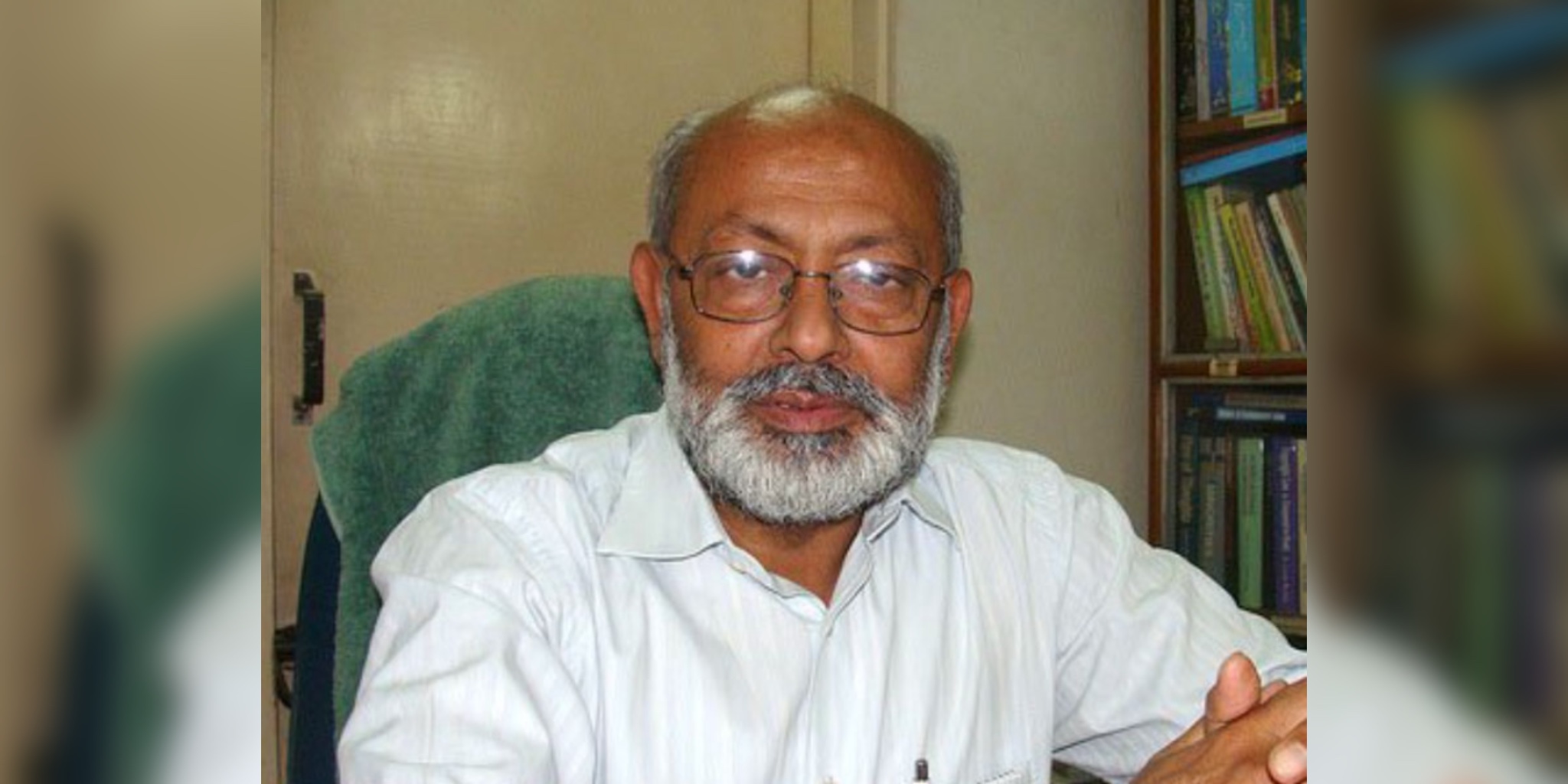
Kanathil Jameela, CPI(M) leader and sitting MLA of Koyilandy, passed away late on Saturday at a private hospital in Kozhikode. She was 59.
Jameela, who had been undergoing treatment for cancer, was admitted to the intensive care unit earlier this week. Hospital authorities confirmed that she died around 11.30 pm.
An MLA, former district panchayat president, and one of the most prominent women leaders of the CPI(M) in Kozhikode, Jameela had a long public life that spanned local governance, women’s mobilisation, and welfare work.
During her administrative tenure, she oversaw several notable programmes, including Snehasparsham for kidney patients, a cancer screening drive for women, the KARUNA initiative for humane stray-dog management, a mission to end landlessness, and schemes promoting sports and education.
Jameela had been a district committee member of the CPI(M). She was also the State vice-president of the All-India Democratic Women’s Association.
The CPI(M) state leadership condoled her death, calling it an “irreparable loss.”
Jameela made active interventions in issues concerning the people, Chief Minister Pinarayi Vijayan said. As a leader of the All India Democratic Women’s Association, she was keen to bring to the fore issues concerning women. She garnered respect for her simplicity and friendship across party lines, Vijayan said.
Leaders across parties also issued statements remembering her as an accessible and grounded representative of the coastal constituency.
According to party sources, Jameela’s body will be taken to her residence today. Public homage will be held at the CPI(M) district committee office in Kozhikode and later at the Koyilandy Town Hall.
source: http://www.maktoobmedia.com / Maktoob Media / Home> India / by Maktoob Staff / November 30th, 2025
The AIMIM won 33 seats in Chhatrapati Sambhajinagar, 21 in Malegaon, 15 in Amravati, 13 in Nanded, 10 in Dhule, eight in Solapur, six in Mumbai, five in Thane, two in Jalgaon, and one in Chandrapur.
Asaduddin Owaisi / PTI
Asaduddin Owaisi’s door-to-door campaign and the sting of narrow defeats in previous polls energized the workers of All India Majlis E Ittehadul Muslimeen (AIMIM) in the Maharashtra civic elections, resulting in the party winning 114 seats across the state, its leader Shareque Naqshbandi said on Friday.
The AIMIM won 33 seats in Chhatrapati Sambhajinagar, 21 in Malegaon, 15 in Amravati, 13 in Nanded, 10 in Dhule, eight in Solapur, six in Mumbai, five in Thane, two in Jalgaon, and one in Chandrapur.
Winning 80 seats in earlier civic polls gave the party an idea of the temperament of the urban voter, which also helped, Naqshbandi told PTI.
“Initially, AIMIM faced a challenge from its own people over candidature in Chhatrapati Sambhajinagar. Later, the presence of Asaduddin Owaisi and his rallies in potent pockets resulted in AIMIM winning 33 out of 37 seats we contested here. We have bagged wins from Mumbai to Chandrapur this time,” he said.
Owaisi dedicated more time to the campaign compared to 2015 and managed to overcome dissidence by speaking to disgruntled leaders and convincing nearly 70 percent of them, Naqshbandi said.
“The rest had already moved ahead by joining other political parties. We brought these people together and this got converted into votes. There were divisions among the opposition parties, which proved to be an opportunity to us. Moreover Asaduddin Owaisi went door to door in the areas where we were contesting. He pointed out local civic issues in smaller rallies which appealed to the voter,” he added.
Narrow losses, like the one faced by Imtiaz Jaleel in the 2024 assembly elections from Aurangabad East, had hurt workers who put in extra efforts, Naqshbandi said.
Speaking on the Chhatrapati Sambhajinagar civic poll results, former MP Jaleel said the BJP was fighting with the aim of ending the Shiv Sena here.
“The BJP had money and resources but they had a target to end Shiv Sena led by Eknath Shinde. They severed the alliance at the last moment and achieved their target. Now Shiv Sena is behind us here. They have 4-5 MLAs, one MP and a minister here. But they could do nothing and people have answered them through votes,” he told reporters.
The people of the city have stood with AIMIM for the past 12 years, resulting in 33 wins, Jaleel added.
“We are the second biggest party in the city after BJP. We have given candidature to the ordinary people here and they have won here. This is a tight slap to those political parties who gave candidature to their relatives. While the opposition called AIMIM communal, we made people from the Hindu community win seats,” he said.
source: http://www.telegraphonline.com / The Telegraph Online / Home> India / by The Telegraph Online Web Desk & PTI / January 16th, 2026
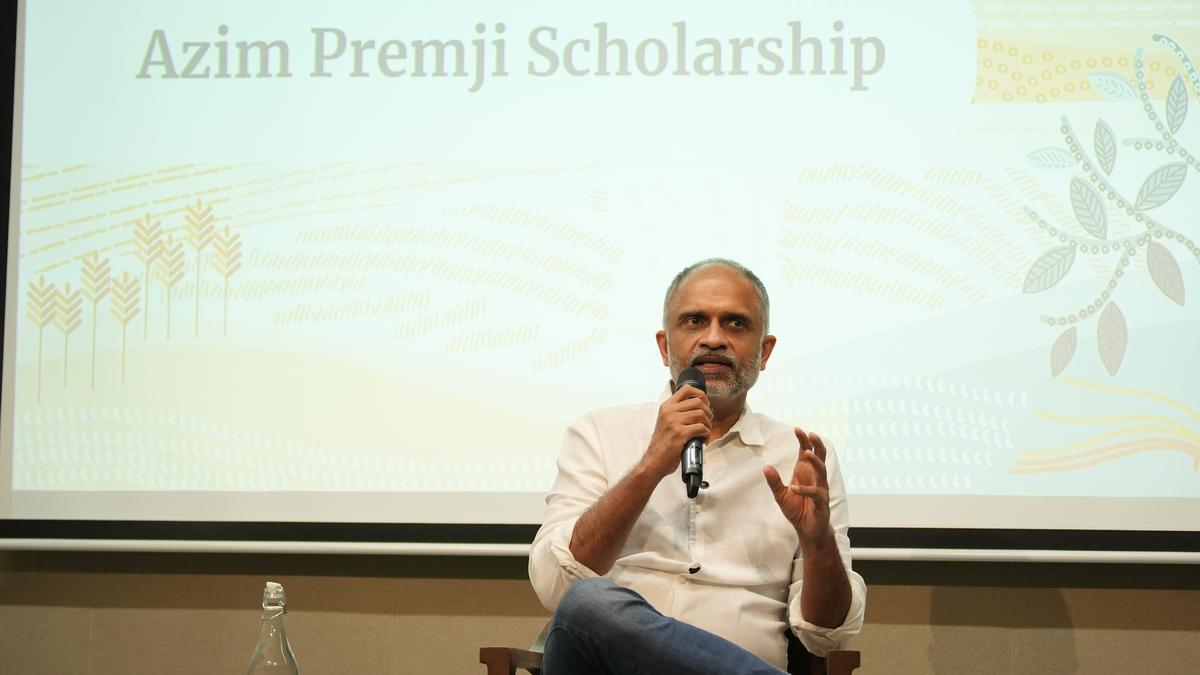
The Azim Premji Foundation on Thursday announced the Azim Premji Scholarship for up to 2.5 lakh girl students from government schools across 18 States for pursuing higher education.
A scholarship of ₹30,000 will be given annually to girl students who have passed their 10th and 12th examinations in government schools and have received admission in a bona fide higher education institution (HEI). These bona fide HEIs will include all government HEIs and selective private HEIs as well. The ₹30,000 scholarship will continue for the duration of the girl’s college/university programme, so long as the girl successfully continues in the programme.
“There is no additional criteria or eligibility for the candidates. We are not conducting any exams or checking the financial backgrounds of the students,” said Anurag Behar, the Chief Executive Officer of the Azim Premji Foundation.
He stated the reason for such a type of screening was that more than 90% of government school children come from disadvantaged backgrounds. The scholarship aims to ease some of the financial burdens of girl students pursuing a higher education, rather than focus on too many checklists or screening processes.
He also noted that while primary school admissions for girls were almost equal to those of boys, higher education admission numbers showed a lesser percentage of girls. “Tuition fees are often waived off or given at a discount for girls from disadvantaged financial backgrounds. But additional expenses like commute, clothes, books etc discourage them from pursuing their higher education,” he explained.
A pilot test of the ‘Azim Premji Scholarship’ was launched in 2024-25 across certain districts of Madhya Pradesh, Uttar Pradesh, Rajasthan, and Jharkhand, where over 25,000 girls were selected for the scholarship. For the academic year of 2025-26, the scholarship has officially been launched across 18 States, some of which include Arunachal Pradesh, Assam, Bihar, Karnataka, Telangana, Tripura, Odisha, and Mizoram.
The application process for 2025-26 will start in September 2025. Students can apply online. The scholarship program is a ₹2,250 crore commitment across three years by the foundation, and is likely to be expanded to cover the entire country in coming years.
source: http://www.thehindu.com / The Hindu / Home> News> Cities> Bengaluru / by The Hindu Bureau / May 16th, 2025
The Foundation has set a target of spending ₹4,000 crore over the next five years to build and operate a 1,000-bed charitable super-speciality and multi-organ transplant hospital in Bengaluru.
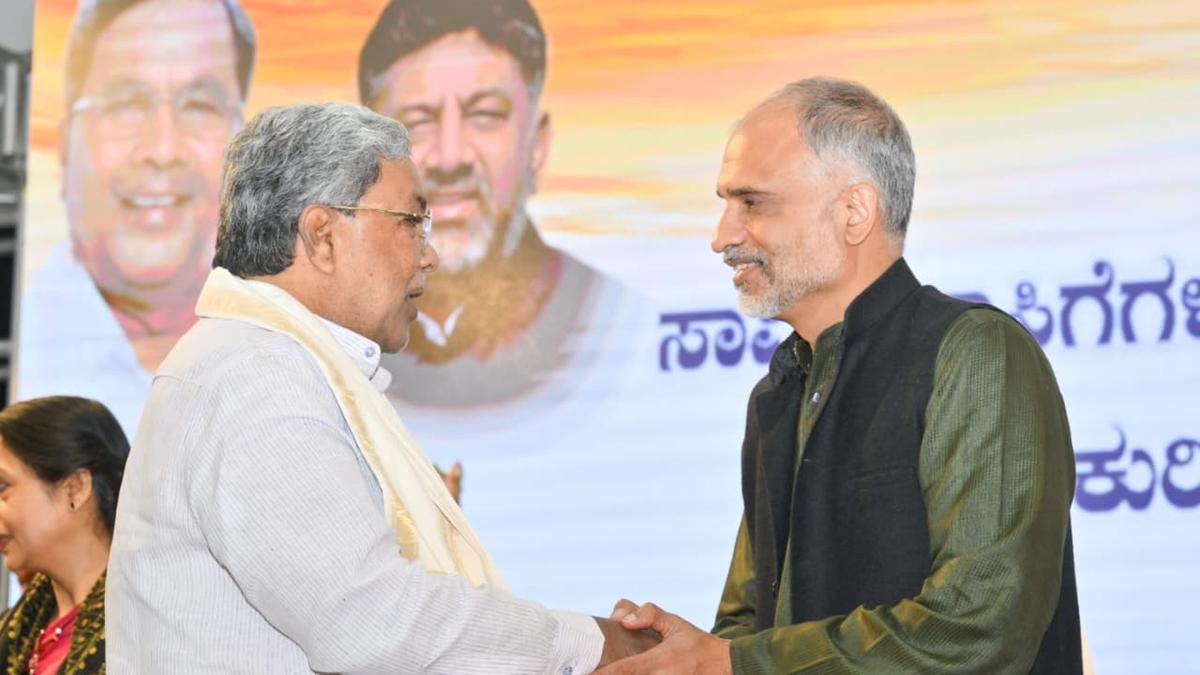
Chief Minister Siddaramaiah with Anurag Beharm, CEO, Azim Premji Foundation, at a ceremony in Bengaluru on Saturday. | Photo Credit: SPECIAL ARRANGEMENT
Chief Minister Siddaramaiah said the Azim Premji Foundation has set a target of spending ₹4,000 crore over the next five years to build and operate a new 1,000-bed charitable super-speciality and multi-organ transplant hospital in Bengaluru.
The hospital will come up on 10 acres within the Rajiv Gandhi Institute of Chest Diseases campus in Bengaluru, which the government has agreed to lease to the Foundation for 99 years, he announced on Saturday after the Medical Education Department and the Foundation signed a Memorandum of Understanding (MoU) for the construction and management of the facility.
Mr. Siddaramaiah said the State was grateful to the Foundation and to Azim Premji ‘for undertaking this noble initiative’, and for deciding to run the facility free of cost. The Foundation will invest ₹1,000 crore on building the hospital and more over the years to run the facility, he said.
Over the last 25 years, the Foundation has supported teacher training, contributed ₹1,500 crore to the government’s egg distribution scheme in schools in 2024, and extended annual scholarships of ₹30,000 each to students from government colleges under the Deepika scheme, the Chief Minister added.
Public systems key
Anurag Behar, CEO, Azim Premji Foundation, emphasised the importance of strengthening public systems, saying private initiatives cannot compensate for weak public infrastructure.
“The foundation believes that public systems are central to a good society. Our commitment is to work with the government to strengthen them,” he said, pointing out that healthcare begins with ASHA workers, primary health centres, and preventive work in communities. “Hospitals are critical, but the first goal must be to prevent people from falling ill,” he said.
Mr. Behar praised Karnataka as ‘one of the three most proactive States’ the Foundation works with. He noted that the Foundation’s 25-year engagement in Karnataka has shown progress most visibly in grassroots work in, among other places, Surpur and Sindagi.
Transplant hub
Medical Education Minister Sharan Prakash R. Patil said the proposed hospital will provide transplant services across multiple organs, with 70% of procedures free of cost and the remaining 30% at minimal rates on the lines of the autonomous Sri Jayadeva Institute of Cardiovascular Sciences and Research and the Kidwai Memorial Institute of Oncology.
He said more than 5,000 patients in Karnataka are currently awaiting kidney transplant, and over 1,000 require liver transplant.
Dr. Patil added that the project aligns with the government’s larger roadmap to strengthen tertiary healthcare. “We have set a target of establishing one medical college, one super-speciality hospital, one trauma centre, and one cancer hospital in every district,” he said.
At present, Karnataka has 22 government medical colleges, 10 super-speciality hospitals, eight trauma centres, and eight cancer centres, and is ‘halfway through’ with the plan. He said the State intends to transition towards a universal health coverage model, as in the UK, in the coming decade.
This article has been updated to rectify a factual error
source: http://www.thehindu.com / The Hindu / Home> News> India>Karnataka / by The Hindu Bureau / January 18th, 2026
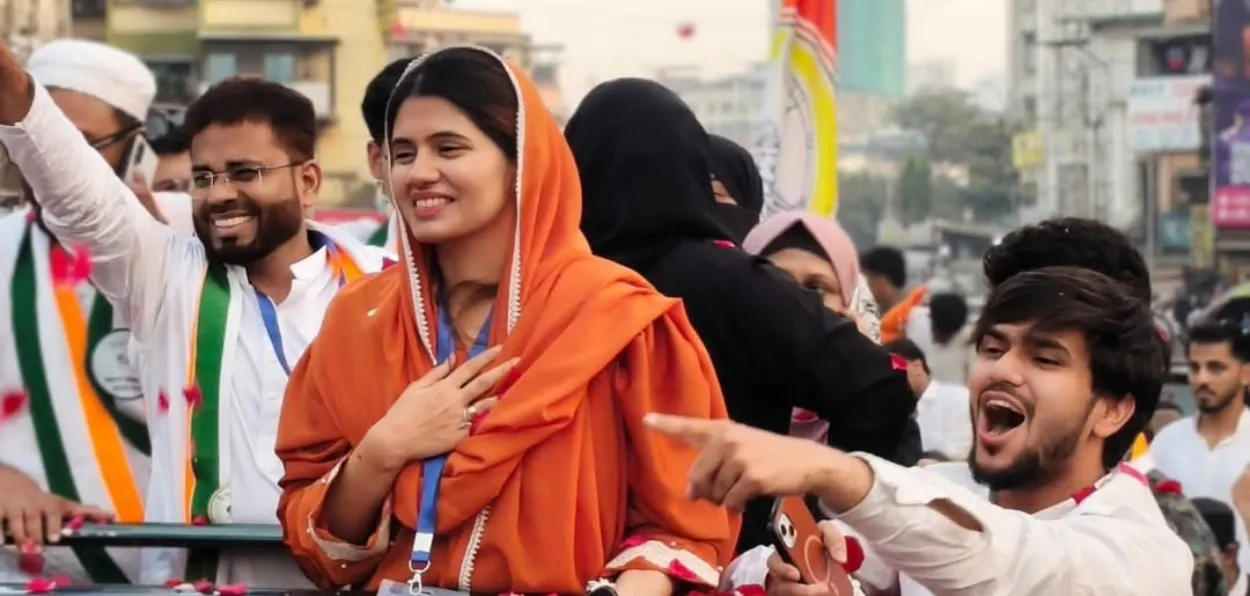
Marziya Shanu Pathan, with her supporters after winning the BMC election
In a remarkable political debut, 24-year-old Marziya Shanu Pathan, representing the NCP (Sharad Pawar faction), has emerged victorious in the BMC elections from Ward 32, Mumbra. Her win not only marks a milestone for young women in politics but also highlights the growing influence of grassroots activists in local governance.
Marziya’s victory has drawn widespread attention, particularly on social media, where she became a viral figure during the campaign, often compared to other young political personalities such as Sahar Yunus Sheikh of the AIMIM. Known for her activism and social work, Marziya has spent years working with the MSPare Foundation, focusing on women’s empowerment, civic engagement, and community development in Mumbra. Her campaign, rooted in public outreach and advocacy, resonated strongly with local voters.
Adding a historic touch to the win, Marziya’s father, Ashraf “Shanu” Pathan, also secured his seat in the same election, creating a dual-family triumph that has captured the imagination of the community. The Pathans’ success reflects a blend of youthful energy and political experience, signalling a new wave of leadership in the region.
Political analysts say Marziya’s win challenges traditional stereotypes and demonstrates that young women from minority communities can not only compete but lead in local politics. Her election is being hailed as a step forward for representation and inclusive governance in the Mumbai civic landscape.
source: http://www.awazthevoice.in / Awaz, The Voice / Home / by Ashhar Alam / January 17th, 2026
Grand Mufti Kanthapuram A P Aboobacker Muslyar with politician Ramesh Chennithala during the Kerala Yatra
New Delhi :
Kanthapuram A.P. Abubacker Musliyar, the Grand Mufti of Sunni Muslims of India, received the first Sree Narayana Guru Brotherhood Award, instituted by Swami Saswathikananda Cultural Centre, during the ongoing Kerala Yatra.
The 16-day Paamjam Insaniyat Kerala Yatra, is an ongoing state-wide campaign by the Kerala Muslim Jamaat to mark the centenary of the Sunni Jamiat Ulema.
The award was presented by SNDP Yogam former president Gokulam Gopalan, Yogam former board member Adv. S. Chandrasenan, and Saswathikananda Cultural Center director Adv. V.R. Anoop at the reception venue of Kerala Yatra at Kayamkulam.
— Sheikh Abubakr Ahmad الشيخ أبوبكر أحمد (@shkaboobacker) January 15, 2026
Advocate V. R. Anup is the director of Swami Saswatikananda Cultural Centre.
Addressing the ceremony, Gokulam Gopalan said that Sheikh Abubakar Ahmed is a leader who has promoted a specific development model. This model enables the empowerment of all communities and social progress. He said that Sheikh Abubakar Ahmed has rendered valuable services for the promotion of human values, brotherhood, peace and a prosperous society in the state.
CK Vidyasagar, Jury Chairman, said that Sheikh Abubakar Ahmed promoted fraternal coexistence with other communities in the light of the moral and jurisprudential principles of Islam.
He said that this role has strengthened Kerala’s tradition of social harmony.
Ramesh Chennithala posted images of Kerala Yatra by Jamaat on X:
Participated in the concluding ceremony of the Kerala Yatra led by the Indian Grand Mufti, the revered Kanthapuram A P Aboobacker Muslyar as part of the centenary celebrations of Samastha Kerala Jamyathul Ulama.
Advocate V. R. Anoop said that the lofty ideals of Sree Narayan Guru’s philosophy are prominent in various communities. He said that constructive social engagement can bring about a meaningful change in Kerala.
Sheikh Abubakar Ahmed regretted that the boundary between communal identity and sectarianism was rapidly weakening. He said that sectarianism arises when religion is used for political gain.
He added that receiving the award named after Sree Narayan Guru further strengthens his sense of responsibility.
source: http://www.awazthevoice.in / Awaz, The Voice / Home / by Aasha Khosa / January 17th, 2026
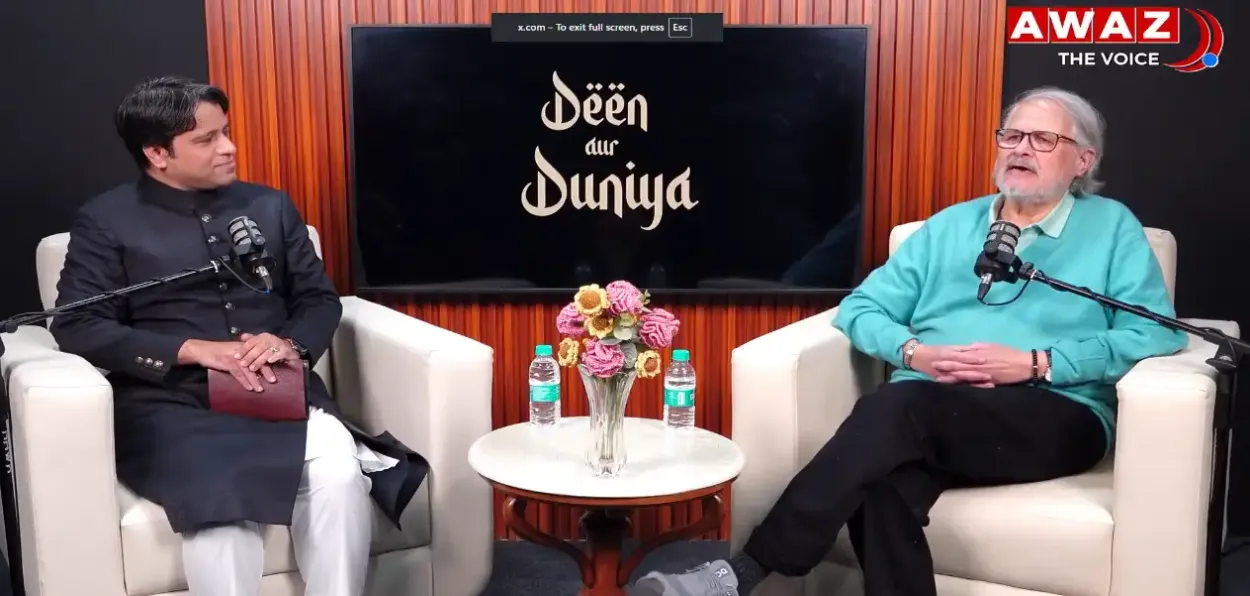
Saquib Salim and Najeeb Jung in Deen aur Duniya podcast
New Delhi :
The first episode of Awaz-The Voice’s new podcast series “Deen aur Duniya” was launched on Saturday evening. The programme has emerged as a serious attempt to understand and bridge the perceived divide between deen (faith) and duniya (society and civic life) within the Indian Muslim community.
The clarity, balance, and intellectual depth of the very first episode firmly established the podcast as a meaningful platform for thoughtful dialogue. The inaugural guest has Najib Jung, former Lieutenant Governor of Delhi, former IAS officer, and former Vice Chancellor of Jamia Millia Islamia, speaking candidly on crucial issues concerning Indian Muslims, democracy, education, and the Constitution to Saquib Salim.
At the heart of the discussion was the question of the Indian Muslim community and the idea of the “mainstream.” Najib Jung challenged the very premise of this debate, asserting that Indian Muslims have never been outside the mainstream. In his words, “First, it is important to understand what this ‘mainstream’ actually means.
“When were we ever outside it? I am a resident of India, and I have always been part of the mainstream.” He said that in an ancient and pluralistic civilisation like India, considering any community as an outsider is itself a flawed notion.”
He described it as a major irony and tragedy that in the Indian Subcontinent, the minorities are not given their due and they face dicrimination.
Najib Jung believes that the Indian Muslim community needs to move beyond the misconceptions surrounding its own identity. He emphasised that Muslims must understand that their identity is not separate from the identity of the nation. Self-acceptance and self-respect, he said, are what give any community the strength to move forward.
Speaking about young Muslims with clarity andf firmly, he said today’s Muslim youth should not live with any complex. “If a Muslim youth today considers himself inferior, that is his own shortcoming, not someone else’s,” he said. According to him, if one’s patriotism is questioned or one is viewed with suspicion, the response should come through confidence, hard work, and conduct, not through complaints or a sense of inferiority.”
The discussion also touched upon the issue of atrocities against minorities in Pakistan and Bangladesh. On this, Najib Jung offered a measured response, saying it is completely illogical to expect Indian Muslims to answer for what happens in neighbouring countries. “No mature and sensible society makes such demands,” he said. He made it clear that if injustice or oppression occurs anywhere in India, raising a voice against it is the responsibility of the entire society, not of any single community.
While speaking on Indian democracy and its secular character, Najib Jung highlighted the concept of fraternity enshrined in the Preamble of the Constitution as the most crucial element.
He said fraternity is even more important than secularism because it is what binds society together. “Fraternity means moving forward together, and that is the soul of our Constitution,” he noted. According to him, India’s freedom struggle was the result of a collective effort, and the rights enshrined in the Constitution are equal for all citizens, irrespective of religion, caste, or social background.
On the issue of education, Najib Jung’s concern and vision appeared both broad and thoughtful. He said education should not be limited to degrees or technical skills alone. Expressing concern over changes in history textbooks, he warned that incorrect history can mislead children’s thinking and shape their personalities in the wrong direction. Education, he stressed, should aim to develop the ability to think and reason, with subjects like history, philosophy, and sociology playing a vital role.
Referring specifically to the Muslim community, he described the growing awareness around education as a positive sign. He said that today the community is far more conscious about the education of its children than before, whether in government schools, private institutions, or madrasas. The changes taking place even in rural areas, he added, offer hope for the future.
Discussing the economic and social situation, Najib Jung observed that slow but visible change is taking place within the Muslim community. He noted that a large number of Muslim youth are now moving into medicine, engineering, and other professional fields. While acknowledging that economic hardship remains a major obstacle, he said the desire to progress is clearly evident within the community.
On the role of the government, he said that serious and concrete affirmative action is required to address the social backwardness of the Muslim community. He expressed regret that the necessary seriousness has not been shown in this direction so far. Just as special policies were formulated for Dalits and other marginalised sections, he said, there should be well-planned efforts for the Muslim community as well.
See the Full Podcast here:
Towards the end of the programme, Najib Jung delivered a positive and inspiring message. He said Muslims must learn to stand on their own feet, a process that has already begun over the past one-and-a-half to two decades. From small businesses to higher education, the community is striving to carve out its space.
He emphasised that unless a community becomes economically and socially empowered, it cannot assert its demand for equal rights with strength.
source: http://www.awazthevoice.in / Awaz, The Voice / Home / by Saqib Salim / January 18th, 2026
Muslim Mirror’s 100 Most Influential Muslims of 2025
New Delhi:
Muslim Mirror has released its much-anticipated annual list of the “100 Most Influential Indian Muslims of 2025,” spotlighting individuals who have made significant contributions to India’s public life across a wide spectrum of fields including politics, culture, education, business, media, religion, sports, and social service. Now in its second edition, the list aims to document influence not merely as power or popularity, but as sustained impact, leadership, and the ability to shape public discourse.
A defining feature of the 2025 edition is the growing prominence of younger achievers, signalling a visible generational shift within Indian Muslim leadership. Alongside established national figures, the list includes emerging voices who have built influence through grassroots activism, professional excellence, digital platforms, legal advocacy, education, and community engagement. Editors associated with the project said this was a deliberate attempt to recognise new centres of influence beyond traditional hierarchies.
The list reflects the diversity and plural character of Indian Muslim society, cutting across geography, ideology, profession, and language. From seasoned politicians and religious scholars to artists, entrepreneurs, academics, and social reformers, the compilation offers a broad snapshot of leadership trends at a time when issues of representation, constitutional values, and social justice remain central to national debate.
Representation Across Sectors
The 2025 list features several eminent academicians and intellectuals who have shaped higher education, policy discourse, and social research. Among them are Abul Qasim Nomani, Ameerullah Khan, Furqan Qamar, Shahid Jamil, and Ubaid-ur-Rahman, recognised for their contributions to education, public policy, and academic leadership.
In the business and entrepreneurship category, the list includes influential names such as Azad Moopan, Azim Hashim Premji, Farah Malik, Irfan Razack, M. P. Ahammed, Mecca Rafiq Ahmed, Meraj Manal, Syed Mohamed Beary, P. Mohammed Ali, Shahnaz Hussain, Tausif Ahmad Mirza, Yusuff Ali, and Ziaullah Sharif. Their inclusion underlines the growing economic footprint of Indian Muslim entrepreneurs, both domestically and globally, spanning sectors from retail and healthcare to infrastructure and consumer goods.
Community leadership remains a strong pillar of the list, with figures such as Arshad Madani, Mahmood Madani, Malik Motasim Khan, Mehmood Pracha, Syedna Mufaddal Saifuddin, Navaid Hamid, Pirzada Md Abbas Siddiqui, Qasim Rasool Ilyas, Sadatullah Husaini, Umer Ahmed Ilyasi, and Yusuf Mohamed Abrahani recognised for their roles in religious guidance, legal advocacy, social mobilisation, and institutional leadership.
Culture, Media, and Public Discourse
In arts and entertainment, globally recognised names such as A. R. Rahman, Aamir Khan, Mammootty, Munawar Faruqui, and Shah Rukh Khan continue to command immense cultural influence, shaping narratives that extend well beyond cinema and music into social consciousness.
The list also acknowledges the growing importance of media and journalism in shaping opinion and challenging dominant narratives. Journalists and commentators such as Arfa Khanam, Irfan Meraj, and Seema Mustafa are recognised for their consistent engagement with issues of democracy, minority rights, and constitutional values.
Religious and Intellectual Scholarship
A significant section of the list is devoted to Islamic scholars and religious thinkers, reflecting their continued influence on moral leadership and intellectual discourse. Names such as A. P. Aboobacker Musliyar, Qasim Nomani, Prof. Akhtarul Wase, Asghar Ali Imam Mahdi Salafi, Asjad Raza Khan, Ibraheem Khaleel Al-Bukhari, Javed Jamil, Khalid Saifullah Rahmani, Khaleelur Rahman Sajjad Nomani, Qamaruzzaman Azmi, Rashid Shaz, Shakir Ali Noori, Shamail Nadvi, and Yasoob Abbas find place for their scholarly work, writings, and public engagement.
Politics and Governance
The political category features leaders cutting across party lines and regions, including Asaduddin Owaisi, Ghulam Nabi Azad, Hamid Ansari, Mehbooba Mufti, Omar Abdullah, Salman Khurshid, Najeeb Jung, Syed Naseer Hussain, Engineer Rashid, Akhtarul Iman, Iqra Hasan, Zameer Ahmed Khan, Rakibul Hasan, K. Rahman Khan, Kadir Mohideen, Mohibullah Nadvi, Md Shafi, Agha Mahadi, Asim Waqar, and Sadiq Ali Shihab Thangal. Their inclusion reflects influence exercised through electoral politics, governance, diplomacy, and legislative advocacy.
Changemakers and Social Reformers
One of the most dynamic sections of the 2025 list is that of changemakers and social reformers, featuring individuals such as Safeena Husain, Shahabuddin Yaqoob Quraishi, Syeda Hameed, Zameer Uddin Shah, Mahbubul Hoque, Sabahat S. Azim, Mehmood Pracha, Faiz Syed, and Zahir Ishaq Kazi, among others. Many of these figures have earned recognition through long-term grassroots work rather than formal authority.
International Booker Prize 2025 winner Banu Mushtaq for Heart Lamp, along with renowned poet Wasim Barelvi, has been placed in the category of Literary Figures.
In sports, iconic names Sania Mirza and Irfan Pathan continue to inspire younger generations through excellence and public engagement beyond the playing field.
Beyond Rankings
The editors emphasised that the list does not claim to be exhaustive, nor does it measure influence solely through fame, wealth, or official position. Instead, it seeks to capture real-world impact, moral authority, intellectual contribution, and the ability to shape conversations within and outside the community.
The annual list has increasingly become a reference point for understanding evolving leadership patterns among Indian Muslims. By foregrounding both established figures and rising talents, the 2025 edition reflects continuity as well as change, underscoring how Indian Muslims continue to contribute meaningfully to India’s democratic, cultural, and social field.
source: http://www.muslimmirror.com / Muslim Mirror / Home> Indian Muslim / by Muslim Mirror / January 15th, 2026
Dr. Mohammad Manzoor Alam, a visionary scholar, global thinker, mentor, and tireless advocate for education, social justice, and the empowerment of marginalized communities, passed away in New Delhi early on January 13, 2026, at the age of 80. His demise has left a profound void in academic, social, and religious circles across India and internationally.
Born on October 9, 1945, in Ranipur, Madhubani, Bihar, Dr. Alam earned his PhD in Economics from Aligarh Muslim University. His career bridged Islamic social sciences, economic reform, and knowledge-driven societal change.
He held prestigious roles including Economic Advisor at Saudi Arabia’s Ministry of Finance, Associate Professor of Islamic Economics at Imam Muhammad bin Saud University in Riyadh, Chief Coordinator for Qur’an translation at King Fahd Printing Complex in Madinah, Chief Representative of India at the International Islamic University Malaysia, and member of the Islamic Development Bank Scholarship Committee.
Dr. Alam founded the Institute of Objective Studies (IOS) in New Delhi in 1986, transforming it into a leading research think tank focused on intellectual and social empowerment of Indian Muslims and other marginalized groups.
Under his leadership, IOS conducted over 410 research projects, published hundreds of volumes, organized numerous conferences, and promoted interfaith dialogue, policy analysis, and minority rights advocacy.
He held key positions in organizations such as the All India Milli Council (General Secretary), Muslim Social Sciences Association (President), Fiqh Academy, and various international boards.
Collaborating with global intellectuals like Prof. Ismail Raji al-Faruqi and Dr. Abdul Hamid AbuSulayman, he advanced Islamic economics, the Islamisation of knowledge, and interfaith understanding.
His writings, including “The Final Wakeup Call,” addressed media freedom, global narratives, contemporary Muslim issues, education, and social reform. Known for humility, ethical scholarship, and mentorship, Dr. Alam inspired generations of scholars, activists, and researchers.
His legacy endures through IOS and the lives he touched, continuing to champion justice, knowledge, and empowerment for the marginalized. — With Agencies Inputs
source: http://www.muslimmirror.com / Muslim Mirror / Home> Obituary / by Muslim Mirror Desk / January 13th, 2026
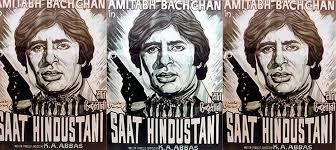
Multi-hyphenate talent Khwaja Ahmed Abbas worked in Urdu, Hindi and English and across writing mediums. Abbas, who died in 1987 at the age of 71, wrote social realist screenplays for Raj Kapoor and V Shantaram, directed films, published short stories and plays,and contributed a long-running weekly newspaper column. Among the best-known films he directed are Neecha Nagar, Sheharaur Sapna and Saat Hindustani. Set in Goa and tracing the efforts of seven revolutionaries to free the state from Portuguese rule, Saat Hindustani marks the debut of Amitabh Bachchan. An essay from the anthology Bread Beauty Revolution, edited by Iffat Fatima and Syeda Hameed, relates Abbas’s encounters with the “tall young man” and future screen icon. Bread Beauty Revolution includes writings from Abbas’s memoir I Am Not An Island: An Experiment in Autobiography as well as essays, stories,poems, photographs and columns.
The story of Saat Hindustani came out of the Goa struggle reminiscences of my assistant, Madhukar, who would often regale us with the adventures he had while trekking up with the non-violent commandos to hoist the tricolour on every police station they came across…
I was so excited when I finished the screenplay that I telephoned all my friends and informed all my assistants, including Madhukar, to come and hear it in my fourth floor office on the very next day. That was a ritual which they never missed and I would get their suggestions for casting the film.
I wanted to prove by my casting that there was no particular Hindu or Muslim, Tamilian, Maharashtrian or Bengali ethnic type. To begin with, I would transform the smart and sophisticated and versatile Jalal Agha into the Maharashtrian powada singer. Even Jalal was shocked to hear this. But I reassured him that, with the proper make-up and get-up, nobody would recognize him except as a rural Maharashtrian folk singer. Madhukar, who hails from Meerut, would be a Tamilian; Sharma (Brahmin by caste) would also undergo a similar transformation; and Utpal Dutt, the cigar-chewing admiral,would be the tractor-driving Punjabi farmer. So far the casting was clear in mymind. On one of my visits to Kerala I had met Madhu, the handsome hero of the Malayalam screen, and he had approached me and expressed his desire to work in a Hindi film with me. I would make him the sensitive Bengali; I wouldn’t have to work much on his Bengali accent for he had lived with a Bengali family. Now only the Hindi and Urdu fanatics were left. Jalal one day brought with him his friend Anwar Ali (brother of the comedian Mehmood), in whose eyes I saw the Jana Sanghi fanaticism. So I decided to make him the Swayam Sevak who hates Urdu and speaks jaw-breaking Hindi. That left one Indian, the Muslim Urdufanatic. Since I wanted these boys to be of different ages and different heights, the one vacancy left was for a tall and handsome man. He had to be thin, also corresponding to the thin image of my friend, the late Asrarul Haque “Majaz”.
One day someone brought a snapshot of a tall young man and I thought that the boy was in Bombay. I said, “Let me see him in person.” “He will be here day after tomorrow evening.” Again, presuming he was in Bombay, I thought he must be working somewhere and wouldn’t be free till the evening. On the third day, punctually at 6 pm, a tall young man arrived who looked taller because of the churidar pajama and Jawahar jacket that he was wearing. This young man would one day be known as Amitabh Bachchan, the heart-throb of millions. But I did not know his name. Roughly, the following dialogue took place between us:
“Sit down, please. Your name.”
“Amitabh.” (Not Bachchan.)
It was an unusual name — so I asked, “What does it mean?”
“The sun. It’s also one of the synonyms for the Gautama Buddha.”
“Education?”
“B.A. from Delhi University.”
“Have you worked in films before?”
“No one has taken me so far.”
“Who were they?”
He mentioned very prominent names.
“What did they find wrong with you?” The boy spoke with frankness. “They all said I was too tall for their heroines.”
“Well, we have no such trouble. In a way we have no heroine in our film. Even if we had, that wouldn’t prevent me from taking you.”
“Taking me? Are you really going to take me? Without even a test?”
“That depends. First I must tell you the story. Then I must tell you your role and see if you will be enthusiastic about playing it. Then I shall tell you what we can afford to pay you. Only then, if you agree, shall we sign the contract.”
I read him out the complete story and saw his face become alive with interest. I asked him which role he would like to play. He told me the two which particularly impressed him. The role of the Punjabi, and the role of the Muslim. I told him he was perhaps a Punjabi, and that made him unfit to play that role. He asked me why. I gave him the reason, the reason for having a scrambled cast. The idea appealed to him greatly. He said, “I think, I know what you mean. Then I would like to play the Muslim role, specially because he is under a cloud of suspicion. And only at the end the suspicions are removed and he is proved a patriot.” Then I told him we could pay him no more than five thousand rupees,which was the standard figure for all the roles.
He seemed a little hesitant, and I asked him, “Are you earning more than that?”
“I was,” he said.
I asked him what he meant.
He said that he was getting about sixteen hundred a month in a firm in Calcutta.
“I resigned the job and came over.”
I was astonished. “You mean to say that you resigned a job of sixteen hundred rupees a month, just on the chance of getting this role! Suppose we can’t give the role to you?”
He said, “One has to take such chances” with such conviction that I said, “The role is yours.”
Then I called my secretary, Abdul Rehman, to dictate the contract. I asked the tall young man for his name and address.
“Amitabh—” after some hesitation, “Amitabh Bachchan, son of Dr H.R. Bachchan.”
“Stop,” I said. “This contract cannot be signed until I telegraph and get your father’s consent. He is a colleague of mine on the Sovietland Nehru Award Committee. I wouldn’t like to have a misunderstanding with him. I am afraid you will have to wait for two days more.”
“You can ask my Dad, but frankly, do I look like a runaway?”
I told him that runaways don’t have any particular look. So I dictated, instead of the agreement, a telegram to Dr Bachchan in New Delhi and asked him if he was willing to let his son become an actor. Two days later a telegram came reading “No objection where you are concerned.” This is the whole story about how Amitabh Bachchan came into films.
Excerpted with permission from Bread Beauty Revolution, edited by Iffat Fatima and Syeda Saiyidain Hameed, Khwaja Ahmed Abbas Memorial Trust and Tulika Books.
source: http://www.scroll.in / Scroll.in / Home> Book Excerpt / by Khwaja Ahmed Abbas / November 14th, 2015